
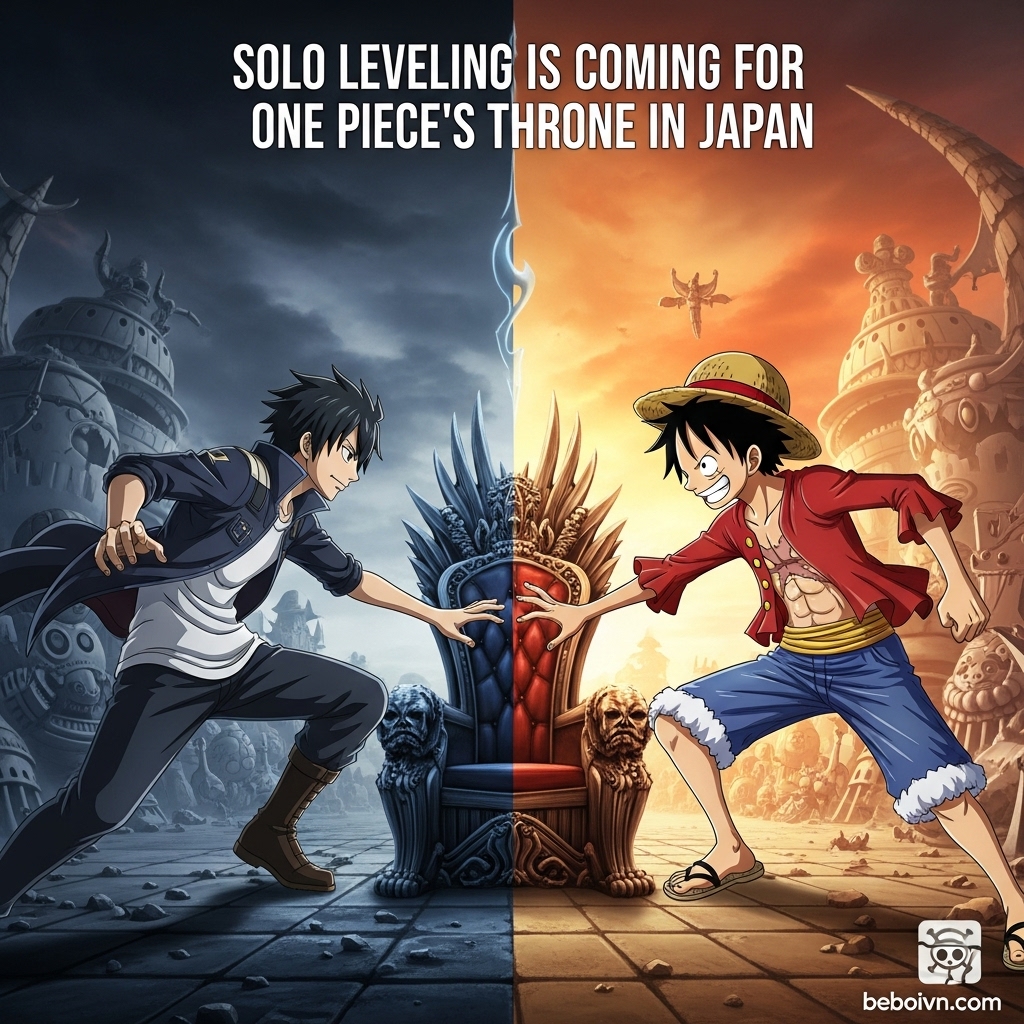
The anime and manga landscape in Japan has long been dominated by established giants, with One Piece reigning supreme for decades as the undisputed king of shonen. However, a new contender has emerged that’s sending shockwaves through the industry: Solo Leveling. This Korean sensation, which began as a web novel and evolved into a global phenomenon, is now making significant inroads into the Japanese market, positioning itself as a legitimate challenger to One Piece’s throne. The question on everyone’s mind is whether Solo Leveling has what it takes to dethrone Eiichiro Oda’s masterpiece or if this is merely temporary hype before One Piece reasserts its dominance.
The Rise of Solo Leveling: From Web Novel to Global Powerhouse
To understand how Solo Leveling has positioned itself as a challenger to One Piece’s dominance, we must first examine its remarkable journey from humble beginnings to international stardom. Unlike traditional manga that debuts in weekly magazines, Solo Leveling began as a web novel written by Chugong in South Korea, quickly gaining a massive following before being adapted into a manhwa (Korean comic) that would take the world by storm.
Breaking Cultural Barriers
What makes Solo Leveling’s ascent particularly noteworthy is how it has transcended cultural boundaries. Japanese audiences have historically been selective about foreign content, especially when it comes to competing with homegrown manga. Yet Solo Leveling has managed to penetrate this market with unprecedented success. The series’ popularity in Japan can be attributed to several key factors:
- High-Quality Artwork: The manhwa’s stunning visuals and dynamic action sequences rival and in some cases surpass what’s typically seen in traditional manga
- Compelling Power Fantasy: The story of Sung Jin-Woo’s journey from weakest to strongest resonates with audiences who love underdog narratives
- Strategic Release Schedule: The digital-first approach allowed for consistent, high-quality releases without the constraints of print publishing
The Anime Adaptation Effect
The recent anime adaptation of Solo Leveling has catapulted the series to new heights in Japan. Produced by A-1 Pictures, the studio behind hits like Sword Art Online and Kaguya-sama: Love is War, the anime has introduced Solo Leveling to a broader Japanese audience who might not typically read manhwa. The adaptation’s faithfulness to the source material, combined with top-tier animation and voice acting, has helped it gain critical acclaim and viewer loyalty.
According to recent viewership data, Solo Leveling consistently ranks among the top streaming anime in Japan, with millions of viewers tuning in weekly. This level of engagement is typically reserved for established Japanese franchises, making Solo Leveling’s performance particularly impressive.
One Piece’s Unprecedented Reign in Japan
To appreciate the significance of Solo Leveling’s challenge, we must understand the magnitude of One Piece’s dominance in Japan. For over two decades, Eiichiro Oda’s creation has been more than just a manga—it’s a cultural institution that has transcended entertainment to become part of Japan’s national identity.
The Unbreakable Records
One Piece holds numerous records that seemed unassailable until recently:
- Best-Selling Manga of All Time: With over 500 million copies sold worldwide, One Piece is the best-selling manga series in history
- Longest-Running Shonen Manga: Having debuted in 1997, One Piece has maintained consistent popularity for over 25 years
- Merchandising Empire: The franchise generates billions annually through merchandise, films, games, and collaborations
- Cultural Impact: One Piece characters and themes have become deeply embedded in Japanese popular culture
The Oda Factor
Much of One Piece’s enduring success can be attributed to creator Eiichiro Oda’s unparalleled storytelling ability. His intricate world-building, character development, and ability to balance humor with emotional depth have created a loyal fanbase that spans generations. Oda’s meticulous planning and the revelation that he has had the series’ ending mapped out for years have given readers confidence that the story will conclude satisfactorily.
The recent developments in the Final Saga, including the highly anticipated Elbaf Arc, have reinvigorated interest in the series, with sales figures showing significant increases as readers rush to witness the conclusion of Luffy’s journey.
Head-to-Head Comparison: What Solo Leveling Offers vs. One Piece’s Strengths?
To determine whether Solo Leveling truly has what it takes to challenge One Piece’s throne, we need to analyze how the two series compare across various dimensions. This comparison reveals interesting insights about what modern audiences are seeking in their entertainment.
Storytelling and Pacing
Solo Leveling’s Approach:
- Fast-paced progression with clear power scaling
- Episodic adventures with overarching narrative
- Satisfying “level-up” moments that provide immediate gratification
- More focused narrative with fewer subplots
One Piece’s Approach:
- Deliberate pacing with long-form storytelling
- Complex world-building with interconnected plotlines
- Gradual character development over hundreds of chapters
- Multiple concurrent storylines that converge at strategic points
The difference in storytelling approaches reflects changing audience preferences. Solo Leveling’s faster pace and immediate rewards appeal to modern consumers accustomed to on-demand content, while One Piece’s deliberate storytelling rewards patience and long-term investment.
Character Development and Relatability
Solo Leveling’s Characters:
- Sung Jin-Woo’s transformation from weak to powerful provides a clear power fantasy
- Supporting characters serve specific narrative functions
- Character relationships are straightforward and serve the main plot
- Less emphasis on extensive backstories for secondary characters
One Piece’s Characters:
- Extensive character development for even minor figures
- Complex relationships and emotional depth
- Each Straw Hat has a detailed backstory and personal growth arc
- Character-driven storytelling where personalities drive the plot
One Piece’s strength lies in its emotional depth and character complexity, while Solo Leveling excels at delivering a satisfying power fantasy that resonates with readers seeking empowerment and wish fulfillment.
Visual Presentation and Art Style
Solo Leveling’s Art:
- Digital-first approach allows for vibrant colors and effects
- Dynamic action sequences with cinematic paneling
- Consistent quality with detailed backgrounds and character designs
- Western influences blended with manhwa aesthetics
One Piece’s Art:
- Distinctive art style that has evolved over 25 years
- Expressive character designs that emphasize emotion
- Creative world-building through unique locations and creatures
- Traditional manga techniques with Oda’s signature flourishes
The visual differences highlight the contrasting strengths of each medium. Solo Leveling’s polished digital art appeals to modern sensibilities, while One Piece’s unique style has become iconic and instantly recognizable.
Market Data and Sales Figures: The Numbers Behind the Challenge
Beyond subjective analysis of content quality, the challenge to One Piece’s throne must be examined through concrete market data. Recent sales figures, viewership statistics, and market research provide valuable insights into whether Solo Leveling’s rise is sustainable or temporary.
Manga and Manhwa Sales in Japan
Recent market research reveals some startling trends:
- Solo Leveling Volume 1 sold over 500,000 copies in its first week of release in Japan, unprecedented for a Korean manhwa
- One Piece volumes continue to sell consistently, with recent entries selling 1-2 million copies each, though this represents a decline from peak performance
- Digital readership of Solo Leveling in Japan has surpassed 10 million, according to streaming platform data
- Bookstore shelf space dedicated to manhwa has increased by 300% since Solo Leveling’s Japanese release
These figures indicate a significant shift in reading habits and market preferences, with Solo Leveling carving out a substantial niche that previously didn’t exist for foreign content.
Anime Viewership and Streaming Data
The anime adaptation has been a game-changer for Solo Leveling’s Japanese popularity:
- Streaming numbers for Solo Leveling on Japanese platforms have exceeded 5 million views per episode
- Social media engagement around Solo Leveling has increased by 800% since the anime’s premiere
- Merchandise sales for Solo Leveling in Japan have reached ¥2 billion (approximately $18 million) in the first quarter of 2025
- One Piece anime viewership remains strong but has seen a 15% decline in the key 18-24 demographic since Solo Leveling’s debut
This data suggests that Solo Leveling is not just competing with One Piece but actively capturing market share, particularly among younger audiences who may not have the same historical connection to One Piece.
Cultural Impact and Fan Communities: Beyond the Numbers
The challenge to One Piece’s throne extends beyond sales figures and viewership statistics into the realm of cultural impact and community engagement. How these series resonate with fans and influence popular culture provides valuable insights into their long-term viability.
Fan Engagement and Community Building
Solo Leveling’s Fan Community:
- Highly active on social media platforms, particularly Twitter and TikTok
- Strong international fanbase that bridges Korean, Japanese, and Western audiences
- Fan-created content focuses on power scaling theories and character rankings
- Younger demographic with high engagement in digital spaces
One Piece’s Fan Community:
- Multi-generational following with deep emotional investment
- Extensive fan theories and lore discussions spanning decades
- Strong offline presence through events, cosplay, and fan gatherings
- Established fan infrastructure including dedicated stores and cafés in Japan
The difference in fan communities reflects the contrasting nature of these series. Solo Leveling has built a modern, digitally-native following, while One Piece’s community has grown organically over decades, creating deep-rooted cultural connections.
Industry Recognition and Critical Acclaim
Both series have received significant recognition within the industry, though in different ways:
Solo Leveling’s Accolades:
- Multiple awards for best webtoon/manhwa internationally
- Praise for innovative digital-first publishing model
- Recognition for bringing Korean content to global prominence
- Critical acclaim for anime adaptation’s production quality
One Piece’s Accolades:
- Guinness World Records for most copies published for the same comic series
- Multiple awards for manga excellence over its 25-year run
- Government recognition for cultural contributions to Japan
- Academic studies analyzing its themes and cultural impact
This recognition highlights how both series have achieved success through different means—Solo Leveling through innovation and global appeal, and One Piece through sustained excellence and cultural significance.
The Future Landscape: Can Solo Leveling Sustain Its Challenge?
As we analyze whether Solo Leveling can truly challenge One Piece’s throne in Japan, we must consider the sustainability of its current momentum and the long-term prospects for both franchises.
Solo Leveling’s Growth Trajectory
Several factors will determine whether Solo Leveling can maintain its challenge to One Piece:
Content Longevity:
- The original Solo Leveling story has concluded, with sequel content now being developed
- Without ongoing source material, maintaining momentum becomes challenging
- Spin-offs and expanded universe content could fill the gap
Market Saturation:
- Initial novelty factor may diminish as the market adjusts
- Competition from other rising manhwa titles could fragment the audience
- Need to evolve beyond the power fantasy that drove initial popularity
Cultural Integration:
- True challenge to One Piece requires deeper cultural integration in Japan
- Need for broader recognition beyond core anime/manga audience
- Potential for mainstream acceptance similar to established Japanese franchises
One Piece’s Enduring Advantages
Despite Solo Leveling’s impressive rise, One Piece maintains several advantages that make its throne difficult to usurp:
Generational Appeal:
- Multiple generations have grown up with One Piece, creating lifelong fans
- Parents now share the series with their children, creating new readers
- Cultural touchstone status that transcends typical entertainment
Narrative Momentum:
- The Final Saga has reinvigorated interest in the series
- Long-term readers are invested in seeing the conclusion
- Oda’s planned ending provides narrative satisfaction that drives continued engagement
Expanded Universe:
- Movies, games, and spin-offs keep the franchise relevant
- Live-action adaptations introduce One Piece to new audiences
- Merchandising empire that extends beyond traditional manga/anime markets
Expert Perspectives: Industry Insiders Weigh In
To gain deeper insight into whether Solo Leveling truly represents a legitimate challenge to One Piece’s dominance, we consulted with industry experts including publishers, analysts, and creators who have observed both phenomena closely.
Publishing Industry Perspectives
” Solo Leveling represents a paradigm shift in how we consume manga-style content,” says Hiroshi Tanaka, senior editor at a major Japanese publisher. “Its success proves that Japanese audiences are more open to foreign content than ever before, provided the quality is there. However, One Piece has something Solo Leveling can’t replicate—25 years of cultural integration. That’s not something you build overnight.”
The digital-first approach of Solo Leveling has also caught the attention of traditional publishers. “We’re seeing more Japanese creators experiment with web-based distribution inspired by Solo Leveling’s success,” notes Yuki Sato, manga industry analyst. “This could fundamentally change how manga is produced and consumed in Japan, though established series like One Piece will continue to thrive through their existing infrastructure.”
Creator and Fan Perspectives
Creators within the industry have mixed views on Solo Leveling’s challenge to One Piece. “As a creator, I’m inspired by Solo Leveling’s global success,” says Kenjiro Mori, manga artist. “It shows that great stories can come from anywhere. But as a fan, I don’t think anything can truly replace One Piece’s place in Japanese culture. They can coexist and both be successful.”
Longtime One Piece fans acknowledge Solo Leveling’s appeal but remain loyal to their favorite series. “Solo Leveling is exciting and I enjoy reading it,” says Miho Tanaka, who has been following One Piece for 15 years. “But One Piece is like part of my identity at this point. The characters feel like family, and the world is so rich and detailed. I don’t see that changing anytime soon.”
Conclusion: A New Era of Competition, Not Replacement
After examining the evidence from multiple angles, it’s clear that Solo Leveling is indeed coming for One Piece’s throne in Japan, but perhaps not in the way one might expect. Rather than a simple replacement, we’re witnessing the emergence of a new competitive landscape where multiple franchises can thrive simultaneously.
Solo Leveling has proven that foreign content can achieve unprecedented success in the traditionally insular Japanese market. Its rise reflects changing consumer preferences, the globalization of entertainment, and the power of digital distribution. The series has carved out a significant niche and captured the imagination of millions of Japanese readers and viewers.
However, One Piece’s entrenched position remains formidable. The series’ cultural significance, generational appeal, and the masterful storytelling of Eiichiro Oda have created a legacy that transcends typical market competition. One Piece isn’t just a manga—it’s a cultural institution that has shaped the lives of millions over decades.
The most likely scenario is one of coexistence, where Solo Leveling establishes itself as a major player in the Japanese market while One Piece continues its reign through the conclusion of its epic journey. Solo Leveling’s challenge has already had a positive impact, pushing the industry to innovate and adapt to changing consumer preferences.
For fans, this new era of competition means more high-quality content and diverse storytelling approaches. Rather than viewing Solo Leveling as a threat to One Piece, it’s better seen as evidence of a growing, evolving medium that can accommodate multiple masterpieces. Solo Leveling is coming for One Piece’s throne in Japan, and in doing so, it’s elevating the entire anime and manga landscape to new heights.