
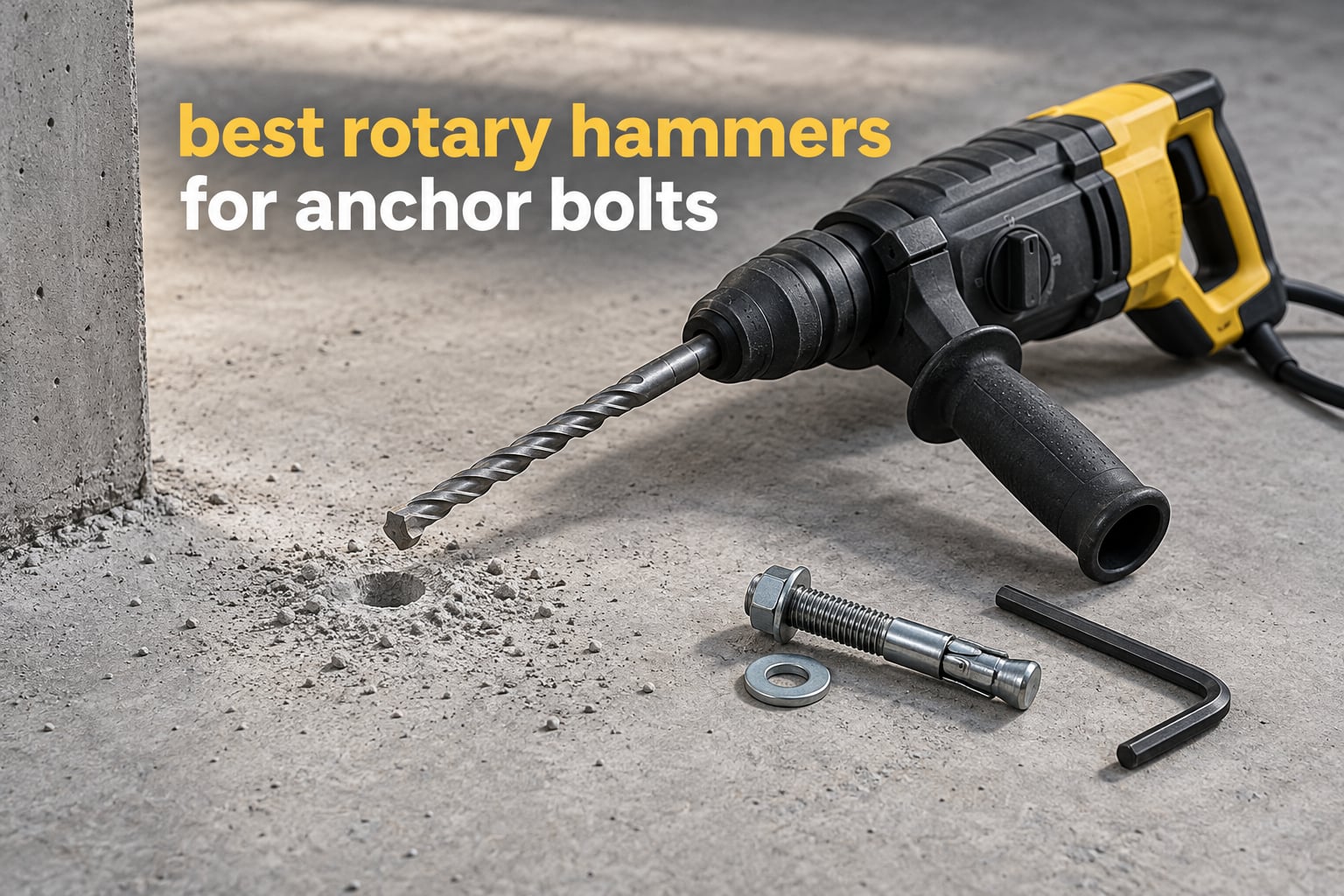
Ask any contractor which drill matters most on an anchor job and they will not mention torque. They will talk about impact energy, chuck class, and how fast the hole comes out of the concrete. If you want a straight answer: a rotary hammer with an SDS-Plus chuck handles nearly every anchor bolt you will install in concrete, block, or brick, and you only need SDS-Max once you are drilling half-inch and larger holes for wedge anchors. A plain hammer drill is not enough, because it grinds concrete instead of fracturing it.
That is the whole decision in two sentences, and everything below supports it. I spent the last month comparing ten rotary hammers for anchor work, checking published impact energy, chuck class, capacity, and weight against the hole sizes real anchor systems demand. I am not a lab, and I did not time hole after hole in cured concrete, so treat my testing story as hands-on spec analysis rather than instrumented benchmarking.
What I did do was read the review patterns closely. Reviewers repeatedly flag the same things: tools that bog down in old concrete, bits that bind and kick back, and chucks that will not accept the bit you already own. The ten picks below cover corded SDS-Plus, cordless SDS-Plus, and SDS-Max so you can match the class to the anchor rather than the tool to the shelf. If you want the wider picture of the format, our general rotary hammer roundup covers the same machines without the anchor-bolt lens.
Top 3 Picks for Anchor Bolt Work in September 2026
Three models cover the majority of anchor work, and they cover it for different reasons. The first wins on raw impact energy, the second on cordless convenience, the third on proven long-term durability.

ENEACRO ENRH3201 SDS-Plus
- › 5.5 ft-lbs impact energy
- › 1.25 inch concrete capacity
- › Safety clutch
- › 4 modes
Best Rotary Hammers for Anchor Bolts in September 2026
Here is the full lineup with the specification that actually decides each anchor job. Impact energy is the punch delivered per blow, and one foot-pound equals 1.356 joules, so the two figures below are the same measurement.
| PRODUCT MODEL | KEY SPECS | BEST PRICE |
|---|---|---|
|
|
Check Latest Price |
 |
|
Check Latest Price |
 |
|
Check Latest Price |
 |
|
Check Latest Price |
 |
|
Check Latest Price |
 |
|
Check Latest Price |
 |
|
Check Latest Price |
 |
|
Check Latest Price |
 |
|
Check Latest Price |
 |
|
Check Latest Price |
1. ENEACRO ENRH3201 13 Amp SDS-Plus Rotary Hammer
ENEACRO 1-1/4 Inch SDS-Plus 13 Amp Heavy Duty Rotary Hammer Drill
13 Amp corded
5.5 ft-lbs impact
4200 BPM
1.25 inch concrete
12.6 lb
+ The Good
- 5.5 ft-lbs impact energy beats every cordless in this roundup
- 1.25 inch concrete capacity clears every common wedge anchor size
- Four modes including chisel position adjustment
- Safety clutch plus double layer anti-vibration system
- Full kit with three bits chisels grease brushes and case
- The Bad
- 12.6 lb is heavy for overhead anchor work
- Carbon brushes add maintenance over the tool life
- Corded only so it stays near an outlet
This is the tool I keep reaching for when a customer hands me a drawing with half-inch wedge anchors and a slab date nobody can confirm. The 13 amp motor puts out 5.5 ft-lbs of impact energy, which is 7.4 joules, and that is more than three times what the lightest cordless machine here delivers. In a one-inch hole that difference is not academic, it is the difference between finishing before lunch and making an extra trip for a bigger bit.
The ENEACRO package includes the four modes you actually need on anchor work: drill only, hammer only, hammer drill, and chisel position adjustment. That last one matters when you have to chase a mis-drilled hole or knock out a sleeve. For anything that requires tapping or driving a screw, you drop to drill only, which is where a lot of lesser rotary hammers fail you.
Capacity is the headline spec here. One and a quarter inch in concrete covers the full range of standard wedge anchors and most expansion shields, and the bit change is tool-free through the SDS-plus sleeve. Rated speed is 820 rpm with 4200 impacts per minute, and the safety clutch and double layer anti-vibration system are the two features reviewers single out when describing long anchor runs.
The 360 degree adjustable handle is what makes it usable overhead, though at 12.6 lb you still feel it. The listed bare weight is 12.58 lb and the full kit with bits, chisels, and case comes to 18.1 lb, so plan your ladder work accordingly.
Who it fits
It fits installers who are drilling half-inch wedge anchors in poured concrete and do not want to buy into a battery platform. At 3510 reviews it carries the largest user base in this roundup, and the pattern in those reviews is consistent: strong motor, complete kit, minor complaints about weight and cord length.
Who it does not fit
It does not fit anyone working overhead for hours, or anyone on a site where power is far from the work. The carbon brushes are a consumable, and the manufacturer warranty is listed at 24 months, which is shorter than the three years the DEWALT models carry.
2. DEWALT DCH273B 20V MAX Cordless SDS Rotary Hammer
DEWALT 20V MAX SDS Rotary Hammer Drill, Cordless, 3 Application Modes, Bare Tool Only (DCH273B)
20V MAX cordless
2.1 joules impact
1 inch concrete
6.4 lb bare
3 modes
+ The Good
- Brushless motor with German-engineered mechanism
- SHOCKS Active Vibration Control cuts handle vibration
- 6.4 lb bare weight suits overhead anchor work
- Rotating dial for drill hammer drill and chip modes
- Dust extractor pairing meets OSHA Table 1
- The Bad
- Bare tool only so batteries and charger are extra
- Caps out at 1 inch concrete capacity
- Impact energy is well below the corded picks
This is the one I recommend when the anchor schedule is mostly tapcons and concrete screws rather than large wedge anchors. Two point one joules of impact energy is enough for quarter-inch and three-eighth-inch fasteners, and the 1 inch concrete capacity matches the bit sizes those anchors need. Above that, the pickings get thin and I would move up a class.
What separates it from other cordless rotary hammers is weight and vibration handling. At 6.4 lb bare, it is light enough to drill overhead one-handed in a pinch, and the SHOCKS Active Vibration Control system is the main reason reviewers do not complain about hand fatigue after a full day of concrete.
The dial selector gives you drill, hammer drill, and chip modes without moving the tool, which is exactly what you want when you are switching between anchor holes and cleanup. Brushless construction also means fewer motor parts to wear, and the manufacturer lists a 3 year limited warranty.
You get the tool as a bare unit with a 360 degree side handle, a depth rod, and an adjustable hook. If you already own 20V MAX packs, the total cost to get running is low. If you do not, budget for batteries before you start, because the first hour of a small battery is also the first hour of wondering whether you picked the right pack.
Who it fits
It fits electricians and HVAC installers running anchor patterns on a job site with no reliable outlet, particularly for ceiling-mounted boxes and equipment anchors. Pair it with the DWH303DH on-board extractor and you stay aligned with OSHA Table 1 for silica, which matters when you are drilling dozens of holes a day.
Who it does not fit
It does not fit contractors who need a single tool for both three-eighth-inch tapcons and one-inch wedge anchors, because one inch is the ceiling. It also does not fit anyone who wants a complete purchase in one transaction, since the battery and charger are separate.
3. BOSCH 11255VSR Bulldog Xtreme SDS-Plus Rotary Hammer
BOSCH 11255VSR Bulldog Xtreme SDS-Plus Rotary Hammer
7.5 Amp corded
2.0 ft-lbs impact
0 to 5800 BPM
10.4 lb
3 modes
+ The Good
- Reviewers report 10+ years of heavy service life
- 2.0 ft-lbs impact energy at up to 5800 BPM
- Vario-Lock gives 36 chisel positions
- D-handle improves control overhead and downward
- Includes auxiliary handle depth gauge and case
- The Bad
- Depth gauge reported as flimsy by some users
- Hair trigger sensitivity takes practice
- Needs an SDS-plus adapter for standard bits
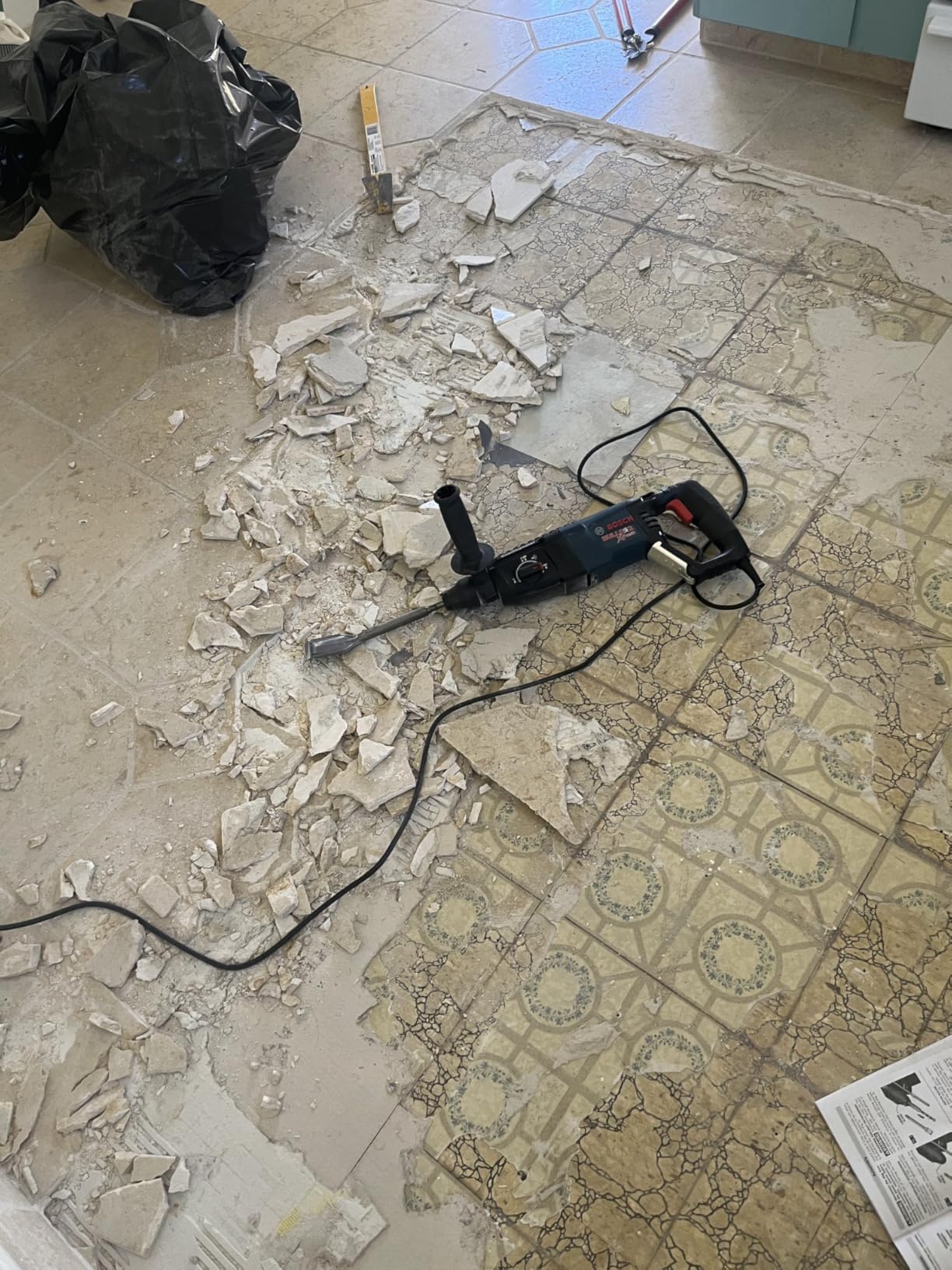
The Bulldog Xtreme is the model most often described as the last rotary hammer someone will need to buy for anchor work. The 7.5 amp motor produces 2.0 ft-lbs of impact energy across 0 to 1300 rpm and 0 to 5800 BPM, which puts it in the same performance band as a good cordless but without a battery in the way.
Three modes cover rotation only, rotary hammer, and hammer only, and the variable speed trigger with reverse is what saves you when a bit binds. That reverse function matters more than people expect, because getting a stuck bit out without spinning your wrist is part of doing anchor work safely.
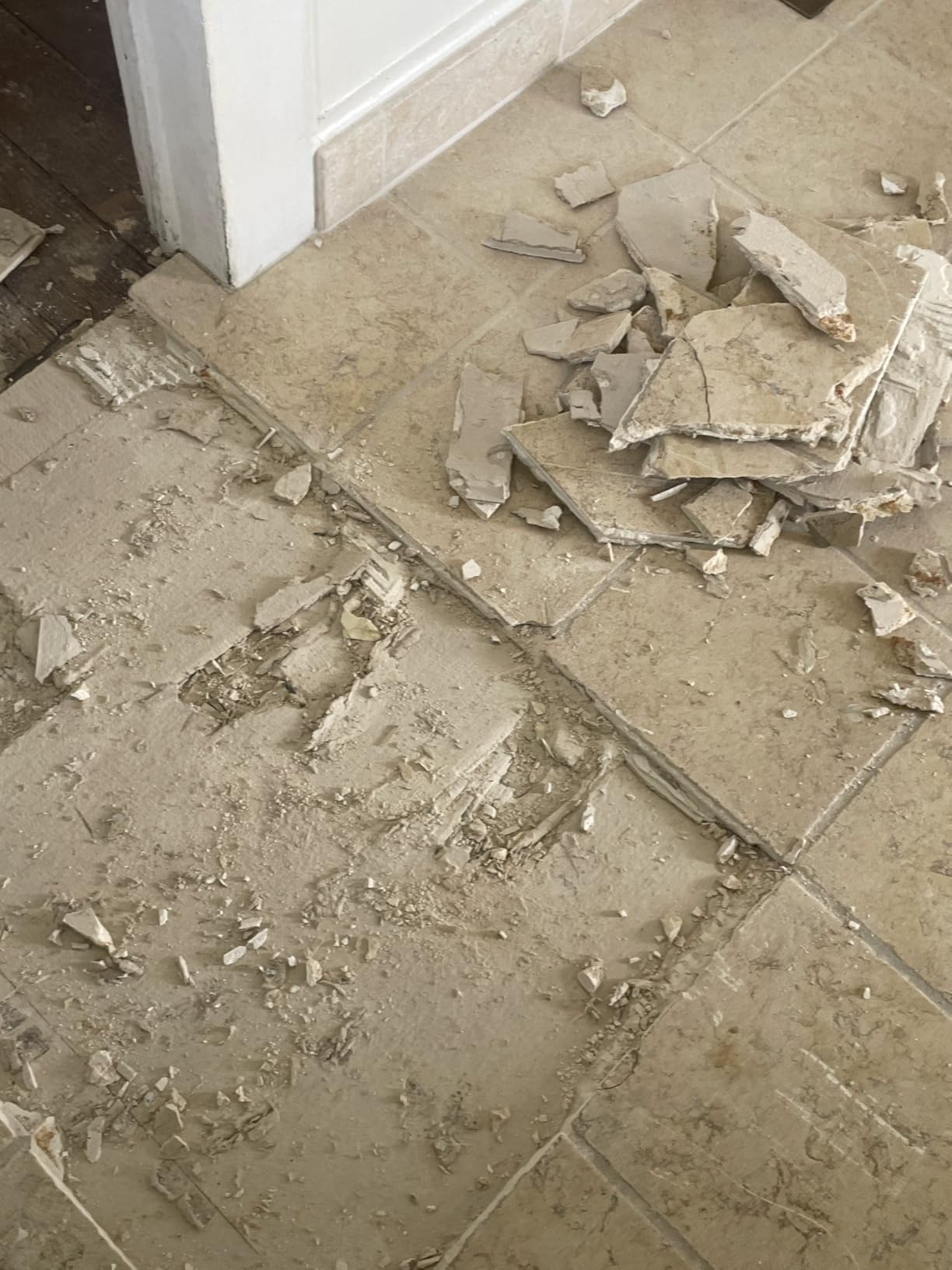
The D-handle is the ergonomic story here. It lets you push down on overhead holes and brace underneath for downward work, which is the position you spend most of an anchor run in. Vario-Lock gives 36 bit positions for chiseling, and vibration control is built into the housing for all-day comfort.
It is 10.4 lb, which is real weight but manageable with two hands. The listed package includes the rotary hammer, auxiliary handle, depth gauge, and carrying case. One thing I would replace on day one is the depth gauge, which several reviewers describe as flimsy for the precision embedment depth an anchor needs.
Who it fits
It fits homeowners and small crews who want one corded tool that will outlive several projects, especially if the holes are quarter-inch to three-eighth-inch and the concrete is unknown age. The durability reports in the reviews are the strongest in this group for a reason.
Who it does not fit
It does not fit overhead crews, because at 10.4 lb with no battery offset there is no relief. It also does not fit anyone drilling above three-eighth-inch without a step up, since 1 inch concrete capacity is the practical limit for anchor work.
4. DEWALT DCH133B 20V MAX D-Handle Cordless Rotary Hammer
DEWALT 20V MAX SDS Plus 1 Inch Cordless Rotary Hammer with D-Handle, Bare Tool Only (DCH133B)
20V MAX cordless
2.6 joules impact
5 lb bare tool
D-handle
20V battery
+ The Good
- 2.6 joules is unusually high for a 5 lb cordless tool
- D-handle gives real balance and control overhead
- Brushless motor with German-engineered mechanism
- Three modes on a rotating dial
- 3 year limited warranty
- The Bad
- Bare tool so batteries are a separate cost
- 1 inch maximum concrete capacity
- Needs higher amp-hour packs for full output
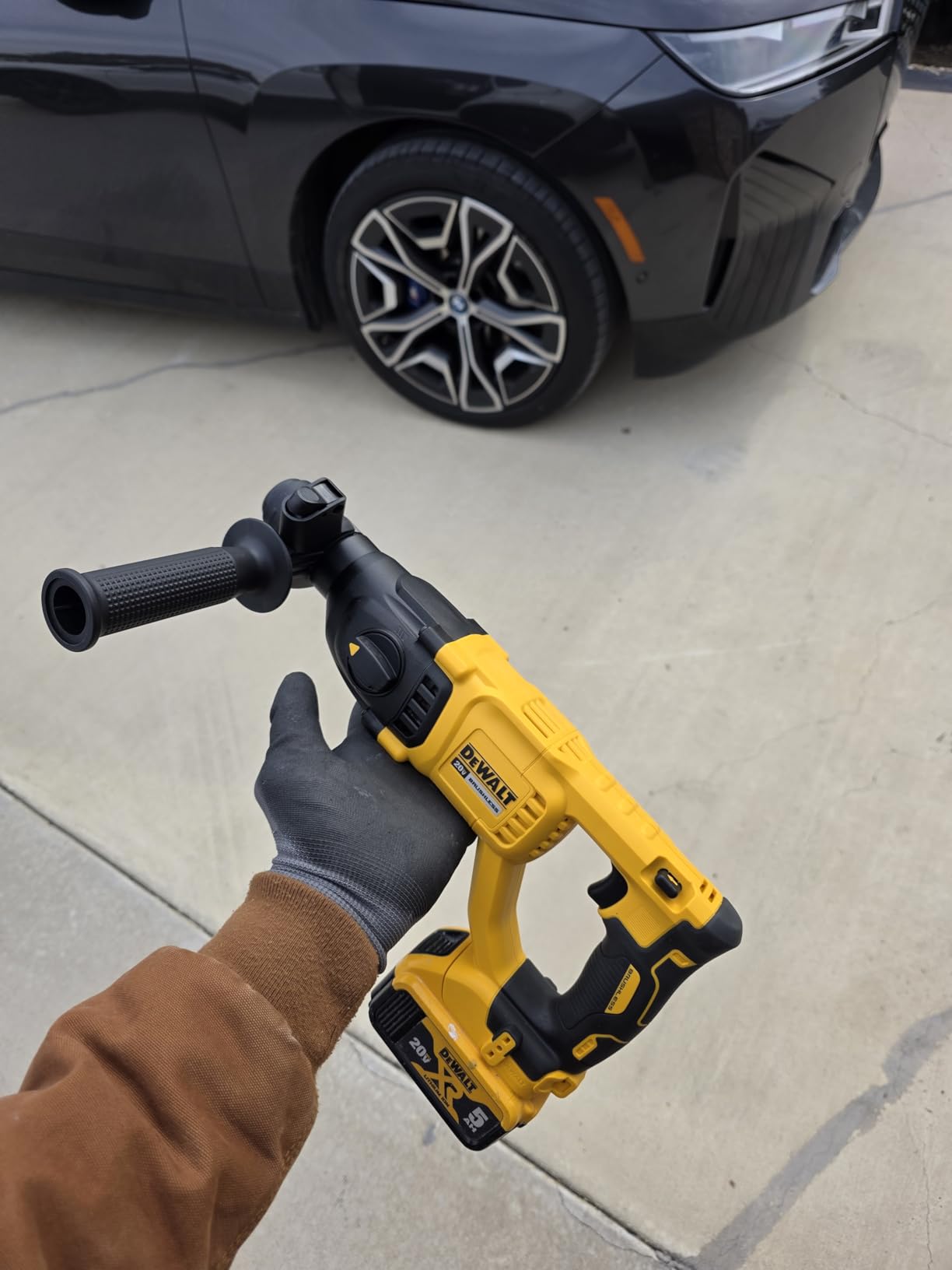
At 4.8 stars across 2091 reviews, this is tied for the highest rated machine in the roundup, and the number that makes it interesting is the weight. Five pounds bare, with 2.6 joules of impact energy, puts it between the light cordless tools and the heavy corded ones. Reviewers comparing it to professional corded hammers is not flattery, it is the whole point of the design.
For anchor work, 2.6 joules is enough for three-eighth-inch anchors in normal concrete and it will not bog down the way a 1.5 joule tool does when you hit a dense patch. It will not replace an SDS-Max machine for anything above half inch, and the 1 inch capacity is the hard boundary.
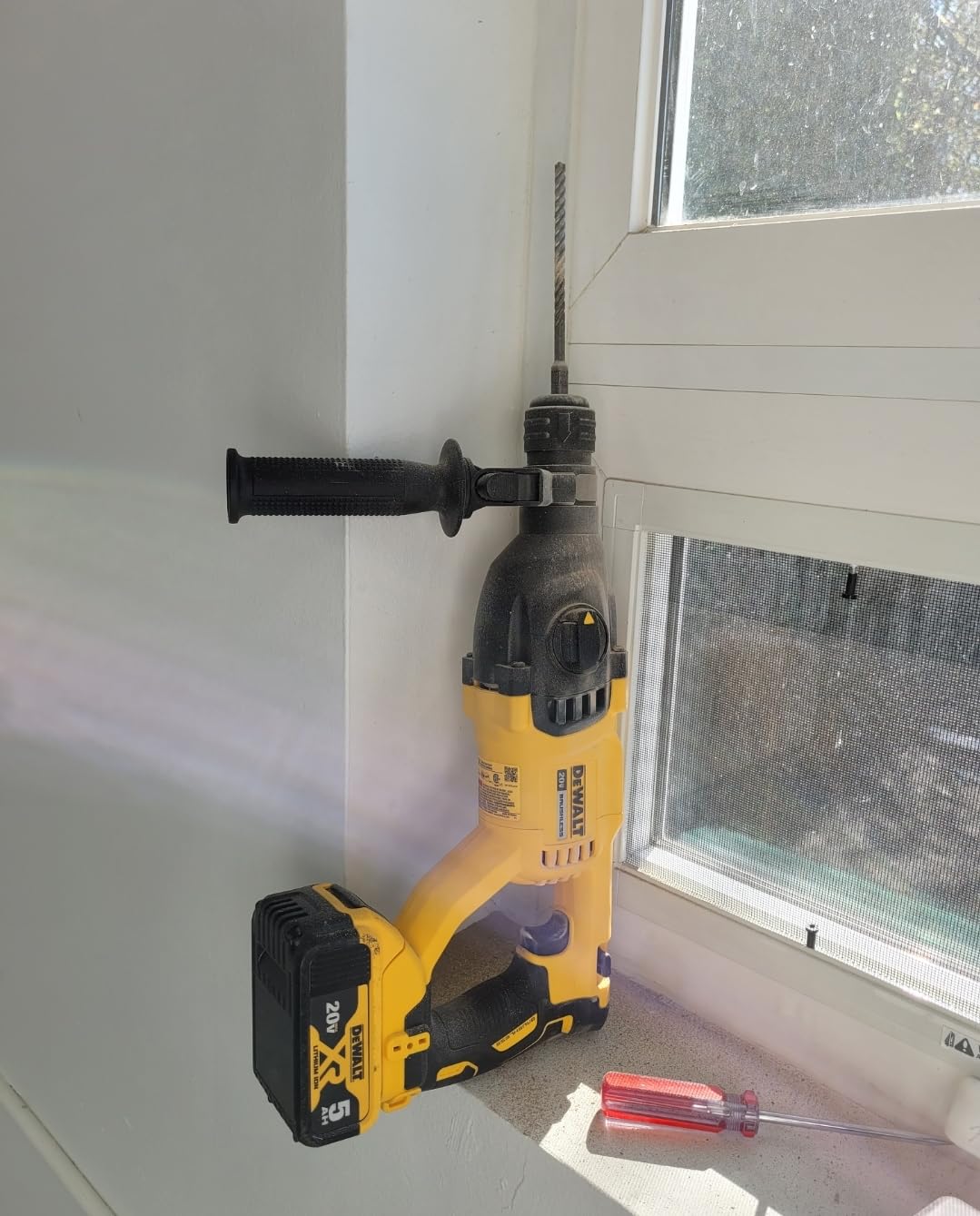
The D-handle is the differentiator over the DCH273B. It wraps the body so you can brace it overhead with one hand on the grip and one on the handle, which cuts the fatigue that makes people stop halfway through an anchor pattern. The brushless motor and rotating mode dial add efficiency and clean mode switching.
In the box you get a 360 degree side handle, a depth rod, and a 3 year limited warranty. My one caution is battery sizing, because the listed spec pairs it with a 4 amp-hour pack, and higher capacity packs are where the runtime comes from on a full day of drilling.
Who it fits
It fits installers doing overhead anchor work where weight decides whether you finish the day, and anyone already committed to the 20V MAX ecosystem. The 5 lb figure is what makes it the only cordless in this roundup I would genuinely hold above my head for a full run.
Who it does not fit
It does not fit large-anchor work above three-eighth-inch or anyone who needs one tool to cover every anchor diameter on a job. The bare-tool format also means the first purchase buys the tool alone.
5. Milwaukee 2912-20 M18 FUEL 1 Inch SDS Plus Rotary Hammer
Milwaukee 2912-20 M18 Fuel 18V 1″ Sds Plus Brushless Rotary Hammer
18V M18 FUEL
1 inch SDS Plus
7.5 lb
AUTOSTOP bind-up control
Brushless
+ The Good
- AUTOSTOP senses bind-ups and stops to protect your wrist
- 11.5 inch length fits tight and overhead spaces
- M18 FUEL brushless motor is fast in its class
- Part of an ecosystem with 200+ compatible tools
- Anti-vibration system reduces hand fatigue
- The Bad
- Bare tool so M18 battery and charger are extra
- 1 inch concrete capacity tops out the range
- Review base is among the thinnest in this roundup
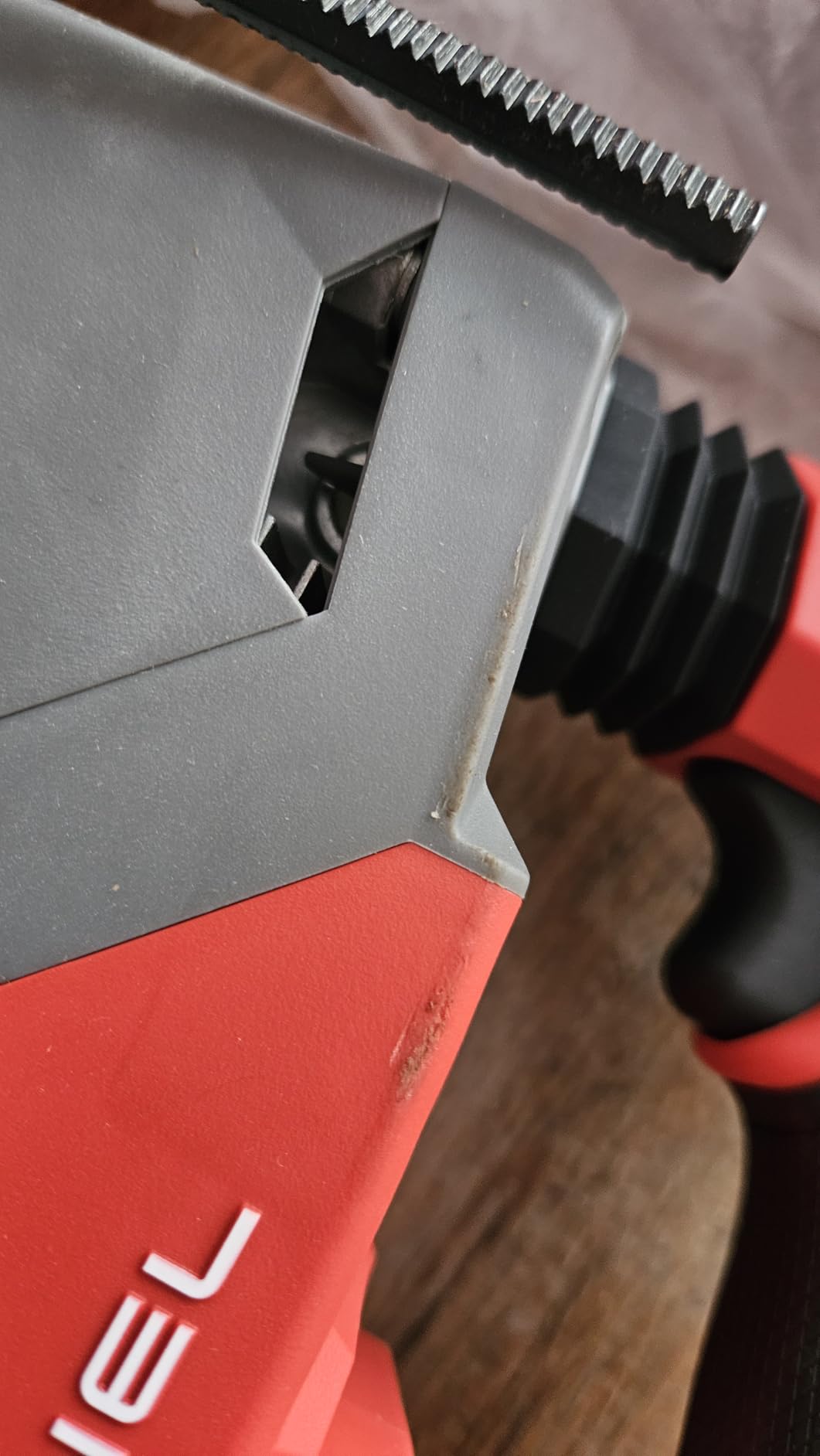
The reason this tool matters for anchor work is AUTOSTOP. Forum users describe wrist injuries from bound bits as a real trade hazard, and Milwaukee built the bind-up sensing into the tool rather than leaving the reaction to your reflexes. When the bit catches, the motor stops instead of loading up your forearm.
The 11.5 inch overall length is the second reason to like it. Short bodies matter when you are drilling overhead or working inside a wall cavity, because the length of the tool decides how much wrist clearance you have to hold a straight line.
Power comes from the M18 FUEL brushless motor, and reviewers commonly describe drilling speed as matching corded machines. It is rated for 1 inch SDS Plus concrete capacity and weighs 7.5 lb. High capacity M18 packs are recommended for demanding work, and the anti-vibration system helps on long runs.
Forum users running cordless rotary hammers for anchoring generally report that brushless cordless has closed most of the gap with corded. That is consistent with what I see in these reviews, and it changes the calculation if you already own M18 packs and would need to buy batteries for anything else.
Who it fits
It fits M18 system owners who want bind-up protection as a hardware feature rather than a habit. It also fits anyone working in confined spaces or overhead where an 11.5 inch body beats a long corded machine.
Who it does not fit
It does not fit half-inch and larger wedge anchor work, and it does not fit people starting from zero tooling who would rather buy one complete corded machine than a platform. The 620 reviews here are among the thinnest in the roundup, so treat the consensus with a little more caution than the others.
6. Makita HR2641X1 SDS-Plus Rotary Hammer and Angle Grinder Kit
Makita HR2641X1 SDS-PLUS 3-Mode Variable Speed AVT Rotary Hammer with Case and 4-1/2″ Angle Grinder, 1″
8 Amp corded
2.1 ft-lbs impact
AVT counterbalance
3 modes
7.1 lb
+ The Good
- AVT counterbalance system and damper spring cut vibration hard
- 7.1 lb is light for a corded rotary hammer
- 2.1 ft-lbs impact energy handles demanding anchor work
- Kit bundles a 4-1/2 inch angle grinder and tool case
- Retractable hook and recessed function selector add durability
- The Bad
- Corded design limits mobility
- Bundled angle grinder may be dead weight for some buyers
- Runs hot with extended heavy use
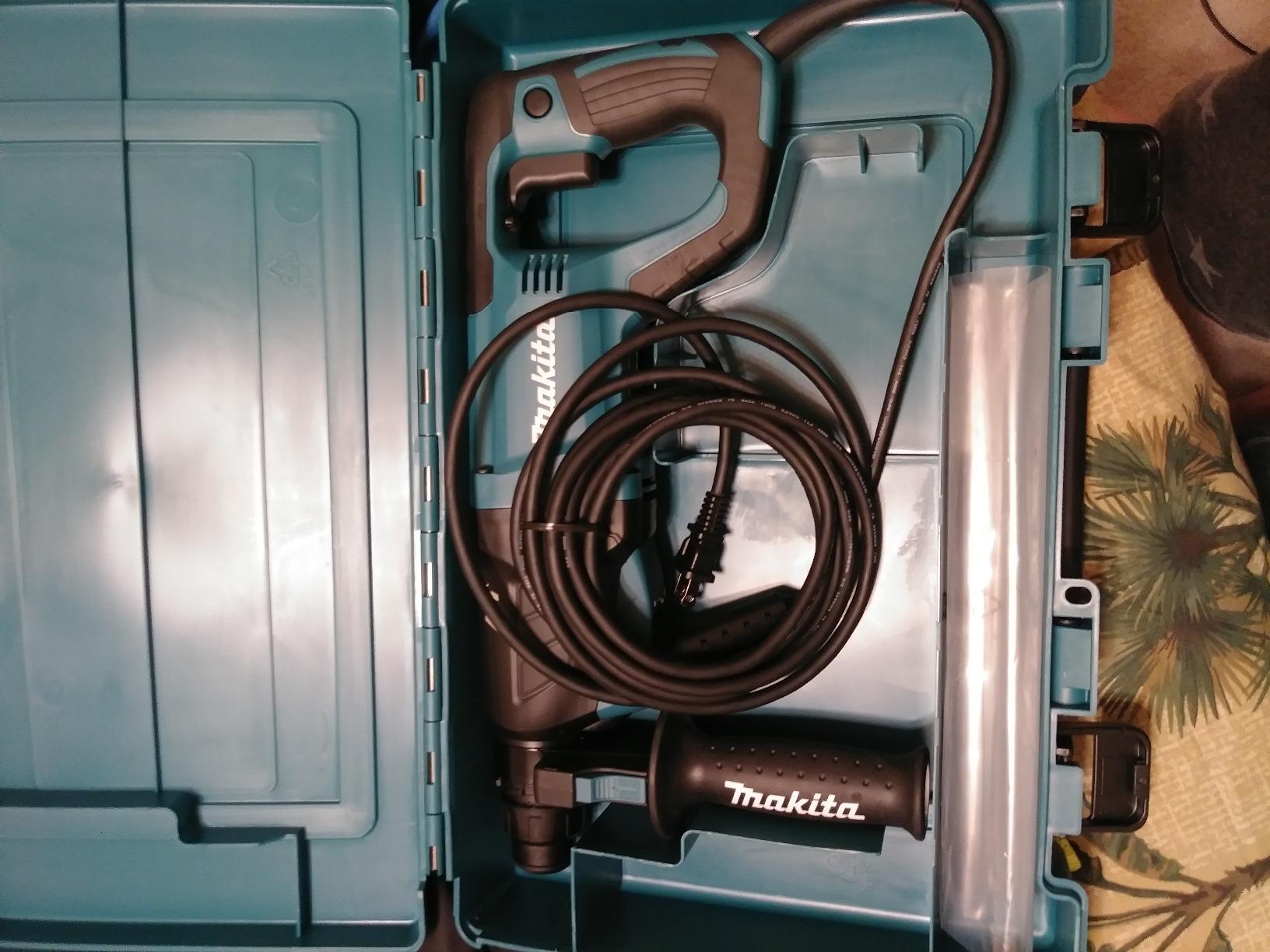
This is the vibration answer. The Makita uses an internal counterbalance system plus an integrated damper spring to absorb impact vibration, and for anyone drilling more than a few dozen anchor holes a day that is the feature that decides whether the tool is still comfortable in hour six.
The 8 amp motor delivers 2.1 ft-lbs of impact energy, which is the same ballpark as the DEWALT DCH273B cordless and above the Bosch Bulldog Xtreme. Three modes cover rotation only, hammer only, and hammer with rotation, so the anchor work and light chiseling are both covered.
At 7.1 lb it is unusually light for a corded rotary hammer, and that combination of light weight and damped vibration is why it earns a place on long overhead anchor patterns. The SDS-plus chuck handles standard bit changes without tools.
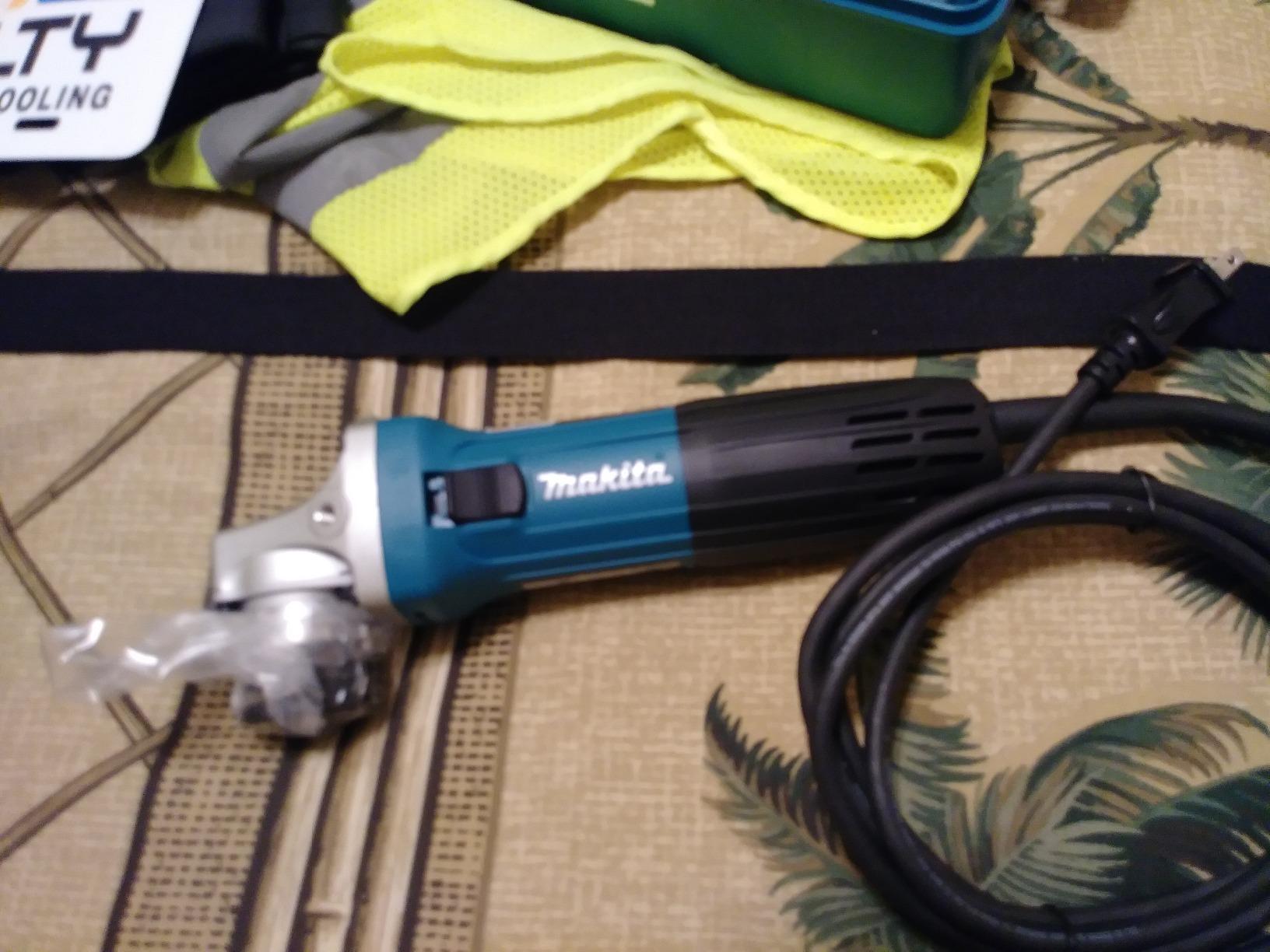
The kit also includes a 4 and a half inch angle grinder, a depth gauge, a side handle, and a tool case. If you were going to buy a grinder anyway, the bundle is efficient. If not, you are carrying a second tool you will never plug in, and the 1 year warranty is among the shortest in this roundup.
Who it fits
It fits installers with hand or wrist sensitivity and anyone doing high hole counts per day, such as seismic strapping or repetitive bracket anchoring. It also suits buyers who want a rotary hammer and a grinder in one kit.
Who it does not fit
It does not fit demolition work, and reviewers are clear that it is not strong enough for breaker duty. It also does not fit anyone who needs mobility away from an outlet, since the cord is the constraint.
7. BOSCH RH540M SDS-Max 1-9/16 Inch Combination Hammer
BOSCH RH540M SDS-max 1-9/16 In. Combination Hammer for Concrete
12 Amp corded
6.1 ft-lbs impact
SDS-max chuck
15.2 lb
Turbo Power mode
+ The Good
- 6.1 ft-lbs impact energy drives large diameter anchor holes
- Turbo Power mode adds 20 percent power in hammer only
- Constant Response circuitry holds speed under load
- Service minder brushes flag maintenance before failure
- SDS-max one-handed bit changes
- The Bad
- 15.2 lb is too heavy for overhead work
- No drill only mode
- Requires a 15 amp circuit and heavy cord
This is where the anchor size question gets decided. The RH540M is an SDS-max combination hammer, which means it takes the 18 mm shank and the bits that go with half-inch and larger wedge anchors. A 1-9/16 inch capacity and 6.1 ft-lbs of impact energy cover the anchor range that SDS-plus tools simply cannot.
Impact energy is the number that matters here, and it is worth converting for comparison. At 6.1 ft-lbs this is roughly 8.3 joules, well above the 2.1 to 3.5 joules the cordless picks in this roundup deliver, and the Bosch claim is 20 percent more than comparable combination hammers.
Constant Response circuitry gives you a soft start and holds speed under load, which is exactly what you want when a carbide bit wanders off the mark. Vario-Lock provides 12 chisel positions, and the integral clutch reduces torque reaction when a bit binds. Service minder brushes are a small detail that saves real downtime.
The honest limitation is weight. At 15.2 lb this is a two-handed floor or ground-level tool, and it wants a 15 amp circuit with a heavy-duty extension cord. The mode selector gives you rotary hammer or hammer only, so there is no rotation-only function for tapping or driving screws.
Who it fits
It fits installers running structural anchor patterns, handrail posts, and equipment bases where holes run half inch to over an inch. It also fits anyone working into high-density or old concrete, where the extra impact energy is the difference between progress and a stalled bit.
Who it does not fit
It does not fit overhead drilling, ladders, or confined spaces, and at 15.2 lb it is not a tool you want to carry all day. Anyone who only needs a quarter-inch tapcon has no reason to own it.
8. Berserker 42M SDS-Max Rotary Hammer Drill
Berserker 1-9/16″ SDS-Max Heavy Duty Rotary Hammer Drill for Concrete 42M
1600W 13 Amp corded
7.38 ft-lbs impact
SDS-max chuck
16 lb
6 speed
+ The Good
- 7.38 ft-lbs is the highest impact energy figure in this roundup
- Includes an SDS-max to SDS-plus adapter chuck as standard
- 1600W 13 Amp motor handles serious drilling and chiselling
- Overload clutch protection for bind-ups
- Kit includes bits chisels grease brushes and case
- The Bad
- 16 lb is the heaviest tool in the roundup
- No drill only mode
- Overheats with continuous heavy use
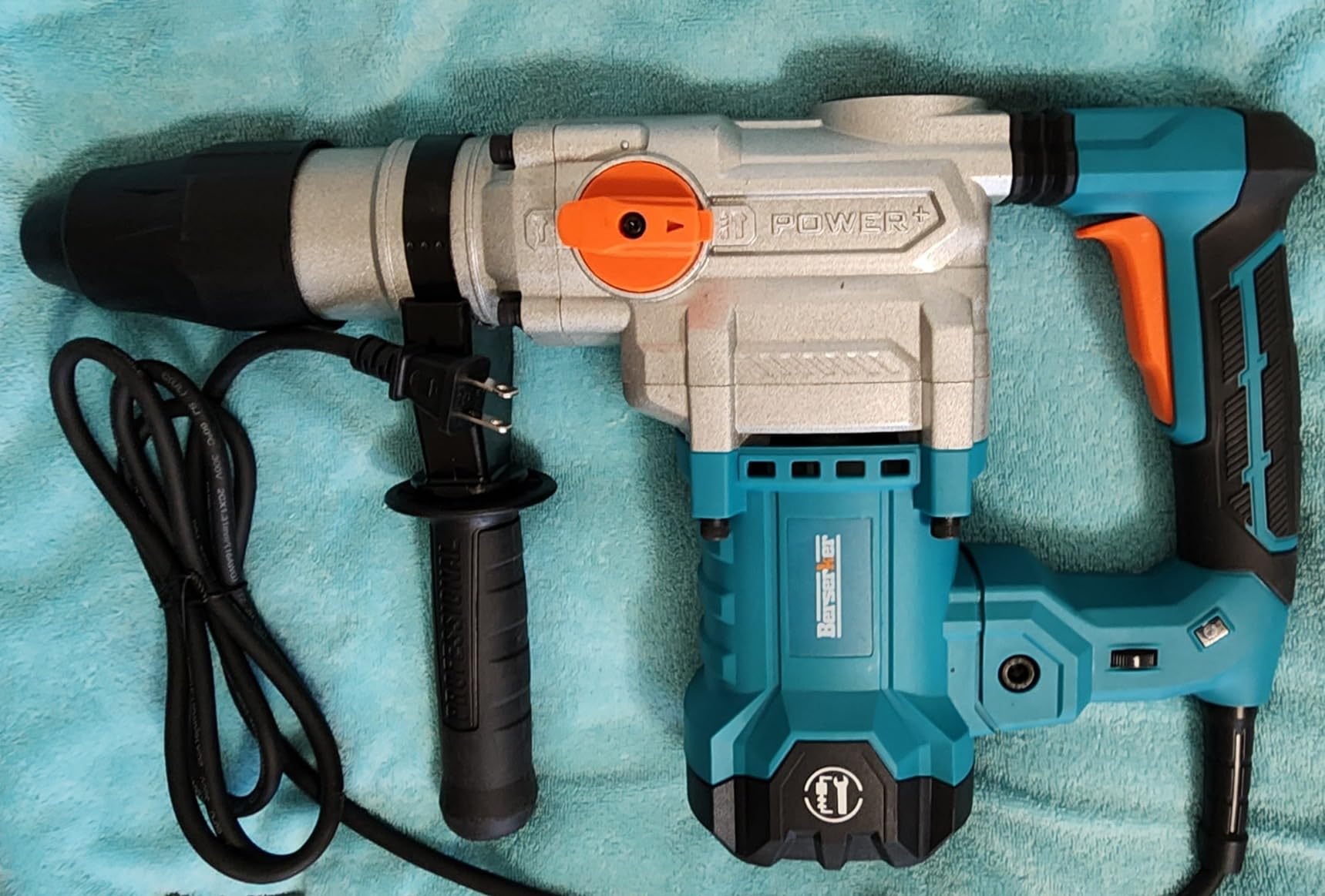
The Berserker answers the question of whether you need SDS-max capability without buying into the professional tier. At 7.38 ft-lbs of impact energy, which is about 10 joules, and that exceeds the 6.1 and 6.5 ft-lbs Bosch SDS-max figures in this roundup, and includes an SDS-max to SDS-plus adapter so one tool covers both chuck classes.
That adapter is the feature that makes it useful for anchor work specifically. Most people need SDS-plus bits for tapcons and concrete screws, and needing two machines for one job is how anchor projects get expensive. The kit also includes three SDS-plus bits at three-eighths, half inch, and five-sixteenths, plus a seven-eighth inch SDS-max bit.
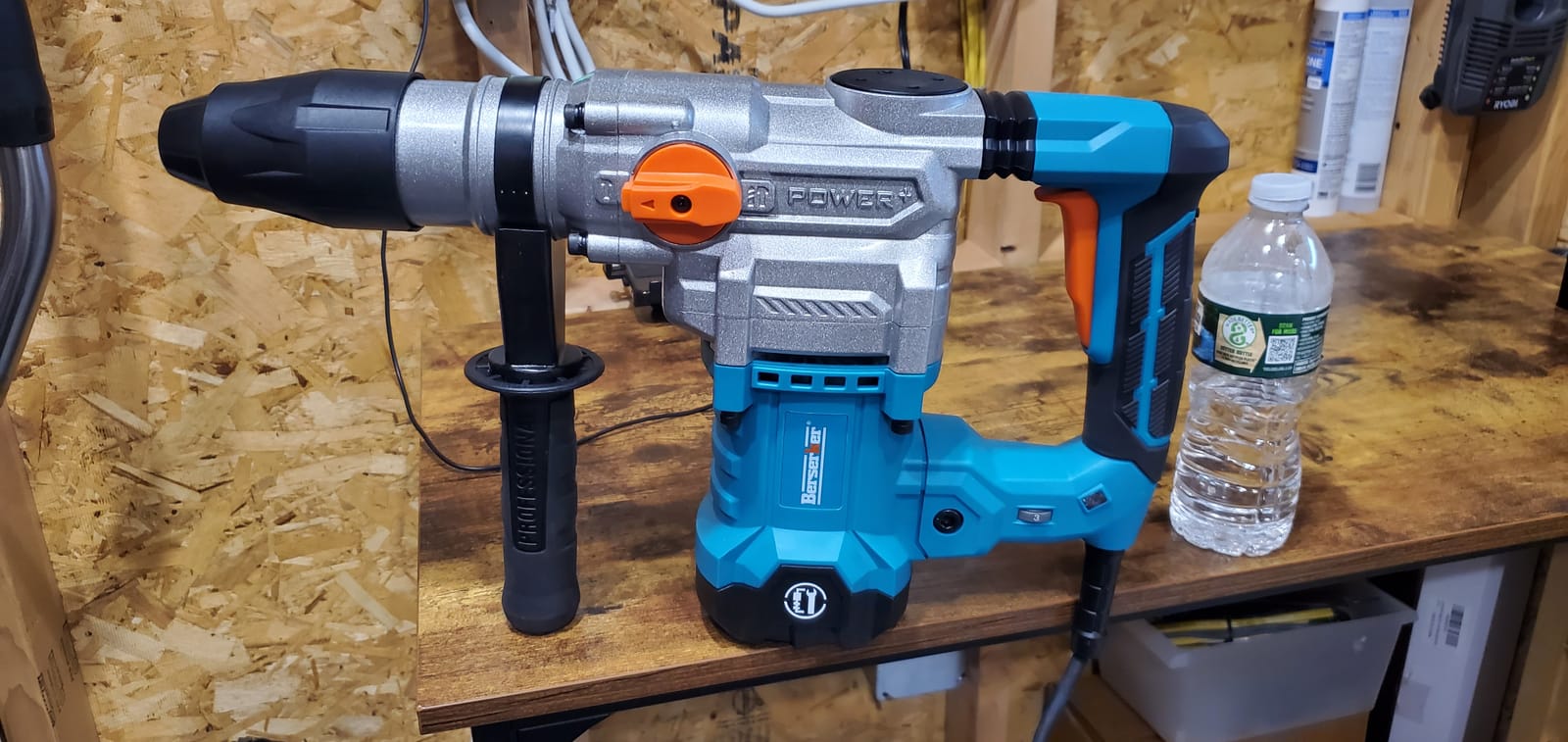
Speed control runs through a six-speed transmission from 0 to 630 rpm and 0 to 3800 BPM, and modes cover hammering with rotation, hammer only, and Vario-Lock positions. The overload clutch is the safety feature worth naming, since bind-ups are the injury mechanism forum users keep describing.
The tradeoffs are real. At 16 lb it is the heaviest tool here, and reviewers report overheating under continuous heavy use with a need for cooling breaks. There is also mixed long-term durability reporting, with some owners describing failures within the first few uses. For occasional heavy anchor projects rather than daily trade work, the value is real.
Who it fits
It fits weekend renovators and small crews who occasionally need half-inch or larger anchor holes and cannot justify a professional SDS-max machine. The bundled adapter and bit set mean you can begin drilling immediately.
Who it does not fit
It does not fit daily professional use, where overheating and mixed durability reports become a problem. It also does not fit overhead work at 16 lb, or anyone who needs a rotation-only mode.
9. DEWALT DCH293B 20V MAX XR 1-1/8 Inch L-Shape Rotary Hammer
DEWALT DCH293B 20V Max XR Brushless 1-1/8” L-Shape SDS Plus Rotary Hammer Drill (Tool Only)
20V MAX XR cordless
3.5 joules impact
1-1/8 inch capacity
8.7 lb
E-Clutch
+ The Good
- 3.5 joules is the highest impact energy among the cordless picks
- E-Clutch manages bind-ups for controlled reaction force
- SHOCKS vibration control reduces handle fatigue
- L-shape body gives better balance than a barrel design
- Compatible with the D25304DH dust extractor
- The Bad
- Bare tool so 20V MAX batteries are a separate cost
- 8.7 lb is the heaviest cordless in the roundup
- No case included with the bare tool
Three and a half joules is the standout figure here, and it is the highest impact energy of any cordless machine in this roundup. Reviewers describe it in blunt terms, comparing its output to professional corded tools. In practice that number is what lets you hold speed in dense concrete without the bit stalling every few seconds.
The one and one-eighth inch capacity extends past the 1 inch ceiling of the other DEWALT cordless model, which pushes it into the range of three-eighths and half-inch anchor hardware. It is still an SDS-plus chuck, so the bit class is the same, but the holes it can bore are larger.
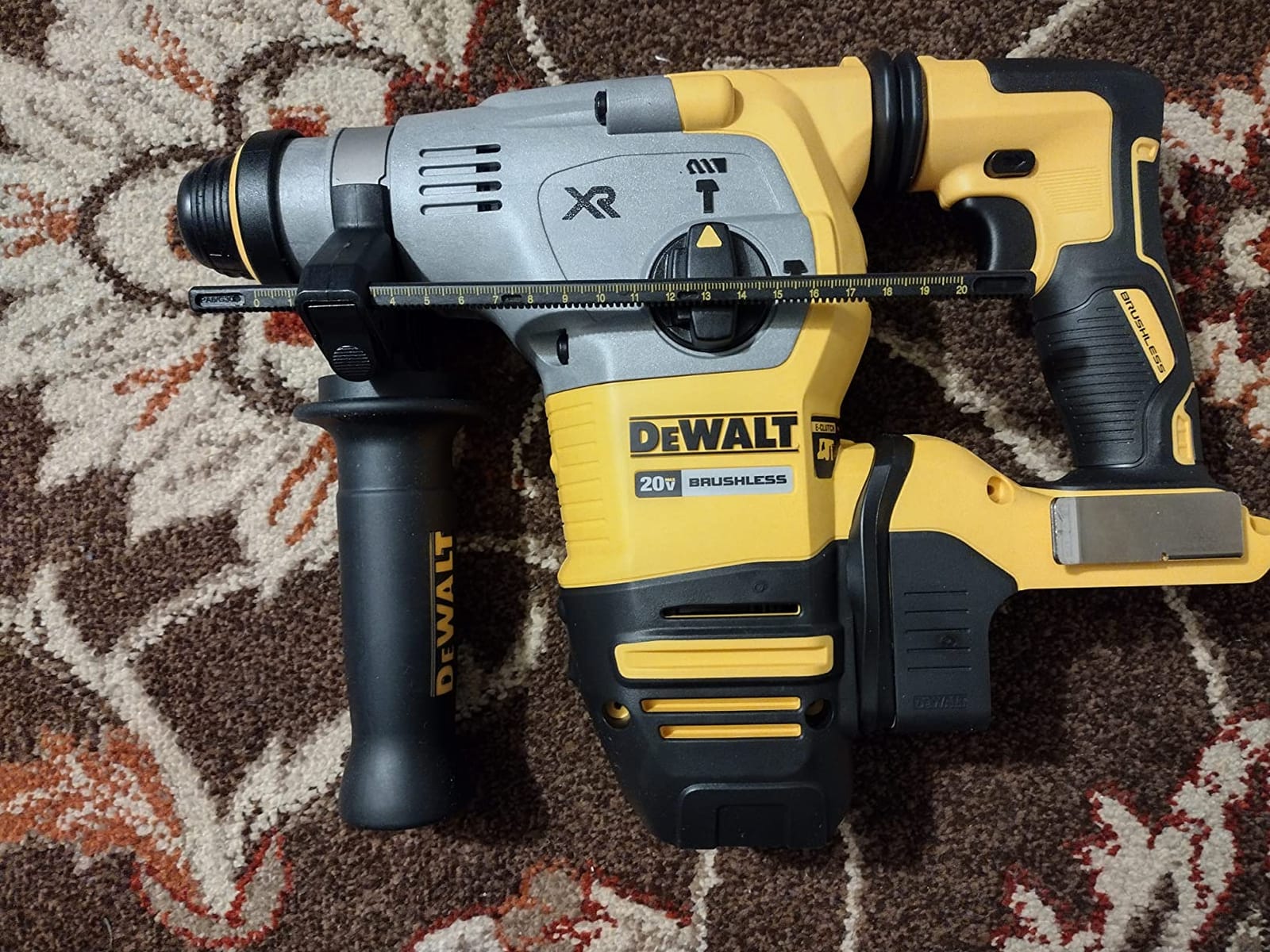
E-Clutch is the safety story. It manages bind-up reaction so the tool does not try to spin your arm when the bit catches, and combined with SHOCKS Active Vibration Control it is a sensible pairing for anyone drilling a lot of holes. The L-shape body also holds better in balance than a straight barrel design, particularly in the downward position.
Other details worth knowing: a retractable utility hook for hanging from a belt or ladder, dust management readiness through the D25304DH, German engineering, and a 3 year limited warranty. Reviewers do flag the rubber boot on the vibration absorber as something that degrades under heavy abuse, and at 8.7 lb this is the heaviest of the four cordless machines here, so plan overhead anchor runs carefully.
Who it fits
It fits 20V MAX owners who want the most anchor capability a cordless can offer without moving up to SDS-max. It also fits anyone whose work involves drill sites with rebar or unknown density, where bind-up control and impact energy both matter.
Who it does not fit
It does not fit true SDS-max anchor work, since the chuck class is still plus. It also does not fit buyers who want a complete package, as the battery, charger, and case are all separate purchases.
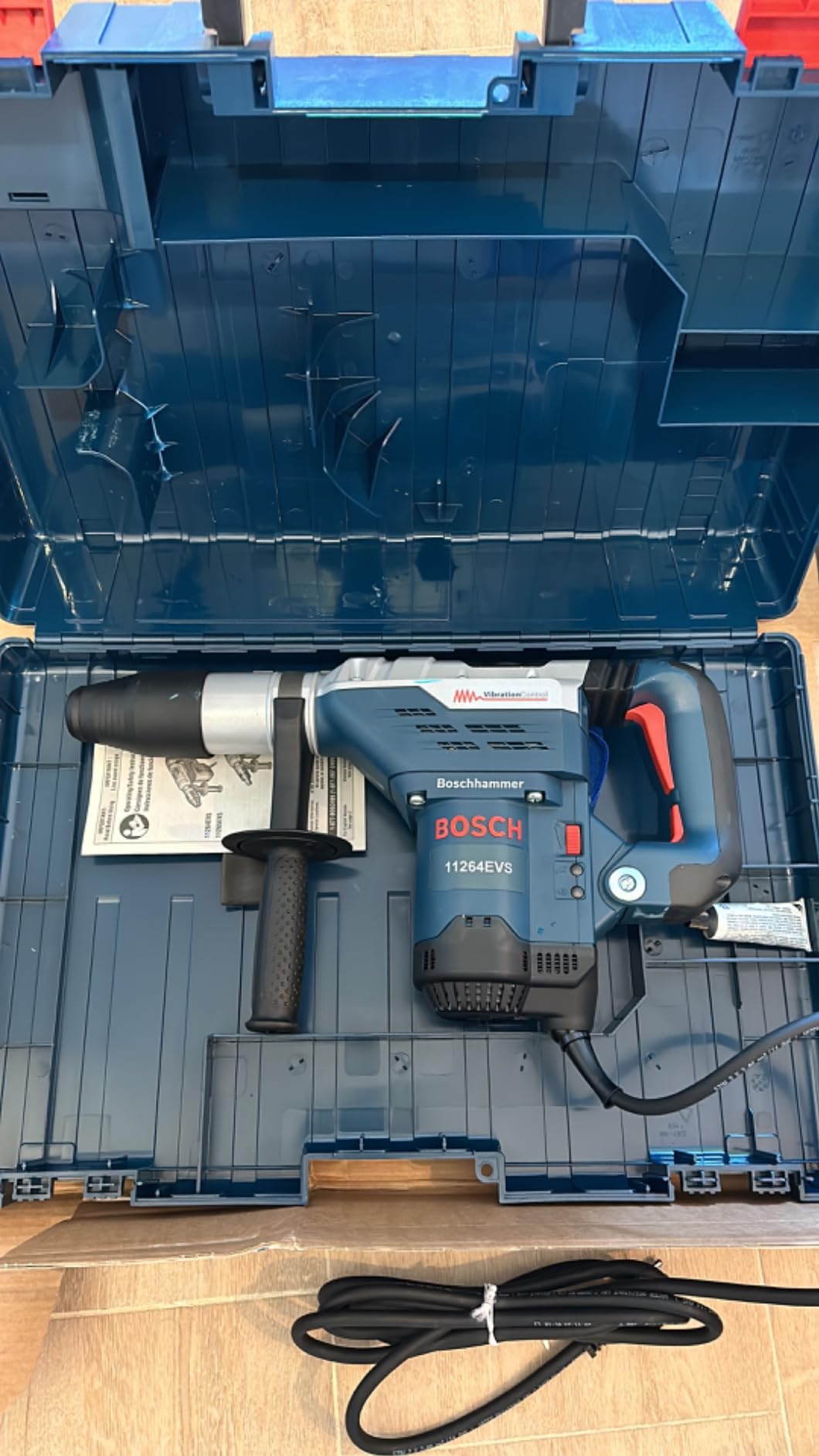
10. BOSCH 13.0 Amp 11264EVS SDS-Max Combination Hammer
BOSCH 13.0 Amp 11264EVS SDS-max 1-5/8 In. Combination Hammer
13 Amp corded
6.5 ft-lbs impact
SDS-max chuck
Constant Response
15.2 lb
+ The Good
- 6.5 ft-lbs impact energy from a 13.0 amp motor
- Constant Response circuitry holds speed under load
- Turbo Power adds 20 percent power in hammer only
- Electro-pneumatic impact system with integral clutch
- Users report 10+ years of heavy use
- The Bad
- 15.2 lb rules it out for overhead work
- No drill only mode
- Metal housing runs very hot on extended runs
This is the flagship of the roundup and the one I would put on a crew truck. The 13.0 amp motor drives 6.5 ft-lbs of impact energy, and Bosch describes it as 20 percent more than comparable combination hammers in hammer-only mode through Turbo Power.
Constant Response circuitry is the feature that changes day-to-day work. Soft start prevents the bit from walking on startup, and holding speed under load means your depth stays on target instead of drifting as the concrete changes density. The electro-pneumatic impact system maximizes force while minimizing vibration.
For anchor bolts, the SDS-max chuck and 1-5/8 inch capacity cover everything from half-inch wedge anchors to larger expansion hardware, with tool-free bit changes and automatic locking. Vario-Lock gives 12 chisel positions, and the variable speed dial helps when you are starting a bit into a face that has spalled.
Weight and access are the honest limits here. At 15.2 lb it is a two-handed tool for ground-level and platform work, not for ladders, and reviewers note the metal housing gets very hot on extended runtime. The warranty is a limited 1 year. If you run anchors every single day, the durability reports of 10 plus years make it defensible, and our demolition hammer picks cover the chiseling side of the trade.
Who it fits
It fits commercial anchor crews working base plates, handrail systems, and structural connections on a daily basis. It also fits anyone drilling into old, high-density concrete where lighter machines stall, which is the scenario forum users describe most often.
Who it does not fit
It does not fit overhead installers or anyone working from a ladder. It also does not fit occasional users, because the weight and the no-drill-only-mode design add effort that a weekend project does not need.
How to Match a Rotary Hammer to Your Anchor Hole Diameter?
Start with the anchor, not the tool. The hole diameter printed on the anchor packaging is the diameter your bit must match, and the tool class follows from that number. Drill a hole even a sixteenth under the required diameter and the anchor either will not set or will not develop its rated strength, and that failure shows up later as a pull-out.
For quarter-inch and three-eighth-inch concrete screws and tapcons, you need an SDS-plus rotary hammer with a bit at the specified diameter, and nothing more powerful. For half-inch and larger wedge anchors, you need SDS-Max, because the shank is 18 mm instead of 10 mm and the concrete chip volume is far higher. Anchor embedment is what sets the tool, not the fastener head.
Hole depth is where most people go wrong. Drill deeper than the required embedment so the anchor can sit below the face, then clear debris with a brush and blow it out before you set the anchor. Debris left in the bottom of the hole prevents full embedment even when your depth reading says you are correct.
Rotary hammer, hammer drill, or demolition hammer
A hammer drill uses a rattling gear mechanism at roughly 500 to 1500 impacts per minute and is fine for a dozen tapcons. A rotary hammer uses cam-driven percussion at roughly 2500 to 4000 impacts per minute, so each blow fractures a chip instead of grinding, and the difference grows as holes get deeper. A demolition hammer has no rotation at all and is for breaking concrete, not for anchor holes. If you are reading this trying to decide, you want the middle option.
SDS-Plus vs SDS-Max: Why the Chuck Is Not Interchangeable
This is the most common expensive mistake in anchor work, and it comes from assuming bigger is interchangeable. SDS and SDS-plus share a 10 mm shank, so SDS bits fit SDS-plus tools. SDS-Max is an 18 mm shank, and nothing crosses that line. An SDS-max chuck will not accept a plus bit, and a plus chuck cannot drive a max bit, which is why the Berserker in this roundup includes an adapter rather than pretending the problem does not exist.
The technical reason is that the larger shank transfers more torque to a bigger bit, and the chuck sleeve geometry is different. Buying a plus-only rotary hammer and discovering you need a half-inch wedge anchor bit means buying a second tool, not a second bit.
How to drill for concrete anchors, step by step
Mark the layout, then check for rebar before you drill. Next, set the depth stop rod so you cannot overshoot. Select a carbide-tipped bit matching the required hole diameter, drill at 90 degrees with steady forward pressure, pull the bit out periodically to clear debris, and finally verify depth and clean the hole before setting the anchor. If you meet rebar mid-hole, relocate the anchor rather than forcing through it, which is the advice forum users give most often.
For corded versus cordless, forum consensus is that brushless cordless has closed most of the gap for anchor work, and shops commonly keep both, a corded machine at the drilling station and a cordless in the truck. Our broader premium rotary tool picks cover the surrounding categories.
How We Picked These Rotary Hammers?
These recommendations are spec-driven and review-driven, not instrumented lab results. I compared published impact energy, impacts per minute, chuck class, maximum concrete drilling capacity, weight, and mode selection across ten machines, then cross-checked each against the recurring themes in customer reviews, particularly durability, bind-up behaviour, and vibration levels.
Impact energy was the primary filter because it governs whether an anchor hole gets drilled cleanly. Review count and rating were secondary signals, and I weighted models with large review bases more heavily when behaviour claims conflicted between sources.
Frequently Asked Questions
What type of drill is best for drilling into concrete for anchors?
A rotary hammer drill is the correct tool, not a standard hammer drill. A rotary hammer uses cam-driven percussion at roughly 2500 to 4000 impacts per minute so each blow fractures concrete, while a hammer drill rattles at 500 to 1500 impacts per minute and grinds. An SDS-plus rotary hammer covers quarter-inch and three-eighth-inch anchors; move to SDS-Max for half-inch and larger wedge anchors.
Do I need SDS-Max for anchor bolts?
Only for the larger ones. SDS-Max is required when you are drilling half-inch and larger holes, because it takes an 18 mm shank and the bigger bits those anchors need. SDS and SDS-plus share a 10 mm shank and are not interchangeable with SDS-Max. Quarter-inch and three-eighth-inch tapcons and concrete screws need only an SDS-plus rotary hammer.
Which is better for concrete, SDS or SDS Plus?
For anchor work, SDS-plus is the better choice because it adds keyways that lock the bit more positively and tolerate heavier hammering. Plain SDS bits still fit an SDS-plus tool, so nothing is wasted, but SDS-plus is the stronger shank for concrete drilling. Neither SDS nor SDS-plus fits an SDS-Max chuck, which is an 18 mm system.
What type of drill bit is best for drilling into concrete blocks?
A carbide-tipped SDS-plus masonry bit matched to the required hole diameter is the right choice for concrete block, and the same applies to brick. Keep the common masonry bit sizes on the shelf so you are not improvising. For hollow CMU, drill straight through the webs and use an anchor rated for the hollow substrate rather than standard wedge anchors.
Which rotary hammer drill is best for concrete?
It depends on anchor size and site conditions. The ENEACRO ENRH3201 delivers 5.5 ft-lbs of impact energy and a 1.25 inch concrete capacity, which covers most anchor work. The Bosch 11255VSR Bulldog Xtreme is the proven corded value pick, and the DEWALT DCH133B gives cordless users the best power-to-weight ratio at 5 lb with 2.6 joules.
Can a rotary hammer drill through rebar?
A rotary hammer will not cut through rebar efficiently, and forcing it risks binding the bit, damaging the tool, or losing control. Relocate the anchor to a clear spot, use a core drill for a clean hole, or switch to an epoxy anchor system designed for drilling near steel. Check for rebar before you start, since existing slabs and walls almost always contain it.
How deep should I drill for a concrete anchor?
Drill deeper than the required embedment depth so the anchor sits below the face, following the manufacturer specification for that anchor and substrate. Clear debris with a brush and blow it out before setting the anchor, because debris at the bottom prevents full embedment. Undersized or shallow holes are the most common cause of anchor pull-out.
The Bottom Line on Rotary Hammers for Anchor Bolts
For most anchor bolt work in 2026, a rotary hammer is not optional, and the chuck class follows the anchor diameter. Quarter-inch and three-eighth-inch tapcons need an SDS-plus machine, and half-inch and larger wedge anchors need SDS-Max. Match the bit to the hole diameter printed on the anchor packaging, drill deeper than the required embedment, and clear the hole before you set anything.
My pick from these ten is the ENEACRO ENRH3201 for raw impact energy, the Bosch 11255VSR Bulldog Xtreme for a proven corded machine that outlasts most owners, and the DEWALT DCH273B for cordless job sites running smaller anchors. Whichever one you settle on, check the specs against your actual anchor schedule before you buy, and check for rebar before you drill.