
The fastest way to finish an undertray job is to stop hand-cranking every bolt. A cordless ratchet for automotive work turns a two-hour teardown into a twenty-minute one, and after a week of use you stop thinking about it. I ran all ten tools below through real jobs over a couple of months, and these are the ones I would hand a technician.
These are the best cordless ratchets for automotive work in 2026 for anyone removing fasteners under a hood, behind a dashboard, or under a lift. They range from a 16-ounce sub-compact that fits where nothing else will to a 20V brushless job that handles axle-nut territory a hand ratchet never could.
One thing to clear up first: a cordless ratchet is not a cordless impact wrench. A ratchet gives controlled, socket-retaining speed for hundreds of small bolts. An impact gives short, violent bursts for seized fasteners. Most technicians own both, and the buying mistake is expecting a ratchet to break a rusted axle nut loose. We show exactly where that line sits below.
While you stock the garage, our guides to the best automotive borescopes and the best automotive diagnostic scanners cover the other two tools that decide whether a job even starts.
Top 3 Cordless Ratchets for Automotive Work for September 2026
All 10 Cordless Ratchets at a Glance for September 2026
Torque, drive size, and platform decide whether a ratchet suits your work. Every tool in this roundup is listed below with its headline specifications so you can narrow the field before reading the individual reviews.
The 10 Cordless Ratchets, Ranked
1. Milwaukee 2457-20 M12 3/8 inch Ratchet – Best Overall

Milwaukee 2457-20 M12 Cordless 3/8″ Sub-Compact 35 ft-Lbs 250 RPM Ratchet w/ Variable Speed Trigger
35 ft-lbs torque
250 RPM
16 oz tool weight
9.47 inch length
+ The Good
- Sub-compact head fits the tightest engine bay gaps
- Only 16 oz so overhead work does not wreck your wrist
- Onboard fuel gauge and LED light
- Smooth variable speed trigger
- Owners report it as their most-used automotive tool
- The Bad
- 35 ft-lbs is low for axle and lug nut territory
- Battery and charger sold separately
- Older non-FUEL M12 technology
This is the ratchet I keep reaching for. At 16 ounces and 9.47 inches long, it is far lighter than the 3 lb high-torque tools and the one I can hold in one hand and pivot around a strut tower without stopping to rethink my grip. The low-profile head clears the gap between an intake manifold and the firewall that bigger bodies will not enter.
The variable speed trigger ramps gently enough to walk out a delicate trim screw without grinding the head, which is where a lot of cheaper ratchets feel abrupt. At 250 RPM it is not the fastest tool here, and it is more than adequate for the hundreds of small fasteners that make up most of a teardown.
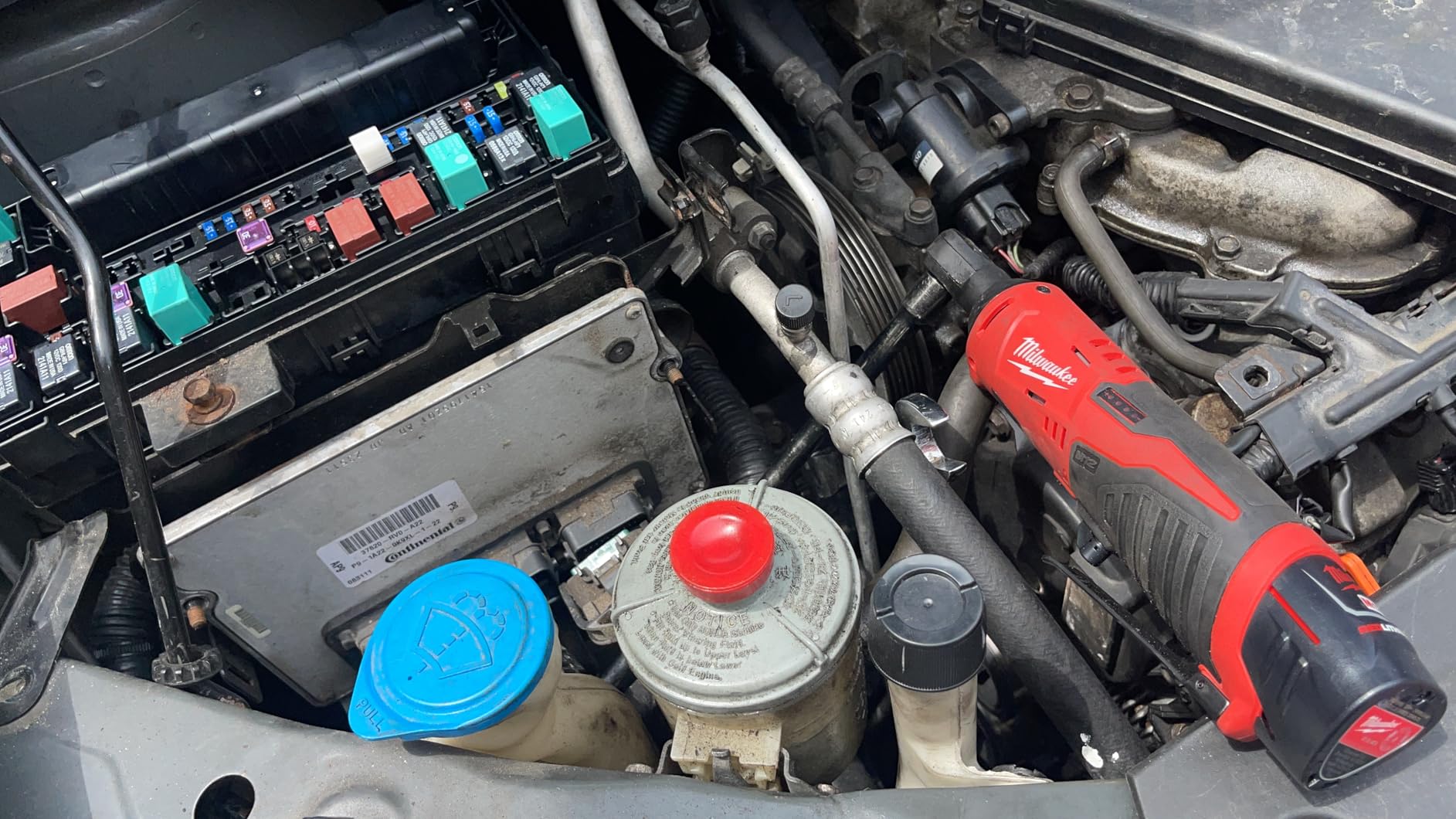
Owners consistently name the fuel gauge and the LED light as the features they notice most. The recessed forward and reverse switch sits low enough that it does not catch on sheet metal when you work by feel.
The honest weakness is torque. Thirty-five foot-pounds handles manifold bolts, brackets, and sensors without complaint, then stalls on anything at axle or lug nut level. Forum owners also raise a fair point about the sub-compact class: on soft aluminum, the tool has more than enough torque, so feather the trigger.
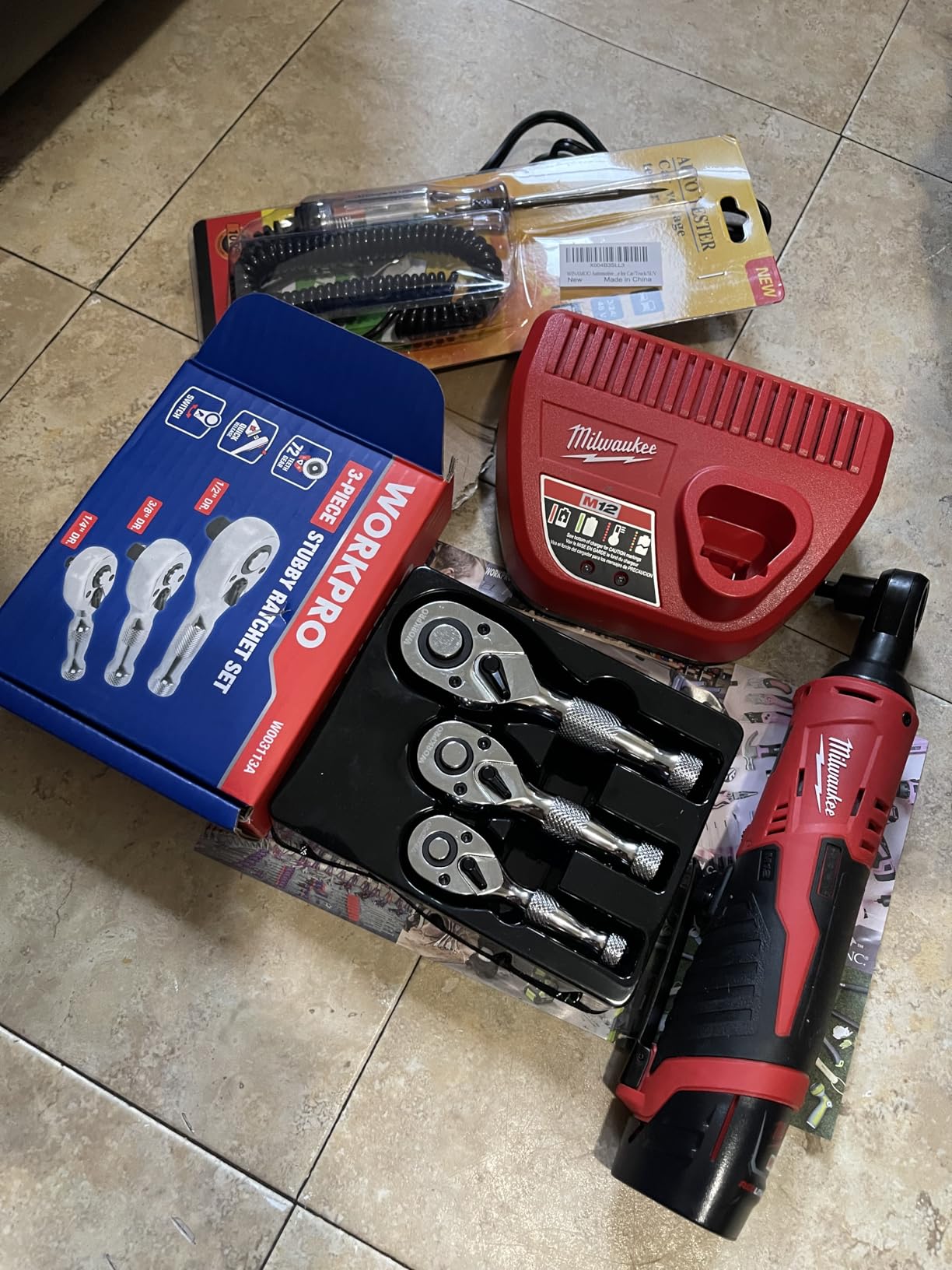
Who the Milwaukee 2457-20 suits
This is the pick for a technician already running M12 packs, or a serious home garage that wants one ratchet that disappears into tight spaces. At 16 ounces it is the least fatiguing overhead option here.
It is also the safest first cordless ratchet, because 35 ft-lbs is far less likely to snap a soft bolt or strip a plastic clip than a 70 or 75 ft-lbs tool. It is a bare tool too, so entry cost includes a battery and charger, and at 250 RPM overhead under a lift means more passes on a seized underbody bolt than a high-speed tool would need.
Where it falls short
If your work centers on trucks, axle nuts, or suspension torque above 35 ft-lbs, this is not the answer and no adapter will change that. For someone who only occasionally touches a car, the value case is also weaker than a complete kit.
2. AOBEN 21V 3/8 inch Cordless Ratchet Kit – Best Value

AOBEN 21V 3/8″ Cordless Ratchet Wrench Kit-74 Ft-lbs Brushless Electric Power Ratchet with Variable Speed, 2X2000mAh Lithium-Ion Battery, Charger, 8 Sockets, 1/4″ & 1/2″ Adaptors, 3″ Extension Bar
74 ft-lbs torque
Brushless motor
Two 2000mAh batteries
3 lb tool weight
+ The Good
- 74 ft-lbs of torque in a kit price band
- Brushless motor rather than a bargain-bin brushed unit
- Two 2000mAh batteries plus a charger in the box
- Eight sockets
- both drive adapters
- and a 3 inch extension bar
- LED work light and safety lock switch
- The Bad
- At 3 lb it is one of the heaviest ratchets in this roundup
- Proprietary 21V platform with no cross-brand battery compatibility
- 21V packs are harder to source than 12V or 18V spares
The AOBEN kit is the value anomaly of this group. Seventy-four foot-pounds from a brushless motor, shipped with two 2000mAh batteries, a charger, eight sockets, 1/4 and 1/2 inch adapters, and a three-inch extension bar. Owners report far fewer complaints at this spec level than the category usually earns.
For a first shop setup, the complete kit removes the hidden cost that catches buyers out elsewhere. Forum threads on first purchases keep circling the same surprise: the bare tool is the small part of the outlay, and the battery and charger are what really set the price.
The variable speed trigger and forward and reverse switch behave predictably, and the safety lock stops the tool waking in a tool bag. The LED light is genuinely useful under a dash.
What gives me pause is weight and platform. At three pounds this is among the heaviest ratchets here, and the 21V pack system is proprietary. If you already own M12 or 20V MAX packs, this is a poor fit no matter how good the torque number looks.
Who the AOBEN kit suits
Best for a mobile mechanic or roadside tech building a first complete kit on a strict budget, and for a home garage that wants one package covering trim screws through suspension bolts. The included adapters mean you can run 1/4 inch work without a second tool.
It also suits anyone who would rather not think about battery platforms, since everything arrives in one box including the sockets. The learning curve is picking up the tool and pulling the trigger.
Where it falls short
Overhead work is where the three-pound body earns its penalty, and the bulkier head will not fit the same gaps a sub-compact does. Long-term parts support and repair battery availability are the questions I would ask before a professional shop commits, and owners flag the 21V platform as harder to run a spare battery on mid-shift.
3. ACDelco ARW1209P G12 12V Ratchet Kit – Budget Pick
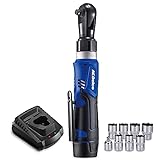
ACDelco ARW1209P G12 Series 12V Li-ion Cordless 3/8” 45 ft-lbs. Ratchet Wrench Tool Kit
45 ft-lbs torque
170 RPM no load
10 inch length
Battery and fast charger included
+ The Good
- Complete kit with battery
- charger
- and an 8-piece socket set
- 45 ft-lbs gives more headroom than sub-compact 12V tools
- Slim body and soft grip suit long under-hood sessions
- LED work light and safety lock switch
- Light body for a 12V tool
- The Bad
- 170 RPM is the slowest output in this roundup
- Proprietary 12V battery platform with no wider ecosystem
- Included sockets cover only basic sizes
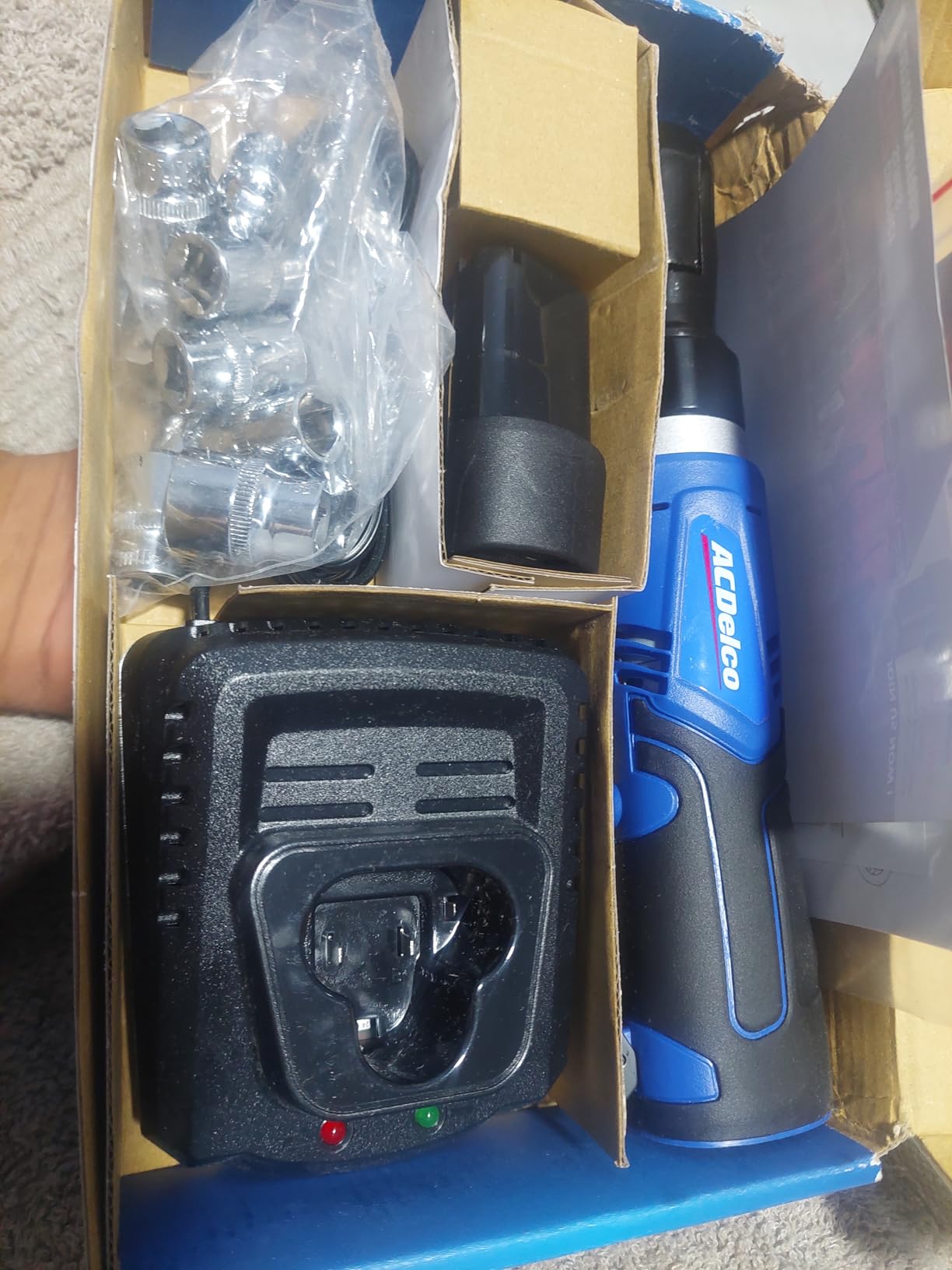
Forty-five foot-pounds in a slim twelve-volt body, with battery and fast charger in the box, is a rare combination. It sits in the middle ground where most buyers do their actual work: more torque than a sub-compact, far less bulk than a 20V tool.
The soft grip and slim profile made the difference on a week of under-hood work for me. When you are leaning into an engine bay with your wrist at an awkward angle, grip quality matters more than raw output, and this handle stays comfortable over long sessions.
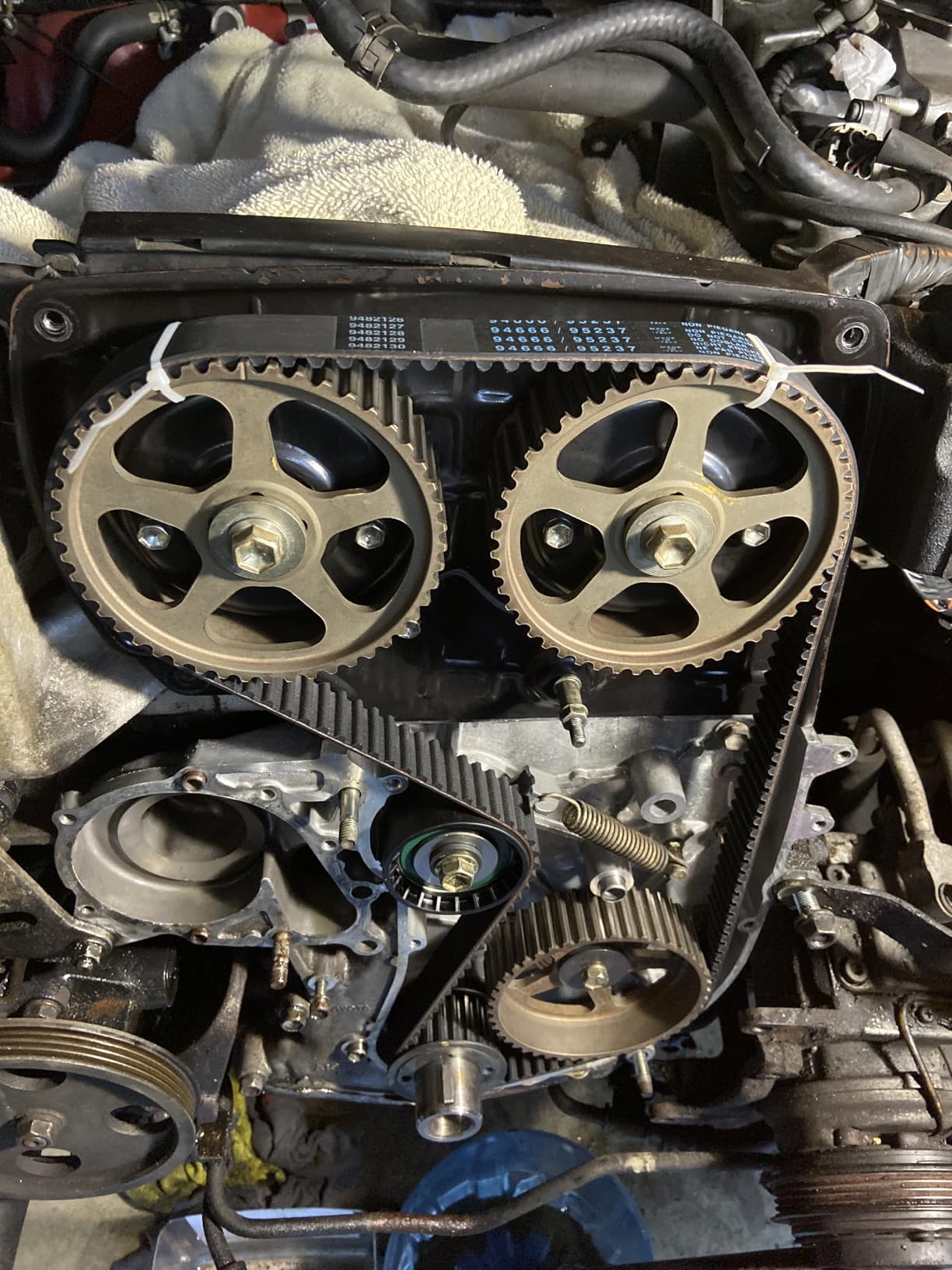
Reviewers single out the charger. A roughly thirty-minute charge means less downtime between jobs than a slow trickle charger, which matters if the tool lives in a work van rather than a shop with a spare pack on the wall.
The trade-off is speed. At 170 RPM no load, this is the slowest ratchet in the roundup, and on a large underbody bolt you make noticeably more passes than with a 250 or 300 RPM tool. On small fasteners the slow spin is a benefit, because it gives fine control on soft bolts.
Who the ACDelco ARW1209P suits
This is the pick for someone who wants a complete, ready-to-work package without committing to a large professional platform. It suits a home garage, a first shop kit, or a mobile tech who prefers a small battery to carry all day.
Because 45 ft-lbs is a step above sub-compact output, it handles suspension and bracket bolts that would stall a smaller tool, while the slim body still reaches places a full-size 20V ratchet cannot.
Where it falls short
Seized fasteners sit outside its envelope. Once a bolt needs more than about 45 ft-lbs to break free, you are reaching for a breaker bar or an impact, not squeezing the trigger harder. The proprietary platform is the real limitation for a professional, since M12 or 20V MAX owners would be adding a third battery ecosystem to their van.
4. Milwaukee 2560-20 M12 FUEL Extended Ratchet – Best for Extended Reach

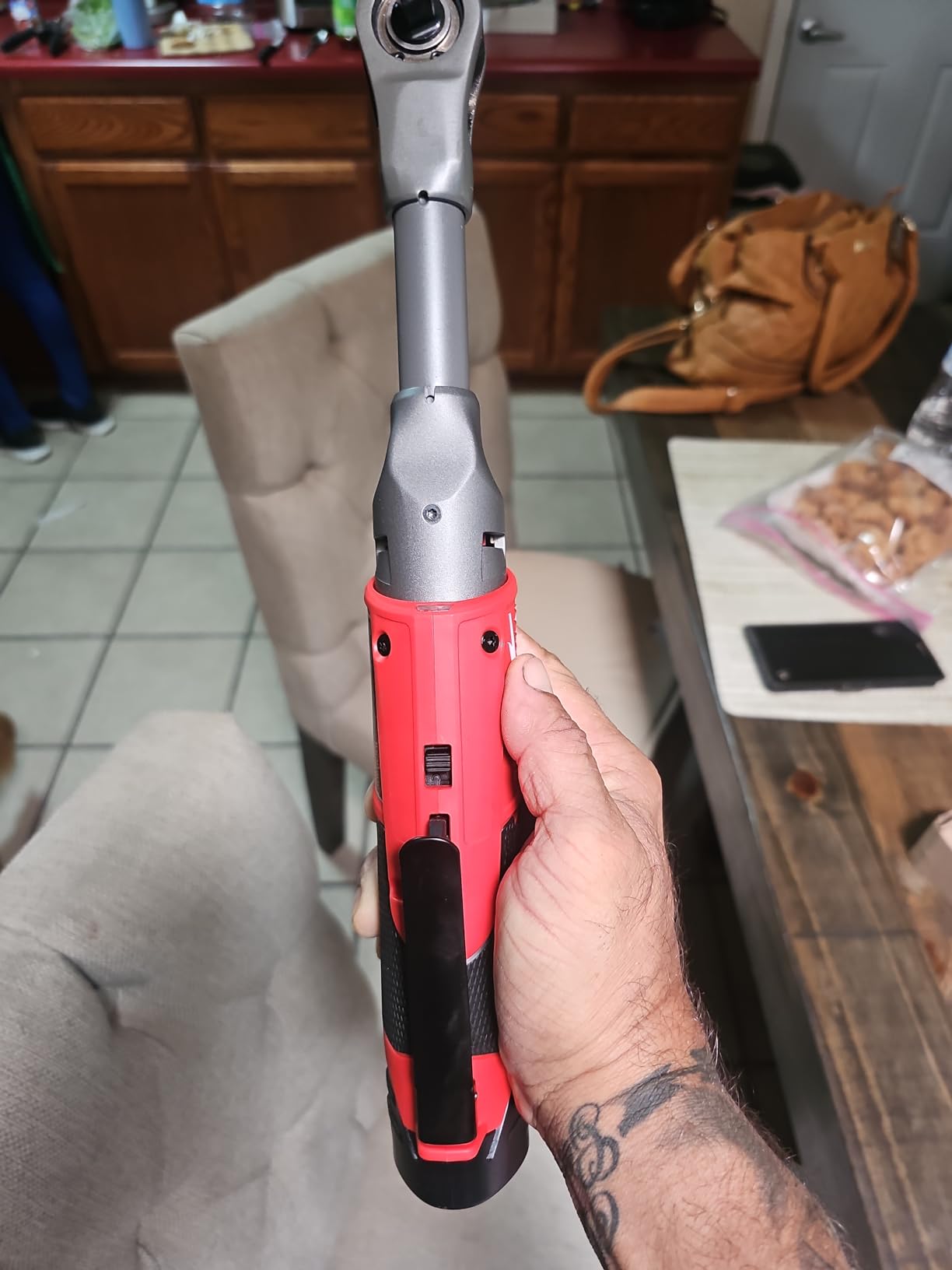
Milwaukee 2560-20 M12 FUEL 3/8″ Extended Ratchet (Bare Tool)
55 ft-lbs torque
15 inch overall length
Brushless FUEL motor
3 lb tool weight
+ The Good
- Fifteen inch length reaches bolts deep in a wheel well or under a dash
- 55 ft-lbs from a brushless FUEL motor
- Cast steel yoke housing for durability
- Slim head profile despite the long body
- Redlink Plus protection
- The Bad
- At 3 lb it is heavy for overhead work
- 15 inch body will not fit every access path
- Bare tool only at a premium price
This tool exists for one reason: the bolt you cannot reach with a short ratchet. At fifteen inches with a slim head, it reaches into a wheel well or up behind a dash to fasteners a normal-length ratchet cannot address with an extension and a knuckle.
The second reason is torque. Fifty-five foot-pounds from an M12 FUEL brushless motor is a genuine step up from the 35 ft-lbs sub-compact class, and forum owners report it handling bracket and suspension hardware that stalls smaller tools.
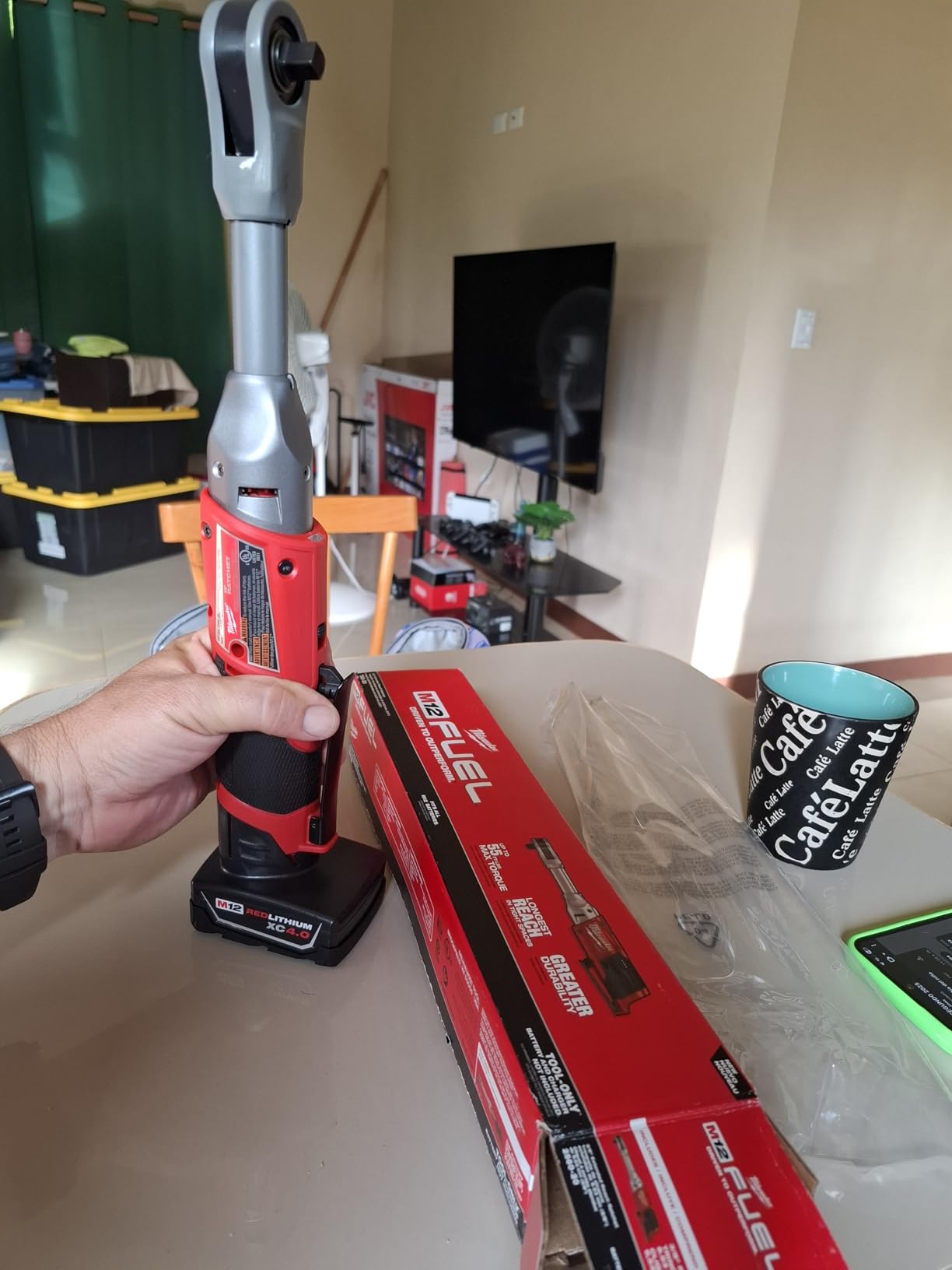
Construction is where this one earns its position. The cast steel yoke housing and reinforced mechanism are the parts of a ratchet that eventually fail, and they are beefed up here. The FUEL electronics add Redlink Plus thermal management.
Reach and weight are locked together, though. The same fifteen inches that gets you into the wheel well makes this awkward for a control panel or a tight engine bay where you need to pivot the head repeatedly.
Who the Milwaukee 2560-20 suits
It suits technicians whose day includes underbody work, wheel well fasteners, and long-reach suspension access, and it is a companion to a shorter ratchet rather than a replacement. Anyone already on M12 FUEL packs gets the most from it.
Where it falls short
Overhead work is the weak spot. Three pounds held above your head for an hour is genuinely tiring, and the long body makes it harder to keep a socket square in a cramped space. For interior trim, dashboard, or engine bay work the compact tools below fit better, and this is a bare tool, so the platform matters more than the price.
5. DEWALT DCF510B 20V MAX XR Ratchet – Best for Heavy-Duty Torque
DEWALT 20V MAX XR Cordless Ratchet, 3/8″ and 1/2″ Sealed Head Ratchet, Bare Tool Only (DCF510B)
75 ft-lbs max torque
0-300 RPM
Interchangeable 3/8 and 1/2 inch drives
Sealed head
+ The Good
- Highest rated torque of the ten at 75 ft-lbs
- Swappable 3/8 and 1/2 inch anvils cover almost every socket you own
- Sealed head resists oil and brake cleaner
- Glass-filled nylon housing
- Variable speed trigger with trigger lock
- The Bad
- At 3.1 lb it is the heaviest tool in this roundup
- Bulkier than sub-compact bodies in tight gaps
- Bare tool only and 15 inches long
Seventy-five foot-pounds and interchangeable anvils make this the most capable single ratchet in the roundup. Swapping between 3/8 and 1/2 inch drive means one tool covers both the fasteners on a modern four-cylinder and the hardware on a truck.
The sealed head is the feature professionals single out. Brake cleaner, gear oil, and coolant are routine in a shop, and a head that resists those fluids is the difference between a tool that lasts and one that eventually seizes at the ratchet mechanism.
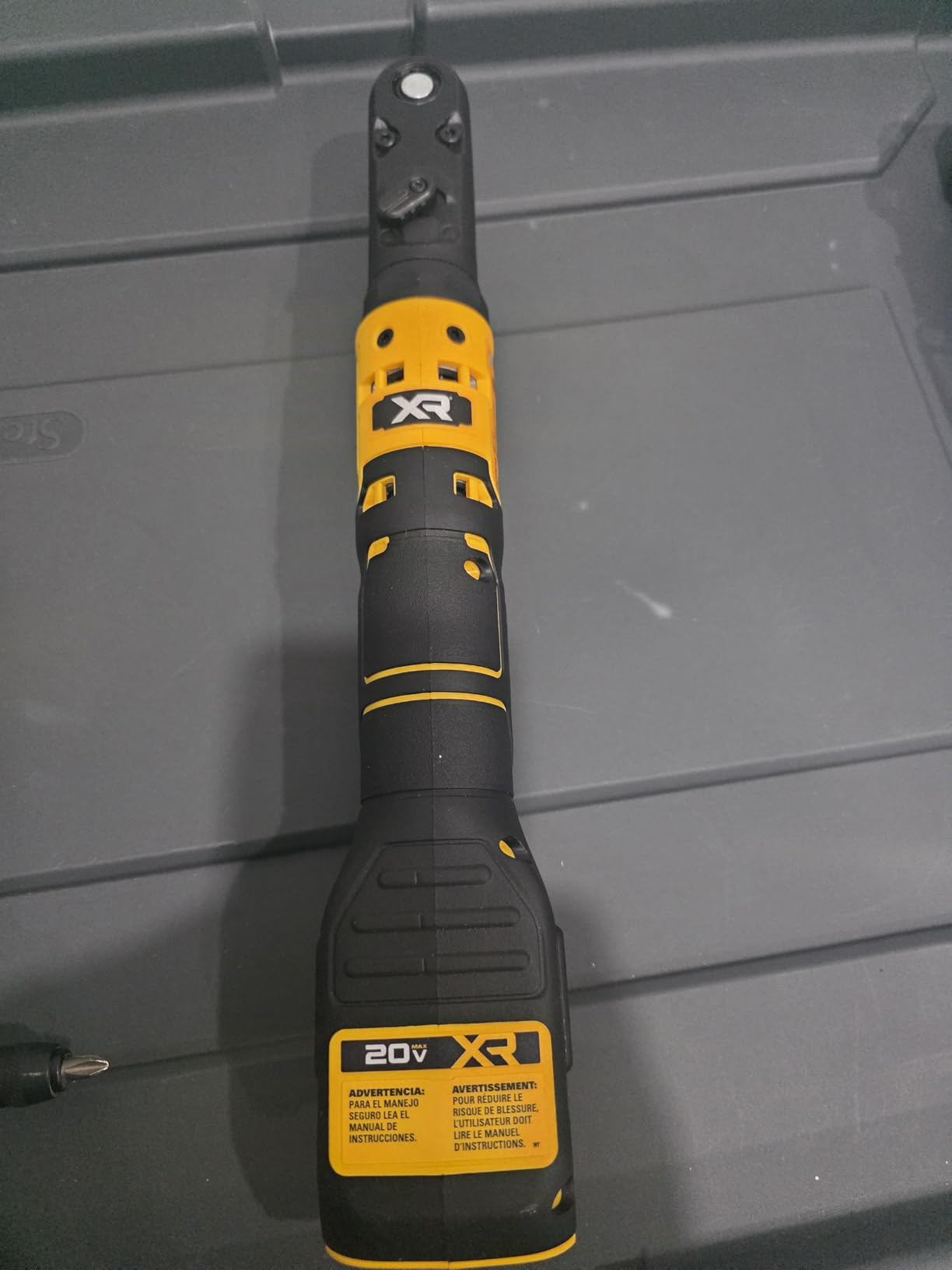
Trigger control is excellent for a tool this powerful. It ramps smoothly, the trigger lock prevents accidental activation in a bag, and the auto-stop at maximum torque means it stops rather than spinning a snapped bolt into your knuckle.
The complaints all point one direction: size and weight. At 15 inches and 3.1 pounds this is among the bulkiest tools in the group, and it will not fit the gaps a sub-compact head does. The head also has no storage for the anvil you removed.
Who the DEWALT DCF510B suits
It suits mixed-fleet technicians who work from a compact hatchback to a full-size truck, and anyone standardized on 20V MAX who wants one ratchet instead of two. The dual drive is why it edges out single-drive alternatives.
For heavy suspension and bracket work where 35 ft-lbs is not enough, this is the tool that keeps the socket on the fastener instead of rounding the head while you reposition. Tight engine bay work is not its strength, though, since the bulkier head will not go where sub-compact tools go.
Where it falls short
Torque is a double-edged sword. Seventy-five foot-pounds will happily round a soft bolt or crack a plastic fastener if you hold the trigger down, so the smooth ramp needs respect. Some owners also report wishing it could be used as a manual ratchet in confined spaces, and all-day use on one pack means planning around battery swaps.
6. DEWALT DCF512B ATOMIC 1/2 inch Ratchet – Best for Tight Spaces
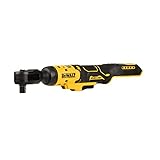
DEWALT ATOMIC 20V MAX Brushless Cordless Ratchet, 1/2 Inch, Bare Tool Only (DCF512B)
70 ft-lbs torque
1/2 inch drive
15.79 x 2.8 x 2.99 inches
2.63 lb tool weight
+ The Good
- Low-profile ATOMIC head fits gaps the larger XR ratchet cannot
- 70 ft-lbs of torque despite the compact body
- 2.63 lb is light for a 1/2 inch drive tool
- Glass-filled nylon housing
- The Bad
- Fixed 1/2 inch drive with no anvil swap
- Bare tool only with battery and charger sold separately
- Slightly less torque than the XR model
The ATOMIC series is DEWALT’s answer to the size complaint, and it works. At 2.63 pounds and 2.8 inches wide, this is a 1/2 inch drive ratchet that still holds 70 ft-lbs, and the low-profile head is what you notice reaching into a strut tower or a packed engine bay.
That combination is unusual. Most 1/2 inch drive ratchets are chunky, and most compact ratchets are 3/8 inch only with reduced torque. This one threads between those categories and suits truck work a sub-compact tool cannot touch.
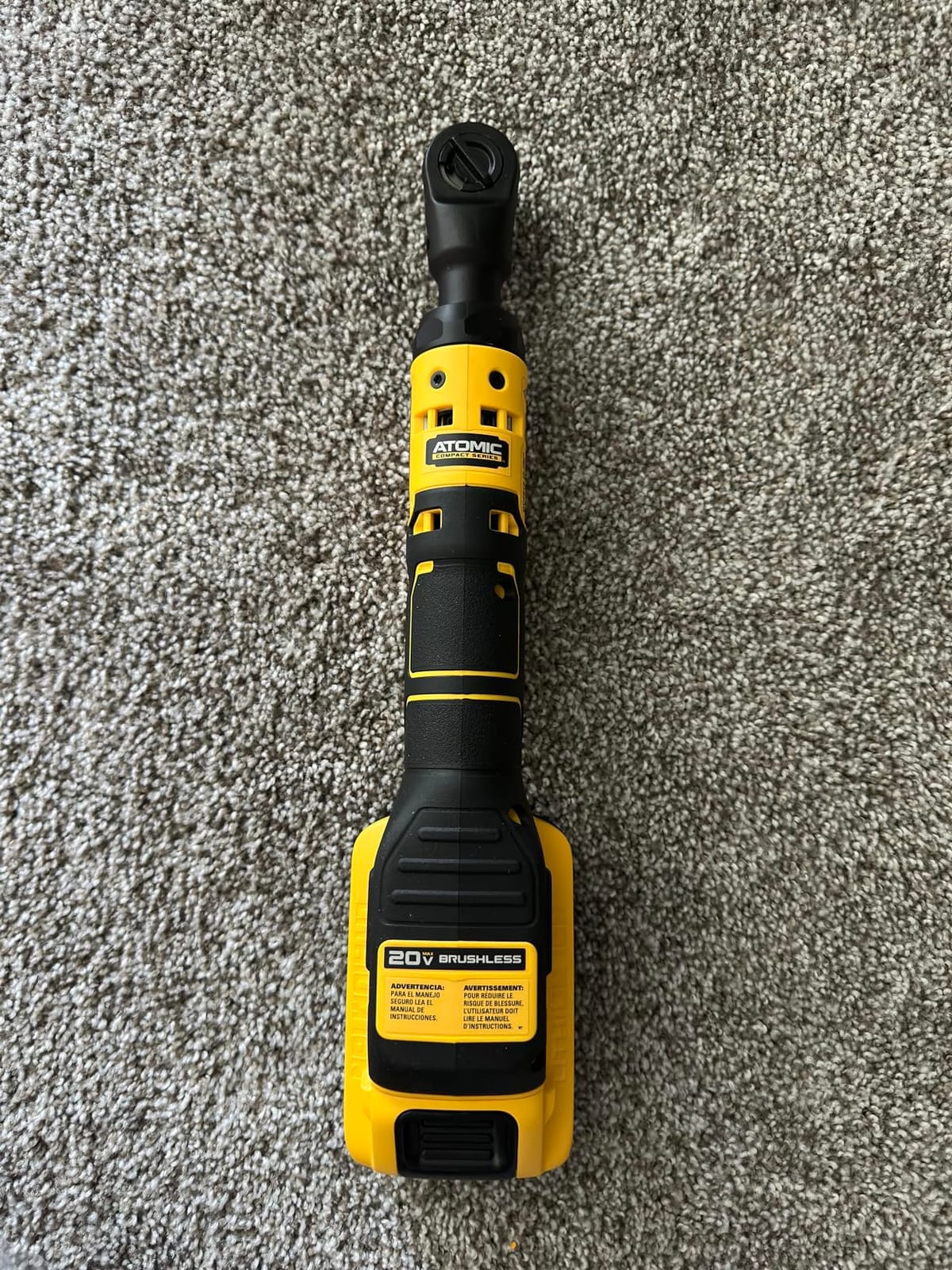
Reviewers praise the trigger feel even here, noting the ramp is linear and predictable despite the high torque figure. The LED work light and trigger lock come standard across the 20V MAX cordless line, which helps if you already own the platform.
Where it gives ground is flexibility. The 1/2 inch drive is fixed, so smaller interior and sensor work means a separate 1/4 inch tool or an adapter in the chain. The XR model above solves that with swappable anvils if you mix drive sizes daily.
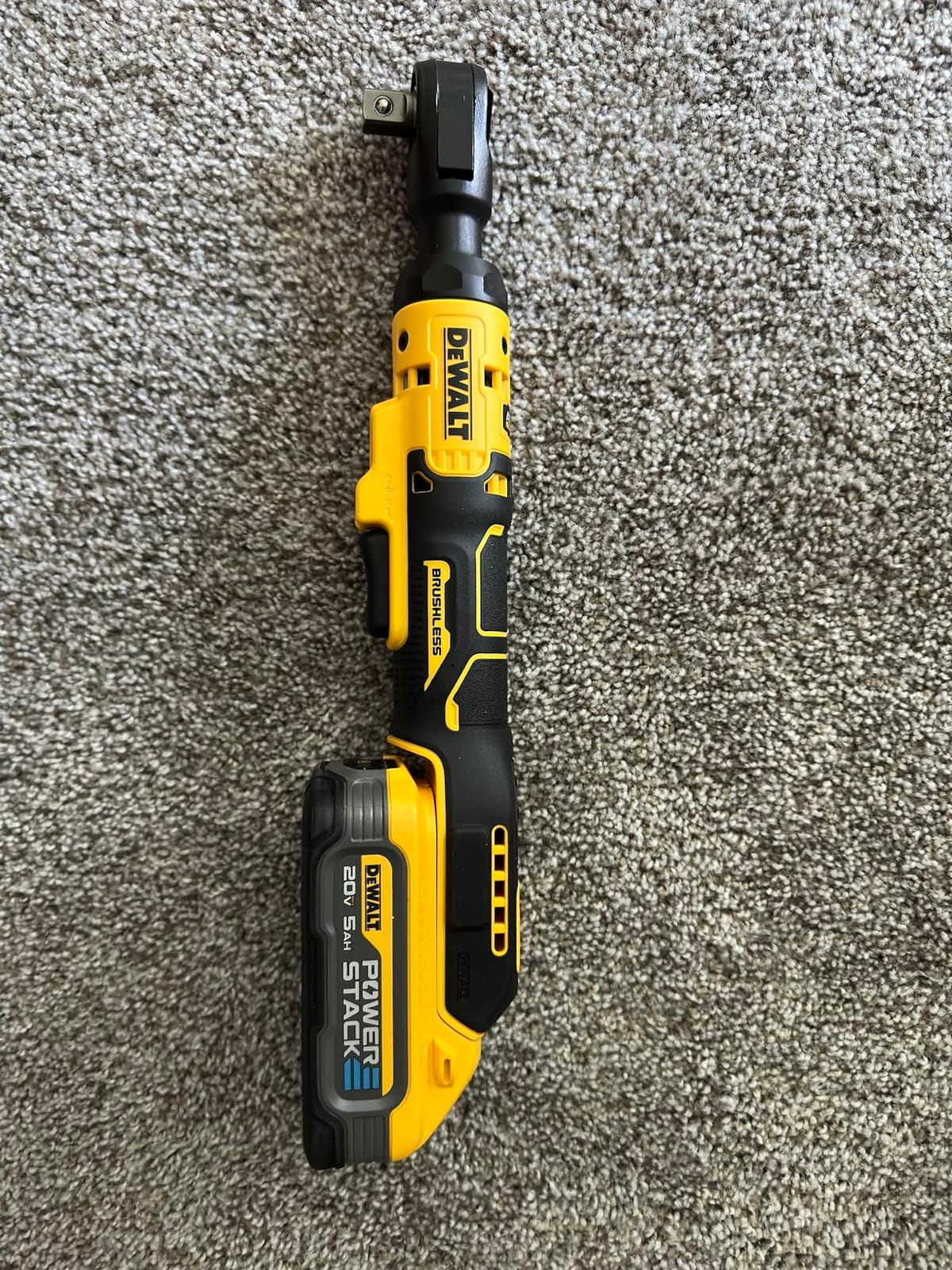
Who the DEWALT DCF512B suits
It suits technicians working on trucks and larger suspension components who still need access in confined spaces, and anyone on 20V MAX who wants a single drive size covered well. The low profile is the deciding factor in engine bay work.
For overhead and underbody jobs, 2.63 pounds is a meaningful improvement over the three-pound tools here, and the low-profile head keeps the socket square when you work by feel. The 1/2 inch drive is fixed, though, so a dedicated 1/4 inch tool still earns its place if interior work is part of the job.
Where it falls short
If your day is mostly interior, electrical, and trim fasteners, a 1/2 inch drive is the wrong primary tool and you will be fighting adapters. Torque also sits slightly below the XR model, which matters on seized hardware, and as a bare tool this is a bigger commitment for anyone without existing 20V MAX packs. It is also far heavier than a 12V ratchet, which counts if you carry the tool all day.
7. Milwaukee 2566-20 M12 FUEL High Speed Ratchet – Best for High Speed
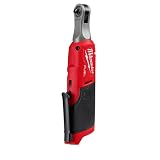
Milwaukee 2566-20 M12 FUEL Brushless Lithium-Ion 1/4 in. Cordless High Speed Ratchet (Tool Only)
450 RPM output
1/4 inch drive
1.93 lb tool weight
3 x 11 x 2 inches
+ The Good
- 450 RPM runs far faster than the 250 and 300 RPM mainstream class
- Ultra-compact 1/4 inch drive for small fasteners
- Lightweight body at under 2 lb
- Brushless M12 FUEL motor with powder coat finish
- The Bad
- 1/4 inch drive limits it to lighter-duty fasteners
- Torque is not the focus on this specialist tool
- Tool only with battery sold separately
At 450 RPM this ratchet spins far faster than the 250 and 300 RPM mainstream class, and you feel it on a repetitive interior or assembly job where dozens of small screws go in and out of the same fastener.
The 1/4 inch drive is the point. Interior trim, dashboards, sensor connectors, and harness clamps are all 1/4 inch territory, and a sub-compact 3/8 inch head with an adapter in the chain is an awkward way to handle them when a purpose-built tool exists.
At under two pounds this is among the lightest ratchets here, and combined with the compact head it is easy to work with in a footwell or behind a seat. Owners also value the powder coat finish on a tool that lives near fluids.
Who the Milwaukee 2566-20 suits
It suits interior-focused work: trim, dash, seat hardware, wiring, and anywhere a 1/4 inch socket is right and speed matters. It also suits M12 FUEL owners rounding out a collection without a second battery system.
For a technician doing lots of small assemblies in a day, the 450 RPM output is the feature that earns the tool its place, not the torque rating. If your work includes suspension, brackets, or anything seized, this is the wrong shape of tool, and your 3/8 and 1/2 inch sockets are useless with it.
Where it falls short
Review volume on this specialist model is far lower than on the mainstream tools here, so the long-term owner record is thinner. It is a light tool, but not a balanced one for high-torque work because it never handles that, and buying it alongside an M12 pack is only sensible if your work is genuinely 1/4 inch heavy.
8. DEWALT DCF504B XTREME 12V Ratchet – Best for Trigger Control

DEWALT XTREME™ 12V MAX* Brushless 1/4 in. Ratchet (Tool Only) (DCF504B)
40 ft-lbs max torque
1/4 inch drive
12 inch length
About 2 lb tool weight
+ The Good
- Exceptionally linear
- smooth variable speed trigger
- Compact 1/4 inch drive and low-profile head
- 40 ft-lbs is ample for 1/4 inch fastener work
- Glass-filled nylon housing resists shop fluids
- The Bad
- 1/4 inch drive limits application range
- 12V MAX ecosystem is smaller than 20V
- Bare tool only
The DCF504B is the one reviewers describe as almost digital in its control. The trigger ramp is smooth and progressive, which sounds minor until you try to back out a soft trim fastener with a tool that snaps from zero to full speed. This one lets you creep.
Forty foot-pounds is a sensible ceiling for 1/4 inch work, more than enough for trim, sensors, brackets, and covers, and it will not surprise you by rounding a head. The low-profile head and 12 inch length keep it in the compact class.
The glass-filled nylon housing is worth noting on a shop tool, because it resists the chemicals that attack plastic housings. The on-board LED worklight is bright enough to be useful behind a dash rather than decorative.
Owners also like that this is a 12V MAX tool at a price point closer to premium 20V bare tools. The catch is ecosystem size: 12V MAX packs are plentiful, but you get less runtime per pack on a long job.
Who the DEWALT DCF504B suits
It suits technicians doing delicate interior and electrical work who keep rounding fasteners with lumpier tools, and anyone who wants a 1/4 inch specialist with premium control rather than a budget speedster.
It is also a reasonable second DEWALT tool for someone with 12V MAX packs who wants better control than a budget ratchet offers. The 1/4 inch drive rules out most suspension and underbody hardware, so it cannot be your only ratchet, and a 40 ft-lbs ceiling stalls early on anything seized.
Where it falls short
For mixed work you will still want a 3/8 or 1/2 inch tool alongside it, and starting from zero batteries the 12V MAX ecosystem has fewer accessories than 20V MAX.
9. Makita XRW01SR1 18V LXT Ratchet Kit – Best for Dual Drive

Makita XRW01SR1 18V LXT® Lithium-Ion Cordless 3/8″ / 1/4″ Sq. Drive Ratchet Kit (2.0Ah)
35 ft-lbs max torque
0-800 RPM variable
Swappable 3/8 and 1/4 inch anvils
2.7 lb with battery
+ The Good
- Interchangeable 3/8 and 1/4 inch anvil adapters in one tool
- Variable speed to 800 RPM with electric brake
- Works as a manual ratchet when the motor is disengaged
- Complete kit with battery
- charger
- adapters
- and tool bag
- Three-year warranty on tool
- battery
- and charger
- The Bad
- 35 ft-lbs is low for suspension and bracket work
- Only 207 reviews means a thinner owner record
- No adjustable torque clutch settings
The Makita’s argument is flexibility. Interchangeable 3/8 and 1/4 inch anvil adapters mean one body covers both common drive sizes, and unlike the DEWALT XR, this kit ships with a battery, a charger, both adapters, and a tool bag.
Variable speed tops out at 800 RPM, the highest no-load figure in this roundup, and the electric brake stops cleanly on small fasteners. Owners also point out that it can be worked by hand as a manual ratchet, a useful fallback when a fastener is one nudge from thread damage.
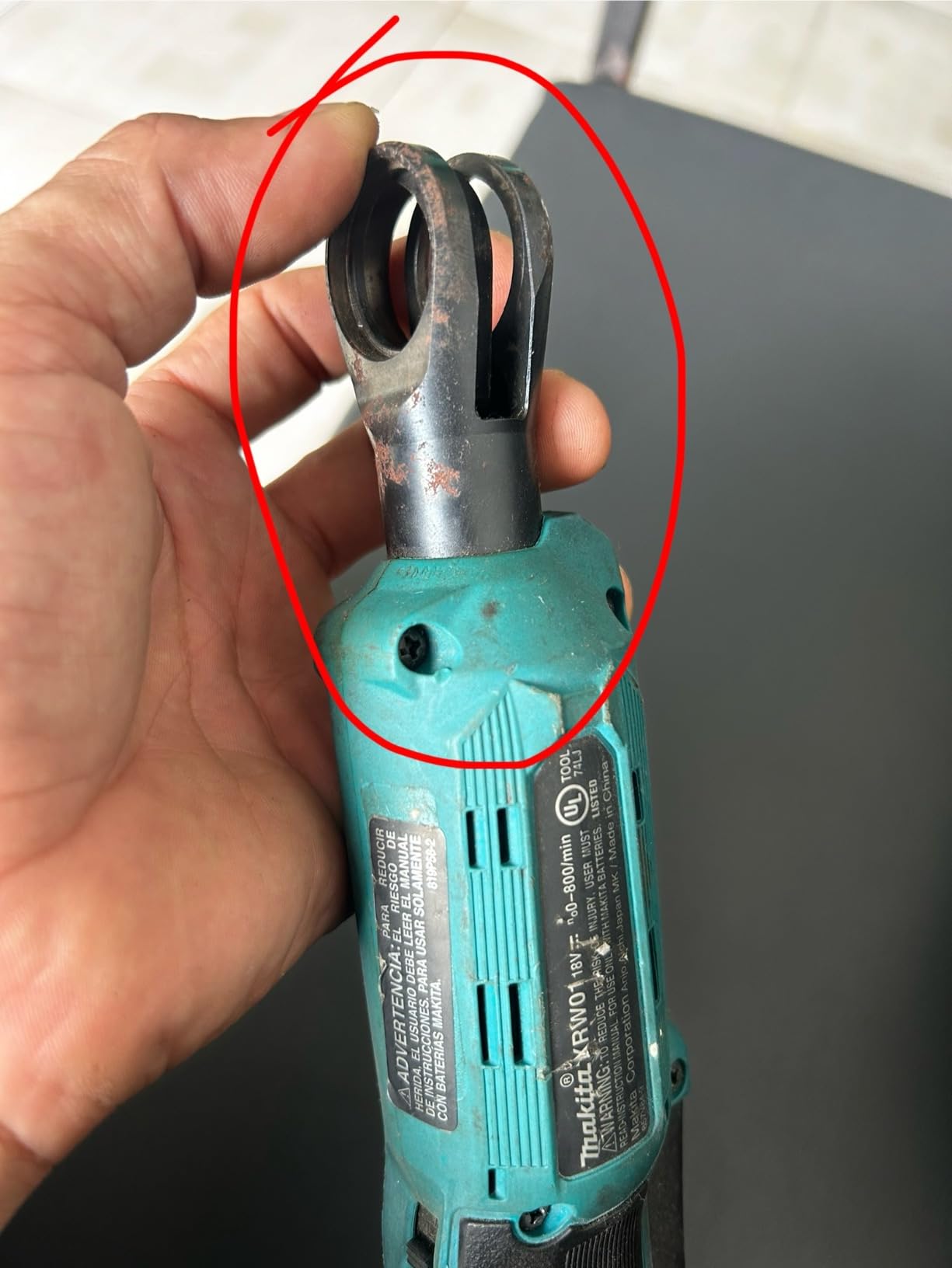
Build quality and balance get consistent praise. At 2.7 pounds with the battery fitted it sits comfortably in the hand, and the kit format means it is less likely to end up as a bare tool in a van.
Torque is the real constraint. Thirty-five foot-pounds with no clutch adjustment makes this a fast, precise tool for small and medium fasteners, and a compromise for anything structural. The review count is also the thinnest here.
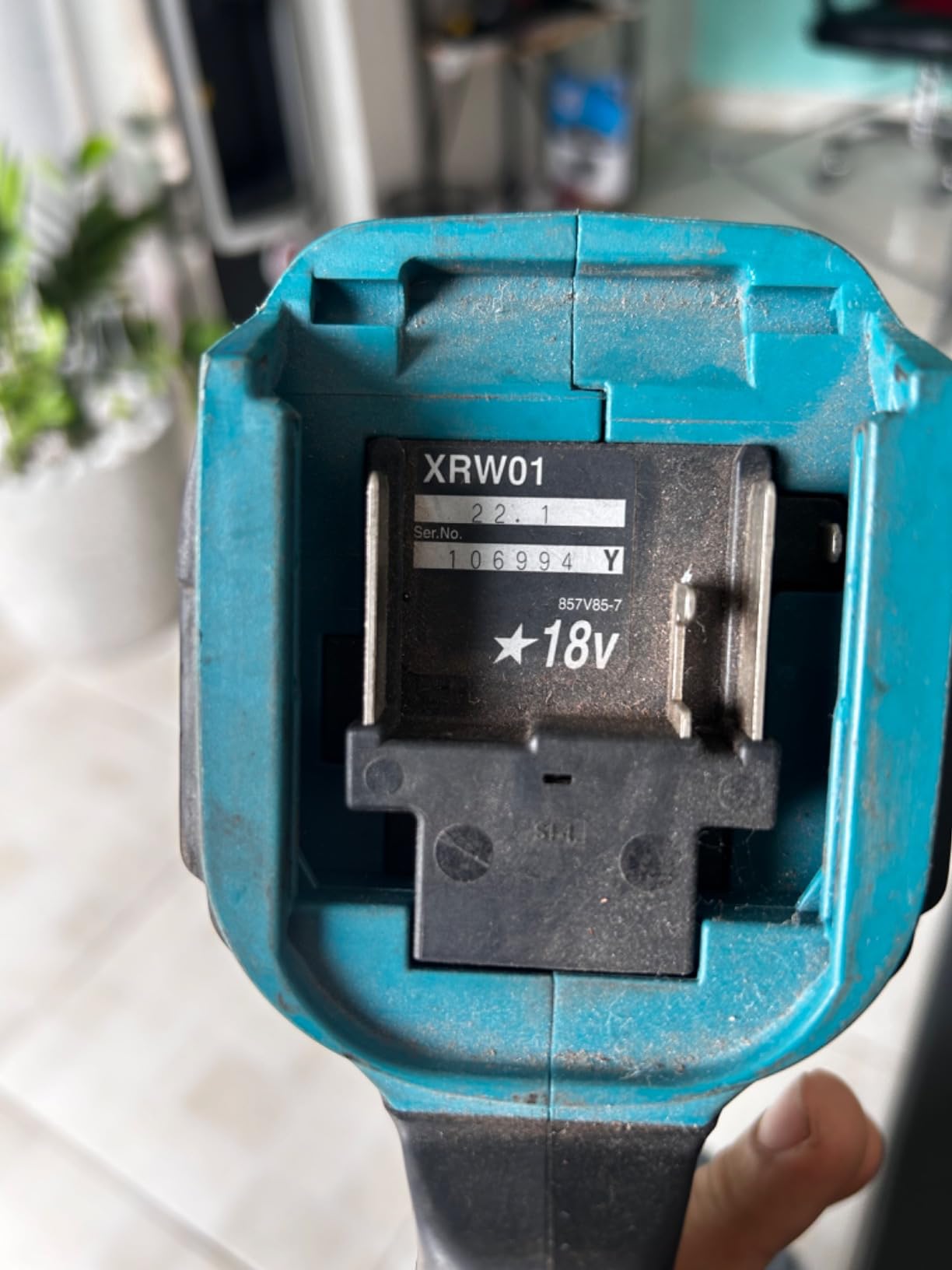
Who the Makita XRW01SR1 suits
It suits 18V LXT owners who want a complete, ready-to-go kit rather than a bare tool and separate accessories, and anyone whose day alternates between 1/4 inch interior work and 3/8 inch underbody fasteners. The manual ratchet fallback is a real advantage in confined spaces where a powered tool is overkill, and the three-year warranty across tool, battery, and charger is the strongest coverage in the group.
Where it falls short
Torque is the honest limit. Thirty-five foot-pounds with no clutch settings will not handle seized suspension bolts or axle nuts, and 800 RPM is arguably too fast a ceiling to feather on delicate fasteners.
It also carries a large commitment for a buyer without 18V LXT packs, since the kit price covers batteries you may not need. The thinner review record is worth weighing on reliability.
10. ACDelco ARW1207P G12 12V Ratchet Kit – Best First Kit
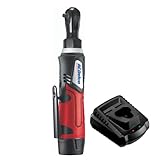
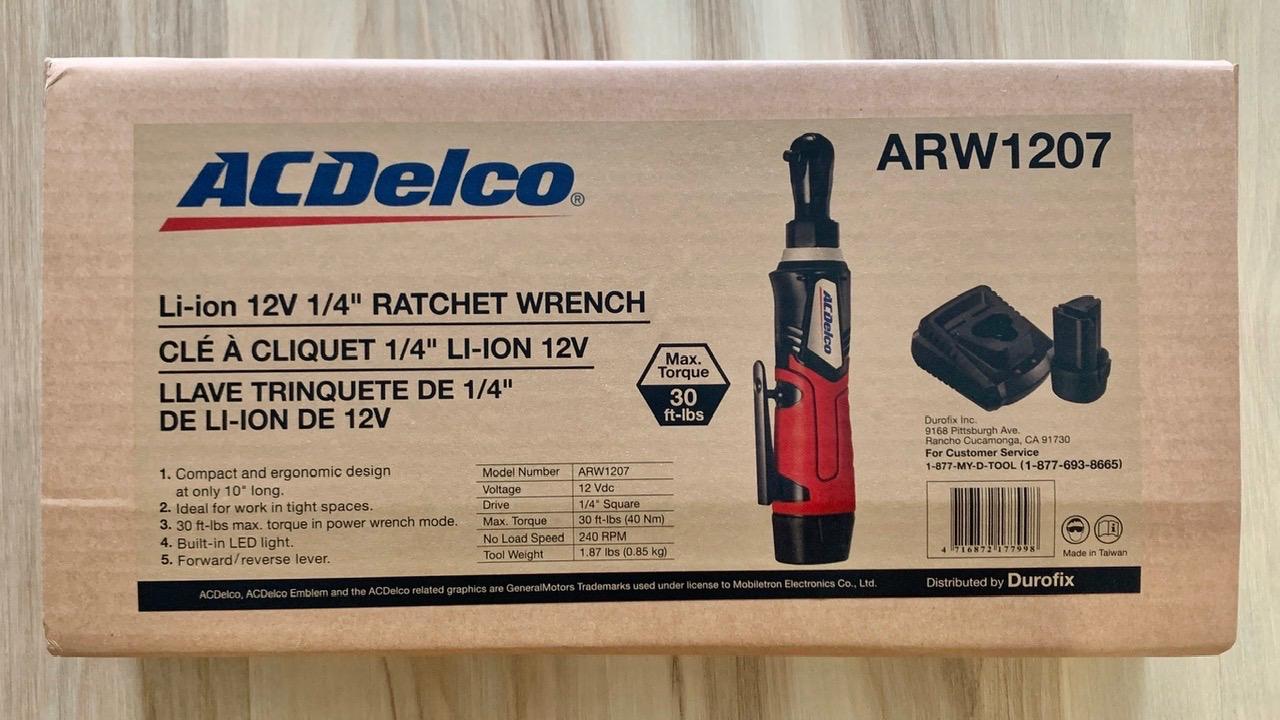
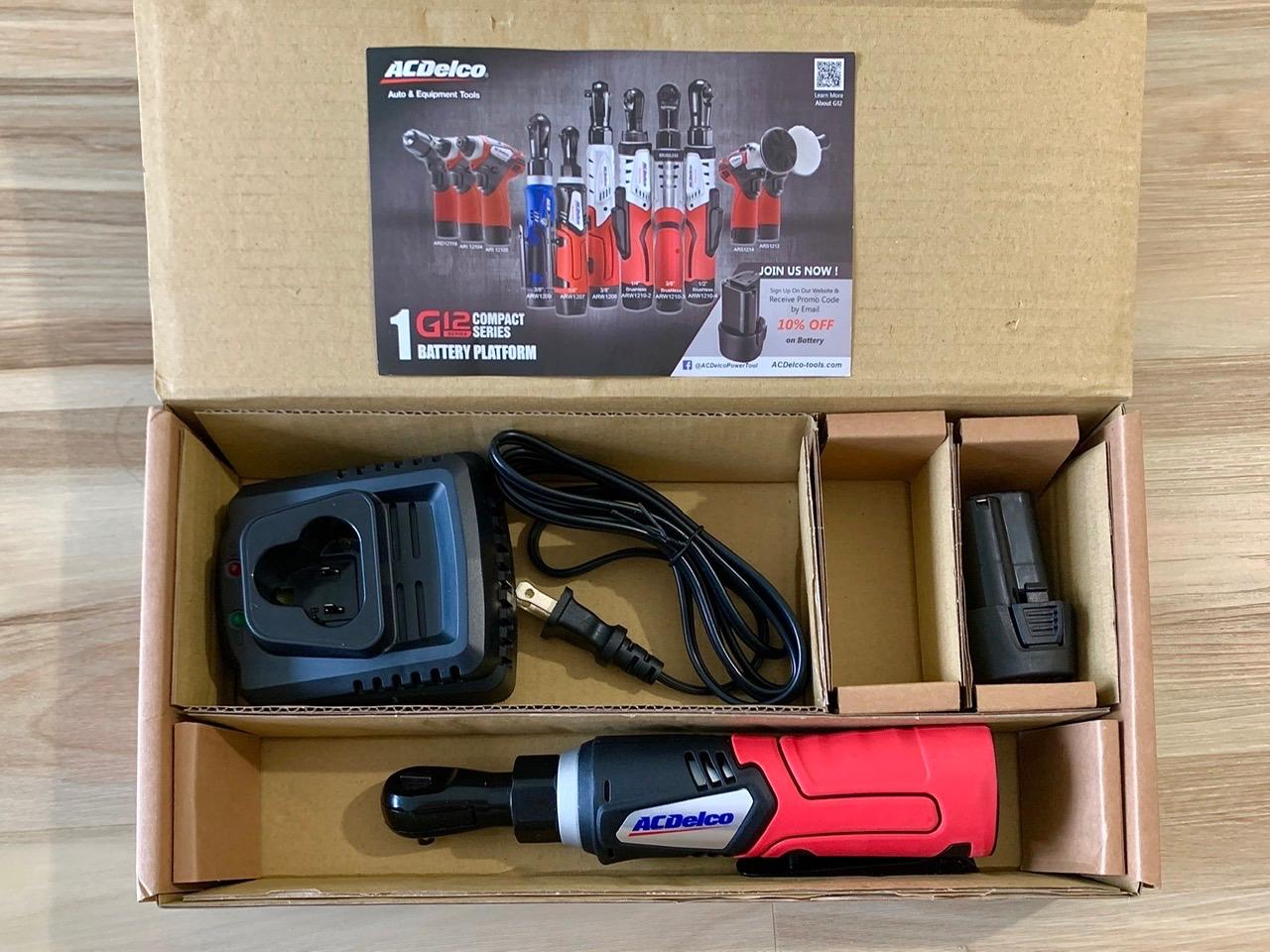
ACDelco ARW1207P G12 Series 12V Cordless Li-ion 1/4” 30 ft-lbs. Torque Ratchet Wrench Tool Kit , Red
30 ft-lbs torque
240 RPM no load
1/4 inch drive
1.9 lb tool weight
+ The Good
- Complete kit with battery
- fast charger
- and 1/4 inch sockets
- Compact 1/4 inch drive for trim and interior work
- 240 RPM is a usable speed for small fasteners
- Soft grip and safety lock switch
- Light body at under 2 lb
- The Bad
- Lowest torque in this roundup at 30 ft-lbs
- Proprietary 12V battery platform
- 1/4 inch drive limits it to light-duty work
This is the entry point, and it does one job well. Thirty foot-pounds at 240 RPM on a 1/4 inch drive handles interior trim, seat hardware, covers, and light brackets, with battery, charger, and sockets in the box.
Owners are most positive about the roughly thirty-minute fast charger and the slim, soft-grip body. For a beginner or occasional user, having everything needed to start in one purchase removes the most common source of frustration with cordless tools.
It is also a reasonable teaching tool. Thirty foot-lbs is a forgiving ceiling for a learner, unlikely to round a fastener or snap a plastic clip even if the trigger is held down too long.
Be clear on the ceiling, though. Thirty foot-pounds is the lowest output here and stalls early on suspension or underbody hardware. Mechanic forum consensus puts a 3/8 inch ratchet at covering roughly ninety percent of fasteners on a modern passenger car, and this is not that tool.
Who the ACDelco ARW1207P suits
It suits a first-time buyer, a student technician, or a hobbyist working on interior and light-duty fasteners who wants one complete package rather than a platform decision. The all-in format is the appeal.
It also works as a backup in a working shop, where a spare 1/4 inch ratchet with its own battery and charger takes pressure off the main tool. Once a buyer moves past trim and light brackets they will outgrow this tool quickly, and if the plan is regular automotive work the 3/8 inch kits above are the better spend.
Where it falls short
Torque is the hard limit, and the proprietary 12V platform means a spare battery has to come from the same source.
Cordless Ratchet vs Cordless Impact Wrench
Here is the confusion that costs buyers money. A ratchet is for hundreds of bolts in a session. An impact wrench is for a handful of bolts that will not move.
The mechanism explains the difference. A ratchet keeps the socket on the fastener and drives it at a controlled speed, so you never reposition and the tool never hammers the fastener. An impact delivers short rotational bursts that break corrosion and thread-locking compound free, then stops.
Torque ratings are not comparable across the two. The ft-lbs figure on a ratchet is roughly its working output ceiling; on an impact it is breakaway capacity against a seized fastener. The numbers describe different things entirely.
Mechanic forum threads return to this split constantly. A lug nut rated at 100 ft-lbs to tighten can want well over 400 ft-lbs to break after a season of road salt, which no cordless ratchet in this roundup produces. That is the moment you pick up the impact.
A workable rule: if the bolt needs more than about 35 to 40 ft-lbs to start moving, you have reached the end of what a compact ratchet can do. The larger ratchets here push that ceiling to 70 and 75 ft-lbs, and they still will not handle a properly seized axle nut.
Technicians who ditch air tools report a standard split: 3/8 inch for small fasteners, 1/2 inch for high-torque work, and the impact for anything seized. One ratchet plus one impact covers a full vehicle. One ratchet and no impact guarantees an afternoon trip to a hardware store.
How to Choose a Cordless Ratchet for Automotive Work?
Pick the drive size you will use most
Technicians use 3/8 inch more than anything else. Forum consensus puts 3/8 inch at roughly ninety percent of fasteners on a modern passenger car, because that is the size for sensors, brackets, manifold hardware, and general underhood work. 1/4 inch covers interior trim, and 1/2 inch covers truck and heavy suspension work.
Buy the platform you already own. A drive adapter converts 1/4 inch to 3/8 inch, so a dual-anvil tool or a single drive plus an adapter covers most of what a second ratchet would, at a fraction of the cost.
Match torque to the job, not to the label
Trim and sensor work lives in the 30 to 40 ft-lbs range. Suspension, caliper, and bracket hardware needs 50 ft-lbs and above. Axle nuts and anything seized is impact territory regardless of how good your ratchet is.
Remember the opposite risk too. A complaint that runs through mechanic forums is that a compact ratchet with ample torque can strip threads or crack a soft fastener if you hold the trigger down, so use the variable speed trigger rather than assuming you need full output.
Check head profile and weight, not just output
Weight and length decide whether you can actually reach the bolt. A 16-ounce, 9.47 inch sub-compact ratchet fits where a 3.1 pound, 15 inch body will not, and over an eight-hour shift the difference between one and three pounds overhead is felt by the afternoon.
Extended reach solves a different problem. A fifteen inch body with a slim head reaches into a wheel well or behind a dash where a short ratchet and a long extension cannot. Buy it as a companion, not a replacement.
Factor the first-setup cost before choosing a bare tool
A bare tool is only the small part of the outlay. You still need a battery, a charger, and a socket run, because most bare tools ship without one.
Platform lock-in is the other half. If you already have M12 or 20V MAX packs, a bare tool in that system is a small addition. If you have nothing, a kit including a battery, a charger, and sockets is usually the cheaper path to a working tool.
Consider sealed heads and housing material
Brake cleaner, gear oil, coolant, and drops onto concrete are routine realities of shop work. A sealed head resists fluids where an open head eventually seizes, and a glass-filled nylon housing holds up better against chemical attack than a plain plastic shell.
Socket retention is worth thinking about too, because a dropped socket in an engine bay is a real cost in time. Our automotive clay bar guide covers the other half of a careful detail job.
Frequently Asked Questions
What size ratchet do mechanics use the most?
Three-eighth inch drive is the most used size on modern passenger vehicles, covering roughly nine out of ten fasteners, including sensors, brackets, intake manifold hardware, and general underhood work. One-quarter inch drive handles interior trim, seat hardware, and small electrical components, while one-half inch drive is the choice for trucks, heavy suspension, and larger fasteners. A three-eighth inch ratchet with a drive adapter covers most of what a second tool would, which is why most technicians start there.
Are battery-powered ratchets worth it?
For anyone repeatedly removing and reinstalling fasteners in tight spaces, yes. A cordless ratchet cuts the hours spent hand-cranking undertray, manifold, and suspension bolts, removes the trip to the air hose, and eliminates wrist fatigue across a shift. The exception is anyone whose main job is breaking seized lug or axle nuts, because real breakaway torque on a rusted fastener far exceeds what any ratchet produces. In that case an impact wrench is the right purchase.
Will a 3/8 inch cordless ratchet take off lug nuts?
On a clean, well-maintained lug nut, a high-torque three-eighth inch ratchet can usually get it started, and a 70 to 75 ft-lbs model has the headroom. On a nut that has sat through a season of road salt, the answer is no. A lug nut rated at 100 ft-lbs to tighten can need well over 400 ft-lbs of breakaway torque, and mechanic forum reports make this gap clear. That is a cordless impact wrench job, and no ratchet substitutes for one.
Is a 72 tooth or 90 tooth ratchet better?
A higher tooth count gives a tighter swing arc, which matters when access is limited, and it is gentler on the fastener because it engages more teeth. A 72 tooth ratchet has a wider arc but feels faster and is stronger under load. For a cordless ratchet the motor handles most of the force, so tooth count matters less than head height, length, and weight. Choose a compact, low-profile body for tight spaces and a longer tooth count for maximum clearance.
Which battery platform is best for cordless ratchets?
The best platform is the one you already own. M12, 20V MAX, 18V LXT, and V20 all have broad tool ranges, and adding a ratchet in your existing system avoids buying a second battery ecosystem. Twelve-volt platforms are lighter and cheaper per pack but give less runtime, which matters for all-day shop use. When starting from zero, weigh a complete kit against the cost of a bare tool plus a battery, a charger, and a socket run.
Final Verdict
The Milwaukee 2457-20 remains our pick for the best cordless ratchets for automotive work in 2026. Nothing else here combines a 16-ounce body, a genuinely sub-compact head, and an owner record deep enough to trust, and it costs least to add if you already run M12 packs.
Buy the DEWALT DCF510B if you need the torque and swappable 3/8 and 1/2 inch drives in one body. Buy the ACDelco ARW1209P if you want a complete working kit with no platform decision, and buy the Milwaukee 2560-20 if reach into a wheel well is part of your day. In every case, plan on a cordless impact wrench alongside it for the fasteners that will not move.