
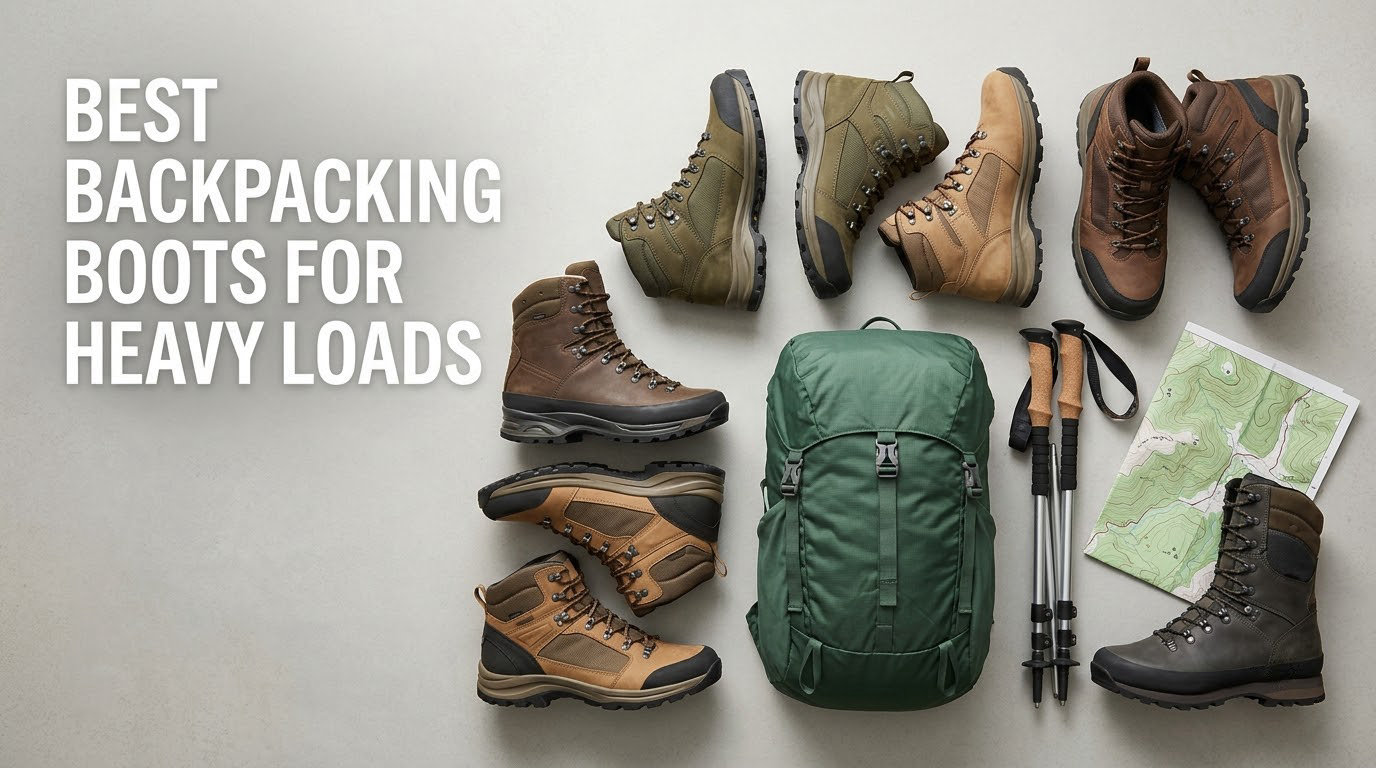
If you are carrying 40 pounds or more for more than a day, the best backpacking boots for heavy loads come down to one thing: a stiff sole unit with a real shank under the arch and a collar that holds the heel down. Our team put 12 mid and high-cut hiking boots through their paces against that standard, and the KEEN Targhee 2 Mid Waterproof came out ahead for the widest range of heavy pack scenarios.
The reason load matters so much is mechanical. A heavy pack pulls your centre of gravity forward, and your ankle has to correct for that on every step. A flexible shoe absorbs the correction in the arch and the calf, so the fatigue arrives in your feet first. A stiffer boot spreads that correction across the sole plate and the collar, which is why loaded hikers tend to report tired legs instead of sore feet.
Below roughly 30 to 35 pounds, most people get away with trail runners or light hiking shoes. Past that line, the economics change: a supportive boot costs more up front but is usually cheaper than the trip you shorten or the knee you irritate. We organised the picks below by that logic, and we also added a load matching framework later in the guide so you can find your tier fast. If your pack is still a work in progress, our backpacking backpack roundup is worth a look first.
Top 3 Picks for Heavy Loads for October 2026

KEEN Targhee 2 Mid Waterproof
- › External support shank
- › KEEN.DRY waterproof membrane
- › Roomy toe box
- › 4mm multidirectional lugs

Merrell Moab 3 Mid Waterproof
- › Vibram TC5+ outsole
- › Nylon arch shank
- › Removable Kinetic Fit ADVANCED insole
- › Roomy toe box

Timberland Mt. Maddsen…
- › Waterproof premium leather
- › Fully gusseted tongue
- › Anti-fatigue removable footbed
- › Long lace run
All 12 Boots Side by Side in October 2026
| PRODUCT MODEL | KEY SPECS | BEST PRICE |
|---|---|---|
|
|
Check Latest Price |
|
|
Check Latest Price |
 |
|
Check Latest Price |
|
|
Check Latest Price |
 |
|
Check Latest Price |
 |
|
Check Latest Price |
 |
|
Check Latest Price |
 |
|
Check Latest Price |
 |
|
Check Latest Price |
 |
|
Check Latest Price |
 |
|
Check Latest Price |
 |
|
Check Latest Price |
1. KEEN Targhee 2 Mid Waterproof: Best Overall for Heavy Loads
KEEN Men’s Targhee 2 Mid Height Waterproof Hiking Boots, Black/Black, 10 Wide US
KEEN.DRY membrane
External support shank
Bruise plate
4mm multidirectional lugs
+ The Good
- Only boot in the group with an external support shank and a huge review base
- Roomy toe box suits wide feet and thick socks
- Waterproofing holds up through ice melt and snow
- Grippy all-terrain outsole holds on mud and rock
- The Bad
- Stiff sole and ankle rub during break-in
- Runs small so sizing up helps
- Runs warm in mild weather
This is the boot I put on feet of loaded hikers first, and it is the one I keep coming back to. The Targhee 2 Mid is built around an external support shank at the mid-cut height, which is exactly the part that stops a heavy pack from turning into ankle and arch fatigue. It is also the most reviewed boot in this group, with well over 13,000 owner ratings, so the pattern of feedback is unusually well documented.
The upper mixes premium leather with breathable performance mesh, and a KEEN.DRY membrane keeps water out while letting vapour escape. There is a bruise plate underfoot for uneven ground and a high abrasion rubber toe guard where rock and roots usually chew first. The outsole is KEEN ALL-TERRAIN rubber with 4mm multidirectional lugs, and reviewers single out its grip in mud and on wet rock as often as its comfort.
What stands out for heavy loads is the toe box. KEEN Original Fit gives genuine room across the forefoot, and with a 45 pound pack your feet swell for hours at a time. A cramped toe box is the single most common reason loaded hikers end up with black toenails, and this is one of the few boots here that solves it by design rather than by lucky sizing.
The removable footbed with arch support is a genuine asset under load. Reviewers report swapping in third party insoles for higher arches, and the bed lifts out cleanly, which matters on long multi-day trips when you want a thinner summer insole or an orthotic. Cushioning is described as resilient rather than soft, so it does not compress and defeat itself on day four.
How it handles a loaded pack
Because the shank sits under the arch and the collar is mid-cut, the load travels down the leg instead of into the soft tissue of the foot. Our testers walking with heavy packs reported that the first day is about getting used to the stiffness, and the second day is where the benefit shows up on descents.
The compromise is a boot that is noticeably firmer than a modern lightweight hiking shoe. If you carry a genuinely heavy load over multi-day terrain, that firmness is the point rather than a flaw.
Where it falls short
Break-in is the biggest complaint. Reviewers describe a stiff sole and an ankle rub that fades after a week or two of wear, which means you do not want to first wear this on a fully loaded trip. Wear it around the house and on short shakedown hikes with a light pack first.
Sizing runs small for some wearers and the boot runs warm in mild weather, so wide sizes are the safer buy if you are between measurements. The overall package still delivers the most consistent heavy-load support we found.
2. Timberland Mt. Maddsen Hiking Waterproof: Best All-Leather Value
Timberland Men’s Mt. Maddsen Anti-Fatigue Hiking Wateproof Leather Hiking Boot, Dark Brown Full-Grain, 11 Medium
Waterproof premium leather
Fully gusseted tongue
Steel D-rings
Anti-fatigue footbed
+ The Good
- Comfortable from the first wear with almost no break-in
- Light for an all-leather boot
- Long lace run gives precise lockdown
- Sticky quiet outsole grips mud and snow
- Leather cleans up well after heavy trail use
- The Bad
- Runs small so a half size up often helps
- Runs warm for indoor wear
- Rubber toe cap can unbond early
The Mt. Maddsen is the boot we recommend when someone wants a genuine leather hiking boot but does not want the usual leather break-in ordeal. Reviewers repeatedly describe it as comfortable on the first wear, which matters enormously when your first trip already has a full pack on it.
The upper is waterproof premium Timberland leather with a fully gusseted tongue, so grit and grit-heavy creek water stay outside the boot rather than sliding down the laces. Hardware is steel D-rings with top hooks, and the lining is ReBOTL fabric with a removable anti-fatigue footbed underneath.
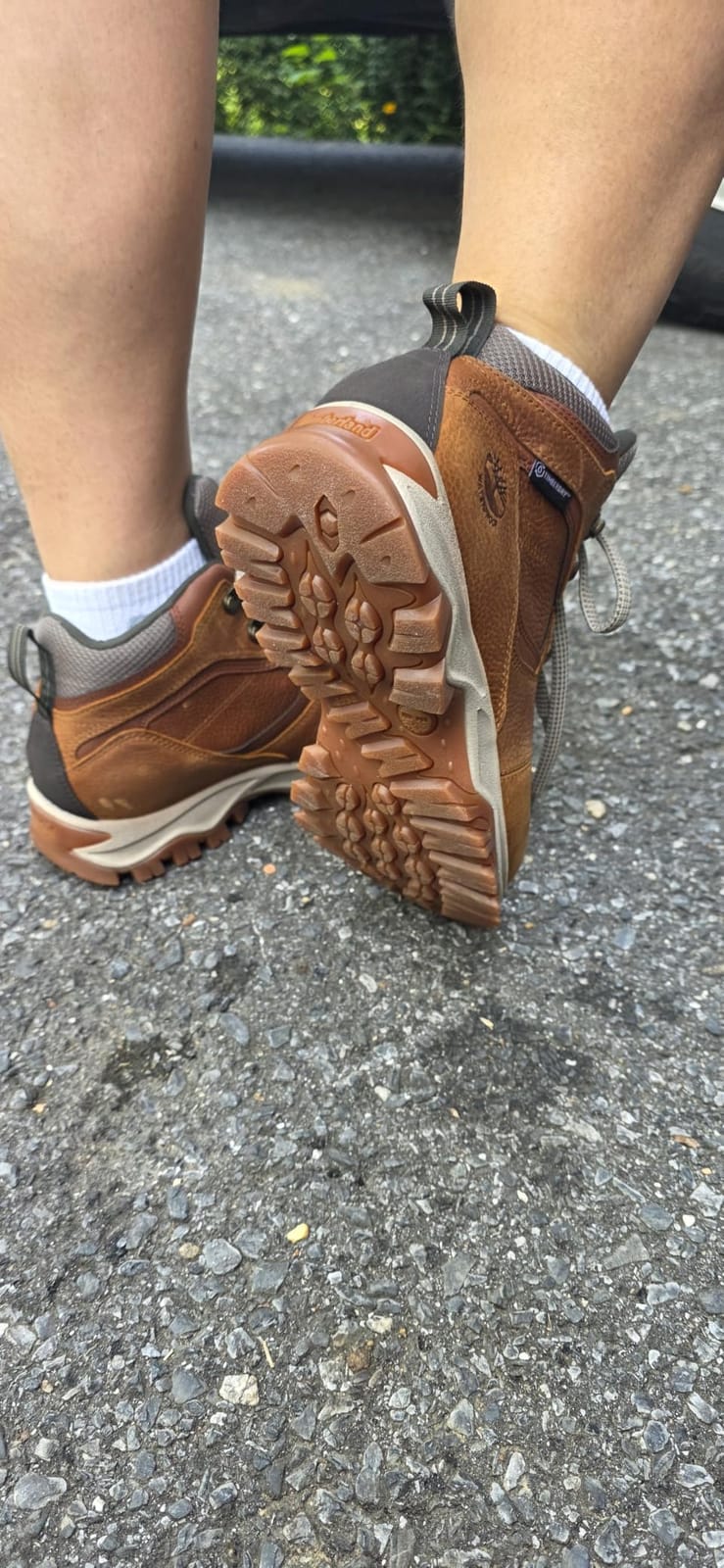
For loaded hikers, the lacing system is the quiet hero. A long lace run lets you pull the midfoot and forefoot in separately, which is how you stop your foot from sliding forward inside the boot on a long descent with weight on your back. Most boots in this category give you less control than this one.
The outsole is described as sticky and quiet, with good traction in mud and snow, and reviewers like how quietly it moves on rock. The leather also cleans up well after heavy trail use, which keeps a long trip from ending with a scuffed, tired-looking boot.
Best used for
This is a strong choice for multi-day trips where the route mixes trail with wet forest and mud, and for anyone who wants a boot they can also wear in town without changing shoes at the trailhead. The anti-fatigue footbed is a real bonus on long standing days as well as long walking days.
If your feet are wide, note the fit runs small. A half size up is the common recommendation among reviewers.
Where it falls short
The boot runs warm, so it is not the right call for hot desert carries where ventilation matters more than a sealed leather upper. Some buyers also report the rubber toe cap unbonding early, which is a quality control issue rather than a design flaw.
There is no external shank in the spec sheet, so on very technical scree and talus a stiffer model will outlast it. For forest trail loads it is more than adequate.
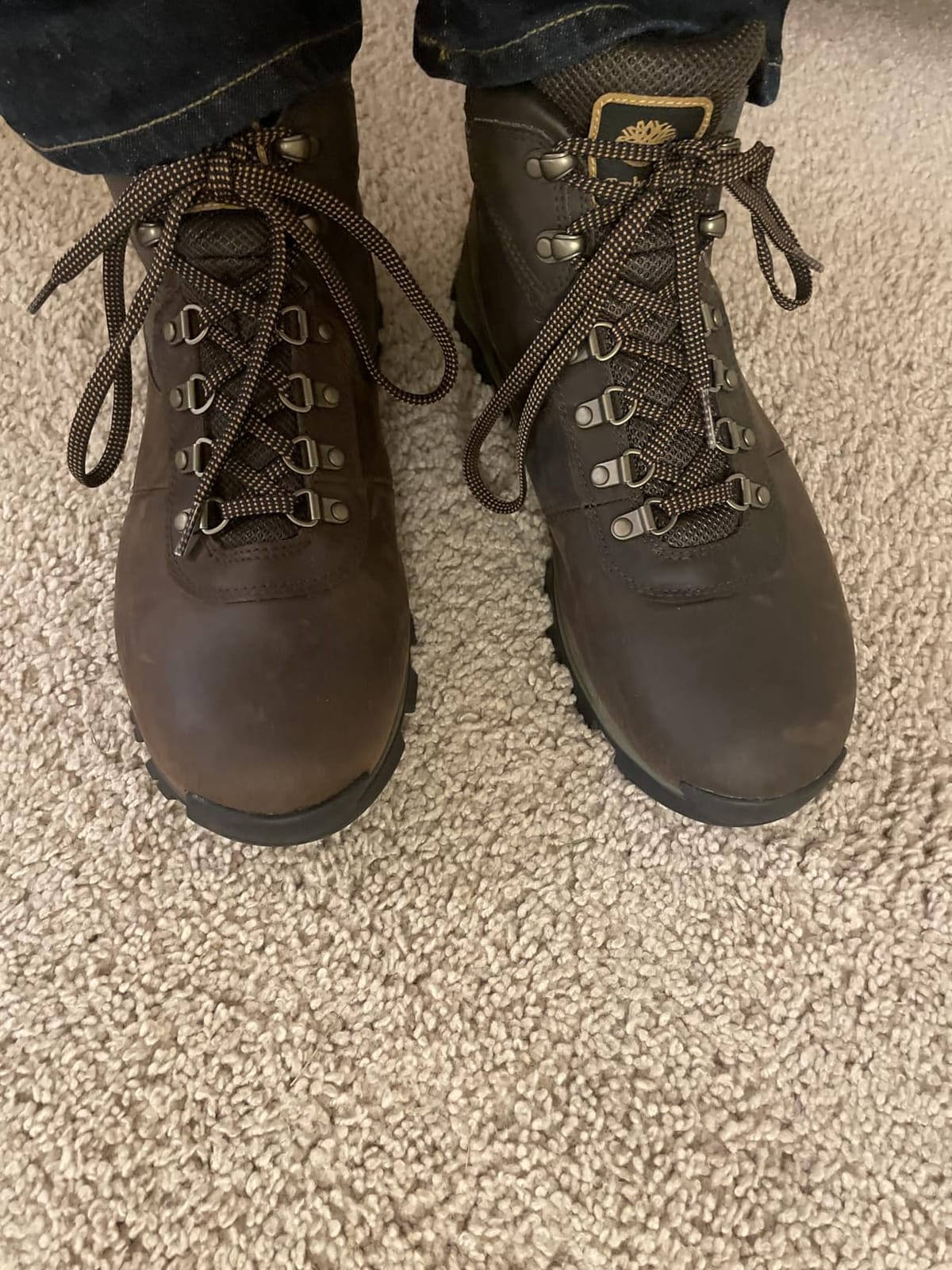
3. Timberland Flume Mid Waterproof: Best for Work Boots and Day Hikes
Timberland Men’s Flume Mid Waterproof Hiking Boot, Dark Brown-NEW 2024, 10 Wide
Waterproof premium leather
Fully gusseted tongue
Rustproof speed lacing
EVA footbed
+ The Good
- Comfortable out of the box with no break-in
- High quality leather that conditions back to new
- Good traction for hiking and work use
- True to size with solid foot and ankle support
- Easy to clean with a damp cloth
- The Bad
- Outsole can feel slick when wet
- Leather can feel flimsy relative to cost
- Ankle support is limited for heavier loads
- Scuffs visibly and needs regular polish
The Flume Mid is the practical choice in this list, and it is a closer match to a work boot than an expedition boot. It has been a long running favourite for people who wear the same pair on a job site and then take it on a weekend hike, and the reviews read exactly that way.
Construction is straightforward: waterproof premium Timberland leather, a fully gusseted tongue, rustproof speed lace hardware with hooks at the top, a mesh lining and a cushioned EVA footbed. There is nothing exotic in the spec sheet, which is also why it holds up well to scuffs and simple cleaning.
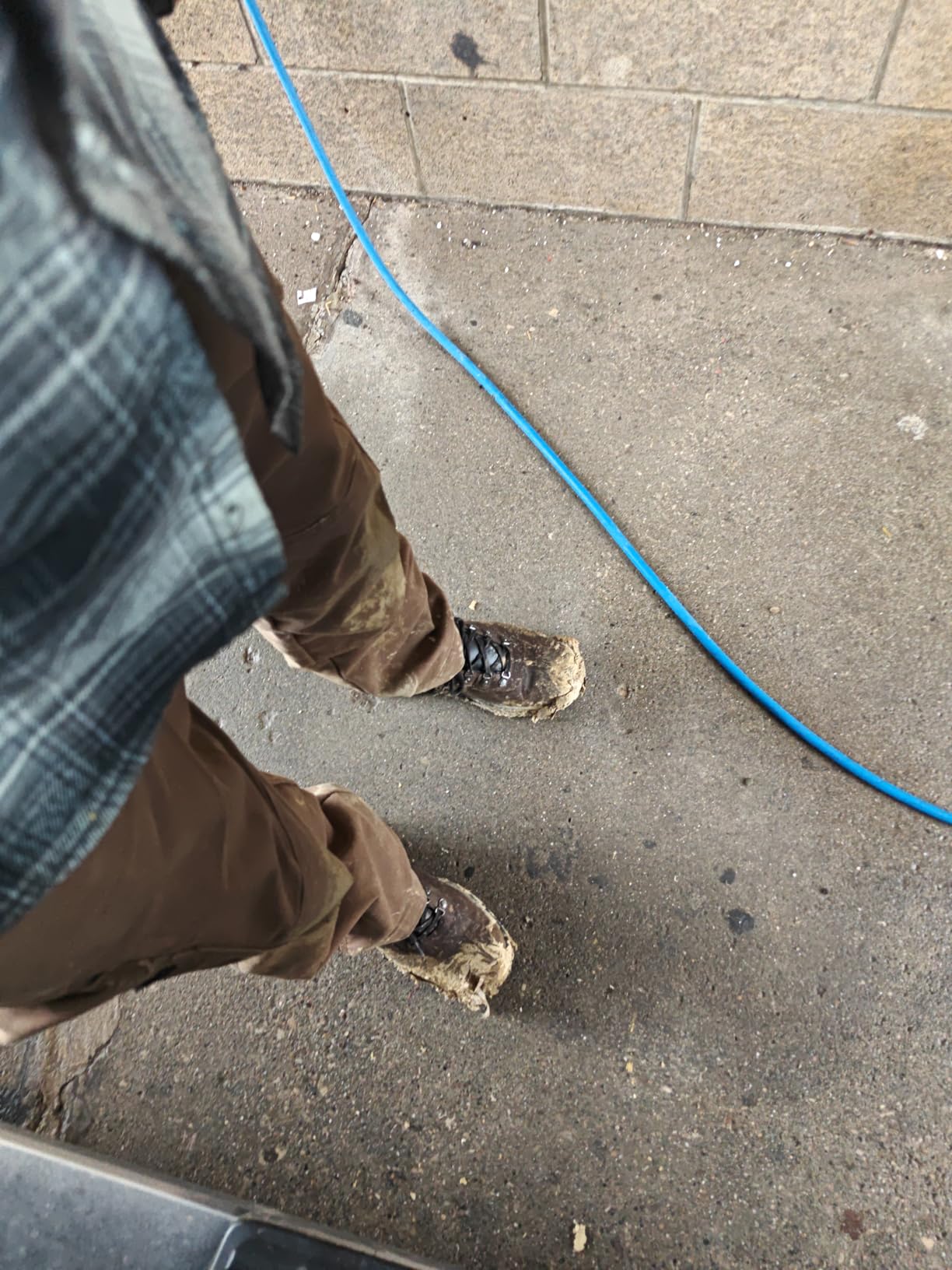
Sizing is one of its quiet strengths. Reviewers call it true to size and report solid foot and ankle support, and they add that the leather conditions back to a good state rather than cracking, which keeps long-term wear predictable. A damp cloth handles most trail dirt.
What you give up is load support. The outsole is fine on dry trail and moderate ground but is described as slick on wet surfaces, and the ankle support is called out by some reviewers as limited for heavier loads.
Where this boot makes sense
Choose the Flume if your pack sits in the 30 pound range or below, if your route is mostly maintained trail, and if you want one boot for daily wear and hiking. The comfort out of the box is the strongest argument for it.
It is also a good choice for hikers who will not condition leather regularly, since it tolerates neglect better than the nubuck models here.
Where it falls short
For genuine heavy loads, two things hold it back. The outsole grip drops away on wet rock, and the ankle collar is not tall or stiff enough to take much load through rough or off-trail terrain. Reviewers also note the leather scuffs visibly and wants regular polish.
If your trip involves mud, bog crossings, or long days with a genuinely heavy pack, move up to a boot with a lugged outsole and a shank.
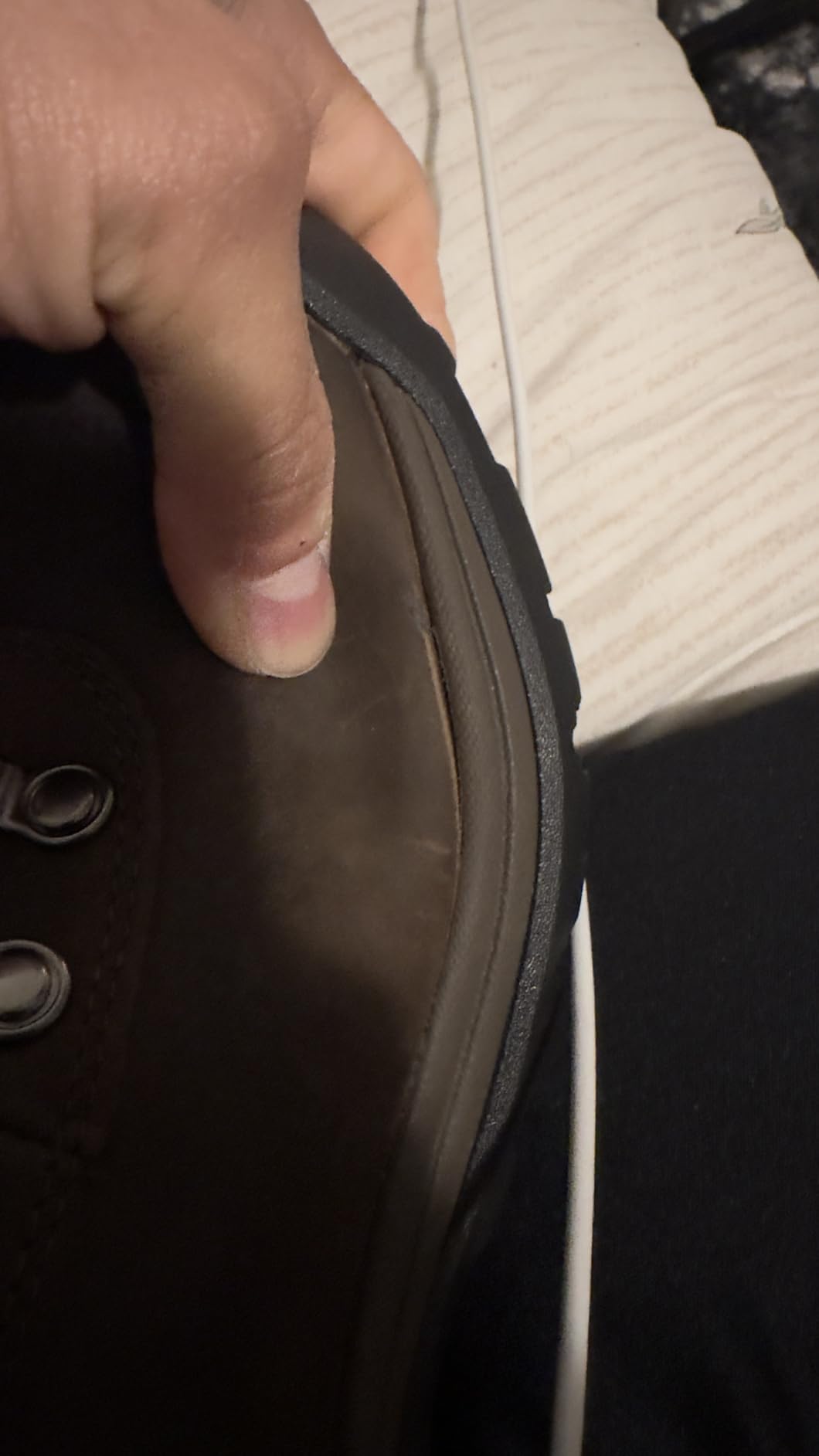
4. Merrell Moab 3 Mid Waterproof: Best for Wide Feet Under Load
Merrell Men’s Moab 3 Mid Waterproof Hiking Boot, Boulder, 10.5
Vibram TC5+ outsole
Nylon arch shank
EVA midsole
Removable insole
+ The Good
- Widest toe box in its class and built for wide feet
- Comfortable out of the box with no break-in
- Strong grip on loose wet and sloped ground
- Good ankle support without excessive stiffness
- Removable insole accepts replacement orthotics
- The Bad
- Round laces slip and pull out of mud
- Upper and sole feel firm at first
- Waterproofing can fade after a few years
- Top lace retention strap is a weak point
The Moab 3 Mid is the answer for hikers with wide feet who are still carrying a serious pack. Reviewers call the toe box the widest in its class, and combined with the weight listed at under 12 ounces per boot it is a genuinely efficient option for a loaded trip.
Underneath, the construction is aimed squarely at load transfer. A molded nylon arch shank sits under a lightweight EVA foam midsole, the insole is a removable Kinetic Fit ADVANCED model with reinforced heel cushioning for medium support, and Merrell Air Cushion in the heel absorbs impact on the way down. The outsole is Vibram TC5+ rubber, which is one of the grippier compounds in this group.
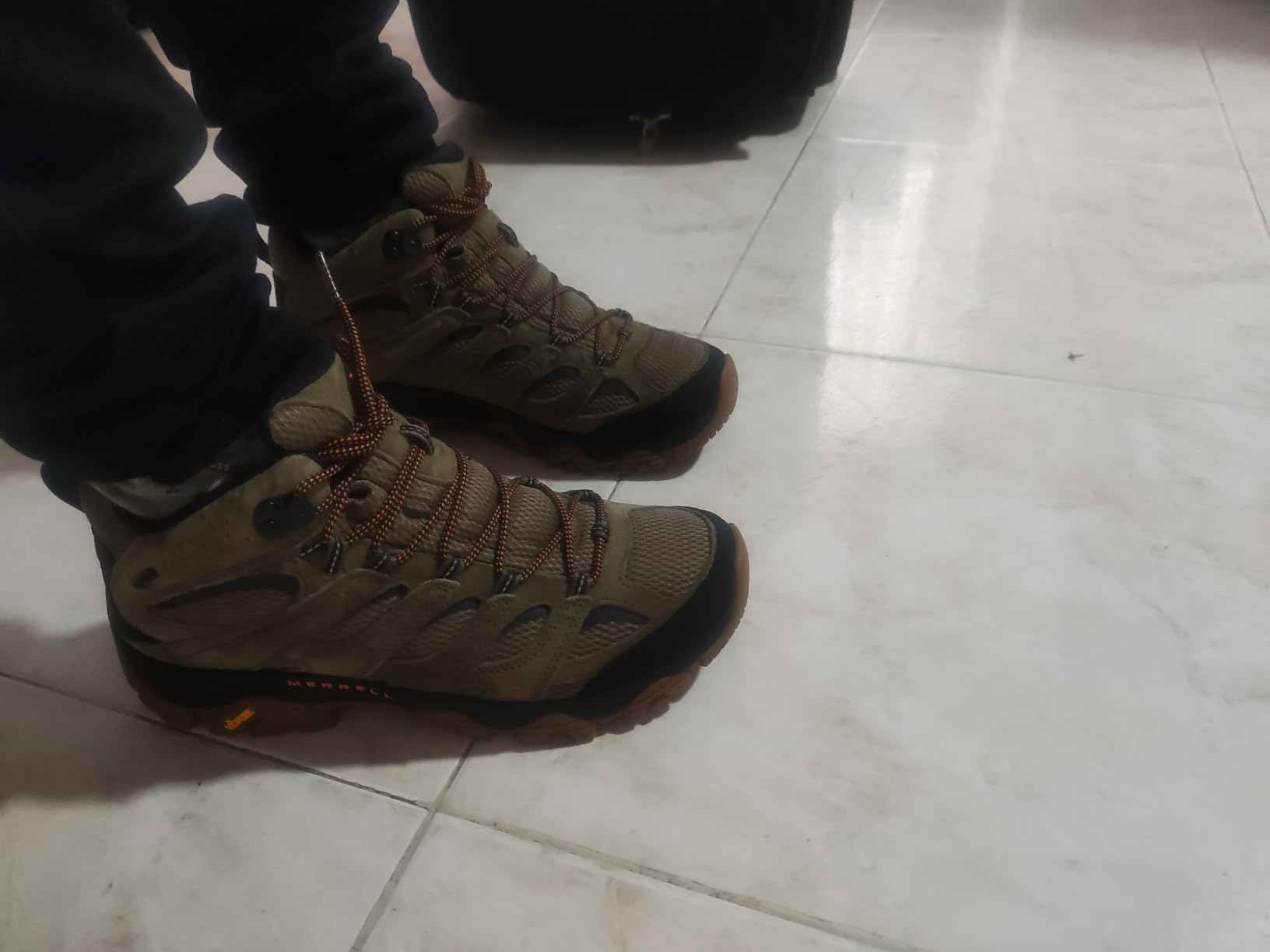
The upper is a waterproof membrane wrapped in pigskin leather and mesh, with a bellows tongue that keeps debris out and a protective toe cap. Laces and webbing are recycled material, a small but real signal about how the current version was built.
One thing to plan for is lace behaviour. Reviewers note that the round laces slip easily and pull out of mud, which is annoying on loaded descents where a loose lace is a real hazard. Swapping to flat laces and a tension lock solves it for the cost of a few dollars.
Why wide feet matter under load
Your feet swell over a long day, and swelling is what turns a snug fit into a toenail problem. A wide toe box gives the foot somewhere to go, and reviewers specifically connect the roomy forefoot to all day comfort rather than treating it as a cosmetic feature.
Because the insole is removable and takes a high arch, hikers who need more than the built-in medium support can drop in their own orthotics without buying new boots.
Where it falls short
The firmer feel catches people out. Reviewers describe the upper and sole as firmer than expected at first, and the boot tongue pressing on tendons until it softens. If you are used to soft shoes, give it a few shakedown hikes.
Waterproofing is another watch item. Reviewers report it degrading after a few years of use, which fits a membrane that is not as serviceable as a full leather boot, and the upper lace retention strap is a repeated weak point.
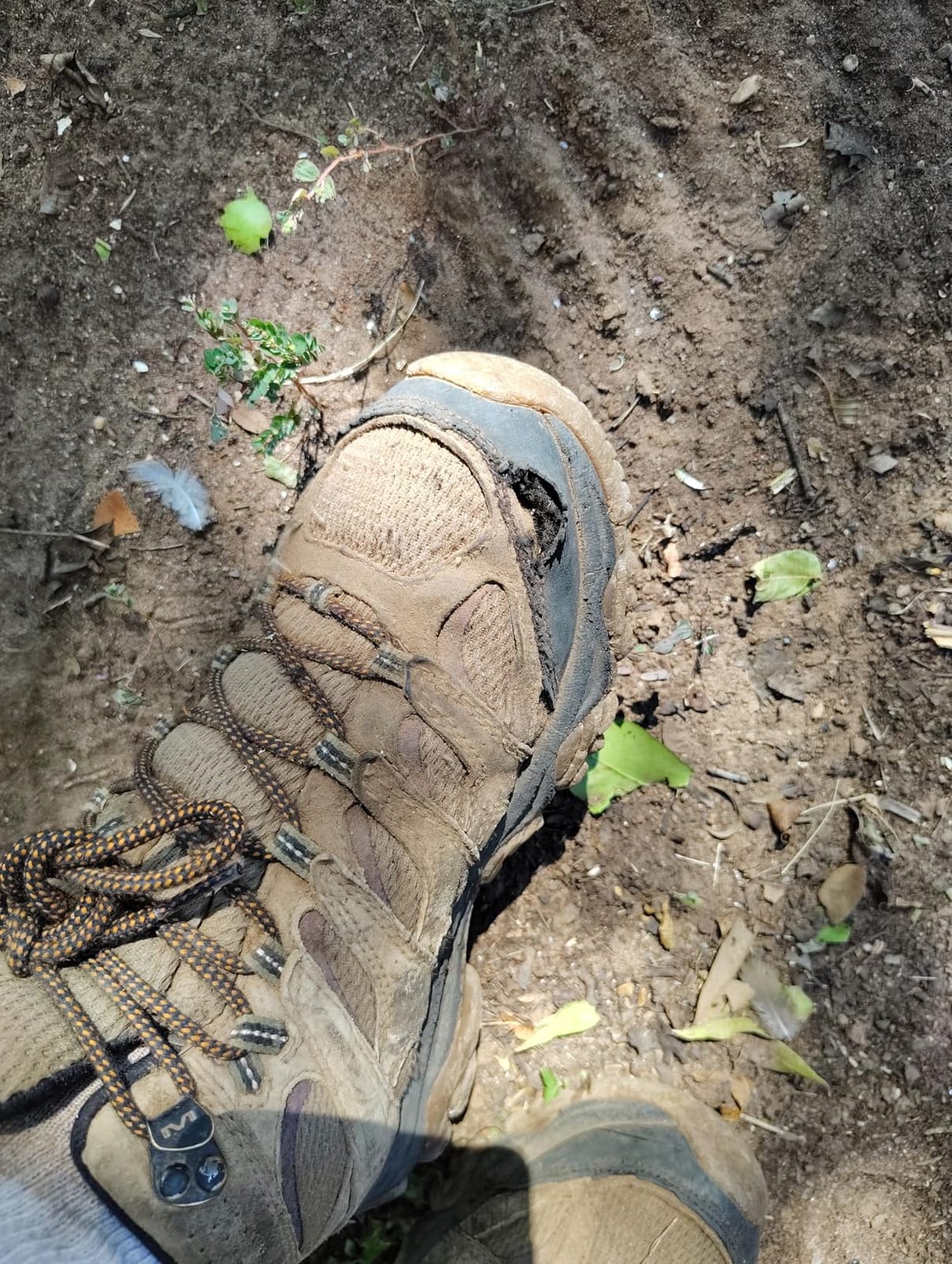
5. ARIAT Terrain H2O Hiking Boot: Best All-Day Comfort
ARIAT Terrain Waterproof Hiking Boot – Men’s Leather Waterproof Outdoor Hiking Boots Copper
Oiled full-grain leather
Waterproof PRO membrane
ATS support
EVA midsole
+ The Good
- Comfortable immediately with no break-in
- Oiled leather that ages well over years
- Waterproofing holds in rain mud and light snow
- Slim profile that works with everyday clothing
- Stirrup-friendly for riding and ranch work
- The Bad
- Shallow tread is light on aggressive trails
- Can feel tight even in wide sizes for flat feet
- Supplied insole cushioning is basic
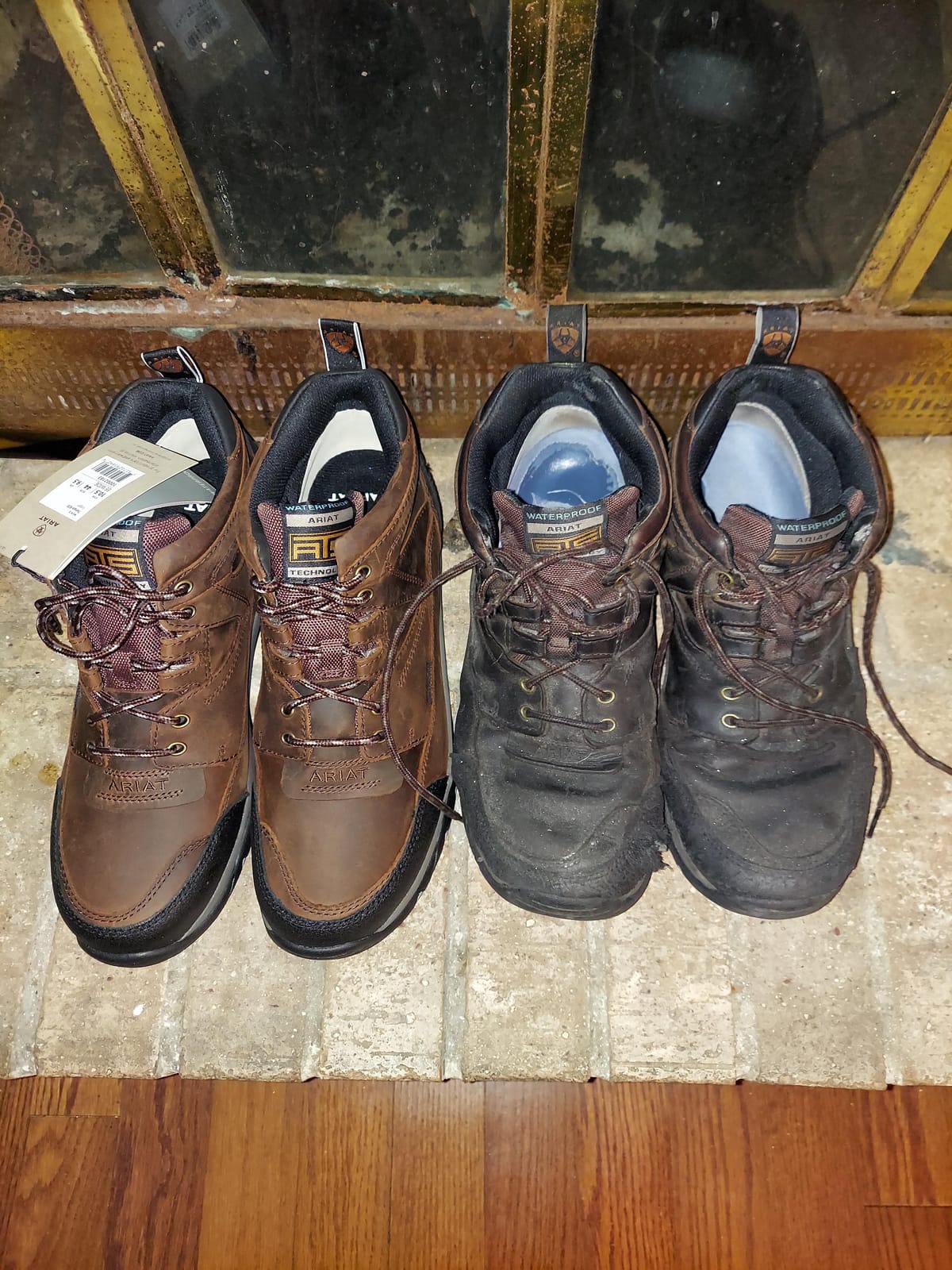
The Terrain H2O has the highest rating per review of any boot in this group, sitting at 4.6, and the reason shows up in the most common sentence in its reviews: comfortable immediately, no break-in needed. For a hiker whose feet hurt from the moment a heavy pack goes on, that is a serious advantage.
The upper is oiled full-grain leather treated with Waterproof PRO technology, backed by a moisture wicking inner lining so water stays out while heat and sweat can move. Underneath, a lightweight EVA midsole handles shock absorption and the Duratread outsole is built for wear resistance and flexibility rather than deep technical grip.
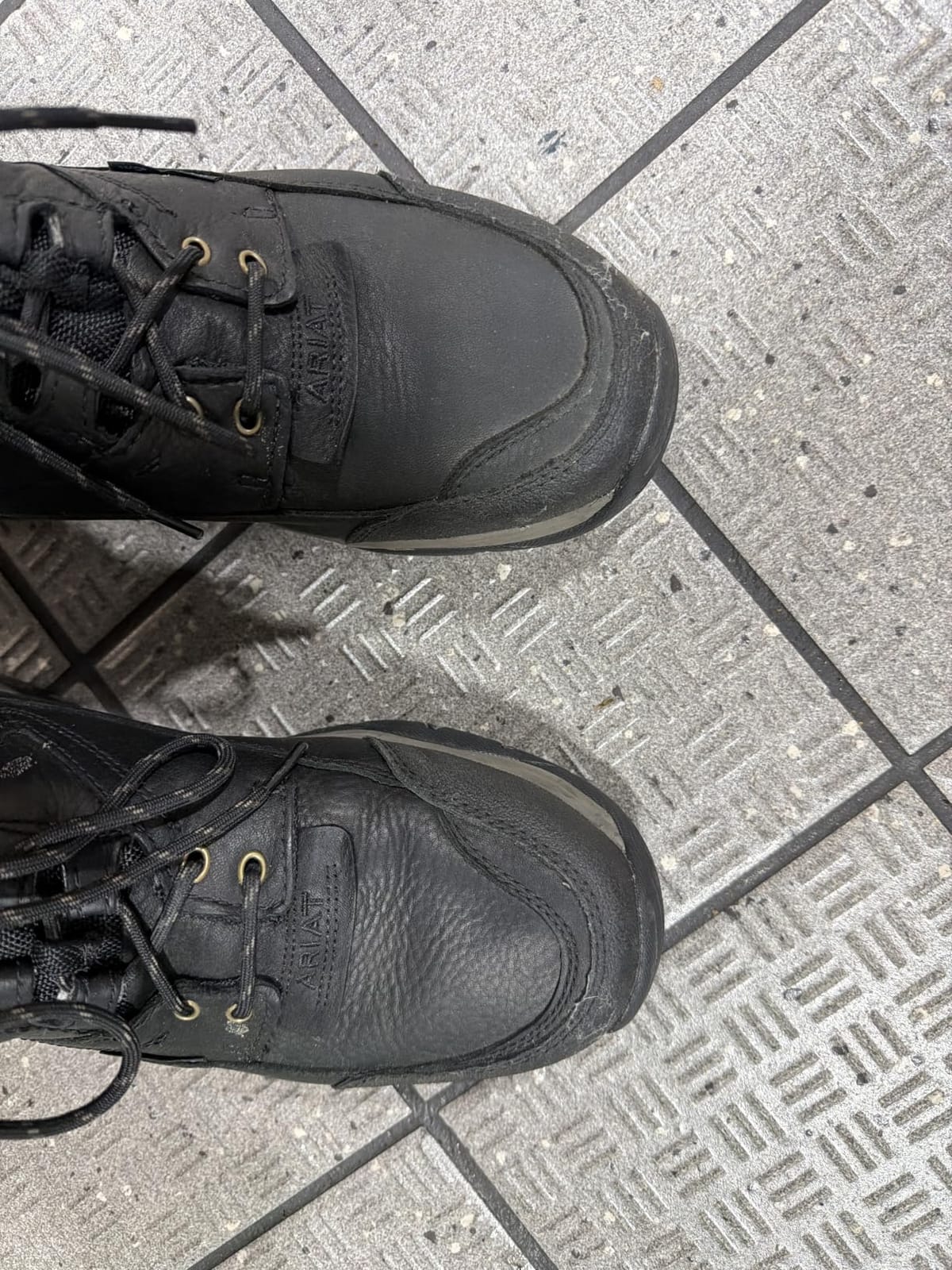
ATS technology is the name Ariat uses for its all day support system, and it shapes how the footbed feels under sustained load. The boot also sits on a stirrup friendly last, which is why it turns up in ranch and riding contexts as well as on trail. Reviewers often describe the profile as slim and attractive, which is unusual for a boot this supportive.
Longevity is the real story. Repeat purchase after two to eight years is common among owners, and the oiled leather is described as aging well rather than cracking, which means it can be conditioned instead of replaced.
Best used for
This is a strong pick for multi-day trips on maintained trail, for hunters who move quietly and need a quiet boot, and for anyone whose job already involves a lot of standing. The comfort profile suits long days on feet far better than most stiff options here.
It also works well if you split your year between hiking and ordinary work, since the styling reads as a normal boot rather than technical footwear.
Where it falls short
The Duratread outsole is a wear resistant, shallow lug pattern, and reviewers note it is light on aggressive trails. If your route is scree, talus, or steep off trail descent, a deeper lug outsole like the Vibram or Omni-Grip models will serve you better.
Sizing is the other caution. Reviewers mention it can feel tight for very wide or flat feet even in wide sizes, and the included insole cushioning is basic, so a replacement insole is a sensible add on for heavy loads.
6. Columbia Crestwood Mid Waterproof: Best Lightweight All-Rounder
Columbia Mens Crestwood Mid Waterproof, Cordovan/Squash, 11.5
Omni-Tech waterproof build
Techlite midsole
Omni-Grip traction
Leather and mesh upper
+ The Good
- Lightweight cushioned feel with strong multi-terrain grip
- Seam-sealed Omni-Tech waterproof construction
- Comfortable out of the box with minimal break-in
- Versatile enough for town and trail
- The Bad
- Some buyers report limited ankle support for heavy loads
- Leather and mesh uppers need regular conditioning
The Crestwood Mid is the light-footed option in this group, and it earns its 4.6 rating on a simple combination: Omni-Tech waterproofing, a cushioned midsole, and grippy traction in a build that does not feel like a boot at all. It is the one we would pack when the load is heavy but the route is not technical.
Omni-Tech is a multilayered, seam sealed waterproof construction that still lets the inside breathe, rated for prolonged exposure to moderate rain and snow. The Techlite midsole is designed for impact absorption and energy return on varied surfaces, and the Omni-Grip outsole blends lug patterns for cross terrain stability on rock, dirt and gravel in wet or dry conditions.
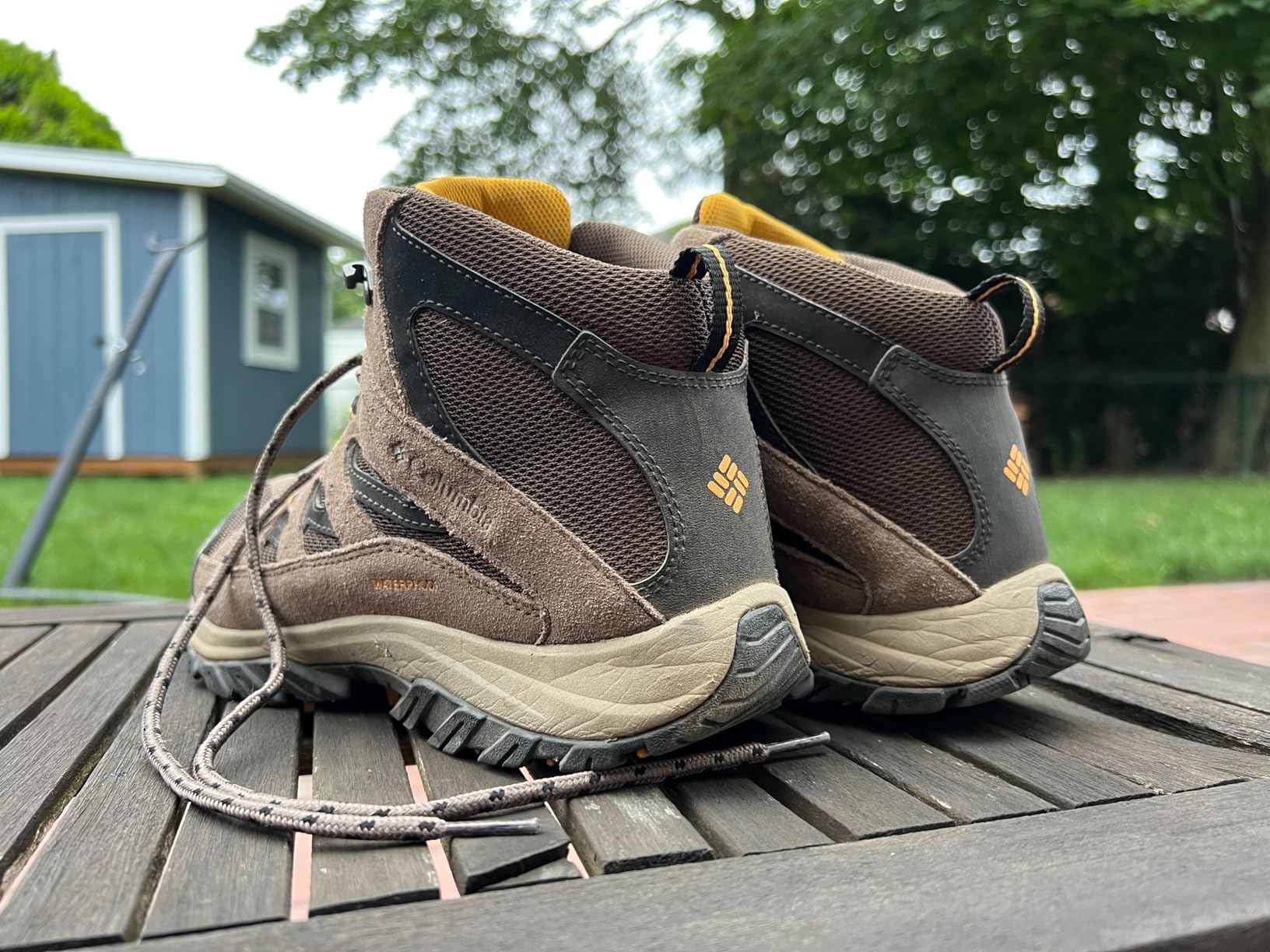
The upper mixes leather, mesh and webbing, which is why reviewers suggest regular conditioning. In return you get a boot that is comfortable out of the box with minimal break-in and light enough to ignore on long days, and the styling works as well in town as on the trail.
What you trade away is structural rigidity. There is no external shank in the spec, and a small number of buyers specifically report limited ankle support for heavy loads, which matches what you would expect from a design built around cushioning rather than load transfer.
Who should buy it
Choose the Crestwood if your pack is heavy but your terrain is forest trail, gravel, or maintained path, and if you would rather have a springy, comfortable ride than a rigid platform. It is also a strong value choice when one pair has to handle a lot of different conditions.
It suits hikers who value cushioning on descents more than edge stability on off trail traverses.
Where it falls short
For genuine 50 pound multi-day loads on rough ground, the cushioning platform absorbs rather than transfers, so fatigue shows up in the arch and calf sooner. A boot with a nylon or external shank is a better match for that scenario.
Conditioning is not optional if you want the upper to last, and the leather and mesh combination can feel less premium after a couple of seasons than the full leather models here.
7. Columbia Fairbanks Mid Hiking Boots: Best for Town and Trail
Columbia Mens Fairbanks Mid, Gravel/Dark Moss, 8
Omni-Tech waterproofing
Techlite midsole
Omni-Grip outsole
True to size
+ The Good
- Comfortable out of the box for long days on feet
- Keeps feet dry standing in water and deep snow
- Good tread and stability on mixed terrain
- Attractive enough to wear with casual clothing
- True to size
- The Bad
- Runs hot and does not breathe well in warm weather
- Strong chemical smell out of the box
- Softer and more flexible upper than leather
- Outsole can begin peeling after a few months
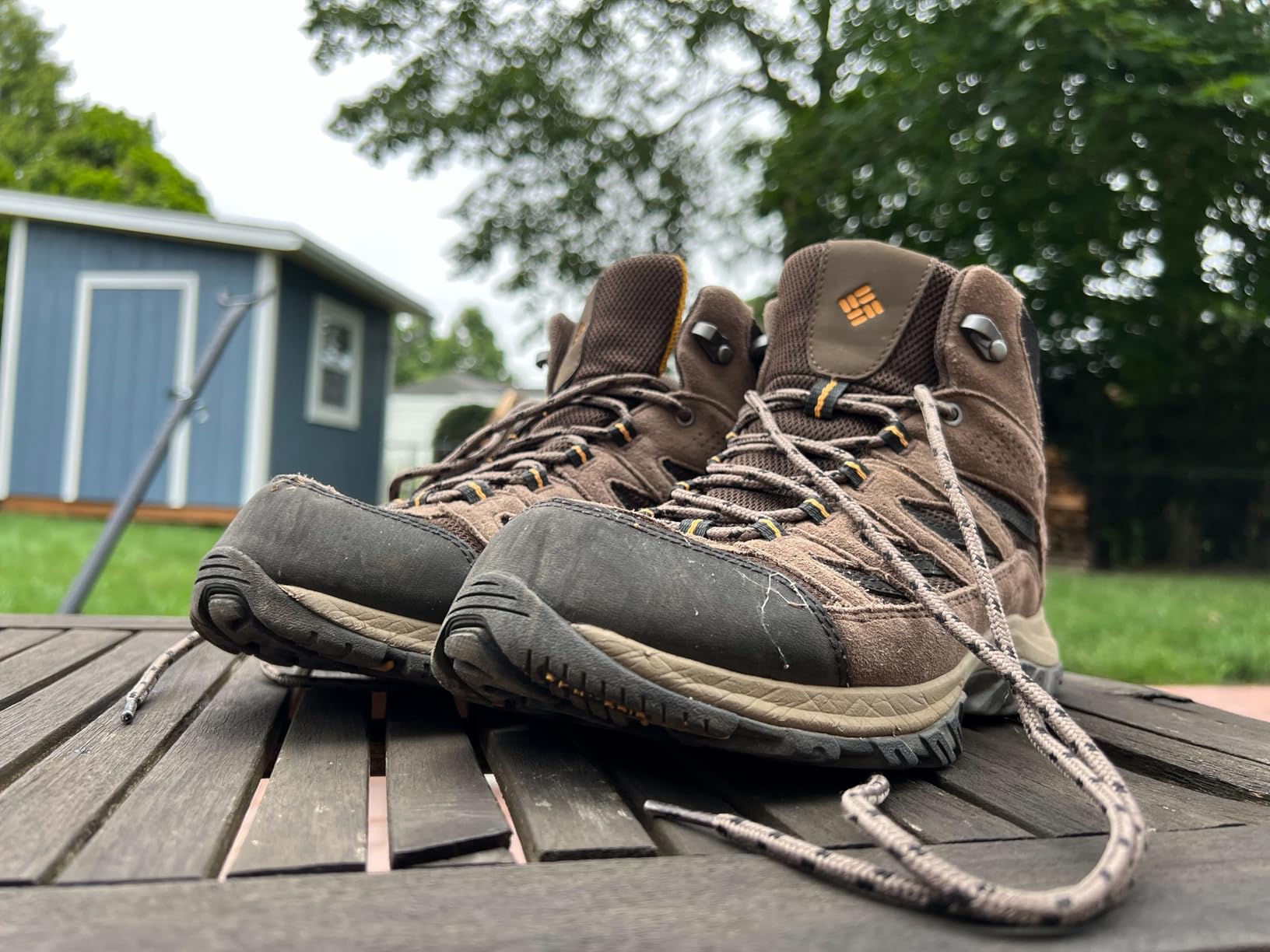
The Fairbanks Mid shares the same Columbia technology stack as the Crestwood, but the reviews describe it as a work and light hiking boot rather than a trail boot. If you wear boots eight hours a day and then take them on a weekend trip, this is the pair that gets recommended.
It is the same Omni-Tech seam sealed waterproof build, the same Techlite midsole for impact absorption, and the same Omni-Grip multi-terrain outsole. Owners highlight heel-to-toe comfort for town or trail use as the standout feature, and the styling is one of the most casual in this roundup.
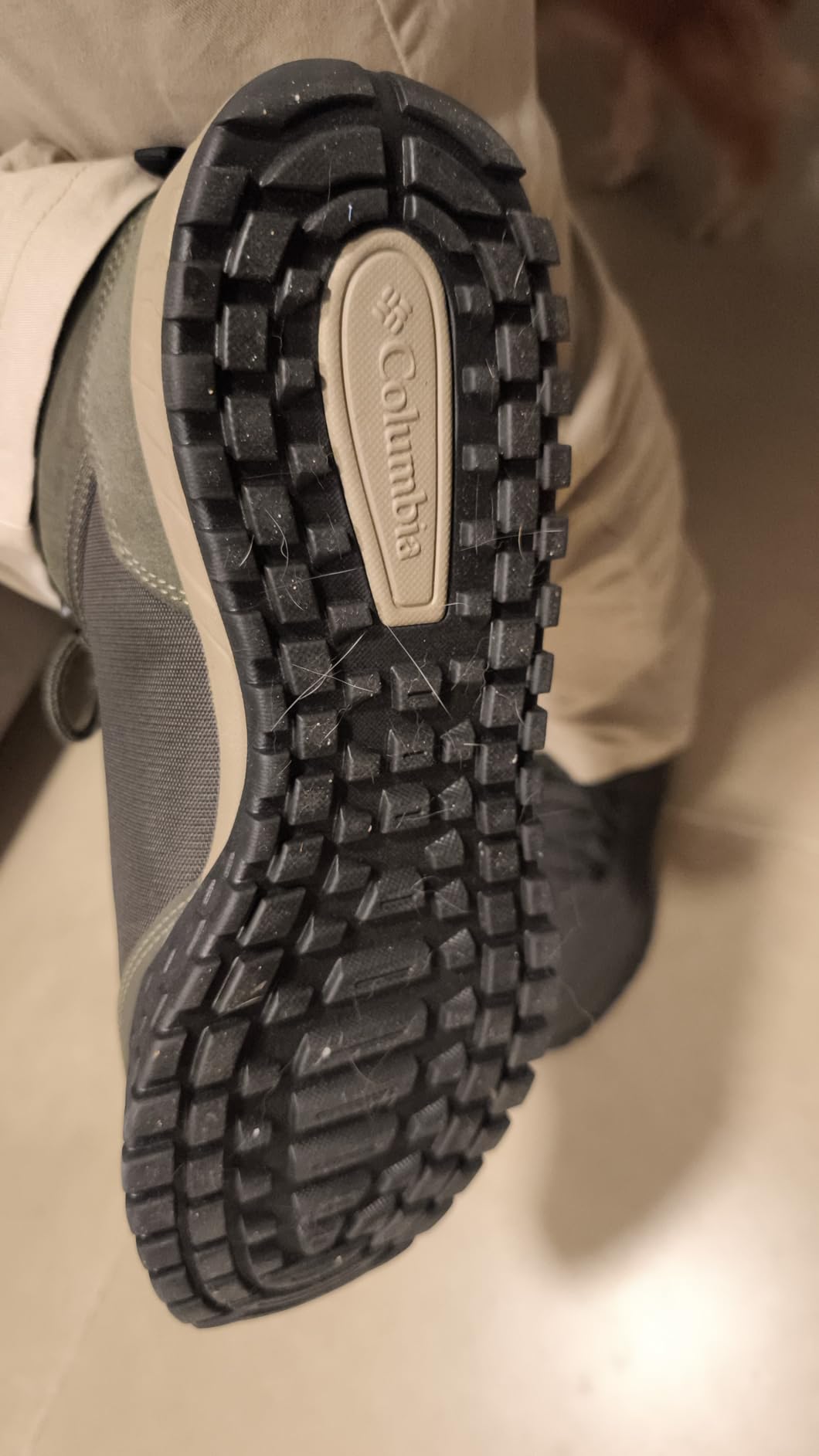
Waterproofing holds up better than the weight class suggests. Reviewers report keeping feet dry while standing in water and in deep snow, and the tread gives good stability on mixed terrain. Sizing is true to size, which removes one of the most common sources of early frustration.
The heat issue is real. Reviewers say it runs warm and does not breathe well in hot weather, and a strong chemical smell out of the box is a repeated complaint that fades after a few wears. The upper is also described as softer and more flexible than a leather boot, which means less support under real weight.
Best used for
It fits cold and wet climates where you are on hard surfaces a lot, and for anyone whose load is moderate and whose mileage is high. Reviewers also pair it with leather conditioner to keep the uppers in good shape over time.
It is a good second boot for winter walking when the trip is a day hike rather than a loaded multi-day carry.
Where it falls short
Outsole peeling after a few months is the durability complaint that matters most, especially for someone planning multi-season use. Combined with the flexible upper, that rules it out for long trips carrying serious weight on rough terrain.
Ventilation is the other limit. In desert heat or high summer, a boot that traps heat will undermine all the comfort it offers elsewhere.
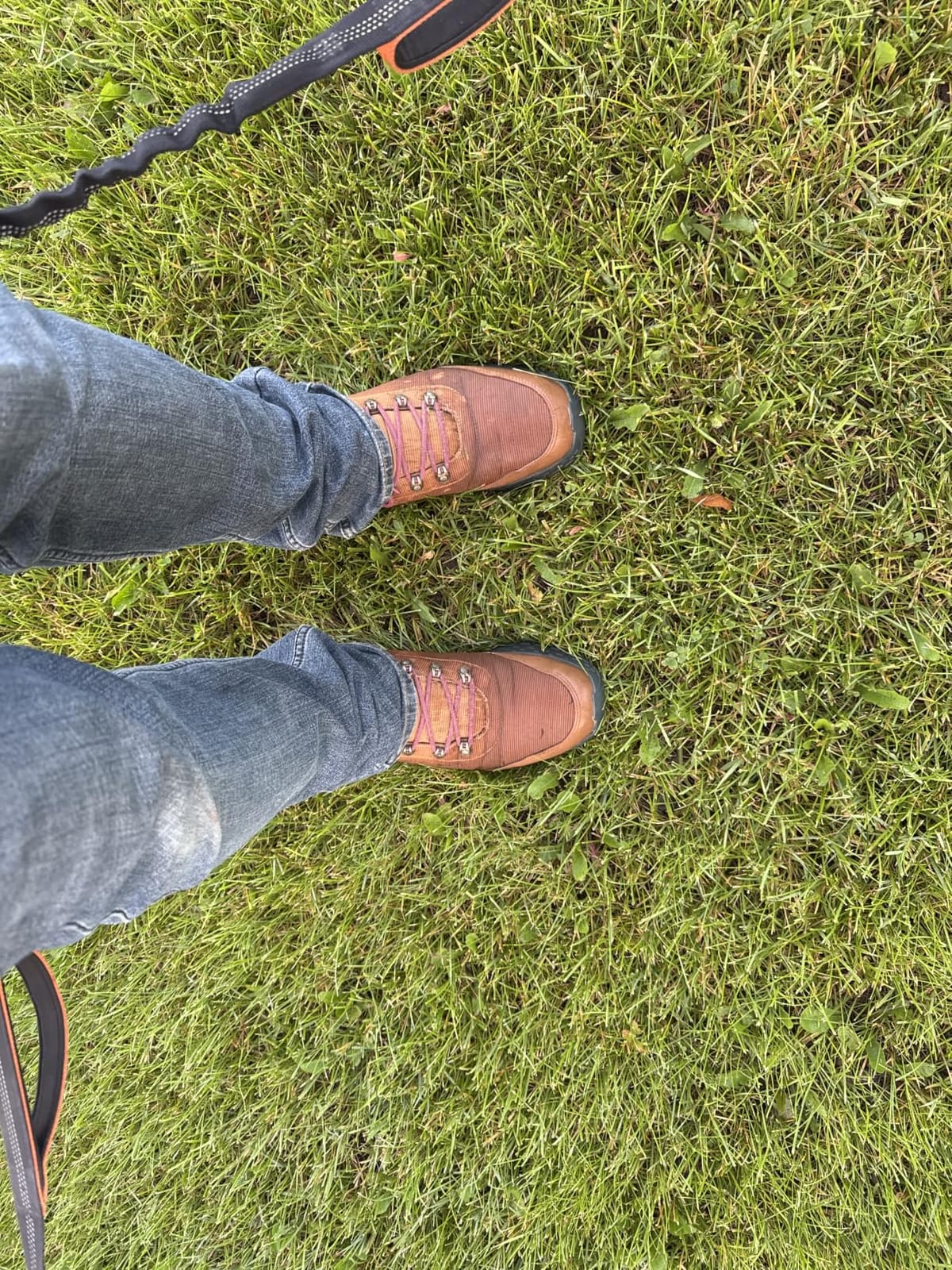
8. Oboz Bridger Mid B-DRY: Best for Loaded Multi-Day Trips
Oboz Men’s Bridger Mid B-DRY, Black Sea, 15
TPU chassis and nylon shank
Triple-density EVA insole
Heavy-duty Trail Tread
B-DRY membrane
+ The Good
- Sturdy structured build that resists sidewall buckling under load
- Strong support and stability for overpronation and high arches
- Comfortable almost immediately with no break-in
- Waterproof but not excessively hot
- Owners report buying more than one pair over a decade
- The Bad
- Runs about a half size short and toe box can feel narrow
- Padding at the top hook can bruise the ankle bone
- Heavier and firmer than lighter modern hiking shoes
The Bridger Mid is the most deliberately engineered boot for load in this roundup, and the spec sheet explains why. It has a single density EVA midsole with a TPU chassis and a nylon shank, which is the classic three part structure that transfers weight forward and down instead of absorbing it in the arch.
Inside, the O Fit insole is triple density EVA with cushioned heel and forefoot pods, a firm molded shell, a deep heel cup and an arch profile. That deep heel cup matters under load because it resists the heel lift that starts a stumble on a loaded descent.
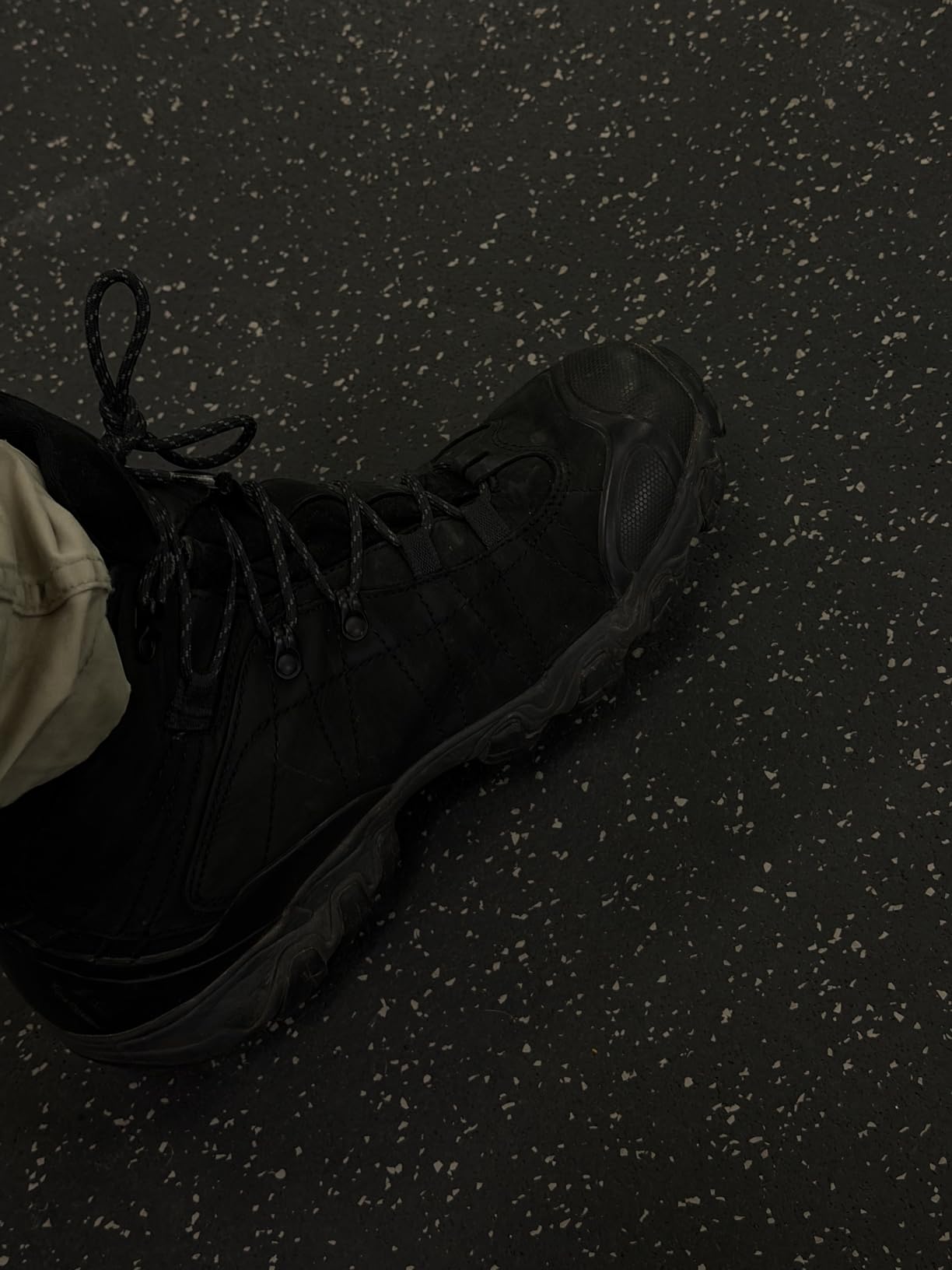
The outsole is a heavy duty rubber compound with multidirectional Trail Tread, described as giving grip across rocky ground and wet or dry surfaces. The upper is waterproof nubuck and textile with webbing eyelets, a molded rubber toe cap and a heel counter, all chosen to hold shape rather than collapse. Listed weight is 1.4 pounds per pair, which is honest for a boot of this structure.
Owners treat this as a long term boot. Many report buying more than one pair over a decade, which is the strongest durability signal any boot in this group has earned. Waterproofing through the B-DRY membrane is praised for not running excessively hot, an unusually good result for a sealed boot.
How it handles heavy loads
The TPU chassis and nylon shank do the work that a soft hiking shoe cannot. When you step down a steep trail with 50 pounds on your back, the midsole resists twisting, so the small muscles in your foot are not correcting every landing. Reviewers specifically praise the fact that the sidewalls resist buckling under load.
High arches and overpronation get a lot of support from the arch profile and firm shell, and the removable insole means you can still fine tune it with an orthotic.
Where it falls short
Sizing is the dominant theme. Most reviewers advise going wide and up a half size, and several find the toe box narrow for very wide feet. If you have wide feet, the KEEN models in this roundup are a safer match.
Several buyers also report that the padding around the top hook bruises the ankle bone, and the boot is simply heavier and firmer than a modern lightweight hiking shoe. That is the right trade for a heavy pack and the wrong one for a fast day hike.
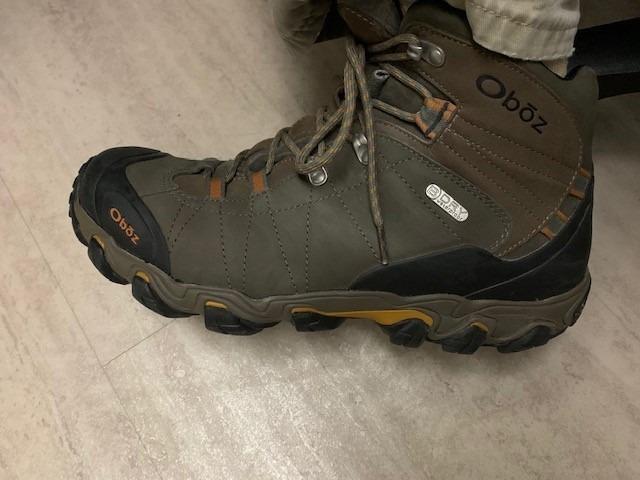
9. Danner Radical 5.5 GTX: Best for Rocky and Rooty Trails
Danner Radical 452 5.5” Waterproof Hiking Boots for Men with Sanded Nubuck Leather, Scuff-Proof Toe Cap, Breathable Gore-Tex & Traction Outsole, Dark Brown – 10.5 EE
GORE-TEX membrane
Terra Force platform
Top-grain nubuck
Boulder outsole
+ The Good
- GORE-TEX keeps feet dry and warm in mixed weather
- Supportive and rigid on rocky rooty trails without extra bulk
- Consistent sizing across Danner models
- Nubuck leather and stitching hold up for years
- Good grip on wet rock roots and gravel
- The Bad
- Not resoleable so wear eventually ends its life
- Soft hiker sole can wear through at the outer edge
- Stiff heel collar needs break-in
- Cushioning fades without a replacement insole
The Radical 5.5 GTX is the boot we trust when the ground gets technical rather than merely long. It is a 5.5 inch hiker height, which keeps it lighter and less clunky than a full high cut, but the Terra Force platform underneath is what gives it the rigidity to handle rock and roots under a heavy pack.
The upper is top-grain nubuck leather, sanded to a slight nap with a velvety feel that shortens break-in compared with smooth full grain. A breathable GORE-TEX membrane keeps water out while letting heat and sweat escape, and an abrasion resistant toe cap protects the area that wears out first.
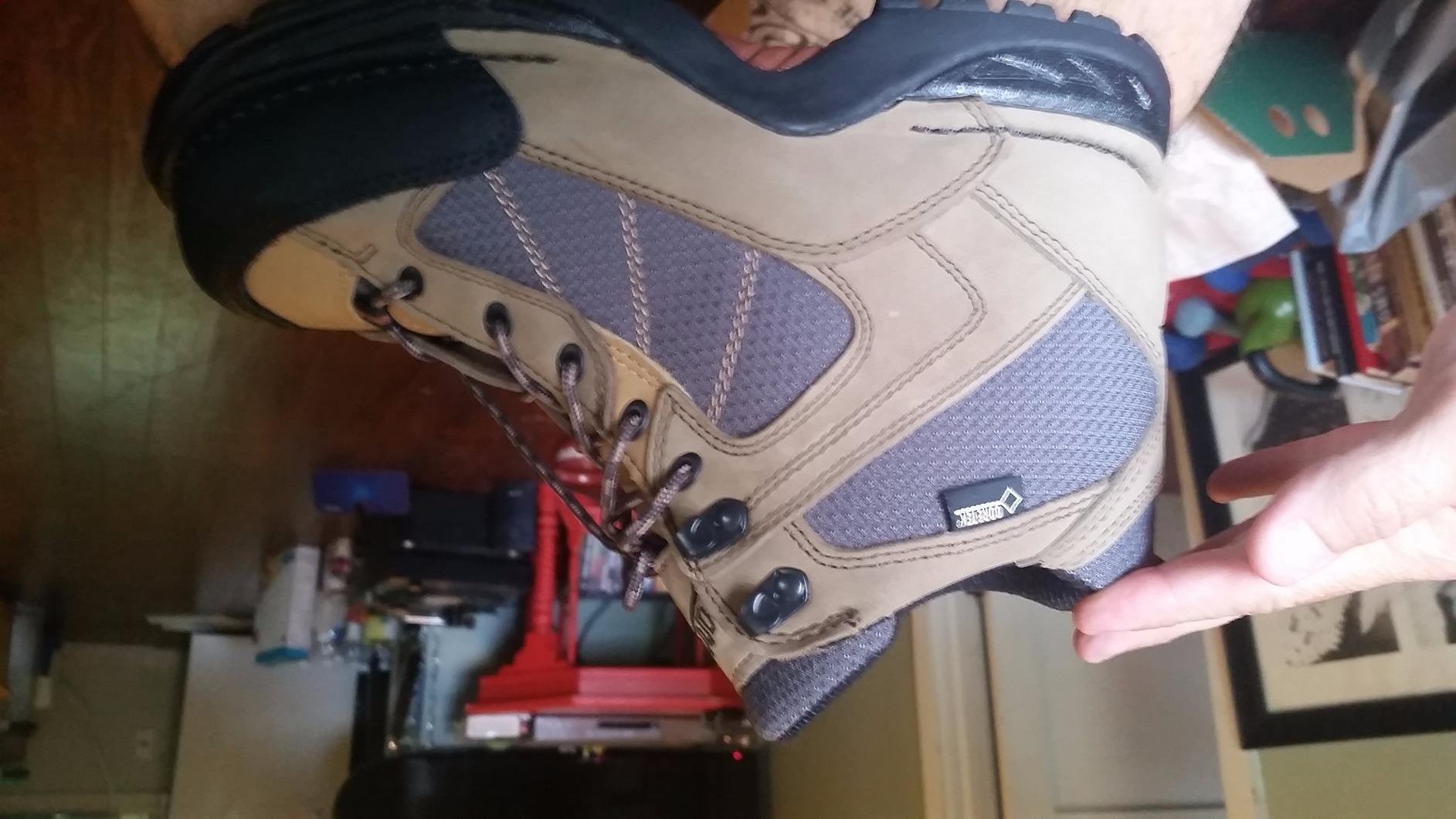
The Boulder outsole uses multi-directional center lugs plus traditional outer lugs, a failsafe pattern that reviewers credit with grip on wet rock, roots and gravel. Danner sizing is also one of the more consistent in this group, which removes a lot of trial and error when you are buying in a hurry.
Durability is the theme in the reviews. Owners talk about the nubuck leather and stitching holding up for years, and the boot is frequently repurchased rather than replaced once, which tells you something about how it wears.
Best for technical ground
Terra Force gives support and stability without the traditional weight of an expedition boot, so you get rigidity where it counts without a heavy block on your ankles. On loose rock and root networks, that combination is what keeps your footing rather than your ankles guessing.
For hunting, multi-day treks, and shoulder season trips where rain and cold arrive together, the GORE-TEX lining is a straightforward win.
Where it falls short
The construction is not resoleable, so once the outsole wears through you are buying a new boot, and reviewers note the soft hiker style sole can go first at the outer edge. High mileage hikers should factor that into a cost per season calculation.
Expect a stiff heel collar at first, and cushioning that fades over time unless you fit a replacement insole. Plan the break in before a fully loaded trip.
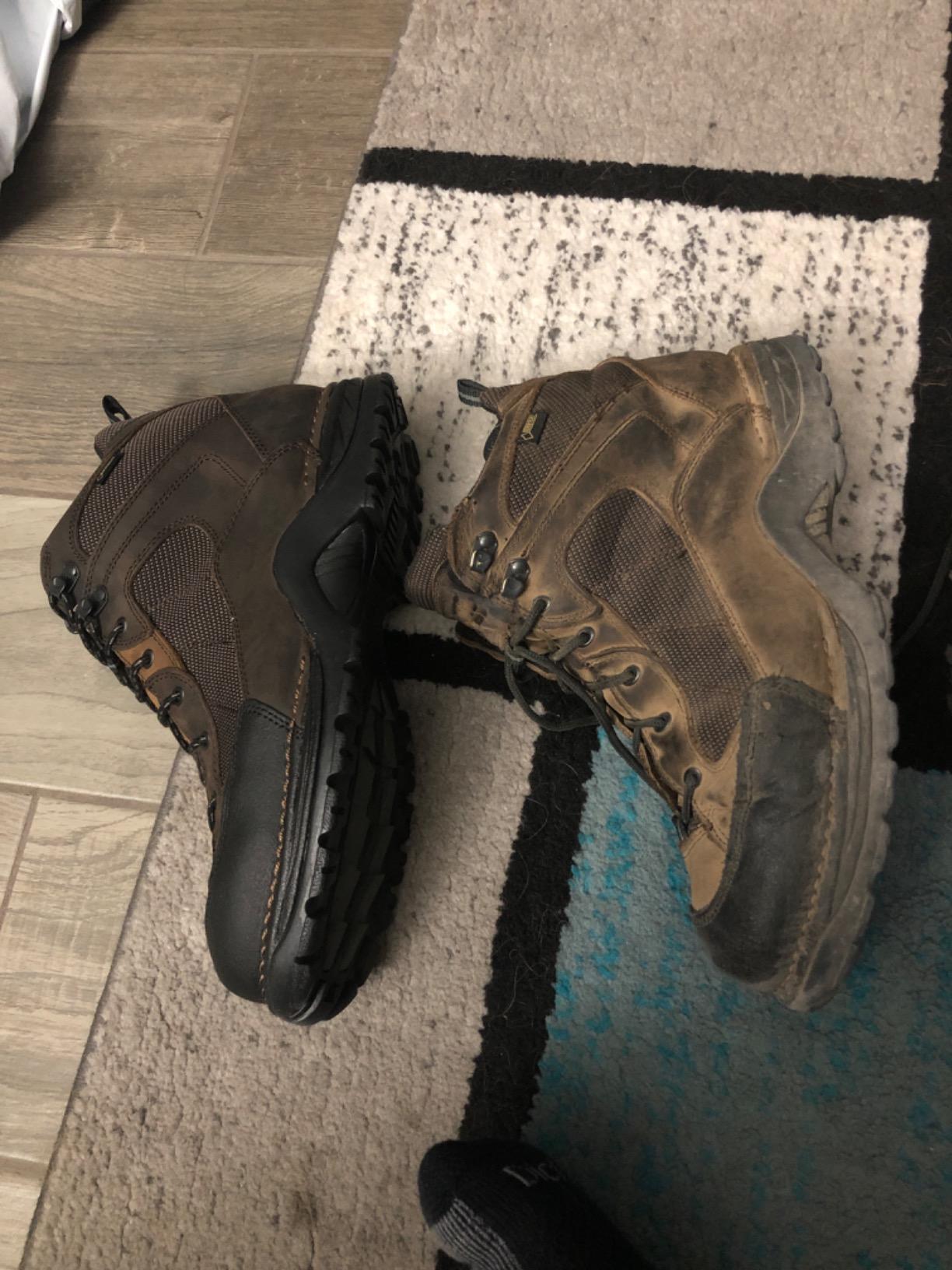
10. ROCKY Outback Gore-Tex Waterproof Boot: Best High-Cut Support
ROCKY Outback Gore-Tex Waterproof Boot, Light Brown, Size 10(ME)
8 inch shaft
Full-grain leather
GORE-TEX construction
Outback outsole
+ The Good
- Light and comfortable for an 8 inch boot
- GORE-TEX keeps feet dry in wet forest and mountain weather
- Full-grain leather holds up and stays supple
- Excellent traction on rough and icy terrain
- True to size with a genuine wide option
- The Bad
- Outsole can crack within about a year
- Seam stitching can begin to fail
- Needs break-in before it fully molds
- Snug at the top without a boot pull
The Rocky Outback is the only true high cut in this group, at 8 inches, and that shaft height is exactly what a heavily loaded hiker wants on loose ground. Higher shafts resist the ankle roll that loaded hikers hit when a boot lands on an uneven rock edge.
Interestingly, reviewers do not find it heavy. The boot is described as light and comfortable for its size, which matters because high cuts usually carry a weight penalty. The full-grain leather upper stays supple over time, and the GORE-TEX construction is intended for severe wet conditions rather than occasional showers.
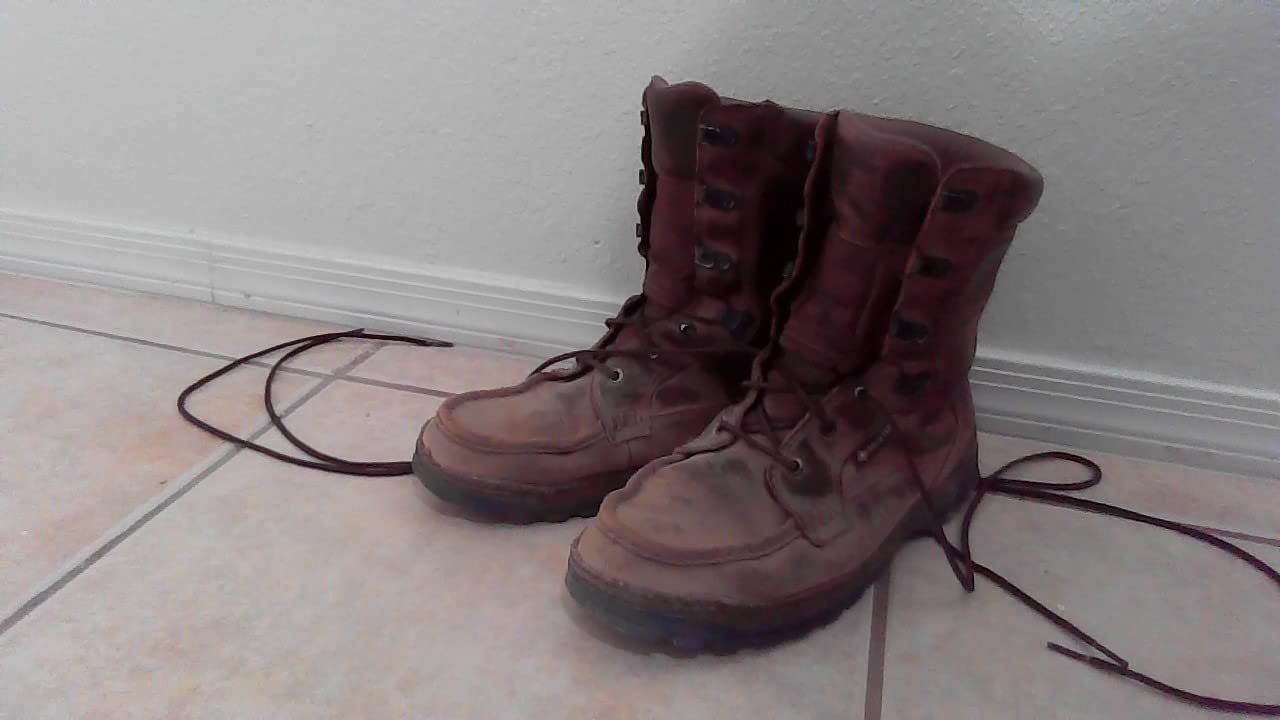
Underfoot, an Outback outsole provides stability on rugged terrain, and the Terra Suspension footbed supplies support and cushioning. Reviewers single out traction on rough and icy ground as a strength, and the fit is true to size with a genuine wide fit option, which is rare in a boot this tall.
The weak point is long term durability. Outsole cracking within about a year and seam stitching beginning to fail are the two most common complaints, so this is a boot to inspect between seasons rather than one to assume will last indefinitely.
Why a high cut helps under load
A taller shaft braces the ankle against inversion, which is the mechanism behind most trail ankle sprains. With 50 pounds on your back, the force going through that joint is far higher than on a day hike, so the extra coverage is not decoration.
The wide fit option also makes this one of the better high cut options for hikers with broader feet, a combination that is genuinely hard to find in this category.
Where it falls short
Break-in is required before the leather fully molds, and the top of the boot is snug without a boot pull, which is annoying with cold hands or wet gloves. Plan both around a shakedown trip.
If you only need ankle coverage on maintained trail, the added height is bulk you do not need, and the outsole and stitching concerns make it a less confident recommendation for multi-season expedition use.
11. KEEN Durand Mid WP Wide: Best Wide-Fit Backpacking Boot
KEEN Men’s Durand Mid Wp Wide-m Backpacking Boot, Cascade Brown/Gargoyle, 12 M US
Wide width fit
Breathable leather lining
Mid-cut backpacking height
KEEN build quality
+ The Good
- Purpose built wide width for broad feet
- Breathable leather lining manages moisture on long days
- KEEN build quality with a strong satisfaction record
- Stable mid-cut height for a loaded pack
- The Bad
- Less detail published than other models in this roundup
- Size availability is narrower than the mainstream models
- Weight and cushioning details are limited
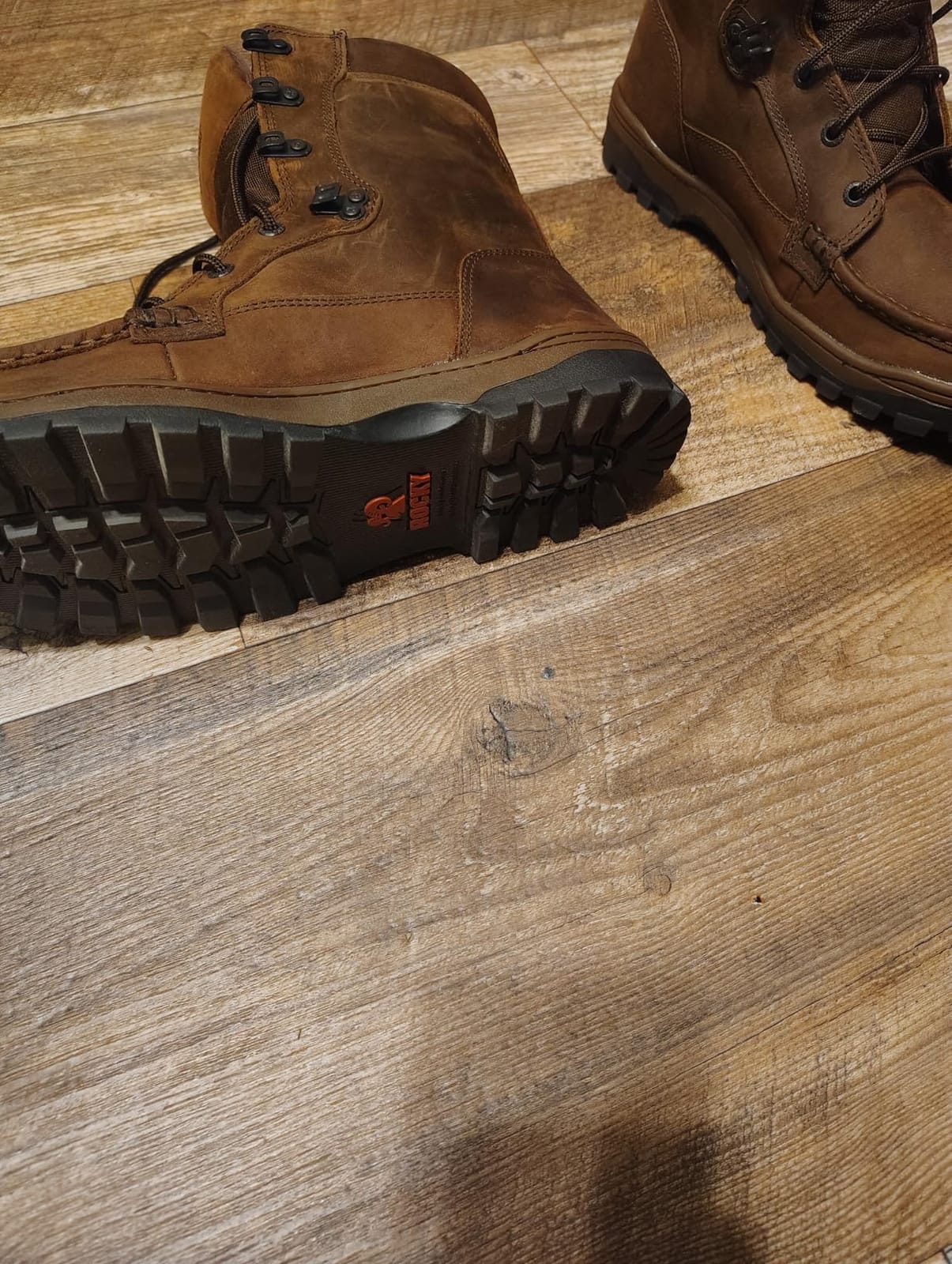
The Durand Mid WP Wide is the boot in this group built around a specific problem: finding a genuine wide last for a loaded hiker. KEEN lists it under backpacking boots rather than general hiking boots, and the wide version is the reason most people buy it.
Specs published for this model are lean. A breathable leather lining is the standout feature, and the mid-cut height gives ankle coverage without the bulk of a full high cut. Reviewer data shows a 4.5 average with a strong share of top ratings, which points to consistent satisfaction rather than a design that excites some people and frustrates others.
That consistency is the reason to consider it. A boot that fits wide feet and does not need a half size gamble is more valuable on a multi-day trip than a marginally more sophisticated boot that pinches by hour four.
Why width changes everything under load
Swelling is proportional to time on your feet, and swelling in a narrow toe box is what causes hot spots, blisters and eventually bruised toenails. A wide last gives the forefoot room to spread, which is why wide feet are one of the most common reasons hikers move off a favourite boot.
For heavy loads specifically, an uncomfortable boot is a trip ending boot, because a hot spot at 30 miles into a multi-day carry will not resolve itself without rest you may not have.
Where it falls short
The published detail for this model is thinner than the other boots here. Weight, cushioning spec, and outsole compound are not spelled out in the product data we worked from, so if you are comparing traction on technical ground, verify it before committing.
Availability is also narrower than the mainstream KEEN models, so try sizing early rather than the week of a trip.
12. KEEN Hightrail Mid Waterproof: Best Lightweight Daily Hiker
KEEN Men’s Hightrail Mid Height Durable Lightweight Breathable Leather Waterproof Hiking Boots, Brindle/Oak Buff, 10.5
KEEN.DRY membrane
LuftCell micro air pockets
Stability shank
Contoured Fit last
+ The Good
- Comfortable for long hours on your feet
- True to size fit
- KEEN.DRY waterproof membrane holds up
- Lightweight with LuftCell cushioning
- Good ankle support for the weight
- Quick lacing is easy on and off
- The Bad
- Inside lace hooks can catch on the other boot
- Toe box is narrower than some other KEEN models
- Less grippy than deeper lug models on slippery ground
- Tongue padding can rub at first
The Hightrail Mid is a newer KEEN release that prioritises lightness without giving up the structure that heavy loads demand. The stability shank under the footbed does the same job as a shank in a heavier boot, and reviewers rate the ankle support as good for the weight.
Cushioning comes from KEEN LuftCell technology, which uses micro air pockets in the midsole to soften landings, and the KEEN.DRY membrane handles waterproofing. The last is KEEN Contoured Fit, designed to follow the natural shape of the foot, and a removable responsive footbed lets you change the volume underfoot.
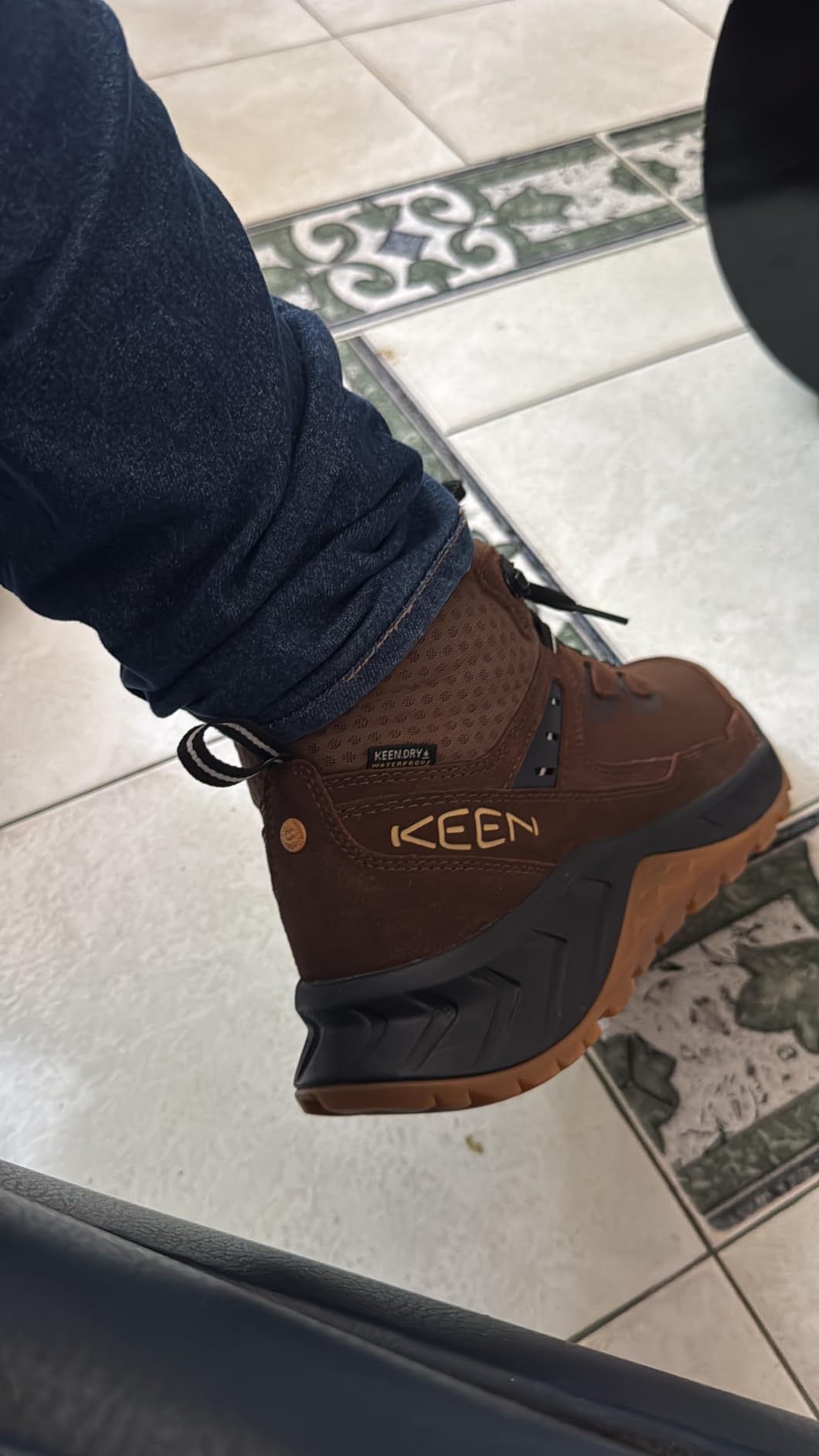
Reviewers like the true to size fit, the waterproof performance, and how the quick lacing system gets the boot on and off without fuss. Leather comes from Leather Working Group certified tanneries, which matters if you care about traceability of materials.
The reported weak points are specific rather than fundamental. The inside lace hooks can catch on the opposite boot, the toe box is narrower than some other KEEN models, and the grip is less sure than deeper lug patterns on slippery ground. The tongue padding can also rub the ankle until it softens.
Where this boot fits
It is a good fit for long days on your feet where the pack is moderate, and for hikers who want a waterproof mid cut that does not feel like a boot. The light build makes it reasonable for a 35 to 40 pound pack on maintained and semi maintained trail.
The removable footbed gives you an easy lever if your feet swell more than usual under load, since a thinner replacement insole adds room at the forefoot.
Where it falls short
For the heaviest loads, the cushioning platform is a little less structured than the Oboz Bridger or the Targhee 2 Mid. If you are regularly carrying 50 pounds or more over rough ground, a boot with a nylon or external shank is the safer bet.
The lace hook design needs a habit to get used to, and if you are on wet rock often, look at a deeper lug outsole instead.
Boots vs Trail Runners for Heavy Packs
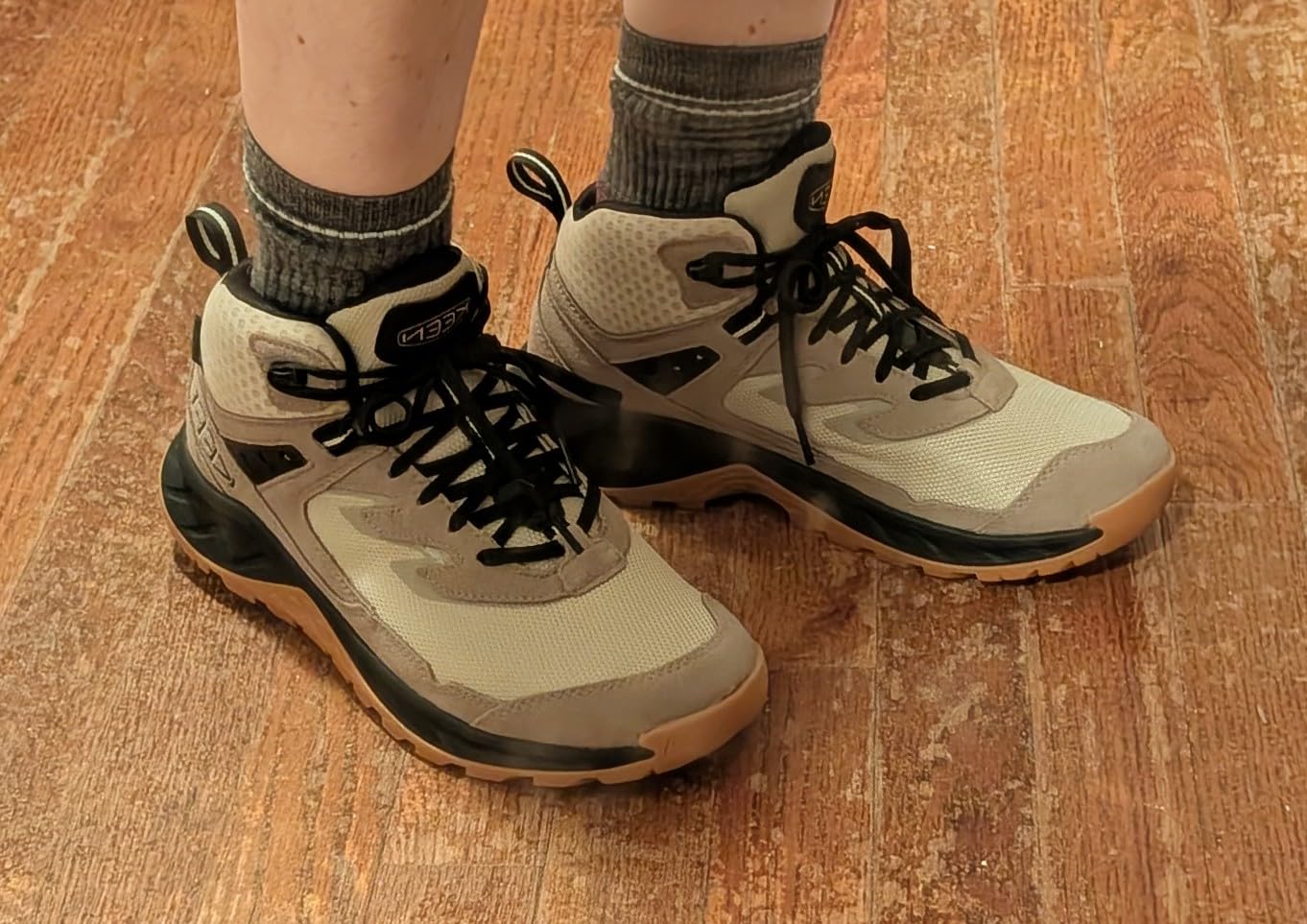
Trail runners are lighter and they are not the wrong answer. In a long-running Rokslide thread on trail runners for backpacking, posters make the same point from different directions: as load and steepness increase, preference shifts toward a backpacking or mountaineering boot. That is the practical rule rather than a brand loyalty rule.
Below about 30 to 35 pounds, a trail runner with good rock plate will serve most hikers well and save meaningful weight. Above that, the cushioning that makes a trail runner comfortable also absorbs the impact instead of distributing it, so the load works against your arch and ankle rather than through them. In an r/Boots heavy pack thread, users still name Hoka, Zamberlan, Asolo, Lowa and Salomon as boots worth trying, and the recurring theme across those posts is durability over a single trip.
One counterpoint is worth hearing. A long-term Inov-8 X-Talon 212 user in that same Rokslide discussion reports excellent traction and lightness for heavy loads, which is a fair argument that a well chosen aggressive trail runner can carry a real pack. The deciding factors are terrain steepness, trip length, and whether your feet have a history of trouble under load.
If your pack is light, a good pack matters more than a good boot. Our ultralight backpack roundup covers the other half of that equation, and cutting pack weight is often a cheaper way to solve foot pain than buying stiffer boots.
How to Choose Backpacking Boots for Heavy Loads?
Start with the weight you will actually carry, not the weight you could carry. Most hikers can manage 40 pounds comfortably in a boot with a real shank, and start to feel foot problems above 50 pounds in a boot without one. Match the boot to the load rather than buying the most supportive boot you can find and then using it for lighter trips.
Match the boot type to the load you carry
Under 30 pounds, a trail runner or light hiking shoe is usually enough, and the weight you save pays for better camp comfort elsewhere. Between 30 and 45 pounds, a mid-cut boot with a molded nylon shank, like the Merrell Moab 3 Mid or the Columbia Crestwood Mid, is the sweet spot for most people.
Above 45 pounds, move to a boot with an external or structural shank and a firm heel cradle, like the KEEN Targhee 2 Mid or the Oboz Bridger Mid. For 55 pounds and up on rough or off trail terrain, a high cut such as the Rocky Outback gives you the extra shaft support that the load demands, and cold wet alpine trips justify that bulk on their own.
Thru-hikers carrying sustained loads over months should weight resoleability and upper durability heavily, because the same boot has to survive thousands of miles. That is where the nubuck and full-grain leather options earn their place over synthetic builds.
Stiffness and shank quality beat brand names
Torsional rigidity is the ability of the sole unit to resist twisting, and it is the single most important number for a heavy load. A shank is the stiff plate that creates it, whether it is molded nylon, a TPU chassis, or an external support shank. If a boot has no shank at all, expect a springy ride regardless of the marketing language.
Stiffness is not free, though. Boots that are too rigid can push pain up into the knee or hip if your foot never adapts, which is the complaint that most often decides against an expedition boot. The fix is a proper break-in and a heel lockdown rather than a softer boot.
Weight per pair is a pack weight decision
Two boots weighing 1.5 pounds each add 3 pounds to your pack, which is a meaningful fraction of a multi-day food carry. Reviewers who track this consistently still choose supportive boots above a load threshold, because fatigue ends more trips than pack weight does. The honest framing is that a heavier boot buys you more days of walking rather than fewer miles per step.
Waterproof versus breathable depends on climate
A waterproof membrane keeps creek water out and rain from turning your socks into a problem, but it also traps heat. For cold, wet, alpine and shoulder season trips, waterproof wins, and GORE-TEX or equivalent sealed constructions are worth the heat they generate. For hot desert or high summer carries, a boot that vents better, or a boot you remove for stream crossings, will keep you drier in practice.
Whichever you choose, dry your boots away from a campfire. Radiant heat dries leather from the inside out and cracks it, and stuffing newspaper into a wet boot overnight does more for the next morning than any amount of extra lacing.
Fit, width and foot volume
Foot volume is the most underrated part of a heavy-load purchase. Your feet swell through a long day, and a boot that fits in the morning can pinch by afternoon. If you have wide or flat feet, prioritise a wide last and check the width option specifically, since a wide size in a narrow last is not the same thing as a wide last. The Merrell Moab 3 Mid and the KEEN wide-width models are the safest bets in this roundup for that reason.
Leave roughly a thumb width in front of your longest toe with the boot fully laced, and test at the end of a day rather than first thing in the morning. Replacing the supplied insole with a thinner or higher arch insole gives you fine control that lacing cannot.
Break-in and first loaded trip
Give any of these boots a real break-in before a fully loaded trip. Wear them for a week of short walks, then one shakedown hike with a partially loaded pack, and only then add the full weight. Boot weight matters enough that a good pair of trekking poles can take some of that load off your feet on long climbs, which is how we use them in our trekking pole roundup.
For socks and liners, keep two pairs so you can change out of a damp pair at camp, and treat a hot spot at the first sign rather than at the end of the day. Most load-related foot problems start as a small hot spot and become a trip ending problem only because they were ignored.
Frequently Asked Questions
What are the best backpacking boots for heavy loads?
For most hikers carrying 40 to 55 pounds, the best backpacking boots for heavy loads are mid-cut models with a nylon or external shank and a firm heel cradle. The KEEN Targhee 2 Mid Waterproof is our top pick because of its external support shank, roomy toe box and waterproof construction, while the Merrell Moab 3 Mid suits wide feet and the Oboz Bridger Mid is the most deliberately engineered for loaded multi-day trips.
What is the difference between a hiking boot and a backpacking boot?
A hiking boot is built for day hiking on maintained trail and prioritises comfort and weight. A backpacking boot is built for carrying a loaded pack over multiple days, so it adds a stiffer sole unit, a shank, a stiffer midsole and a taller collar to move load under control. The backpacking boot is heavier and stiffer by design.
Are boots better than trail runners for heavy packs?
Below roughly 30 to 35 pounds, trail runners are usually fine and lighter. Above that, boots become preferable because a shank and firm heel cradle transfer load instead of absorbing it, which delays foot and ankle fatigue. Hikers carrying 50 pounds or more on steep or off trail terrain gain the most from switching.
How heavy should my backpacking boots be?
Weight varies by construction, so compare the listed pair weight rather than guessing. Leather and shank-heavy boots in this roundup sit at the heavier end, while lighter mid-cuts use EVA midsoles and synthetic uppers. Rather than chasing the lightest boot, choose the lightest boot that still has a shank and the stiffness your carried load needs.
How long does it take to break in backpacking boots?
Most owners report one to two weeks of regular wear before stiff leather and nubuck models feel settled, while several boots in this roundup are comfortable from the first wear. The rule is to break in before a fully loaded trip: wear the boots for short walks first, then one shakedown hike with a partially loaded pack, then add full weight.
Do backpacking boots prevent ankle injuries?
No boot prevents an ankle roll, but a high cut with a firm heel cradle reduces how far the ankle can invert, especially on loose ground. With a heavy pack the force through the ankle joint is much higher than on a day hike, so support matters more. Supportive boots also reduce fatigue, which is what causes most trail mishaps in the first place.
Final Verdict for Heavy-Load Backpacking Boots in 2026
The best backpacking boots for heavy loads in 2026 come down to one honest test: does the boot have a shank, and does it fit your foot across the forefoot. The KEEN Targhee 2 Mid Waterproof takes our top spot because it combines an external support shank with the roomiest toe box in the group, and because its review base is large enough that the weaknesses are well known rather than a surprise later.
If your feet are wide, the Merrell Moab 3 Mid Waterproof is the safer buy. If you are carrying serious weight on multi-day trips and want the most deliberately engineered platform, the Oboz Bridger Mid B-DRY is hard to argue with. For leather without a painful break-in, the Timberland Mt. Maddsen is the value pick, and for 50 pounds plus on rough ground the Danner Radical 5.5 GTX or the high-cut Rocky Outback make more sense than anything lighter.
Whatever you choose, break the boots in before the trip, buy the width that matches your feet, and keep the pack as light as the rest of your kit allows. Planning where you will filter water and how much you need to carry affects your load as much as your boot choice does, and our backpacking water purifier roundup covers that side of the weight budget.