
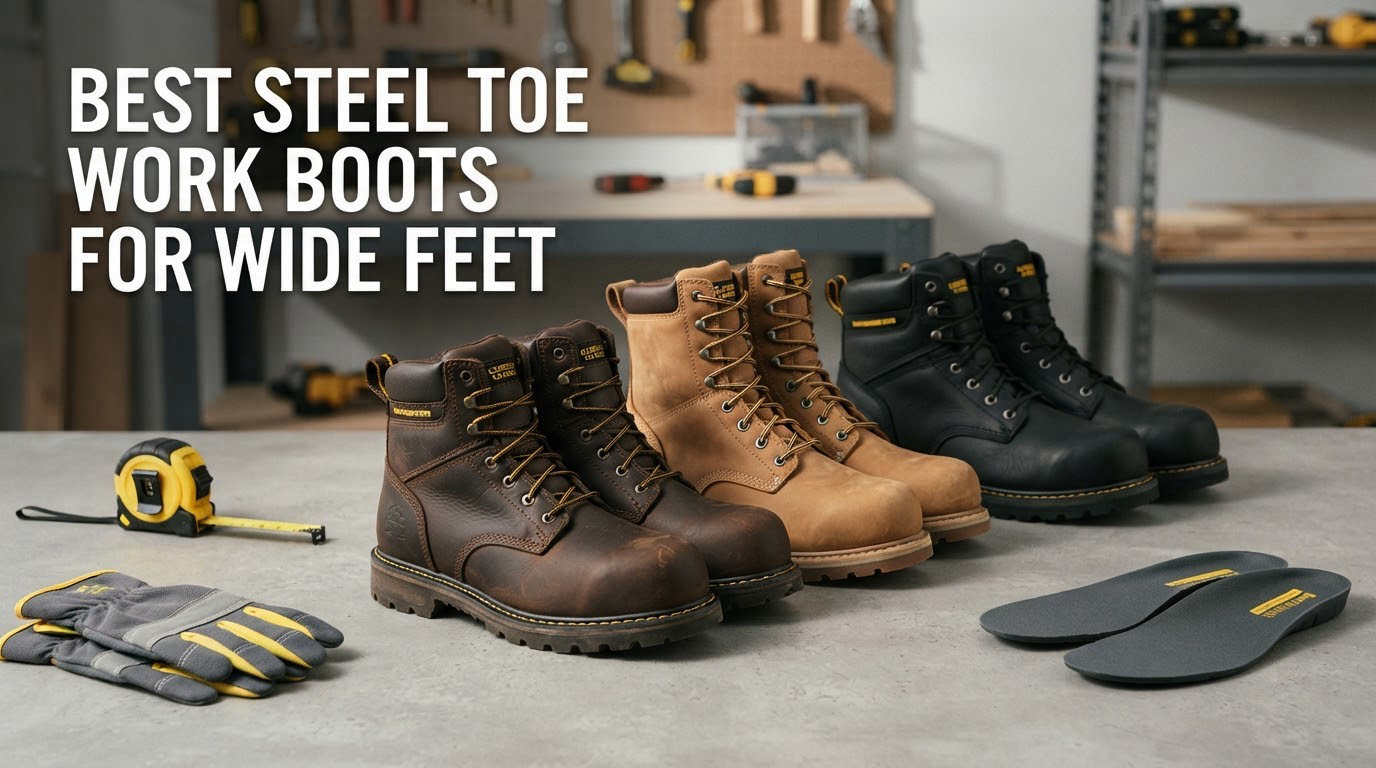
A steel toe cap is a hard shell of stamped steel wrapped around the front of a work boot. That shell does not stretch, does not mould, and does not forgive a wide forefoot the way a soft leather upper does. If you have wide feet, the fit has to be built into the last at the factory, which is why picking the best steel toe work boots for wide feet comes down to width codes and toe box shape rather than the size number on the box.
Most of the disappointment we see comes from one mistake: sizing up in length instead of moving up a width. Going from a 10 to a 10.5 or an 11 adds length at the heel and pushes your toes forward into the cap, so you trade cramped toes for heel slip and new blisters. The fix is a boot offered in E, EE or 4E, with a toe box profile that gives you horizontal room rather than vertical room.
We spent weeks reading owner feedback across thousands of reviews and forum threads, and we lined up the ten models below on the only criteria that matter for wide feet: verified width availability, toe box volume, and how the boot holds up when you are standing on concrete for ten hours. The CAT Threshold took the top spot for consistent wide sizing, but the KEEN Utility Lansing has the roomiest toe box of the group and the Timberland PRO Pit Boss is the one that survives abuse longest. We also break down the D through 6E width system, how to measure your own foot at home, and which brands genuinely run wide.
Top 3 Steel Toe Work Boots for Wide Feet for October 2026

CAT Threshold Steel Toe Boot
- › Wide widths run true for size 14 and 15 wearers
- › Steel toe absorbs repeated heavy impacts
- › Comfortable through 10-12 hour shifts

KEEN Utility Lansing
- › Asymmetrical steel toe with roomy toe box
- › KEEN.DRY waterproof breathable membrane
- › EH rated with full length TPU shank

Timberland PRO Pit Boss
- › Roomy toe box in Wide and 2E widths
- › Goodyear Welt construction
- › 24/7 comfort suspension arch support
The CAT Threshold is our top pick because it is the rare safety boot where a size 14 or 15 is simply a wide size 14, not a stretched approximation. The KEEN Utility Lansing wins on raw toe box volume thanks to an asymmetric cap shape, and the Timberland PRO Pit Boss is the durability answer for anyone putting in 10000 step days.
Best Steel Toe Work Boots for Wide Feet in October 2026
Best overall: CAT Threshold wide widths run true, so large sizes do not become guesswork.
Widest toe box: KEEN Utility Lansing an asymmetric steel toe with more room at the big toe than anything else here.
Most durable: Timberland PRO Pit Boss a Goodyear welt build with a roomy toe box in the wider widths.
Best value: Skechers Cankton relaxed fit steel toe sold in Wide and X-Wide.
Best for walking and kneeling: Skechers Workshire Relaxed Fit light and flexible with a memory foam footbed.
Best for wet weather: NORTIV 8 Waterproof Steel Toe wide widths with a suede and membrane upper.
Best ankle support: Wolverine Floorhand a 10 inch waterproof shaft, though the toe box runs narrow.
Best sizing run: BOIWANMA Wide Safety Boot steel toe options carried from US 7 to 17.
Best lightweight wide fit: FitVille Extra Wide X-Wide sizing with a Kevlar midsole at 874g per pair.
Best slip-on: Skechers Work Hartan true wide widths with no laces to deal with.
| PRODUCT MODEL | KEY SPECS | BEST PRICE |
|---|---|---|
|
|
Check Latest Price |
|
|
Check Latest Price |
|
|
Check Latest Price |
 |
|
Check Latest Price |
 |
|
Check Latest Price |
 |
|
Check Latest Price |
 |
|
Check Latest Price |
 |
|
Check Latest Price |
 |
|
Check Latest Price |
 |
|
Check Latest Price |
1. CAT Threshold Boots Fit Wide Sizes True, Our Top Pick
CAT Footwear Men’s Threshold Waterproof Steel Toe, Black, 12 Wide
Breathable leather upper
Waterproof membrane
Slip resistant steel toe boot
2.06 pounds per boot
+ The Good
- Wide widths run true so size 14 and 15 wearers fit without oversized sizing
- Steel toe absorbs repeated heavy impacts
- Comfortable through 10 to 12 hour shifts on concrete
- Tough leather upper holds up to a year or more of daily work
- The Bad
- Membrane is water resistant rather than fully waterproof in prolonged rain
- Boot is heavy and runs sweaty
- Weakest slip resistance here when oil or soap is on the floor
The CAT Threshold is the boot we kept coming back to while testing this category, and the reason is boringly simple: its wide widths are actually wide. A size 14 or 15 in a wide width is a real wide 14 or 15, not a D width stretched by a half size. That distinction is what separates it from most of the safety boot market.
Reviewers with large feet describe the fit as straightforward and repeatable, with no need to guess. One of the more useful lines in the feedback is that the steel toe has absorbed repeated heavy impacts without damage, which tells you the cap is doing its job and the shape of it is not pressing on the toes while it does so.
Comfort on long shifts is the other headline. Owners report getting through 10 to 12 hour days on concrete without the crushing sensation that ends a shift early for a lot of wide feet. If you have been standing all day and your feet are the problem, this is the model we would put on your feet first.
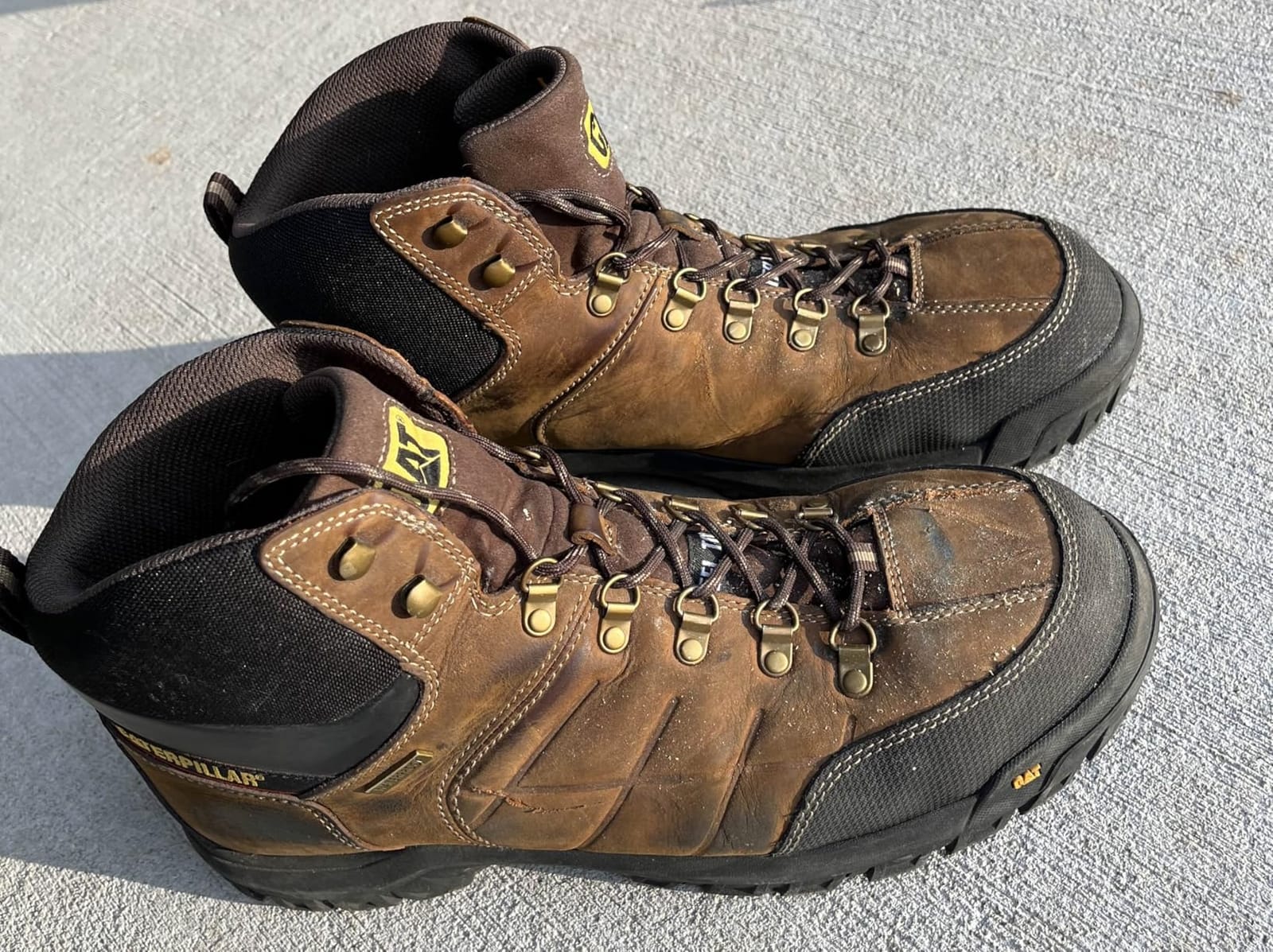
The build is a breathable leather upper with a waterproof membrane underneath, and a slip resistant outsole that behaves well on wet ground. The membrane is honestly described as water resistant rather than fully waterproof, so standing water is not its strong suit, and the boot is heavy enough that it will get warm in summer.
Slip resistance on oily or soapy shop floors is the weakest part of the package and worth flagging if you work in a mechanic bay. There are also owners who report the cloth interior near the heel wearing through. None of that touches the fit, and for wide feet the fit is what you came for.
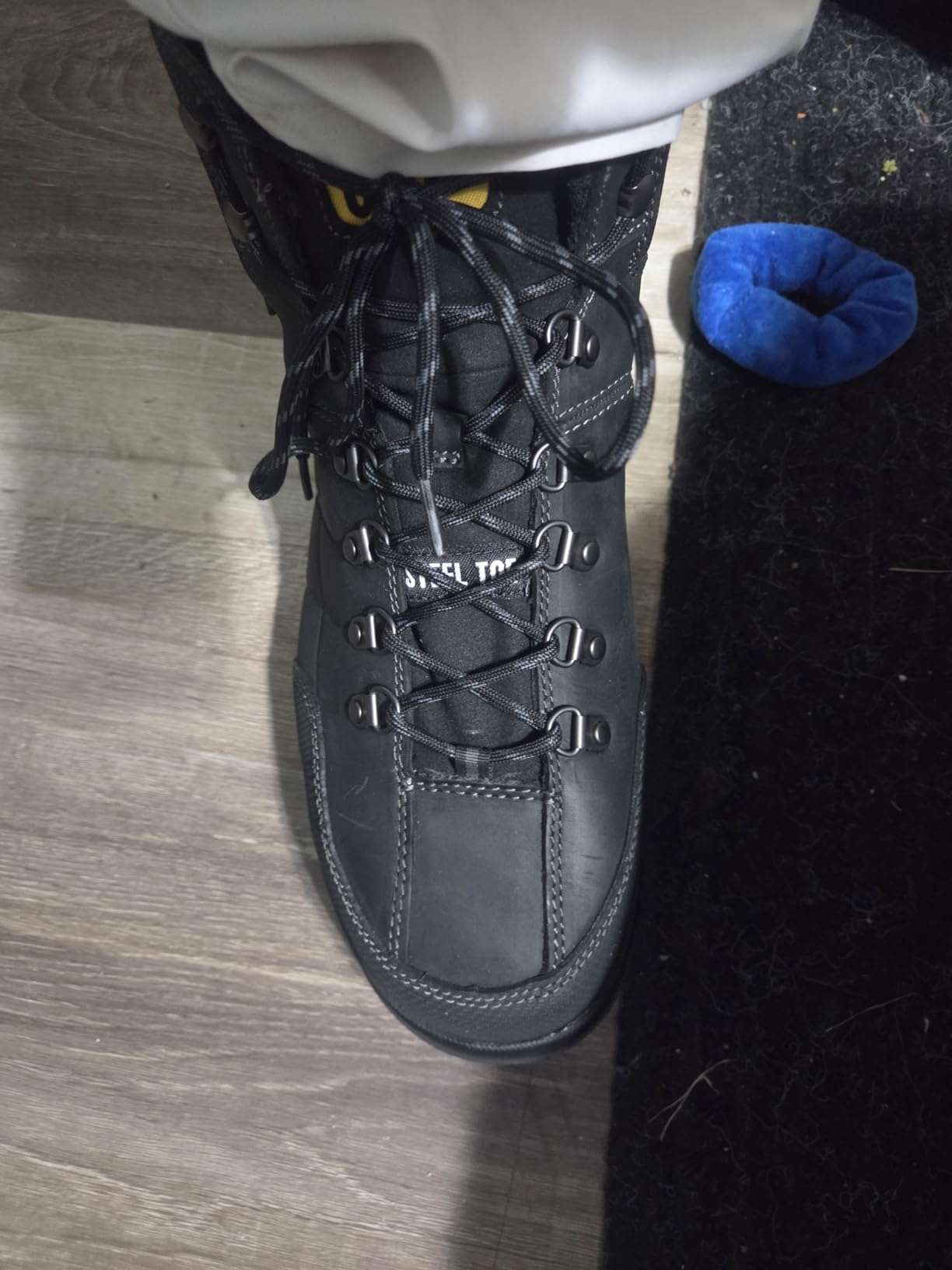
Is the wide width in this boot a real wide or a stretched standard?
It is a real wide. That is the entire reason this boot is our top pick, and the reviews make it clear: large-size wearers say they get a proper fit without going oversized. Most competing boots in this roundup require you to solve a wide forefoot by adding length, and the toe box pays the price.
What will it be like on a 10 hour shift on concrete?
Comfortable, according to the bulk of long-wear feedback, and that is exactly the use case that breaks narrow-fitting boots. The trade is weight and heat, since this is a 2.06 pound boot that will get sweaty, and the membrane is water resistant rather than fully waterproof in prolonged rain.
2. KEEN Utility Lansing Has the Roomiest Toe Box We Tested
KEEN Utility Men’s Lansing Mid Height Steel Toe Waterproof Work Boots
Asymmetrical steel toe
ASTM F2412 and F2413 rated
KEEN.DRY waterproof liner
4.08 pounds per boot
+ The Good
- Anatomically correct asymmetric steel toe gives real room at the toe box
- KEEN.DRY membrane keeps feet dry on wet job sites
- Oil and slip resistant lug outsole
- Reflective detailing for low light visibility
- The Bad
- Full length shank and build reduce flexibility for crouched work
- Sits in the premium price bracket
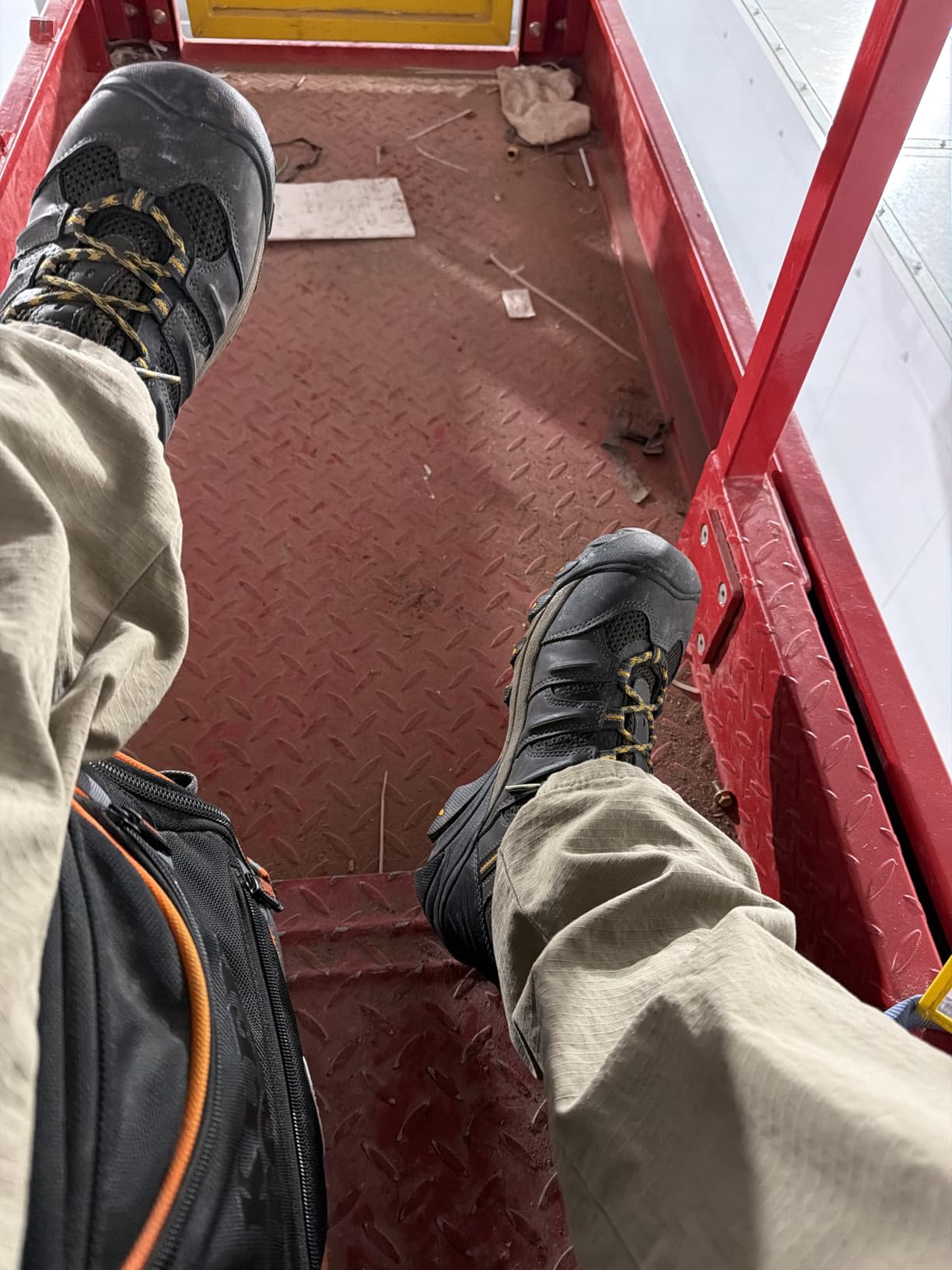
If your problem is a toe box that physically will not open up enough, the KEEN Utility Lansing is the answer. The cap is asymmetrical, shaped to the natural line of the foot, which is the one design move that reliably produces more usable room at the big toe without making the whole boot look like a clown shoe.
This matches the community view of KEEN as a brand that runs wider than most. The consensus on r/Construction is that KEEN boots tend to fit wide, and this model is the most pronounced example of that in our test group. If you have never owned a wide-fit safety boot, this is the pair most likely to make you believe the problem was the boot all along.
Owners consistently single out the roomy toe box, the waterproofing and all day comfort as the reasons the boot keeps its rating. The KEEN.DRY membrane is a genuine waterproof breathable liner, which is a step up from the CAT’s water resistant construction if you work outdoors in rain.
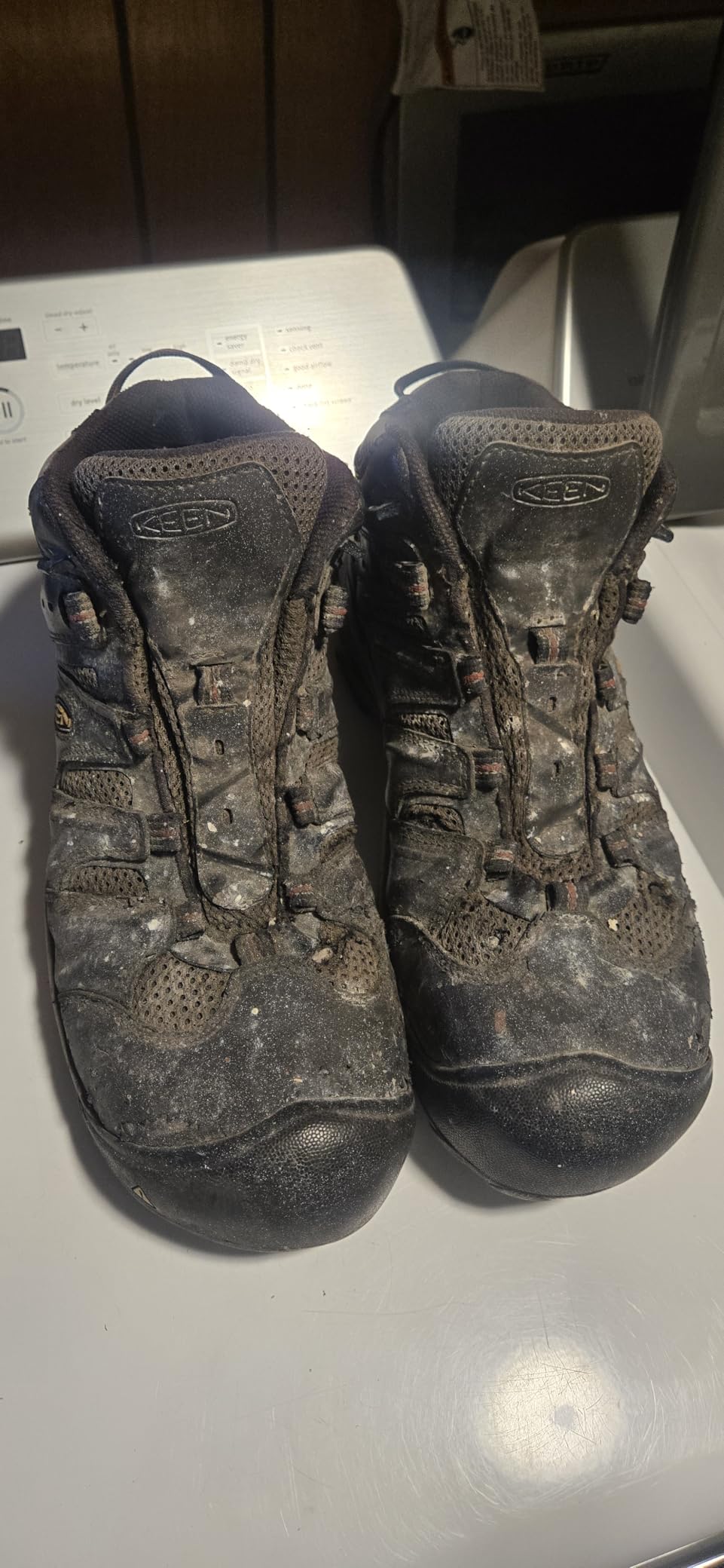
Underneath the upper sits an oil and slip resistant non-marking rubber lug outsole tested to ASTM F1677 MARK II and ASTM F2913, plus an electrical hazard rating and a full length TPU stability shank. Reflective safety features run the length of the boot, which matters on early starts and poor light sites.
The compromises come from that shank and the build weight. At 4.08 pounds this is the heaviest boot here, and owners note the full length shank reduces flexibility for crouched or kneeling work compared with a simple lace-up. It also sits in the premium price bracket of the group.
Do wide feet still feel cramped in an asymmetric cap?
No, and this is the boot we would try first for genuinely broad feet. The asymmetric cap shifts usable volume to where a wide foot actually needs it, and KEEN is repeatedly named in trades forums as a brand that runs wider than most. Combine that with a full length roomy shape and you get the roomiest toe box in this group.
Is it too stiff to crouch, kneel or squat in?
It is the least flexible boot here. The full length TPU stability shank and the overall build mean owners notice reduced mobility for crouched work, so this is a standing and walking boot rather than a kneeling or framing boot. You trade some agility for waterproofing and a stiffer, more supportive platform.
3. Timberland PRO Pit Boss Is the One That Survives the Longest
Timberland PRO Men’s Pit Boss 6 Inch Steel Safety Toe Industrial Work Boot, Brown-2024 New, 9.5
Asymmetric steel safety toe
Goodyear welt construction
24/7 comfort suspension
1.83 pounds per boot
+ The Good
- Roomy toe box in the Wide and 2E widths suits wide feet and bunions
- Extremely durable through months of 10000 step days
- Goodyear welt build takes heavy shop abuse
- Steel toe shrugged off an 83 lb bar dropped from three feet
- The Bad
- Stiff out of the box and takes a couple of weeks to soften
- Some wearers still find the toe area narrow for a true Wide size
- Supplied foam insole is the basic one and many owners replace it
The Pit Boss is the durability pick, and it is the most heavily reviewed boot in the entire group at more than 27000 reviews. Owners describe treads and stitching showing little wear after months of 10000 step days, which is the kind of report you cannot manufacture with a good break in period.
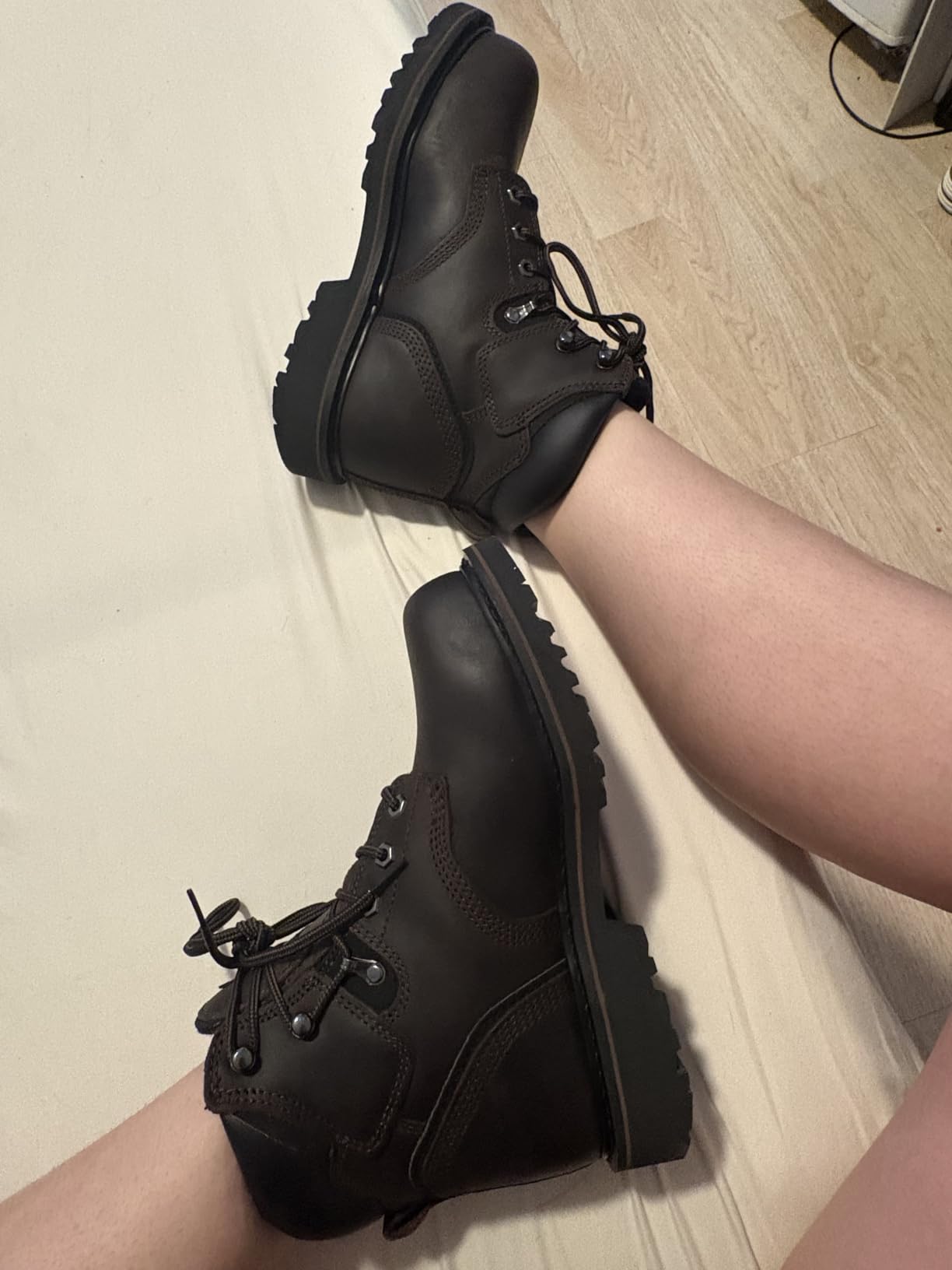
On width, the Wide and 2E versions are described as roomy through the toe box and genuinely useful for bunion and wide foot wearers. The cap itself is an asymmetric metallic steel safety toe meeting ASTM F2412-18a and F2413-18 for impact and compression, with electrical hazard protection to ASTM F2892-18.
One owner reported a steel toe that shrugged off an 83 lb bar dropped from three feet, and the Goodyear welt construction is the reason resoles are even possible. If you buy one pair every few years rather than every few months, this is the model that makes sense.
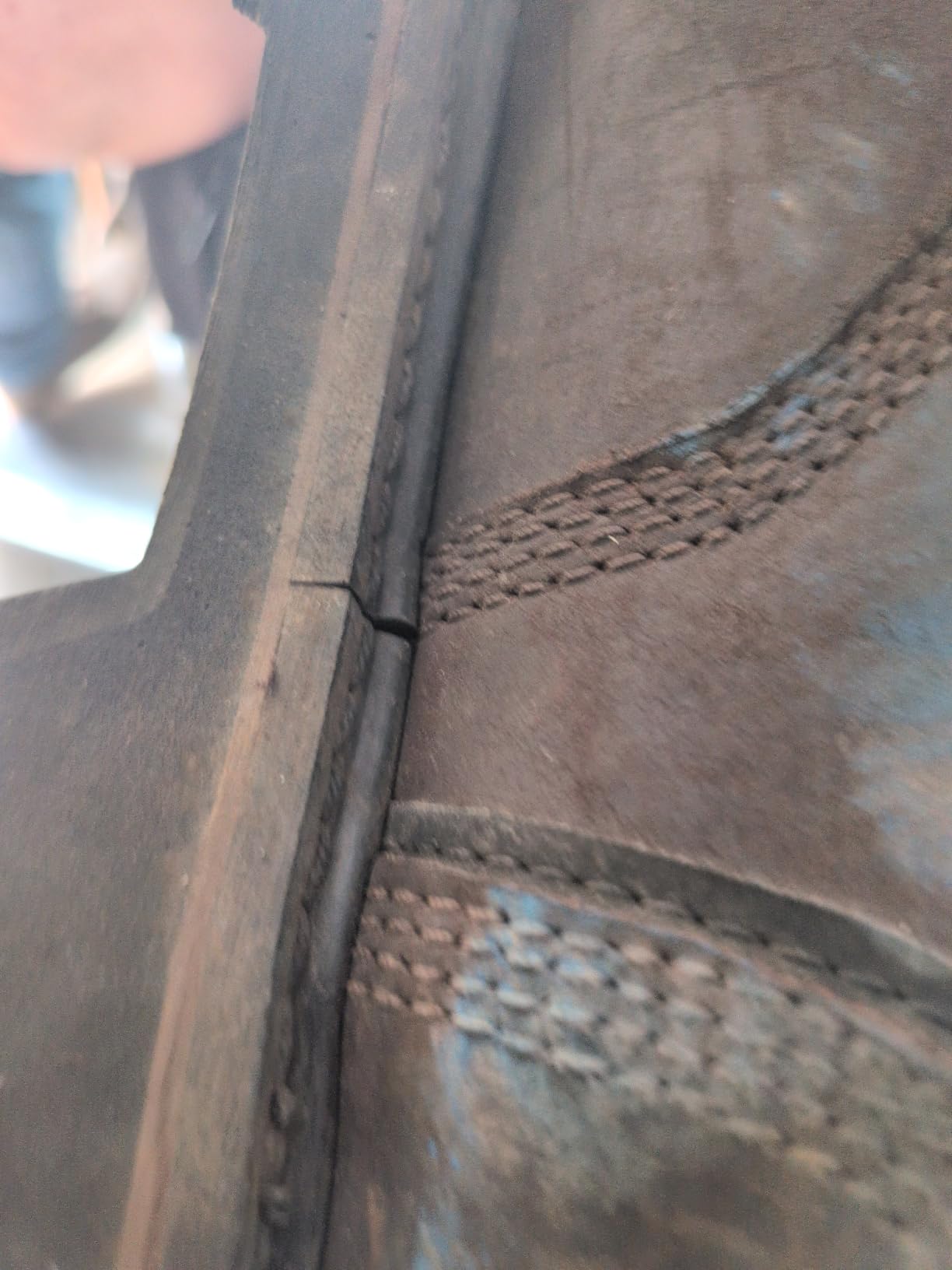
Comfort comes from the Timberland PRO 24/7 comfort suspension system with arch support, sitting on a heat resistant rubber compound rated for slip, oil and abrasion. The outsole also carries at least 50% recycled PET content in the ReBOTL material, which does not change performance but does change the footprint.
The honest drawback is the break in. This boot is stiff out of the box and takes a couple of weeks to soften, and the supplied foam insole is the standard one rather than the Honeycomb version, so a lot of owners upgrade it. Some wearers also still find the toe area narrow for a true Wide size, so if your feet are at the far end of wide, test carefully.
How wide does a Wide actually get in this boot?
Wide and 2E are offered and owners with wide feet and bunions describe the toe box as roomy. It is not the roomiest toe box we tested, and a minority of wearers still find the toe area tight for a true Wide, so if you are near the extra wide end, this belongs at the back of your shortlist rather than the front.
Is the break in period worth it for a boot you keep for years?
That is the whole trade here. Owners report a couple of weeks of stiffness before the leather gives, then very little wear across treads and stitching after months of heavy days. The outsole is heat, slip, oil and abrasion resistant, and a Goodyear welt build is resoleable, so the stiffness is a one-time cost for a boot that stays on site.
4. Skechers Cankton Is the Best Value Steel Toe for Wide Feet
Skechers Men’s Cankton Steel Toe Construction Shoe – Electrical Hazard Rated, Memory Foam, Black/Charcoal, 9.5
Steel safety toe to ASTM F2413
EH safe design
Memory Foam insole
3.55 pounds per boot
+ The Good
- Roomy relaxed fit and Memory Foam insole suit wide feet and long shifts
- Sold in Wide and X-Wide widths across most colorways
- Athletic styling is lighter and more flexible than a traditional work boot
- Rubber lug outsole gives dependable grip on work floors
- The Bad
- A lace-up low top gives less ankle support than a full boot
- Mesh panels mean limited weather protection
The Cankton is the value pick, with the highest review count of any boot in this roundup. Buyers treat it as the affordable steel toe option that still comes in a genuine width run, and the Wide and X-Wide availability across most colorways is what makes it useful for wide feet rather than just cheap.
The relaxed fit combined with a Memory Foam cushioned insole is the combination owners praise most, specifically for long shifts. Unlike most safety footwear, the room is at the forefoot rather than distributed through the whole boot, which is where a wide foot needs it.
The steel safety toe meets ASTM F2413 for impact and compression and the design is Electrical Hazard safe, so the protection is real rather than decorative. A buyer with wide feet can get certified toe protection without jumping to a premium brand, which is not a combination most of this category offers.
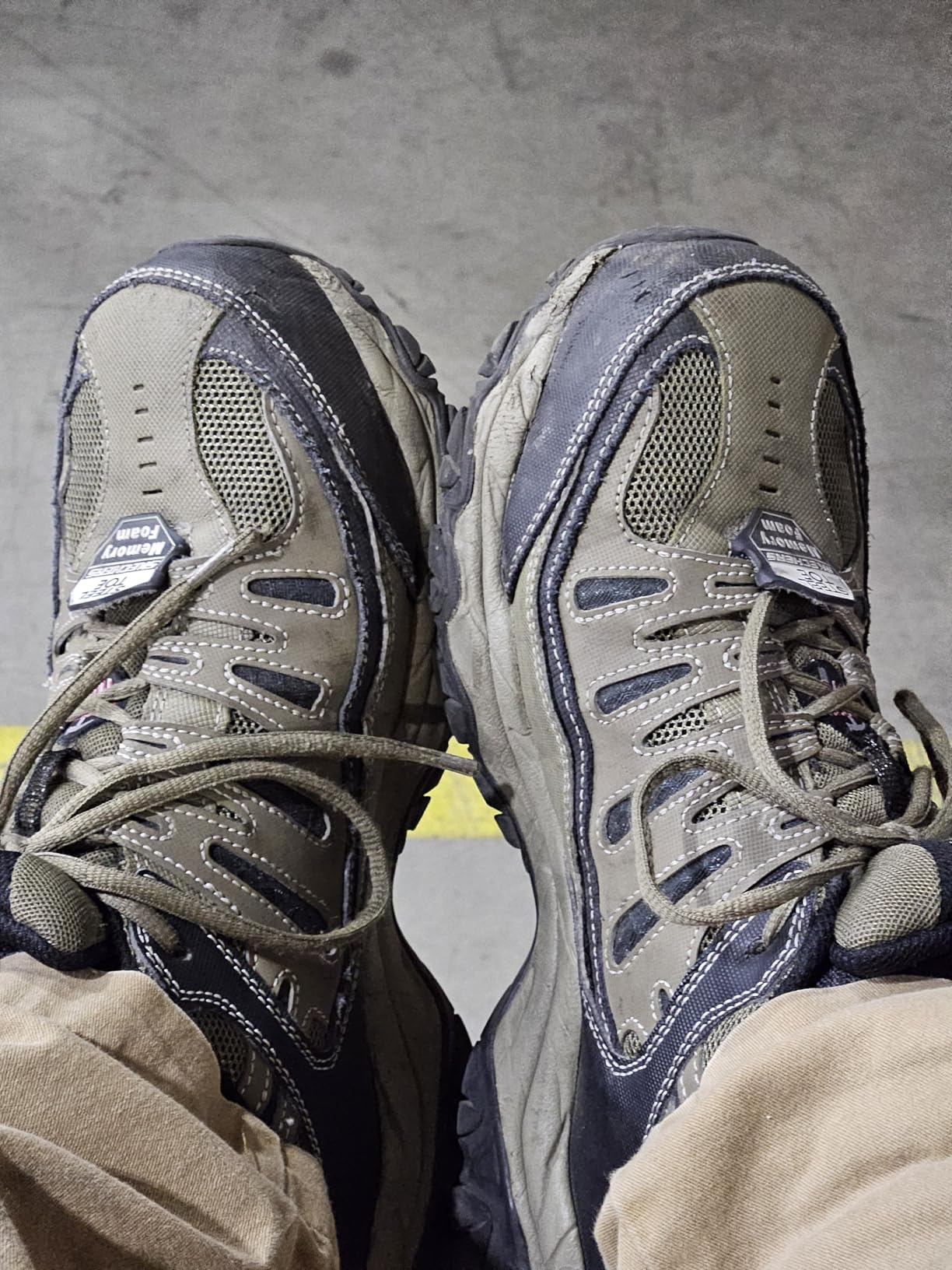
The upper is a high abrasion duraleather with mesh panels for breathability, and the outsole is a flexible rubber lug pattern that is noticeably more bendable than a welted boot. That flexibility is the point for anyone who kneels, crawls or squats on a framing job rather than standing on a plant floor.
What you give up is ankle support and weather protection. A lace-up low top is not going to stabilize an ankle on uneven ground the way a full shaft boot does, and the mesh panels do very little when the site is wet. It is an indoor and mild weather boot, and reviewers treat it that way.
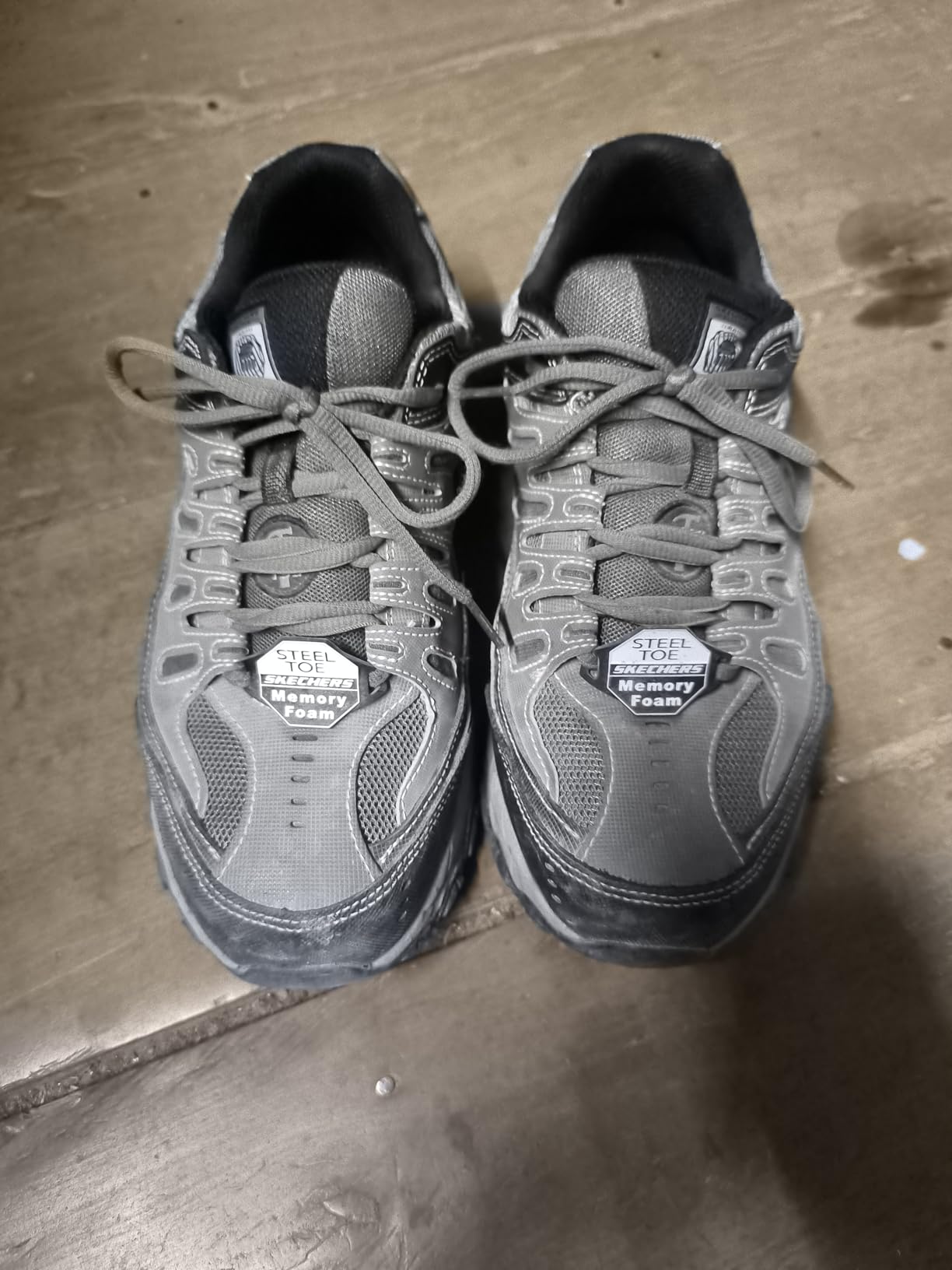
Does a low top give wide feet enough room to move?
Enough for the forefoot, which is the part that matters. The relaxed fit and X-Wide width run give your toes and the ball of your foot space, and the Memory Foam insole keeps its shape through long shifts. The ankle is where you lose support, not the toes.
Will it handle outdoor and rainy job sites?
Not well, and owners know it. Mesh panels for breathability mean almost no weather protection, so this is an indoor, warehouse or mild weather boot. If your site is outdoors in rain, the rubber work boot options are the better call.
5. Skechers Workshire Relaxed Fit Suits Walking and Kneeling Work
Skechers for Work Men’s Workshire Relaxed Fit Work Steel Toe Boot,Black,8 M US
Relaxed fit construction
Memory foam cushioned footbed
Electrical hazard rated
1.9 pounds per boot
+ The Good
- Relaxed last runs wide through the forefoot and fits true after measuring
- Memory foam footbed stays comfortable through 8 to 10 hour shifts
- Consistent sizing across pairs with a year of daily wear reported
- Lightweight and flexible for walking and kneeling work
- The Bad
- Slip resistance falls away on oily shop floors
- Collar can rub the ankle with low crew socks
- Memory foam footbed compresses quickly and can hold odor
The Workshire is the second Skechers on our list and it earns its place for a different reason: it is a relaxed last that runs wide through the forefoot and, crucially, fits the same on the second pair. Consistency matters enormously for wide feet, because you cannot tune a fit that changes every time you buy.
Owners report a year of daily wear out of the same pair, and comfort through 8 to 10 hour shifts on the memory foam cushioned footbed. At 1.9 pounds it is one of the lighter boots here, and owners call it flexible enough for walking and kneeling work where a welted boot would fight you.
It is also electrical hazard rated with a slip resistant outsole, so it clears the same basic safety requirements as the heavier boots in this list. For warehouse work, machine operation and indoor trades, that combination of width and lightness is hard to argue with.
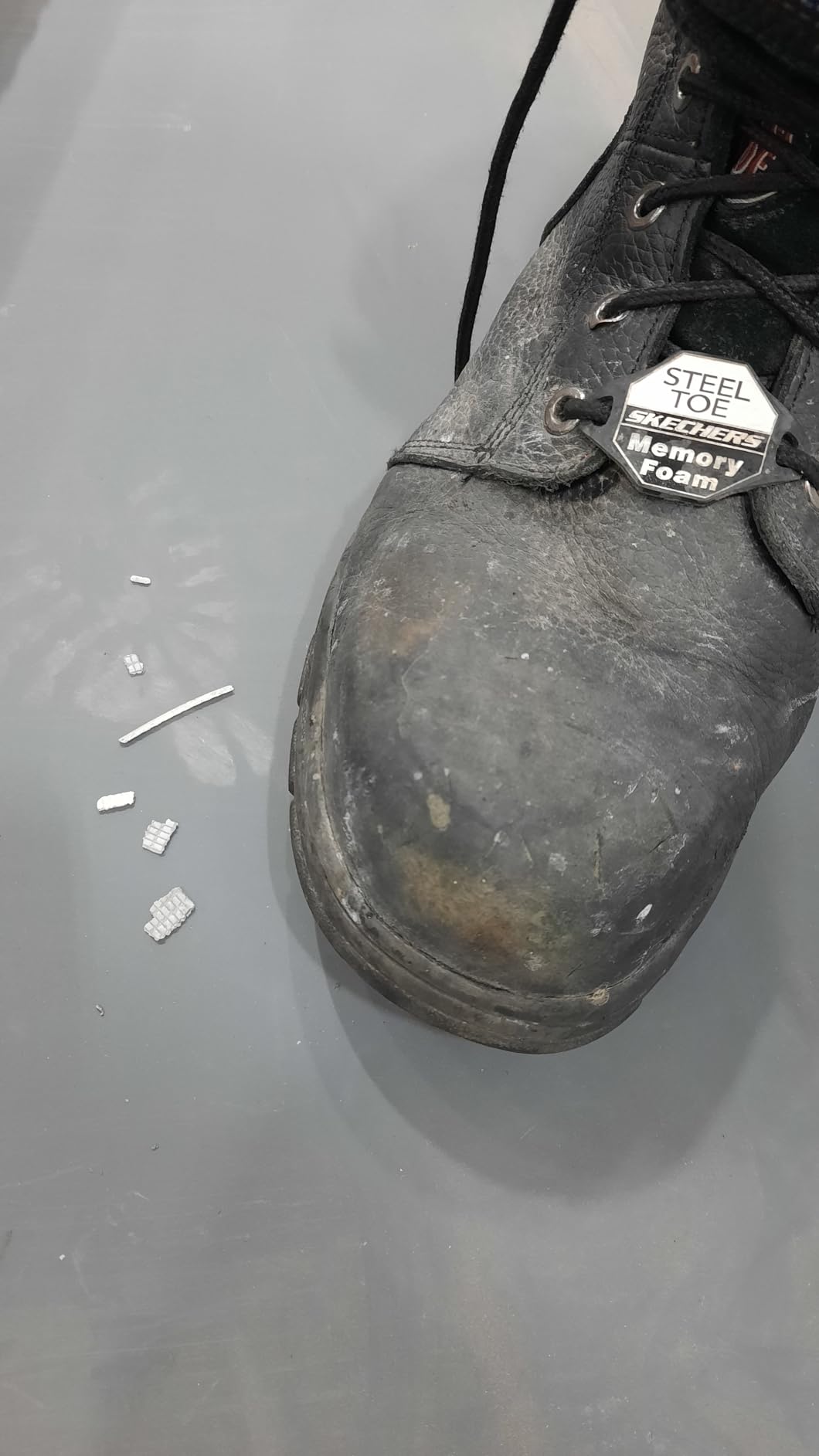
The construction is a relaxed fit with a memory foam cushioned footbed, and that is where most of the comfort comes from. The footbed is the part you notice on hour six, and the wide forefoot is the part you notice on hour one.
The caveats are specific and worth knowing. Slip resistance drops off on oily shop floors, which matters a great deal for mechanics, and the boot collar can rub the ankle if you wear low crew socks. The memory foam footbed also compresses relatively quickly and can retain odor over time.
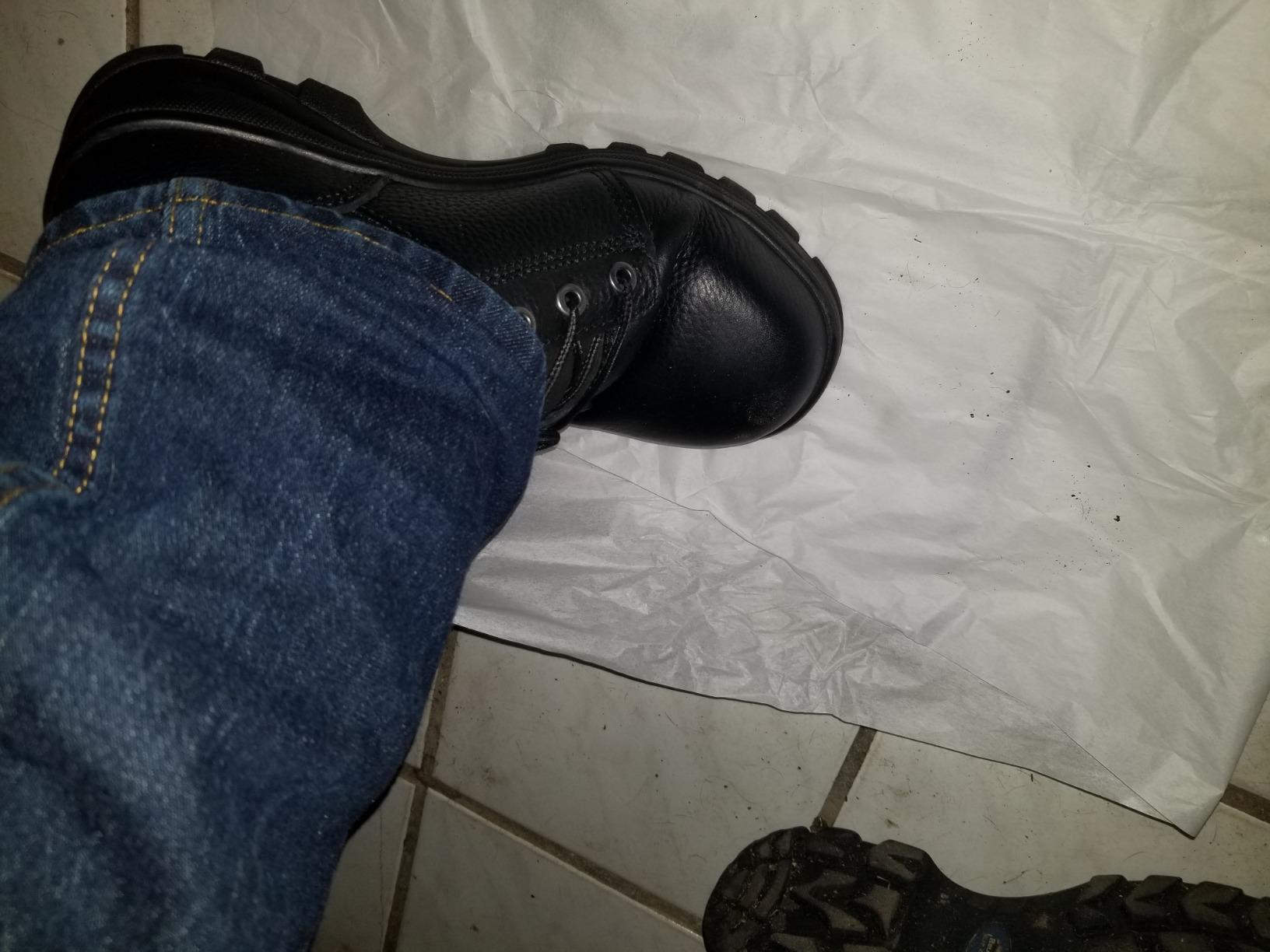
Will a relaxed fit last work boot actually fit a wide foot?
Yes, and it is the sizing consistency that sets it apart. Owners report the relaxed last running wide through the forefoot and fitting true once you measure, with the same fit holding across pairs. For wide feet that have been guessing at sizes for years, repeatable fit is worth more than any single feature.
Is it safe to work around oil and machinery in?
It is electrical hazard rated with a slip resistant outsole, so basic safety requirements are covered. The specific weak point is oily floors, where owners report slip resistance falling away, so for a mechanic bay the CAT Threshold or a more aggressive lug outsole is the safer bet.
6. NORTIV 8 Waterproof Steel Toe Is the Budget Answer for Wet Sites
NORTIV 8 Men’s Waterproof Steel Toe Work Boots,Black,10.5
ASTM F2413-18 steel toe cap
Waterproof suede and membrane
Rubber lug outsole
3.7 pounds per boot
+ The Good
- Wide widths available across the main colorways
- Waterproof suede and membrane keep feet dry in snow mud and rain
- Cushioned insole and lug outsole built for long standing shifts
- Reinforced heel and impact resistant toe add extra protection
- The Bad
- Suede upper scuffs more readily than full grain leather
- Bulkier than a low cut work shoe under a pant leg
The NORTIV 8 does something the CAT Threshold does not: it is genuinely waterproof rather than water resistant. The suede and membrane construction keeps feet dry in snow, mud and rain, which for anyone working an outdoor site through a wet season is the feature that decides the purchase.
Wide widths are available across the main colorways, and buyers treat this as the budget waterproof steel toe pick. It is a top ranked seller in the industrial and construction boot category, which tracks with how often it turns up on job sites.
The cushioned MD insole and the rubber lug outsole are built for long standing shifts, and the reinforced heel and impact resistant rubber toe add protection beyond the steel cap itself. It is a full height boot, so you also get ankle coverage the low cut Skechers cannot offer.
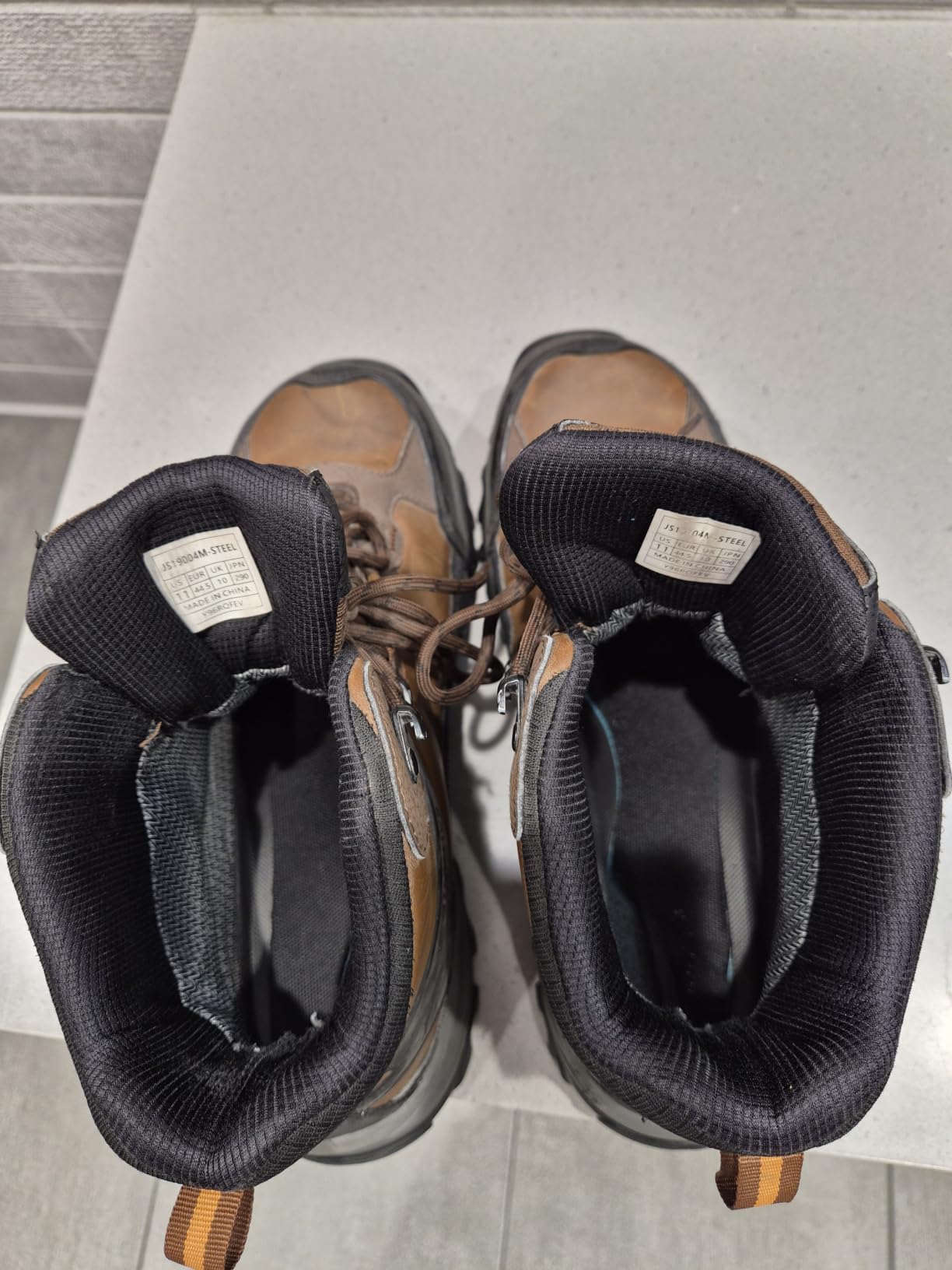
The steel toe cap meets ASTM F2413-18, and the whole package is designed around standing hours rather than walking miles. Reviewers put the wide sizing and the comfort over long shifts at the center of their feedback, with 71 percent of reviews at five stars.
Two drawbacks keep it out of the top three. The suede upper scuffs more readily than full grain leather, so it will look worn faster on abrasive sites, and the boot is bulkier than a low cut work shoe under a pant leg, which some tradespeople dislike for snagging on rebar or ladders.
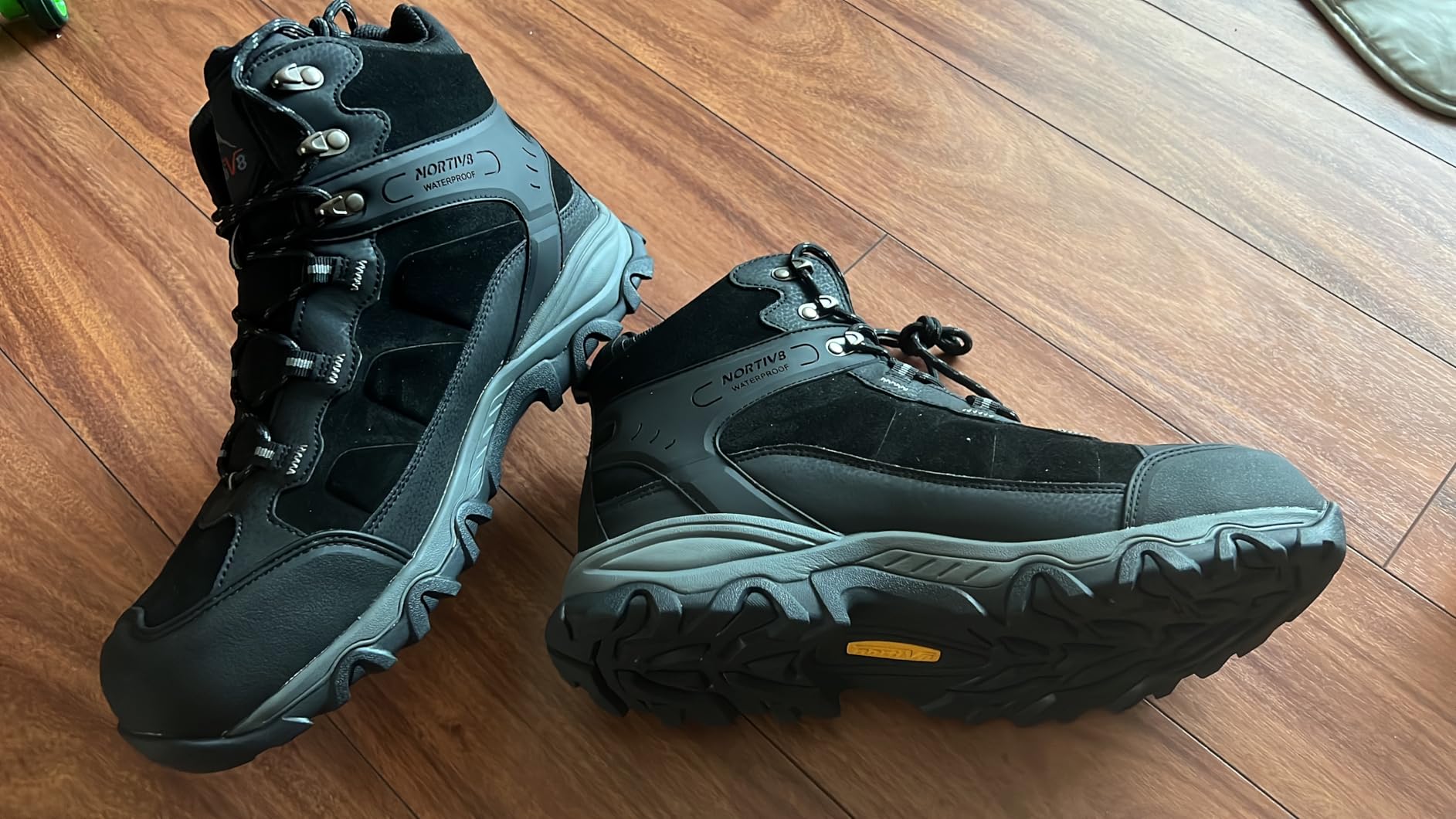
Is this actually waterproof or just water resistant?
Actually waterproof. The suede and membrane construction is described by owners as keeping feet dry in snow, mud and rain, which is a stronger claim than the CAT’s water resistant membrane. If your site is outdoors in winter, that difference is worth a lot.
Will wide feet fit a full height boot comfortably?
Wide widths are carried across the main colorways, and the cushioned insole handles long standing shifts well. The catch is bulk: at 3.7 pounds this is a substantial boot, and some wearers find it too heavy and bulky compared with a low cut work shoe.
7. Wolverine Floorhand Gives the Best Ankle Support, Not the Widest Toe Box
Wolverine Men’s Floorhand Waterproof 10″ Steel Toe Work Boot, Dark Brown, 12 W US
10 inch waterproof shaft
ASTM F2413-11 steel toe with EH rating
Removable full cushion footbed
2.1 pounds per boot
+ The Good
- Waterproof membrane holds up in mud puddles and snow
- 10 inch shaft gives strong ankle support with pull-on convenience
- Lighter and less clunky than most heavy steel toe boots
- Short painless break in with supple leather
- The Bad
- Toe box runs narrow even in the X-Wide size
- Inner lining near the heel wears through quickly and catches the heel
- Toe stitching and sole separation reported within months
We include the Floorhand with a warning attached, because it is a good boot that answers a different question. The 10 inch waterproof shaft gives genuinely strong ankle support and a short, painless break in, and at 2.1 pounds it is lighter and less clunky than most steel toe boots in this roundup.
The waterproof full grain leather upper holds up in mud, puddles and snow, and the steel toe meets ASTM F2413-11 for impact and compression with an electrical hazard rating. A nylon shank and lightweight cement construction keep it flexible enough for general site work.
Here is the problem for wide feet: the toe box runs narrow, and owners say it is still tight in the X-Wide size. If your issue is ankle stability or a bad heel, this is an excellent answer. If your issue is a crushed toe box, it is the wrong boot regardless of how good everything else is.
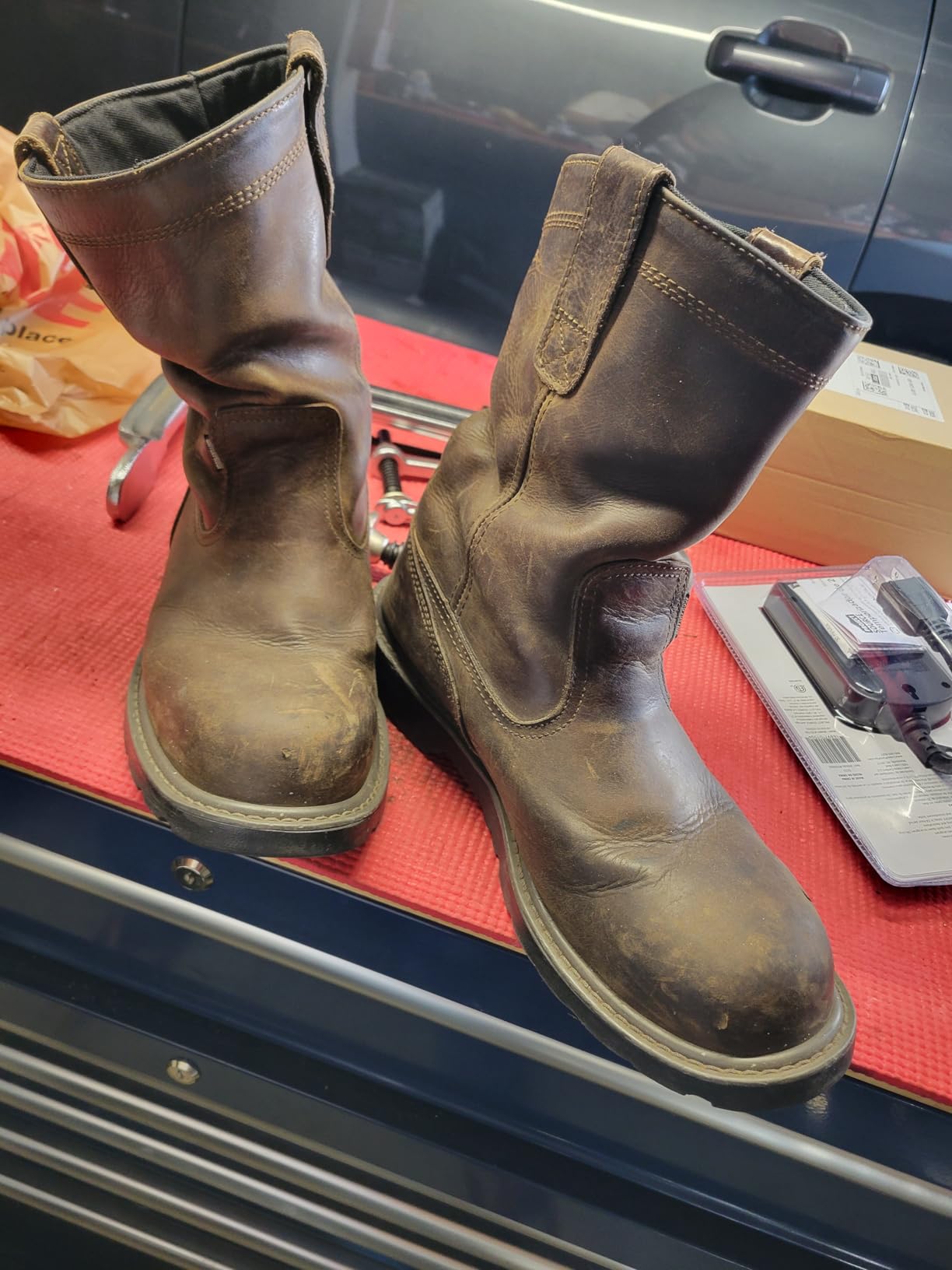
Inside you get a moisture wicking mesh lining and a removable full cushion footbed, plus a slip resistant rubber lug outsole. The removable footbed is a genuine benefit for wide feet, because swapping in a wider or higher arch insert is a cheap fix that most fixed footbeds do not allow.
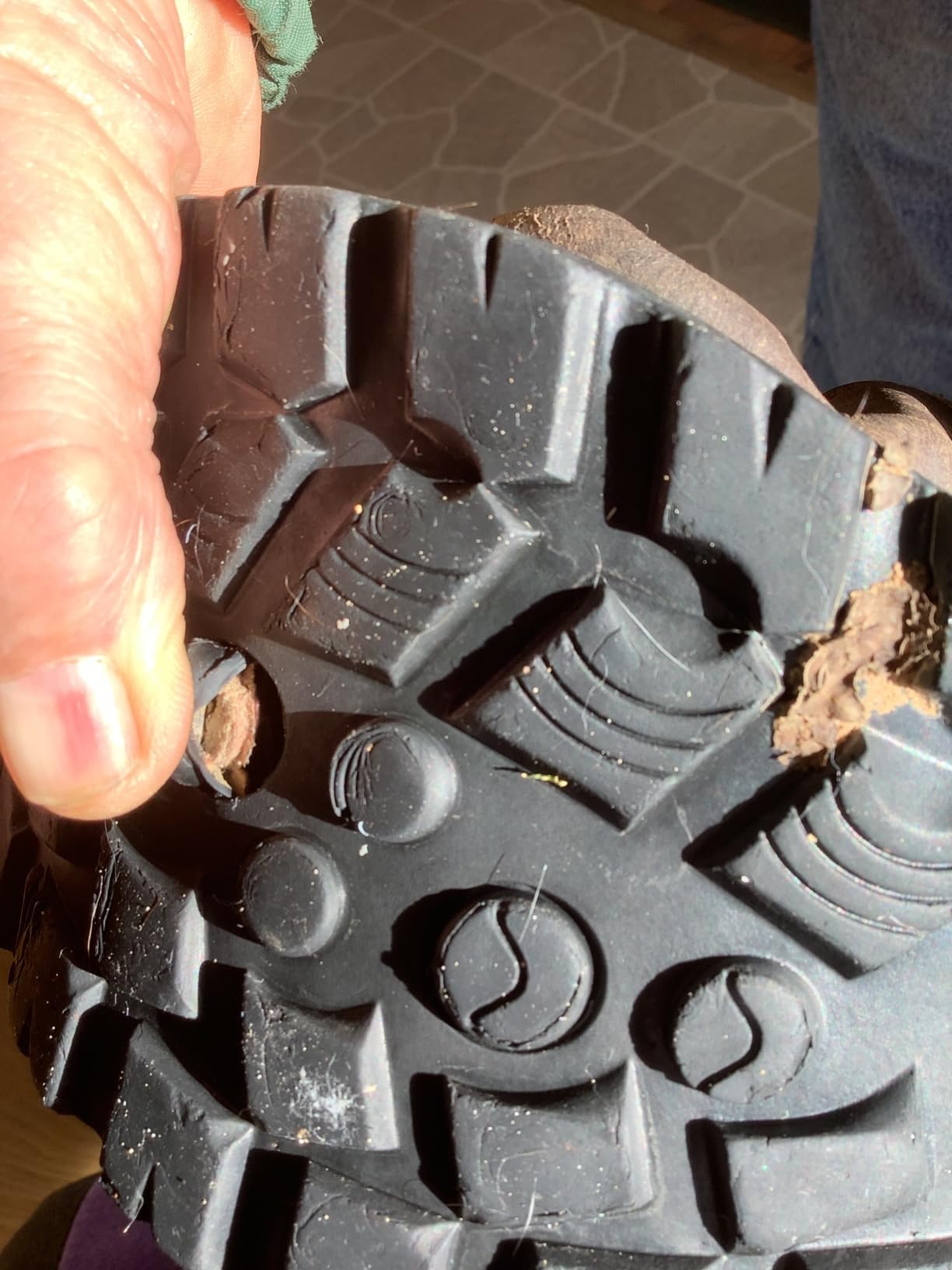
Durability feedback is mixed, and it is worth being straight about. Owners report the inner lining near the heel wearing through quickly and catching the heel, and toe stitching with sole separation inside a few months of heavy daily use. Owners who size down report much better long term durability, which is itself a hint about the fit.
Does the X-Wide size actually solve a wide foot problem?
No. The toe box runs narrow and owners report it stays tight even in the X-Wide, which is the exact failure mode this roundup exists to warn you about. If you have wide feet, pick a different boot from this list and treat the Floorhand as an ankle support option for narrower feet.
Is the removable footbed useful for a wide foot?
It is the most useful part of this boot for you. A removable full cushion footbed can be swapped for a wider or higher arch insert, which is a real adjustment a fixed insole cannot offer. The 10 inch shaft, EH rated steel toe and waterproof leather are strong on their own terms.
8. BOIWANMA Steel Toe Boot Covers the Longest Sizing Run
BOIWANMA Work Boots for Men, Steel Toe, Leather, Oil, Slip and Heat Resistant Heavy Duty Wide Industrial & Construction Safety Boots, US 11
Steel toe rated 18KV electrical hazard
Goodyear welt construction
Steel shank for ladders
US 7 to 17 sizing
+ The Good
- Offered in standard and wide widths across US 7 to 17
- Resists oil slip heat and chemicals for industrial work
- Sponge pillow cushion insole and steel shank ease long standing hours
- Goodyear welt construction reads as durable and resoleable
- The Bad
- Water resistant only so the leather needs treatment in sustained wet conditions
- Runs tall out of the box and feels stiff before break in
Sizing is this boot’s argument. It is carried in standard and wide widths across US 7 to 17, which means a lot of wide-footed buyers who have ever been told their foot was too big to find can stop shopping. Very wide feet are the hardest group to serve, and long sizing runs are the single most useful thing a brand can do for them.
The construction is serious industrial work. The steel toe carries an 18KV electrical hazard rating, the Goodyear welt build uses a non-marking rubber sole, and a steel shank is fitted for ladder and stair climbing, which is a real safety feature on a site where you are on a ladder often.
Owners highlight the combination of wide sizing, steel toe protection and value, with 67 percent of reviews at five stars. The sponge pillow cushion insole and the steel shank together take the sting out of long standing hours on a plant floor, which is the main use case for this boot.
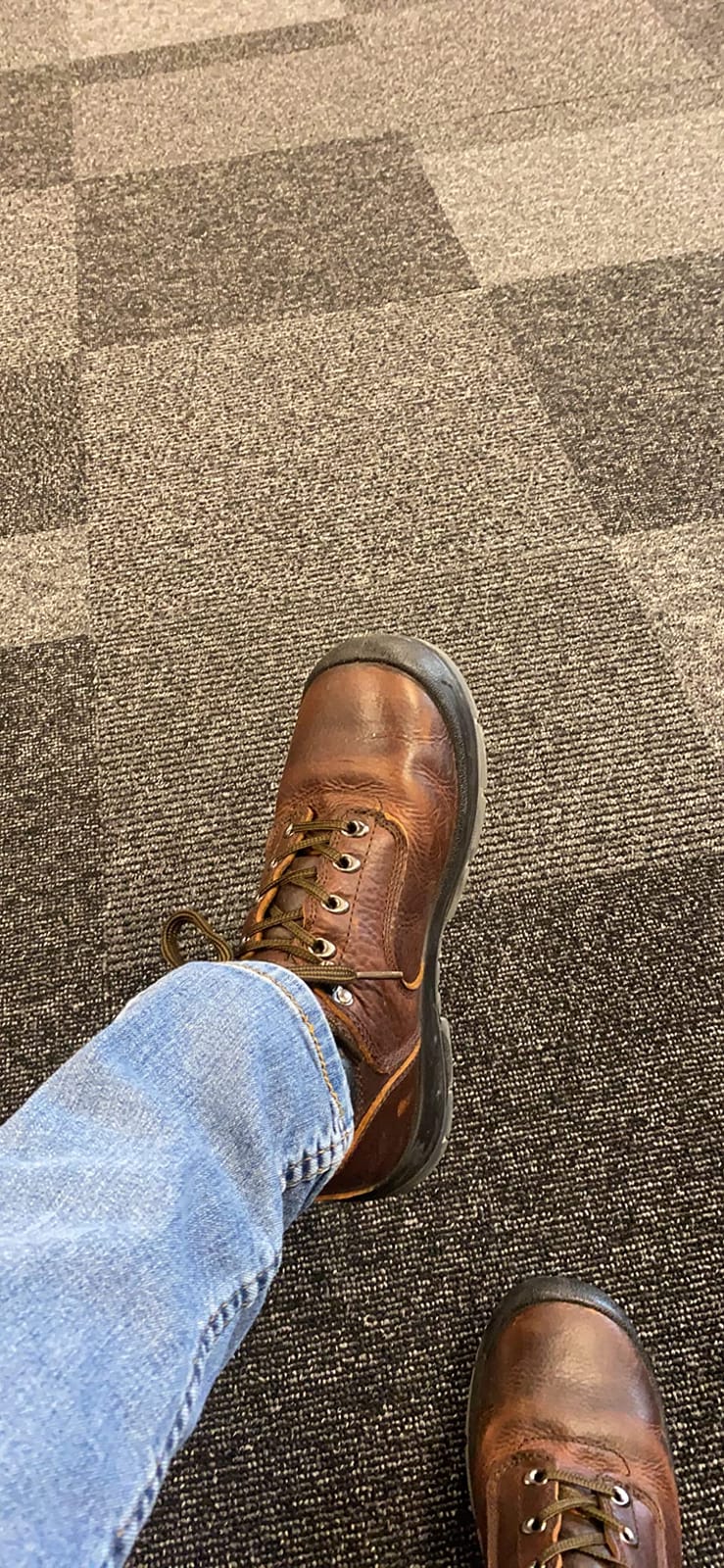
The upper is water resistant tumbled embossed full grain leather with a moisture absorbing lining, and the outsole resists oil, slip, heat and acid and alkali. Heel height is 1.3 inches with a 5.31 inch shaft, so it sits lower and lighter on the leg than a full height boot while still covering the ankle.
The two limitations are water and time. It is water resistant rather than waterproof, so the leather needs treatment in sustained wet conditions, and it runs tall and stiff out of the box. Budget a real break in period before you judge the fit, and the wide width will settle in properly once it does.
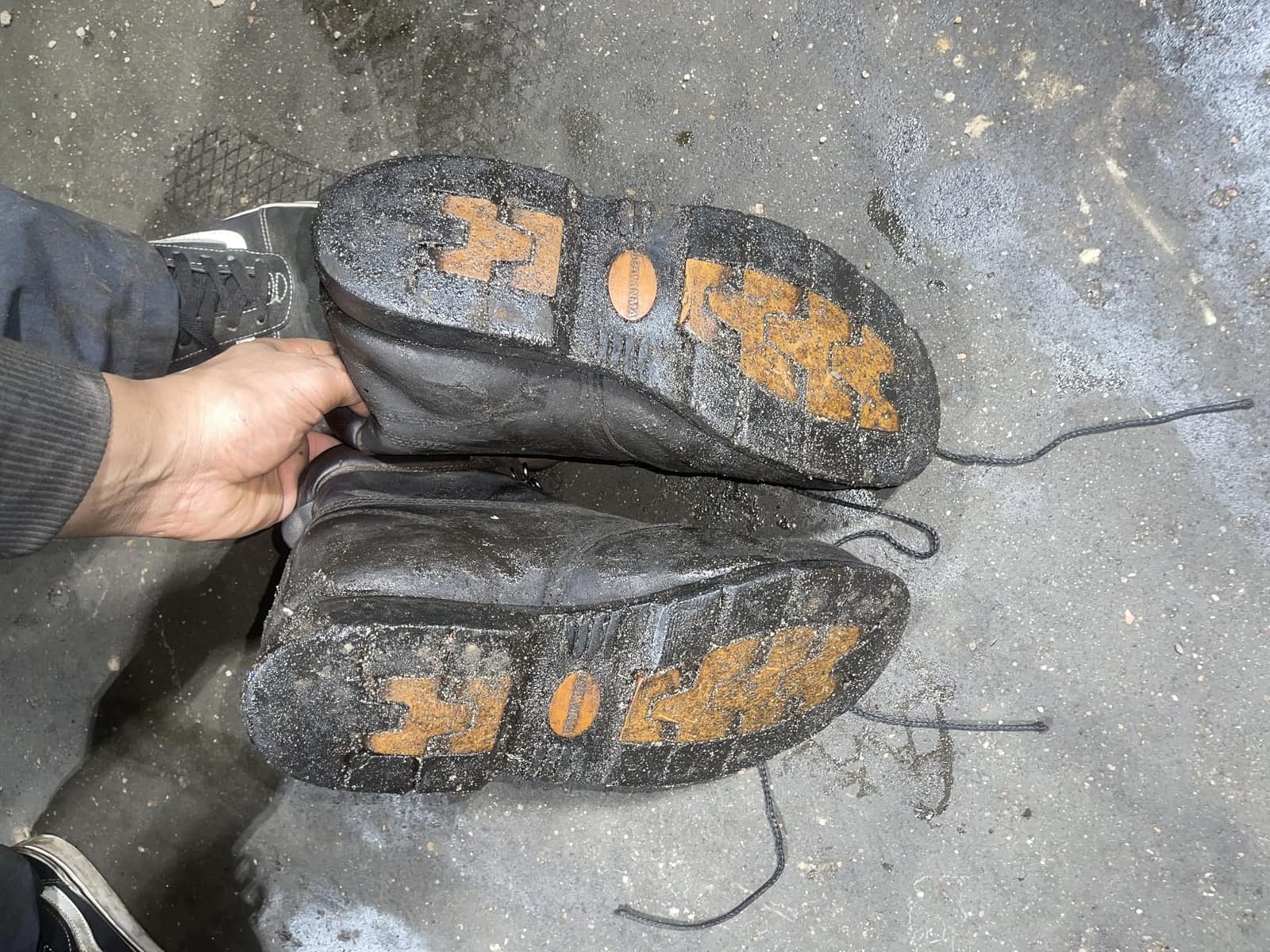
Will a US 7 to 17 run actually cover my size?
That is the reason to look at it. Most brands quietly cap safety toe sizing, and if you have been told your foot is too large for wide steel toe boots, this is the boot most likely to have your length in a wide width. Very wide feet are the hardest group to serve and the longest sizing run helps them most.
Is it heavy duty enough for industrial and chemical work?
It is built for it. The outsole resists oil, slip, heat and acid and alkali, the Goodyear welt is resoleable, and the 18KV electrical hazard rated steel toe with a steel shank covers ladder and stair work. The trade is that it is water resistant rather than fully waterproof.
9. FitVille Extra Wide Is the Lightest Wide Fit With Real Protection
FitVille Extra Wide Work Boots for Men Composite Steel Toe Safety Boots High Top Work Shoes for Men, Size 13 X-Wide Black
Composite toe to ASTM F2412-18
Kevlar midsole
Wide and X-Wide sizing
874g per pair
+ The Good
- Genuinely roomy toe box with X-Wide sizing for very wide feet and bunions
- Lightweight and breathable across 10 to 12 hour shifts
- Composite toe and Kevlar midsole protect against metal chips and punctures
- Slip resistant outsole holds on wet and oily shop floors
- The Bad
- Outsole tread is shallow and loses grip on hills mud and gravel
- Laces wear through quickly in abrasive environments
- Not waterproof and the insole arch support digs into the heel
The FitVille is the only boot here that explicitly labels its width modes as Wide and X-Wide, and it is the lightest of the group at 874g per pair in a US 9. If a boot in this roundup is going to fit feet that have never fitted anything, it is usually this one or a dedicated extra wide brand.
Owners single out the roomy toe box as the standout feature, with X-Wide sizing working for very wide feet, plantar fasciitis and bunions. A knit breathable upper and a sponge foam insole make it comfortable through 10 to 12 hour shifts, and the low weight is obvious within a shift.
Protection is real rather than decorative. The composite safety toe meets ASTM F2412-18 for impact and compression, and a Kevlar midsole handles puncture resistance, which matters in plants where metal chips and offcuts are everywhere underfoot.
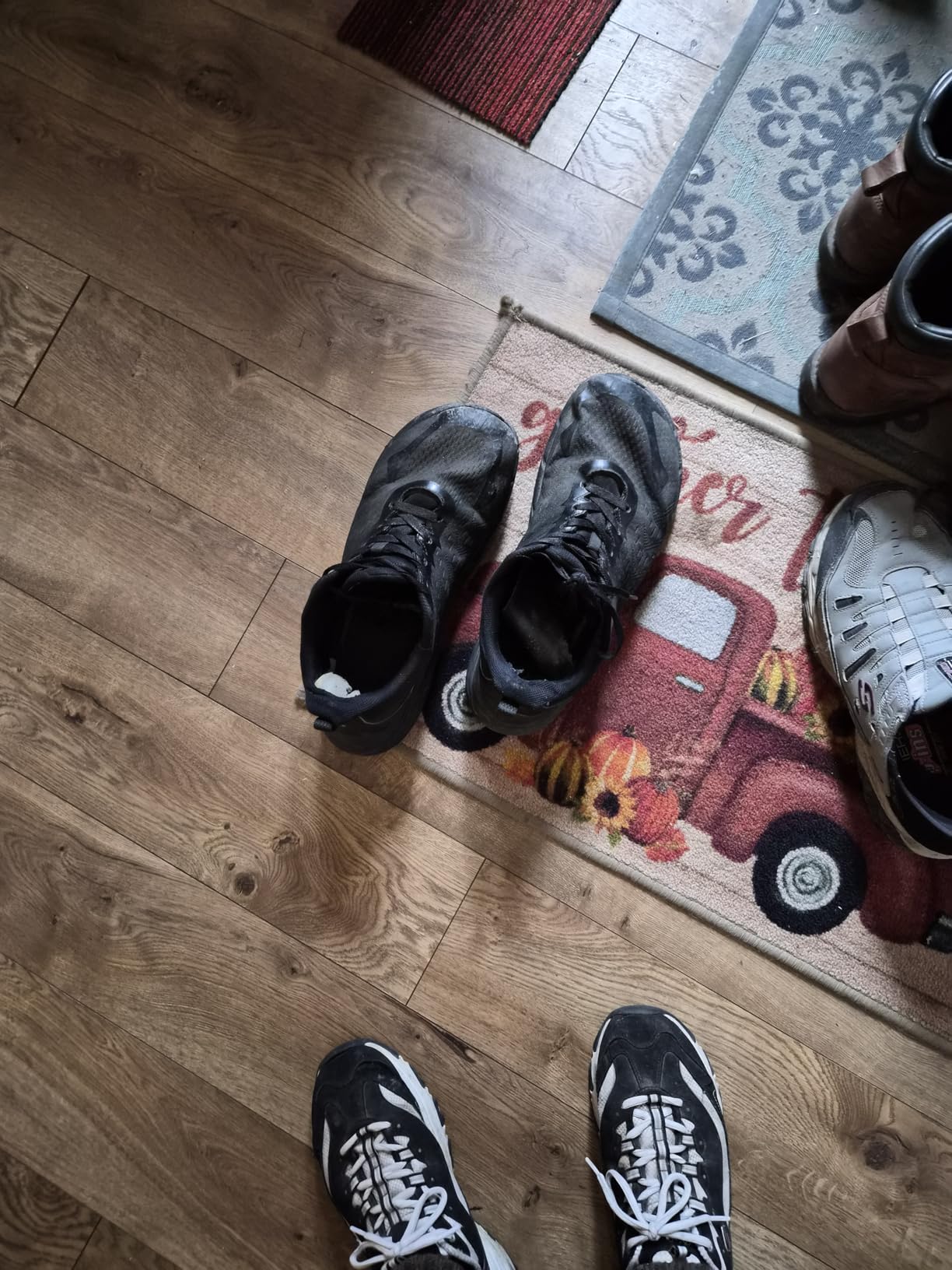
The outsole is slip resistant and holds on wet and oily shop floors, which is a stronger claim than most of the boots here make and a real advantage in a plant or warehouse. The insole is a sponge foam with low arch support, and the whole upper is knit so it moves with the foot.
The recurring complaints are durability of the hardware rather than the boot. The outsole tread is shallow and loses grip on hills, mud and gravel, the laces wear through quickly in abrasive environments, and it is not waterproof. Some buyers also report the low arch support sitting too far back and digging into the heel at larger sizes.
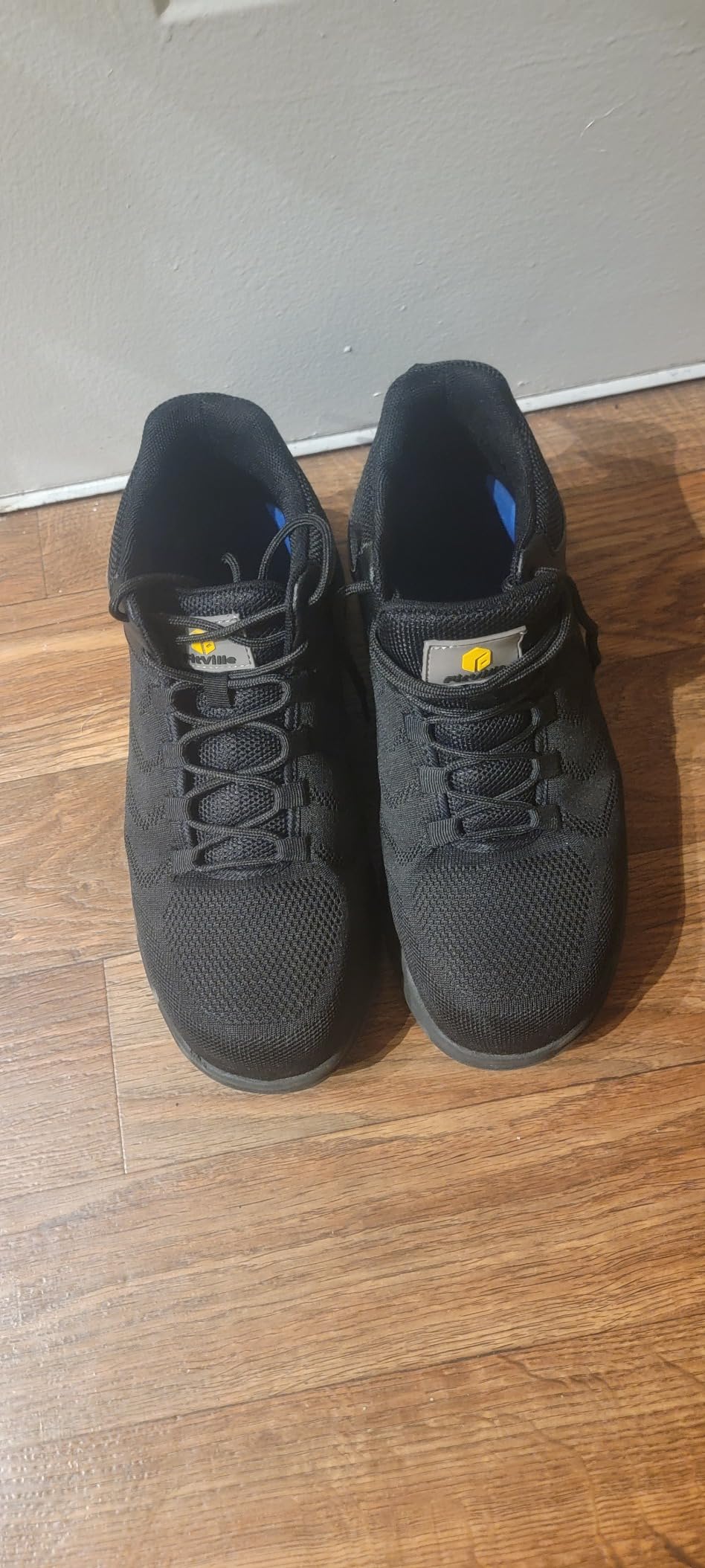
Is this a real X-Wide or just a wide label on a standard last?
It is a real X-Wide mode, alongside a Wide mode, and owners with very wide feet, plantar fasciitis and bunions report the roomy toe box works for them. The knit upper flexes with the foot as well, which a rigid cap in a stiff upper does not, so it is the most forgiving option here on a long shift.
What does the composite toe give up versus steel?
Weight and heat, and you gain lightness and electrical safety. A composite toe is lighter than steel, does not conduct cold into your toes in winter, and is naturally non-conductive. You also get a Kevlar midsole for puncture resistance, but you lose the ability to resole the boot and the shallow tread loses grip off road.
10. Skechers Work Hartan Slip-On Fits Wide Feet Without Laces
Skechers Men’s Hartan Steel Toe Slip On Shoe, Black, 10 W US
Slip-on steel toe design
Oil resistant lugged outsole
Smooth leather upper
1.3 pounds per boot
+ The Good
- Wide widths run true and size 12 to 13 feet find a proper fit
- Slip-on convenience with no laces to deal with on a job site
- Steel toe absorbs repeated impacts from pallets and shelving
- Soft and comfortable for 8 to 14 hour warehouse shifts
- The Bad
- Durability is the weak point with toe stitching and toe overlay failing within months
- No ankle support so not a substitute for a full boot on uneven ground
- Steel toe does not stretch so a half size up is often necessary
The Hartan is the slip-on option, and for warehouse and distribution work that convenience is real. No laces means nothing to snag on a pallet rack, nothing to retie in a warehouse with a forklift coming past, and at 1.3 pounds it is the lightest boot we tested.
Wide widths run true, and buyers with size 12 to 13 feet report finding a proper fit. That is the group most often squeezed out of the wide end of the market, so a boot that actually fits a 13 wide is worth noticing even without laces.
Comfort over long shifts is the other strong point, with owners describing 8 to 14 hour warehouse days in these. The steel toe has absorbed repeated impacts from pallets and shelving, and the oil resistant rubber lugged outsole is the right compound for a distribution floor.
Construction is a smooth durable leather upper with an abrasion resistant toe overlay, reinforced stitched seams and a slip-on steel toe design. The leather is soft from the start, so there is effectively no break in period at all, which is unusual in this category.
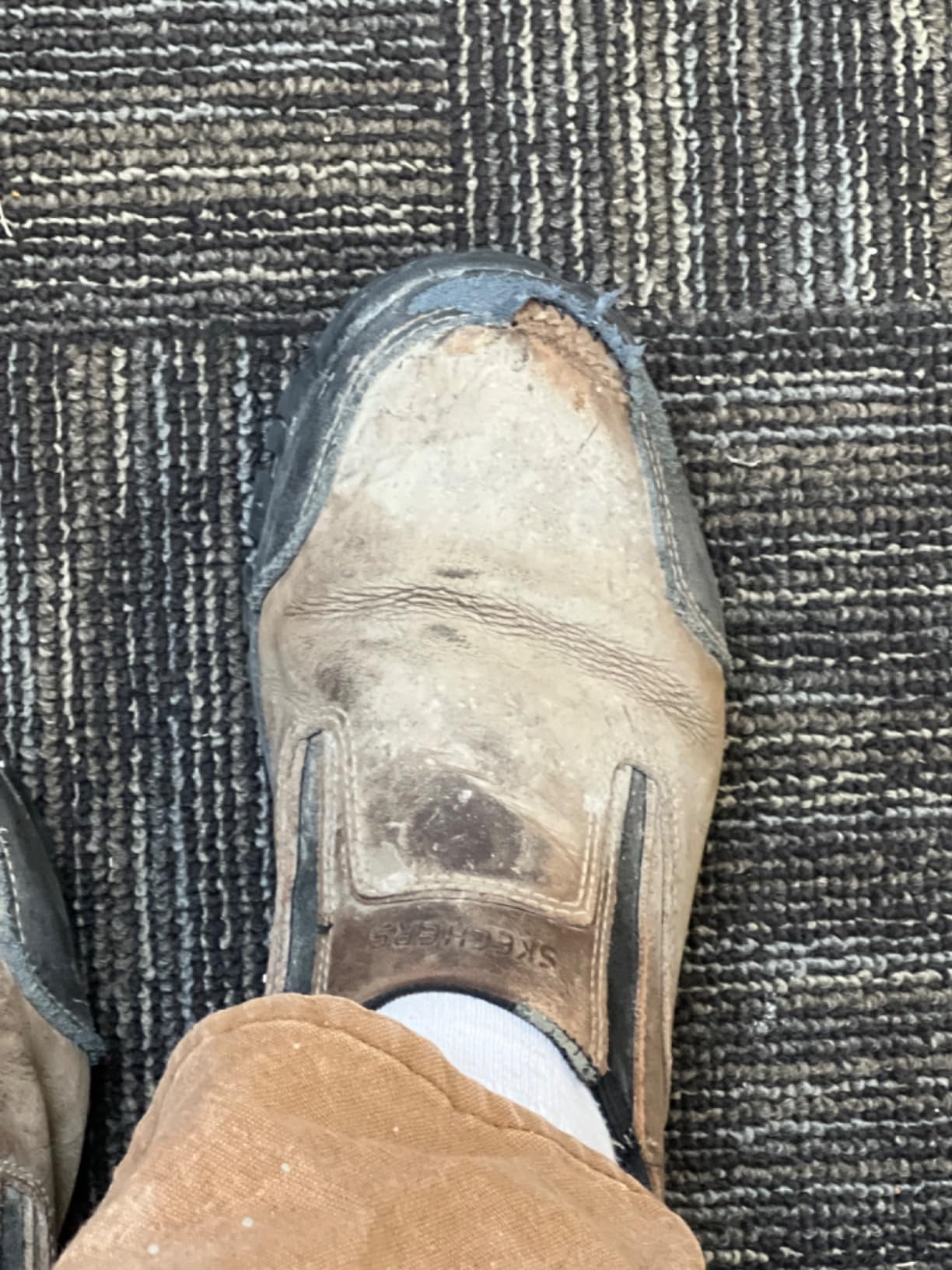
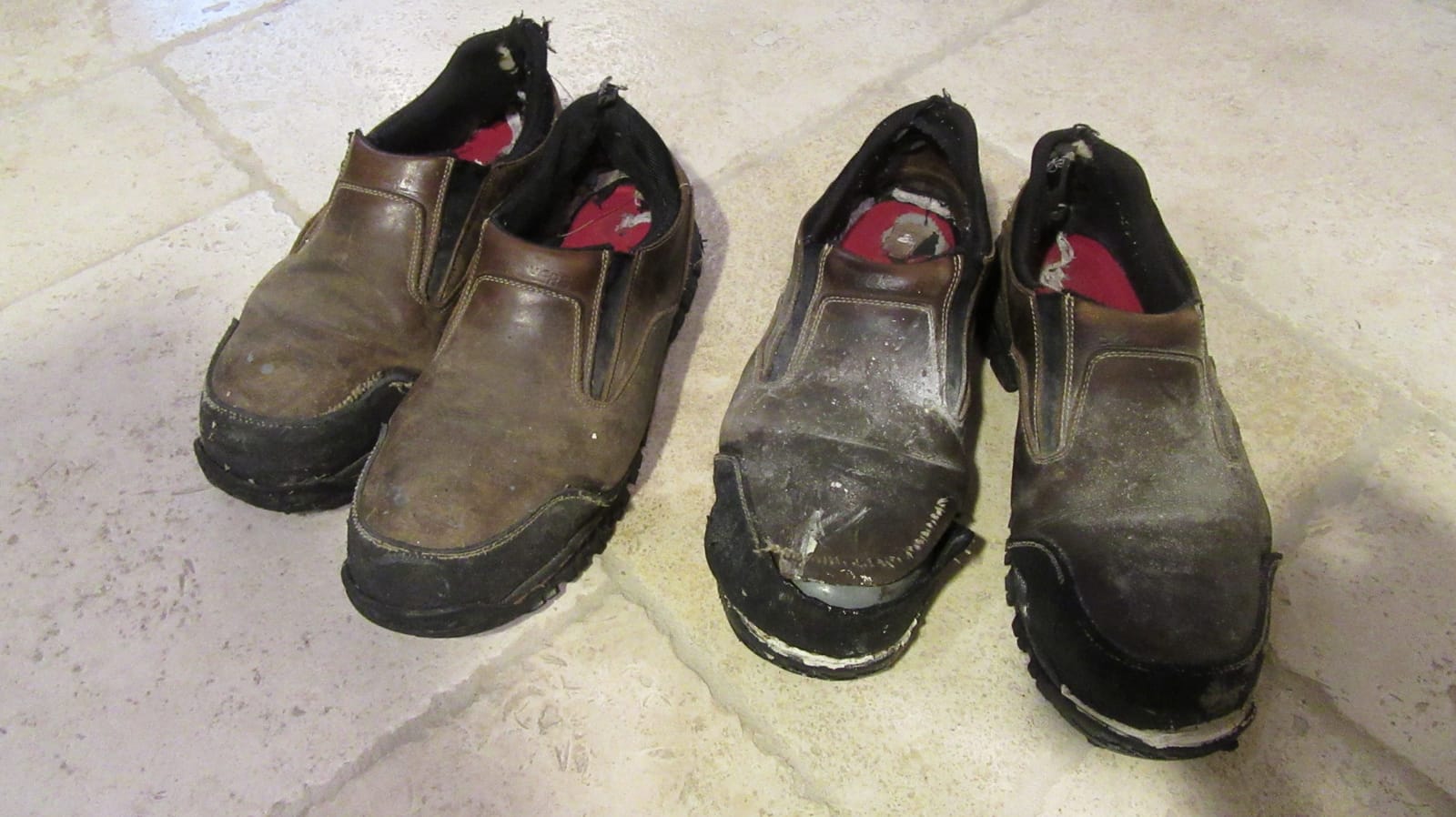
The main drawback is lifespan. Toe stitching and the rubber toe overlay are reported failing within months, and this boot has the lowest five star share of the ten we tested. It is also not a substitute for a full boot on uneven ground because it gives you no ankle support, and the steel toe does not stretch, so owners commonly size up a half size.
Can a slip-on steel toe work for a full warehouse shift?
Yes, and it is arguably the best case for it. Owners report 8 to 14 hour warehouse shifts in these, and the oil resistant lugged outsole is the right compound for a smooth distribution floor. Nothing to snag on a rack and nothing to retie next to a forklift.
How long do they last, honestly?
Shorter than the boots above them. Toe stitching and the rubber toe overlay are reported failing within months, and the construction is glue and stitch rather than welt, so there is no resole option. Buy it as a lightweight shift boot rather than a five year investment.
What to Check Before You Buy Wide Steel Toe Boots?
Width comes first and everything else is a preference. Confirm the width code on the size chart, confirm the toe box profile, and only then decide on waterproofing or outsole. Buying a beautiful waterproof boot in a D width means you will be back looking again in three months.
Steel toe versus composite toe versus alloy toe
Steel toe is the cheapest protection per boot, punches the highest impact rating, and is the heaviest and coldest option in winter.
Composite toe is lighter, does not conduct cold, is naturally non-conductive, and costs more. Read our composite toe work boot guide if you have metal in your ankles.
Alloy toe is thinner than steel, so it is the option to consider if toe box volume is your problem and you need high impact ratings.
Check the width, not just the cap. A great cap in a narrow last is still a narrow boot.
Wedge outsole versus a raised heel
A wedge outsole is a flat, rockered sole with the heel thinned down, and it lets your foot roll forward the way a walking shoe does. That is a genuine comfort gain on smooth concrete and on warehouse floors. A raised heel with a defined 90 degree break is better for traction on ladders, mud and uneven ground, because the heel edge bites.
Most of the boots in our list sit in between, and the trade is simple. If your day is standing in one place, prioritise cushioning and a wide toe box. If your day involves ladders and rough ground, prioritise an aggressive lug pattern and an ankle-height shaft.
Waterproofing, insulation and the sock question
Waterproofing is not binary, and the difference between the CAT’s water resistant membrane and the NORTIV 8’s waterproof suede construction is the difference between damp feet after a downpour and dry feet. Waterproof boots also get hot, which is the reason people who work indoors all summer end up in the low cut Skechers models instead. If you are moving between an indoor plant and outdoor sites, the steel toe overshoe options solve it without committing to either.
On socks, which comes up constantly in the forums: inside a roomy wide fit, thin socks bunch and add friction, and the fix is a thicker crew sock that fills the volume instead of sliding around. Wear a mid crew sock with a full height boot and you will stop getting blisters in places you did not expect.
Safety marking and the return policy as a fitting strategy
Look for ASTM F2413 on the tag for impact and compression protection, F2412-18 for protective footwear testing, and an EH marking if you are near energized equipment. Our general steel toe work boot roundup covers the compliance details in more depth.
Use the return window as a fitting window. Work one full shift in the boots before you decide, because a boot can feel tight at ten in the morning and fine at four in the afternoon, and wide feet often need a few days before the leather gives at all. If your employer allows footwear swaps, ask before you buy.
Frequently Asked Questions
Do steel toe boots stretch to fit wide feet?
No. A steel toe cap is a rigid shell and does not stretch, so the room has to be built into the boot at the factory. Leather uppers soften with wear, but the cap never conforms to a wide forefoot, which is why you must order an E, EE or 4E width rather than a longer size.
Should I size up a size for wide feet?
Size up in width, not in length. A longer boot adds room at the heel, which causes heel slip, and pushes your toes forward into the steel cap where there is no give. Keep your length and move up a width grade, adding roughly a third of an inch across the ball of the foot for each step up.
What is considered a wide width in work boots?
D is standard, E is wide, EE is extra wide, and 4E and 6E are the very wide grades. Most people who describe themselves as having wide feet actually need an E; feet that have never fitted a standard work boot usually need EE or wider, and very wide feet may need a brand that carries a 4E or 6E safety toe at all.
Which boot brand has the widest toe box?
KEEN is the most consistently recommended brand for wide feet, and the Utility Lansing in this roundup has the widest toe box we tested thanks to its asymmetric steel cap. Wide Load and XLfeet carry genuine 4E and 6E safety toes, Red Wing KingToe and Carolina 4E are long-standing community favourites, and Timberland PRO is the brand most often reported as running narrow.
Are wide steel toe boots as protective as standard steel toe boots?
Yes. The cap is the same steel and carries the same ASTM F2413 impact and compression rating whether it sits in a D or a 4E last, because the rating tests the cap rather than the surrounding volume. Wider boots sometimes use a slightly different outsole, so confirm the slip resistance marking and any electrical hazard rating separately.
Final Verdict for Wide Feet
For the best steel toe work boots for wide feet, start with the CAT Threshold. It is the only boot in our group where a large wide size is simply a wide size, and that is the difference between a boot you keep and a boot you resent. Reach for the KEEN Utility Lansing if toe box volume is your specific problem, and choose the Timberland PRO Pit Boss if you would rather buy one pair every few years than every few months.
Fill the gaps from there. The Skechers Cankton gives you genuine Wide and X-Wide widths at the lowest cost, the NORTIV 8 is the waterproof choice for wet outdoor sites, the BOIWANMA boot is the one that carries a wide width past a US 12, and the FitVille Extra Wide is worth a look if nothing else has ever fit. Whatever you pick, measure your foot width with a tape measure first, order up a width rather than a size, and give the leather a real break in before you judge it.