
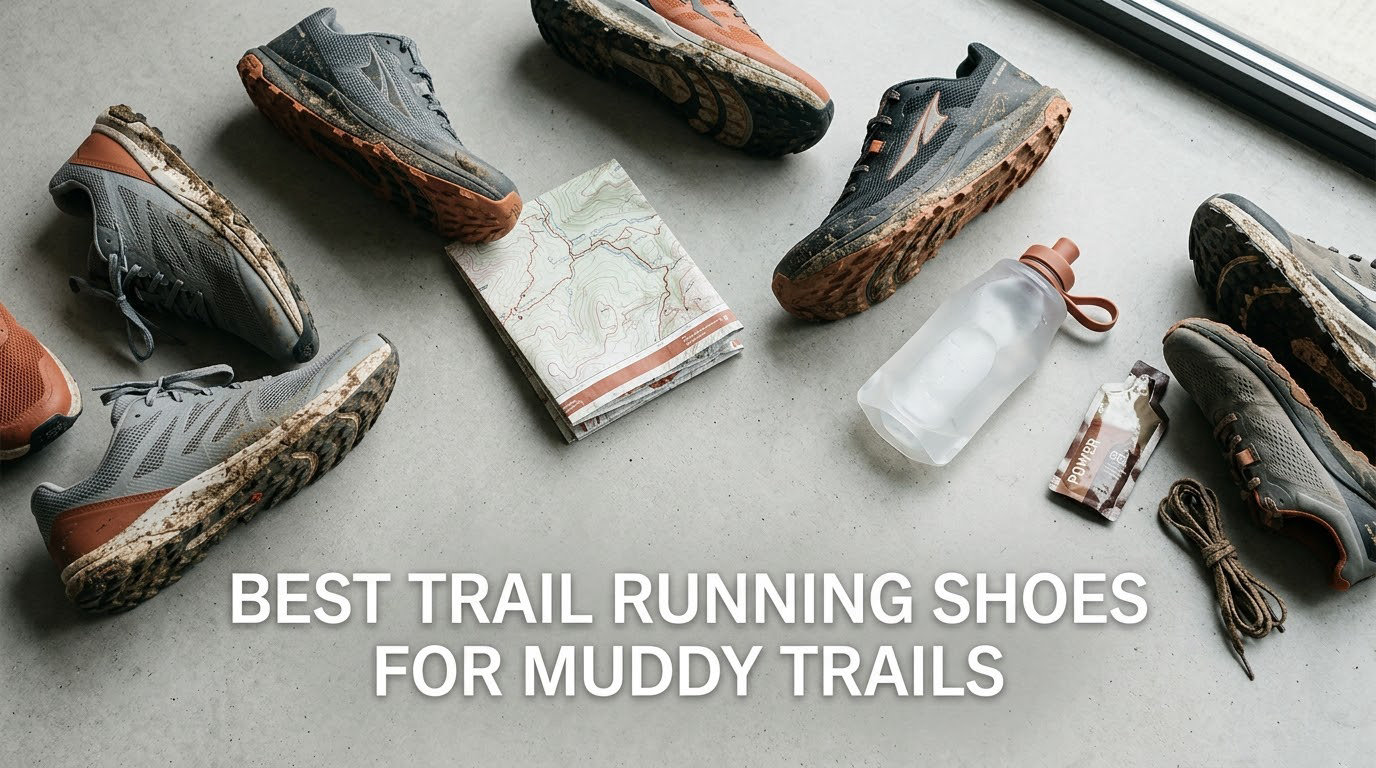
The best trail running shoes for muddy trails are the Salomon XA PRO 3D, built around a Contagrip rubber outsole that holds its grip on loose and wet ground, an EnergyCell Foam midsole that stays comfortable for hours, and a GORE-TEX membrane that keeps dew and drizzle out. Two specifications matter more than anything else when the trail turns to mud though: lug depth of 6mm to 8mm, and a soft, sticky rubber compound that bites into slick clay and wet rock. Get those two right and the shoe grips.
That is the gap this guide closes, because mud comes in several very different forms and a shoe that shines in surface slop can be useless in deep clay. So rather than ranking ten shoes on a single scale, I mapped each one to the specific mud condition it handles best, and I drew on what trail runners actually report from r/trailrunning, r/Ultramarathon and r/hiking about where these shoes hold up and where they fail.
For a broader look at trail footwear across every terrain type, our guide to the best trail running shoes tested and ranked covers road-to-trail hybrids and racing flats in more depth. This one is specifically about wet ground.
Below is the short version of what to look for before we get into the individual shoes.
Lug depth of 6mm to 8mm. Deep, widely spaced lugs push through surface slop. Shallow 3mm to 4mm tread works on dry trail and disappears the moment the ground turns to clay.
Wide gaps between lugs. Spaced-out tread matters as much as lug height. Tightly packed lugs pack with mud and flatten into a slick mat within a single long run.
A sticky rubber compound. Soft compounds such as Vibram MegaGrip, Inov8 StickyGrip and La Sportiva FriXion add friction on wet rock and root, at the cost of wearing out faster than hard rubber.
An upper that drains. Mesh uppers move water out fast in mild conditions. Membranes hold it in, which is fine in drizzle and a problem once you are running for more than an hour in real rain.
Fit you can trust in the wet. Toe box width and midfoot lockdown matter more when your foot is cold, wet and swelling.
How we chose: Every pick below was assessed against five criteria drawn from manufacturer specifications and buyer feedback: outsole traction in wet and uneven ground, lug aggression for the mud conditions it targets, upper drainage or waterproofing and what that does over long efforts, fit and width options, and reported durability. Where runner communities describe a shoe in their own words, I have said so and named the source. Where I am making a call based on specifications, I have said that too.
Top 3 Trail Running Shoes for Muddy Trails for October 2026
These three cover the widest range of wet conditions. One is the all-round mud answer, one is the deep-mud specialist, and one is the value pick for runners who want wet-weather protection without a racing silhouette.

Salomon XA PRO 3D
- › Contagrip outsole
- › EnergyCell Foam midsole
- › GORE-TEX membrane
- › Reinforced toe cap

Salomon Speedcross 6
- › Aggressive lugged Contagrip outsole
- › Quicklace system
- › Breathable upper
- › Durable rubber blend

Columbia Konos TRS
- › OutDry waterproof membrane
- › Adapt Trax wet traction
- › Navic Fit lockdown
- › Techlite+ midsole
One runner on r/trailrunning put it plainly: you cannot go wrong with the Speedcross 6, and they recommended it specifically for terrain with mud or water deeper than ankle-deep. That is a narrow use case and I have flagged it below, because a shoe that excels there is not automatically the best choice for a wet month of ordinary training.
All 10 Muddy-Trail Picks at a Glance (October 2026)
Every shoe in this roundup, with the specification that actually decides how it behaves in mud. Model years and specs shift between seasons, so use the buttons to check the current version of each shoe rather than the one you may remember from a previous winter.
| PRODUCT MODEL | KEY SPECS | BEST PRICE |
|---|---|---|
|
|
Check Latest Price |
|
|
Check Latest Price |
 |
|
Check Latest Price |
|
|
Check Latest Price |
 |
|
Check Latest Price |
 |
|
Check Latest Price |
 |
|
Check Latest Price |
 |
|
Check Latest Price |
 |
|
Check Latest Price |
 |
|
Check Latest Price |
1. Salomon XA PRO 3D – the waterproof all-rounder with real longevity
Salomon Men’s XA PRO 3D Trail Running Shoes – Monument/Ebony/Red Dahlia – 10.5
Contagrip outsole
EnergyCell Foam midsole
3D Advanced Chassis
GORE-TEX membrane
+ The Good
- All-day cushioning over long distances
- Proven durability across 800 km treks
- Strong grip on loose and rocky ground
- Protective reinforced toe cap
- The Bad
- Membrane holds water and heat on long runs
- Snug toe box for wide feet
- Runs close to true size
This is the shoe I would hand to a runner who has one pair of trail shoes and runs them in every condition, wet or dry. The Contagrip outsole is not the most aggressively lugged shoe here, but it is exceptionally well balanced across loose gravel, wet rock and root, and the EnergyCell Foam midsole keeps a run comfortable well past the point where most trail shoes start to feel thin underfoot.
It is also, by a wide margin, the shoe with the largest number of owner reviews in this roundup. One reviewer logged 800 km on the Camino de Santiago in a single pair, and the durability theme repeats across the review history. For a shoe you will live in for years across mixed terrain, that matters more than any single mud-specific statistic.
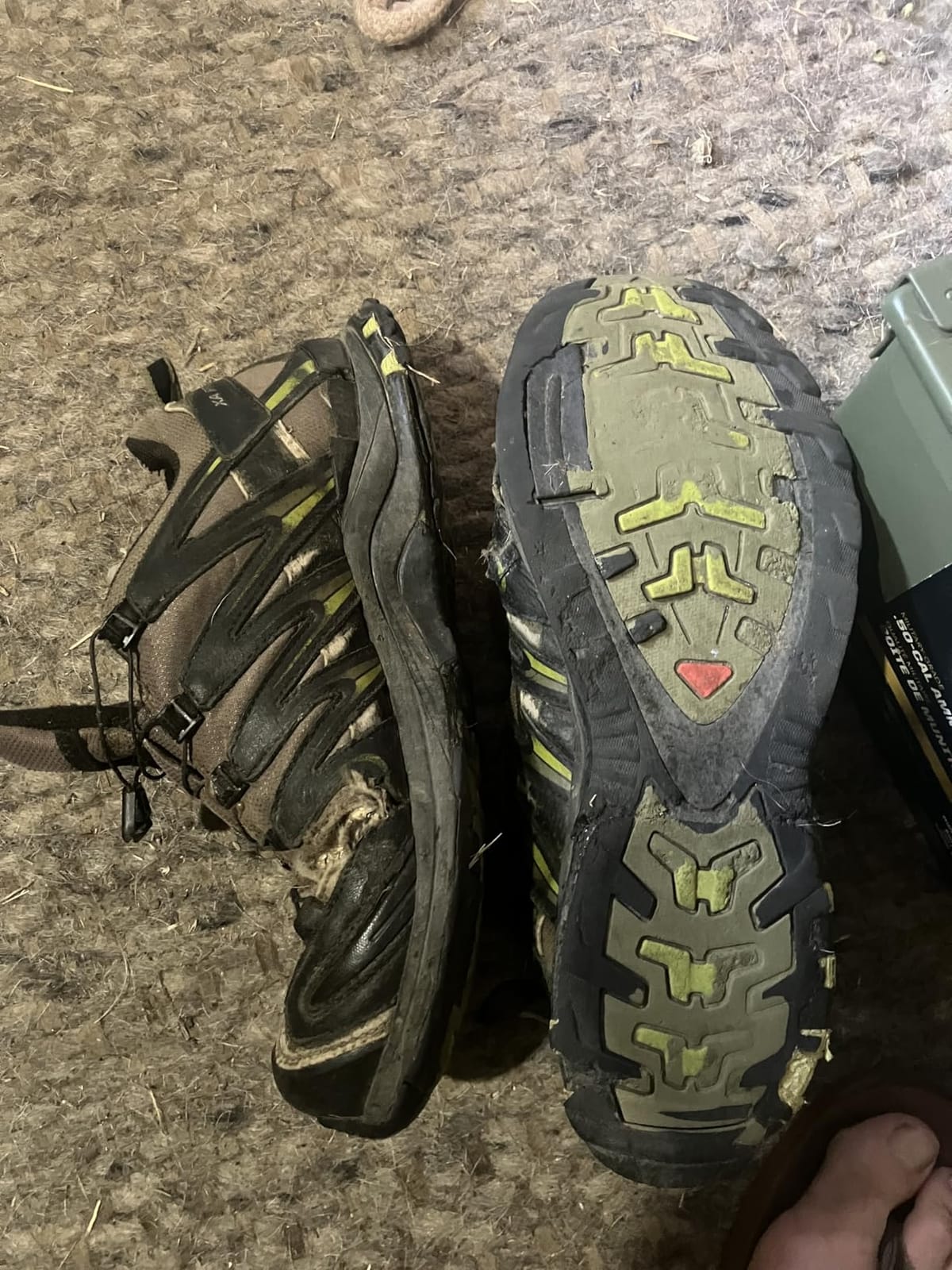
The GORE-TEX construction is the part that needs a caveat, not a cheer. On a cool, wet day with dew, light rain and shallow puddles, it is genuinely excellent — reviewers describe comfortable, waterproof performance over long mountain days. On a two-hour run in steady rain, the water you eventually walk or splash into stays inside. You end up with a warm, wet foot and no way for it out.
So the honest verdict on the waterproof question is that this shoe is right for winter mileage and for runners in cold climates who will be out for an hour or two, and wrong for long, warm, sustained-rain runs. Neither side of that trade is a dealbreaker. It is a choice about which problem you are solving.
Who the XA PRO 3D suits
It suits the year-round trail runner, the thru-hiker who also wants to run, and anyone in a cold wet climate who values one shoe over two. The 3D Advanced Chassis sitting between midsole and outsole gives real underfoot protection and motion control on rocky ground, and the reinforced toe cap takes the sting out of roots and embedded stones.
For wide feet, note that reviewers repeatedly describe the toe box as snug. If you have a broad forefoot, this is a shoe to try on in store rather than order blind.
Where it falls short for mud
The lugs are not the deepest in this list, and the shoe is closer to a hiking-capable trail runner than a pure mud specialist. Reviewers also point out that it is overbuilt for casual street walking, where lighter alternatives do the same job. If your mud is deep clay rather than surface slop, you will find more specialised options further down.
2. Salomon Speedcross 6 – the deep mud and wet rock specialist
Salomon Mens Speedcross 6 Quiet Shade/Black/Pearl Blue 10.5 Medium
Aggressive lugged Contagrip outsole
Quicklace one-pull system
Breathable upper
Durable rubber blend
+ The Good
- Best-in-class grip on mud and ice
- Quicklace never unties on descents
- Roomy accommodating toe box
- Lightweight over long distances
- The Bad
- Soft outsole rubber wears fast on pavement
- Streamlined fit favours narrow feet
- Not suited to road running
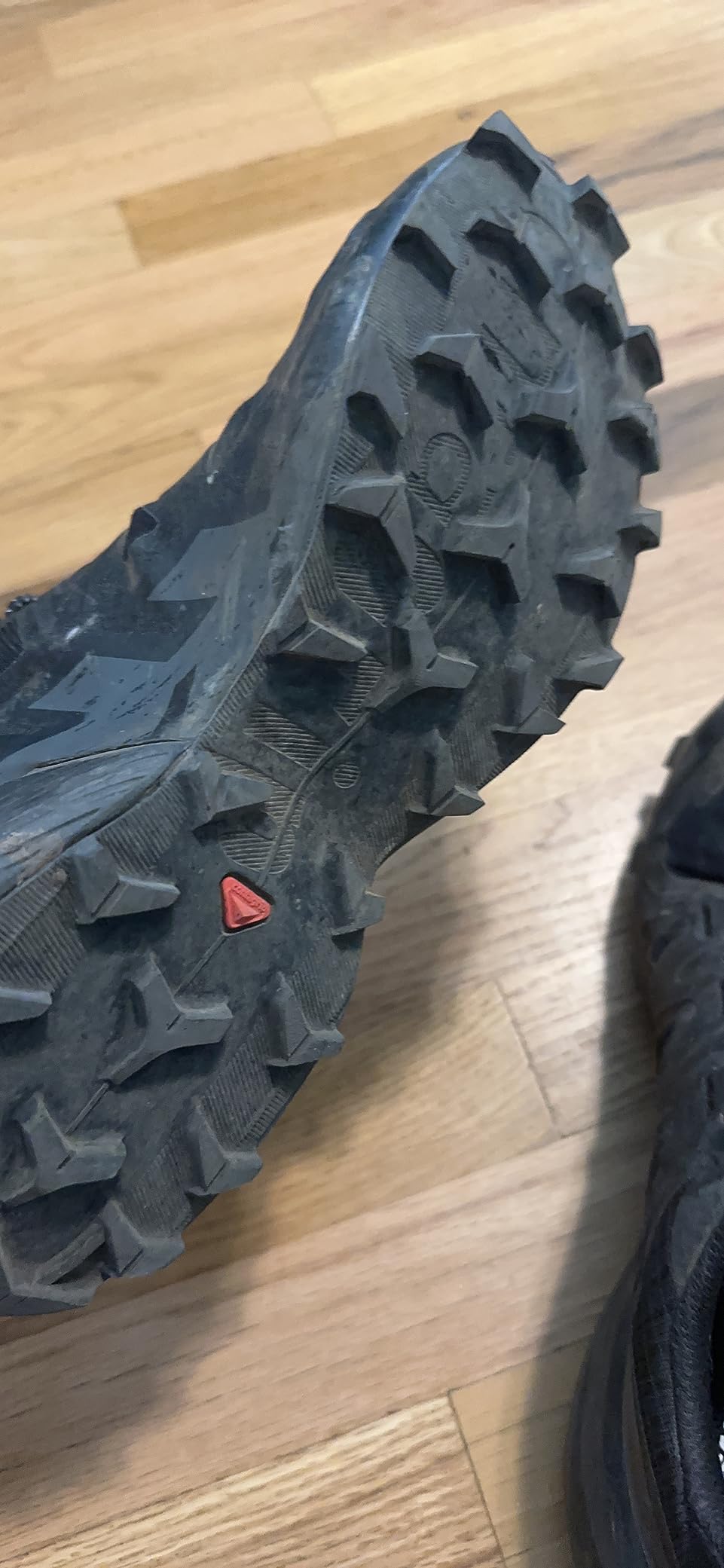
Buy this shoe for one reason: the outsole. The aggressively lugged Contagrip pattern is repeatedly described by buyers as the best-in-class traction in the category, holding on mud, snow, ice and slick rock where other shoes slide. Several reviewers report holding traction on steep, icy, snow-covered trails that previously required micro-spikes.
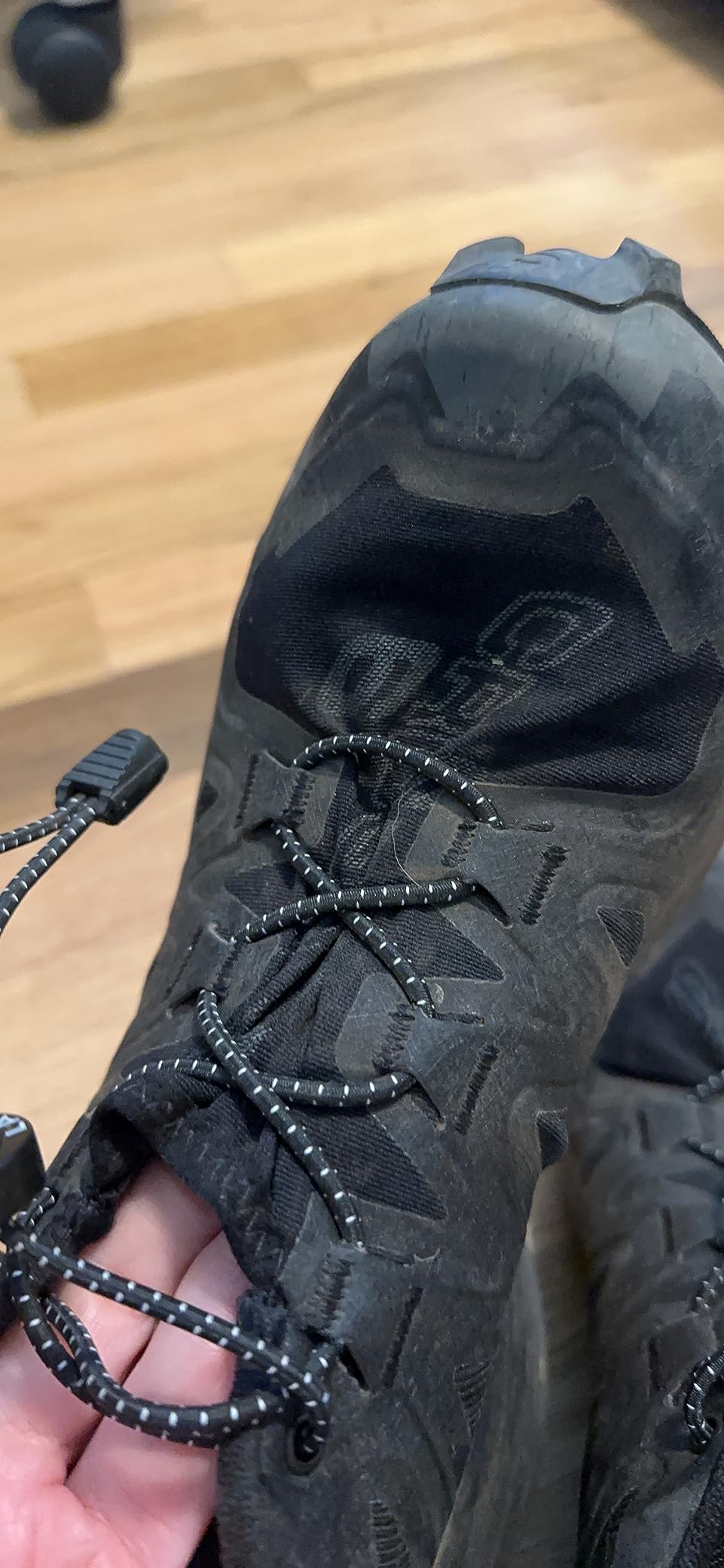
The Quicklace system is the second reason and it matters more in mud than it does anywhere else. One-pull tightening takes seconds, it never unties when your foot is sliding around inside the shoe, and you can retie it with frozen hands in a car park. In conditions where your foot is moving unpredictably, a locked lacing system is not a luxury.
Runner communities treat this as the default answer, and for once that consensus is defensible. On r/trailrunning, one runner wrote plainly that you cannot go wrong with the Speedcross 6, recommending it specifically for terrain with mud or water deeper than ankle-deep. An earlier Speedcross GTX was described in a ROKSlide thread as having the best traction on loose ground of any shoe tried, though that report is old enough to treat as a historical data point rather than current evidence.
Note the divergence in that last pair of quotes, though. The same shoe that runners recommend for ankle-deep water is the one whose rubber, per buyer feedback, wears quickly when used primarily on pavement. These are the same fact seen from two directions: a soft, high-grip compound grips loose wet ground beautifully and gives up its life correspondingly fast.
Who the Speedcross 6 suits
It suits the runner whose winter or spring training is mostly mud, ice and wet rock, and who also appreciates a genuinely light, breathable upper on warmer wet days. The toe box is described as wide and accommodating, which is unusually good news in a shoe that also happens to have the most aggressive tread here.
It also suits ultra runners picking one pair for a wet race. Just make the race-day-versus-everyday distinction deliberately — this is closer to a race shoe than a daily trainer, and the rubber will not thank you for wearing it on pavement all summer.
Where it falls short
The fit is streamlined, which buyers say favours narrow and medium feet. Wide-footed runners should expect a snug forefoot and should not rely on the general Salomon sizing here.
And the wear issue is real. The outsole rubber is softer than most, so runners mixing trail and road need two pairs or a dedicated pavement trainer. If your winter route has a long tarmac section to the trailhead, that changes the calculation entirely.
3. Salomon X Ultra Pioneer Mid GTX – waterproof protection for trekking
SALOMON Men’s X Ultra Pioneer Mid Climasalomon Waterproof Trail Running Shoe, Ebony Stormy Weather Wine Tasting, 9.5 US
Full GORE-TEX bootie
Maximum grip on loose ground
Strong lateral support
Soft breathable lining
+ The Good
- Waterproof protection in wet weather
- Comfortable straight out of the box
- Lightweight for long mountain days
- Good grip on wet surfaces
- The Bad
- Runs small
- order a half size up
- Tight high toe box
- Toe area can squeak during break-in
This is the one pick here that is not primarily a trail running shoe, and that is exactly why it earns a place. The full waterproof GORE-TEX bootie extends above the ankle, which makes it the natural choice here for snow, fresh winter trails and repeated stream crossings where water level sits above a low-cut shoe.
Reviewers consistently rate it as comfortable straight out of the box and light enough for long mountain days. One buyer completed a 27 km alpine hike with no blisters, and the soft breathable lining gets specific praise for comfort over extended wear.
For the mud question specifically, the maximum grip construction is built for loose and uneven ground, and reviewers confirm good grip on wet surfaces. But the ankle collar changes the running picture entirely. This is a shoe you can run in short sections of a wet trail, not one you would want for a full trail run.
Who the X Ultra Pioneer Mid suits
It suits the runner who wants a shoe for winter hiking, snow and cold-weather trekking that can also handle the trail sections in a mixed day. The strong lateral support and protection on loose, soft, rugged surfaces is a real asset when you are carrying gear or moving on uneven ground with poor footing.
It also suits anyone who prefers to be warm and dry for a two-hour outing rather than wet and cold after twenty minutes. That is a genuine, defensible preference, and the waterproof argument is strongest in exactly this scenario.
Where it falls short
Sizing is the dominant complaint. Multiple reviewers advise ordering a half size up, and the toe box is described as tight and high at the front, which is a poor combination for long days on wet descents where your toes swell and slide. A minority also report a squeaking toe area during the break-in period and a lacing system that needs adjusting.
As a trail running shoe it is also compromised by the mid-height collar, which catches mud, restricts ankle mobility and slows your stride on anything groomed.
4. Columbia Konos TRS – the wet-weather value pick
Columbia Men’s Konos TRS Outdry Waterproof Shoe, Black/Grill, 10.5
OutDry waterproof membrane
Adapt Trax wet traction
Navic Fit lockdown
Techlite+ midsole
+ The Good
- Tread engineered for wet and slippery ground
- Membrane rated for moderate to heavy rain
- Secure heel lockdown on uneven ground
- Responsive cushioning
- The Bad
- Membrane can hold water on long runs
- Heavier build than racing shoes
- Less aggressive tread for deep bog
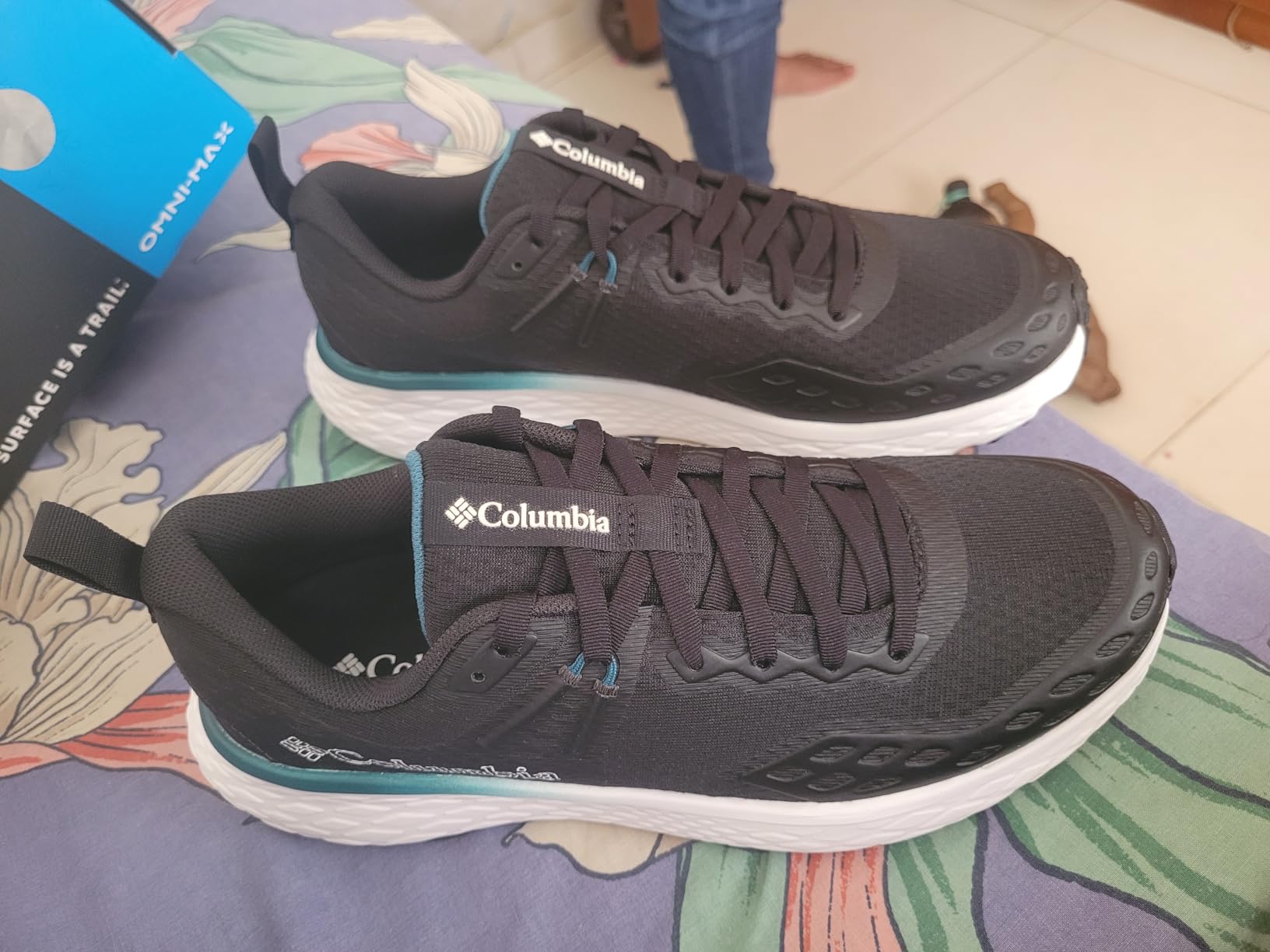
Most wet trail shoes make you choose between traction and water management. The Konos TRS was designed to claim both, and the Adapt Trax tread pattern is explicitly engineered for wet and slippery ground rather than being a general trail outsole repurposed for winter. Buyers rate that tread highly for grip on wet, muddy surfaces.
It carries a 4.7 average across more than 1,300 reviews, which puts it alongside the Speedcross 6 as one of the highest-rated picks in this group. That combination — wet-specific traction, real waterproofing and strong owner satisfaction — is why it takes the value slot here.
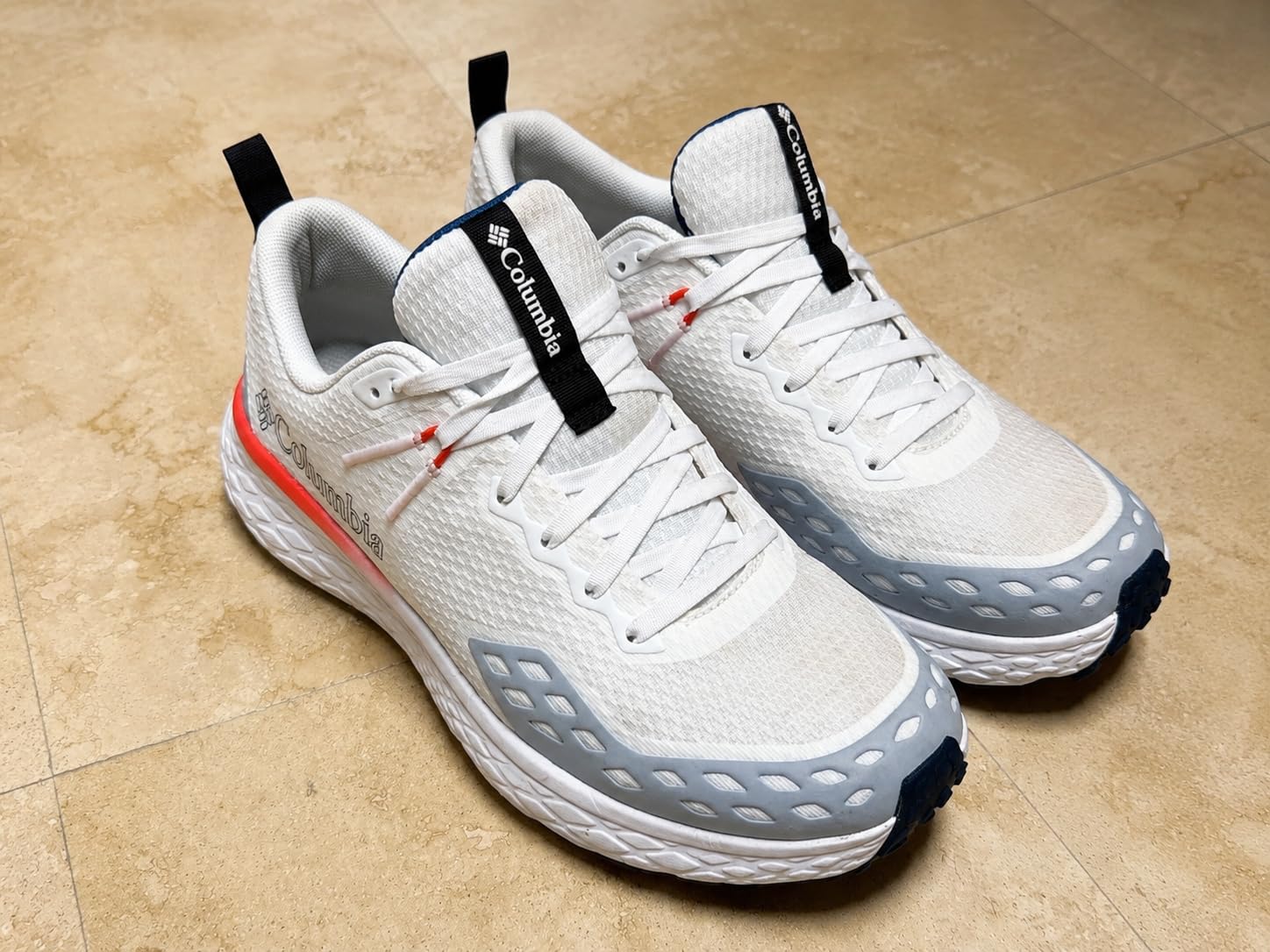
The OutDry waterproof-breathable membrane is rated for moderate to heavy rain and snow, with a bonded construction rather than a loose bootie, and the Navic Fit mid-foot system secures the heel in motion, which is exactly what you want when the ground is giving way underfoot. Underneath, the OMNI-MAX PLUS system combines a Techlite+ midsole with a heel cradle and forefoot deflection domes for impact absorption on rough ground.
It is also, practically speaking, a trail-to-street shoe. That makes it a genuinely useful winter option for anyone whose week includes both a run and a walk to the shop, and it explains why the build reads more substantial than a pure racing silhouette.
Who the Konos TRS suits
It suits the runner in a wet climate who wants genuine rain protection without paying the weight of a race-day shoe. It also works well for anyone alternating between trail running and fast hiking, because the cushioning and lockdown transfer to both.
Reviewers who take these on long mountain days appreciate the combination of a secure platform with cushioning that does not punish long hours. The forefoot deflection domes are a nice touch on technical, rocky descents.
Where it falls short
Buy it for wet, slippery ground rather than deep bog. The Adapt Trax pattern is directional and grippy, but it is not the tall, open, self-clearing lug geometry that deep sticky clay demands. If your mud is the kind that swallows a lug to its base, a more aggressive shoe is the better tool.
The same membrane caveat applies here as to any waterproof shoe: over a long effort in warm rain, water goes in and does not come out. The membrane earns its keep in genuine rain, not in a two-hour downpour where you are already soaked anyway.
5. Altra Lone Peak 9 – the wide-feet and zero drop option
ALTRA Men’s Lone Peak 9 Trail Running Shoe, Green, 10.5 Wide
Zero-drop Balanced Cushioning
FootShape wide toe box
eVent weather-resistant bootie
Quick-drying upper
+ The Good
- Roomy toe box for natural toe spread
- eVent bootie for wet conditions
- Widest size run in the roundup
- Quick-drying upper
- The Bad
- Zero drop is unfamiliar to heeled wearers
- Not the plushest ride on long days
- Owners report the outsole wears quickly
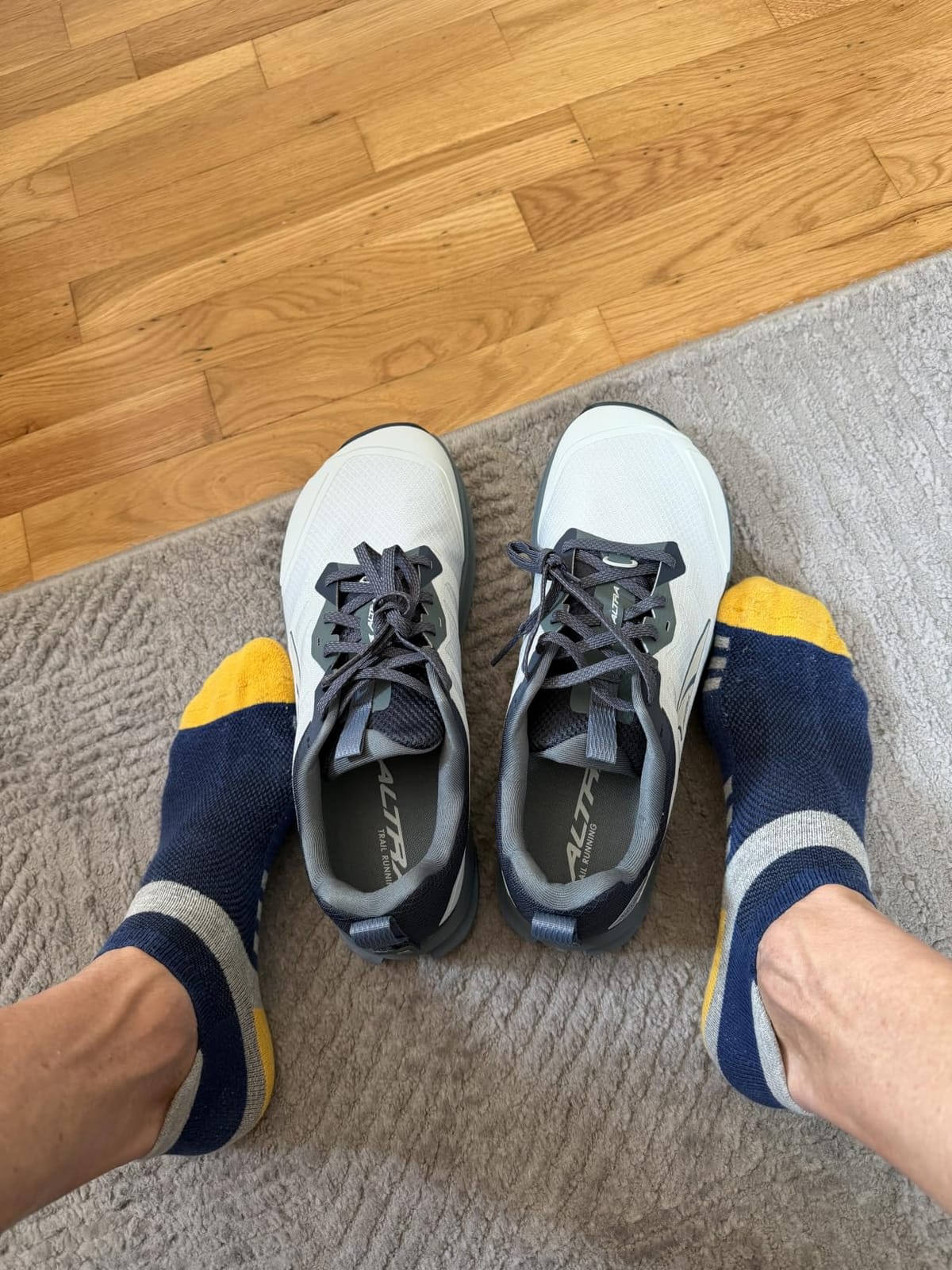
If you have wide feet or a high instep and you keep bouncing off mud specialists, this is the shoe to look at. The FootShape toe box is designed to let toes spread naturally, and the size run includes multiple Wide and standard widths, which is why so many wide-footed runners land on this shoe. The Altra Balanced Cushioning platform uses equal heel and forefoot height for a low-impact landing on uneven ground.
For wet weather, the eVent bootie is described as weather-resistant rather than fully waterproof, and the upper is quick-drying. In practice that puts it in the same category as the Speedcross 6 — water comes in, but it moves out again reasonably quickly.
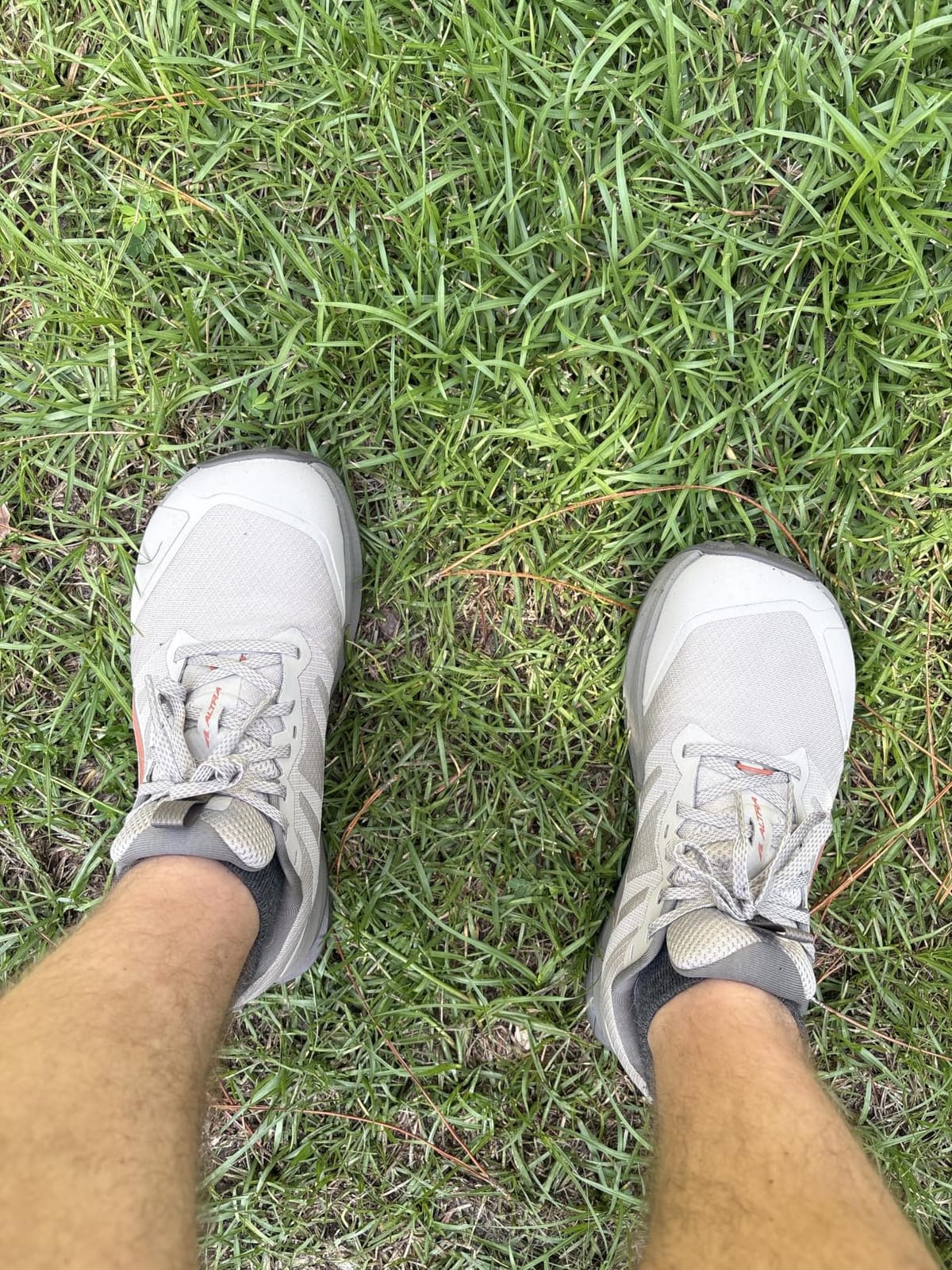
Community feedback on the Lone Peak line is consistent and worth repeating. A runner on r/hiking named the Altra Lone Peak as their favourite for very muddy conditions, specifically because the shoe is designed to drain and dry fast, adding that it wears out quickly but is worth it. That is a fair summary of the whole proposition: excellent drainage and width, at the cost of outsole longevity.
That wear pattern is a direct consequence of the design goal. A soft, grippy compound that bites wet clay and sheds readily is also a compound that wears through sooner than a hard rubber. If you rotate two pairs, you will get through the soft compound faster in calendar time but further per unit of safety.
Who the Lone Peak 9 suits
It suits wide-footed and high-instep runners, full stop. It also suits anyone who wants a roomy, stable, quick-drying daily trainer for wet months and is comfortable with a zero-drop platform. The quick-drying behaviour makes it a strong choice for runners in mild climates with wet but not cold conditions.
If you are new to zero drop, ease in. The balanced platform changes your calf and achilles loading more than any other single feature, and introducing it during a season of technical descents is asking for trouble.
Where it falls short
Balanced cushioning is not the plushest ride in this lineup, and some buyers prefer more cushioning for very long days. That is a matter of taste and distance rather than a defect, but on a 50 km ultra the difference is noticeable.
The outsole wear issue is the more serious caveat, and it is the one experienced owners mention unprompted. Budget for replacing this shoe sooner than you would a hard-rubber trail shoe, particularly if you run it in mud every week.
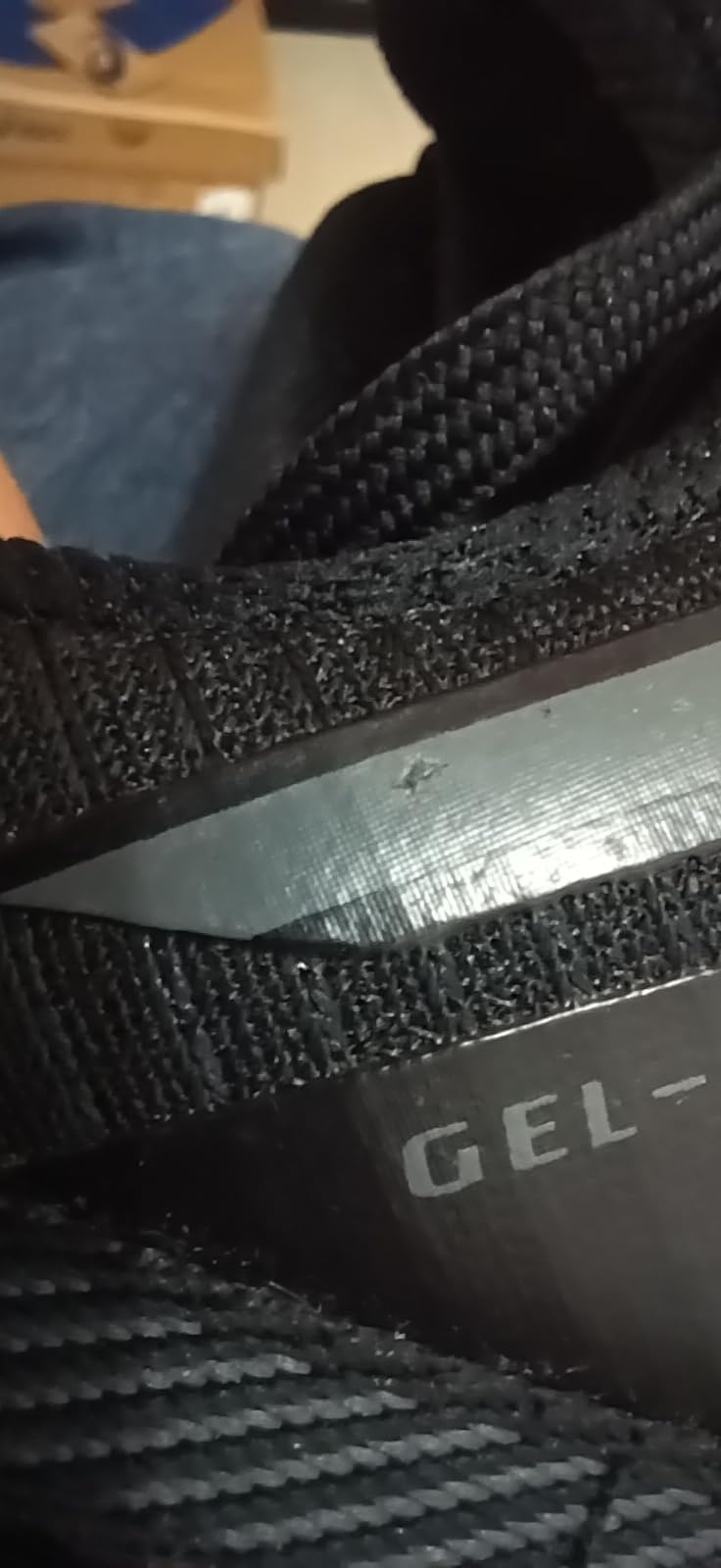
6. ASICS Gel-Venture 11 – the beginner and budget trail option
ASICS Men’s Gel-Venture 11 Running Shoes, 9, Midnight/Grey Blue
Rearfoot GEL cushioning
AMPLIFOAM PLUS midsole
Molded rubber trail outsole
OrthoLite sockliner
+ The Good
- Thick tread grips long walks and light trail
- GEL cushioning smooths rough ground
- X-Wide sizing fits larger feet
- Lightweight and quick on and off
- The Bad
- Runs small
- size up
- Weak arch support
- Soft sole can tire calves
The Gel-Venture 11 is the shoe to recommend to someone who wants to start running on wet trails without committing to a specialist. The molded rubber outsole has a thick tread that buyers report gripping well on long walks and light trail terrain, and the rearfoot GEL with AMPLIFOAM PLUS midsole gives a cushioned ride that tolerates roots and stones better than most entry-level shoes.
Its strongest feature for this roundup is honestly the sizing. The extensive X-Wide range is unusual at this level, and it means wide-footed runners are not forced to compromise between a trail shoe and a sensible fit.
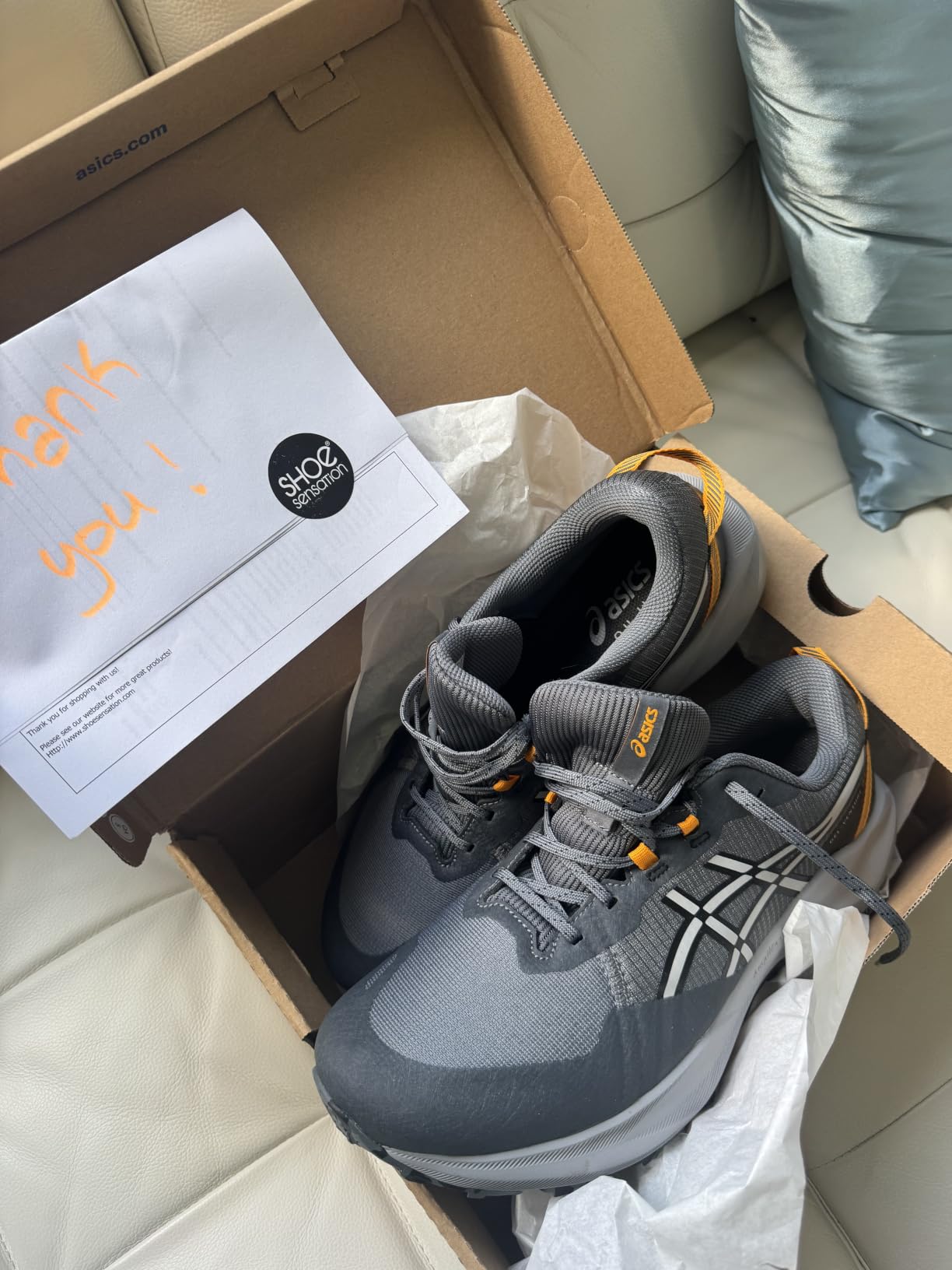
The OrthoLite Hybrid Max Lite sockliner adds moisture management and breathability, and the mesh upper keeps things reasonably ventilated. A solution-dyed sockliner also reduces water use, which is a small sustainability point rather than a performance one.
What you are buying here is a versatile dirt-path shoe rather than a technical mud runner, and buyer feedback reflects that. Reviewers consistently describe it as a comfortable, capable entry-level trail shoe for paths and light terrain, not something they would take on demanding mountain ground in deep mud.
Who the Gel-Venture 11 suits
It suits new trail runners, anyone whose route is more park track and damp bridleway than technical singletrack, and runners who want a shoe they can also wear to the shops. The GEL cushioning makes it forgiving of the odd root or loose stone that would otherwise end a first outing.
If you run in wider feet, the X-Wide options make this one of the few entry-level trail shoes that does not force a choice. Test both widths if you can.
Where it falls short
Sizing is the recurring complaint. Multiple reviewers recommend sizing up, and there are reports of heel slippage in the highest size, so the fit is not as predictable as it looks. Arch support is also described as weak, and the soft midsole is cited as a cause of calf soreness on longer efforts.
On deep, sticky mud specifically, the tread lacks the lug depth and open geometry of a specialist. Treat this as a wet-weather trainer for moderate conditions rather than a bog-crossing tool.
7. New Balance Fresh Foam X Garoé V2 – for mixed road and trail routes
New Balance Men’s Fresh Foam X Garoé V2 Trail Running Shoe, Castlerock/True Red/Slate Grey, 12 M
Hydrohesion wet-grip outsole
Fresh Foam X midsole
AT Tread for road and trail
Toe Protect guard
+ The Good
- Hydrohesion outsole holds grip when wet
- Plush shock-absorbing midsole
- Works on pavement and trail
- Water resistant with wide widths
- The Bad
- Essentially no arch support
- Standard width toe box feels tight
- Weak grip on smooth indoor surfaces
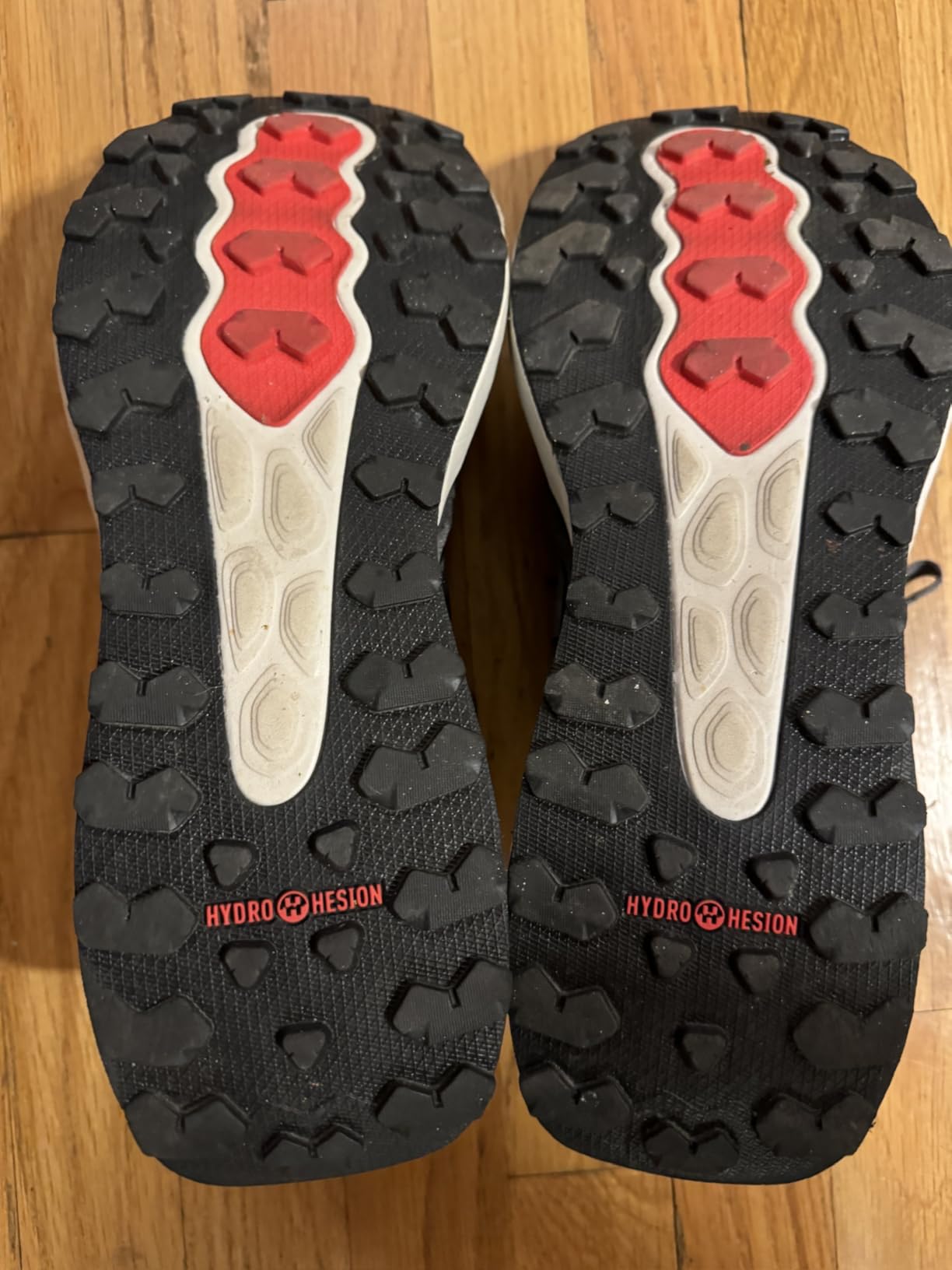
Many muddy routes start with three miles of pavement, and most dedicated mud shoes punish you for that opening section. The Garoé V2 is built differently. Its AT Tread outsole is designed for traction on both paved and off-road surfaces, and buyers report grip that performs very well on trail surfaces without punishing road sections.
Wet grip comes from the Hydrohesion rubber outsole, which is designed to maintain traction in wet conditions, and the shoe is water resistant rather than vulnerable to a soaking. The no-sew upper construction comes in multiple wide widths, which matters more than usual when your feet are cold and swelling.
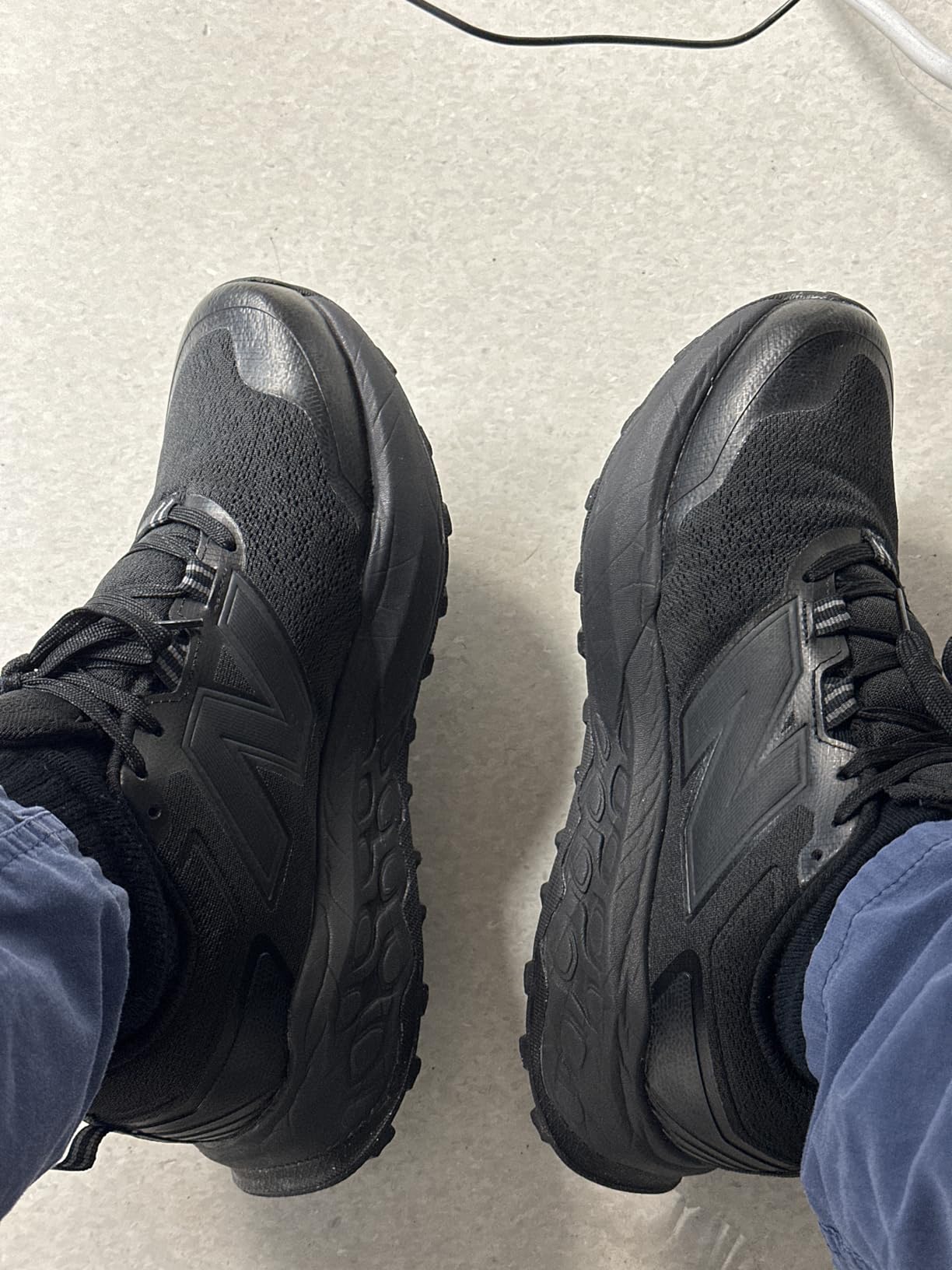
Where it wins clearly is cushioning. The Fresh Foam X midsole is consistently praised as unusually plush and bouncy for a trail shoe, with strong shock absorption and a light, comfortable feel over long outdoor days. For runners who find firm trail midsoles fatiguing, that is a genuine advantage rather than a matter of preference.
Toe Protect technology guards against rocks, roots and debris, and the midsole contains roughly 3% bio-based content. Neither detail is mud-specific, but both add up on technical ground where the foot is landing unpredictably.
Who the Garoé V2 suits
It suits the road-to-trail runner whose route crosses a lot of tarmac, and anyone who wants deep cushioning for long wet days on relatively gentle terrain. If your winter mud is surface slop on rolling paths rather than technical climbing, this handles it comfortably.
It is also a good choice if you want one pair of shoes that works for a wet trail run, a walk and a weekend on grass without changing gear.
Where it falls short
Arch support is essentially absent. Multiple buyers worked around it with inserts, and it is a true neutral shoe, so if you rely on arch support for comfort over distance this will not deliver it. The standard width toe box is also reported as tight, so wide feet should move up to a Wide width rather than merely sizing up.
And like the other shoes here, it is not a deep-mud specialist. Grip on smooth indoor surfaces such as tile is poor, which is a minor point unless you use a treadmill in a gym as part of your winter training block.
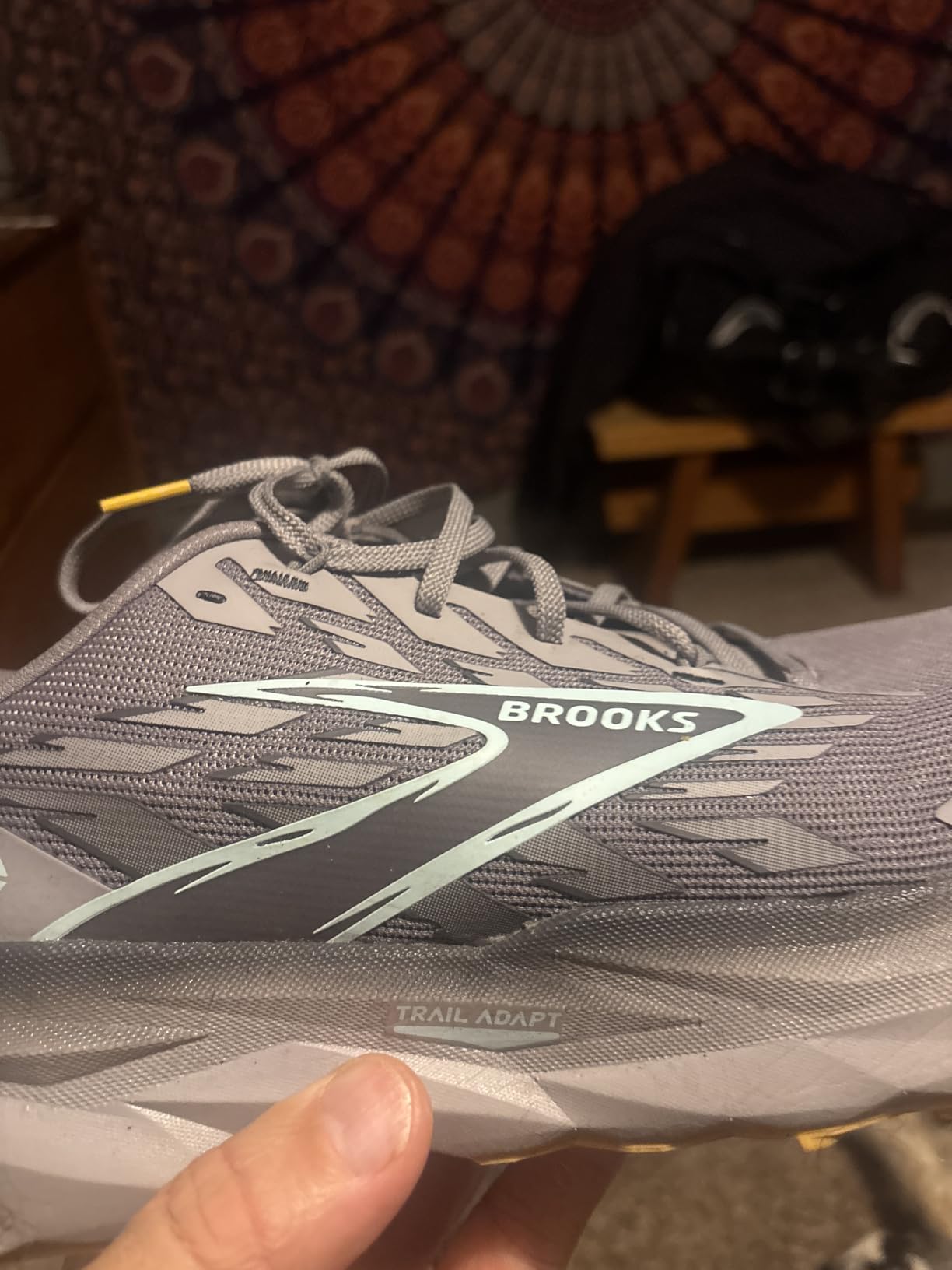
8. Brooks Cascadia 19 – the stable long-day choice
Brooks Men’s Cascadia 19 Mountain Trail Running Shoe – Black/Black/Ebony – 9.5 Medium
TrailTack Green wet-dry outsole
DNA LOFT v3 cushioning
Trail Adapt Rock Shield
Quick-drying air mesh
+ The Good
- Traction in wet and dry uneven ground
- Stable platform limits ankle rolling
- Roomy wide toe box for long days
- Quick-drying upper
- The Bad
- Heavier build than a typical trail shoe
- Lugs only moderately aggressive
- Wide version can feel loose on trail
The Cascadia 19 is built more like a piece of equipment than a race shoe, and for long wet days that is exactly what you want. Reviewers describe it as a monster-truck of trail shoes: more substantial and more stable than lightweight racers, with excellent traction on wet rock and a wide, durable toe box.
The TrailTack Green outsole is made from 25% recycled content and is specified for traction in uneven wet and dry conditions. Stability comes from the updated Trail Adapt System with its articulated Ballistic Rock Shield, and buyers specifically credit the platform with helping prevent ankle rolling.
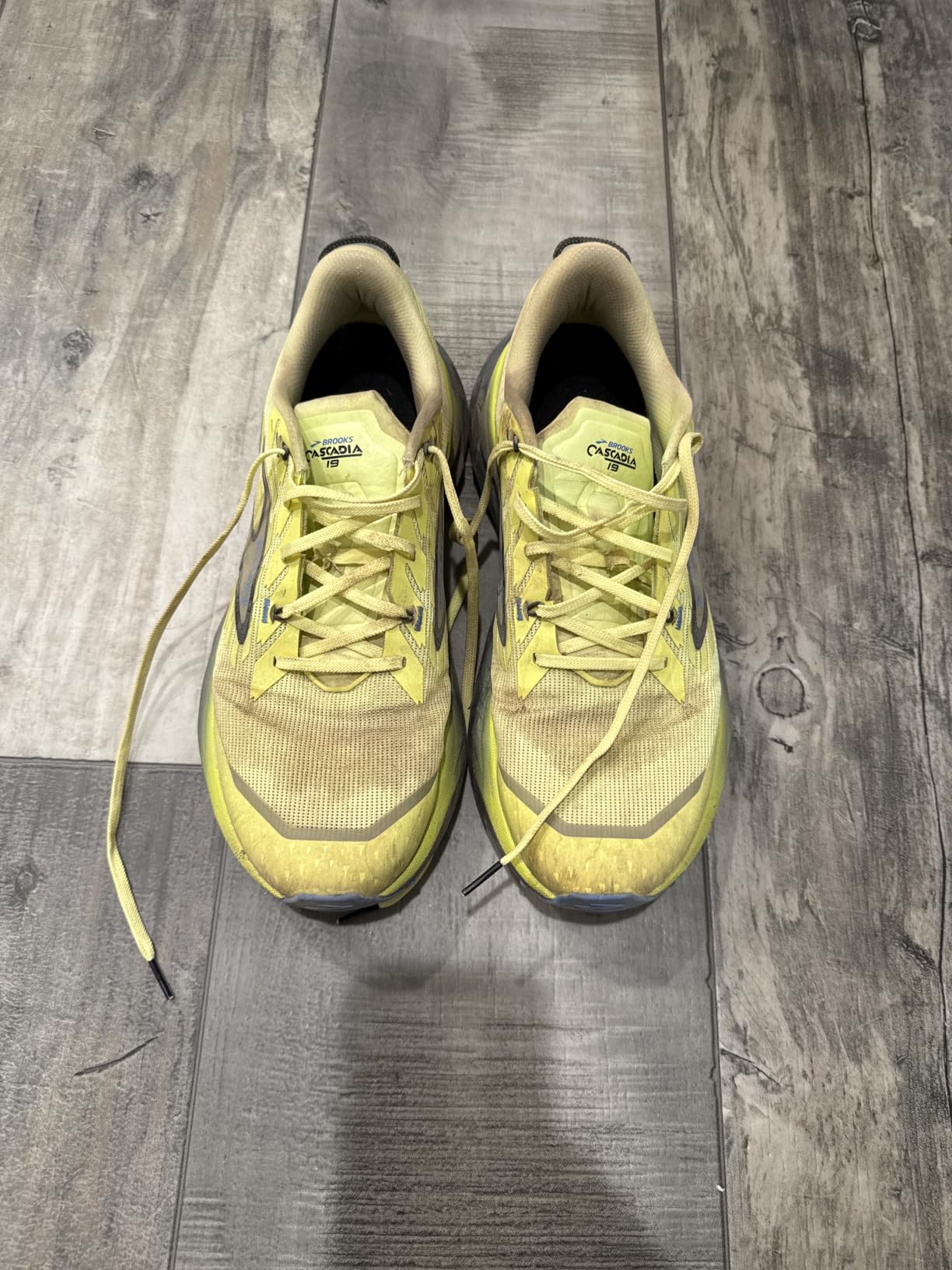
Two details make it a better mud shoe than its weight suggests. The upper is breathable, quick-drying air mesh with 3D print overlays that keep debris out, so the shoe does not stay wet for days after a wet run. And there is a reinforced toe cap and mudguard, which is exactly the part of a shoe that degrades fastest when you are kicking through wet clay every stride.
Thru-hikers in particular rate it highly for durability over multi-day use. The midsole uses Nitro-infused DNA LOFT v3 cushioning in both heel and forefoot, and the product is certified carbon neutral. That combination of recycled outsole rubber, a certified-neutral build and a mudguard is more considered than most rivals put into a wet-season trail shoe.
Who the Cascadia 19 suits
It suits the runner doing long, slow wet miles where foot fatigue and ankle stability matter more than speed. It also suits anyone moving between trail running and fast hiking, because the build handles loaded descents and technical terrain without complaint.
If your wet-weather problems are ankle instability, this is the shoe to try. The stable platform is the distinguishing feature, and it is something almost no racing-oriented trail shoe offers.
Where it falls short
It is a heavier build than a typical trail running shoe and closer to a hiking shoe in feel, which is a real cost when you are running rather than hiking. That weight is the main reason it does not take the deep-mud slot despite excellent wet traction.
Reviewers wanting maximum mud aggression find the lugs only moderately aggressive, and some report that the wide version allows too much movement on trail, with the medium width suiting many feet better. The mid-width is the version to try first if you are between sizes.
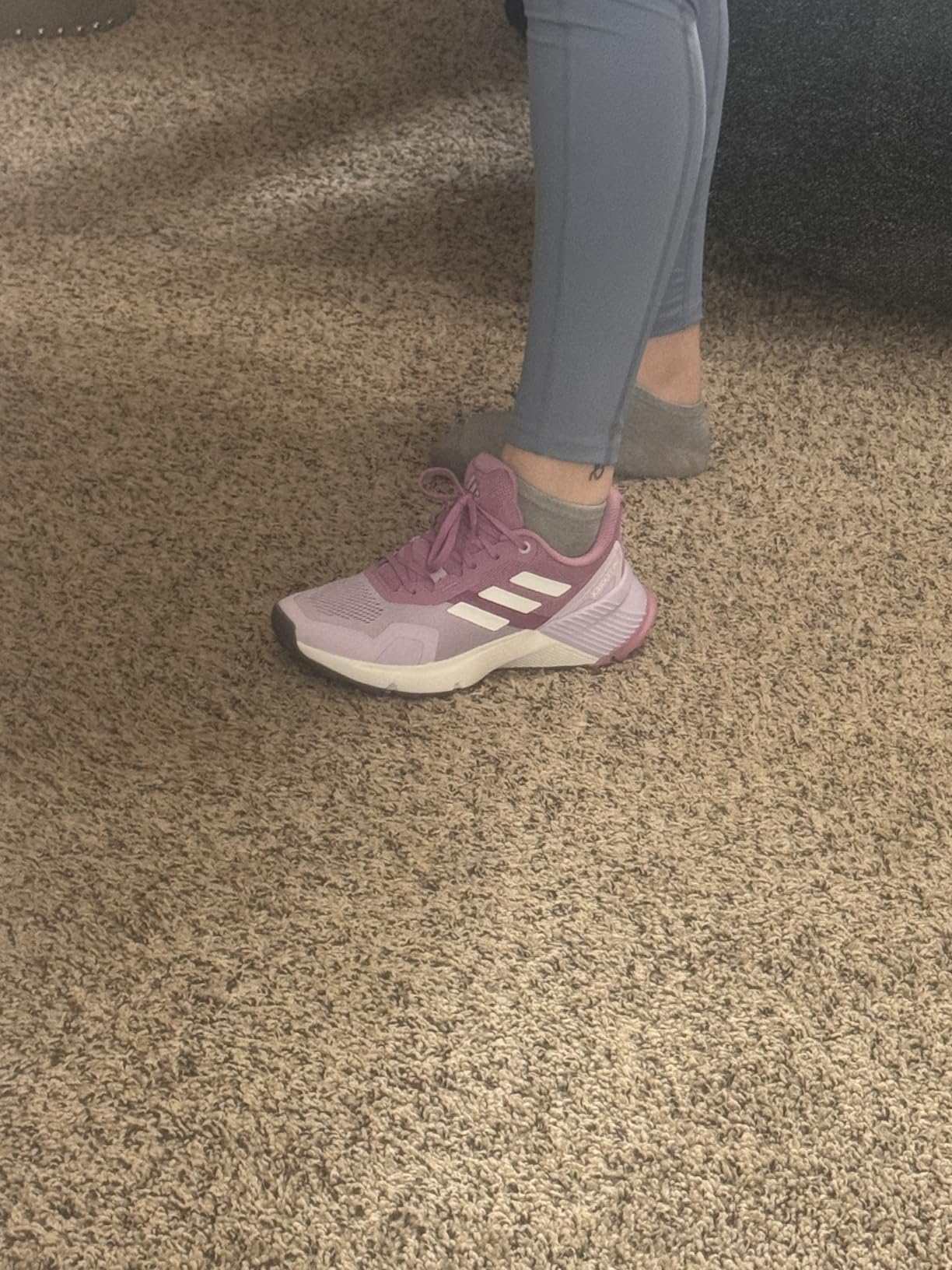
9. adidas Terrex Soulstride Rain.rdy – for women on wet trails
adidas Women’s Terrex Soulstride Trail Running, Wonder Alumina/Blush Pink, 6.5
Traxion multidirectional outsole
Rain.rdy water-repellent build
EVA midsole cushioning
Breathable mesh upper
+ The Good
- Dependable grip on wet and muddy trails
- Very stable underfoot with poles
- Cushioned EVA for long days
- Durable through repeated wet hikes
- The Bad
- Water repellent only
- not waterproof
- Forefoot runs narrow
- Bulky heel adds weight
Finding a properly proportioned women’s mud shoe is harder than it should be, which is why the Terrex Soulstride earns its place. The Traxion outsole maximises grip in all directions with rugged-terrain lugs, and buyers specifically report reliable, non-slippery grip on wet and muddy trails.
Stability is the other headline. Hikers using poles report no foot slip with this shoe, which tells you something useful about how the platform behaves when you are stepping down onto uncertain ground with extra load. The EVA midsole is tuned for step-absorbing, durable cushioning, which works for both long walking days and easy trail running.
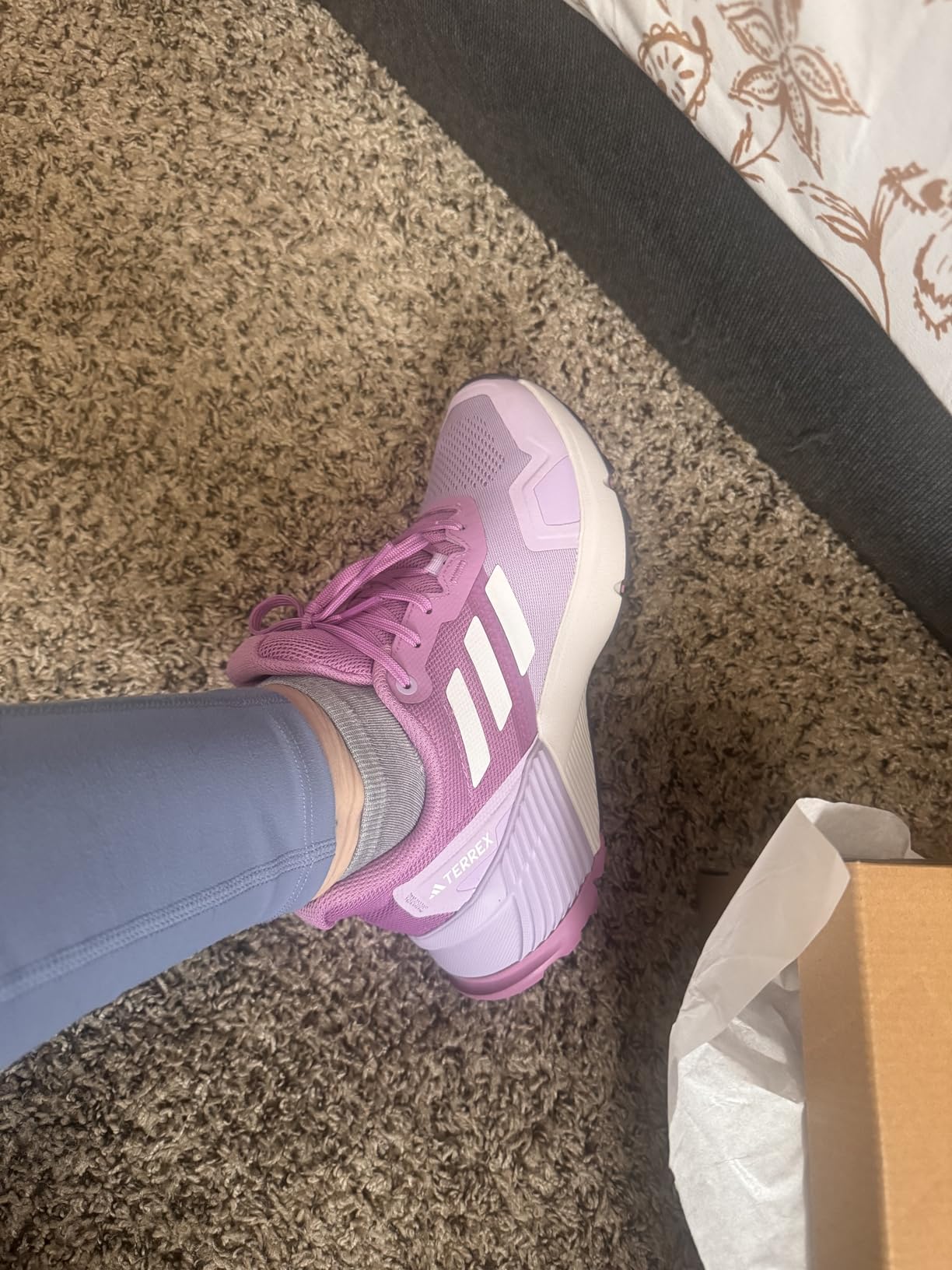
The Rain.rdy construction is water repellent, not waterproof, and one reviewer was explicit about that distinction. Think of it as shedding light rain and wet grass rather than standing in a downpour, and it delivers exactly what it promises.
Durability is the quiet strength here. One long-term reviewer reports a year of sketchy Hawaiian hikes with the shoes still intact, and the breathable mesh upper keeps feet cool. At least 20% of the materials used are recycled.
Who the Terrex Soulstride suits
It suits women who want a properly fitted, well-proportioned shoe for wet paths and trails, and for anyone whose wet-weather activity involves poles or a heavy pack. The stable platform and cushioned midsole make it a strong fast-hiking option that also runs well on gentle trail.
For runners who want a firmer, flatter feel, the EVA midsole is a step up from a minimalist racing flat. If you need a women’s-specific trail breakdown, our guide to the best trail running shoes for women goes deeper on fit across brands.
Where it falls short
Being water repellent rather than waterproof means this is not the shoe for sustained rain, snow or stream crossings. It manages surface wetness well and nothing more, and the reviews are refreshingly honest about that boundary.
Some wearers find the forefoot runs narrow and size up, while others report a bulky heel that adds weight compared with sleeker trail shoes. The cushioning is also firmer and less plush than a premium trail shoe, so it will not feel as forgiving on very long days.
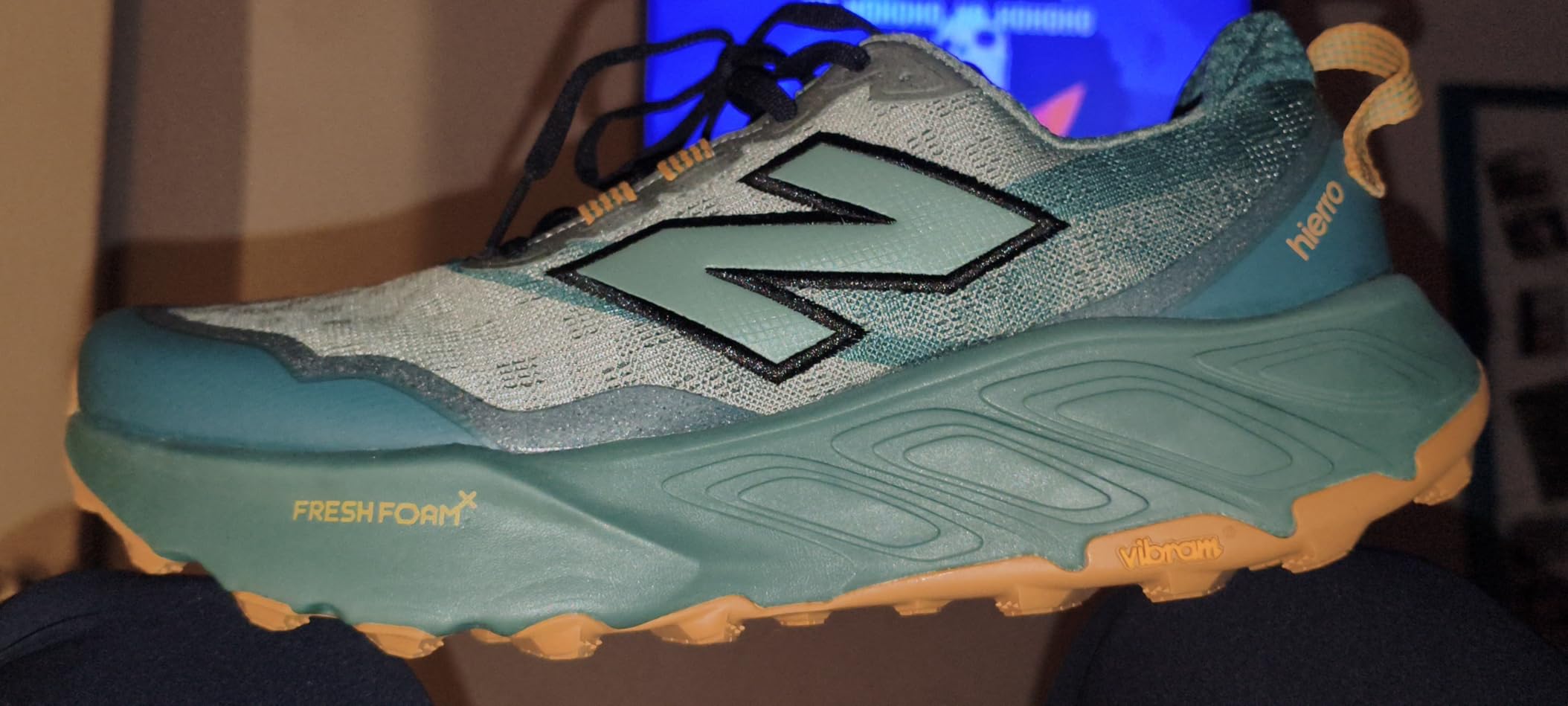
10. New Balance Fresh Foam X Hierro V9 – the explicit 6mm lug gripper
New Balance Men’s Fresh Foam X Hierro V9 Trail Running Shoe, Dark Juniper/Black/Dried Apricot, 12 M
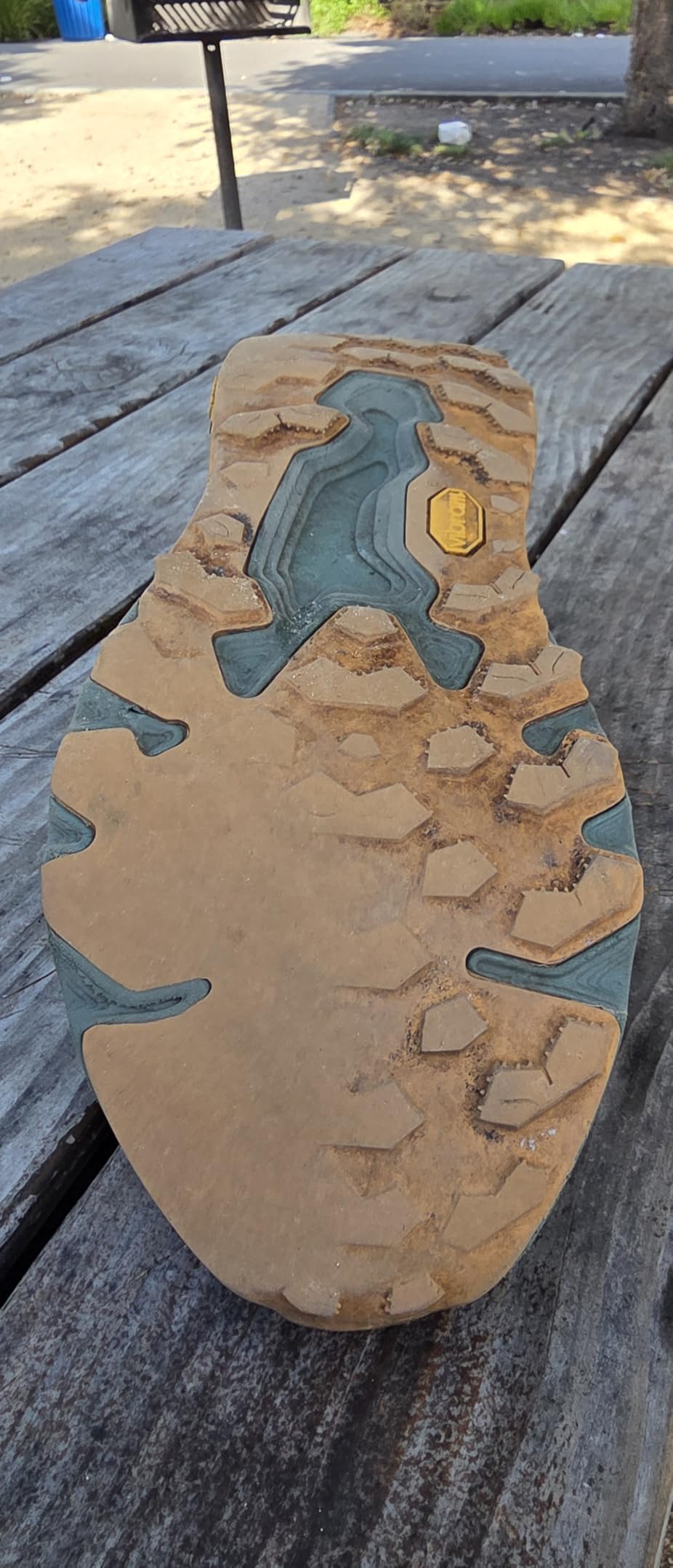
Vibram MegaGrip outsole
Deeper 6mm Traction Lugs
Dual-density Fresh Foam X
Toe Protect and gusseted tongue
+ The Good
- 6mm Vibram MegaGrip grip on wet ground
- Dual-density foam blends plush and stable
- Toe cap shields against roots
- Gusseted tongue blocks dirt and pebbles
- The Bad
- Heavier build than lighter trail shoes
- Lowest average rating of the ten picks
Of the ten shoes here, this is the one with a lug depth published in the specifications, and it lands in the range that matters. The Vibram MegaGrip outsole uses Traction Lug technology with deeper 6mm lugs, specified for grip on wet and dry terrain. If you want a spec you can quote rather than infer, this is the one.
The midsole is a dual-density Fresh Foam X — a soft top layer over a firmer base — which is a sensible design for wet technical ground, since the firmer layer resists the twisting that comes with a foot sliding around inside the shoe. The reinforced Toe Protect cap guards against rocks, roots and debris, and the engineered knit upper has a gusseted tongue that blocks dirt and pebbles.
The lacing is worth a specific mention for mud. This shoe uses a traditional lace-up closure rather than a quick-lace or elastic system, and reviewers report that it stays locked on descents and technical terrain. When your foot is sliding inside the shoe on a wet descent, a conventional locked lace pattern with a gusseted tongue is a real advantage over a loose-fitting slip-on.
Extensive wide and XX-Wide sizing is available, which is a genuine advantage in a mud shoe because swelling feet need room. The shoe carries more weight than most dedicated trail running shoes, which you feel over a long muddy outing.
Who the Hierro V9 suits
It suits the runner who wants a named, measurable mud specification and a premium rubber compound, and who is running technical wet ground rather than open moorland. The Vibram MegaGrip compound and 6mm lugs make it a good choice for wet rock and root as well as mud, since the compound adds friction on surfaces lugs cannot grip.
Wide and XX-Wide runners are well served here, and the dual-density midsole is forgiving enough for long days without feeling unstable on descents.
Where it falls short
It carries the lowest average rating of the ten picks at 4.3, with a higher share of one-star reviews than the other shoes, despite strong technical specifications. That is worth taking seriously: the hardware is right, but owner satisfaction is not where it should be.
The weight is the other issue. This is a substantial shoe, and that matters on a long muddy run where every extra ounce on the foot is work you did not sign up for. If you want a lighter mud specialist for distance, look further up this list.
How to Choose Trail Running Shoes for Muddy Trails?
There is no single best trail running shoe for mud, because mud is not one thing. The framework below is the fastest way to narrow ten options down to one or two, and it is organised around the three questions every mud runner is actually asking: how deep is the mud, do you want waterproofing, and does the shoe fit your foot.
If your issue is fit rather than traction, the recurring problems runners bring to us are narrow midfoot and heel instability. Guides on running shoes for flat feet and running shoes for overpronation cover the stability side of the equation, which matters as much as tread once your foot is wet and sliding.
Lug depth for mud: what the millimetres mean
Lug depth is the number quoted most often, and the number most often oversold. Deep lugs are not automatically better; they are better for a specific kind of ground. Here is how the ranges actually behave.
3mm to 4mm lugs are general trail territory. They handle hardpack, root and rock perfectly and provide next to nothing in soft ground, because clay simply closes over a short lug with no gap for anything to escape through.
5mm to 6mm lugs are the wet trail sweet spot. This is enough depth to find grip in damp, loamy ground and in thin surface slop, and enough of a gap between lugs to let material move rather than compact. The aggressive mid-range tread used by many trail specialists sits in this band.
7mm to 8mm lugs are deep mud territory. At this depth the lug penetrates surface slop to reach firmer ground underneath, and the wide spacing allows material to be kicked clear on each stride. This is the range most mud specialists operate in.
10mm to 12mm lugs are fell, snow and winter running territory. Almost nobody needs these for trail running, and they feel wrong on anything but deep soft ground.
The number most worth remembering for this topic is 6mm to 8mm. Below that you are hoping for the best; above it you are paying for capability you will rarely use.
Outsole compounds: sticky grip versus long-lived rubber
Compound matters as much as lug depth, and it is where the real trade-off lives. Soft, sticky rubbers such as Vibram MegaGrip, Inov8 StickyGrip and La Sportiva FriXion deform against the ground and generate far more friction on wet rock, wet root and slick clay than any hard rubber can.
The cost is lifespan. A soft compound that grips wet ground aggressively is a compound that wears through quickly, particularly on rock and pavement, and this is exactly the complaint that appears repeatedly about sticky-rubber trail shoes. The Speedcross 6 and the Lone Peak both fall into this category in practice, whatever the compound branding says.
Harder, more durable rubber will outlast a soft compound by a wide margin on mixed surfaces. It will also disappoint you in deep mud, where friction rather than durability is what stops you sliding. Decide which problem you actually have before you choose.
Shedding mud versus gripping it
This is the distinction that mud runners make instinctively and that most buying guides miss entirely. There are two separate design goals in outsole geometry, and they pull in opposite directions.
Shedding geometry uses tall, sharply defined lugs with wide gaps between them. The gaps give packed material somewhere to go, and the shape of each lug acts like a ramp that pushes mud off as your foot rolls forward. Multidirectional lugs arranged in a chevron or triangular pattern are common on this kind of outsole.
Gripping geometry uses flatter, wider, more continuous rubber surfaces with shallow siping. It maximises contact area on slick rock and root but offers nowhere for mud to escape, so clay packs into it.
Runner communities consistently describe this in exactly these terms. A runner on r/Ultramarathon said they had been using the Saucony Peregrine ST because those shoes shed mud better than the Speedcross, and that mud shedding was their main criterion for a mud shoe. Another, on r/trailrunning, said the Altra King MT is great in mud because the really aggressive tread helps kick the mud off as you run.
That is a real and useful distinction, and it is why two shoes with similar lug counts can behave completely differently in slop. Ask which one you need: if your mud is wet and sticky, shedding geometry wins. If it is slick rock and wet root, gripping geometry wins.
Waterproof or draining: what actually happens when you get wet
The honest answer is that both sides are right, in different conditions, and the argument is usually fought in bad faith.
Waterproof helps in three situations: dew on a cold morning, light drizzle, and shallow puddles where the water level sits below the top of the shoe. For a short, cool run, a membrane keeps your socks dry and your foot marginally warmer, and runners report genuinely comfortable, waterproof performance over long mountain days in these conditions.
Waterproof fails in one situation that matters a lot: sustained rain, where you eventually walk through a puddle, splash through a ford, or simply run long enough for water to enter at the collar. Once water is in, a membrane has no exit route. You get the fishbowl effect, where your foot is exactly as wet as it would have been without the membrane, but heavier, warmer and now drying far more slowly because nothing is escaping.
A fast-draining mesh upper does the opposite. It does nothing to stop the water getting in, and everything to help it get out, so the shoe returns to a wearable weight within minutes. The cost is that on a cold day, wet mesh feels miserable and your feet stop warming themselves.
So the decision rule is straightforward. Cold and short, choose waterproof. Warm and long, choose draining. Mild and short, choose whichever you prefer, because the difference will not matter.
One further note from the trail running community: a waterproof shoe paired with ankle gaiters is a commonly recommended setup for fresh snow and winter trail, where the gaiters take over the water ingress problem and let the membrane handle the cold.
How deep is your mud? A severity framework
This is the question that actually determines your pick, and it is the one nobody asks you at the shop.
Surface slop on rolling singletrack. Thin, wet, slippery mud over firm ground. A 5mm to 6mm lug with a wet-rated compound handles this comfortably. Look at the TrailTack, Adapt Trax and Hydrohesion outsoles in this list.
Surface mud on steep climbs and descents. The same depth of mud, but the surface angle makes it far more dangerous. Here you want mid-foot lockdown, a lacing system that will not loosen, and a wide toe box so your foot does not slide forward. The Garoé V2, the Konos TRS and the Cascadia 19 all suit this.
Deep sticky clay that grabs at the shoe. Clay that closes over the lug and holds. You need 6mm to 8mm lugs with wide gaps and a shedding geometry. The Speedcross 6 is built for exactly this.
Bog and peat. Soft, deep, and genuinely punishing. Very few trail running shoes are designed for this. The most honest advice is that technique matters more than tread: short steps, high cadence, and accepting a slower run. A shoe that sheds mud well, such as the Speedcross 6, at least keeps its tread pattern intact.
Stream crossings and water above the shoe. Nothing on this list saves you. The shoes fill anyway. Use gaiters if you plan to run rather than walk, and expect to be wet.
Wet winter trail and fresh snow. A waterproof construction becomes clearly worthwhile, because the cold is what you are protecting against. The XA PRO 3D and the X Ultra Pioneer Mid GTX both make sense here, and gaiters complete the setup.
Fit and sizing for muddy trails
Fit is where mud shoes most often fail their owners, and the complaints are remarkably consistent across brands. Runs small is the single most repeated sizing warning, appearing for Salomon, ASICS, New Balance and adidas models alike in the buyer feedback.
Wet feet swell. Toe-offs drag across the top of the toe box, and a snug forefoot that felt fine in the shop becomes a blister generator on the tenth muddy descent. If a shoe runs small, size up rather than hoping.
Toe box width deserves particular attention. A wide forefoot is the most common reason mud specialists get rejected, because the lugs and sidewalls are often aggressively shaped and leave little room across the ball of the foot. The Altra Lone Peak 9, the ASICS Gel-Venture 11 and the New Balance Hierro V9 all offer substantial wide and X-Wide or XX-Wide options, which makes them one of the safer bets if you already know you have a wide foot.
Midfoot lockdown matters more in mud than the toe box does. A foot that slides forward inside the shoe loses the stable platform the outsole was designed to deliver. Quick-lace systems such as the Speedcross 6’s are the fastest insurance, and conventional locked lacing with a gusseted tongue, as on the Hierro V9, is a solid alternative.
When shoes stop being the answer
There is a depth at which footwear choice stops mattering, and knowing it saves you a lot of money and disappointment. If the water is deeper than your shoe, the shoe fills. That is physics, not design failure.
Past that point, the answers are all technique and equipment rather than outsoles. Keep steps short and high so you are placing the foot rather than sliding it. Use poles on descents for extra stability in the places you would otherwise load your full weight onto a sliding sole. Retie your laces in a way that takes seconds, not thirty, using a quick-lace system. Consider ankle gaiters if the water is above the collar. And if the mud is deep enough to stop you on every stride, walk the worst sections instead of trying to run them.
None of this is failure. Running in mud is hard, and knowing where the limits of the shoe are is part of the skill.
How to clean and de-clog muddy shoes after a run
Clogging is the number one in-use traction failure, and it is completely preventable. A shoe that enters the trail with open, deep lugs leaves it with a flat mat of packed clay, and no amount of care after that run will bring the tread pattern back.
The habit that works is simply to clear the lugs before the mud dries. Knock the soles together against a firm surface while the mud is still wet, or scrape the tread through long grass. Mud that has dried into a tread pattern has bonded to the rubber and needs a brush rather than a knock.
After that, rinse the shoes with cold water. Avoid hot water and avoid a washing machine, since heat softens the midsole and the agitation destroys foam and adhesives. Turn the tongue out and pull the collar open so air can move through the shoe.
Dry them at room temperature, out of direct sun, with something inside to hold the shape. A radiator or a car dashboard will warp the midsole and shrink the upper. Loosen the laces fully so the panels can flatten out as they dry.
Clean the outsole grooves with an old toothbrush while the mud is still soaking off, and pay attention to the gaps between lugs rather than the tread tips, since that is where the packed material sits.
Finally, check your lugs periodically through the season. Soft, sticky compounds wear through unevenly and can go from good to useless faster than a hard rubber. If your lugs are rounded rather than sharp, the shoe has already stopped gripping mud properly, whatever the paperwork says.
Frequently Asked Questions
What are the best trail running shoes for muddy trails?
Look for lug depth of 6mm to 8mm with wide gaps between lugs, and a soft sticky outsole compound such as Vibram MegaGrip or Inov8 StickyGrip that sheds slop. The Salomon Speedcross 6 is our top pick for deep mud, while the Salomon XA PRO 3D is the better all-round choice across mixed wet terrain. An upper that drains beats a waterproof membrane on long, warm runs.
What are the best trail shoes for mud runs?
For dedicated mud running, prioritise lug depth and open lug geometry over cushioning. The Speedcross 6 leads on deep and sticky mud, the New Balance Hierro V9 specifies 6mm Vibram MegaGrip lugs, and the Altra Lone Peak 9 is the pick if you need a wide toe box and a quick-draining upper. Clear the lugs after every run, since clogging is what actually ends traction.
What trail running shoes are best for wet conditions?
For wet rock, wet root and slick clay, grip comes from the rubber compound as much as lug height. Shoes with wet-rated outsoles such as the Brooks Cascadia 19 TrailTack, the Columbia Konos TRS Adapt Trax and the New Balance Garoé V2 Hydrohesion are all built for wet and uneven ground. For cold and short runs, a waterproof construction is worth it; for long warm runs, choose a draining upper.
What are some good shoes for muddy terrain?
It depends on how deep the mud is. Thin surface slop on firm ground needs 5mm to 6mm lugs. Deep sticky clay that grips the shoe needs 7mm to 8mm lugs with wide gaps so material is shed rather than packed. If the water is deeper than your shoe, no outsole will help and gaiters, short steps and a quick-lace system are what actually change the outcome.
What kind of shoes should I wear for a mud run?
Wear the most aggressively lugged shoe you own that is not too narrow for your foot, and make sure it fits properly. Mud shoes commonly run small, so sizing up prevents the toe-blisters that end a lot of runs early. Keep steps short and high on descents, clear the lugs after every run, and save your hardest grippiest pair for race day rather than wearing it out on weekly mileage.
What are the best shoes for hiking muddy trails?
Hiking and trail running overlap heavily in mud, and the same lug depth rules apply. The Brooks Cascadia 19 and the Salomon XA PRO 3D are the stronger hiking choices here, offering stability, toe protection and quick-drying uppers for long wet days. The adidas Terrex Soulstride is also a solid fast-hiking option with dependable wet traction. For hiking, a waterproof construction is more defensible than it is for running.
Should I buy waterproof trail running shoes for mud?
Waterproof is worth it for cold, short runs in rain, dew or fresh snow, and for ankle-height water. It fails on long warm runs, because water eventually gets in and the membrane has no exit route, leaving your foot just as wet but heavier. The answer for a full winter of training is usually a fast-draining non-waterproof shoe, paired with gaiters when it gets genuinely cold.
The Bottom Line for Muddy Trails in 2026
The best trail running shoes for muddy trails come down to one number and one material: 6mm to 8mm of lug depth, with wide gaps, in a soft sticky compound. Everything else is fit and personal preference. Get those two right and the shoe grips; get them wrong and no amount of cushioning will save a run on a wet descent.
For most people, the Salomon XA PRO 3D is the pick because it works across more kinds of wet ground than anything else in this roundup, comes with genuine waterproof protection, and is built to last. If your mud is deep and sticky rather than surface slop, the Speedcross 6 is the better tool, and runner communities have been recommending it for exactly that condition for years. If you need a wide toe box, a quick-draining upper and a roomy fit, the Altra Lone Peak 9 covers that gap better than any other mud-capable shoe here.
Then match the shoe to the condition rather than the other way round. Surface slop, deep clay, bog, and ankle-deep water are four different problems, and the framework above tells you which one you actually have.
Finally, do the unglamorous work. Clear your lugs after every run, size up if the shoe runs small, and stop expecting an outsole to solve a problem that needs technique. Mud running is a skill, and the right shoe just makes it a slightly less expensive lesson. If you want to document those conditions yourself, our guide to the best trail cameras covers capturing the kind of weather footage that helps you review a route properly.