
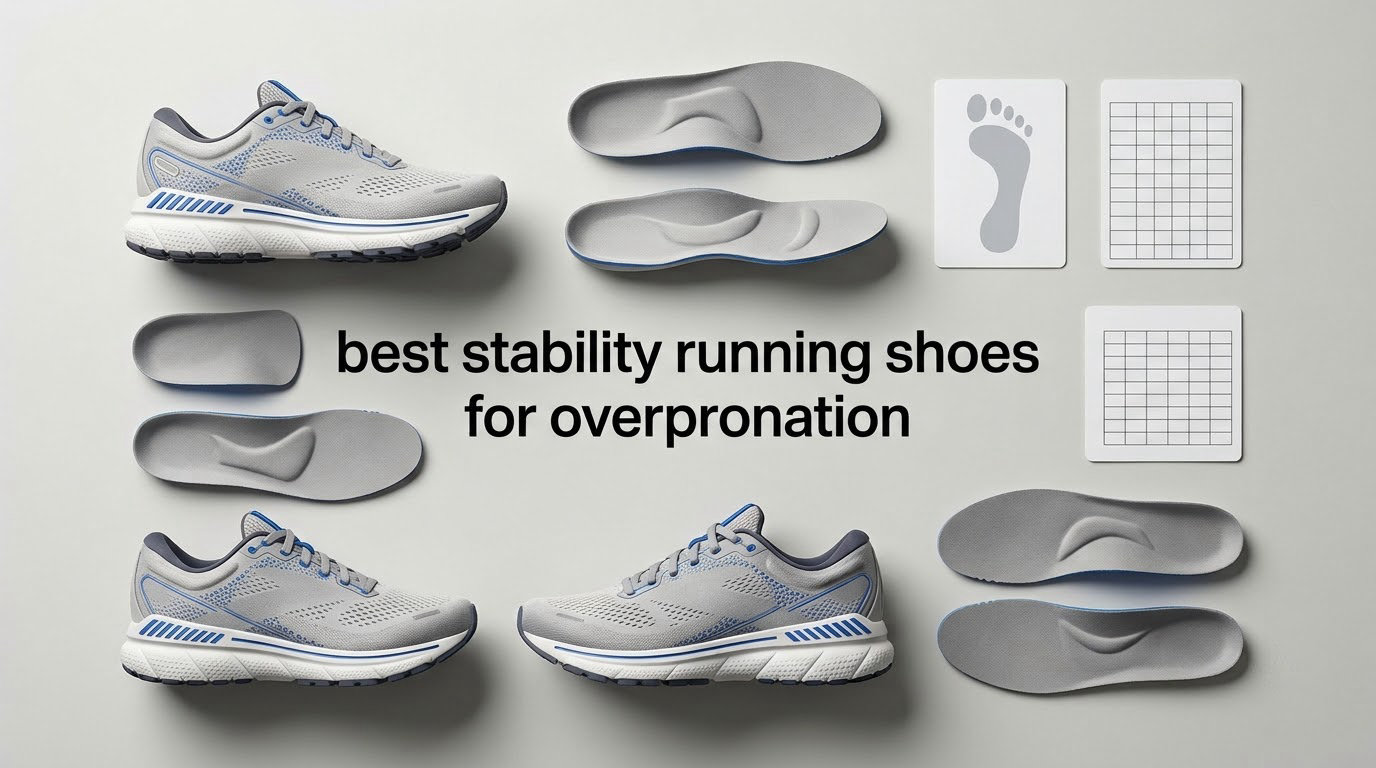
Stability shoes used to have a reputation problem. They were heavy, rigid and shaped like a brick, and most runners assumed that if you needed one you had failed at something. That stigma is mostly out of date, and it is exactly why the search for the best stability running shoes for overpronation produces so much bad advice online.
Here is the short version. Overpronation is the inward roll of your foot after it lands. A stability shoe resists that roll using a stiffer section of foam, a firmer wedge on the inside of the midsole, a wider platform, or foam walls that only activate when you drift off line. Modern versions of that idea are light, smooth and, in several cases here, barely noticeable while you run.
We put eleven of the current-generation options through their paces, read the review data closely and mapped each one to the type of overpronator it actually suits. If you want the wider picture on foot shape first, start with our guide to running shoes for overpronation, then come back here for the specific fits.
This roundup covers road running and walking shoes, in men’s and women’s fits, across mild through severe overpronation. Everything below is based on published specifications and the aggregate review record for each shoe, not on a guess at how they feel.
Top 3 Picks From This Roundup for October 2026

Brooks Adrenaline GTS 25
- › GuideRails holistic support
- › Nitrogen-infused DNA LOFT v3
- › Widths Narrow to X-Wide
- › Certified diabetic shoe

New Balance Fresh Foam X…
- › Fresh Foam X midsole
- › Stability-oriented build
- › Widths Narrow to X-Wide
- › Durable rubber outsole

Saucony Hurricane 24
- › PWRRUN PB dual cushioning
- › Center Path Technology
- › Higher sidewalls
- › Full-coverage traction
The Best Stability Running Shoes for Overpronation in October 2026
Every shoe below made the cut on stability mechanism, review volume and how honest the criticism is. We flag the fit risks that cause returns — narrow toe boxes, shoes that run small, width confusion — because that is where most stability purchases go wrong.
| PRODUCT MODEL | KEY SPECS | BEST PRICE |
|---|---|---|
|
|
Check Latest Price |
|
|
Check Latest Price |
|
|
Check Latest Price |
 |
|
Check Latest Price |
 |
|
Check Latest Price |
 |
|
Check Latest Price |
 |
|
Check Latest Price |
 |
|
Check Latest Price |
 |
|
Check Latest Price |
 |
|
Check Latest Price |
 |
|
Check Latest Price |
Stability Shoes and Orthotics: Do You Need Both?
Sometimes, yes — and more often than not, one cancels out the other. A strong medial post plus a rigid orthotic can leave you with an arch that is supported from two directions and a shoe that feels wrong. If your podiatrist has prescribed orthotics, choose a shoe with a removable sockliner and enough midfoot volume, and let the orthotic do the correcting.
Two picks in this list are explicitly built for that. The Brooks Beast GTS 26 has a roomy engineered mesh upper designed to accommodate orthotics, and the Brooks Ariel GTS 26 has a roomy toe box that holds an in-shoe brace comfortably — one reviewer describes exactly that use. The ASICS Gel-Kayano 32 ships with an OrthoLite X-55 sockliner, which is a standard foam sockliner rather than a deep-volume cavity, so check with your provider before forcing a full-length orthotic under it.
If your orthotics do not fit in your current shoes, the problem is almost always volume rather than length. Take the orthotic out of the shoe, stand on it indoors, and check the fit before you go shopping. Then buy for the orthotic, not for the marketing.
1. Brooks Adrenaline GTS 25: The Dependable All-Rounder
Brooks Mens Adrenaline GTS 25, Primer Grey/Ebony/Jasmin 9.5 Wide
GuideRails support system
Nitrogen-infused DNA LOFT v3 midsole
Listed weight 1.5 pounds
PDAC A5500 certified
+ The Good
- Widest width range in the roundup with Narrow Wide and X-Wide options
- Reviewers report reduced foot arch and lower-back pain on long days on foot
- Firm support without an intrusive feel
- Durable outsole that holds up to years of daily wear
- Many owners were pointed to it by a podiatrist
- The Bad
- Midsole is softer and squishier than the previous GTS 24
- Lace-up closure only and easy to pull too snug
- Limited color selection in wide sizes
This is the shoe we come back to. Across a 4.5 average from more than 2,400 reviews, the recurring theme is not excitement about foam chemistry — it is that people stopped hurting. Multiple owners mention a podiatrist recommending it, and the specific complaints of plantar fasciitis, flat-foot pain and sciatica-related discomfort come up repeatedly in the review text.
What makes it work as a mild-to-moderate corrector is GuideRails. The system supports your natural motion path while keeping excess movement in check, which means it does not jolt your foot into position the way a hard post does. You can feel it working without feeling corrected.
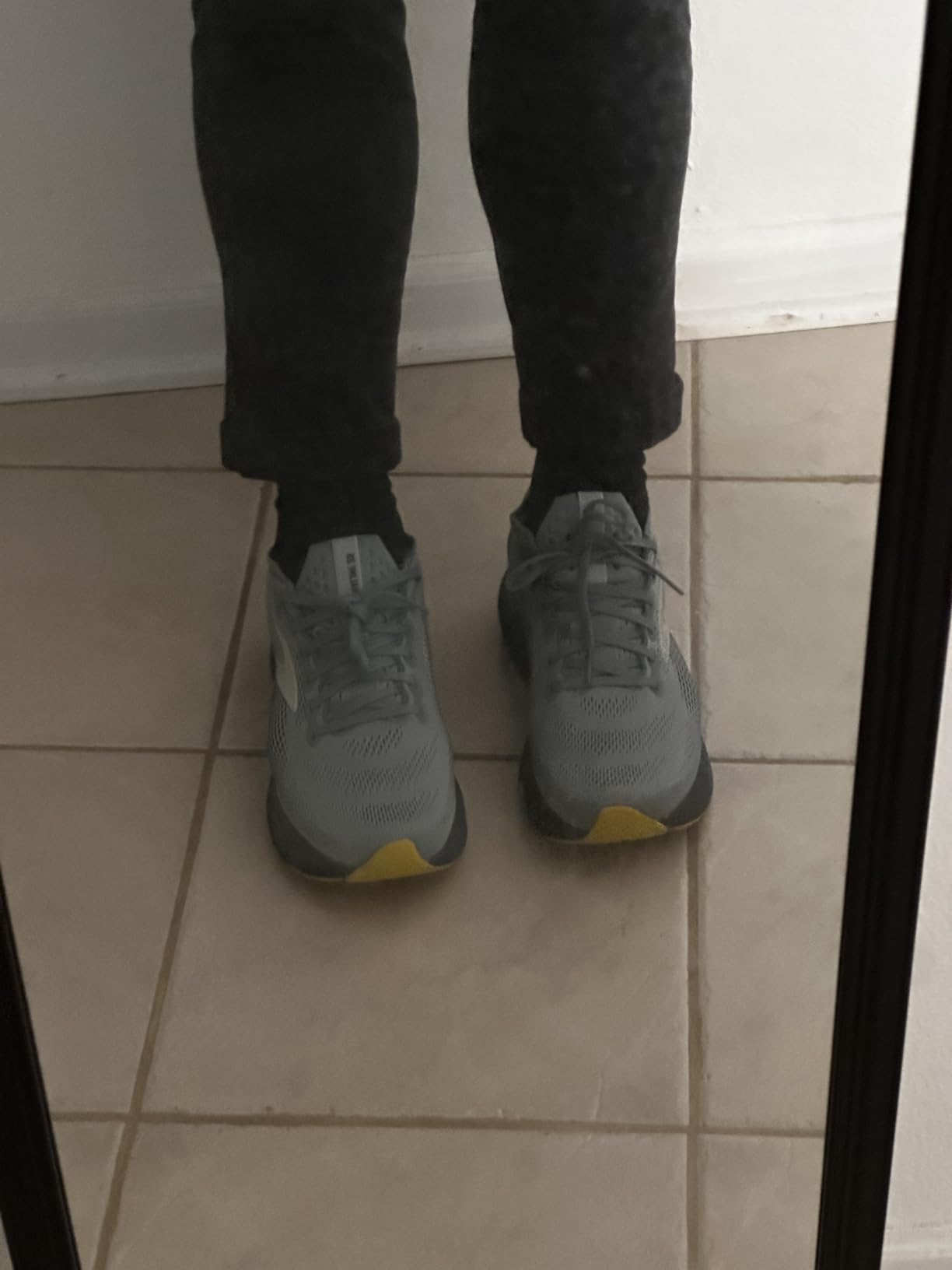
It is also a certified PDAC A5500 diabetic shoe with an APMA Seal of Acceptance, which matters more than it sounds if you are logging long hours on concrete. The engineered mesh upper and flat-knit collar give you structure without pinching, and the outsole and midsole are shaped together to keep transitions smooth.
The real drawback is the softness. Reviewers comparing it to the GTS 24 describe the newer midsole as squishier, and a few say the support is less noticeable than they expected. Several also note that with a lace-up closure only, it is easy to pull the shoe too tight and stay that way.
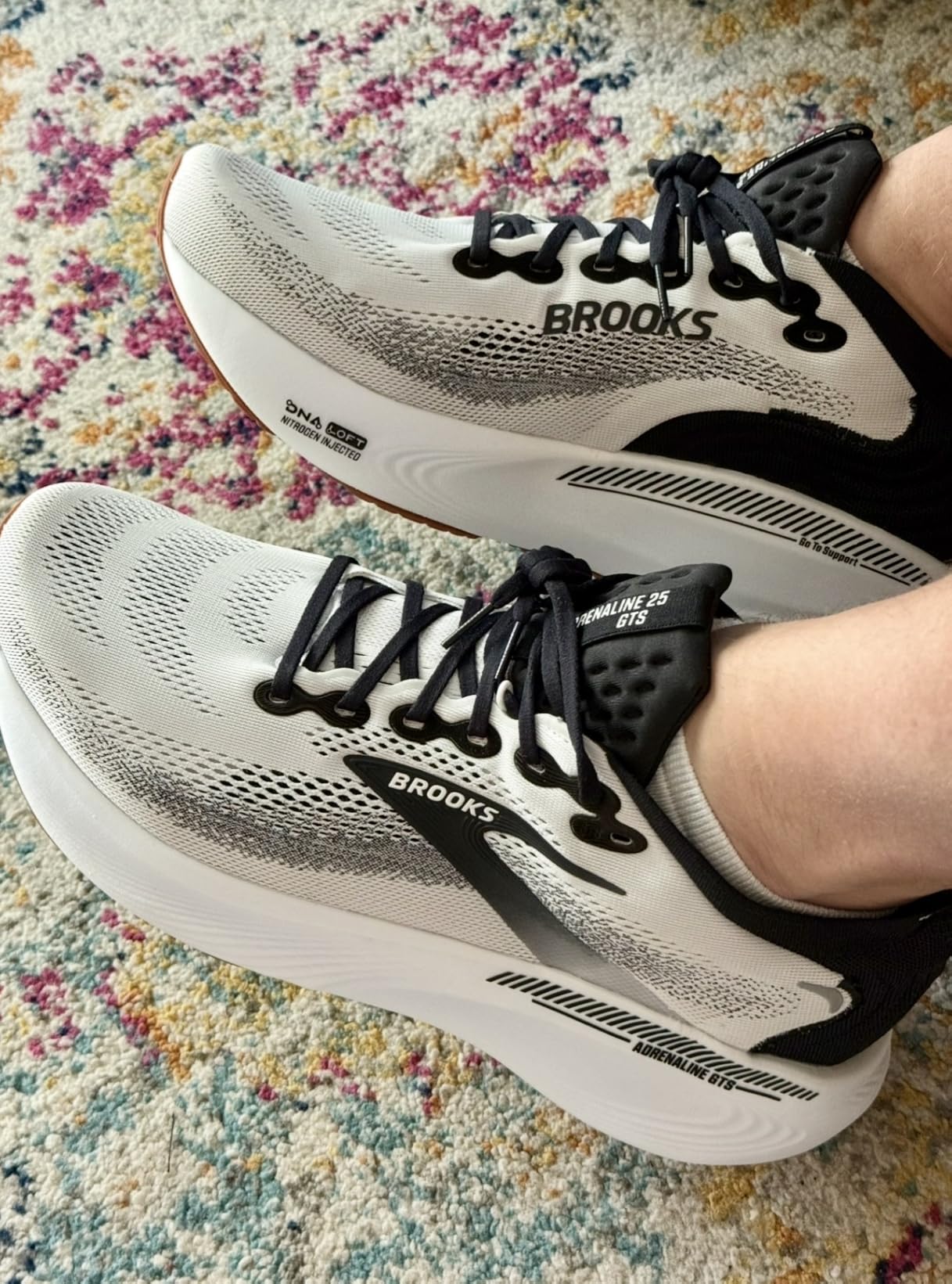
Who this shoe suits
It suits mild to moderate overpronators who want one shoe for daily miles, walking and standing work, and who would rather not think about it. The width range from Narrow to X-Wide is the strongest in this roundup, which makes it a safe recommendation for feet that are hard to fit.
It is also a good first stability shoe if you are nervous about the category. Nothing about the ride is dramatic, and if you later decide you need firmer correction, you will know the difference rather than guessing.
Where it falls short
It falls short for severe overpronators who need a real post under the arch, and for anyone chasing a light, fast feel on tempo days. If your old shoes show a heavily scuffed outer edge and your arch collapses on contact, step up to the Beast GTS 26 instead.
Color choice in the wide sizes is also thinner than in standard widths, which matters if you are fussy about a specific pair.
2. New Balance Fresh Foam X 860 V14: Cushion With a Wide Safety Net
New Balance Men’s Fresh Foam X 860 V14 Running Shoe, Slate Grey/Dream State/Ginger Lemon, 15 M
Fresh Foam X midsole
Stability-oriented construction
Durable rubber outsole
Listed weight 3 pounds
+ The Good
- Soft well-cushioned ride for daily training
- Widths from Narrow to X-Wide
- Long-established line with a large repeat-buyer base
- Construction explicitly aimed at overpronation
- The Bad
- Fit runs a half size small for some wearers
- Carries a maximum-cushion feel that some runners find heavy
- Feels large or boxy on foot
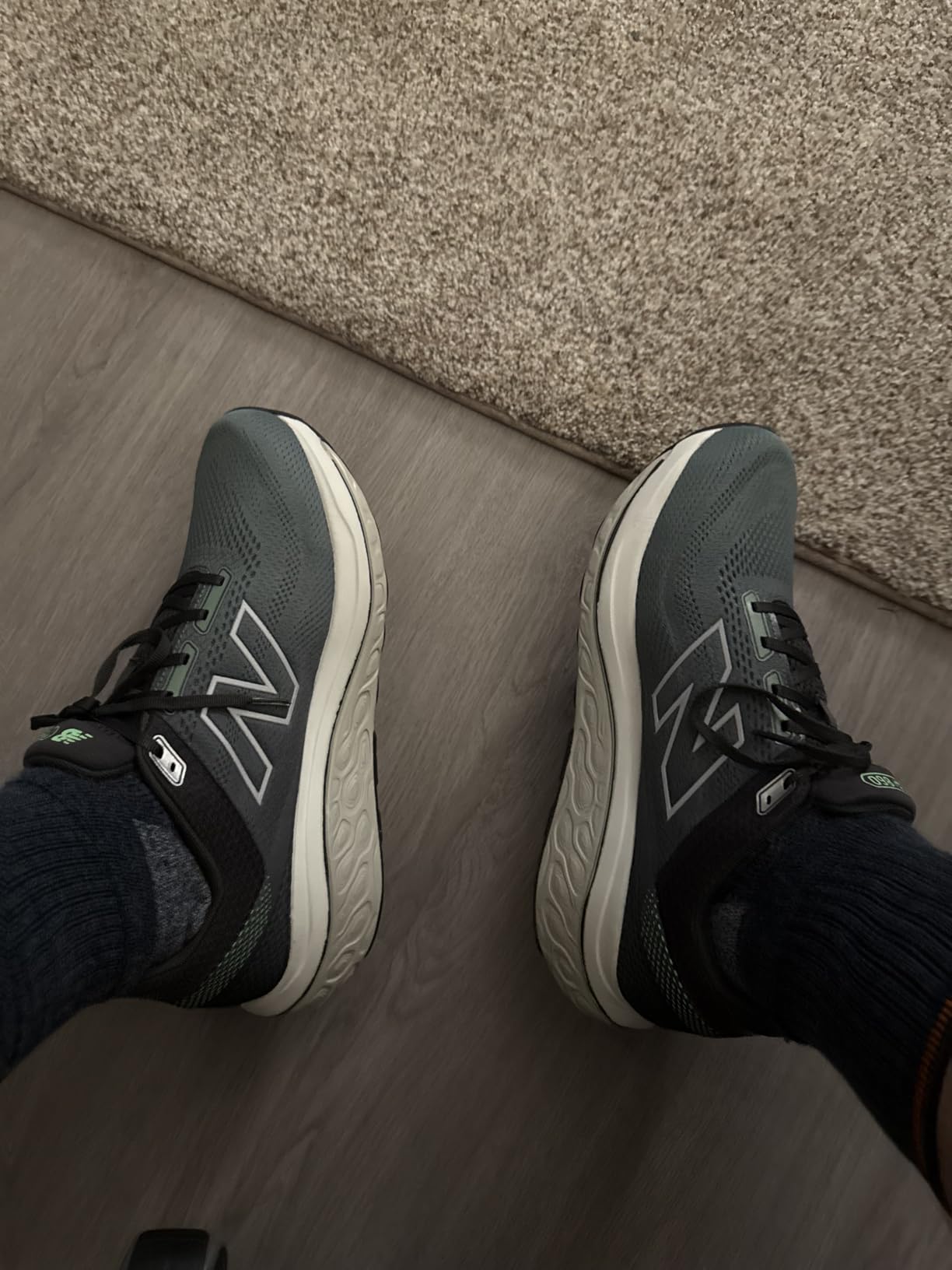
The 860 line has been in the stability conversation for long enough that there is a deep pool of people who have already broken it in. That 4.5 average across nearly 1,200 reviews is not a flash-in-the-pan score; it is the accumulated verdict of a shoe that a lot of overpronators simply wear.
The mechanism here is less dramatic than a post. New Balance describes the Fresh Foam X platform as their most cushioned Fresh Foam experience, built with stability-oriented construction for overpronation. In practice the ride is soft and forgiving, and the width range is the headline feature — Narrow, Wide and X-Wide are all offered.
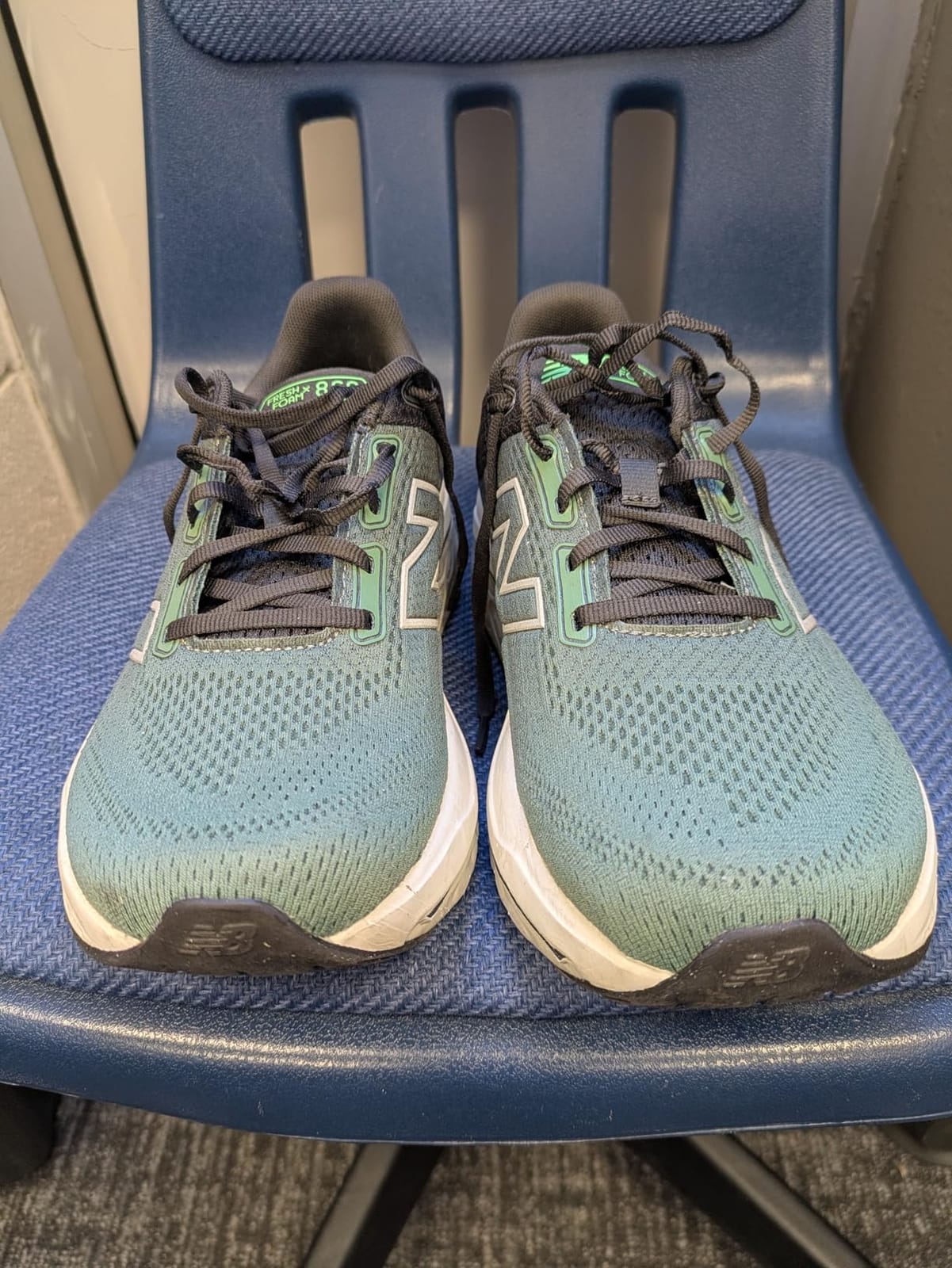
Buyers consistently point at cushioning and breadth of fit as the reasons to stay with it. For someone who has a hard time finding wide shoes, having all three widths from one brand removes a whole category of frustration.
The complaint that comes back most often is fit direction, and it is genuinely split. A number of reviews say the shoe runs a half size small and recommend sizing up, while the review summary notes others find it large or boxy and suggest going down. If you are between sizes, this is the one in the roundup where a try-on is worth the trip.
Who this shoe suits
It suits daily high-mileage runners and anyone who stands a lot during the day, because the cushioning carries you without a hard post pressing on the arch. It is a strong option for wide feet and flat feet who want softness first and correction second.
It also suits anyone who wants the stability benefit without a visibly technical-looking shoe. Nobody glances at the 860 and concludes you have a foot problem.
Where it falls short
It falls short for speed work and for runners who want something light. The listed weight of 3 pounds and the max-cushion character make it a poor partner for intervals or race day.
It is also not the right answer for severe overpronation, where you want a defined correction rather than a deep soft platform.
3. Saucony Hurricane 24: The Broad Platform That Does Not Feel Rigid
Saucony Men’s Hurricane 24 Sneaker, Vanilla/Dusk, 11.5
PWRRUN PB foam under a PWRRUN base
Center Path Technology
Adaptive lacing
Listed weight 2.25 pounds
+ The Good
- Stability described as non-intrusive by reviewers
- Broad platform and sidewalls cradle flat feet without pressing the arch
- Comfortable over 20-mile runs and multi-hour standing shifts
- Breathable upper with a wide toe box
- The Bad
- Runs about a size small for many users
- Heavier build unsuited to racing or fast pace
- Forefoot can feel tight before break-in
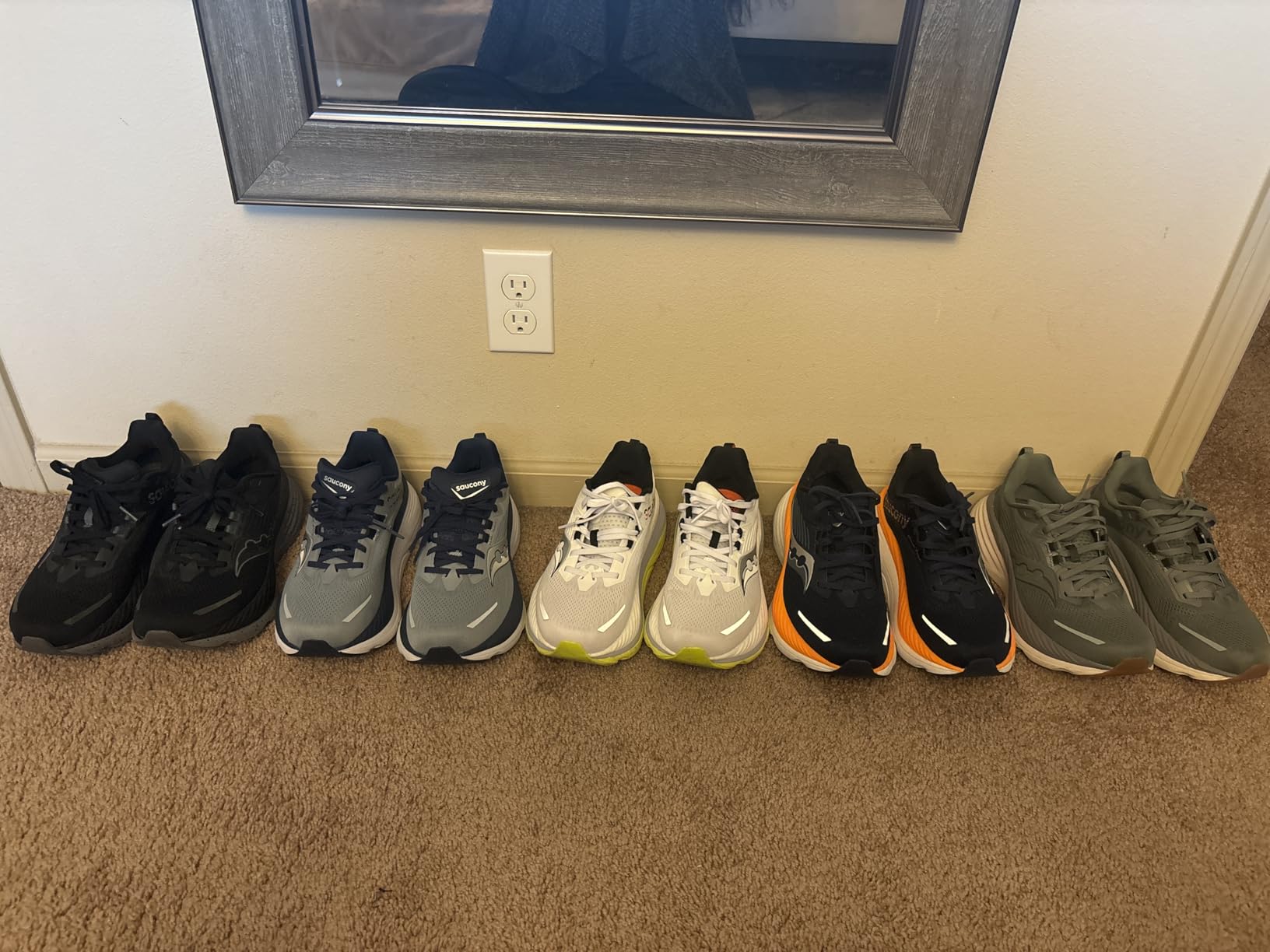
What reviewers like most about the Hurricane 24 is that it does not feel like a stability shoe. The word that keeps appearing is non-intrusive — guidance that holds the foot without imposing anything. Several owners mention switching over from heavier stability models and finding this one more forgiving.
Center Path Technology is doing the work here. The asymmetric geometry, broader platform and higher sidewalls guide you from lateral crash through toe-off without a hard insert under the arch. Underfoot, PWRRUN PB foam sits inside a broad base of PWRRUN foam, which is why the ride feels cushioned without feeling soft-footed.
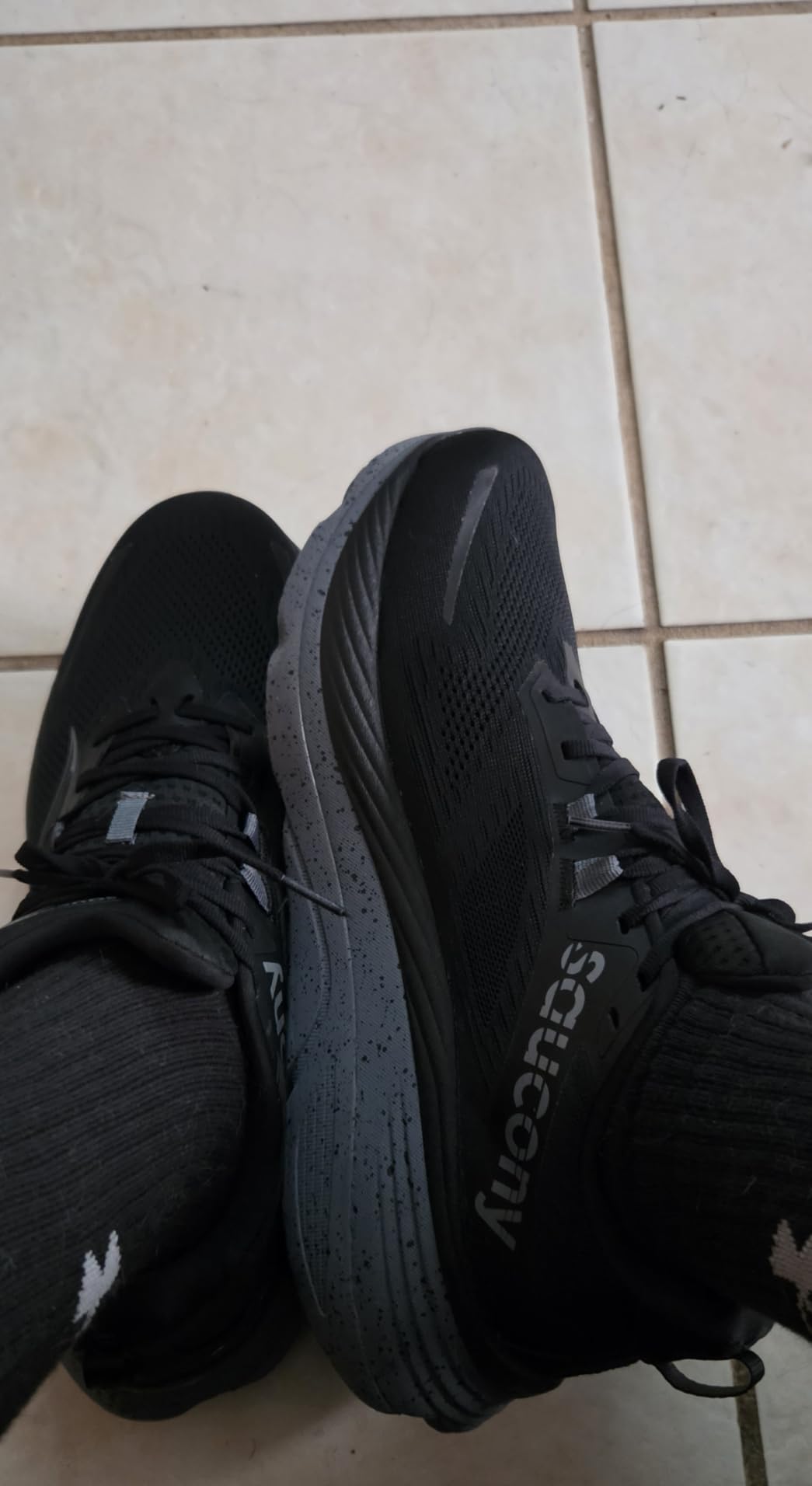
The bathtub-style foam walls are the part people notice most with flat feet. Rather than pushing up into the arch, the foam rises around it, which is a meaningfully different sensation for low-arch feet that dislike direct pressure.
Sizing is the big warning label. Multiple reviews recommend going up a full size, and the forefoot can feel tight before the shoe breaks in or if you wear thick socks. There are also a handful of reports about build inconsistency between pairs, so inspect the pair carefully on arrival.
Who this shoe suits
It suits long-run and marathon-block runners who want stability they can forget about, and flat-footed runners who find arch-directed correction uncomfortable. The combination of cushioning, a wide base and an adaptive lacing system also makes it a practical everyday work shoe.
If your overpronation is moderate and you have been put off by shoes that feel like medical devices, this is the pair to try first.
Where it falls short
It falls short for anyone racing or running fast efforts — the build is simply too heavy for that work. It is also a poor fit for narrow feet who are between sizes, since the standard run skews small and the base is broad by design.
Some wearers find it loud underfoot on hard surfaces, which matters if you walk a lot in an office or on tiled floors.
4. Altra Paradigm 8: Roomiest Toe Box and a Zero-Drop Platform
ALTRA Men’s Paradigm 8 Road Running Shoe, Blue/Gray, 10.5
Altra EGO MAX midsole foam
FootShape anatomical toe box
Balanced Cushioning zero drop
Stabilizing guide rail
+ The Good
- FootShape toe box lets toes splay which relieves bunion and pinch pain
- Zero-drop geometry suits runners moving down from high-drop stability shoes
- EGO MAX foam cut fatigue on runs past 15 miles
- Comfortable for all-day walking on pavement and gravel
- The Bad
- Stiff forefoot limits midfoot flex and can cause heel slippage
- Soft platform may feel insufficiently stable for some feet
- Limited breathability reported by some users
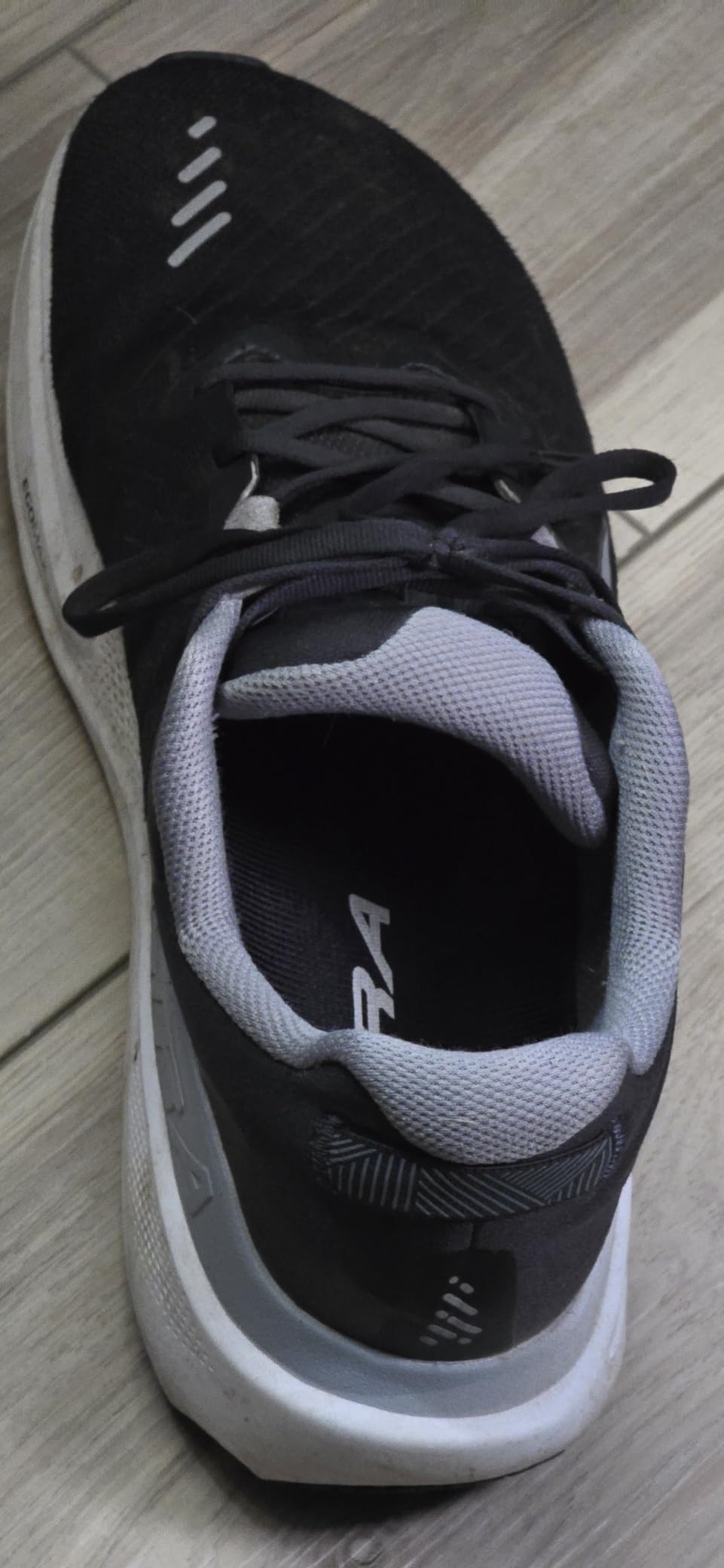
The Paradigm 8 is the option here for people whose problem is not pronation but toe shape. Altra’s FootShape toe box is a full anatomical last that lets the toes spread, and reviewers with bunions and toe-pinch problems call it out as the reason they bought the shoe.
Stability comes from a guide rail rather than a post, which keeps the correction on the softer side. The zero drop Balanced Cushioning platform is the other differentiator — there is no heel-to-toe drop to adapt to, and buyers moving down from a high-drop stability shoe report that the transition was smoother than they expected.
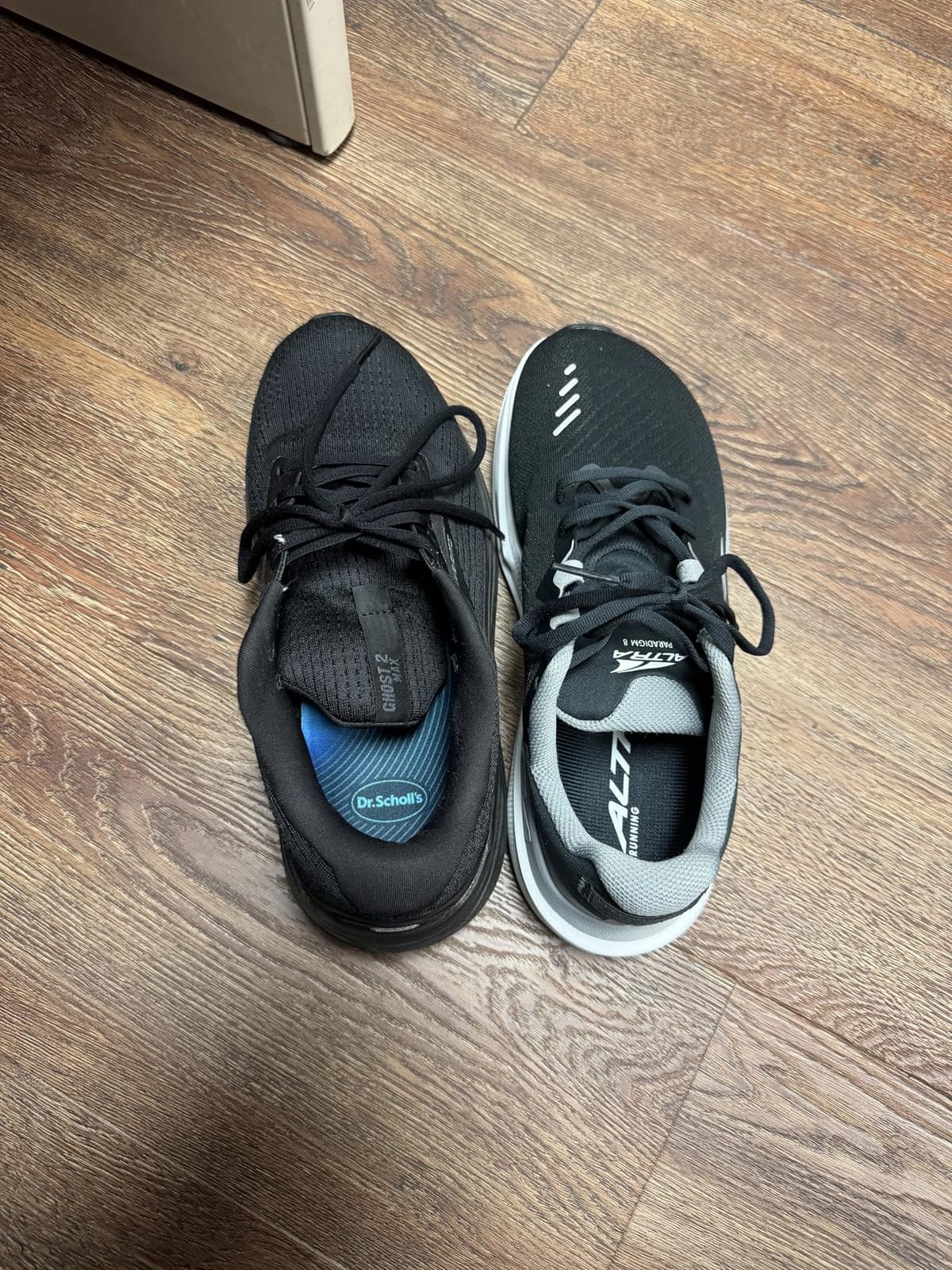
The upgrade to EGO MAX foam is the other reason to prefer this generation. Owners mention noticeably lower foot fatigue past 15 miles compared with earlier versions, and the shoe works just as well as an all-day walking shoe on pavement and gravel.
The honest limitation is that this is the smallest review pool in the roundup, so the record is thinner than everything else here. The recurring criticisms are a stiff forefoot that limits flex at the midfoot transition, a soft platform that some overpronators find not quite firm enough, and a midfoot that some buyers still find narrow even in the Wide fit.
Who this shoe suits
It suits wide feet, bunions and anyone who has been squeezed by traditional lasts. It is also a genuinely good fit for runners who want stability without a heel-to-toe drop, either because they prefer zero drop or because they are already accustomed to it.
Mild to moderate overpronators are the realistic target. The soft, guided platform is not designed to fight severe pronation.
Where it falls short
It falls short for severe overpronators and for long runs where you want more visible correction. It also carries less cushioning than the maximum-cushion options here, so if you run on hard surfaces for hours, this is not your pick.
The forefoot stiffness can create heel slippage for some runners, and if you run hot, the breathability complaints are worth factoring in.
5. HOKA Arahi 8: Sleek, Light and the Highest Rated Here
Hoka Men’s Arahi 8 Grout/Putty 10.5 Medium
H-Frame stability technology
Low-profile tooling
Double jacquard mesh upper
Listed weight 2.19 pounds
+ The Good
- Highest average rating in the roundup at 4.6 with 81 percent five-star reviews
- Lightweight for a stability shoe and comfortable out of the box
- Wide sole and H-Frame reduce side-to-side foot roll
- Reviewers report about 1000 miles with minimal outsole wear
- The Bad
- Beveled heel encourages a heel-to-toe strike that takes a couple of weeks to adapt to
- Softer and bouncier than buyers expecting a firm stability feel
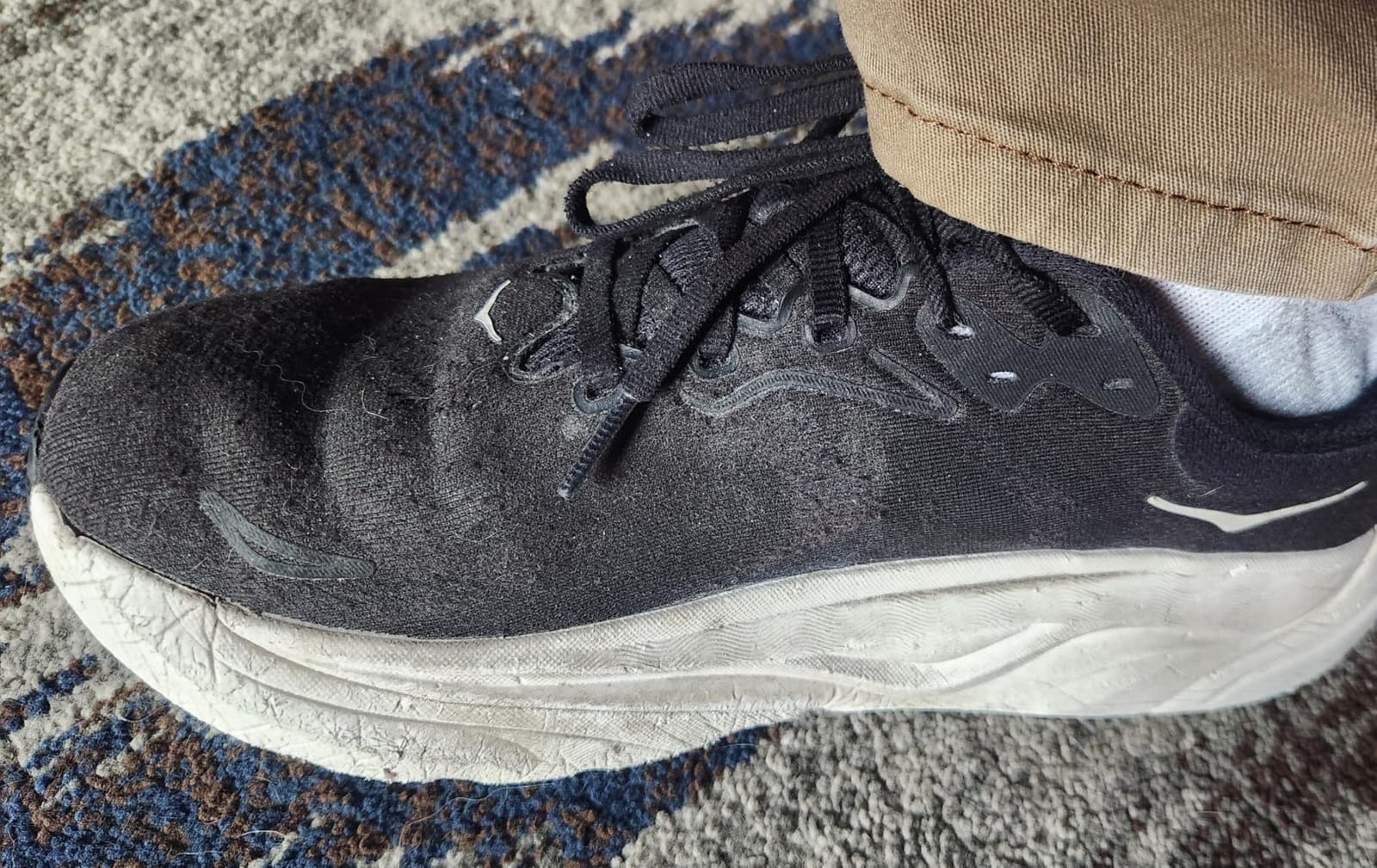
The Arahi 8 is the modern argument against the idea that stability shoes have to look or feel like equipment. HOKA built it around H-Frame technology, a stabilizing system that combats overpronation and smooths the entry into the gait cycle, and then paired that with softer materials and low-profile tooling than the shoe it replaced.
At 4.6 from 340 reviews with 81 percent five-star ratings, it holds the highest average in this group. Reviewers use it overwhelmingly as an all-day work and walking shoe, and cite relief from sciatica and plantar fasciitis. Several mention the H-Frame and the wide sole reducing side-to-side foot roll and the leg and back fatigue that comes with it.
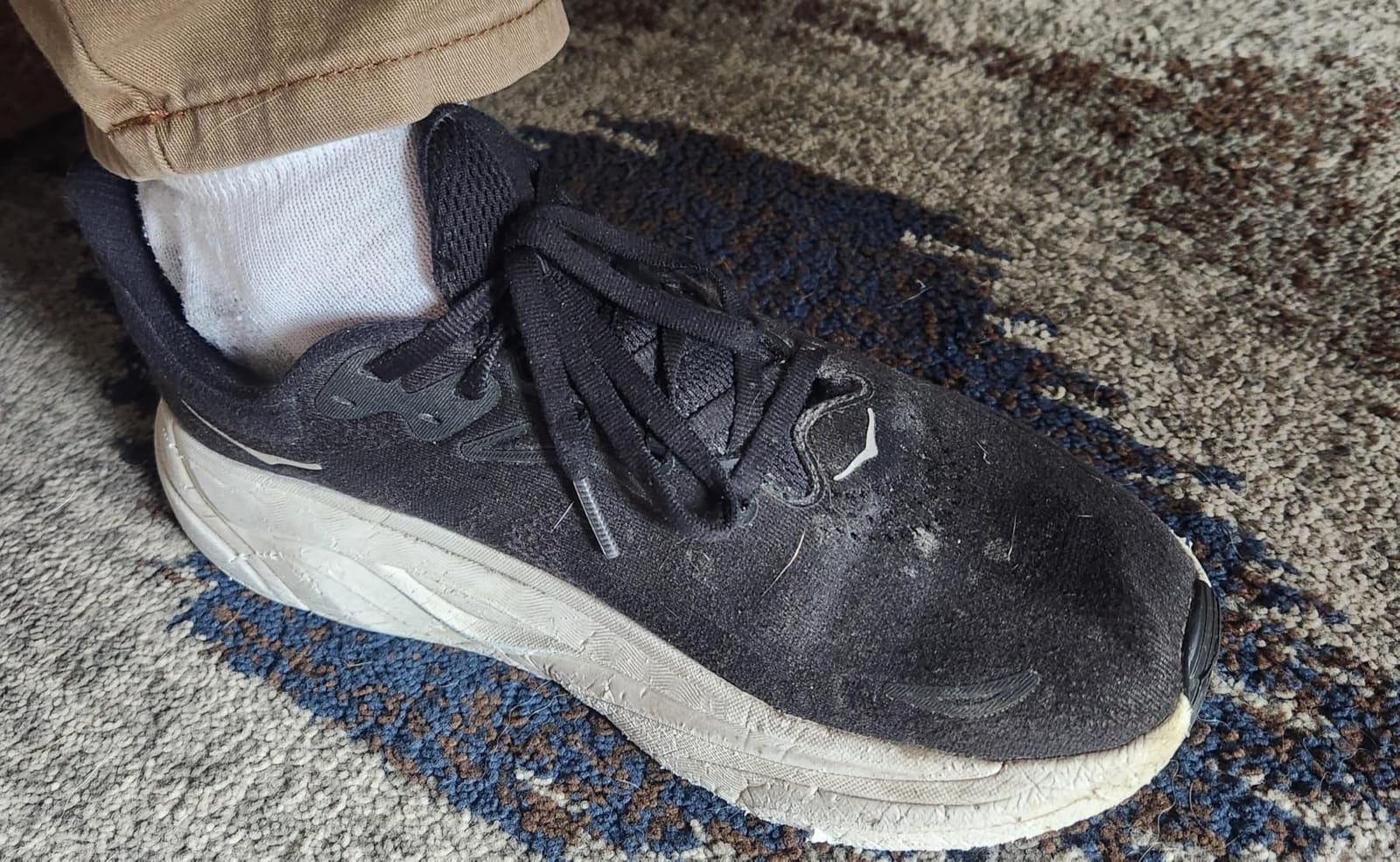
The double jacquard mesh upper is 62 percent recycled nylon with recycled polyester and spandex, and it is one of the better-ventilated uppers here. Reflective details make it practical if you are walking or running after dark.
Two criticisms come up consistently. The beveled heel encourages a distinct heel-to-toe strike, and several reviewers describe that as taking a couple of weeks to adapt to. Others expected a firmer stability feel than they got, because the ride is softer and bouncier than the word stability implies.
Who this shoe suits
It suits all-day wearers first and runners second — anyone on their feet for a long shift, on concrete, will get more out of this shoe than almost anything else in the list. It is light enough that the stability never feels like a compromise, and it suits mild to moderate overpronation well.
If you have been avoiding stability shoes because you expected them to be heavy and rigid, this is the one that disproves the idea.
Where it falls short
It falls short for severe overpronation. The soft, bouncier platform is a gentler correction, and buyers who need a defined post under the arch should look at the Beast GTS 26 or the Gel-Kayano 32 instead.
The beveled heel also deserves a genuine trial period, and if you are a midfoot striker the geometry is not a good match.
6. ASICS Gel-Kayano 32: The Long-Running Benchmark for Severe Cases
ASICS Men’s Gel-Kayano 32 Running Shoes, 9.5, Piedmont Grey/Gravel
4D Guidance System
Rearfoot PureGEL cushioning
FF BLAST PLUS midsole
OrthoLite X-55 sockliner
+ The Good
- 4D Guidance System credited with visible pronation control and a smoother stride
- Rearfoot GEL absorbs impact well on long runs and heavy landings
- Lighter build than most ASICS stability shoes
- Breathable engineered mesh with a convenient knit heel pull tab
- The Bad
- Mesh upper reported to wear through near the toe sooner than expected
- Runs slightly small for some wearers
- Structured ride can feel firm to buyers wanting a soft neutral trainer
With roughly 1,700 reviews, the Gel-Kayano 32 is one of the most thoroughly worn shoes on this list, and the praise pattern is consistent. Podiatrist recommendations come up often, and so do reports of pronation-related foot pain easing once wearers switched into it.
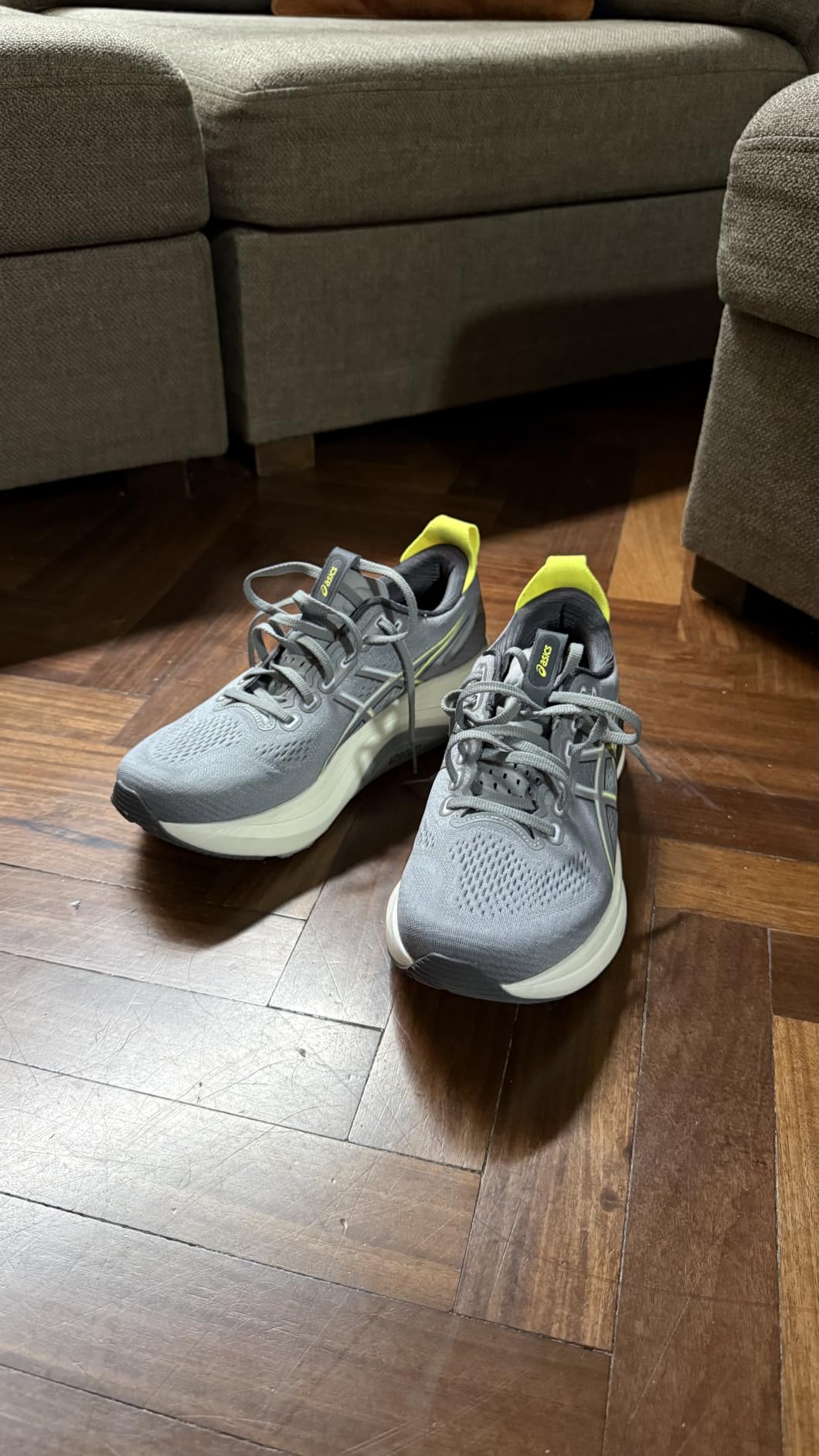
The 4D Guidance System is a dynamic pod under the heel that responds under excessive load rather than resisting constantly. That middle path is why the Kayano works for moderate and severe pronators without feeling like a prescription. Underneath it, rearfoot PureGEL is roughly 65 percent softer than standard GEL, and the FF BLAST PLUS midsole supplies the rebound.
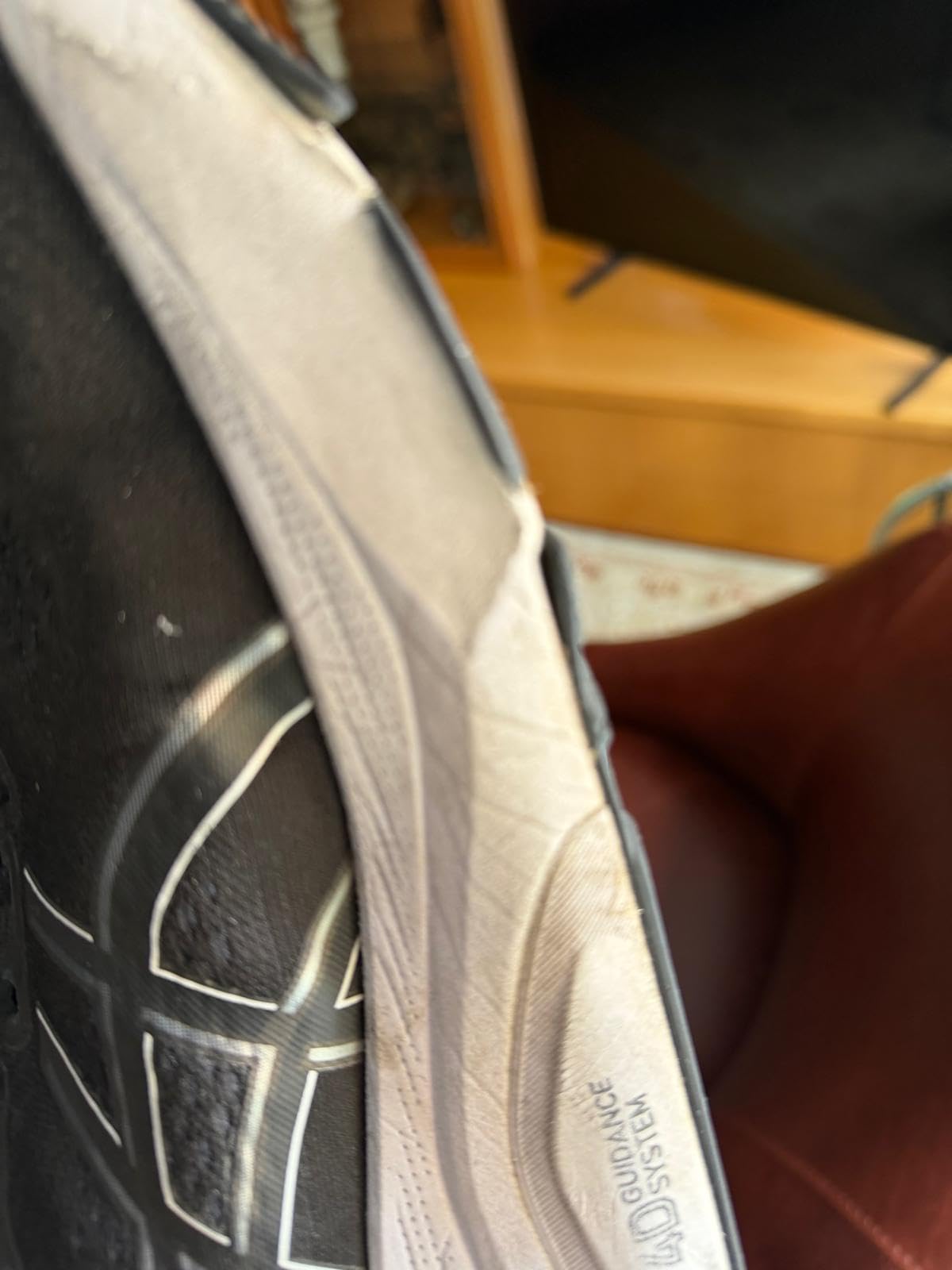
It is also lighter than most ASICS stability shoes, which is a genuine change from the brand’s heavier reputation. The engineered mesh upper reduces the need for overlays, and the knit heel pull tab makes it easy to get on, which matters if you are dealing with foot pain.
The gripes are consistent too. The mesh upper is reported to wear through and develop holes near the toe sooner than expected, several wearers say it runs slightly small, and a segment of buyers wanting a soft neutral trainer find the structured ride firm.
Who this shoe suits
It suits severe overpronators and flat feet who want visible, dependable correction across long distances. It is a strong choice if you have already been told by a podiatrist that you overpronate and want a shoe that answers that clearly.
It also suits anyone who wants support without the bulk — the build is lighter than most shoes in its category.
Where it falls short
It falls short for runners chasing a soft, neutral, fast feel. The structure is deliberate and some wearers find it firm, which is the opposite of what a neutral-cushion shopper wants.
Fit is a coin flip for some people — if you are between sizes, expect to need a size up. And the upper durability complaints are real enough that you should expect to replace it sooner than the outsole suggests.
7. Brooks Beast GTS 26: Maximum Stability for Heavier Runners
Brooks Men’s Beast GTS 26 Supportive Running & Walking Shoe – Peacoat/Indigo/Portabella – 11 Medium
Maximum-stability GuideRails system
Nitrogen-infused DNA LOFT v3 midsole
Roomy orthotic-friendly upper
RoadTack rubber outsole
+ The Good
- Purpose-built maximum-stability platform for heavier runners
- GuideRails and flared sole keep ankles and knees tracking straight
- Firm non-mushy foam that stability seekers specifically approve
- Wide and X-Wide builds with a roomy fit for orthotics
- One-piece molded outsole that grips snow ice and mud
- The Bad
- Heavier than lighter stability models and unsuited to speed work
- Standard D width can feel narrow through the midfoot
- Extra-wide sizes can arrive with laces too short for a secure tie
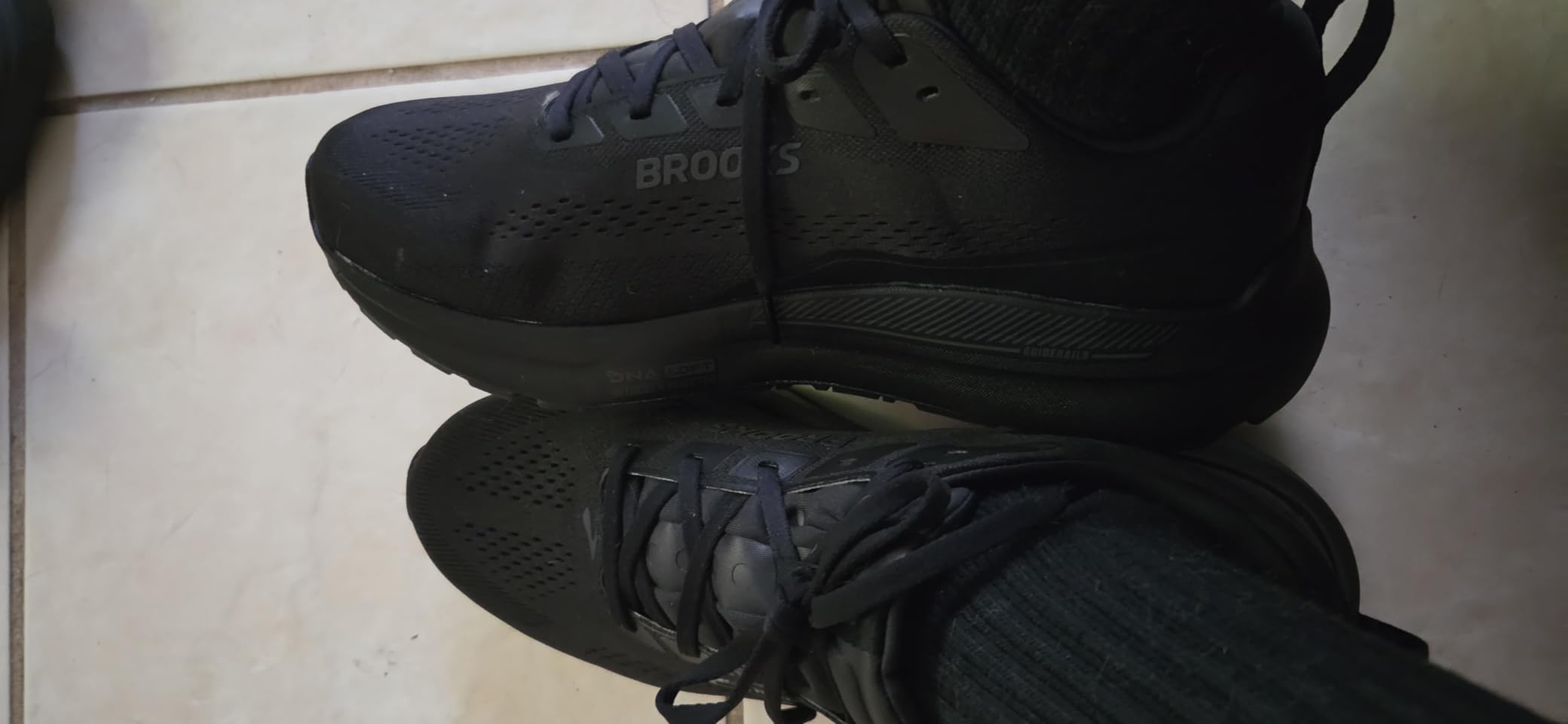
The Beast is the shoe in this roundup where firmness is the feature, not a flaw. Reviewers with significant overpronation report that the GuideRails system and the flared sole keep their gait aligned, and owners who explicitly wanted stability over plushness are the ones leaving the glowing reviews.
It is the successor to the Beast GTS 24, and the redesign centers on DNA LOFT v3 nitrogen-infused foam that is plush yet resilient. The outsole is a one-piece RoadTack rubber unit that grips asphalt, concrete, gym floors, and reportedly snow, ice and mud.
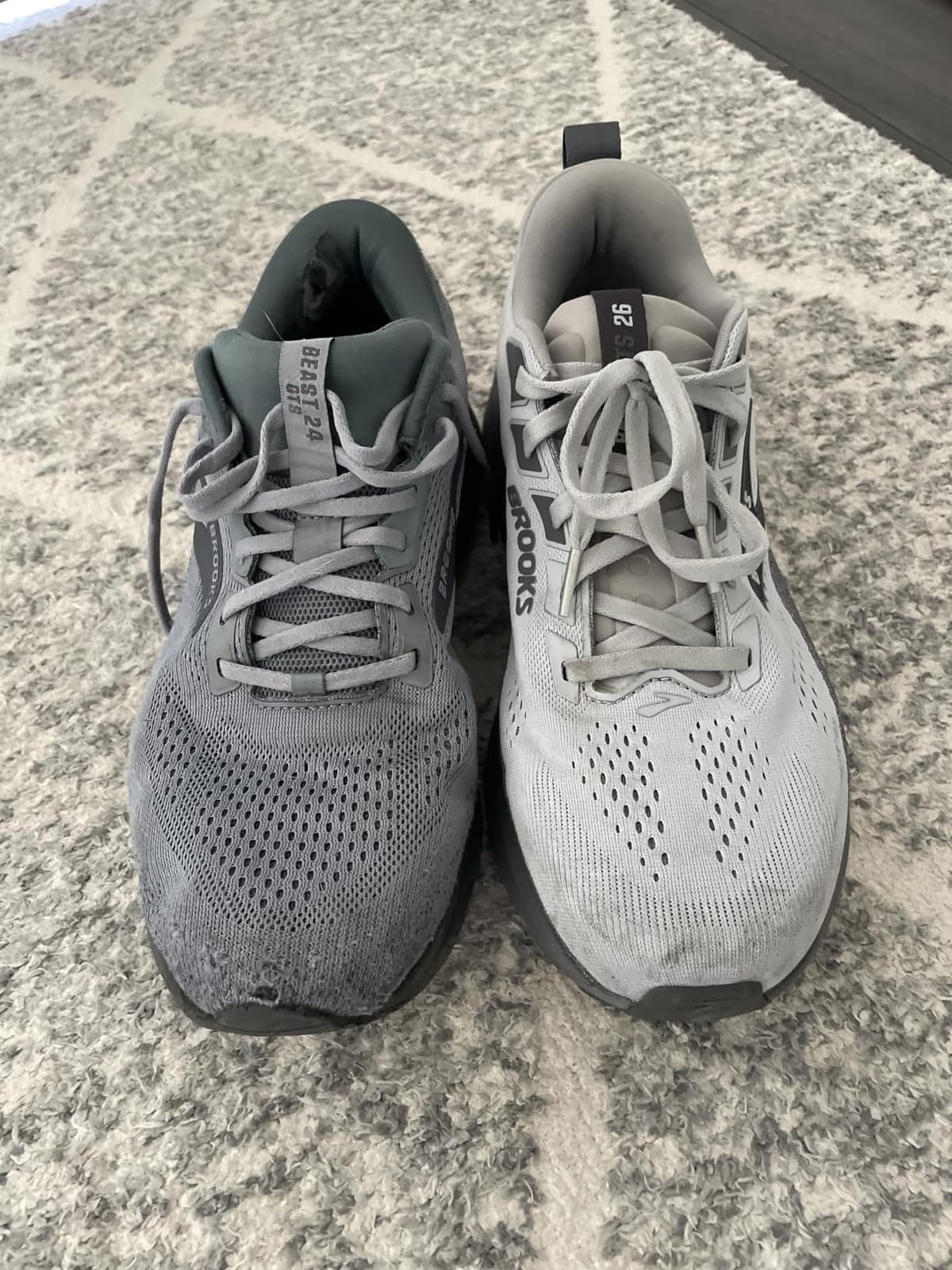
The upper is the quiet headline. The updated engineered mesh is deliberately generous and built to accommodate orthotics or wide feet while still locking the foot down, and there is a heel pull tab for easy entry. It is also a certified PDAC A5500 diabetic shoe with an APMA Seal of Acceptance.
Weight is the main drawback — it is not a shoe for speed work, and reviewers are candid about that. There is also a specific fit trap in the widest sizes, where some owners report laces arriving too short for a secure tie or a heel-lock technique. Check the laces before you leave the house.
Who this shoe suits
It suits heavier runners, flat feet and anyone whose arch collapses on contact and stays down. If you wear orthotics, the roomy upper is a genuine advantage and the shoe was designed with that in mind.
It is also a strong all-day work shoe for people on hard surfaces for a living, given the durability of the outsole and the structured feel underfoot.
Where it falls short
It falls short for anything fast. There is no version of this shoe that suits tempo work, racing or a runner trying to get lighter.
Standard D width can feel narrow through the midfoot, so wide buyers should size carefully rather than assuming. And if a firm platform bothers your feet at all, this is the opposite end of the spectrum from the HOKA Arahi 8.
8. ASICS GT-2000 13: Lightweight Stability and True Narrow Widths
ASICS Women’s GT-2000 13 Running Shoe, 6.5, Concrete/Watershed Rose
3D Guidance System
Rearfoot PureGEL cushioning
FF BLAST PLUS midsole
Listed weight 1.44 pounds
+ The Good
- Buyers with high arches and overpronation report support without needing orthotics
- Light at a listed 1.44 pounds and praised for long walks
- Repeat owners report about 400 miles before replacement
- ASICS narrow widths are rare among major brands and suit narrow feet
- The Bad
- Runs narrow even in the standard fit so wide-footed buyers should size up
- Newer tech mesh fabric wears out quickly and holes near the toe
The GT-2000 13 solves a problem most stability shoes ignore: narrow feet. ASICS offers Narrow, Standard and Wide builds, and narrow widths are genuinely uncommon among major brands. For someone with overpronation and a narrow foot, that availability matters more than any foam spec.
The 3D Guidance System sits higher in the shoe than the 4D pod in the Gel-Kayano 32, which gives it a lighter, less prescriptive correction. Buyers with high arches who still overpronate report that the support works without requiring orthotics, which is a useful data point for a group that is often overlooked.
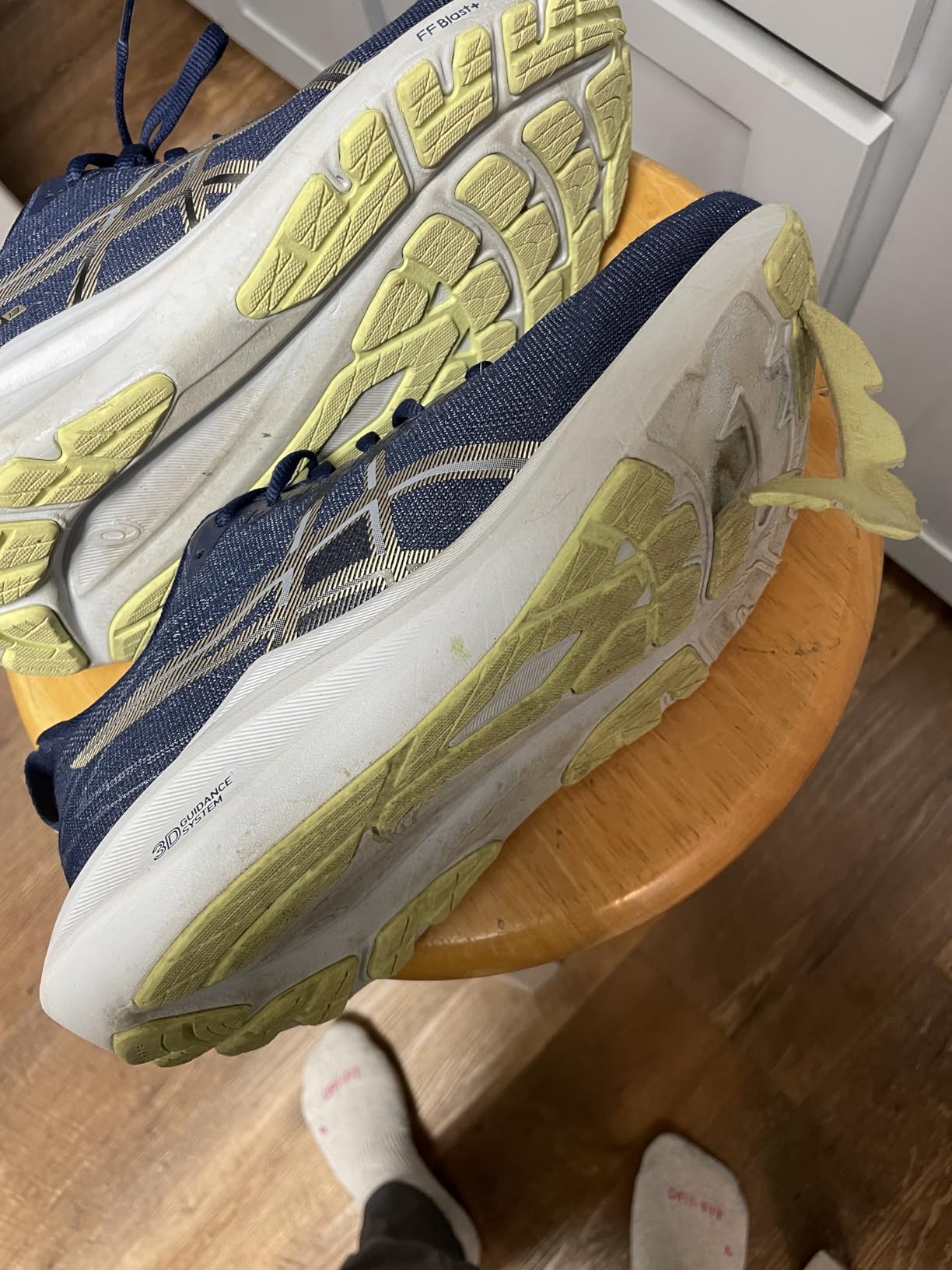
At a listed 1.44 pounds, it is the lightest shoe in this roundup, and that shows up in how it is described — comfortable for long walks and easy running. Repeat owners report getting roughly 400 miles out of a pair, which is a sensible replacement rhythm for a daily trainer.
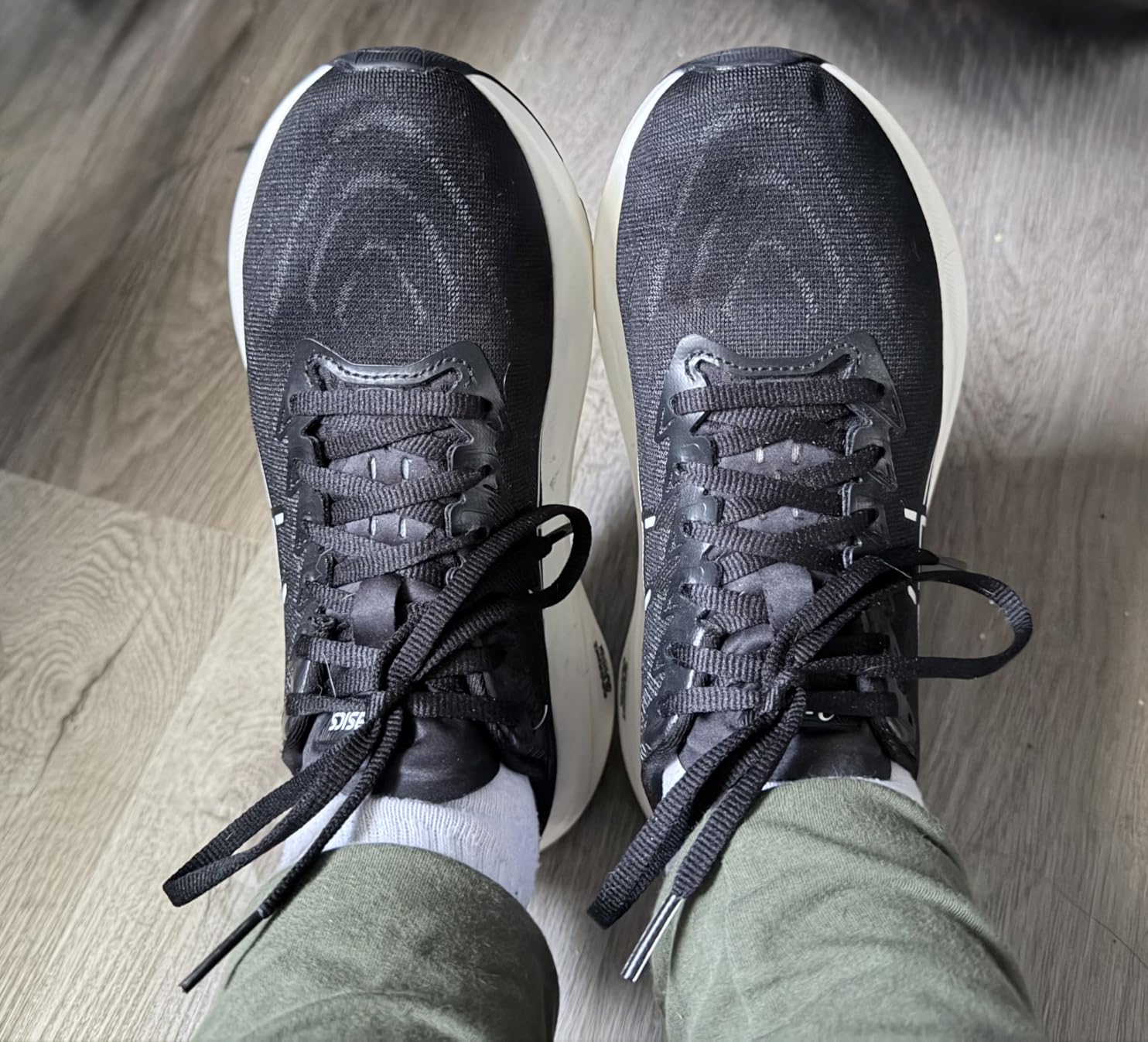
Watch the upper, though. Reviewers repeatedly report that the newer tech mesh fabric wears out quickly and develops holes near the toe, and sizing is confusing: it runs narrow even in the standard fit, while a few wearers report ordering a full size too large compared with other ASICS models.
Who this shoe suits
It suits narrow feet with overpronation, high arches that still roll inward, and runners who want a light stability shoe for daily training. Anyone who stands a lot but also wants to run will find the weight appealing.
It is also the most straightforward option in this list for high arches, because the higher-positioned guidance does not press into the arch the way a low post does.
Where it falls short
It falls short for wide feet unless you deliberately size up or move to the Wide build, and it falls short for severe overpronation, where a low post does more work than a high guidance pod.
The upper durability is the other real limitation, so treat the shoe as a training-mile purchase rather than a forever shoe.
9. HOKA Gaviota 5: Maximum Cushion With a Deep Platform
Hoka Men’s Gaviota 5 Limestone/Diva Blue 8 Medium
Maximum cushioning platform
Overpronation-correcting stability frame
Roomy reinforced toe box
Listed weight 3 pounds
+ The Good
- Reviewers with overpronation report the shoe actively corrects foot roll
- Maximum cushioning relieves knee and back strain on hard treadmill and concrete surfaces
- Roomy reinforced toe box resists the toe-box holes common in other models
- Stylish enough for casual wear while working as a work shoe
- The Bad
- Arch support reported as weaker than the price implies
- One pair showed outsole wear after only two days
- Heaviest shoe in the roundup at a listed 3 pounds
The Gaviota 5 is the most heavily cushioned option here and the most polarised. Wearers who stand all day on concrete or run on treadmills describe real joint relief, and the reinforced toe box is specifically reported to resist the toe-box holes that plague mesh uppers elsewhere in this roundup.
Unlike a post-based shoe, the stability comes from a frame combined with a deep, wide platform. The foam does the absorbing and the width stops the collapse, which makes it a comfortable option for pronators who cannot handle a rigid arch insert.
It is also the one shoe here that reviewers call stylish enough for casual wear, which matters if you are buying it as an everyday shoe rather than a race-day partner.
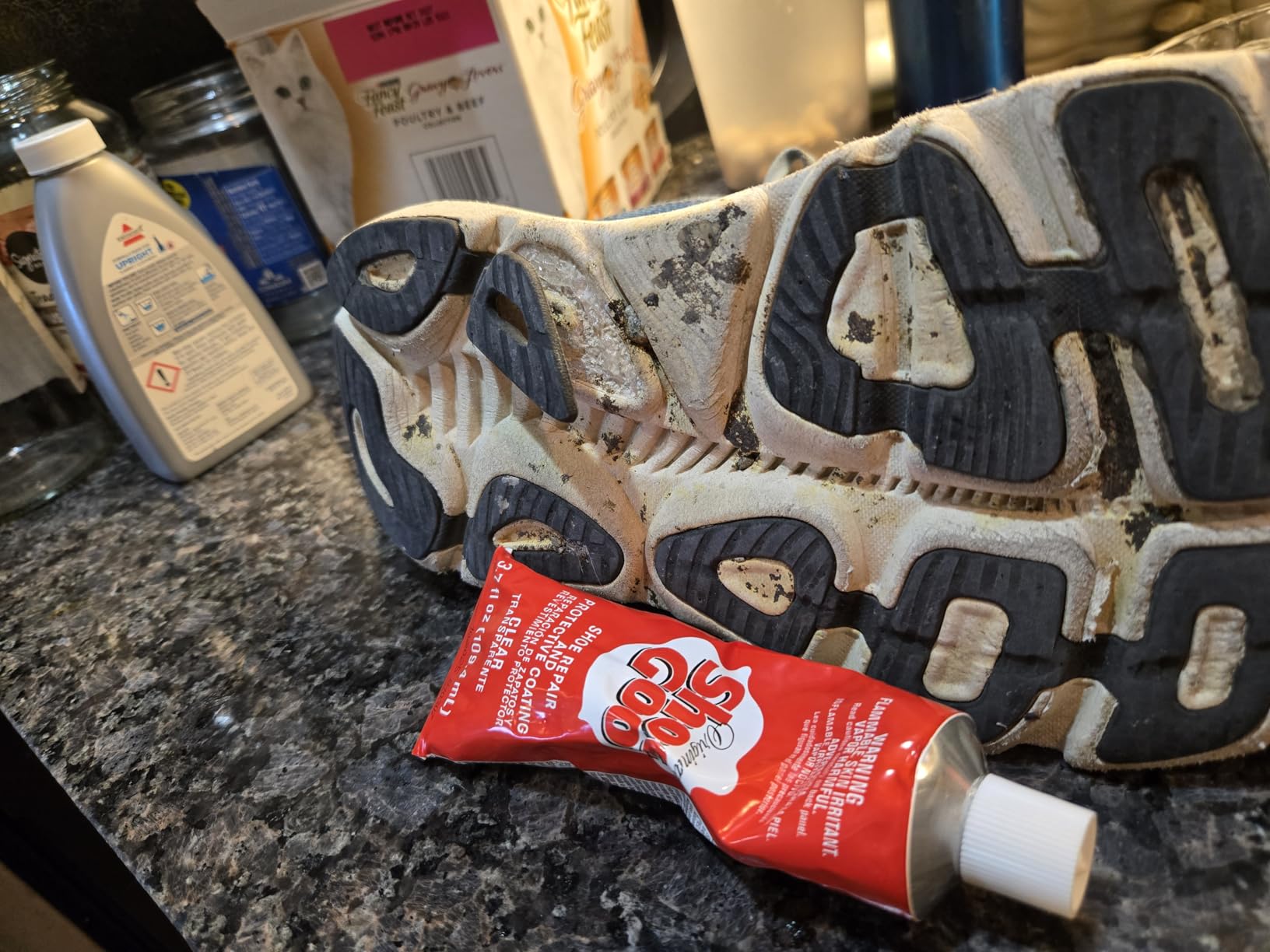
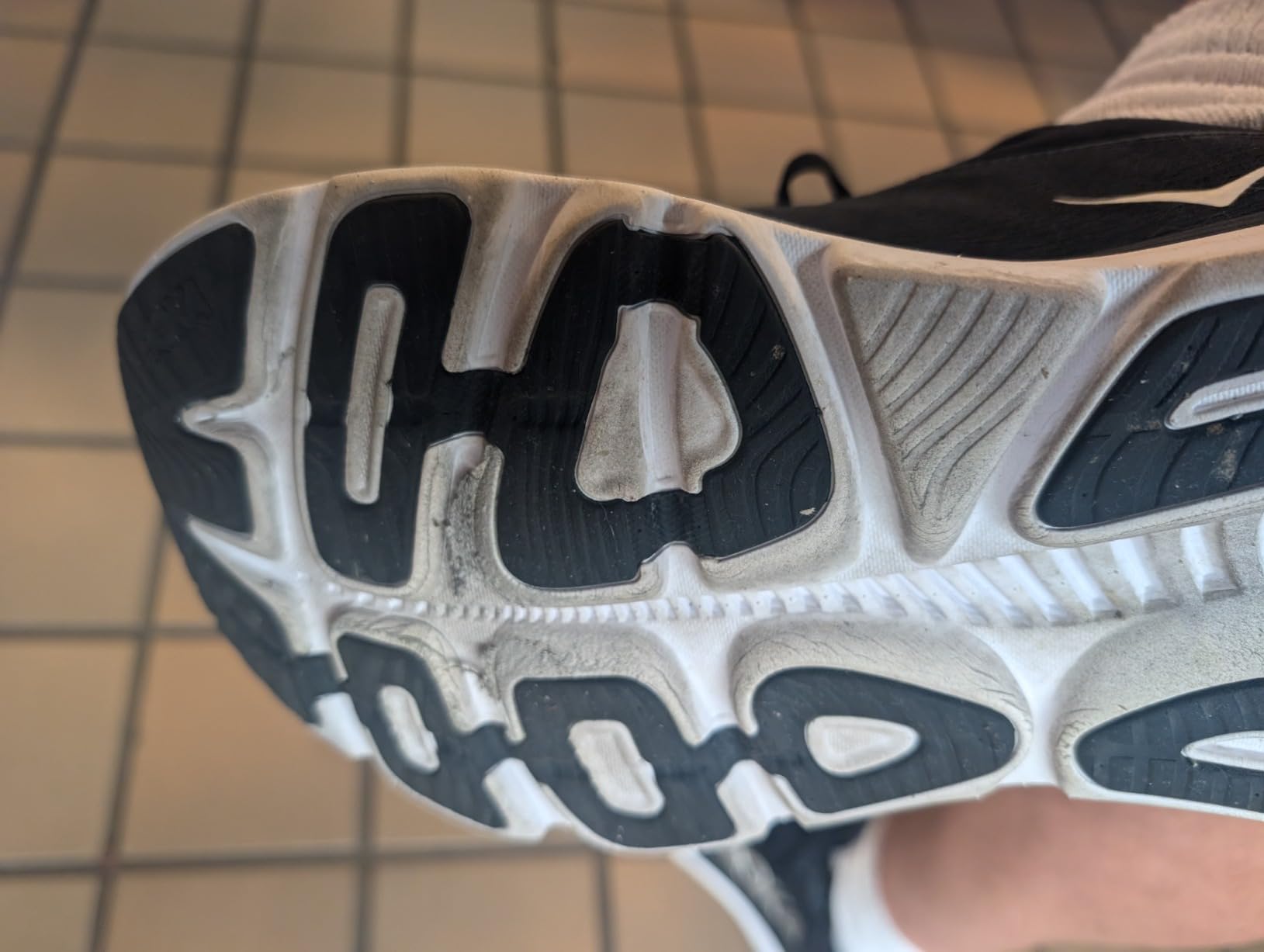
The dissent is consistent enough to take seriously. Several reviewers report the arch support is weaker than the price implies, one pair showed outsole wear after only two days of use, and sizing varies slightly between colorways of the same model. At a listed 3 pounds it is also the heaviest shoe in the roundup.
Who this shoe suits
It suits overpronators who spend hours on hard surfaces and want the joint relief more than the ground feel. It is a strong option for anyone who has found that a firm post is uncomfortable but still needs a wider, more deliberate platform than a neutral shoe gives.
If your old shoes are destroyed at the outside edge and you also carry aches in your knees and lower back, this is a reasonable next step.
Where it falls short
It falls short for anything fast, and for runners who want to feel the ground. This is a shoe you wear because of what it absorbs, not what it reports back.
It is also the weakest choice here for flat-footed runners specifically seeking arch correction, since arch support is the most common complaint. The colourway sizing inconsistency is a smaller but real annoyance.
10. Saucony Guide 18: The Lightest Way to Get Real Correction
Saucony Men’s Guide 18 Sneaker, Cloud/Black, 11.5
Broad deep stable platform
Center Path Technology asymmetry
PWRRUN foam underfoot
XT-900 carbon rubber outsole
+ The Good
- Lightweight for a max-cushion stability shoe with owners comparing the weight to racing flats
- Even wear distribution shows the geometry is working with no outside-heel scuffing
- Cloud-like cushioning with genuine arch support for flat feet
- Wide and X-Wide builds with flexible uppers that let toes move
- The Bad
- Lofted heel feels lower than the forefoot and unstable until you adapt
- Toe box is narrower than older Guide models and lacks the old hard-plastic support insert
- Mesh upper reported to hole near the big toe around five months
At a listed 1.87 pounds, the Guide 18 answers the most persistent complaint about max-cushion stability shoes, which is that they are heavy. Owners compare the weight to racing flats, and the review text is largely positive despite the 4.3 average being the lowest in the roundup.
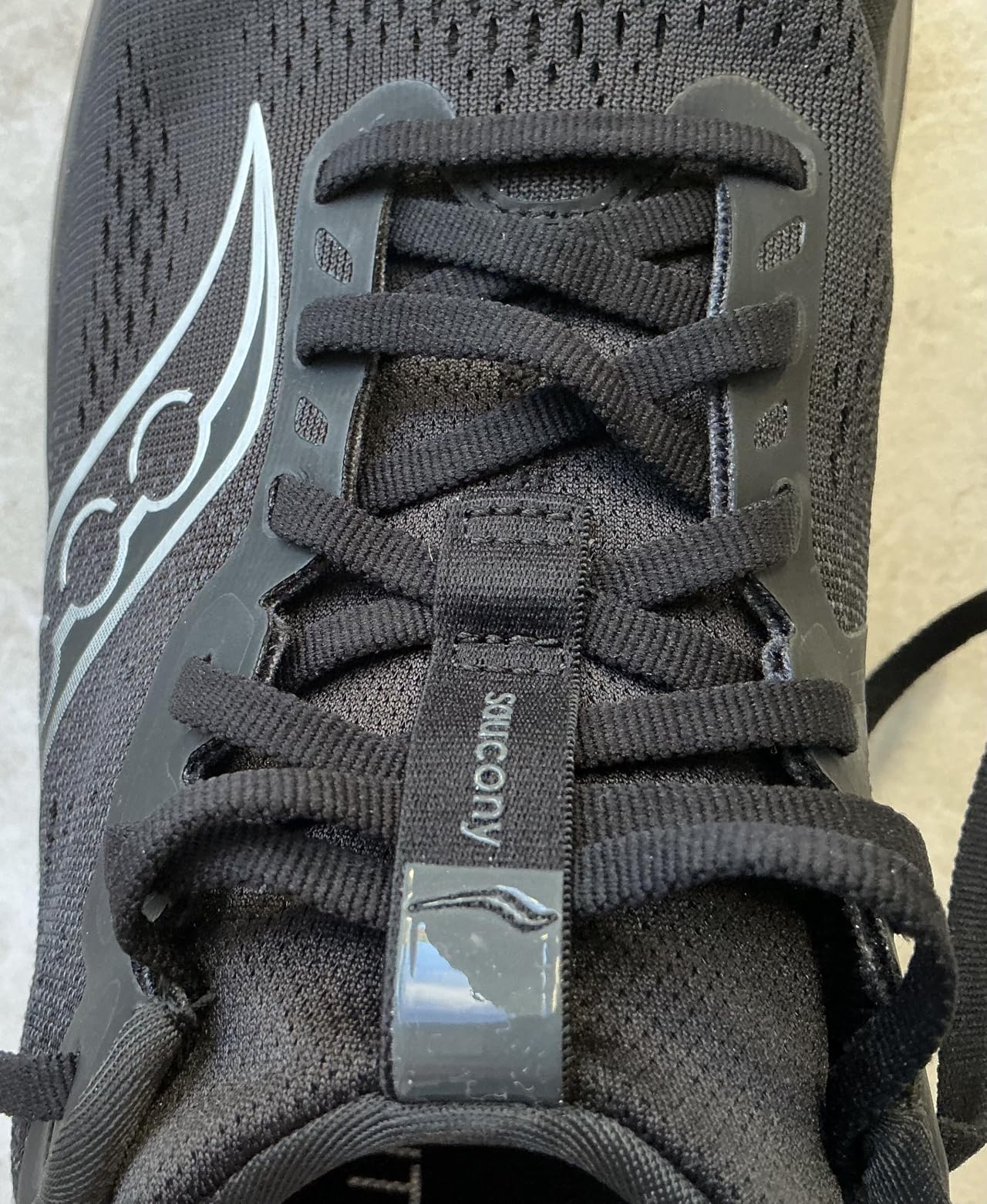
The mechanism is a broad base geometry that seats your foot deep inside a stable platform, combined with Center Path Technology — asymmetric geometry that centers the foot from lateral crash through toe-off. PWRRUN foam underfoot and an XT-900 carbon rubber outsole handle cushioning and traction.
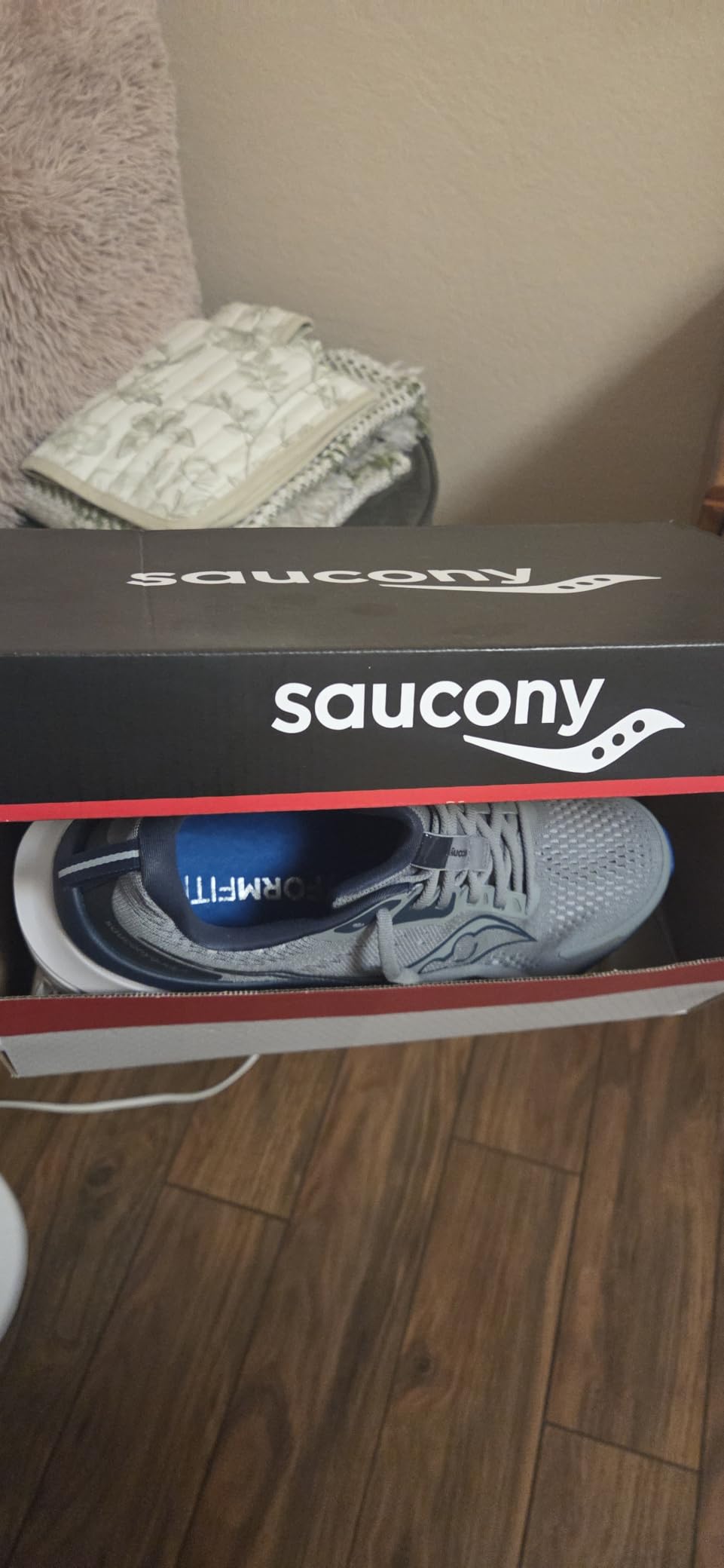
One of the most telling details in the reviews is about wear, not comfort. Owners report that the outside heel no longer scuffs the way it used to, which is direct evidence that the geometry is doing something. Long-time Saucony Guide wearers rate the cushioning and the arch support for flat feet highly.
The criticisms are specific. The lofted heel sits lower than the forefoot, which some wearers find unstable until they adapt. The toe box is narrower than on older Guide models such as the 14 and 15, and this generation drops the hard-plastic support insert those models had. Reviewers also report mesh holing near the big toe around the five-month mark and outsole wear sooner than earlier Guides.
Who this shoe suits
It suits flat-footed overpronators who refuse to give up lightness, and long-time Guide owners who want the familiar geometry in a lighter package. It is a good daily trainer for runners who want more correction than the Adrenaline GTS 25 offers without the weight of a max-stability shoe.
If you have bounced off stability shoes because they all felt like blocks, the weight here is the reason to reconsider.
Where it falls short
It falls short for severe pronators who relied on the older hard-plastic support insert, because that is gone in this generation. It is also narrower through the forefoot than previous Guides, so if you liked the old toe box, do not assume it is the same shoe.
The heel geometry needs an adaptation period, and the upper and outsole durability complaints suggest budgeting for replacement inside a year of regular use.
11. Brooks Ariel GTS 26: Built for Walking and Post-Injury Recovery
Brooks Women’s Ariel GTS 26 Supportive Running & Walking Shoe – Oyster Mushroom/Alloy/Pink – 9 Medium
Maximum-stability GuideRails system
Nitrogen-infused DNA LOFT v3 midsole
Roomy toe box
Integrated heel pull tab
+ The Good
- Post-surgery and post-fracture wearers report walking pain-free after a doctor recommended Brooks
- GuideRails keep the stride aligned with no hip or knee pain reported
- Wide and X-Wide widths accommodate bunions and post-op swelling
- Roomy toe box holds an in-shoe brace comfortably
- The Bad
- The two shoes in a pair can arrive noticeably mismatched in size
- Some buyers with fallen arches report less support than the reputation implies
- Can run tight and stiff for bunions or wider feet
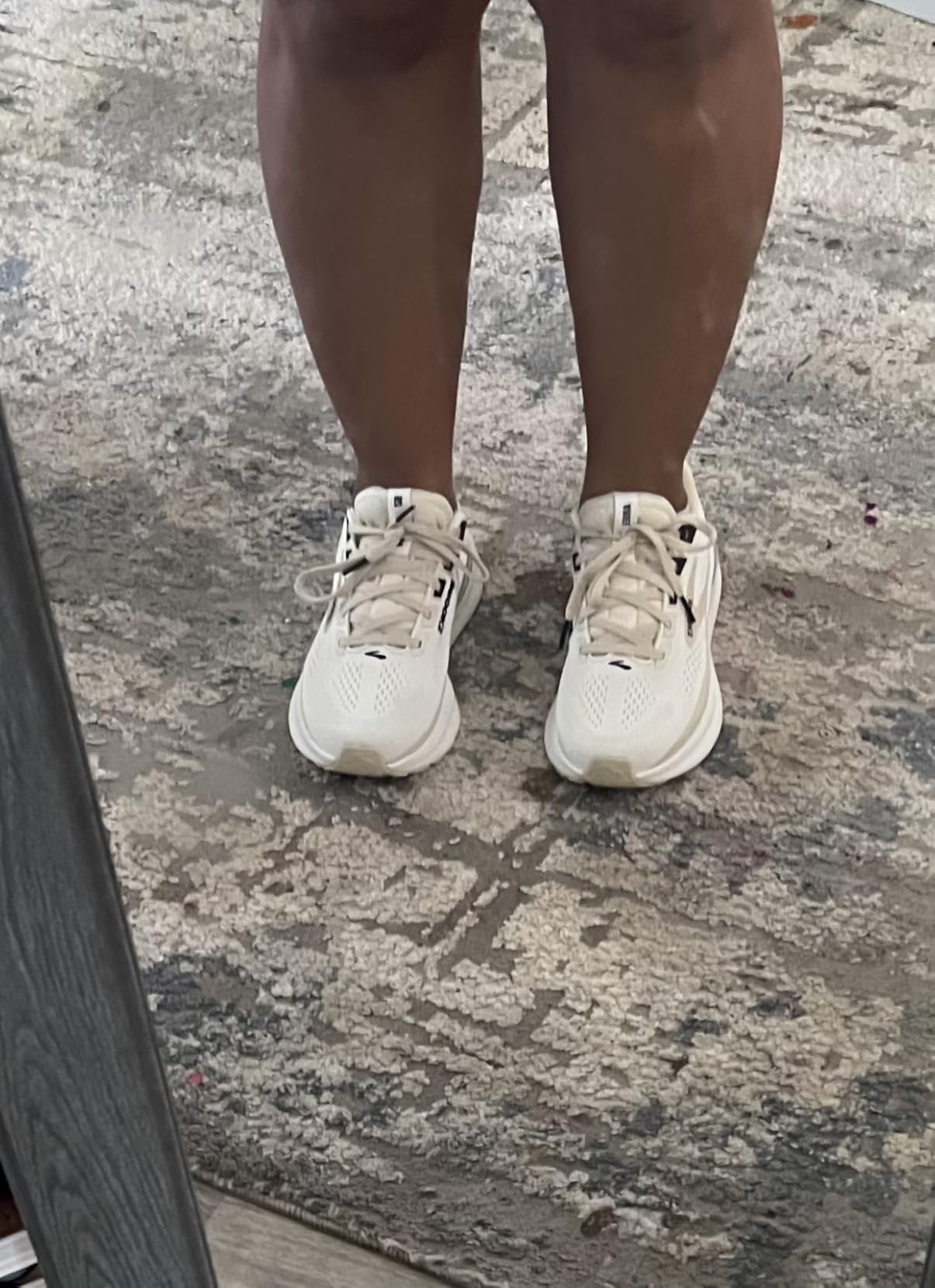
The Ariel GTS 26 has the most specific audience in this roundup: people recovering from foot or ankle surgery, fractures, or chronic fallen arches. Its strongest advocates are buyers whose doctor recommended Brooks and who then report walking pain-free.
Mechanically it sits alongside the Beast — maximum-stability GuideRails, DNA LOFT v3 midsole, RoadTack rubber outsole for pavement and walking paths. The difference is intent. The upper is streamlined rather than deliberately roomy, with a roomy toe box and secure lockdown, and the integrated heel pull tab makes it easier to get on, which is genuinely useful when you cannot reach your laces comfortably.
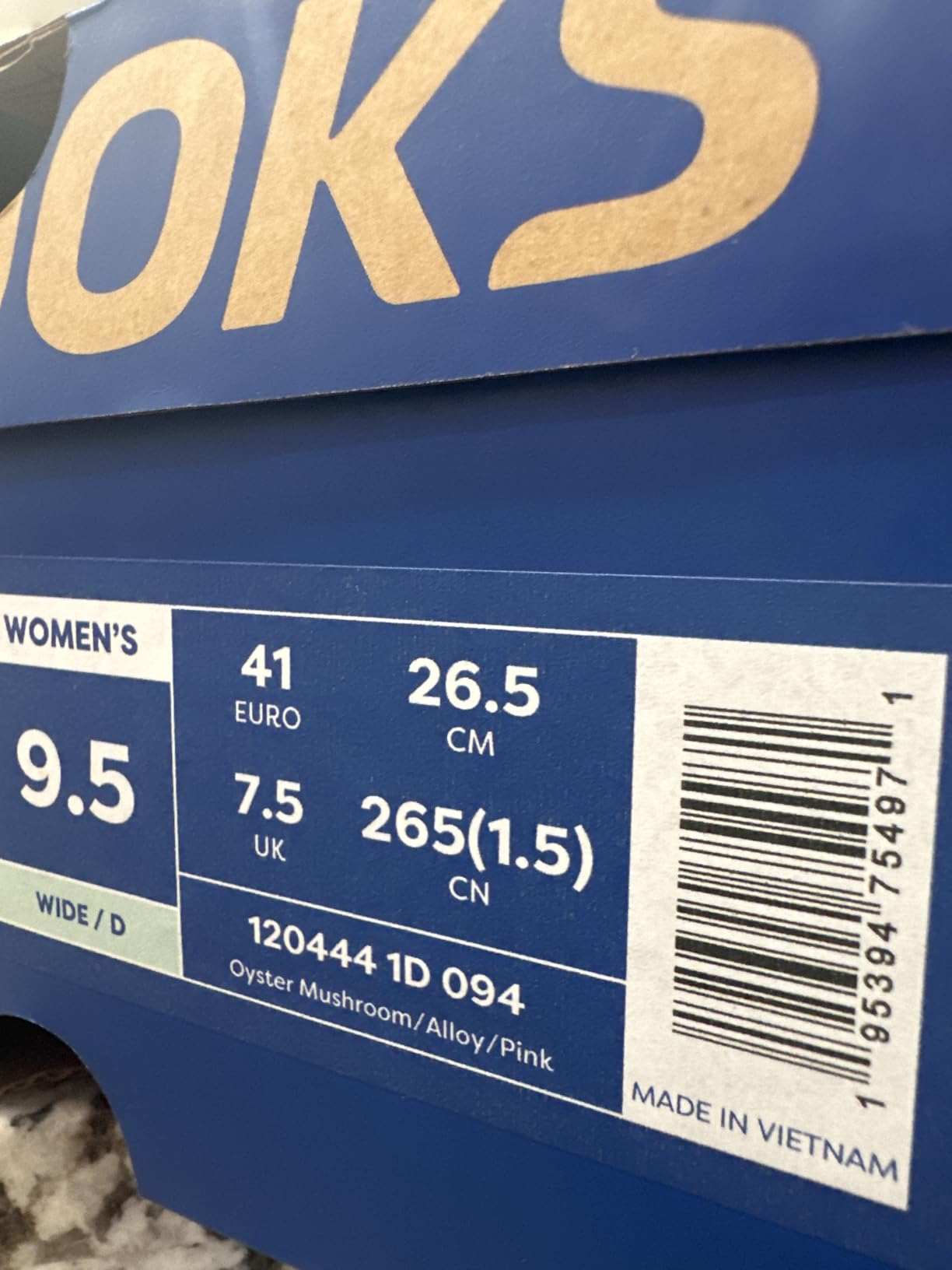
Wide and X-Wide widths accommodate bunions and post-operative swelling, and one reviewer notes the roomy toe box holds an in-shoe brace comfortably. It is also a certified PDAC A5500 diabetic shoe with an APMA Seal of Acceptance.
It also has the smallest and most divided review pool here, at 116 ratings and a 4.1 average. Buyers recovering from injury rate it highly, while a cluster of one-star reviews cites inconsistent quality control, with the two shoes in a pair arriving noticeably mismatched in size, and insufficient pronation control for severe overpronators.
Who this shoe suits
It suits recovery. If a clinician has told you to prioritise a supportive, durable shoe while you heal, this is a shoe built for walking rather than for training. It also suits wide feet and anyone who needs an in-shoe brace to fit comfortably.
For a neutral-to-mild overpronator who mostly walks, the maximum-stability platform is a reasonable place to start.
Where it falls short
It falls short for severe overpronators. Several reviewers with fallen arches report the shoe does not deliver the support its reputation implies, which is worth weighing if that is your situation.
Fit and quality control are the two practical risks. It can run tight and stiff for bunions and wider feet, and check that both shoes are the same size the moment the box arrives.
How to Choose Stability Running Shoes Without Buying Twice
Check the width before anything else. The single biggest cause of returns in this category is width, not stability. Brooks Adrenaline GTS 25, New Balance 860 V14, Saucony Guide 18 and ASICS GT-2000 13 all carry Narrow through X-Wide options. The HOKA Arahi 8 and Altra Paradigm 8 are built on roomy platforms and will likely swamp narrow feet. If you have never been fitted, ask for a width measurement, not just a size.
Watch for shoes that run small. The Saucony Hurricane 24 skews small for many wearers and multiple reviews recommend a full size up. The ASICS Gel-Kayano 32 runs slightly small for some. The New Balance 860 V14 splits opinion in both directions, so try it on rather than guessing. Our guide to running shoes for flat feet covers the fit questions in more detail.
Match cushioning to your surface and volume of running. Maximum cushioning like the HOKA Gaviota 5 absorbs the most and asks the most of your legs. Mid-weight daily trainers like the Adrenaline GTS 25 or Hurricane 24 are more flexible for high weekly mileage. If you run on treadmill or concrete a lot, cushioning is doing real work.
Ramp up gradually when you switch. Moving from a neutral shoe to a stability shoe is a change in geometry, not just cushioning. Give yourself three to four weeks, start with shorter easy runs, and increase duration before intensity. A new stability shoe plus a new training block is a good way to get shin splints.
Strengthen the muscles that cause the roll. Shoes manage the symptom. Calves, tibialis posterior, peroneals and hip abductors all contribute to excessive inward rolling, and a physical therapist can give you a short routine that reduces how hard the shoe has to work. If you are dealing with recurring pain rather than a shoe question, a gait analysis is worth the appointment.
Buy for how you run, not for your diagnosis. If you only walk, you are recovering, or you are on your feet for work, several of these read as ordinary comfortable shoes — which is exactly the point. The stability is doing its job quietly.
Frequently Asked Questions
Are stability running shoes good for overpronation?
Yes, that is what they are designed for. A stability shoe limits excess inward rolling after your foot lands, using a firmer medial post, a dynamic guidance pod, soft sidewalls or simply a wider platform, so your foot tracks closer to your centre line. The best of the current options, including the Brooks Adrenaline GTS 25 and HOKA Arahi 8, correct the motion without feeling rigid.
What shoes do podiatrists recommend for overpronation?
Podiatrists usually start with a shoe that matches severity rather than a brand. For mild or late-onset pronation they tend toward a soft guide such as the Brooks Adrenaline GTS 25 or HOKA Arahi 8. For moderate pronation, the ASICS GT-2000 13 or Saucony Guide 18. For severe cases, a post-based model like the ASICS Gel-Kayano 32 or Brooks Beast GTS 26. Bring your gait analysis to the fitting.
Are Brooks or HOKA better for overpronation?
It depends on severity and use. Brooks skews more structured: the Adrenaline GTS 25 suits mild to moderate, the Beast GTS 26 is built for severe cases and heavier runners. HOKA is softer and wider: the Arahi 8 suits mild to moderate pronators who want lightness, and the Gaviota 5 offers maximum cushioning for long hours on hard surfaces. Both are strong choices; pick by severity, not by brand.
What muscles are weak if you overpronate?
Excess inward rolling usually comes down to the tibialis posterior on the inside of the lower leg, the calf, the peroneals on the outside, and the hip abductors and external rotators above. Weakness in the tibialis posterior and the hip abductors is the most commonly flagged pair. Strengthening them reduces how much correction the shoe has to supply, and a physical therapist can build a short routine around your gait.
What are the best insoles for overpronation and flat feet?
A rigid or semi-rigid orthotic with a firm medial post is the usual starting point for overpronation and flat feet, and a cushioned arch support layer works if your feet are simply tired. If your shoe already has strong stability, a full-length rigid orthotic on top of it often feels over-supported. Choose one or the other unless a clinician tells you otherwise, and check that the insole fits the volume of the shoe first.
What should I do if my orthotics don’t fit in my shoes?
Check volume before length. Stand on your orthotic indoors and make sure your foot sits on the heel cup with the arch fully supported and no pressure on top. If the fit is right but the shoe is tight, the problem is the shoe. The Brooks Beast GTS 26 and Brooks Ariel GTS 26 are built with roomy uppers for orthotics, and removable sockliners make the swap easy.
The Verdict: Which Stability Shoe Should You Buy in 2026?
For most overpronators, the Brooks Adrenaline GTS 25 is the safest first purchase. It has the largest review pool in this roundup, the widest selection of widths, and a GuideRails system that corrects the roll without imposing a rigid post — which makes it a good fit whether your pronation is mild, moderate or somewhere in between.
Go heavier on correction only if you need it. Severe pronators and heavier runners should look at the ASICS Gel-Kayano 32 or the Brooks Beast GTS 26. Anyone on their feet all day will get more out of the HOKA Arahi 8 or the Gaviota 5 than from a structured post, and narrow feet have one clear answer: the ASICS GT-2000 13.
Whatever you choose, get your gait checked, ramp up slowly, and give width as much attention as size. Our trail running shoe guide covers what changes once you leave the pavement.