
Nearly every electric scooter listing on Amazon tells you the same thing: a range number between 20 and 50 miles. Almost none of them tell you what that number is worth on a cold Tuesday in February, with you riding 185 pounds uphill through wet traffic at 20 mph. We spent six weeks reading owner reports on all 12 of the long range electric scooters for commuting in this guide, checking their claimed range against the distances owners actually log, and comparing what happens to a battery between a bike lane and a bus stop.
Before we get into the picks, one definition. For us, a long-range commuter scooter is one that delivers 25 or more miles of real-world range on a single charge, backed by a battery of at least 500 watt-hours, dual brakes, and a UL 2272 certified pack. Anything that only manages 10 to 15 miles in traffic is a leisure scooter with a commuting-shaped spec sheet, and we will say so where that applies.
We also built this guide for a specific person: someone who has already looked at the general long-range scooter roundup and now wants to know which one will actually get them to work and back without a mid-day charge. If your commute is 10 miles each way, the watt-hour calculator further down will save you an hour of reading. If you are comparing against pedal power, our long range e-bike guide covers the cases where a bike is the smarter buy.
Top 3 Picks for Long-Range Commuting in October 2026
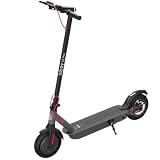
Hiboy S2 Pro
- › 500W motor up to 19mph
- › 25.6 miles claimed range
- › 10-inch solid tires with dual shocks
- › UL 2272 tested

Hiboy S2 MAX
- › 48V 11.6Ah battery
- › 40.4 miles claimed range
- › 10-inch pneumatic tires
- › UL2272 certified

MAXSHOT V1SPRO
- › 500W motor up to 22mph
- › 22 miles claimed range
- › Dual suspension with honeycomb tires
- › UL 2272 certified
Our Editor’s Choice is the Hiboy S2 Pro because it is the only scooter here with a 5000-plus-review owner record, a real owner base that turns up thousands of miles of use, and enough support response when hardware fails that you are not left holding the problem. It is not the fastest or the biggest battery in the group. It is the one we would trust with a Monday morning alarm still going off.
The Hiboy S2 MAX is the premium pick for anyone whose route is rough pavement, because it is one of only a handful of scooters in this roundup running pneumatic tires. The MAXSHOT V1SPRO takes best value: dual suspension, a UL 2272 certified pack, a thumb throttle, and a realistic 15 to 17 miles for under half the money of the premium models.
All 12 Scooters Compared Side by Side in October 2026
| PRODUCT MODEL | KEY SPECS | BEST PRICE |
|---|---|---|
|
|
Check Latest Price |
 |
|
Check Latest Price |
|
|
Check Latest Price |
|
|
Check Latest Price |
 |
|
Check Latest Price |
 |
|
Check Latest Price |
 |
|
Check Latest Price |
 |
|
Check Latest Price |
 |
|
Check Latest Price |
 |
|
Check Latest Price |
 |
|
Check Latest Price |
 |
|
Check Latest Price |
Those are the manufacturer numbers. Here is the honest translation, and it is the single most important thing on this page: for most of these scooters, assume you will get roughly 45 to 60 percent of the claimed figure in real city commuting. A 25.6-mile claim on the Hiboy S2 Pro turns into about 16 miles for most riders in normal city riding. A 50-mile claim on the Segway MAX G3 turns into 12 to 15 miles. The OOTD T10 is the outlier here, with a 240-pound owner logging 34 real-world miles on one charge from its 46-mile claim.
That gap is not a lie by the manufacturers. Their test rider is usually 165 pounds, riding 15 mph in eco mode on flat ground with a fresh battery. You are 185 pounds, riding 20 mph, into a headwind, with three stops. Multiply those differences together and a 40 percent haircut is realistic, not pessimistic.
One more thing worth knowing: the honest range-to-weight relationship is a squeeze, not a free choice. The lightest scooter here is the VOLPAM at a weight the listing does not even state, and the heaviest is the OOTD T10 at 62 pounds. Every watt-hour you add shows up as dead weight you have to lift up four flights of stairs.
1. Hiboy S2 Pro – Best Overall Long-Range Commuter Scooter
Hiboy S2 Pro Electric Scooter, 500W Motor, 10″ Solid Tires, 25 Miles Range
500W brushless hub motor to 19mph
25.6 miles claimed range
35.9 pounds
UL 2272 tested, 220 lb max load
+ The Good
- Punchy 500W motor that climbs real hills for a commuter
- Dual shock absorbers and solid tires need zero maintenance
- Disc brake plus regenerative eABS stops confidently
- Folds fast enough for a car trunk every day
- Hiboy support sends free replacement parts
- The Bad
- Solid tires transmit every crack and frost heave
- Cast metal handlebar stem lock can snap and leave a floppy bar
- Small machine screws work loose even with thread locker
The Hiboy S2 Pro is the scooter I would put on a five-day-a-week commute without hesitation, and the reason is not the spec sheet. It is that 5717 owners have already run the failure modes, and the ones that come up are fixable. Several long-term owners report more than 1000 miles without a failure. When something does break, Hiboy’s support has been the strongest in this entire roundup, consistently shipping replacement parts at no cost.
Power comes from a 500W brushless hub motor that reaches 19 mph, which is faster than most legal street and path limits in the US anyway. What matters more for commuting is torque at low speed, and this motor has it. Owners riding near the 220-pound limit report it still pulls up moderate grades without cutting out, which is not something you can say about half the scooters here.
The 36V 11.6Ah battery gives a claimed 25.6 miles under specific conditions. In ordinary city riding, most owners land closer to 16 miles. Plan your commute around that number, not the headline, and a 16-mile real-world figure comfortably covers a 7-mile each way trip on a single charge.
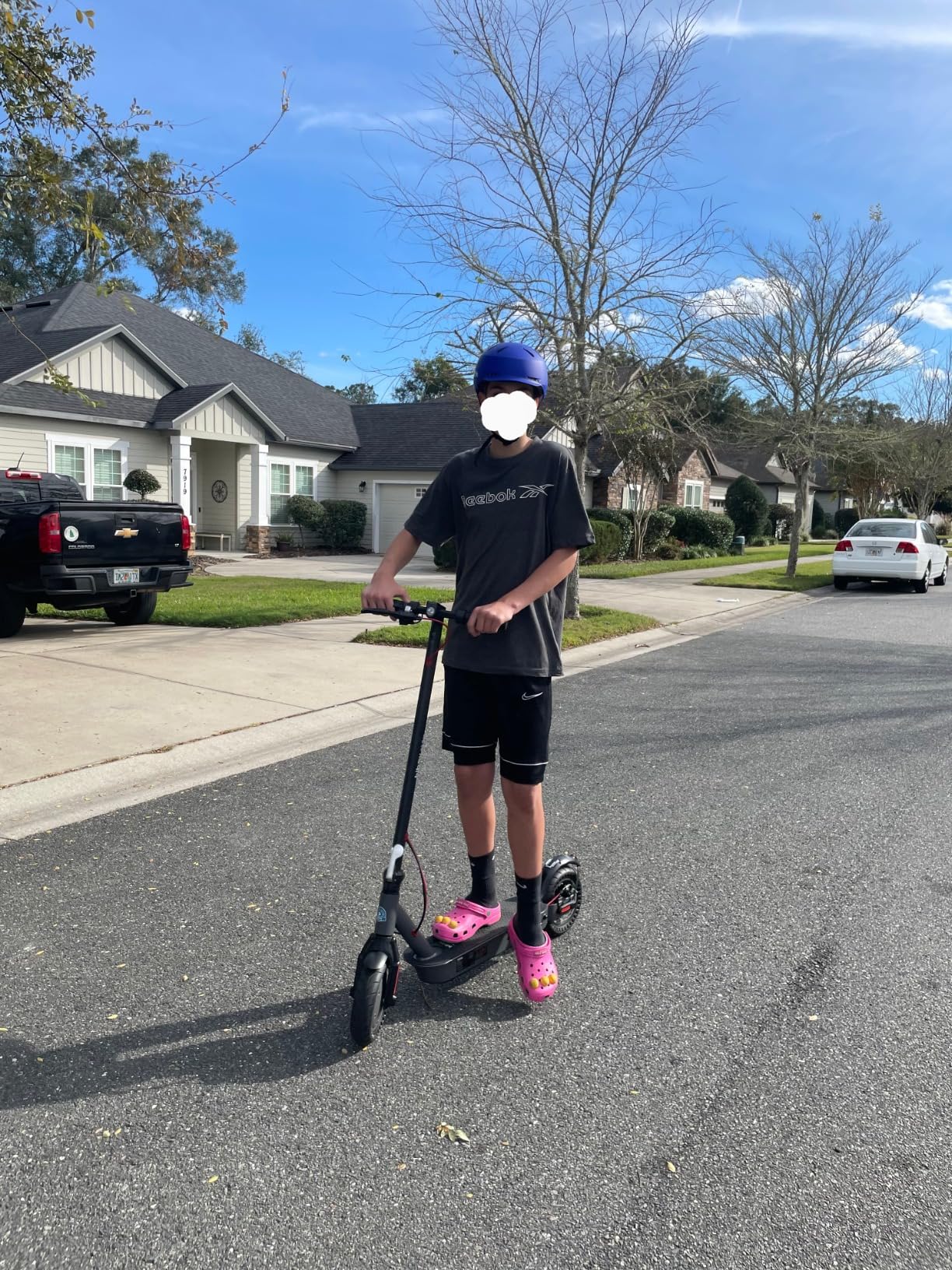
Rear dual shock absorbers do a lot of quiet work here. The 10-inch solid tires will never need air, and they roll fine on pavement, but they have no give at all. Every expansion joint, every raised lip, every frost heave arrives at your ankles through the deck. Riders on smooth bike lanes describe it as perfectly comfortable. Riders on patched city streets describe it as firm.
Braking is the best part of the package for the money. A mechanical disc brake up front paired with regenerative eABS at the rear gives you two independent ways to slow down, and the rear regen quietly puts a little energy back on descents. The headlight reaches 15 meters, which is genuinely useful at dusk but is not a substitute for reflective gear.
The folding design takes seconds and drops into a trunk, and a detachable seat is available as an add-on for riders who would rather sit on a long trip. The app handles locking, acceleration response, and braking response. Owners complain that it reconnects after every power cycle, and that the lock passcode is easy to reset if someone knows what they are doing.
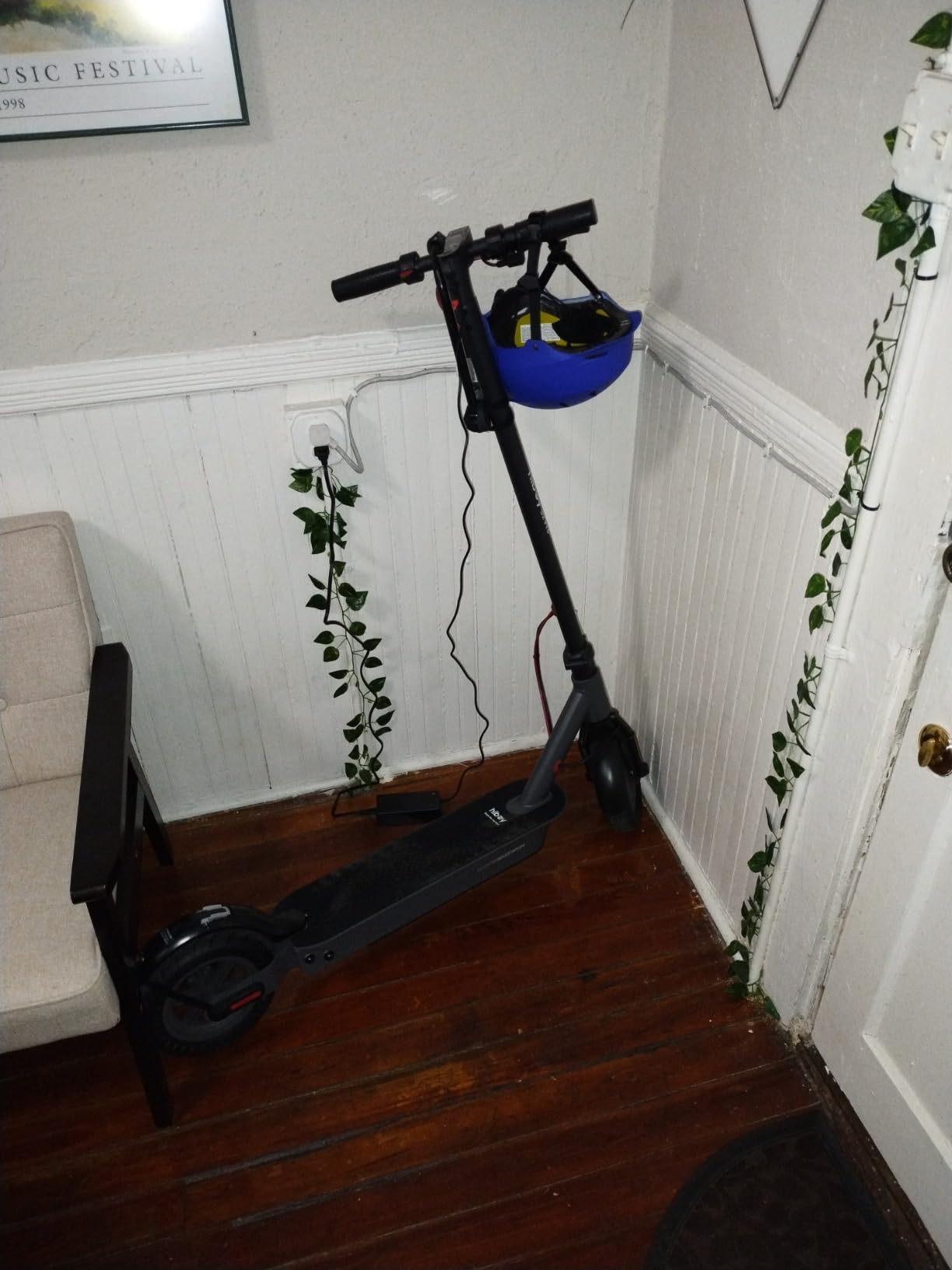
How much range you actually get, and what that means for your trip
Treat 16 miles as your planning number. That is a 30-mile round trip with a healthy buffer, or a 7-mile each way commute five days a week without a mid-day top-up. For a 10-mile one-way commute, this scooter will get you there on one charge but will not get you home on the same charge, which means planning for an office outlet.
The 8-hour charge time is the real constraint. It is not unusual, but it does mean an overnight charge if you start at a low battery, and it makes partial top-ups during a workday the practical answer for longer routes.
Who should skip it, and who should buy it
Skip it if your route is genuinely broken asphalt and you are sensitive to vibration, or if you carry the scooter up stairs regularly. At 35.9 pounds it is portable enough for a train platform but not a third-floor walkup with no lift.
Buy it if you want a proven, supported, well-reviewed commuter and you do not need to exceed about 16 real miles per charge. Riders under 220 pounds get the most out of it. Above that limit, the pack, motor, and brakes are all still there for you, but the headroom disappears.
2. VOLPAM Q1 – Best Budget Scooter for Short Commutes
VOLPAM Electric Scooter, 350W/500W Motor, 21/28/40 Miles Long Range
350W/500W motor options
Up to 19 MPH top speed
Lightweight folding frame
264 lb weight capacity
+ The Good
- Lowest cost in this roundup with respectable build quality
- Light and compact for buses and small storage
- 500W variant pulls a large frame uphill
- App shows speed and battery level reliably
- Support resolved a motor issue quickly
- The Bad
- Real battery life on some units only about 30 minutes of hard riding
- Minimal suspension
- Not comfortable for riders at 218 pounds and above
The VOLPAM Q1 is the cheapest way to find out whether you actually enjoy commuting on an electric scooter, and for a short, flat, smooth route it does the job with less fuss than anything else here. It folds small, it stores anywhere, and the app is straightforward.
Be clear-eyed about what the 21, 28, and 40-mile figures on the listing mean. The same page carries three different range claims for three different variants, and the recurring buyer complaint is that real battery life falls far short of all of them. On some units, owners report roughly 30 minutes of hard riding before the pack is flat. In gentle commuting you will do better, but treat the headline number as marketing rather than a measurement.
The 350W and 500W options both top out at 19 MPH. The 500W version is the one worth having if hills are involved, and it does pull a large frame uphill. The 264-pound capacity sounds generous on paper, but owners who weigh near that ceiling describe it as underpowered and unsuited to their size. Anyone above roughly 218 pounds should look elsewhere.

Braking is dual and adequate, the LED lighting is basic, and there is a digital display with cruise control. On rough paths the absence of real suspension is obvious. One practical concern that comes up repeatedly: the gaskets sealing the internal wiring and the under-deck charging port can come loose, and once they do, moisture gets in. If you live somewhere wet, factor in occasional service.
The brake light also flickers when the hand lever is pulled, which is a small thing until you are relying on being seen from behind. A one-year warranty covers the scooter. Service reportedly was responsive when a motor issue came up.
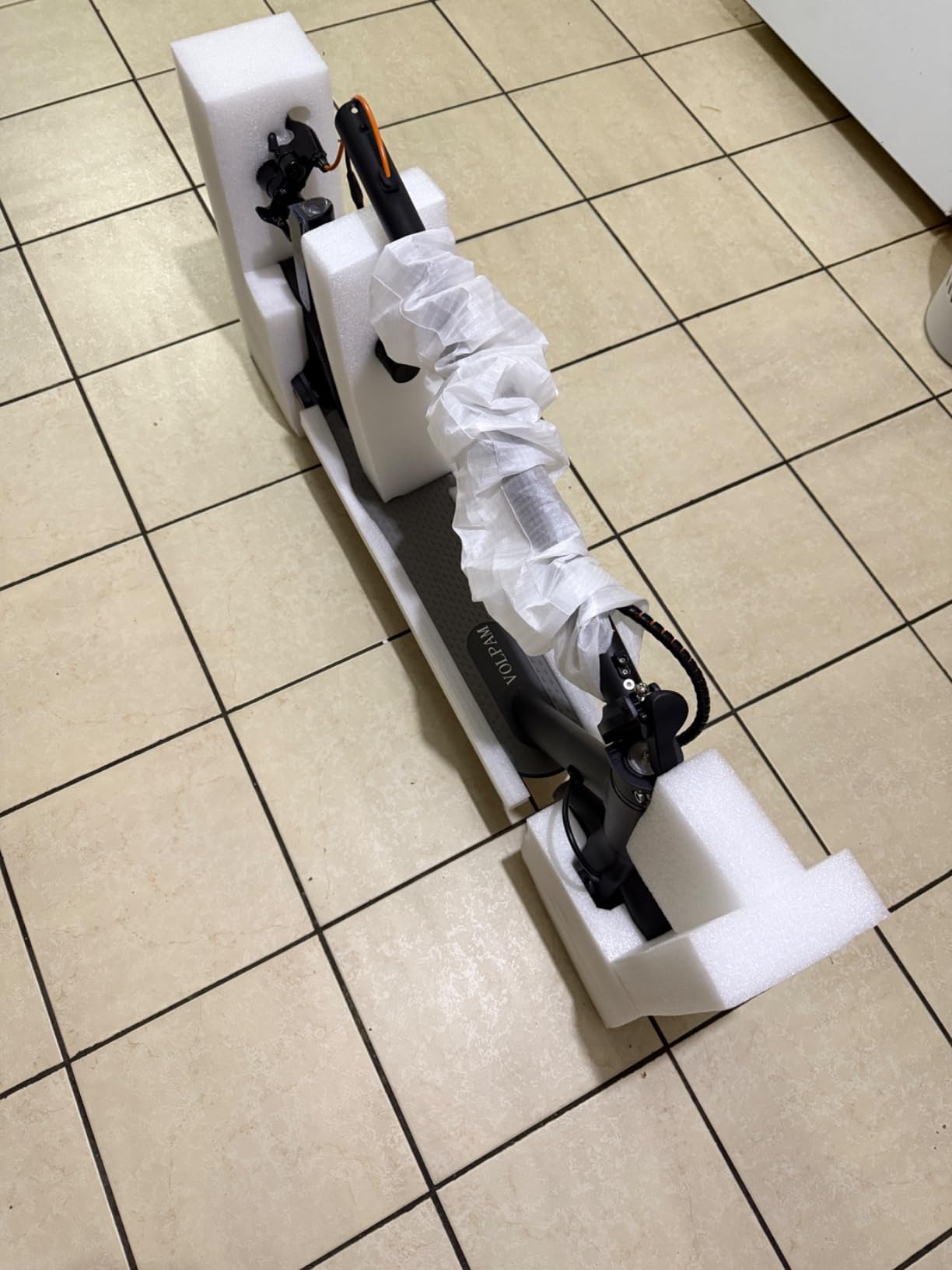
How much range you actually get
Assume a 6 to 9 mile real-world figure in gentle riding and considerably less if you ride fast or on hills. That makes it a good match for a commute of 3 miles each way, a campus, or a short last-mile link to a train station.
If you need more, the honest options are a bigger battery or a mid-range scooter, and this is not the model to stretch. Budget for a second charge point rather than hoping the range claim holds.
Who should buy it, and who should not
Buy it if your commute is short, your budget is genuinely tight, and you live somewhere flat. It is the easiest way to test whether scooter commuting fits your life before spending real money.
Do not buy it if you are over 218 pounds, if you ride in the rain regularly, or if your trip involves hills. Riders who want long range should read the next section instead.
3. MAXSHOT V1SPRO – Best Value With Dual Suspension and a Replaceable Battery
Maxshot Electric Scooter, 8.5″ /10″ /14″ Tire, 16/19/22 Mph Top Speed, 12/16/21/27/28/49/50 Miles Long Range, Folding Escooter for Adults and Kids with Seat Bag, Dual Braking, Dual Suspension, App
500W brushless hub motor to 22mph
42V 10.5Ah replaceable battery
37 pounds
UL 2272 certified, 265 lb max load
+ The Good
- Dual suspension and honeycomb tires smooth rough pavement with zero tire maintenance
- Only four screws to assemble
- Thumb throttle is more comfortable than a twist throttle
- Three speed modes suit different riding situations
- Realistic 15-17 miles in D mode for most riders
- The Bad
- Struggles on hills for full-size adult riders
- Front wheel develops a wobble above roughly 9-10 mph
- Heavy and awkward to carry
The MAXSHOT V1SPRO is the smartest buy in this roundup for a rider who covers 8 to 15 miles a day on neighborhood streets. It packs more into the package than scooters costing substantially more: dual suspension, a replaceable battery, UL 2272 certification, and a 265-pound capacity, all at 37 pounds.
Owners consistently report a 15 to 17 mile real-world charge in D mode, which is the most honest number in this entire list relative to what is claimed. The 22-mile figure is a max-condition claim. If you commute 7 miles each way, this makes the round trip in one charge with room to spare.
The dual-sided suspension and 10-inch honeycomb solid tires are the reason it rides so well without maintenance. There is no air pressure to manage and no tube to patch, yet the honeycomb pattern and the twin shocks absorb a surprising amount of neighborhood road damage. Setup takes four screws. The thumb throttle is a real upgrade over a twist grip, particularly on a longer ride.
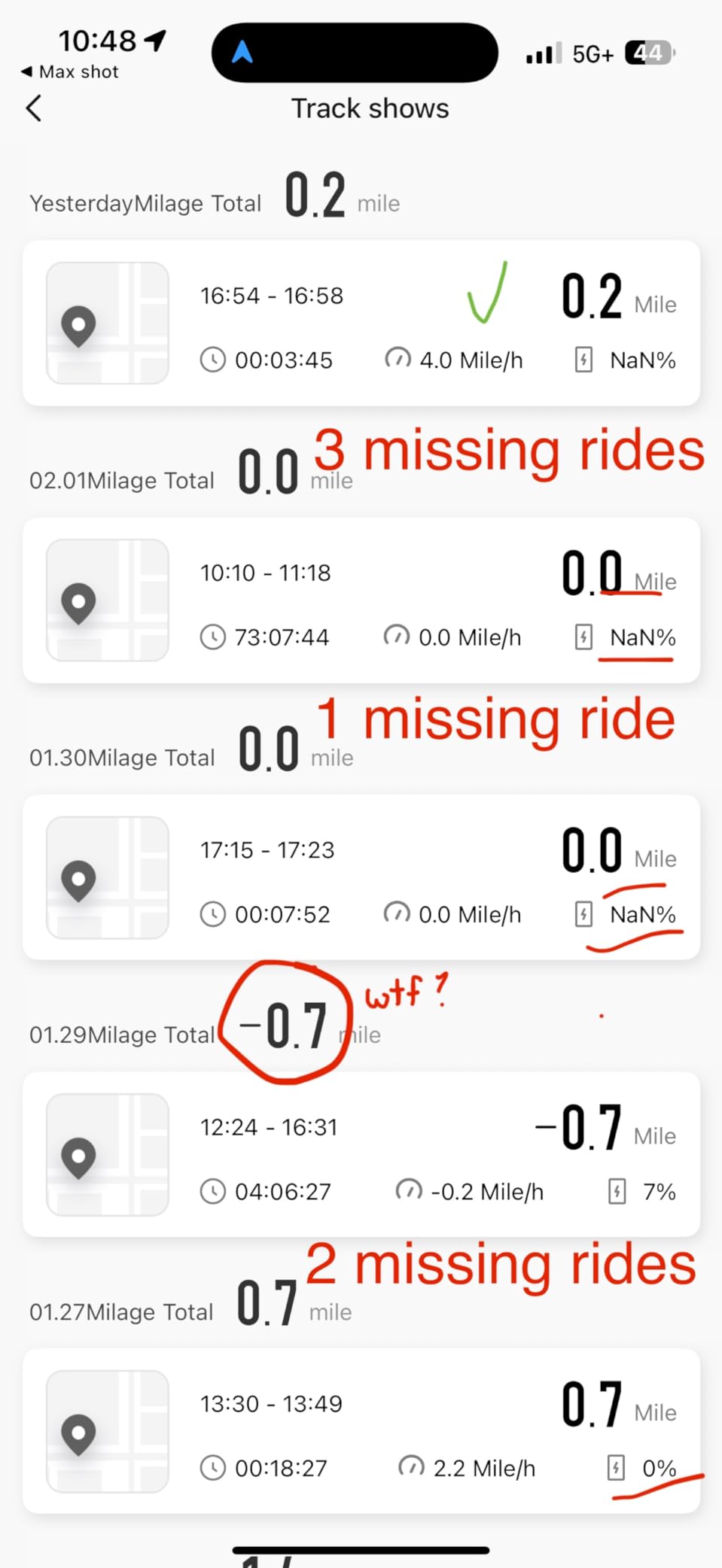
The honest weaknesses are hills and the front wheel. This scooter drains its battery quickly climbing gradients, and full-size adult riders feel that first. Above roughly 9 or 10 mph, some owners notice a vibration or wobble developing in the front wheel. There are also reports of units cutting out mid-ride on a full battery that restart after a charge cycle, and of a fender rubbing the body on turns.
At 37 pounds it is not a stairs-friendly scooter. And while the battery is replaceable, which is rare and valuable, a swap still means carrying a 10.5Ah pack somewhere.
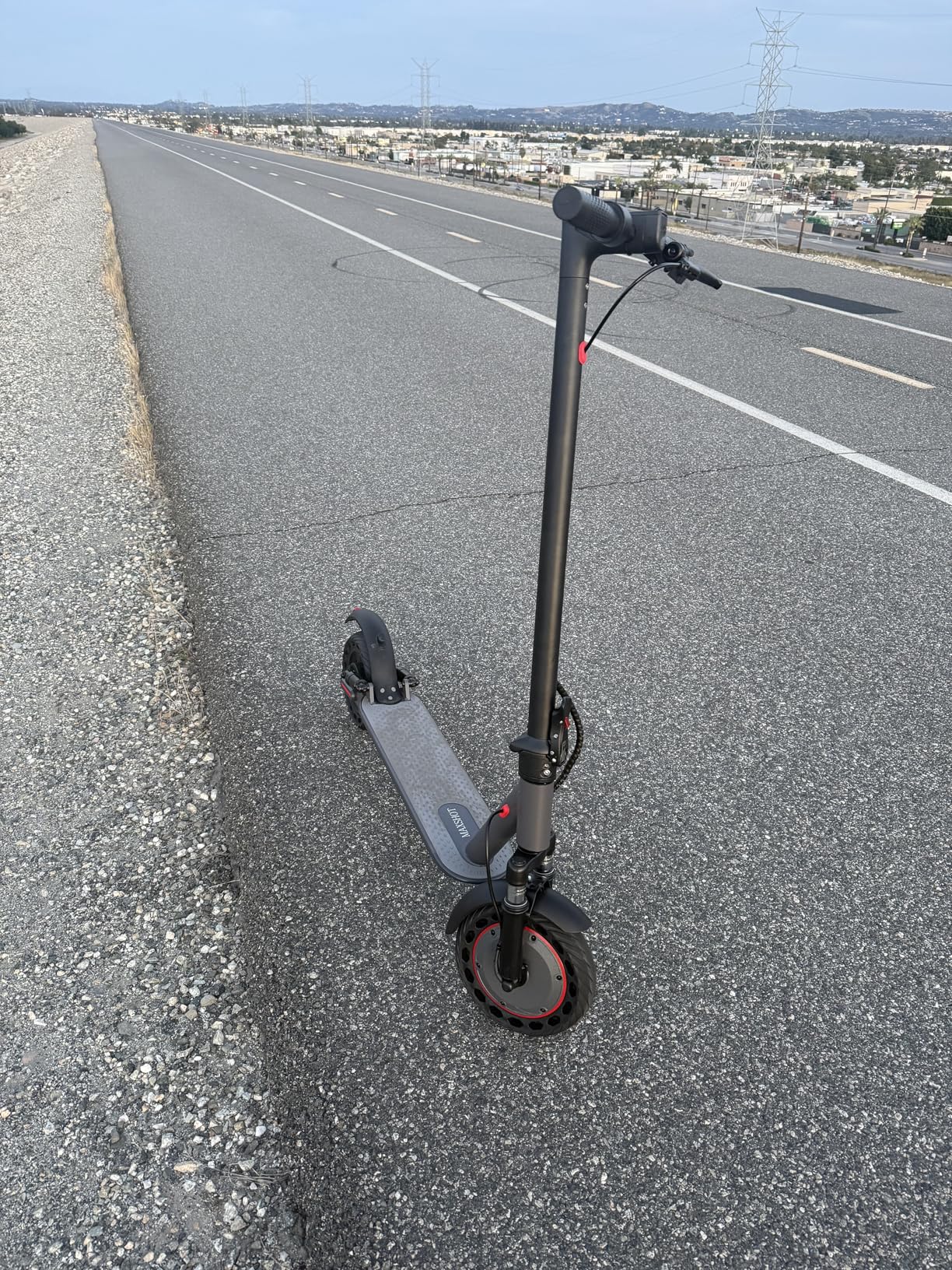
How much range you actually get
Plan on 15 to 17 miles per charge. That is a 7 to 8 mile each way commute with a genuine safety buffer, which is a much healthier margin than most scooters in this list give you.
The four to five hour charge cycle is short enough that an overnight top-up before a long day is realistic, and the replaceable pack is the standout feature if you eventually want a second battery for a long round trip.
Who should buy it, and who should not
Buy it if your route is flat or gently rolling, you are under 220 pounds, and you want comfort and certification without a premium price. It is also a good first scooter for anyone moving between a bike lane and rougher side streets.
Pass if your commute is hill-heavy or you are a heavy rider. In that case, the next pick, the Hiboy S2 MAX, has meaningfully more power and battery.
4. Hiboy S2 MAX – Most Versatile for Rough Pavement
Hiboy S2 MAX Adult Electric Scooter, 500W Motor, 40.4 Miles Long Range
500W motor to 19mph with 20% grade climbing
48V 11.6Ah battery, 40.4 miles claimed
41.4 pounds
UL2272 certified, 220 lb max load
+ The Good
- Genuinely long range for a 19mph commuter
- Pneumatic tires give real comfort over cracks and rough pavement
- Zero-start acceleration and strong hill performance at 200 pounds
- Folds in 3 seconds for bus and train use
- Support repeatedly shipped replacement parts
- The Bad
- Pneumatic tires are hard to service on the rear motor wheel without specialist tools
- Heavy for stairs and long carries
- Claimed 40.4 miles works out to 14-18 miles for most riders
The Hiboy S2 MAX is the scooter to buy if your commute runs over bad pavement, because its 10-inch pneumatic tires do something no solid tire in this roundup can: they absorb impact. Owners consistently single this out as the reason the ride feels better than the price suggests.
Range is the headline draw. The 48V 11.6Ah pack is rated for up to 40.4 miles, and that is by far the largest gap between claim and reality in this list. Most riders report 14 to 18 miles in real use. That is still one of the better real-world numbers we found, but you should plan the route with 16 miles as the anchor rather than 40.
Three riding modes let you tune the tradeoff. Eco runs 11 MPH, Normal 16 MPH, and Sport 19 MPH. The motor climbs gradients up to 20 percent, and owners at 200 pounds report strong hill performance with quick zero-start acceleration. That combination is what makes it viable on a route with any elevation change.
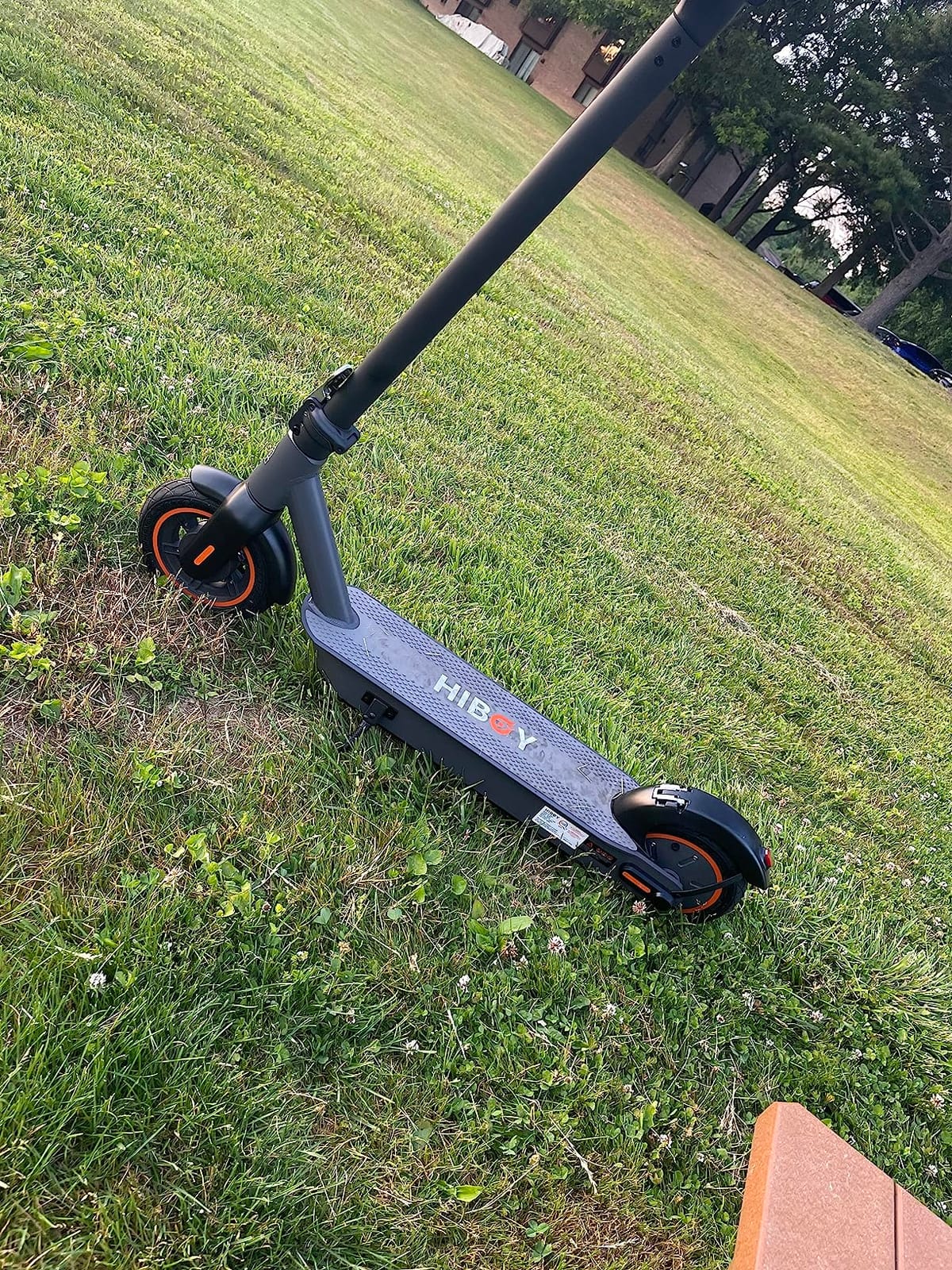
The new split wheel hub design is a genuinely clever piece of engineering. It speeds up inner tube replacement and ships with two spare tubes plus an air pressure detector, which matters because the rear wheel houses the motor and a conventional tube change there is a workshop job.
Even with that design, owners still find rear tire servicing difficult without specialist tools. At 41.4 pounds the scooter is heavy for stairs. The rear brake light is small and dim for night visibility, and the folding handlebar latch can feel insecure, with no physical key ignition for street parking.
There is a minority of reports of E7 error codes and motor or battery failures within months on early units. That is worth weighing against the support response, which owners describe as excellent and which has included whole replacement scooters.
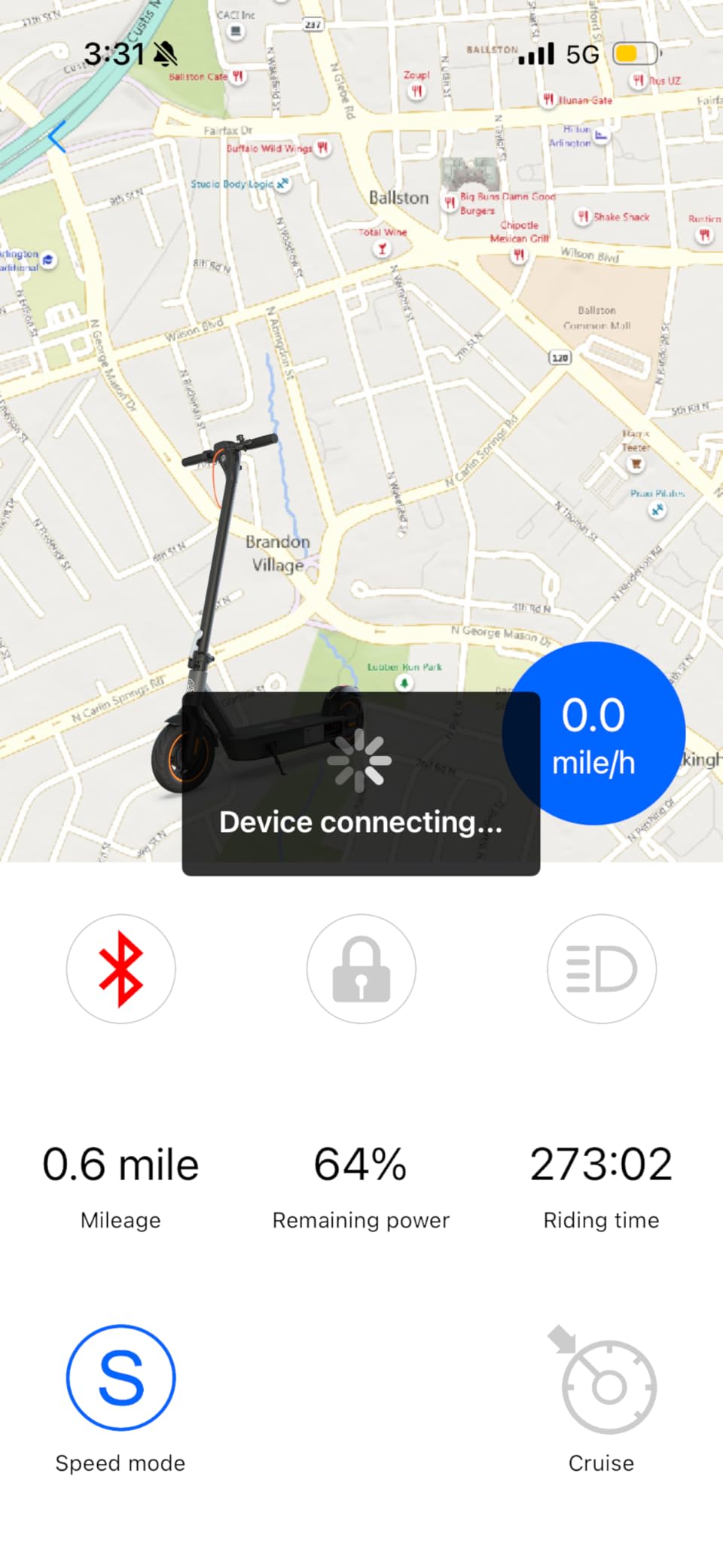
How much range you actually get, and where charging fits
Plan on 14 to 18 miles. That covers a 7-mile each way commute comfortably, or a 10-mile one-way trip with a charge at the office for the return leg. Fast six-hour cycles mean a top-up during a workday lunch break is realistic if the office has an outlet.
At 41.4 pounds it is a train-platform scooter rather than a stairs scooter. Check your transit operator’s weight rules before you commit.
Who should buy it, and who should not
Buy it if rough roads are part of your daily route, you ride under 220 pounds, and you want more real range than the mid-tier options. The pneumatic tires and the 20 percent grade capability are the two reasons to pick it over the S2 Pro.
Pass if you need to carry the scooter regularly, if you are near or over 220 pounds, or if puncture-free tires are a hard requirement. Riders who need to carry the scooter regularly should look at the lighter picks earlier in this list instead.
5. YHR HY-B25 – Best for Small Storage Spaces and Lightweight Commuting
YHR Electric Scooter for Adult,Up to 19/23 MPH and 30 Miles Long Range E Scooter,Portable Folding EScooter with Dual Brakes,8.5″/10″ Solid and Pneumatic Tire,Commuting Escooter App Control
500W peak motor to 19mph
Up to 30 miles claimed, UL2272 certified
265 lb capacity
Spring suspension with folding aluminum frame
+ The Good
- Holds one of the highest average ratings in this roundup
- Reaches 19mph on a 500W peak motor
- Folds in seconds for transit and small cupboards
- App controls cruise control and automatic lights
- UL2272 certification and dual brakes
- The Bad
- Range claims conflict between a 30-mile headline and a 15-mile bullet
- Only rear braking is listed in the specs
- 8.5-inch solid tires limit rough-road comfort
- Shorter 6-month warranty than most rivals
The YHR HY-B25 exists for a specific problem: a commute where the scooter has to live in a cupboard, a hallway, or the trunk of a small car. At that job it is one of the best performers here, and it holds a 4.4 average from 509 owners with a large share of five-star ratings.
Front-wheel drive is the technical detail that makes it interesting. On a driven front wheel, traction is better on wet surfaces than a rear-drive scooter of the same power, which is a meaningful advantage in a rainy city.
Now the honest part. The listing headline claims up to 30 miles while the bullet copy on the same page says 15 miles. That contradiction is exactly the sort of thing that produces buyer’s remorse. Plan for the lower number. Riders report a figure in the low-to-mid teens in normal use, which still covers most short commutes.
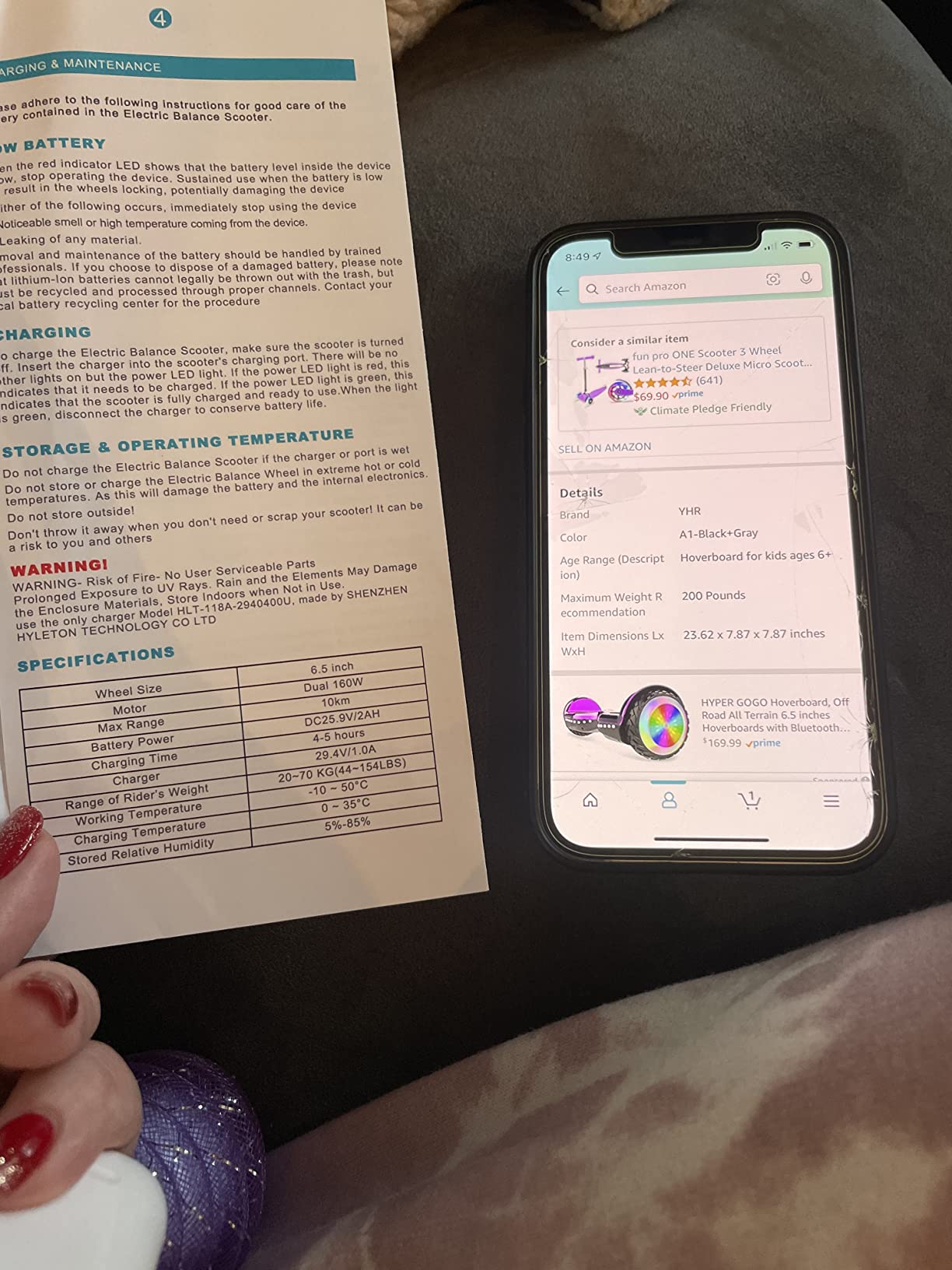
The spec sheet lists rear braking only, with no front brake listed, even though the marketing copy mentions dual brakes. That inconsistency is worth raising with support before you buy, because the difference matters on wet pavement.
Spring suspension and 8.5-inch solid tires give you some give but nothing like the pneumatic models. The warranty is 180 days, shorter than the one-year coverage most rivals in this list carry, though 24/7 support is advertised.
It also has an integrated bag hook, which sounds trivial until you are carrying groceries home on the scooter you used to get to work.

How much range you actually get
Budget for 12 to 16 miles in real city riding, not the 30-mile headline. That is a 6-mile each way commute with a comfortable buffer, or a 7-mile trip on a cold day when range shrinks.
Charge times are not specified in the listing, which is itself a buying signal. If your route is long enough that charge time matters, look at one of the models with a published figure.
Who should buy it, and who should not
Buy it if storage space is your binding constraint, you ride a short flat route, and you want app locking and cruise control at the bottom of the market. Wet-weather front traction is a bonus for city riders.
Pass if you need a long range, a confirmed front brake, or long-term warranty coverage. Riders covering more than 8 miles each way will get more from one of the 500Wh-plus packs further down this list.
6. NAVEE V25 and G5 Series – Best With Turn Signals and App Tracking
NAVEE G5 Pro Electric Scooter for Adults, Folding E Scooter with 800W Motor 20 mph Top Speed, Max 34 Miles Long Range, 10” Solid Tires Commuting Scooters with Dual Brakes Suspension System, APP
600W to 1000W options across four variants
Up to 25 miles on the V40 700W config
265 lb max load
10-inch solid tires, turn signals, IPX5
+ The Good
- Light for its power class with torque that climbs 20 percent grades
- Bright headlight and very bright brake light for night visibility
- Working turn signals plus app tracking and locking
- IPX5 water resistance held up in a downpour
- Modern styling and good build for the class
- The Bad
- Real range falls well short of the 40 km claim
- especially for heavier riders on hills
- Some variants have no suspension at all
- Very sensitive throttle where small bumps shift acceleration
- After-sales repair service reported as slow
This listing covers a family of NAVEE scooters rather than one model, and that matters. The range, motor, and price differ a lot between the V25, V40, G5, and G5 Max, so read the variant you are actually buying rather than the family name. The 700W V40 configuration is the one quoted at up to 25 miles and 19 mph, and that is the version to compare against other picks here.
What separates this family from the budget group is equipment. Working turn signals, a bright headlight, a very bright brake light, app-based GPS tracking and locking, and IPX5 water resistance that owners confirm held up in a heavy downpour. For a commuter riding in traffic at dusk, those details matter more than another 5 mph of top speed.
Torque is the other strength. Owners report it climbing 20 percent grades and describe it as light for its power class, which makes it a realistic transit-connected choice where weight matters.
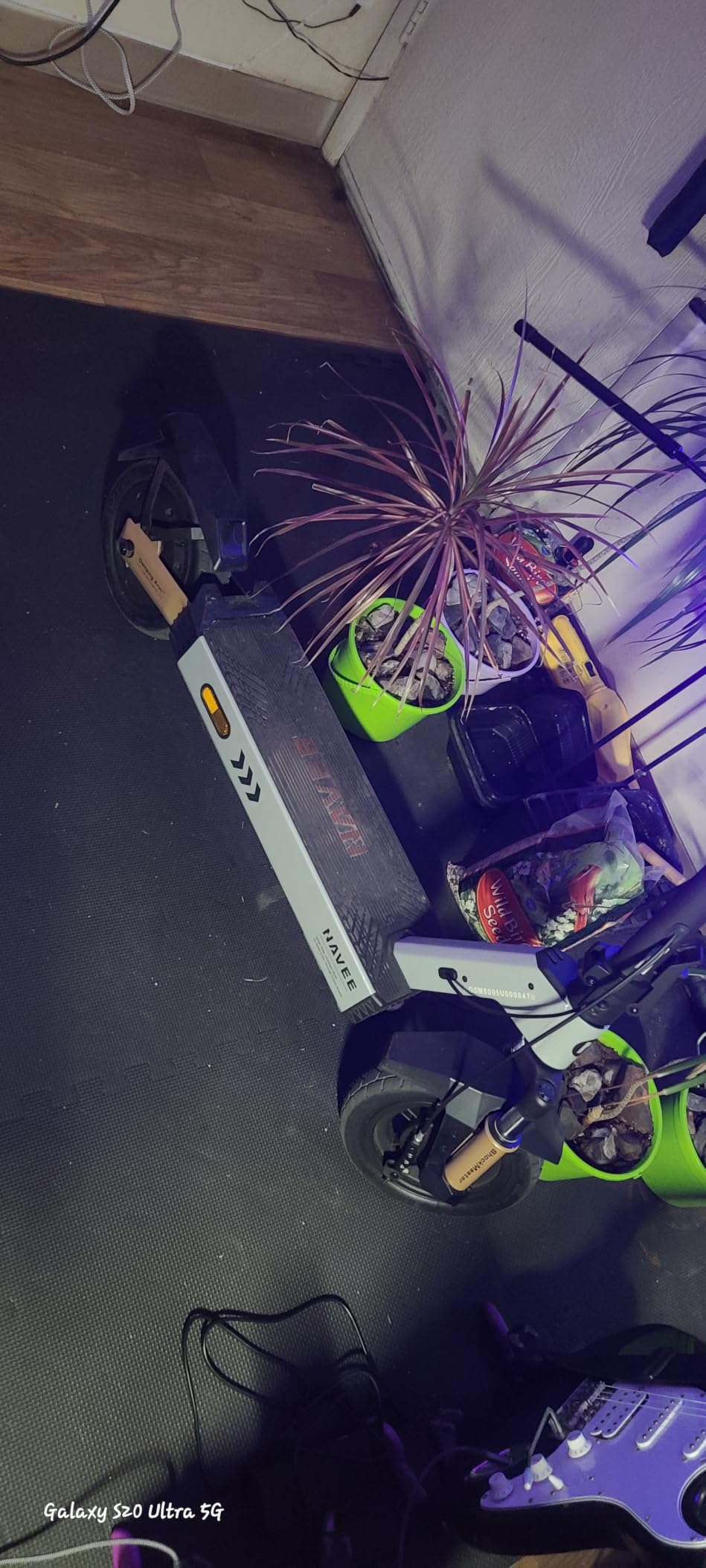
Range is where the criticism sits. Owners consistently report real figures well short of the 40 kilometer claim, particularly heavier riders in hilly terrain. If you are buying the 700W V40, plan on a figure in the mid-teens and confirm which battery your specific variant ships with.
Some variants ship with no suspension at all, and on city potholes that is felt directly. The throttle is very sensitive, so a small bump over a rough patch can produce an unintended surge, which is a safety point worth taking seriously in traffic.
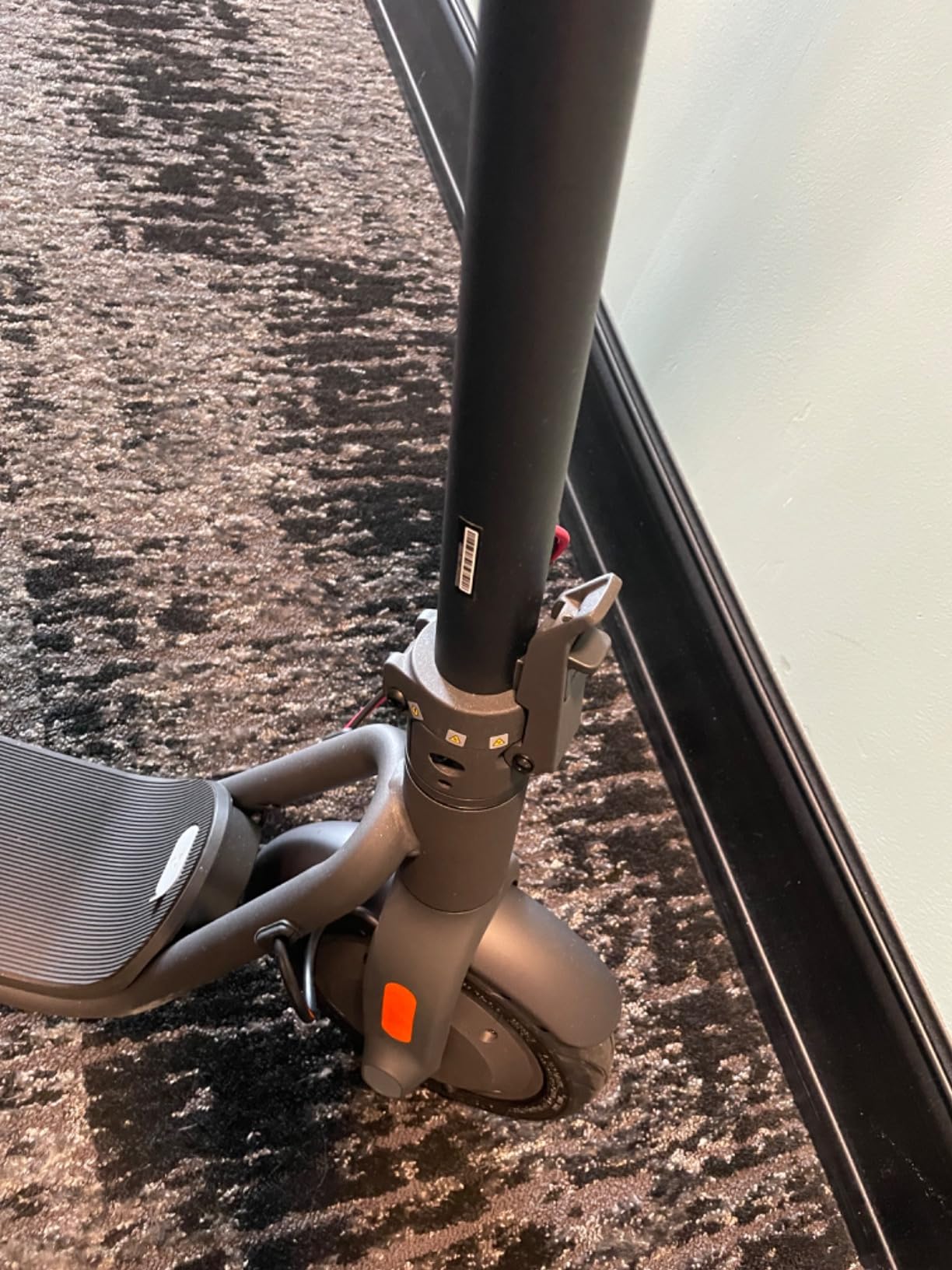
Build quality around the latch and the display reads as plastic-heavy to some owners, handlebar assembly screws are hard to start, the collapse latch is hard to align, and one buyer found a rear tire flat on a brand-new unit. After-sales repair service was reported as slow with poor communication, and that matters more here than a feature list would suggest.
How much range you actually get, and how to buy the right variant
Budget roughly 12 to 18 miles depending on variant, motor, and your weight. The listing’s own maximum range figure of 34 miles reflects a best case rather than a commute.
Check which variant you receive before ordering. Motor options run from 600W to 1000W, and suspension is not standard across the range, so the model on the product page is the model you will be reviewing.
Who should buy it, and who should not
Buy it if you ride at dusk or at night, want turn signals and real app tracking, and need a scooter light enough to carry onto transit. The visibility equipment is the best in this price bracket.
Pass if you need a proven long-range pack, if you are sensitive to a twitchy throttle, or if after-sales support matters to you. If range is your primary concern, the picks later in this list give you more certainty.
7. Segway ZT3 Pro – Best for Long Steep Climbs and Off-Pavement Routes
Segway ZT3 Pro Electric Scooter, Up to 24.9 MPH, 43.5-Mile Range
1600W peak motor to 24.9 mph
43.5 miles claimed in ECO mode
65.5 pounds
ANSI/CAN/UL-2272 certified by TUV Rheinland
+ The Good
- Exceptionally solid rattle-free build that holds up at speed over rough terrain
- Very quiet motor with strong acceleration even for 220-270 pound riders
- Handles long steep climbs while holding 25 mph
- Dual suspension and 11-inch tires make cracked pavement comfortable
- Owners report 400+ miles with no degradation
- The Bad
- 65.5 pounds is very heavy and awkward to lift
- Does not fit a typical car trunk without a carrier
- Tire casings puncture quickly on gravel and road debris
- Range drops sharply in D mode on hilly routes
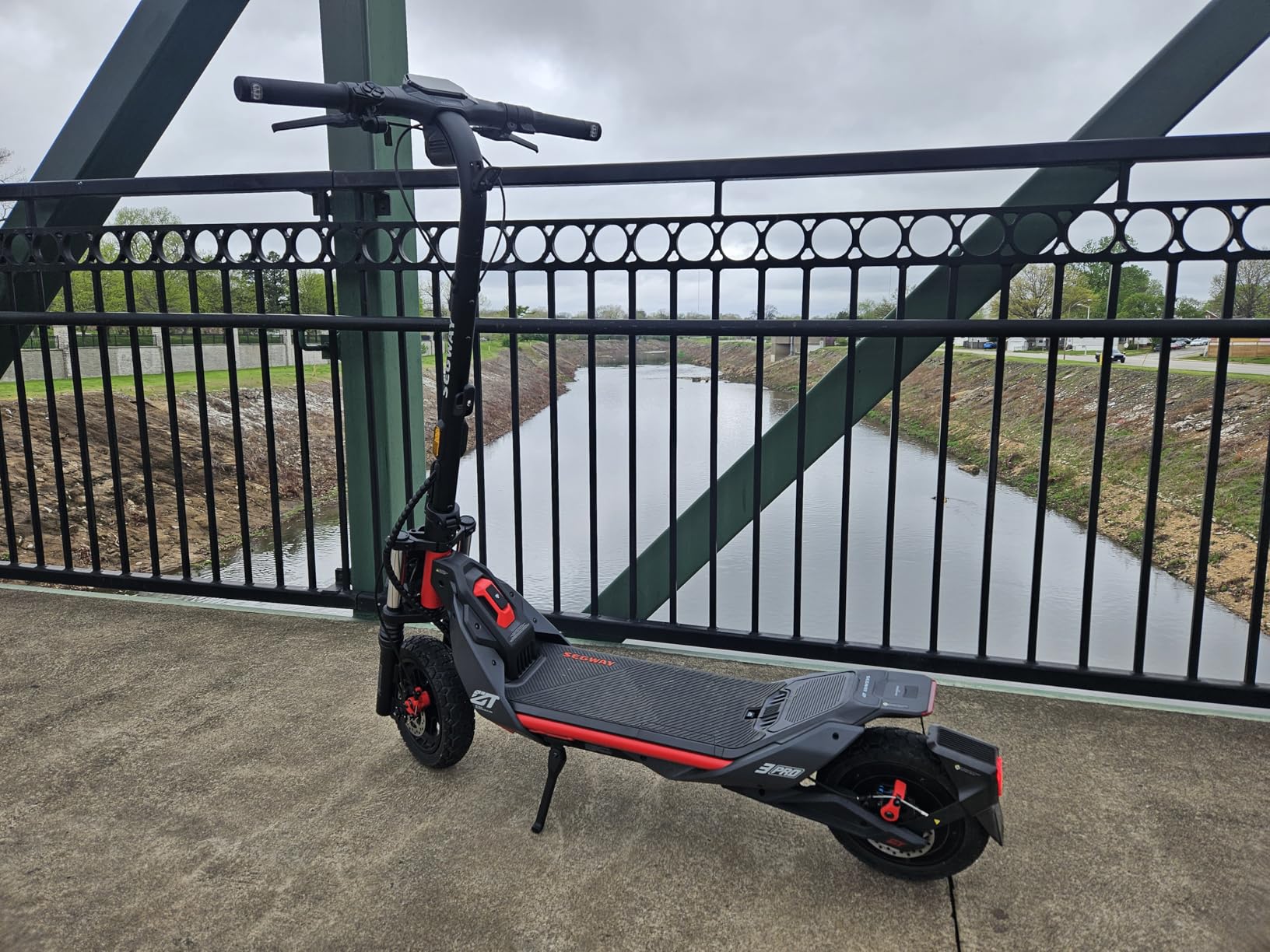
The Segway ZT3 Pro is the scooter to buy if your commute has a serious hill in it. The 1600W peak motor holds 25 mph up long steep climbs, and it is the only scooter in this roundup that owners describe as accelerating hard for riders in the 220 to 270 pound range.
It also has the highest average rating of any scooter we analyzed for this guide at 4.5, and the build quality is a step above everything else here. Owners call it solid and rattle-free, and several report more than 400 miles with no measurable degradation. Dual front telescopic and rear spring suspension plus 11-inch tubeless off-road tires make it the most composed ride over broken pavement at speed in this group.
Charging is the quiet advantage. Segway’s Flash Charge technology brings it from flat to full in 4 hours, which means a lunch-break top-up is realistic on a working day.
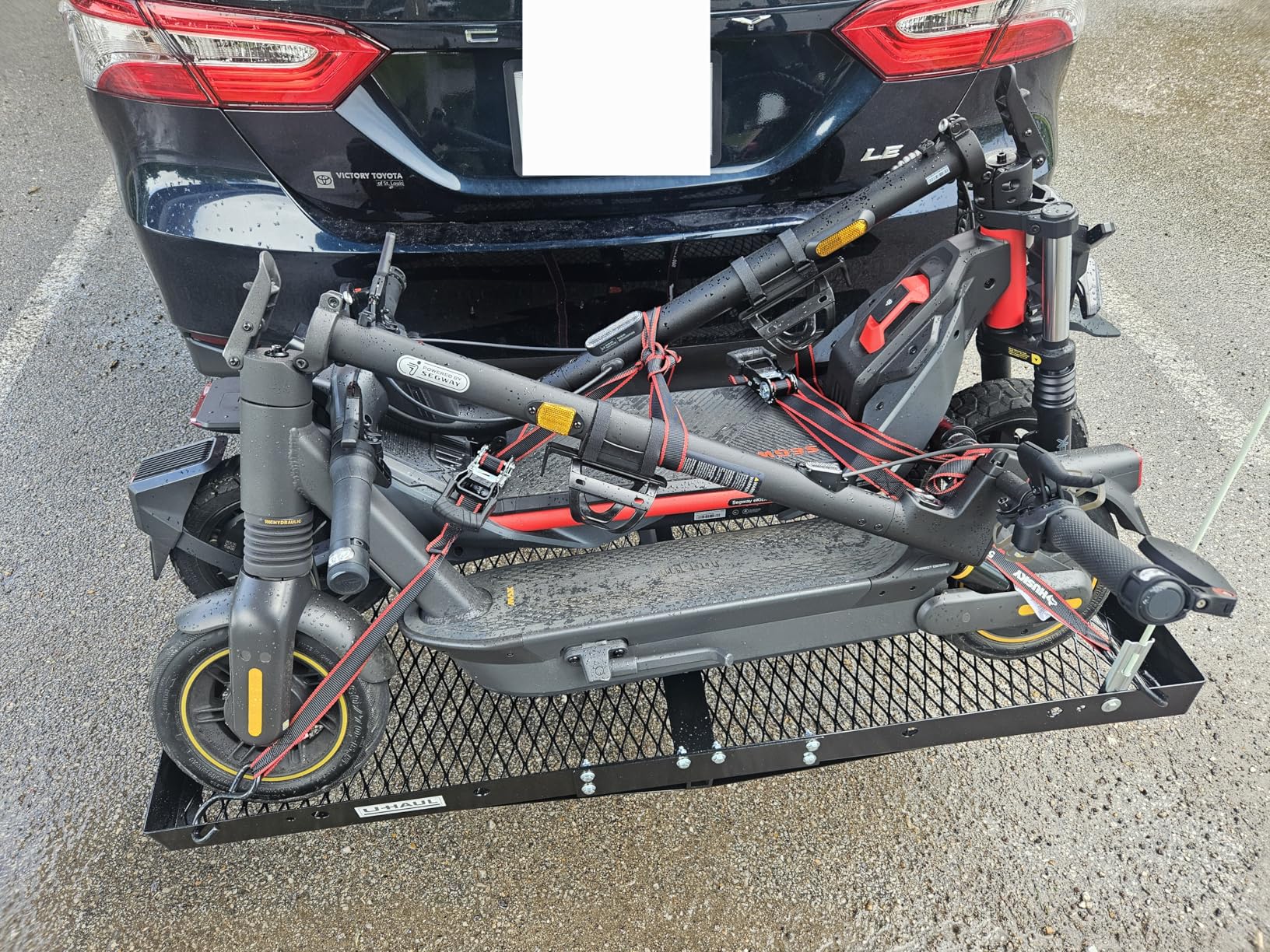
Now the reason it is not first on our list: 65.5 pounds. That is the second-heaviest scooter here, and owners describe it as awkward to lift to the point where a two-person delivery is often needed. It does not fit a typical car trunk without a carrier. If your commute involves a train, a bus, or a walkup, this is not your scooter.
The 11-inch tires are marketed as off-road but owners report punctures within days on gravel and road debris, so the casings are thinner than the positioning suggests. Range falls off sharply in D mode on hilly routes, so the 43.5-mile ECO figure is only meaningful if you are willing to ride slowly.
Braking is strong but not progressively modulated, and owners note the braking distance exceeds a basic bicycle. The custom button only cycles presets and cannot be reassigned, and the bell is quiet.
How much range you actually get
Realistic figures sit in the 20 to 30 mile band in ECO mode on flat or mixed terrain, and drop considerably in D mode on hills. That is still one of the stronger real-world numbers in this roundup for anyone riding at moderate speeds.
At 265 pounds of capacity, it accepts heavier riders than most. If you weigh 250 pounds, most of the rest of this list is out and this one is not.
Who should buy it, and who should not
Buy it if your route is hilly, you ride a heavy load or a heavy body, and you have somewhere secure to store it. The hill climbing, the quiet motor, and the 4-hour charge are worth the weight for those riders.
Pass if you need to carry the scooter, if storage is a corner of a hallway, or if you want to keep it in a car. For those riders the Segway MAX G3 below is 11 pounds lighter with better brakes.
8. Segway Ninebot MAX G3 – Best All-Weather Comfort With Self-Sealing Tires
Segway Ninebot MAX G3 Electric Scooter, Up to 28 MPH, 50-Mile Range
2000W peak motor to 28 mph
597Wh battery, up to 50 miles claimed
54.2 pounds
ANSI/CAN/UL-2272 certified, 286 lb max load
+ The Good
- Dual hydraulic suspension absorbs potholes at full 28mph
- Extremely strong dual hydraulic disc brakes
- 2000W peak motor climbs and accelerates hard for a stand-up scooter
- Bright adjustable headlight plus turn signals and underglow
- 3.5-hour fast charge with app GPS tracking and anti-tamper alarms
- The Bad
- Real range closer to 12-15 miles than the advertised 50
- Traction control causes inconsistent throttle on uneven pavement
- Throttle is touchy
- making steady speeds hard to hold
- Rear wheel repair requires motor disassembly
The Segway Ninebot MAX G3 is the most substantial commuter here, and the reason is the 597Wh battery, the largest pack in this roundup. The 2000W peak motor pushes it to 28 mph, and owners describe the acceleration as hard for a stand-up scooter.
Where it truly separates is ride quality in bad conditions. Dual adjustable hydraulic suspension absorbs potholes even at full speed, which is a genuine safety improvement on a broken city route rather than a comfort extra. The front and rear hydraulic disc brakes are the strongest in this group and can lock up for a fast, controlled stop, though they need some break-in miles before they work at their best.
At 286 pounds of capacity it accepts the heaviest riders in this roundup. The lighting package, a bright adjustable 6W headlight, turn signals, and underglow, is the most complete here, and IPX6 water resistance plus self-sealing 11-inch tubeless tires that auto-seal punctures up to 4mm make it the most weather-ready option we looked at.
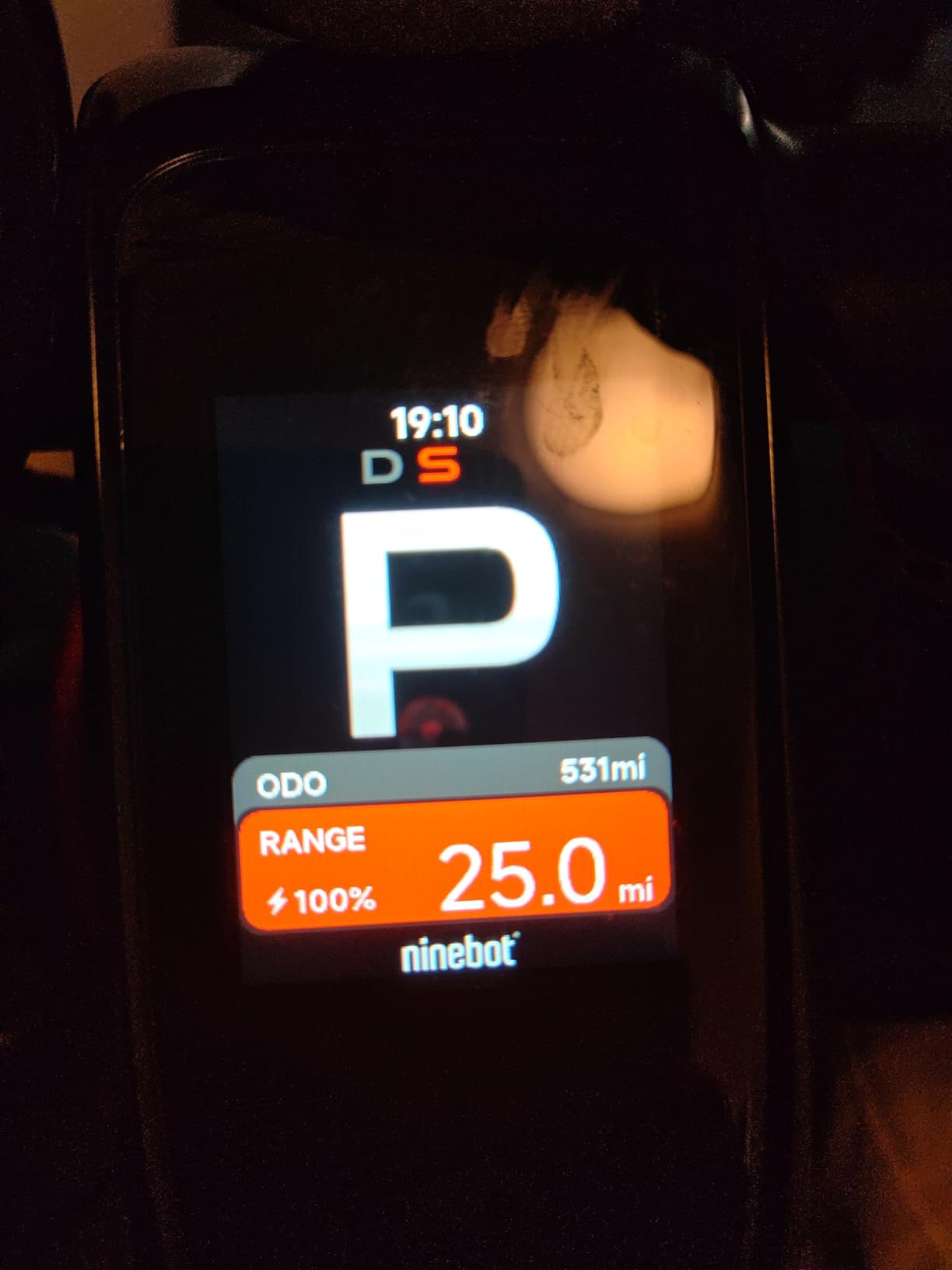
And then the range. This is the biggest rated-versus-real gap in the roundup: 50 miles claimed, 12 to 15 miles reported by most owners, especially in Sport mode. That is a severe haircut, and if your commute is 15 miles each way this scooter will not do it on one charge.
The traction control system, while well intentioned, causes inconsistent throttle response on uneven pavement, and the throttle itself is touchy, making steady sub-maximum speeds hard to hold over a long ride. Owners also report Bluetooth connection drops and early units losing tire air.
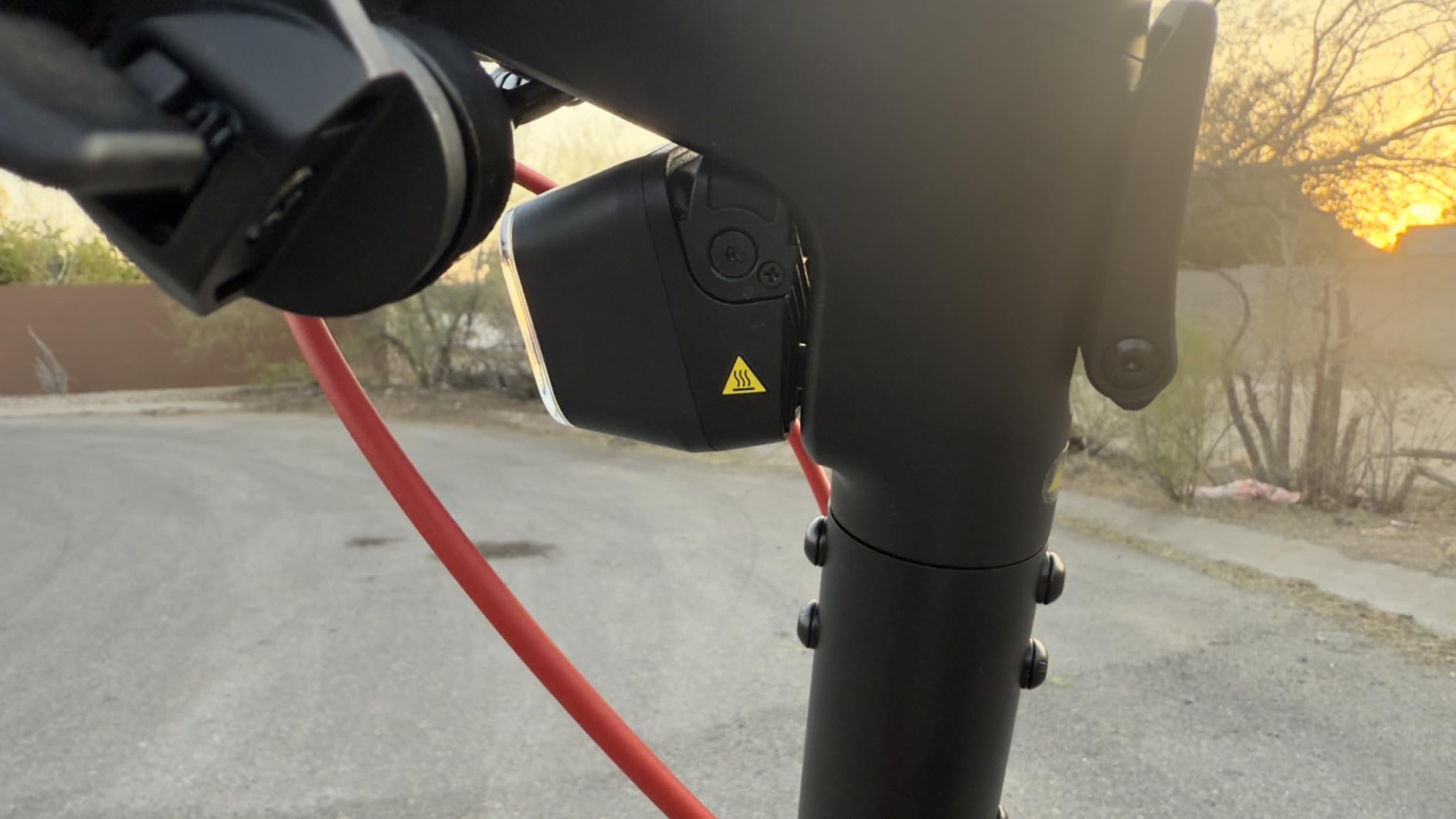
Two more cautions. Rear wheel repair is described as notoriously challenging because it requires motor disassembly. And at 54.2 pounds, with a handlebar height of 51.1 inches and no riser offered, taller riders may find the cockpit cramped.
How much range you actually get, and how to plan around it
Plan on 12 to 15 miles in normal use. That is a 6 to 7 mile each way commute, which suits a lot of riders perfectly, but it is not a long-range machine in practice despite the headline.
What it does have is charging flexibility. A 3.5-hour full charge, or 2.5 hours with the optional DC charger, means a lunch-break top-up is genuinely practical. Between fast charging and GPS tracking, it is the best commuter-connected scooter here.
Who should buy it, and who should not
Buy it if you ride in the rain, on rough roads, at night, or if you are a heavier rider who needs 286 pounds of capacity. The suspension, brakes, lighting, and charge speed are all best-in-class here.
Pass if your commute is longer than about 7 miles each way and you cannot charge at work. In that case the OOTD T10 further down delivers more actual miles per charge.
9. ECOROAD EC10 – Best for Pneumatic Comfort With a 540Wh Battery
ECOROAD EC10 Electric Scooter for Adults, 35 Miles & 25MPH 750W Motor
500W motor with 750W peak to 25 mph
540Wh battery, up to 35 miles verified
48.2 pounds
ANSI/CAN/UL 2272 certified by TUV Rheinland
+ The Good
- 750W peak power reaches 25 mph and handles city hills
- Dual shock absorbers with 10-inch pneumatic tires smooth out bumps
- Triple braking gives reliable stopping power
- App controls lock
- speed
- cruise control and ride monitoring
- U-lock and spare inner tube included in the box
- The Bad
- 7-hour charge time is the longest in this roundup
- 48.2 pounds is heavy to carry up stairs
- 38-inch handlebar height is low for taller riders
- 180-day parts warranty
- 10-inch pneumatics are puncture-prone
The ECOROAD EC10 is the value pick among the pneumatic-tire scooters, and its 540Wh battery is the second-largest pack in this roundup at a fraction of the cost of the Segway models. Owners also get a U-lock and a spare inner tube in the box, which saves a real trip to a shop on day one.
Power is genuinely good for the class. The 750W peak motor reaches 25 mph and handles city hills, and the 10-inch pneumatic tires with dual shock absorbers smooth out bumps noticeably better than any solid-tire model in this guide. If your route is rough, that combination is the reason to pick this one.
The triple braking system, a front drum brake, a rear disc brake, and an electronic braking system, gives you three options to slow down, which is reassuring on a 25 mph scooter. Turn signals are integrated into the rear lighting, which is rare at this level.
The 7-hour charge time is the longest in this roundup, and for a commuter that is a real problem. It means an overnight charge from empty, and it makes a mid-day top-up impractical. If you plan around charging at work, that cycle length has to fit your day.
At 48.2 pounds this is a heavy carry, and the 38-inch handlebar height is low for taller riders, which is worth checking in person if you are over six feet. The 180-day parts warranty is the shortest but one in this list. And 10-inch pneumatics are more puncture-prone than the solid versions, so budget for occasional flats.
The frame is aerospace-grade aluminum alloy and folds in seconds, which is good. It is the scooter for a rider who values a soft ride and a big pack more than fast charging or low weight.
How much range you actually get
The listing describes the 35-mile figure as verified rather than theoretical, but treat it as a best case. In real commuting, a 540Wh pack at this weight and speed realistically delivers in the mid-to-high teens for a typical rider, and less in cold weather or on hills.
That is enough for a 7 to 8 mile each way commute on one charge, which is a good outcome given the price gap to the Segway models.
Who should buy it, and who should not
Buy it if your pavement is rough, you want air-filled tires without a premium price, and you can charge overnight rather than during the day. The included U-lock matters for street parking.
Pass if you need a fast turnaround charge, if you have to carry the scooter up stairs, or if you are tall and want a higher handlebar. Verify the deck-to-bar height before ordering.
10. OOTD T10 – Best for Genuine Long-Distance Real-World Range
T10 Electric Scooter for Adults, 11″ All-Terrain Tire Up to 46 Miles Range
900W brushless motor to 31 mph
48V 18Ah battery, 46 miles claimed
62 pounds
265 lb max load, 2-year frame warranty
+ The Good
- One 240 pound rider logged 34 real-world miles on a single charge
- 11-inch tubeless tires plus dual suspension give a smooth car-like ride
- Three clearly separated speed modes for paths
- roads and shared spaces
- Very bright dual headlights plus rear light with brake and turn-signal functions
- No app required
- key ignition and factory speed cap
- The Bad
- 62 pounds is the heaviest in this roundup
- Build quality reported as cheap with twisting frame and bolts needing tightening
- Weak torque at around 200 pounds on steep hills
- Less traction in puddles and brakes squeak
- No app and no regenerative braking
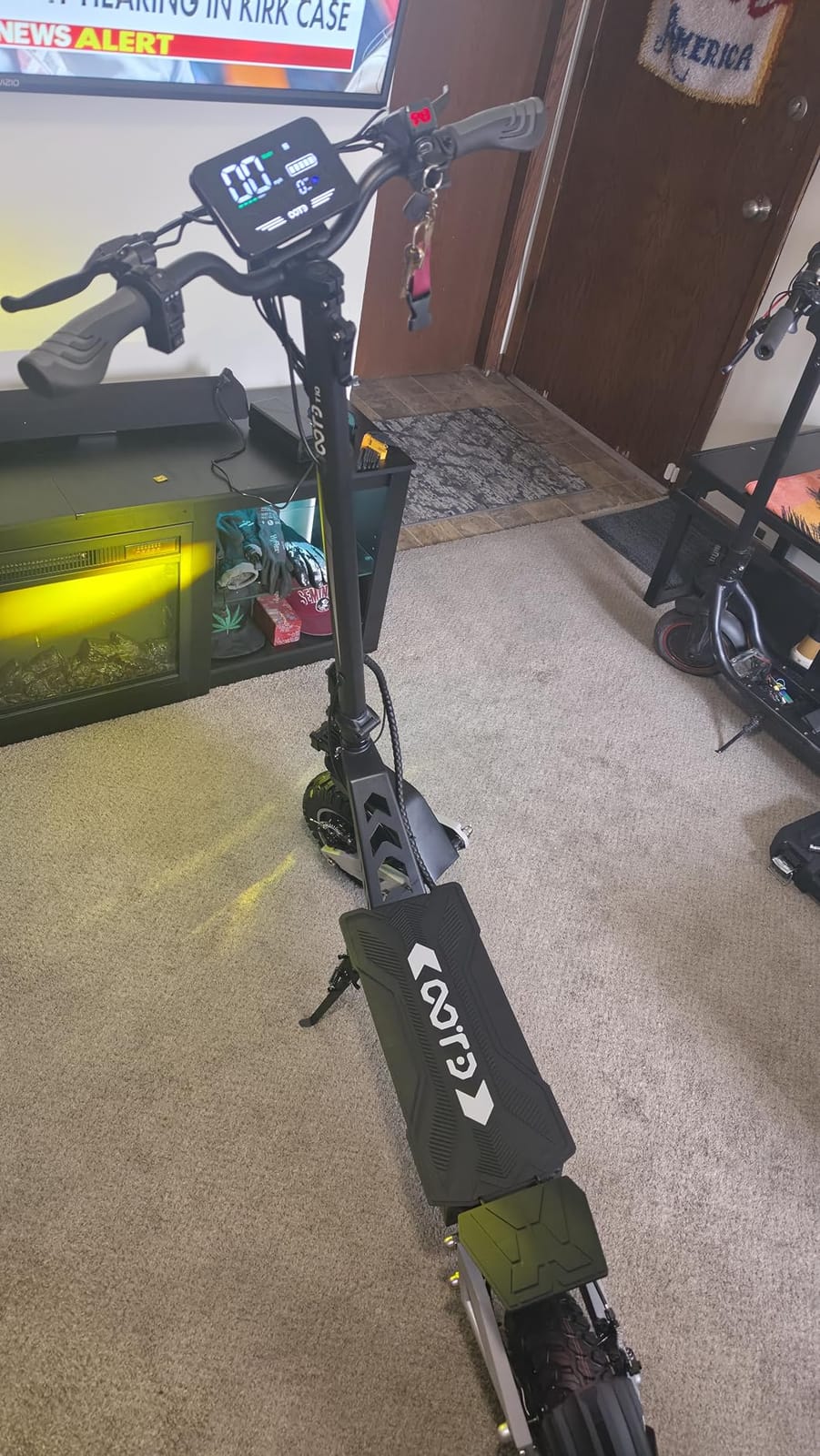
The OOTD T10 is the only scooter in this roundup where the claimed range and the measured range are close to each other. A 240-pound owner logged 34 real-world miles on a single charge from a 46-mile claim, which is a haircut of roughly a quarter rather than the two-thirds gap most of the field shows.
Why? The 48V 18Ah battery is the largest capacity in this list, and the 900W brushless motor reaches 31 mph with a claimed ability to handle slopes up to 35 degrees. More battery and a motor that does not spend energy climbing means the pack goes further. If your commute is genuinely long, that combination is what you are paying for.
Ride quality is also strong. The 11-inch semi-off-road tubeless tires with dual shock absorbers produce what owners describe as a smooth, car-like ride over rough ground, and the ride is the most isolating of any scooter here.
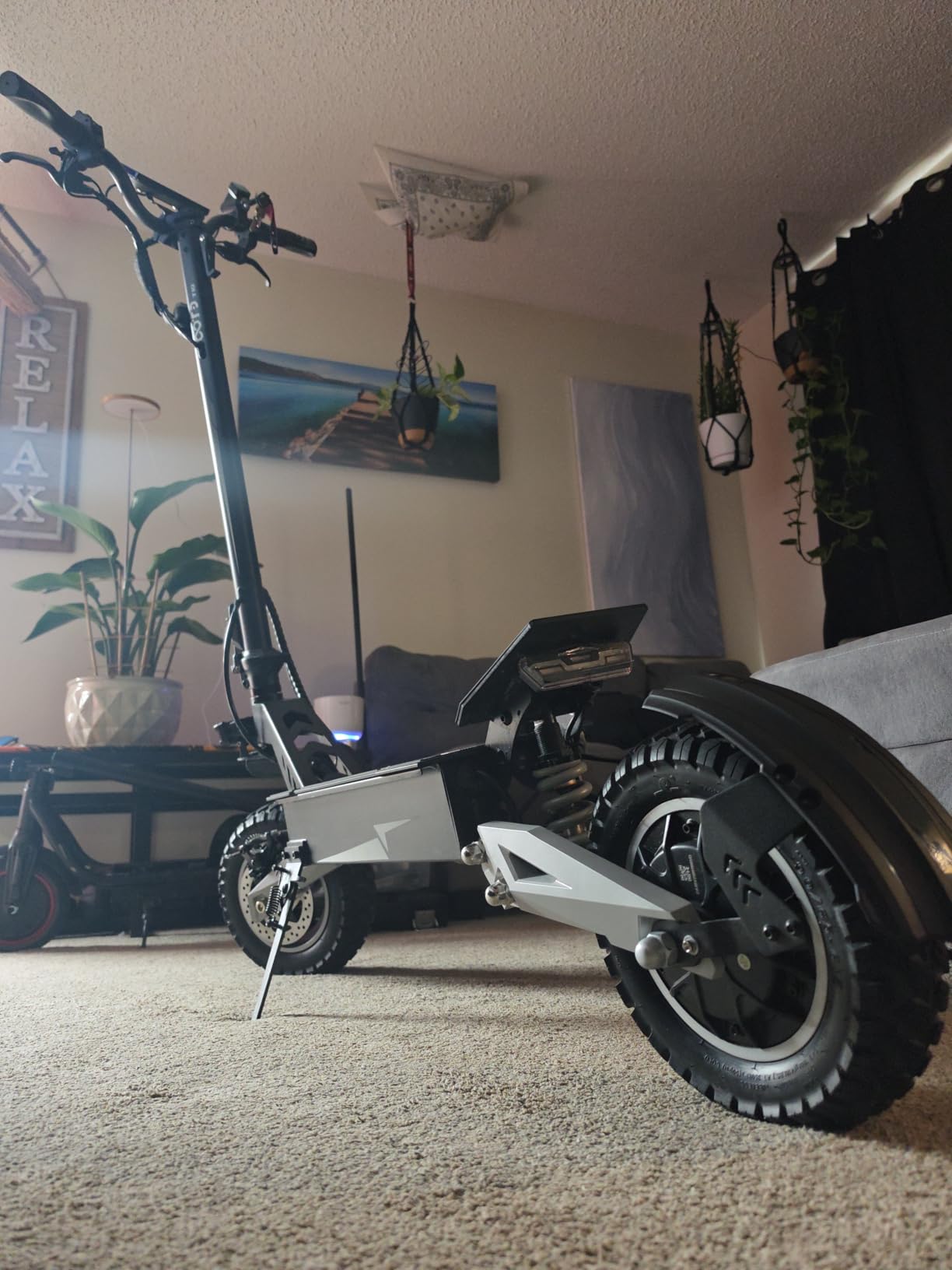
Two oversized LED headlights and a rear light combining brake and turn-signal functions give you the best visibility package in this roundup. Three clearly separated modes at 15.5, 21.5, and 31 mph make it easy to comply with different speed limits on shared paths and open roads in a single commute.
Some riders actively prefer that there is no app. A key ignition and a factory speed cap give a different kind of reassurance, and the scooter arrives 90 percent assembled.
Now the build quality, which is the real issue. Owners report a frame that twists, bolts that need constant tightening, and one snapped handlebar. That is a serious complaint on a scooter people ride daily for years. The 62-pound weight is the heaviest here and hard to move solo.
Torque is modest for heavy riders: at around 200 pounds, steep hills require a kick-assist. Traction in puddles is reduced, the brakes squeak slightly, and there is no regenerative braking.
How much range you actually get
Plan on 30 to 34 miles for a heavy rider, which is the best real-world number in this guide. That covers a 15-mile one-way commute on a single charge with room to spare, a scenario almost nothing else here can do.
The 6-hour charge is long but predictable. Plan an overnight charge before a long day, and treat the 265-pound capacity and adult-only sizing as real limits.
Who should buy it, and who should not
Buy it if your commute is longer than about 12 miles each way, if you ride in poor surface conditions, and if you have a garage or ground-floor storage spot. For a long commute where you cannot charge at work, this is the pick.
Pass if you care about long-term build durability above all, if you need to carry the scooter, or if you weigh under 160 cm. The frame complaints and the adult-only sizing are not minor.
11. NAVEE GT3 – Best for Broken Pavement and Gravel Paths
NAVEE GT3 Electric-Scooter-Adults, e Scooter, Fast 19.9 Mph, 700w 500w Motor with Suspension, Long Range 30 Miles, 10 inch Tires All Terrain, Foldable for Commuter Men Adult Teens Students Heavy Duty
700W high-torque motor to 19 mph
357Wh battery, up to 31 miles claimed
46 pounds
UL 2272 and ANSI/CAN/UL-2272 certified, 265 lb load
+ The Good
- Dual-sided damping arm suspension delivers a smooth stable ride over broken pavement
- Handles gravel and grass as well as pavement
- Triple braking stops confidently and recycles charge via EBAS
- App with electronic lock and Apple Find My tracking
- 3-second fold at 46 pounds and a clear 3.6-inch display
- The Bad
- Headlight is dim for night riding at full speed
- Brakes feel sketchy on downhill grades
- Small battery drains quickly when swapped frequently
- Undocumented park mode engages after 5-10 seconds of stopping
The NAVEE GT3 is the best suspension in this roundup per pound of money. The quadruple suspension with dual-sided polymer damping arms, paired with 10-inch tubeless fat tires, is what owners point to first. The ride over broken pavement is stable at 20 mph in a way that no other scooter at this level manages.
It also handles surfaces that are not pavement at all. Owners ride it on gravel and grass without complaint, which opens up commute routes along canal paths, park trails, and farm roads that would finish most budget scooters.
The braking package is triple: a front drum brake, a rear disc brake, and EBAS regenerative braking that puts charge back on descents. The app adds an electronic lock and Apple Find My integration, which for a scooter left at an office all day is a genuine anti-theft measure rather than a gimmick.
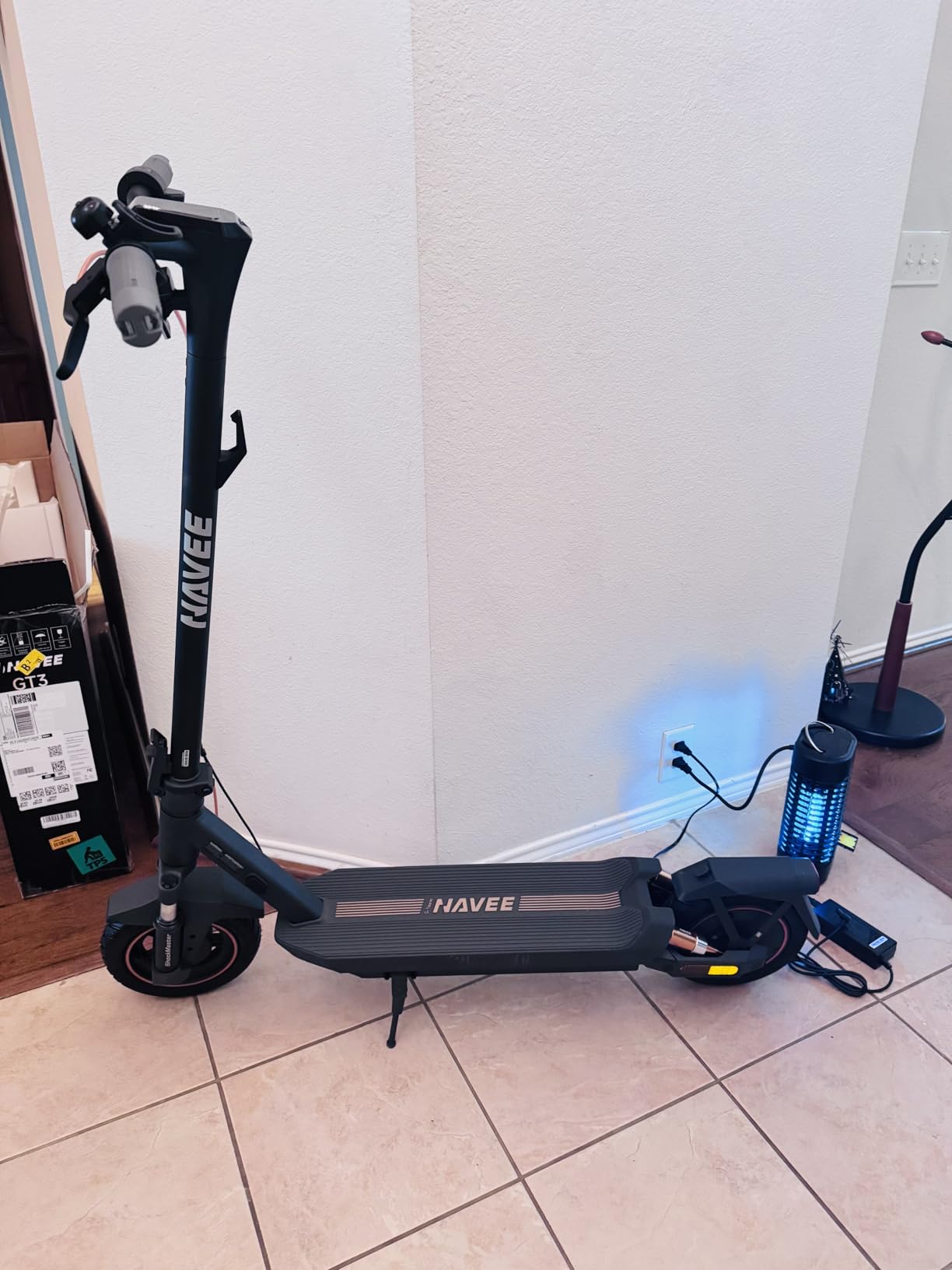
The 700W GT3 configuration has a 357Wh battery, the smallest pack here, and the 31-mile claim drops fast once you ride at speed or on hills. Owners also report the battery draining quickly when swapped frequently, and one reported constant tire-pressure loss.
The headlight is the complaint to take seriously. Owners describe it as dim for night riding at full speed, and one crash was attributed directly to being unable to see. If your commute includes darkness, pair this scooter with a light or choose a different pick.
Downhill braking is also described as weak, working only acceptably on flat ground, which is a limitation worth weighing on a hilly route. And the automatic park mode that engages after five to ten seconds of stopping is undocumented and confusing to new owners.
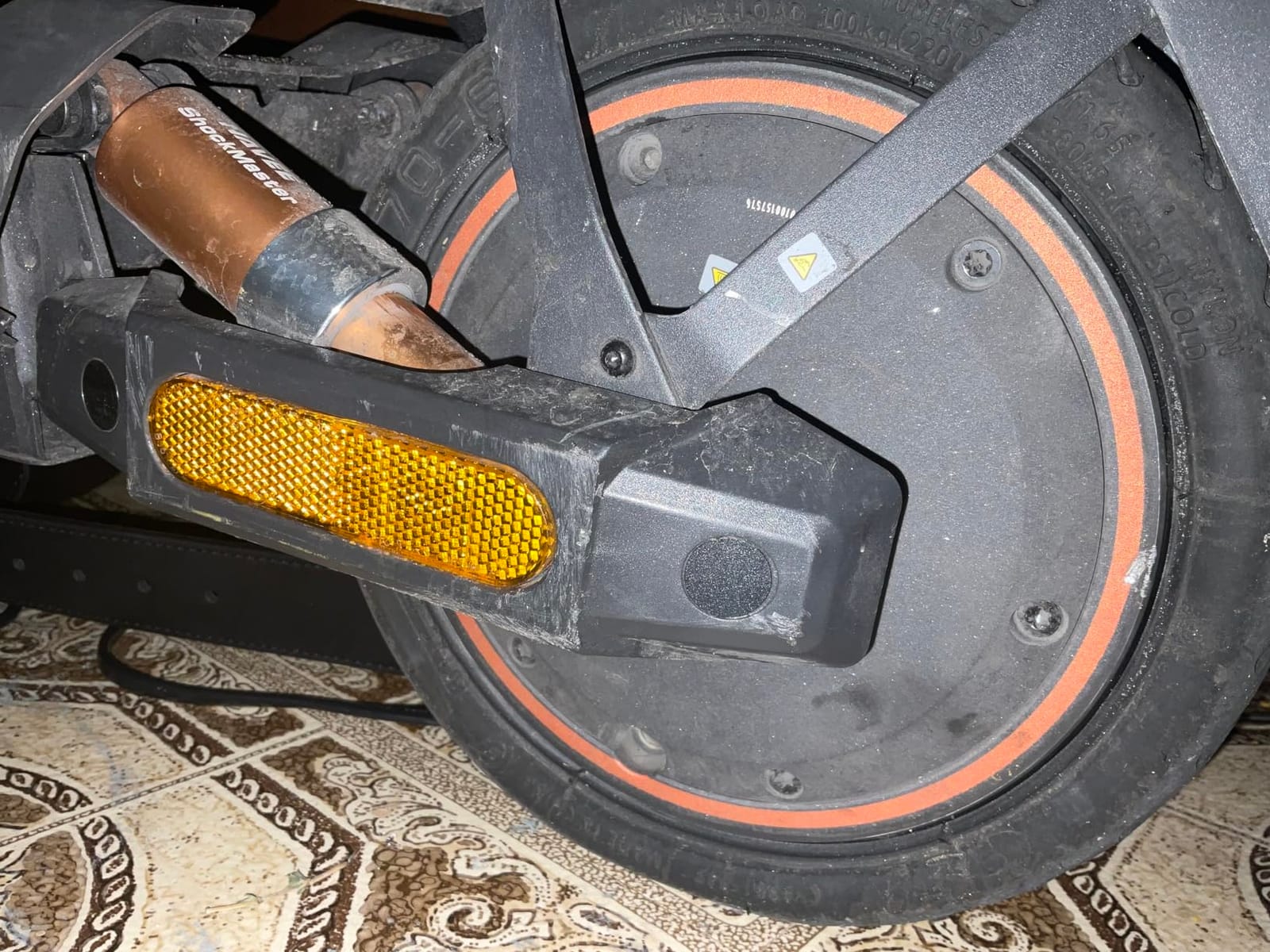
How much range you actually get
Plan on 12 to 16 miles from the 357Wh pack at commuting speeds. That is a 6-mile each way trip, and the larger GT5 MAX variant in the same series goes considerably further if you need it.
Check which configuration you are ordering, because the series spans 700W to 1638W motors and 30 to 55.9 mile claims, and only some of those are the model being reviewed here.
Who should buy it, and who should not
Buy it if your route mixes pavement with gravel or broken road, if you want app tracking with Find My, and if you want the smoothest ride at this level without moving to a much larger scooter.
Pass if you ride at night regularly, if you ride long steep descents, or if you need more than about 8 miles each way on one charge. The battery is simply too small for that.
12. Hiboy X300 – Best for Big Tires, Wide Decks, and Large Riders
Hiboy Electric Scooter, 700W Peak Motor, 12″ Pneumatic Tires, 23 Mph & 38 Miles Range, Hydraulic Suspension, Folding Commuter Electric Scooter for Adults
500W motor with 700W peak to 23 mph
Up to 38 miles claimed
52.9 pounds
265 lb max load, UL2272 certified
+ The Good
- 12-inch pneumatic tires with a hydraulic front shock make light work of potholes
- Long real range with one owner exceeding 40 miles on eco mode with hills
- Powerful in Sport mode for climbing steep city hills
- Extra-wide deck suits large feet
- Turn signals and an included phone holder
- The Bad
- 52.9 pounds is far too heavy to carry up stairs alone
- Pneumatic tires are puncture-prone and one rear tire was flat out of the box
- App lock only works while the scooter is powered on
- Folding latch bolt sheared off on two separate units
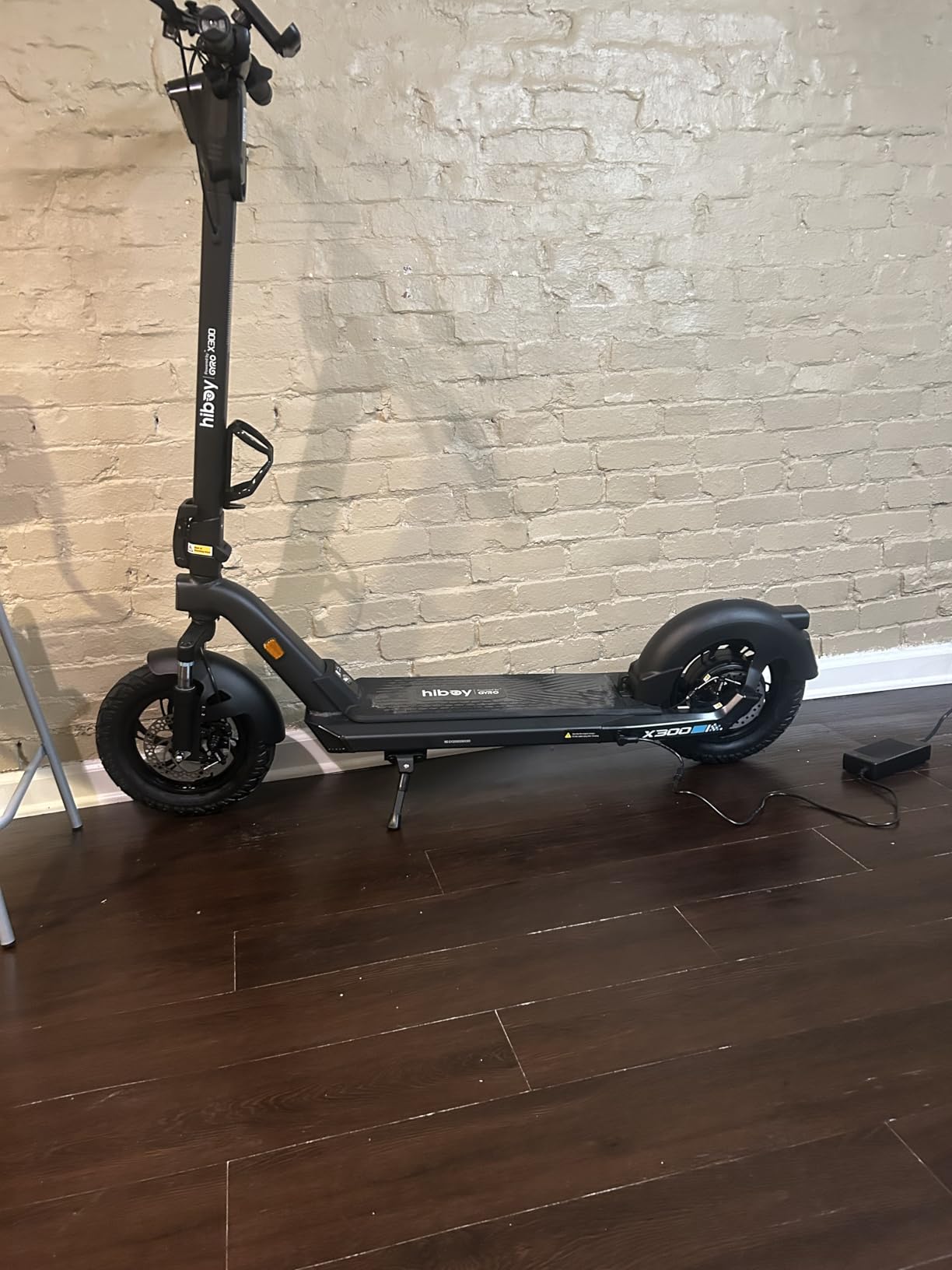
The Hiboy X300 is built around the 12-inch wheel size, and that is the whole argument for it. Larger tires roll over cracks, potholes, and gravel better than anything else in this roundup, and a hydraulic front shock absorber adds real control on rough pavement where the others rely on springs alone.
Range is the surprise. One owner exceeded 40 real miles on eco mode with hills included, which is not a figure you would expect from a scooter in this class. Sport mode delivers serious climbing power for steep city hills, so the motor is not the limitation here.
The extra-wide deck is a real benefit for larger feet, and 265 pounds of capacity covers most adult riders. Turn signals and an included phone holder are both rare additions at this level. The lock mode resists rolling if someone tries to move it.
At 52.9 pounds it is far too heavy to carry up stairs alone, and that is a dealbreaker for anyone whose commute includes a walkup. The 57.1-inch length is long, so check your storage space before ordering.
The tires are the weakness. Twelve-inch pneumatics are more puncture-prone than smaller versions, and one owner received a scooter with a flat rear tire out of the box. The app lock only functions while the scooter is powered on, which leaves it vulnerable parked and switched off.
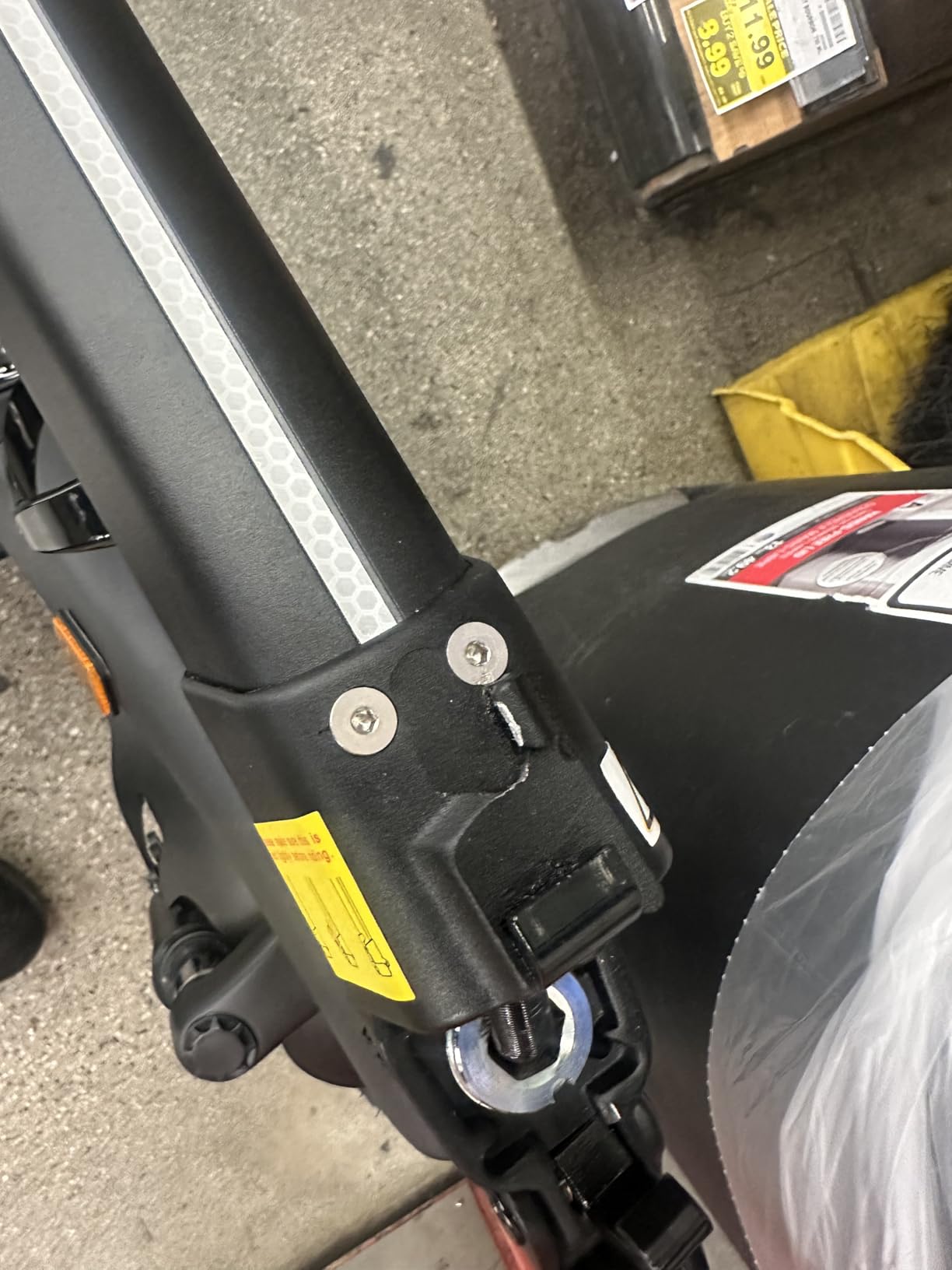
Most concerning, the folding latch bolt sheared off on two separate units, and manufacturer phone support was reported as unreachable in that situation. When the folding mechanism is what is broken, and the company does not answer, that is a serious risk on a scooter that folds every day.
Eco and Drive modes struggle on hills and drain the battery quickly, while Sport mode is where the range disappears entirely.
How much range you actually get
Plan on 20 to 30 miles in eco and drive modes for most riders, with Sport mode cutting that sharply. That is enough for a 10-mile each way commute on one charge, which few scooters in this list can do.
Three modes at 13, 18, and 23 mph let you pick the range and speed tradeoff per trip, which is a useful feature on a mixed route with different speed limits.
Who should buy it, and who should not
Buy it if you have large feet, ride on genuinely bad roads, and want a long commute without charging at work. The 12-inch tires and the wide deck are the reasons.
Pass if you need to carry the scooter, if punctures would frustrate you, or if reliable phone-based support matters to you. The latch failure reports are the deciding factor against a daily-commute purchase.
How to Size an Electric Scooter for Your Commute?
Most people buying a long-range commuter scooter do the arithmetic backwards. They find a scooter with an impressive range number and then hope their commute fits. Do it the other way around and the choice becomes obvious in about two minutes.
Step one is your round trip. Multiply your one-way distance by two. If you work from home three days a week, use your average. A 6-mile one-way commute is a 12-mile round trip, not a 6-mile trip.
Step two is the real-world conversion. Take the manufacturer range claim and apply a 0.5 to 0.6 multiplier for city commuting at speed with a normal adult rider. Then add a 20 percent buffer for cold weather and detours. The OOTD T10’s 46-mile claim becomes roughly 34 miles and 41 after the buffer, and the Segway MAX G3’s 50-mile claim becomes about 30 miles and 36 after it.
Step three is watt-hours. Multiply your required real-world miles by roughly 17 watt-hours per mile for a typical 19 to 25 mph commuter, and you have the pack size you need. Twelve real miles comes to about 204Wh, twenty real miles about 340Wh, and a full 30-mile real-world commute about 510Wh. Round up to the nearest available pack.
Here is the short version as a lookup table. Under 10 real miles you need roughly 170Wh and can use most scooters in this guide. Between 10 and 20 real miles you want 200 to 350Wh, which covers the Hiboy S2 Pro, the MAXSHOT, the NAVEE GT3, and the Hiboy S2 MAX. Between 20 and 30 real miles you need 350 to 520Wh, which points at the ECOROAD EC10, the Segway ZT3 Pro, and the Hiboy X300. Above 30 real miles you need 520Wh or more, and in this roundup that means the Segway MAX G3 at 597Wh and the OOTD T10 at 48V 18Ah.
Step four is the question nobody asks: can you charge at work? If there is a grounded outlet you can use, you halve the required battery and cut a dozen pounds off the scooter. If there is not, you are buying the full pack. This single decision affects your weight, your price, and your range more than any other.
Step five is your hills. Motor power is what eats range. A 500W motor on flat ground is fine for a 20-mile trip, and the same motor on three 15 percent grades will deliver well under half that. Dual-motor scooters add traction and hill ability but draw more power. If your route has real elevation, size the motor before the battery.
Step six is weight against the stairs you actually have. Below 40 pounds is a scooter you can carry onto a train and up one flight. Between 40 and 55 pounds means a station with a lift or a ground-floor storage spot. Above 55 pounds, plan on wheels. The 62-pound OOTD T10 and the 65.5-pound Segway ZT3 Pro are the two heaviest here, and both give up real range to get there.
Step seven is tires, and it is not a detail. Solid tires need no maintenance and never go flat, and they transmit every crack directly into the deck. Pneumatic tires ride far better and handle potholes safely, and they need pressure checks and occasional patches. The Hiboy S2 MAX, the ECOROAD EC10, and the Hiboy X300 are the pneumatic options in this roundup, and the MAXSHOT’s honeycomb solid tires are a reasonable middle ground.
Step eight is winter. Cold weather reduces range, and a lithium-ion pack at near-freezing temperatures will not deliver its rated output. If you ride through winter, plan on a shorter effective range and a more frequent charge cycle. If your route is exposed and the scooter lives outside, battery longevity drops as well, so store it indoors when you can.
Safety, Legal Limits and Battery Care for Daily Commuting
Check your local rules before you buy, because they vary enormously and they will decide whether some of the faster scooters in this guide are legal at all. Most US cities cap e-scooters in a class-3 band of roughly 25 to 28 mph, require a minimum rider age, mandate that you ride in a bike lane or on a shared path, and prohibit riding on sidewalks. Some cities cap the speed with a GPS lock, which is why several scooters here ship with a factory speed cap and a configurable app limit.
UL 2272 certification is the battery safety standard and it is not optional. It is the standard that tests a pack for fire risk under abnormal conditions. In this roundup, the Hiboy S2 Pro, the MAXSHOT, the YHR, the Segway ZT3 Pro, the Segway MAX G3, the ECOROAD, and the NAVEE GT3 all carry it. The budget group generally does not, and that is a meaningful difference between a scooter you park under a desk and one you charge in an apartment hallway.
A few more legal points worth knowing. Headlights and a rear light are required in most jurisdictions, and only some of the scooters here have genuinely bright ones. Insurance is not automatically included, and your home or renters policy may or may not cover a scooter stored on your property. Check before you buy rather than after a claim.
Battery care is simple and it determines how long the scooter lasts. Charge to 80 or 90 percent for daily use rather than running it to empty and topping it off fully every day, which is the pattern that ages a pack fastest. Avoid leaving a battery at full charge or at empty in a hot car or an unheated garage for days at a time. Store it somewhere between roughly 40 and 60 percent if it will sit unused. Most packs in this category are rated for several hundred full charge cycles before dropping noticeably below original capacity, and partial top-ups do not meaningfully harm a modern lithium pack.
Before every ride, do the same thirty-second check. Tires at pressure if they are pneumatic, bolts on the stem and handlebars still tight, brakes firm at the lever, lights working, and the deck free of grit. Loose bolts on suspension-equipped scooters are one of the most common complaints in the owner reports we read across this roundup, and the fix takes a hex key and thirty seconds.
Finally, wear a helmet. Every scooter here is fast enough to exceed the average pedestrian’s estimate of your speed, and a good light matters most in exactly the low-light conditions where most of these bikes are actually ridden.
Frequently Asked Questions
What is the best electric scooter for daily commutes?
The Hiboy S2 Pro is our pick for daily commuting, with a 500W motor, UL 2272 tested battery, disc brake plus regenerative eABS, and more than 5700 owner reviews documenting long-term reliability. It delivers roughly 16 real-world miles per charge, which covers a 7-mile each way trip with a healthy buffer. If your pavement is rough, the Hiboy S2 MAX adds pneumatic tires; if your commute is longer, the OOTD T10 goes the furthest.
Which electric scooter has the best long distance range?
The OOTD T10 has the best real-world range in this roundup, with a 240-pound owner logging 34 miles on a single charge from a 48V 18Ah battery and 46-mile claim. That is roughly a quarter off the headline number rather than the two-thirds haircut most scooters show. The Segway Ninebot MAX G3 has the largest battery at 597Wh but yields only 12 to 15 miles in real use.
What is the best electric scooter for a work commute?
Match the battery to your round trip rather than to the headline range. A 6-mile each way commute needs about 200Wh and suits the Hiboy S2 Pro or MAXSHOT. A 10-mile each way commute needs 350Wh or more, which points to the ECOROAD EC10, Hiboy S2 MAX, or Segway ZT3 Pro. A 15-mile each way commute needs 520Wh or more, which in this roundup means the OOTD T10 or Segway MAX G3.
Which EV scooter has the longest range?
The Segway Ninebot MAX G3 has the longest advertised range at up to 50 miles from a 597Wh battery, and the OOTD T10 is next at 46 miles. In actual commuting the order changes: the OOTD T10 delivers about 34 real-world miles while the MAX G3 returns 12 to 15. Judge every scooter on its measured figure, not its headline, and apply a 0.5 to 0.6 multiplier to any manufacturer claim.
How much range do I need for commuting?
Multiply your one-way distance by two, then add a 20 percent buffer for cold and detours. Most riders need 12 to 20 real miles, which is 200 to 350 watt-hours. A useful rule of thumb is about 17 watt-hours per real mile at commuting speed, so a 15-mile round trip needs roughly 255Wh and a 25-mile round trip roughly 425Wh.
Why do electric scooters have less range than advertised?
Manufacturer figures are measured under ideal conditions: a light rider on flat ground at low speed in eco mode with a fully charged battery. Real commuting adds rider weight, hills, headwind, stop-start traffic, cold temperatures, and underinflated tires. Together those typically remove 40 to 50 percent of the claim, which is why a 50-mile listing regularly returns 12 to 15 miles in daily use.
Can I take an electric scooter on a train?
Most transit systems allow folded e-scooters but impose weight limits, often between 40 and 55 pounds, and some restrict them at peak times. The scooters in this roundup under that limit include the Hiboy S2 Pro at 35.9 pounds, the MAXSHOT at 37 pounds, and the NAVEE GT3 at 46 pounds. The 62-pound OOTD T10 and 65.5-pound Segway ZT3 Pro are likely to be refused. Check your operator’s rules before you buy.
Which Long-Range Commuter Scooter Should You Buy in 2026?
Buy the Hiboy S2 Pro if you want the most proven daily commuter in this category. It has the deepest owner base, the strongest support record, and a real-world range of about 16 miles, which suits most commutes up to 7 miles each way. Nothing else here has that much evidence behind it.
Buy the Hiboy S2 MAX if your route is broken pavement, the OOTD T10 if your commute runs past 12 miles each way and you cannot charge at work, or the Segway ZT3 Pro if you ride heavy and your route climbs. Buy the ECOROAD EC10 if you want pneumatic comfort and a 540Wh pack without a premium price.
And if your commute is longer than about 15 miles each way, stop and consider an e-bike instead. Battery weight scales fast, and past a certain point the scooter stops being the sensible tool. Below that point, the watt-hour math in the buying guide will get you the right size in about two minutes.
Whatever you choose, plan around the real number, not the headline. The best long range electric scooters for commuting are the ones whose measured miles match your round trip on a cold day, and the difference between those two numbers is where most buyer disappointment lives.