
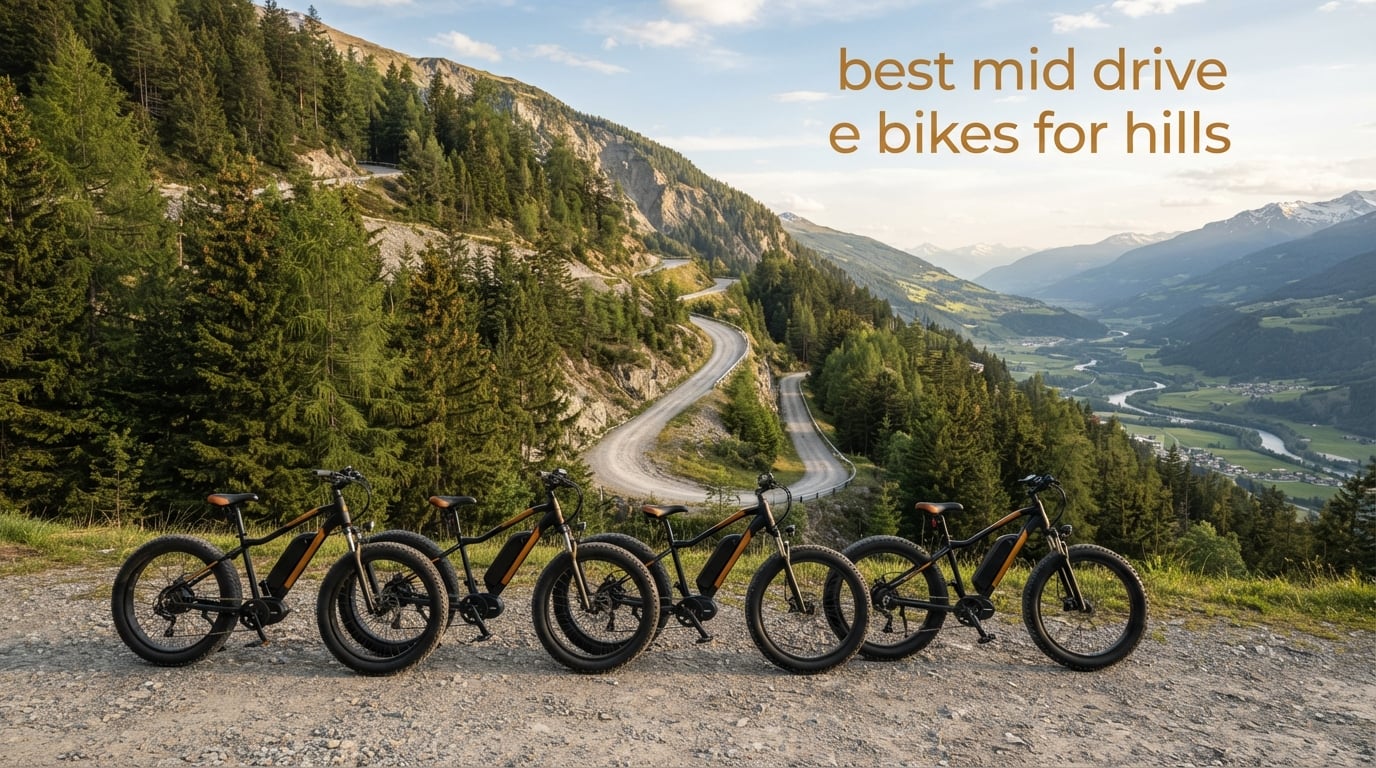
Yes, e-bikes are good for going uphill, and a mid drive e-bike is the best kind for hills specifically. That is not a marketing line. A mid drive motor sits at the crank and drives the chainring, so torque multiplies through your gears exactly the way your legs do. Pick a low gear and the assist behaves like a far more powerful motor. A hub motor has no such leverage.
That is the whole argument, and everything else on this page follows from it. We went through the current mid drive e-bike market, pulled the published torque figures, checked the gearing, the brakes, the weight limits and the real owner review history, and picked twelve that can genuinely get up a hill. We also flag the ones where the number on the listing is doing more work than the bike.
One thing to say up front, because most roundups in this category dodge it. The bikes with the biggest torque numbers here are not road-legal e-bikes. They are off-road electric dirt bikes and motorcycles sold for private land. If your hill is a public street, jump to the Canyon picks, which are real pedal-assist bicycles. If your hill is a fire road or a logging track, the whole field is open to you.
Last updated for October 2026. We re-check every listing and spec against the manufacturer’s own published data before it goes on this page. If you want to build hill fitness before your first ride, our picks for direct drive bike trainers cover the indoor side of that.
Top 3 Mid-Drive E-Bikes for Steep Hills in October 2026
Three bikes stand out immediately, and they stand out for different reasons. One has the deepest owner-review history in the group, one has the most torque in the most popular price bracket, and one is the only trail-legal bicycle here with a name-brand mid-drive motor.
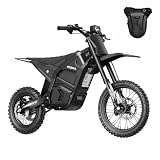
Yozma IN10
- › 3000W peak mid-drive motor
- › 1123Wh built-in battery
- › Full hydraulic disc brakes
- › Inverted fork and nitrogen rear shocks

ESKUTE EDB001
- › 3500W peak with 220Nm torque
- › 48V 23Ah battery
- › 53-mile claimed range
- › Rated to 265 pounds

Canyon Grand Canyon:ON 7
- › Bosch Performance Line CX
- › 85Nm torque
- › 625Wh integrated battery
- › Shimano Deore 12-speed drivetrain
The Yozma IN10 takes our top spot because it is the only bike in this roundup with a large enough body of real owner feedback to be confident about. 394 ratings is more than the next nine bikes combined. The ESKUTE EDB001 is the better raw value and carries more torque on paper. The Canyon Grand Canyon:ON 7 is the answer for anyone who needs to ride a public road.
All 12 Mid-Drive E-Bikes Compared in October 2026
Here is the full field. Torque is the leading column after the name for a reason: it is the figure that decides whether a hill is a non-event or a fight.
| PRODUCT MODEL | KEY SPECS | BEST PRICE |
|---|---|---|
|
|
Check Latest Price |
|
|
Check Latest Price |
|
|
Check Latest Price |
 |
|
Check Latest Price |
 |
|
Check Latest Price |
 |
|
Check Latest Price |
 |
|
Check Latest Price |
 |
|
Check Latest Price |
 |
|
Check Latest Price |
 |
|
Check Latest Price |
 |
|
Check Latest Price |
 |
|
Check Latest Price |
If you are not going to read twelve write-ups, read these six. The Yozma IN10 for the deepest owner feedback. The ESKUTE EDB001 for torque in the popular bracket. The Tasaca V58 M12 for the most torque available. The Canyon Grand Canyon:ON 7 if your hill has traffic on it. The Tietie E2 if battery certification matters to you. The E-Bycco Peak 2000W if you want assist that responds to effort rather than cadence.
1. Yozma IN10 – The Most-Used Bike in This Roundup
Yozma IN10 Electric Dirt Bike, 3000W Peak Mid- Drive Motor E Dirt Bike
3000W peak mid-drive motor
1123Wh built-in battery
14 inch front and 12 inch rear tires
Up to 265 pounds
+ The Good
- Most owner feedback in the group at 394 ratings
- Plenty of power for commuting and hills
- Riders report about two hours of riding per charge
- Quick assembly for some owners at around 15 minutes
- Inverted fork and nitrogen-charged rear shocks
- The Bad
- Confusing assembly instructions with little text in the images
- Some plastic body parts reported to break early
- Occasional error codes and loose chain wiring on early units
- 14 percent of reviews are 1-star
This is the bike I kept coming back to, and the reason is not the spec sheet. It is 394 ratings, which is more owner history than the other eleven bikes here combined. When a hill question comes up repeatedly across that many reviews, you learn something. Owners consistently describe enough power for commuting, neighbourhood riding and hills, and a battery that carries about two hours of use per charge.
The 1123 watt-hour pack is genuinely substantial and it is built in, with a battery management system. That combination matters more on hills than people expect, because a large pack has headroom to feed high draw without tripping thermal protection on a long climb. The brakes are full hydraulic discs, which is the correct call for a bike whose whole purpose is descending what it just climbed.
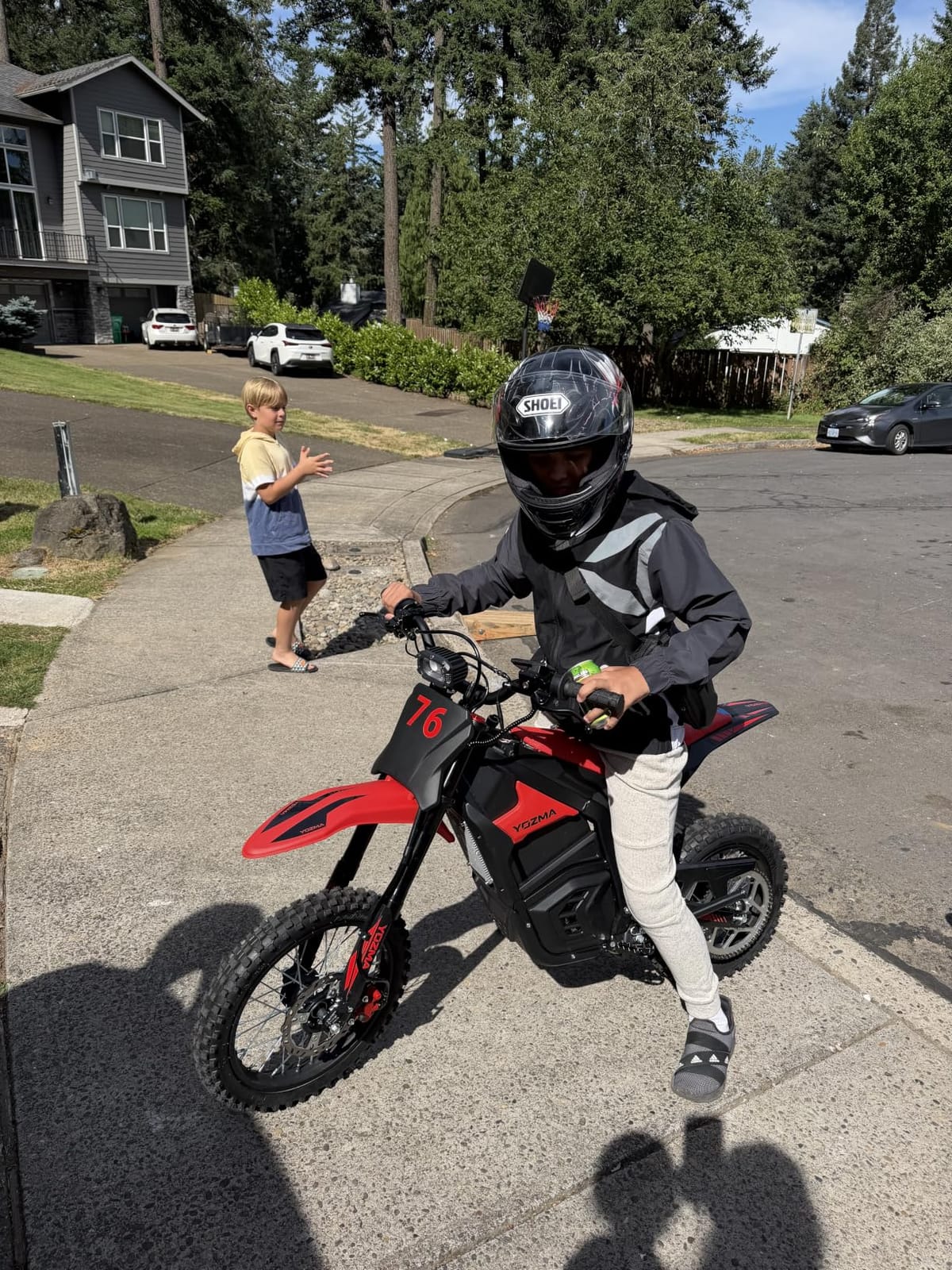
It runs 14 inch fat tires front and rear on inverted front forks and nitrogen-charged rear shocks, all built for steep inclines and rugged ground. Owners mention a sturdy frame that soaks up bumps well, and a throttle as well as responsive pedal assist if you want to unweight the pedals on a nasty section.
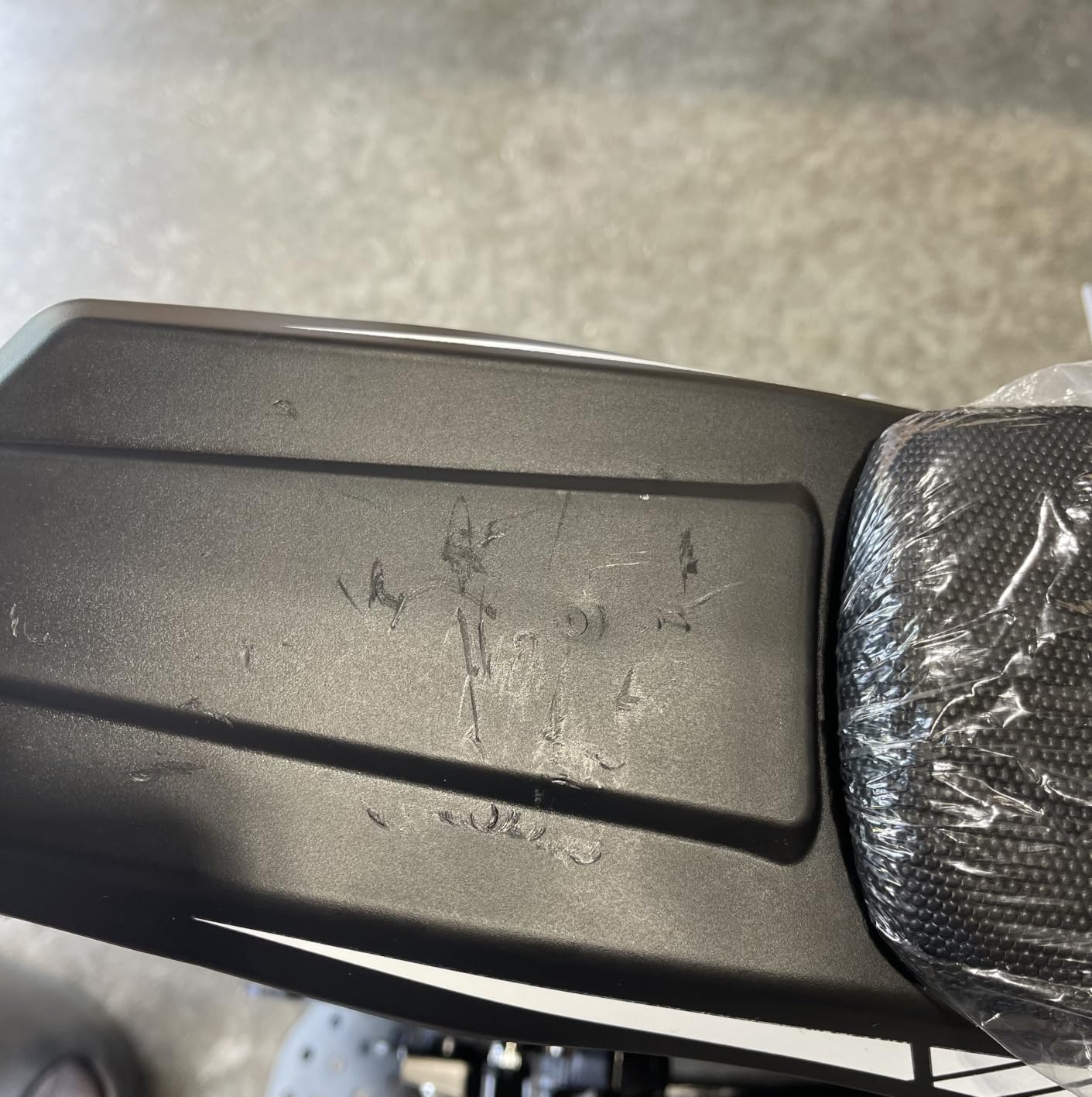
Now the honest part. About 14 percent of reviews are 1-star, and they cluster around three things: confusing assembly instructions with very little text in the images, plastic trim parts breaking early, and occasional error codes or loose chain and throttle wiring on early units. The tool kit is included, and some owners put it together in about 15 minutes. Others clearly did not enjoy the process. If you are not comfortable with assembly, budget an afternoon or pay someone.
Why this is our top pick for hill riders
Because a recommendation you can verify beats a recommendation you cannot. The 220-plus Nm class of figure this bike operates in is genuinely strong, and the review base tells you what actually happens when owners meet a real hill. That combination is rare in this category, where most listings have fewer than 30 ratings and a 5.0 average that means very little.
It is also the most sensible of the big-power bikes on warranty length and included kit, at one year, with a tool kit in the box. The bike is rated to 265 pounds, which covers most riders comfortably.
Where it falls short for you
If your hill is a public road, this is the wrong bike. It is an electric dirt bike for off-road terrain and cannot be registered for road use. That is a hard limit, not a preference.
Those early quality complaints are also worth taking seriously. If you are patient with assembly and willing to deal with an occasional early-unit fault, the volume of satisfied owners outweighs them. If you want a bike that works perfectly on day one, keep reading.
2. ESKUTE EDB001 – 220Nm Built for 35-Degree Climbs
ESKUTE Electric Dirt Bike for Teens Adults, Electric Motorcycle 48V23Ah Battery, 53-Mile Range, 38-46mph Mid-Drive Motor 3500W Peak, Hydraulic Dual Shock Absorbers, black-With Lock
3500W peak mid-drive with 220Nm torque
48V 23Ah lithium battery
53-mile claimed range
Dual hydraulic disc brakes
+ The Good
- High torque output well suited to 35-degree off-road climbs
- Large battery supports long trail sessions
- Nitrogen-filled shocks hold damping under sustained use
- Steel frame and large brake discs stop well in mud and sand
- TUV certified with US-based support
- The Bad
- Nitrogen shock benefit is a claimed advantage some buyers question
- One-star share of 10 percent shows a quality minority
- Assembly and component checks needed before first ride
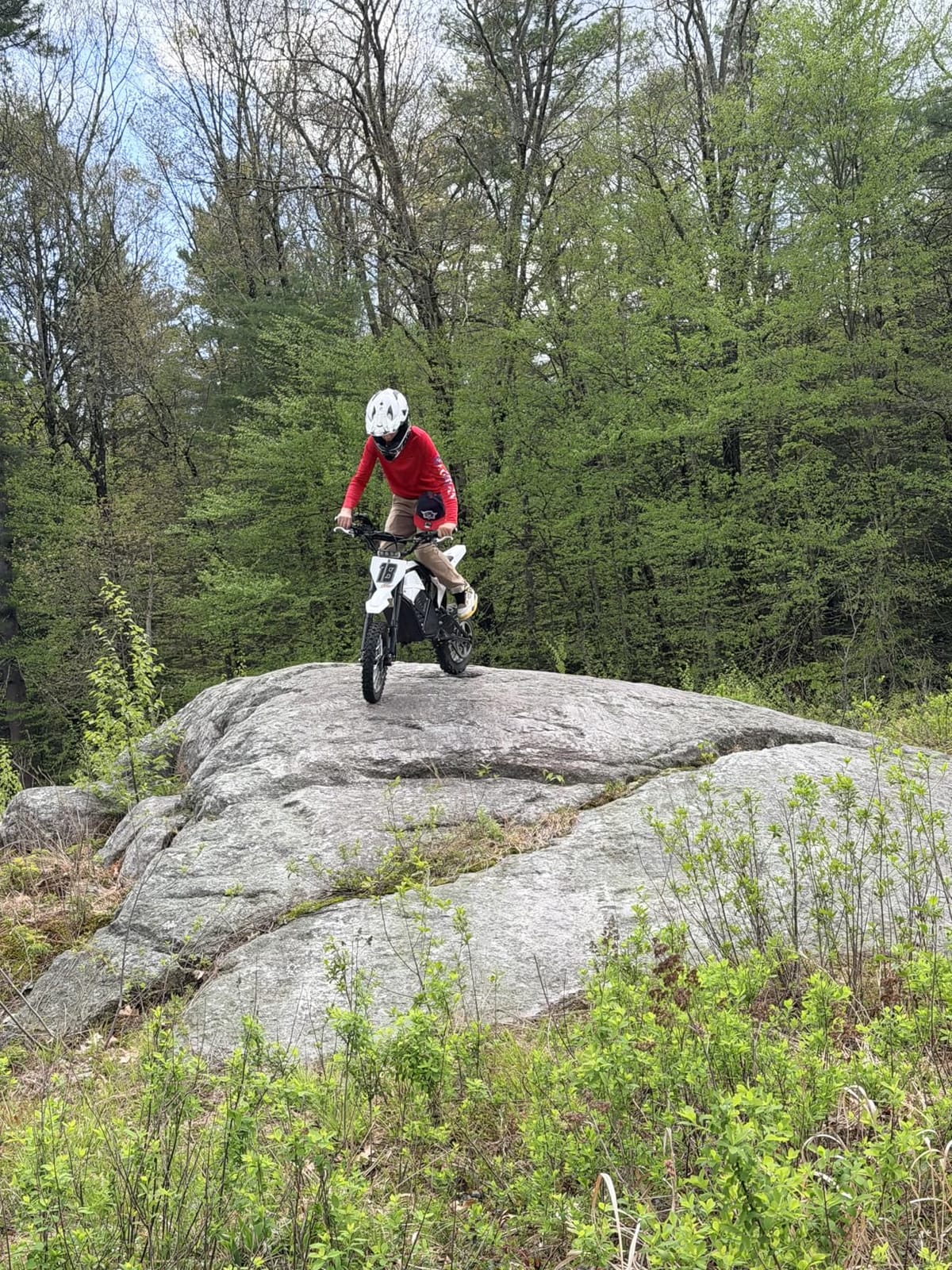
This is the bike I recommend to most people who ask me one question and mean it: which one gets up the hill. 220 Nm of torque, delivered through a mid-drive, into a 48 volt 23 amp battery, on a frame rated to 265 pounds. The published claim is 35-degree off-road climbs and owners broadly back that up rather than disputing it.
What I like most is that the secondary specs were thought through for the use case instead of bolted on. Nitrogen-filled dampers are claimed to retain about 90 percent of performance under continuous use, which is exactly the failure mode that ruins a long climb on a bike with conventional dampers. Dual hydraulic discs on a reinforced carbon steel frame give consistent stopping in mud, water and sand, which is the descent half of a hill ride.
The 53-mile claimed range comes from a 48V 23Ah lithium pack with a six-hour full charge, and owners consistently single out the battery as a strength. A 264-rating review base makes this the second-most-proven bike here, and at 4.3 stars it also carries the highest rating among the bikes with meaningful volume behind them.
It is TUV certified with a one-year warranty and US-based support, which is more service reassurance than most of this field offers. As one of the most recent platforms in this group, the design is current rather than a leftover.
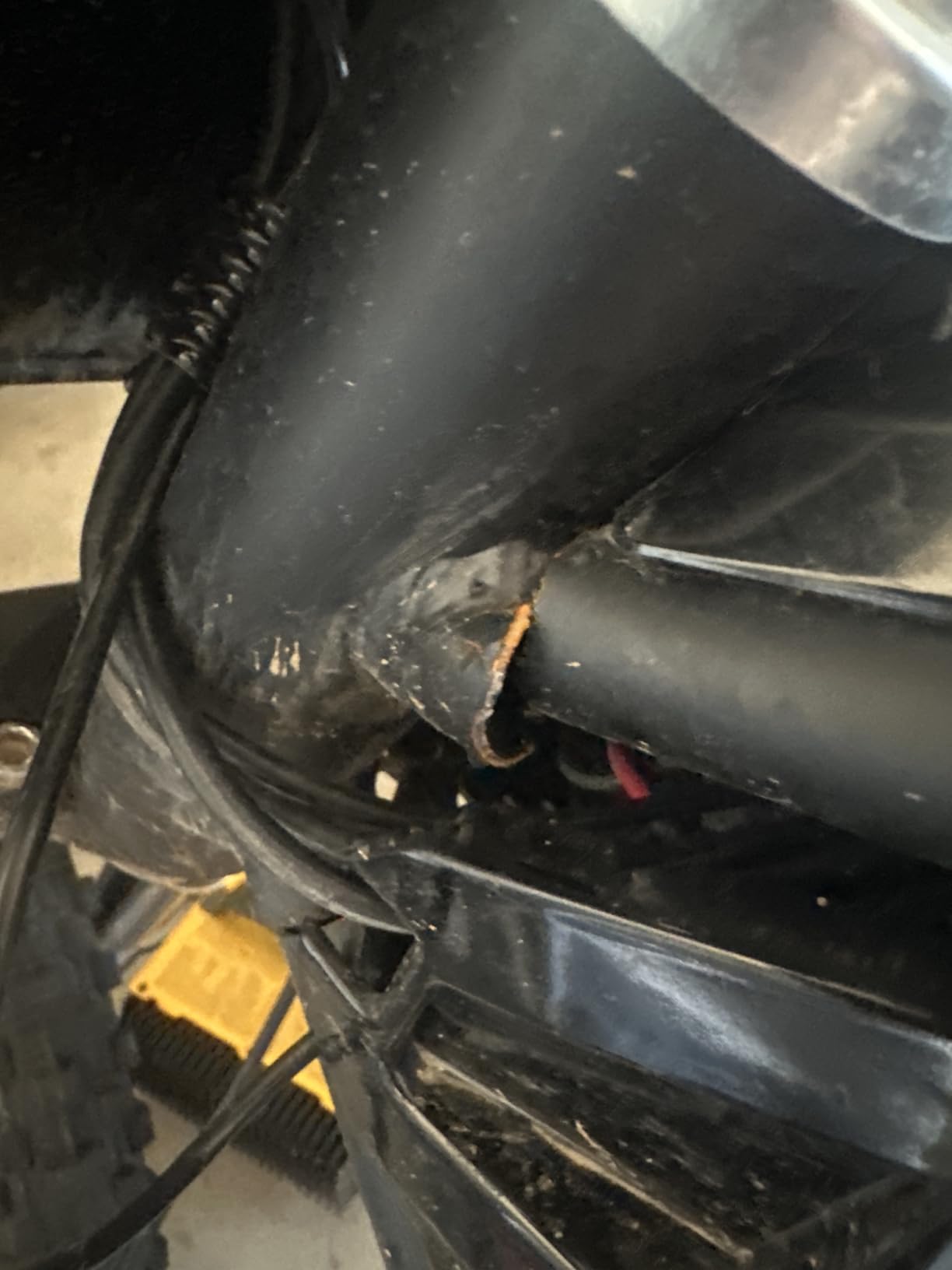
The two caveats are fair ones. Ten percent of reviews are 1-star, which is a real quality minority. And there are reports of assembly and component checks being needed before the first ride, so treat the setup session as part of the purchase rather than an afterthought.
Why this is the best value for steep grades
It is the rare bike where the headline torque figure, the battery, the brakes and the weight rating all move in the same direction. For a rider who wants maximum hill capability without chasing the highest number on the page, 220 Nm on a 48 volt system is a well-balanced place to land.
Compare it to the E-Bycco Peak further down, which manages 90 Nm. That is a completely different machine, appropriate to a different buyer. The ESKUTE is for the person who is genuinely going to attack a steep off-road climb.
Who should skip it
Anyone riding public roads. It is off-road only and will not be registered for street use. Also skip it if the nitrogen shock claim is doing most of the work in your decision. It is a manufacturer figure, not an independent test result, and some buyers report questioning it against conventional dampers.
If you weigh more than 265 pounds, this is out of spec and so are most of the field. Check the X-PRO E-Hawk, which is rated to 289 pounds.
3. Canyon Grand Canyon:ON 7 – Bosch Power on a Road-Legal Trail Bike
Canyon Grand Canyon:ON 7, Pistachio, Large
Bosch Performance Line CX with 85Nm
625Wh integrated battery
Shimano Deore 12-speed
SRAM DB 8 disc brakes
+ The Good
- Bosch motor gives smooth natural assist on steep climbs
- Owners ride further and with less fatigue on hills
- Aluminium hardtail converts to gravel easily
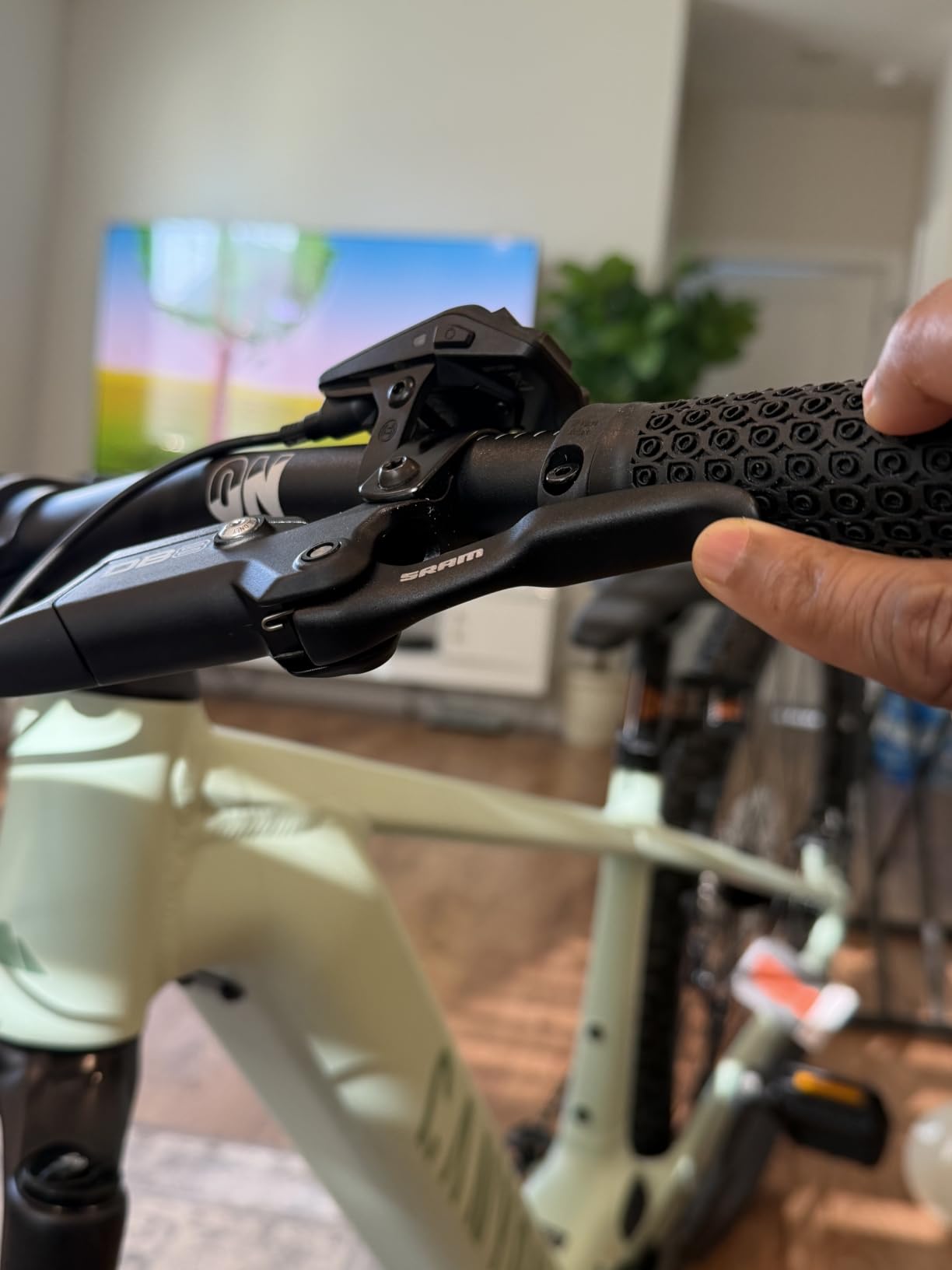
- SRAM DB 8 brakes outperform the brand reputation
- The Bad
- Integrated battery is not removable for cold-climate storage
- Assist cuts out around 18 mph
- Basic wheels and Schwalbe Nobby tires described as heavy
- Only 12 ratings so far
This is the pick for anyone whose hill is an actual street. The Bosch Performance Line CX mid-drive delivers 85 Nm, which is nowhere near the headline numbers elsewhere on this page, and it still climbs. That is the whole argument for a mid drive: 85 Nm behind a chainring with a 12-speed drivetrain behaves very differently from 85 Nm at the wheel.
Owners report riding longer distances with less fatigue on hills they previously had to walk, and describe the assist as smooth and natural rather than abrupt. The Bosch system pairs with a torque sensor, so it responds to how hard you push rather than simply to how fast you spin the pedals. On a loose or technical climb, that distinction is the difference between a bike that helps and a bike that lunges.
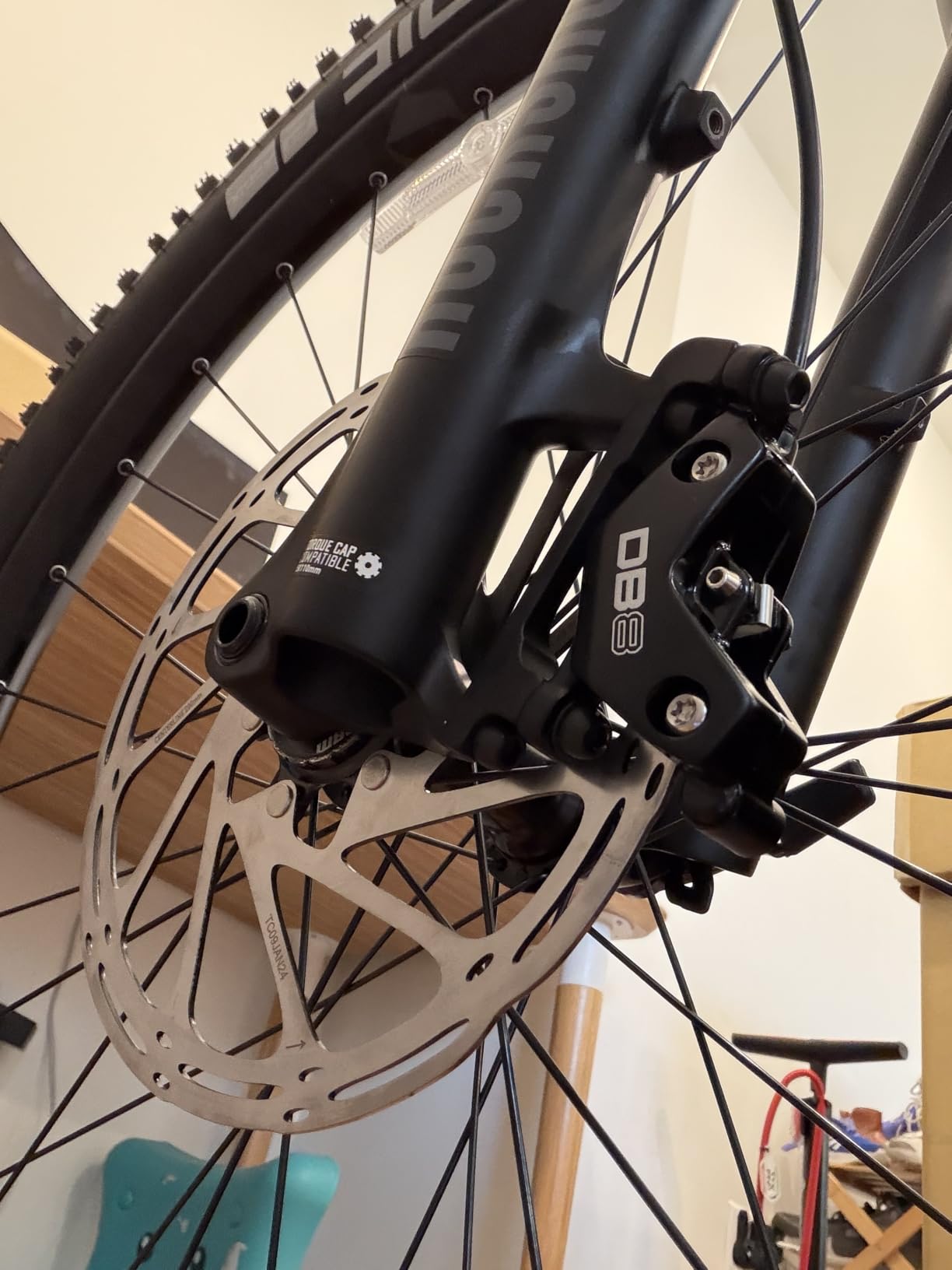
The rest of the build is aimed squarely at hills. A 120mm RockShox Judy Silver fork handles the terrain, SRAM DB 8 disc brakes do the stopping, and the wheels are tubeless-ready on 29 inch rims. That is the right toolkit for a bike whose job description is up and down. The aluminium hardtail frame is also convertible to gravel with a dropper post and bar changes, which is a genuinely useful option for hill riders who also want to ride roads.
Two practical limits. The 625Wh battery is integrated, not removable, so cold-climate indoor storage means moving the whole bike. And assist is speed-limited to roughly 18 mph, which makes this a Class 2 bicycle. If you want faster assisted riding, that matters. For hill work, it does not.
The honest caveat is evidence. Twelve ratings is a small base, even though sentiment is strongly positive on climbing ability and value against buying direct. A few owners report assembly quality-control or wiring issues. Read that as a promising bike with a thin track record rather than a proven one.
Why Bosch matters more than the torque number suggests
Bosch is the name riders trust, and forum discussion treats it as the benchmark for smoothness and quietness. More practically, it comes with a service network. A commenter summarised the real fear neatly: you can change some parts yourself, but you cannot easily change a dead motor. Buying a motor with a dealer who will stand behind it is worth real money.
Canyon also carries a 6-year warranty on Canyon Engineered Components, with everything else following the component manufacturer’s policy. That is the strongest warranty language attached to any bike here.
Where it falls short
Torque, plainly. If you ride technical off-road where wheelspin and traction are the problem, 85 Nm will feel limited next to the 220 Nm and 276 Nm machines below. This bike is for hills you ride on roads, paths and gravel, not for scrambling.
The heavy factory wheels and tires are the other complaint, and they cost you some on exactly the terrain you care about. A wheel and tire upgrade is close to the first thing we would do to this bike.
4. Canyon Precede:ON Comfort 7 – Belt Drive for Hilly Commutes
Canyon Precede:ON Comfort 7, Anchor Grey, One Size
Bosch Performance Line with 75Nm
Bosch PowerTube 625Wh
Gates carbon belt drive
Step-through aluminium frame
+ The Good
- Smooth natural Bosch assist up to 28 mph
- Step-through frame with riser cockpit for an upright position
- Belt drive is quiet and low maintenance
- Integrated lights rack and fenders
- The Bad
- Only a single review so satisfaction is not established
- Urban design with limited off-road capability
- 75Nm is the lowest torque figure in this roundup
Not every hill rider is scrambling up a mountain. A lot of people just want to get up the street they live on without arriving at work soaked, and this is the bike for that. The Bosch Performance Line delivers 75 Nm with assist up to 28 mph, which makes it a Class 3 bicycle, and the step-through aluminium frame with a riser cockpit puts you in an upright, relaxed position.
Five gears drive a Gates carbon belt drive, and that is the detail that makes it interesting for hills. A belt has no stretch, no chain slap on rough tarmac and effectively no drivetrain wear, so the low gear stays consistent year after year. On a commuter that lives in the elements, that is worth more than a slightly higher torque figure.
There is no customer image for this model yet, and the listing has a single 4-star rating. We are including it because the platform is right, not because the evidence is strong. Treat the review base as nonexistent and judge it on the spec sheet and the Canyon’s reputation.
Why this suits a daily hilly commute
Because it removes the three things that make hill commutes miserable: an awkward mounting height, a noisy drivetrain that announces every gear change, and maintenance that eats your weekends. The step-through frame addresses the first for riders with limited hip mobility, the belt addresses the second, and integrated lights, rear rack and fenders address everything else you would otherwise bolt on later.
It also comes with the same 6-year Canyon Engineered Components warranty as the Grand Canyon:ON 7, and a Bosch PowerTube 625Wh integrated battery.
Where it falls short
At 75 Nm, this has the lowest torque figure in the roundup. On gentle city hills with 28 mph of available assist, that is a non-issue. On a sustained climb with a load, you will feel the difference against the 90 Nm E-Bycco and certainly against the 200-plus Nm off-road machines.
It is also an urban bike. The five-speed transmission and 27.5 inch wheels are not built for trails, and the front-only suspension is fine for roads and poor for anything loose. If your hills are dirt, this is the wrong shape of bike.
5. Tasaca V58 M12 – 276Nm for the Steepest Grades
Tasaca V58 Electric Dirt Bike, 5500W Peak Mid-Drive Motor & 276NM, 52+ MPH Max Speed & 5-Gears Electric Motorcycle with 52V 30Ah Long Battery, Hydraulic Brakes Off-Road EBike (Dark Yellow)
5500W mid-drive with 276Nm peak torque
52V 30Ah 1560Wh battery
Full suspension
5-speed transmission
+ The Good
- Enormous torque
- owners report climbing seriously steep gravel and dirt
- Very fast acceleration with a 194 pound rider reporting levels 4 and 5
- Full suspension with adjustable rear shock once set up properly
- Confident handling across varied terrain
- The Bad
- Rear shock arrives with no air and tires over-inflated
- Instructions are confusing and translation-heavy
- Real-world street range disappoints versus the 1560Wh claim
- Minor scratches on body panels out of the box
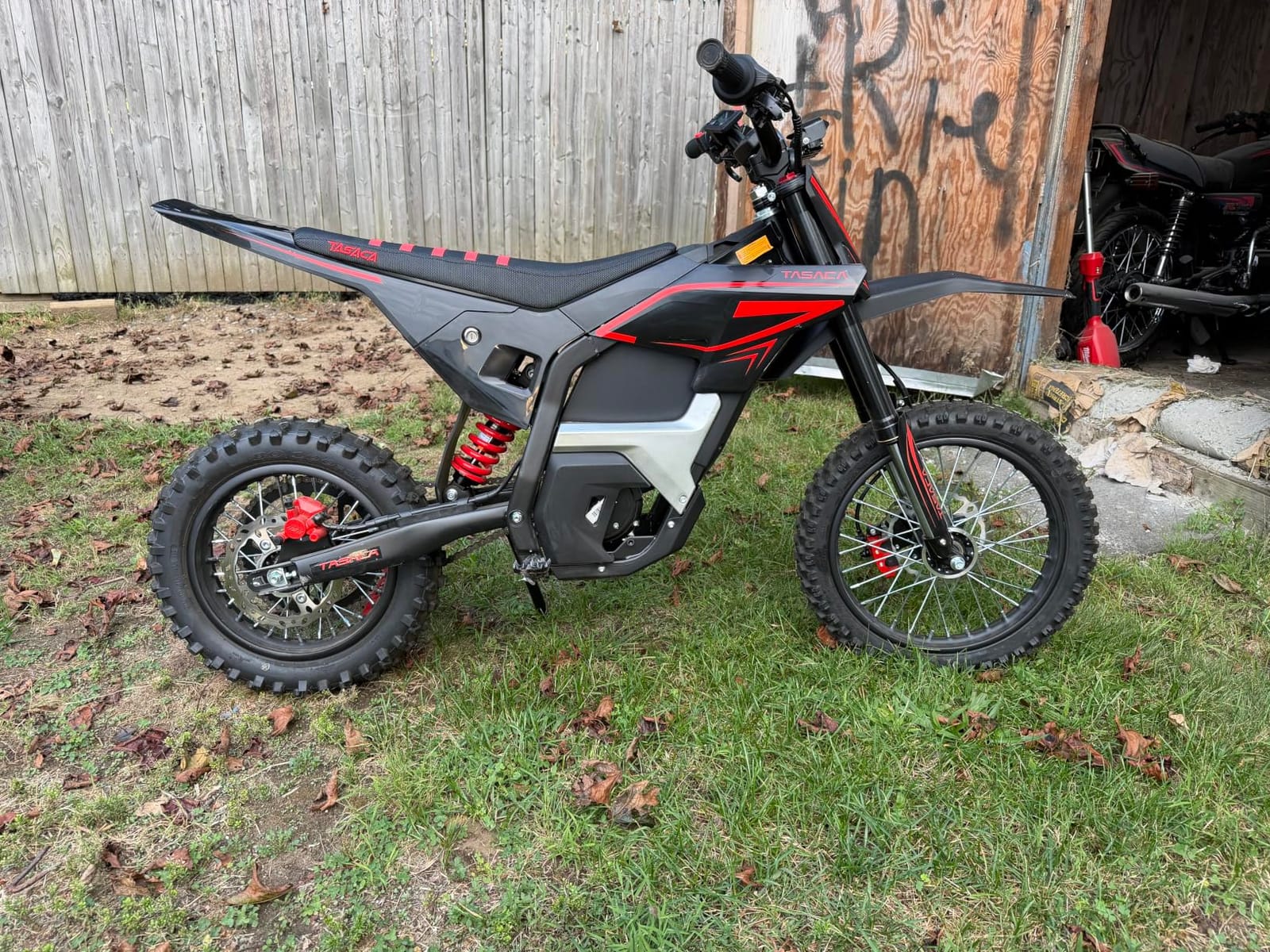
This is the most torque in the roundup, and it is the only bike here where owners describe climbing seriously steep gravel and dirt hills in their own words rather than repeating a listing claim. 276 Nm peak from a 5500W mid-drive brushless flat-wire motor, with a five-speed transmission for matching power delivery to terrain. The published claim is 45-degree climbs.
It weighs 130 pounds, which tells you something about where the mass is. A big battery and big motor are not light, and that matters on exactly the terrain this bike targets. Full suspension helps: hydraulic front end plus rear air-hydraulic shocks, on 14 inch front and 12 inch rear puncture-resistant fat all-terrain tires.
Owners report very fast acceleration, with one 194 pound rider describing it as ripping in assist levels 4 and 5. The 1560 watt-hour 52V 30Ah pack is the second largest here, with a battery management system claiming 45 percent higher energy efficiency. The warranty language is unusually good for this class: 1-year manufacturer, 2-year frame, 1-year core parts, 6-month wear parts and 10 years of technical support.
Setup is the catch, and it is a real one. The rear shock arrives with no air in it and the tires are over-inflated, so the bike does not ride correctly out of the box until you address both. Owners who do report that the adjustable rear shock works well once properly set up. The instructions are described as confusing and translation-heavy.
Range is the second caveat. Reviewers describe real-world street range at high throttle as disappointing compared to the 1560Wh claim, which is close to universal for large-pack bikes in this category and a reminder to read range claims carefully.
Why this is the premium pick for hard gradients
Because when the grade is the problem, torque is the only solution that scales. 276 Nm at the rear wheel is a number nothing else here approaches, and the 45-degree claim is backed by the highest rating among the high-power machines in the group. If you ride genuinely steep terrain regularly, this is the bike built for it.
The 52 volt system also helps heavy riders more than a 48 volt one, and the owner base reports real acceleration at 194 pounds, which is a useful reference point.
Where it falls short
130 pounds is heavy, and you will feel all of it when manoeuvring on a technical climb or loading it into a vehicle. The listing describes the sizing as youth-oriented, with owner reports of comfort carrying 200 pound riders, so heavier riders should verify fitment before committing.
There is also a deliberate warning in the product documentation: gear 5 is not recommended for beginners. With 276 Nm available, this is not a bike to learn on. And the 27-rating review base, while strongly positive, is thin enough that we would want a serviceable dealer nearby.
6. NEXVEY FLASH PRO – Built to Hold Power on Long Rides
NEXVEY FLASH PRO Electric Dirt Bike for Adults, 5000W Peak Mid-Drive Motor Electric Motorcycle with Wheelie Assist, 55 MPH 50 Miles 60V 27Ah, 17/14″ Tires All-Terrain Off-Road E-Bike
5000W peak mid-drive with 220Nm
60V 27Ah removable battery
Advanced thermal management
UL 2272 certified
+ The Good
- Thermal management resists fading power on long rides
- Removable battery charges indoors or swaps for a second pack
- Wheelie Assist with gyro sensor and automatic power cut at 30 degrees
- 17 inch front tire gives precise steering on uneven ground
- The Bad
- Newer listing with a small review base
- Off-road only and cannot be registered for road use
- 13 percent of reviews are 1-star
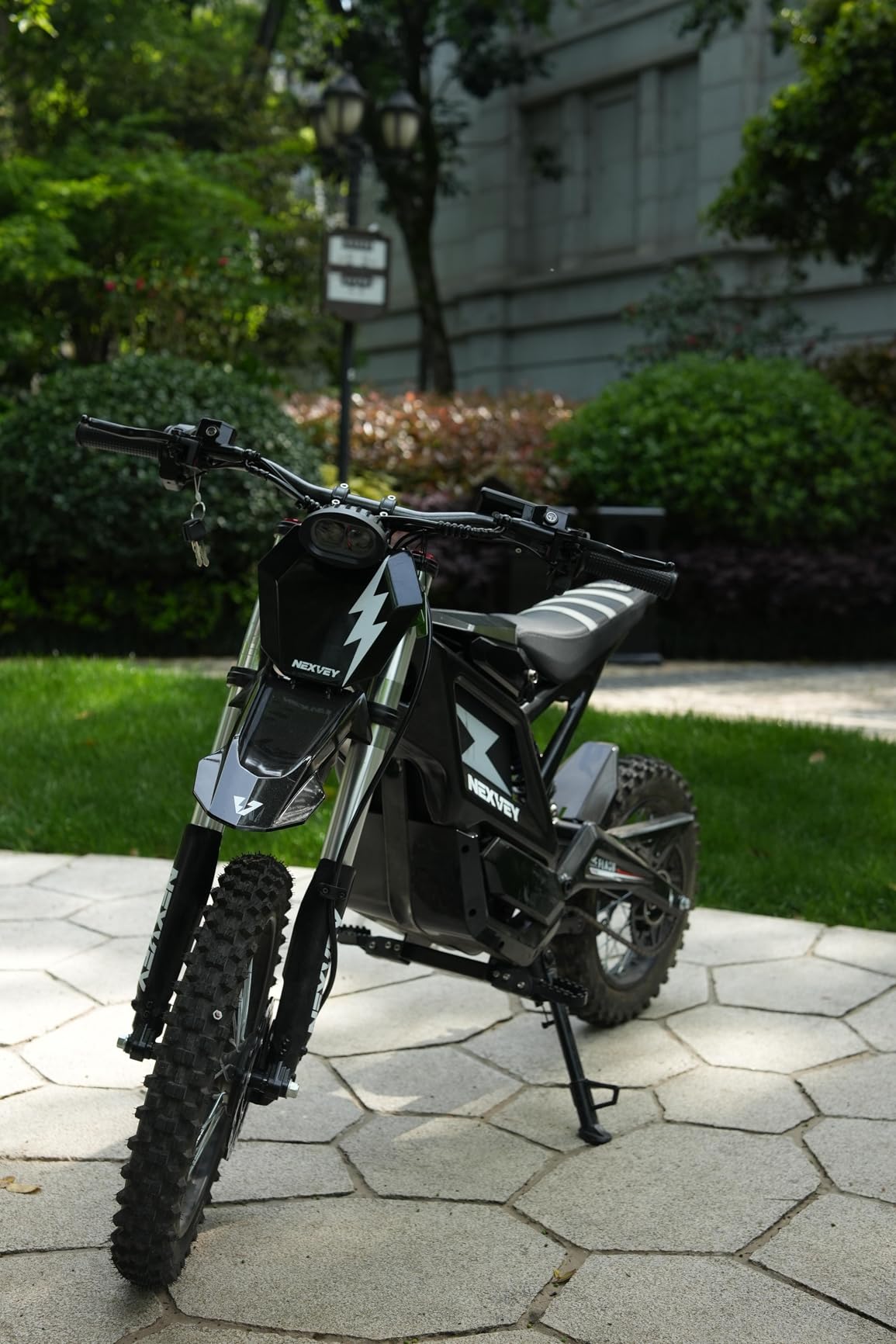
Most bikes in this class are built to win a burst. This one is built for the climb after the burst, which is why it earns a place on a hills list. The 5000W peak motor is rated at 3000W and makes 220 Nm, but the spec that actually matters here is advanced thermal management for consistent non-fading power on long rides, backed by UL 2272 certification.
That is a direct answer to the failure mode we described earlier. On a long climb to a pass, the pack heats, the battery management system trims assist, and a bike that was strong for two minutes goes soft for twenty. A manufacturer that treats thermal behaviour as a headline feature is designing for sustained work rather than a specification sheet.
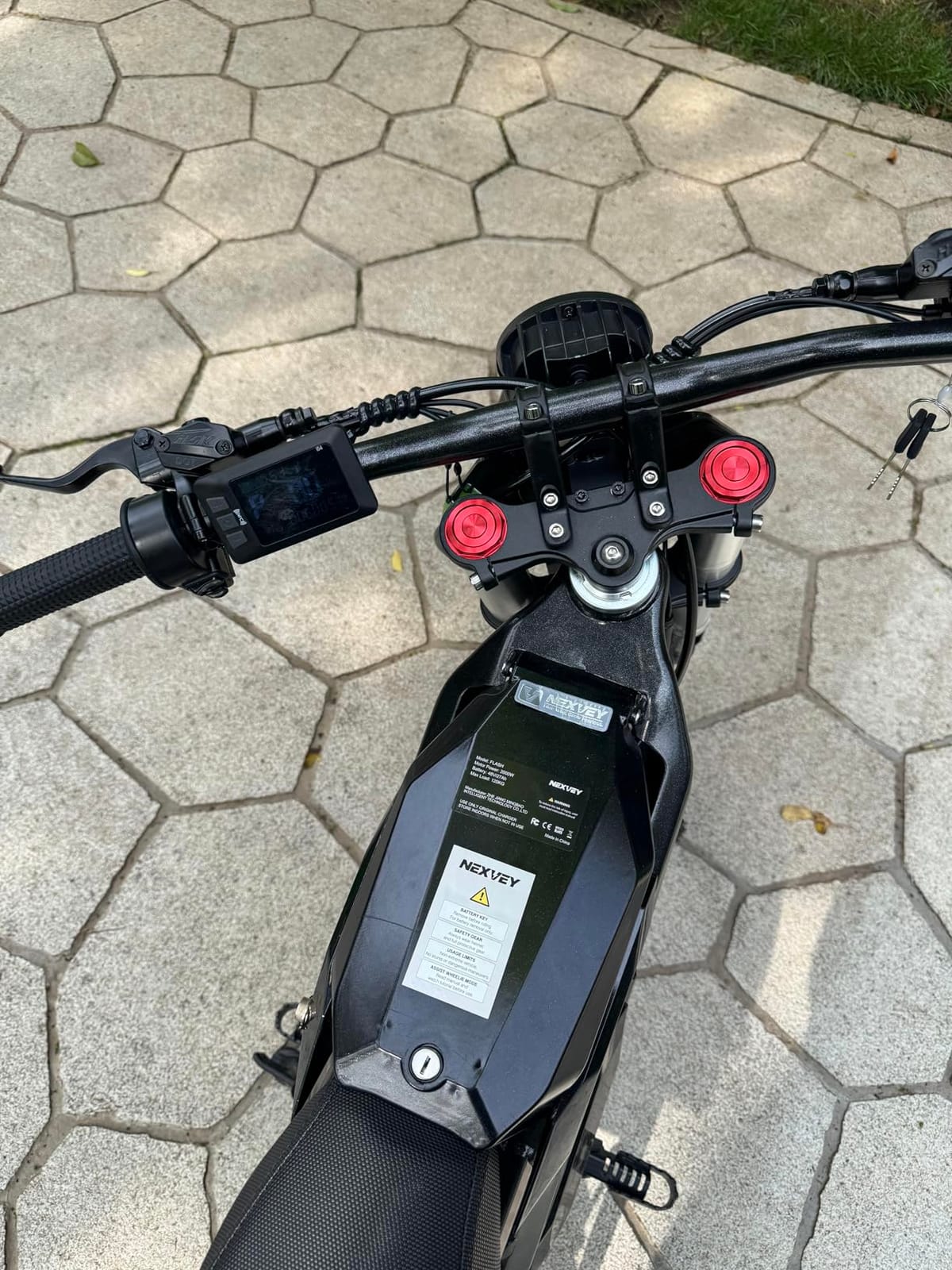
The 60V 27Ah lithium battery is removable, which matters more than it sounds. You can charge it indoors away from the bike, or run a second pack while the first recovers. It claims 50 miles of range and includes two charging modes. At 60 volts it also sits above the 48V systems most of this field uses, which is a genuine advantage for heavier riders.
The other standout feature is the Wheelie Assist system in fourth gear, using a gyro sensor with an automatic power cut at 30 degrees. It is a performance feature, but the safety cut is the part we would keep. The suspension is inverted front forks plus a central spring shock, on 17 inch front and 14 inch rear all-terrain tires, and the wide front tire gives precise steering on uneven ground while the rear provides traction.
Review volume is small at 25 ratings, and 13 percent of those are 1-star, so long-term reliability is not established. It is off-road use only.
Why thermal design matters on a long climb
Because the difference between holding a grade and being walked up it is entirely about sustained output. Riders who do long climbs talk about the same pattern: strong at the bottom, weak in the middle, fine again at the top. That is a heat problem, not a torque problem, and it is why the same motor can feel brilliant on one ride and disappointing on the next.
A removable 60V pack also solves the charging logistics that quietly ruin big-bike ownership. You are not dragging a 130-pound machine to an outlet, and swapping packs means a long ride does not depend on one pack’s remaining charge.
Where it falls short
The price of the feature set is evidence. A 25-rating listing on a machine that only recently became available tells you very little about how the battery ages or whether the controller holds up after a season of abuse. Treat it as promising and unproven.
There is also no stated weight figure, which makes it hard to plan for technical climbs where manoeuvring matters as much as power. And the 30-day return on non-human damage requires the original packaging, so the box is worth keeping.
7. HAPPYRUN F18 2.0 – 1800Wh and a 365-Day Motor Warranty
HAPPYRUN F18 2.0 Electric Dirt Bike Mid-Drive Motor 6000W Peak
6000W mid-drive with 245Nm peak torque
60V 30Ah 1800Wh battery
Magnetic emergency kill switch
Up to 60 miles claimed
+ The Good
- 6000W mid-drive with 245Nm marketed for steep climbs
- 1800Wh battery for long off-road sessions
- Magnetic kill switch cuts power instantly in a fall
- 85 percent pre-assembled with about 30 minute setup
- 365-day warranty on motor and battery
- The Bad
- Small review base of 15 ratings for a newly listed bike
- 14 percent of ratings are 3-star
- Highest gear is intended for experienced riders only
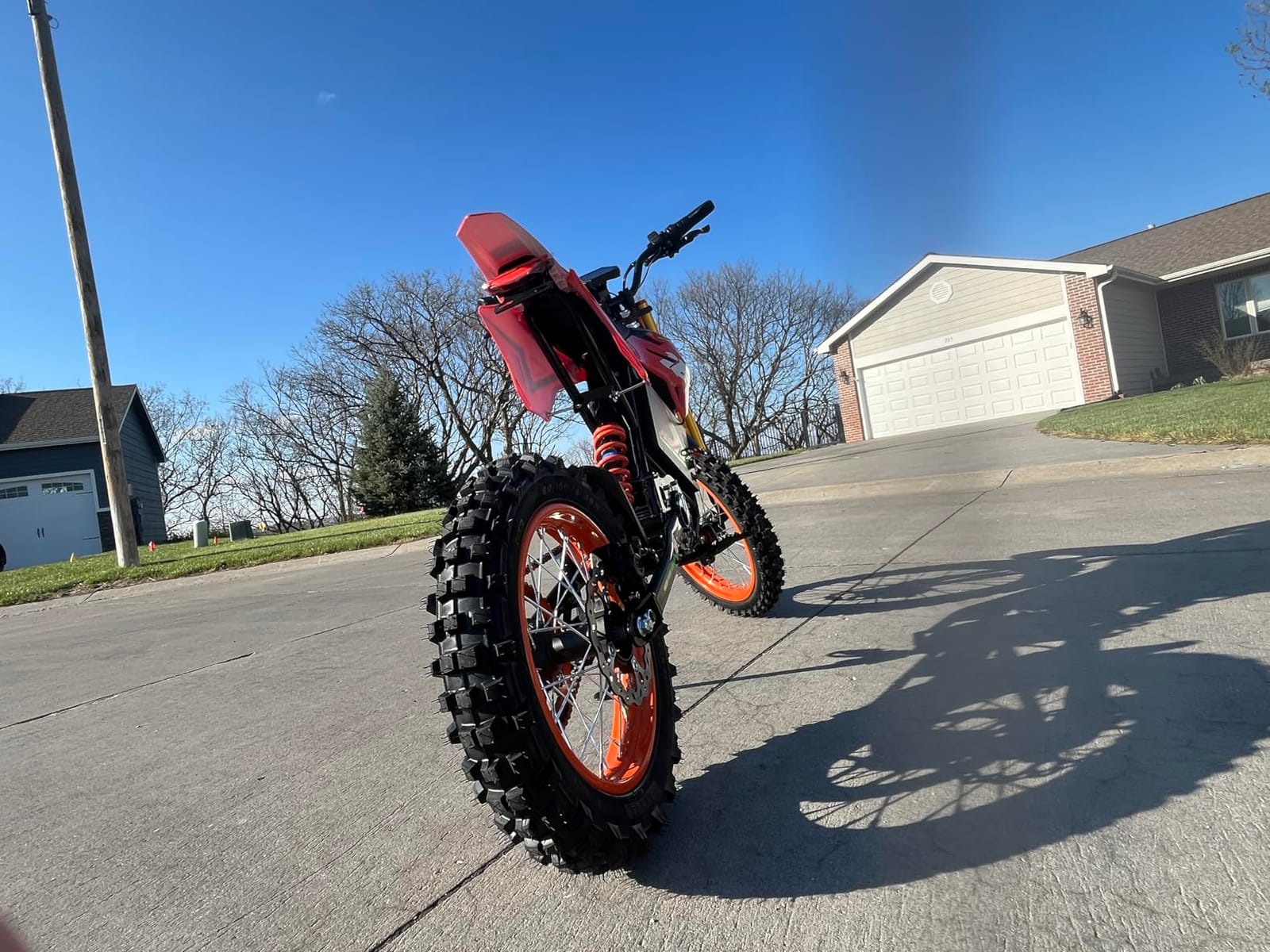
At 1800 watt-hours, this has the largest battery in the roundup, paired with 245 Nm of peak torque from a 6000W mid-drive motor and speeds up to 46 mph. That combination points at one use case above all others: long days on rough terrain where the ride home matters as much as the ride out.
On a climb, battery capacity is not directly the reason a bike gets up a hill. Torque and gearing are. It is the descent and the range home that large packs win. A rider who spends four hours climbing one long grade and then rides 30 miles home needs headroom that a smaller pack does not provide, and the BMS protects those cells while doing it.
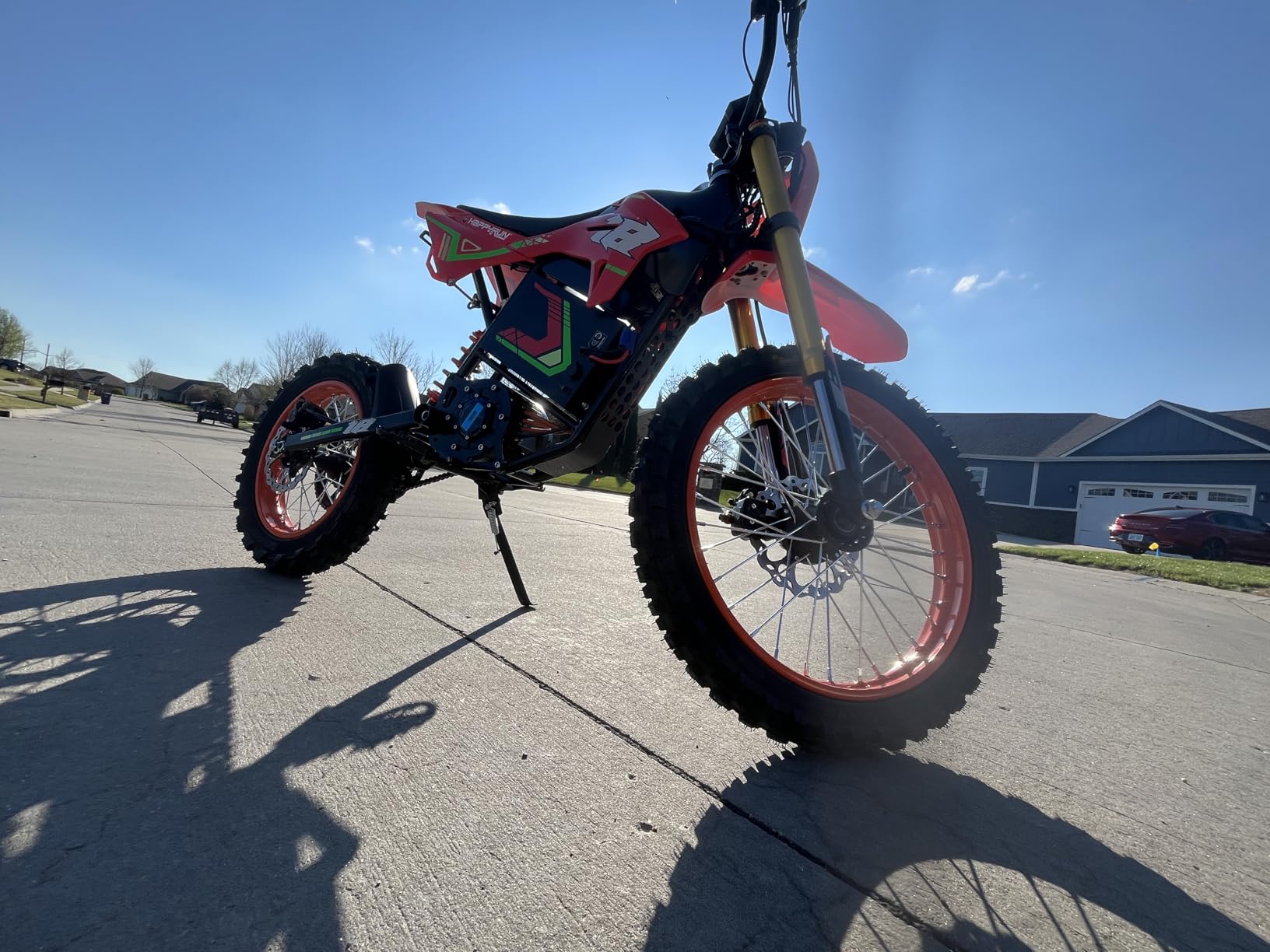
Two details stand out for practical ownership. The magnetic emergency kill switch cuts power instantly in a fall, which is the kind of safety hardware that costs almost nothing and matters enormously on a 245 Nm machine. And the bike arrives 85 percent pre-assembled, with roughly 30 minutes of setup and a video tutorial, which directly addresses the assembly complaints that dominate reviews of this category.
The warranty is the other differentiator: 365 days on the motor and battery, on top of a 1-year manufacturer warranty stated elsewhere in the listing. On a bike whose most expensive failure point is the motor, a full year of motor cover is meaningful.
Feature-wise it also carries NFC card unlock, a colour display and reverse assist, plus three selectable speed modes at 17, 28 and 46 mph. That last point is the warning. The top gear is intended for experienced riders only.
Why the largest battery is not always the right choice
Because more cells means more mass, and mass is exactly what you do not want on a technical climb where you need to put a wheel down and pivot. A 1800Wh pack at 60V is a substantial amount of hardware to carry uphill, even if the motor never notices it.
And claimed range on this class of bike is routinely optimistic. The real number depends far more on terrain, speed and assist level than on the watt-hour label. Buy for the long day, not for the headline figure.
Where it falls short
Fifteen ratings is a very small base, and the distribution is unusual for a new listing: 14 percent sit at 3-star rather than collapsing to 1-star. Middling early experiences rather than outright failures, but not a clean signal either way.
There is no stated weight figure for the bike, and at 6000W with a 1800Wh pack it will not be light. If your priority is technical climbing rather than long days out, the ESKUTE or the E-Bycco will serve you better.
8. Rideplux 5000W – Big Tires and a Long Seat for Tall Riders
Rideplux Electric Dirt Bike for Adults, 5000W Mid-Drive Motor (Orange)
5000W peak mid-drive with 220Nm
48V 22.5Ah removable battery
19 inch front and 17 inch rear tires
Adjustable gyro assist
+ The Good
- Strong torque that handles hills and bumps better than expected
- Smooth ride with quick acceleration
- Long comfortable seat suits taller and heavier riders
- Full suspension and fat tires smooth out rough terrain
- Easy assembly with clear instructions in under an hour
- The Bad
- Only five ratings so the 5.0 average means little
- Some reviews describe a 1000W motor which conflicts with the 5000W peak figure
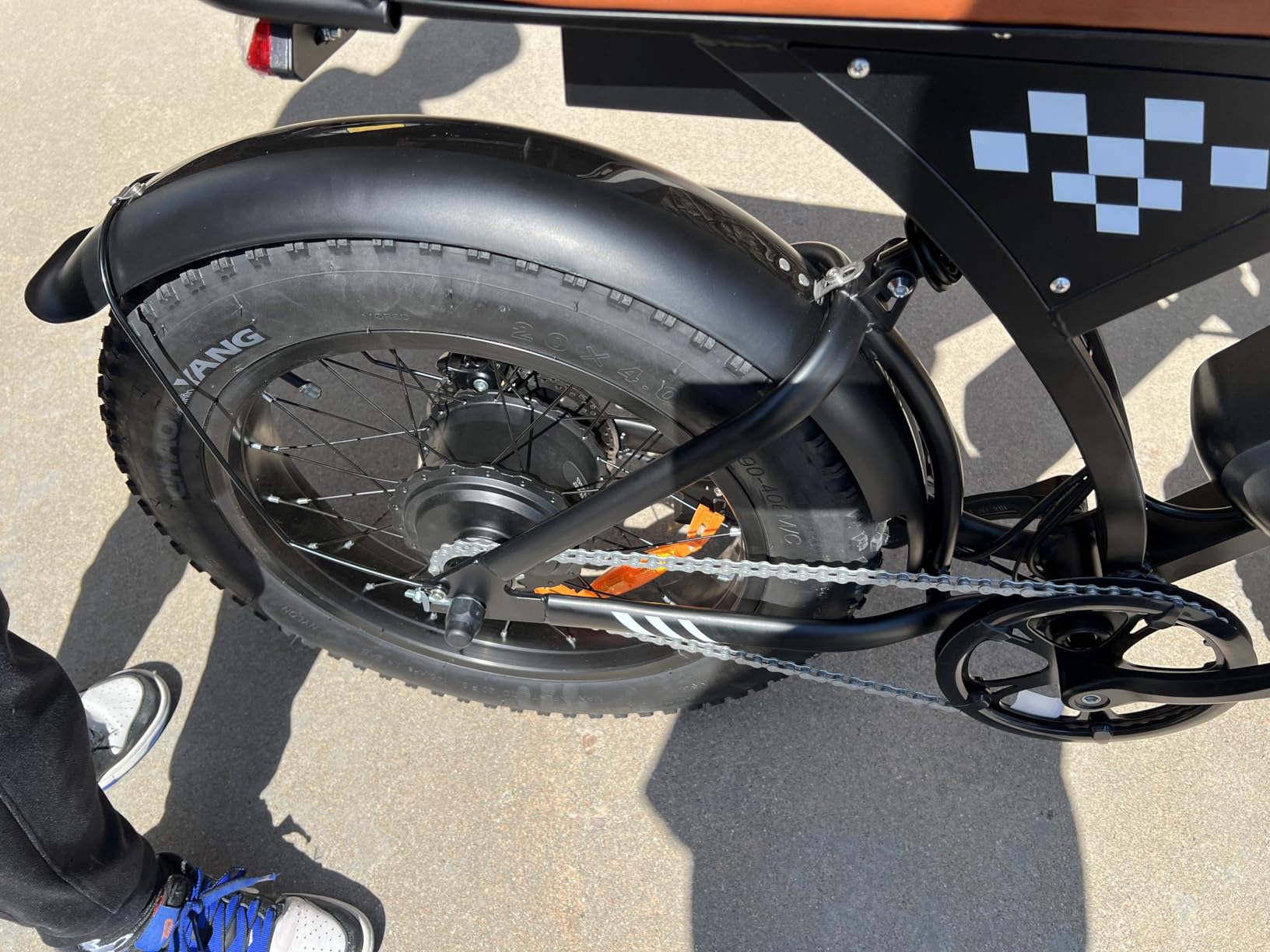
The most distinctive chassis in the roundup, and the reason is wheel size. 19 inch front and 17 inch rear knobby tires, which is motorcycle territory, give this bike a stability and rollover resistance that nothing else here matches. On loose gravel or a rutted climb, the front tire diameter is the difference between tracking and deflecting.
The motor is a 5000W peak mid-drive making 220 Nm at the rear wheel with a claimed 45-degree climb capability, and it sits in an unibody high-carbon steel frame with no welds or bolt joints at the structure. Owners describe the torque as handling hills and bumps better than expected, with smooth delivery and quick acceleration rather than a lurch.
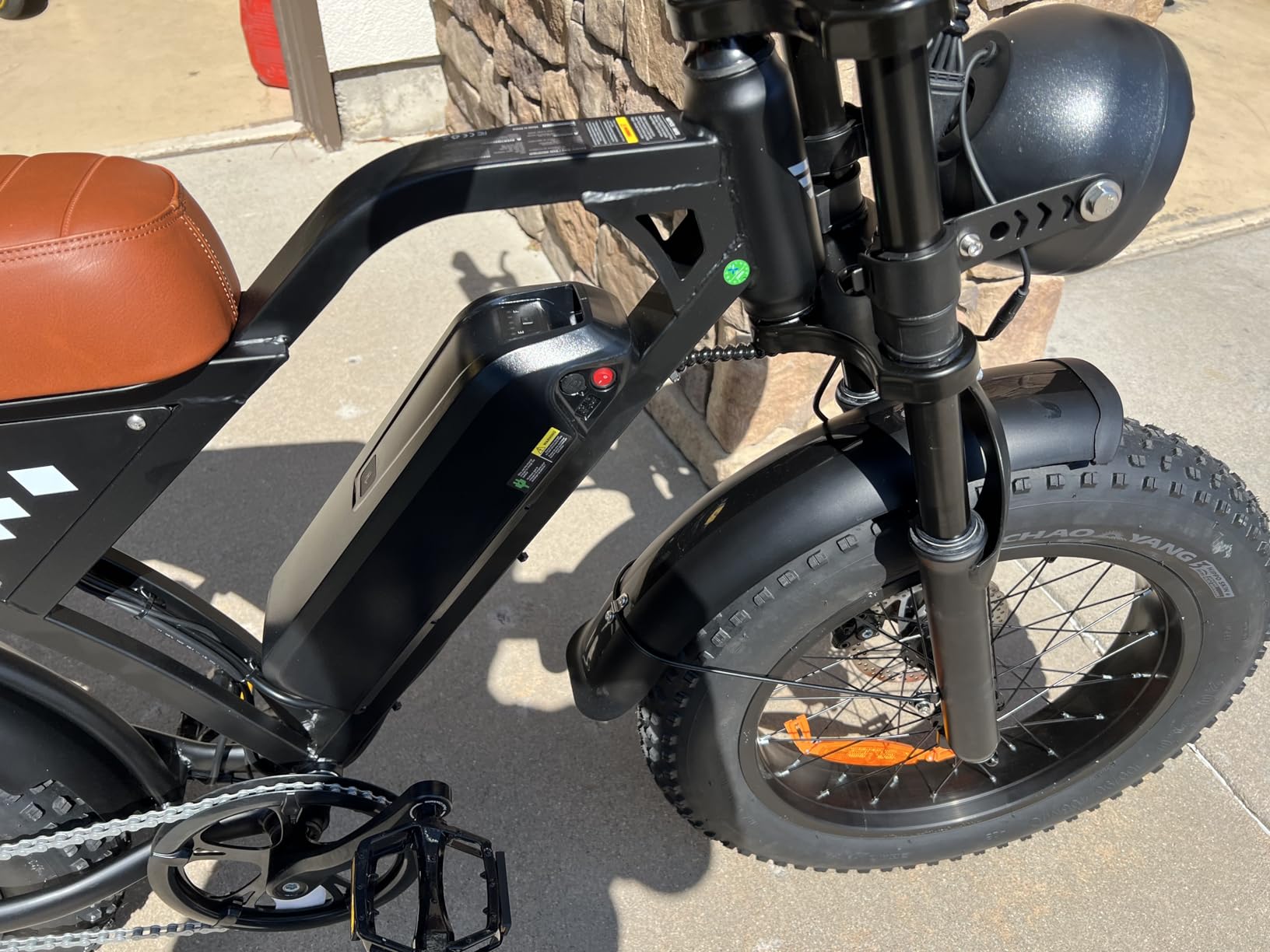
Two practical features stand out. The 48V 22.5Ah lithium battery is removable, with a spare pack sold separately, so a long day does not depend on charging the bike itself. And the adjustable gyro assist runs from 15 to 60 degrees for tilt compensation, which is a member of the same family of features as the wheelie-assist systems higher up this page.
Braking is dual hydraulic discs plus regenerative braking, and it is on a 19 inch wheel, so the discs have more room to work than on a 14 inch bike. Suspension is an inverted hydraulic front fork and rear spring, plus a 15W dual-colour LED headlight for early starts and dusk descents.
The owner base is five ratings, all 5-star. That is not a meaningful sample and we will not pretend otherwise. There is also a listing inconsistency worth flagging: some reviews describe a 1000W motor, which conflicts with the 5000W peak figure on the page. Get the current spec confirmed before you rely on the headline number.
Why wheel size is a hill variable too
Because traction and steering are what actually stop you on a steep climb, not power alone. A larger front wheel rolls over rocks and roots rather than deflecting off them, and a wider rear footprint puts more rubber down when you are trying to hold a torque spike in a low gear.
Owners also single out the long, comfortable seat, which suits taller and heavier riders. That is a real advantage for hill riding, where you spend the climb seated in a low gear and the pressure adds up over an hour.
Where it falls short
Evidence, more than anything. Five ratings cannot tell you how a frame, controller or battery holds up over a season, and the motor specification conflict is a reason to slow down rather than speed up.
19 inch front and 17 inch rear tires also make this the least portable bike in the roundup. If your route involves fitting the bike into a car, this is the wrong tool. And at 48V it sits below the 52V and 60V systems used by the heavier machines here, which matters more if you are a heavier rider.
9. Tietie E2 – Certified Battery and Two-Year Warranty
Tietie Electric Dirt Bike for Teens & Adults, 3500W Peak Mid-Drive Motor
3500W mid-drive with 220Nm torque
52V 24Ah 1248Wh battery
UL 2271 certified and IP54 rated
Full front and rear suspension
+ The Good
- 3500W mid-drive with 220Nm for confident off-road control
- Large 1248Wh battery with UL 2271 certification and IP54 rating
- Full front and rear suspension keeps tires planted on rough ground
- Magnetic safety tether cuts power if disconnected
- 2-year warranty with 7x24 support and US warehouses
- The Bad
- Only eight ratings so the 5.0 average is a very small sample
- 52 mph top speed claim is far beyond trail-legal e-bikes
If one thing sets this bike apart it is the battery. 52V 24Ah for 1248 watt-hours, UL 2271 certified and rated IP54 for water and dust. Most of the field makes no certification claim at all, and battery certification is the single most overlooked specification on any hill-capable e-bike, because the pack is the most expensive component and the one most likely to fail.
On hills the rest of the package holds up. A 3500W mid-drive motor making 220 Nm peak torque with a claimed 35-degree incline capability, 0.1-second acceleration response and three riding modes. The sub-second response figure comes from a torque sensor rather than a cadence sensor, which is the right architecture for a hill bike because it meters effort instead of pedal speed.
Front and rear high-performance shock absorbers keep the tires planted on rough ground, and hydraulic discs handle the stopping. The included kit lists a charger, tool kit and user manual, and the details are thoughtful: a digital display, a padded front impact guard, and a magnetic safety tether that cuts power if it separates from the bike. A tether is a crude roll cage, and on a 220 Nm machine it is worth having.
Support is 7×24 with US west, central and east coast warehouses, which is the kind of thing that matters more to a hill rider than it does to anyone. When something goes wrong on a remote climb, proximity decides whether the day is ruined. The warranty is 2 years, longer than almost everything else here.
The bike weighs 125 pounds, has a minimum rider height of 59 inches, and is rated to 265 pounds. Eight ratings, all 5-star, is a very small sample. The claimed 52 mph top speed is well beyond anything a road-legal e-bike can do, which tells you what category this actually sits in.
Why battery certification is worth paying attention to
Because an uncertified pack is an unknown on every axis: cycle life, thermal behaviour under sustained load, and what happens in a decade. UL 2271 certification is the standard specifically for the cells in personal e-bikes, and IP54 means it is sealed against dust and splashing water. On a bike you will ride up wet gravel hills, both of those matter.
Add the removable 52V system and you have a pack that is protected, serviceable and high-voltage. At 1248Wh it also carries enough energy for long days, with a claimed 60-mile range.
Where it falls short
Eight ratings. It is the best 5.0 average in the roundup and it is almost meaningless at that volume. Weight capacity of 265 pounds is mid-field. And the acceleration figure, while excellent, is a symptom of a 220 Nm motor that is not shy about being switched on.
If you are under about 59 inches tall, the bike will not fit you properly. Check sizing before anything else.
10. X-PRO E-Hawk – Rated for the Heaviest Rider in the Group
X-PRO E‑Hawk 3500W Peak Power 48V Electric Dirt Bike for Teens & Adults – High‑Torque Mid‑Drive Motor, Up to 42+ MPH, 55‑Mile Range, UL‑Certified Charger, Off‑Road Electric Motorcycle (Red)
QS brushless mid-drive with reduction gearbox,240Nm
Rated to 289 pounds
45-degree climb capability
48V 23.5Ah battery
+ The Good
- 240 Nm from a genuine mid-drive with a reduction gearbox
- UL-certified smart charger is unusual in this class
- Highest weight capacity in the group at 289 pounds
- Strong climbing to 45 degrees
- The Bad
- Only four ratings so the 4.7 average has limited weight
- Off-road only and cannot be officially registered for any use
- 250 pound item weight is heavy for a 14 inch mini dirt bike
This is the one to look at if you weigh more than most of the bikes here are rated for. 289 pounds of maximum rider weight, the highest capacity in the roundup, and 240 Nm from a genuine QS brushless mid-drive motor with a reduction gearbox. The reduction gearbox is worth understanding: it slows the motor down and multiplies its torque before it reaches the chainring, which is a mechanically direct answer to a heavy rider on a steep grade.
That combination is why the 45-degree climb claim is more credible here than elsewhere. It is not a big motor struggling, it is a geared motor delivering what a big motor cannot. Riders above 250 pounds have to work noticeably harder on a nominal mid-drive, and a reduction gearbox is the hardware that closes that gap.
The battery is 48V 23.5Ah with a smart battery management system and a claimed 55 miles of range. The charger is UL-certified with overcharge and overheat protection, which is worth noting because the smart charger is the component that actually runs hot. The frame is alloy steel with disc brakes and an inverted fork, on 14 inch front and 12 inch rear wheels, and the bike is recommended for ages 13 and up.
Three speeds is a low top-end count, and it is a sign of where this bike is aimed: short gearing ratios, not high-speed cruising. The 90-day warranty against manufacturer defects is the shortest coverage of any bike on this page, which is the one specification here that gives us pause.
Four ratings, none below 4 stars, produce the 4.7 average. Treat it as a paper figure. The 250 pound item weight is genuinely heavy for a 14 inch mini dirt bike, and being honest, it is a bike you will need help loading.
Why rider weight changes what you should buy
Because assist is proportional to what the system thinks you need, and a heavier rider needs more of it on the same hill. The community shorthand is that the difference becomes dramatic above about 250 pounds, and motor manufacturers do not build their mid-drives around an unloaded bike.
Three things move the needle for heavier riders, in order. Torque figure, which is why 240 Nm matters here. System voltage, where 48V and above keeps the pack from sagging under load. And the bike’s own stated capacity, which is the number that says whether the manufacturer built for you. This bike answers all three, and it is the only one in the roundup rated above 265 pounds.
Where it falls short
The 90-day warranty. On a bike whose most expensive failure is a 240 Nm motor, three months of cover is thin, and it is the one specification we would push back on hardest.
Four ratings is not enough to trust the rest. And 250 pounds of item weight on 14 inch wheels will be unmanageable on technical terrain for anyone, regardless of rider size.
11. E-Bycco Peak 2000W – Torque Sensing at a Lower Figure
E·Bycco Torque-Sensor Electric Bike for Adults, 2000W Peak Ebike, 26″ x 4.0 Fat-Tire Electric Bicycle, 48V 20AH Front Suspension, Hydraulic Brakes, All-Terrain, Street Legal Commuter E-Bike
2000W peak with 90Nm torque
Torque sensor sampling 100 times per second
48V 20Ah 960Wh battery
Step-through aluminium frame
+ The Good
- Torque sensor gives smooth proportional assist rather than abrupt kick-ins
- Five assist levels from real workout to full power on big hills
- Fat tires keep the bike stable and smooth on rough roads
- Hydraulic brakes described as excellent for quick stops
- One owner reports a third E-Bycco and the best of the three
- The Bad
- Only four ratings across two color variants
- Listings reference both a C8 and C9 model for the same product
- One reviewer describes a 1500W motor conflicting with the 2000W peak
This is the only bicycle in the roundup rather than an electric motorcycle, and on a technical climb that difference is the whole point. The 2000W peak motor makes 90 Nm, which would look weak next to a 276 Nm figure, and it is paired with a torque sensor that samples pedal force 100 times per second for smooth proportional assist.
That sensor is why 90 Nm goes further here than a comparable number would on a cadence-sensor bike. A cadence sensor waits for you to spin and then delivers a set amount of power, which on a steep, loose climb means sudden surges and wheelspin. A torque sensor reads effort and meters output to match, so the assist scales with what you are actually pushing against.
The assist levels reinforce the point. Five levels, and owners describe being able to pick a genuine workout on flat ground and full power on big hills, which is the flexibility you want when the route profile changes. The motor is rated for 45-degree slopes, the battery is 48V 20Ah for 960 watt-hours with a claimed 95-plus miles of range, and the stopping is handled by dual hydraulic brakes that owners describe as excellent.
For fit, the step-through aluminium frame with an adjustable handlebar riser accommodates riders from 5 foot 5 to 7 foot 2, which is a wider range than most of the off-road bikes here manage. The lockable front fork and 26 by 4.0 inch fat tires keep the bike stable and smooth on rough roads, and the bike arrives 85 percent pre-assembled with one-year service on the motor, battery and controller.
Four ratings, with an odd split between 5-star and 4-star, and the listing copy is inconsistent, referencing both a C8 and a C9 for the same product. One reviewer also describes a 1500W motor. Ask for the current specification in writing.
Why a torque sensor matters more than the torque number
Because a mid drive with a torque sensor gives you something a bigger motor with a cadence sensor does not: assist that matches effort. On a long climb that starts smooth and then steepens past 20 percent, cadence-sensor assist either runs out of legs or over-delivers and spins the wheel. Torque sensing tightens that up.
It is also the reason to choose a bicycle over a motorcycle for commuting hills. A 90 Nm mid drive with a torque sensor, hydraulic brakes and fat tires is a machine you can ride to work every day. The 276 Nm machines are not, and no amount of extra torque changes that.
Where it falls short
Raw power, without qualification. If your hill is loose dirt with technical sections, 90 Nm will find its limit sooner than anything else here, and you will be riding the bike rather than being carried by it.
Only front suspension means it is not a trail bike, however good the tires are. And the inconsistent listing copy is a genuine warning sign about how well this product is supported.
12. ELOTAC ET-1 – Mid-Frame Drive on a Lightweight Frame
ELOTAC ET-1 Electric Dirt Bike for Youth Adults, 3500W Peak Mid-Drive Motor, 48V 21AH Removable Battery, 14″/12″ Off-Road Tires, Dual Hydraulic Disc Brakes, Hydraulic Suspension, Mountain Pit E-Bike
3500W peak mid-drive motor
48V 21Ah removable battery
Aluminium alloy frame
Hydraulic suspension and dual discs
+ The Good
- Mid-mounted motor drives the drivetrain directly for hill climbing
- Removable 48V 21Ah battery allows indoor charging
- Aluminium alloy frame balances strength against weight
- Three ride modes for terrain and skill level
- Hydraulic suspension with dual hydraulic discs
- The Bad
- Only three ratings so the 5.0 average carries no information
- Off-road use only and local age and licensing rules apply
- No stated range figure or torque number in the listing copy
The last pick is the one to watch. The motor sits mid-frame and sends torque directly to the drivetrain, which is the defining trait for hill climbing and is stated plainly in the listing. At 3500W peak with an aluminium alloy frame, it is trying to do the same job as the big-power bikes above it at a fraction of the mass.
The frame is the reason to pay attention. Aluminium alloy gives a better strength-to-weight balance than the carbon steel used on most of the motorcycles in this roundup, and on a hill bike where you are fighting gravity, mass is the enemy. The removable 48V 21Ah battery lets you charge indoors away from the bike, which is the single most convenient feature here for anyone with a garage or a hallway.
Three ride modes across Eco, Tour and Sport let you match output to terrain and skill level, which is sensible on a 3500W machine. The smart electronic control system is claimed to add 16 percent range versus class peers, though that is a manufacturer figure with nothing to compare it against. Hydraulic suspension and dual hydraulic discs cover both ends of the ride, and the 14 and 12 inch off-road tires handle the rough stuff.
Overall dimensions are listed at 62 by 28 by 38 inches, which is a useful check if you are planning storage or transport. The bike is a recent addition to the market, so it is new to the category.
Three ratings, all 5-star, with no written detail. That is not a satisfaction signal. There is also no stated torque figure anywhere in the listing copy, and for a hills roundup that is a real gap. We include it on the strength of the motor placement and the frame material, not on evidence.
Why frame material changes hill riding
Because on a climb you are carrying the bike up with you. Every pound of frame and battery mass is a pound the motor has to move and a pound you have to hold upright on loose ground. Aluminium alloy is not the lightest option available, but it sits well below the carbon steel frames on the bigger machines in this roundup.
Combined with a removable battery, it is a design that is unusually well suited to someone who wants real trail capability without a 130-pound motorcycle. The three ride modes also make it more approachable, since a new rider can stay in Eco while they learn what the bike can do.
Where it falls short
The absence of a torque figure. For a bike being sold on mid-frame drive placement for hill climbing, the listing should state the number, and it does not. Until it does, you are buying a claim rather than a specification.
Three ratings, no detail, off-road use only, and local age and licensing rules are the buyer’s responsibility to check. If the frame and the motor placement appeal to you, this is worth watching. It is not yet worth building a purchase decision around.
How to Choose a Mid-Drive E-Bike for Hills
Start with torque, not wattage
Torque in Nm is the only motor figure that predicts hill performance, and it is worth knowing that six of the eight bikes in the shopping results for this query lead with a torque or wattage number in the product title. The category has already decided what matters. Buyers are lagging behind it.
Wattage measures how fast energy moves. Torque measures how hard the motor pushes at a given speed. On a hill you are going slowly by definition, so torque is the relevant number. A 90 Nm mid drive with a low gear can beat a 1000W hub motor on the same 20 percent grade, and anyone who tells you otherwise is reading a spec sheet instead of riding a hill.
One caution: peak torque is not sustained torque. Several bikes here quote a peak figure measured at a specific speed and gear. Treat peak numbers as the ceiling of the machine and look for design features that protect sustained output, such as the thermal management on the NEXVEY or the battery capacity on the Tietie.
Match torque to your actual grade and your actual weight
The bikes here make claims ranging from 35 to 45 degrees, and the honest translation is that a claim only means something in the gear it is delivered in. Ask three questions of any listing. How many gears are there. What is the lowest ratio. And what is the stated weight capacity.
A bike claiming 45 degrees through a 3-speed transmission with a tall first gear is a different proposition from one claiming 35 degrees through a 12-speed drivetrain with a genuine climbing gear. Neither number is a lie. Only one of them is usable.
One practical way to find your real limit before you commit is to measure it indoors on a trainer. Set a steady cadence and a fixed assist level, then add load until the bike starts to bog. Our guide to direct drive bike trainers covers the setup. Whatever the trainer says at your own body weight on a flat surface is a good proxy for what happens on a 15 percent grade.
Add your own weight and any load to the equation. Above roughly 250 pounds, prioritise torque figure, system voltage and the manufacturer’s stated capacity over everything else. The X-PRO E-Hawk, rated to 289 pounds with 240 Nm from a reduction-geared motor, is the one we would point a heavier rider toward.
Torque sensor versus cadence sensor on a climb
This is the most useful technical distinction in the whole category and almost nobody explains it at the point of purchase. A cadence sensor measures how fast you spin the pedals and delivers a set amount of power when you cross a threshold. A torque sensor measures how hard you are pushing and meters the assist to match.
On a steep, loose, technical climb, the difference is dramatic. Cadence-sensor assist surges at low speed and spins the wheel. Torque-sensor assist tightens as the gradient steepens, which is the behaviour you actually want when the ground is letting go. Both the Canyon Grand Canyon:ON 7 and the E-Bycco Peak use torque sensing for this reason.
Cadence sensing is not a deal breaker on smooth, predictable hills. It is a compromise on the ones that actually define this article.
Battery behaviour on a long climb
A pack under sustained high draw heats up, and the battery management system trims assist to protect the cells. This is a real and under-discussed limitation. It shows up on long grades rather than short steep ones, which is the opposite of what most buyers expect.
Three things reduce the effect. Capacity matters, because a larger pack has more thermal headroom before protection engages. Cooling design matters, and one bike here markets thermal management as a headline feature specifically for long rides. And removable is worth real money, because it lets you charge indoors and swap to a second pack rather than depending on a single pack’s remaining charge.
Certification is the specification most listings skip. UL 2271 covers e-bike cells specifically, and IP ratings cover water and dust ingress. On a bike you will ride up wet gravel hills, both are worth having.
Brakes, because every hill ride ends with a descent
Climbing power is half the problem and gets all the attention. The other half is stopping at the bottom with a heavy bike, a hot brake and a grade that does not get shallower. Hydraulic discs are effectively the minimum on anything in this roundup, and the number of rotors and their size matter more than the brand.
Full suspension also earns its keep on descents as much as on climbs. A bike with no rear suspension transmits every square edge directly into your hands and the rear wheel, and on a loose surface that is how a controlled descent becomes a crash. Motor cut and regen braking, where fitted, reduce the load on the brakes on long drops.
Service access and warranty
One of the clearest community rules is that you can change many parts yourself, but you cannot easily change a dead motor. That makes service access a hill-purchasing question rather than an ownership afterthought, because a bike stranded on a remote climb is a very different problem from a bike that will not start in a driveway.
Warranty length on the motor specifically is the figure to compare. The HAPPYRUN F18 2.0 gives 365 days on motor and battery. The Tietie E2 gives 2 years. The Canyon bikes carry 6 years on Canyon Engineered Components. The X-PRO E-Hawk gives 90 days, which is the shortest here and the one number we would negotiate hardest over.
US-based support and US warehouse locations are worth something specific to hill riders, because they determine how fast a replacement part reaches you when you are somewhere with no other option.
When a hub motor is actually the better call
Honestly, sometimes it is, and a roundup that never says so is not worth reading. A powerful hub motor is cheaper, simpler, has fewer parts to wear, and is easier for a DIY rider to service. On short, shallow hills in a flat city, a good hub motor is genuinely all you need and the money you keep is real money.
What a hub motor cannot do is multiply torque through a gear. It pushes at the wheel, at a fixed relationship to speed, and it will not be talked out of spinning on a loose climb or stalling on a hot one. That is the entire limitation that creates this market.
So the rule is simple. Flat, short, unladen, and mostly street riding, and a hub motor is the sensible buy. Sustained grades, loaded riding, technical ground, or replacing a bike that already gives up on climbs, and the mid drive is not a preference. It is a different machine.
Upgrading from a hub bike that cannot climb
This is a large and under-served group of buyers, and the question gets asked constantly on forums without a clear answer. The trigger is almost always the same. The bike has a rear hub motor, it stalls or overheats on a climb, and the rider is done negotiating with it.
Before replacing the whole bike, check what is actually wrong. On many hub setups, replacing the controller and the battery with higher-spec units transforms a bike that struggles. A 750W rear motor running a undersized controller and pack is a common and fixable combination, and a controller swap costs a fraction of a new bike.
If the motor itself is the limitation, no amount of controller work will help, because the torque ceiling is in the motor. That is the point at which a mid drive is the answer rather than a repair. Riders coming from hub bikes describe the difference as removing a ceiling they had stopped noticing, because the escalation is instant and unmissable.
The other upgrade path, for riders who build, is a mid-drive conversion kit. Enthusiasts consistently single out the Bafang BBSHD for massive, easily controllable low-speed torque. It is the DIY choice, not a turnkey purchase, and we would not recommend it to anyone who has not opened a motor before.
What to stay away from
Failure modes matter more than brand names here, because this category has no track record yet. Motors that overheat and cut assist on a climb are the most common deal breaker, and they are usually a symptom of an undersized battery or no thermal design rather than a bad motor.
Also be careful of undersized gearing. A big torque figure delivered only in a tall gear is worse than a modest figure in a proper climbing gear. And be wary of paying a brand-name premium with no torque advantage, which the community flags routinely.
Finally, poor service and warranty access. A bike you cannot get repaired near home is a worse purchase than a slightly weaker bike you can, and that calculation changes completely if you ride on remote ground.
One more honest note. Several of the bikes in this roundup arrive with un-set suspension, over-inflated tires or translation-heavy instructions. That is not fraud, it is a young category, but it is a real cost in your first weekend. If you enjoy a Saturday morning with a spanner and a hose, that is free entertainment. If you do not, factor it in.
Frequently Asked Questions
What is the best ebike for climbing steep hills?
The ESKUTE EDB001 is our pick for steep climbs, delivering 220 Nm from a mid-drive motor rated to 265 pounds, with owners confirming 35-degree off-road climbs. The Yozma IN10 takes our overall top spot because its 394-rating review base is the only substantial evidence in the group. If your hill is a public road, the Canyon Grand Canyon:ON 7 with the Bosch Performance Line CX is the only trail-legal bicycle here.
How steep of a hill can an e-bike climb?
A mid-drive with 220 Nm and a low enough gear can hold a 35-degree grade, and the highest-torque machines here claim 45 degrees. On a road-legal pedal-assist bicycle, expect to hold sustained grades in the low teens percent. The limit is rarely the motor. It is your gearing, your weight, and how long the climb lasts.
Are eBikes good for going uphill?
Yes. That is the clearest strength the category has, because a mid-drive motor drives the chainring and multiplies torque through your gears exactly like your legs do. A hub motor cannot do this because it pushes at the wheel with no gear leverage. Riders regularly report completing hills they previously had to walk.
Which ebike motor is better, Bafang or Bosch?
Bosch is the choice for smoothness, quiet operation, torque-sensing response and a dealer service network. Bafang is the enthusiast choice for raw low-speed torque and controllability off-road, and the BBSHD is the most-cited conversion motor. For road-legal commuting choose Bosch. For hard off-road gradients on a budget, Bafang delivers more torque per pound.
What ebikes to stay away from?
Avoid bikes that overheat and cut assist on a climb, since that usually means an undersized battery rather than a bad motor. Be wary of large torque claims delivered only through a tall gear, and of brand-name premiums with no torque advantage. Poor service and warranty access matters most if you ride on remote ground.
What is the average lifespan of a Bosch ebike motor?
Manufacturers do not publish a fixed service life figure, and anyone quoting a precise number without a source is guessing. What is documented is that longevity depends on thermal management, protection from sustained overload, and serviceability. Bosch is favoured here for the dealer network, because a motor failure is the part you cannot fix yourself.
How much torque do I need to climb hills on an e-bike?
More than the listing implies, and the honest answer depends on your weight and the grade rather than a single number. Riders report a significant change above roughly 250 pounds. Above that, prioritise torque figure, system voltage of 48V or more, and the bike’s stated weight capacity. Below it, 75 to 90 Nm handles most road hills comfortably.
The Verdict: Which Mid-Drive E-Bike Handles Hills Best?
If you read nothing else, match the bike to the hill rather than to the headline number. The Yozma IN10 is our best mid drive e-bike for hills overall, because 394 owner ratings tell you what actually happens on a real climb and the spec sheet backs it up. The ESKUTE EDB001 is the better pure value, carrying more torque with a slightly better rating. The Canyon Grand Canyon:ON 7 is the only road-legal answer here, and the Canyon Precede:ON Comfort 7 covers gentler urban hills with a belt drive and a step-through frame.
For the steepest ground, look at torque and suspension together. The Tasaca V58 M12 has the most torque in the group at 276 Nm, the X-PRO E-Hawk is the only one rated above 265 pounds, and the NEXVEY FLASH PRO is the one designed around not fading on a long climb. For battery confidence, the Tietie E2 is UL 2271 certified. For torque-sensing smoothness, the E-Bycco Peak 2000W is the only true bicycle in the high-power group.
Whatever you choose, judge it on three numbers: torque in Nm, the lowest gear you have available, and the stated weight capacity. Those three settle almost every hill question before you ever sit on the saddle. We will keep updating this list as 2026 goes on, and the honest caveat stands: most of these bikes have thin review histories, so check the current rating count before you commit.