
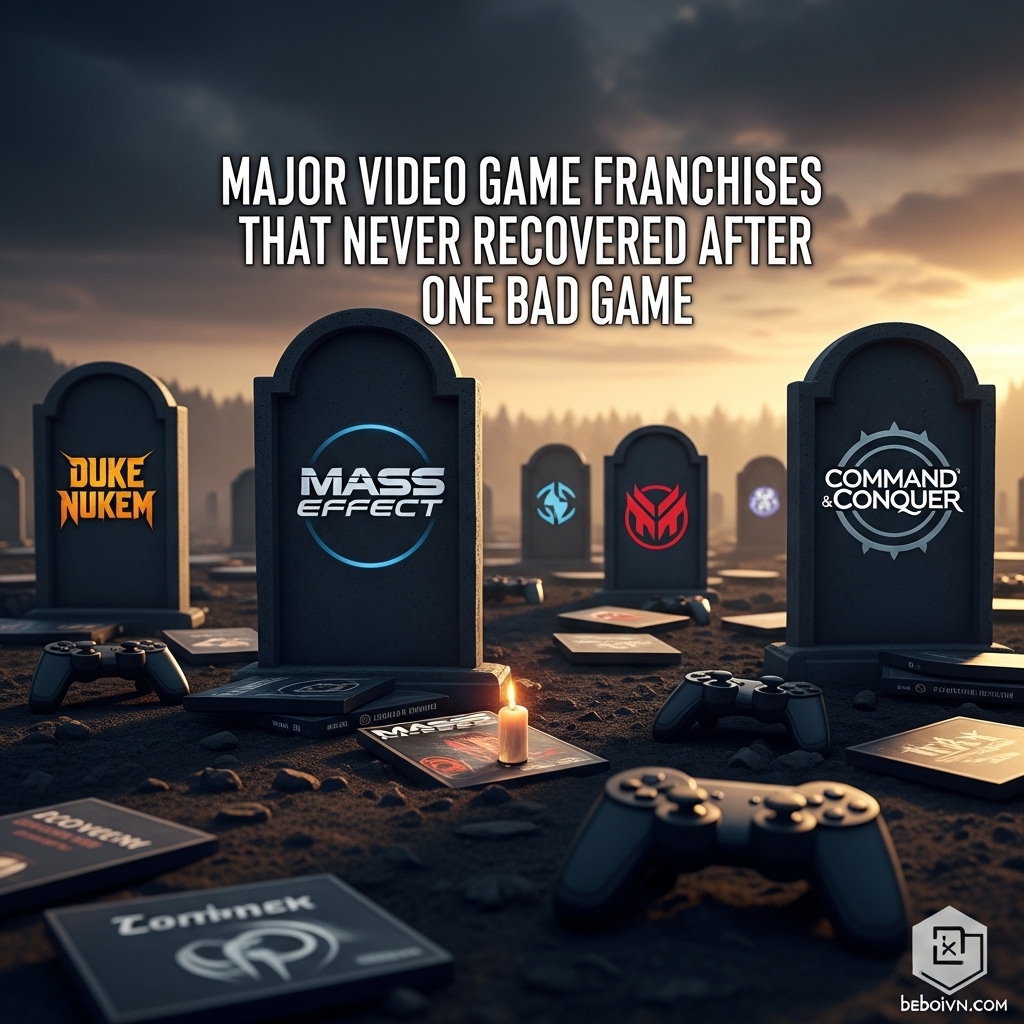
The video game industry is littered with the carcasses of once-great franchises that met their untimely demise not through gradual decline, but through a single catastrophic misstep. It’s a phenomenon that continues to fascinate gamers and industry observers alike: how can a beloved series with years of success and fan goodwill be completely derailed by just one bad entry? From development hell nightmares to misguided reboots, these cautionary tales serve as reminders that in the fast-paced world of gaming, one wrong move can spell disaster for even the most established franchises.
The Anatomy of a Franchise-Killing Game
Before diving into specific examples, it’s worth understanding what transforms a merely bad game into a franchise killer. Typically, these disastrous releases share several common characteristics: they fundamentally misunderstand what made the series special, they arrive after prolonged development cycles that create unrealistic expectations, or they attempt to reinvent core gameplay mechanics in ways that alienate the existing fanbase.
What makes these cases particularly tragic is that they often involve franchises at the peak of their popularity, with dedicated fanbases and promising futures. Yet through a combination of poor creative decisions, technical failures, and sometimes corporate meddling, these once-proud series were reduced to footnotes in gaming history.
Duke Nukem Forever: The Poster Child of Development Hell
Perhaps no game better exemplifies how a single release can destroy a franchise than Duke Nukem Forever. After Duke Nukem 3D revolutionized the first-person shooter genre in 1996 with its irreverent humor and fast-paced action, fans waited eagerly for a sequel. What they got instead was a 15-year development cycle that became industry legend.
When Duke Nukem Forever finally released in 2011, it was immediately clear that the game had lost touch with everything that made the original special. The humor that once felt edgy and clever now came across as dated and cringe-worthy, while the gameplay mechanics felt like a poor imitation of modern shooters rather than the innovative experience fans expected.
The damage was irreversible. Duke Nukem Forever didn’t just disappoint—it became a cautionary tale about the dangers of prolonged development and losing sight of what made a franchise great in the first place. Today, the Duke Nukem series remains dormant, a shadow of its former glory.
Mass Effect: Andromeda – When Technical Issues Meet Fan Expectations?
The Mass Effect trilogy stands as one of gaming’s greatest achievements, blending compelling storytelling with meaningful player choices across three interconnected games. When BioWare announced Mass Effect: Andromeda as the start of a new saga, expectations were understandably high. What players received in 2017, however, was a technical disaster that undermined the franchise’s reputation.
Mass Effect: Andromeda launched with notoriously poor facial animations, numerous bugs, and writing that failed to capture the depth and nuance of the original trilogy. While the game wasn’t without its merits—particularly in combat mechanics—the first impression was so damaging that Electronic Arts made the decision to put the entire Mass Effect series on indefinite hiatus.
What makes Andromeda particularly tragic is that it wasn’t fundamentally a bad concept. A new setting in the Mass Effect universe could have been exciting, but the execution fell so far short of the series’ established quality standards that it effectively ended one of gaming’s most beloved franchises.
Command & Conquer: Tiberian Twilight – Abandoning What Works
The Command & Conquer series essentially defined the real-time strategy genre for generations of PC gamers. With its intuitive base-building mechanics, distinct factions, and engaging campaigns, C&C became synonymous with quality RTS gameplay. That’s why Command & Conquer 4: Tiberian Twilight in 2010 felt like such a betrayal to longtime fans.
In a baffling decision, EA completely abandoned the core gameplay loop that had made the series successful. Gone were the traditional base-building and resource management elements that defined C&C. Instead, players were stuck with a mobile crawler system and population limits that felt more like a console RTS than the beloved PC franchise.
The result was a game that felt like a Command & Conquer title in name only. Fan backlash was immediate and severe, with many longtime supporters feeling that the developers had fundamentally misunderstood what made the series special. While the Command & Conquer name has occasionally resurfaced in various forms, the main series has never truly recovered from the damage inflicted by Tiberian Twilight.
Dino Crisis 3: When Innovation Goes Wrong?
Capcom’s Dino Crisis series started strong in 1999, offering a refreshing take on survival horror by replacing zombies with dinosaurs. The first two games were critical and commercial successes, establishing the franchise as a worthy companion to Resident Evil. Then came Dino Crisis 3 in 2003, and everything went wrong.
Set in space (yes, space) with futuristic weapons and dinosaurs that looked more like aliens, Dino Crisis 3 completely abandoned the grounded, tense atmosphere that made the first two games special. The camera system was notoriously problematic, and the gameplay felt like a poor imitation of other action games rather than the thoughtful survival horror fans expected.
The failure was so complete that Capcom hasn’t released a mainline Dino Crisis game in over two decades. Despite occasional rumors and fan petitions, the franchise remains one of gaming’s most prominent examples of how a single misguided entry can kill a promising series.
Medal of Honor: Warfighter – Losing the War to Call of Duty
For years, Medal of Honor stood as the premier World War II shooter franchise, setting the standard for historical military games. However, as the gaming landscape evolved and Call of Duty rose to prominence, EA attempted to modernize the Medal of Honor series. The results were disastrous.
Medal of Honor: Warfighter (2012) represented everything wrong with this approach. The game tried desperately to emulate Call of Duty’s fast-paced, cinematic action while losing sight of what made Medal of Honor unique. The campaign was short and forgettable, while the multiplayer failed to innovate or compete with established competitors.
What makes Warfighter particularly significant is that it wasn’t just a bad game—it effectively ended Medal of Honor’s relevance in the modern shooter market. Despite a brief VR attempt in 2020, the franchise that once dominated the WWII shooter genre has never regained its former glory.
Saints Row (2022): When Reboots Backfire?
The Saints Row series started as a gritty Grand Theft Auto clone before evolving into its own unique brand of over-the-top, absurd open-world chaos. By Saints Row IV, the franchise had fully embraced its ridiculous nature, featuring superpowers and alien invasions. Then came the 2022 reboot, which somehow managed to alienate both new players and longtime fans.
The reboot attempted to return to a more “grounded” approach while still maintaining the series’ humor, resulting in a tone that felt confused and inconsistent. The writing lacked the sharp wit of previous entries, the open world felt uninspired, and the gameplay mechanics failed to evolve meaningfully from earlier installments.
The commercial and critical failure was so severe that it’s unlikely we’ll see another Saints Row game for years, if ever. It’s a stark reminder that sometimes, trying to reinvent a franchise can do more harm than good.
Lost Planet 3: Killing the Cold
The Lost Planet series carved out a unique niche in the third-person shooter market with its blend of mech combat, extreme weather conditions, and giant alien creatures. The first two games developed a dedicated following, but Lost Planet 3 in 2013 completely missed the mark.
Developed by a different studio than the previous entries, Lost Planet 3 shifted focus away from the mech-heavy combat that defined the series, instead emphasizing a more traditional third-person shooter experience. The result was a game that felt like a generic action title with Lost Planet branding rather than a true sequel.
The changes were so significant that many fans felt the game had abandoned everything that made the series special. Combined with mediocre reviews and poor sales, Lost Planet 3 effectively ended the franchise, which hasn’t seen a new entry since.
The Order: 1886 – Style Over Substance
While not technically a franchise killer (since no sequel was ever released), The Order: 1886 represents a particularly tragic case of a promising new series being stillborn. Developed by Ready At Dawn, the 2015 PlayStation 4 exclusive generated significant buzz with its stunning visuals and intriguing alternate-history setting.
However, when the game finally released, it became clear that the developers had prioritized graphics over gameplay. The campaign was remarkably short (around 5-6 hours), with an over-reliance on quick-time events and generic cover-based shooting. The promising setting and characters were never given room to breathe in what felt more like a tech demo than a fully realized game.
The poor reception and sales led to Ready At Dawn’s closure in 2024, ensuring that The Order: 1886 would remain a standalone title—a cautionary tale about the dangers of prioritizing style over substance in new IP development.
Why These Franchises Never Recovered?
Looking at these examples, several patterns emerge that explain why these franchises never bounced back:
1. Loss of Core Identity: Many of these games fundamentally misunderstood what made their series special, whether it was Command & Conquer abandoning base-building or Duke Nukem losing its edgy charm.
2. Technical Failures: Games like Mass Effect: Andromeda launched in such poor technical states that they damaged the franchise’s reputation for quality.
3. Prolonged Development: Duke Nukem Forever’s infamous development cycle created unrealistic expectations that no game could possibly meet.
4. Market Saturation: By the time some of these sequels released, the market had moved on, making it difficult for even a good game to stand out.
5. Fan Alienation: Several of these games tried to appeal to new audiences at the expense of existing fans, resulting in a product that pleased neither group.
Lessons for the Industry
These franchise-killing games offer valuable lessons for developers and publishers:
- Respect Your Core Audience: While innovation is important, abandoning what made a franchise successful is rarely the right approach.
- Manage Expectations: Be realistic about what a game can deliver, especially after long development cycles.
- Quality Control: Technical issues can kill even the most promising concepts.
- Know When to Pivot: Sometimes, it’s better to delay a game or even cancel it rather than release a product that damages the franchise.
The Rare Comebacks
While most franchises that suffer a catastrophic failure never recover, there are rare exceptions. The recent revival of Ninja Gaiden with multiple well-received titles in 2025 shows that with the right approach, even dormant franchises can return successfully. However, these cases are exceptions rather than the rule.
Conclusion: The Fragile Nature of Gaming Franchises
The stories of these major video game franchises that never recovered after one bad game serve as sobering reminders of how fragile success can be in the gaming industry. From Duke Nukem to Mass Effect, these once-great series demonstrate that it only takes one misstep to undo years of goodwill and success.
For gamers, these cautionary tales highlight the importance of supporting innovative ideas while holding developers accountable for quality. For the industry, they underscore the need to balance innovation with respect for what made franchises successful in the first place.
As gaming continues to evolve, new franchises will rise and fall, but the lessons learned from these major video game franchises that never recovered after one bad game will remain relevant for years to come. Whether we’ll see any of these beloved series make a triumphant return remains to be seen, but their stories will forever serve as important chapters in gaming history.