
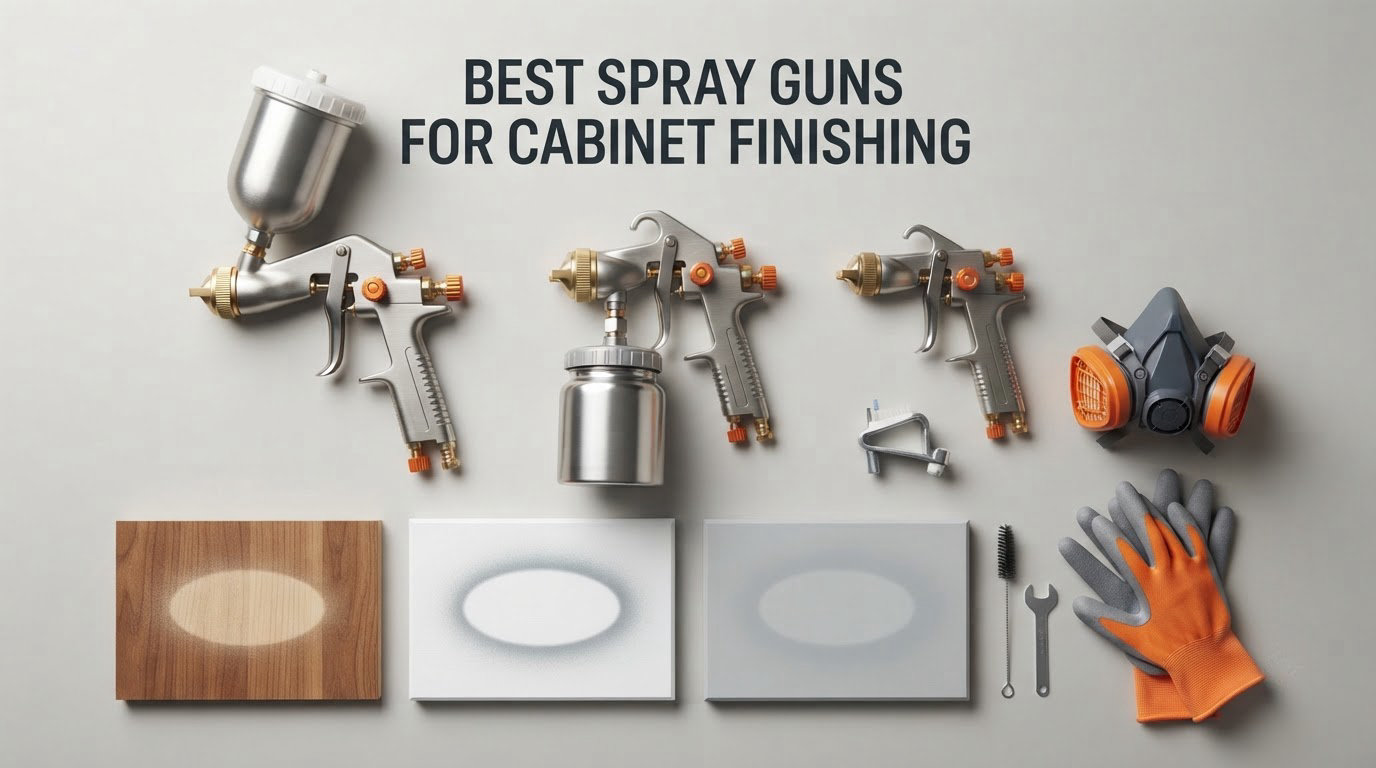
Cabinet coatings are among the least forgiving finishes in home improvement. A brush mark or lap line that shows on a wall is a blemish; the same mark on a cabinet door, cured in alkyd or lacquer, is permanent. That is why the best spray guns for cabinet finishing sit at the top of the equipment list for anyone planning to strip a kitchen. We spent weeks putting ten of the most widely reviewed sprayers and spray guns through cabinet-door and face-frame work to find out which ones lay down a factory-style coat without wrecking your kitchen with mist.
Before anything else, a word on gear you will not see in the reviews. The finish depends far more on your prep and technique than on the badge on the gun. We will cover both in detail below, along with tip sizing, thinning, overspray control and a troubleshooting section for the four problems that ruin most first projects: orange peel, sagging, spitting and clogs.
One safety note up front. Every one of these machines atomizes coating into a fine mist, and the ventilation demands are the same whether you own a handheld HVLP or a professional pneumatic system. Our respirator guide for spray painting covers what to wear and how to set up containment in a working kitchen.
Top 3 Spray Guns for Cabinet Finishing for October 2026
Those three cover the realistic range of cabinet work. The Semi-PRO 2 gives the finest atomization we found on waterborne lacquer and clear coats. The Magnum X5 is the volume and unthinned-paint workhorse. The InoKraft D1 is the value pick for anyone who already owns a compressor and wants a finish far better than the handheld HVLP crowd at a fraction of the price.
Best Spray Guns for Cabinet Finishing at a Glance for October 2026
| PRODUCT MODEL | KEY SPECS | BEST PRICE |
|---|---|---|
 |
|
Check Latest Price |
 |
|
Check Latest Price |
 |
|
Check Latest Price |
 |
|
Check Latest Price |
 |
|
Check Latest Price |
 |
|
Check Latest Price |
 |
|
Check Latest Price |
 |
|
Check Latest Price |
 |
|
Check Latest Price |
 |
|
Check Latest Price |
Two quick notes on reading that table. The Fuji Semi-PRO 2, the InoKraft D1, the Graco SG3 and the ENDOZER set are air-fed guns and need a compressor; everything else runs on its own motor. Only the ENDOZER set is explicitly not built for latex, so read that row carefully before buying it for a painted kitchen.
Airless vs HVLP vs Pneumatic: Which Is Best for Cabinets?
HVLP wins for cabinets, and the reason is overspray control rather than finish quality alone. HVLP runs at roughly 10 to 25 PSI at the gun, and a cabinet door is a small, vertical, densely detailed target sitting inside a room you still live in. Airless machines run at 1500 to 3600 PSI and put material down fast across wide surfaces, which is exactly what you do not want when the target is a raised-panel door with 12 inches of clear space behind it. One buyer in a r/paint cabinet thread put it plainly: airless wastes a lot of paint on jobs where you do not need a gallon, and a typical kitchen door set is well under that.
Airless still has a place. If you are also planning exterior work, walls or furniture, and you own a fine-finish low-pressure tip, an airless machine sprays unthinned latex and saves you from thinning and extra coats. On cabinets alone, though, you are paying for speed you cannot use and fighting mist you have to mask. The most commonly recommended fix on cabinet forums is the same one professional painters use: a fine-finish low-pressure tip, which softens the fan and cuts atomization pressure. The heavily upvoted answer on Paint Talk for spraying inside cabinets was that a Titan 440 airless unit works fine, but only when paired with a good swivel, a short whip and an FFLP tip, and that HVLP users should add a remote pressure pot so they can spray from further back.
The honest caveat about HVLP is thin coats. Thinned HVLP coating flows into the pores of open-grain wood like a sponge, which is why a red oak cabinet can take four or five light coats where a closed-grain maple door takes two. That is a property of the wood, not a defect in the gun. It is also why back-rolling, or a scumble coat with the same finish, still earns its place after the first spray pass on oak and ash.
Pneumatic gravity-feed is the professional answer, and the cheapest route if you already own a compressor. A gravity-feed gun holds paint above the gun, so the cup stays balanced and your wrist does not carry a full cup of water-based coating. Siphon-feed is the alternative, but the cup hangs below the gun, which tires the arm faster on a long face-frame session. Woodworkers running cabinets through a Fuji-class system routinely report that atomization is the best they have used on waterborne lacquer and clear coats, at the cost of a loud turbine and a cup that needs refilling often.
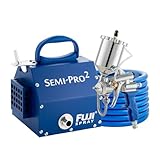
1. Fuji Spray Semi-PRO 2 – Best Overall for Cabinet Finishing
Fuji Spray 2203G Semi-PRO 2 – Gravity HVLP Spray System
1400W two-stage turbine
Non-bleed M-Model gun
1.3mm air cap
400cc cup
25ft hose
+ The Good
- Best atomization we tested on waterborne lacquer and clear coats
- Built-in turbine means no compressor filters or moisture traps
- Precise fan fluid and air control
- Quick cleanup compared with compressor setups
- 24-month parts and labor warranty
- The Bad
- 400cc cup needs frequent refills and will not sit upright in a standard gun stand
- Turbine noise is around shop-vacuum level
- Latex needs roughly 20 to 30 percent thinning and the 1.8mm air cap
This is the system we kept reaching for when the finish had to look sprayed by a cabinet shop. The 1400W two-stage turbine delivers a smooth, consistent airflow that atomizes waterborne lacquer, clear coats and primers into a fine, even mist with very little visible overspray. The non-bleed M-Model gun gives you separate, well-marked control over fluid, air and fan width, and the 25-foot hose with its air control valve lets you back off to 12 or 14 inches without losing the pattern.
Over several sessions on shaker-style doors and a full set of face frames, the atomization stayed consistent from first coat to last. Woodworkers who own this class of equipment describe the same thing: it lays down waterborne finishes at full strength, and cleanup is quick compared with a compressor-fed gun because there is no moisture trap to drain and no airline to blow out.
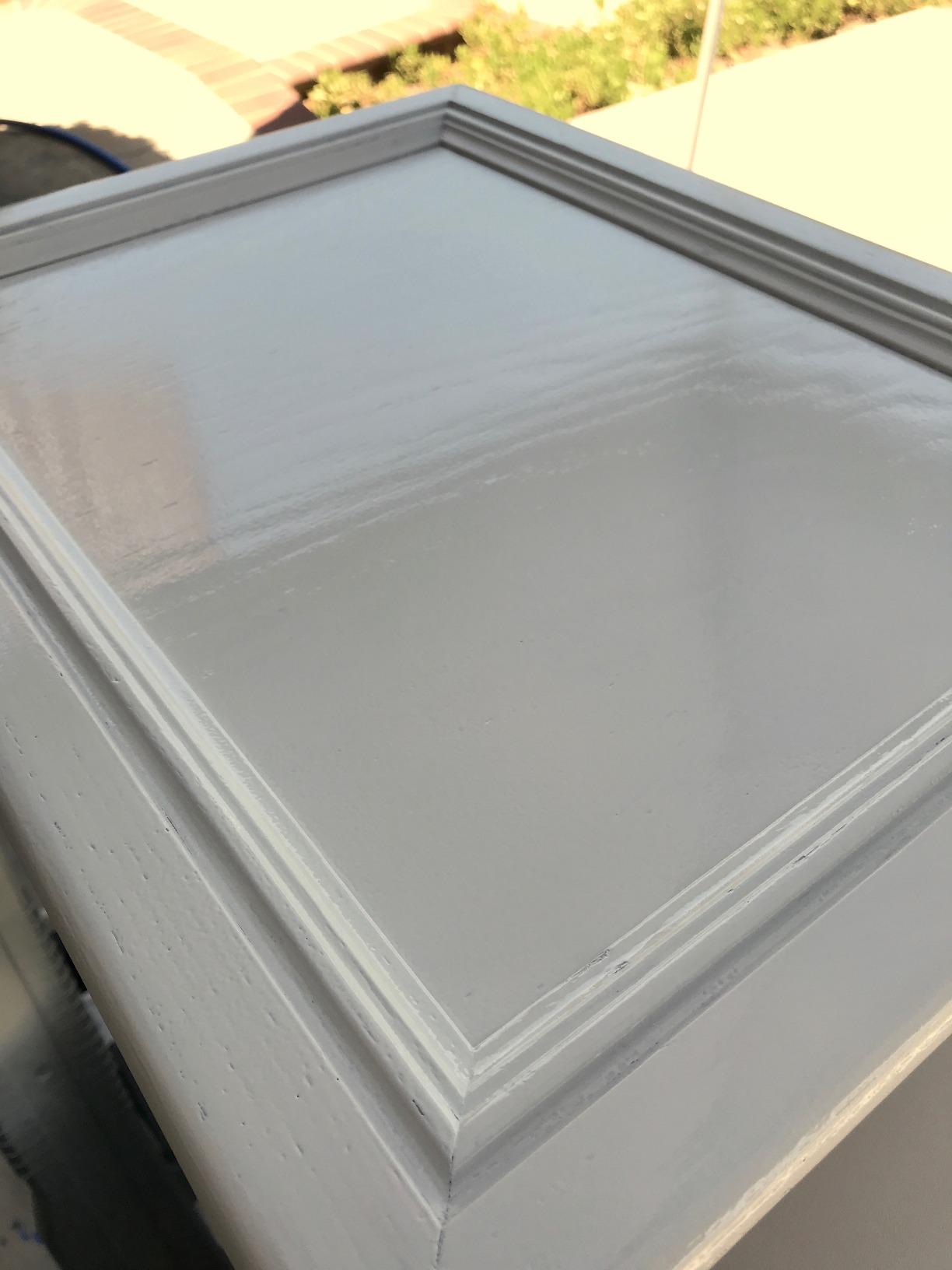
It is not a machine you buy casually. The turbine is genuinely loud, closer to a shop vacuum than to a paint sprayer, and the 400cc gravity cup is small enough that you will refill it several times per door. Owners also note that the cup will not stand upright in a standard gun stand, so many add a 3M PPS adapter to work around it.
The real limitation is latex. If you plan to spray water-based latex cabinet paint, plan on thinning it by roughly 20 to 30 percent and fitting the 1.8mm air cap, which the manual recommends for that use. With a lacquer or a waterborne lacquer, this gun is exceptional. With heavy unthinned latex, it is the wrong tool at the right price.
Who the Semi-PRO 2 suits
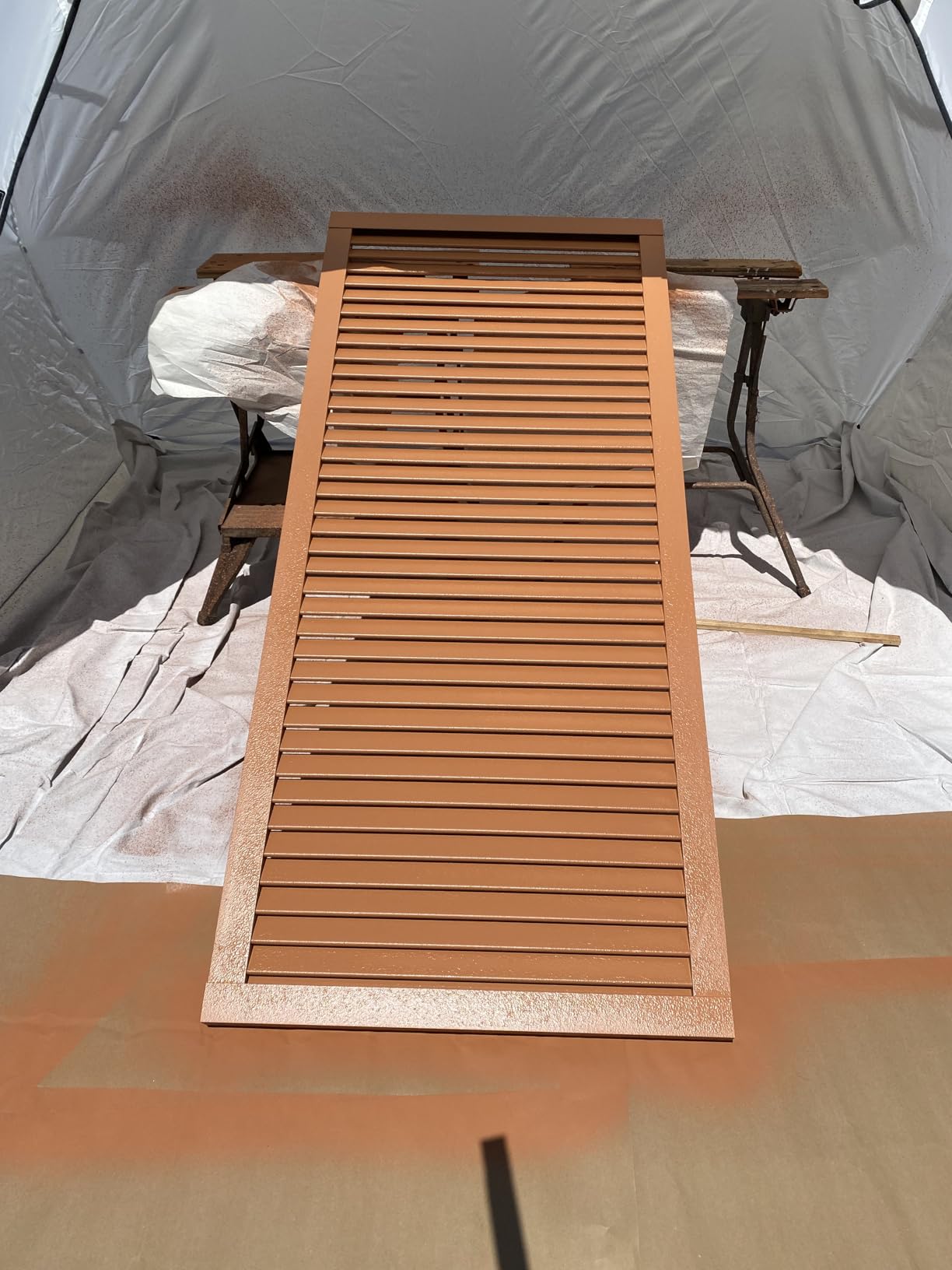
It suits the serious hobbyist and the small cabinet shop that sprays waterborne lacquer, precatalyzed lacquer or clear coats and wants results without a compressor, dryer, filter and regulator setup. It also suits anyone who cares most about the finish on raised-panel doors, where a wide, even fan and steady atomization matter more than raw output speed.
Who should skip it
Skip it if you are painting one bathroom vanity with water-based latex and you care about noise, arm fatigue and cup refills as much as you care about the finish. It is also oversized for someone who will spray a handful of doors per year, and it is a poor value if you already have a compressor and no plans to use it for anything else.
2. Graco Magnum X5 – Top Rated for Bigger Jobs
Graco Magnum X5 Airless Paint Sprayer, Interior & Exterior
3000 PSI max
Fully adjustable pressure
Suction from bucket
Up to 10 gallon projects
+ The Good
- Sprays unthinned paint or stain thanks to fully adjustable pressure control
- Suction tube draws straight from 1 or 5 gallon buckets
- Supports up to 75 ft of paint hose
- Stainless steel construction
- One-year manufacturer warranty
- The Bad
- 15 pound stand unit is awkward for furniture-scale cabinet work
- Needs thorough flushing after each use to keep pump and tip clear
- Pressure-setting learning curve for first-time users
The Magnum X5 is the machine most people mean when they say paint sprayer, and it earns its place on a cabinet job that is part of a bigger project. The 3000 PSI pump with fully adjustable pressure control lets you dial the flow down for a door and back up for a wall, and the flexible suction tube pulls directly from a 1-gallon or 5-gallon bucket so you are not shuttling paint through a funnel all day.
On cabinet doors, turn the pressure down. Runners and experienced users agree that the machine is at its best when it is not straining, and a lower pressure with a longer trigger pull gives a finer mist than maxed-out flow. The long hose support also means you can keep the machine on the floor of a garage or out of the kitchen and still reach every face frame.

It is a 15-pound stand unit, and that weight is the honest drawback for cabinet work. You are not carrying it up a stairwell, but you are moving it around a kitchen, and it is awkward next to a worktable covered in doors. The stainless steel pump also demands a proper flush after every session; letting water-based coating sit in the pump is the fastest way to ruin it.
There is a real learning curve the first time you set pressure. Budget an afternoon for test sprays on cardboard and scrap door, and get a fine tip if you want a cabinet-grade finish rather than a furniture-grade one. Most people who buy it for cabinets end up using it for walls and trim too, which is where the money is really justified.
Who the Magnum X5 suits
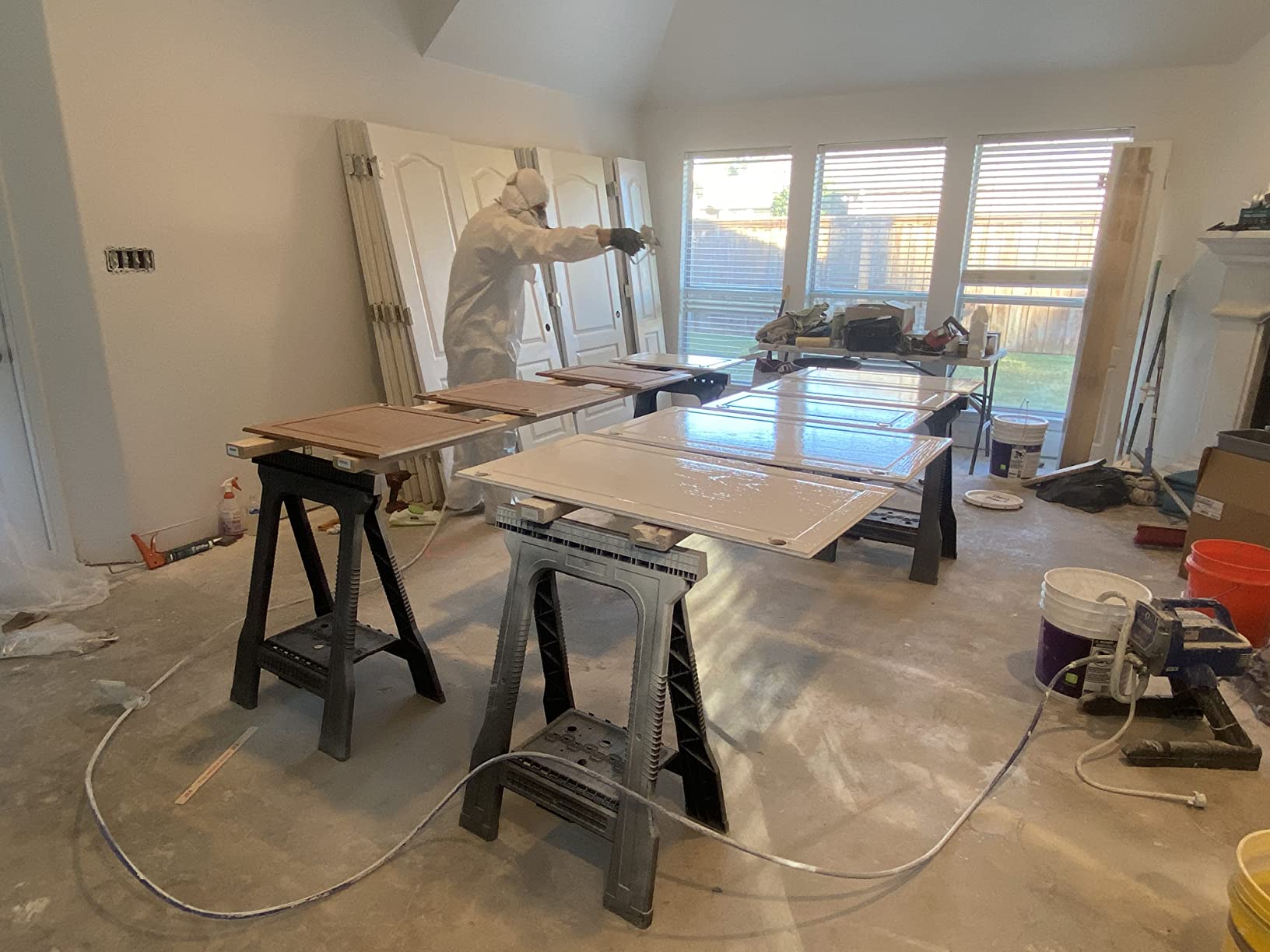
It suits a homeowner who is spraying the kitchen and then the hallway, the dining room and the exterior trim, and who will store it properly between projects. It also suits a small contractor who wants unthinned latex capability and a 5-gallon bucket feed for multi-gallon cabinet jobs.
Who should skip it
Skip it for a single-room refinishing job where the paint budget is tight. Airless machines waste coating on small jobs, and a cabinet-only project is a small job. Skip it too if you have no dedicated storage and no plan to flush it properly, because an airless pump left with dried latex is a repair, not a clean.
3. InoKraft D1 LVLP Air Spray Gun Premium Kit – Best Value
InoKraft D1 LVLP Air Spray Gun Premium Kit
Forged aluminum body
1.3mm 1.5mm 1.7mm sets
50 PSI max
Regulator and separator
+ The Good
- Atomization and finish quality rivals guns costing several times more
- Complete kit with regulator oil-water separator and three nozzle sizes
- Forged aluminum body cleans quickly
- Marked scales and quick start guide help beginners
- Low paint consumption versus older gravity-feed guns
- The Bad
- Requires an external compressor which is not included
- Some units arrived with scratched or pitted extra air caps
- Occasional reports of a small leak in the oil-water separator
- New guns may arrive with residue around the tip
If you own a compressor, this is the gun we would tell a friend to buy. The one-piece forged aluminum body with a Teflon coating atomizes modern waterborne and alkyd cabinet coatings at roughly 21 PSI on a trigger pull, with far less overspray than a handheld HVLP and a noticeably finer finish. Users repeatedly compare it favorably to guns several times the price, and professional cabinet painters use it despite owning far bigger systems.
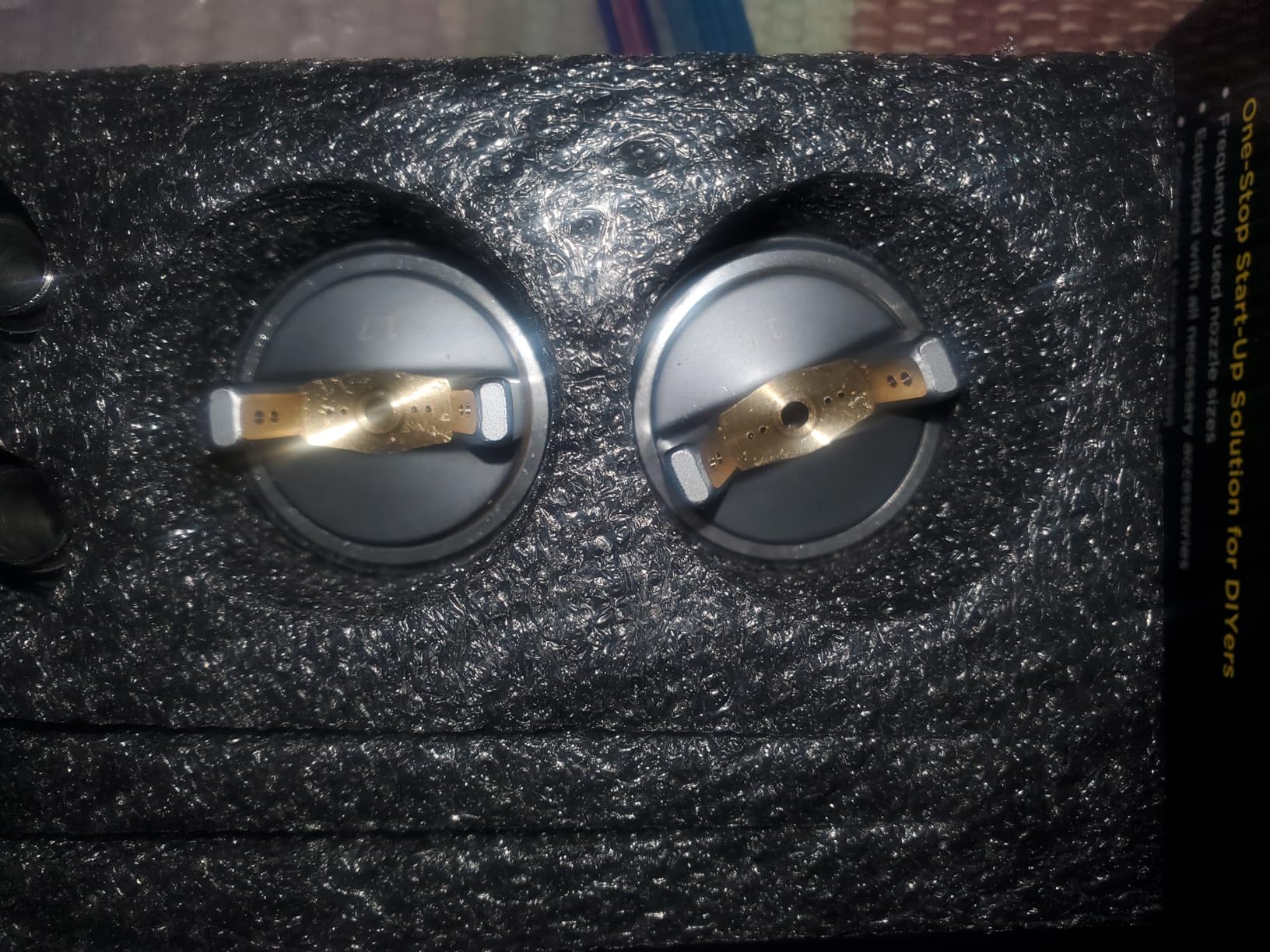
The kit is the quiet advantage. You get an air regulator, an oil-water separator, two filters, a 3M paint cup adapter, a wrench, a cleaning kit and a storage box in the box. That means a new user is not starting the project by shopping for a dryer and a filter, and the separator keeps moisture out of the gun, which is the main cause of bubbling and finish defects on a pneumatic setup.
Flow and air control are good enough for real technique work. You can pull the fan in tight for a drawer front and open it up for a cabinet body, which is exactly the adjustment that separates a professional result from a hobby one. The marked scales on the gun body mean you can return to the same setting on the last coat of the last door, and consistency between coats is what makes sprayed cabinets look sprayed.
The reported weak point is quality control on the accessories. Some buyers received the 1.5mm and 1.7mm air caps scratched or pitted, and a few reported a small leak in the oil-water separator or residue around the tip on arrival. The manufacturer has resolved air cap complaints with replacements, so inspect everything before your first coat rather than discovering a pitted cap halfway through a set of doors.
Who the D1 suits
It suits anyone with a compressor who wants a fine finish without the price of a pro shop gun. It is a strong choice for bathroom vanities, a single kitchen, or a run of furniture and built-ins, and the low paint consumption makes it efficient on projects measured in gallons rather than tens of gallons.
Who should skip it
Skip it if you do not have a compressor and do not plan to buy one, since that puts the real cost well past the price of a self-contained handheld. Check your compressor output too; the gun is rated to 50 PSI, and an undersized small shop compressor will struggle to keep steady pressure, which shows up as an inconsistent pattern.
4. HomeRight Super Finish Max – Most Versatile
HomeRight Super Finish Max HVLP Paint and Stain Sprayer, 3 Brass Tips
450 watt motor
40 fl oz cup
1.5mm 2.0mm and 4.0mm brass tips
Three spray patterns
+ The Good
- Sprays latex chalk paint primers enamels sealers polyurethane stain and varnish
- Three brass tips cover everything from 4.0mm primer to 1.5mm sealer
- Lightweight at 3.5 pounds and beginner friendly
- Adjustable air cap for horizontal vertical and round patterns
- Often sprays paint without thinning
- The Bad
- Small 40 oz cup means frequent refills on a full kitchen
- Cleaning is time-consuming and must happen immediately
- Included tip wrench is too small and strips out quickly
- Blows noticeable overspray that moves drop cloths and dust
This is the gun most first-time cabinet sprayers actually buy, and the reviews are more positive than the price tier suggests. At 450 watts with three brass tips, it handles primer, latex, chalk paint, enamel, clear sealer, polyurethane, stain and varnish, which covers essentially every coating a cabinet project involves. Owners regularly report factory-like results on doors, trim and shutters after sanding between coats.
The three brass tips are the feature that matters most here. The 4.0mm red tip handles primer and heavier latex, the 2.0mm green tip is installed and covers latex and chalk paint, and the 1.5mm blue tip handles stains and sealers. Swapping tips is a two-minute job and it is the difference between a good coat and an orange-peel coat, because a tip matched to the coating is worth more than any extra wattage.
For a full kitchen, plan your time around the 40-ounce cup. Refilling it between every door is tedious, and experienced users set up a second cup so one is always pouring. The overspray is also real, and reviewers note that it moves drop cloths and lifts dust, so mask the room properly and turn off any forced-air register that could pull mist outward.
Cleanup is the habit that will decide whether you still own a sprayer in two years. Paint left sitting in the gun between coats will spit or clog, and the small included tip wrench strips out quickly, so pick up a proper wrench and clean the gun the moment you finish a coat. Used that way, this gun delivers genuinely smooth results on cabinet doors.
Who the Super Finish Max suits
It suits a first-time sprayer on a tight budget who is refinishing doors, drawer fronts, shutters or trim. It is also a good second gun to keep for sealer and stain, since the 1.5mm tip handles those better than any airless machine in this list.
Who should skip it
Skip it for a large kitchen if you dislike constant refilling or if overspray control is critical in your space. It also runs on US 110V power only, and it is a poor choice for a commercial shop where a gun gets used all day and cleaned at night.
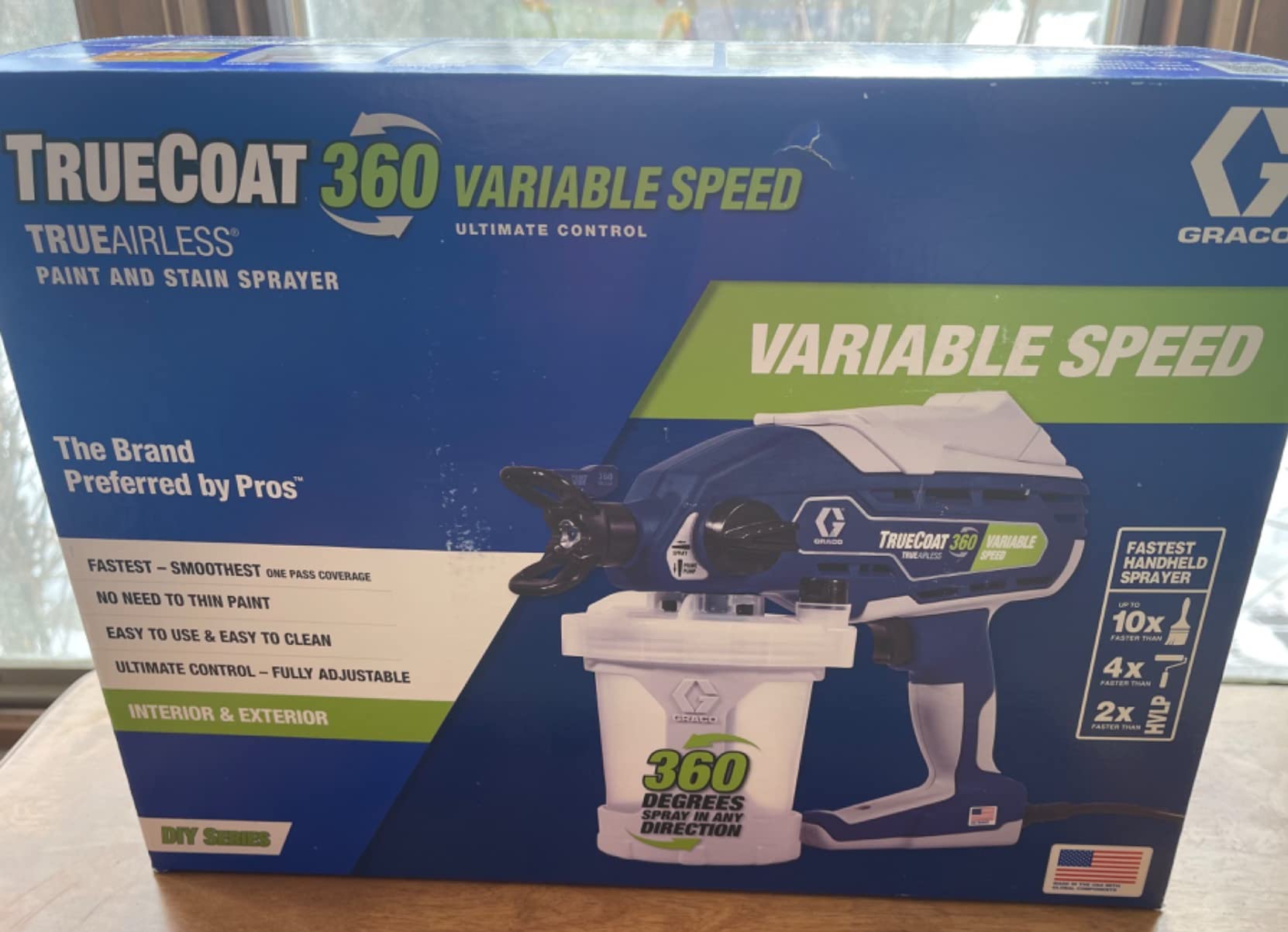
5. Graco TrueCoat 360 – Best for Detached Cabinet Doors
Graco 26D283 TrueCoat 360 Variable Speed Paint Sprayer
1500 PSI pump
Variable speed control
No thinning needed
Four spray tips included
+ The Good
- Variable speed dial lets you change flow for doors drawer fronts walls and ceilings
- Sprays unthinned latex for a smooth finish
- One coat is often enough on detached doors
- Light and easy to handle one-handed with a full cup
- Comes with four tips FlexLiner bags filters lubricant and a carry bag
- The Bad
- Lowest-rated unit in this group with 16 percent one-star reviews
- Paint cup seal leaks when the gun points downward
- Cleanup is demanding especially with oil-based coatings
- Limited tip selection with no fine tip for detail work
- Dropping it can break the priming seal and force re-priming
The TrueCoat 360 is the community pick on wood forums for one specific reason: it sprays unthinned latex, and one coat on a detached door is usually enough. The variable speed dial is genuinely useful on cabinet work, letting you slow the flow down for a drawer front and open it up when you move to a cabinet body. Woodworkers cite it as the thing that removed brush marks from their door projects.
It is also one of the few machines here that does not require you to thin anything, which cuts your coat count and therefore your time. If your paint is water-based acrylic cabinet paint and your doors come off their hinges, this machine is built for that exact combination.
The durability feedback is the reason this sits in the middle of the list rather than higher. A 4.1 average with a 16 percent one-star share is the weakest rating here, and the complaints are specific: the cup seal leaks when the gun is pointed downward, cleanup is demanding with oil-based coatings, and units that get knocked over lose their prime and need to be re-primed before the next session.
Tip selection is also thin. You get narrow and wide paint tips plus narrow and wide stain tips, and there is no genuinely fine tip for raised-panel detail work. Buy a finer tip separately if you are spraying detailed doors, and treat the machine as a door sprayer rather than an all-purpose tool.
Who the TrueCoat 360 suits
It suits a DIYer with a modest number of doors who wants to spray unthinned water-based acrylic and avoid thinning chemistry entirely. It is also a good ceiling and trim companion, since it handles vertical surfaces and upside-down work reasonably well.
Who should skip it
Skip it if your cabinets are lacquer or alkyd and you dislike cleanup, or if you are not able to store it somewhere it will not get knocked over. Do not buy it for a shop environment where the gun is handled roughly and cleaned at the end of a long day.
6. InoKraft NEO – Best Starter Airless Kit
InoKraft NEO Airless Paint Sprayer Kit, 3000 PSI 0.26 GPM, Lightweight
3000 PSI
0.26 GPM
10 lb body
Flush-Ease cleaning valve
+ The Good
- Lightweight 10 lb design is easy to carry and maneuver
- Everything for a first project is in the box including masking film and tape
- Flush-Ease valve makes cleanup quick with minimal disassembly
- Sprays latex acrylic stain and primer from 1 or 5 gallon containers
- Built-in storage keeps gun hose tip and wrench together
- The Bad
- Sized for projects up to about 5 gallons
- No inline pressure gauge makes fine setup harder
- Included 515 tip is coarse for fine cabinet finish
- Some reports of losing priming pressure after a drop
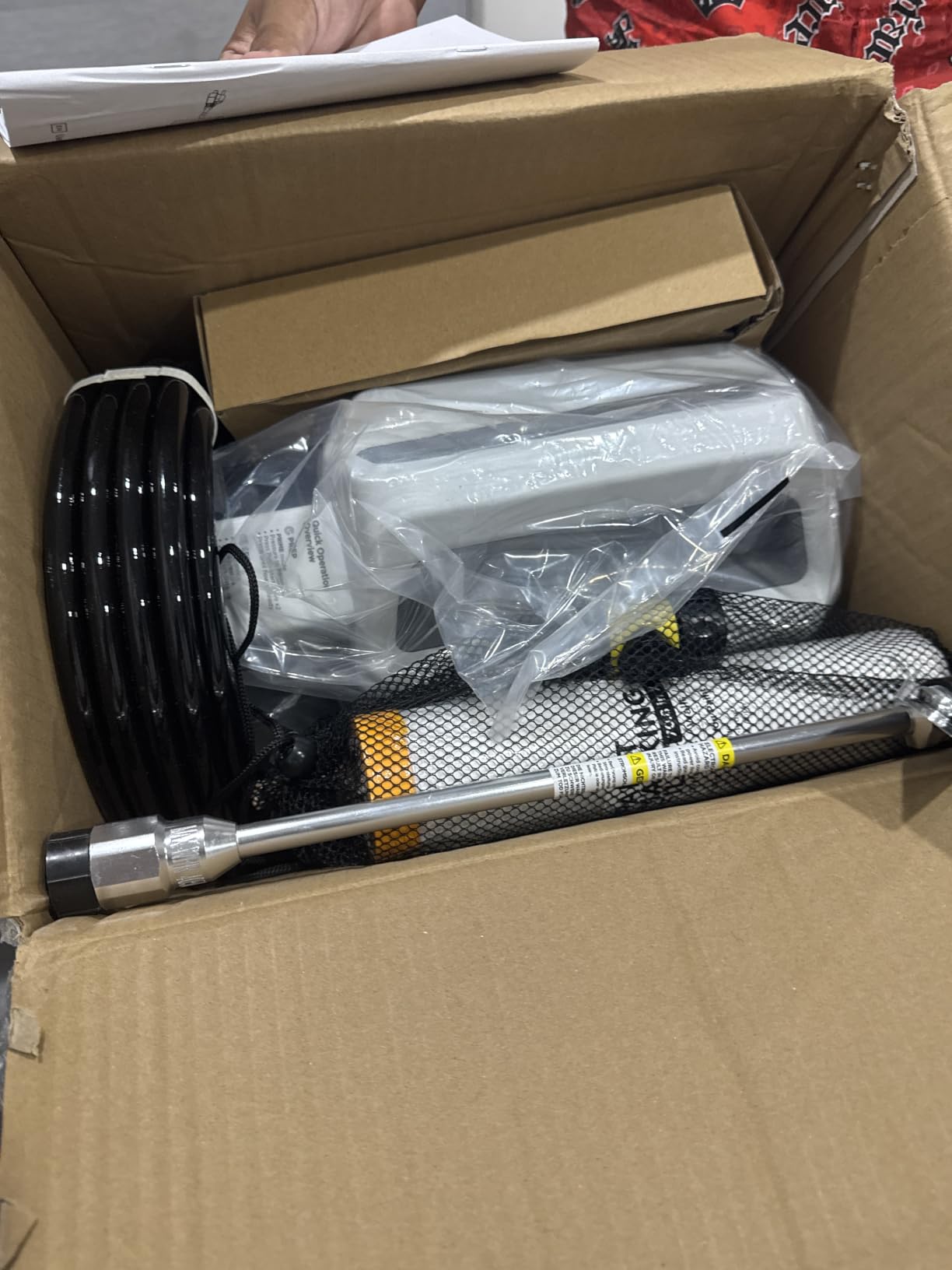
The NEO is the airless option for a beginner, and the reason is the box contents. Masking film, painter’s tape, a paint strainer, a touch-up brush, a 12-inch leak-proof tip extension and a 360-degree swivel all ship in the kit, so nothing stands between you and your first test spray. At roughly 10 pounds, you can carry it up a set of stairs or move it between the kitchen and a garage without switching strategies.
Reviewers consistently describe cleanup as a breeze thanks to the integrated Flush-Ease valve, which streams cleaner through the system without pulling the pump apart. That matters more on cabinets than on walls, because you will be doing a short flush between coats rather than one long session.
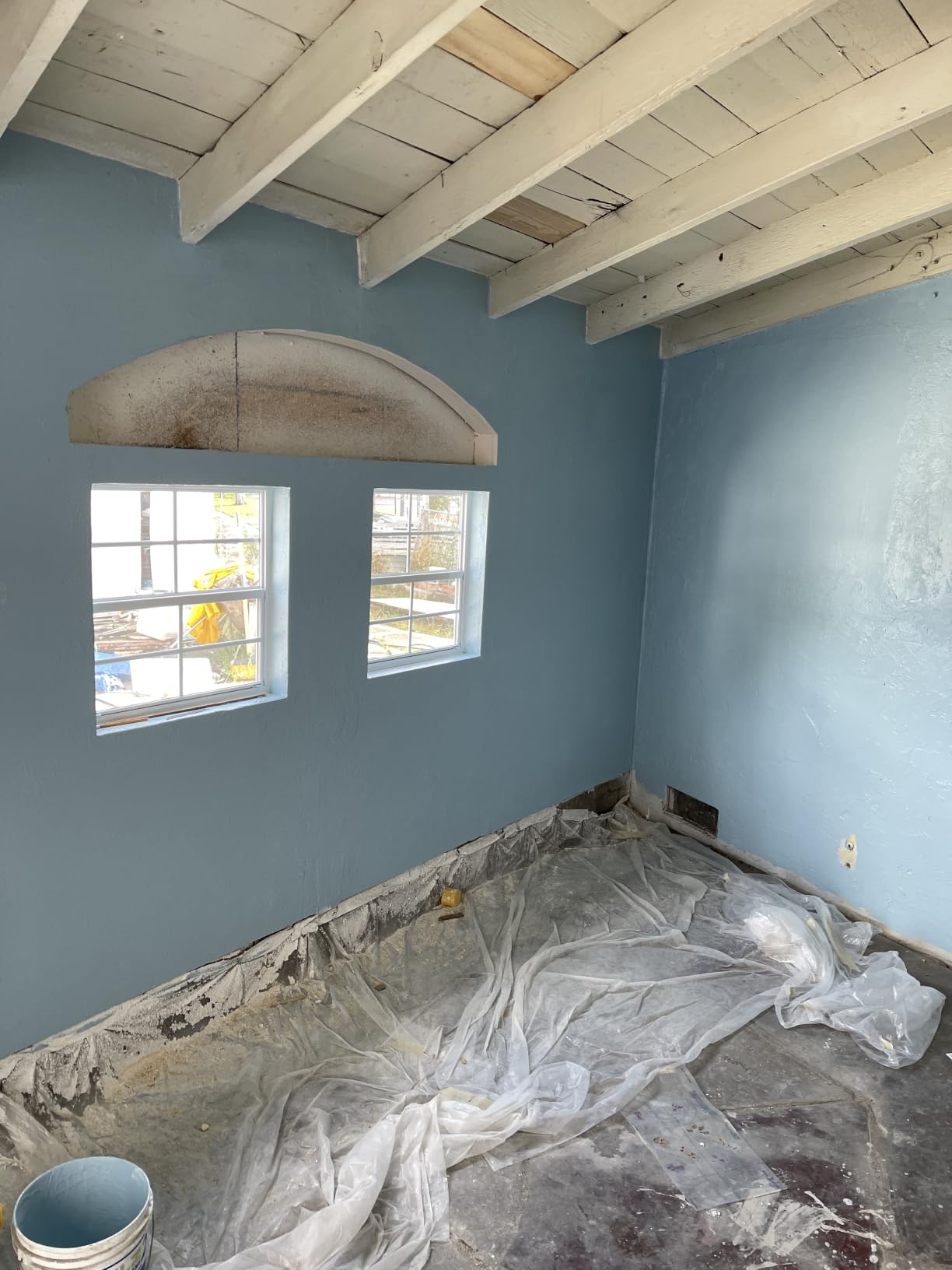
For cabinets, the advice is to turn the flow down to a low spray, and the most common upgrade owners recommend is a finer tip. The 515 tip that comes with it is a workhorse size for walls and fences, and on a shaker door it can lay down more material than you want, which shows up as texture you have to sand. The absence of an inline pressure gauge is the other real limitation, since fine setup on a cabinet needs repeatable pressure.
It is also a five-gallon-class machine, so a full kitchen means container changes, and the pump should be kept level. A few buyers reported that the unit stopped holding priming pressure after being knocked over or dropped, so treat it as a portable tool rather than something to set on the edge of a workbench.
Who the NEO suits
It suits a first-time sprayer who wants to learn on an airless machine without buying accessories separately. It is a good fit for a small kitchen plus trim, and for anyone who will also spray furniture and shelving in a spare room or garage.
Who should skip it
Skip it if fine finish on detailed doors is the entire goal, because the 515 tip is coarse and there is no pressure gauge to help you tune it. It is also the wrong tool for very tight indoor overspray control in a room you are not willing to seal off.
7. InoKraft MaXpray M1 – Best for Larger Multi-Room Projects
InoKraft MaXpray M1 Airless Paint Sprayer, 3000 PSI 0.31 GPM
3000 PSI
0.31 GPM
Reversible 515 tip
360-degree swivel
+ The Good
- 3000 PSI and 0.31 GPM cover projects up to 10 gallons
- Sprays compatible latex and acrylic straight from 1 or 5 gallon buckets with no thinning
- 360-degree swivel makes corners and cabinet interiors easier to reach
- Flush-Ease valve cleans with a garden hose and no pump disassembly
- Full kit includes hose extension goggles cleaning kit and wrenches
- The Bad
- Lowest 4.3 rating in this group with 9 percent one-star reviews
- Included 515 tip can lay down too much material for thicker paint
- Tip clogs periodically on heavy coatings
- 25 ft plastic hose has coil memory and resists staying straight
The MaXpray M1 is the step up from the NEO: more output, a reversible AtoMax 515 carbide tip, and a 360-degree swivel on the gun. The swivel is the cabinet-relevant feature here, because it lets you angle the gun into a face-frame corner without rotating your wrist into a bad position, and that is exactly the maneuver you repeat dozens of times on a kitchen.
The combination of 3000 PSI and 0.31 GPM covers ten-gallon projects, so this is the machine for a house-wide job: kitchen cabinets, then the interior doors, trim and maybe the exterior. It draws latex and acrylic straight from 1-gallon or 5-gallon containers with no thinning, which keeps your material cost down on big jobs.
Tip choice is the recurring theme in the feedback. The 515 tip that comes with it can put down more paint than thicker coatings want, and a smaller tip may be needed for fine cabinet work. The tip is reversible, so clearing a clog is fast, but you will still add a finer tip for doors. The 25-foot plastic hose also has coil memory and fights to stay straight, which is more annoying on cabinet work where you are constantly repositioning than it is on a wall.
The 4.3 average with 9 percent one-star reviews is the second-lowest here, and a few buyers have raised durability concerns about the pump. That does not stop us recommending it for a large job, but it does mean you should flush after every use and store it somewhere dry and level.
Who the MaXpray M1 suits
It suits a serious DIYer or remodeler who is spraying an entire house rather than one kitchen, and who wants unthinned latex with a 10-gallon class machine. The swivel and the included extension also make it the most comfortable of the airless options for reaching into cabinet boxes.
Who should skip it
Skip it for a single kitchen where the paint budget matters more than throughput, because airless output on a small job becomes waste. Skip it too if fine finish matters more than speed and you are unwilling to buy a finer tip and spend time tuning pressure.
8. Graco SG3 Airless Spray Gun – Best Gun Upgrade
Graco SG3 Professional Airless Spray Gun, Built-in Swivel
3600 PSI max
Built-in swivel
RAC IV 515 tip
16 oz aluminum body
+ The Good
- Light 16 oz aluminum body with a comfortable 4-finger trigger
- Built-in hose swivel reduces twisting and wrist strain in long sessions
- Works up to 3600 PSI for a fine even spray
- Replaceable in-handle filter and needle cut tip clogging
- Upgrades an existing Graco or Magnum setup
- The Bad
- Sold as a gun only with no sprayer hose or power source
- Replaceable filter parts add ongoing cost
- Rigid aluminum body offers no grip insulation
- Not suited to small detail touch-up work
This one is not a sprayer, it is a gun, and that is the point. If you already own a Graco or Magnum machine, the SG3 replaces the factory gun that came in the box with something noticeably better built: a 16-ounce aluminum body, a full four-finger trigger with a light pull, a thumb safety lock and a built-in hose swivel that stops the hose from fighting your wrist.
On cabinet work the swivel is worth more than the headline pressure rating. Long sessions on face frames and cabinet interiors are exactly where a fixed hose connection causes wrist strain and inconsistent technique, and a tired wrist produces a tired, uneven finish. The replaceable in-handle filter and replaceable needle are the other practical benefit, since they are the parts that keep a tip from clogging mid-project.
Who the SG3 suits
It suits an existing Graco or Magnum owner who has noticed their stock gun straining and who wants better balance and a swivel. It is also a good match for someone who finds the four-finger trigger far more comfortable than a two-finger gun on a long day.
Who should skip it
Skip it if you are starting from nothing, because you still need a sprayer, a hose and a power source. It is also a poor tool for touch-up and detail work on a single piece of trim, where a cup gun gives you more control and less overspray.
9. ENDOZER HVLP Gravity Feed Gun Set – Best Entry-Level Gravity Feed
ENDOZER Professional HVLP Spray Gun Set Gravity Feed Air Spray Gun
20 oz gravity cup
1.4mm 1.7mm 2.0mm sets
Brass 15-hole hood
Gauge and filter included
+ The Good
- Brass hood and genuine stainless steel needles resist corrosion
- Three adjustments for fluid pattern and air give real control
- Includes a pressure gauge quick adapters and a paint filter
- Uniform atomization across three needle sizes
- Accessible for beginners and suited to cabinet and detail work
- The Bad
- Requires an external compressor which is not included
- Not designed for latex paint
- Basic gravity cup sealing is below higher-end cups
- Finish consistency depends more on technique
This set gets the fundamentals right for very little. You get a brass HVLP hood with a 15-hole design, real stainless steel needles at 1.4mm, 1.7mm and 2.0mm, and three separate adjustments for fluid, pattern and air. It is also one of very few entry-level gravity-feed kits that include an air pressure gauge, quick adapters and a paint filter, all of which you would otherwise buy before your first coat.
On water-based lacquer, stain, shellac base and clear coats, it produces consistent atomization across all three needle sizes and the finish is more than adequate for cabinet doors. Buyers describe it as easy to pick up even for a first-time user, and the three adjustments give you real control over fan width rather than a single fixed pattern.
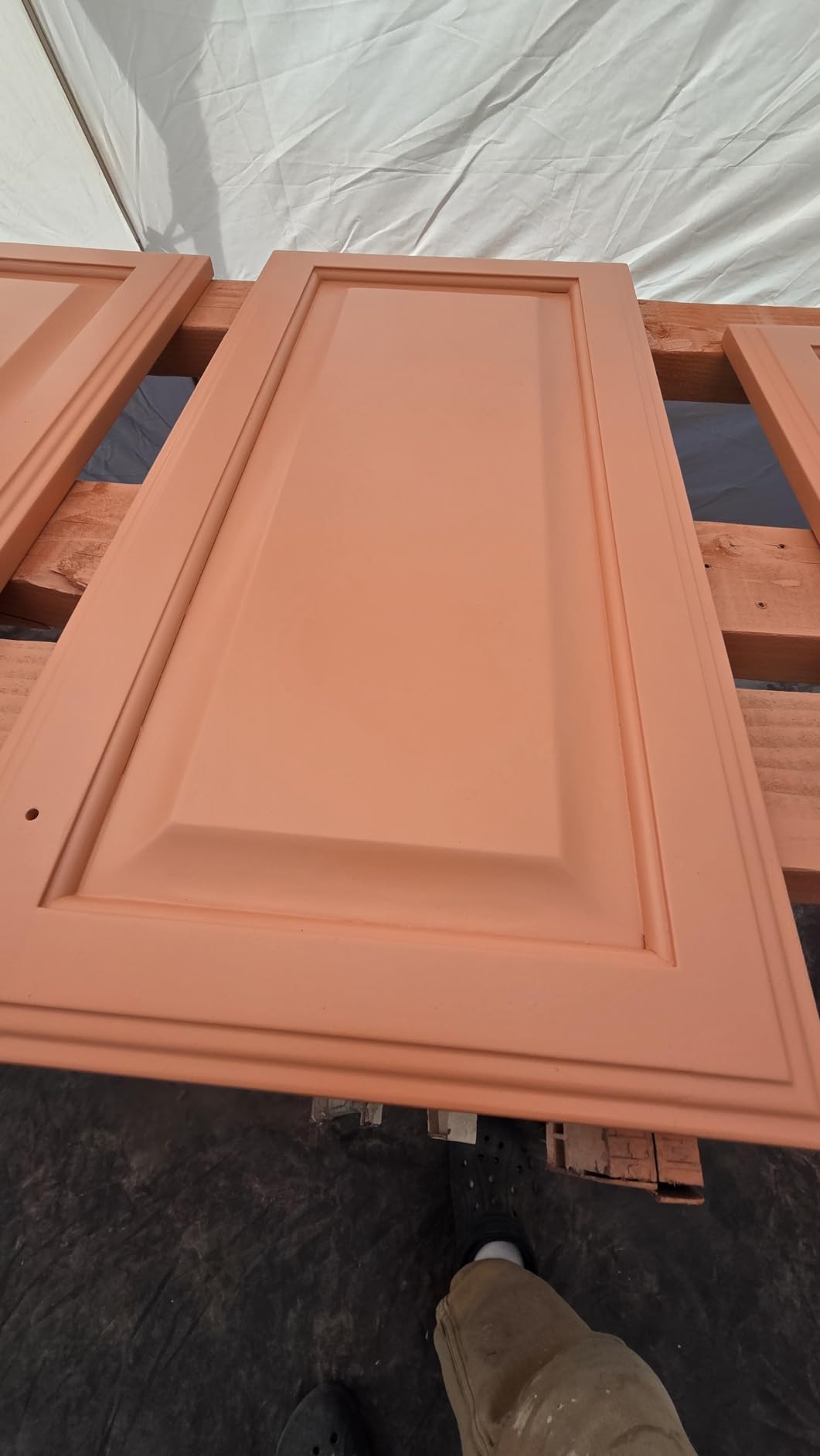
Read the labeling before you buy. This set is marked for primer, clear and top coats and touch-up work, and it is not intended for latex paint. That is not a defect, it is a design choice, but it rules the set out of a large share of modern cabinet paint projects. The gravity cup also has weaker sealing than a quality cup, which shows up as a slow leak if you leave the gun tilted.
Finish consistency here is more technique-dependent than on a pro gun. You will be adjusting fan and flow constantly to keep up with the varying absorbency of different doors. That is learnable, and for a first pneumatic gun the hardware is honest and durable.
Who the ENDOZER set suits
It suits a first-time pneumatic shooter with a compressor who is spraying lacquer, stain or clear coats and wants the right hardware at a low cost. It is a good fit for furniture, trim detail and cabinet doors in a shop or garage rather than a lived-in kitchen.
Who should skip it
Skip it if you plan to spray water-based latex cabinet paint, because the set is not built for it. Skip it if you care more about a repeatable finish than about learning, since a higher-grade gun will get you there with less practice.
10. Batavia 700W HVLP – Best for Low Arm Fatigue
Paint Sprayer – BATAVIA 700W HVLP High Power Spray Paint Gun with 6FT Air Hose, 4 Nozzles & 3 Patterns, Paint Gun for House Painting, Furniture, Cabinets, Fence, Home Improvement
700W motor on shoulder strap
1 lb detachable gun
1mm to 3.0mm nozzles
Three patterns
+ The Good
- Separate motor keeps the handheld portion at 1 lb to reduce arm fatigue
- Four nozzle sizes and three spray patterns give real flexibility
- Tool-free assembly with a cleaning brush and needle included
- 360-degree anti-backflow design helps prevent clogging
- ETL certified with a 24-month warranty
- The Bad
- 90-degree hose angle forces an awkward wrist position
- Short 6 ft hose limits reach without an extension
- Separate motor unit is noisy
- Finish quality is adequate rather than furniture-grade
The idea here is simple and effective: put the 700W motor on a shoulder strap and keep only a 1-pound gun in your hand. On a long cabinet session with a heavy cup, that split design is a genuine difference in how the work feels at the end of the day. Four nozzle sizes at 1mm, 1.5mm, 2mm and 3.0mm plus three spray patterns give you enough range for sealer, varnish, latex and chalk paint.
The anti-backflow design is the feature to know about. It routes material so that as you release the trigger, leftover coating does not sit in the nozzle, which is the most common cause of the spitting and tailing that makes beginners give up on spraying. Assembly is tool-free and a cleaning brush and needle are included, so turnaround between coats is quick.
The 90-degree hose connection is the complaint we would weigh most heavily. It puts your wrist at an awkward angle, and steady wrist position is exactly what fine cabinet work depends on. Combined with the short 6-foot hose, you will find yourself repositioning the motor unit more often than you would like, and a noisy motor in a small kitchen is its own problem.
At a 4.2 average with 9 percent one-star reviews, this is the least refined finish in the group. It handles larger surfaces, doors, fences and basic cabinet work well enough, but on raised-panel detail the result is adequate rather than furniture-grade. Treat it as a volume tool for basic doors and shop projects, not as a fine-finish instrument.
Who the Batavia suits
It suits a person with hand or wrist fatigue who wants the lightest gun in their hand, and anyone spraying larger surfaces such as doors, walls and shelving alongside basic cabinet work. The ETL certification and 24-month warranty also make it a reasonable choice for a workshop.
Who should skip it
Skip it if the cabinets are the whole project and the finish has to be showroom quality, since the atomization will not get you there. Skip it if you are working in a small room where the motor noise becomes the main problem.
How to Spray Cabinet Interiors, Face Frames and Tight Corners
Doors are the easy half of a cabinet job. Interiors, face frames and cabinet boxes are where sprayers get abandoned, and the answer that comes up most often on cabinet forums is about accessories rather than machines. A swivel at the gun, a short whip between the gun and hose, and a fine-finish low-pressure tip will let an airless gun reach inside a cabinet box without kinking the hose. HVLP users working from a gravity cup should consider a remote pressure pot, which lets you spray from several feet away and cuts both arm fatigue and the amount of mist you breathe.
Practice the angle before you start. A cabinet box is a closed rectangle, so you want to sweep across the interior from one side, keeping the fan parallel to the surface you have already sprayed. Work from the back corner outward, keep your arm moving the entire time you have the trigger pulled, and stop the trigger while the gun is still moving. Holding the trigger stationary is what leaves fingers and tails on the back wall.
Mask the box openings before you spray. A strip of plastic sheeting and painter’s tape over each opening saves you from misting the contents of every cabinet, and it saves you from having to clean a shelf of dishes afterward. If you want to see the process end to end, our cabinet table saw guide covers the disassembly work that usually comes first, since removing doors and drawers properly is what makes the spraying go smoothly.
Buying Guide: Tips, Thinning, Cup Weight and Cleanup
What nozzle size do cabinet doors need?
Doors want a medium tip, cabinets bodies want a wider fan, and detail work wants a smaller one. A 1.5mm to 2.0mm tip handles most cabinet paint, which is what the HomeRight kit ships with and what the InoKraft D1 includes as standard sizes. Go coarser for primer and for open-grain wood that drinks coating, and go finer for sealer, stain and raised-panel detail. If your coating is producing orange peel, the tip is usually too small or your flow is too low; if it is sagging, the tip is too large or your flow is too high.
Do you need to thin paint for a sprayer?
Airless machines and handheld airless units generally spray unthinned latex, which is a large part of why they are fast. HVLP almost always needs test spraying, and often thinning, especially for heavier cabinet coatings. Thinning is also the reason HVLP needs more coats on open-grain wood like red oak and ash, because a thinner film sinks into the pores. Always test on cardboard or scrap and follow the coating manufacturer’s thinning guidance rather than thinning by eye.
How much does cup weight matter?
More than most buyers expect. Water-based coating is heavy, and a large cup on a gravity-feed gun is a wrist problem after an hour. A 400cc cup means more refills, and a 20-ounce cup means fewer, but the difference in feel over a full kitchen is significant. If you already have cabinet boxes and interior storage in mind, planning your layout in advance with our pull-out cabinet organizer guide keeps that job separate from the finish work.
What about cleanup and ventilation?
Budget ten minutes of cleanup for every hour of spraying, and do it immediately. Paint left in the gun between coats is the single leading cause of spitting and clogs, and dried coating in a gun or an airless pump ends the tool’s life. For ventilation, open windows on opposite sides of the room, run a fan to move air out rather than circulate it, seal off the room with plastic sheeting, and wear a respirator rated for organic vapor plus particulate filters when spraying solvent-based coatings. Most important of all, run a test spray on cardboard before you touch a primed door.
Should you buy or rent a cabinet sprayer?
A low-cost handheld HVLP or gravity-feed gun can pay for itself on a single 10 to 20 door kitchen, so for one project buying is usually right. A higher-cost airless machine only makes sense if you will also spray walls, decks, trim or exteriors, or if you plan to refinish cabinets again. If you are uncertain and the job is small, renting a fine-finish airless setup for a weekend is a reasonable test before you commit to a machine you will not use often.
Troubleshooting Orange Peel, Sagging, Spitting and Clogs
Orange peel means the coating is not atomizing finely enough. Thicken the coating slightly, raise the flow, move a little closer, or step up one tip size. Sagging and runs mean the opposite: too much material is landing in one place, so drop the flow, increase your speed across the surface, and make sure each coat has cured enough before the next. Spit or tails at the start of a pass almost always come from leftover material in the gun, so flush the tip before you resume.
Clogging is usually a tip that is too small for the coating or a gun that was not fully cleaned after the last use. Run a solvent or warm-water flush through the gun immediately after finishing a coat, and keep the filters that came with your kit clean. Lap marks and thin patches come from moving too slowly or from losing your rhythm, so mark a starting point on every door and always overlap each pass by about half the fan width.
Frequently Asked Questions
What is the best paint sprayer for spraying cabinets?
The Fuji Spray Semi-PRO 2 is the best overall pick for cabinet finishing, because its 1400W two-stage turbine and non-bleed M-Model gun give the finest atomization we found on waterborne lacquer, clear coats and primers. If you already own a compressor, the InoKraft D1 LVLP kit delivers comparable finish quality for far less, and if you will also spray walls and trim, the Graco Magnum X5 handles unthinned paint at volume.
Is airless or HVLP better for cabinets?
HVLP is better for cabinets. It runs at roughly 10 to 25 PSI at the gun, which limits overspray inside a room you still live in, and it lays down a finer, more even finish on a vertical door. Airless is faster and sprays unthinned paint, but it wastes coating on jobs under a gallon and is only cabinet-appropriate when paired with a fine-finish low-pressure tip.
What do professional painters use to paint cabinets?
Professionals overwhelmingly use a pneumatic gravity-feed or siphon-feed gun fed from a remote pressure pot, paired with a fine-finish low-pressure tip. Gravity feed keeps the cup above the gun so the wrist is not carrying the coating weight, and a remote pot lets the painter spray from several feet back with less arm fatigue and far less overspray. A turbine system like the Fuji Semi-PRO 2 is the compressor-free alternative with the same class of finish.
Can you use a spray gun on cabinets?
Yes, but the spray gun will not fix structurally unsound cabinets or a poor prep job. Remove the doors, drawers, hardware and hinges, degrease the surfaces, sand to bare wood or sound finish, prime, and let the primer cure before spraying. Always test on cardboard first, and choose satin or semi-gloss over flat because a flat sheen shows every fingerprint and every defect in a kitchen.
Is it worth getting a paint sprayer for cabinets?
For a single 10 to 20 door kitchen, yes, because a mid-range handheld HVLP or gravity-feed gun can pay for itself in a single project. A higher-cost airless machine only makes sense if you will also spray walls, decks, trim or exteriors. If you are spraying fewer than a handful of pieces, renting a fine-finish airless setup for a weekend is a sensible test before buying.
The Best Spray Guns for Cabinet Finishing in 2026: Final Verdict
The best spray guns for cabinet finishing depend less on brand than on how well the machine controls flow and fan width. Pick the Fuji Spray Semi-PRO 2 for the best all-around finish, the InoKraft D1 if you already own a compressor, and the HomeRight Super Finish Max if you want a capable budget option that handles everything from primer to sealer. Whichever you choose, prep thoroughly, match the tip to the coating, and clean the gun the moment you finish a coat. That discipline matters more than any wattage figure on the box.