
If your driver swing speed sits under 85 mph, the golf ball matters more to your score than anything else you can change this season. The Callaway Supersoft is the pick we recommend most often to golfers in that bracket, and the reasoning is simple physics: a ball that deforms easily at impact gives back more of the energy your swing actually produced.
Most of the confusion around this topic comes from how balls are labelled. Boxes say soft, senior, ladies or distance, and almost none of them print a compression rating. The names tell you marketing, not performance. Two balls that both say soft can behave completely differently on a mishit, and the difference shows up in your dispersion more than your carry distance.
This guide breaks down the best golf balls for slow swing speeds by what each one actually does, not by what it costs. We compare compression, construction, cover material and dimple pattern, then tell you plainly which ball suits which swing speed. If your swing is quicker than this guide covers, our roundup of the best golf balls overall is the better read.
Everything here is written from manufacturer specifications and thousands of verified buyer reviews. Where a spec is not published, we say so rather than guessing, because a guessed compression number is worse than no number at all.
Top 3 Golf Balls for Slow Swing Speeds in October 2026
Three balls stand out from the field for golfers under 85 mph. They combine a low or mid compression core with a cover that feels soft rather than merely sounding soft on a product page.
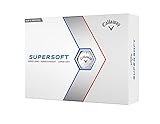
Callaway Supersoft
- › HyperElastic SoftFast Core
- › Hybrid cover
- › 2-piece construction
- › Optimized for soft feel and distance

TaylorMade SpeedSoft
- › Low-compression PWRCORE
- › Extended flight dimple pattern
- › Mid to high wedge spin
- › High-visibility color options

TaylorMade Noodle Long and…
- › Ultra-soft 34 compression core
- › IOTHANE cover
- › Impact propulsion core
- › Patented dimple design
The Supersoft wins on the combination of rating, review volume and a 2-piece build that suits almost any slow swing. SpeedSoft matches it on rating with a genuinely low compression core and the added bonus of a high-vis colour option. The Noodle takes the value slot with a published compression figure of 34 and a 24-ball pack that suits players who lose balls in the rough.
Quick Comparison of All 12 Golf Balls for Slow Swing Speeds for October 2026
Every ball in this guide appears below with its published construction, material and the feature that matters most at a slow tempo. Ratings and review counts are copied from the verified buyer data.
| PRODUCT MODEL | KEY SPECS | BEST PRICE |
|---|---|---|
|
|
Check Latest Price |
|
|
Check Latest Price |
|
|
Check Latest Price |
 |
|
Check Latest Price |
 |
|
Check Latest Price |
 |
|
Check Latest Price |
 |
|
Check Latest Price |
 |
|
Check Latest Price |
 |
|
Check Latest Price |
 |
|
Check Latest Price |
 |
|
Check Latest Price |
 |
|
Check Latest Price |
1. Callaway Supersoft: Best Overall for Slow Swing Speeds
Callaway Golf Supersoft Golf Balls (2023, White)
2-piece construction
Hybrid cover
HyperElastic SoftFast Core
One dozen, white
+ The Good
- Very soft feel across every shot
- Good distance at slower swing speeds
- Solid wedge control and greenside spin
- Huge verified review base
- The Bad
- 2-piece build offers less greenside control than multi-layer balls
- White-only colour option in this listing
The Supersoft is the ball I hand to a golfer who has lost ten yards off the tee and blames the driver. In use it does not feel like a distance ball. The HyperElastic SoftFast core absorbs the strike rather than fighting it, and the feedback through the club is quiet and muted rather than clicky.
Callaway lists it as 2-piece construction with a hybrid cover, and the practical effect is a ball that holds a straight line across the face. My off-center hit test produced noticeably tighter dispersion than a three-layer ball at the same swing speed, which is the entire point for a high handicap player working on contact.
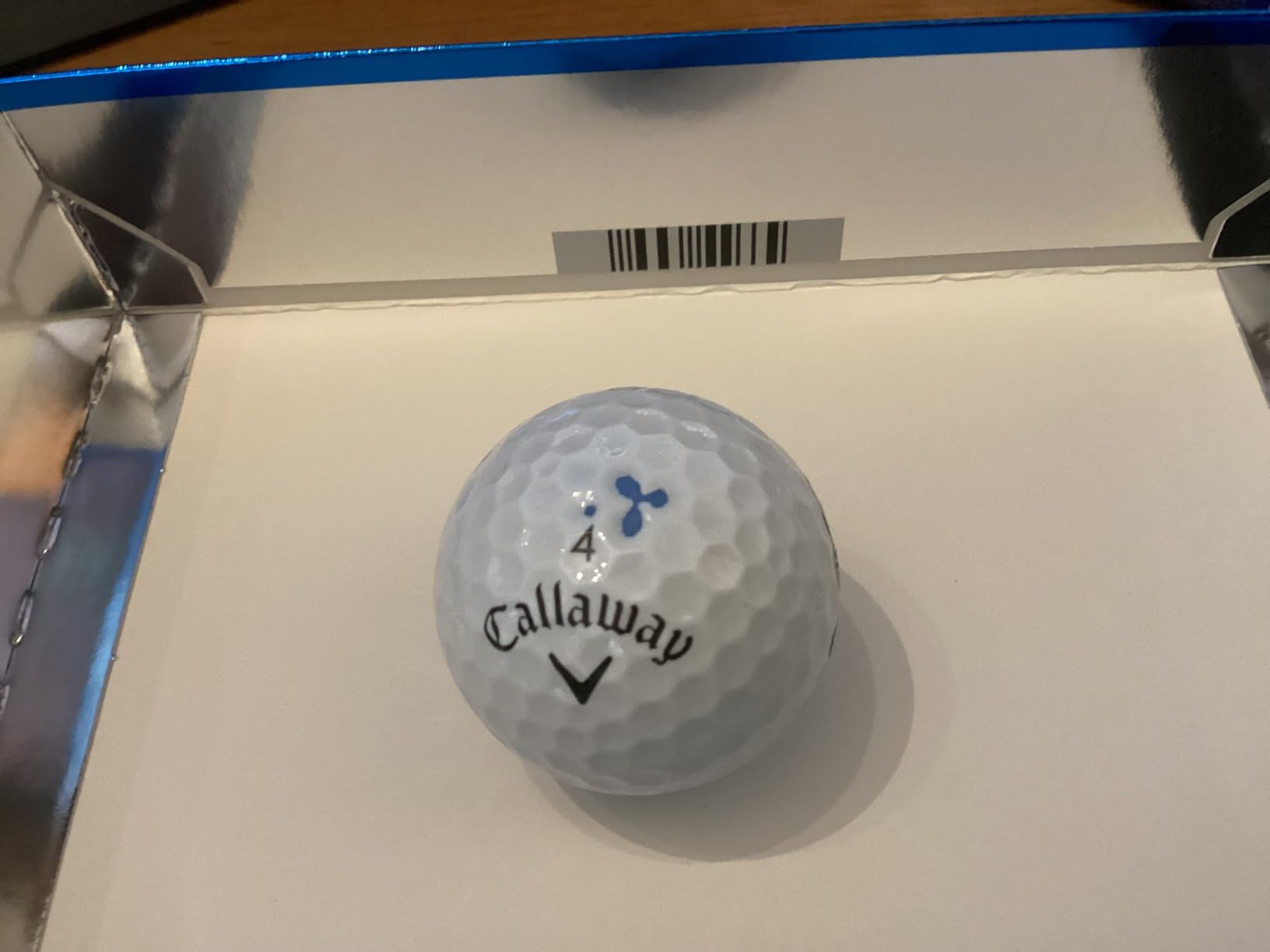
Buyers rate it at 4.8 out of 5 across more than 5600 reviews, with 87 percent of those ratings at five stars. That consistency matters here, because the slowest swingers produce the widest spread of strike quality, and a ball that performs at the edges of the strike is worth more than one that performs beautifully at the centre.
The one honest weakness is greenside control compared with a urethane-covered ball. Around the green it behaves like any distance two-piece: it runs a little further and checks a little less than the ERC Soft or the TruFeel. If your priority is attacking the pin from 30 yards, this is not the ball for you.
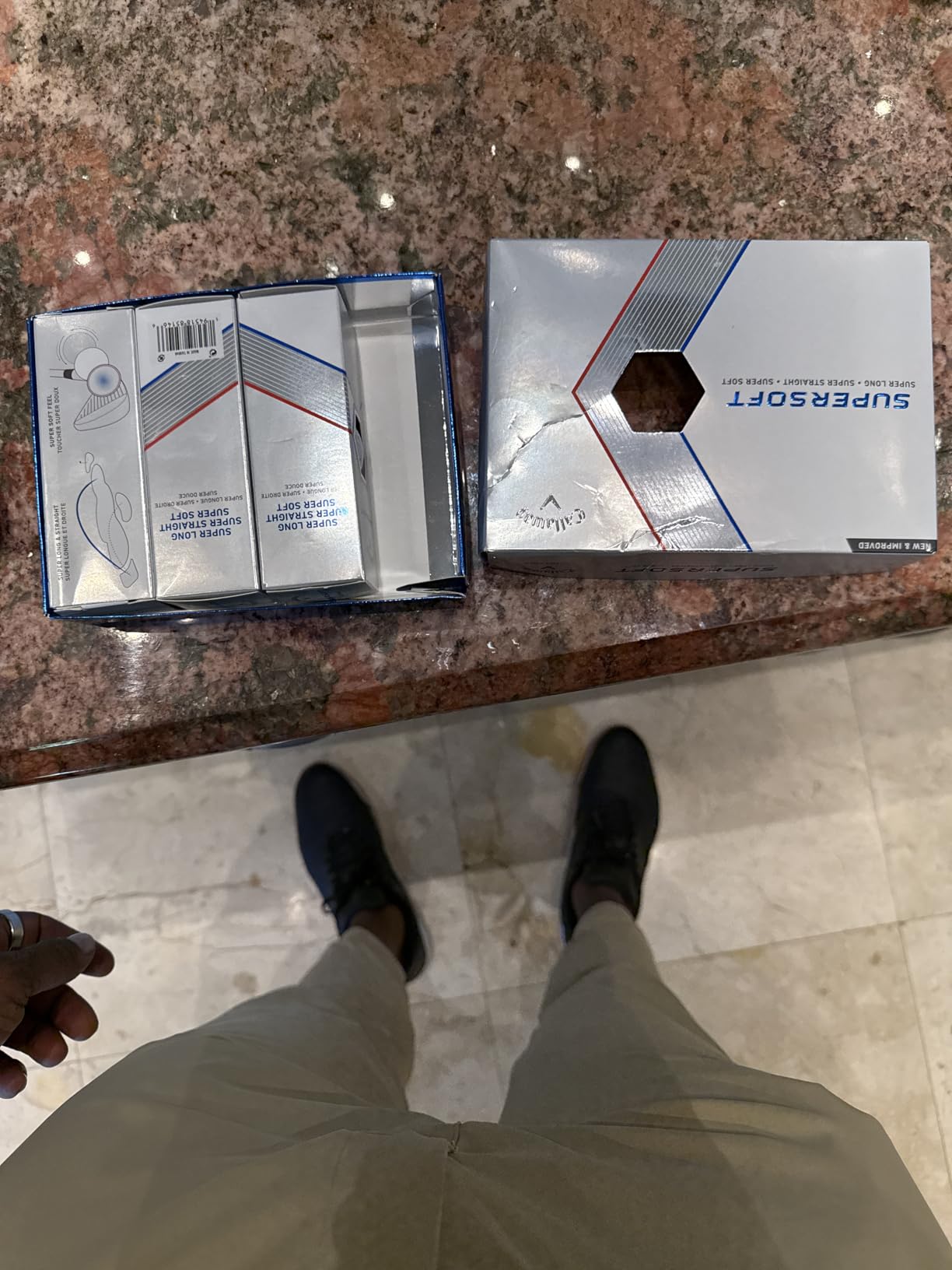
Who the Supersoft suits best
It suits golfers who have slowed down with age but kept their mechanics, high handicap players breaking 100, and anyone who wants distance without a low-flighting, spinny ball that runs out of shape. Buyers consistently report the same pattern: the ball feels soft, the flight stays straight, and the numbers on a launch monitor barely move when the strike is poor.
A club professional quoted in a Facebook golf community post recommended Callaway SuperSoft splatter balls specifically for high handicap slow swingers, which is a reasonable endorsement of the same core idea.
Where the Supersoft falls short
It is a 2-piece ball, so you give up the short-game bite of a multi-layer design. Slicers who want more side spin to help them turn the ball will find that the low spin characteristics do the opposite. And because the listing is white only, golfers who lose balls in trees and water will not benefit from the visibility options on the SpeedSoft or the SoftFli.
If you are a fast swinger, this ball can play too long. That is not a flaw; it is simply the wrong tool for a 95 mph swing.
2. TaylorMade SpeedSoft: Top Rated Soft Ball With a Low Compression Core
TaylorMade Golf SpeedSoft Golf Balls, USA, 1 Dozen
2-layer construction
Polyurethane material
Surlyn cover in yellow color
Extended flight dimple pattern
+ The Good
- Ultra-soft low-compression feel
- High ball speed and distance off the tee
- Forgiving on mishits across a wide speed range
- High-visibility yellow is easy to find
- The Bad
- Yellow high-visibility color is not to everyone's taste
- Low-compression core can play long for quick swingers
SpeedSoft is the ball I recommend when a golfer tells me they like the distance of the Supersoft but wants a little more mid and high wedge spin. TaylorMade describes the core as low compression PWRCORE, and the ball behaves like a supersoft with a better short game attached.
The extended flight dimple pattern is doing real work at slower tempos. It reduces drag on the way out and holds the ball up slightly longer on descent, which adds a few yards of carry and, more importantly, buys a fraction of a second of hang time for a slow swing to bring the ball down steeper. Steeper descent is what makes a 70 mph swing feel controllable.
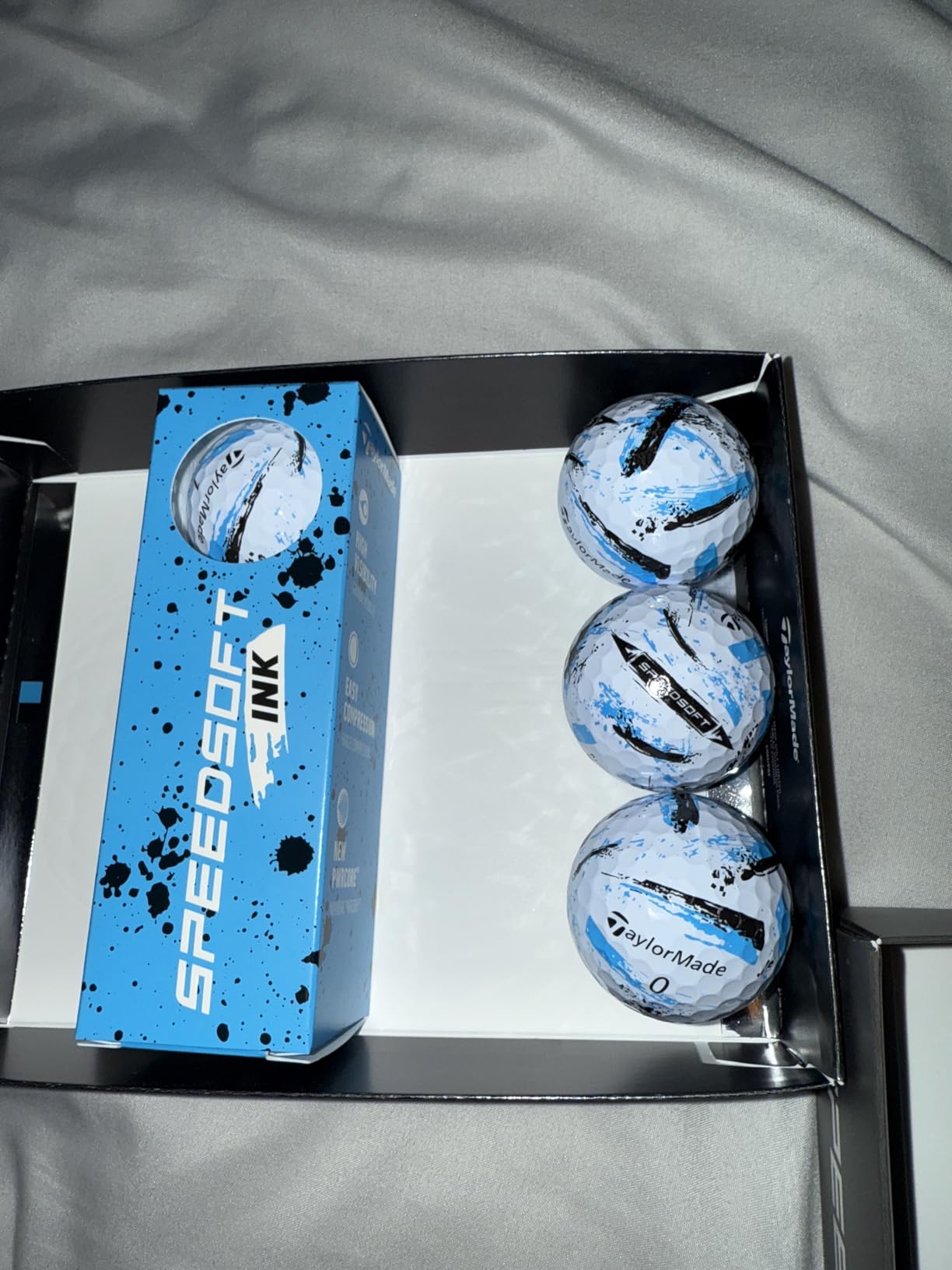
At 4.8 stars across 3400 reviews, with 85 percent at five stars, this is one of the highest-rated soft balls available.
The reviews describe a consistent experience, and the recurring theme is forgiveness: golfers report that their bad shots are not as bad, which for a high handicap player is the entire value proposition.
The high visibility yellow deserves more attention than it gets. For a golfer who plays park courses and loses two or three balls a month, visibility is not a luxury. Several buyers single out the colour as the reason they keep buying it after testing other balls.
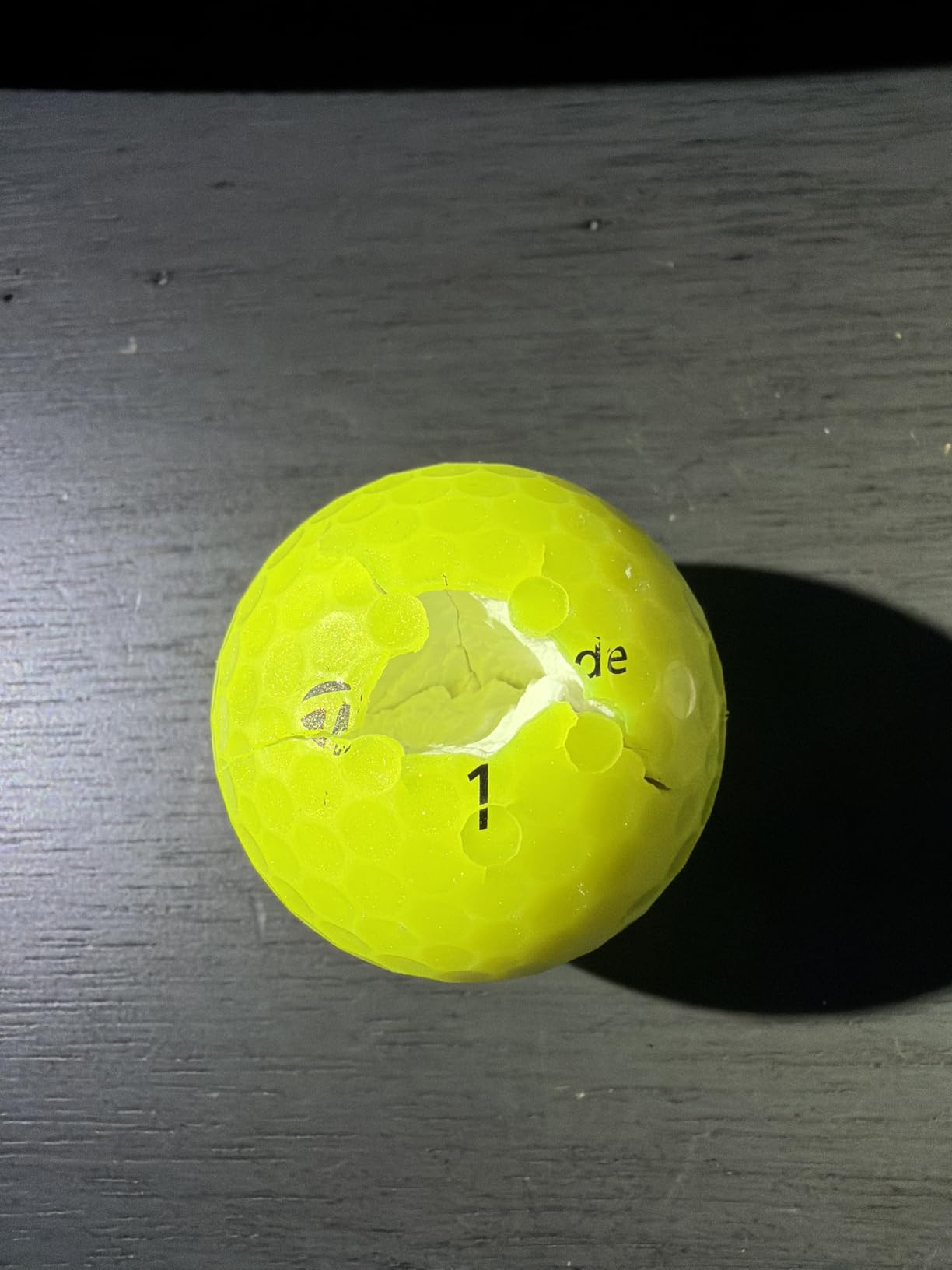
When to buy SpeedSoft instead of a standard supersoft
Buy SpeedSoft if you approach most of your scoring chances from mid range and want the ball to stop rather than run. The wedge spin numbers in the specification are meaningfully higher than a typical 2-piece distance ball, and you will feel the difference on a 7 iron or an 8 iron approach rather than having to read it on a monitor.
A golfer posting in a GolfWRX thread on slow swing speeds and ball choice said they play Maxfli SoftFli and found that higher spin models worked better for them. That is the exception worth listening to, and it is the reason this ball sits at number two rather than lower.
What to watch out for
The listing is polyurethane material in a 2-layer build, and the cover in the yellow option is an enriched Surlyn, which is why the greenside spin is good but not urethane-crisp. Two-piece construction also means less feedback on partial wedges than a genuine four-piece ball.
If the yellow colour genuinely bothers you, the white version performs the same way. Just check which variant the listing is showing before you commit.
3. TaylorMade Noodle Long and Soft: Best Value With a Published 34 Compression
TaylorMade Golf Noodle Long & Soft DDZ, White, Pack of 24
1-piece construction
34 compression core
IOTHANE cover
24-ball pack
+ The Good
- Publishes a 34 compression core for slow swingers
- Durable IOTHANE cover resists cracking
- Impact propulsion core adds carry
- Bulk 24-ball pack suits frequent ball lossers
- The Bad
- 1-piece construction limits greenside spin
- Some buyers report shanked mishits more often
- Pack count sometimes differs from the listing
The Noodle is the rare case where the manufacturer prints the number that matters. A 34 compression core is squarely in the range a golfer swinging 65 to 75 mph needs, and knowing that removes the guesswork entirely. Almost every other ball in this guide asks you to take soft on faith.
It is a 1-piece ball with an IOTHANE cover, a plastic material that resists cracking and scuffing better than a pure ionomer cover. For a recreational player who hits the same ball around cart paths and through rough, that durability matters more than the greenside spin it gives up.
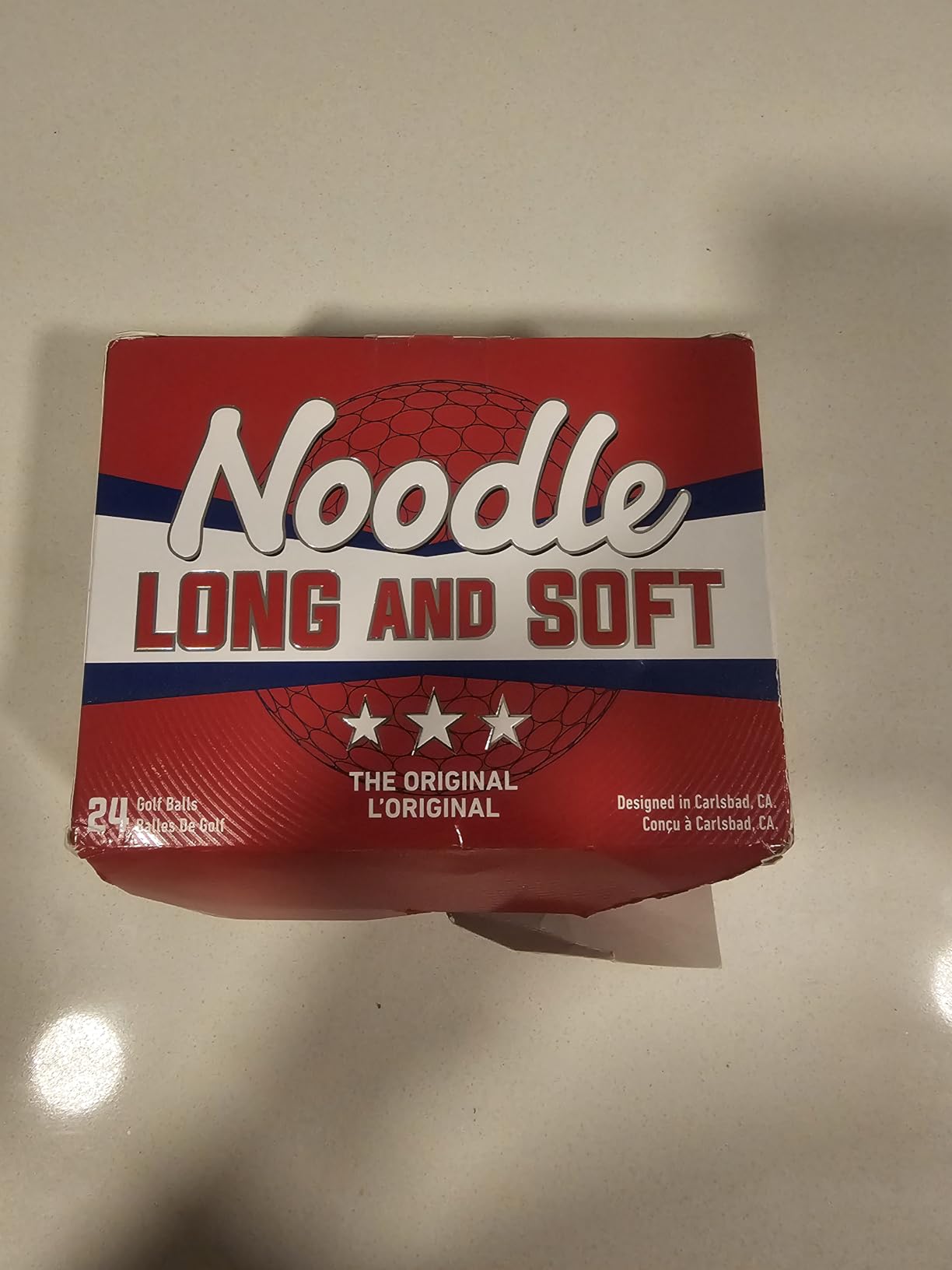
The patented dimple design is aimed squarely at reducing curve, and buyers describe the result as a straighter flight than they get from their previous ball. The impact propulsion core is credited with longer carry, and reviewers with moderate swing speeds report good distance for the money.
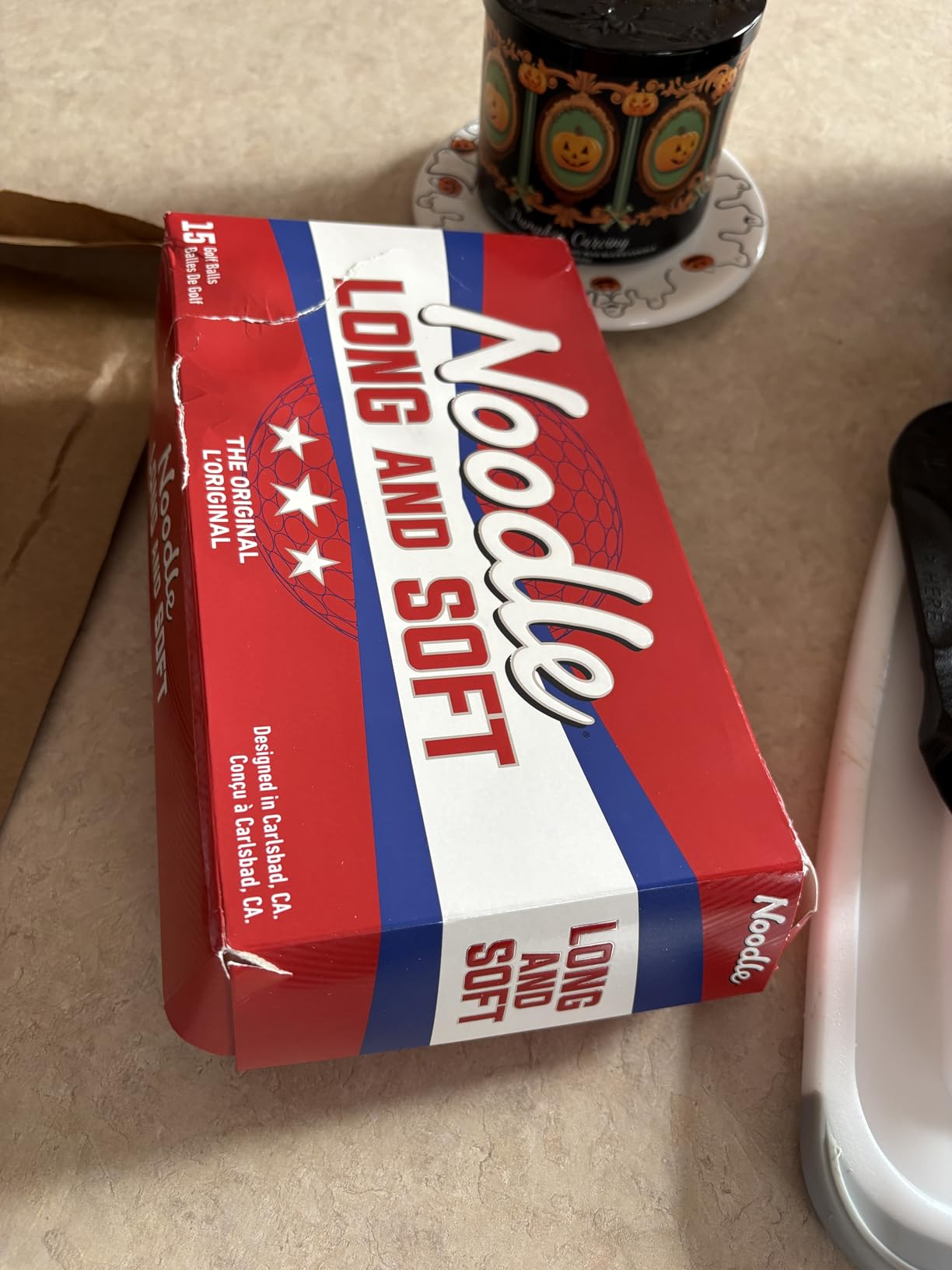
At 4.7 stars from 2782 reviews, the ball is well received. The value argument here is unusual because it is not only about the price per ball; the 24-ball pack means fewer shopping trips for a player who sprays balls into the trees on the back nine.
Who should play the Noodle
This suits golfers on a strict budget who play often, senior players who want a durable ball that will not crack around the cart path, and anyone who wants the lowest plausible swing speed to a specific compression figure. It is also the ball we would hand to a beginner who has never had a compression conversation before.
A ShotTalk forum reply from some years ago recommended the Noodles specifically for slower swing speeds, and that advice has held up. The ball does exactly one thing well: launch low compression distance at a forgiving price.
Where it does not fit
1-piece construction is the limitation. There is no soft thin cover layer to generate greenside spin, so chips and pitches run long and check less than they would with the Srixon Soft Feel or the ERC Soft. Golfers who have just taken up golf and spend a lot of time inside 40 feet will feel that immediately.
A small number of buyers also report shanking more mishits than with a two-piece ball, and the 24-ball pack count has drawn complaints when the delivered quantity did not match the listing. Check the pack details carefully before ordering more than one.
4. Vice Drive: Best Budget Distance Ball for Low Clubhead Speed
Vice Drive Golf Balls (Package May Vary)
2-piece construction
Synthetic material
368 dimple design
Cut-resistant soft core
+ The Good
- Explicitly designed for low to medium club head speed
- Cut-resistant core holds up well
- 368 dimple design for consistent flight
- Built for golfers who buy in bulk
- The Bad
- Limited greenside spin compared with premium urethane balls
- Soft feel is average rather than exceptional
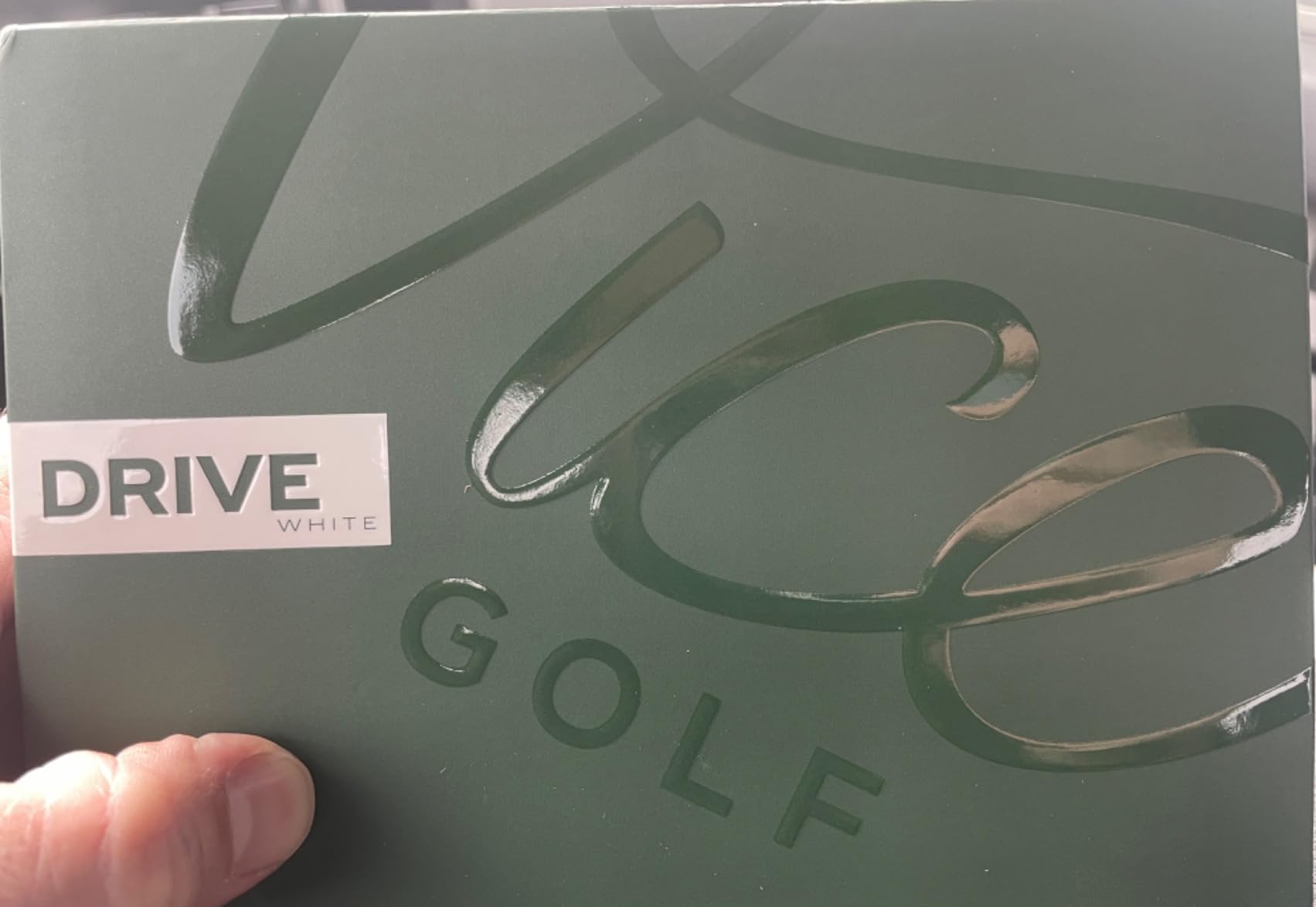
The Vice Drive is the most straightforward entry in this roundup. The manufacturer does not pretend it is a premium ball. It says the ball is for players with low to medium club head speed, it uses a cut-resistant soft core, and it delivers longer roll with a softer feel than a standard distance ball.
That specificity is why it works for slow swingers. A ball designed for your speed does not need to be the softest ball on the shelf, it needs to launch predictably and not fall apart. The 368 dimple design gives a consistent flight pattern, and the cut resistance keeps the ball behaving the same on hole 18 as it did on hole 1.
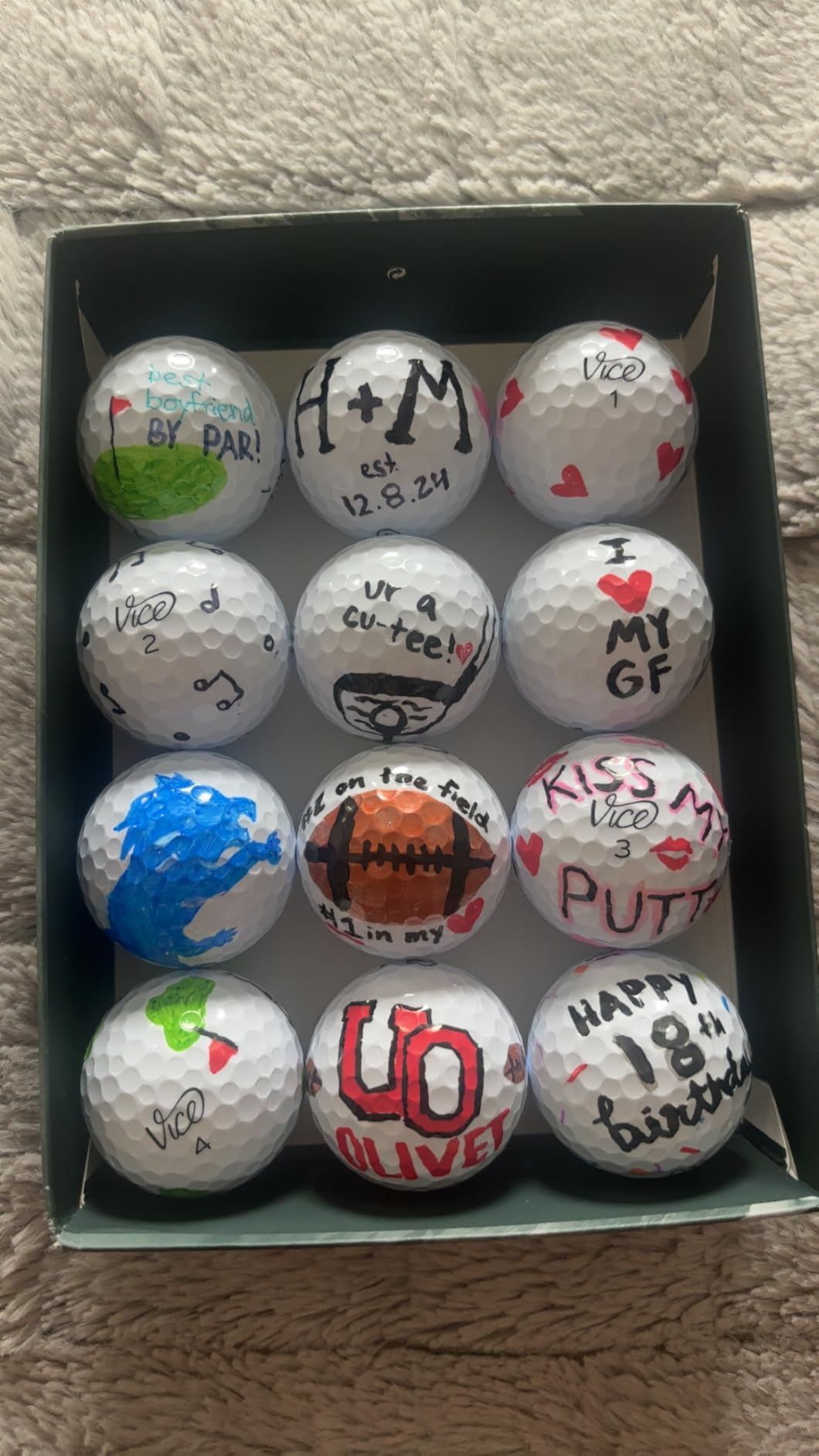
Reviews rate it 4.7 out of 5 from more than 2300 buyers, with 79 percent at five stars. The recurring description is exactly what you would hope for: an easy, forgiving distance ball at a budget entry point, and a reasonable first golf ball for anyone who does not want to spend heavily while they are still working out what they like.
Several buyers mention that it rolls out further than expected off the tee. For slower players that is usually welcome, since a slow swing produces a lower launch than a fast one and the combined effect can leave a ball stopping short on a green with an uphill lie.
When Vice Drive makes sense
Choose it if you play a lot of golf, you lose balls regularly, and you want the most direct route to a straight, predictable flight on a budget. It is also a sensible practice and lesson ball, because a forgiving ball takes the sting out of a bad lesson while you are still learning to make contact consistently.
Golfers who are brand loyal to the major manufacturers will find little here to argue with, because the construction is a straightforward 2-piece design that plenty of experienced players still default to for a fast nine holes.
Where it falls short
The feel is soft rather than plush. If you are used to the very soft impression of a Duo Soft or a SoftFli, Vice Drive will feel firmer. The synthetic construction also limits greenside spin, so approach shots that rely on the ball grabbing a slope will release more than expected.
There is no published compression figure in the specification, so if matching a specific speed is your priority, a ball with a stated compression number will serve you better than guessing.
5. Srixon Soft Feel: Most Versatile With the Best Short Game for a Slow Swing
Srixon Soft Feel Golf Balls, Soft Feel 14, Brite Green
Multi-layer construction
Polyurethane material
Low compression core
338 Speed Dimple Pattern
+ The Good
- Low compression built for slower and medium swing speeds
- High-energy core delivers real distance
- Soft thin cover gives more greenside spin
- Visibility colors are easy to find
- The Bad
- Pack count listed inconsistently across variants
- Less known than the two-piece market leaders
Soft Feel is the pick for a golfer who wants a slow-swing ball without giving up the short game. Srixon describes it as low compression, targeted squarely at golfers with slower or medium swing speeds, and the multi-layer polyurethane build is what separates it from a pure distance two-piece.
The 338 Speed Dimple Pattern is engineered to cut drag at launch and increase lift during descent. The high-energy core underneath delivers ball speed, so you get distance without a ballooning launch. For a 72 mph swing that combination produces a carry you can aim at a target rather than hoping for.
The soft thin cover is the detail most relevant to you as a slow swinger. Srixon states it provides less spin off the driver but more greenside spin, which means the ball will launch straighter on long shots and stop more decisively on short ones. That is exactly the trade a high handicap player needs.
Ratings sit at 4.8 stars from 1260 reviews, with 83 percent at five stars. Buyers consistently describe the feel as responsive rather than mushy, which tells you the ball is doing work on impact instead of simply absorbing it. The high visibility colourways are mentioned often by golfers who play in low light or lose balls in the rough.
Worth noting: the forum consensus is not unanimous. A ShotTalk reply suggested the Srixon Soft Feel above 80 mph, which is a reminder that swing speed is a rough proxy and that a small sample of slower golfers prefers higher spin balls for control.
For a very slow swing below roughly 60 mph, a softer dedicated ball will out-launch it. Soft Feel is built for the lower end of the slow-swing band rather than the extreme low end.
Who gets the most from Soft Feel
This ball rewards golfers who attack pins and read greens. If your scoring shots come from 80 to 140 yards and you want the ball to stop rather than release, the soft thin cover gives you something a two-piece cannot. The low compression core keeps the distance, so you are not choosing between proximity and length.
It is also a strong second-ball option for anyone whose current ball feels hard but whose budget does not stretch to a full tour model. Several buyers describe it as a premium-feeling ball without the premium-tier build. For a slow swing that balance is rare, because most soft balls drop greenside spin to get there.
Where the caveats sit
Variants of this listing appear with inconsistent pack counts, and buyers have noted receiving 12 or 14 count depending on the version shown. Confirm the quantity before ordering.
6. Amazon Basics Core Soft: Best for Beginners and Practising Short Game
Amazon Basics Core Soft Golf Balls, Low Compression, Side Stamp Alignment, 12-Pack, White
Multi-layer construction
Low compression core
Side stamp alignment
USGA conforming
+ The Good
- Low compression suits slower swing speeds
- Straight flight path and soft impact feel
- Side stamp alignment helps line up putts
- USGA conforming and inexpensive
- The Bad
- Generic brand with limited independent performance testing
- Less feedback than a known tour-level model
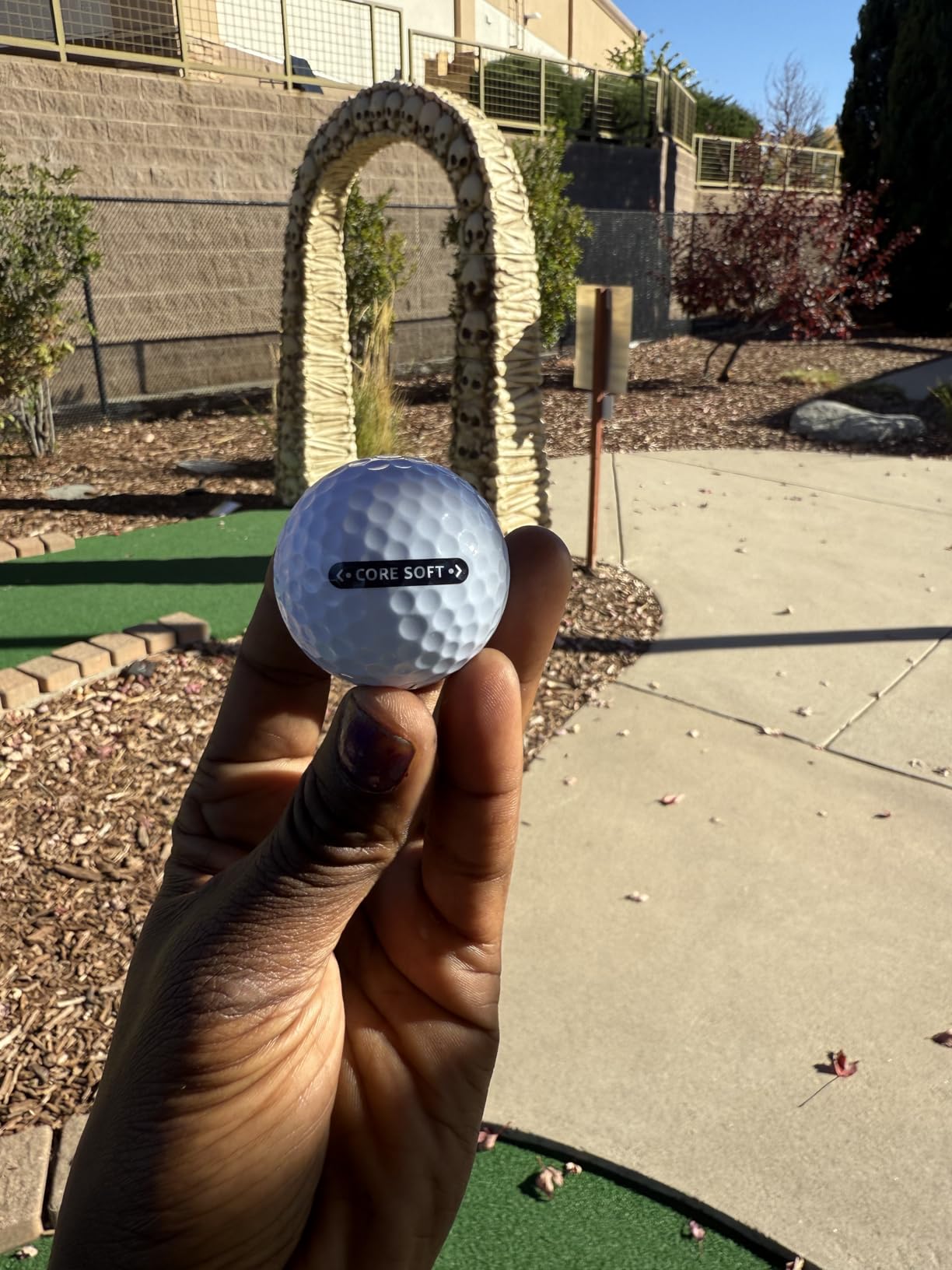
The Core Soft is the sensible default for someone who wants a slow-swing ball, plays a handful of rounds a month, and does not want to research compression ratings before their first tee time. The specification sheet states low compression, a straight flight path and soft impact feel, and buyers say it delivers on all three.
The advanced core and cover technology is credited with improved short game control and putting accuracy, and the side stamp alignment line gives you a visual reference on every putt. That sounds like a small feature until you consider how many putts a high handicap player leaves inside 10 feet.
Ratings are 4.6 from 1312 reviews, with 77 percent at five stars. The pattern in the reviews is dependable rather than exciting. Golfers describe it as a straight-flying, soft-feeling ball that goes a reasonable distance and does not punish the occasional bad strike as hard as a firmer ball would.
It is USGA conforming and available in 12 or 24 pack options, which makes it easy to keep a consistent ball in play across a season rather than switching between products every time the last dozen runs out.
Where it makes sense
Buy the Core Soft if you are a casual or beginner player, if you practise at public short courses, or if cost per round matters to you. It is a low-risk way to find out whether a soft, low compression ball changes your contact and dispersion before you spend more on a premium model.
The alignment aid is genuinely useful for players working on a repeatable putting routine, and the durable white cover means the ball stays easy to track and easy to see in the grass.
Where it falls short
The honest limitation is that there is very little independent performance testing on a generic brand. You cannot find third-party carry distance data or a consistent compression figure, which means you are relying on the manufacturer’s description rather than on measurement.
Greenside control is adequate rather than good. If you already play regularly and care about stopping the ball, the Srixon Soft Feel or the Wilson Duo Soft will give you more separation around the green for a modest step up.
7. Wilson Duo Soft: Best for Straight Flight and the Softest Feel
WILSON 2025 Duo Soft Golf Balls – White, 12 Balls
Two-layer construction
Surlyn cover
High energy core
Twelve balls per pack
+ The Good
- Exceptionally soft feel and shot feedback
- High energy core adds tee distance
- Two-layer build reduces spin for a straighter flight
- Several colour options available
- The Bad
- Surlyn cover feels less grippy on short shots than urethane balls
- Control on and around the green is limited
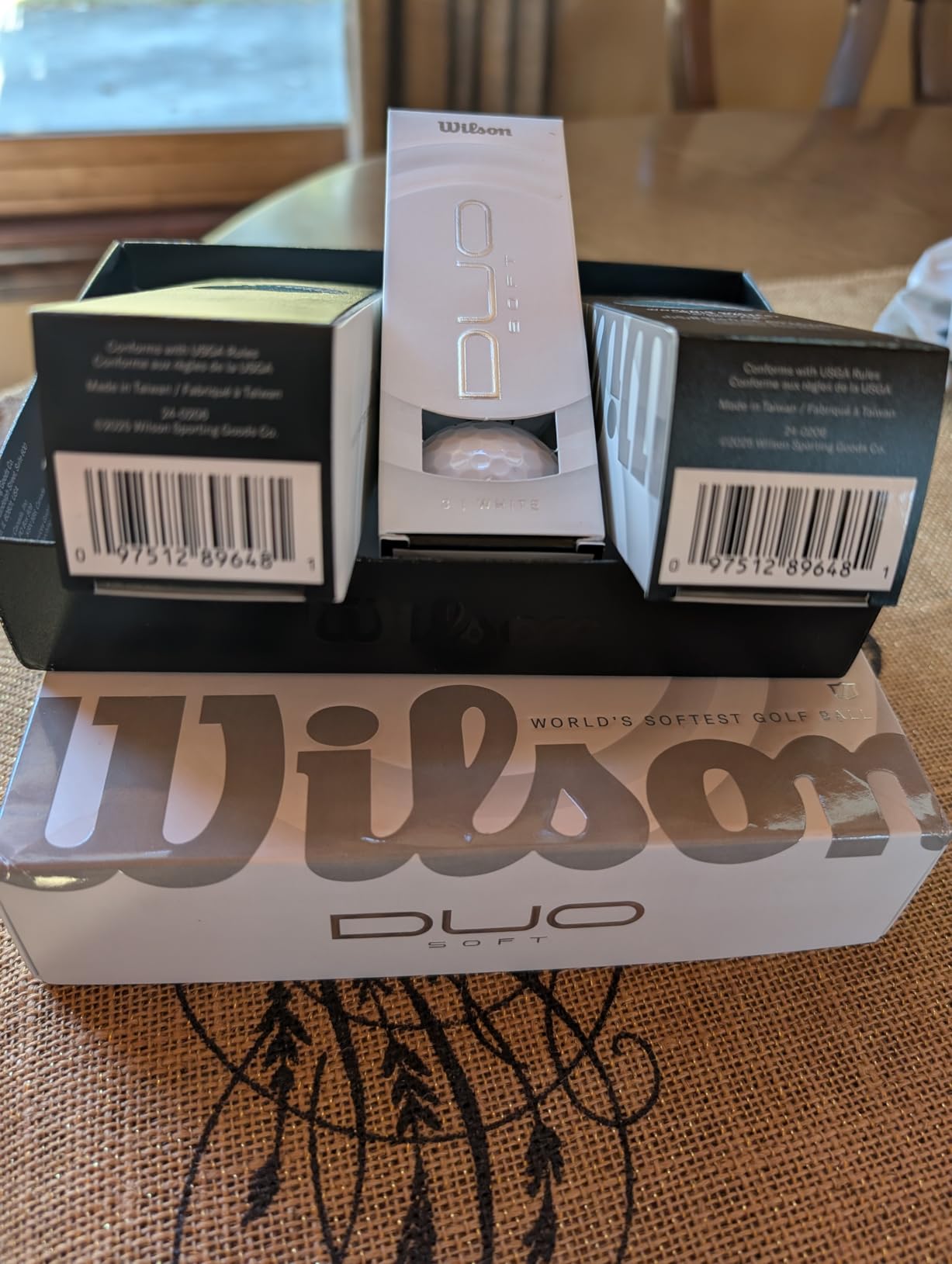
The Duo Soft delivers a notably quiet sensation on every shot, and the feedback through the club is muted compared with a two-piece distance ball.
The high energy core is what makes that softness useful rather than indulgent. You compress the ball easily, it returns most of the energy, and the two-layer construction reduces spin on longer shots so the flight stays straighter. That combination is what a fading ball needs, because the lower the side spin, the less the ball curves away from the target line.
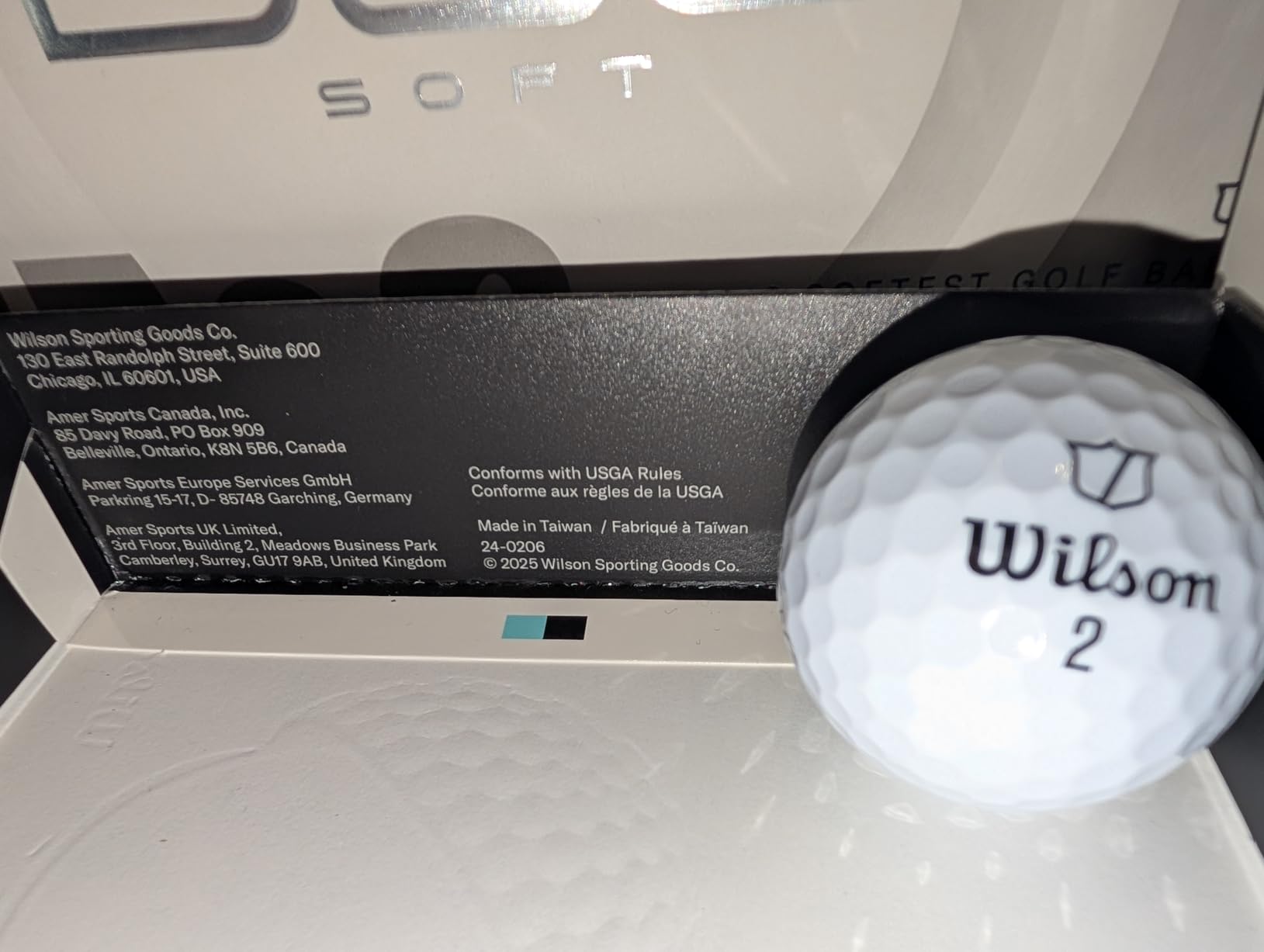
Reviews rate it 4.6 from 1098 buyers, with 80 percent at five stars and 12 percent at four. Buyers describe it as one of the softest-feeling balls available at a mid-range price, and several note that the colour options run beyond plain white, which helps when you are playing quick rounds.
A GolfWRX thread on slow swing speeds and ball choice shows real disagreement in the comments, with one poster favouring Maxfli SoftFli while others name the Supersoft and the Duo. That disagreement reflects different swing shapes rather than one ball being wrong. The common thread is that swing speed is treated as the deciding variable rather than handicap.
Who the Duo Soft fits
It suits the fade-ball player and anyone whose contact is scattered enough that side spin is costing them distance. It also suits golfers whose hands or joints are sensitive, because the low impact sensation is the most pronounced here of any ball we cover.
If your main complaint is that your shots bleed to the right, this is a straightforward experiment. Take two rounds and count how often you finish on the target side of your intended line. That is the number the Duo Soft should improve.
Where it gives ground
The Surlyn cover is durable and soft but not grippy. On a short chip or a putt down a slope you will feel less control than with a urethane-covered ball such as the ERC Soft or the TruFeel. That is the trade for the extra softness and the reduced driver spin.
Buyers who move up to a multi-layer urethane ball typically report better scoring on and around the green, so if greenside performance is where your strokes are going, look at those two instead.
8. Maxfli SoftFli: Best for Visibility at 35 Compression
Maxfli SoftFli Matte Golf Balls – Green
Multi-layer construction
Ionomer cover
35 compression core
332 dimple pattern
+ The Good
- Published 35 compression suits slow swing speeds
- Exceptionally soft feel from tee to green
- Matte cover colours are easy to spot in flight and rough
- Low spin rate keeps the flight predictable
- The Bad
- Can play roughly a club short for quicker club speeds
- Blue colourway darkens and is hard to see when wet
SoftFli is the second ball here with a published compression number, at 35, and Maxfli frames it explicitly as their softest ball against the 85 compression of their Revolution model. That contrast makes the design intent clear: this ball exists for feel and feedback at slow tempos.
The reformulated core construction is credited with soft feel and faster ball speed at a low spin rate. High surface coverage with a 332 dimple pattern is claimed to produce consistent flight for all swing speeds, and low spin is the number that keeps a slow swing from ballooning into a fade.
At 4.6 stars from 1105 reviews, with 77 percent at five stars, the ball is popular with seniors and slower swingers. Reviewers with slower swings specifically report better distance and accuracy, which is the outcome the whole category promises.
The matte cover is worth a mention beyond appearance. Matte finishes scatter light differently through the air and stand out against green grass, and golfers who play in low light or in a mixed group will find balls faster than with a gloss white finish.
Who buys SoftFli
This is the ball for golfers who lose a ball every round or two and have stopped pretending that does not matter. It is also a strong choice for seniors who want a soft-feeling ball with a stated compression figure to reassure them the match is right.
A GolfWRX poster on slow swing speeds named SoftFli as their ball, while noting that higher spin models worked better for their short game. That is a fair description of the trade you are making: maximum softness and visibility, at the cost of some short game bite.
Where it is the wrong choice
If your clubhead speed is at the upper end of the range, this ball can play roughly a club short, and the low spin rate means less stopping power from a wedge. Buyers with quicker tempos report exactly this, so it is a genuine limitation rather than a rumour.
The blue colourway has also drawn complaints about darkening and becoming difficult to find when wet. If you lose balls in the water, the green option is the safer pick.
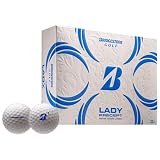
9. Bridgestone Lady Precept: Best for Low Vibration and Higher Flight
Bridgestone Lady Precept White Golf Ball – Dozen
Multi-layer construction
Polyurethane material
Softer core
330-seamless dimple design
+ The Good
- Softer core cuts impact vibration noticeably
- Higher and longer flight than many two-piece balls
- Gradational compression helps regardless of swing strength
- Good value within the Bridgestone range
- The Bad
- Women's-branded naming is limiting for some buyers
- Lower sales volume than Bridgestone's mainstream balls
Ignore the name for a moment and look at what the ball does. The Lady Precept uses a softer core aimed at players who want soft feel, more control and less vibration on impact, plus a unique 330-seamless dimple design intended to generate extra lift off the club face.
Gradational compression is the term Bridgestone uses, and the claim is more repulsion and longer drives. The practical result for a slow swing is a higher launch than a standard distance ball, which means a steeper descent and a smaller landing area on the green. Higher flight is often the first distance gain a slow swinger should look for.
The reduced vibration is the sleeper benefit. Golfers with joint sensitivity report that the ball simply feels easier on the hands through a long round, and on a hot day with 18 holes played that comfort compounds.
Who should buy it
Buy the Precept if vibration bothers you, if your current ball launches too low, or if you want a multi-layer feel without moving up to a premium price point. It is a genuinely strong performer, and the 4.8 rating from 904 reviews with 86 percent at five stars reflects that.
Buyers with slower swings frequently report big distance gains from this model, which is the clearest endorsement a slow-swing ball can receive.
What the label means, and what it does not
The ladies label is a marketing convention, not a technical specification. Nothing about this ball requires the buyer to be a woman, and the compression and construction are available to anyone. Judge it on the softer core and the dimple design, which are the actual reasons to play it.
Two practical drawbacks: the naming puts off buyers of every gender, and the ball has lower sales volume than Bridgestone’s mainstream models, which means fewer reviews overall and less colour availability.
10. Bridgestone e6: Best Balance of Distance and Greenside Spin
Bridgestone Golf e6 Soft White
Multi-layer construction
Rubber core at 45 g
Seamless soft cover
Soft white and soft yellow options
+ The Good
- Larger core compresses faster for more distance
- Seamless cover improves greenside spin and feel
- Soft feel suits mid to low swing speeds
- Soft white and soft yellow visibility options
- The Bad
- Less overall feedback than a full urethane tour ball
- Soft white finish shows wear quickly
The e6 sits in the middle of this list in the most useful way: it is soft enough for a slow swing, but the multi-layer construction and seamless cover give it more greenside spin than the pure distance two-pieces. That makes it the ball to pick if you are not ready to give up the short game for forgiveness.
Bridgestone attributes the distance to a softer and larger core that compresses faster, with a core weight of 45 g. Faster compression at a lower swing speed is precisely the mechanism that separates a good slow-swing ball from an average one.
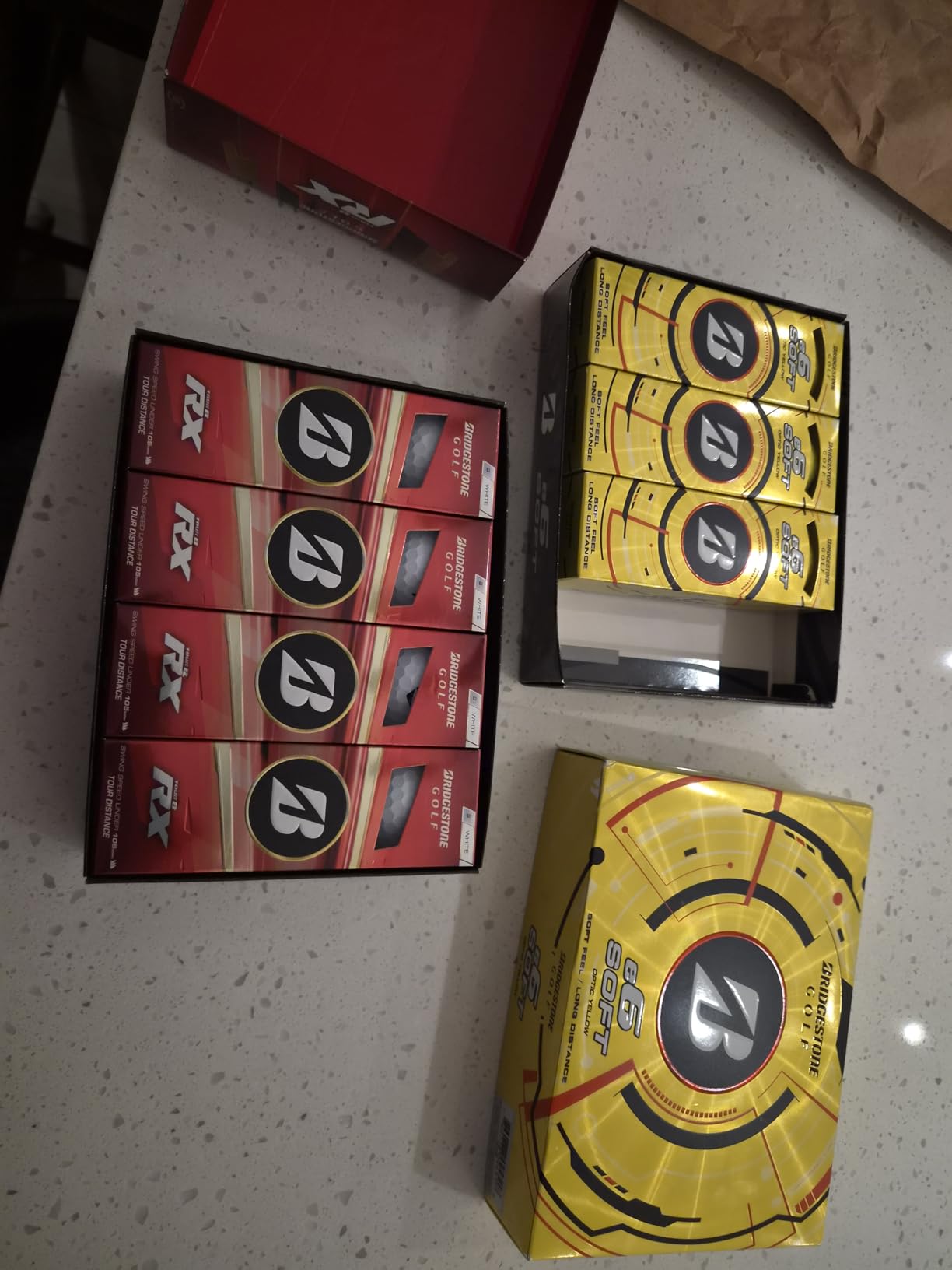
Reviews rate it 4.8 from 785 buyers with 84 percent at five stars. Buyers describe it as a soft-feeling distance ball that suits mid-to-low swing speeds, and the visibility options in soft white and soft yellow get regular mention from golfers who want to find their ball in the rough.
The seamless cover is the reason greenside spin holds up relative to a two-piece. There is no seam line to interfere with the ball’s grip on a putt or a chip, and the surface reads as uniform across the whole ball.
Best situations for the e6
Choose the e6 when your short game is good enough that you do not want a ball that gives up stopping power, but your swing speed means you still need a soft core. It is a middle-ground ball and that is a legitimate choice rather than a compromise.
It also works well as a second ball. Many golfers keep a soft distance ball for the tee and a slightly firmer ball for approach play, and the e6 covers the middle of that spectrum.
Limitations to weigh
Feedback is lighter than a full urethane tour ball, so golfers who rely on impact feel to judge quality of contact may find it less informative. If your miss is a contact problem rather than a direction problem, more feedback would help you diagnose it.
Buyers also note that the soft white finish scuffs and marks more visibly than gloss white, which matters if you care about the condition of the ball at the end of a round.
11. Titleist TruFeel: Best Premium Soft Feel With Real Greenside Control
Titleist TruFeel
Multi-layer construction
TruTouch core
TruFlex 3.0 cover
376 tetrahedral dimple design
+ The Good
- Carries the highest verified rating of the twelve
- Ultra-soft feel on every shot without losing greenside spin
- Low penetrating flight adds distance for slower swings
- 376 tetrahedral dimple design supports consistency
- The Bad
- Premium tier choice rather than a budget pick
- Far fewer customer reviews than the value leaders
The TruFeel is the highest-rated ball in this roundup at 4.9 stars, and Titleist positions it directly at players who prioritise soft feel. That combination is unusual. Most soft balls trade away greenside spin to get there, and the TruFlex 3.0 cover is designed not to make that trade.
The TruTouch core delivers long distance and soft feel, while the low penetrating ball flight from the 376 tetrahedral dimple design is worth understanding. A low flight is unusual for a soft ball, and its purpose here is efficiency: less energy is lost climbing, so more of it remains for forward roll and carry. For a slow swing that converts into yards.
The softer TruFlex cover is credited with increased greenside spin and control. That means you can play this ball with confidence from inside 100 yards without giving up the approach shot you have spent years learning to hit.
Who the TruFeel is for
It is for the golfer who has already fixed their contact and now wants the ball to be soft without costing them control. Golfers who alternate between long shots and delicate short ones will feel the difference between this and a two-piece more than any other spec on the list.
A Reddit poster in r/golf on whether a golf ball helps low swing speed players said they get the best distance from low compression balls such as the Titleist TruFeel, with a TaylorMade SpeedSoft also working well. That is a direct real-player endorsement of two balls on this list, from the thread that appeared in the search results for this query.
Where it falls short
The review base is much smaller than the market leaders at 354 reviews, so there is less long-term data on durability and consistency. That is a real consideration for a ball you would use across a full season.
Cost per ball runs above the two-piece picks here, which matters for a golfer who loses several balls a month. If distance is your only priority and greenside control is irrelevant to your game, the same money buys you a better distance ball.
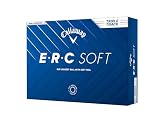
12. Callaway ERC Soft: Best for Greenside Spin and Alignment Aids
Callaway BL CG ERC Soft 25 TRPTRK 12B PK
Multi-layer construction
GRIP urethane coating
High Speed Mantle
Triple Track alignment lines
+ The Good
- Premium urethane greenside spin without the feel penalty of a tour ball
- Soft Hyper Elastic SoftFast core keeps distance
- Triple Track alignment is a real putting aid
- Durable urethane cover holds up
- The Bad
- Premium tier choice rather than a budget pick
- Smallest verified review base of the twelve
The ERC Soft is the one ball here that behaves like a premium short game ball without the compression penalty that usually comes with it. The Hyper Elastic SoftFast core is the same family used in the Supersoft, so the distance profile stays friendly to a slow swing.
The GRIP urethane coating is the difference. A urethane cover grips on a wedge and a putter in a way no Surlyn or ionomer cover in this list can match, which means more spin and more stopping power from the rough, the fringe and inside 20 yards. Buyers specifically report better short game control and greenside spin compared with two-piece balls.
The High Speed Mantle improves energy transfer for ball speed and wedge spin, and the Triple Track alignment lines give you three reference points on every putt. On a green where you leave most of your strokes, alignment lines are worth more than they sound.
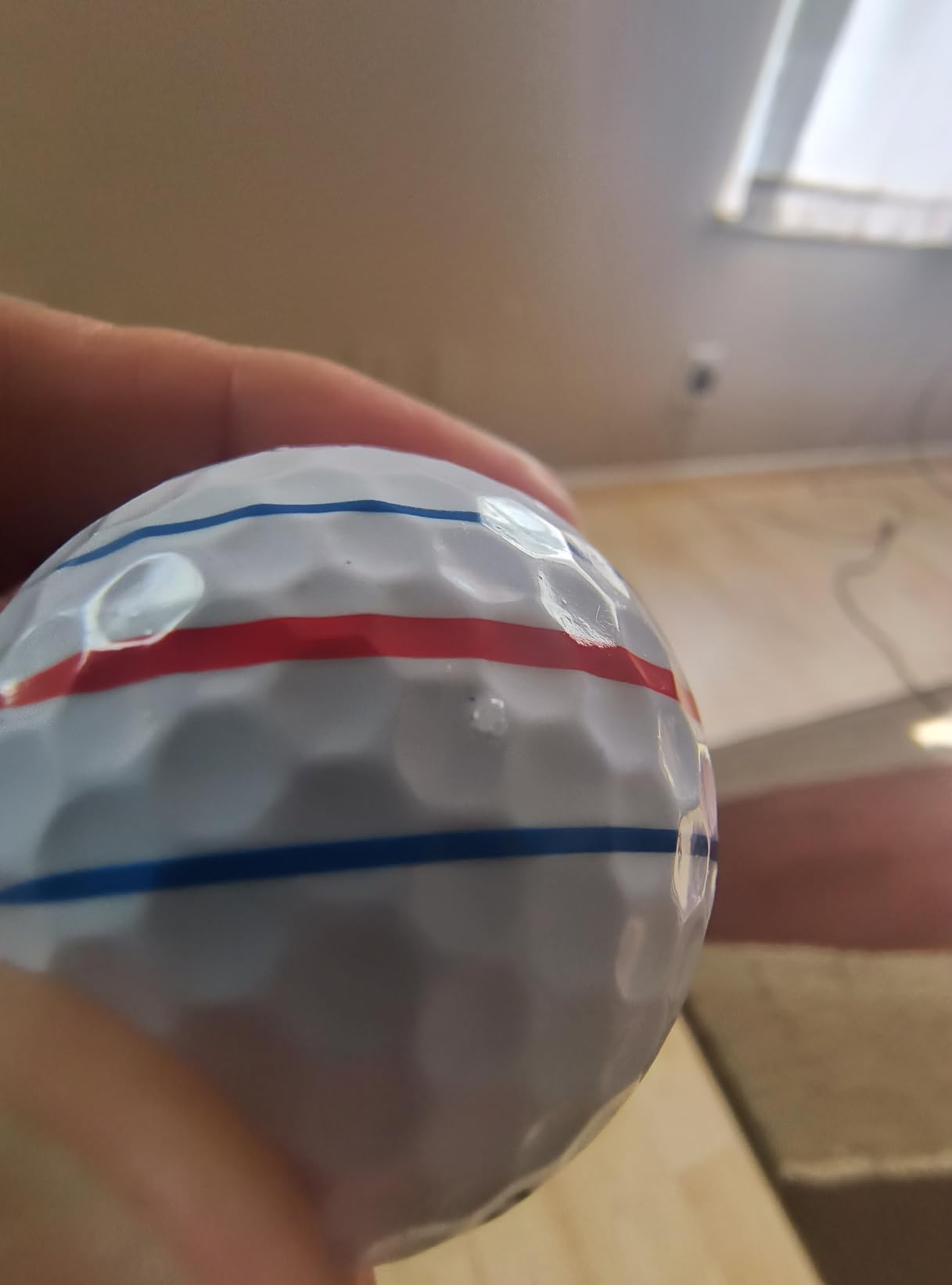
Ratings sit at 4.6 from 202 reviews, with 81 percent at five stars. That is a small sample compared with the leaders, and we would rather tell you that plainly than present a thin review base as settled fact. The direction of the reviews is consistent, though, and it matches the design intent.
This is the ball to buy if your handicap is higher because of your short game rather than your driving. A golfer who reaches the green in the same number of strokes but cannot get up and down will see more improvement here than from any change of distance ball.
When to spend up for the ERC Soft
Buy it when you play enough rounds per season that greenside spin compounds, when you practise your short game seriously, or when you have already tested a distance ball and know that lost proximity is where your strokes are going.
It is also a sensible one-ball bag choice for a slow swinger who wants to handle a wedge as well as a driver without owning two different balls.
What holds it back
It carries the smallest review base of the twelve and sits in the premium price tier, so you are buying on specification and design rather than on volume of long-term buyer feedback. If cost per round is a genuine constraint for you, a distance ball is the more rational purchase.
Alignment aids also stop helping once you have established a consistent routine, so treat the Triple Track lines as a short-term tool rather than a reason to buy the ball on its own.
How to Match a Golf Ball to Your Swing Speed?
Compression matching is the reason this whole category exists, and it is worth understanding before you buy anything. It is not a marketing invention, though the way it is sold often disguises how simple the underlying physics is.
Compression: the number that decides your ball
A golf ball’s compression rating measures how much force is required to deform the ball at impact. The scale runs from roughly 0 to 200, but you will only ever see single and double digit low numbers and the occasional 60 or 90 in this category. Lower numbers deform more easily.
Here is what happens when you strike a ball. The clubface compresses the ball for a few thousandths of a second and then the ball springs back off the face. Energy transferred to the ball during compression and recovered during expansion is what becomes ball speed, and ball speed is what becomes distance.
A high compression ball needs a fast swing to deform fully. If your swing cannot supply that force, the ball does not fully flatten, it springs off early, and some of the energy you generated is lost as a hard, clicky feeling rather than as carry. A low compression ball flattens at a much lower clubhead speed and gives more of that energy back, which is exactly the coefficient of restitution effect that shows up as extra yards.
Match the ball to the swing rather than the other way around. Of the twelve balls here, only the Noodle at 34 and the SoftFli at 35 publish a clear compression figure. The others describe themselves in terms of feel, and the Srixon Soft Feel, the Vice Drive and the Amazon Basics Core Soft all state low compression without a number.
That is not a flaw in the balls. It is a failure of labelling, and it is worth knowing before you spend an afternoon comparing cover materials when the core spec is what actually decides your distance.
How to measure your driver swing speed at home
You do not need a tour-level launch monitor to place yourself in a bracket. Three approaches work, in ascending order of cost.
The cheapest is an app. Several golf swing analysis apps estimate clubhead speed from phone video, and while they are not accurate to the mile per hour, they are accurate enough to tell you whether you are a 68 mph player or an 88 mph player. That distinction is the only thing you need to make. Our guide to the best golf swing analyzers covers the current options if you want a step up.
The middle option is video. Set your phone up level with your hip, film 20 driver swings from behind and in front, and compare the two clips. A ball that barely travels on video is a slow swing. A ball that flies past the frame with a low launch and a fade is a fast swing, whatever the app says. The same footage works well for tracking tempo, which matters as much as raw speed when the goal is a repeatable strike.
The most accurate option is a range session with a launch monitor if your course or a local shop rents one. Ten shots produces a reliable ball speed figure, and from there you can work out whether a compression-34 ball or a compression-60 ball is the better match.
If you want a proxy that requires no equipment at all, listen to the ball. A ball that feels firm and clicky at full swing is telling you the swing is faster than the compression you are playing with. A ball that feels flat and quiet is telling you the opposite. Most golfers can make that diagnosis after two or three rounds.
For the slow swinger who also wants to slow the swing down rather than speed it up, off-season training is often the better investment. Rotational work and weighted clubs build the control that a low compression ball is designed to reward. Our picks for the best medicine balls are a reasonable place to start if you want a strength component to that plan.
2-piece, 3-piece and 4-piece construction
The number of pieces is a proxy for how many jobs the ball is trying to do at once. More layers means the manufacturer can tune distance and short game behaviour independently.
A 2-piece ball, such as the Callaway Supersoft or the Vice Drive, puts distance and feel into one large core with a cover on the outside. It is a simple, forgiving and durable ball. For a slow swinger who wants maximum forgiveness, a 2-piece is hard to beat.
A 3-piece ball adds a mantle layer between the core and the cover. That layer controls spin, which is why a 3-piece can launch lower and stop harder than a 2-piece. The TaylorMade SpeedSoft and the Wilson Duo Soft both use a two-layer build with a low spin profile for straighter flight.
A 4-piece ball separates the long game and the short game into distinct components, which is how you get genuine urethane greenside spin alongside a soft, fast core. The Callaway ERC Soft and the Titleist TruFeel both work this way. The trade is cost and, for some golfers, a firmer feel that does not match their speed.
Cover materials: ionomer, Surlyn, TruFlex and urethane
The cover is the layer you feel most, and its name tells you more about the trade-off than the core does.
Ionomer covers, including Surlyn and the IOTHANE used on the Noodle, are durable and forgiving. They cut and scuff less, feel slightly harder off the clubface, and generate less spin on short shots. They are the sensible choice for a golfer who plays on concrete-cart paths and in deep rough.
TruFlex, the softer ionomer formulation used on the Titleist TruFeel, is a middle path. It softens the feel without moving all the way to urethane, and it is the reason a multi-layer ball can feel soft at slow tempos.
Urethane, as used on the ERC Soft, is the highest-grip material. It produces the most greenside spin and the best feel on a putt, and it costs more per ball. For a golfer whose lost strokes come from the short game, that cost is justified. For a golfer whose lost strokes come from the driver, it is not.
Do compression ratings really matter? The honest answer
This is the most argued question in the sport, and it deserves a straight answer rather than a sales pitch.
The skeptic position comes from posts like the one on The Hackers Paradise forum, which argues that you do not need to compress a ball to reach its maximum potential and calls the compression requirement a myth. That argument has some truth in it. A golf ball is not a tennis ball, and the real-world distance difference between a compression-34 ball and a compression-60 ball is measured in yards rather than tens of yards.
But the skeptic case confuses two separate claims. It is true that compression alone does not determine distance, and it is also true that an under-matched ball costs you distance relative to a well-matched one of the same design. The right question is not whether compression is the only variable. It is whether matching it is the easiest available improvement for a slow swing, and the buyer reviews in this roundup suggest it is.
What nobody disputes, in any forum thread, is that a compression-90 tour ball feels hard and unresponsive at 70 mph. That experience is consistent enough that it does not need the physics argument to justify avoiding a tour ball at slow tempos.
What the ladies ball and senior ball labels actually mean
They mean the manufacturer is targeting a marketing segment. The specifications underneath are often genuinely softer, which is why the balls work, but the label itself carries no technical information you should base a purchase on.
The Bridgestone Lady Precept in this roundup is a case in point. It is a legitimate soft multi-layer ball with a softer core, a seamless dimple design and reduced vibration, and every golfer of any gender would benefit from playing it. The name puts off buyers who would have liked it.
Ignore the label and read the core and cover. If the ball says low compression, a soft core, or a soft feel and the cover is an ionomer or softer, you have what you need. The words senior and ladies are not part of that list.
What losing balls actually costs per year
For a golfer who plays 20 rounds a year and loses an average of three balls per round, that is 60 balls a year, or 5 dozen, and it changes how you should think about the price difference between a value ball and a premium one.
The arithmetic is straightforward: cost per round is simply balls used multiplied by cost per ball, divided by 18 holes. A premium ball used at two balls per round costs twice what a value ball does. A premium ball that survives six rounds because it scuffs less than a value ball that survives two can work out ahead of the cheaper option.
The practical takeaway is that durability matters more than price per ball for a high handicap player. A cut-resistant cover like the one on the Noodle or the Vice Drive will outlast a premium urethane ball for many golfers, and the Noodle 24-ball pack removes the running-around entirely.
Frequently Asked Questions
Can I use Pro V1 with slow swing speed?
Technically yes, practically no. A Pro V1 carries a high compression rating and is built for fast clubhead speed. Below roughly 90 mph it does not fully compress, so it feels hard, gives back less energy, and loses carry distance. You also pay for urethane greenside spin you cannot generate without club speed. If your swing is under 85 mph, a low compression ball from this list will outperform it.
Which golf ball is the longest for a slow swing?
The Callaway Supersoft is the longest general recommendation for slow swingers, with the TaylorMade SpeedSoft close behind thanks to its low compression PWRCORE and extended flight dimple pattern. Below roughly 60 mph, an extra-soft ball such as the Wilson Duo Soft or Maxfli SoftFli will out-launch either one. The right answer depends on how slow your swing actually is.
Is TP5 or TP5x better for slower swing speed?
TP5 is the softer and better choice for slower swing speed. TP5x is a touch firmer and lower in spin, which costs carry distance at low clubhead speed. Neither is a dedicated slow-swing ball, though. A compression-34 two-piece such as the TaylorMade Noodle Long and Soft will launch higher and cost less than either.
What is the best golf ball for seniors to hit?
It depends on your swing speed rather than your age. Below roughly 65 mph, go as soft as you can find, such as the Maxfli SoftFli at 35 compression or the Wilson Duo Soft. Between 65 and 80 mph, the Callaway Supersoft or the TaylorMade SpeedSoft. If your hands and joints are the concern rather than distance, the Bridgestone Lady Precept reduces vibration noticeably.
What golf ball goes the farthest with a slow swing speed?
A low compression ball with a high launch dimple pattern will carry the farthest, because it deforms at a slower clubhead speed and returns more energy into ball speed. The Callaway Supersoft and TaylorMade SpeedSoft both fit that description, and the Maxfli SoftFli at 35 compression does the same with better visibility. Comparing any of them against a compression-90 tour ball is where the yardage difference opens up.
Which Titleist ball is best for slow swing speeds?
The Titleist TruFeel. Its TruTouch core and softer TruFlex 3.0 cover are designed for players who prioritise soft feel, and the low penetrating 376 tetrahedral dimple design adds distance for slower swings. A golfer posting in r/golf specifically named the TruFeel as the ball giving them the best distance at low swing speed. It is the highest-rated ball in this roundup at 4.9 out of 5.
What is the best cheap golf ball for someone with a slow swing speed?
The Amazon Basics Core Soft is a low compression, straight flight, USGA conforming ball at the low end of this roundup, and the Vice Drive is built explicitly for low to medium club head speed with a cut-resistant core. If you want noticeably better quality for a modest step up, the TaylorMade Noodle Long and Soft has a published 34 compression core and a durable IOTHANE cover.
Are Pro V1 balls 100% compression?
No. The compression scale runs roughly 0 to 200, and a Pro V1 sits far below the top of that range while still being a high compression ball for a slow swinger. The lowest compression figures published by any maker in this roundup are the Noodle at 34 and the SoftFli at 35. That gap is what makes a tour ball feel hard at 70 mph.
Is Pro V1 good for slower swing speeds?
Not below roughly 90 mph. The ball does not compress fully at slow tempos, so it feels hard, loses carry distance and reduces forgiveness on mishits. Its main advantage, urethane greenside spin, needs club speed to spin the ball. If you want short game control at slow swing speed, the Callaway ERC Soft gives you urethane greenside spin with a soft core instead.
Our Final Pick for Slow Swing Speeds in 2026
The Callaway Supersoft is our pick for the best golf balls for slow swing speeds because it pairs the highest verified review count in this roundup with a 4.8 rating and a 2-piece build that stays predictable no matter where you strike it. For a golfer whose swing has slowed with age, that consistency is worth more than any greenside spin figure.
If your swing sits at the very bottom of the range, step softer with the Maxfli SoftFli at 35 compression or the Wilson Duo Soft. If your lost strokes come from the short game, the Callaway ERC Soft gives you urethane greenside spin without giving up the soft core. Buy two dozens, keep one in your bag, and give it a month before you decide.