
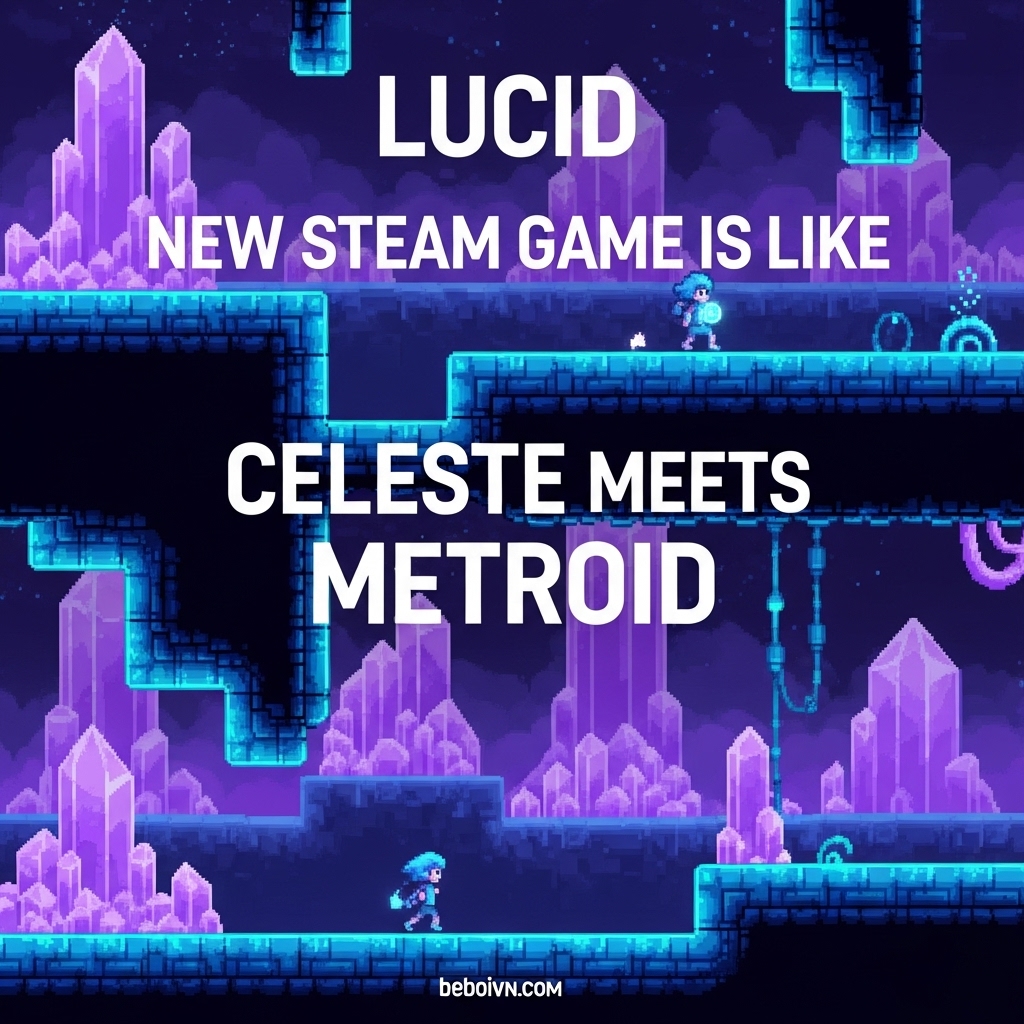
The gaming world is buzzing with excitement over LUCID, an innovative new Steam game that brilliantly combines the precise platforming mechanics of Celeste with the exploration and ability-based progression of Metroid. Described by its creator as the “world’s first Celestoidvania,” this ambitious project from solo developer Eric Manahan promises to deliver a fresh take on the action-platformer genre that has captivated players with its stunning pixel art, tight controls, and imaginative world-building. As the gaming community eagerly awaits its Spring 2026 release, LUCID is already generating significant buzz as one of the most promising indie games on the horizon.
The Birth of a “Celestoidvania”
LUCID represents a fascinating fusion of two beloved gaming genres that have各自 dedicated fanbases. The term “Celestoidvania” itself is a clever portmanteau that perfectly encapsulates the game’s DNA: the lightning-fast, node-based traversal system that made Celeste a modern classic, combined with the interconnected world design and ability-gated progression that defines the Metroidvania genre.
What makes this combination particularly exciting is how these two genres complement each other. Celeste’s platforming is renowned for its precision and flow state-inducing movement, while Metroid’s exploration emphasizes discovery and the satisfaction of unlocking new abilities that open previously inaccessible areas. By merging these mechanics, LUCID aims to create an experience that feels both familiar and refreshingly original.
The game’s creator, Eric Manahan, working under the banner of The Matte Black Studio, has been transparent about his influences. On the game’s Steam page, he lists not only Celeste and Super Metroid as inspirations but also Mega Man X for its tight controls, Donkey Kong Country for its music, and even The Legend of Zelda: Ocarina of Time for its characters and puzzles. This diverse range of influences suggests that LUCID will be more than just a simple mashup—it’s a carefully crafted love letter to classic gaming.
Meet the Developer: From Architecture to Pixels
One of the most compelling aspects of LUCID’s story is its creator’s journey. Eric Manahan wasn’t always a game developer—he spent nearly a decade working as an architect in New York City before making the leap to indie game development. This unique background brings a distinctive perspective to game design, particularly in terms of spatial awareness and environmental storytelling.
“I am essentially, I’m the Matte Black Studio. I’m making a game called Lucid,” Eric explained in an interview, describing it as “a love letter to my childhood gaming experiences.” His transition from architecture to game development wasn’t immediate, though. The turning point came when he discovered Iconoclasts, a beautiful pixel-art game created by a single developer. This revelation showed him that solo game development was possible and sparked his journey into the world of indie games.
Eric’s architectural background actually proves surprisingly relevant to game development. “It teaches you how to think about traversing through spaces and color and shape,” he noted, explaining how the principles of architectural design seamlessly translated into crafting compelling side-scrolling environments. This unique perspective is evident in LUCID’s world design, which features carefully constructed spaces that flow naturally and encourage exploration.
The development journey wasn’t without its challenges. Eric spent years tinkering and learning the ropes of game development, starting in 2013 but only finding his groove by 2015. The demanding nature of game development even led him to take a hiatus in 2017-2018 when it began affecting his personal life. However, the COVID-19 pandemic and the shift to remote work provided the perfect opportunity to reignite his passion project, ultimately leading to LUCID’s successful Kickstarter campaign in September 2023.
The World of Aedyn: A Crystal-Punk Universe
LUCID takes place in the stunning “crystal-punk” world of Aedyn, a setting that immediately distinguishes it from other games in the genre. The term “crystal-punk” suggests a unique aesthetic that blends organic crystalline structures with punk-inspired design elements, creating a visual style that’s both beautiful and slightly dangerous.
The story of LUCID is set in a world that has been “torn apart by dissonance” following a catastrophic event known as the “Great Fall,” which destroyed the Lucid Giant Aylo. Players take on the role of Oenn, a young Sentinel tasked with the monumental quest to revive the fallen Giant and restore harmony to the Celestial Fabric. This premise sets up an epic narrative that promises to explore themes of balance, restoration, and the consequences of disrupting natural harmony.
What’s particularly intriguing about Aedyn is how it’s described as a “vast and interconnected” world with diverse biomes. Players will have the freedom to explore areas like the frigid Onyx Ridge, glittering Crystal Caverns, and the gloomy Welltown. The game promises a non-linear approach to exploration, allowing players to tackle different areas in their preferred order and even discover new paths to previously completed biomes to uncover additional treasures and secrets.
The world is also populated by a diverse cast of characters, from the close-knit Sentinels in the Petrified Forest to the “down-and-out slumdogs of Beacon City.” Each character reportedly has their own story, and it’s up to Oenn to help restore balance to their lives while healing the fractured world. This emphasis on character-driven storytelling suggests that LUCID will offer more than just tight gameplay—it promises an emotional narrative journey as well.
Gameplay Mechanics: Precision Meets Exploration
At its core, LUCID is built on a foundation of tight, responsive controls that put players in complete command of Oenn’s movements. The game’s Steam page emphasizes that “tight controls are the foundation of LUCID’s design,” with Oenn described as “an extension of the player” that’s “a joy to handle.” This focus on precision platforming is clearly inherited from Celeste, which is widely regarded as having some of the best controls in the genre.
However, LUCID isn’t just about jumping from platform to platform. The game introduces a unique ability system called “Crystal Arts” that serves as the bridge between its Celeste-inspired platforming and Metroid-inspired exploration. Players will collect various Crystal Arts throughout their journey, including the Crystal Blade, Crystal Spear, and Crystal Axe. Each of these abilities modifies Oenn’s mobility and enhances combat in different ways, offering what the developers describe as “a range of player expression” for both traversal and combat.
The progression system appears to be thoughtfully designed. Players collect Crystal Shards and Rare Materials scattered throughout the world, which can be used to upgrade their Bracers by expanding Talisman Slots and empower Crystal Arts through a process called “Anointing.” This upgrade system suggests that players will have meaningful choices in how they develop Oenn’s abilities, allowing for different playstyles and approaches to challenges.
Combat in LUCID looks to be just as important as platforming. The game promises “intense boss battles” that will “test your skills and awareness.” These formidable opponents are designed to push players to apply their accumulated knowledge and prowess, creating satisfying moments of triumph when overcome. The combination of aerial combat and platforming puzzles suggests that LUCID will require players to master both movement and combat systems to succeed.
The Sounds of LUCID: A Musical Masterpiece
One of the most exciting aspects of LUCID is its musical score, composed by David Wise, a legendary figure in the gaming industry known for his work on the Donkey Kong Country series, Yooka-Laylee, and Star Fox Adventures. Wise’s involvement is a significant coup for a solo developer project and speaks to the quality and potential of LUCID.
The Donkey Kong Country games are renowned for their exceptional soundtracks, which perfectly complemented the games’ vibrant worlds and challenging gameplay. Wise’s ability to create memorable melodies that enhance the gaming experience is well-established, and his work on LUCID promises to be no different. The game’s Steam page specifically mentions that the music is inspired by Donkey Kong Country’s “Flow state inducing tunes,” suggesting that the soundtrack will play a crucial role in creating the immersive, engaging experience that the developers are aiming for.
Music has always been a vital component of great platforming games, from the catchy tunes of Super Mario Bros. to the atmospheric compositions of Hollow Knight. With Wise on board, LUCID is positioned to join the ranks of games where the soundtrack becomes an integral part of the overall experience, potentially elevating it from merely good to truly memorable.
Visual Style: Pixel Art with Modern Flair
LUCID’s visual presentation is another area where the game shines. The game features “carefully crafted pixel art with contemporary atmospheric elements,” creating a look that “seamlessly combines nostalgia with modern gaming.” This approach to visual design is particularly effective for indie games, as it allows small teams to create beautiful, detailed worlds while also evoking the nostalgic feelings associated with classic games.
The “crystal-punk” aesthetic gives LUCID a distinctive look that sets it apart from other pixel-art games. Screenshots and trailers show a world filled with glowing crystalline structures, vibrant colors, and detailed environments that showcase both the beauty and danger of Aedyn. The pixel art is crisp and detailed, with smooth animations that bring the world and its inhabitants to life.
What’s particularly impressive is how the game manages to create a unique visual identity while still feeling familiar to fans of classic platformers. The influence of games like Super Metroid and Celeste is evident in the environmental design and character animations, but LUCID adds its own twists with the crystal-themed elements and unique character designs.
The Road to Release: Kickstarter Success and Community Support
LUCID’s journey from concept to upcoming release has been significantly supported by the gaming community. In September 2023, Eric Manahan launched a Kickstarter campaign for the game with a modest goal of $30,000. The response from the gaming community was overwhelming, with the campaign ultimately raising $82,202 from 1,309 backers—nearly triple the original goal.
This successful Kickstarter campaign not only provided the financial resources needed to complete the game but also demonstrated that there’s significant interest in the “Celestoidvania” concept that Eric had created. The campaign’s success also helped validate the years of hard work Eric had put into the project, giving him the confidence and resources to bring his vision to life.
Following the successful Kickstarter, LUCID has continued to build momentum. The game released its first playable demo exclusively for Kickstarter backers in May 2024, and has since shared regular gameplay trailers with the public. The game recently made an appearance at the Winter OTK Games Expo, where it was given an official release date of Spring 2026.
Perhaps most importantly for potential players, LUCID currently has a free demo available on Steam, allowing anyone interested in the game to experience its unique blend of Celeste-inspired platforming and Metroidvania exploration firsthand. This demo has been well-received by players and critics alike, further building anticipation for the full release.
What Sets LUCID Apart in a Crowded Genre?
The indie game market, particularly for platformers and Metroidvanias, is incredibly crowded with talented developers and innovative games. So what makes LUCID stand out from the competition?
First and foremost is the “Celestoidvania” concept itself. While many games attempt to blend different genres or mechanics, LUCID’s combination of Celeste’s precision platforming with Metroid’s exploration feels particularly natural and well-executed. These two genres complement each other perfectly, with the tight controls of Celeste enhancing the exploration aspects of Metroidvania design.
Secondly, Eric Manahan’s unique background as an architect brings a distinctive perspective to game design. His understanding of space, flow, and environmental design is evident in LUCID’s world, creating environments that feel both natural and intentionally crafted. This architectural sensibility is something that sets LUCID apart from games designed by developers with more traditional game development backgrounds.
Thirdly, the involvement of David Wise in the soundtrack adds a level of polish and quality that’s rare for solo developer projects. Wise’s experience and talent ensure that LUCID’s audio presentation will match its visual and gameplay quality, creating a cohesive and immersive experience.
Finally, the crystal-punk aesthetic and world-building give LUCID a unique identity that helps it stand out in a sea of pixel-art platformers. The combination of organic crystalline structures with punk-inspired elements creates a visual style that’s both beautiful and slightly dangerous, perfectly complementing the game’s themes of dissonance and restoration.
The Future of LUCID and Beyond
With a Spring 2026 release date planned for Steam and console ports announced for sometime after, LUCID is positioned to make a significant impact on the indie gaming scene. The game has already generated considerable buzz and anticipation, and if the final product lives up to the promise shown in demos and trailers, it could become one of the standout indie games of 2026.
For Eric Manahan and The Matte Black Studio, LUCID represents the culmination of years of hard work, passion, and perseverance. The journey from architect to indie game developer is not an easy one, but Eric’s dedication to his craft and his love for classic gaming have resulted in a project that feels both personal and universally appealing.
Looking beyond LUCID, the success of this project could open doors for Eric to continue creating games that blend his unique perspective with his love for classic gaming. The “Celestoidvania” concept itself could inspire other developers to explore similar genre fusions, potentially leading to new innovations in the action-platformer genre.
Why Gamers Should Be Excited About LUCID?
For fans of precise platformers, exploration-driven games, or just innovative indie experiences in general, LUCID represents a must-watch title. The combination of Celeste’s tight controls with Metroid’s exploration is a match made in gaming heaven, and the execution shown in demos and trailers suggests that the final product will deliver on this promising concept.
The fact that a free demo is currently available on Steam makes now the perfect time to experience LUCID firsthand. Trying the demo not only gives players a taste of what to expect from the full game but also supports the developer and helps build momentum for the Spring 2026 release.
For those who appreciate games with strong artistic direction, compelling narratives, and innovative gameplay mechanics, LUCID checks all the right boxes. The crystal-punk world of Aedyn looks beautiful and intriguing, the story promises emotional depth, and the gameplay mechanics appear to strike the perfect balance between challenge and accessibility.
Conclusion: A New Steam Game That Honors Its Influences While Carving Its Own Path
LUCID stands as a testament to the power of passion, perseverance, and creative vision in the indie game development scene. By combining the best elements of Celeste and Metroid, solo developer Eric Manahan has created something that feels both familiar and refreshingly original. The “Celestoidvania” concept isn’t just a clever marketing term—it’s an accurate description of a game that successfully merges two beloved genres into something new and exciting.
With its tight controls, beautiful pixel art, compelling world-building, and exceptional soundtrack, LUCID is poised to become one of the standout indie games of 2026. The game represents not only a significant achievement for Eric Manahan and The Matte Black Studio but also a shining example of what’s possible in the indie game development scene when talent, passion, and dedication come together.
As we look forward to LUCID’s Spring 2026 release on Steam, it’s clear that this new Steam game that combines Celeste and Metroid elements is more than just another indie platformer—it’s a love letter to classic gaming, a showcase of innovative design, and a promising sign of the bright future of indie game development. Whether you’re a fan of precise platforming, exploration-driven adventures, or just great games in general, LUCID is a title that deserves your attention and anticipation.