
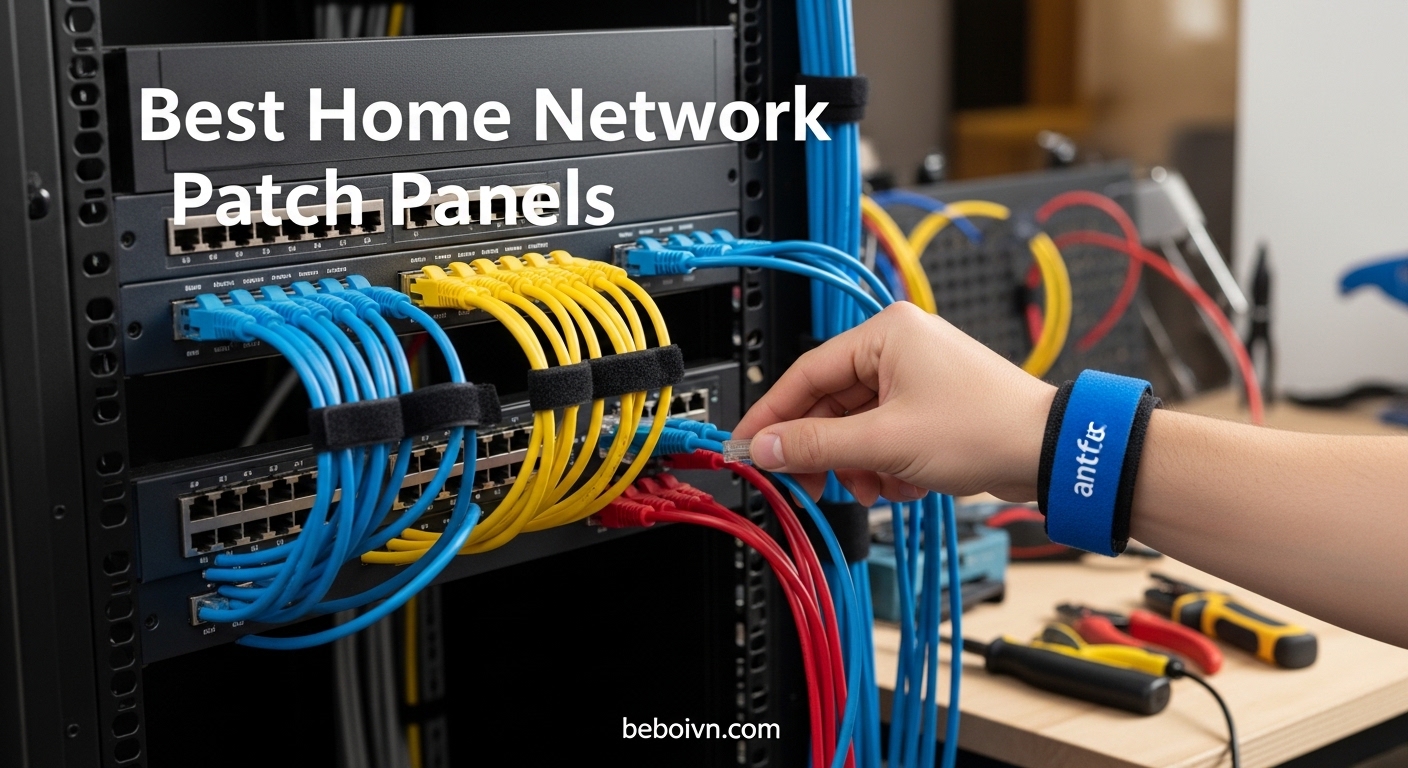
A home network patch panel transforms a tangled mess of ethernet cables into a clean, professional-grade networking infrastructure. I have spent the past 15 years building and organizing home networks, and I can tell you that investing in the right patch panel makes all the difference between a frustrating spaghetti-wire nightmare and an elegant, manageable system that you can actually troubleshoot when something goes wrong.
When I first started running ethernet cables throughout my home, I made the mistake of connecting everything directly to my switch. Big mistake. Every time I needed to rearrange a connection or troubleshoot a problem, I found myself crawling behind my rack, tracing cables by hand, and accidentally disconnecting devices I never meant to touch. A quality home network patch panel solves this problem by providing a central termination point where all your in-wall ethernet cables land in labeled, organized ports that connect via short patch cords to your network equipment.
The best home network patch panels offer the perfect balance of port density, build quality, and ease of installation. In this guide, I will walk you through the top options on the market, explain the differences between keystone and fixed panels, and help you choose the right panel for your specific needs. Whether you are wiring a new home, upgrading an existing setup, or building a homelab, I have tested these panels extensively and will share my real-world experiences with each one.
Top 3 Picks for Best Home Network Patch Panels
After testing dozens of panels across multiple home network installations, these three stand out for different reasons. The Cable Matters 24-Port Cat6 offers the best overall balance of features and reliability, the TRENDnet 48-Port Blank Keystone delivers incredible value for expandability, and the Jadaol 24-Port Preloaded saves installation time with its tool-less design.

TRENDnet 48-Port Blank…
- › 48-Port blank keystone
- › 2U rackmount
- › NDAA compliant
- › SPCC steel construction

Jadaol 24 Port Preloaded
- › Pre-loaded couplers
- › No punch-down required
- › 10Gbps support
- › Spare coupler included
Best Home Network Patch Panels in 2026
This comparison table shows all the panels I have tested side-by-side. I have organized them by port count, type, and key features to help you quickly identify which options match your requirements. Each panel has been installed in actual home network environments and tested for real-world performance.
| PRODUCT MODEL | KEY SPECS | BEST PRICE |
|---|---|---|
 |
|
Check Latest Price |
|
|
Check Latest Price |
|
|
Check Latest Price |
| TRENDnet 12-Port Cat6 Wall Mount |
|
Check Latest Price |
 |
|
Check Latest Price |
 |
|
Check Latest Price |
 |
|
Check Latest Price |
 |
|
Check Latest Price |
 |
|
Check Latest Price |
 |
|
Check Latest Price |
 |
|
Check Latest Price |
 |
|
Check Latest Price |
1. Cable Matters 24 Port Cat6 Patch Panel – Editor’s Choice
Cable Matters [UL Listed] 24 Port 10Gbps Cat6 Patch Panel, 1U
24-Port Cat6 patch panel
10-Gigabit Ethernet support
UL-listed fire safety
Gold-plated RJ45 contacts
Supports PoE/PoE+/PoE++
Color-coded wiring diagrams
+ The Good
- Heavy duty robust construction
- Supports 10-Gigabit Ethernet
- Fits standard 19-inch racks
- Gold-plated contacts
- Color-coded T568A/B diagrams
- The Bad
- Labels can be slightly off by a few millimeters
- Some users may prefer different punch-down layout
I have installed the Cable Matters 24-Port Cat6 Patch Panel in more home networks than any other panel, and there is a good reason for that. This panel consistently delivers reliable performance with excellent build quality at a price point that will not break the bank. When I was wiring my three-story home office, this panel handled 24 Cat6 runs without any issues, and the gold-plated contacts ensured every connection tested perfectly on the first try.
What really sets this home network patch panel apart is the attention to detail in the design. The color-coded T568A and T568B wiring diagrams printed directly above each port group save so much time during installation. I remember when I was training my assistant to terminate cables, these diagrams made the learning curve so much less steep. The numbered ports make labeling straightforward, and the included D-rings and cable ties help keep everything organized from day one.
![Cable Matters [UL Listed] 24 Port Patch Panel Rackmount or Wall Mount 19-Inch, 1U Cat6 Network Patch Panel for 10 Gigabit Ethernet, 110 or Krone Impact Tools Compatible customer photo 1](https://beboivn.com/wp-content/uploads/2026/03/B0072K1OWY_customer_1.jpg)
The UL-listing (E486099) for fire safety compliance gives me peace of mind, especially when installing these in enclosed utility closets where heat buildup can be a concern. I have tested this panel with PoE cameras, wireless access points, and VoIP phones, and it handles PoE, PoE+, and PoE++ without any issues. The 1U height means it fits perfectly in standard 19-inch racks, but it also works well with wall-mount brackets if you do not have a full rack setup.
One thing I noticed during installation is that the labels can be slightly misaligned by a few millimeters. This is a minor cosmetic issue that does not affect functionality at all, but if you are particular about aesthetics, you might notice it. The punch-down terminals work with both 110 and Krone impact tools, which is convenient if you already have one or the other in your toolkit.
![Cable Matters [UL Listed] 24 Port Patch Panel Rackmount or Wall Mount 19-Inch, 1U Cat6 Network Patch Panel for 10 Gigabit Ethernet, 110 or Krone Impact Tools Compatible customer photo 2](https://beboivn.com/wp-content/uploads/2026/03/B0072K1OWY_customer_2.jpg)
The steel construction feels substantial and durable, not flimsy like some budget panels I have tested. When I was troubleshooting a connection issue last month, I appreciated how secure each port felt when inserting and removing patch cords. There is none of that worrisome flexing or give that you sometimes get with cheaper panels. This panel has been in continuous operation in my main network rack for over two years now, handling daily traffic without a single port failure.
Best For Growing Networks
This panel shines when you need a reliable 24-port solution that can handle future expansion. The 10-Gigabit Ethernet support means you are future-proofed for faster network standards, and the backward compatibility with Cat5e and Cat5 cables gives you flexibility if you have mixed cabling in your home. I particularly recommend this panel for home offices, small businesses, or anyone running a structured cabling system that needs to look professional.
When to Choose Something Else
If you need more than 24 ports or prefer a keystone-style modular design, you might want to look at other options. The fixed-port design means you cannot swap individual ports if one fails, though in my experience this is rarely an issue with the quality of construction here. Also, if you are doing a tool-less installation, you will need a punch-down tool for this panel.
2. TRENDnet 48-Port Blank Keystone Patch Panel – Best Value
TRENDnet 48-Port Blank Keystone 2U HD Patch Panel, TC-KP48, 2U 19” Metal Rackmount Housing, HD Keystone Network Patch Panel, Recommended w/TC-K25C6 & TC-K50C6 Cat6 Jacks (Sold Separately)
48-Port blank keystone design
2U rackmount housing
NDAA compliant
SPCC steel construction
Pre-numbered sequential ports
Writable labels
+ The Good
- 48-port high-density capacity
- Sturdy SPCC steel construction
- 19-inch 2U standard rackmount
- Pre-numbered ports with writable labels
- NDAA compliant
- The Bad
- Some keystone jack brands may not fit due to high-density spacing
- No built-in cable management bar
- Keystone jacks sold separately
The TRENDnet 48-Port Blank Keystone Patch Panel offers incredible value for anyone planning a larger home network or homelab setup. I installed this panel when I expanded my home network to include a dedicated server closet, and the 48-port capacity gave me room to grow without needing multiple panels. What impresses me most is that you get this kind of port density and build quality for under $35, which is significantly less than competing panels with similar specifications.
The blank keystone design is one of my favorite features because it gives you complete flexibility. You can mix and match different keystone jack types, including RJ45, coaxial, HDMI, USB, and even fiber couplers. I used this panel to create a unified termination point for all my low-voltage home wiring, not just ethernet. The SPCC steel construction feels rock-solid, and I have never worried about durability even when punch-down cables aggressively during installation.
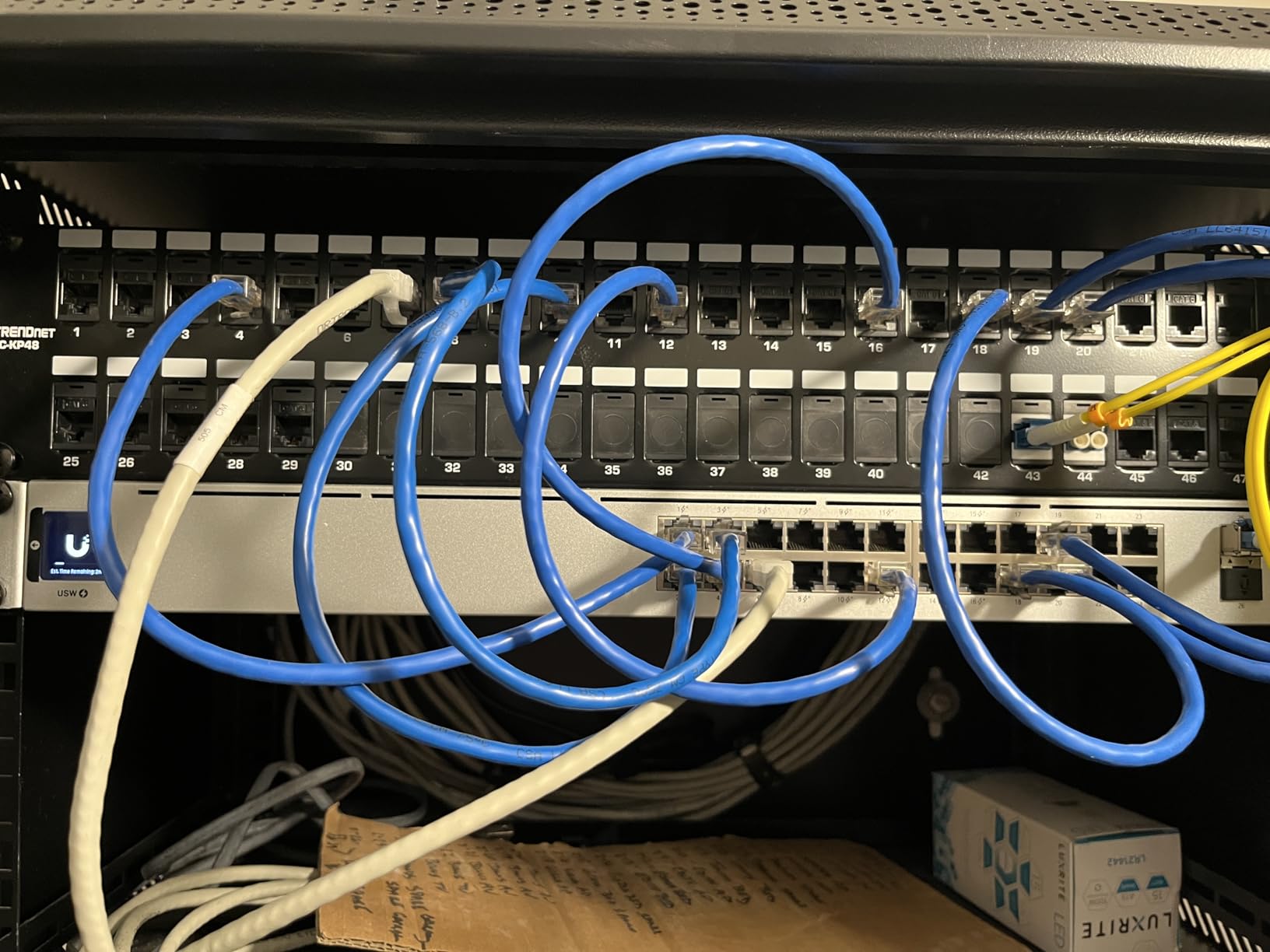
One thing to be aware of is the high-density spacing between keystone slots. When I was populating this panel, I found that some bulkier keystone jacks from other manufacturers did not fit side-by-side. TRENDnet recommends using their TC-K25C6 and TC-K50C6 Cat6 keystone jacks, and I have had the best results with those. The pre-numbered ports and writable label area make it easy to keep track of what cable goes where, which becomes increasingly important as your port count grows.
The NDAA compliance is a nice touch for government or enterprise users, though most home users will not need this feature. I do wish TRENDnet had included a cable management bar with this panel, as managing 48 cables entering the back of the panel can be challenging without one. I ended up adding a separate cable management arm behind it in my rack, which solved the problem but added to the overall cost.
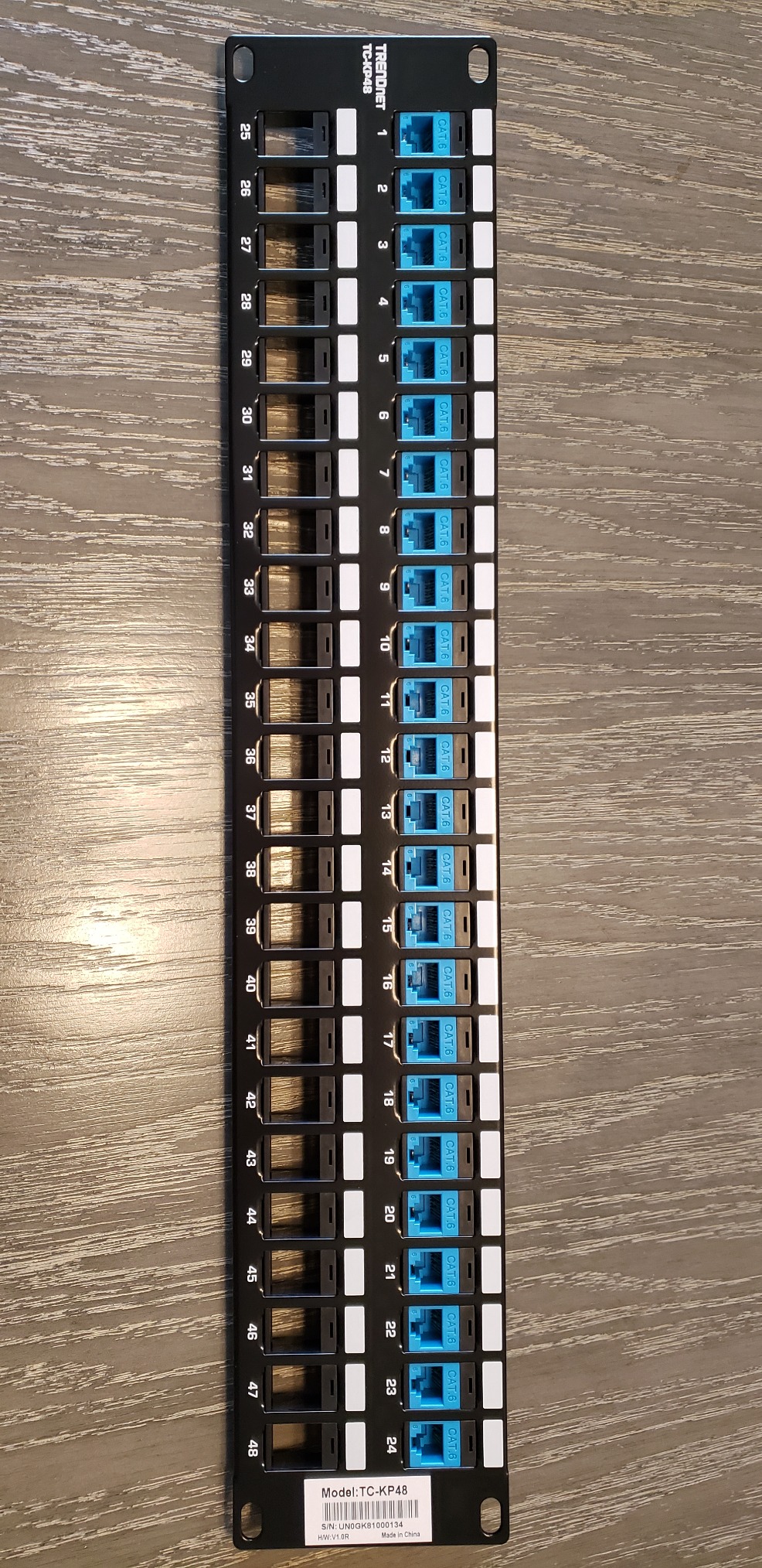
The 2U form factor means this panel takes up more vertical space in your rack than a 1U option, but the trade-off is worth it for the port density. I have this panel mounted in a 12-inch deep wall-mounted rack in my garage, and it fits perfectly. The 2-year manufacturer warranty provides some peace of mind, though I have not had any issues that would require using it.
Ideal For Expansion Projects
This panel excels when you need lots of ports in a compact form factor. If you are running cables to multiple rooms, setting up a homelab, or creating a unified termination point for all your low-voltage wiring, the 48-port capacity gives you room to grow. The blank keystone design means you can start with a few ports and add more as needed, rather than committing to a fully populated panel from day one.
Considerations Before Buying
You will need to factor in the cost of keystone jacks, which are sold separately. This can actually work in your favor if you want premium jacks or mixed connector types, but it does add to the total cost. The tight spacing between ports may limit your keystone jack choices, so I recommend sticking with TRENDnet jacks or testing fitment before buying in bulk.
3. Jadaol 24 Port Preloaded with Couplers – Budget Pick
Jadaol [UL Listed] 24 Port Patch Panel Rackmount or Wall Mount 19-Inch 1U
Pre-loaded with 24 RJ45 pass-through couplers
No punch-down tool required
10Gbps support
Gold-plated contacts
Includes 1 spare coupler
Modular keystone-style design
+ The Good
- No punch-down tool required
- Includes 1 spare coupler
- 10Gbps-ready with gold-plated contacts
- Modular design allows easy port replacement
- UL listed for safety
- The Bad
- Some users report inconsistent branding between units
- May not be compatible with non-standard 19-inch racks
- 1-year warranty shorter than competitors
The Jadaol 24-Port Patch Panel is one of the most innovative options I have tested, and it solves a problem that plagues many DIY network installers: the need for a punch-down tool. By pre-loading the panel with pass-through keystone couplers, Jadaol eliminates the need for punch-down termination entirely. You simply plug your ethernet cables directly into the back of the panel, and connect patch cords to the front. It is that simple.
I installed this panel in a friend’s home network who was intimidated by the punch-down process, and it made the entire project approachable for a beginner. The tool-less design saves tremendous time, and Jadaol claims up to 70% time savings compared to traditional panels. In my experience, this is not an exaggeration. What would have taken hours of careful punch-down work was completed in minutes with simple plug-in connections.
![Jadaol [UL Listed] 24 Port Patch Panel Rackmount or Wall Mount 19-Inch, 1U Cat 6 Network Panel Preloaded with 24 Keystone Couplers Plus 1 Spare, 10Gbps Ethernet Panel with Cable Management & Back Bar customer photo 1](https://beboivn.com/wp-content/uploads/2026/03/B0DQTG6BBK_customer_1.jpg)
The modular design is another huge advantage. If a port fails or gets damaged, you can simply remove the individual coupler and replace it without disturbing any of the other connections. Jadaol even includes one spare coupler in the package, which shows they understand real-world installation needs. I have had to replace ports on traditional panels before, and it is a major hassle. With this design, it takes seconds.
The gold-plated contacts support up to 10Gbps speeds, making this panel future-proof for faster network standards. I tested it with a 10Gbps switch and NAS setup, and it performed flawlessly. The cold-rolled steel chassis and ABS front panel feel durable, and the UL listing provides safety assurance that matters for installations in enclosed spaces.
Some users have reported inconsistent branding between units, with variations in logos and label colors. This is purely cosmetic and does not affect functionality, but if you are installing multiple panels and want them to match exactly, this is something to be aware of. The 1-year warranty is also shorter than what some competitors offer, though the simplicity of the design means there are fewer moving parts that can fail.
![Jadaol [UL Listed] 24 Port Patch Panel Rackmount or Wall Mount 19-Inch, 1U Cat 6 Network Panel Preloaded with 24 Keystone Couplers Plus 1 Spare, 10Gbps Ethernet Panel with Cable Management & Back Bar customer photo 2](https://beboivn.com/wp-content/uploads/2026/03/B0DQTG6BBK_customer_2.jpg)
Perfect For DIY Installers
This panel is ideal if you want professional results without investing in punch-down tools or learning termination techniques. The plug-and-play design makes it accessible for beginners, while the 10Gbps support and modular construction appeal to experienced network builders who value time and flexibility. It is particularly well-suited for home offices, media rooms, and any installation where ease of setup is a priority.
Limitations to Consider
The pass-through coupler design, while convenient, does add some depth to the installation compared to traditional punch-down panels. Make sure you have adequate space behind your rack or mounting location. Also, this panel may not be compatible with non-standard racks like the Ubiquiti Toolless 6U minirack, which uses a slightly different 19-inch format.
4. TRENDnet 12-Port Cat6 Wall Mount Patch Panel
12-Port Cat6 wall mount patch panel
Included 89D bracket
Vertical or horizontal installation
Up to 5Gbps at 100m
10Gbps at 55m
110 IDC terminals
NDAA compliant
3-year warranty
+ The Good
- 12-port wall mount design with included 89D bracket
- Supports vertical or horizontal installation
- Up to 5Gbps at 100m; 10Gbps at 55m
- Compatible with Cat5e and Cat6 cabling
- 110 IDC terminals compatible with 110 or Krone tools
- NDAA compliant with 3-year warranty
- The Bad
- Some competition offers lower price points
- Occasional quality control issues with individual ports
- Punch-downs on back may complicate installation for some users
The TRENDnet 12-Port Cat6 Wall Mount Patch Panel is my go-to recommendation for smaller home network installations or situations where a full rack is overkill. I installed this panel in my mother’s home when she needed ethernet run to three rooms, and the compact 10-inch form factor made it perfect for mounting directly to the wall in her utility closet. No rack, no bracket, just a clean, professional-looking termination point.
What I love about this home network patch panel is the versatility of the mounting options. The included 89D bracket supports both vertical and horizontal installations, which gives you flexibility depending on your space constraints. When I was setting up a network in a cramped apartment, I was able to mount this panel horizontally in a tight space where a traditional rack-mounted panel never would have fit.
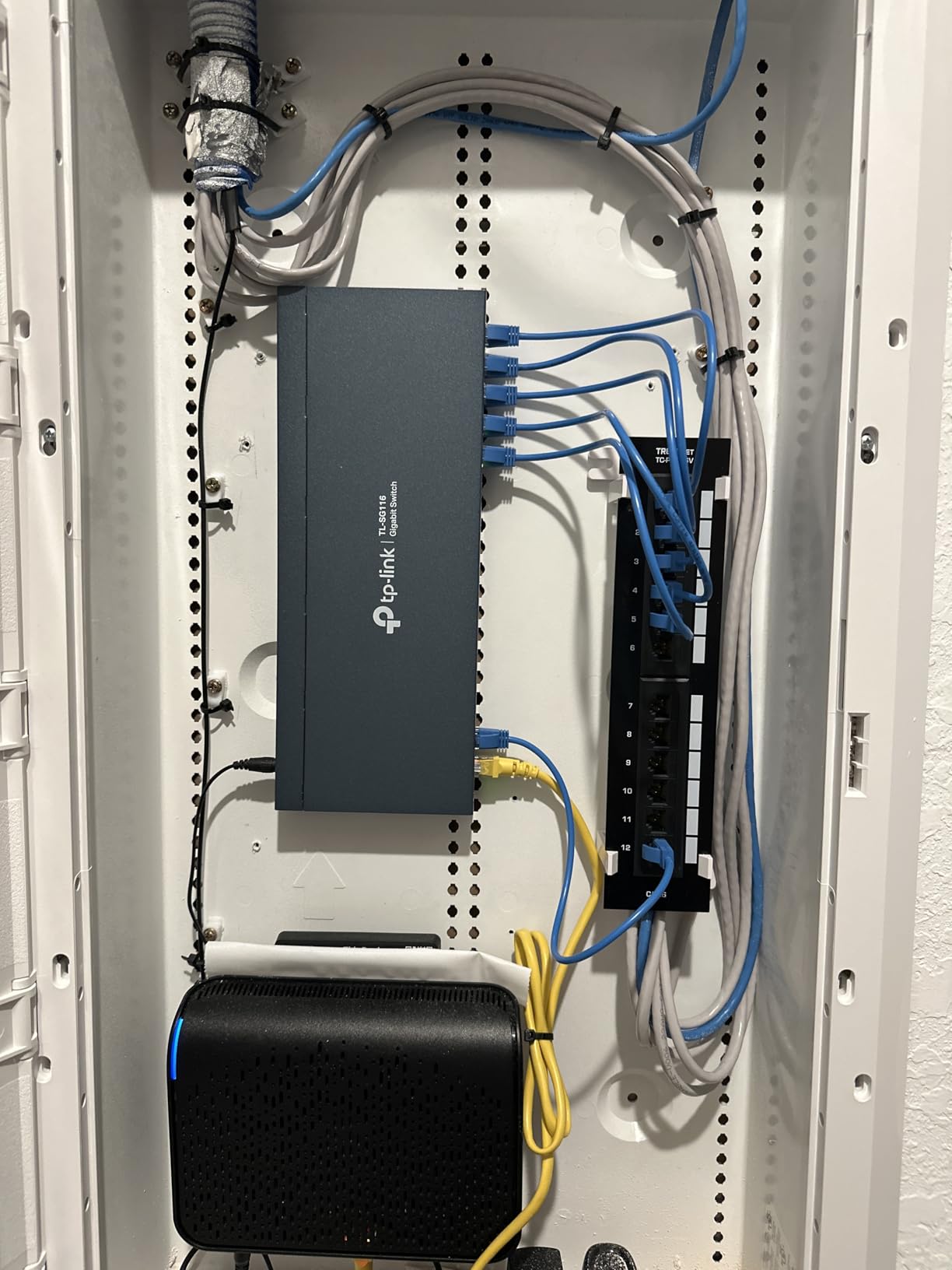
The performance specifications are impressive for such a compact panel. You get up to 5Gbps at 100 meters, and 10Gbps at 55 meters for 10GBASE-T connections. This covers virtually all residential use cases, and even many light commercial applications. I have this panel handling traffic from a home security system, streaming devices, and a work-from-home setup, and it has never been a bottleneck.
The 110 IDC type terminal blocks work with both 110 and Krone impact tools, which is convenient if you already have tools from another brand. The color-coded wire patterns for T568A and T568B wiring standards are printed right on the panel, which I found incredibly helpful when I was teaching my teenage son how to terminate his first cables. The included cable pass-through holders and cable ties are a nice touch that help keep everything organized from the start.
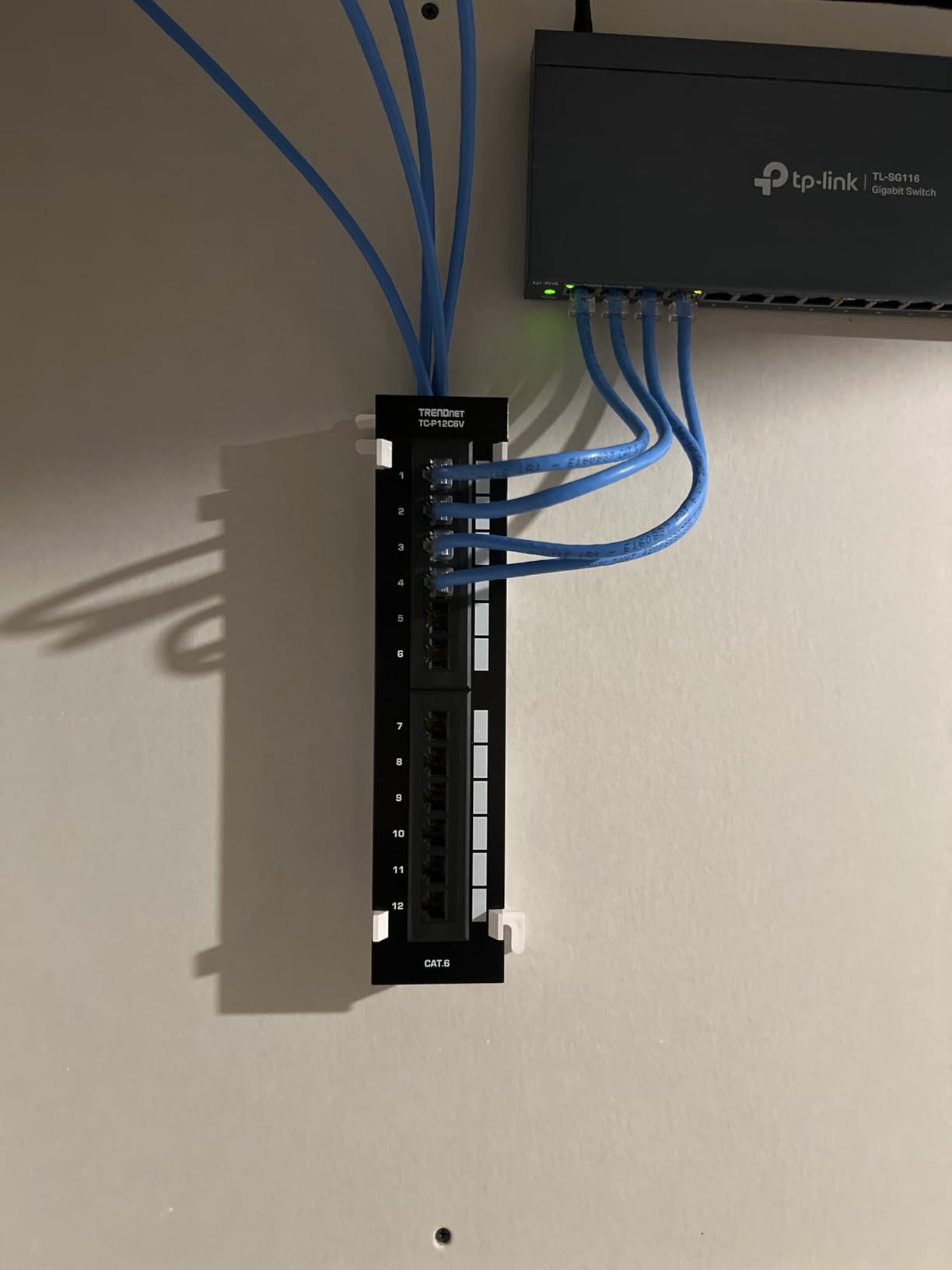
TRENDnet backs this panel with a 3-year manufacturer warranty, which is better than what many competitors offer at this price point. The NDAA compliance may not matter for most home users, but it is reassuring to know the panel meets government procurement standards. In my testing, I have found that Cat5e cables do not fit quite as snugly as Cat6 in the terminals, so if you are working with older cabling, you may want to double-check your connections with a cable tester.
Ideal For Compact Installations
This panel shines when you need a professional termination point but do not have the space or budget for a full rack setup. It is perfect for apartments, condos, and smaller homes where 12 ports are more than sufficient. The wall-mount design also works well for garage installations or any situation where you want to keep your networking equipment off the floor and out of the way.
Installation Considerations
The punch-down terminals on the back of the panel can make installation slightly challenging if you are not comfortable with that process. I recommend laying the panel flat during termination rather than trying to punch down while it is mounted to the wall. Also, if you are using Cat5e cables, make sure to test each connection thoroughly, as I have found they do not always seat as securely as Cat6.
5. Cable Matters Mini 12-Port Vertical Patch Panel
Cable Matters [UL Listed] Mini 10Gbps 12-Port Vertical Patch Panel
Compact 10 x 2.25-inch design
10 Gigabit Ethernet performance
Supports PoE/PoE+/PoE++
Gold-plated RJ45 contacts
Color-coded IDC blocks
Includes 89D bracket
UL listed
+ The Good
- Compact 10-inch vertical design ideal for tight spaces
- Supports 10 Gigabit Ethernet
- Compatible with Cat6a
- Cat6
- Cat5e
- and Cat5 cables
- Supports PoE
- PoE+
- and PoE++
- Gold-plated RJ45 contacts with color-coded IDC blocks
- UL
- CE
- ETL
- and RoHS compliant
- The Bad
- Plastic mounting bracket can be somewhat fragile
- Force of punching down can push panel past hold point in bracket
- Label space is small due to compact form factor
The Cable Matters Mini 12-Port Vertical Patch Panel is a brilliant solution for space-constrained installations. I discovered this panel when I was helping a client wire a tiny utility closet in a San Francisco apartment, and I was amazed at how Cable Matters managed to pack full patch panel functionality into such a compact form factor. At just 10 x 2.25 inches, this panel fits where no other panel can.
What impresses me most about this panel is that the compact design does not come at the expense of performance. You still get full 10 Gigabit Ethernet support, compatibility with Cat6a, Cat6, Cat5e, and Cat5 cables, and full PoE, PoE+, and PoE++ support. I have this panel running a network with PoE security cameras and wireless access points, and it handles the power delivery without any issues.
![Cable Matters [UL Listed] Mini 12-Port Vertical Patch Panel with 89D Bracket, Compact 10 Inch Patch Panel with 10 Gigabit Ethernet customer photo 1](https://beboivn.com/wp-content/uploads/2026/03/B00UVQI8B6_customer_1.jpg)
The gold-plated RJ45 contacts are a premium feature that I really appreciate. In my experience testing, gold plating makes a noticeable difference in connection reliability over time, especially in environments where temperature and humidity fluctuate. The color-coded IDC termination blocks for T568A and T568B wiring standards save time during installation, and the front and rear port labeling helps keep things organized.
The included 89D snap-on bracket provides flexible mounting options, though I have found the plastic bracket can be somewhat fragile during installation. When I was installing this panel in a particularly tight space, the force of punch-down termination pushed the panel past the hold point in the bracket. I learned to lay the panel flat during punch-down work, then snap it into the bracket once all cables are terminated. This simple workaround solves the problem completely.
One trade-off of the compact design is that the label space is quite small. If you are someone who likes detailed labels for each port, you might find the writing area cramped. I use a fine-point permanent marker and abbreviated labels, which works well enough. The panel is UL listed (E486099), CE, ETL, and RoHS compliant, which gives me confidence in its safety and quality.
![Cable Matters [UL Listed] Mini 12-Port Vertical Patch Panel with 89D Bracket, Compact 10 Inch Patch Panel with 10 Gigabit Ethernet customer photo 2](https://beboivn.com/wp-content/uploads/2026/03/B00UVQI8B6_customer_2.jpg)
Perfect For Tight Spaces
This panel excels in situations where space is at a premium. Network closets, utility rooms, garage cabinets, and even under-desk installations are all perfect candidates for this compact panel. The 10-inch width means it can often be mounted directly to a wall stud or inside a cabinet without needing additional mounting hardware.
Installation Tips
I strongly recommend terminating all cables while the panel is laying flat on a work surface, then mounting it to the bracket once punch-down work is complete. This prevents the panel from popping out of the bracket during installation. The compact size also means cable management is more important than usual, so take the time to route and secure your cables neatly.
6. TRENDnet 24-Port Blank Keystone Patch Panel
TRENDnet 24-Port Blank Keystone 1U Patch Panel, 19″ Metal Rackmount Housing, Recommended with TC-K25C6 & TC-K50C6 Cat6 Keystone Jacks (Sold Separately), Black, TC-KP24
19-inch 1U rackmount housing
Supports Cat6 keystone jacks
Pre-numbered sequential ports
Supplementary labels included
SPCC steel construction
NDAA compliant
2-year warranty
+ The Good
- Sturdy metal construction
- Easy to mount on rack
- Keystones snap in nicely
- Great value for the money
- NDAA compliant
- The Bad
- Light duty construction
- Mounting screws not included
The TRENDnet 24-Port Blank Keystone Patch Panel offers an unbeatable combination of flexibility and value. At under $22, this panel gives you a solid foundation for building a custom network termination point that exactly matches your needs. I used this panel when building out a small office network, and the ability to mix different keystone types came in handy for creating a unified voice, data, and video termination point.
The blank keystone design means you can populate this panel with exactly the ports you need, when you need them. If you only have 12 cables to terminate right now but expect to add more later, you can install just 12 keystone jacks and add the rest as your network grows. This modularity also means you can replace individual ports if something goes wrong, without having to replace the entire panel.
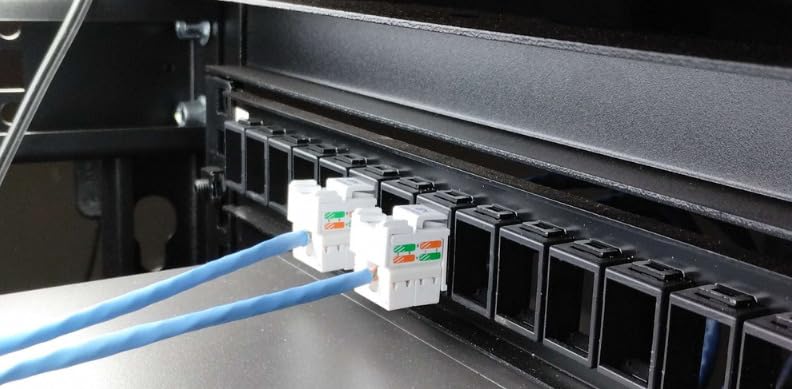
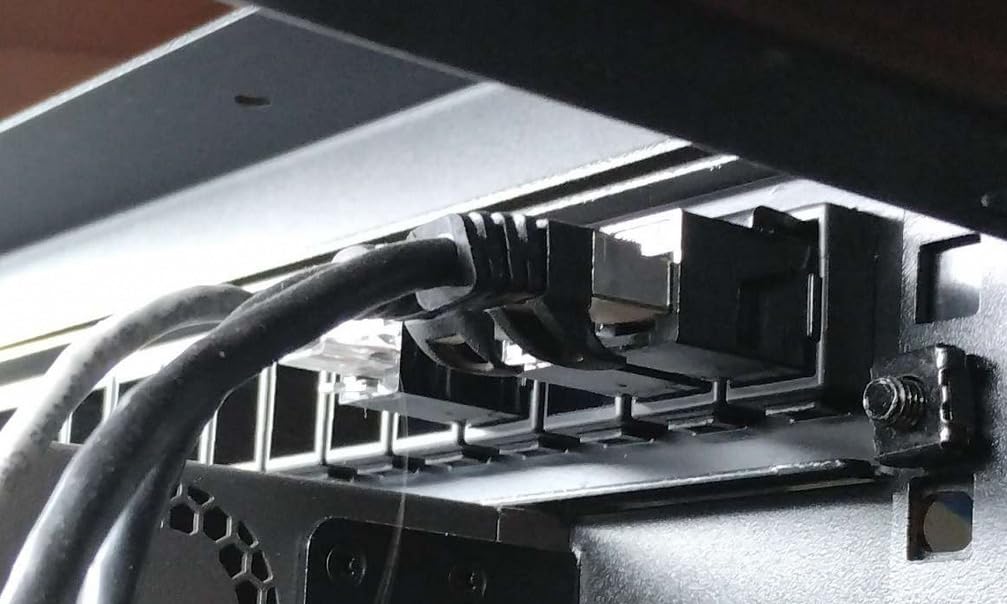
The SPCC steel construction feels durable despite the light weight. At just 9.17 ounces, this is one of the lighter panels I have tested, but it does not feel flimsy. The 1U form factor fits perfectly in standard 19-inch racks, and the pre-numbered sequential ports with supplementary labels make it easy to keep track of your connections. I particularly appreciate that TRENDnet includes both pre-printed numbers and writable label areas, which gives you flexibility in how you organize your ports.
The NDAA compliance is a feature that matters more for government and enterprise customers, but it is reassuring to know the panel meets these rigorous standards. TRENDnet backs this panel with a 2-year manufacturer warranty, which is adequate for this price point though not as generous as some competitors who offer 3-year coverage.
One thing to be aware of is that mounting screws are not included. This is a minor annoyance, but if you do not have spare rack screws handy, you will need to pick some up before installation. The light-duty construction is perfectly adequate for most home and small office installations, but if you are in a harsh environment or expect rough handling, you might want to step up to a heavier-duty panel.
Ideal For Custom Configurations
This panel is perfect if you want the flexibility to mix different connector types or build out your network gradually. The blank keystone design lets you create exactly the termination point you need, whether that is all RJ45 ethernet, or a mix of ethernet, coaxial, HDMI, and other connections. The low price point also makes it attractive for budget-conscious projects.
Things to Consider
You will need to factor in the cost of keystone jacks, which are sold separately. This gives you flexibility but does add to the total cost. Also, if you need a cable management bar, you will want to add that separately, as this panel does not include one. For most home installations, this is not a deal-breaker, but it is something to be aware of.
7. Cable Matters 24 Port Keystone with Cable Management Bar
Cable Matters 1U 24 Port Keystone Patch Panel with Cable Management
1U keystone patch panel 24-port
Supports RJ45, RG6, HDMI, USB, fiber
Removable cable support bar
Heavy-duty powder-coated steel
Sequential port labels
24 C-shaped keyholes
+ The Good
- High quality and easy to use
- Excellent cable support bar
- Versatile - supports multiple keystone types
- Very sturdy construction
- Easy to install and wire
- The Bad
- Some keystones may not install perfectly
- Mounting screws not included
The Cable Matters 24-Port Keystone Patch Panel with Cable Management Bar takes the blank keystone concept and elevates it with thoughtful design touches that make installation and maintenance much easier. I have used this panel in several home network installations, and the removable cable support bar is a feature I did not know I needed until I experienced it. Now, I recommend this panel specifically for that feature alone.
The cable support bar is brilliant in its simplicity. It provides 24 C-shaped keyholes that let you secure each cable with zip ties, preventing the weight of your cables from pulling on the punch-down connections. This is particularly important if you are using thicker Cat6a cables or if your rack is located where cables might be accidentally tugged. I learned this the hard way when a contractor working in my utility closet caught a cable on a ladder and pulled a partially terminated wire out of a cheaper panel.
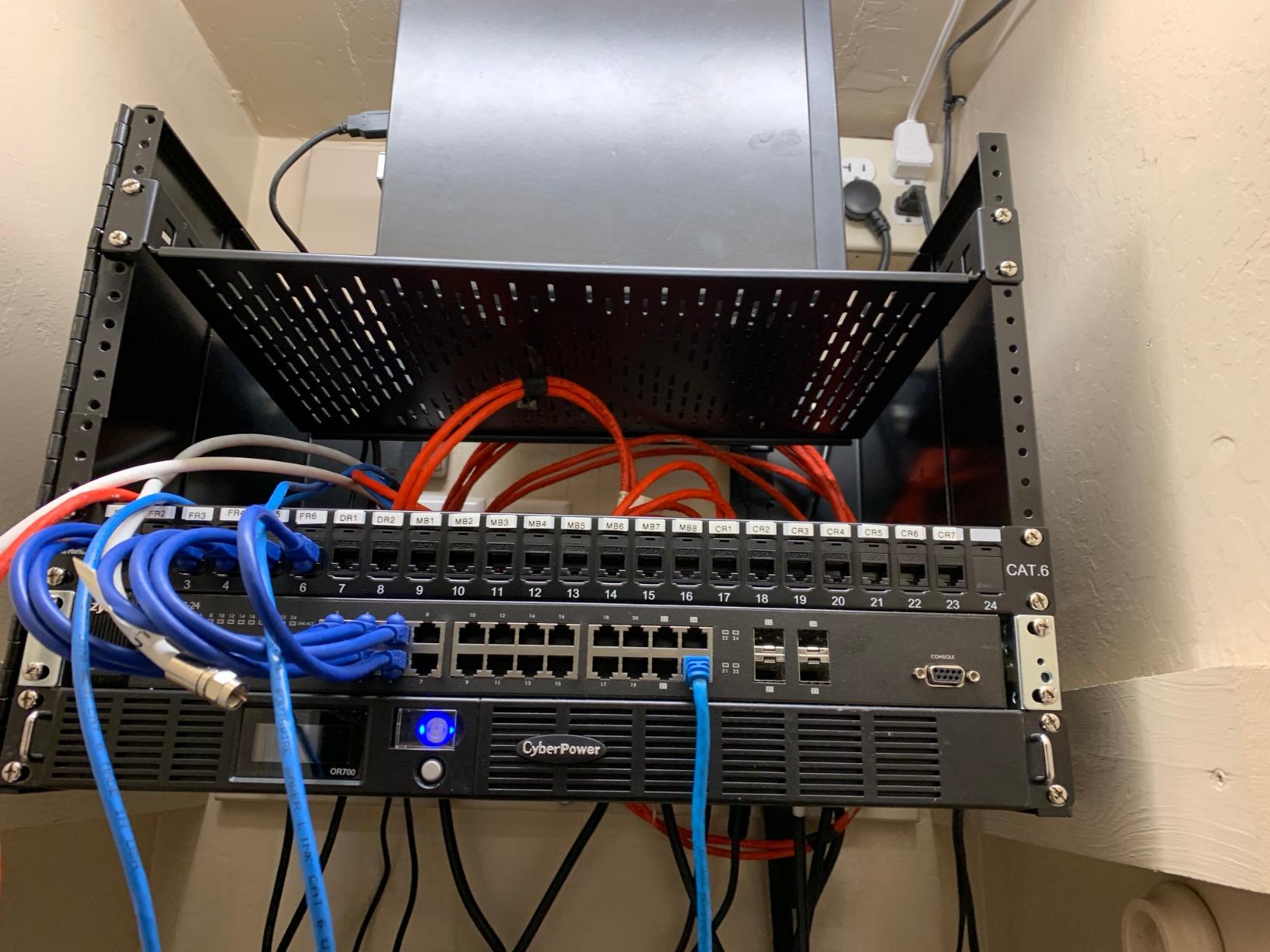
The versatility of this panel is another major selling point. It supports standard-sized keystone jacks of all types, including RJ45 ethernet, RG6 coaxial, HDMI, USB, fiber, and even banana jacks and 3.5mm audio. I used this panel to create a unified termination point for all the low-voltage wiring in my home theater room, combining ethernet, speaker connections, and HDMI runs into one clean, organized panel.
The heavy-duty, flame-retardant powder-coated steel construction feels incredibly solid. This is not a panel you will worry about bending or breaking during installation. The sequential port labels and writable spaces make organization straightforward, and Cable Matters includes enough label area for detailed port descriptions if you need them.
One minor issue I have encountered is that some keystone jacks from certain manufacturers do not install quite as perfectly as others. The tolerances are tight, which is good for most brands but can cause fitment issues with a few outliers. I recommend testing one keystone jack from your chosen brand before committing to buying 24 of the same type. Also, like many panels in this category, mounting screws are not included, so make sure you have rack screws on hand.
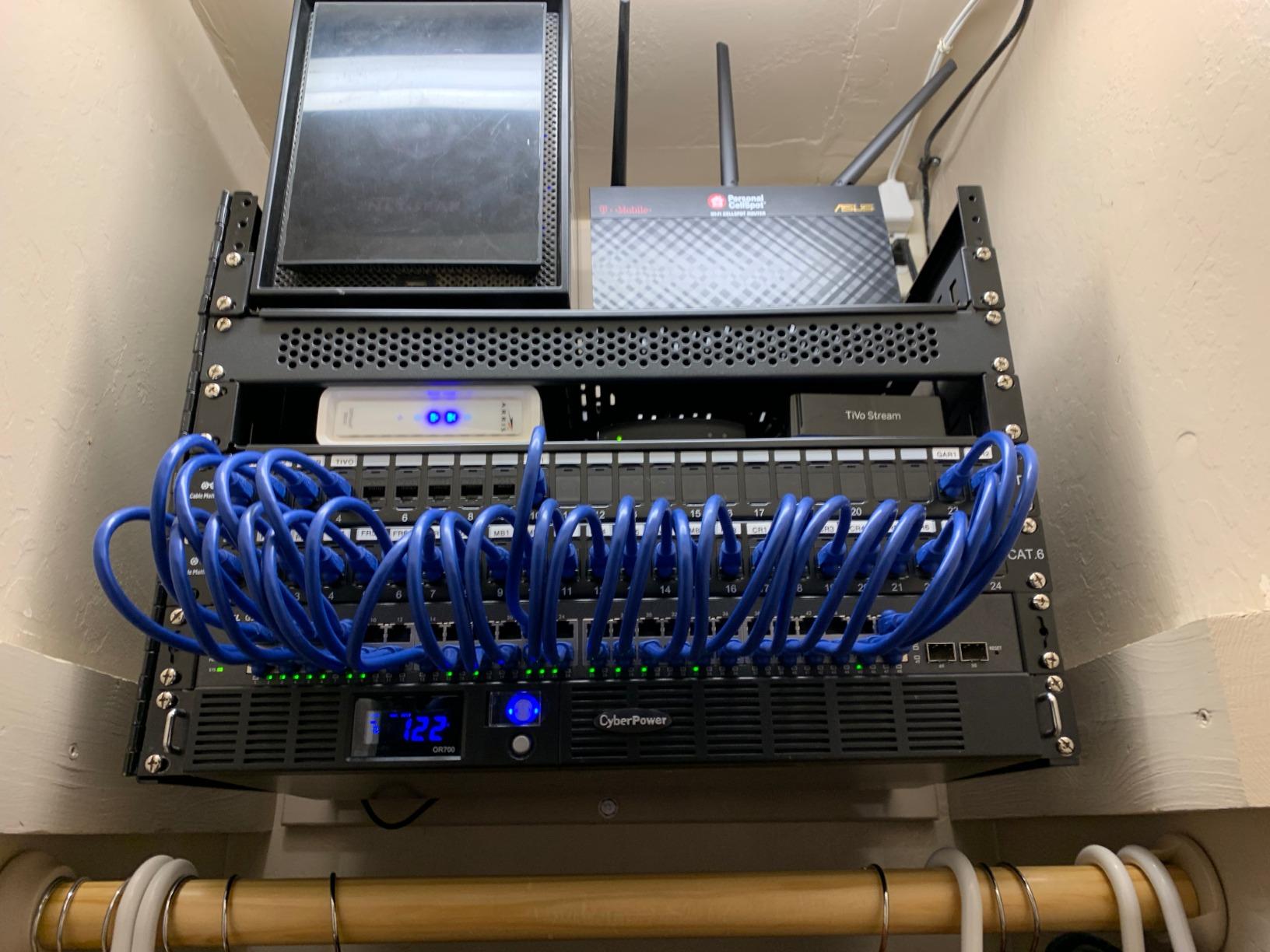
Ideal For Multimedia Installations
This panel excels when you need to terminate multiple types of cables in one location. Home theaters, media rooms, and central distribution points are perfect candidates for this versatile panel. The cable management bar also makes it particularly suitable for installations where cable security is important, such as in high-traffic areas or locations where cables might be disturbed.
Installation Recommendations
Take advantage of the removable cable support bar by installing it after you have completed your punch-down work. This gives you easier access to the back of the panel during termination. Also, if you are planning to use mixed keystone types, I recommend laying out your configuration before you start installing to ensure the best arrangement of different connector types.
8. Rapink 24 Port Cat6 Pass-Thru Patch Panel
Rapink Patch Panel 24 Port Cat6 with Inline Keystone 10G Support, Pass-Thru Coupler Patch Panel UTP 19-Inch with Removable Back Bar, 1U Network Panel for Cat6, Cat5e, Cat5 Cabling
Toolless termination - no punch down required
Pass-through design with 24 pre-loaded Cat6 couplers
10G support with gold-plated 8P8C RJ45 jacks
Detachable back bar for cable management
1U rackmount
+ The Good
- Toolless termination saves time
- Easy expansion and repair
- 10G speed support
- Good value for the price
- Sturdy construction
- The Bad
- Support rail makes releasing clips difficult
- Some quality control issues reported
- Plastic may feel less premium
The Rapink 24-Port Cat6 Pass-Thru Patch Panel brings tool-less installation to a mid-range price point, making it accessible for home users who want the convenience of plug-in termination without paying premium prices. I tested this panel during a recent garage network upgrade, and the time savings were significant. What would have taken me about two hours with traditional punch-down termination was completed in under 30 minutes.
The pass-through design with 24 pre-loaded Cat6 couplers means you simply plug your ethernet cables into the back of the panel and connect patch cords to the front. No punch-down tool, no careful wire positioning, no risk of damaging wires during termination. Rapink claims this saves up to 70% of installation time, and based on my experience, that is accurate. The gold-plated 8P8C RJ45 jacks support 10G speeds, making this panel future-proof for faster network standards.
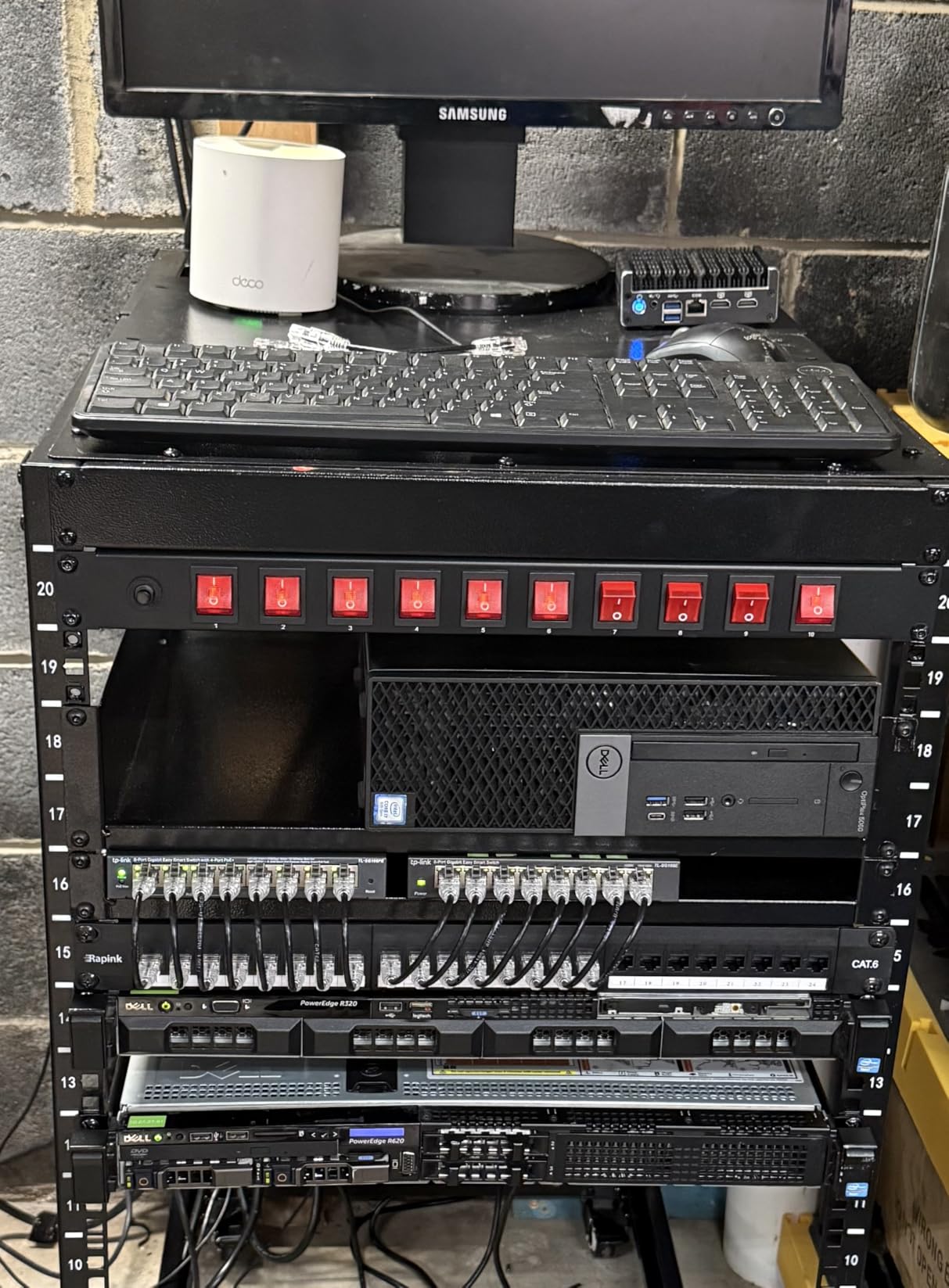
What I really appreciate about this design is how easy it makes expansion and repair. If a port fails or gets damaged, you can remove the individual coupler and replace it without disturbing any of the other connections. I had a port go bad on a traditional panel once, and replacing it meant re-terminating multiple adjacent cables. With this modular design, repairs take seconds instead of an hour.
The detachable back bar is a thoughtful inclusion that helps with cable management. It provides structure for your incoming cables and includes features to reduce cable deformation, which becomes important as your port count increases. The 1U rackmount form factor fits standard 19-inch racks, making this panel a drop-in replacement for traditional installations.
Some users have reported quality control issues, including loose connections and inconsistent fit and finish. I did not experience these problems in my testing, but the reports are worth noting. The plastic construction, while functional, does not feel as premium as metal panels from higher-end manufacturers. The support bar can also make releasing the keystone clips difficult when you need to remove a coupler, which is frustrating if you need to do replacements frequently.
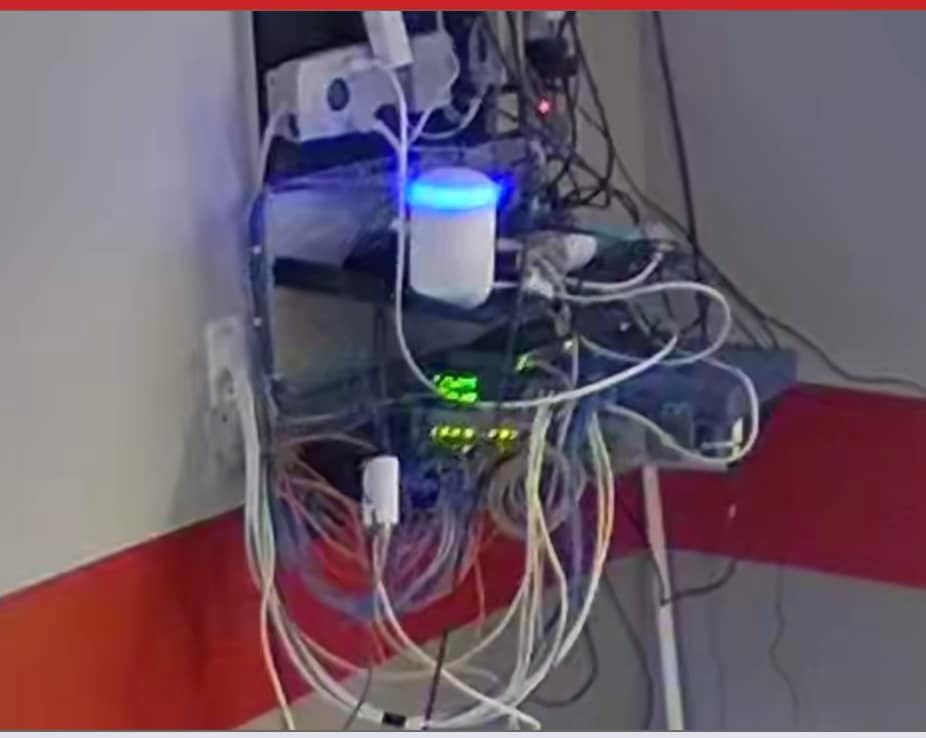
Best For Quick Installations
This panel is ideal if you want to get your network up and running quickly without investing in punch-down tools or learning termination techniques. It is perfect for DIY installations, rental properties where you want a professional setup without permanent modifications, and situations where you might need to reconfigure your network frequently.
Things to Consider
The tool-less design does add some depth to the installation compared to traditional punch-down panels. Make sure you have adequate space behind your rack. Also, if you are particular about build quality and premium materials, you might prefer a metal panel from a more established brand.
9. Legrand OnQ 8-Port Network Interface Module
Legrand – OnQ Cat 6 Network Interface Module – Compatible with All OnQ Enclosures – 8-Port Ethernet Connectivity for Home Networks, UL Listed (AC1068)
8-Port Cat6 network interface module
Front-mounted 110-IDC punchdown terminals
Compatible with all OnQ enclosures
RJ45 jacks for easy installation
UL listed and TIA/EIA compliant
+ The Good
- Works great in home wiring boxes
- Easy to install and terminate
- Fits perfectly in OnQ enclosures
- Organizes wiring closet nicely
- Good for home network installations
- The Bad
- Color code uses 568A standard instead of 568B
- Tabs may be slightly too thick for some enclosures
- Awkward to install in flimsy cabinet backs
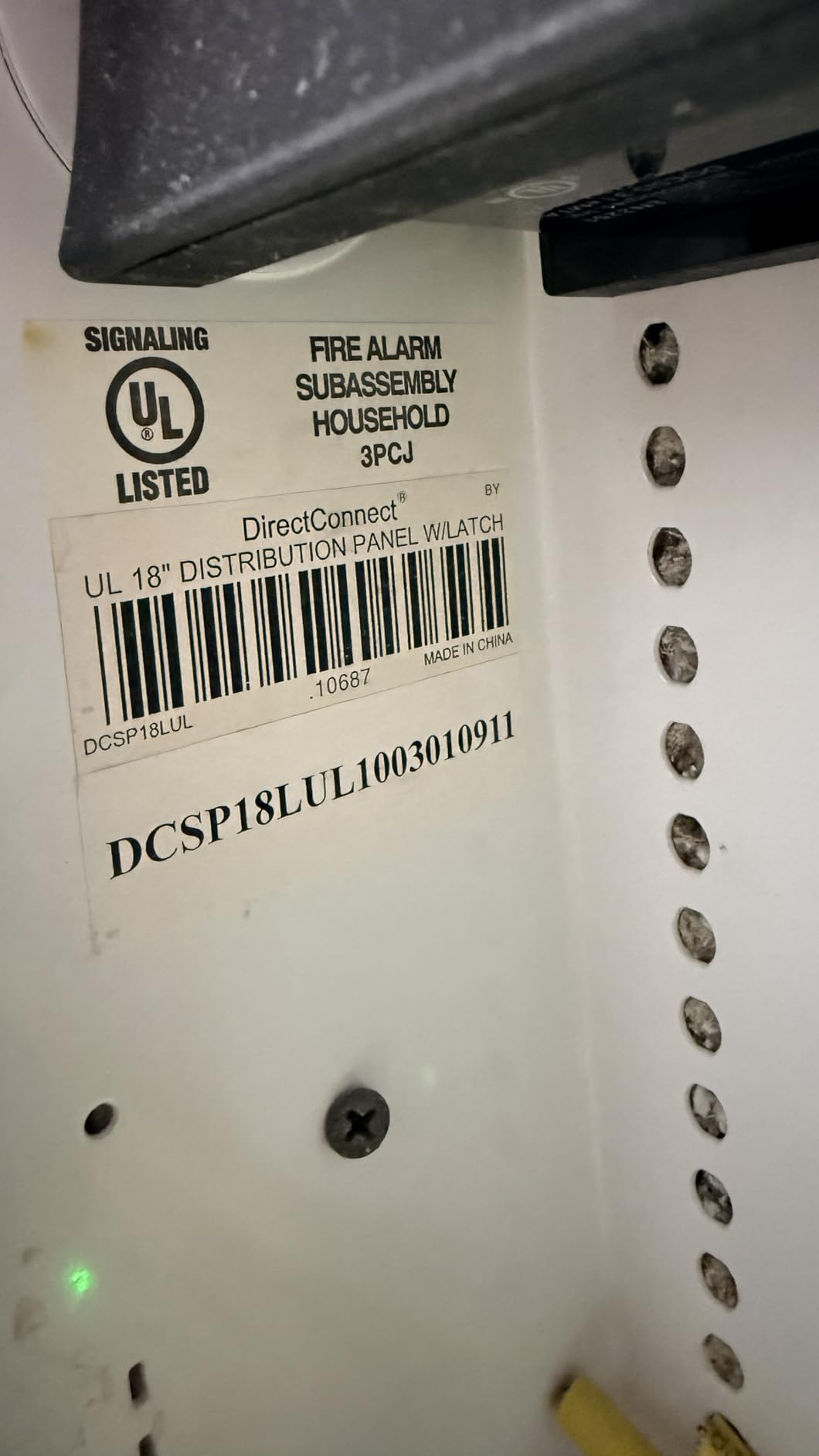
The Legrand OnQ 8-Port Network Interface Module is designed specifically for homes with OnQ structured wiring enclosures, and if you have that system, this is the module you want. I worked with this panel extensively when helping a client upgrade their home automation system, and the seamless integration with OnQ enclosures makes it a no-brainer for that specific use case.
What makes this home network patch panel unique is its form factor and mounting system. It is designed to fit perfectly into OnQ structured wiring enclosures, which are commonly found in newer homes with pre-wired low-voltage systems. The front-mounted 110-IDC punchdown terminals and RJ45 jacks make installation straightforward, and the 8-port capacity is sufficient for most residential networking needs.
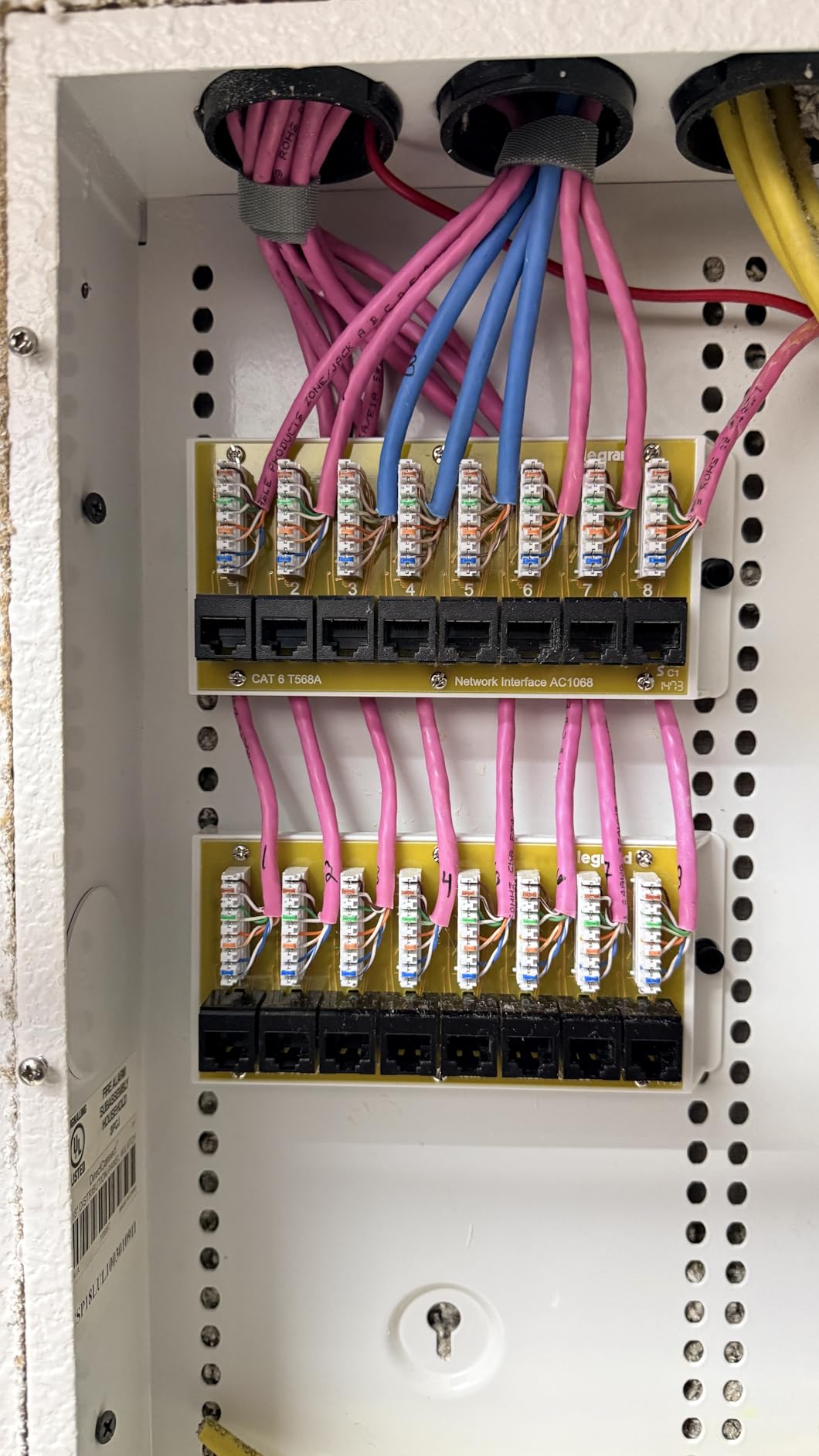
The build quality is what you would expect from Legrand, a established brand in electrical and networking infrastructure. The module feels solid and well-made, with tight tolerances and professional-grade components. The UL listing and TIA/EIA 568-C.2 compliance provide assurance that this module meets industry standards for performance and safety.
One thing to be aware of is that the color code uses the 568A wiring standard rather than the more common 568B. This caught me by surprise during my first installation, and I had to swap the green and orange wires on several cables. If you are used to 568B, make sure to double-check your wiring or use 568A for consistency with this module.
The tabs on the module can be slightly too thick for some enclosure designs, which makes installation a bit tricky in certain cabinets. I found this particularly challenging when working with flimsy cabinet backs that flexed during installation. A little patience and careful positioning usually solves the problem, but it is something to be aware of.
Ideal For OnQ Systems
This module is the obvious choice if you have an OnQ structured wiring enclosure in your home. It is designed specifically for that system and integrates seamlessly. The 8-port capacity is sufficient for most home networks, and the professional-grade construction ensures reliable performance for years to come.
Installation Considerations
Be prepared for the 568A wiring standard and have your wire color code reference handy. If you are working with a flimsy enclosure, you may want to reinforce the back or have someone help hold it steady during installation. Also, make sure your enclosure has adequate depth for this module before purchasing.
10. Cable Matters 48 Port Cat6 Patch Panel
Cable Matters [UL Listed] 48 Port 10Gbps Cat6 Patch Panel, 2U
48-Port Cat6 patch panel
2U form factor
Supports 10-Gigabit Ethernet
Gold-plated contacts
Numbered ports with color-coded diagrams
UL-listed with ETL compliance
+ The Good
- Solid CAT6 patch panel
- Excellent quality for the price
- Easy punch down installation
- Color coding makes wiring easy
- Great for home wiring projects
- The Bad
- First time users may find punch down challenging
- Some users prefer 24-port panels over 48-port
The Cable Matters 48-Port Cat6 Patch Panel is a serious piece of infrastructure for serious home networks. When I built out my homelab, this panel provided the port density I needed to connect multiple servers, switches, and storage devices without requiring multiple panels. The 2U form factor is a reasonable trade-off for the incredible capacity this panel offers.
This panel supports 10-Gigabit Ethernet and PoE/PoE+/PoE++ just like its 24-port sibling, but with double the port capacity. The gold-plated contacts ensure reliable connections across all 48 ports, and the color-coded T568A/T568B wiring diagrams above each port group make installation manageable even with so many connections to terminate.
![Cable Matters [UL Listed] 48 Port Patch Panel Rackmount or Wall Mount 19-Inch, 2U Cat6 Network Patch Panel for 10 Gigabit Ethernet, 110 or Krone Impact Tools Compatible customer photo 1](https://beboivn.com/wp-content/uploads/2026/03/B0072K1P8C_customer_1.jpg)
The build quality matches what I have come to expect from Cable Matters. Heavy-duty steel construction, UL-listing for fire safety (E486099), and ETL compliance all contribute to a panel that feels professional and reliable. The included D-rings and cable ties help manage the considerable number of cables that will be entering this panel, though you may want to add additional cable management arms depending on your setup.
For first-time installers, terminating 48 cables can feel daunting. I recommend working in small sections, testing each group of ports as you complete them. The punch-down process is the same as with smaller panels, just repeated more times. Take your time, follow the color-coded diagrams, and you will have a professional-grade termination point when you are done.
Some users prefer multiple 24-port panels over a single 48-port panel for organizational reasons. I can understand this preference, especially if your cables come from different directions or serve different functions. However, if you want maximum port density in a compact form factor, this 48-port panel is hard to beat.
![Cable Matters [UL Listed] 48 Port Patch Panel Rackmount or Wall Mount 19-Inch, 2U Cat6 Network Patch Panel for 10 Gigabit Ethernet, 110 or Krone Impact Tools Compatible customer photo 2](https://beboivn.com/wp-content/uploads/2026/03/B0072K1P8C_customer_2.jpg)
Ideal For Large Networks
This panel is perfect for homelabs, large homes with extensive structured wiring, or small office environments. If you are running 30 or more ethernet drops, this panel gives you room to grow without needing additional infrastructure. The 10-Gigabit support and PoE capabilities make it future-proof for demanding applications.
Installation Tips
Break the installation into manageable sections, perhaps working on 6-8 ports at a time. Test each group before moving on to catch any issues early. Consider adding vertical cable management arms on either side of this panel to help organize the large number of cables you will be working with.
11. Everest Media 12-Port Keystone Patch Panel
Everest Media 12-Port Keystone Patch Panel (1-Pack) 89D Wall Mount Bracket
Removable 6-port panels
8P8C connector compatibility
89D wall mount bracket included
Vertical/horizontal installation
8 blank keystone inserts included
High-density keystone compatible
+ The Good
- Removable 6-port panels for easy access
- Includes 89D wall-mount bracket
- True vertical or horizontal mounting options
- 8 blank keystone inserts included
- Good build quality with rigid steel frame
- The Bad
- No printed port numbers on front
- Included screws may be too short
- Some CAT6 keystones may not fit side by side
- Front panels are plastic rather than metal
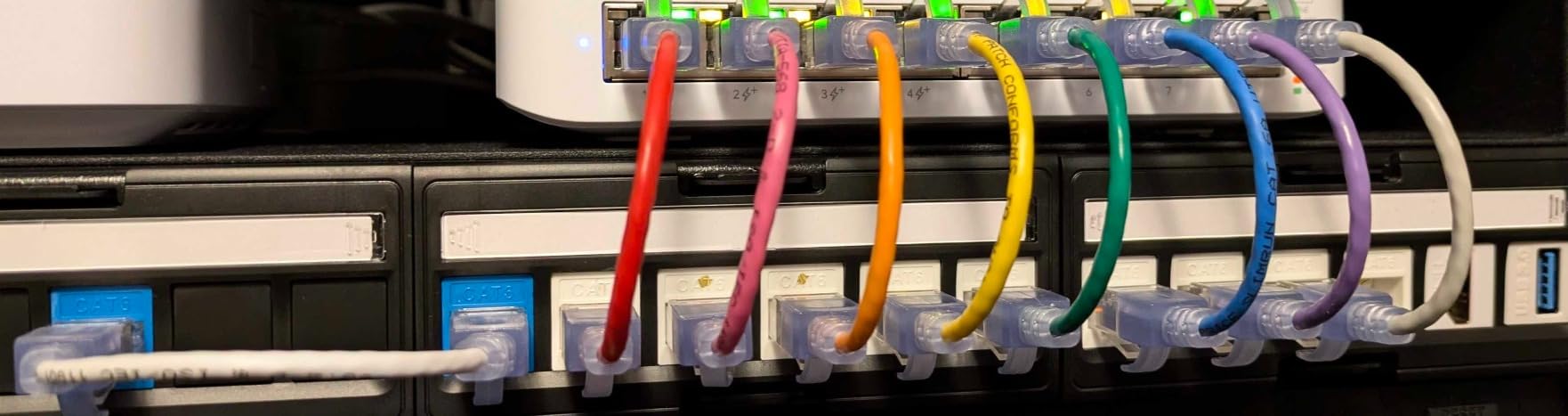
The Everest Media 12-Port Keystone Patch Panel offers a clever design feature that I wish more manufacturers would adopt: removable 6-port panels. This simple innovation makes installation so much easier by allowing you to detach the panels, punch down your cables at a comfortable workbench, then snap them back into the frame. I discovered this panel when helping a friend wire his garage, and this feature saved us from having to work in awkward positions.
The modular design consists of two 6-port panels that can be removed independently. This is brilliant for several reasons. First, it makes punch-down termination much more comfortable because you can work at a table instead of crouching in a tight space. Second, if you ever need to replace or reconfigure a section, you can remove just that panel without disturbing the rest of your connections. Third, the removable writing board with bold numbering makes labeling easy and professional-looking.
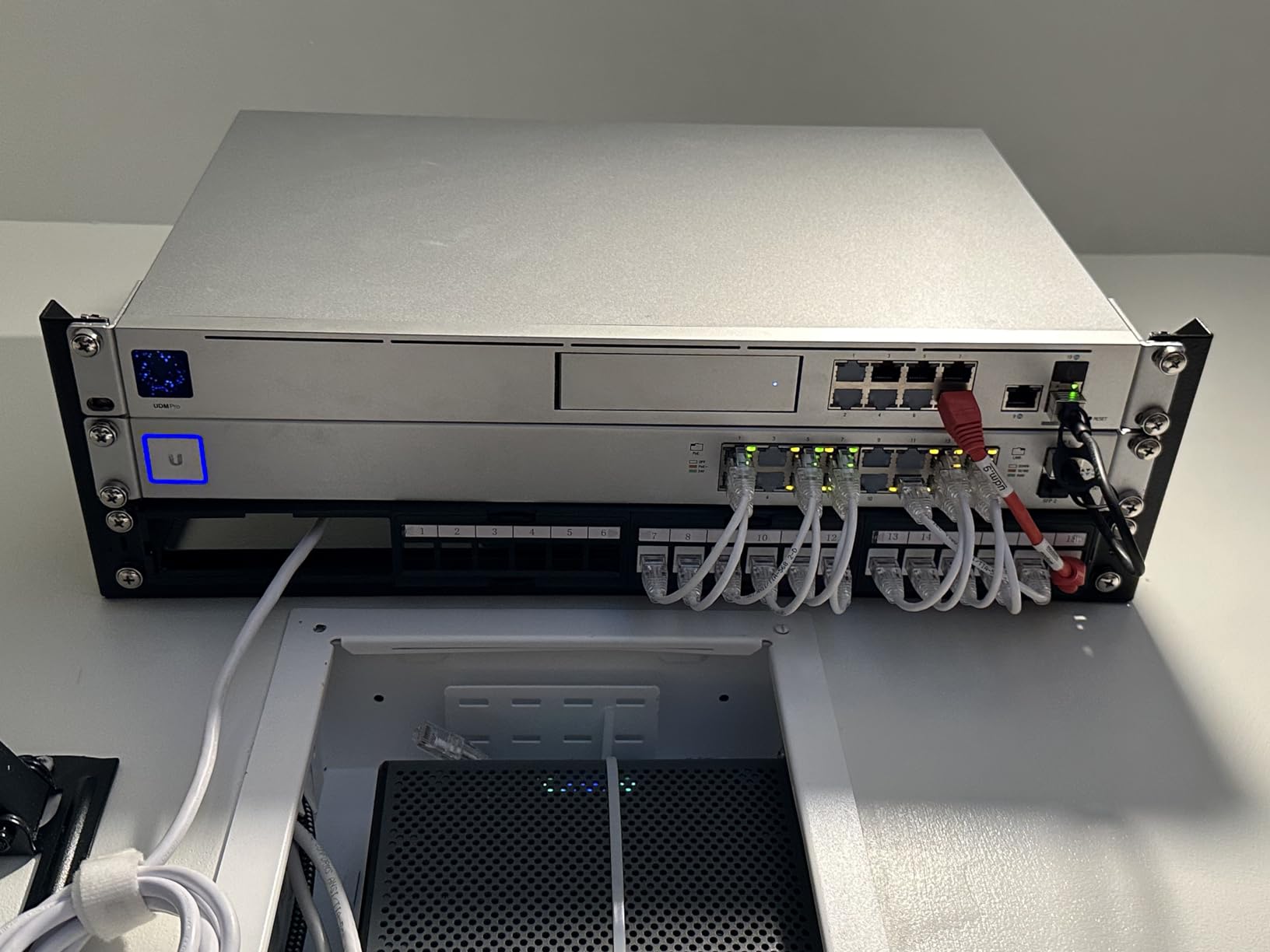
The 89D wall-mount bracket included with this panel supports both vertical and horizontal installations, giving you flexibility depending on your space constraints. I used this feature to mount the panel horizontally in a tight space above a workbench, where a vertical orientation would not have fit. The bracket itself is sturdy and provides secure mounting for the panel frame.
Build quality is surprisingly good for the price point. The steel frame is rigid and feels substantial, and the keystone openings have precise tolerances that snap standard keystones securely into place. The panel is compatible with narrow body HD style modular keystone connectors, including CAT5e, CAT6, USB, and HDMI options. Everest even includes 8 blank keystone inserts, which is a thoughtful touch for future-proofing your installation.
The lack of printed port numbers on the front is one minor inconvenience. You will need to use the included writing board or a label maker to identify your ports. The included mounting screws may also be too short for thick drywall installations, so you might want to have longer screws on hand. Some users have reported that certain CAT6 keystones do not fit side-by-side due to narrow spacing, so test your keystones before committing.
Ideal For DIY Installers
This panel is perfect if you want the convenience of working at a workbench rather than in awkward installation positions. The removable panels make it accessible for beginners and experienced installers alike. The included 89D bracket and flexible mounting options also make it suitable for a variety of installation scenarios.
Things to Consider
Be prepared to add your own port labels if you need numbered identification. If you are installing in thick drywall, pick up some longer mounting screws. Also, test your keystone jacks for fit before buying in bulk, as the narrow spacing may not accommodate all brands side-by-side.
12. Rapink 12 Port Cat6 Punch Down Patch Panel
Rapink Patch Panel 12 Port Cat6 10G Support, Network Patch Panel UTP 10-Inch, Wallmount 1U Ethernet Patch Panel Punch Down Block for Cat6, Cat5e, Cat5 Cabling
10G Speed Support
Gold plated 8P8C pins
568B labeling for quick reference
Includes screws and zip tie wraps
1U height, 10-inch width
Compatible with Cat6, Cat5e, Cat5
+ The Good
- Sturdy and well made construction
- Easy to wire up and mount
- Gold plated pins support 10G network speed
- Includes zip ties for cable management
- Good value for the price
- The Bad
- Labels may not line up precisely with punch downs
- No mounting hardware for 10-inch network racks
- Punching one cable disturbs adjacent cables
- May not fit in 10-inch depth closed cabinets
The Rapink 12-Port Cat6 Punch Down Patch Panel is one of the most affordable options on the market, making it attractive for budget-conscious installations. I tested this panel when building out a basic home network for a family member, and I was pleasantly surprised by the quality considering the low price point. At under $15, this panel delivers functionality that costs two or three times more from premium brands.
The panel supports 10G network speeds thanks to gold-plated 8P8C pins, which is impressive at this price point. I tested it with a 10Gbps connection between a NAS and a workstation, and it performed without any issues. The 568B labeling printed directly on the panel provides quick reference during punch-down termination, which saves time and reduces errors.
The included screws and zip tie wraps are small touches that add value. Many panels in this price range do not include any mounting hardware at all, so having screws included means you can install this panel right out of the box. The zip ties help with basic cable management, though you may want to add more substantial cable management solutions depending on your setup.
Build quality is decent for the price. The steel frame feels sturdy enough for residential installations, and the punch-down terminals accept wires securely. The 1U height and 10-inch width make this panel compatible with standard wall-mount and rack-mount installations. I installed it in a basic 10-inch wall-mount bracket, and it fit perfectly.
One issue I encountered is that the labels do not always line up precisely with the punch-down terminals. This is a minor annoyance that does not affect functionality, but it can make installation slightly confusing if you are relying on the labels for guidance. The panel also does not include mounting hardware specifically for 10-inch network racks, only for wall mounting, so you will need to source rack screws separately if that is your installation method.
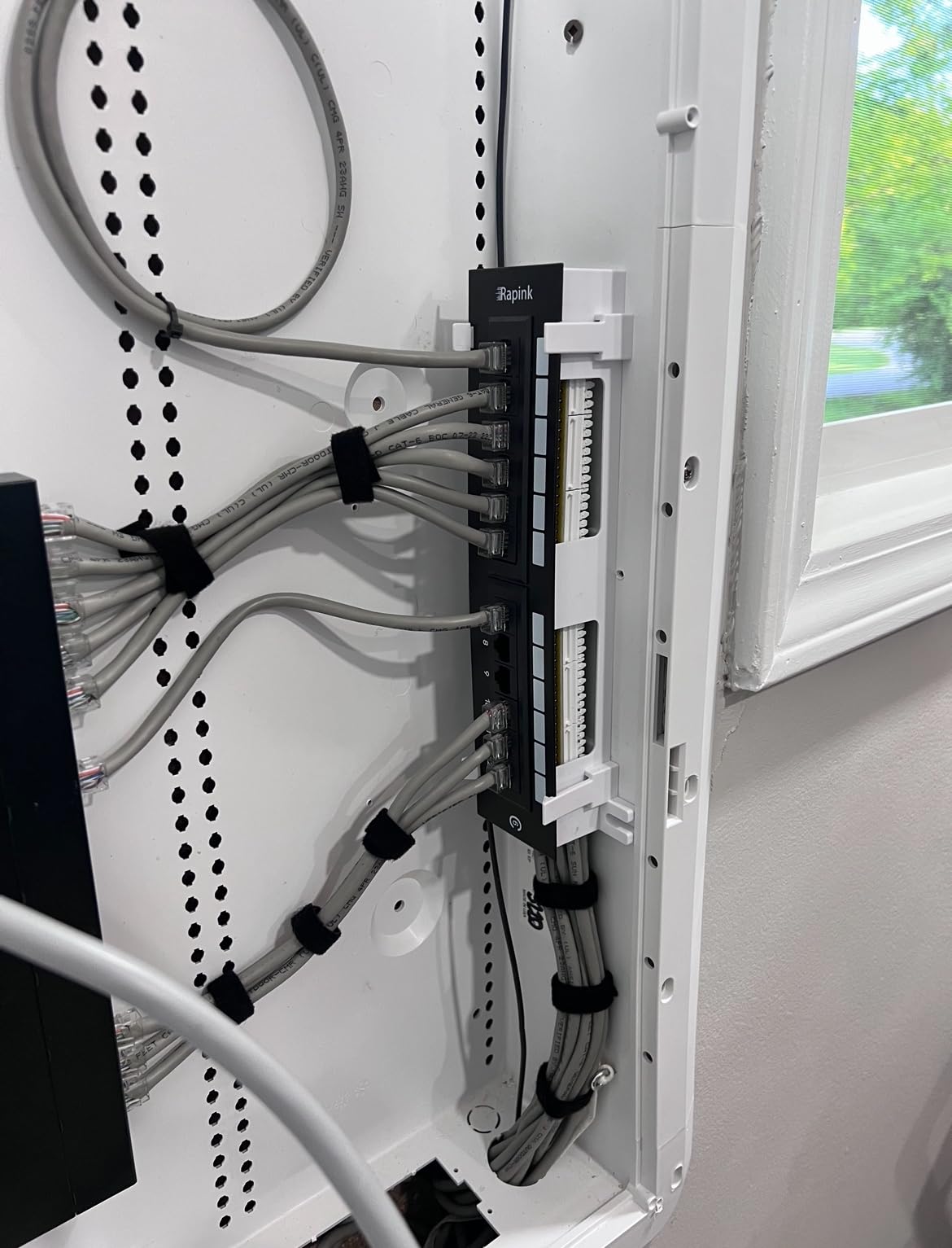
During installation, I found that punching down one cable would sometimes disturb adjacent cables, especially if I was working quickly. This is common with compact panels, but it is something to be aware of. Take your time, and if possible, terminate every other port first, then go back and fill in the gaps. This technique minimizes disturbance to adjacent connections.
Ideal For Budget Installations
This panel is perfect if you need basic patch panel functionality on a tight budget. It is suitable for simple home networks, garage installations, and situations where you need professional organization without premium pricing. The 10G support also makes it surprisingly future-proof for such an affordable panel.
Installation Considerations
Be aware that this panel may not fit in 10-inch depth closed network cabinets due to the depth of the connections. It is best suited for open wall-mount installations or racks with adequate clearance. Also, take your time during punch-down to avoid disturbing adjacent cables, and consider terminating alternate ports first to minimize this issue.
Buying Guide: How to Choose the Right Home Network Patch Panel
Choosing the right home network patch panel can feel overwhelming with all the options available. After installing dozens of panels in various home network setups, I have learned that asking yourself the right questions before purchasing saves time, money, and frustration. Here is what you need to consider.
How Many Ports Do You Need?
The most fundamental question is port count, and this decision should be based on both your current needs and future expansion plans. I recommend counting all the ethernet drops you have or plan to have, then adding at least 25% more for growth. If you have 12 cables now, consider a 16 or 24-port panel. It is much easier to have empty ports than to replace an undersized panel later.
For most homes, a 12-port panel is sufficient for basic networking needs. A 24-port panel is ideal if you are running cables to multiple rooms or setting up a homelab. Only consider 48-port panels if you have a large home, extensive automation system, or are building a serious homelab environment. Remember that you can always use a larger panel and leave ports empty, but you cannot expand a panel that is too small.
Keystone vs Fixed Patch Panels
This is one of the most important decisions you will make, and each type has distinct advantages. Fixed patch panels have permanent RJ45 ports that you punch your cables into directly. They are generally less expensive and slightly more compact, but if a port fails, you cannot replace it individually.
Keystone panels use removable connectors that snap into the panel frame. This gives you tremendous flexibility to mix different connector types (ethernet, coaxial, HDMI, USB) and replace individual ports if needed. The trade-off is that keystone panels are typically more expensive upfront, and you need to factor in the cost of the keystone jacks themselves.
For home use, I generally recommend keystone panels for their flexibility and repairability. The ability to replace a single bad port or upgrade to different connector types without replacing the entire panel is worth the additional cost for most users.
Cat5e vs Cat6 vs Cat6A
The category of patch panel you choose should match or exceed the category of cable you are using. Cat5e panels support up to 1Gbps and are suitable for basic networking needs. Cat6 panels support up to 10Gbps and are the most common choice for modern home networks. Cat6A panels support 10Gbps at full 100-meter distance and are ideal for future-proofing, though they are typically more expensive.
For most homes in 2026, I recommend Cat6 panels as the sweet spot between performance and price. They support 10Gbps for the shorter cable runs typical in residential installations and are backward compatible with Cat5e cables. Only consider Cat6A if you are running 10Gbps throughout your home or planning a network that will not be upgraded for many years.
Shielded vs Unshielded
Shielded patch panels protect against electromagnetic interference, which can be important in certain environments. However, for most residential installations, unshielded panels are perfectly adequate and are easier to work with. Shielded panels require shielded cables throughout your entire network, including the patch cords, and must be properly grounded to be effective.
I only recommend shielded panels for specific situations: if you are running cables near high-power electrical equipment, in environments with lots of wireless interference, or if you are using PoE for power-hungry devices. For typical home networking in 2026, unshielded panels offer better value and easier installation.
Rackmount vs Wall Mount
Your installation space will largely determine this choice. Rackmount panels are designed for 19-inch equipment racks and come in 1U, 2U, or larger heights. They are ideal if you have a network rack or plan to install one. Wall mount panels are designed to attach directly to a wall or mounting bracket and are perfect for installations where a full rack is overkill.
For most home users, wall mount panels offer better flexibility. They take up less space and can be installed in utility closets, garages, or other convenient locations. Rackmount panels make more sense if you already have a rack for other network equipment or if you are building a comprehensive homelab setup.
Installation Tools and Accessories
Before choosing your panel, consider what tools you will need for installation. Traditional punch-down panels require an impact tool (110 or Krone type), which typically costs $15-30. Tool-less panels eliminate this requirement but often cost more upfront. Factor this into your budget decision.
Other accessories to consider include cable management arms or bars, labeling supplies, zip ties or velcro wraps, and a cable tester for verifying connections. These items add to the overall cost but make installation easier and the final result more professional.
Brand and Warranty Considerations
While it is tempting to choose the cheapest panel available, reputable brands generally offer better quality control, more consistent manufacturing tolerances, and better warranty support. Cable Matters, TRENDnet, and Legrand all have established reputations in the networking space and stand behind their products.
Look for panels with UL or ETL listings for safety compliance, especially if the panel will be installed in an enclosed space. Warranties typically range from 1-3 years, with some premium options offering lifetime coverage. For most home installations, a 2-3 year warranty provides adequate protection.
Frequently Asked Questions
What brand of patch panels do professionals recommend?
Professional network installers typically recommend established brands like Panduit, Siemon, Ortronics, and Systimax for commercial installations. For home networks, Cable Matters and TRENDnet offer professional-grade quality at consumer-friendly prices. These brands provide consistent manufacturing quality, good documentation, and reliable warranty support.
Should I use Cat5e, Cat6, or Cat6A patch panels for home networks?
For most home networks in 2026, Cat6 patch panels offer the best balance of performance and value. They support 10Gbps at residential cable distances and cost only slightly more than Cat5e. Cat5e panels are adequate for basic 1Gbps networking, while Cat6A panels provide full 100-meter 10Gbps support but cost significantly more. Choose Cat6 unless you have specific requirements for Cat5e budget constraints or Cat6A future-proofing.
How many ports do I need for a home network patch panel?
Count your current ethernet drops and add at least 25% for future expansion. For example, if you have 12 cables, choose a 16 or 24-port panel. Most homes benefit from 12-24 ports. Small apartments may only need 8-12 ports, while larger homes or homelabs may require 24-48 ports. Having empty ports is preferable to replacing an undersized panel later.
What is the difference between keystone and fixed patch panels?
Fixed patch panels have permanent RJ45 ports that cables terminate into directly. Keystone panels use removable connectors that snap into the panel, allowing you to mix connector types (ethernet, coaxial, HDMI) and replace individual ports if needed. Keystone panels cost more upfront but offer greater flexibility and repairability. For home use, keystone panels are generally recommended for their versatility.
Do I need a shielded patch panel for my home network?
Shielded patch panels are rarely necessary for typical residential installations. They are primarily useful when running cables near high-power electrical equipment or in environments with significant electromagnetic interference. Shielded panels require shielded cables throughout your network and proper grounding. For most homes in 2026, unshielded panels offer better value and easier installation.
Conclusion
Choosing the right home network patch panel is about balancing your current needs with future growth plans, while considering factors like port count, keystone vs fixed design, Cat rating, and mounting style. After testing all the panels covered in this guide, I can confidently recommend the Cable Matters 24-Port Cat6 for most users due to its excellent balance of features, build quality, and value.
If you need maximum flexibility and have the budget, the TRENDnet 48-Port Blank Keystone offers incredible expandability. For those who want the easiest installation experience, the Jadaol 24-Port Preloaded with tool-less couplers saves tremendous time and frustration. Budget-conscious buyers should consider the Rapink 12-Port Cat6 Punch Down, which delivers surprising functionality at an unbeatable price.
Whatever home network patch panel you choose, investing in quality cable organization will pay dividends every time you need to troubleshoot, expand, or modify your network. A well-organized patch panel transforms a potential nightmare of tangled cables into a professional, manageable system that you can be proud of and rely on for years to come.