
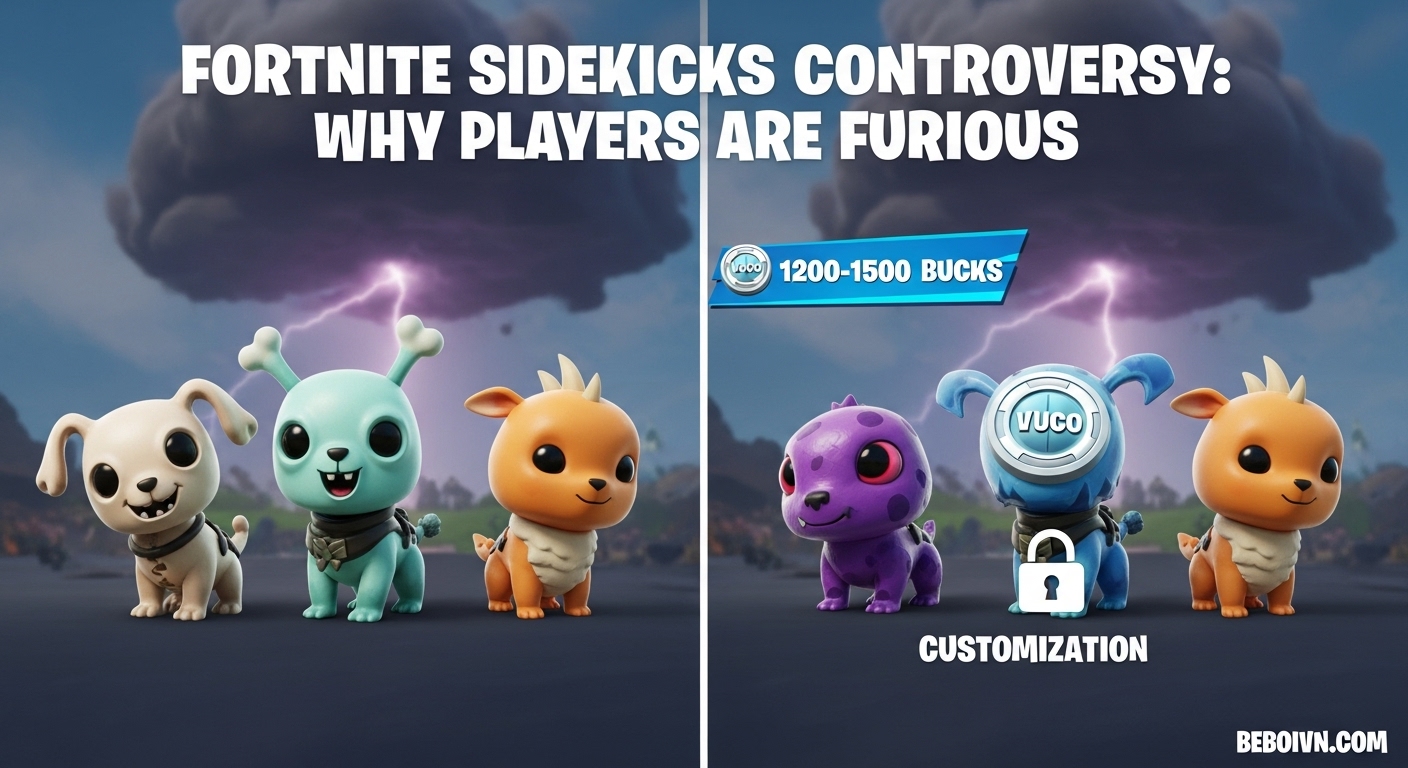
Fortnite players have a major problem with Sidekicks, and it’s not just about the price—it’s about what represents for the future of the game they love. When Epic Games announced these new companion pets that would follow players around and react to the world, the community was initially excited. After all, who wouldn’t want a cute companion tagging along during matches? But that excitement quickly turned to outrage when players discovered the fine print: these aren’t just expensive cosmetics—they’re what many are calling the most transparently greedy microtransaction in Fortnite’s history.
What Are Fortnite Sidekicks?
Before diving into the controversy, let’s understand what Sidekicks actually are. Unlike previous Fortnite pets that were essentially just backpack bling, Sidekicks are interactive companions that can run alongside your character, react to the environment, and provide visual feedback during gameplay. They’re visible to your teammates but invisible to enemies, so they don’t affect competitive balance.
The first Sidekick, Peels (a Peely-inspired puppy), will be available through the Simpsons Battle Pass starting November 1st. Additional Sidekicks including Bonesy, Spike, Lil’ Raptor, Cuddle Team Jr., and Flopsticks will hit the Item Shop on November 7th. Epic has even promised that players who already own the Bonesy Back Bling will receive the Bonesy Sidekick for free—a small consolation in an otherwise controversial rollout.
The Pricing Problem: When Pets Cost More Than Skins
The first red flag for players was the pricing structure. Sidekicks aren’t cheap cosmetic items—they’re premium-priced companions that cost as much as or more than many character skins:
- Bonesy: 1,200 V-Bucks
- Spike: 1,200 V-Bucks
- Lil’ Raptor: 1,200 V-Bucks
- Cuddle Team Jr.: 1,500 V-Bucks
- Flopsticks: 1,500 V-Bucks
- Peels: Battle Pass (effectively 1,000 V-Bucks value)
To put this in perspective, most Fortnite skins range from 800 to 2,000 V-Bucks, meaning these pets are priced at the premium end of the spectrum. Players are asking a simple question: why should a companion pet cost as much as a detailed character skin with multiple edit styles and animations?
“This is crazy,” one player commented on Reddit. “The sidekicks cost more than a normal Fortnite skin, and they want us to pay multiple times for different colors?”
The Permanent Customization Trap: The Real Breaking Point
While the high prices are bad enough, the aspect that has truly enraged the Fortnite community is the permanent customization system. Here’s how it works:
When you purchase a Sidekick, you can customize its appearance—things like fur color, ear shape, and eye color. However, these choices are permanent. Once you lock in your customization options, you cannot change them. If you want your Sidekick to have a different appearance later, you need to purchase the same Sidekick again at full price.
As the official Player Support documentation states: “Yes, you can purchase a Sidekick multiple times and give them different Appearances. However, each Sidekick customization you own in your Locker must be unique. Duplicate Appearances are not allowed.”
This means if you want a blue Bonesy and a red Bonesy, you’re buying Bonesy twice. Want to change your mind about that ear shape? That’s another full-price purchase. It’s a system designed to maximize revenue at the expense of player satisfaction.
Community Backlash: “This Isn’t Roblox Monetization”
The reaction from the Fortnite community has been swift and overwhelmingly negative. Players have taken to Reddit, Twitter, and YouTube to express their frustration, with many calling this Epic’s greediest move yet.
“What, are we doing Roblox monetization now?” asked the top post on the Fortnite subreddit, which quickly accumulated hundreds of comments. Others have compared it to the controversial Maya skin system from Chapter 2 Season 2, which also required multiple purchases for different variations.
YouTube creators have been particularly vocal, with titles like “Fortnite Sidekicks May Be The Worst Microtransaction Ever” (Forbes) and “COMMUNITY NOT HAPPY ABOUT FORTNITE SIDEKICKS” dominating gaming content. The sentiment is clear: players feel taken advantage of.
Why This Feels Different: A Pattern of Problematic Pricing
What makes the Sidekicks controversy particularly noteworthy is that it follows a troubling pattern. Earlier in 2024, Epic introduced “Kicks”—cosmetic shoes that were also met with community backlash over their high prices and lack of customization options. Despite widespread criticism, Epic never adjusted the pricing or responded meaningfully to player feedback.
Now, with Sidekicks, players see history repeating itself but with even more aggressive monetization. The permanent customization lock feels like a deliberate escalation of anti-consumer practices rather than an oversight.
“Epic saw how excited players were for pets and figured it was a great opportunity to rip off its playerbase,” wrote one gaming journalist. “It’s so transparently greedy it’s almost laughable.”
The Technical Side: What Sidekicks Actually Do
To be fair, Sidekicks do offer some unique features that previous pets didn’t have:
- Interactive Behavior: Sidekicks react to the world around them, providing visual feedback during gameplay
- Sidekick Points: Having a Sidekick equipped earns you Sidekick Points, which can be exchanged for additional customization options
- Free Renaming: Unlike appearance customization, you can rename your Sidekick as many times as you want for free
- Cross-Game Compatibility: Sidekicks work in Battle Royale, LEGO Fortnite, and other Fortnite experiences
However, these features don’t justify the pricing model or the permanent customization lock, especially when compared to how other games handle similar cosmetic systems.
The Bigger Picture: What This Means for Fortnite’s Future
The Sidekicks controversy raises important questions about Fortnite’s direction and Epic’s relationship with its player base. For years, Fortnite has been praised for its fair approach to monetization—offering a free-to-play experience where cosmetic purchases were optional and reasonably priced.
But recent moves like Kicks and now Sidekicks suggest a shift toward more aggressive monetization strategies. Players worry that this is just the beginning, and that future content will follow similar anti-consumer patterns.
“It really sucks with the Sidekicks situation, but I’m more worried about Epic adding vbucks purchases in games that non-Epic people make,” one concerned player noted, highlighting fears about the broader implications.
What Could Epic Do to Fix This?
The community has several suggestions for how Epic could address this controversy:
- Lower Prices: Reduce Sidekick costs to more reasonable levels (800-1,000 V-Bucks)
- Allow Appearance Changes: Let players customize their Sidekicks multiple times without repurchasing
- Bundle Options: Offer multiple appearance options in a single purchase
- Improve Battle Pass Value: Make the Battle Pass Sidekick more appealing to justify the cost
- Community Communication: Actually respond to player feedback this time
The Bottom Line: Is This Really That Bad?
Some defenders argue that since Sidekicks are purely cosmetic and don’t affect gameplay, the controversy is overblown. “It’s a cosmetic that isn’t required,” one player pointed out. “If you don’t like the price, don’t buy it.”
But this misses the point. The issue isn’t just about individual purchasing decisions—it’s about the direction Fortnite is heading and the relationship between Epic and its community. When a company that built its success on player goodwill starts implementing what many consider predatory monetization practices, it erodes trust and damages the long-term health of the game.
As one Forbes writer put it, “Fortnite’s new sidekicks may be the most transparently greedy microtransaction to hit the video game market in some time.”
What Players Can Do
If you’re frustrated by the Sidekicks situation, here are some constructive steps you can take:
- Vote With Your Wallet: The most powerful message you can send is not purchasing Sidekicks at their current price point
- Provide Feedback: Use official channels to let Epic know your thoughts on the pricing and customization system
- Support Alternative Content: Focus on and promote other Fortnite content that you feel is fairly priced
- Stay Informed: Keep up with developments and be ready to provide feedback on future cosmetic releases
Looking Ahead: Will Epic Listen This Time?
History suggests that Epic may not make changes based on community feedback, as they didn’t adjust the pricing for Kicks despite widespread criticism. However, the backlash against Sidekicks seems even more intense, and if sales are poor, Epic may be forced to reconsider their approach.
The next few weeks will be crucial. If Sidekicks sell poorly despite the hype, Epic might finally get the message that players won’t accept what they perceive as exploitative monetization practices. On the other hand, if players reluctantly purchase them anyway, it could signal to Epic that this approach is acceptable.
Conclusion: A Critical Moment for Fortnite
Fortnite players have a major problem with Sidekicks, and it’s about more than just expensive pets. It’s about the future of a game that has defined a generation of gaming culture. The controversy represents a critical moment where Epic must decide whether to prioritize short-term revenue or long-term player trust.
As the community waits to see how this plays out, one thing is clear: Fortnite players are paying attention, and they’re not happy with what they see. The question now is whether Epic will listen—or if this is just the new normal for Fortnite’s monetization strategy.
What do you think about the Sidekicks controversy? Are the prices justified, or is this a step too far in Fortnite’s monetization? Let us know in the comments below.