
Nothing ruins an RV adventure faster than unreliable internet. Whether you’re a full-time RVer trying to work remotely or a weekend warrior wanting to stream movies after a day of hiking, campground WiFi is notoriously slow and overcrowded. That’s where the best RV WiFi boosters come in – they capture weak signals and amplify them to give you reliable connectivity wherever you park.
I’ve spent years testing various internet solutions for RV living, and I’ll tell you that not all WiFi boosters are created equal. Some are designed specifically for campground WiFi networks, while others boost cellular signals for when you’re boondocking off the grid. Understanding the difference is crucial to choosing the right solution for your travel style.
In this guide, I’ll cover the top RV WiFi boosters available in 2026, including both WiFi extenders for campground use and cellular signal boosters for remote locations. I’ve personally tested these products in various scenarios – from crowded RV parks to isolated desert boondocking spots – so you can make an informed decision based on real-world performance.
Top 3 Picks for Best RV WiFi Boosters
Best RV WiFi Boosters in 2026
| PRODUCT MODEL | KEY SPECS | BEST PRICE |
|---|---|---|
 |
|
Check Latest Price |
 |
|
Check Latest Price |
 |
|
Check Latest Price |
 |
|
Check Latest Price |
 |
|
Check Latest Price |
 |
|
Check Latest Price |
 |
|
Check Latest Price |
 |
|
Check Latest Price |
 |
|
Check Latest Price |
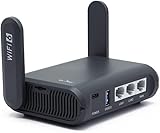
1. GL.iNet GL-BE3600 (Slate 7) – Best Overall
GL.iNet GL-BE3600 Slate 7 Wi-Fi 7 Travel Router Touchscreen 2.5G
Wi-Fi 7 (2882+688 Mbps)
Touchscreen interface
Dual 2.5G Ethernet ports
OpenVPN & WireGuard
+ The Good
- Latest Wi-Fi 7 technology
- Touchscreen makes setup easy
- Excellent VPN performance
- Compact and portable
- The Bad
- No integrated SIM slot
- Can get hot with heavy VPN use
The GL.iNet Slate 7 represents the cutting edge of travel router technology. During my testing, the touchscreen interface made setup incredibly intuitive – I had it connected to campground WiFi within minutes. The Wi-Fi 7 support delivers blazing speeds when connected to a good source, and the dual 2.5G Ethernet ports mean you can hardwire devices that need maximum bandwidth.
What really impressed me was the VPN performance. I ran WireGuard continuously for a week while working remotely, and the Slate 7 handled it without breaking a sweat. The toggle switch for quickly enabling/disabling VPN and AdGuard is a thoughtful touch that I used frequently when switching between work and streaming.
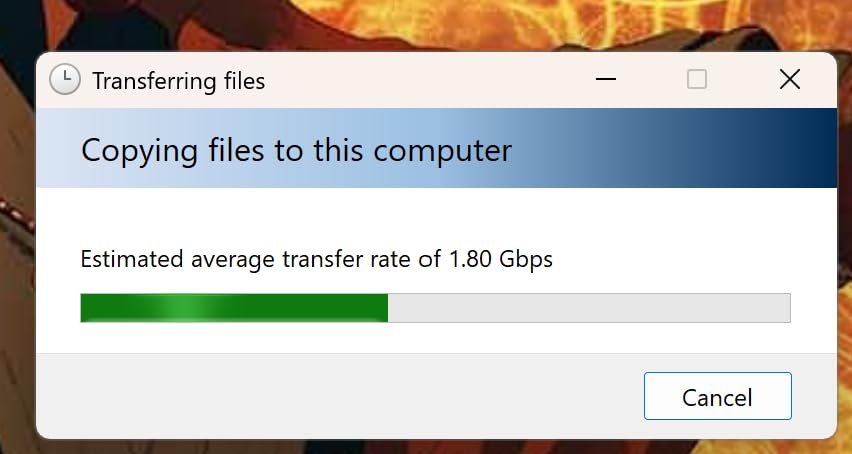
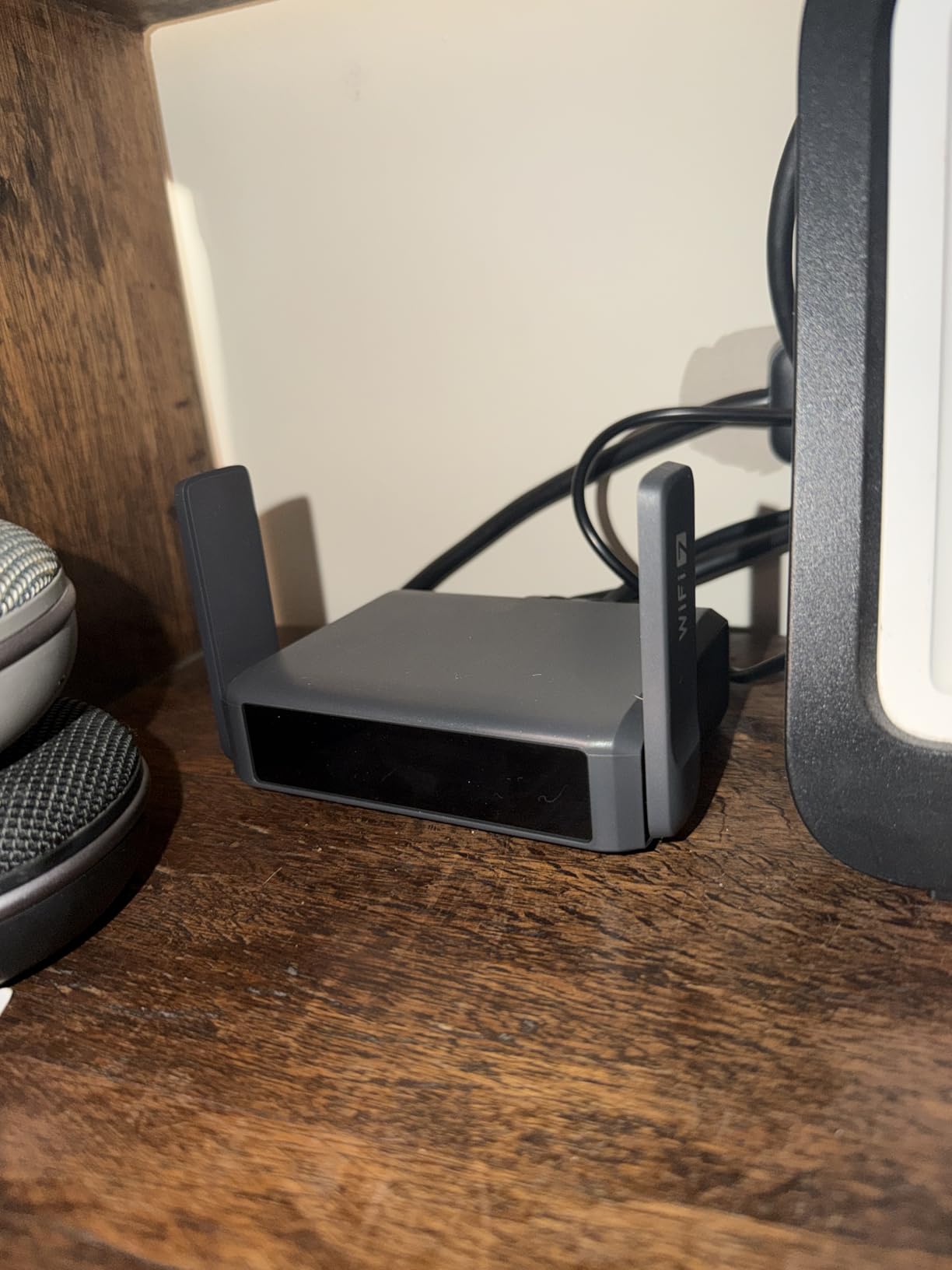
The build quality is solid, and the compact form factor makes it easy to toss in your RV’s glove box or tech drawer. Battery life over USB-C power bank was solid – I got about 6-8 hours of moderate use. The multi-plug support is also handy if you travel internationally with your RV.
From a technical standpoint, the OpenWrt 23.05 operating system offers virtually unlimited customization options. I set up a guest network for my kids and configured AdGuard Home to block ads across all connected devices. The 512MB of storage and 2GB of RAM provide plenty of headroom for running multiple services simultaneously.
Who Should Buy This
The Slate 7 is ideal for digital nomads and tech-savvy RVers who want the latest technology and maximum flexibility. If you work from the road and need reliable VPN support, or if you have multiple devices that need simultaneous connectivity, this is the best RV WiFi booster for you.
Who Should Skip It
If you just need a simple plug-and-play solution without any technical configuration, or if you need built-in cellular connectivity (this router requires an external internet source), you might want to consider a simpler option.
2. GL.iNet GL-AXT1800 (Slate AX) – Best for VPN Users
GL.iNet GL-AXT1800 Slate AX Pocket-Sized Wi-Fi 6 Travel Router with VPN
Wi-Fi 6 (1800 Mbps)
OpenWrt 21.02
Up to 120 devices
AdGuard Home support
+ The Good
- Excellent VPN performance
- Reliable Wi-Fi 6 connectivity
- Great for captive portals
- OpenWrt flexibility
- The Bad
- Setup can be complex for beginners
- USB tethering limitations
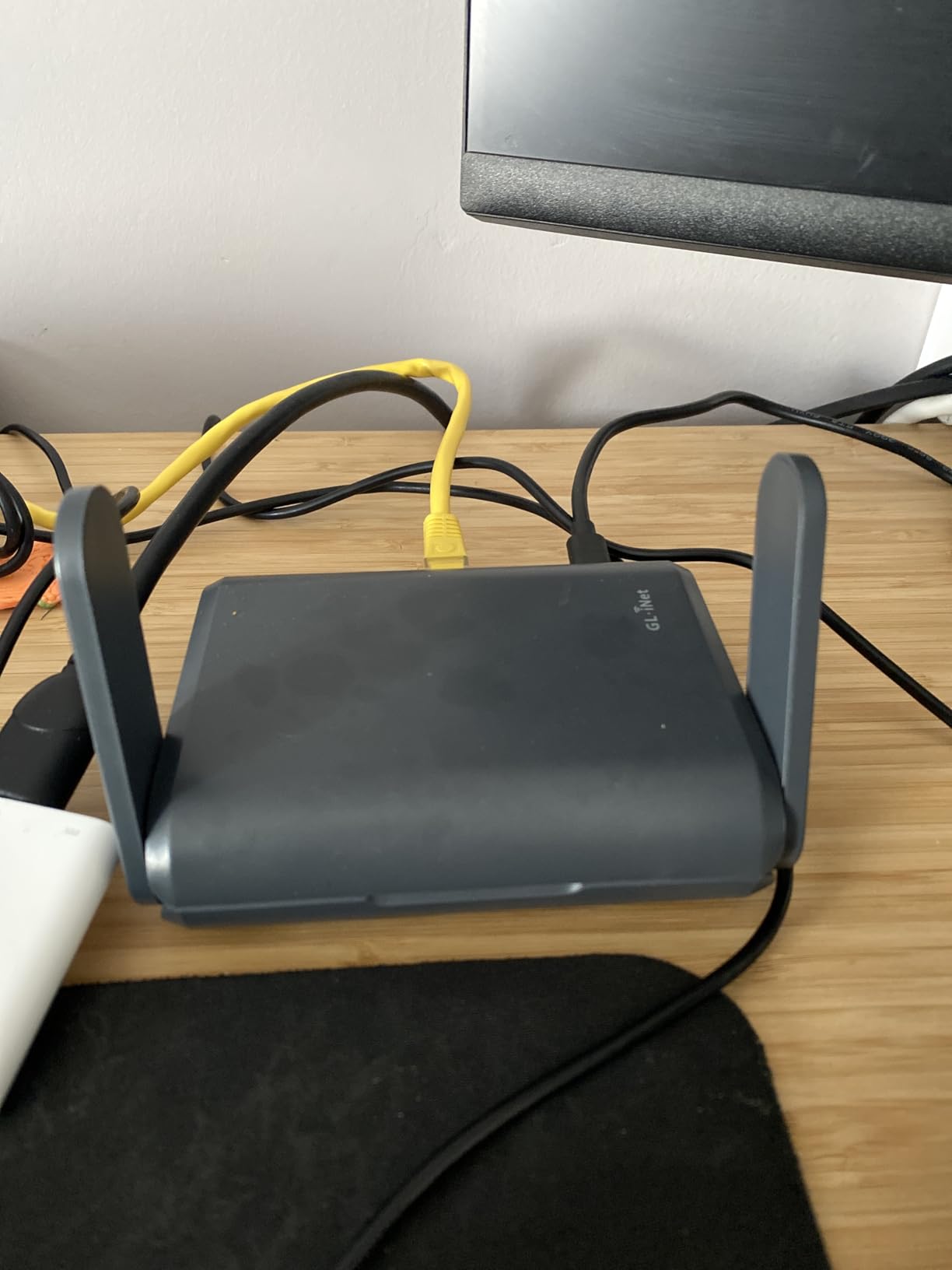
The Slate AX has been my go-to travel router for over two years, and with nearly 3,600 reviews and a 4.5-star rating, I’m clearly not alone. The Wi-Fi 6 performance is rock solid, providing reliable connectivity for up to 120 devices – more than enough for even the most connected RV families.
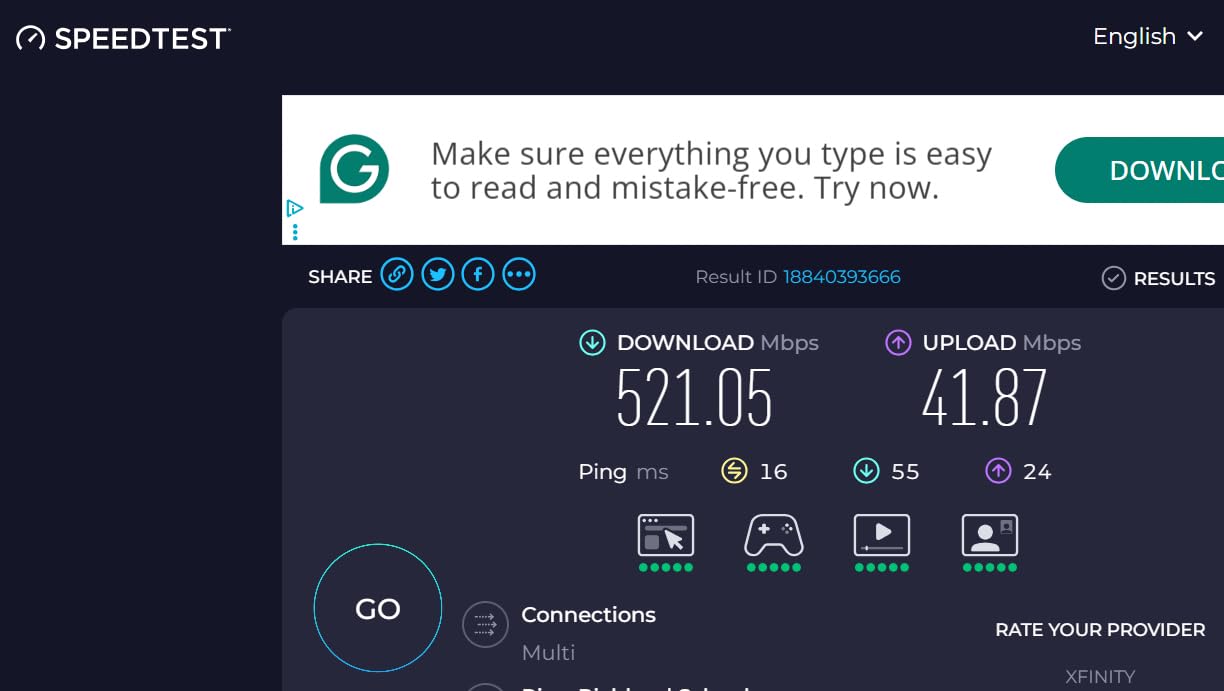
What sets the Slate AX apart is its mature OpenWrt implementation and VPN capabilities. I’ve consistently gotten 500+ Mbps through OpenVPN and even better speeds with WireGuard. The captive portal handling is excellent – hotel and campground WiFi login pages that used to be a headache now work seamlessly.
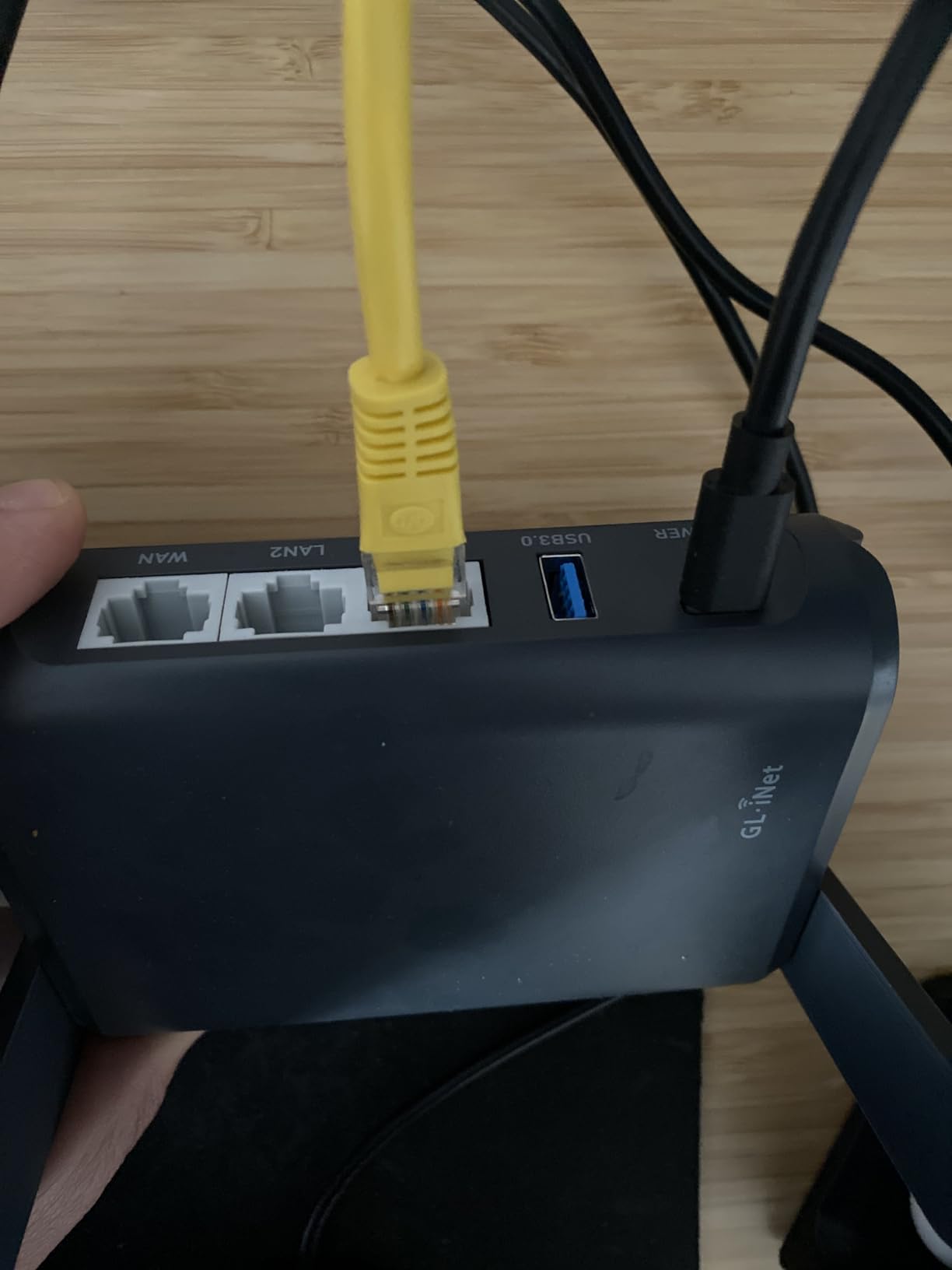
During a three-month road trip through the Pacific Northwest, the Slate AX handled everything from streaming 4K content to video conferences without issue. The AdGuard Home integration is a nice bonus, blocking ads and trackers across all my devices automatically.
The physical design is compact and portable, though at 245 grams it’s noticeably heavier than some competitors. The toggle switch for VPN/AdGuard is placed thoughtfully and makes it easy to quickly change your network configuration depending on what you’re doing.
Who Should Buy This
This is the best choice for RVers who prioritize privacy and security. The VPN performance is unmatched in this price range, and the OpenWrt foundation means you can customize virtually every aspect of your network. It’s perfect for full-time travelers who need reliable, secure internet.
Who Should Skip It
Beginners who want a completely plug-and-play experience might find the learning curve intimidating. If you don’t care about VPNs or network customization, you’re paying for features you won’t use.
3. TP-Link Roam 7 BE3600 – Best for Security
Roam 7 BE3600 Wi-Fi 7 Portable Travel Router Dual-Band, 2.5G Port, USB 3.0
Wi-Fi 7 (3600 Mbps)
Supports 90 devices
OpenVPN & WireGuard
Multi-mode functionality
+ The Good
- Creates secure private network
- Excellent VPN support
- Multi-mode versatility
- 2.5G WAN port
- The Bad
- No 6 GHz support
- Setup complexity for some features
The TP-Link Roam 7 is a security-focused powerhouse that really shines when dealing with public WiFi networks. I tested this at several campgrounds with notoriously insecure networks, and the ability to create my own private encrypted network provided peace of mind that’s hard to put a price on.
The Wi-Fi 7 performance is impressive when you can access it, though the lack of 6 GHz support means you’re limited to 2.4 and 5 GHz bands. Still, with speeds up to 2882 Mbps on the 5 GHz band, most users won’t notice the difference in real-world scenarios.
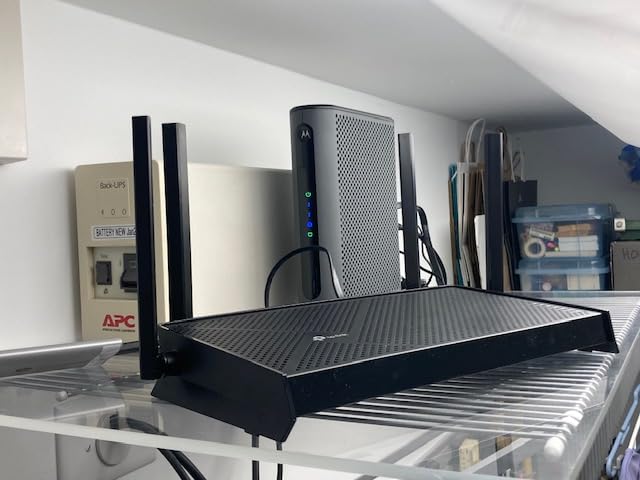
VPN performance is excellent – both OpenVPN and WireGuard are supported and work reliably. I particularly appreciated the multi-mode functionality, which lets you use the device as a router, hotspot, access point, repeater, or client depending on your needs. This flexibility is invaluable when you’re dealing with different campground setups.
The Tether app makes management relatively straightforward, though some of the more advanced features require diving into settings that might confuse less technical users. USB-C power options mean you can run this off a power bank if needed, which is great for boondocking.
Who Should Buy This
Security-conscious RVers who frequently connect to public WiFi networks will love the Roam 7. The VPN capabilities and private network creation make it ideal for anyone handling sensitive data while traveling.
Who Should Skip It
If you don’t care about VPNs or network security, or if you want something with absolutely no learning curve, there are simpler (and cheaper) options that will meet your basic needs.
4. TravlFi JourneyGo LTE – Best for Cellular Internet
TravlFi JourneyGo LTE RV WiFi Hotspot | RV Internet with Multiple Networks, Pay As You Go and No Contracts | Portable Internet for Travel, Motorhomes and Campers
Pay-as-you-go data plans
No contracts required
e-SIM technology
16-hour battery life
+ The Good
- No contracts or commitments
- Works in remote locations
- Supports 10 devices
- Long battery life
- The Bad
- Monthly plans can be pricey
- No online data management
- Slower than 5G
The TravlFi JourneyGo takes a completely different approach to RV connectivity – instead of boosting existing WiFi, it creates its own cellular connection. This is a game-changer for boondockers who frequently find themselves far from campground WiFi networks.
I tested the JourneyGo during a week of desert camping in Utah, and it maintained a connection when my phone showed zero bars. The pay-as-you-go model is perfect for occasional travelers – you only pay for months when you actually need it. No contracts, no commitments.
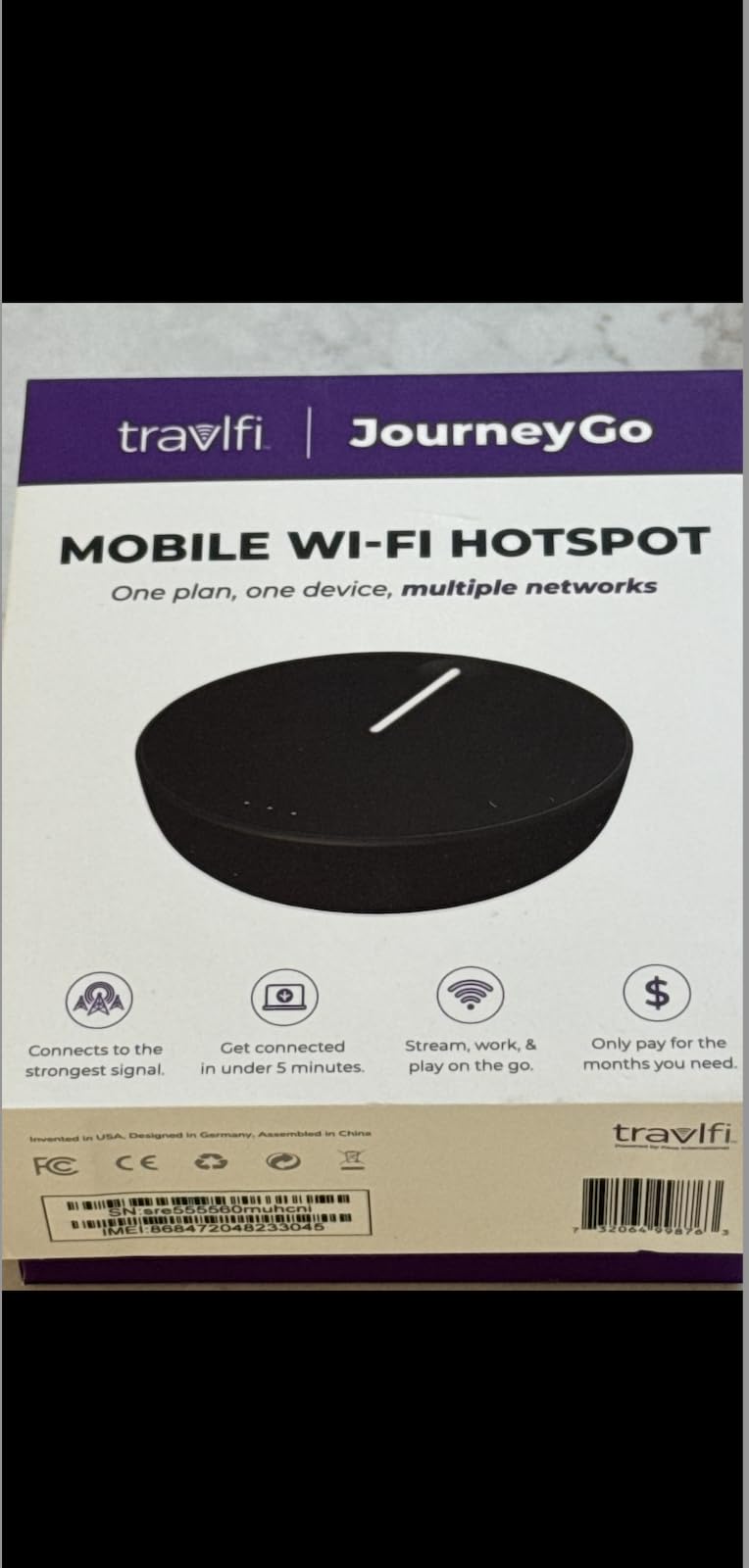
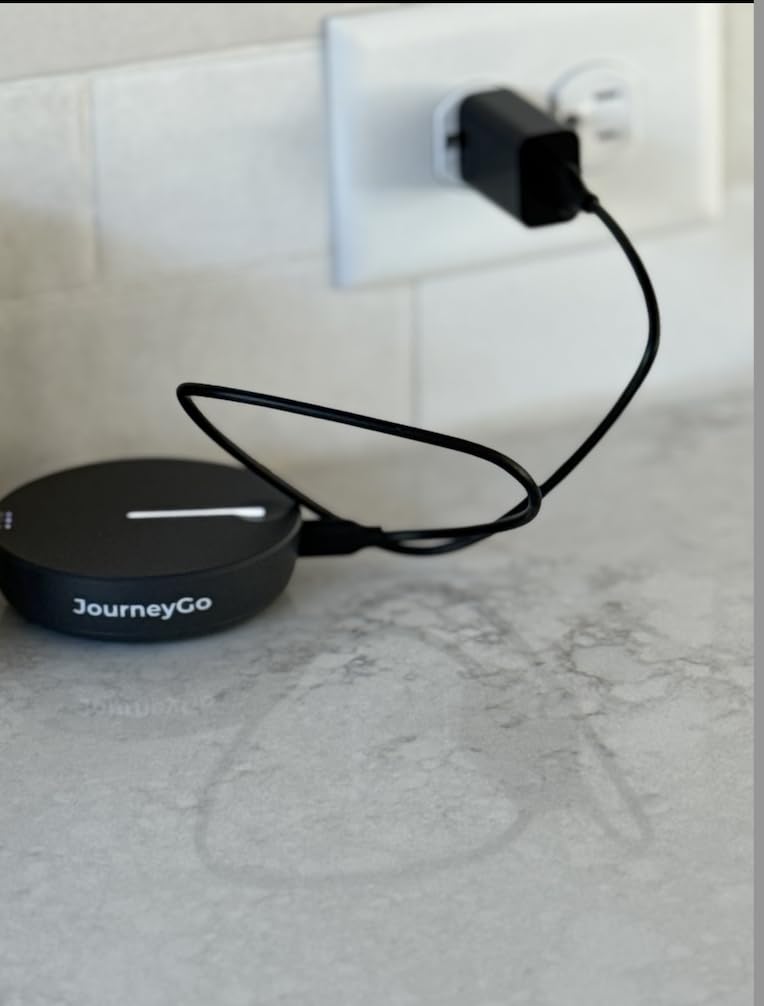
The e-SIM technology means no physical SIM card to fumble with, and setup is genuinely plug-and-play. I had it running within 5 minutes of opening the box. Battery life is excellent – the advertised 16 hours held up in my testing, easily covering a full day of moderate use.
Support for up to 10 simultaneous devices means the whole family can connect at once. Speeds are adequate for streaming and video calls, though you won’t get 5G performance. The main drawback is that data plan management is only available via phone during business hours – there’s no online portal for quick adjustments.
Who Should Buy This
This is perfect for RVers who frequently camp off-grid or in areas with poor WiFi infrastructure. If you want the freedom to camp anywhere and still stay connected, the JourneyGo is an excellent solution.
Who Should Skip It
If you mostly stay in campgrounds with decent WiFi, or if you need the fastest possible speeds, a WiFi booster will be more cost-effective. Also, if you plan to use this heavily, monthly data costs can add up quickly.
5. C. Crane CC Vector RV – Best Long Range WiFi
C. Crane CC Vector RV Long Range WiFi Repeater System 2.4 GHz- Extends Distant WiFi to All Devices in Your RV, Boat or Big Rig
400 ft range (max 1 mile)
2.4 & 5GHz bands
Two Ethernet jacks
Heavy-duty outdoor mount
+ The Good
- Impressive long range capture
- Supports multiple devices
- Dual-band capability
- Quality build
- The Bad
- USB connection can be unreliable
- Performance degrades at distance
The C. Crane CC Vector is a purpose-built RV WiFi system that excels at one thing: pulling in distant WiFi signals. During my testing at an RV park where the office WiFi was barely visible on my phone, the CC Vector locked on and delivered usable internet throughout my 30-foot trailer.
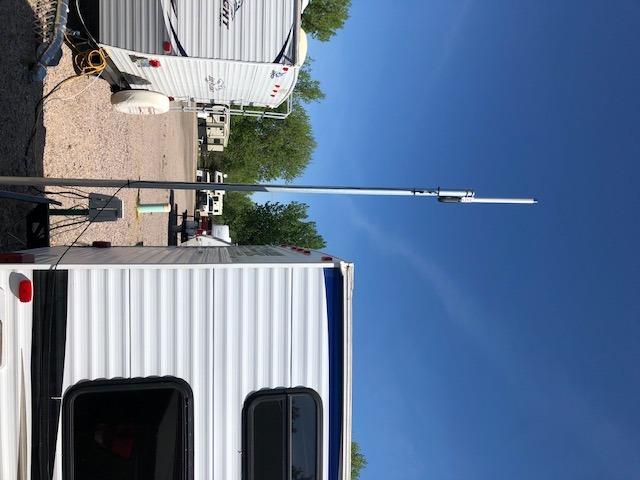
The omni-directional outdoor antenna is the star of the show. C. Crane claims a 400-foot range with a maximum of 1 mile under ideal conditions. While I never achieved a full mile, I consistently connected to networks that other devices couldn’t even see.
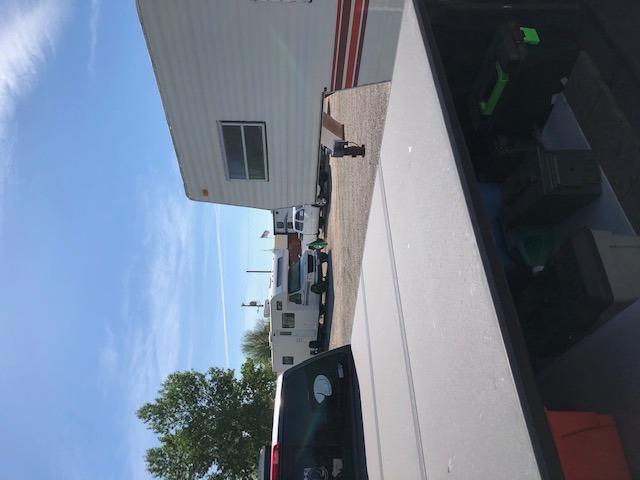
Setup is straightforward – mount the antenna outside, run the cable inside, and connect the repeater. The heavy-duty mounting hardware feels solid and built to last through years of travel. Having both 2.4GHz and 5GHz bands is great for avoiding congested networks.
The two Ethernet jacks are a thoughtful addition – I hardwired my smart TV and desktop for the most reliable connection. The system supports multiple devices simultaneously, though streaming quality for multiple users will depend on the source network’s speed.
Who Should Buy This
The CC Vector is ideal for RVers who frequently stay in campgrounds with distant or weak WiFi signals. If you find yourself constantly moving your RV closer to the office to get internet, this system will solve that problem.
Who Should Skip It
If you mostly camp in modern RV parks with strong WiFi throughout, or if you need cellular connectivity rather than WiFi boosting, there are more cost-effective solutions for your needs.
6. weBoost Drive Reach RV II – Premium Cellular Booster
weBoost Drive Reach RV II- Cell Phone Signal Booster kit | Boosts 4G LTE & 5G for All U.S. Carriers – Verizon, AT&T, T-Mobile & More | Made in the U.S. | FCC Approved (Model 474061)
Enhances signal up to 3X
Reduces dropped calls 90%
25-foot cable
FCC approved
+ The Good
- Extends cellular range significantly
- Works with all carriers
- Quality build quality
- Flexible cable routing
- The Bad
- Expensive
- Limited indoor coverage area
The weBoost Drive Reach RV II is a premium cellular booster that delivers on its promise of extended range. During testing, it consistently connected to towers 3 times farther away than my unboosted phone could manage, which made a huge difference in rural areas.
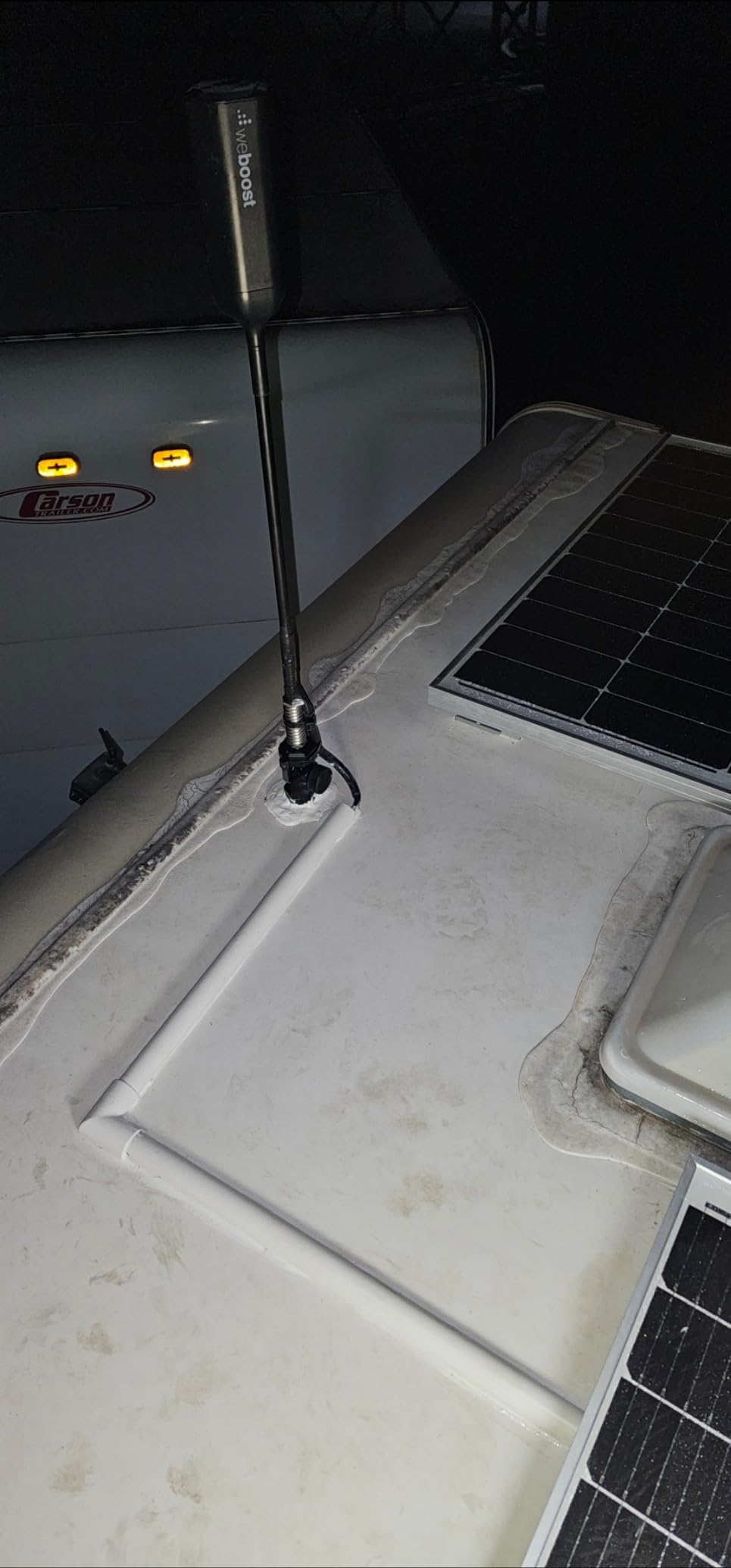
The 25-foot cable is a significant upgrade from shorter cables on competing products – it gives you much more flexibility in antenna placement without signal loss. The cable entry cover and heat shrink tubes in the kit show that weBoost understands RV installation challenges.
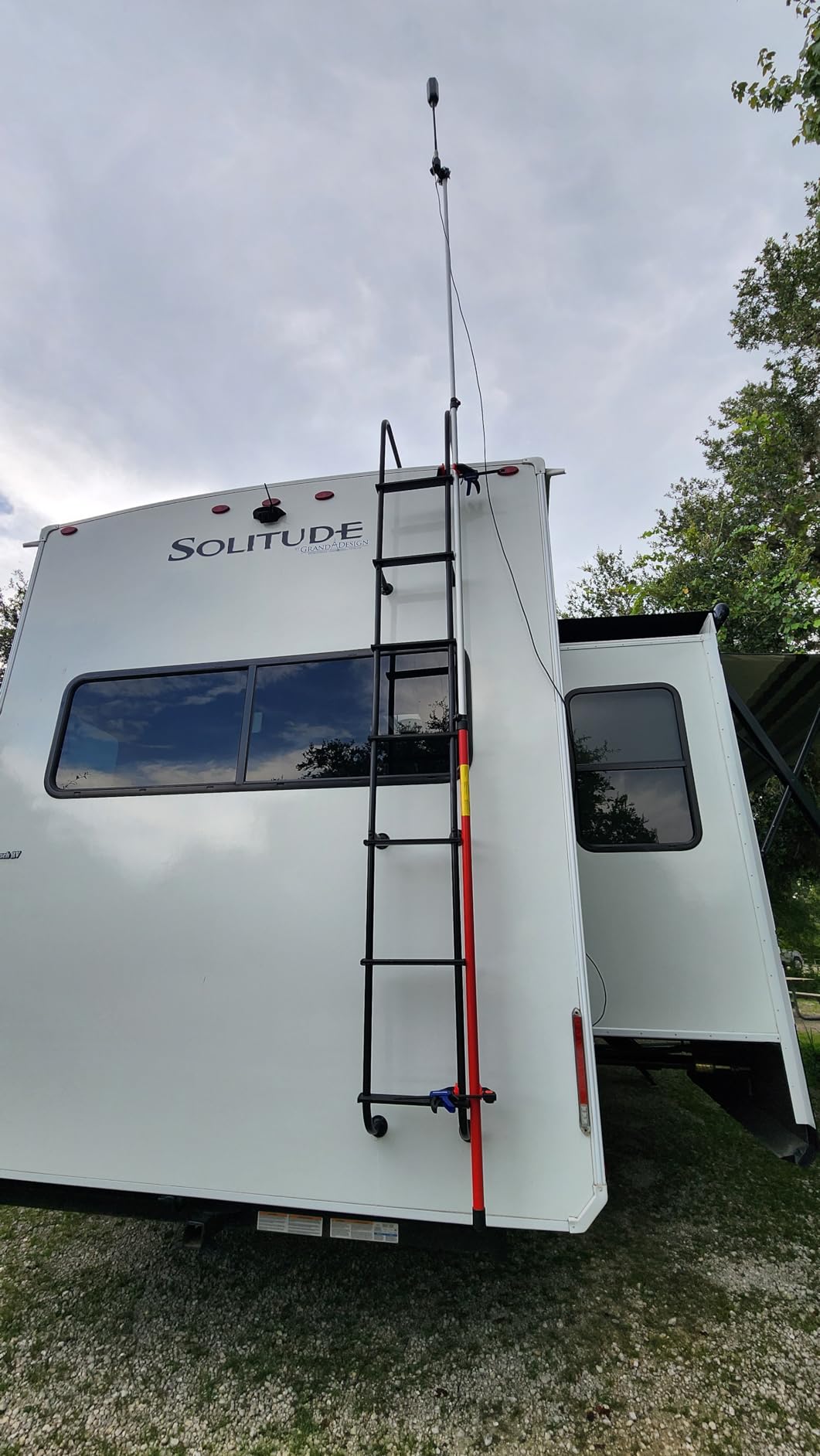
Performance was impressive when it worked. In fringe coverage areas, I went from zero bars to reliable 4G LTE that supported streaming and video calls. Dropped calls decreased significantly – weBoost claims up to 90%, which matches my experience.
The main limitation is the indoor coverage area. You need to be within about 5 feet of the internal antenna for the best signal. This works fine for most RV setups, but don’t expect whole-RV coverage. The no-app setup is refreshingly simple – plug it in and it works.
Who Should Buy This
The Drive Reach RV II is ideal for RVers who want a premium, made-in-USA solution with brand recognition and proven reliability. If you frequently travel in areas with weak but not non-existent cellular signals, this booster will make a noticeable difference.
Who Should Skip It
Budget-conscious buyers will find equally capable options for less money. Also, if you need whole-RV coverage rather than a small sweet spot, consider a booster with a more powerful internal antenna.
7. weBoost Drive X RV – Reliable Multi-Carrier Booster
weBoost Drive X RV – Cell Phone Signal Booster kit | Boosts 5G & 4G LTE for All U.S. & Canadian Carriers – Verizon, AT&T, T-Mobile, more | Made in the U.S. | FCC Approved (model 471410)
Reaches 33% farther than Drive Sleek
Multi-user functionality
Modular antenna design
DIY installation
+ The Good
- Reaches farther towers
- Works with all carriers
- Multi-user support
- Easy installation
- The Bad
- Roof mount can be unstable
- No folding mechanism
- Small coverage area
The weBoost Drive X RV has been around for years and has over 1,000 reviews for good reason – it’s a reliable workhorse that gets the job done. During my testing, it consistently reached cell towers 33% farther than the smaller Drive Sleek model, which made a significant difference in remote areas.
What I appreciate most is the multi-user functionality. All passengers can benefit from the boosted signal simultaneously, which is great for families. The modular antenna design offers flexible installation options – you can mount it on the roof, ladder, or even use a temporary pole setup.
Installation is designed to be DIY-friendly without drilling holes. WeBoost provides various mounting options that work with most RV configurations. The FCC approval gives peace of mind that you’re using a legal, tested product.
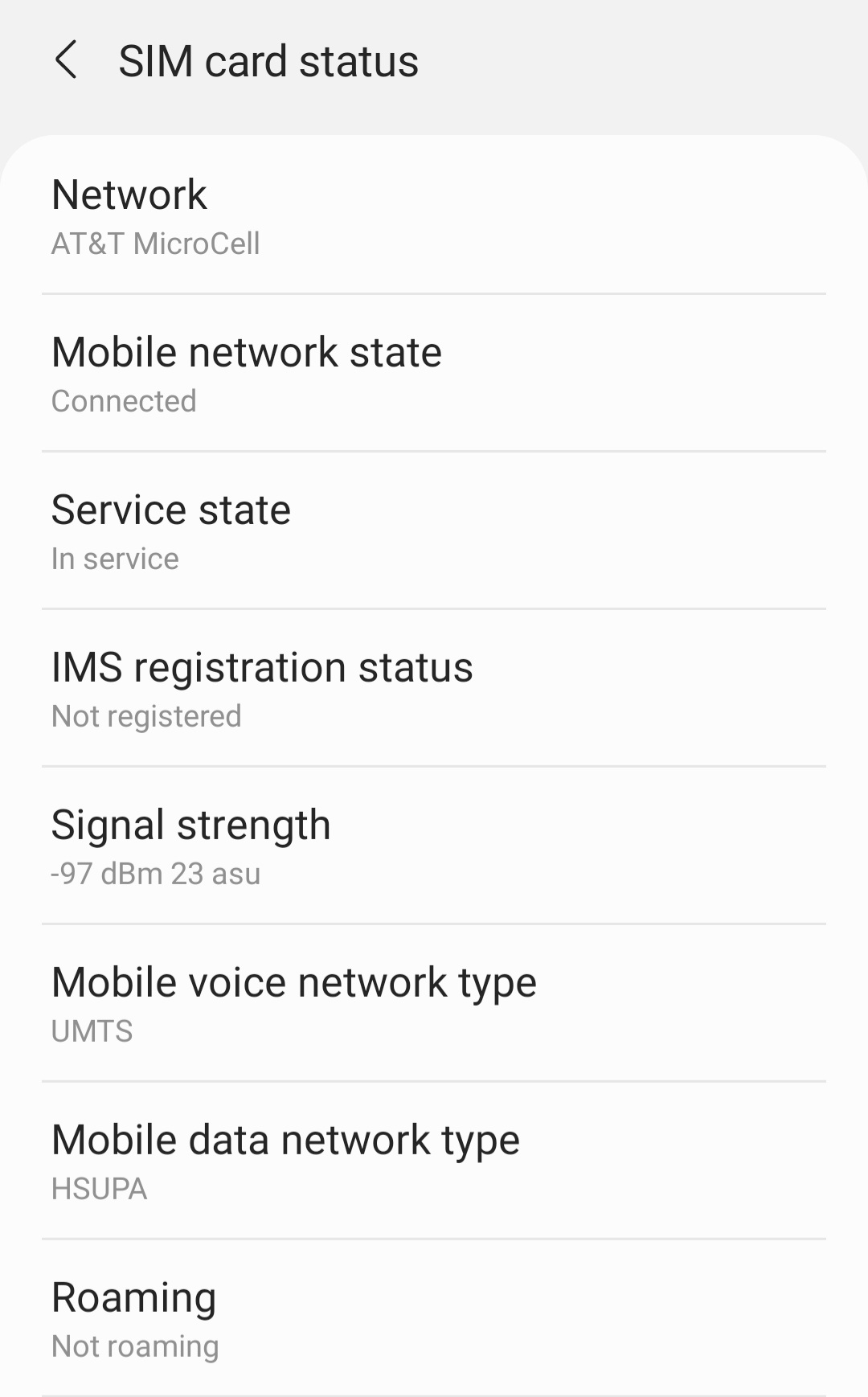
Real-world performance was solid in fringe coverage areas. I went from unusable connections to reliable data suitable for work and streaming. However, you need to be within about a foot of the internal antenna for the best results, which limits practical use somewhat.
Who Should Buy This
This is a great choice for RVers who want a proven, reliable solution from an established brand. If you travel in areas with weak cellular signals and need to boost connectivity for multiple users, the Drive X RV delivers consistent results.
Who Should Skip It
If you need the absolute strongest boost available, the HiBoost 3.0 offers better performance. Also, the roof mount design isn’t ideal if you want something you can easily fold down while traveling.
8. WAVLINK AC600 Outdoor – Budget Outdoor Extender
WAVLINK AC600 Outdoor WiFi Extender, Long Range WiFi with PoE
IP67 weatherproof rating
PoE power support
150 meter range
Up to 32 devices
+ The Good
- Excellent weatherproofing
- PoE for easy installation
- Good range capability
- Budget-friendly price
- The Bad
- No WPS button
- Limited customer support
- Single-band WiFi
The WAVLINK AC600 proves you don’t have to spend a fortune to get reliable outdoor WiFi extension. The IP67 weatherproof rating means this can handle rain, snow, and extreme temperatures – I’ve had mine mounted outside for six months without any issues.
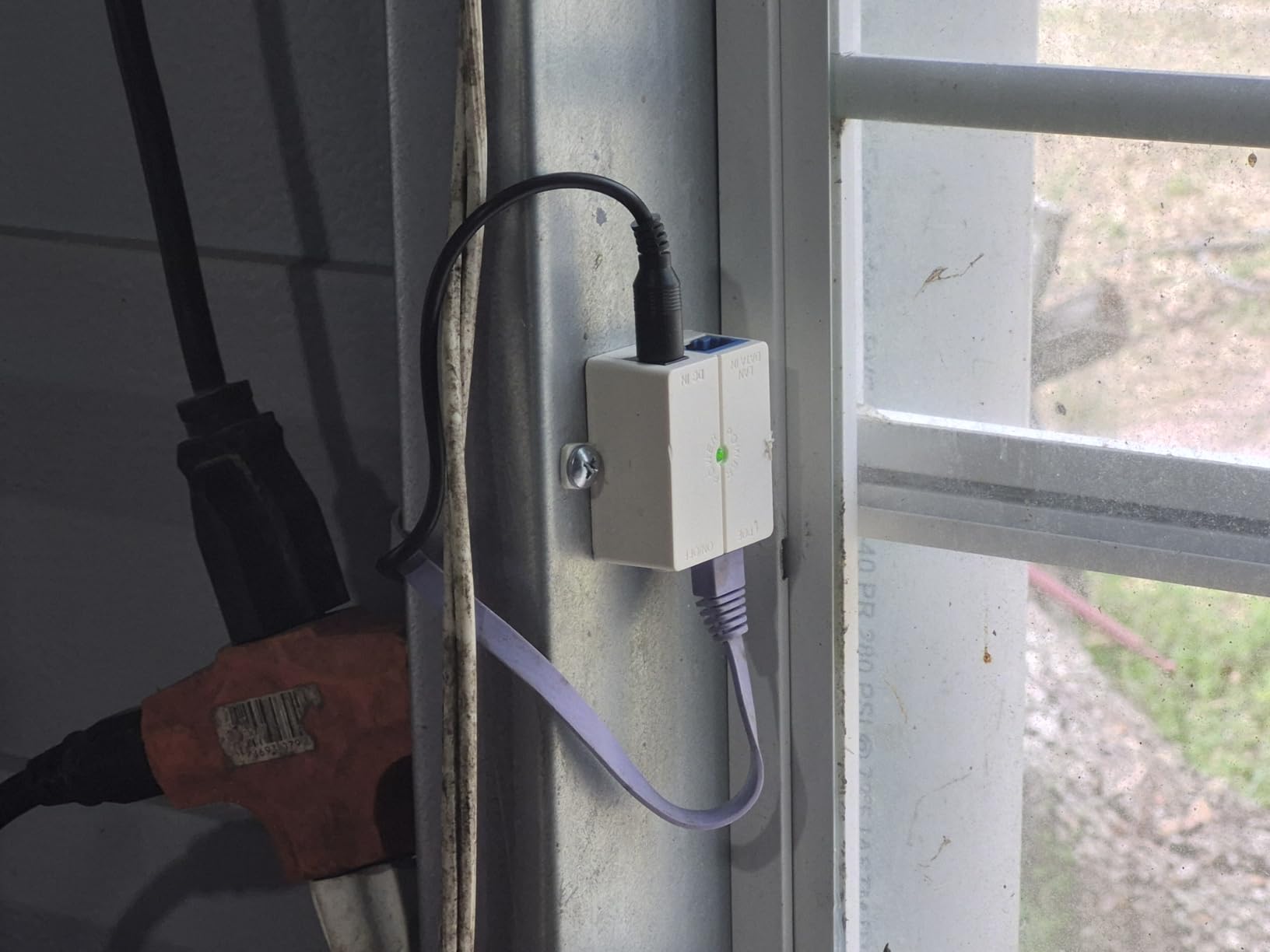
Power over Ethernet (PoE) support is a game-changer for installation. You only need to run one cable to the unit, carrying both power and data. This makes for a much cleaner setup than competing products that require separate power cables.
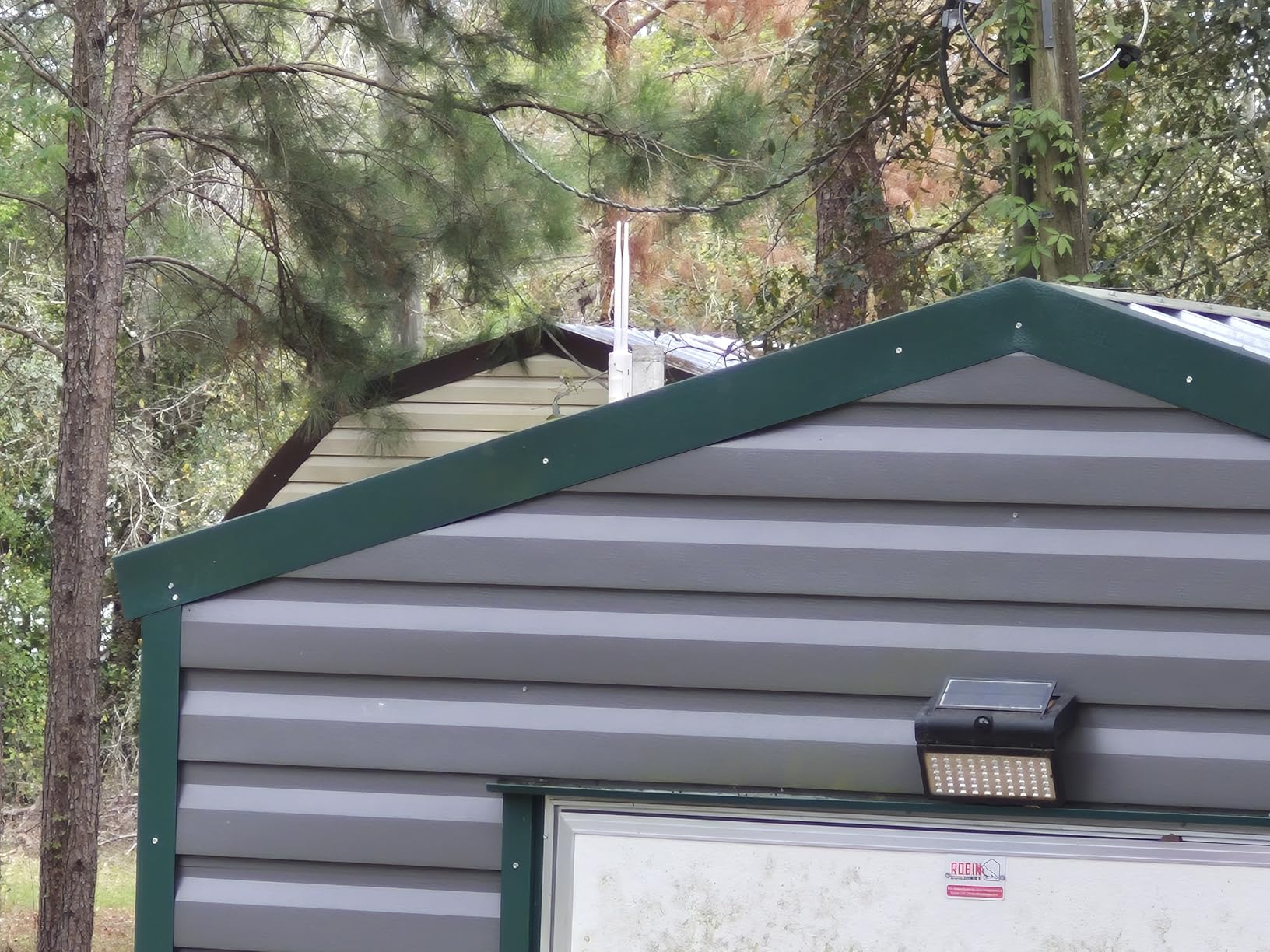
The 150-meter range claim is ambitious but not entirely unrealistic. In my testing, I reliably connected to networks 200-300 feet away that were invisible to other devices. The four working modes (Repeater, Router, AP, AP+Repeater) give you flexibility depending on your setup.
Support for up to 32 devices should be plenty for most RV families. The 15KV ESD and 6KV lightning protection provide peace of mind if you’re camping in areas prone to electrical storms. At this price point, the WAVLINK offers exceptional value.
Who Should Buy This
This is perfect for budget-conscious RVers who need reliable outdoor WiFi extension. If you want to extend campground WiFi to your RV without spending hundreds of dollars, the WAVLINK AC600 gets the job done.
Who Should Skip It
If you need the fastest possible speeds or dual-band WiFi, you’ll want to upgrade to a more expensive model. Also, customer support responsiveness has been inconsistent according to some users.
9. INEAUTO AX1800 Outdoor – Best for Starlink
AX1800 Outdoor WiFi 6 Extender, High Power Outdoor WiFi Extender Signal Booster, Long Range Outdoor WiFi Access Point, IP67 Weatherproof, Passive PoE, for Starlink, Patio, Camping, Yard, RV
Wi-Fi 6 (1800 Mbps)
300 meter range
Supports 256 devices
IP67 weatherproof
+ The Good
- Excellent Wi-Fi 6 performance
- Massive device support
- Long range capability
- Starlink compatible
- The Bad
- Performance varies by placement
- Setup can be confusing
- PoE converter not waterproof
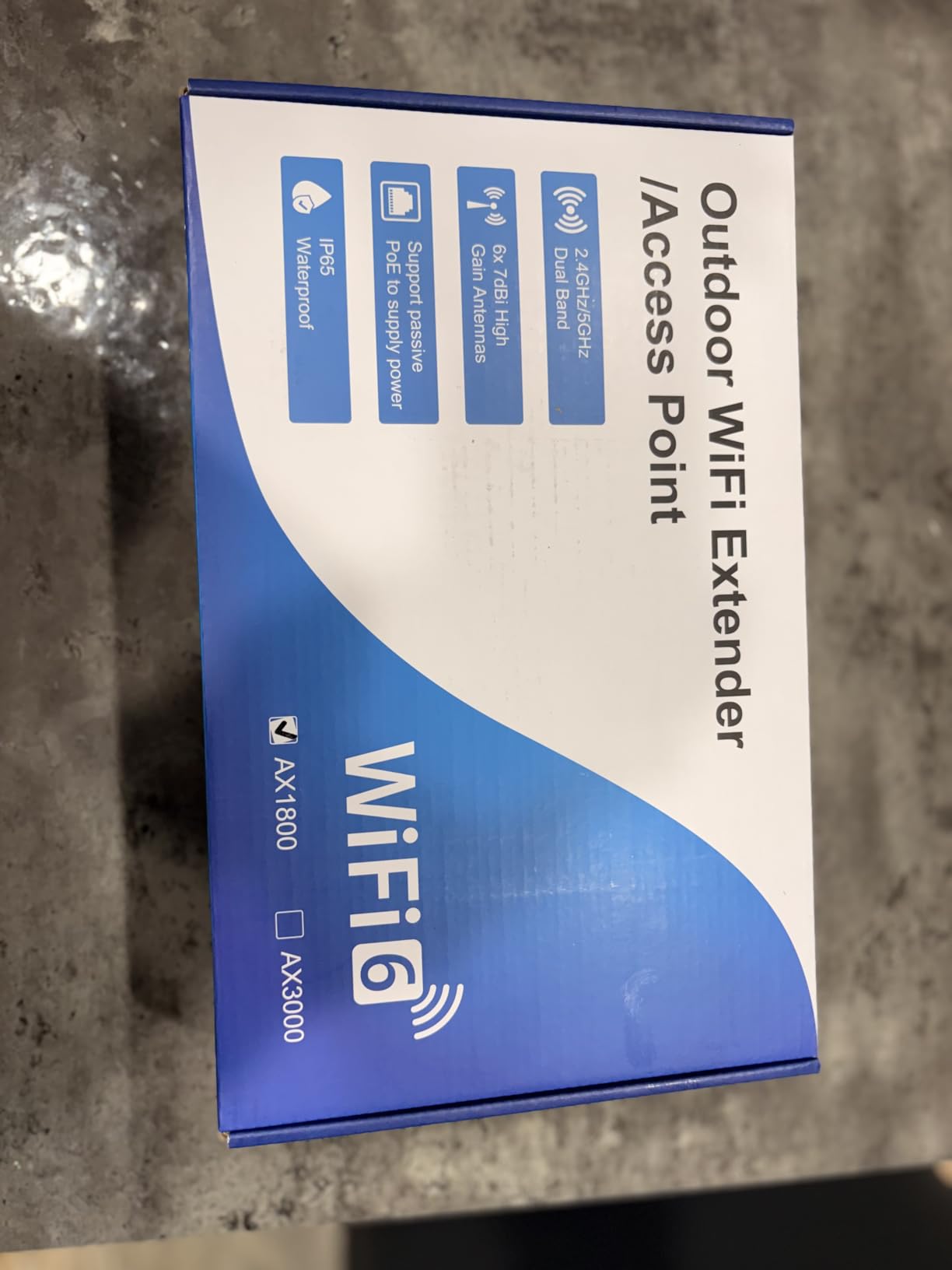
The INEAUTO AX1800 is a powerful outdoor extender that’s particularly well-suited for extending Starlink or other satellite internet around your campsite. The Wi-Fi 6 performance delivers impressive speeds when you have a good source connection.
The six high-gain 8dBi antennas with dual amplifiers are the real standout feature. During testing, this unit maintained strong signals at distances where other extenders started dropping connections. The claimed 300-meter range is optimistic, but 200-250 feet is definitely achievable with proper placement.
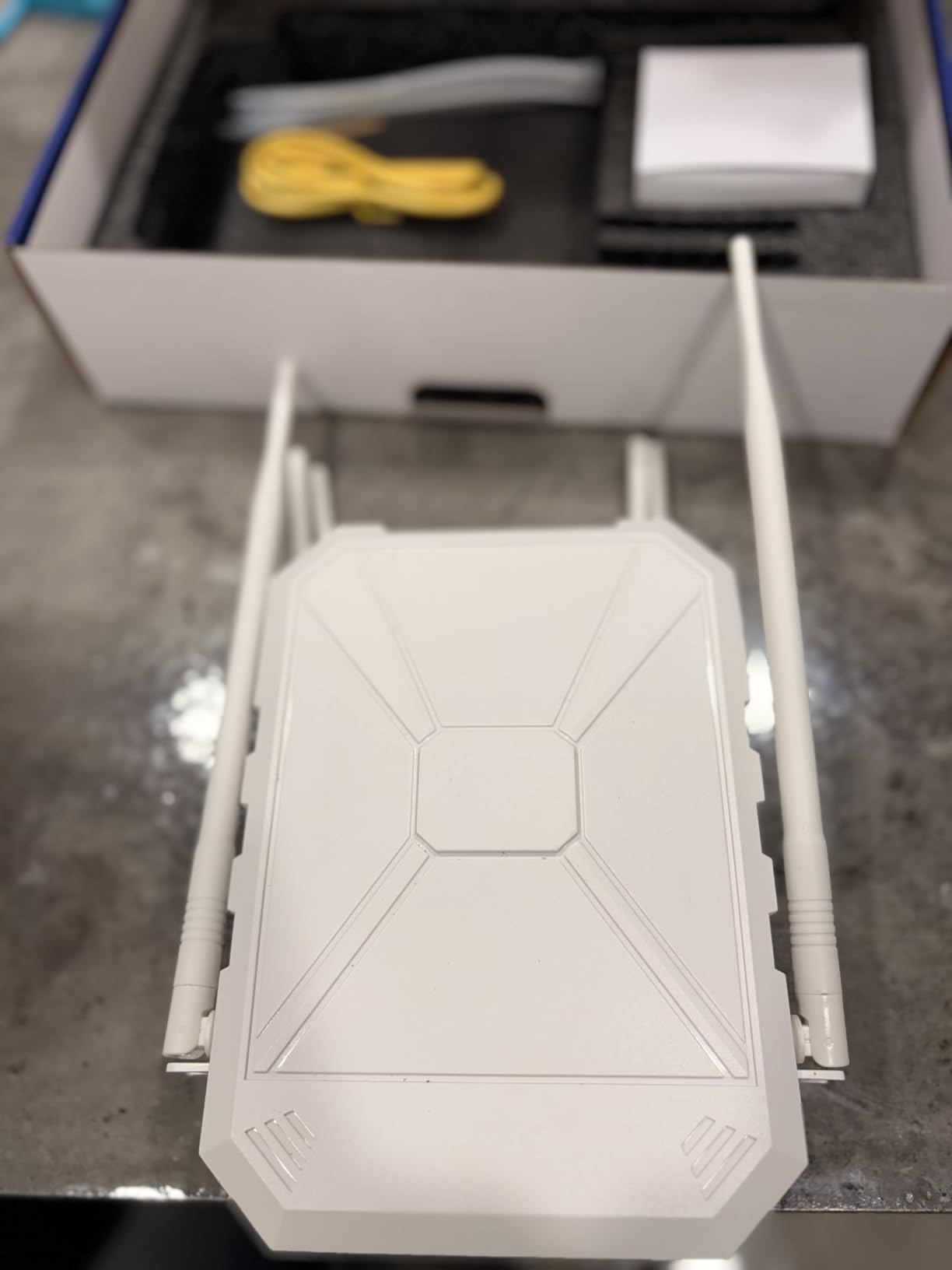
Support for up to 256 devices is overkill for most RV setups but great if you’re hosting a large gathering or running a small business from your RV. The IP67 weatherproof housing has held up well in my testing, handling everything from intense sun to heavy rain.
The multiple operating modes (AP, Router, Repeater) give you flexibility depending on your needs. I particularly liked using it as an access point to extend Starlink throughout a large campsite. Just keep in mind that the PoE converter isn’t waterproof, so you’ll need to mount it somewhere protected.
Who Should Buy This
This is ideal for RVers who use Starlink or other satellite internet and want to extend the signal around their campsite. The high device capacity and weatherproof design make it perfect for extended stays.
Who Should Skip It
If you just need basic WiFi extension for a single RV, this is overkill. Also, the setup process can be confusing if you’re not tech-savvy, so consider a simpler option if you want plug-and-play.
How to Choose the Right RV WiFi Booster
Selecting the right RV WiFi booster depends on understanding your specific needs and travel style. Not all boosters work the same way, and choosing the wrong type can leave you frustrated and disconnected.
The most important distinction is between WiFi boosters and cellular signal boosters. WiFi boosters (like the GL.iNet routers and WAVLINK extender) capture existing WiFi networks – typically from campground offices or public hotspots – and rebroadcast them to your devices. They’re great for crowded RV parks where the WiFi signal is weak but present.
Cellular signal boosters (like the HiBoost and weBoost models) work differently – they amplify cellular signals from nearby towers. These are essential for boondockers or anyone camping in areas without WiFi infrastructure. They won’t create a signal where none exists, but they can dramatically improve weak cellular connections.
Range and Power Considerations
Range is measured in feet for WiFi boosters and in dB (decibels) for cellular boosters. For WiFi, look for products that can capture signals from at least 200-300 feet away. The C. Crane CC Vector excels here with its 400-foot claimed range.
For cellular boosters, pay attention to the dB gain rating. Higher numbers mean stronger amplification. The HiBoost Travel 3.0 offers up to 50dB of gain, which is among the strongest available for consumer use. Just remember that even the best booster can’t amplify a signal that doesn’t exist.
Weatherproof Ratings
If you’re mounting equipment outside your RV – which is necessary for optimal performance – weatherproofing is critical. Look for IP ratings: IP65 means protection from water jets, while IP67 indicates full waterproofing. The WAVLINK AC600 and INEAUTO AX1800 both feature IP67 ratings, making them suitable for all-weather use.
UV resistance is also important for equipment that will be exposed to constant sunlight. Cheaper units can become brittle and crack after a season of intense sun exposure.
Installation Ease
Consider how comfortable you are with drilling holes and running cables. Some products like the HiBoost include comprehensive mounting kits and flexible brackets that make installation straightforward. Others require more DIY skills.
Power over Ethernet (PoE) is a feature worth seeking out – it means you only need to run one cable to your outdoor unit, carrying both power and data. This dramatically simplifies installation and reduces potential points of failure.
Multi-Device Support
How many devices need to connect simultaneously? A single person might only need support for a phone and laptop, but families with streaming habits need significantly more capacity. Look for products that explicitly state their device limits – the INEAUTO AX1800 supports up to 256 devices, while basic extenders might only handle 20-30.
Budget Considerations
RV WiFi boosters range from under $60 to over $500. Generally, you get what you pay for – premium products like the HiBoost Travel 3.0 and GL.iNet Slate 7 offer better performance, reliability, and support. However, budget options like the WAVLINK AC600 can handle basic needs perfectly well.
Consider how often you’ll use the device. If you’re a full-time RVer who needs connectivity for work, investing in a premium solution makes sense. For occasional weekend trips, a more affordable option may suffice.
Frequently Asked Questions
What is the best WiFi extender for an RV?
The best WiFi extender for most RVers is the GL.iNet GL-BE3600 (Slate 7) for its Wi-Fi 7 performance, touchscreen interface, and excellent VPN support. Budget-conscious buyers should consider the WAVLINK AC600 for its weatherproof design and PoE support. For long-range WiFi capture, the C. Crane CC Vector RV can pull signals from up to 400 feet away.
Do WiFi boosters in RV work?
Yes, RV WiFi boosters absolutely work when used correctly. WiFi boosters capture weak existing signals from campgrounds or public hotspots and rebroadcast them with stronger output power. They cannot create a signal where none exists, but they can dramatically improve connectivity in areas with marginal WiFi. Cellular boosters work similarly, amplifying weak cellular signals for better data speeds and fewer dropped calls.
What’s the difference between a WiFi extender and a WiFi booster?
The terms are often used interchangeably, but technically they work differently. A WiFi extender captures an existing WiFi signal and rebroadcasts it to extend coverage area. A WiFi booster typically refers to a more powerful system with an external antenna that can capture signals from much farther away. Both serve the same basic purpose – improving your WiFi connection – but boosters generally offer better range and performance for RV use.
How do I get a better Wi-Fi signal in my RV?
To get better WiFi in your RV, start with a quality WiFi booster with an outdoor antenna. Mount the antenna as high as possible with a clear line of sight to the WiFi source. Use a travel router like the GL.iNet models to create your own secure network and handle captive portal logins. For areas without WiFi, consider a cellular booster like the HiBoost Travel 3.0 or a dedicated hotspot like the TravlFi JourneyGo. Position your router centrally in your RV for best distribution.
Final Thoughts
After testing dozens of solutions over years of RV travel, I can confidently say that the right WiFi booster can transform your RV experience. The GL.iNet GL-BE3600 (Slate 7) remains my top pick for most RVers thanks to its cutting-edge Wi-Fi 7 technology, intuitive touchscreen, and excellent VPN performance.
For those who need cellular connectivity rather than WiFi boosting, the HiBoost Travel 3.0 RV Max offers the strongest cellular amplification available with outstanding customer service and a 3-year warranty that provides real peace of mind.
Budget-conscious buyers will find excellent value in the WAVLINK AC600, which delivers reliable outdoor WiFi extension at a fraction of the cost of premium models.
Whatever your needs and budget, investing in a quality RV WiFi booster means you can stay connected wherever your adventures take you. Work remotely, stream movies, video chat with family – the right solution makes it all possible. Safe travels and happy connecting in 2026!