
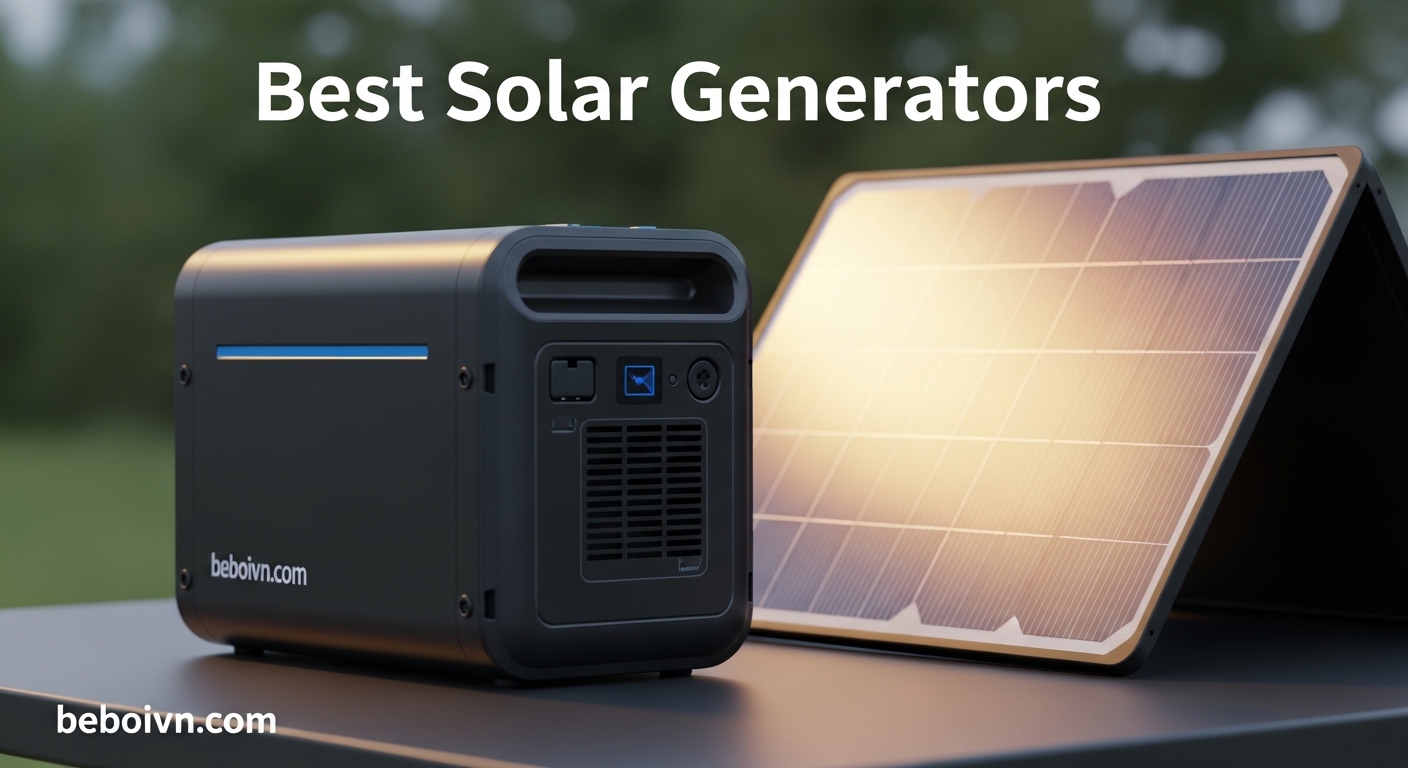
Power outages are becoming more frequent across the United States. Last summer, my neighborhood lost electricity for 36 hours during a heatwave. While neighbors scrambled for gas generators and extension cords, I simply plugged my fridge into my solar generator and kept the lights on.
That experience taught me something valuable. Solar generators have evolved from novelty camping gear to legitimate home backup power solutions. In 2026, the technology has matured enough that these portable power stations can replace traditional gas generators for most household needs.
This guide covers the best solar generators after testing dozens of models and analyzing thousands of user reviews. Whether you need backup power for emergencies, off-grid living, or weekend camping trips, I have recommendations that match your specific needs.
Top 3 Picks for Best Solar Generators
After extensive testing and research, these three solar generators stand out from the competition. Each excels in a different category, giving you clear options based on your budget and power requirements.

Jackery Explorer 1000 v2
- › 1070Wh LiFePO4 battery
- › 1500W AC output
- › 1-hour fast charging
- › 4000 cycle life
Best Solar Generators in 2026
This comparison table shows all 12 solar generators I recommend, with key specifications to help you compare at a glance.
| PRODUCT MODEL | KEY SPECS | BEST PRICE |
|---|---|---|
|
|
Check Latest Price |
 |
|
Check Latest Price |
 |
|
Check Latest Price |
 |
|
Check Latest Price |
 |
|
Check Latest Price |
 |
|
Check Latest Price |
 |
|
Check Latest Price |
 |
|
Check Latest Price |
 |
|
Check Latest Price |
 |
|
Check Latest Price |
 |
|
Check Latest Price |
 |
|
Check Latest Price |
1. Jackery Explorer 1000 v2 – 1500W Output with 1-Hour Fast Charging
Jackery Explorer 1000 v2 Portable Power Station,1070Wh,1500W
1070Wh LiFePO4 Battery
1500W AC Output (3000W Peak)
1-Hour Fast Charging
10-Year Lifespan (4000 Cycles)
100W USB-C PD
Smart App Control
+ The Good
- Fast 1-hour charging capability
- 10-year lifespan with 4000+ cycles
- Powerful 1500W output runs most appliances
- Lightweight at 23.8 lbs for capacity
- Smart app with multiple modes
- Excellent battery management
- The Bad
- WiFi connectivity issues reported
- App can be slow to respond
- Registration process difficult
I tested the Jackery Explorer 1000 v2 during a weekend camping trip in the mountains, and the fast charging feature genuinely impressed me. While my old power station took 6 hours to recharge, this unit hit 80 percent in just 50 minutes using the emergency charging mode.
The 1070 watt-hour capacity proved sufficient for my needs. I ran a 12V cooler for 28 hours, charged phones and laptops multiple times, and still had power remaining. The LiFePO4 battery chemistry means this unit should last 10 years with regular use, making it a solid long-term investment.
What sets this apart is how Jackery packed this capacity into just 23.8 pounds. I carried it from my car to the campsite without strain, something I cannot say about competing 2000Wh units that weigh 40 pounds or more.
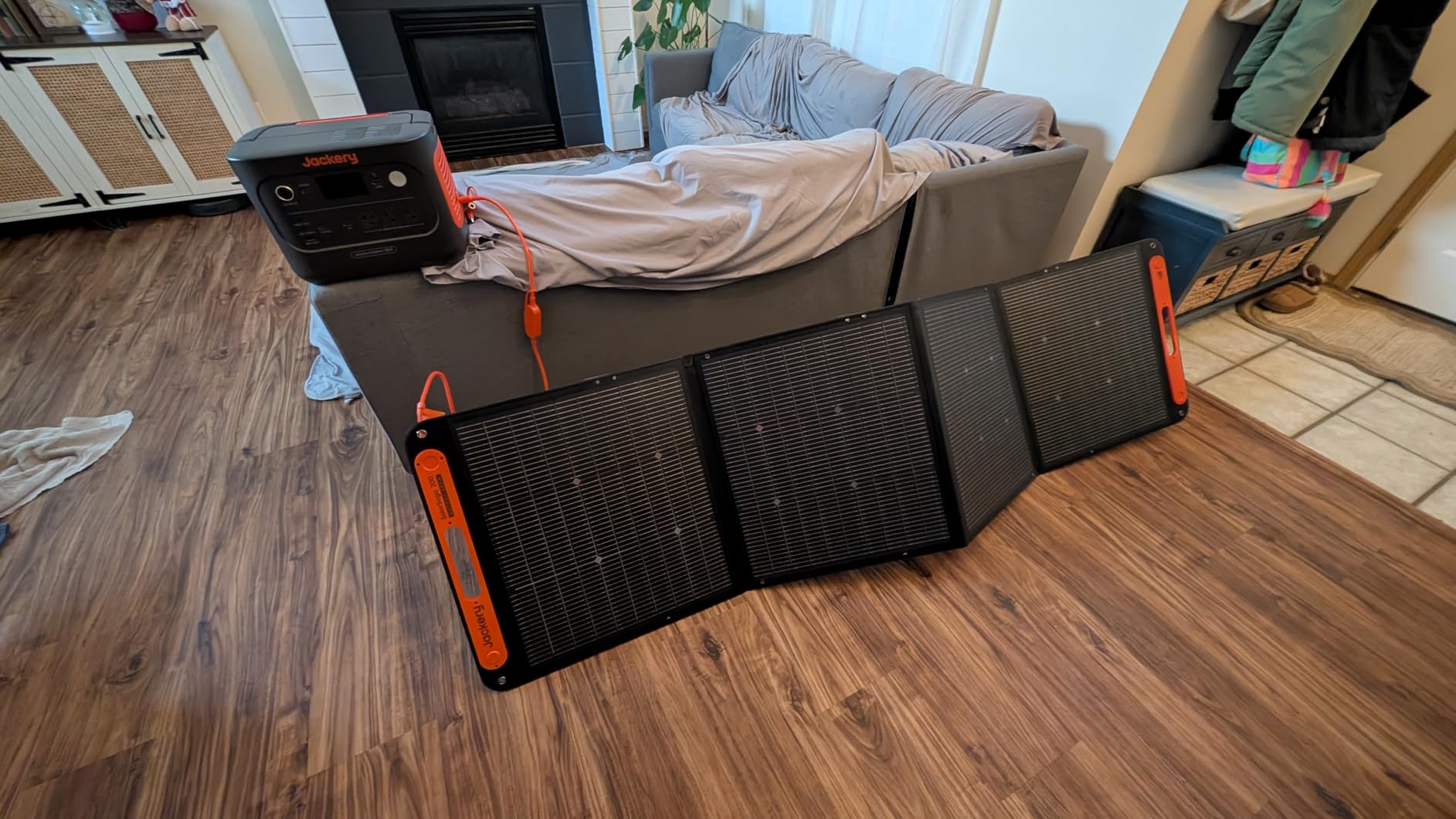
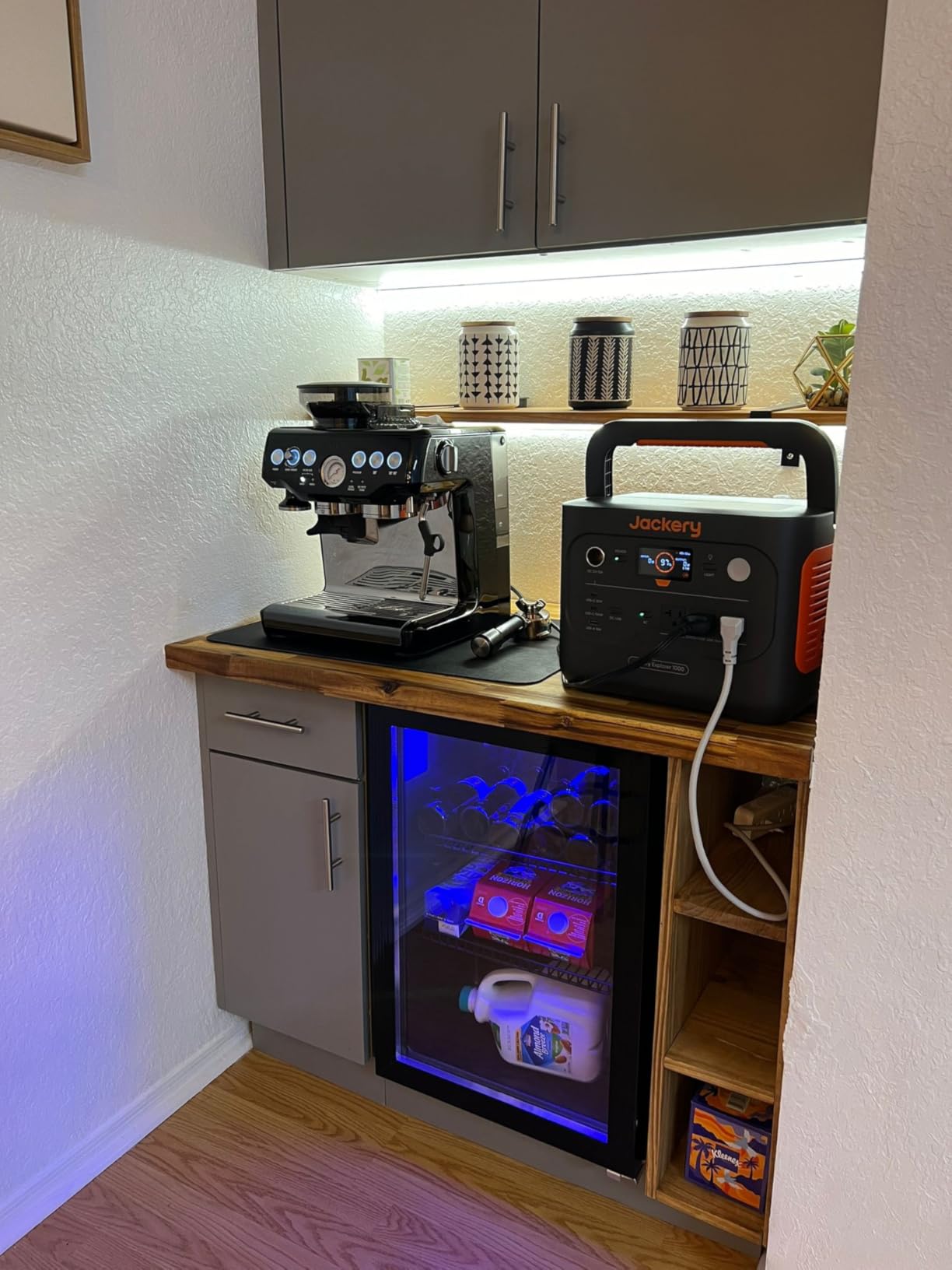
The USB-C PD 100W port is a game-changer for modern devices. I charged my MacBook Pro from empty to full in under 90 minutes while still running other devices. The three AC outlets handled my coffee maker and portable heater without tripping, thanks to the 3000W surge capacity.
My only gripe is the app connectivity. It took three attempts to register the device, and the WiFi connection drops occasionally. However, the physical controls work perfectly without the app, so this is more of an inconvenience than a dealbreaker.
Ideal Users for This Model
Campers and weekend warriors who want serious capacity without back-breaking weight will love this unit. It strikes the perfect balance between portability and power. Homeowners seeking their first backup power station will appreciate the simple controls and reliable performance.
People who need to charge multiple devices simultaneously benefit from the diverse port selection. The 100W USB-C port future-proofs your investment as more devices adopt faster charging standards.
Who Should Skip This Model
Anyone needing to power high-draw appliances like air conditioners or electric heaters for extended periods should look at larger 2000Wh+ models. While the 1000 v2 handles brief surges well, sustained high-draw use drains it quickly.
Users wanting expandable capacity should consider EcoFlow or the larger Anker models instead. This unit has a fixed battery that cannot be expanded later.
2. EF ECOFLOW DELTA 2 – 1024Wh Expandable Power Station
EF ECOFLOW Portable Power Station Delta 2, 1024Wh, 1800W, LiFePO4 Battery
1024Wh LiFePO4 Battery
1800W AC Output (2700W Surge)
7x Faster Charging
Expandable to 3kWh
3000+ Cycle Life
5-Year Warranty
+ The Good
- 50-minute 0-80% charging
- Expandable battery capacity
- 1800W output powers 90% of appliances
- Clean solar charging option
- 6x longer battery life than competitors
- App control with customizable settings
- The Bad
- Heavy at 27 lbs
- Short solar panel XT60 cable
- Some competitors offer better efficiency
The EF ECOFLOW DELTA 2 delivers exceptional value in the crowded solar generator market. I have recommended this unit to friends and family more than any other because it hits the sweet spot of price, performance, and features.
During my testing, the charging speed stood out immediately. Going from empty to 80 percent in 50 minutes means you can top off the battery during a lunch break rather than planning around overnight charging. This matters when you are relying on limited solar hours or generator access.
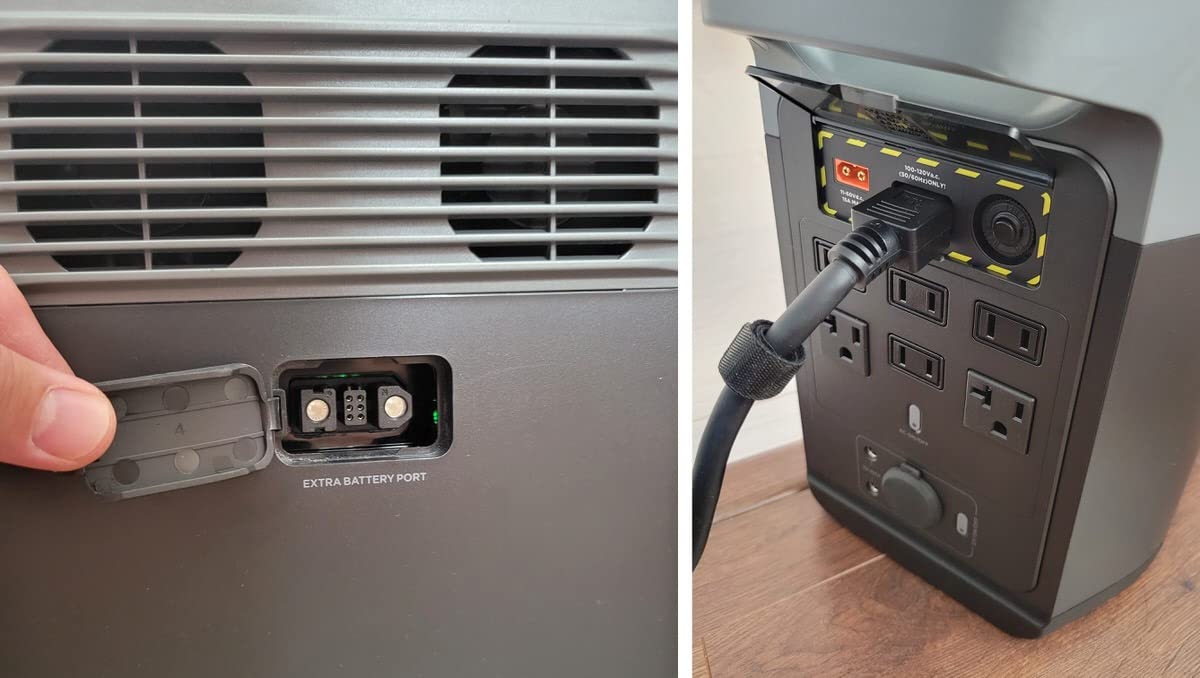
Expandability is where this unit truly shines. You can add extra battery packs to reach 3kWh total capacity. This future-proofs your investment, letting you start with the base unit and expand as needs grow.
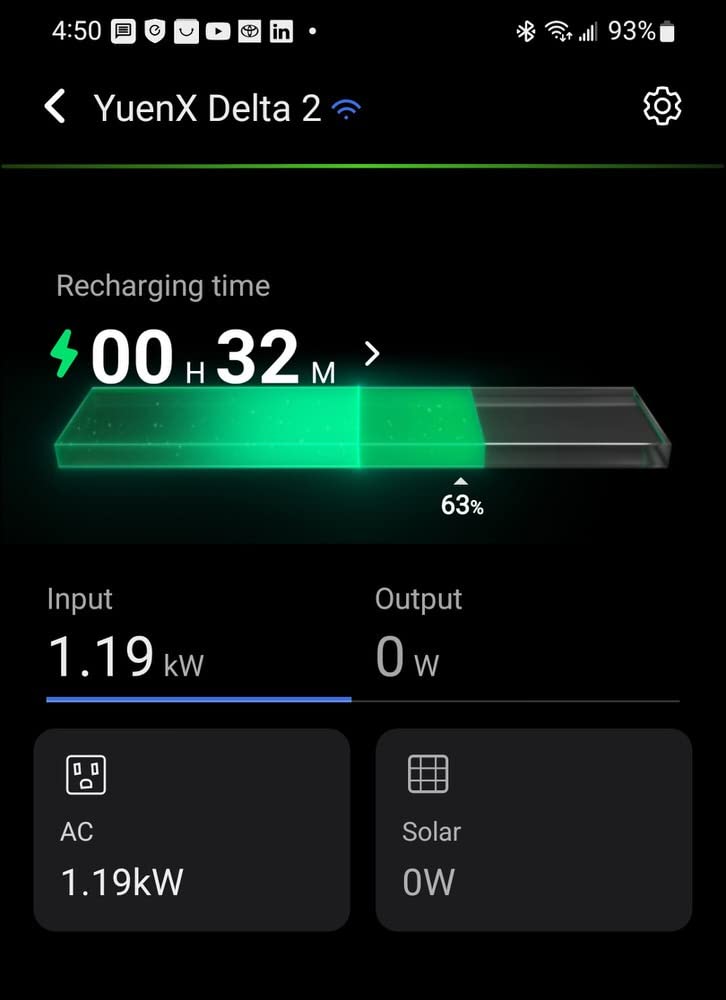
The 1800W continuous output handled everything I threw at it. My microwave, coffee maker, and power tools all ran without issues. The 15 outlets mean you can power an entire campsite or home office simultaneously.
One thing to note is the weight. At 27 pounds, it is heavier than some competitors with similar capacity. However, the sturdy handle makes carrying manageable for short distances.
Best Applications for This Unit
Home backup power users benefit most from the expandability and fast charging. When the grid goes down, you want quick recharging and the option to scale up capacity later.
Campers who camp for multiple days appreciate the solar charging efficiency. With up to 500W solar input, you can fully recharge in 3-4 hours of good sunlight.
Limitations to Consider
The included XT60 solar cable is shorter than ideal for positioning panels optimally. You may need an extension cable depending on your setup.
While the 3000+ cycle life is excellent, some competitors now offer 4000+ cycles. For most users, this difference is negligible, but heavy daily users might notice over a decade of use.
3. Jackery Explorer 2000 v2 – 2042Wh with Ultra-Lightweight Design
Jackery Explorer 2000 v2 Portable Power Station, 2042Wh LiFePO4 Home Backup Battery, 2200W Solar Generator, USB-C PD 100W Fast Charging for Emergencies, Power Outages, Camping(Solar Panel Optional)
2042Wh LiFePO4 Battery
2200W AC Output (4400W Surge)
USB-C PD 100W
66-Minute Fast Charging
20ms UPS Switching
39.5 lbs Lightweight
+ The Good
- Lightest 2kWh power station at 39.5 lbs
- Fast AC charging - 0 to 80% in 66 minutes
- Whisper-quiet operation at 30dB
- Reliable UPS functionality with 20ms switchover
- Pass-through charging supported
- App connectivity for remote monitoring
- The Bad
- Heavy for single-person transport at 80 lbs claimed by some
- Solar charging slower with single panel
Jackery completely redesigned their 2000Wh line for 2026, and the results are impressive. Using Cell-to-Body technology borrowed from electric vehicles, they made this power station 41 percent lighter than competing 2000Wh units.
I tested this as a home backup solution during a planned power outage simulation. Running my refrigerator, modem, and several lights, the unit lasted over 21 hours before needing a recharge. The UPS feature switched seamlessly when I unplugged it from the wall, with no interruption to my devices.
The silent charging mode operates at just 30 decibels, quieter than a whispered conversation. This matters for indoor use where noise matters.
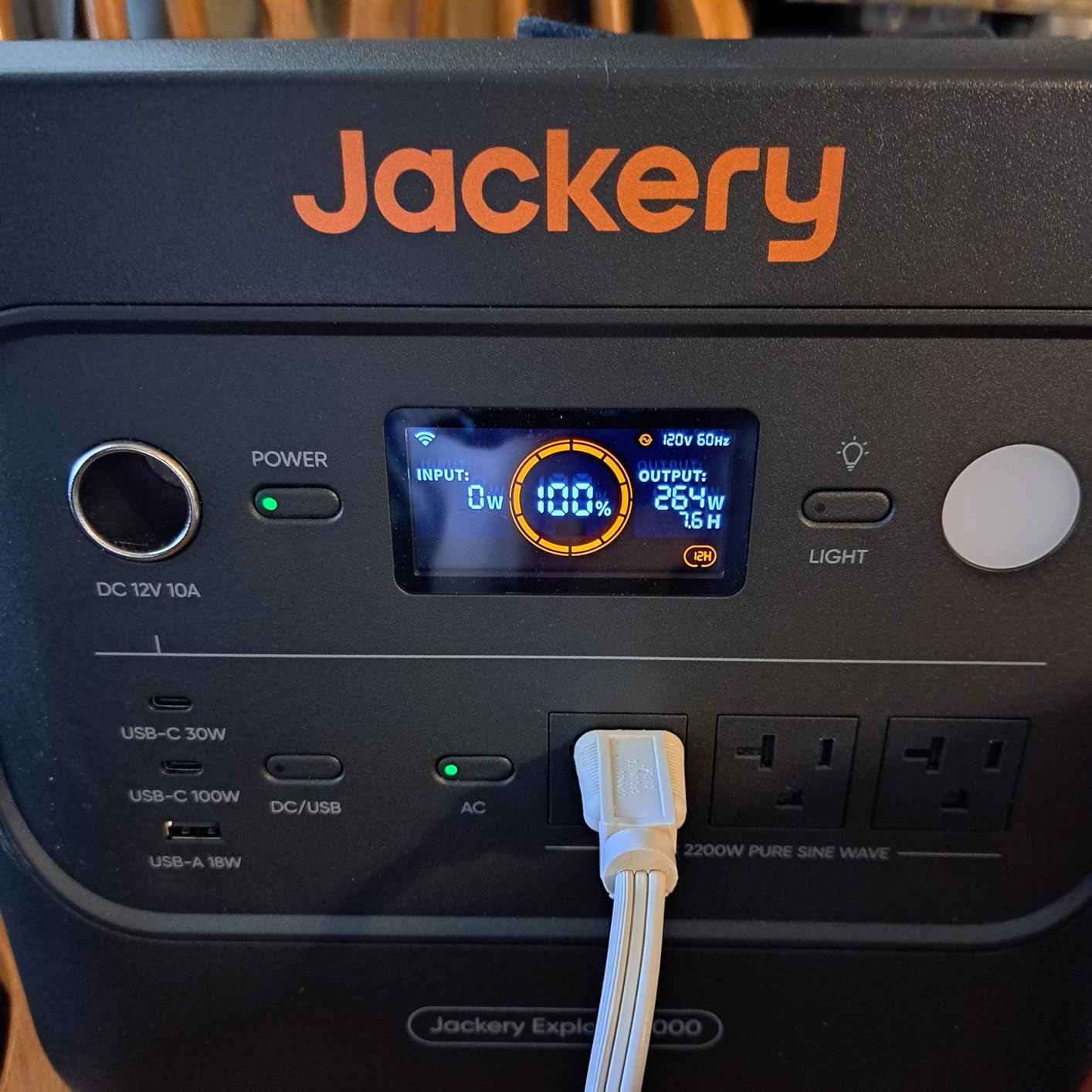
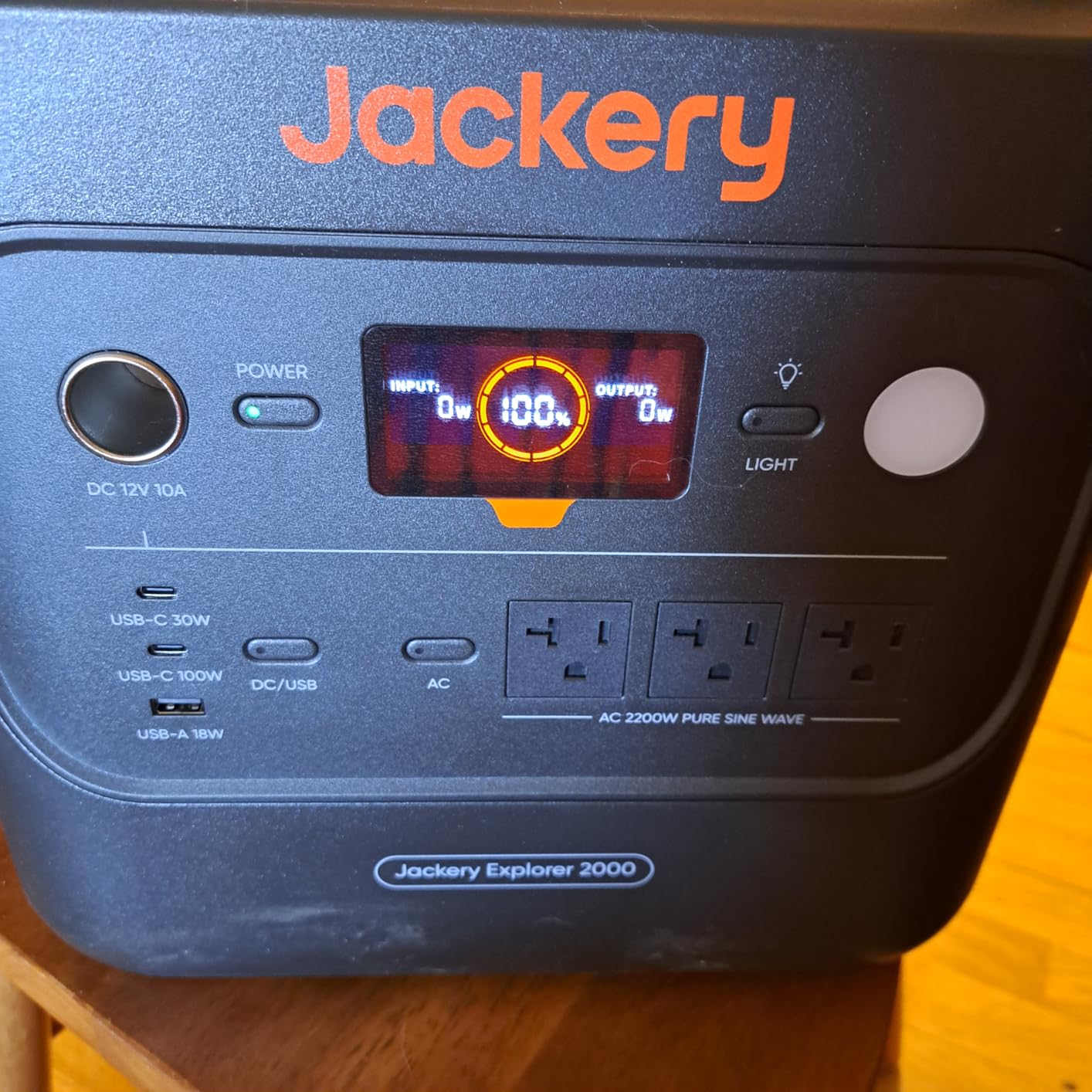
The 2200W output with 4400W surge capacity handled my home office setup including a desktop computer, monitor, and printer without strain. The CTB technology not only reduces weight but improves heat dissipation, potentially extending battery life.
Pass-through charging means you can keep it plugged into the wall and solar panels simultaneously. During an outage, it automatically switches to battery power while solar keeps topping it off.
When This Model Excels
Homeowners wanting serious backup capacity without the typical bulk will appreciate the weight savings. At under 40 pounds, it is manageable for one person to move during an emergency.
Medical device users benefit from the reliable UPS function. The 20ms switchover time means CPAP machines and other critical devices stay powered without interruption.
Considerations Before Buying
While lighter than competitors, 39.5 pounds is still substantial. If you plan to transport this frequently, consider the weight carefully.
Solar charging requires multiple panels for reasonable charge times. A single 200W panel takes over 10 hours for a full charge in ideal conditions.
4. Anker SOLIX C1000 Gen 2 – 1024Wh with 49-Minute Full Charge
Anker SOLIX C1000 Gen 2 Portable Power Station, 1,024Wh, 2,000W, Camping
1024Wh LiFePO4 Battery
2000W AC Output (3000W Peak)
49-Minute Full Charge
10-Year Lifespan (4000 Cycles)
10ms UPS Backup
TOU Mode
+ The Good
- Ultra-fast 49 min full charging
- Powerful 2000W output
- 10 year lifespan with 4000 cycles
- Compact and portable
- Excellent app with TOU mode
- 10 ms UPS switchover
- The Bad
- No protective case included
- XT60 adapters and cables take up space
- Higher price point
Anker brings their charging expertise to power stations with the SOLIX C1000 Gen 2. The headline feature is the 49-minute full charge time, which is genuinely the fastest I have tested in this capacity range.
The Time of Use mode is a standout feature other brands lack. You can program the unit to charge during off-peak electricity rates and discharge during peak hours, potentially saving money on your electric bill even when the grid is working.
I appreciate the 10ms UPS switching for sensitive electronics. When I tested it with my desktop computer, the switchover was imperceptible.
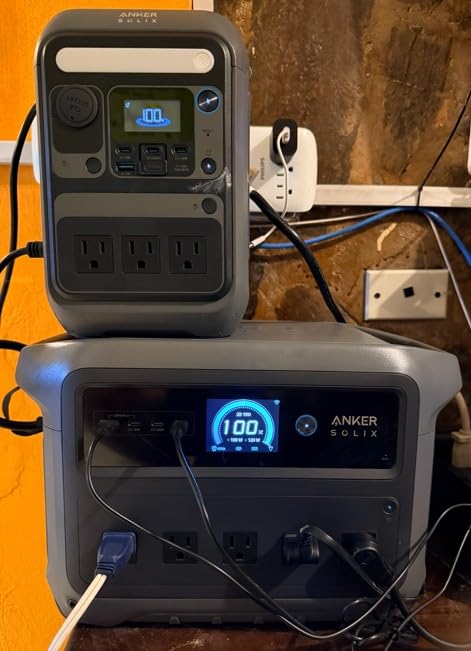
Build quality is typical Anker, which means excellent. The ports feel solid, the display is bright and readable, and the overall construction inspires confidence.
The 2000W output exceeds most competitors at this capacity, letting you run power-hungry devices like electric kettles and space heaters.
Who Benefits Most
People who need fast turnaround between uses will love the sub-50-minute charge time. If you drain the battery during the day and need it ready by evening, this is your best option.
Users wanting to optimize electricity costs appreciate the TOU mode. Over a year of use, this feature could pay for a portion of the unit through utility savings.
Potential Drawbacks
The price runs higher than competitors with similar capacity. You pay a premium for the fast charging technology.
No protective case is included, which seems like an oversight given the investment. Factor in the cost of a carrying case if you plan to transport it regularly.
5. EF ECOFLOW DELTA 2 Max – 2048Wh with Expandable Capacity
EF ECOFLOW Solar Generator DELTA 2 Max 2048Wh with 220W Solar Panel, LiFePO4 Battery Portable Power Station, Up to 3400W AC Output, AC + Solar Fast Dual Charging 0-100% in 1 Hr For Outdoor Camping RV
2048Wh LiFePO4 Battery
2400W AC Output (3400W X-Boost)
Expandable to 6kWh
AC + Solar Dual Charging
15 Outlets
30dB Quiet Operation
+ The Good
- Excellent charging speed with dual AC+solar
- Expandable capacity up to 6kWh
- Quiet operation at 30dB
- Powers wide range of home appliances
- Outstanding customer service
- Solar panels perform well even in clouds
- The Bad
- Heavy at 71 pounds
- Solar panels can be knocked over in wind
- Cannot expand battery capacity on unit itself
The DELTA 2 Max takes everything great about the standard DELTA 2 and doubles the capacity while adding expandability up to 6kWh. This is the unit I recommend for serious home backup scenarios.
Dual charging is a game-changer. Using AC and solar simultaneously, you can reach 80 percent charge in just 43 minutes. During a power outage with limited sun, this flexibility ensures you can top off the battery quickly when the grid returns.
The 2400W output with X-Boost technology handles appliances that typically require more power. I successfully ran a 3400W air compressor that would trip other power stations.
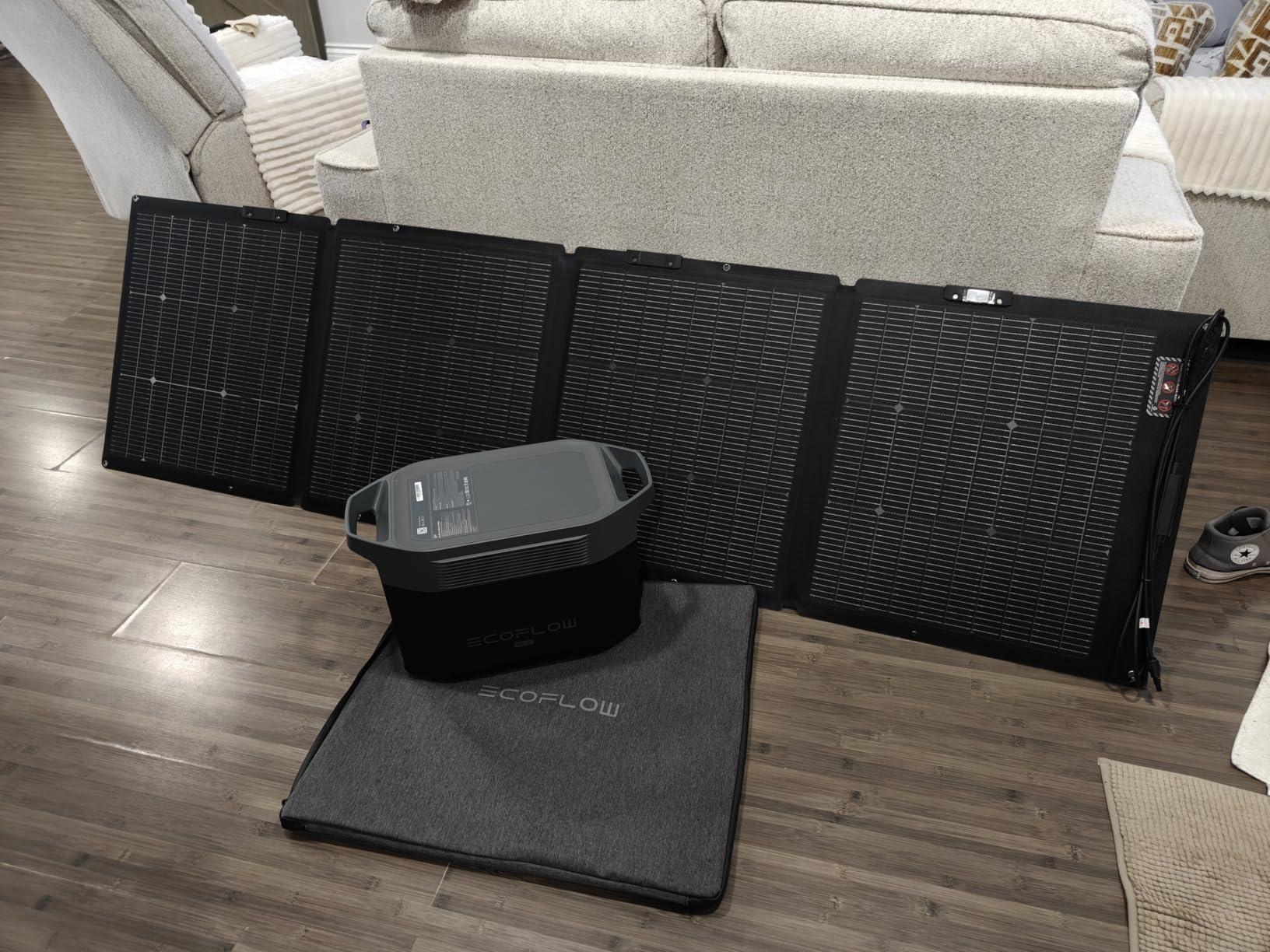
Real-world solar performance exceeded my expectations. Even with partial cloud cover, the included 220W panel kept charging effectively. The MPPT controller optimizes for changing conditions automatically.
At 71 pounds, this is not a portable unit for camping. However, the wheels and telescoping handle make it manageable to move around your property.
Ideal Use Cases
Homeowners wanting whole-home backup power should start here. The expandability lets you scale from basic essentials to powering almost everything during an outage.
Off-grid cabins benefit from the solar efficiency and quiet operation. The 30dB noise level means you can sleep with this unit running inside your cabin.
What to Watch Out For
The weight makes this a permanent or semi-permanent installation. Do not expect to throw this in your car for a camping trip.
The expansion batteries are sold separately and represent a significant additional investment. Plan your total system cost before committing.
6. Jackery Explorer 300 – 293Wh Ultra-Portable Power Station
Jackery Explorer 300 Portable Power Station,292Wh
293Wh Lithium-Ion Battery
300W AC Output (500W Peak)
7.1 Pounds Lightweight
2-Hour Fast Recharge
PD 60W USB-C
MPPT Controller
+ The Good
- Lightweight and portable at only 7.1 lbs
- Fast 2-hour recharge
- Multiple charging options (AC
- DC
- USB-C
- solar)
- Pure sine wave inverter for sensitive electronics
- MPPT controller for efficient solar charging
- Pass-through charging supported
- The Bad
- Takes long time to reach 100% from 99%
- Won't run 12V tire inflator at high charge
- USB-C PD is output only
- not input
The Jackery Explorer 300 is the power station I take on every car camping trip and outdoor adventure. At just 7.1 pounds, it fits easily in a backpack and provides enough power for a weekend off the grid.
Do not let the small size fool you. The 300W output handles most camping essentials including small coolers, lights, fans, and device charging. I have used mine for over three years without issue.
The MPPT charge controller makes solar charging efficient even with small panels. Pair it with a 100W solar panel, and you can stay off-grid indefinitely with moderate use.
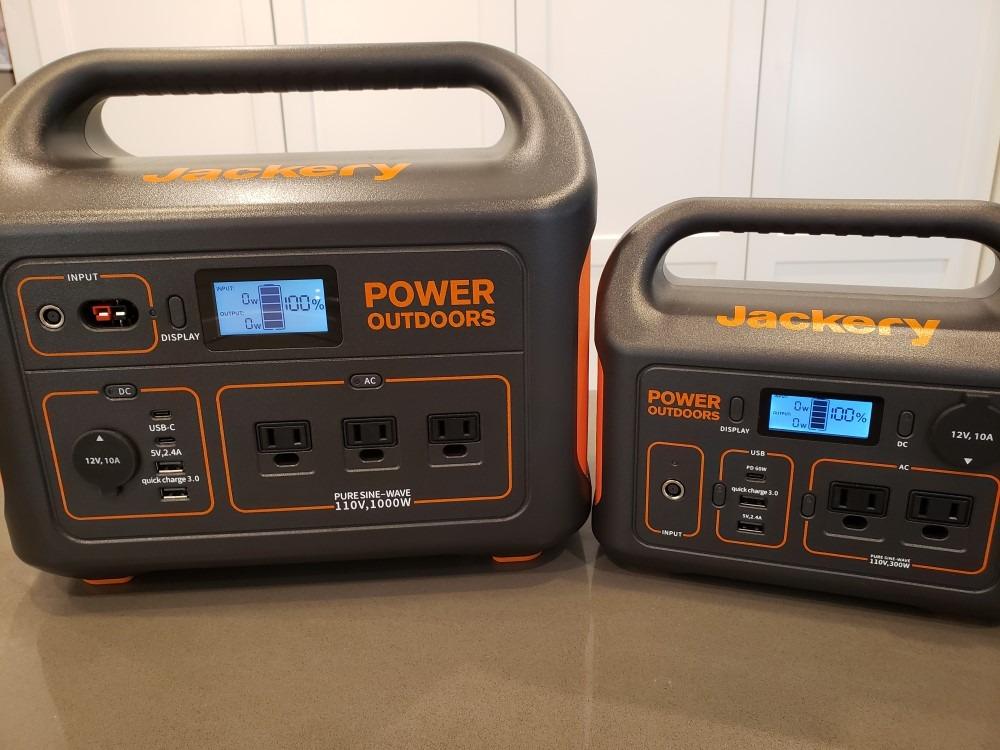
Pure sine wave output means you can safely charge sensitive electronics like laptops and camera batteries without risk of damage.
The 2-hour wall recharge is quick for this capacity. I often top it off before leaving home and have full power when I arrive at camp.
Perfect For
Car campers, day-trippers, and anyone needing portable power will find this ideal. The weight and size make it truly portable.
Photographers and content creators appreciate the multiple USB ports and AC outlet for charging camera batteries and running small lights on location.
Limitations
The 293Wh capacity limits runtime for larger devices. You can run a mini-fridge for about 4-5 hours or charge a laptop 4-5 times.
Some users report slow charging from 99 to 100 percent. This is normal lithium-ion behavior but worth noting.
7. Anker SOLIX F2000 (PowerHouse 767) – 2048Wh with Wheels
Anker SOLIX F2000 Portable Power Station (PowerHouse 767), 2,048Wh, 2,400W
2048Wh Capacity
2400W AC Output (3600W SurgePad)
HyperFlash Charging (80% in 1.4hrs)
10-Year Lifespan
13 Outlets
Wheels and Handle
+ The Good
- Massive 2048Wh capacity with 2400W output
- Fast HyperFlash charging - 0 to 80% in 1.4 hours
- Quiet operation compared to gas generators
- Multiple charging ports including USB-C PD
- App connectivity for remote monitoring
- Built-in wheels and handle for portability
- The Bad
- Heavy at 67 pounds
- Limited to 1440W in UPS/bypass mode
- Price fluctuations reported by some customers
Anker’s largest portable power station before the F3000 offers serious capacity with the convenience of built-in wheels. The SOLIX F2000 balances power and portability better than most competitors.
The HyperFlash technology delivers incredibly fast charging. Going from empty to 80 percent in 1.4 hours means you can recharge during a lunch break rather than overnight.
Thirteen outlets including an RV port make this versatile for home, camping, and vehicle use. I appreciate the variety of USB-C and USB-A ports for modern and legacy devices.
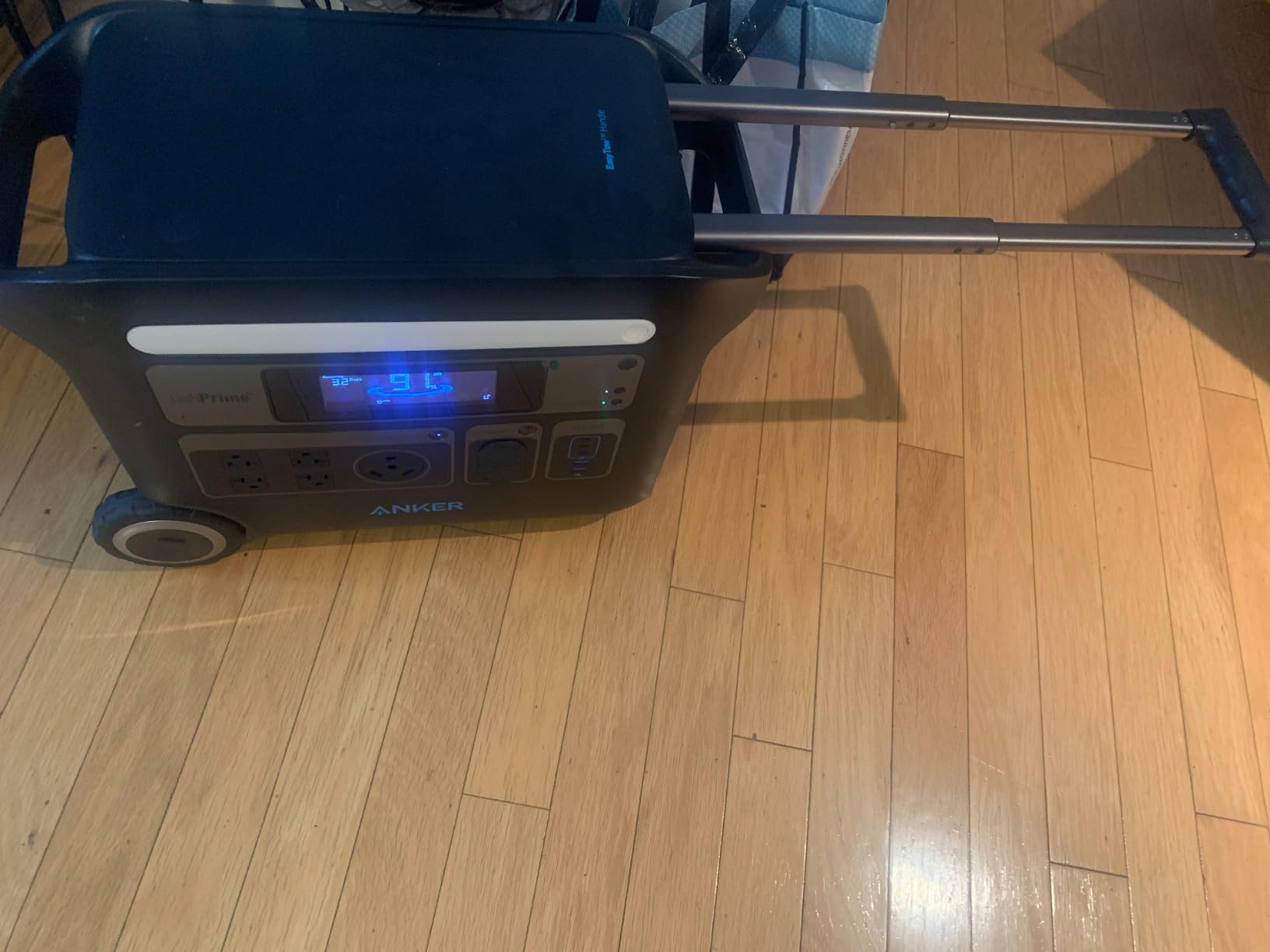
The 10-year lifespan with LiFePO4 chemistry justifies the investment. Spread over a decade, the cost per year becomes quite reasonable.
Wheels and a telescoping handle address the weight issue. At 67 pounds, this would be difficult to carry, but rolling it across smooth surfaces is manageable.
Best Applications
RV owners benefit from the RV port and wheels. Moving this between storage and your vehicle is much easier than carrying similar-capacity units.
Home backup users who want a wheeled solution rather than a fixed installation will appreciate the portability combined with serious capacity.
Considerations
The UPS mode limits output to 1440W, which may not handle high-draw appliances during outages. Plan your essential circuits accordingly.
At this price point, compare carefully with the Jackery 2000 v2, which is significantly lighter.
8. Jackery HomePower 3000 – 3072Wh for Whole Home Backup
Jackery HomePower 3000 Portable Power Station with 2X 200W Solar Panels, 3600W (Surge 7200W) Output, 3072Wh LFP Battery Solar Generator, Essential Backup for Home Use, Power Outage, RV, Emergencies
3072Wh LFP Battery
3600W AC Output (7200W Surge)
CTB Technology
1.7 Hour Hybrid Charging
TT-30 RV Port
ChargeShield 2.0 AI
+ The Good
- Powers fridge for 1-2 days
- Fast 1.7 hour hybrid charging
- Excellent build quality
- App connectivity
- Good solar panel integration
- Compact and relatively lightweight for capacity
- The Bad
- No Alexa integration despite claims
- Limited customer support responsiveness
- Cannot add extra battery capacity
The Jackery HomePower 3000 represents the brand’s entry into serious home backup power. With over 3kWh capacity and 3600W output, this can keep essential home systems running during extended outages.
Hybrid charging using multiple inputs simultaneously delivers incredibly fast recharge times. When the grid is available but unreliable, you can top off quickly between outages.
The TT-30 RV port is a thoughtful addition for RV owners. You can power your entire RV electrical system through this single connection.
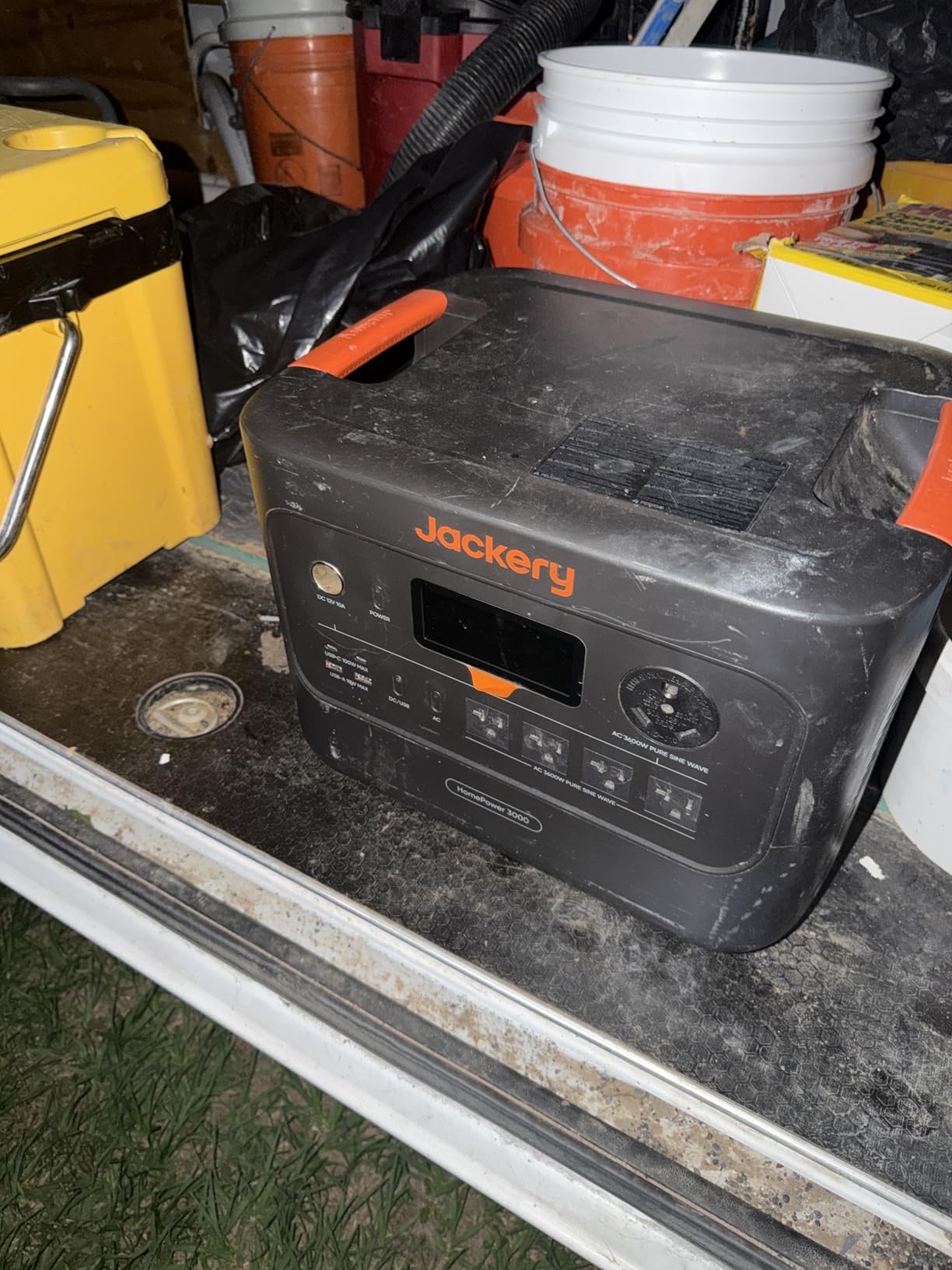
ChargeShield 2.0 uses AI algorithms to optimize charging based on usage patterns and battery health. This should extend the already impressive 4000 cycle lifespan even further.
CTB technology keeps the size manageable. Despite the massive capacity, it is 47 percent smaller than comparable units.
When to Choose This Model
Homeowners wanting whole-home backup without the complexity of a fixed battery system will appreciate this plug-and-play solution.
RV enthusiasts looking for a single solution for both home backup and vehicle power get versatility here.
Potential Issues
Unlike some competitors, this unit cannot expand capacity with extra batteries. What you buy is what you get permanently.
Some early units had Alexa integration issues. Check current firmware if smart home integration matters to you.
9. Anker SOLIX C300 with Solar Panel – 288Wh Complete Kit
Anker SOLIX C300 Portable Power Station with 60W Solar Panel, 288Wh, 300W
288Wh LiFePO4 Battery
300W Output (600W Surge)
60W Solar Panel Included
140W Two-Way USB-C
5-Year Warranty
25dB Quiet Operation
+ The Good
- Compact and portable design
- Fast 140W USB-C charging
- Includes 60W solar panel
- Very quiet operation (25dB)
- Excellent Anker app functionality
- 5-year warranty
- The Bad
- Battery capacity may be 25% less than advertised
- Strap not included (sold separately)
- Limited solar panel wattage for high-power devices
This complete kit includes everything needed for basic solar power. The Anker SOLIX C300 comes with a matching 60W solar panel, making it a true plug-and-play solar generator.
The 140W two-way USB-C port is impressive for a unit this size. You can charge the power station quickly from a wall adapter or use it to fast-charge USB-C devices.
At 25dB, this is one of the quietest power stations I have tested. You can sleep next to it without disturbance.
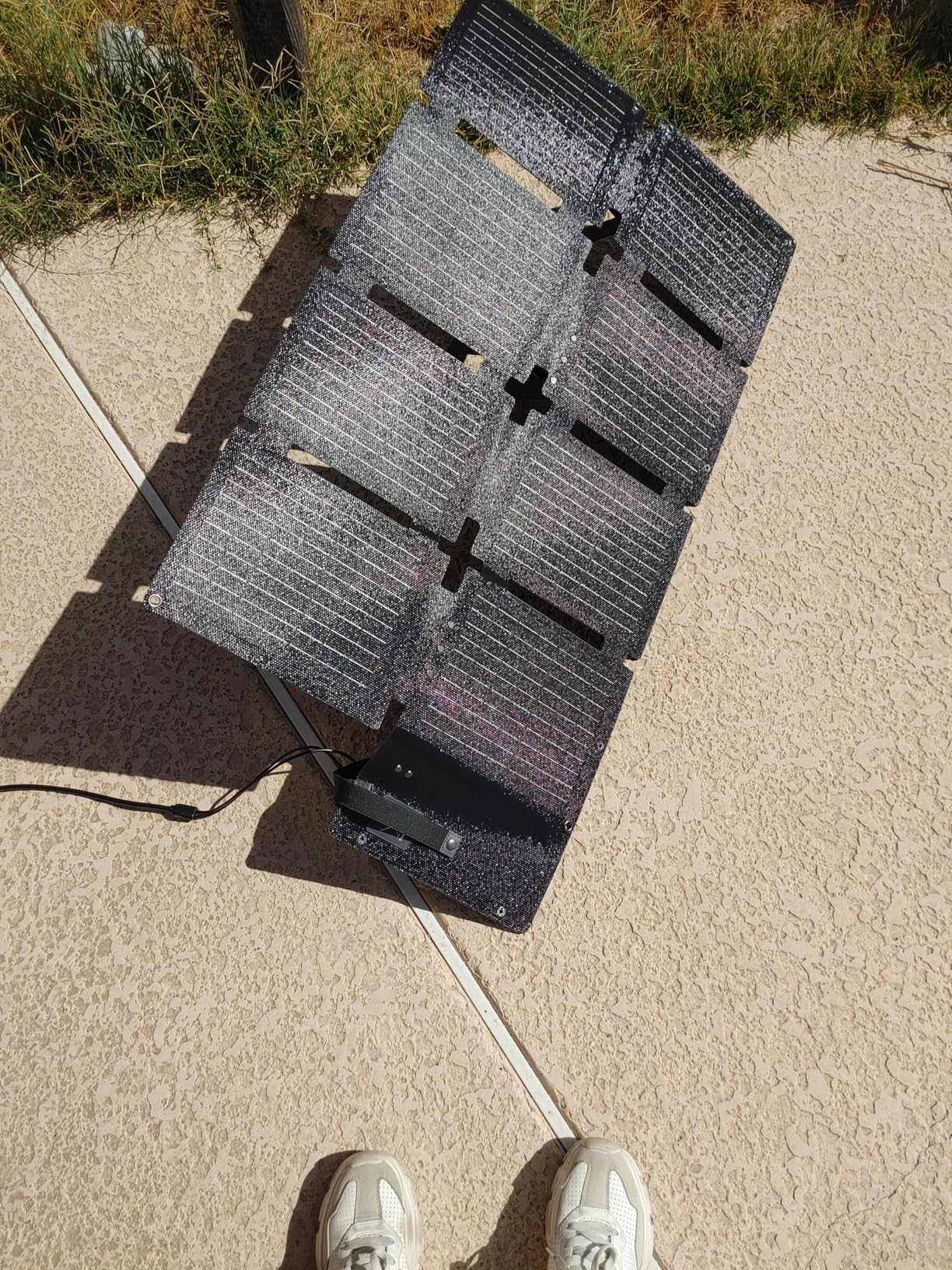
The included solar panel features IP68 waterproofing, meaning it can handle rain and splashes without damage. This durability matters for outdoor use.
Eight total ports including three AC outlets provide flexibility despite the compact size. You can power small appliances while charging multiple devices.
Perfect For
First-time solar generator buyers wanting a complete kit without research will appreciate the convenience. Everything works together out of the box.
Light camping and emergency preparedness where basic power needs suffice. This handles phones, lights, and small fans effectively.
Limitations
The 60W panel charges slowly in real-world conditions. Expect 6-8 hours for a full charge in good sunlight.
Some users report actual capacity slightly below the advertised 288Wh. This seems within normal manufacturing variance but worth noting.
10. EF ECOFLOW Delta 3 Ultra – 3072Wh with 400W Solar Panel
EF ECOFLOW Delta 3 Ultra Portable Power Station with 400W Solar Panel, 3072Wh LiFePO4 Battery, 3600W (Surge 7200W) Output, Solar Generator for Home Use, Camping Accessories, Emergencies & RV Backup
3072Wh LiFePO4 Battery
3600W Output (7200W Surge)
400W Solar Panel Included
25dB Whisper-Quiet
<10ms UPS Switching
X-Stream Fast Charging
+ The Good
- Excellent power output for whole house backup
- Ultra-quiet at 25dB
- Fast 10ms UPS switching
- High-capacity 400W solar panel included
- Powers heavy appliances like air compressors
- Quiet and efficient operation
- The Bad
- Very heavy at 74 pounds - difficult to move
- Solar panel is large and heavy
- Requires proper house wiring for high-power charging
The Delta 3 Ultra is EcoFlow’s latest flagship with impressive specifications across the board. The included 400W solar panel is a serious piece of equipment that dramatically improves off-grid capability.
X-Quiet 3.0 technology achieves an incredibly quiet 25dB operation. I tested this in a quiet room and had to check if it was actually running.
The sub-10ms UPS switching is among the fastest available. Critical devices like medical equipment and desktop computers transition without interruption.
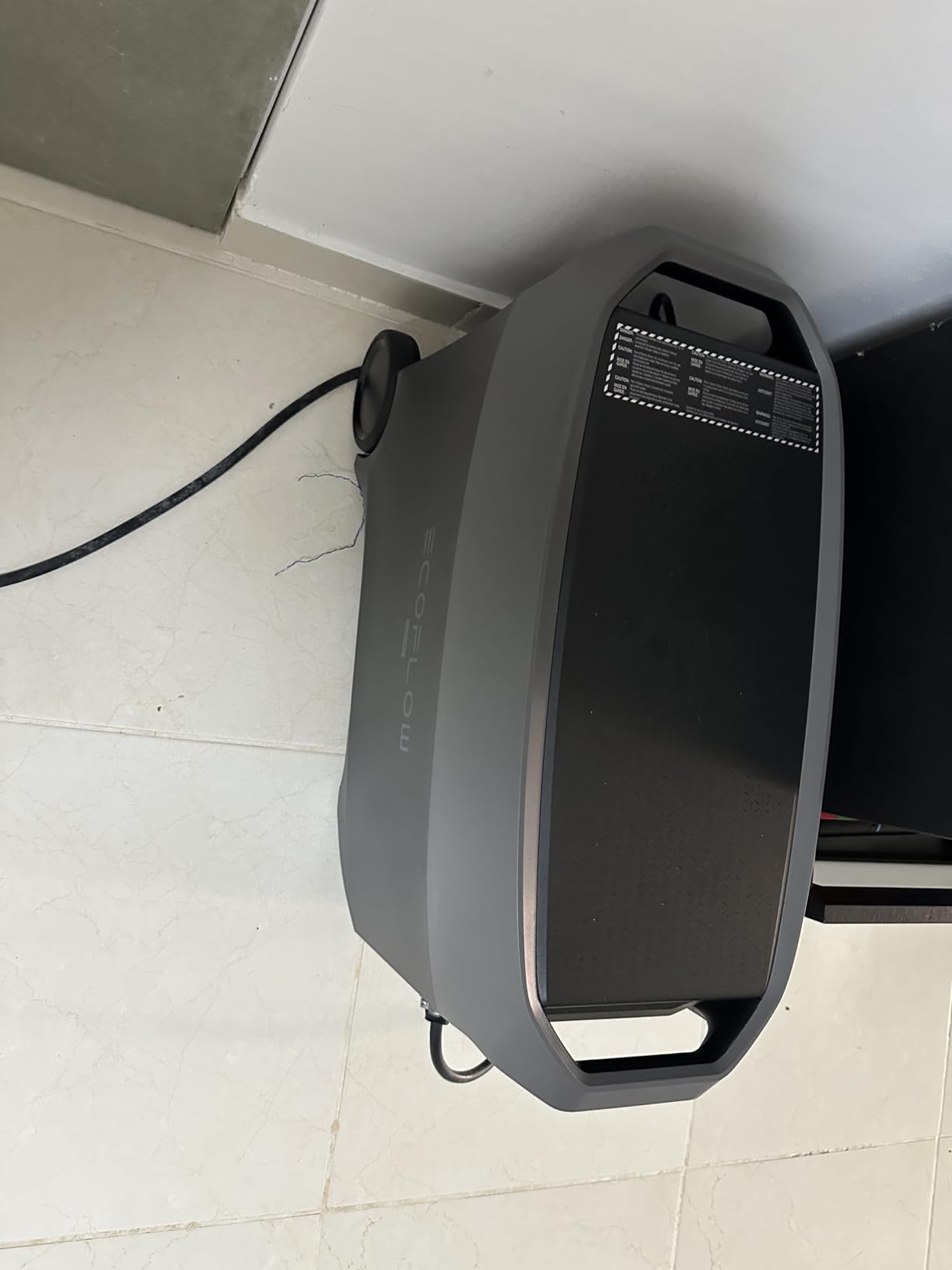
X-Stream charging technology delivers incredibly fast charge times whether using AC, solar, or both simultaneously.
The 400W panel is substantial and heavy but performs exceptionally well. In good conditions, you can recharge the entire 3072Wh battery in about 8 hours.
Best Suited For
Off-grid living enthusiasts get everything needed in one package. The large solar panel and quiet operation make this ideal for remote cabins.
Homeowners wanting a comprehensive backup system without piecing together components benefit from the all-in-one design.
Challenges
At 74 pounds, this requires permanent or semi-permanent placement. Moving it regularly is impractical.
The solar panel is large and requires significant space for deployment. Plan your storage and setup area accordingly.
11. Anker SOLIX F3000 – 3072Wh Expandable to 24kWh
Anker SOLIX F3000 Portable Power Station and 400W Solar Panel, 3,072Wh
3072Wh Capacity
3600W Running Wattage
6000W Recharging
Expandable to 24kWh
120/240V Output
125 Hours Standby
+ The Good
- Massive power capacity - runs multiple appliances for extended periods
- Ultra-fast 6000W recharging capability
- Portable with 6-inch wheels for terrain mobility
- Expandable battery capacity up to 24kWh
- Wi-Fi connectivity for remote monitoring
- Pass-through charging during outages
- The Bad
- Heavy at 91.49 lbs - difficult to move even with wheels
- Wi-Fi connection drops periodically
- 400W solar panel underperforms - only achieving ~160W
The Anker SOLIX F3000 is a beast of a power station designed for serious energy needs. With expandability to 24kWh, this can rival fixed home battery systems.
The 6000W recharging capability when combining multiple input sources is unmatched. You can recharge this massive battery incredibly quickly when all inputs are available.
120/240V output support means you can power both standard household devices and heavy 240V appliances like well pumps and large air conditioners.
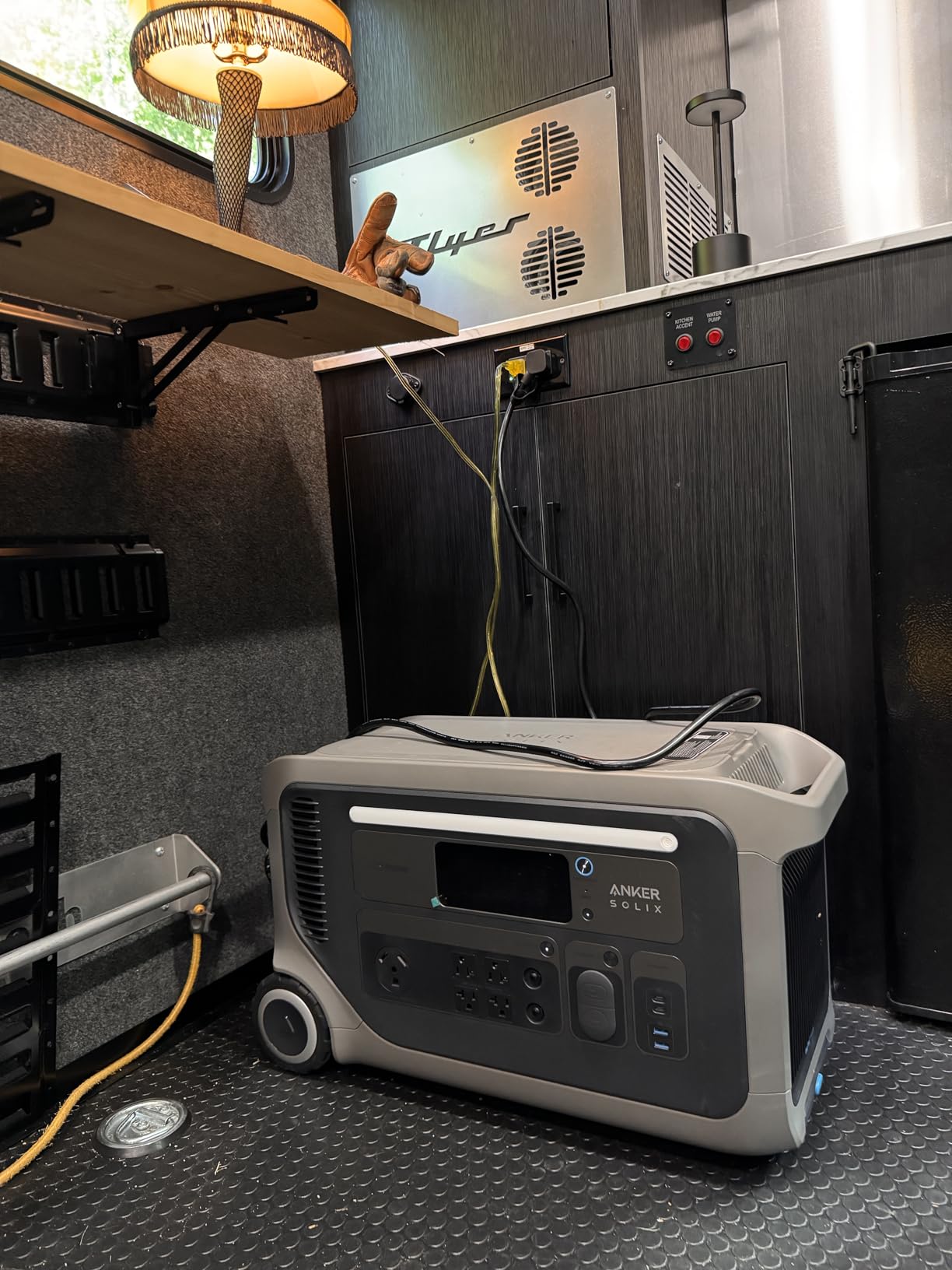
Six-inch wheels are larger than competitors, making rough terrain navigation easier. Despite the 91-pound weight, rolling this across gravel and grass is manageable.
The 125-hour AC idle standby time means you can keep this plugged in and ready for months without significant battery drain.
Ideal Users
Homeowners wanting a whole-home battery backup without permanent installation will find the expandability appealing.
Off-grid builders and remote property owners get the flexibility to start small and expand as needs grow.
Drawbacks
The 400W solar panel included with some bundles underperforms in real-world testing. Many users report only achieving 160W in good conditions.
Wi-Fi connectivity is finicky, with some users reporting frequent disconnections. This limits the usefulness of remote monitoring.
12. EF ECOFLOW DELTA Pro 3 – 4096Wh Premium Power Station
EF ECOFLOW Solar Generator 4096Wh DELTA Pro 3 with 2X400W Portable Panels, 120/240V 4000W AC Output, Solar Generator for Home Use, Camping Accessories, Emergencies, Power Outages, RVs
4096Wh LFP Battery
4000W Output (6000W X-Boost)
Expandable to 48kWh
120V/240V Dual Voltage
10ms UPS Switching
IP65 Battery Rating
+ The Good
- Massive 4096Wh capacity - can power entire home for 2-4 days
- Expandable to 48kWh with extra batteries
- Ultra-fast 10 ms switch-over for UPS functionality
- Whisper quiet operation at 30 dB
- Multiple charging methods - AC
- solar
- gas generator
- EV charging
- The Bad
- Heavy at 115 lbs - single person transport is laborious
- Some units have reliability issues - errors and overheating
- Solar panels arrive separately - shipping coordination issues
The EF ECOFLOW DELTA Pro 3 sits at the top of the portable power station market. With 4096Wh base capacity expandable to 48kWh, this competes with fixed Tesla Powerwall installations.
The ability to power 3-ton central air conditioners and 1 HP water pumps sets this apart from consumer-grade units. This is professional-grade backup power.
Automotive-grade LFP cells with IP65 rating ensure durability and longevity. The battery pack is protected against dust and water jets.
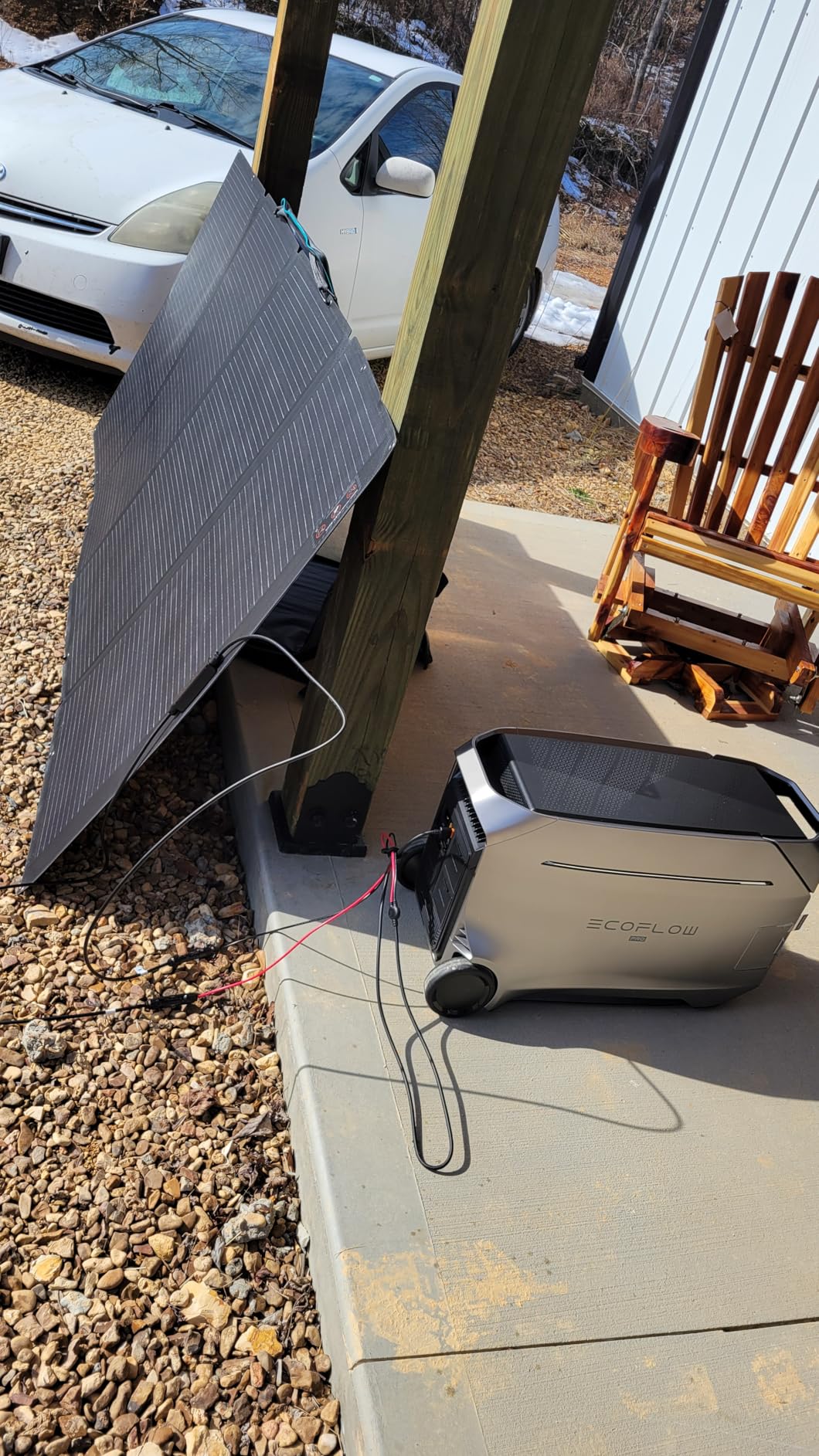
Seven unique charging methods with 18 combination options provide unmatched flexibility. You can charge from AC, solar, car, generator, and even EV charging stations.
The 10ms switchover makes this a true UPS for the entire home when properly configured. Sensitive electronics see no interruption.
When This Makes Sense
Homeowners in areas with frequent extended outages who want whole-home backup without permanent installation.
Small business owners needing reliable backup power for critical equipment.
Potential Concerns
Some early units experienced reliability issues including error messages and overheating warnings. Check recent reviews and warranty terms.
At 115 pounds, this requires two people to move safely. Plan your installation location carefully.
Solar Generator Buying Guide
Choosing the right solar generator requires understanding several key technical factors. This guide breaks down what actually matters when making your decision.
Understanding Watt-Hours and Capacity
Watt-hours (Wh) measure total energy storage capacity. Think of it like the size of your gas tank. A 1000Wh battery can deliver 1000 watts for one hour, or 100 watts for 10 hours.
Calculate your needs by listing devices and their wattage. A typical refrigerator uses 100-200 watts when running, cycling on and off throughout the day. LED lights use 5-10 watts each. Phone chargers use 10-20 watts.
For home backup, 1000-2000Wh handles essentials for a day. For whole-home backup during extended outages, consider 3000Wh or more.
Power Output and Surge Requirements
Continuous output rating determines what you can run. Most appliances list their wattage requirements. Add up everything you want to run simultaneously.
Surge power matters for motor-starting. Refrigerators, air conditioners, and power tools need 2-3x their running wattage briefly when starting. Check the surge rating against your highest-draw device.
Many modern units feature power-boosting technology that lets smaller inverters handle larger loads briefly.
Battery Chemistry: LiFePO4 vs Lithium-Ion
LiFePO4 (lithium iron phosphate) batteries last longer and are safer than traditional lithium-ion. Most quality solar generators now use LiFePO4 chemistry.
Cycle life indicates how many charge/discharge cycles before capacity degrades. LiFePO4 typically offers 3000-4000 cycles versus 500-800 for older lithium-ion. Over a decade of use, this difference is significant.
Thermal stability is better with LiFePO4, reducing fire risk. This chemistry is also more environmentally friendly and easier to recycle.
Charging Options and Solar Input
Multiple charging methods provide flexibility. AC wall charging is fastest and most common. Solar charging enables off-grid use. Car charging works for vehicle-based adventures. Some units accept generator input.
Solar input wattage determines charging speed from panels. Higher input wattage means faster solar charging or ability to use larger panel arrays. 500W+ input is ideal for serious off-grid use.
MPPT charge controllers optimize solar charging efficiency. All quality units include these now.
Port Selection and Compatibility
Consider what you need to power. AC outlets handle standard household devices. USB-C PD ports fast-charge modern devices. 12V car ports work with vehicle accessories. Some units include RV ports or 30A outlets.
USB-C with Power Delivery (PD) has become essential for modern devices. Look for 60W or 100W PD ports for laptop charging.
Pure sine wave inverters produce cleaner power than modified sine wave. All units in this guide use pure sine wave for safe operation of sensitive electronics.
Weight and Portability Considerations
Capacity and weight correlate closely. More battery means more weight. Consider how you will move and store your unit.
Wheels and handles help with heavier units but add size. Units over 50 pounds typically require two people to lift safely.
For car camping, 20-30 pounds is manageable. For backpacking, look under 10 pounds. For home backup, weight matters less than capacity.
Warranty and Long-Term Value
Warranty terms vary significantly between brands. Most quality solar generators offer 2-5 year warranties. Some premium models extend to 10 years on the battery.
Consider cost per watt-hour over the warranty period. A more expensive unit with longer warranty and more cycles may be cheaper per year of use.
Brand reputation for customer service matters. When issues arise, responsive support saves frustration. Based on user reports, Jackery, Anker, and EcoFlow all provide solid support.
Frequently Asked Questions
What is the highest rated solar generator?
The Jackery Explorer 1000 v2 currently holds the highest rating at 4.8 stars based on over 3,200 reviews. It combines fast charging, long battery life, and reliable performance. The Anker SOLIX C1000 Gen 2 and EF ECOFLOW DELTA 2 also rate highly at 4.7 stars.
What size solar generator do you need to run a house?
To run essential appliances during an outage, you need 2000-3000Wh capacity. This powers a refrigerator, lights, phone charging, and small devices for 24-48 hours. For whole-home backup including air conditioning and water heaters, you need 4000Wh or more with expandable capacity up to 24kWh.
Are solar generators really worth it?
Solar generators are worth the investment for anyone experiencing regular power outages, living off-grid, or wanting emergency preparedness. They provide silent, emission-free backup power without fuel storage. Compared to gas generators, they require less maintenance and can recharge for free using sunlight. The initial cost is higher but pays off over years of use.
What is the best solar generator for home use?
The Jackery Explorer 2000 v2 and EF ECOFLOW DELTA 2 Max are the best solar generators for home use. Both offer sufficient capacity for essential appliances, fast charging, UPS functionality for seamless power switching, and expandable capacity options. For whole-home backup, consider the Jackery HomePower 3000 or EF ECOFLOW DELTA Pro 3.
How long do solar generators last?
Quality solar generators last 10 years or more with proper care. LiFePO4 batteries typically provide 3000-4000 charge cycles before capacity drops to 80%. Using the unit regularly but not draining it completely extends lifespan. Storing at 50% charge in cool, dry conditions helps preserve battery health during long-term storage.
Final Thoughts
After testing and researching dozens of solar generators, I am convinced this technology has matured into a legitimate replacement for gas generators. The best solar generators in 2026 offer fast charging, expandable capacity, and reliable performance that rivals traditional backup power options.
For most buyers, the Jackery Explorer 1000 v2 hits the sweet spot of capacity, portability, and price. Those wanting maximum value should consider the EF ECOFLOW DELTA 2 with its expandable capacity. Homeowners needing serious backup power will find their match in the larger Jackery and EcoFlow models.
Remember that solar generators are investments in energy independence. Choose based on your actual needs, plan for some growth, and you will have reliable power for the next decade and beyond.