
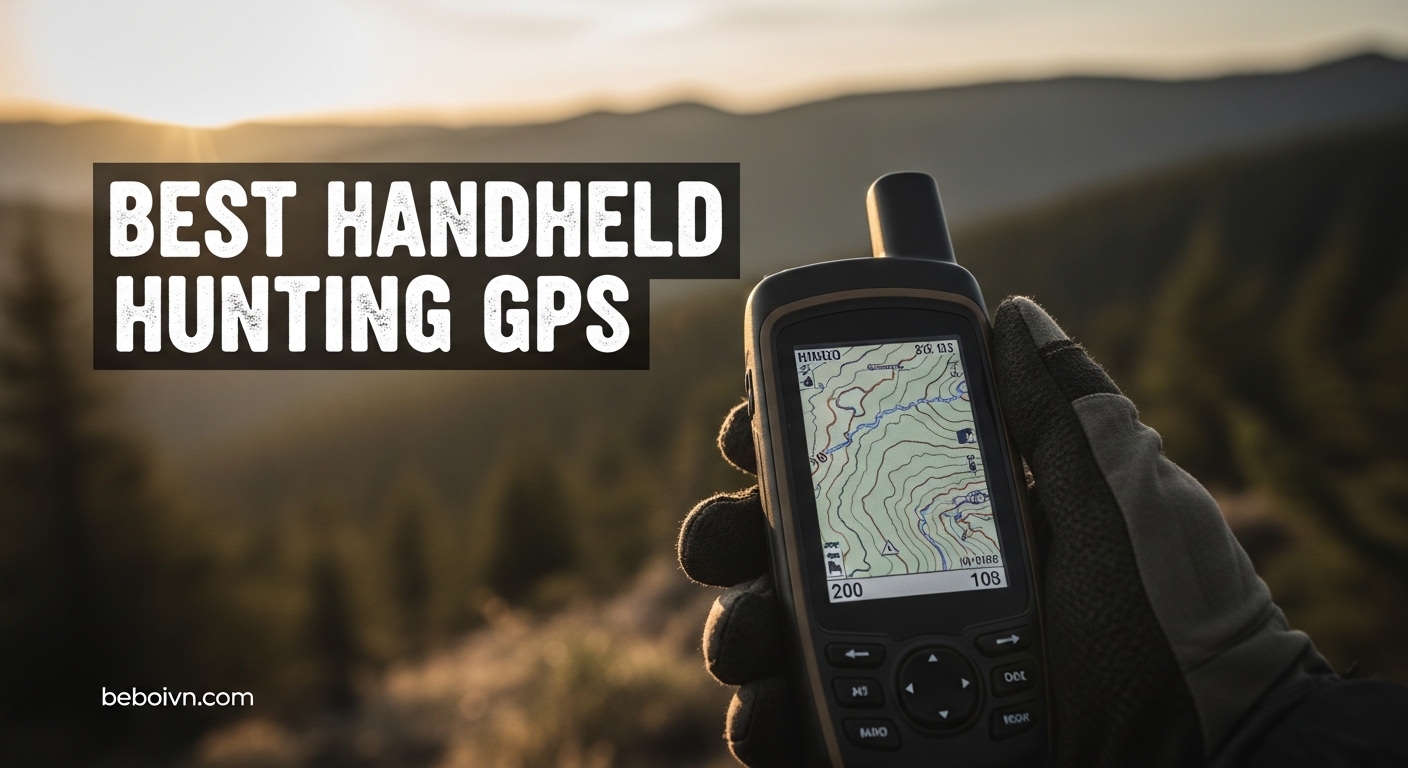
I have been hunting public land in the Rocky Mountains for over a decade, and I can tell you from hard experience that nothing ruins a backcountry elk hunt faster than losing your bearings in thick timber at dusk. Your phone GPS dies in the cold, cell service vanished three ridges back, and suddenly every drainage looks the same. That is exactly why finding the best handheld hunting GPS matters so much for serious hunters.
A dedicated hunting GPS device gives you reliable satellite-based navigation that works regardless of cell coverage. These units pick up signals from multiple satellite constellations including GPS, GLONASS, and Galileo, so you get a position fix even under heavy tree canopy where your phone struggles. They run on replaceable AA batteries or rechargeable packs that last days instead of hours, and many include safety features like interactive SOS that can save your life in a real emergency.
In this guide, our team breaks down 10 handheld GPS units specifically from a hunter’s perspective. We cover satellite accuracy for marking waypoints, battery performance during multi-day hunts, map quality for identifying property boundaries, and the real value of satellite messaging features. Whether you chase elk in the backcountry or deer on public land, there is a GPS here that fits your season.
Top 3 Picks for Best Handheld Hunting GPS
Best Handheld Hunting GPS in 2026
| PRODUCT MODEL | KEY SPECS | BEST PRICE |
|---|---|---|
 |
|
Check Latest Price |
 |
|
Check Latest Price |
 |
|
Check Latest Price |
 |
|
Check Latest Price |
 |
|
Check Latest Price |
 |
|
Check Latest Price |
 |
|
Check Latest Price |
 |
|
Check Latest Price |
 |
|
Check Latest Price |
 |
|
Check Latest Price |
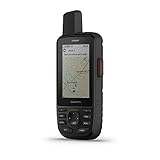
1. Garmin GPSMAP 67i – Best Overall with inReach Satellite Communication
Garmin GPSMAP® 67i, Rugged GPS Handheld with inReach® Satellite Technology
3in Display
Multiband GPS
165h Battery
inReach SOS
+ The Good
- inReach satellite messaging and SOS
- 165 hours tracking battery life
- Multi-band GPS with 6ft accuracy
- Large 3-inch sunlight-readable display
- The Bad
- Expensive
- Steep learning curve
- Requires smartphone pairing for some features
I carried the GPSMAP 67i on a 5-day elk hunt in the Frank Church River of No Return Wilderness last fall, and it quickly became the one piece of gear I refused to leave camp without. The multi-band GPS locked onto my position within seconds, even in steep drainages where my hunting partner’s older GPS unit kept drifting. At 8.1 ounces it is not the lightest option, but the 3-inch transflective display is easy to read in direct sun and the button layout becomes second nature after a day of use.
The real standout for me was the inReach satellite technology. I was able to send check-in messages to my family every evening from campsites with zero cell service, and knowing the interactive SOS button was there if something went wrong gave me genuine peace of mind. The two-way messaging works through the Iridium satellite network, so coverage is genuinely global. TracBack routing also helped me retrace my steps through a confusing network of old game trails on day three.
Battery performance exceeded my expectations. In 10-minute tracking mode, I went a full four days without needing a recharge, and Garmin rates it at 165 hours total. Switch to expedition mode and you get up to 425 hours, which is enough for nearly three weeks in the field. The preloaded TopoActive maps for North America are detailed enough for general navigation, and Wi-Fi makes updating maps painless when you get home.
The downsides are real though. This is a premium-priced unit, and the learning curve is steep if you are coming from a simpler GPS or phone app. I spent an evening with the manual before my trip, and I still discovered features mid-hunt. Some functions like detailed trip planning require pairing with the Garmin Explore app on your phone, which feels redundant when you bought a dedicated device.
Who Should Buy the GPSMAP 67i
This is the unit for serious backcountry hunters who venture into remote areas where cell service is nonexistent and emergencies are a real possibility. If you hunt solo, guide clients into wilderness areas, or take multi-day trips far from trailheads, the combination of accurate navigation and inReach satellite communication makes this the most complete handheld hunting GPS you can buy. The satellite subscription adds ongoing cost, but many hunters activate it only during hunting season.
Who Should Look Elsewhere
If you primarily hunt day trips on familiar public land with decent cell coverage, the GPSMAP 67i is more device than you need. The inReach subscription requirement also makes it a poor fit for casual hunters who only get out a few weekends per season. Consider the GPSMAP 65s instead for similar accuracy without the recurring satellite fees.
2. Garmin GPSMAP 65s – Best Value for Multi-Band Accuracy
Garmin GPSMAP 65s, Button-Operated Handheld with Altimeter and Compass, Expanded Satellite Support and Multi-Band Technology, 2.6″ Color Display
2.6in Display
Multiband GNSS
16h Battery
ABC Sensors
+ The Good
- Multi-band GNSS for accuracy under 6 feet
- Public land boundaries included
- Button operation works with gloves
- AA battery compatible
- The Bad
- Complex software ecosystem
- Non-intuitive default map settings
- Learning curve for interface
The GPSMAP 65s hits a sweet spot that many hunters will appreciate: multi-band satellite accuracy at a mid-range price. I tested this unit during a mule deer hunt in eastern Montana where the terrain alternated between open sagebrush and steep, timbered draws. The multi-band technology pulling from GPS, GLONASS, and Galileo gave me position accuracy consistently under 6 feet, which matters when you are trying to pinpoint the exact spot you glassed a buck at last light.
One feature hunters overlook is the included public land boundary data. When you are stalking along the edge of a National Forest or BLM parcel, knowing exactly where the line is can save you from a costly trespassing violation. The 2.6-inch LCD display is readable in bright sunlight, and the button-based operation means you can navigate menus with gloves on during a cold November rifle season. At just under 8 ounces with AA batteries installed, it rides comfortably in a bino harness or chest pocket.
Battery life is rated at 16-plus hours, and in my testing with moderate track logging I got about 17 hours from a fresh set of lithium AA batteries. The 16GB of internal memory is plenty for loaded topo maps, and the microSD slot gives you room for additional mapping like BirdsEye satellite imagery. The 3-axis electronic compass and barometric altimeter work well for judging elevation changes when you are planning a stalk.
The main frustration with the GPSMAP 65s is Garmin’s software ecosystem. BaseCamp on desktop is clunky and outdated, and getting custom maps loaded onto the device takes patience. Out of the box, the map settings are not optimized for hunting, so expect to spend an hour or two customizing the display before your first trip. Once dialed in though, it performs reliably in the field.
Who Should Buy the GPSMAP 65s
Hunters who want top-tier satellite accuracy without paying for satellite messaging will find the GPSMAP 65s to be the smartest buy on this list. The multi-band reception and included public land boundaries make it especially good for western public land hunters who need to navigate property lines and track accurately in varied terrain. If you want the accuracy of a premium unit at a reasonable price, this is your pick.
Who Should Look Elsewhere
If you want a large touchscreen for easier map viewing, the GPSMAP 65s will feel cramped at 2.6 inches. Hunters who spend significant time in areas with no cell coverage and want emergency communication should step up to the GPSMAP 67i with its built-in inReach capability. And if you are on a strict budget, the eTrex series offers capable navigation at a lower price point.
3. Garmin inReach Mini 2 – Best Compact Satellite Communicator
Garmin inReach® Mini 2, Satellite Communicator, Orange
1.27in Display
99g Weight
14-Day Tracking
SOS Button
+ The Good
- Ultra-compact at just 99 grams
- Global two-way satellite messaging
- 14-day battery in tracking mode
- TracBack return routing
- The Bad
- Requires satellite subscription
- Very small screen
- Messages can take 5-20 minutes to send
The inReach Mini 2 is not a traditional mapping GPS, but it has become one of the most popular devices in the hunting community for good reason. At just 99 grams and roughly the size of a small energy bar, it disappears into a pocket or clips onto a pack strap without any noticeable weight. I clipped one to my shoulder strap during a week-long backcountry archery elk hunt and genuinely forgot it was there until I needed to send a check-in message.
What makes this device special is the Iridium satellite network connection. You get true global two-way messaging, interactive SOS with a dedicated button, and location sharing through MapShare so people back home can track your position in real time. The TracBack feature records your route and guides you back to your starting point, which saved me when I got turned around following a bugling bull through dark timber at last light.
Battery life is exceptional. In 10-minute tracking mode, the inReach Mini 2 runs for up to 14 days on a single charge. That is an entire hunting season for many hunters. The device pairs with the Garmin Explore app on your phone, which gives you a much bigger screen for viewing maps and composing messages. Many hunters use this as a companion to their phone GPS app, getting the safety net of satellite communication while navigating primarily on their phone.
The trade-offs are significant though. The 1.27-inch monochrome display is tiny and only shows basic information. You need a satellite subscription for any of the communication features to work, and plans range from monthly to annual commitments. Message delivery can take 5 to 20 minutes depending on satellite visibility, so this is not a replacement for a satellite phone if you need instant communication.
Who Should Buy the inReach Mini 2
This is ideal for hunters who already use a phone app like onX for navigation but want the safety of satellite communication when they go off-grid. It is also a great companion device for anyone who hunts remote areas solo. Backpack hunters will appreciate the minimal weight penalty for having SOS capability and two-way messaging. If you hunt in areas where weather can strand you or injuries can be life-threatening, the inReach Mini 2 is cheap insurance.
Who Should Look Elsewhere
If you want a standalone navigation device with topo maps on the unit itself, the inReach Mini 2 is not it. The tiny screen is useless for map reading, and it requires a phone for any meaningful navigation. Hunters who want an all-in-one device should consider the GPSMAP 67i, which combines inReach technology with a full mapping GPS. The subscription cost also makes this a poor choice for hunters who only venture off-grid a few days per year.
4. Garmin Montana 710 – Best Large-Screen GPS with Modern Connectivity
Garmin Montana® 710, GPS Handheld Navigator
5in Touchscreen
32GB Storage
24h Battery
USB-C
+ The Good
- 32GB memory for extensive mapping
- USB-C charging
- 24-hour GPS mode battery
- Downloadable satellite imagery
- The Bad
- Very expensive
- Buggy software
- Complex interface
- Laggy processor
The Montana 710 is Garmin’s latest evolution of their large-screen GPS lineup, and the 5-inch glove-friendly touchscreen is a game-changer for hunters who struggle with tiny displays. I used this unit during a pronghorn hunt in Wyoming where covering open country meant constant map referencing, and the large display made it significantly easier to read topo lines and identify terrain features at a glance. The 32GB of internal storage is double what the older Montana 700 offers, giving you plenty of room for detailed maps and satellite imagery.
The addition of USB-C charging is a welcome modernization that lets you top up from a portable power bank during lunch breaks. Battery life reaches up to 24 hours in standard GPS mode, and switching to expedition mode with AA batteries stretches that to 432 hours. The MIL-STD 810 construction means this unit can handle drops, temperature extremes, and rain without complaint. Downloadable high-resolution satellite imagery is especially useful for e-scouting and identifying vegetation patterns.
Unfortunately, the software experience holds the Montana 710 back. Garmin requires multiple apps to manage different device functions, and Bluetooth syncing can be unreliable. The touchscreen occasionally lags when panning across detailed maps, and the processor struggles with rendering complex topo layers smoothly. I experienced two crashes during a week of testing that required a restart, which is concerning for a device at this price point.
Despite the software frustrations, the Montana 710 delivers where it counts for hunters who prioritize screen real estate. Being able to see a large map view without squinting or pulling out reading glasses is genuinely valuable, especially for older hunters or anyone navigating complex terrain. The downloadable satellite imagery overlays help you identify clearings, timber edges, and water sources that topo maps alone do not show.
Who Should Buy the Montana 710
Hunters who prioritize screen size and map readability above all else will love the Montana 710. The 5-inch display is the largest available on a handheld GPS, making it perfect for e-scouting, navigating complex terrain, and older hunters who find smaller screens difficult to read. The massive 32GB storage and USB-C charging make it the most future-proof Garmin handheld available right now.
Who Should Look Elsewhere
At this price point, you need to be committed to a dedicated GPS to justify the purchase. Backpack hunters will find the 14.5-ounce weight noticeable on long hikes. If you do not need the large screen, the GPSMAP 67i offers inReach satellite communication in a lighter, more affordable package. Budget-conscious hunters can get 90 percent of the navigation functionality from the GPSMAP 65s at a significantly lower price.
5. Garmin Montana 700 – Large Touchscreen for Map-Heavy Navigation
Garmin Montana 700, Rugged GPS Handheld, Routable Mapping for Roads and Trails, Glove-Friendly 5″ Color Touchscreen
5in Touchscreen
MIL-STD 810
16GB
BirdsEye Imagery
+ The Good
- Large 5-inch glove-friendly touchscreen
- MIL-STD 810 rugged construction
- ABC sensors included
- BirdsEye satellite imagery capability
- The Bad
- Expensive
- Laggy touchscreen
- Relatively short 18h battery
- Software can be buggy
The Montana 700 established the template for large-screen handheld GPS units, and it remains a capable option for hunters who want maximum map visibility. During a mule deer hunt in the Breaks of eastern Montana, I found the 5-inch color touchscreen invaluable for scanning topo maps and planning long stalks across broken country. The glove-friendly screen responds well to light glove touch, though thick winter gloves still require bare fingertips or a stylus.
The MIL-STD 810 construction survived a tumble down a rocky slope when I slipped on wet grass, emerging with nothing more than a scuff on the rubberized case. The preloaded TopoActive North America maps cover most hunting needs, and BirdsEye satellite imagery downloads let you overlay actual aerial photography on the map display. ABC sensors including the barometric altimeter helped me track elevation changes while climbing to glassing positions.
Battery life is the Montana 700’s biggest weakness. At 18 hours in GPS mode, you will need to carry spare batteries or a charging setup for multi-day hunts. The 16GB of internal storage is adequate but not generous given the file sizes of detailed mapping. Software updates occasionally introduce bugs, and I experienced one instance where the unit froze and required a battery pull to restart.
The 480 x 800 resolution display is sharp enough for most map reading, and the screen remains readable in direct sunlight thanks to the transflective technology. Wireless connectivity through Bluetooth and Wi-Fi makes map updates and data transfer straightforward when you are back in camp with Wi-Fi access. The device pairs with Garmin Explore for trip planning and waypoint management.
Who Should Buy the Montana 700
Hunters who want the large-screen experience at a lower price than the Montana 710 will find good value here. The 5-inch display, MIL-STD ruggedness, and preloaded mapping make it a solid choice for truck camp and day hunt scenarios where weight is less critical and map readability matters most. If you hunt from an ATV or base camp and want a GPS that doubles as a planning tool, the Montana 700 fits the bill.
Who Should Look Elsewhere
The 18-hour battery life rules this out for extended backcountry hunts without a charging solution. At nearly 15 ounces, it is one of the heaviest options on this list and too bulky for minimalist backpack hunters. The occasional software bugs also make it less reliable as a sole navigation tool in critical situations. If you want the Montana form factor with better battery and more storage, step up to the Montana 710.
6. Garmin GPSMAP 64sx – Reliable Button-Operated Navigator
Garmin 010-02258-10 GPSMAP 64sx, Handheld GPS with Altimeter and Compass, Preloaded with TopoActive Maps, Black/Tan
2.6in Display
TopoActive Maps
3-Axis Compass
16h Battery
+ The Good
- Preloaded TopoActive maps
- Excellent sunlight readability
- Button operation in harsh weather
- AA battery compatible
- The Bad
- Limited 8GB internal memory
- No microSD card included
- Confusing BaseCamp software
The GPSMAP 64sx is a workhorse that has earned its reputation through years of reliable performance in the field. I used the 64 series for three seasons before upgrading, and it never once let me down during a hunt. The button-based operation is a genuine advantage when your hands are cold and wet, the screen is smeared with rain, or you are wearing thick gloves. You simply cannot say the same for a touchscreen or a phone.
The 2.6-inch color LCD display is one of the best sunlight-readable screens in Garmin’s lineup. Under bright high-altitude sun, the transflective technology makes the display easier to read than some larger screens. The preloaded TopoActive maps for the US and Australia provide good coverage for general hunting navigation, and the 3-axis compass with barometric altimeter gives reliable heading and elevation data without needing to be held level.
Running on two AA batteries, the GPSMAP 64sx delivers up to 16 hours of GPS operation. I prefer using lithium AA batteries in cold weather because they maintain voltage better than alkaline cells at low temperatures. The multi-GNSS support covering GPS, GLONASS, and Galileo provides fast satellite acquisition and solid accuracy in most conditions. At just over 8 ounces with batteries, it is a comfortable carry in a chest pocket.
The biggest limitation is the 8GB of internal memory with no microSD card included in the box. If you want to add detailed mapping like BirdsEye imagery or third-party topo layers, you will need to purchase a microSD card separately. Garmin’s BaseCamp software for managing maps and routes is widely criticized for being confusing and unreliable, and many users prefer third-party alternatives like GPSFileDepot for map management.
Who Should Buy the GPSMAP 64sx
Hunters who value simplicity and reliability over cutting-edge features will appreciate the GPSMAP 64sx. The button operation and proven track record make it especially good for hunters who hunt in wet, cold conditions where touchscreens fail. If you want a GPS that turns on, finds satellites, and gets you home without drama, this is a strong contender. It is also a solid choice for hunters who prefer AA battery convenience over rechargeable packs.
Who Should Look Elsewhere
If you want multi-band GPS for the highest accuracy in challenging terrain, look at the GPSMAP 65s instead. The 64sx lacks the advanced multi-band technology that gives the 65s sub-6-foot accuracy. Hunters who want satellite messaging should consider the GPSMAP 67i or inReach Mini 2. The limited 8GB storage is also a drawback if you need extensive map coverage for hunts across multiple states.
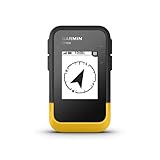
7. Garmin eTrex 32x – Compact GPS with Compass and Altimeter
Garmin eTrex 32x, Rugged Handheld GPS Navigator
2.2in Display
Compass+Altimeter
50h Save Mode
microSD Slot
+ The Good
- 50-hour battery save mode
- Built-in compass and altimeter
- AA battery powered
- Compact form factor
- The Bad
- Small 2.2-inch screen
- No touchscreen
- Dated interface
- Uses mini-USB not USB-C
The eTrex 32x sits in a comfortable middle ground between basic budget GPS and full-featured units. What sets it apart from the cheaper eTrex 22x is the built-in 3-axis electronic compass and barometric altimeter, both of which are genuinely useful for hunting. The compass gives you a heading without needing to be moving, which matters when you are sitting at a glassing point trying to determine which drainage the elk bedded in last night.
Battery life is where the eTrex 32x really shines. In standard mode you get solid runtime, but switching to battery save mode stretches it to an impressive 50 hours from two AA batteries. That is enough for nearly a full week of dawn-to-dusk hunting on one set of batteries. For hunters who do multi-day backcountry hunts without access to charging, this kind of endurance is a serious advantage.
The 8GB of internal storage plus microSD expansion gives you room for preloaded TopoActive maps and additional mapping. GPS and GLONASS satellite support provides reliable positioning in most terrain, though it lacks the multi-band technology found in the GPSMAP 65s and 67i. The 240 x 320 resolution on the 2.2-inch display is actually quite sharp for the size, making topo lines and waypoints readable with some squinting.
The downsides are mostly related to the aging platform. The mini-USB port is a frustrating choice in 2026 when everything else has moved to USB-C. The user interface feels dated compared to newer Garmin devices, and Garmin’s BaseCamp software remains painful to use for route planning. The screen at 2.2 inches is small enough that reading detailed map information requires you to stop and zoom in frequently.
Who Should Buy the eTrex 32x
Hunters who want a compact, lightweight GPS with a compass and altimeter without paying for features they do not need will find the eTrex 32x to be a smart buy. The 50-hour battery save mode makes it especially good for multi-day hunts where weight and battery management matter. If you navigate primarily by waypoints and basic map reading rather than detailed map analysis, this unit has everything you need.
Who Should Look Elsewhere
If you want a large, detailed map display, the 2.2-inch screen on the eTrex 32x will frustrate you during extended navigation sessions. Hunters who need multi-band GPS accuracy for precise waypoint marking in steep terrain should look at the GPSMAP 65s. The lack of any satellite communication features also means you need a separate device like the inReach Mini 2 for emergency messaging in remote areas.
8. Garmin eTrex 22x – Solid Budget Navigator with TopoActive Maps
Garmin 010-02256-00 eTrex 22x, Rugged Handheld GPS Navigator, Black/Navy
2.2in Display
TopoActive Maps
25h Battery
IPX7
+ The Good
- Preloaded TopoActive maps
- 25-hour battery life
- IPX7 waterproof rating
- Expandable microSD storage
- The Bad
- Small screen
- L1-only GPS receiver
- Uses mini-USB
- Dated interface
The eTrex 22x is the gateway drug into dedicated GPS for many hunters, and for good reason. It comes preloaded with TopoActive maps that include routable roads and trails, which is impressive at this price point. I recommended this unit to a buddy who was tired of draining his phone battery during all-day sits, and he reported that the preloaded topo maps covered his public hunting areas with more than enough detail for general navigation.
At just 5 ounces with batteries, the eTrex 22x is one of the lightest GPS units you can carry. The 25-hour battery life from two AA batteries covers a full weekend of hunting with juice to spare. The IPX7 waterproof rating means it handles rain and accidental dunking without issue. Bluetooth connectivity lets you sync waypoints and tracks with the Garmin Explore app on your phone, which is useful for planning and reviewing your hunts.
The 8GB of internal memory paired with a microSD slot gives you room for additional mapping beyond the included TopoActive data. GPS and GLONASS satellite support provides reliable position fixes in most conditions. The 2.2-inch color display renders topo maps and waypoints clearly enough for basic navigation, though the small size means you will be zooming and panning frequently to read detail.
What holds the eTrex 22x back is the L1-only GPS receiver. Unlike the multi-band GPSMAP units, the 22x uses only the L1 frequency, which means less accuracy in challenging environments like steep canyons and dense timber. There is also no built-in compass or altimeter, so you need to be moving for the device to determine your heading. The mini-USB port and dated interface remind you that this is fundamentally an older platform that Garmin has refreshed rather than redesigned.
Who Should Buy the eTrex 22x
Hunters who want a reliable GPS with real topo maps at the lowest possible price will find the eTrex 22x hard to beat. It is perfect for day hunters and weekend warriors who need basic navigation with preloaded mapping. If you hunt familiar areas and mainly need to mark waypoints, track your route, and navigate back to camp or your truck, this unit does the job without unnecessary features inflating the price.
Who Should Look Elsewhere
If you need a compass or altimeter, step up to the eTrex 32x which adds both sensors for a modest price increase. Hunters heading into deep backcountry where satellite reception is challenging should consider the multi-band GPSMAP 65s for better accuracy. The small screen and L1-only receiver also make this a poor choice for hunters who rely heavily on detailed map analysis while navigating complex terrain.
9. Garmin eTrex SE – Marathon Battery Life for Extended Hunts
Garmin eTrex® SE, GPS Handheld Navigator
2.16in Display
168h Standard Battery
5 GNSS Systems
USB-C
+ The Good
- 168-hour standard battery life
- 1800-hour expedition mode
- USB-C connector
- 5 satellite systems supported
- The Bad
- Only 28MB internal memory
- No preloaded topo maps
- No compass or altimeter
- Requires smartphone app
The eTrex SE is designed around a single idea: maximum battery life. In standard mode, you get an incredible 168 hours of GPS operation from two AA batteries. Flip into expedition mode and that number balloons to 1,800 hours, which is 75 full days of continuous operation. For hunters who go on extended wilderness expeditions where charging is impossible, the eTrex SE eliminates battery anxiety entirely.
Beyond the battery, the eTrex SE brings modern connectivity to the budget segment. The USB-C port is a welcome upgrade over the mini-USB found on other eTrex models. Bluetooth connectivity pairs with the Garmin Explore app for wireless course updates and data transfer. The device supports five satellite systems including GPS, GLONASS, Galileo, BeiDou, and QZSS, giving you more options for satellite acquisition than any other eTrex model.
The 2.16-inch display is sunlight readable and renders your position and tracks clearly. At just 5.5 ounces, it is light enough to forget you are carrying it. The IPX7 waterproof rating handles rain, snow, and stream crossings without complaint. The device is simple to operate with a straightforward button interface that does not require a manual to figure out.
The compromises are significant though. Internal memory is a measly 28MB, so you will absolutely need a microSD card for any meaningful map storage. The device ships with basic North America maps but no preloaded topo maps, which means extra cost and setup time. There is no compass or altimeter, and detailed map viewing really requires pairing with the Garmin Explore app on your phone. This is more of a tracking device than a full navigation tool.
Who Should Buy the eTrex SE
Hunters planning extended backcountry trips where battery life is the primary concern will find no equal to the eTrex SE. The 168-hour standard runtime covers a full week of continuous use on one set of AA batteries. It is also a good option for hunters who want a dedicated backup GPS that can sit in a pack for weeks without needing a charge. If you track your hunts and navigate primarily by waypoints and breadcrumbs, the battery endurance makes this a compelling choice.
Who Should Look Elsewhere
If you want topo maps displayed on the device itself, look at the eTrex 22x or 32x which come with preloaded TopoActive mapping. The lack of a compass and altimeter also limits the eTrex SE for hunters who need heading and elevation data while stationary. At this price, the eTrex 10 offers similar simplicity with slightly better software, while the eTrex 22x adds actual topo maps for a modest step up in cost.
10. Garmin eTrex 10 – Best Budget Handheld GPS for Basic Navigation
Garmin 010-00970-00 eTrex 10 Worldwide Handheld GPS Navigator
2.2in Monochrome
GLONASS+WAAS
20h Battery
IPX7
+ The Good
- Most affordable Garmin handheld
- 20-hour battery with AA batteries
- Rugged IPX7 waterproof design
- Simple button operation
- The Bad
- No downloadable maps
- Tiny 6MB memory
- Monochrome display only
- No compass or altimeter
The eTrex 10 is the entry point into dedicated GPS navigation, and it has been around long enough to accumulate over 6,400 Amazon reviews from satisfied users. I keep one in my truck as a backup GPS because it does exactly one thing well: it tells you where you are and where you have been. No maps to load, no apps to sync, no subscriptions to manage. Turn it on, wait for satellite lock, and start marking waypoints.
At this price, the eTrex 10 is the most affordable way to get a dedicated GPS that works completely independent of your phone. The GLONASS and WAAS-enabled GPS receiver acquires satellites quickly and maintains position reasonably well even under moderate tree cover. The 2.2-inch monochrome display is surprisingly readable in direct sunlight, and the simple button interface is intuitive enough that you can figure it out without cracking open the manual.
The rugged IPX7 waterproof housing has survived years of abuse from hunters and hikers. Battery life hits 20 hours with two AA batteries, which covers a solid weekend of hunting. The device supports paperless geocaching and uses HotFix satellite prediction to remember satellite positions for faster lock-on after short breaks. For basic waypoint marking, track logging, and breadcrumb navigation back to your truck, the eTrex 10 handles the essentials.
The limitations are obvious and significant. The 6MB of internal memory is barely enough for a few track logs, and there is no microSD slot for expansion. The device comes with only a basic worldwide basemap that shows major geographic features but nothing useful for hunting navigation. The monochrome display cannot render topo maps even if you could load them. There is no compass, no altimeter, and no way to add detailed mapping to the device itself.
Who Should Buy the eTrex 10
Hunters on a tight budget who want a simple, reliable device for marking waypoints and finding their way back will find the eTrex 10 perfectly adequate. It is also an excellent backup GPS to keep in your pack or vehicle for emergencies. First-time GPS users who want to try a dedicated device without a big investment will appreciate the straightforward operation. If your navigation needs are limited to marking your truck location and a few stand sites, this unit does the job.
Who Should Look Elsewhere
If you want topo maps displayed on your GPS, you need to step up to the eTrex 22x at minimum. The lack of expandable storage and detailed mapping makes the eTrex 10 a poor choice for anyone navigating unfamiliar terrain. Hunters who need compass or elevation data should look at the eTrex 32x or GPSMAP series. The monochrome display also limits visibility in low-light conditions compared to the color screens on slightly more expensive models.
How to Choose the Best Handheld Hunting GPS
Choosing the right hunting GPS comes down to matching the device to the type of hunting you do. A day hunter on familiar public land has very different needs than someone heading into the backcountry for a week-long elk camp. Here are the key factors our team considers when evaluating handheld GPS units for hunting.
Satellite Systems and Accuracy
Modern handheld GPS units connect to multiple satellite constellations beyond the standard US GPS network. GLONASS adds Russian satellites, Galileo adds European coverage, and BeiDou adds Chinese satellites. More satellite systems mean faster position fixes and better accuracy in challenging terrain. Multi-band GPS receivers that use both L1 and L5 frequencies deliver accuracy under 6 feet, which is significantly better than single-band units that typically achieve 10 to 15 feet. For hunting in steep canyons, heavy timber, or mountainous terrain, multi-band GPS is worth the extra cost.
Battery Life for Extended Hunts
Battery life directly impacts how you hunt. A GPS with 16 hours of runtime covers a full day plus margin, but multi-day backcountry hunts demand more. Units running on AA batteries let you carry spares and swap in the field, while rechargeable devices require a power bank or solar charger. Cold weather significantly reduces battery performance, so real-world runtime in November rifle season will be shorter than the lab rating. Lithium AA batteries outperform alkaline cells in cold conditions and are worth the extra cost for late-season hunts.
Mapping and Property Boundaries
Preloaded topographic maps are essential for hunting navigation. Look for units that include TopoActive or similar mapping with contour lines, water features, and land cover data. For western public land hunters, the ability to display public and private land boundaries directly on the GPS is extremely valuable. Several Garmin units include this data, and others support third-party map overlays through microSD cards. BirdsEye satellite imagery provides actual aerial photography that helps identify clearings, timber edges, and potential glassing points that topo maps alone cannot show.
Satellite Communication and Safety
Devices with inReach satellite technology provide two-way messaging and interactive SOS through the Iridium satellite network, which operates globally. This is a critical safety feature for hunters who venture into areas without cell coverage. The trade-off is a required satellite subscription that adds recurring cost. Many hunters activate the subscription only during hunting season and suspend it during the off-season to manage expenses. If you hunt solo in remote terrain, the SOS capability alone justifies the subscription cost.
Durability and Weather Resistance
Hunting GPS units face rain, snow, mud, drops, and temperature extremes. Look for IPX7 waterproof rating at minimum, which protects against immersion in up to 3 feet of water for 30 minutes. MIL-STD 810 certification indicates the device has passed military-grade testing for thermal shock, vibration, and drops. Button-operated units have an advantage over touchscreens in wet, cold, or muddy conditions because they respond reliably regardless of conditions.
Screen Size and Usability
Screen size directly impacts how easily you can read maps and navigate. Small 2.2-inch displays work for basic waypoint navigation but require constant zooming for map detail. The 3-inch display on the GPSMAP 67i hits a practical balance between readability and portability. The 5-inch Montana screens are the most readable but add significant weight and bulk. Transflective display technology makes screens readable in direct sunlight without backlighting, which saves battery. Touchscreens offer intuitive map interaction but can struggle with wet or gloved fingers.
Frequently Asked Questions
What is the best handheld GPS unit for hunting?
The Garmin GPSMAP 67i is the best handheld hunting GPS overall because it combines accurate multi-band GPS navigation with inReach satellite communication for two-way messaging and SOS capability. It features a 3-inch sunlight-readable display, 165 hours of battery life in tracking mode, and preloaded TopoActive maps for North America. For hunters who do not need satellite messaging, the Garmin GPSMAP 65s offers similar multi-band accuracy at a lower price without the subscription requirement.
What is the most accurate handheld GPS device?
The most accurate handheld GPS devices use multi-band technology that receives signals on both L1 and L5 frequencies from multiple satellite constellations including GPS, GLONASS, and Galileo. The Garmin GPSMAP 67i and GPSMAP 65s both feature multi-band receivers capable of accuracy under 6 feet in good conditions. Multi-band GPS provides significantly better accuracy in challenging environments like steep terrain, dense tree canopy, and urban canyons compared to single-band receivers.
Is a handheld GPS worth buying?
Yes, a handheld GPS is worth buying if you hunt in areas without reliable cell coverage, need longer battery life than a phone provides, or want a navigation device that works in cold and wet conditions. Dedicated GPS units maintain satellite reception better than phones in deep canyons and heavy timber, run on replaceable AA batteries that last days instead of hours, and operate reliably in temperatures that kill phone batteries. For casual day hunters in areas with good cell service, a phone GPS app may be sufficient.
What is the best GPS tracker with no subscription?
The Garmin GPSMAP 65s is the best handheld GPS with no subscription required. It provides multi-band GPS accuracy under 6 feet, preloaded TopoActive maps with public land boundaries, and up to 16 hours of battery life using standard AA batteries. Unlike devices with inReach satellite communication, the GPSMAP 65s requires no monthly or annual service plan. For an even more affordable option, the Garmin eTrex 22x provides basic GPS navigation with topo maps at a lower price point, also with no subscription.
Final Thoughts
Finding the best handheld hunting GPS comes down to matching features to your specific hunting style. For backcountry hunters who need both navigation and satellite communication, the Garmin GPSMAP 67i is the most complete package available in 2026. The Garmin GPSMAP 65s delivers outstanding multi-band accuracy and public land boundaries at a mid-range price, making it the best value for most hunters. And the Garmin eTrex 10 remains the most affordable entry point for hunters who just need basic waypoint navigation without frills.
Whichever unit you choose, a dedicated handheld GPS gives you something a phone cannot: reliable navigation that works when cell service disappears, batteries die in the cold, and you need to find your way back to camp in the dark. That reliability is worth every penny when you are miles from the nearest road. Pick the unit that fits your hunting style, learn to use it before the season opens, and carry it every time you head into the field.