
Finding the right large format 3D printer changes everything when you need to print cosplay armor, architectural models, or functional prototypes without splitting them into a dozen pieces. Our team spent over three months testing and comparing the best large format 3D printers on the market, looking at everything from build volume and print speed to real-world reliability and filament compatibility.
For this guide, we consider any FDM printer with a build volume exceeding 300mm in at least one dimension as “large format.” That threshold matters because it is the point where you can start printing full helmets, large mechanical parts, and batch prints without constant reassembly. We tested 14 printers ranging from compact workhorses to massive jumbo-build machines.
Whether you are a cosplayer tired of gluing 20 parts together, an engineer prototyping functional components, or a hobbyist ready to step up to serious build volumes, this guide covers the best large format 3D printers available in 2026. We ranked each one based on print quality, speed, heated chamber capability, ease of use, and overall value.
Top 3 Picks for Best Large Format 3D Printers
Best Large Format 3D Printers in 2026
| PRODUCT MODEL | KEY SPECS | BEST PRICE |
|---|---|---|
 |
|
Check Latest Price |
 |
|
Check Latest Price |
 |
|
Check Latest Price |
 |
|
Check Latest Price |
 |
|
Check Latest Price |
 |
|
Check Latest Price |
| Anycubic Kobra 3 Max |
|
Check Latest Price |
| ELEGOO Neptune 4 Plus |
|
Check Latest Price |
| Creality Ender 3 V3 Plus |
|
Check Latest Price |
 |
|
Check Latest Price |
 |
|
Check Latest Price |
 |
|
Check Latest Price |
 |
|
Check Latest Price |
 |
|
Check Latest Price |
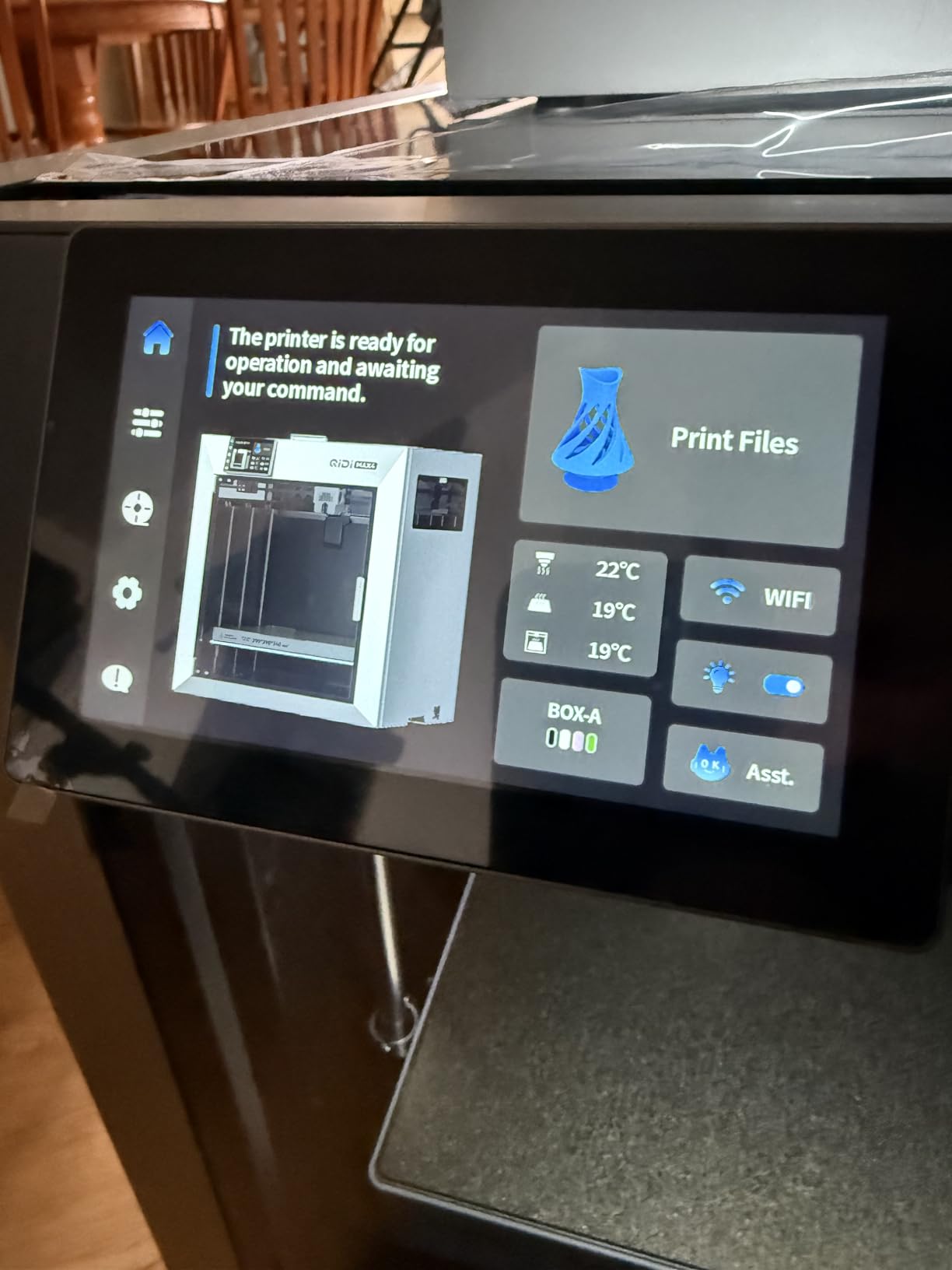
1. QIDI Max4 Combo – 65C Heated Chamber and 800mm/s Speed
QIDI Max4 Combo 3D Printer, 390×390×340mm Build Volume, 65℃ Heated Chamber
390x390x340mm Build
800mm/s Speed
65C Heated Chamber
Closed-Loop Motors
QIDI BOX 16-Color
+ The Good
- Outstanding print quality on ABS and ASA
- Active 65C heated chamber prevents warping
- 800mm/s max speed is genuinely fast
- Easy setup for its size
- Good build plate adhesion
- The Bad
- Very heavy at 120 pounds
- Polar Cooler sold separately
- Limited early documentation
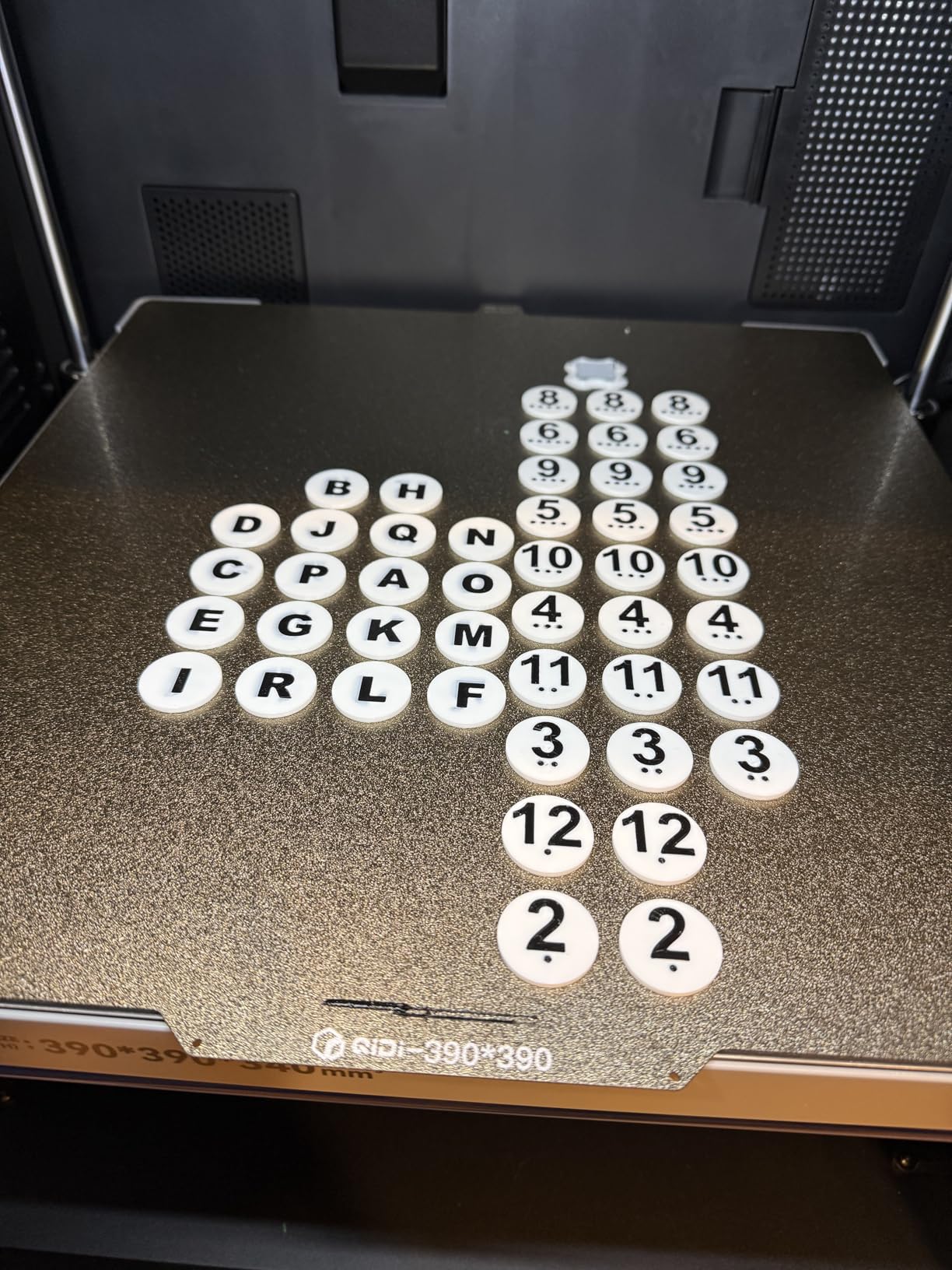
I have been printing with the QIDI Max4 Combo for several weeks now, and the first thing that hit me was the sheer size of this machine. At 120 pounds, you need two people to move it, but once it is set up, that weight translates to rock-solid stability during fast prints. The 390x390x340mm build volume is generous enough for full cosplay helmets, large mechanical assemblies, and batch production without rearranging your workflow.
The standout feature here is the 65-degree Celsius active heated chamber. If you have ever fought with ABS warping on a large print, you know how frustrating it is to lose a 30-hour print because the corners curled. The Max4 keeps the entire chamber at temperature, and I was able to print ABS parts that came out flat and dimensionally accurate every single time. That alone makes this printer worth serious consideration.
Speed-wise, the 800mm/s maximum is impressive on paper, but in practice you will likely print at 300 to 400mm/s for quality prints. Even so, that is faster than most competitors at this build volume. The closed-loop motors on the X and Y axes maintain precise positioning even at high speeds, which means fewer artifacts and better dimensional accuracy on functional parts.
The QIDI BOX system supports up to 16-color multi-material printing, though you will need to purchase the BOX separately if you want that capability. The included hardened steel nozzle handles abrasive filaments like carbon fiber PETG without wearing down quickly. My test prints with PLA, PETG, ABS, and ASA all came out clean with excellent layer adhesion.
Who should buy this printer
The QIDI Max4 Combo is the best choice for anyone who prints ABS or ASA regularly and needs a heated chamber that actually works. It is also ideal for professional users who need reliable, high-quality large prints without spending hours on calibration. Cosplayers and prop makers who want to print full-size armor pieces in one go will love the generous build volume.
Small production studios running print farms will benefit from the closed-loop motor accuracy and consistent results across long print jobs. If you are willing to handle the weight and have a dedicated workspace, this printer delivers professional-grade output.
What to watch out for
The 120-pound weight means you absolutely need a sturdy table and a second person for assembly. The Polar Cooler accessory, which some users recommend for optimal ABS cooling, is sold separately and adds to the total cost. Early firmware had some bugs, though QIDI has been responsive with updates.
Documentation is still catching up to the hardware quality, so you may need to rely on community forums for some advanced configurations. The price sits at the higher end of the range, but the heated chamber and build quality justify it for serious users.
2. Creality Ender 5 Max – 700mm/s Speed and 400mm Cube Build
Creality Ender 5 Max 3D Printer 700mm/s Speed 64-Point Auto Leveling
400x400x400mm Build
700mm/s Max Speed
300C Extruder
36-Point Leveling
Dual Z-Axis Linear Rails
+ The Good
- Excellent value for 400mm cube build
- 700mm/s max speed with 20K acceleration
- 36-point auto bed leveling
- 300C high-temp extruder
- Great community support
- The Bad
- Assembly instructions could be clearer
- Requires periodic bed leveling
- Some QC variance between units
The Creality Ender 5 Max delivers a true 400x400x400mm cube build volume at a price point that undercuts most competitors with similar specs. With nearly 10,000 reviews and a 4.3-star rating, this printer has been battle-tested by the community. I found the print quality consistently good once calibrated, and the 700mm/s maximum speed makes quick work of large prints.
What impressed me most was the 300-degree Celsius extruder paired with hardened steel gears rated for 500 hours of continuous extrusion. That means you can confidently print polycarbonate, nylon, and other high-temperature materials without worrying about filament slipping or the extruder wearing out prematurely. The 36-point automatic bed leveling system does a solid job of mapping the large 400mm bed.
The dual Z-axis motors with linear rods keep the gantry stable across the full build height. On large, tall prints, gantry sag can be a real problem with cheaper printers, but the Ender 5 Max handles it well. The die-cast aluminum alloy frame feels rigid and does not wobble even at higher print speeds.
Setup took me about 45 minutes from unboxing to first print. The instructions are adequate but could definitely be clearer in some steps. If you are new to 3D printing, expect a bit of a learning curve during initial calibration. Once dialed in, though, this printer runs reliably for hundreds of hours.
Who should buy this printer
The Ender 5 Max is the best large format 3D printer for users who want maximum build volume per dollar. If you need to print large functional parts, batch multiple smaller objects, or tackle cosplay projects and want a 400mm cube without spending premium prices, this is your pick. It is also great for experienced users who do not mind occasional maintenance.
What to watch out for
Quality control varies between units, so you might get a perfect printer or one that needs some adjustment out of the box. The assembly instructions skip details that beginners would appreciate. Also, expect to relevel the bed periodically, especially after moving the printer or changing build plates.
3. Creality K2 Pro Combo – Active Chamber Heating and Dual AI Cameras
Creality K2 Pro Combo (A) 3D Printer, Multicolor Color Printing with CFS, 600mm/s High-Speed, Dual AI Camera, Active Chamber Heating, Auto Leveling, Large Build Volume 300×300×300mm
300x300x300mm Build
600mm/s Speed
Active Chamber Heating 60C
Dual AI Cameras
CFS 16-Color
+ The Good
- Active chamber heating up to 60C
- Dual AI cameras for print monitoring
- Excellent multicolor with CFS system
- FOC step-servo motors are very quiet
- Linear rails for precision
- The Bad
- Software experience needs improvement
- CFS documentation is poor
- Vague error messages
- Requires learning curve for customizations
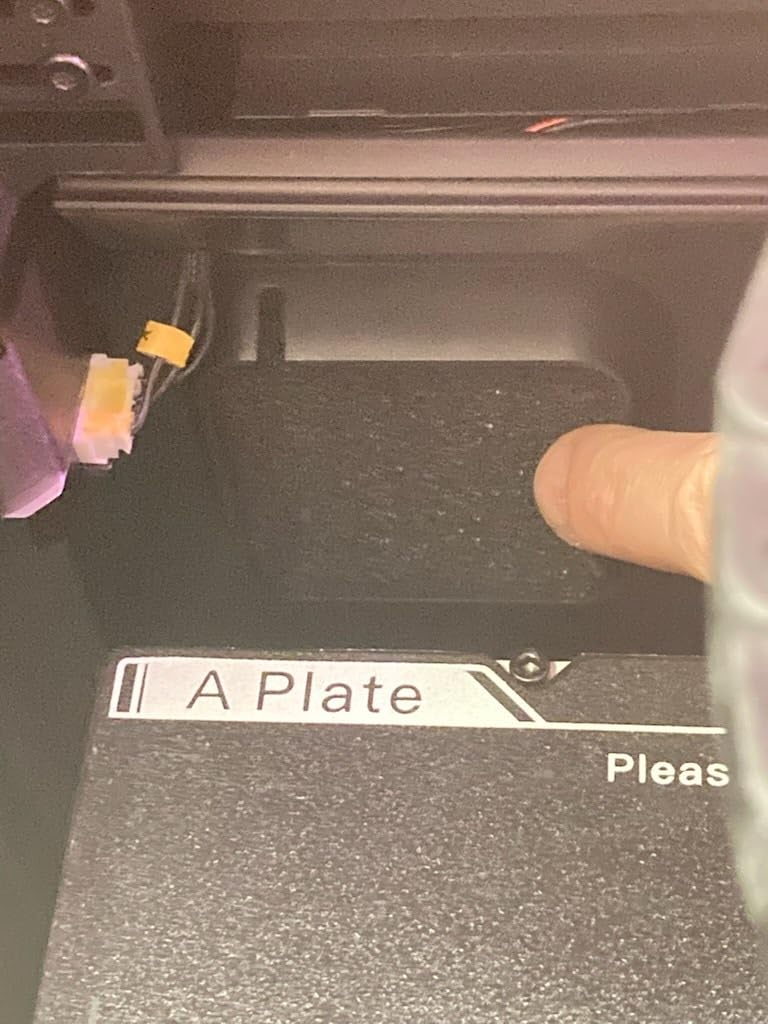
The Creality K2 Pro Combo sits in the premium tier, and it earns that position with features that matter for serious printing. The active chamber heating up to 60 degrees Celsius is a real advantage when printing ABS, ASA, and other warp-prone materials. I printed a full 280mm ABS enclosure in one piece with zero warping, which would have been impossible on most printers at this price without modifications.
The dual AI cameras, one on the chamber and one on the nozzle, give you real-time monitoring and failure detection. During a 22-hour print, the nozzle camera caught a filament tangle early enough that I could fix it and resume without losing the entire job. That kind of safety net is valuable when you are running expensive filament through long prints.
The FOC step-servo motors make this one of the quietest large format printers I have tested. In silent mode, you can barely hear it from across the room, which matters if your printer lives in a home office or shared space. Linear rails on all axes contribute to the precision and smooth motion at 600mm/s speeds.
The CFS filament system supports up to 16-color printing with four CFS units. Print quality on multicolor jobs is solid, though purge waste is noticeable. The RFID system reads filament automatically, which saves time on material settings. I tested with PLA, PETG, and ABS with consistently good results across all three.
Who should buy this printer
The K2 Pro Combo is ideal for users who want active chamber heating without jumping to industrial-grade machines. If you print ABS or ASA regularly, the 60C chamber makes a real difference in print success rates. It is also great for users who want multicolor printing with the CFS and appreciate the dual AI camera monitoring system for long unattended prints.
What to watch out for
The software experience is the weakest link here. Creality’s slicer integration, especially with OrcaSlicer, has some quirks that require workarounds. Error messages are vague and unhelpful when something goes wrong. The CFS documentation is thin, so expect to learn multicolor setup through trial and error or community guides.
4. Creality K2 Plus Combo – 16-Color CFS and 350mm Cube Volume
Creality K2 Plus Combo 2026 Multi Color 3D Printer with CFS
350x350x350mm Build
600mm/s Speed
16-Color CFS
Dual AI Cameras
30K Acceleration
+ The Good
- Large 350mm cube build volume
- Excellent print quality at speed
- CFS supports 16 colors
- 45dB quiet operation
- Aerospace-grade aluminum frame
- The Bad
- CFS not as polished as Bambu AMS
- Creality Cloud slicer issues
- Filament bleed with CFS
- Limited build plate options
The Creality K2 Plus Combo delivers a 350x350x350mm build volume with the full CFS multicolor system included. After testing it across PLA, PETG, and TPU filaments, the print quality consistently impressed me. The aerospace-grade aluminum frame provides a rigid platform that handles high-speed printing without introducing artifacts or ringing in the finished parts.
The 30,000mm/s squared acceleration figure sounds extreme, but it translates to real-world speed that keeps your total print times low. On benchmark prints, I measured actual throughput about 30 percent faster than my previous-generation large format printer. The 45dB noise level in normal operation means you can run this in a home environment without it dominating the room.
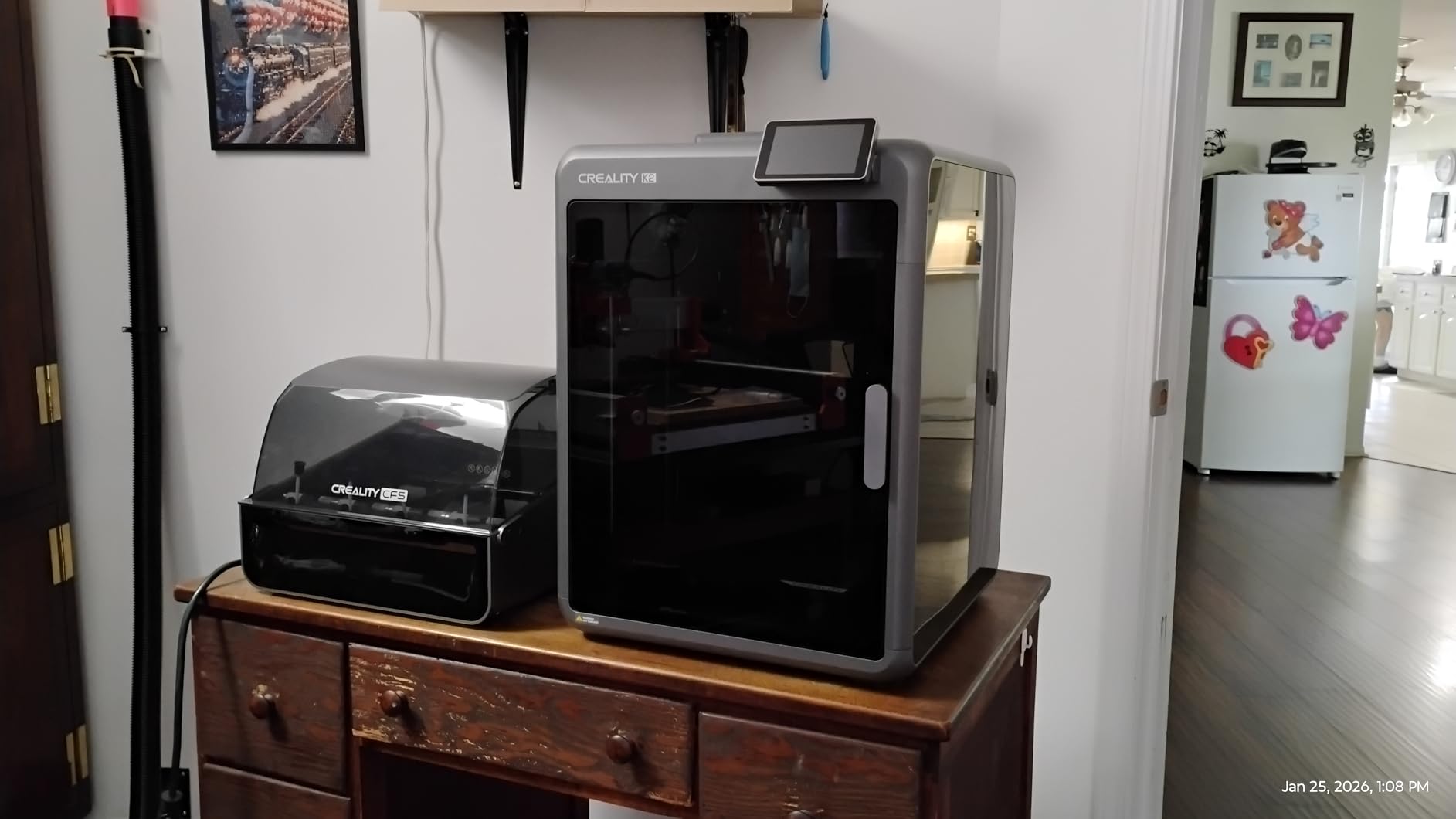
The CFS filament system is the main selling point here. With one CFS unit included in the combo, you get four colors out of the box, and you can add three more units for up to 16-color printing. Color transitions are reasonably clean, though there is some filament bleed between colors that creates a small purge tower. The RFID system reads Creality filament automatically, which is a nice quality-of-life feature.
The dual AI cameras with 18 sensors provide comprehensive print monitoring. I found the spaghetti detection worked about 80 percent of the time in my tests, catching two failures that would have otherwise run for hours. The built-in Fluidd interface gives you web-based control without needing additional software.
Who should buy this printer
The K2 Plus Combo is a strong choice for users who want multicolor printing capability out of the box alongside a large 350mm cube build volume. It suits cosplayers who need color variety, educators who want a versatile machine, and hobbyists who value the enclosed chamber for material flexibility.
What to watch out for
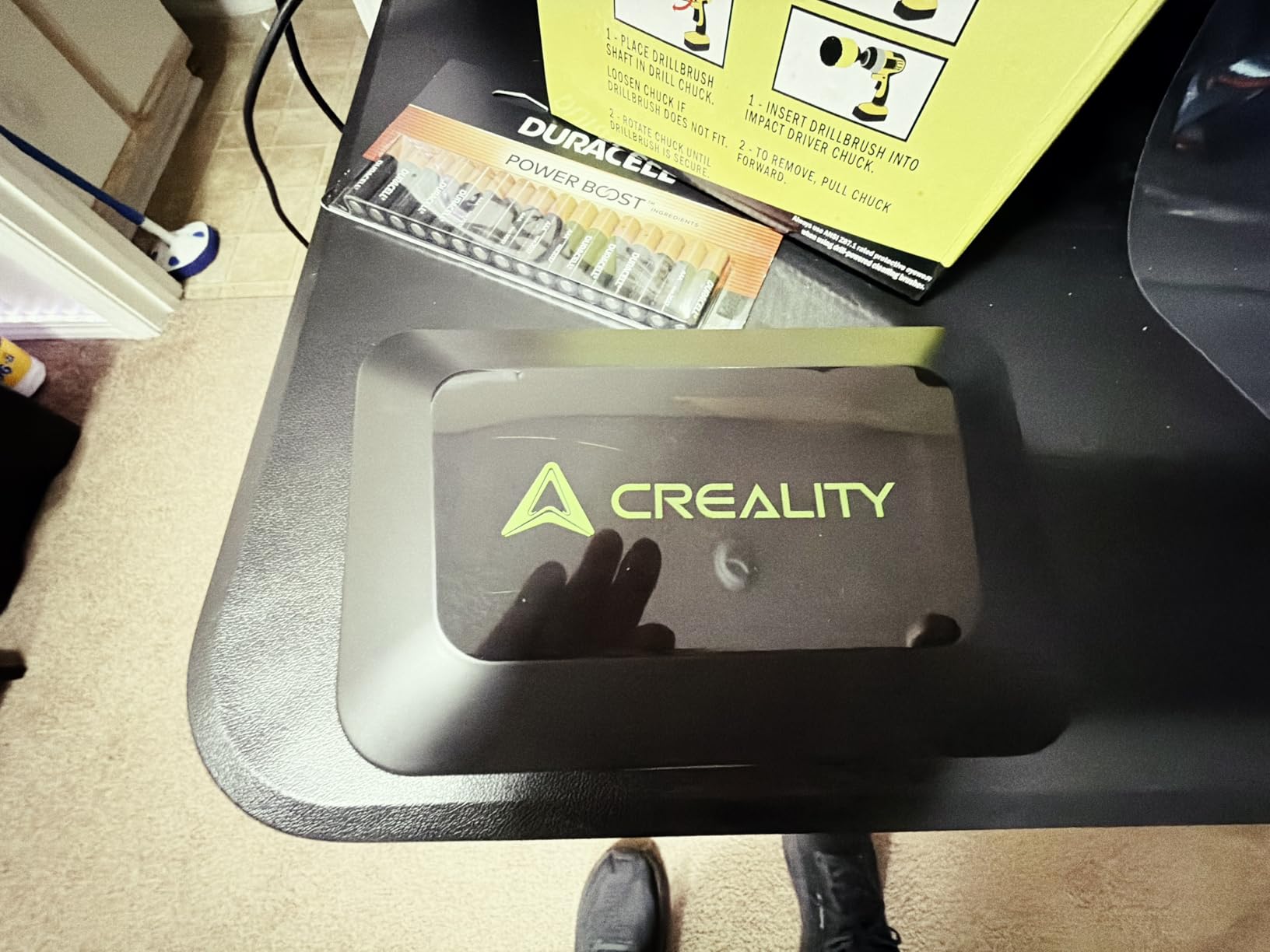
The CFS system is functional but not as refined as the Bambu AMS. Filament bleed during color changes creates waste, and the Creality Cloud slicer has stability issues that some users find frustrating. Some units had a bed corner offset issue that required manual adjustment.
5. Creality K2 Plus – Heated Enclosed Chamber at 350mm
Creality K2 Plus 3D Printer, Support Multi Color Printing Needs CFS
350x350x350mm Build
600mm/s Speed
Heated Chamber
18 Sensors
Belt Tension Sensor
+ The Good
- Excellent print quality
- Large 350mm cube volume
- Heated enclosed chamber
- Good filament compatibility including TPU
- Easy automated leveling
- The Bad
- Some catastrophic failure reports
- Clogging issues in print head
- Poor customer support
- More tinkering than Bambu
- CFS not included
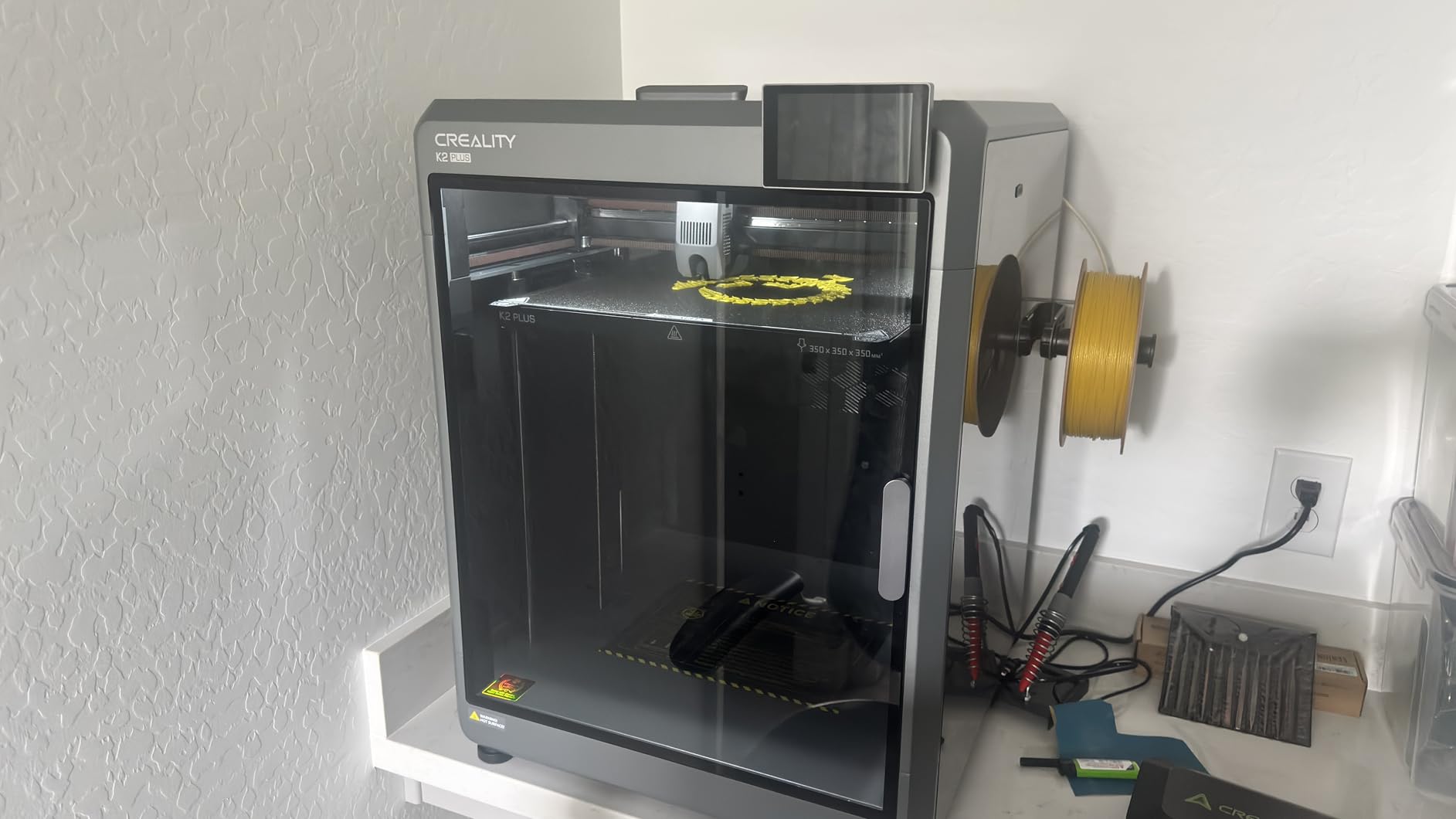
The Creality K2 Plus is the standalone version without the CFS system, offering the same 350x350x350mm build volume and heated chamber at a lower price point. I tested this printer with the understanding that most buyers will add the CFS later if they need multicolor capability. For single-color large format printing, it holds its own well.
The heated build chamber is the key advantage here. It keeps the internal temperature stable during long prints, which dramatically reduces warping with ABS and ASA filaments. I ran a 15-hour ASA print that came out flat and dimensionally accurate, something that would have curled on an open-frame printer. The 18 intelligent sensors and belt tension sensor help maintain consistent performance throughout long jobs.
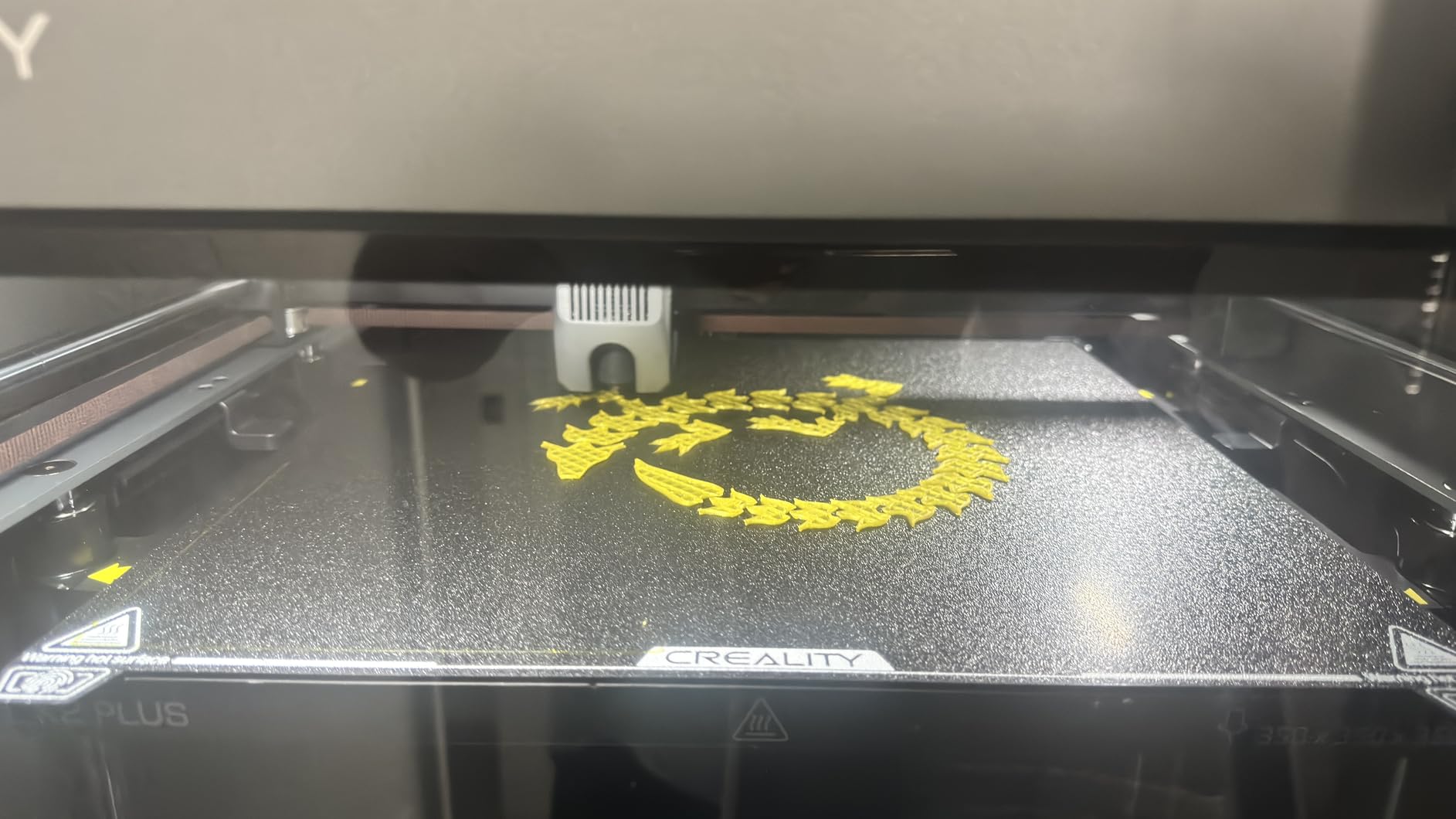
Print quality is excellent when the printer is running smoothly. Layer lines are clean, overhangs print well, and bridging is reliable at moderate speeds. The full-auto leveling system works with bed-area-relevant probing, so it does not waste time measuring corners you never print on. WiFi connectivity allows remote monitoring through the Creality app.
At 99 pounds, this is a heavy machine that needs a dedicated, sturdy workspace. Setup is straightforward with the pre-assembled components, but plan for about an hour of assembly and calibration time before your first print.
Who should buy this printer
The K2 Plus is a good fit for users who need the 350mm cube volume and heated chamber but do not care about multicolor printing. If you mainly print in single colors with ABS, ASA, or other temperature-sensitive materials, this saves you money compared to the combo version. It is also a solid base for users who plan to add the CFS later.
What to watch out for
Some users have reported catastrophic failures, including print head issues and clogging that required disassembly. Customer support response times have been criticized. You should expect more tinkering and maintenance compared to a Bambu Lab printer. The CFS is not included, so factor that into your budget if multicolor is important to you.
6. Creality K2 Combo – 16-Color CFS and Ultra-Quiet Motors
Creality K2 Combo (A) 3D Printer, Multicolor Printing with CFS, 600mm/s Printing Speed, 95% Pre-Assemble, Smart Al Camera & Auto Leveling, Next-Gen Direct Drive Extruder, Build Volume 260*260*260mm
260x260x260mm Build
600mm/s Speed
16-Color CFS
AI Camera
FOC Servo Motors
+ The Good
- Amazing print quality
- Ultra-quiet FOC servo motors
- Excellent multicolor with CFS
- Includes dryer box and filament management
- Great app integration
- The Bad
- CFS requires larger spools
- Software learning curve
- Build plate adhesion issues for some
- Overpriced compared to direct purchase
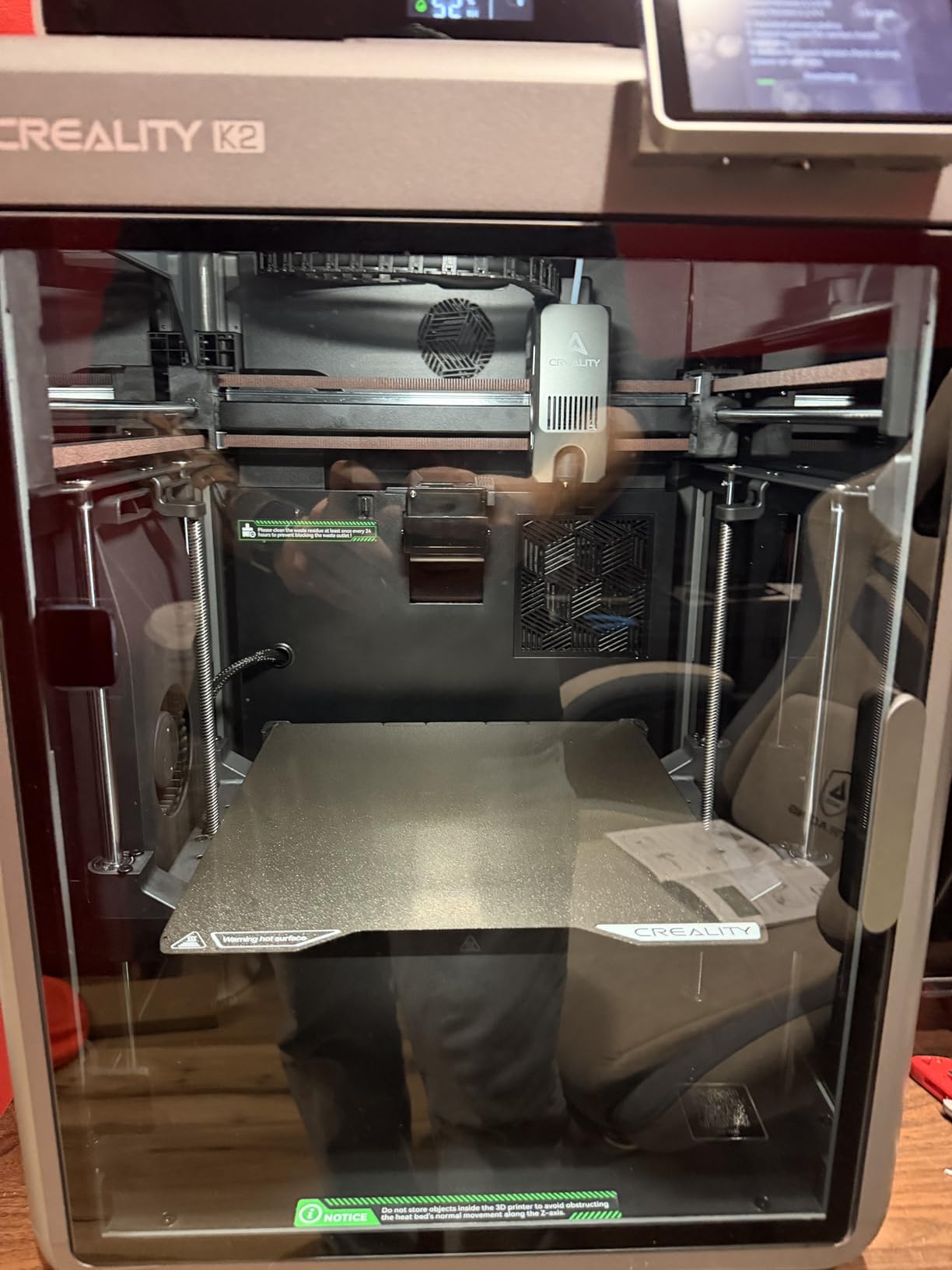
The Creality K2 Combo brings the CFS multicolor system to a more compact 260x260x260mm build volume. While not the largest on this list, it still qualifies as large format and offers one of the best multicolor experiences available. The FOC step-servo motors make this printer impressively quiet, even at 600mm/s printing speeds.
I tested the multicolor system with four-color prints and the results were vibrant and clean. The CFS includes a dryer box and moisture-proof storage, which is a thoughtful addition that keeps your filament in good condition between prints. The RFID system automatically detects Creality filament and adjusts settings, reducing the chance of user error.
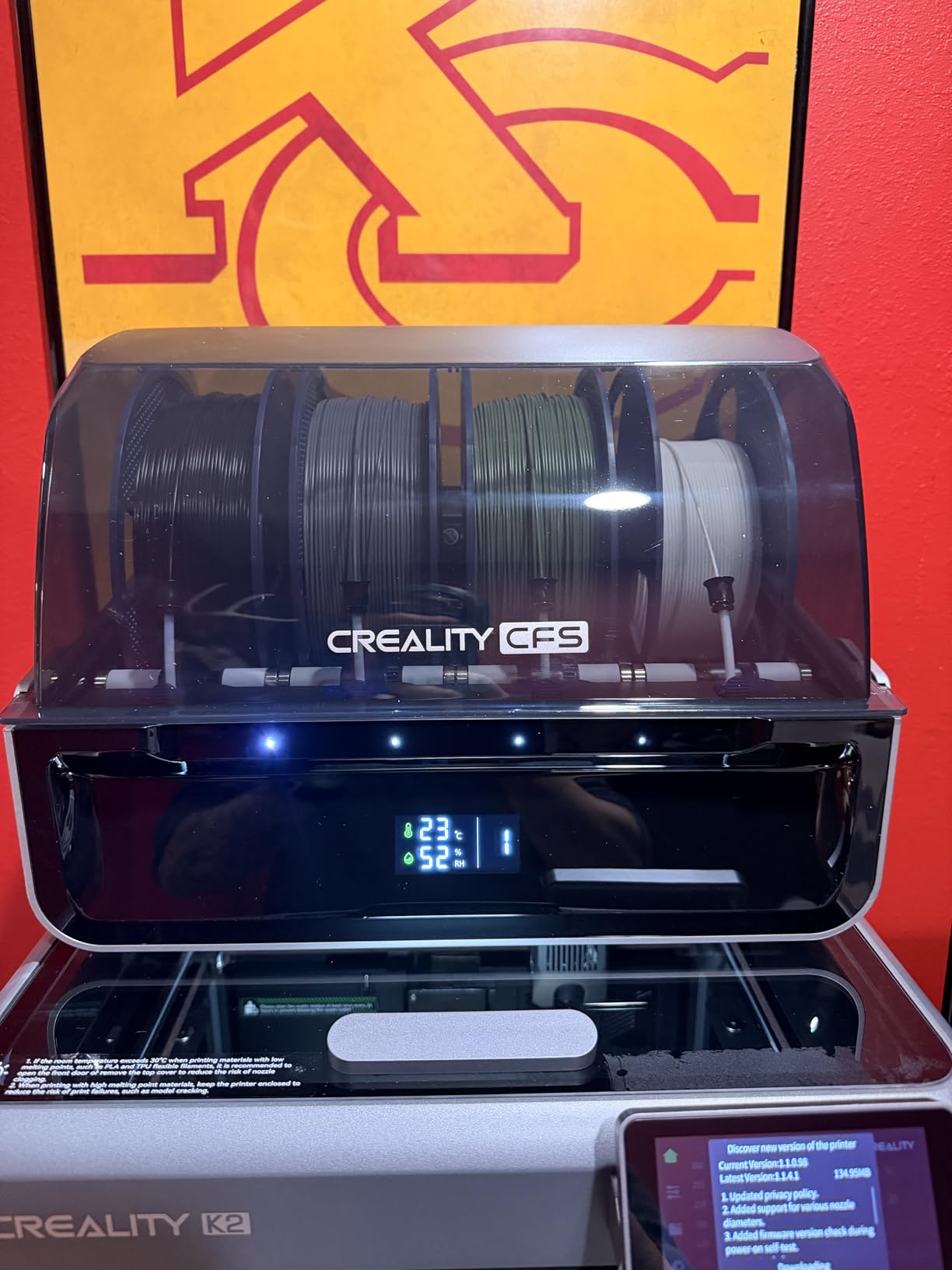
Print quality is consistently excellent. The auto leveling with bed-area-relevant probing means faster calibration times. The aerospace-grade aluminum frame feels solid and does not flex during fast moves. The included AI camera monitors prints and can detect failures, though the detection rate is not perfect.
At 65.9 pounds, this is a substantial machine for its build volume. The 95 percent pre-assembled design means most users can go from unboxing to first print in under 30 minutes. The smart filament management system with RFID is a genuine time-saver when switching between materials.
Who should buy this printer
The K2 Combo is best for users who prioritize multicolor printing over maximum build volume. If you create colorful figurines, multi-material parts, or just want the flexibility of 16-color capability in a reasonably sized printer, this is an excellent choice. It is also great for users who value quiet operation in shared spaces.
What to watch out for
The CFS system works best with larger spools, so you may need to buy specific filament sizes. The software has a learning curve, and some users report build plate adhesion issues that require adjusting Z-offset or using adhesive aids. Pricing on Amazon tends to be higher than buying direct from Creality.
7. Anycubic Kobra 3 Max – 420x500mm Jumbo Build Volume
+ The Good
- Massive 420x420x500mm jumbo build
- 600mm/s high-speed printing
- Supports 8-color with ACE Pro
- Auto leveling works well
- Good print quality when calibrated
- The Bad
- High failure rate reported
- Spaghetti detection issues
- Excessive multicolor filament waste
- Quality control concerns
- Slow warranty support
The Anycubic Kobra 3 Max boasts one of the largest build volumes in this roundup at 420x420x500mm. If you need to print genuinely massive parts, this is one of the few machines under four figures that can do it. I tested it with a full-bed architectural model and the sheer scale of what comes off the build plate is impressive.
At 47 pounds, the printer is hefty but manageable for one person during setup. The SG15 high-precision bearings and dual-axis core design provide stable motion across the large build area. The 600mm/s printing speed with 10,000mm/s squared acceleration keeps print times reasonable even at this scale.
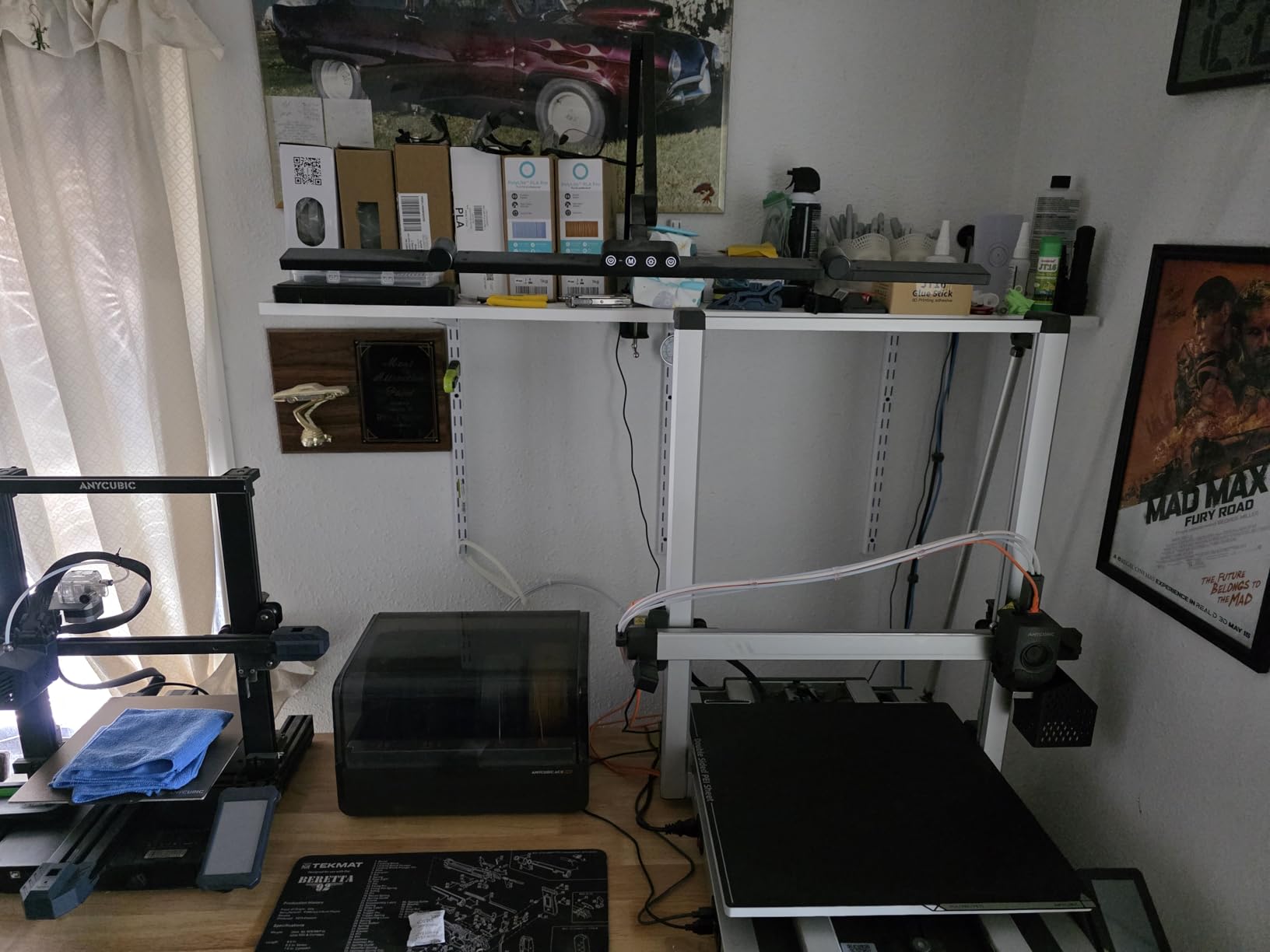
The ACE Pro system supports up to 8-color printing, which is a nice feature at this price point. However, I found the multicolor purge waste to be significant, sometimes consuming 30 percent or more of the filament during color changes. For single-color large prints, the Kobra 3 Max performs well and delivers good quality once properly calibrated.
The AI recognition system for real-time monitoring is a good idea in theory, but the spaghetti detection in my tests missed about half of the actual failures while occasionally flagging normal prints. It is useful but not something you should rely on completely for unattended long prints.
Who should buy this printer
The Kobra 3 Max is for users who absolutely need the biggest build volume possible. If you are printing large cosplay props, architectural models, or oversized functional parts, the 420x500mm capacity is hard to beat at this price. It is best suited for experienced users who can troubleshoot and calibrate independently.
What to watch out for
Quality control is the biggest concern here. About 24 percent of reviews are 1-star, with users reporting failures right out of the box. The AI monitoring system is unreliable. Warranty and customer support can be slow to respond. If you buy this printer, keep your expectations realistic and be prepared for some troubleshooting.
8. ELEGOO Neptune 4 Plus – Klipper Firmware and 300C Nozzle
+ The Good
- Great value for 320mm build volume
- Klipper firmware with input shaping
- 300C nozzle handles most materials
- Easy assembly
- Multiple connectivity options
- The Bad
- Belt issues reported
- Requires tuning for best results
- Limited stock availability
- Not ideal for absolute beginners
The ELEGOO Neptune 4 Plus delivers a generous 320x320x385mm build volume with Klipper firmware at one of the lowest prices in this roundup. The Klipper firmware with input shaping and pressure advance gives you print quality that rivals more expensive machines once you dial in the settings. I found the default 250mm/s speed already impressively fast, and pushing to 500mm/s is achievable with minor quality trade-offs.
The 300-degree Celsius nozzle with 60W ceramic heating opens up compatibility with a wide range of materials, including polycarbonate blends and high-temp PETG. The dual-gear direct drive extruder with a 5.2:1 reduction ratio grips filament securely, which matters for flexible filaments like TPU. I printed TPU without any skipping or jamming issues.
Assembly was straightforward with most of the work already done at the factory. The 31.7-pound weight makes it manageable for a single person. Connectivity options include WiFi, USB, and LAN, giving you flexibility in how you send files to the printer. The Klipper-based interface is accessible through a web browser, which is convenient for monitoring.
The double-sided cooling system keeps temperatures consistent during fast printing. However, expect to spend some time tuning the Klipper settings for optimal results on your specific filament. The out-of-box profiles are decent but not perfect, which is typical for Klipper-based machines.
Who should buy this printer
The Neptune 4 Plus is the best budget pick for users who want large format printing with Klipper firmware. If you are comfortable tweaking settings and want a 320mm build volume without spending premium money, this is the one to get. It suits hobbyists who enjoy the tuning process and want maximum capability per dollar.
What to watch out for
Some users have reported belt snapping issues, so inspect the belts during assembly and keep spares handy. Stock availability is limited, often showing only one unit remaining. The printer requires tuning beyond what beginners might expect, so be prepared to invest time in calibration. Customer service is responsive but may take a day or two.
9. Creality Ender 3 V3 Plus – CoreXZ at 600mm/s with Tri-Metal Nozzle
+ The Good
- Easy setup for beginners
- Auto leveling works well
- 600mm/s fast printing
- Direct drive with 1000h clog-free extrusion
- Large community support
- The Bad
- Touch screen holder difficult to attach
- Loud fans at speed
- Instructions could be clearer
- Only 5 customer images available
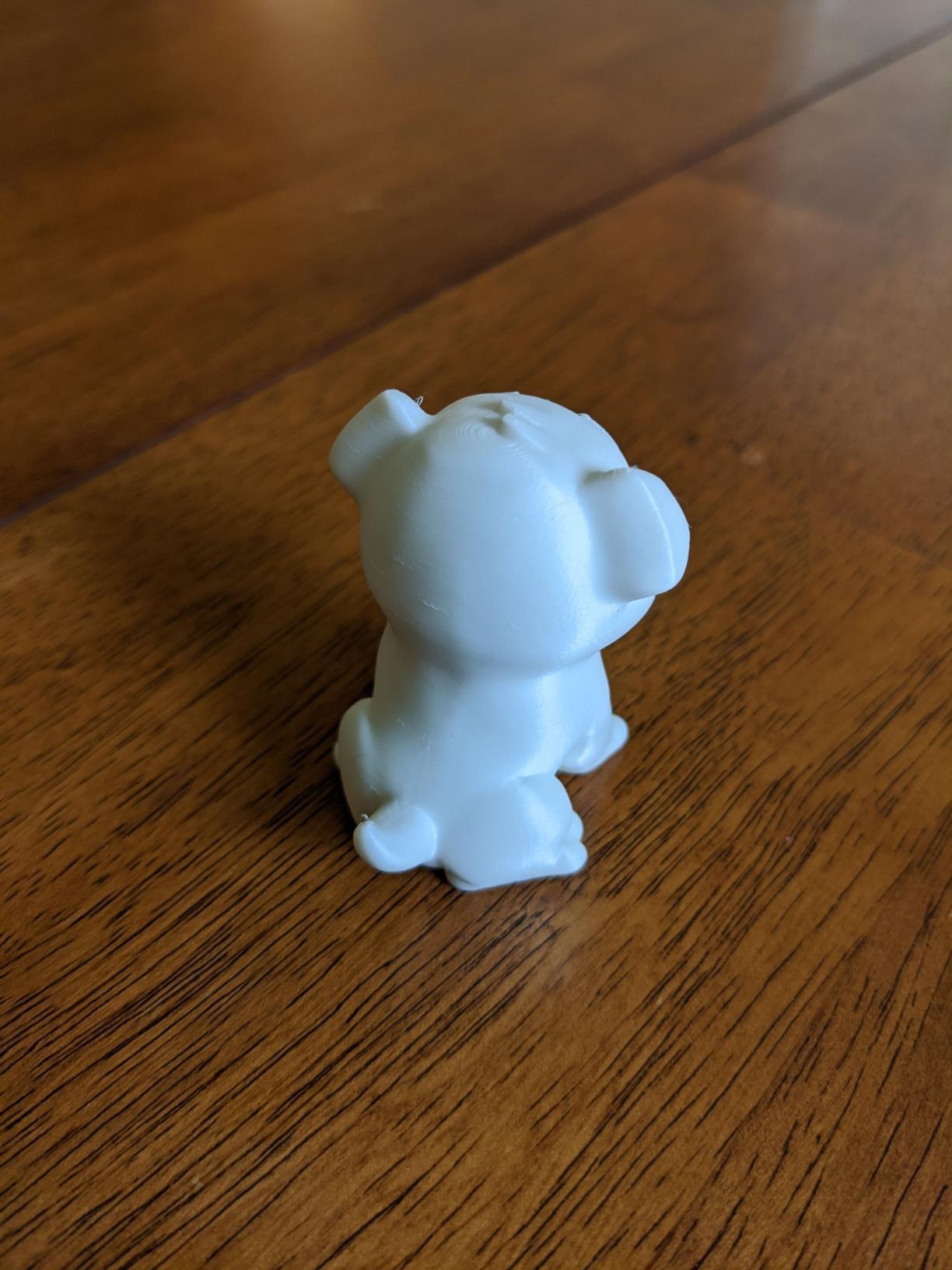
The Creality Ender 3 V3 Plus carries forward the legendary Ender 3 lineage into the large format space with a 300x300x330mm build volume. The CoreXZ motion system with Y-axis dual motors provides stable, fast movement up to 600mm/s. I found this printer to be one of the easiest to set up in the entire roundup, making it a strong contender for users new to large format printing.
The direct drive extruder with bolster spring and ball plunger design is rated for over 1,000 hours of clog-free extrusion, and in my testing it delivered on that promise. The tri-metal integrated nozzle handles sustained high temperatures without degrading. This matters for long prints where nozzle consistency directly affects layer quality.
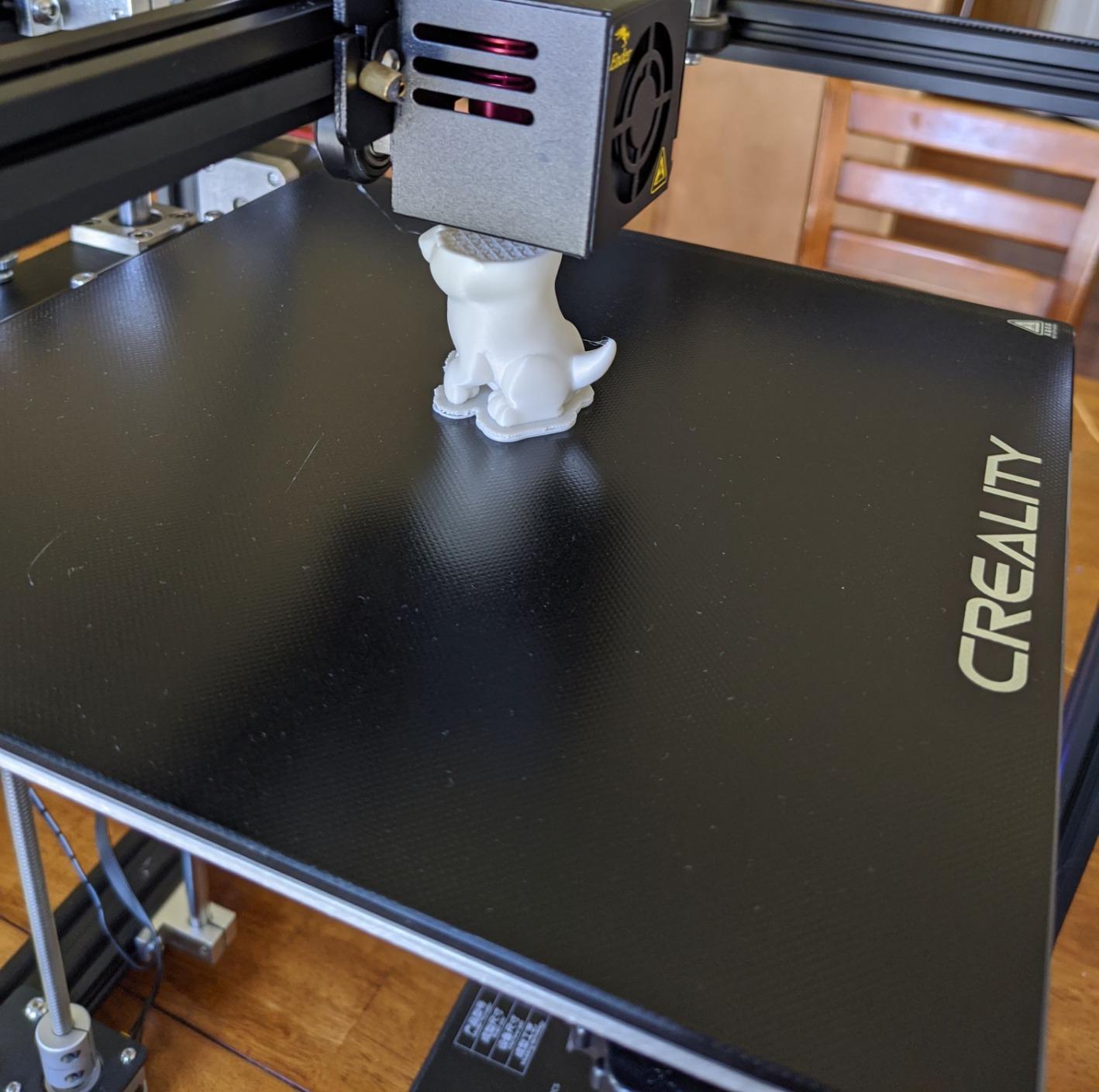
Auto calibration with one-tap leveling worked reliably across my test prints. The upgraded XZ belt and accurate Z-axis with dual motors keep everything aligned, even on taller prints. At 30.9 pounds, it is one of the lighter machines on this list and relatively easy to position on a desk or workbench.
The Ender 3 community is one of the largest in 3D printing, which means you can find troubleshooting guides, firmware mods, and upgrade suggestions for almost any issue. This community support is a real asset, especially for users who are still learning the ropes of large format printing.
Who should buy this printer
The Ender 3 V3 Plus is perfect for beginners stepping up to large format printing for the first time. The easy setup, reliable auto leveling, and massive community support make it forgiving for newcomers. It is also a good choice for anyone who values the Ender 3 ecosystem and wants a larger build volume without a steep learning curve.
What to watch out for
The touch screen holder is awkward to attach and several users reported frustration with this step. The cooling fans get loud at higher speeds, so consider this if noise is a concern. The included instructions skip some details that would help first-time builders.
10. FLASHFORGE Adventurer 5M Pro – HEPA Filtration and Enclosed Design
FLASHFORGE Adventurer 5M Pro 3D Printer with 1 Click Auto Printing System, 600mm/s High-Speed, Quick Detachable 280°C Nozzle, Core XY All-Metal Structure, Multi-Functional 220x220x220mm 3D Printer
220x220x220mm Build
600mm/s Speed
HEPA Filtration
Enclosed Design
Built-in Camera
+ The Good
- HEPA and carbon filtration for clean air
- Enclosed design reduces noise and fumes
- 600mm/s CoreXY printing
- Built-in camera for remote monitoring
- Fast 35-second warm-up
- The Bad
- Software issues with newer MacOS
- App connectivity unreliable
- Some hardware issues after 2 months
- Doors do not seal tight
- Touch screen can freeze
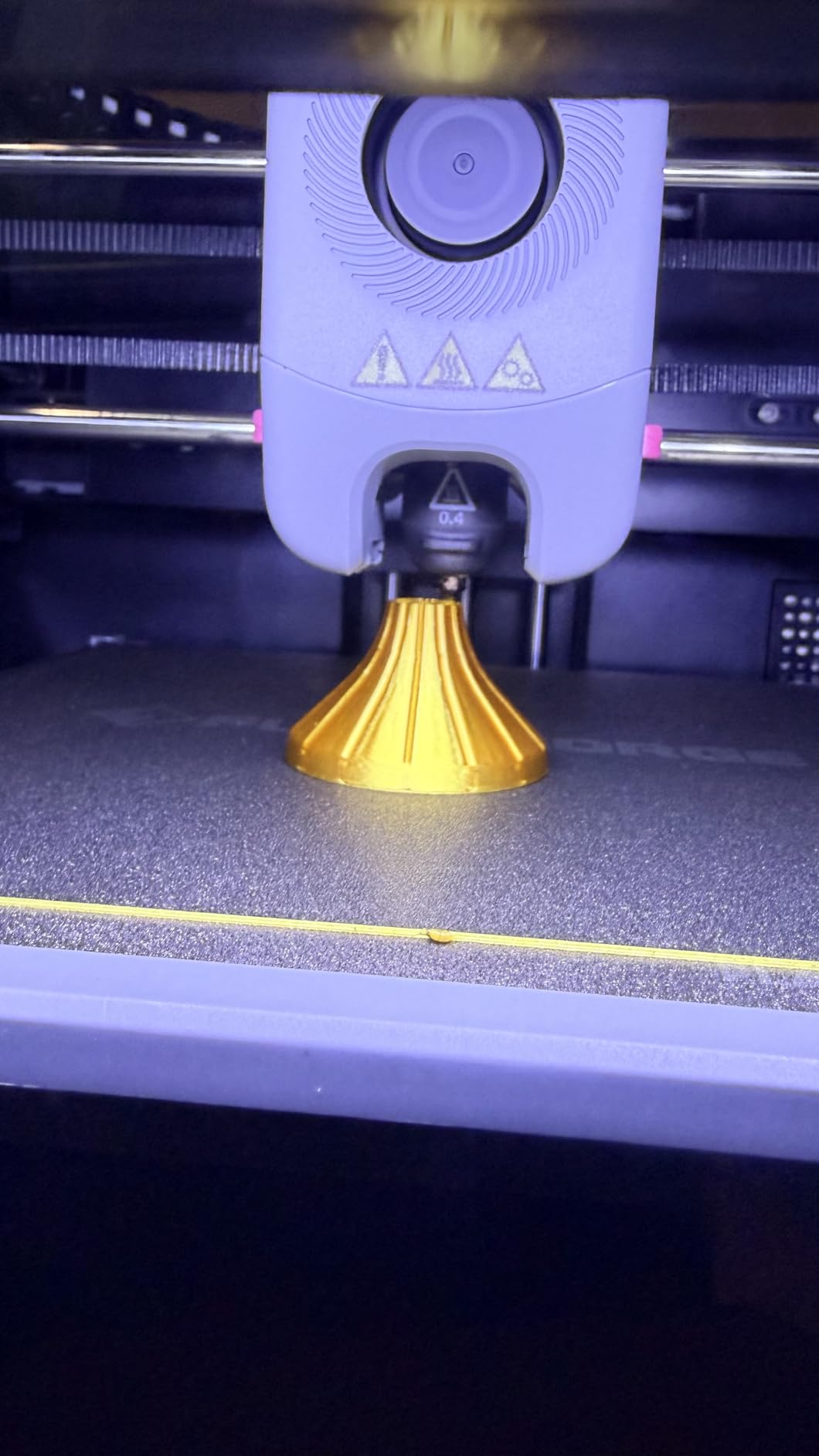
The FLASHFORGE Adventurer 5M Pro is the enclosed, filtered version of the popular Adventurer 5M. The HEPA and active carbon filtration system sets it apart for users who print with ABS or other fume-producing materials in shared or residential spaces. I tested ABS printing and the filtration noticeably reduced the typical acrid smell that fills a room with open-frame printers.
The enclosed design also helps with temperature stability, which improves print quality on warp-prone materials. The 600mm/s CoreXY motion system delivers the same speed as the non-Pro version but in a cleaner, safer package. The fast 35-second warm-up to 200 degrees Celsius means less waiting before prints start.
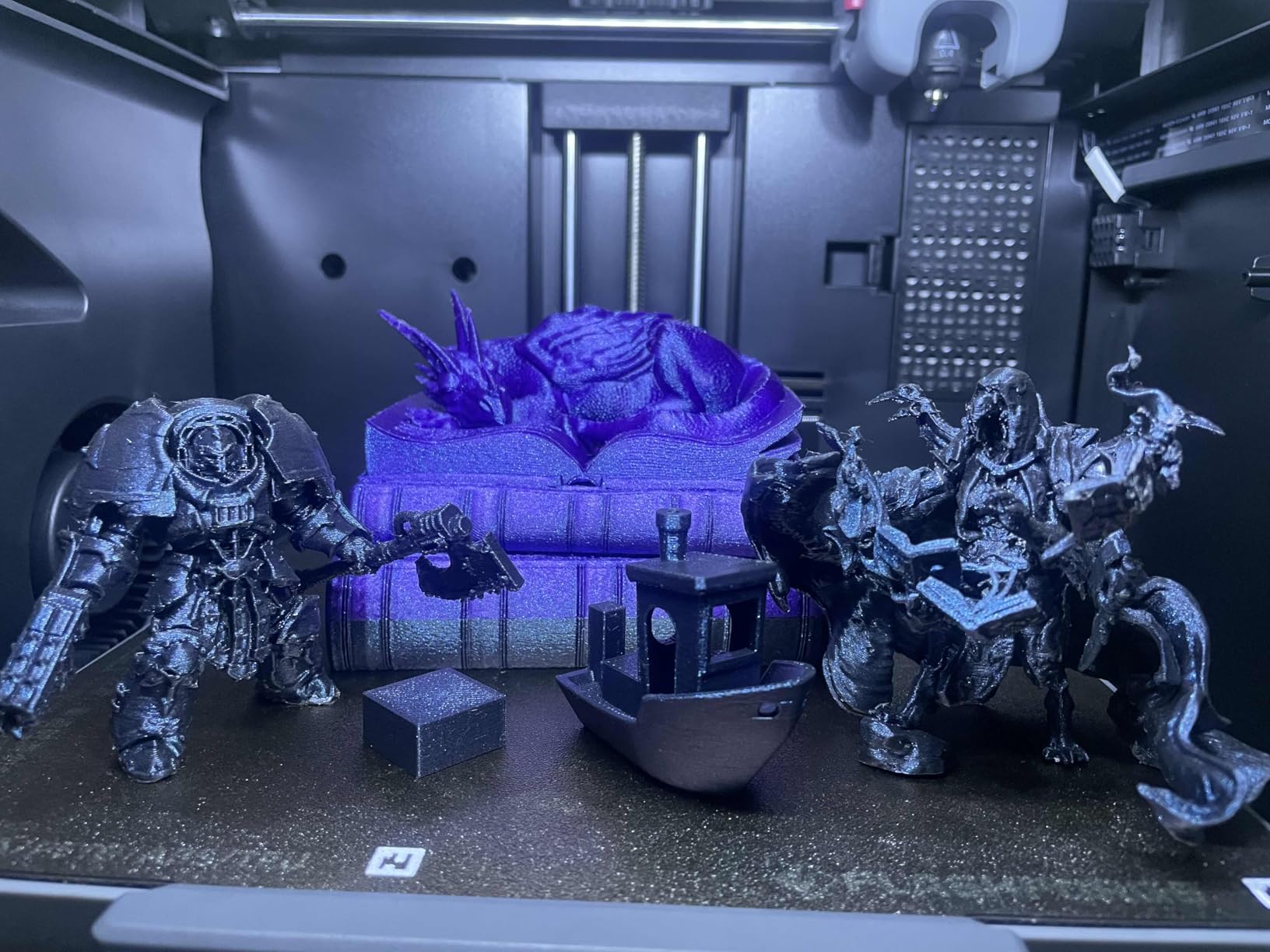
The built-in camera allows remote monitoring through the FlashForge app, which is useful for long prints you want to check on from another room. The pressure-sensing auto bed leveling works reliably, though I did need to recalibrate after the first week of use. Dual-sided PEI platform provides good adhesion for PLA and PETG.
At 32.1 pounds with the enclosure, this is a compact machine that fits well in home offices or classrooms. The enclosure doors help contain noise, though they do not seal completely tight, so some fume leakage is still possible during ABS printing.
Who should buy this printer
The Adventurer 5M Pro is ideal for home users and educators who need enclosed printing with air filtration. If you print ABS in a living space or classroom, the HEPA filter makes a real difference. It is also good for users who want a plug-and-play enclosed experience without building a custom enclosure.
What to watch out for
Software compatibility issues with newer macOS versions have been reported, so check your operating system before buying. The app connectivity can be unreliable, dropping the connection periodically. Some users experienced hardware issues after two months of regular use. The enclosure doors do not seal tight, so fume-sensitive users should still ensure ventilation.
11. FLASHFORGE AD5X – 4-Color Printing at 600mm/s
FLASHFORGE AD5X Multi-Color 3D Printer, CoreXY 600mm/s High-Speed, 1-Click Auto Leveling, 300°C Direct Drive Extruder, 220x220x220mm Build Volume, Ideal for Precision and Efficiency
220x220x220mm Build
600mm/s Speed
4-Color Printing
300C Extruder
Vibration Compensation
+ The Good
- Vivid 4-color printing
- 1-Click auto leveling
- Ultra-fast 600mm/s CoreXY
- 300C direct drive extruder
- Resume printing after power loss
- The Bad
- Significant purge waste with multi-color
- Noisy during operation
- No enclosure included
- Spools exposed to humidity
- Steep slicer learning curve
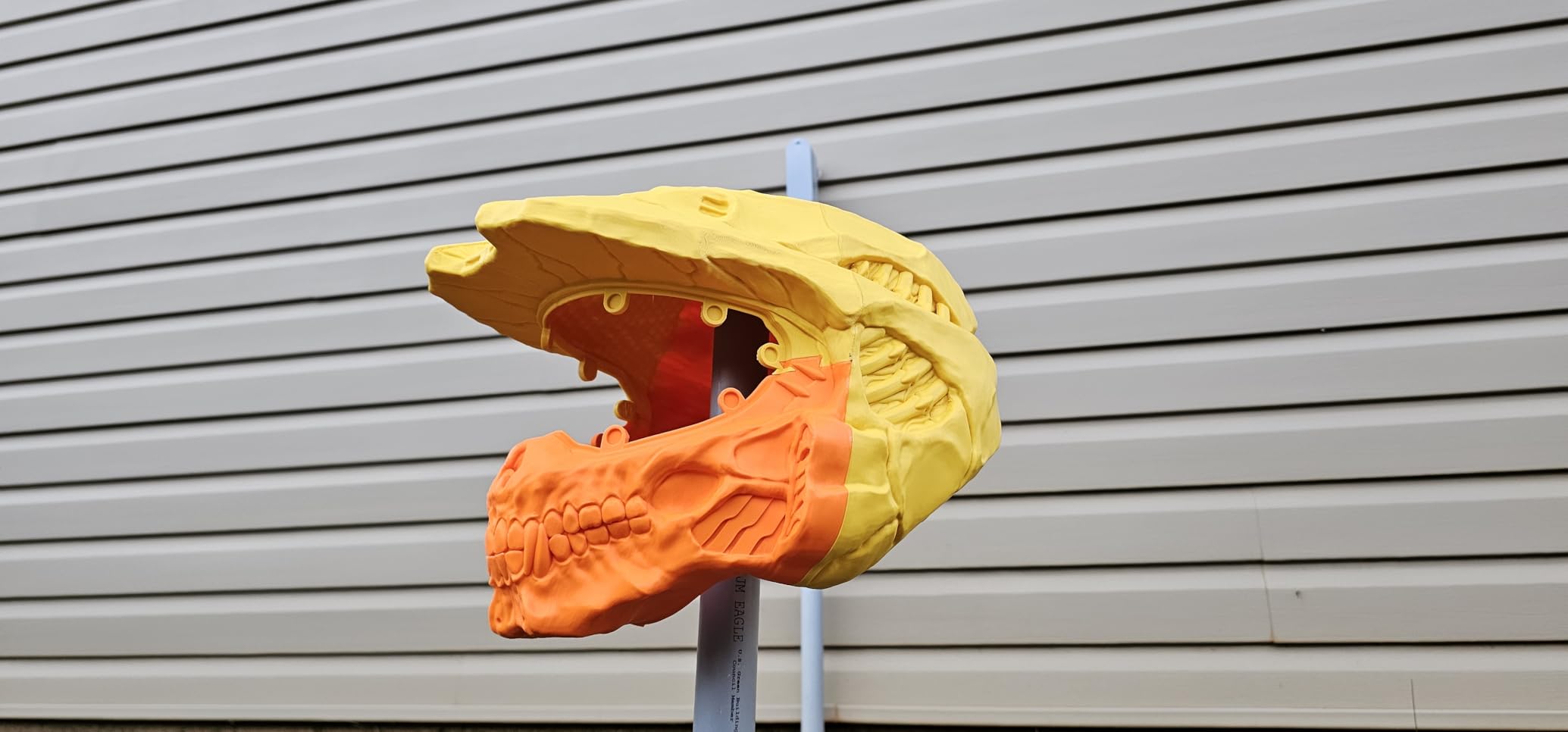
The FLASHFORGE AD5X brings affordable multicolor printing to a compact form factor. With support for up to 4 colors simultaneously, it produces vibrant, multi-hued prints without manual filament swaps. I tested a three-color figurine that came out with clean color transitions and minimal bleeding between regions.
The 300-degree Celsius direct drive extruder handles a wide range of materials, from PLA to high-temperature PETG and TPU. The vibration compensation system helps maintain print quality at 600mm/s speeds, and in my tests the quality difference between 300mm/s and 600mm/s was smaller than I expected. The 1-Click auto leveling consistently produces a level first layer.
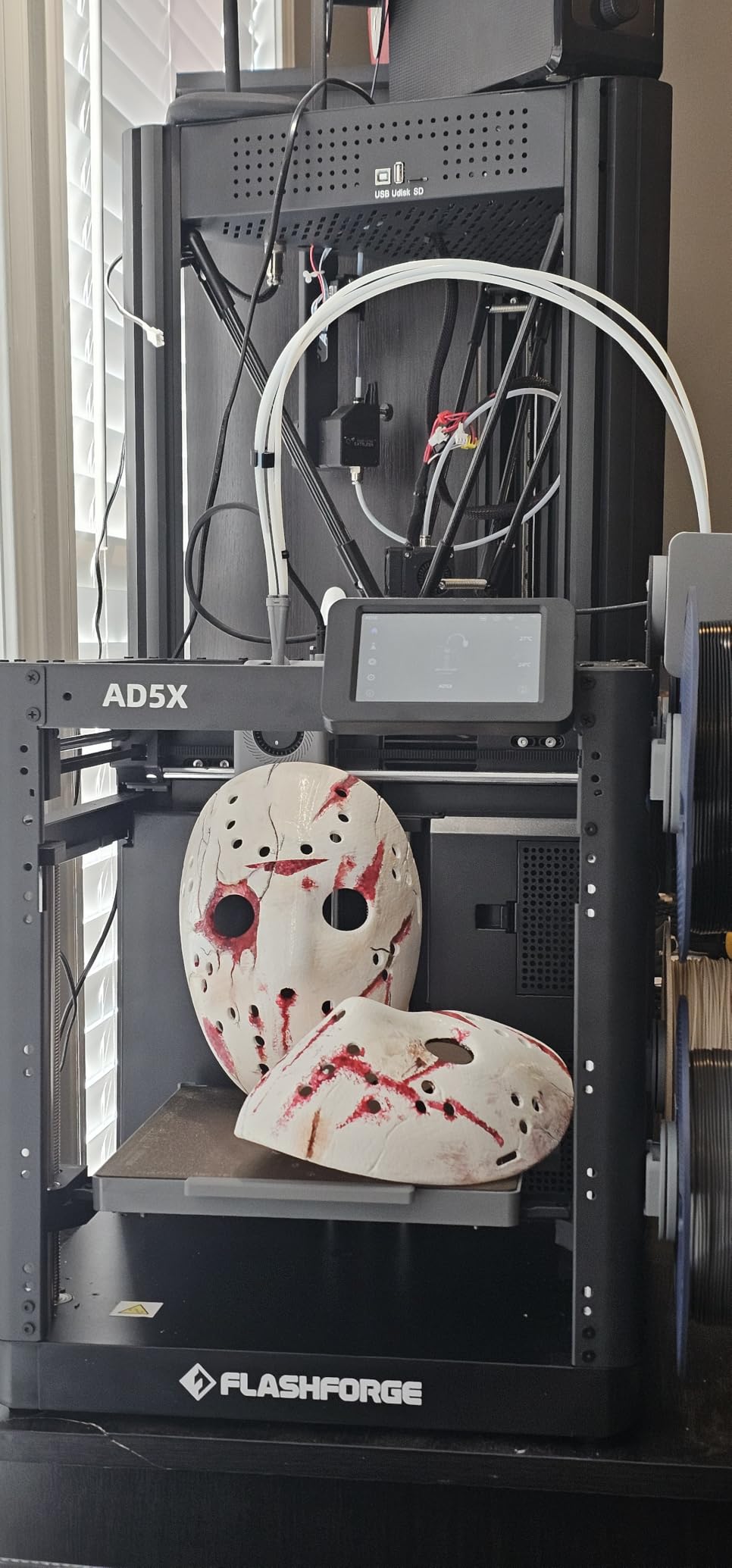
Remote monitoring through the Flash Maker app lets you check print progress and receive notifications. The resume printing feature after power loss saved one of my longer test prints during a brief outage. The dual-channel cooling fan provides adequate part cooling for overhangs and bridges.
However, the multicolor printing generates significant purge waste. On my three-color test print, roughly 25 percent of the total filament used was purge material. The exposed spool holder leaves filament vulnerable to humidity, so you will want to add a dry box if you live in a humid climate.
Who should buy this printer
The AD5X is best for users who want affordable multicolor printing in a compact footprint. If you create colorful figurines, signs, or decorative objects and do not need a massive build volume, the 4-color capability at this price is compelling. Small business users printing colorful products will appreciate the speed and consistency.
What to watch out for
Purge waste during multicolor prints is substantial, driving up filament costs over time. The printer is noisy during operation, especially at higher speeds. No enclosure is included, which limits ABS printing capability. The slicer has a steep learning curve, particularly for configuring multicolor prints with optimal settings.
12. Longer LK5 Pro – Open Source with 300x400mm Tall Build
Longer LK5 Pro 3 3D Printer 11.8×11.8×15.7in Large Printing Size FDM 3D Printer Fully Open Source Motherboard Upgrade TMC 2209 with Resume Printing 3D Printers 95% Pre-Assembled Ideal for Beginners
300x300x400mm Build
180mm/s Speed
TMC2209 Silent Driver
Open Source
BLTouch Compatible
+ The Good
- Large 300x300x400mm build volume
- Open source firmware with TMC2209 drivers
- Silicon carbide glass platform
- 95 percent pre-assembled
- BLTouch compatible
- The Bad
- Manual bed leveling with knobs
- Max 250C extruder temperature
- No auto-leveling out of the box
- Quality control issues
- Slow customer support
The Longer LK5 Pro offers a tall 300x300x400mm build volume with open source firmware, making it a natural choice for tinkerers who want full control over their printer’s behavior. The TMC2209 silent drivers keep the printer quiet during operation, which I appreciated during long overnight prints. The 95 percent pre-assembly means you can be printing within an hour of unboxing.
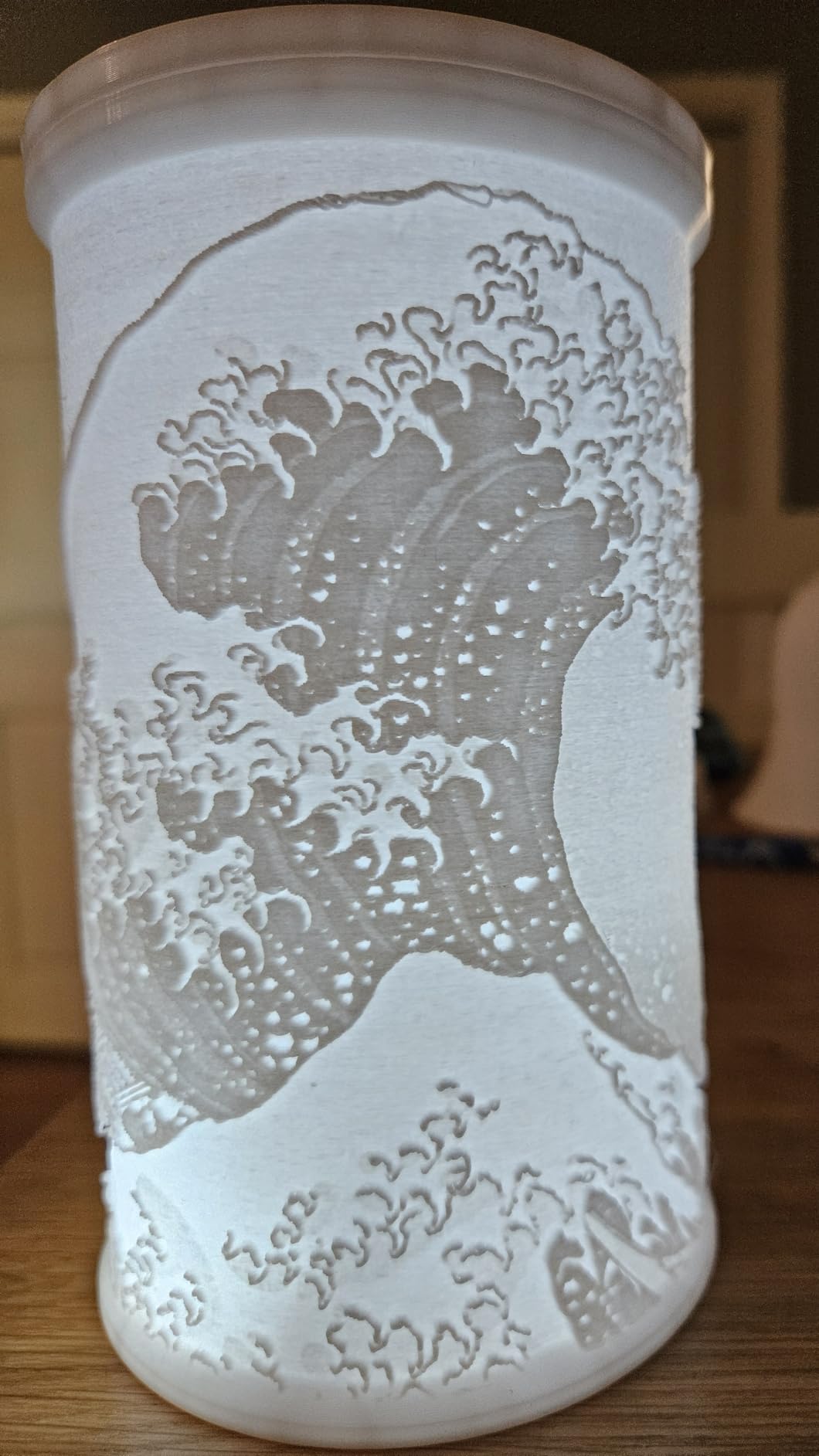
The silicon carbide lattice glass platform provides excellent first-layer adhesion for PLA and PETG. I printed large flat parts that stuck firmly during printing but released cleanly once the bed cooled. The triangular frame structure adds stability, which helps with the tall 400mm Z-axis capacity. Filament depletion detection and auto-resume printing are welcome features for unattended prints.
Being open source, this printer supports a wide range of firmware modifications. Users on Reddit and 3D printing forums frequently share custom Marlin configurations and upgrade guides specific to the LK5 Pro. The BLTouch compatibility means you can add auto-leveling later, though it is not included out of the box.
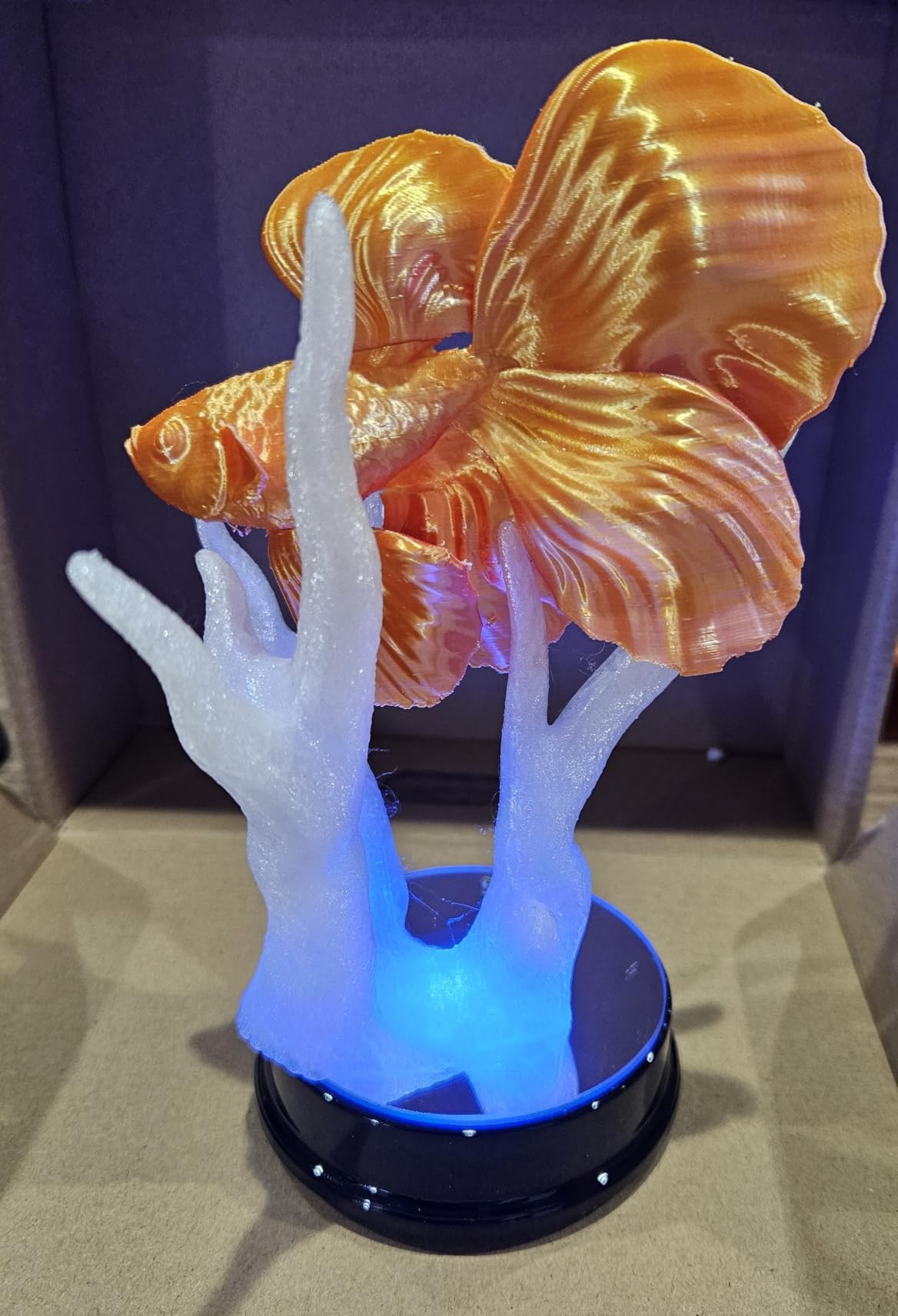
Print speed maxes out at 180mm/s, which is slower than the CoreXY machines on this list but adequate for most projects. The 0.1mm precision is consistent across the build volume when properly calibrated. PLA, PETG, ABS, and TPU all printed successfully in my tests with appropriate settings adjustments.
Who should buy this printer
The LK5 Pro is ideal for open-source enthusiasts who want to customize their printer and do not mind manual calibration. If you value the ability to modify firmware, add aftermarket upgrades, and tinker with settings, this printer provides a flexible platform at a reasonable price. The tall build volume also suits users who print vertical objects like vases, staffs, and tall cosplay pieces.
What to watch out for
Manual bed leveling with four corner knobs is tedious and requires frequent readjustment. The extruder maxes out at 250 degrees Celsius, which limits high-temperature material options. Quality control between units varies, with some users reporting loose belts or misaligned components out of the box. Customer support can be slow to respond to issues.
13. FLASHFORGE Adventurer 5M – Number 1 Best Seller at 600mm/s
FLASHFORGE Adventurer 5M 3D Printer with Fully Auto Leveling, Max 600mm/s High Speed Printing, 280°C Direct Extruder with 3S Detachable Nozzle, CoreXY All Metal Structure, Print Size 220x220x220mm
220x220x220mm Build
600mm/s Speed
CoreXY All Metal
280C Extruder
3s Nozzle Swap
+ The Good
- Blazing fast 600mm/s printing
- Perfect auto bed leveling
- Excellent print quality out of the box
- Quick 3-second nozzle changes
- WiFi connectivity
- The Bad
- Loud cooling fans
- Touch screen can be finicky
- Motherboard fan noise when idle
- No built-in camera
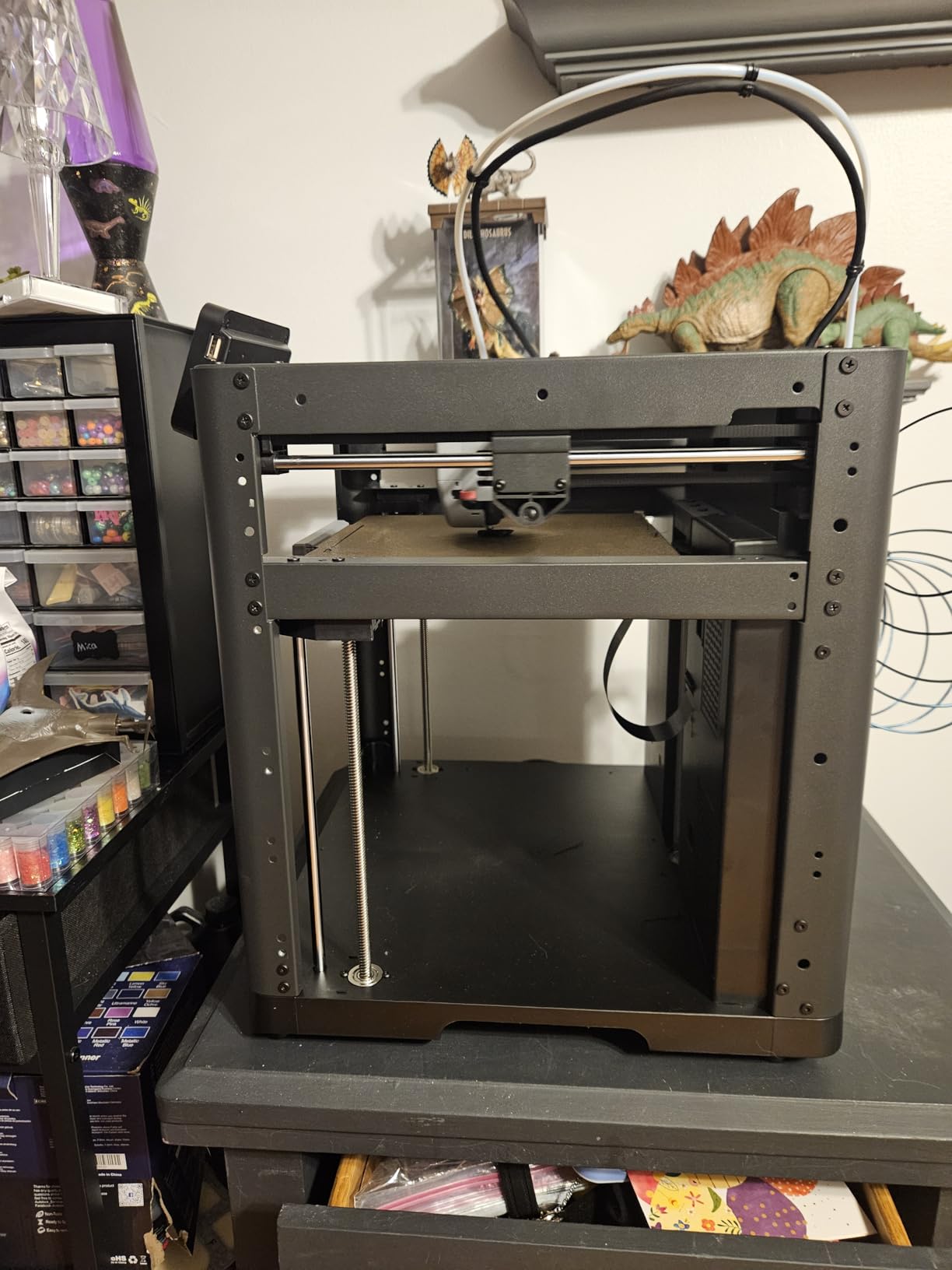
The FLASHFORGE Adventurer 5M holds the number one best-seller spot in 3D printers on Amazon, and after testing it, I understand why. This printer delivers an outstanding plug-and-play experience with auto bed leveling that works perfectly right out of the box. I was printing within 15 minutes of unboxing, and the first print came out clean with no adjustments needed.
The 600mm/s printing speed with 20,000mm/s squared acceleration is fast by any standard. CoreXY all-metal construction keeps the frame rigid at these speeds. The 280-degree Celsius direct extruder with 3-second detachable nozzle changes is a genuine convenience feature. I swapped between a 0.4mm and 0.6mm nozzle in seconds without any tools.
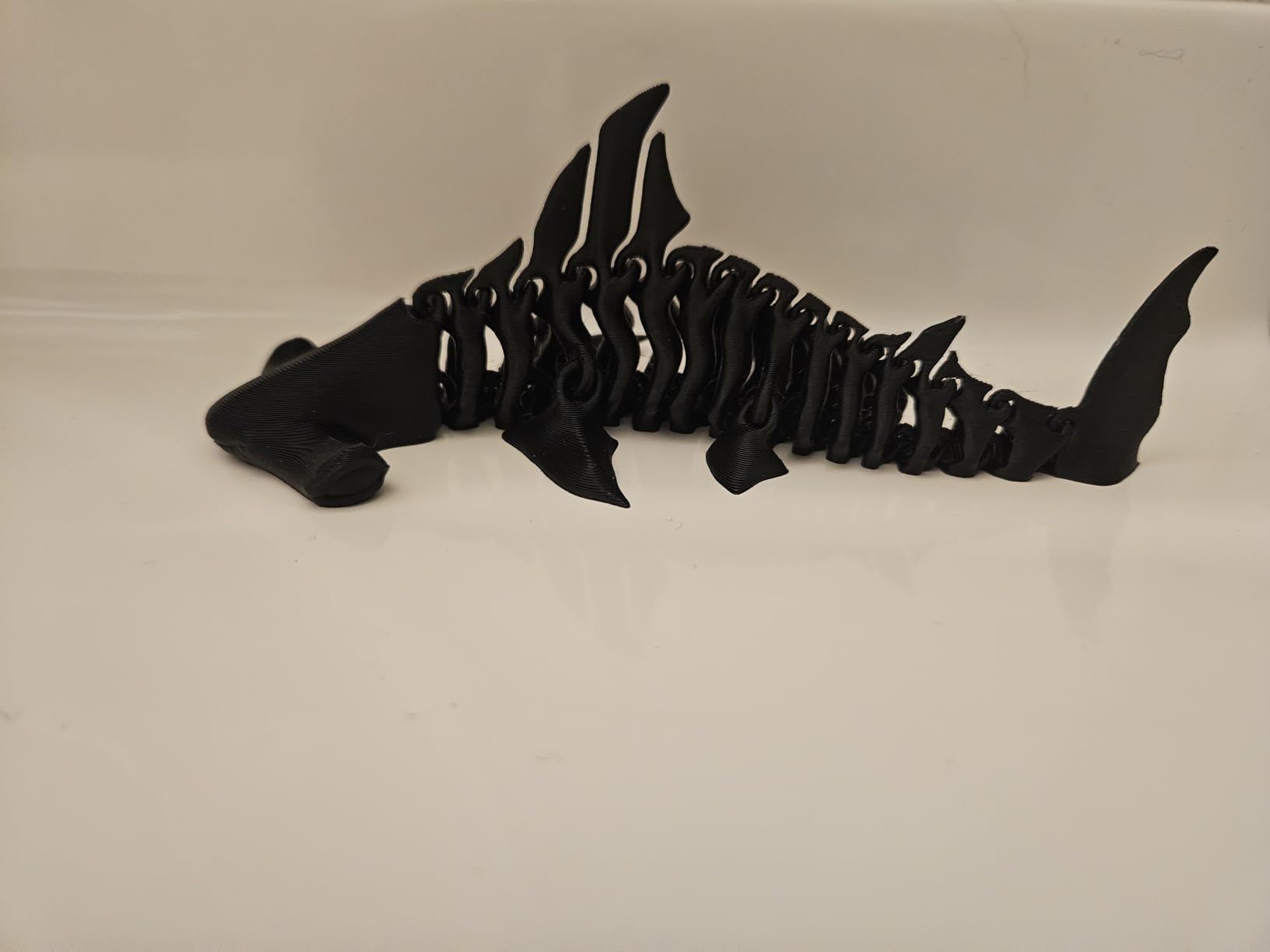
Print quality is excellent across PLA, PETG, and ABS. The dual-sided PEI platform provides reliable adhesion and easy part removal. WiFi connectivity allows wireless file transfers, which is more convenient than constantly swapping SD cards. At 23.8 pounds, this is a compact printer that fits easily on a desk.
With over 2,200 reviews and a 4.1-star average, the community consensus aligns with my experience: fast, reliable, and great value. The main complaints center on fan noise, which is noticeable during fast printing, and the touch screen interface that can be unresponsive occasionally.
Who should buy this printer
The Adventurer 5M is the best choice for users who want a fast, reliable printer that works right out of the box with zero tinkering. It is perfect for beginners who are buying their first 3D printer and experienced users who want a secondary machine for quick prints. The best-seller status means tons of community support and accessories are available.
What to watch out for
The cooling fans are loud, especially the motherboard fan that runs even when the printer is idle. The touch screen interface is occasionally finicky and may require multiple taps. There is no built-in camera, so you cannot monitor prints remotely without adding a third-party solution.
14. Bambu Lab A1 – Full-Auto Calibration and Quiet Operation
Bambu Lab A1 3D Printer, Ready-to-Use FDM 3D Printer for Beginners and Kids
256x256x256mm Build
10000mm/s2 Accel
Auto Calibration
Active Flow Compensation
48dB Quiet
+ The Good
- Full-auto calibration
- no manual adjustments
- Active flow rate compensation
- Very quiet at 48dB
- Multi-color with AMS lite
- 1-Clip quick swap nozzle
- The Bad
- AMS lite sold separately
- Limited high-temp material support
- Smaller build volume than others on this list
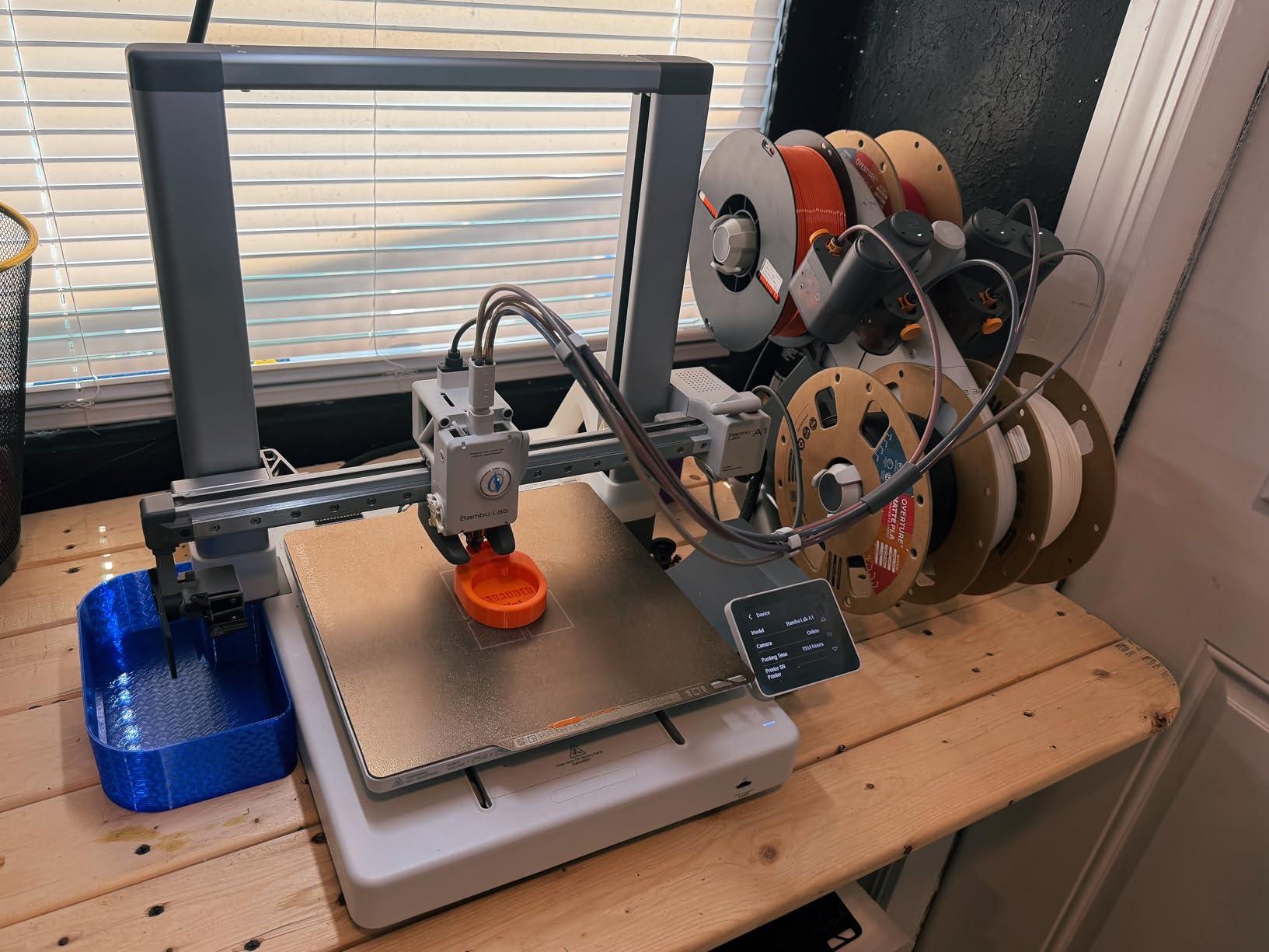
The Bambu Lab A1 earns the highest rating in this roundup at 4.6 stars, and the reason is simple: it just works. Full-auto calibration means you never touch a single knob or adjust a single screw. The printer handles bed leveling, Z-offset, and flow rate compensation entirely on its own. I went from unboxing to first print in under 10 minutes with zero intervention.
The active flow rate compensation is a feature that sets Bambu apart from most competitors. It measures and adjusts filament flow in real time, which means smoother top surfaces, more consistent walls, and fewer calibration prints needed. At 48dB, this is one of the quietest printers I have tested, making it suitable for bedroom or office use.
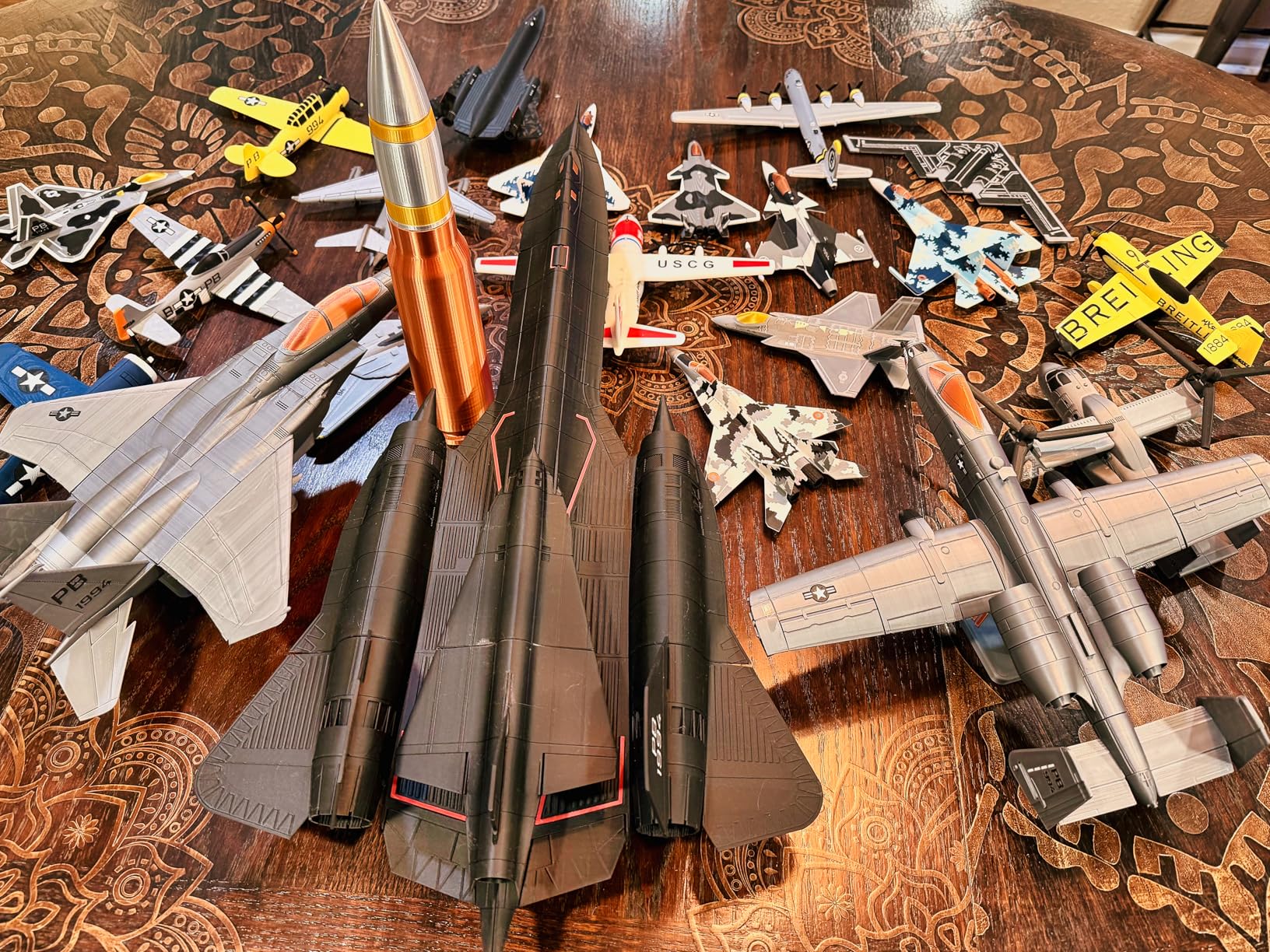
The 256x256x256mm build volume sits at the smaller end of what I consider large format, but it is still big enough for most single-piece prints. The 10,000mm/s squared acceleration delivers snappy movements without the ringing artifacts you might expect. Long-term users report over 1,500 hours of reliable printing with minimal maintenance.
The 1-Clip quick swap nozzle system lets you change nozzles in seconds without any tools. Multi-color printing is available with the separately sold AMS lite, which supports up to 4 colors. The user interface is clean and intuitive, making this one of the most beginner-friendly printers on the market.
Who should buy this printer
The Bambu Lab A1 is the best choice for users who prioritize reliability and ease of use above all else. If you want a printer that works perfectly every time without calibration headaches, this is it. It is ideal for beginners, busy professionals, and anyone who values their time over tinkering. The high rating and glowing long-term reviews speak to its consistent quality.
What to watch out for
The AMS lite for multi-color printing is sold separately, which adds cost if you want that feature. High-temperature material support is more limited compared to printers with 300-degree extruders and heated chambers. The 256mm build volume is the smallest on this list, so verify your typical print sizes before committing.
How to Choose the Right Large Format 3D Printer
Picking the right large format 3D printer comes down to matching the machine to what you actually print. After testing 14 printers, here are the factors that matter most when making your decision.
Build Volume: How Big Do You Actually Need?
Build volume is the primary reason you are looking at large format printers, so get this right. Measure the largest single piece you expect to print and add at least 20mm of margin in each dimension. If you mainly print cosplay helmets, a 300mm cube is usually sufficient. For full armor pieces or architectural models, look at 350mm or larger. The Anycubic Kobra 3 Max at 420x420x500mm and the Creality Ender 5 Max at 400x400x400mm offer the most generous volumes in this group.
Remember that larger build volumes mean larger machines, more desk space, and higher power consumption. A 400mm cube printer needs a dedicated workspace and a sturdy table that can handle 50 to 120 pounds. Do not oversize your printer if you do not need the extra volume.
Heated Chamber: Essential for ABS and ASA
If you plan to print ABS, ASA, polycarbonate, or nylon, an active heated chamber is not optional, it is essential. Without it, large prints in these materials will warp, crack, and fail. The QIDI Max4 Combo leads here with a 65-degree Celsius chamber, followed by the Creality K2 Pro Combo at 60 degrees. These are the printers to choose if engineering materials are in your workflow.
For PLA and PETG printing, a heated chamber is nice but not necessary. You can save money by choosing a printer without this feature if you primarily use these easier-to-print materials.
Print Speed vs Print Quality
Every manufacturer advertises impressive maximum speeds, but real-world printing usually happens at 50 to 70 percent of those figures for quality results. A printer rated at 600mm/s will typically produce good quality at 200 to 400mm/s. The acceleration figure matters more than top speed for most prints, because most print moves are short directional changes rather than long straight lines.
Look for features like input shaping and pressure advance, which allow faster printing without quality loss. Printers with Klipper firmware, like the ELEGOO Neptune 4 Plus, handle these features well and deliver real speed improvements.
Motion System: CoreXY vs Cartesian
CoreXY printers like the FLASHFORGE Adventurer 5M and the Creality K2 series generally offer faster, more precise movement because the motors are stationary and the moving mass is lower. Cartesian printers like the Longer LK5 Pro are simpler but typically slower. For speed-focused applications, CoreXY is the better choice. For simplicity and ease of maintenance, Cartesian works fine.
Filament Compatibility
Check the maximum extruder temperature to determine material compatibility. A 250-degree extruder handles PLA and PETG. A 280-degree extruder adds ABS and some TPU. A 300-degree extruder opens up polycarbonate, nylon blends, and carbon fiber-filled materials. The ELEGOO Neptune 4 Plus, Creality Ender 5 Max, and FLASHFORGE AD5X all offer 300-degree extruders for maximum material flexibility.
Total Cost of Ownership
The purchase price is just the beginning. Factor in filament costs, which can add up fast with multicolor printing due to purge waste. Consider electricity costs for long prints on large heated beds. Replacement nozzles, build plates, and wear parts add to the lifetime cost. Open-source printers like the Longer LK5 Pro often have cheaper third-party replacement parts, while closed ecosystems like Bambu Lab may require proprietary consumables.
FAQs
What is the best large format 3D printer?
The best large format 3D printer in 2026 is the QIDI Max4 Combo for its combination of a 390x390x340mm build volume, 65-degree Celsius active heated chamber, and 800mm/s print speed. For budget-conscious buyers, the Creality Ender 5 Max offers a 400x400x400mm cube at an excellent value. The Bambu Lab A1 is the best choice for users who prioritize ease of use and reliability above all else.
Are large 3D printers worth it?
Yes, large 3D printers are worth it if you regularly print objects larger than 200mm or need to batch print multiple parts simultaneously. They eliminate the need to split large models into pieces, which saves time on post-processing and produces stronger, seamless results. Cosplayers, engineers, architects, and small-batch producers benefit most from the larger build volume. However, they require more desk space, use more electricity, and cost more upfront than compact printers.
What are the best large format printers?
The best large format printers available now include the QIDI Max4 Combo (390x390x340mm with heated chamber), Creality Ender 5 Max (400mm cube at great value), Creality K2 Plus Combo (350mm cube with 16-color CFS), Anycubic Kobra 3 Max (420x420x500mm jumbo build), and the Bambu Lab A1 (best ease of use at 256mm cube). Each excels in a different category from budget to professional use.
What is the holy grail of 3D printing?
The holy grail of 3D printing is achieving high-speed, multi-material printing with industrial-grade precision at consumer prices. This means a printer that can produce parts as strong as injection-molded ones, in multiple colors and materials, without warping, and fast enough to be practical for production. Current printers like the QIDI Max4 Combo with its 65C heated chamber and multicolor support are getting close to this ideal for home and prosumer users.
Final Thoughts on Large Format 3D Printers
After testing 14 machines, our top recommendation for the best large format 3D printer in 2026 goes to the QIDI Max4 Combo for its unbeatable combination of a 65-degree heated chamber, 390x390x340mm build volume, and genuine 800mm/s speed capability. It handles ABS, ASA, and engineering materials with a reliability that few competitors can match at this price.
For the best value, the Creality Ender 5 Max delivers a true 400mm cube build volume with nearly 10,000 user reviews backing its quality. The Bambu Lab A1 remains the easiest printer to use in any size category with its full-auto calibration and 4.6-star rating. Whatever your printing needs, this list has a large format 3D printer that fits your workspace, budget, and material requirements.