
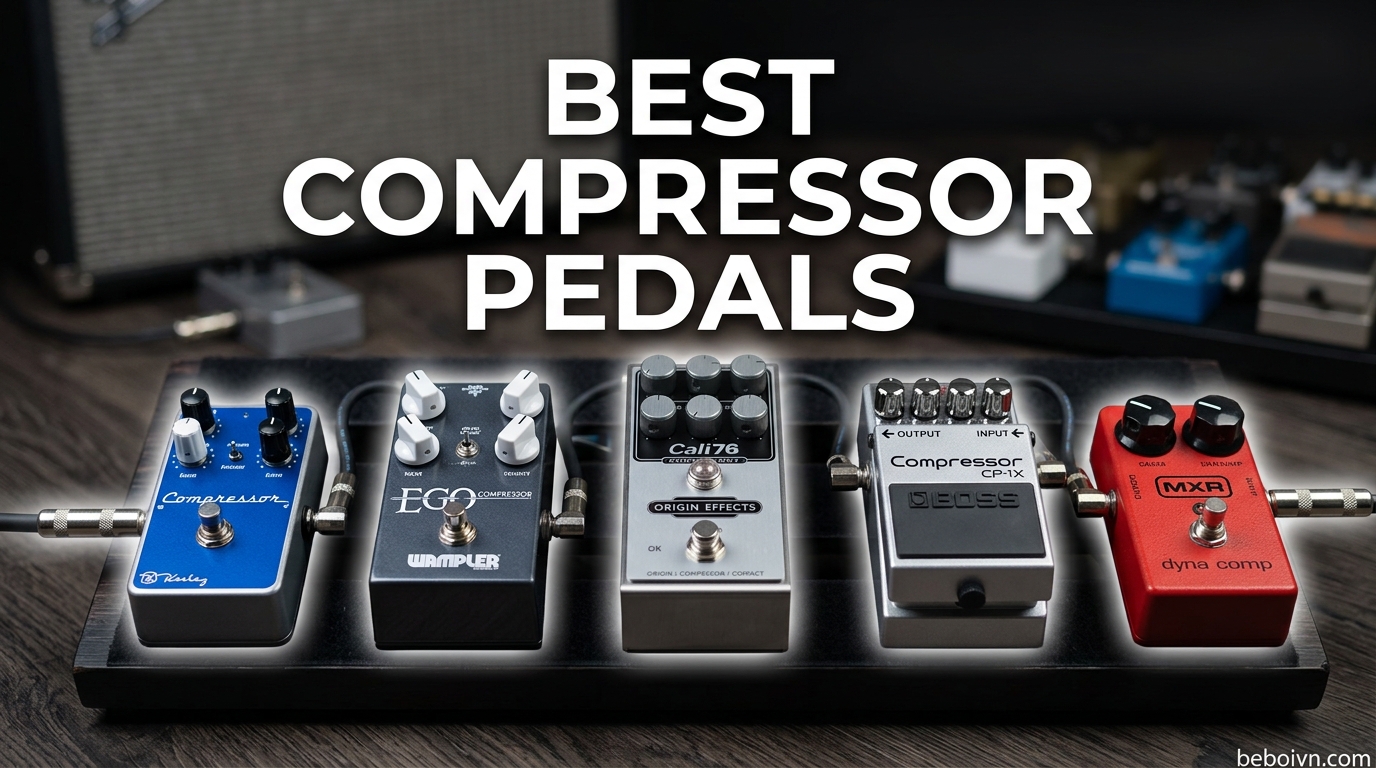
If you have ever noticed your guitar sound disappearing in a mix or certain notes lacking the sustain you need, a compressor pedal could be exactly what your rig is missing. These pedals even out your dynamic range, adding consistency to clean passages and extra punch to lead lines. I have spent years testing and comparing compressor pedals across different genres, and I want to share what actually works for real players.
The best compressor pedals do more than just squeeze your signal. They enhance your tone in ways that feel natural rather than processed. Whether you play country chicken-pickin, funky rhythm guitar, or smooth blues leads, the right compressor can elevate your sound without drawing attention to itself. This guide covers seven pedals that deliver professional results across different budgets and playing styles.
Throughout this article, I will walk you through detailed reviews of each pedal, explain how different compression technologies work, and help you decide which features matter most for your setup. By the end, you will have a clear picture of which compressor pedal fits your needs best.
Top 3 Picks for Best Compressor Pedals
After testing dozens of compressor pedals over the years, three stand out as exceptional choices for most players. Here is my quick breakdown of the top recommendations that consistently deliver results.
Best Compressor Pedals in 2026
The following comparison table shows all seven compressor pedals reviewed in this guide. Each offers distinct advantages depending on your playing style and budget requirements.
| PRODUCT MODEL | KEY SPECS | BEST PRICE |
|---|---|---|
 |
|
Check Latest Prices |
 |
|
Check Latest Prices |
 |
|
Check Latest Prices |
 |
|
Check Latest Prices |
 |
|
Check Latest Prices |
 |
|
Check Latest Prices |
 |
|
Check Latest Prices |
1. Keeley Compressor Plus Pedal Review
Keeley Compressor Plus Pedal, Black (KCompPlus)
Blend Control
Analog Ross Circuit
Two-Year Warranty
+ The Good
- Blend control mixes dry signal back in
- Versatile from subtle to extreme compression
- Transparent tone without coloring your sound
- Low noise operation
- Release switch for single coils or humbuckers
- The Bad
- Tone knob offers subtle shaping only
- Requires stable power supply to avoid noise
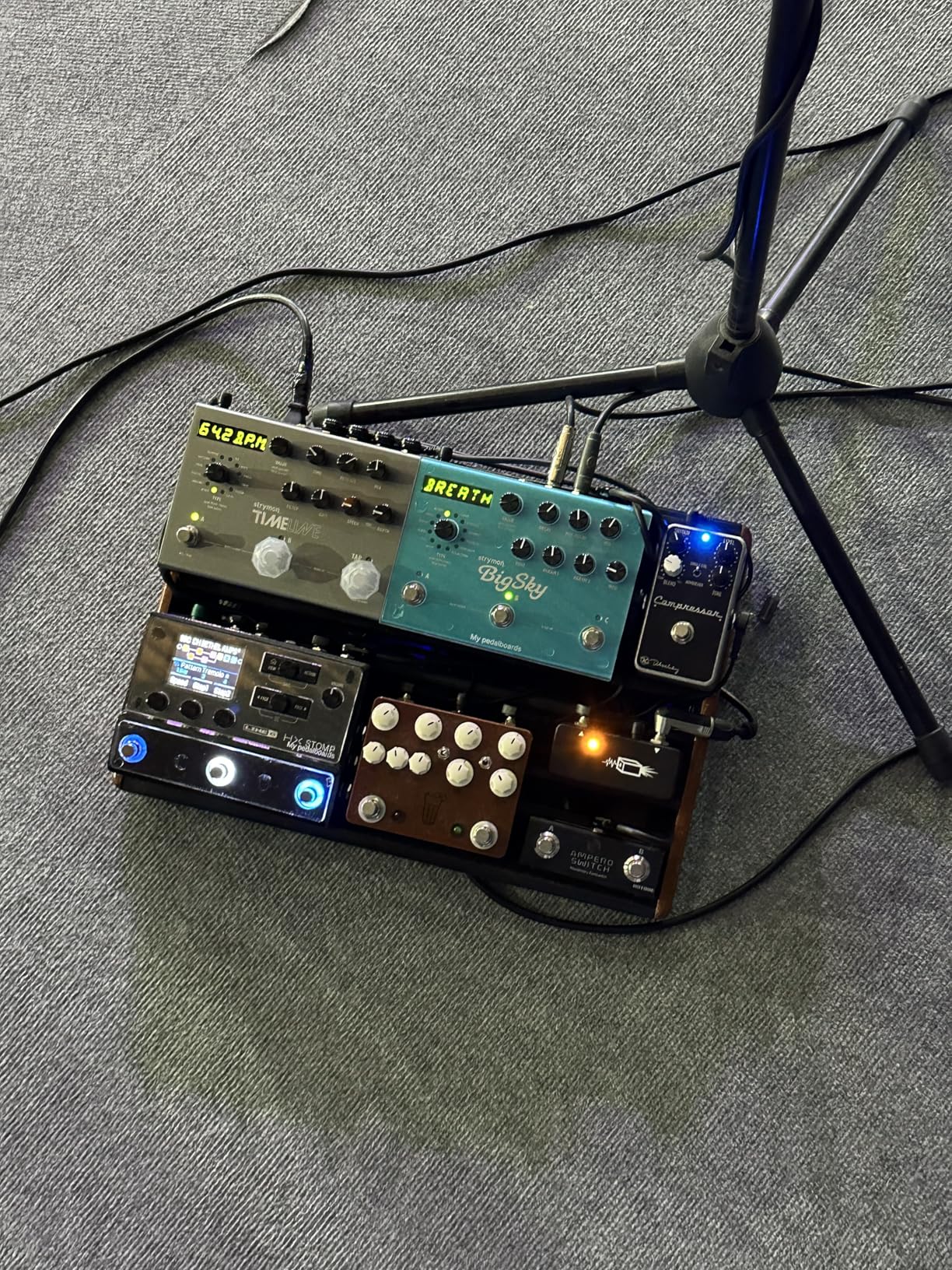
Robert Keeley built his reputation on taking classic circuits and making them better, and the Compressor Plus Pedal is a perfect example of that approach. This pedal takes the legendary Ross compressor design and adds modern features that address real player concerns. The blend control alone makes this pedal worth the price for many guitarists.
When I tested the Keeley Compressor Plus in my rig, the first thing I noticed was how natural the compression sounded. Unlike some pedals that make your guitar feel choked or squashed, this one lets the dynamics breathe while evening out the volume. The release switch is particularly clever, letting you optimize the pedal for single coil pickups or humbuckers with a simple flip.
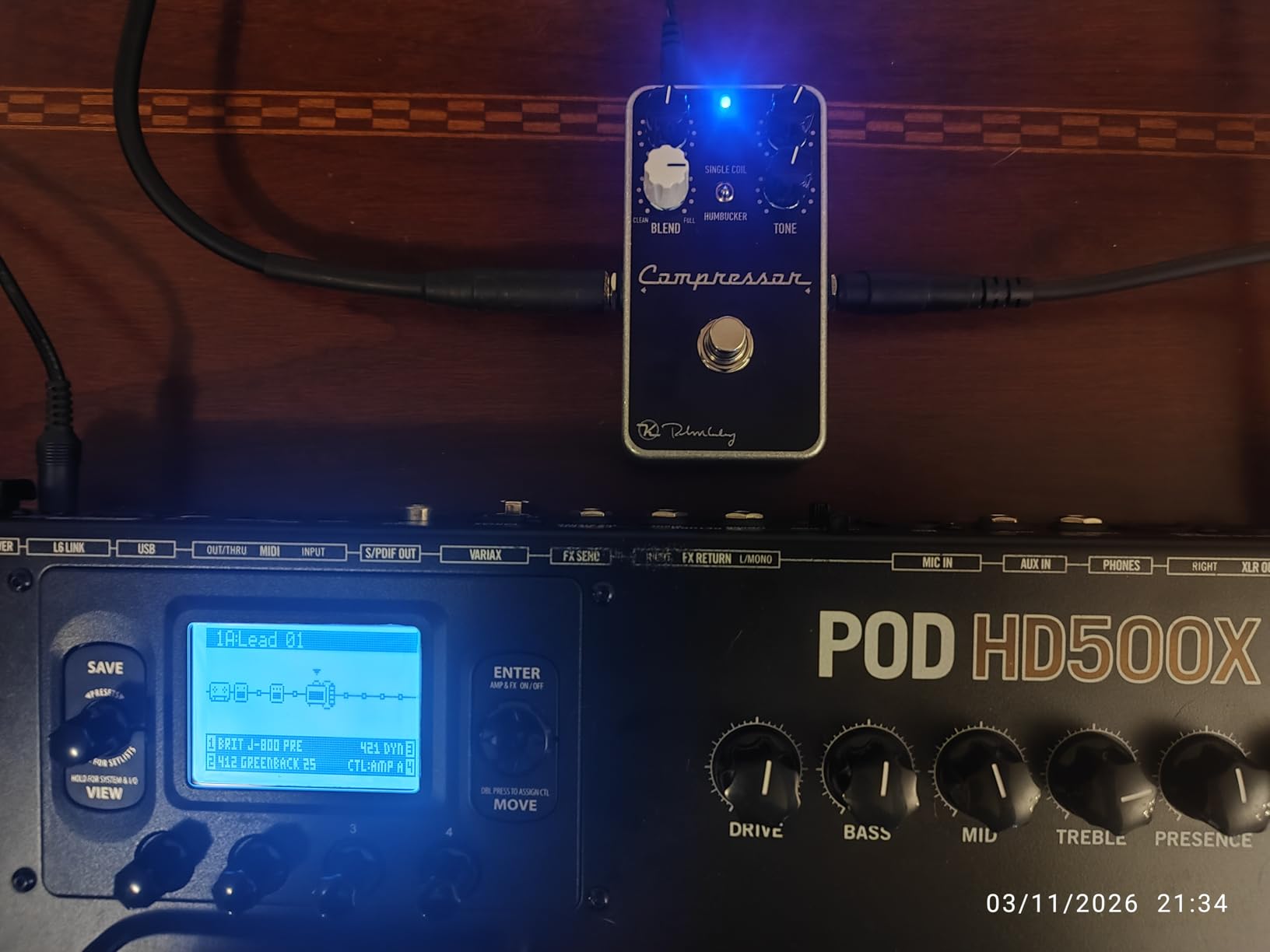
The tone control is subtle but effective. It emphasizes the sensitive harmonics that compression often strips away, keeping your guitar sounding lively rather than dull. I found myself using this pedal on nearly every setting, from very subtle leveling for clean chord work to more aggressive compression for sustained lead passages.
Forum discussions confirm what I experienced. Players with 30+ years of guitar playing often cite the Keeley as the compressor that finally felt right to them. One guitarist mentioned how the blend control lets you keep your pick attack and transients while still getting the sustain benefits of compression.
Who should buy the Keeley Compressor Plus
This pedal suits guitarists who want professional studio-quality compression in a pedalboard-friendly format. The blend control is essential for players who record or perform with bands, as it lets you add compression without losing your original tone character. It works especially well for country, blues, and jazz players who need subtle dynamics control.
Who should look elsewhere
If you prefer the extreme squash of an MXR Dyna Comp, the Keeley might feel too subtle. Additionally, players running multiple digital pedals or noisy power supplies may encounter unwanted hum, so a clean isolated power supply is recommended.
2. Boss CS-3 Compressor/Sustainer Pedal Review
Boss CS-3 Compressor/Sustainer Pedal
Level/Tone/Attack/Sustain Controls
Analog Design
Compact Housing
+ The Good
- Excellent sustain without distortion
- Clean and quiet operation
- Precise tonal shaping
- BOSS legendary reliability
- Works well with bass guitars
- The Bad
- 90-day warranty is limited compared to competitors
- Can pair poorly with noisy pedals
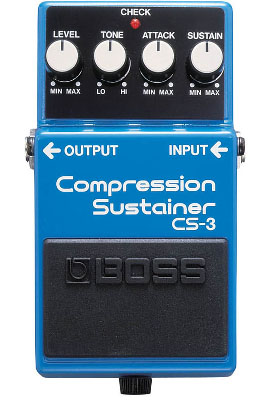
The Boss CS-3 has been a staple in pedalboards worldwide for decades, and for good reason. This compressor offers four distinct controls that let you shape your compression precisely. The Level, Tone, Attack, and Sustain knobs give you complete control over how the effect behaves with your guitar and amp.
In testing, the CS-3 proved itself as a workhorse that can handle anything from subtle rhythm guitar compression to aggressive sustain for lead passages. The attack control is particularly useful, letting you preserve pick attack and transients while still getting the sustain benefits. Turn it clockwise for faster compression that tames wild peaks, or dial it back to let more of your original signal through.
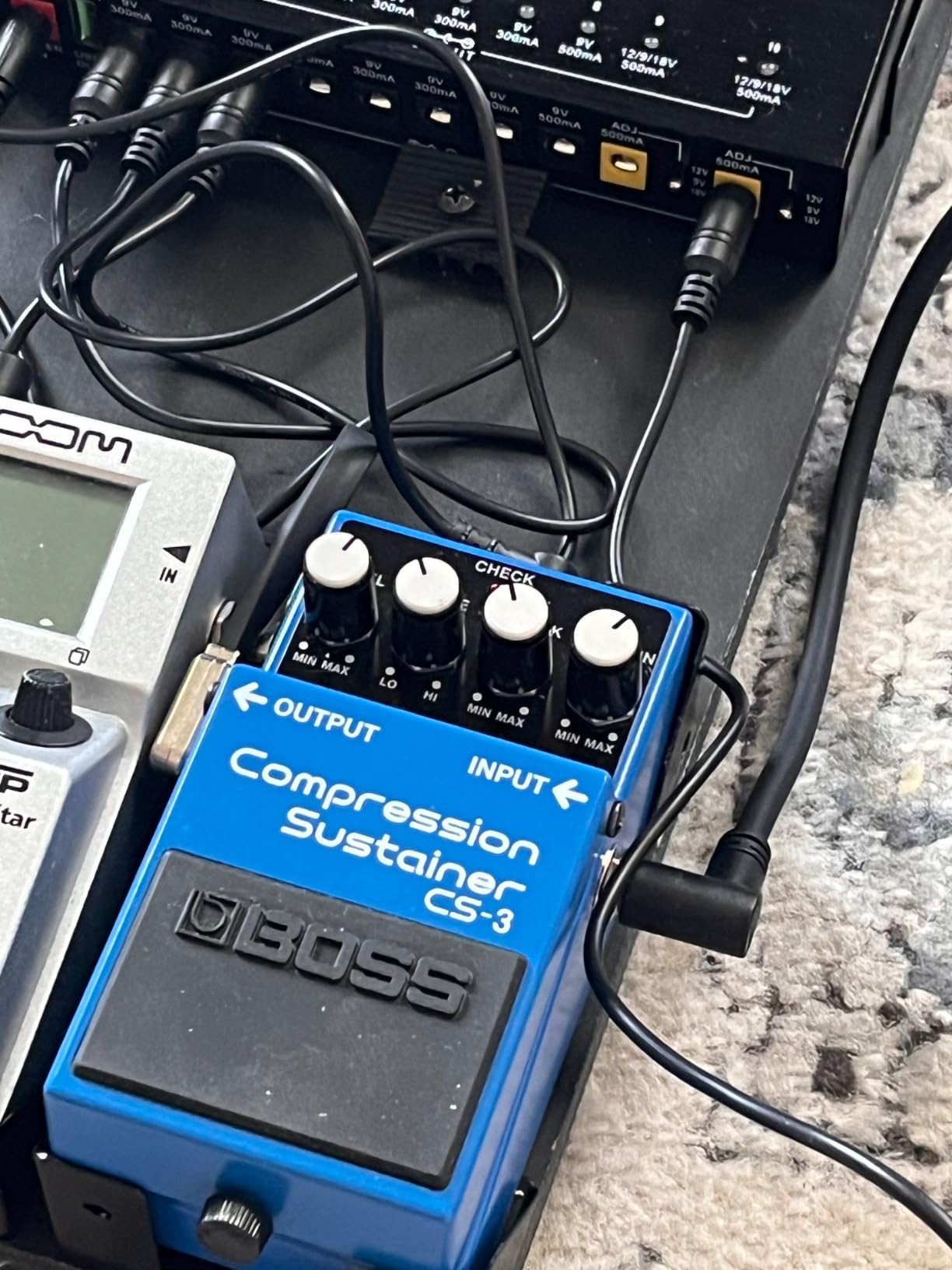
The tone control helps compensate for any high-frequency loss that compression can cause. When set correctly, the CS-3 adds presence without harshness, keeping your guitar cutting through a mix. Bass players often gravitate toward this pedal as well, since it handles low frequencies without muddying things up.
Players in guitar forums frequently mention David Gilmour when discussing the CS-3. While Gilmour is known for various tones, many players associate the CS-3 with that smooth, singing sustain found in progressive rock and blues. The consensus is that this pedal does one thing exceptionally well, and that is making your guitar sound more consistent and present.
Who should buy the Boss CS-3
Players who want a no-nonsense compressor with precise controls will appreciate the CS-3. It excels for rhythm guitar work where you need consistent volume across strummed chords. The reliable BOSS build quality means this pedal will survive gigging and touring without issues.
Who should look elsewhere
If you need more modern features like blend control or want the absolute quietest operation, consider the Boss CP-1X or Keeley Compressor Plus instead. The 90-day warranty is also short compared to the two-year warranties offered by competitors.
3. Donner Ultimate Comp Pedal Review
Donner Compressor Pedal, Ultimate Comp 2 Modes Compression Effect Pedal Pure Analog for Electric Guitar and Bass True Bypass
True Bypass
Analog Signal
2-Year Warranty
+ The Good
- Exceptional value under 40 dollars
- True bypass preserves your tone
- Two selectable modes add versatility
- Compact and sturdy metal construction
- Quieter operation than MXR Dyna Comp
- The Bad
- No attack adjustment control
- No battery option requires power adapter
- Plastic feeling treble switch
Donner has made a name for itself by offering budget-friendly pedals that punch well above their price point. The Ultimate Comp continues that tradition, delivering solid compression at a price that makes it accessible to beginners and experienced players alike. At under 40 dollars, this pedal represents tremendous value for what you get.
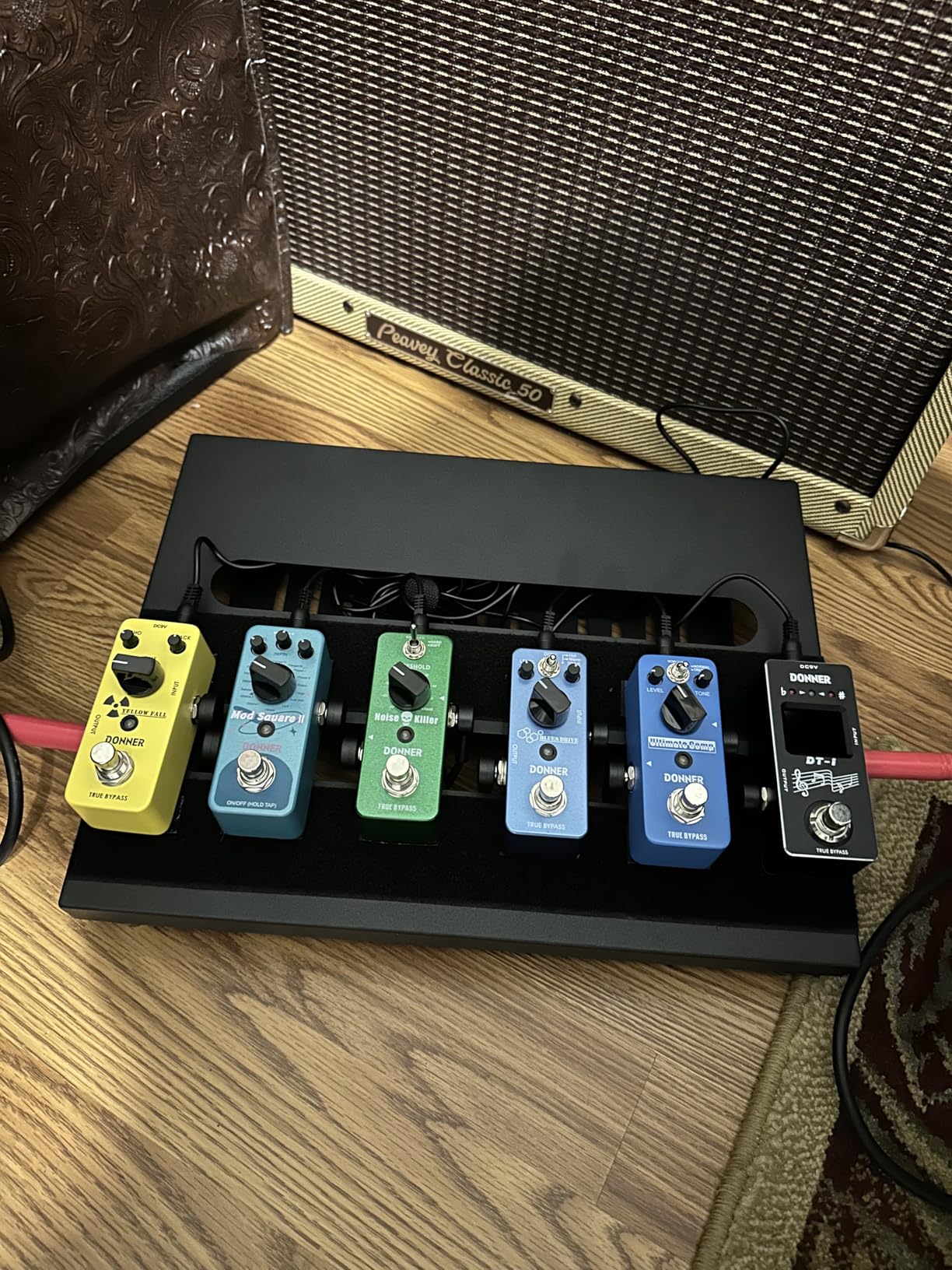
The three-knob layout keeps things simple without limiting your options. The COMP control adjusts compression intensity, TONE shapes your high frequencies, and LEVEL sets your output volume. The Normal and Treble mode switch adds a surprising amount of versatility, letting you choose between traditional compression and a brighter, more articulate sound.
I tested the Donner against several more expensive pedals and came away impressed by how quiet it runs. Forum users consistently mention that this pedal is quieter than the popular MXR Dyna Comp, which has been a budget standard for years. The true bypass switching means your tone stays pure when the pedal is off, no signal loss or coloring.
For a pedal priced this affordably, the build quality exceeds expectations. The metal housing feels substantial, and the knobs are securely attached. The one drawback is the treble mode switch, which some users report feeling slightly fragile. Careful handling during setup prevents any issues.
Who should buy the Donner Ultimate Comp
Beginners on a tight budget will find everything they need to learn about compression with this pedal. It also makes a great backup or travel pedal since the price point means replacing it causes less financial pain. Players new to compression effects can experiment freely without investing heavily.
Who should look elsewhere
Players who need attack control for precise compression timing should consider upgrading to pedals with that feature. The lack of battery power also means this pedal requires a power adapter, which adds to the total cost if you do not already have one.
4. Xotic SP Compressor Pedal Review
+ The Good
- Most transparent compression available
- Blend control for parallel compression
- Internal DIP switches for customization
- Clean boost capability
- Compact size with battery option
- The Bad
- Thin profile can tip with heavy cables
- High gain settings amplify equipment noise
- Factory Hi-cut preset may need adjustment
The Xotic SP occupies a special place in the compressor pedal world. It is widely regarded as one of the most transparent compressors available, meaning it adds compression without any audible effect character. If you want the benefits of compression without changing your tone, this pedal delivers exactly that.
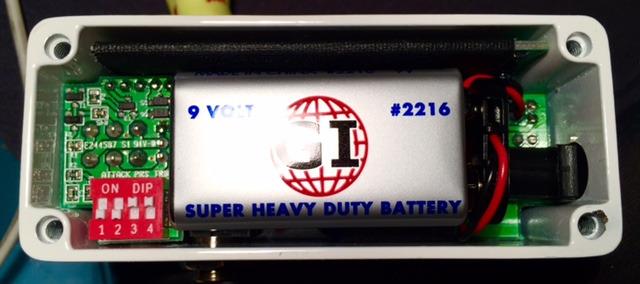
What sets the SP apart from competitors is the combination of an external blend knob and internal DIP switches. The blend control lets you mix your uncompressed signal back in, preserving your pick attack and transients while still getting smooth sustain. The internal DIP switches offer deeper customization for attack, release, and high-frequency cutoff.
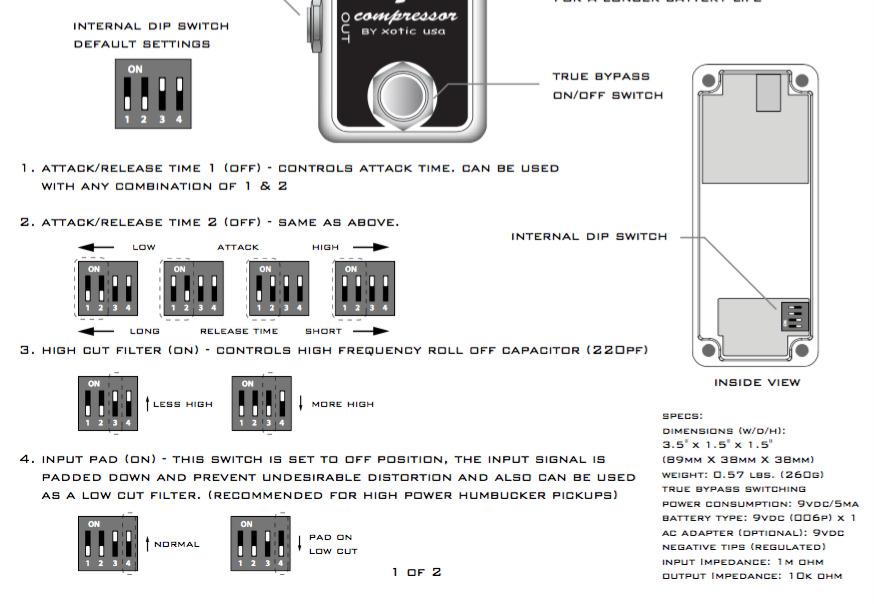
The Hi, Lo, Mid compression switch on the outside gives you three distinct compression characters at your feet. The Lo setting is perfect for subtle bass-heavy instruments, Mid works well for standard guitar tones, and Hi provides more aggressive compression for lead work. I found myself using Mid most often but appreciating the flexibility during different recording sessions.
Forum discussions frequently mention the Xotic SP as a favorite among players who own more expensive boutique compressors. Many users report that the SP sounds just as good as pedals costing twice the price. The compact size with battery option makes it ideal for players who move between different rigs frequently.
Who should buy the Xotic SP
Players who prioritize tone transparency and want professional studio compression in a pedal will love the SP. The internal DIP switches appeal to players who enjoy tweaking and customizing their sound. It excels for funk, soul, and any style where note clarity matters as much as sustain.
Who should look elsewhere
The thin profile can be problematic on crowded pedalboards, especially with heavy instrument cables pulling it forward. Using a soft mount or keeping cables short resolves this issue. Additionally, the factory Hi-cut setting may darken your tone, but the internal DIP switches easily address this.
5. Boss CP-1X Compressor Guitar Pedal Review
BOSS CP-1X Compressor Guitar Pedal (CP-1X)
mDP Technology
4 Controls
5-Year Warranty
+ The Good
- Natural compression with exceptional clarity
- Preserves musical expression remarkably well
- Extremely quiet operation
- Lush and smooth sound character
- Five-year BOSS warranty
- The Bad
- Premium price point above 150 dollars
- More expensive than traditional designs
- Requires isolated power for best performance
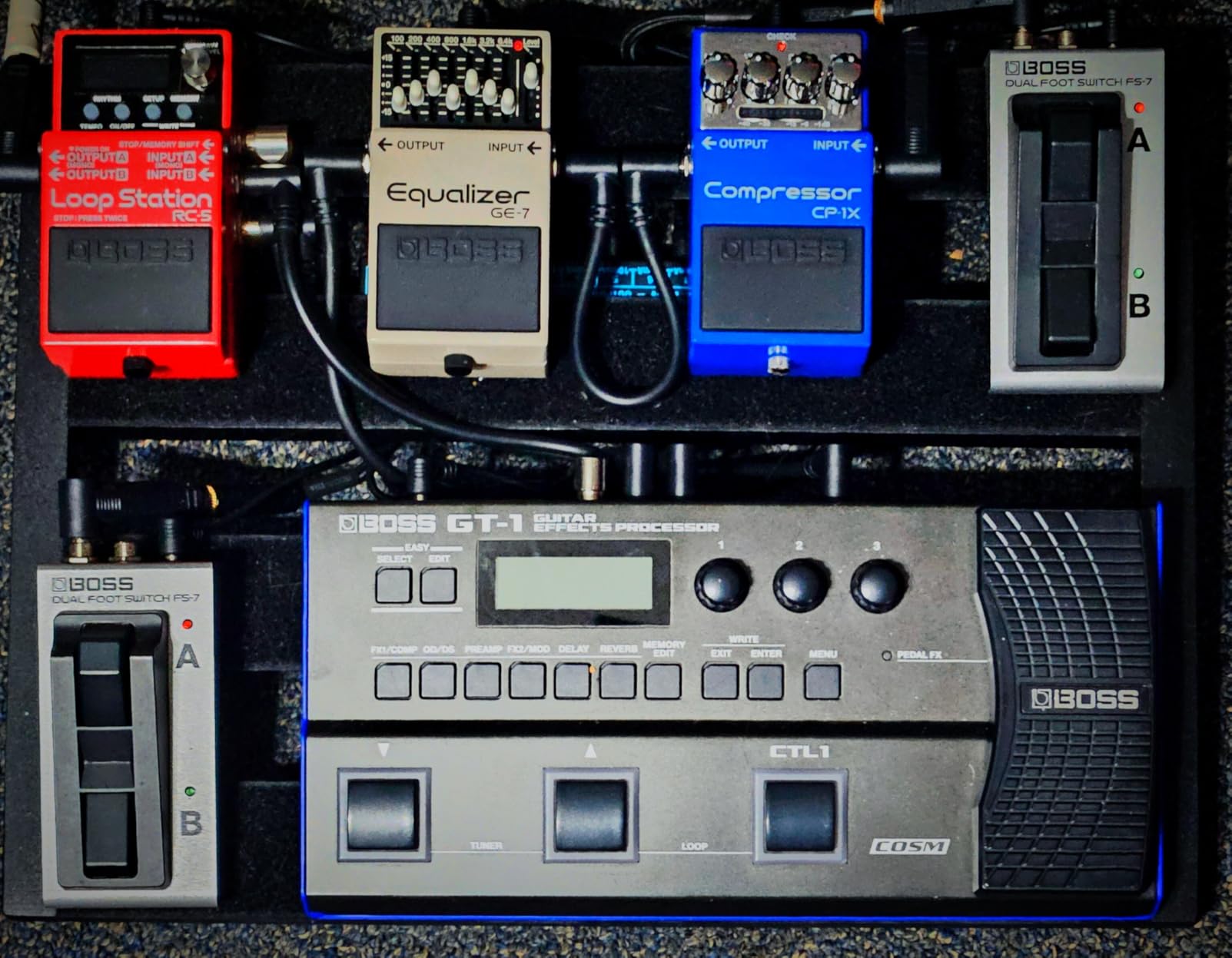
The Boss CP-1X represents a leap forward in compressor pedal technology. Using BOSS proprietary mDP (multi-Dimensional Processing) technology, this pedal intelligently adapts to every register and playing nuance. The result is compression that feels completely natural rather than processed.
What makes the CP-1X special is how it handles complex playing dynamics. Traditional compressors often struggle with fast runs, fingerpicking, and varied picking strengths. The CP-1X adapts in real-time, applying the right amount of compression without choking your signal or killing your pick attack.
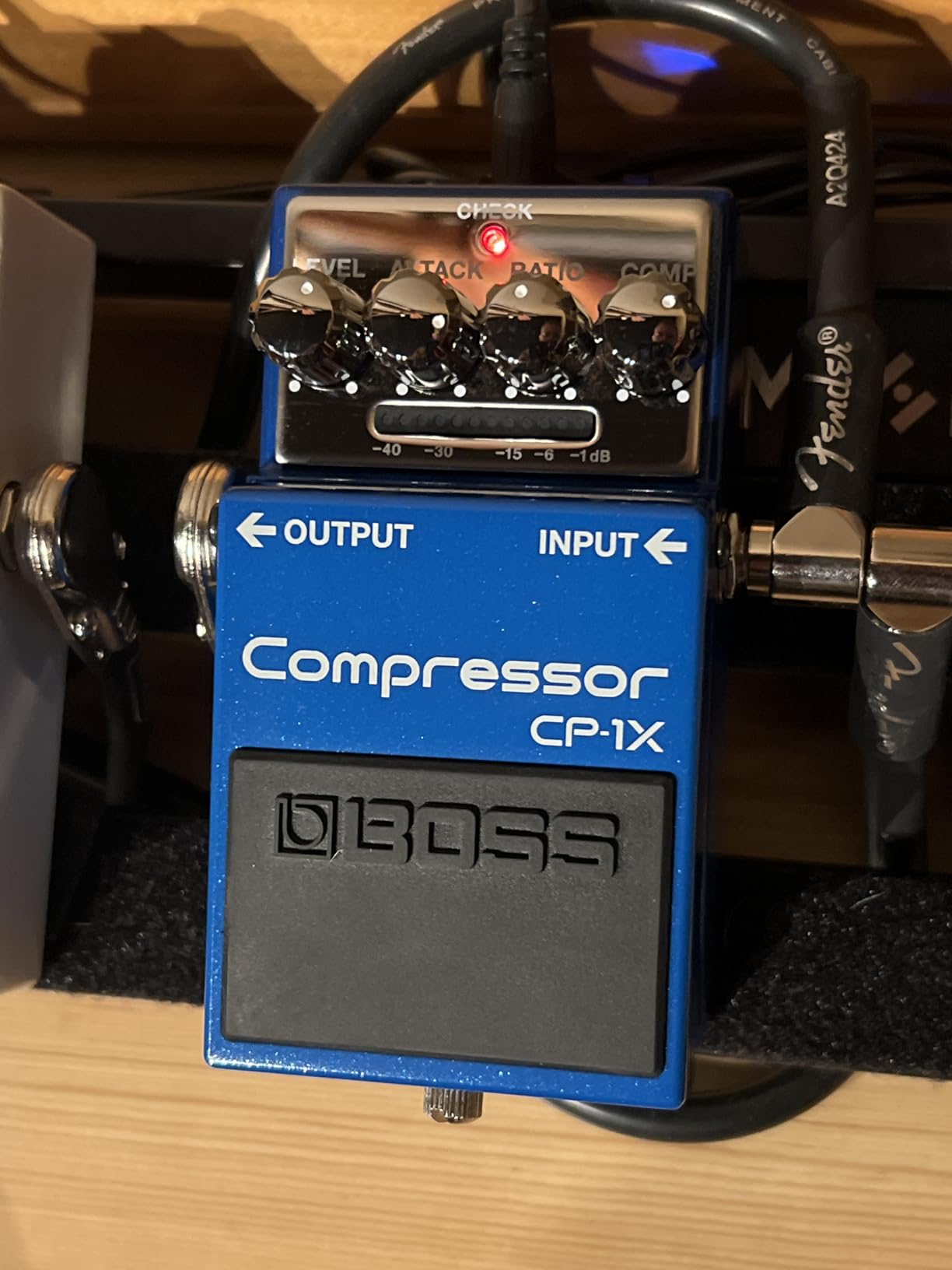
The gain reduction indicator shows exactly how much compression is happening, giving you visual feedback alongside what you hear. This helps when setting up the pedal initially or adjusting for different playing contexts. The four control knobs are intuitive, letting you dial in the exact amount of effect you need quickly.
During extended testing, I was continually amazed by how the CP-1X preserved the character of different guitars and pickups. Whether running a Telecaster with bright single coils or a Les Paul with warm humbuckers, the compression felt appropriate to each instrument rather than applying a one-size-fits-all effect.
Who should buy the Boss CP-1X
Serious players who demand the best compression available will appreciate what the CP-1X offers. The five-year warranty provides peace of mind for gigging musicians. It works especially well for players with diverse playing styles who need a compressor that adapts to their dynamic range.
Who should look elsewhere
The premium price places this pedal out of reach for some budgets. Players who prefer traditional analog compression with straightforward controls may find the CP-1X overly complex. However, for the sound quality delivered, many consider the investment justified.
6. MXR Dyna Comp Mini Compressor Review
+ The Good
- Classic MXR compression in compact format
- CA3080 chip provides superior transparency
- Attack switch toggles slow and fast times
- Works well with distortion and clean tones
- Increased dynamic range
- The Bad
- Very small size can cause stability issues
- Light weight makes it easy to move on pedalboard
- Some reliability concerns reported
The MXR Dyna Comp is one of the most recognizable compressor pedals in music history. Countless recordings feature its distinctive squash, and the new mini version delivers the same sound in a pedalboard-friendly format. The question is whether the smaller size introduces any compromises.
The key upgrade in the mini version is the CA3080 metal can integrated circuit. This component provides quieter operation, greater transparency, and increased dynamic range compared to the original design. Players who loved the Dyna Comp sound but wanted better clarity will appreciate these improvements.
The attack switch toggles between slow and fast attack times, giving you two distinct compression characters from a single pedal. The slow setting lets more transients through for a punchier feel, while the fast setting tames peaks more aggressively for sustained notes. This simple addition increases the versatility significantly.
Who should buy the MXR Dyna Comp Mini
Players who want classic MXR compression with modern improvements will find this mini version delivers the goods. The smaller footprint fits crowded pedalboards where the full-size Dyna Comp would take too much space. Fans of funky rhythm playing and chicken-picken country style have relied on this sound for decades.
Who should look elsewhere
The very small and light design can be problematic on stage. During energetic performances, the pedal may shift position or require readjustment. Using double-sided pedalboard tape or a dedicated mount helps address this issue for live use.
7. JHS 3 Series Compressor Review
+ The Good
- American-made quality construction
- Simple and powerful compression range
- Attack and Sustain knobs excellent
- Bright toggle prevents tone loss
- 4-year warranty
- Great value at 99 dollars
- The Bad
- Limited effectiveness for bass guitar
- Blend control on some versions inconsistent
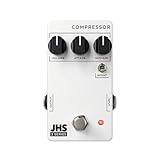
JHS Pedals has built a strong reputation by offering well-designed pedals made in Kansas City, USA. The 3 Series Compressor continues that tradition with a simple but effective approach. At 99 dollars, it sits in the sweet spot between budget pedals and expensive boutique options.
The control layout keeps things straightforward with Attack, Sustain, and Volume knobs. This simplicity means you can set the pedal quickly without spending hours dialing in the perfect sound. The Attack knob controls how quickly compression engages, while Sustain determines how much compression is applied once triggered.
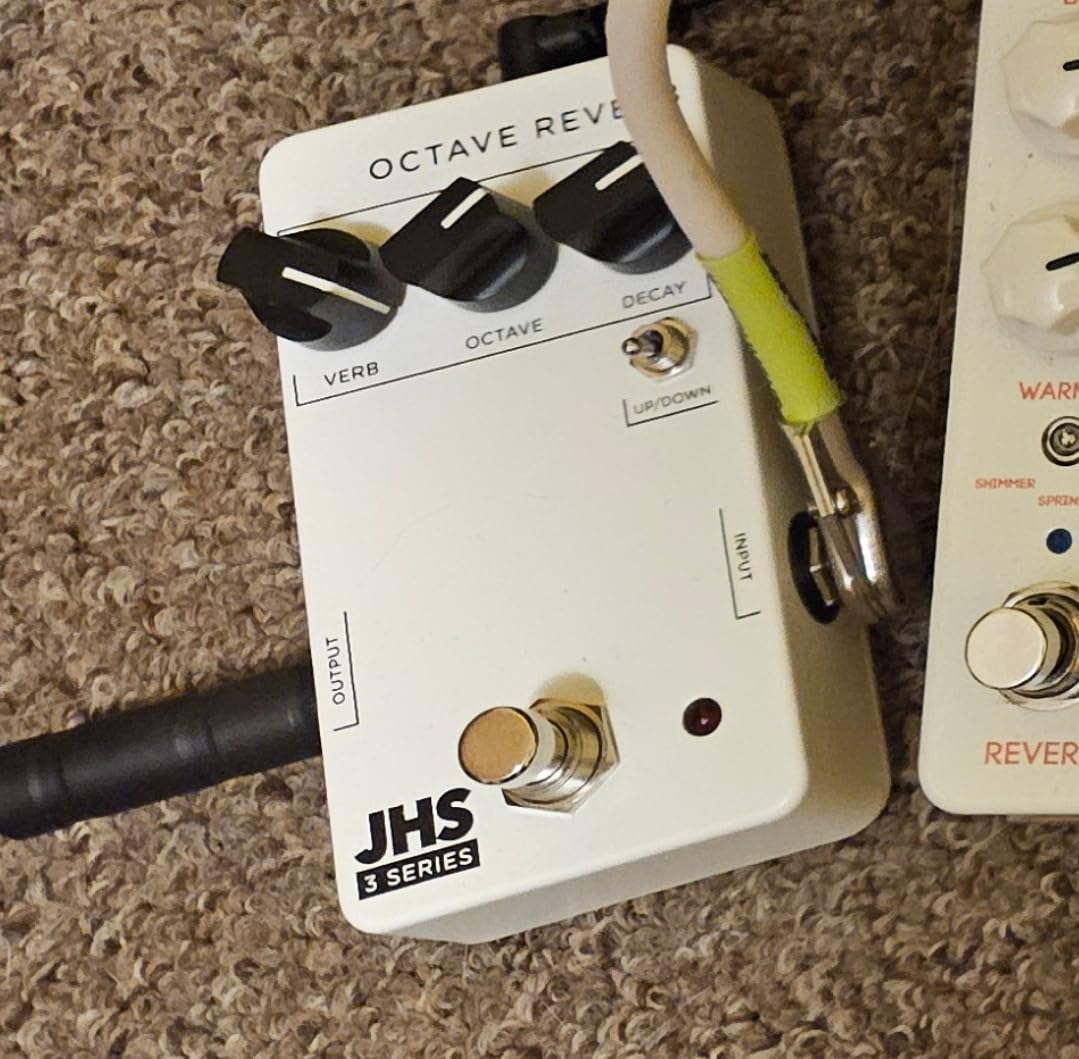
The bright toggle is a thoughtful addition that addresses a common compression problem. When you compress your signal, high frequencies often get lost, making guitars sound dull in a mix. The bright toggle engages a subtle EQ boost that keeps your tone cutting through without adding harshness.
With 1384 reviews and a 4.7 rating, players clearly love this compressor. Forum discussions frequently mention the JHS 3 Series as an excellent choice for players transitioning from budget pedals to something more serious. The four-year warranty provides confidence in the build quality.
Who should buy the JHS 3 Series Compressor
Players who want American-made quality without boutique pricing will appreciate this pedal. The simple controls make it accessible to beginners while offering enough range for experienced players. The bright toggle is particularly useful for players whose guitars tend toward dark tones.
Who should look elsewhere
Some bass players report the compression feel differs when used with low-frequency instruments. For dedicated bass compression, other options may better suit that application. Additionally, some variants may have subtle blend control differences worth testing before purchase.
How to Choose the Best Compressor Pedal
Understanding the differences between compressor types and features helps you make an informed decision. This section covers the key factors that separate great compressor pedals from average ones.
Compressor Pedal Types Explained
Compressor pedals use different technologies to achieve similar results, and understanding these differences helps you choose wisely.
Optical compressors use a light source and photocell to control gain reduction. They tend to sound smooth and natural, with gradual compression onset. The Pigtronix Philosophers Tone is a popular optical compressor that many players love for its musical character.
FET compressors use field-effect transistors to mimic the behavior of tube amplifiers under compression. They respond quickly and can add subtle harmonic character. The Universal Audio UAFX 1176 is a legendary FET compressor that many pedal versions attempt to capture.
VCA compressors use voltage-controlled amplifiers for precise, transparent compression. They offer excellent control and low noise. The Boss CP-1X uses technology similar to VCA designs.
OTA compressors use operational transconductance amplifiers for compression. The Ross circuit that inspired many modern compressors falls into this category. The Xotic SP and Keeley Compressor Plus both trace their heritage to this design.
Key Controls You Need to Understand
The controls on a compressor pedal directly affect how it sounds and responds to your playing.
Threshold determines when compression kicks in. Signals above the threshold get reduced, while signals below remain unaffected. Some pedals have dedicated threshold knobs, while others combine this with the sustain or compression amount control.
Ratio controls how much reduction occurs once the signal exceeds the threshold. A 4:1 ratio means for every 4dB over threshold, only 1dB comes out. Higher ratios mean more aggressive compression.
Attack sets how quickly compression engages after a signal exceeds the threshold. Fast attack clamps down quickly, taming peaks aggressively. Slow attack lets initial transients through before compression takes hold.
Release determines how long compression continues after the signal drops below threshold. Short release sounds snappy and responsive. Long release adds sustain but can sound muddy if set too long.
Blend mixes your uncompressed signal back in with the compressed signal. This preserves your original dynamics and pick attack while adding the benefits of compression. Pedals like the Keeley Compressor Plus and Xotic SP feature blend controls that many players consider essential.
Signal Chain Placement
Where you place your compressor in your signal chain affects how it sounds and interacts with other effects.
Most players place compressors first in their effects chain, right after the guitar. This lets the compressor control dynamics before other effects process the signal. When placed early, overdrives and distortions react more consistently to your playing.
Some players prefer placing compression after drives for a different feel. In this position, the compressor emphasizes the sustain and characteristics of your overdrives rather than controlling your initial pick attack.
For clean tones and country-style chicken picking, placing the compressor early in the chain provides the most natural results. For lead tones where you want sustain from your drives to bloom naturally, try placing it after those effects.
Genre-Specific Recommendations
Different music styles benefit from different compression approaches.
Country and chicken picking requires subtle compression that preserves pick attack while evening out chord staccato. A pedal with blend control works best here, letting you add just enough squash for consistency without killing your twang.
Funk guitar needs quick attack and release to emphasize the knife-edge rhythm feel. The MXR Dyna Comp has been a funk standard for decades, with its distinctive squash helping notes cut through busy mixes.
Blues and jazz benefit from moderate compression that adds sustain to lead passages without changing your fundamental tone. The transparency of pedals like the Xotic SP or Keeley Compressor Plus works well here.
Rock and metal typically use less compression since high-gain tones already compress naturally through the amp. A subtle compressor for rhythm consistency is more useful than aggressive pedal compression.
Frequently Asked Questions
What is the best compressor pedal on the market?
The Keeley Compressor Plus stands out as our top recommendation for most players. It offers blend control, transparent sound quality, and versatile settings that work across genres. The Boss CP-1X offers superior technology if budget allows, while the JHS 3 Series provides excellent value at under 100 dollars.
Are compressor pedals worth it?
Yes, compressor pedals are worth it for any guitarist who plays clean tones, uses multiple effects, or records. They add consistency to your playing, enhance sustain for leads, and help your guitar sit better in a mix. Even subtle compression makes a noticeable difference in professional contexts.
What compressor pedal does John Mayer use?
John Mayer has used various compressor pedals throughout his career, often favoring subtle compression for his blues and soul playing. While specific models vary depending on the era, players frequently associate him with smooth, transparent compression that enhances his clean tones without coloring his sound.
Does David Gilmour use a compressor pedal?
David Gilmour has been known to use the Boss CS-2 and CS-3 compressor sustainers throughout his career. These pedals contribute to the singing sustain and dynamic control found in Pink Floyd’s classic tones. The CS series helps his lead tones bloom naturally while maintaining pick attack.
Final Thoughts on the Best Compressor Pedals
Choosing the right compressor pedal depends on your specific needs, playing style, and budget. The Keeley Compressor Plus earns our Editor’s Choice designation for its blend control, transparent sound, and versatile performance across genres. Players seeking the absolute best technology should consider the Boss CP-1X, which offers next-generation compression intelligence.
If budget constraints are a concern, the JHS 3 Series delivers American-made quality at a reasonable price, while the Donner Ultimate Comp proves that solid compression does not require a major investment. Whatever pedal you choose, adding a compressor to your rig will elevate your tone in ways you wonder how you lived without.
Start with a recommended setting, play for a few days, and then experiment. Compression is one of those effects that responds differently to your particular guitar, amp, and playing style. Once you find your sweet spot, you will likely keep that compressor engaged for most of your playing.