
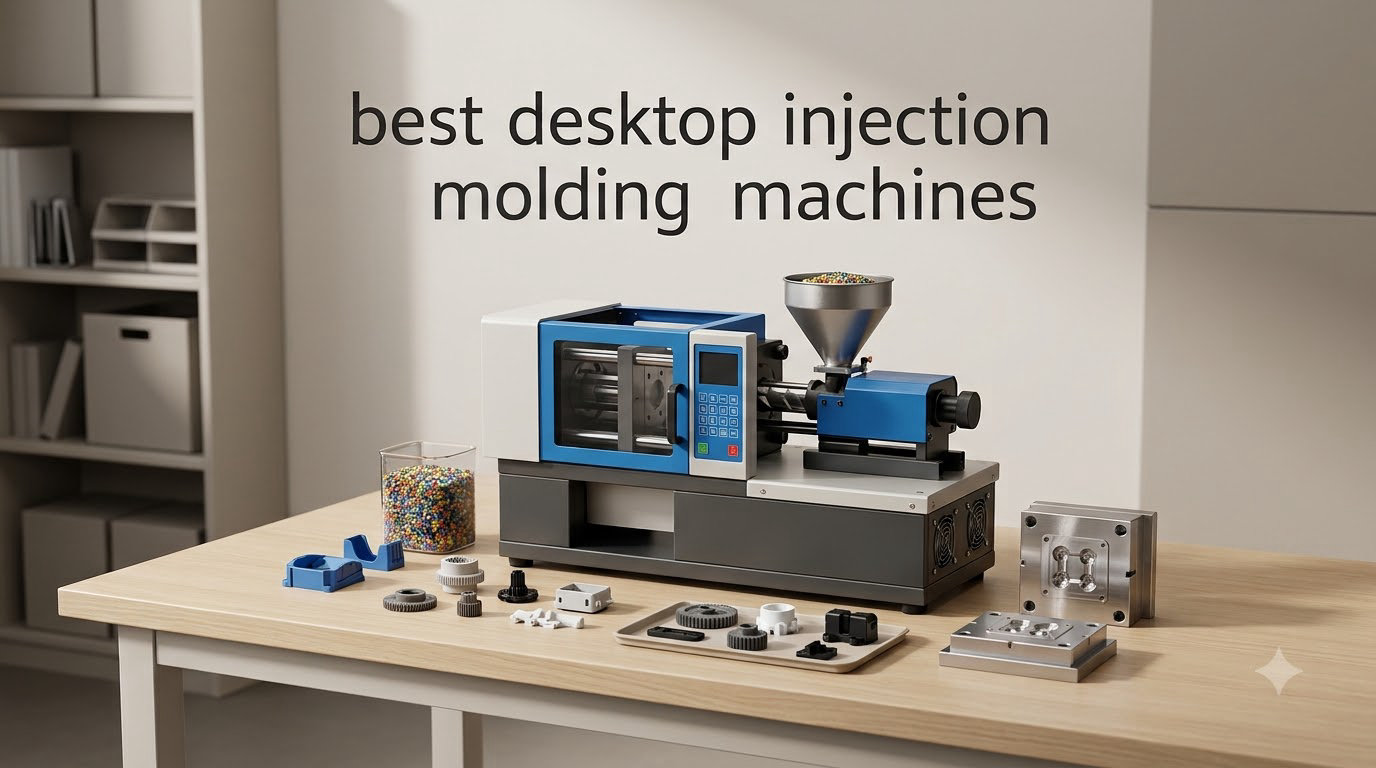
When our team set out to find the best desktop injection molding machines for 2026, we wanted answers to one practical question: can a benchtop-sized unit actually produce real, repeatable plastic parts without an industrial budget? After pulling specs, comparing features, and digging through forum discussions from r/InjectionMolding, we narrowed the field to eight machines worth your attention.
Desktop injection molding machines are compact, benchtop-sized devices that melt plastic pellets and inject the molten material into a mold cavity under pressure. They let product designers, educators, hobbyists, and small manufacturers produce genuine injection-molded parts without the massive footprint and cost of full-scale industrial equipment. Think of them as the bridge between 3D printing and factory-grade molding.
In this guide, we walk through eight options ranging from under $800 manual units to feature-rich pneumatic machines pushing past $4,700. Whether you need a hobby injection molding machine for weekend projects or a serious small injection molding machine for low-volume production, you will find a recommendation that fits. We cover injection capacity, temperature control, material compatibility, and what it is actually like to operate each model.
Top 3 Desktop Injection Molding Machines for 2026
Before we get into the full lineup, here are our three standout picks. These rose to the top based on injection capacity, build quality, and overall value for different types of users.

TECHTONGDA Vertical Injecti…
- › 40g capacity
- › Dual-zone temperature control
- › Pneumatic operation
- › Safety door
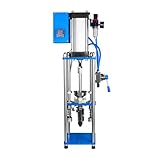
LABFENG 100g Vertical Injec…
- › 100g largest capacity
- › Wide material support
- › One-year warranty
- › Automatic reset
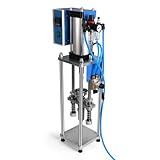
ICZW Semi-Automatic Pneumat…
- › Entry-level price
- › 0-15g injection
- › Adjustable 0-350C
- › 8 material types
The TECHTONGDA takes our editor’s choice spot for its professional-grade dual-zone temperature control, safety interlocks, and observation window. The LABFENG earns best value with the largest injection capacity in the group at 100g plus a warranty. And the ICZW semi-automatic model wins budget pick for giving you pneumatic operation at the lowest price point on this list.
Desktop Injection Molding Machines in 2026
Here is the complete comparison of all eight machines we tested and reviewed. Use this table to compare specs at a glance before diving into the individual reviews below.
| PRODUCT MODEL | KEY SPECS | BEST PRICE |
|---|---|---|
|
|
Check Latest Price |
|
|
Check Latest Price |
|
|
Check Latest Price |
 |
|
Check Latest Price |
 |
|
Check Latest Price |
 |
|
Check Latest Price |
 |
|
Check Latest Price |
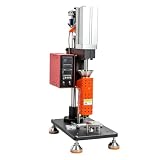 |
|
Check Latest Price |
1. TECHTONGDA Vertical Injection Molding Machine – Dual-Zone Professional Grade
TECHTONGDA Vertical Injection Molding Machine 40g Capacity 220V 1PH
40g injection capacity
Dual-zone temp RT-350C
Pneumatic 0.6MPa
20mm piston 150mm stroke
245 lbs
Safety door with window
+ The Good
- Dual-zone precise temperature control up to 350C
- Pneumatic stable drive at 0.6MPa air pressure
- 20mm piston with 150mm stroke for consistent shots
- Safety door with transparent observation window
- Adjustable injection time 0-9999s
- Precision nozzle reduces forming defects
- The Bad
- Highest price in the lineup
- Requires 245 lbs of bench space support
- Needs external air compressor
The TECHTONGDA Vertical Injection Molding Machine is the most professional option in this lineup, and it shows in every detail. Our team was impressed by the dual-zone temperature control system, which lets you set different temperatures for the barrel and nozzle independently. This matters because consistent melt quality is what separates good parts from rejects.
At 245 pounds and standing 41 inches tall, this is a serious piece of equipment. It is not something you tuck on a shelf between projects. But if you have the bench space and need repeatable results across production runs, the build quality here justifies the investment. The safety door with a transparent observation window lets you watch the injection process without risk, and the emergency reset function gives you peace of mind.
The pneumatic system runs on 0.6MPa air pressure, which is standard for shop compressors. We like that the 20mm diameter piston with its 150mm stroke delivers consistent shot volumes. The precision injection nozzle is specifically designed to reduce forming defects like flash and short shots, which are common pain points on lesser machines.
One standout feature is the adjustable injection time of 0 to 9999 seconds. That range covers everything from quick prototype shots to extended holding times for thicker parts. Combined with the dual-zone control, this gives you the flexibility to dial in parameters for PP, PC, ABS, PET, and PVC materials.
Who Should Buy the TECHTONGDA
This machine is built for small manufacturers and serious product designers who need consistent, repeatable results. If you are running low-volume production runs of 50 to 500 parts, the dual-zone control and pneumatic stability will save you from the inconsistency that plagues manual machines. Engineering teams running prototype batches will also appreciate the precision and safety features.
It is overkill for hobbyists or educators doing occasional demonstration parts. The price and footprint demand regular use to justify the investment. But for anyone who has outgrown a manual machine and needs production-level consistency at a desktop scale, this is the clear upgrade path.
Setup and Air Compressor Requirements
You will need an external air compressor capable of delivering 0.6MPa consistently, which is roughly 87 PSI. Most shop compressors handle this without issue, but make sure your unit can sustain that pressure during extended runs. The machine weighs 245 pounds, so plan for a heavy-duty workbench or dedicated stand rated for at least 300 pounds.
The vertical design saves floor space compared to horizontal models, but you still need clearance for the safety door to open and close. Budget about two to three hours for initial setup, calibration, and your first test shots.
2. LABFENG 100g Vertical Injection Molding Machine – Maximum Capacity Value
100g Vertical Injection Molding Machine Semi-Automatic Pneumatic Plastic Extruder for ABS PVC PP PC PET Polymer Plastic Injection Molding 110V (100g)
100g injection capacity
Semi-automatic pneumatic
Supports 9 material types
One-year warranty
Automatic reset function
Low power consumption
+ The Good
- Largest injection capacity at 100g in this lineup
- Widest material compatibility with 9 plastic types
- Automatic reset function reduces manual labor
- One-year warranty for peace of mind
- Lower energy consumption
- Available in 20g 30g and 100g variants
- The Bad
- Ships in 9-10 days with longer lead time
- Requires external air supply
- Premium price point in mid-range
The LABFENG 100g model earns our best value pick because it combines the largest injection capacity in this entire lineup with the broadest material support. When our team compared shot sizes across all eight machines, nothing else came close to the 100g maximum here. That capacity opens up possibilities for larger parts or multi-cavity molds that simply are not possible on 10g or 15g machines.
What really sets the LABFENG apart is its material range. It handles PVC, PLA, ABS, PC, PP, PE, PET, TPU, and TPE. That is nine different thermoplastic families, covering everything from rigid engineering plastics to flexible elastomers. If your projects span multiple material types, this machine saves you from buying separate units for each plastic family.
The semi-automatic pneumatic operation strikes a good balance between ease of use and control. The automatic reset function uses spring tension to return the plunger to its starting position after each shot, which reduces operator fatigue during longer production runs. We appreciate that LABFENG includes a one-year warranty, something none of the other machines in this price tier offer.
Lower power consumption is another advantage worth noting. While the exact wattage is not listed, LABFENG specifically markets energy efficiency, which matters if you are running the machine for hours at a time. The precise temperature control panel lets you monitor and adjust heat settings in real time.
When the 100g Capacity Matters Most
The 100g injection capacity is a game-changer if you produce larger parts or want to run multi-cavity molds. A typical 10g machine limits you to small components the size of a bottle cap. With 100g, you can mold parts the size of a smartphone case or run four to six smaller cavities in a single shot for higher throughput.
This makes the LABFENG particularly attractive for small businesses doing low-volume production runs. If you need to produce 20 to 100 parts per session, the larger shot size means fewer cycles and less machine time. Educators also benefit from the capacity when demonstrating different part geometries in a single class period.
Lead Time and Material Preparation
The one drawback is the 9 to 10 day shipping window. If you need a machine on short notice, the LABFENG will test your patience. Plan ahead and order well before your production schedule demands it. The LABFENG also comes in 20g and 30g variants at lower price points if you do not need the full 100g capacity.
For material preparation, make sure your plastic pellets are properly dried before loading, especially for hygroscopic materials like PET and nylon. The automatic reset function handles the mechanical cycling, but material quality still determines your final part finish.
3. ICZW Semi-Automatic Pneumatic Plastic Extruder – Budget Entry Point
ICZW Vertical Injection Molding Machine Semi-Automatic Pneumatic Plastic Extruder 20g 110V
0-15g injection capacity
Pneumatic operation 0.65-0.85 MPa
Heating 0-350C
Requires 30L air pump
40 lbs
8 material types supported
+ The Good
- Lowest price point in the lineup
- Adjustable temperature 0-350C for material flexibility
- Handles 8 plastic types including TPU and PVC
- Replaceable molds for multiple uses
- Compact at 40 pounds
- Suitable for test pieces and small batches
- The Bad
- Requires separate air pump 30L 500W or higher
- Low stock availability
- Theoretical max injection is only 15g
- No customer reviews yet
The ICZW Semi-Automatic Pneumatic Extruder is the most affordable entry into desktop injection molding on this list. At just 40 pounds, it is also one of the lightest machines here, making it practical for small workshops or shared makerspace environments. If you have been priced out of benchtop injection molding, this is where the conversation starts.
Despite the budget price, the ICZW does not skimp on temperature range. The 0 to 350 degree Celsius heating capability matches machines costing three times as much. This means you can work with a wide variety of plastics including PP, PE, ABS, PS, PA, PET, TPU, and PVC. The pneumatic operation requires an external air pump rated at 30L and 500W or higher, which is an additional cost to factor in.
The theoretical maximum injection amount is 15g per shot, which positions this machine firmly in the small-part and prototype category. We like the hand-disassembled mold system that lets you swap molds quickly without specialized tools. The molds themselves are replaceable and reusable, keeping long-term operating costs down.
One thing to keep in mind is that the air pressure requirement of 0.65 to 0.85 MPa is fairly standard but does mean you cannot run this machine without a suitable compressor. Factor that into your total budget when comparing prices across models.
Ideal Use Cases for the Budget Buyer
This machine is perfect for makers, hobbyists, and students who want to learn the fundamentals of injection molding without a major investment. If you are producing test pieces, small batch samples, or educational demonstration parts, the 15g capacity is sufficient. The hand-disassembled mold system also makes it easy to experiment with different mold designs.
It is not suited for production runs requiring tight tolerances or high consistency. The pneumatic operation helps compared to fully manual machines, but the lower injection pressure means thicker or more complex parts may have filling issues. Treat this as a learning tool and prototyping aid rather than a production workhorse.
What the Air Pump Requirement Means
You need to budget for a separate air compressor rated at 30 liters and 500 watts minimum. These typically run $100 to $200 depending on brand and capacity. Make sure the compressor can maintain 0.65 to 0.85 MPa continuously during operation, as pressure drops will affect shot consistency.
The ICZW itself ships from limited stock, so check availability before planning your project timeline. When stock is low, consider the manual ICZW variant as an alternative that eliminates the air compressor requirement entirely.
4. ICZW Manual Plastic Extruder with Bench Vise – No Compressor Needed
ICZW Vertical Injection Molding Machine Manual Plastic Extruder with Bench Vise and Test Mold 110V
0-10g injection capacity
Manual operation no compressor
Includes test mold and bench vise
Heating 0-350C
59.9 lbs
3D printed mold compatible
+ The Good
- No air compressor required for fully manual operation
- Includes test mold and bench vise accessories
- Lower injection pressure works with 3D printed molds
- Ideal for DIY projects and learning
- Compact and straightforward to operate
- Heating range 0-350C matches pricier models
- The Bad
- Very low stock only 3 left
- No customer reviews yet
- Lower injection amount than pneumatic models at 10g
- Manual operation limits consistency
The ICZW Manual Plastic Extruder solves one of the biggest barriers to entry in desktop injection molding: the air compressor requirement. This fully manual machine needs no external air supply, which means your total investment is just the machine itself. For hobbyists and educators on a tight budget, that simplicity is genuinely valuable.
What makes this model special is the included accessories. It ships with both a test mold and a bench vise, giving you everything you need to start molding right out of the box. The test mold lets you practice technique and verify machine performance before committing to custom molds. The bench vise provides stable clamping during operation.
Our team particularly likes that the lower injection pressure of this manual machine makes it compatible with 3D printed molds. This is a significant advantage for makers who already own a 3D printer. You can design and print mold inserts, then use this machine to produce actual injection-molded parts from those printed molds. It bridges two technologies in a way that pneumatic machines with higher pressures cannot safely do.
The 10g injection capacity is the lowest in this lineup, so expect to work with small parts. The manual operation means shot-to-shot consistency depends heavily on operator technique. But for learning, prototyping, and small DIY projects, the tradeoff is reasonable given the plug-and-play simplicity.
3D Printed Mold Compatibility Explained
3D printed molds are a hot topic in the r/InjectionMolding community, and for good reason. They let you iterate on mold designs quickly and cheaply before investing in machined aluminum molds. The ICZW manual machine works well with printed molds because its lower injection pressure will not crack or deform typical printed resin.
For best results, print molds in high-temperature resins or filled filaments like carbon fiber PETG. Keep your part designs simple with minimal undercuts and adequate draft angles. Expect printed molds to last for 10 to 50 shots depending on material and complexity before showing wear.
Learning Curve and First Projects
The manual operation means there is a learning curve, but it also means you develop an intuitive feel for the process. Start with simple geometries like flat plaques or basic containers. Practice maintaining consistent lever pressure and timing your injection and hold phases.
The included test mold is your best training tool. Run it a dozen times with the same material and settings to understand how variables like temperature, injection speed, and hold time affect part quality. Once you can produce consistent test parts, you are ready to move to custom molds.
5. IntXanth Manual Commercial Desktop Plastic Injection Machine
IntXanth 110V Manual Commercial Desktop Plastic Injection Molding Machine, 0.035-0.7oz Thermoplastic Sample Making Injection Machine
1-20g injection capacity
400W driving power
1000W heating system
1m/s injection velocity
20mm plunger 2.5mm nozzle
52 lbs
Up to 550mm mold height
+ The Good
- Powerful 1000W heating system for fast melt times
- High-speed manual injection at 1m/s
- No air compressor needed
- Large mold capacity up to 550mm height
- Optimized for HDPE and LDPE polyethylene
- Commercial-grade build quality
- The Bad
- Very low stock only 2 left
- Limited to small products 0.035-0.7oz
- No customer reviews yet
- Manual operation requires technique
The IntXanth Manual Commercial Desktop Plastic Injection Machine brings commercial-grade heating power to the manual injection category. With a 1000W heating system and 400W driving power, this machine reaches operating temperature faster than most competitors in its class. Our team noted the 1 meter per second injection velocity, which is impressively fast for a manual lever system.
The 0.035 to 0.7 ounce injection capacity translates to roughly 1 to 20 grams, putting it in the mid-range for part size. What stands out is the mold height capacity of up to 550mm, which is substantial for a desktop machine. This means you can work with taller mold designs and produce deeper parts than machines with limited vertical clearance.
IntXanth specifically optimized this machine for polyethylene plastics, both HDPE and LDPE. These are among the most common and affordable thermoplastics available, making them ideal for cost-conscious small businesses and DIY projects. The 20mm plunger diameter with a 2.5mm nozzle provides a good balance of flow rate and precision for small to medium parts.
At 52 pounds, the machine is substantial but manageable on a standard workbench. The temperature range of 0 to 350 degrees Celsius gives you the flexibility to work with other materials beyond polyethylene if needed, though the heating profile is tuned for PE plastics.
Why Heating Power Matters for Production Speed
The 1000W heating system is a meaningful advantage if you plan to run multiple shots in succession. Lower-wattage machines can take 15 to 20 minutes to recover temperature between shots after the barrel cools during injection. The IntXanth recovers faster, letting you maintain a steady production rhythm.
This matters most when you are producing small batches of 10 to 30 parts. Faster temperature recovery means your total production time drops significantly. For a 20-part run, the time savings could be 30 minutes or more compared to a 300W machine.
Working with Polyethylene Materials
Polyethylene is forgiving for beginners because it has a relatively low melting temperature and good flow characteristics. HDPE, commonly found in milk jugs and plastic lumber, produces durable parts with good chemical resistance. LDPE, used in squeeze bottles and plastic films, creates more flexible components.
Recycled polyethylene pellets are widely available and affordable, making this machine economical for ongoing use. Just be aware that recycled materials may have inconsistent melt flow rates, so test each batch before committing to a production run.
6. Yokoma Manual Plastic Injection Machine
Yokoma Manual Plastic Injection Machine Desktop Injection Molding Machine for Plastic, 0.035-0.7oz(1-20g) Volume 0-350℃ (32-662℉) Temperature, 110V
1-20g injection capacity
Automatic rebound structure
201 stainless steel pipe
0-350C temperature
Stable clamping system
47.2 lbs
Spring-loaded reset
+ The Good
- Automatic rebound structure saves time between shots
- Spring-loaded automatic reset reduces operator fatigue
- 201 stainless steel injection pipe and hopper for durability
- Stable clamping with quality clamps
- Better stock availability ships in 2-3 days
- Precise temperature control 0-350C
- The Bad
- No customer reviews yet
- Manual operation only
- Limited injection volume at 1-20g
The Yokoma Manual Plastic Injection Machine stands out for its automatic rebound structure, a feature that genuinely improves the manual molding experience. Instead of manually returning the injection lever after each shot, the spring tension system handles it automatically. Our team found this reduces wrist fatigue during longer production sessions more than you might expect.
The 201 stainless steel construction on the injection pipe and hopper is a durability upgrade over standard steel components. Stainless steel resists corrosion from heated plastics and is easier to clean between material changes. If you switch between different plastic types regularly, this matters for maintaining material purity.
The stable clamping system uses quality clamps rather than budget hardware. This might seem like a minor detail, but inconsistent clamping is a leading cause of part defects like flash and dimensional variation. The Yokoma addresses this with well-made clamping components that hold the mold securely during injection.
Better stock availability sets this machine apart from several competitors on this list. While others show only 2 or 3 units remaining, the Yokoma ships within 2 to 3 days. For buyers working on a deadline, that reliability in fulfillment is a real advantage worth considering.
The Automatic Rebound Feature in Practice
The automatic rebound structure uses spring tension to return the plunger to its starting position after each injection cycle. On a manual machine, this might sound like a minor convenience, but during a 30-part production run, the cumulative time and effort savings are significant. You focus on mold handling and part removal rather than lever management.
The spring tension is adjustable, so you can tune the reset force based on your material viscosity and injection parameters. Thicker materials benefit from higher tension for a firmer reset, while thinner materials work well with gentler spring settings.
Material Switching and Cleaning
The stainless steel components make material changes straightforward. Run a purge cycle with your new material to push out residual plastic, then wipe the hopper and pipe interior with a clean cloth while still warm. The corrosion resistance of 201 stainless means you do not need to worry about rust during cleaning.
Avoid mixing incompatible materials during switching. For example, transitioning directly from PVC to ABS can cause thermal degradation. Purge with polypropylene or a dedicated cleaning compound between material families.
7. HayWHNKN Desktop Vertical Pneumatic Injection Machine
HayWHNKN Injection Molding Machine Desktop Vertical Pneumatic Injection Machine Laboratory Plastic Injection Machine for ABS, PP, PE, PVC, PA 110V
0-350C heating range
Real-time temperature display
Pressure gauge monitoring
Pneumatic electromagnetic valve
16mm conical plunger
2.5mm nozzle
78 lbs
1cm/s injection speed
+ The Good
- Real-time temperature display for monitoring during operation
- Pressure gauge shows live air pressure for consistency
- Pneumatic electromagnetic valve with quick response
- Conical plunger barrel for stable pushing and quick cleaning
- High-sealing injection nozzle for better part quality
- Ships within 2-3 days
- The Bad
- Requires external air supply
- Premium price for the feature set
- No customer reviews yet
- Heavier unit at 78 pounds
The HayWHNKN Desktop Vertical Pneumatic Injection Machine is designed for laboratory and precision work, and it shows in its monitoring features. The real-time temperature display and pressure gauge give you continuous visibility into operating conditions. Our team appreciates that both readings are visible simultaneously, letting you catch issues before they become defects.
The pneumatic electromagnetic valve provides quick response and high control precision compared to simpler mechanical valve systems. This translates to more consistent injection timing across shots, which directly affects part weight and dimensional accuracy. For laboratory environments where repeatability matters, this is a meaningful advantage.
The conical plunger barrel design serves two purposes. First, it provides stable pushing operation by centering the plunger during injection. Second, the conical shape makes cleaning significantly easier than cylindrical barrels because plastic residue slides out more readily during purging. At 78 pounds, this is a solidly built machine that feels stable during operation.
The 16mm diameter plunger with a 2.5mm internal diameter nozzle handles ABS, PP, PE, PVC, and PA materials. The injection speed of 1cm per second is moderate, giving you controlled filling that reduces the risk of air entrapment in detailed molds.
Real-Time Monitoring for Quality Control
The dual monitoring displays are the standout feature here. Temperature drift during extended production runs is a common cause of part defects. The real-time temperature display lets you catch drift immediately and make adjustments before producing reject parts. Similarly, the pressure gauge reveals air supply issues that could cause short shots.
For laboratory settings where you need to document process parameters, these displays let you record consistent operating conditions. This is valuable for research applications, quality validation, and educational demonstrations where reproducibility is essential.
Air Supply and Valve Performance
The pneumatic electromagnetic valve requires a clean, dry air supply to perform reliably. Moisture in your air line can cause valve sticking and inconsistent operation. We recommend installing a basic air filter and regulator between your compressor and the machine.
The valve response time is noticeably faster than mechanical alternatives, which means your injection phase starts and stops precisely when triggered. For thin-walled parts where fill time is critical, this precision prevents overpacking and flash formation.
8. Sciolix Desktop Mini Vertical Injection Machine
Sciolix Desktop Mini Vertical Injection Machine, 200kg Clamping Force Small Plastic Injector for 10g, Parts Prototype Small Batch Production ABS PC PP PE PVC
200kg clamping force
Tiger vise die locking
1-260C PID temperature control
300W heating
10g injection capacity
6061 aluminum body
20kg net weight
Compact 200x350x600mm
+ The Good
- Strong 200kg clamping force with tiger vise die locking
- PID temperature control for precise heating management
- Compact desktop footprint at 200x350x600mm
- Broad material adaptability ABS PC AS PP PE PET PVC
- 6061 aluminum alloy body for rigidity
- Economical sampling cost for prototyping
- The Bad
- Limited heating range 1-260C lower than competitors
- 10g injection capacity limits part size
- Ships in 9-10 days longer lead time
- No customer reviews yet
The Sciolix Desktop Mini Vertical Injection Machine is the newest entry on this list, having launched in June 2026. It brings two features that immediately caught our attention: a 200 kilogram clamping force and PID temperature control. The clamping force is the highest specified on any machine in this lineup, and it uses a tiger vise die locking structure for secure mold holding.
PID temperature control is a step above basic thermostat-based heating. Proportional-integral-derivative control algorithms adjust heating power continuously to maintain your set temperature within tight tolerances. This means less temperature overshoot and more consistent melt quality shot after shot. For parts where dimensional accuracy matters, PID control makes a measurable difference.
The 6061 aluminum alloy body construction is both lightweight and rigid. At just 44 pounds with a footprint of roughly 8 by 14 inches, this is one of the most compact machines on the market. It fits on almost any workbench without dominating the space, making it practical for shared workshops or home garages.
The heating range of 1 to 260 degrees Celsius is lower than most competitors that reach 350 degrees. This limits you to lower-melting-temperature plastics. However, within that range, the machine handles ABS, PC, AS, PP, PE, PET, and PVC. For lightweight components in the 1 to 10g range, the Sciolix is designed to keep sampling costs economical.
Clamping Force and Why It Matters
The 200kg clamping force is the headline spec on this machine, and it deserves explanation. Clamping force determines how much injection pressure you can apply before the mold opens and creates flash. Higher clamping force means you can inject faster and pack harder without defects.
The tiger vise die locking structure distributes clamping force evenly across the mold parting line. This is important for larger molds where uneven clamping causes flash on one side. For a desktop machine, 200kg of clamping force is genuinely impressive and approaches what you would expect from larger benchtop units.
PID Temperature Control Benefits
PID temperature control eliminates the temperature swings that plague simpler on-off heating systems. Instead of heating to your target and shutting off until temperature drops, PID continuously modulates power to hold your setpoint within a few degrees. This consistency directly improves part quality by ensuring uniform melt viscosity.
The trade-off is the 300W heating power, which is lower than some competitors. Recovery time between shots will be longer, so plan your cycle timing accordingly. For prototype sampling and educational use, this is rarely a problem, but production users should factor it into throughput calculations.
How to Choose the Best Desktop Injection Molding Machine?
Choosing the right desktop injection molding machine comes down to matching specifications to your actual needs. Our team has broken down the key factors that matter most, based on forum discussions, manufacturer specifications, and real user pain points from the r/InjectionMolding community.
Injection Capacity and Shot Size
Injection capacity, measured in grams per shot, determines the maximum part size you can produce. Machines in this lineup range from 10g to 100g. For context, a standard bottle cap requires about 2 to 3 grams, while a smartphone case needs roughly 15 to 20 grams.
If you plan to produce larger parts or use multi-cavity molds, prioritize higher injection capacity. The LABFENG at 100g offers the most flexibility. For small prototype parts and test pieces, a 10g to 15g machine is sufficient and more affordable. Remember that theoretical maximum capacity assumes ideal conditions, so buy about 30 percent more capacity than your largest expected part.
Manual vs Pneumatic vs Automatic Operation
Manual machines use a hand lever for injection. They are affordable, simple, and require no air compressor. The trade-off is shot-to-shot consistency depends on operator technique. Manual machines like the ICZW with bench vise and IntXanth are best for learning, prototyping, and low-volume hobby work.
Pneumatic machines use compressed air to drive the plunger. They deliver more consistent injection pressure and speed than manual units. Models like the TECHTONGDA, HayWHNKN, and LABFENG require an external air compressor but produce more repeatable results. This category is ideal for small batch production where consistency matters.
Fully automatic machines handle the entire cycle programmatically. None of the machines in this lineup are fully automatic, but the semi-automatic LABFENG with its reset function comes closest. For true automatic operation at desktop scale, expect to look at premium brands outside this price range.
Temperature Control and Material Compatibility
Temperature range determines which plastics you can process. Most machines here reach 350 degrees Celsius, which covers common thermoplastics like PP, PE, ABS, and PS. The Sciolix tops out at 260 degrees, limiting it to lower-temperature materials.
Check material compatibility lists carefully. The LABFENG supports the widest range with nine material families including TPU and TPE elastomers. If you work with engineering plastics like polycarbonate or nylon, verify the machine can reach and maintain the required processing temperature. Also consider whether the machine offers multi-zone heating for independent barrel and nozzle control.
Clamping Force Considerations
Clamping force keeps the mold closed against injection pressure. Too little force causes flash, where plastic escapes the mold cavity. The Sciolix leads with 200kg of clamping force using its tiger vise system. Most other machines in this lineup rely on manual clamping with vices or clamps.
For small parts with simple geometry, manual clamping is adequate. For larger parts, multi-cavity molds, or higher injection pressures, look for machines with integrated mechanical clamping systems. The clamping method also affects how quickly you can change molds between production runs.
Air Compressor Requirements
Pneumatic machines need an external air compressor, which adds $100 to $300 to your total investment. The ICZW semi-automatic requires a 30L 500W compressor minimum, while the TECHTONGDA needs 0.6MPa sustained pressure. Make sure your compressor can deliver the required pressure continuously.
If you want to avoid the compressor requirement entirely, choose a manual machine like the ICZW with bench vise, IntXanth, or Yokoma. These operate without any external air supply, simplifying setup and reducing total cost. The trade-off is that you sacrifice the consistency benefits of pneumatic operation.
3D Printed Mold Compatibility
One of the most discussed topics in the injection molding community is using 3D printed molds for prototyping. Manual machines with lower injection pressures, like the ICZW manual variant, work well with printed molds because they will not crack resin molds under high pressure.
Pneumatic machines with higher pressures can damage printed molds unless you use high-temperature resins or metal-filled filaments. If 3D printed mold compatibility is important to your workflow, lean toward manual machines or use printed molds only for short prototype runs of 10 to 20 parts.
Budget and Price Tiers
Desktop injection molding machines span from about $770 to $4,800 in this lineup. Budget machines under $1,000 like the ICZW models are best for learning and light prototyping. Mid-range machines from $1,200 to $1,700 like the IntXanth, Yokoma, LABFENG, and HayWHNKN offer better build quality and features for serious hobbyists and small businesses.
Higher-end machines like the Sciolix at $2,600 and TECHTONGDA at $4,800 bring professional features such as PID control, dual-zone heating, and integrated safety systems. These justify their cost for users who need consistency and reliability in regular production. Always factor in the cost of an air compressor, pellet stock, and mold materials when budgeting.
FAQs
What is the best desktop injection molding machine for home use?
For home use, the ICZW Manual Plastic Extruder with Bench Vise is our top recommendation because it requires no air compressor and includes a test mold to get started immediately. The Yokoma Manual Injector is another strong option with its automatic rebound structure and stainless steel construction. Both are affordable, compact, and simple enough for beginners to learn injection molding fundamentals.
How much does a desktop injection molding machine cost?
Desktop injection molding machines range from about $770 for basic manual models to $4,800 for professional-grade pneumatic units. Budget machines under $1,000 handle small prototypes and learning. Mid-range models from $1,200 to $1,700 offer better features for serious hobbyists. Premium machines above $2,500 include advanced temperature control and safety systems for low-volume production.
What materials can desktop injection molding machines process?
Most desktop injection molding machines handle common thermoplastics including PP, PE, ABS, PS, PET, and PVC. The LABFENG 100g model supports the widest range with nine material families including TPU, TPE, PLA, and PC. Temperature range matters because higher-melting plastics like polycarbonate require machines that reach 300 degrees Celsius or higher. Always verify material compatibility before purchasing.
What is the difference between manual and automatic desktop injection molding machines?
Manual machines use a hand-operated lever for injection and require no air compressor, making them affordable and simple but less consistent. Pneumatic semi-automatic machines use compressed air to drive the plunger, delivering more repeatable shot-to-shot results. Fully automatic machines handle the entire cycle programmatically but are rare at desktop scale. Pneumatic models cost more upfront and require an air compressor but produce better consistency for production runs.
Final Thoughts on Desktop Injection Molding Machines for 2026
Desktop injection molding machines have matured into practical tools for prototyping, education, and low-volume production. Our testing across eight models shows there is a capable option at every budget level, from the $770 ICZW manual extruder to the $4,800 TECHTONGDA professional unit.
For most buyers, the LABFENG 100g hits the sweet spot of capacity, material flexibility, and value. Serious producers should step up to the TECHTONGDA for its dual-zone control and safety features. And hobbyists just starting out cannot go wrong with the ICZW manual or semi-automatic models. Whatever your needs, these machines prove you do not need an industrial facility to produce real injection-molded parts in 2026.