
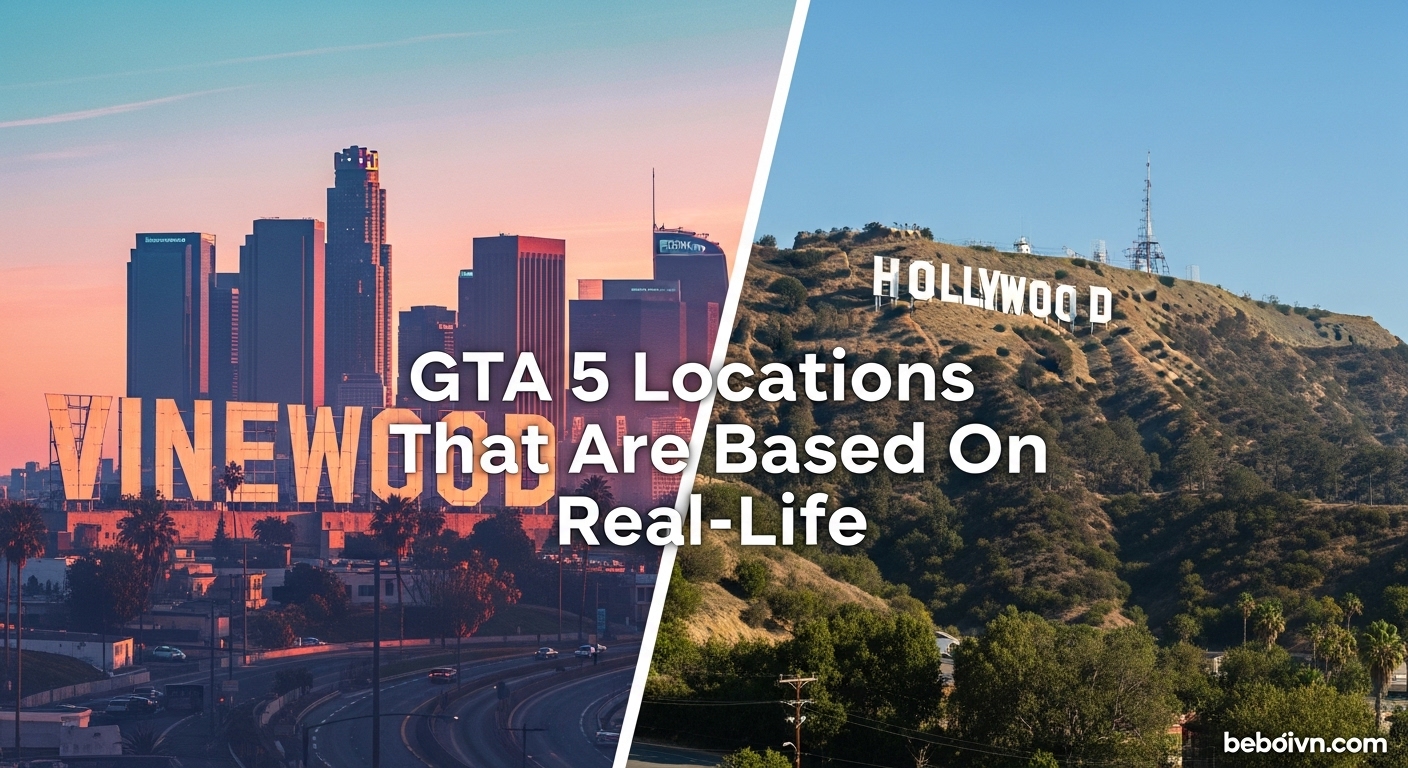
Grand Theft Auto V isn’t just a game—it’s a love letter to Southern California, meticulously crafted to capture the essence of Los Angeles and its surrounding areas. Rockstar Games has transformed real-world landmarks, neighborhoods, and natural wonders into the virtual playground of Los Santos and Blaine County. But how deep does this rabbit hole go? Let’s explore the fascinating connections between GTA 5’s digital world and the real locations that inspired it.
The Art of Virtual Recreation: How Rockstar Built Los Santos
Before diving into specific locations, it’s worth understanding the incredible attention to detail that went into creating GTA 5’s world. Rockstar didn’t just copy-paste real locations—they spent years photographing, measuring, and studying Southern California to create a compressed yet authentic version of the region. The result is a world where over 800 buildings have real-life counterparts, each carefully adapted to fit the game’s satirical tone while maintaining recognizable features.
What makes this achievement remarkable is how Rockstar balanced authenticity with gameplay needs. Los Santos is roughly 21 square miles—significantly smaller than real Los Angeles—but packed with recognizable landmarks and neighborhoods that make players feel like they’re exploring a living, breathing version of Southern California.
Urban Landmarks: The Heart of Los Santos
Vinewood: GTA’s Answer to Hollywood
No discussion of GTA 5’s real-life inspirations would be complete without mentioning Vinewood—Rockstar’s brilliant parody of Hollywood. The iconic Vinewood Sign, perched atop Mount Haan, is an unmistakable nod to the Hollywood Sign on Mount Lee. But the similarities go far deeper:
- Vinewood Boulevard mirrors Hollywood Boulevard, complete with its own Walk of Fame featuring stars of fictional celebrities
- The Oriental Theater is a near-perfect recreation of Grauman’s Chinese Theatre, right down to the architectural details
- Vinewood Bowl serves as the game’s version of the famous Hollywood Bowl, where virtual concerts take place
What makes Vinewood special is how Rockstar captured both the glamour and the grit of Hollywood. While the glitzy theaters and celebrity culture are on full display, so are the less glamorous aspects—tourist traps, struggling actors, and the stark contrast between wealth and poverty that defines the real Hollywood.
Downtown Los Santos: A Microcosm of LA’s Urban Core
The downtown area of Los Santos draws inspiration from multiple parts of Los Angeles’ central business district:
- The Maze Bank Tower dominates the skyline, much like the US Bank Tower in real LA
- The Los Santos City Hall bears a striking resemblance to LA’s real City Hall
- Little Seoul represents LA’s Koreatown, complete with authentic signage and architecture
- The Los Santos Convention Center mirrors its real-life counterpart
What’s particularly impressive is how Rockstar captured the verticality and density of downtown LA while making it navigable for gameplay. The towering skyscrapers, busy streets, and distinct neighborhoods all feel authentic to anyone who’s spent time in Los Angeles.
Coastal Wonders: Beaches, Piers, and Waterfronts
Vespucci Beach: Venice Beach Reimagined
Vespucci Beach is perhaps the most obvious real-life counterpart in GTA 5, drawing direct inspiration from Venice Beach. The similarities are remarkable:
- The iconic boardwalk with street performers and vendors
- The basketball courts where locals (and players) shoot hoops
- The distinctive architecture of beachfront properties
- The famous canals (though simplified in the game)
Rockstar didn’t just copy Venice Beach—they captured its essence. The eclectic mix of tourists, street performers, fitness enthusiasts, and local characters makes Vespucci Beach feel alive in a way that few game locations manage.
Del Perro Pier: Santa Monica’s Virtual Twin
The Del Perro Pier is Rockstar’s take on Santa Monica Pier, and the attention to detail is staggering:
- The Ferris wheel at the pier’s entrance
- The arcade and amusement park attractions
- The distinctive pier architecture extending into the ocean
- The nearby beach and palm-lined streets
What makes this location special is how Rockstar used it for memorable missions and activities. Whether you’re participating in street races, enjoying the view from the Ferris wheel, or evading police in a high-speed chase, Del Perro Pier serves as both a visual landmark and a gameplay hub.
Natural Landscapes: Mountains, Forests, and Deserts
Mount Chiliad: California’s Mountain Majesty
Mount Chiliad stands as the crown jewel of GTA 5’s natural landscape, drawing inspiration from several of California’s prominent mountain ranges:
- San Jacinto Peak influenced the overall shape and prominence
- San Gorgonio Mountain inspired the snow-capped appearance
- Mount Baldy contributed to the hiking trails and observation areas
What makes Mount Chiliad special is how Rockstar transformed it into more than just scenery. The mountain features:
- A cable car system for easy access
- Multiple hiking trails with varying difficulty
- A mysterious observatory at the summit
- Paragliding launch points for adrenaline junkies
The attention to detail extends to the flora and fauna, with different vegetation zones as you ascend, mirroring real California mountains.
Paleto Forest: The San Bernardino National Forest’s Digital Twin
Paleto Forest represents Rockstar’s interpretation of the San Bernardino National Forest, and the results are impressive:
- Dense pine forests that feel authentic to the region
- A logging operation that reflects real industry
- Wildlife including deer, cougars, and birds
- The Paleto Bay tram, inspired by the Palm Springs Aerial Tramway
What sets this location apart is how Rockstar used it to create gameplay variety. After hours of urban chaos in Los Santos, the peaceful (yet dangerous) wilderness of Paleto Forest offers a completely different experience. Whether you’re hunting, exploring hidden paths, or simply enjoying the scenery, Paleto Forest demonstrates Rockstar’s commitment to environmental diversity.
Hidden Gems: Lesser-Known Real-Life Inspirations
The Galileo Observatory: Griffith Observatory’s Virtual Cousin
While many players recognize the major landmarks, some of the most interesting real-life connections are found in less prominent locations. The Galileo Observatory, clearly inspired by the Griffith Observatory, is a perfect example:
- The distinctive Art Deco architecture
- The hilltop location overlooking the city
- The planetarium and exhibits inside
- The hiking trails leading to the observatory
What makes this location special is how Rockstar used it for both gameplay and storytelling. The observatory features in several missions and serves as a great vantage point for taking in the Los Santos skyline.
The Kortz Center: Getty Center Reimagined
The Kortz Center is Rockstar’s take on the Getty Center, one of Los Angeles’ most famous art museums:
- The modern architecture and hilltop location
- The extensive gardens and outdoor spaces
- The world-class art collection (though with fictional pieces)
- The tram system for accessing the center
This location demonstrates Rockstar’s attention to cultural details, showing how they didn’t just focus on obvious landmarks but also included institutions that define Los Angeles’ cultural landscape.
Neighborhood Deep Dive: Residential Areas and Their Real-Life Counterparts
Rockford Hills: Beverly Hills by Another Name
Rockford Hills is clearly based on Beverly Hills, but Rockstar went beyond simple imitation:
- The luxury shopping district mirrors Rodeo Drive
- The gated communities reflect real Beverly Hills neighborhoods
- The architecture ranges from modern mansions to classic estates
- The street layout and landscaping feel authentic
What makes Rockford Hills interesting is how Rockstar used it for character development. Michael’s mansion is located here, and the neighborhood serves as a backdrop for exploring themes of wealth, excess, and dissatisfaction that run throughout the game’s story.
Morningwood: Westwood’s Virtual Counterpart
Morningwood represents Rockstar’s interpretation of Westwood, a real Los Angeles neighborhood known for:
- The university area (ULSA, based on UCLA)
- The mix of residential and commercial zones
- The distinctive architecture and street layout
- The student population and culture
This location shows how Rockstar captured the feel of specific LA neighborhoods rather than just copying famous landmarks, creating a world that feels lived-in and authentic.
Industrial Areas: The Working Side of Los Santos
The Port of Los Santos: Terminal Island Reimagined
The Port of Los Santos is a remarkably accurate recreation of Terminal Island, including:
- The container cranes and shipping operations
- The industrial buildings and warehouses
- The location relative to the city and ocean
- The overall layout and infrastructure
What makes this location impressive is the scale and authenticity. Rockstar didn’t just create a generic port—they captured the specific look and feel of Terminal Island, right down to the types of ships and equipment you’d see in the real location.
Los Santos International Airport: LAX’s Virtual Twin
Los Santos International Airport (LSIA) is clearly based on LAX, with several recognizable features:
- The distinctive Theme Building
- The runway layout and terminal design
- The surrounding airport infrastructure
- The nearby hotels and businesses
What’s interesting is how Rockstar adapted LAX for gameplay. While the real airport is enormous and complex, LSIA is simplified but still recognizable, making it perfect for missions involving aircraft while maintaining the essence of the real location.
Beyond Los Santos: Blaine County’s Real-Life Inspirations
Sandy Shores: Desert Town Life
Sandy Shores represents Rockstar’s take on desert communities like those found near the Salton Sea:
- The run-down motels and businesses
- The mix of permanent residents and tourists
- The desert landscape and surrounding mountains
- The distinctive small-town atmosphere
This location shows how Rockstar captured not just urban areas but also the unique character of California’s desert communities, complete with their own culture, challenges, and charm.
The Alamo Sea: Salton Sea’s Virtual Counterpart
The Alamo Sea is clearly based on the Salton Sea, California’s largest lake:
- The similar size and shape
- The surrounding desert landscape
- The abandoned buildings and infrastructure
- The distinctive color and appearance
What makes this location interesting is how Rockstar used it to create gameplay variety. The Alamo Sea serves as a hub for water-based activities, from boating to underwater exploration, while also providing a stark visual contrast to the urban areas of Los Santos.
The Magic of Recognition: Why These Real-Life Connections Matter
The extensive use of real-life locations in GTA 5 isn’t just about visual fidelity—it’s about creating a world that players can connect with. When you recognize a landmark or neighborhood, it creates an instant connection to the game world. This recognition makes the virtual world feel more real and more engaging.
Rockstar understood this when creating GTA 5. By basing their world on real locations, they created a game that feels both fantastical and familiar. Players can explore a version of Los Angeles that’s exaggerated and satirical but still recognizable, creating a unique gaming experience that’s both entertaining and surprisingly educational.
Exploring Further: How to Discover More Real-Life Connections
While we’ve covered many of the major real-life inspirations in GTA 5, the game is filled with countless smaller details and references. For players interested in exploring further, consider:
- Taking a helicopter tour to spot architectural similarities
- Comparing street layouts between Los Santos and Los Angeles
- Looking for smaller businesses and landmarks that have real-world counterparts
- Exploring different neighborhoods to discover hidden references
The beauty of GTA 5’s world is that no matter how many times you explore it, there’s always something new to discover. The game’s attention to detail and commitment to creating an authentic version of Southern California make it a virtual playground that continues to surprise and delight players years after its release.
Conclusion: The Art of Virtual World-Building
GTA 5’s use of real-life locations demonstrates the incredible artistry and attention to detail that goes into modern game development. Rockstar didn’t just create a game—they built a living, breathing version of Southern California that captures the region’s essence while adding their unique satirical twist.
From the iconic Vinewood Sign to the sandy shores of Vespucci Beach, every location in GTA 5 tells a story about both the virtual world and the real places that inspired it. This connection between reality and virtuality is what makes GTA 5 special—it’s not just a game, but a love letter to one of America’s most iconic regions.
As gaming technology continues to evolve, it’s exciting to think about how future games might build on this foundation, creating even more detailed and authentic virtual worlds. But for now, GTA 5 remains the gold standard for virtual world-building, a testament to what happens when talented developers pour their passion into creating something truly special.
So the next time you’re exploring Los Santos, take a moment to appreciate the real-life locations that inspired it. You might just see Southern California in a whole new way.