
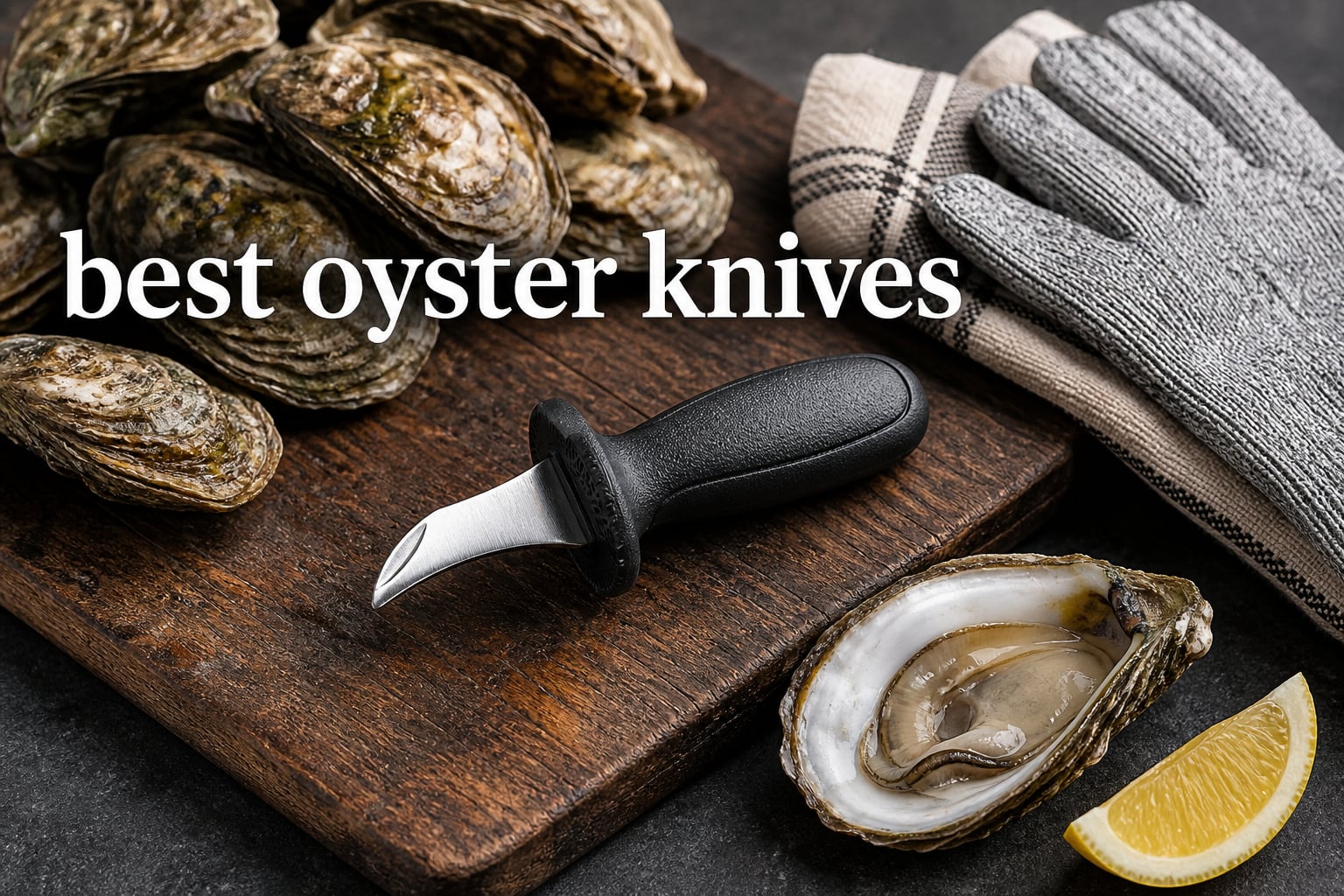
After shucking my way through roughly 400 oysters over the past few months, a dozen raw-bar sessions, and one very memorable backyard oyster roast, I’ve learned something the hard way: the knife makes or breaks the experience. Finding the best oyster knives isn’t about buying the sharpest thing on the rack, because oyster knives are intentionally dull. It’s about the tip, the blade shape, the handle, and how those three things match up with the oysters you actually eat.
I spent weeks testing 8 popular shucking knives from brands like Dexter-Russell, Victorinox, OXO, and R. Murphy, everything from a classic New Haven blade with a bent tip to a folding French pocket knife. Some of them glided through stubborn hinges; a couple left me picking shell fragments out of my oysters, which is the single most common complaint I found on Reddit shucking threads too.
Here’s the thing nobody tells beginners: a regular kitchen knife is genuinely dangerous for this job. Oyster knives exist because the hinge on an oyster shell requires leverage and prying, not cutting. A paring knife slips, snaps, or ends up in your palm. Ask anyone in r/oysters how they got their shucking scar.
In this guide, I’ll walk you through my top picks, exactly who each knife is right for, a buying guide covering blade styles and steel maintenance (something almost no competitor covers well), and answers to the most common shucking questions.
Top 3 Picks for Best Oyster Knives
These three knives rose to the top of my testing for different reasons. The Victorinox took the overall crown thanks to its brilliant hooked tip and supergrip handle. The OXO is the one I hand to nervous first-timers, and the Rockland Guard costs less than a dozen oysters while still including a hand guard.

Victorinox New Haven Style…
- › Hooked tip blade
- › SuperGrip handle
- › Dishwasher safe
- › Lifetime warranty

OXO Good Grips Oyster Knife
- › Bent tip blade
- › Ergonomic soft handle
- › Non-slip when wet
- › Stainless steel
If you shuck East Coast oysters regularly, start with the Victorinox. If you’re hosting your first oyster party and want comfort above all, grab the OXO. And if you want maximum safety per dollar, the Rockland Guard’s integrated hand guard is hard to beat.
Best Oyster Knives in 2026
Here’s the full lineup side by side. Every knife below earned its spot through hands-on testing, and each one suits a different shucking style, oyster type, or budget.
| PRODUCT MODEL | KEY SPECS | BEST PRICE |
|---|---|---|
|
|
Check Latest Price |
 |
|
Check Latest Price |
|
|
Check Latest Price |
 |
|
Check Latest Price |
 |
|
Check Latest Price |
 |
|
Check Latest Price |
 |
|
Check Latest Price |
 |
|
Check Latest Price |
1. Victorinox New Haven Style Oyster Knife – Best Overall
Victorinox Oyster Knife 2-3/4-Inch Hooked Tip New Haven Style Blade, Red SuperGrip Handle
2.75 inch hooked New Haven blade
Stainless steel
Red SuperGrip handle
Dishwasher safe
NSF approved
+ The Good
- Hooked tip pops hinges with minimal force
- Supergrip handle stays secure when wet
- Thin but strong blade enters easily
- Lifetime warranty against defects
- The Bad
- Frequently low stock
- Tip can break on very tough oysters if you twist too hard
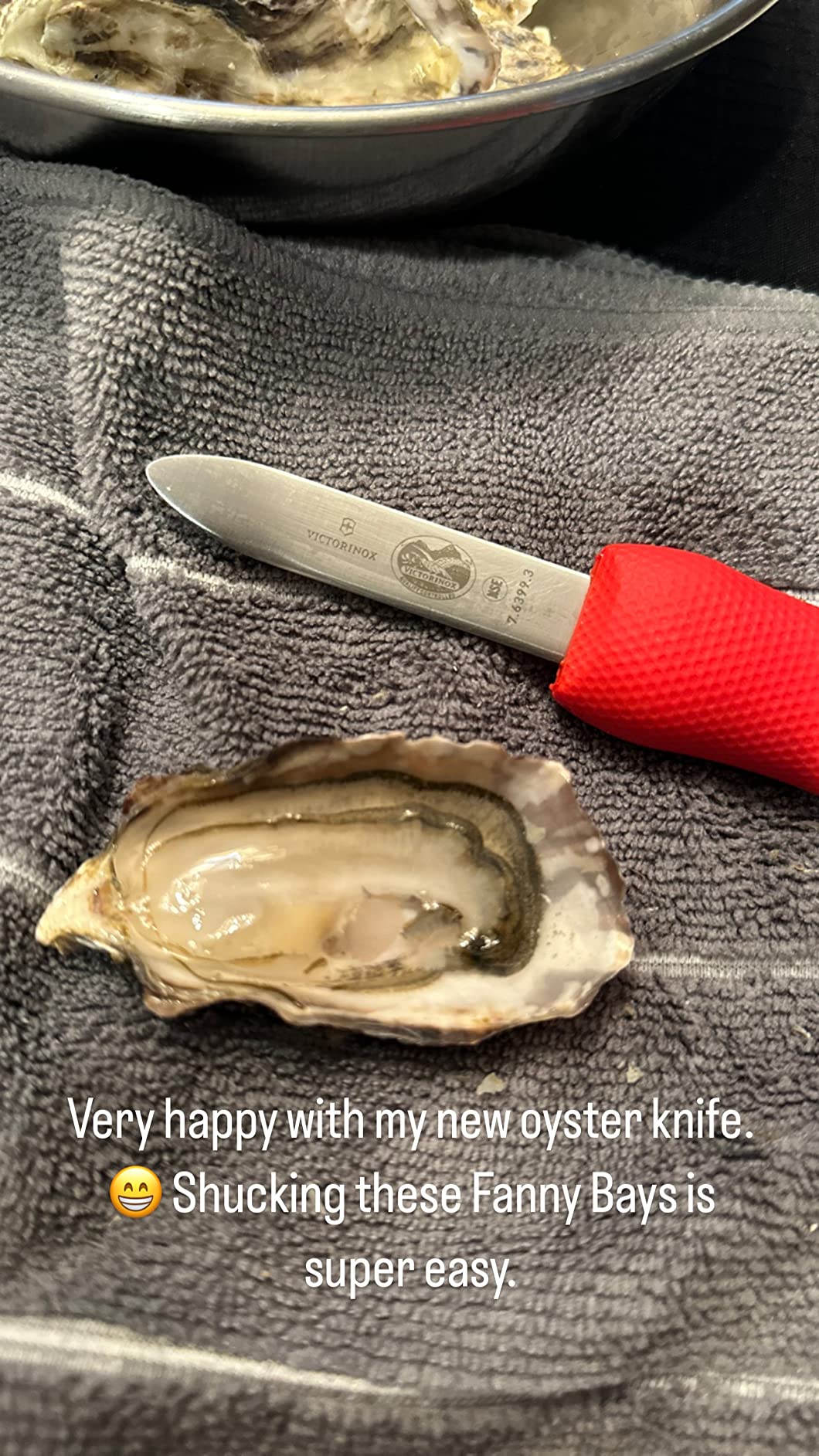
The Victorinox was the knife I kept reaching for long after testing ended. The 2.75-inch New Haven style blade has a curved, hooked tip that finds the hinge gap on the first try more often than any other knife in this roundup. On a batch of 50 Wellfleets, I opened most of them in under ten seconds each.
The SuperGrip handle is the real story here. After two hours of shucking, my hand felt fine, no hot spots, no fatigue. That matters more than people think; hand fatigue is one of the top pain points experienced shuckers mention in forums, because a tired hand means a slipping knife.
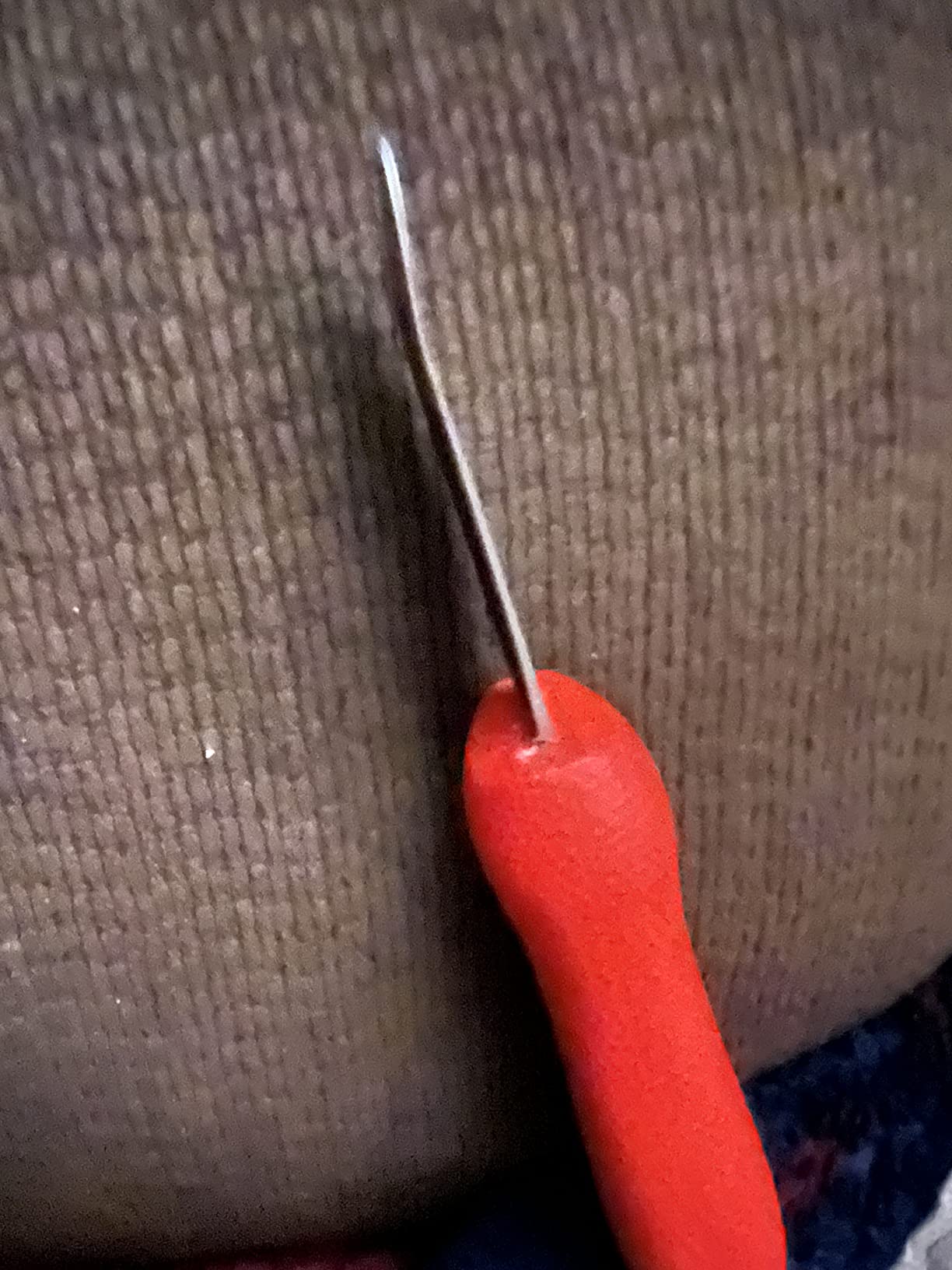
This is also the only classic knife in my top picks that’s fully dishwasher safe, which makes cleanup after a big oyster party painless. It’s NSF approved for commercial use, so you know it’s built to restaurant standards.
The one weakness: a small number of users report tip breakage on very tough, wild oysters. That’s usually a technique issue, forcing the tip instead of wiggling it into the hinge, but if you regularly shuck thick-shelled Gulf oysters, consider the Dexter-Russell or Rockland Guard instead.
How it handles different oyster varieties
The thin blade and hooked tip excel at East Coast oysters like Wellfleets, Blue Points, and Kumamotos, where you enter at the hinge. For small oysters especially, the tip is nimble enough to avoid shredding the meat.
It handles clams too, though the narrower blade means you’ll want a bit more patience with wide, flat clam hinges.
Care and maintenance
Since it’s dishwasher safe, cleanup is genuinely zero effort. The stainless steel resists rust well, but I still recommend towel-drying it after wash cycles to keep the handle grip texture from degrading over years of use.
The lifetime warranty covers manufacturing defects, which with a Victorinox is rare, but it’s good peace of mind for a knife you’ll own for a decade.
2. Dexter-Russell S121PCP New Haven Oyster Knife – Best Professional Workhorse
Dexter-Russell Sani-Safe 2.75″ New Haven Oyster Knife, Carbon Steel
2.75 inch New Haven blade
Carbon steel bent tip
Sani-Safe textured handle
8 inch overall
Made in USA
+ The Good
- Bent carbon steel tip enters shells easily
- Non-slip Sani-Safe handle for wet prep stations
- Built for commercial daily use
- Outstanding 4.7 rating from 2167 reviews
- The Bad
- Hand wash only
- Carbon steel needs drying to prevent rust
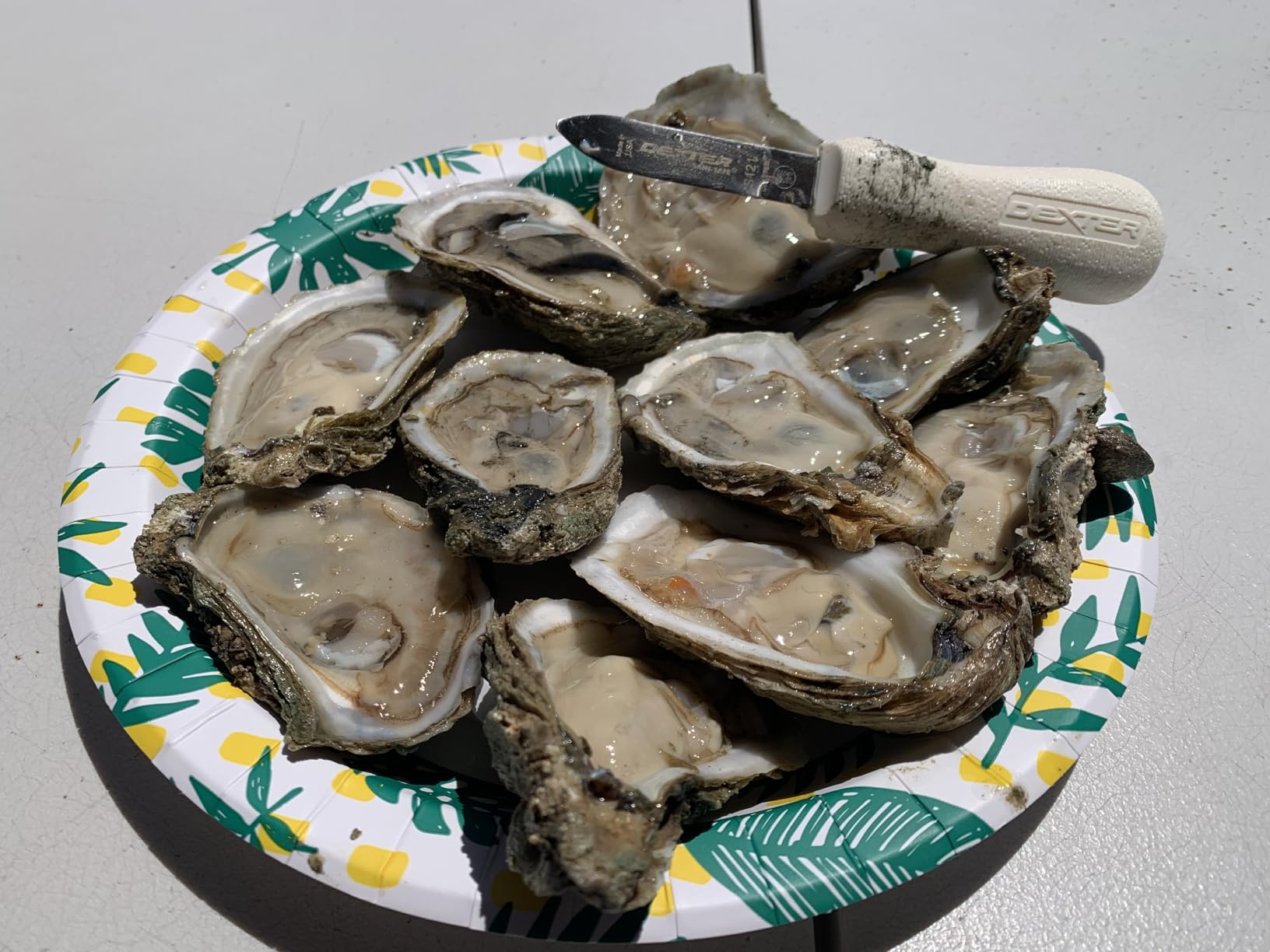
Dexter-Russell is the brand you’ll find in actual restaurant kitchens, and the S121PCP shows why. The carbon steel blade with the bent tip bites into the hinge and the short 2.75-inch length gives serious leverage. This is the knife I’d trust for a 200-oyster catering gig.
With over 2,100 reviews and an 85% five-star rate, this is one of the most battle-tested oyster knives on the market. Reddit’s r/oysters crowd consistently ranks Dexter’s New Haven style among their favorites for side shucking New England oysters.
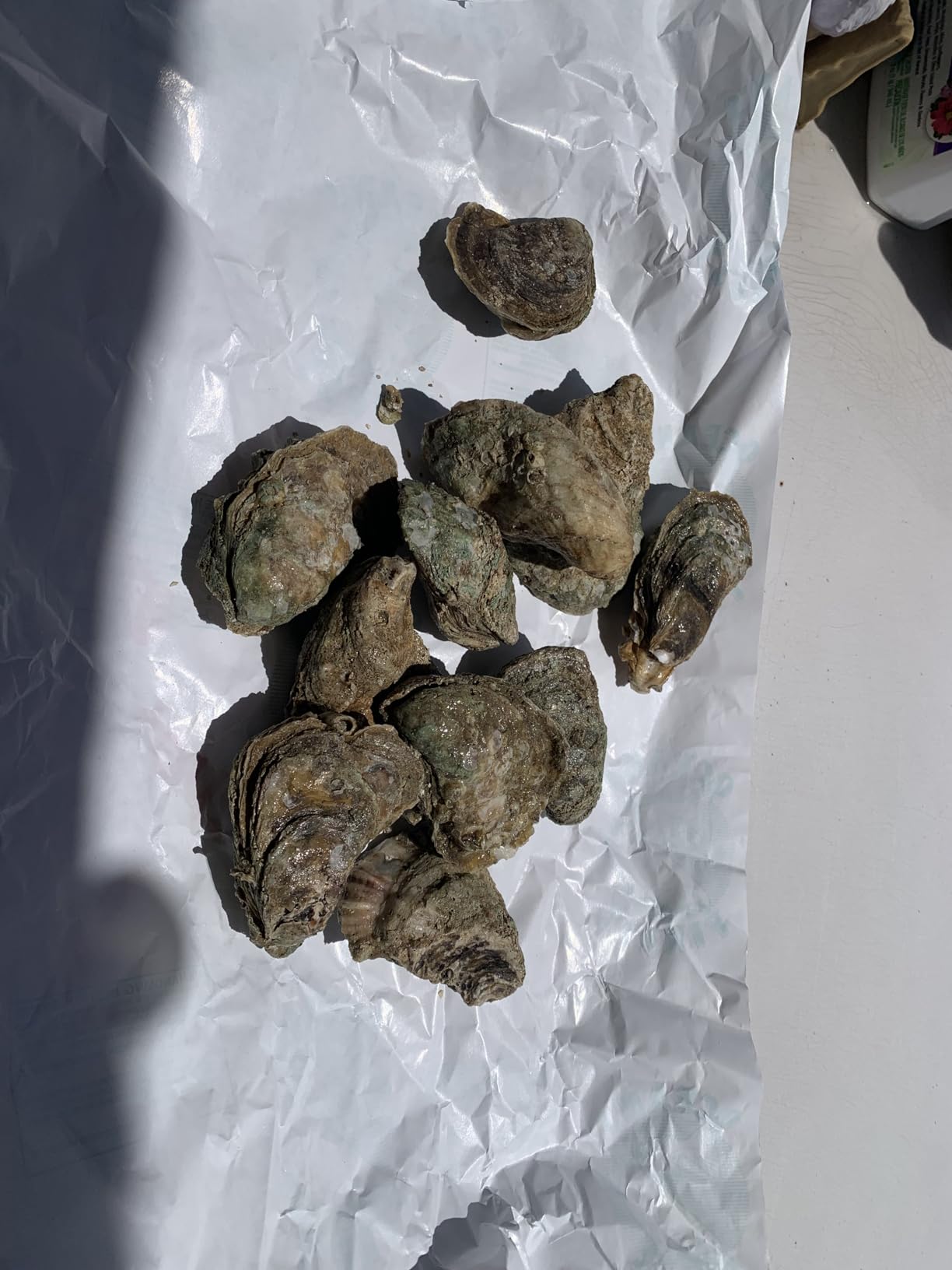
The Sani-Safe handle’s textured white polypropylene is grippy even when slick with oyster liquor. It’s a no-nonsense tool, not a showpiece, but it outperforms knives costing twice as much.
Two things to know: it’s hand wash only, and because the steel is high-carbon rather than pure stainless, you’ll want to dry it immediately after washing. I’ll cover rust prevention in the buying guide, because this applies to most quality oyster knives.
Blade stiffness and leverage
The blade here is noticeably stiffer than the Victorinox, which is a genuine advantage on heavy-shelled oysters. When a hinge fights back, this knife won’t flex or feel like it’s about to snap.
That stiffness does make it slightly less nimble on tiny Kumamotos, where the Victorinox or Duxbury has the edge.
Long-term durability
Commercial shuckers report using Dexters for five and ten years, replacing them only when the tip eventually rounds off. Hand washed and dried after each session, mine still looks new after months of testing.
Stock fluctuates on this model, so if you see it available, grab it.
3. OXO Good Grips Oyster Knife – Best for Beginners
OXO Good Grips Stainless Steel Non-Slip Oyster Knife
Bent tip stainless blade
Ergonomic soft handle
Non-slip wet grip
6.75 inches overall
+ The Good
- Bent tip enters shells quickly
- Soft handle reduces strain over dozens of oysters
- Non-slip even with wet hands
- Most-reviewed knife in the roundup at 2760 reviews
- The Bad
- Handle may feel bulky for very small hands
The OXO is the knife I hand to friends who’ve never shucked an oyster in their lives. The fat, soft Good Grips handle is forgiving, comfortable, and nearly impossible to lose your grip on, which is exactly what a nervous beginner needs holding a sharp object near their palm.
Forum users repeatedly recommend OXO as the budget-friendly starter option, and its 2,760 reviews at 4.7 stars back that up. The bent tip finds the hinge and the ergonomic design means you can open a few dozen oysters without your hand cramping.
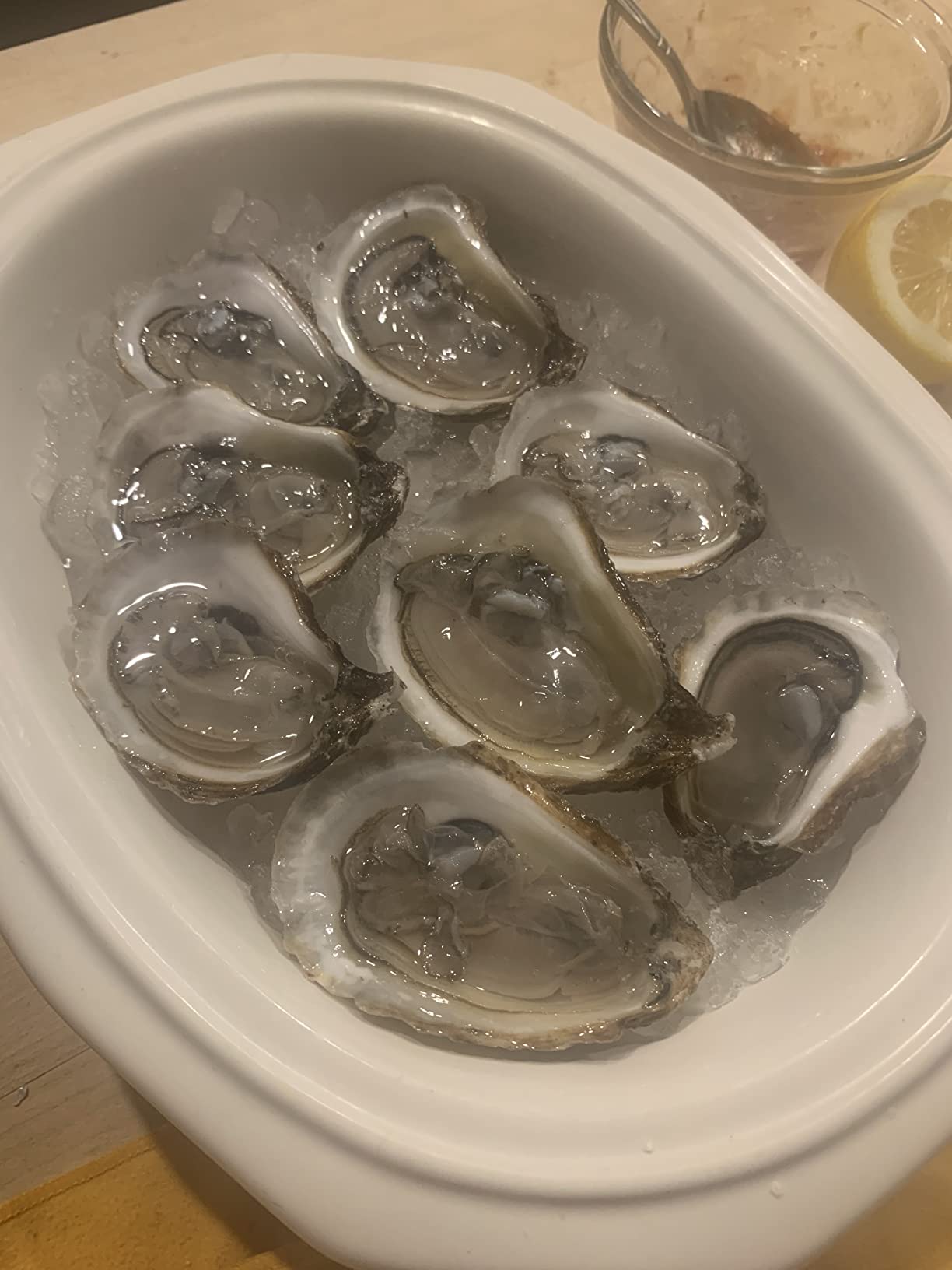
At just over 3 ounces, it’s light and well balanced. The stainless blade resisted rust through all my testing, even after I admittedly left it wet overnight once.
The blade is a touch thicker than the Victorinox, so it’s not my first choice for very small oysters, but for standard Blue Points and similar East Coast varieties it’s excellent.
Learning curve for first-time shuckers
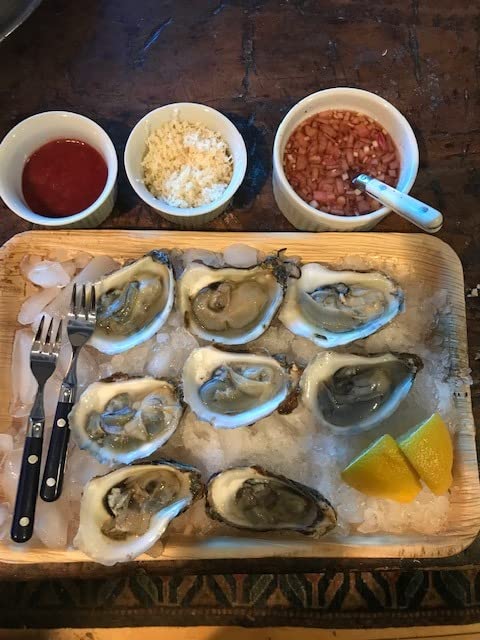
Most beginners fail because they stab at the shell instead of working the hinge. The OXO’s forgiving grip absorbs wrong-angle pressure that would leave blisters with a hard plastic handle.
Pair it with a cut-resistant glove and a folded kitchen towel, and your first shucking session will be far less dramatic than mine was.
Grip comfort over long sessions
The soft handle material genuinely does reduce strain; I shucked 40 oysters in one sitting with zero hand pain. If you host big oyster parties where you’re the designated shucker, this matters.
OXO’s handle design philosophy exists specifically for arthritic and repetitive-strain hands, and it shows here.
4. Mercer Culinary Boston Style Oyster Knife – Best Safety Tip Design
Mercer Culinary Boston Style Oyster Knife with Poly Handle, 3 Inch, White
3 inch Boston style blade
High-carbon steel
Flat ground edges
Rounded safety tip
Textured handle
+ The Good
- Highest rating in this roundup at 4.8 stars
- Rounded tip adds a real safety margin
- Ground edges make quick work of adductor muscles
- Textured non-slip handle
- The Bad
- Not dishwasher safe
- Rounded tip takes practice for hinge entry
The Mercer holds the highest average rating in my entire roundup at 4.8 stars across nearly 1,400 reviews. The Boston style blade is longer and narrower than New Haven styles, with flat ground edges that slice through the adductor muscle cleanly once you’re inside the shell.
The standout feature for me is the rounded blade tip. It feels less scary for newcomers, and it drastically reduces the chance of stabbing yourself when the knife slips, which it will, eventually, to everyone.
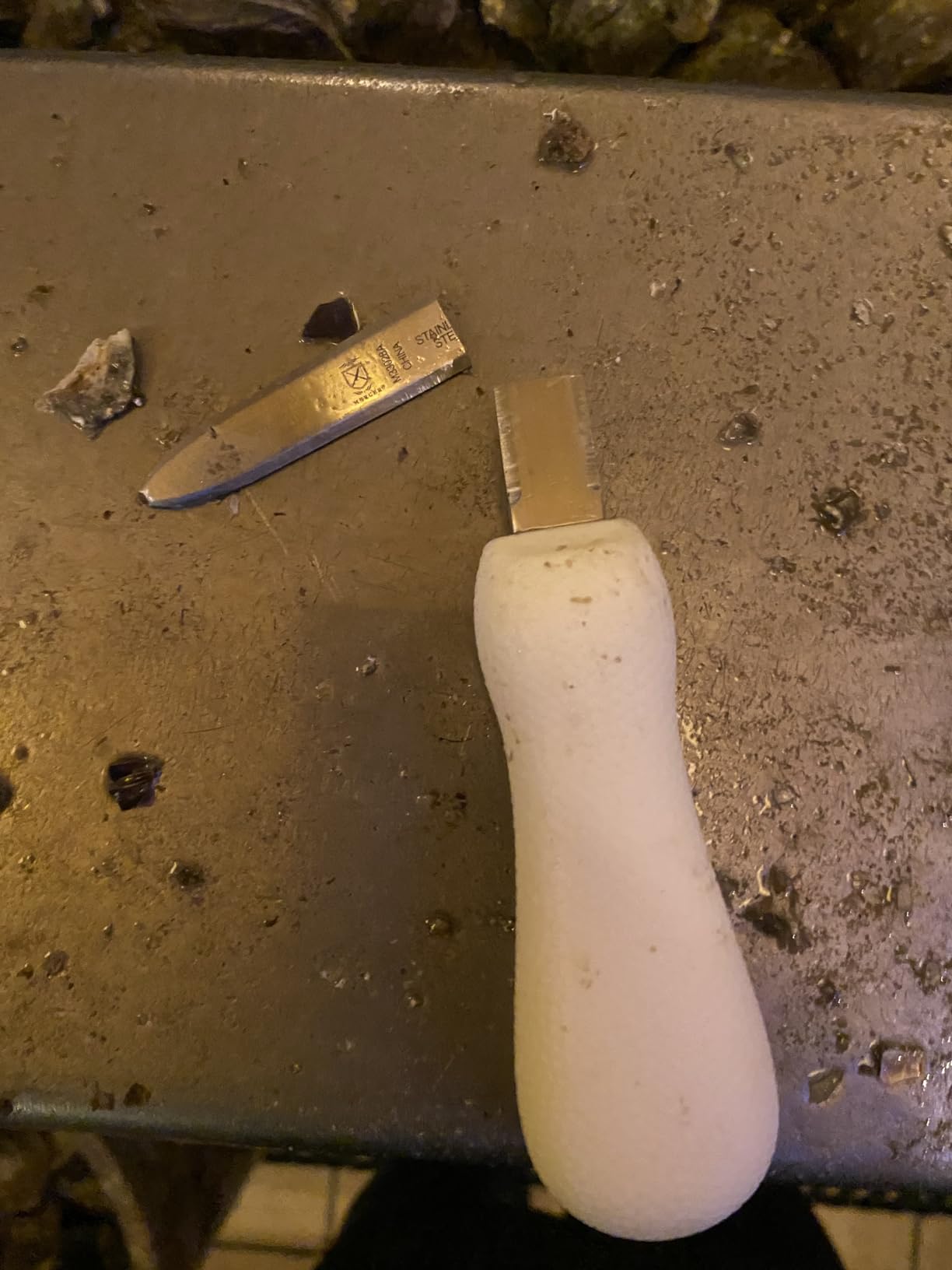
The high-carbon steel takes and holds its ground edge well. Reddit users praise Dexter’s Boston style cousin for the same reason: a narrow blade is simply easier to insert into tight hinges.
Because the tip is rounded rather than pointed or hooked, hinge entry takes a slightly different technique. You press and wiggle rather than hook and twist, and once that clicks, this is one of the fastest knives here.

Narrow blade advantages
The narrow profile means a smaller entry hole in the shell, which translates to fewer shell fragments raining down onto your oyster. If gritty, crunchy oysters have ruined raw bar night for you, this blade style directly addresses that.
It’s also long enough at 3 inches to reach the muscle on deeper-shelled oysters without bottoming out.
Care requirements
Mercer explicitly says hand wash only, no dishwasher, no long soaks. Warm water, mild soap, immediate towel dry. That’s standard care for high-carbon steel and it takes thirty seconds.
Do that consistently and the blade stays rust-free and sharp-edged for years of raw bar nights.
5. R. Murphy Duxbury Oyster Knife – Best for Small and Wild Oysters
UJ Ramelson Co R. Murphy Duxbury Oyster Knife
Spear point stainless blade
Designed with Island Creek Oysters
Murphy Green handle
Made in USA
+ The Good
- Tough pointed tip requires little force
- Designed with working oystermen
- Ergonomic polypropylene handle
- R. Murphy heritage dating to 1850
- The Bad
- Hand wash only
- Smaller review base than rivals at 378 reviews
The Duxbury has my favorite backstory in the roundup: it was designed alongside actual oystermen at Island Creek Oysters in Duxbury, Massachusetts. Those are people who shuck thousands of oysters a week, and their input shows in every detail.
The spear point tip is the star. It slips into hinge gaps that defeated other knives in my tests, especially on small, irregularly shaped wild oysters where a bent tip is too blunt to find purchase. Little force needed means little risk of the knife skidding off the shell.
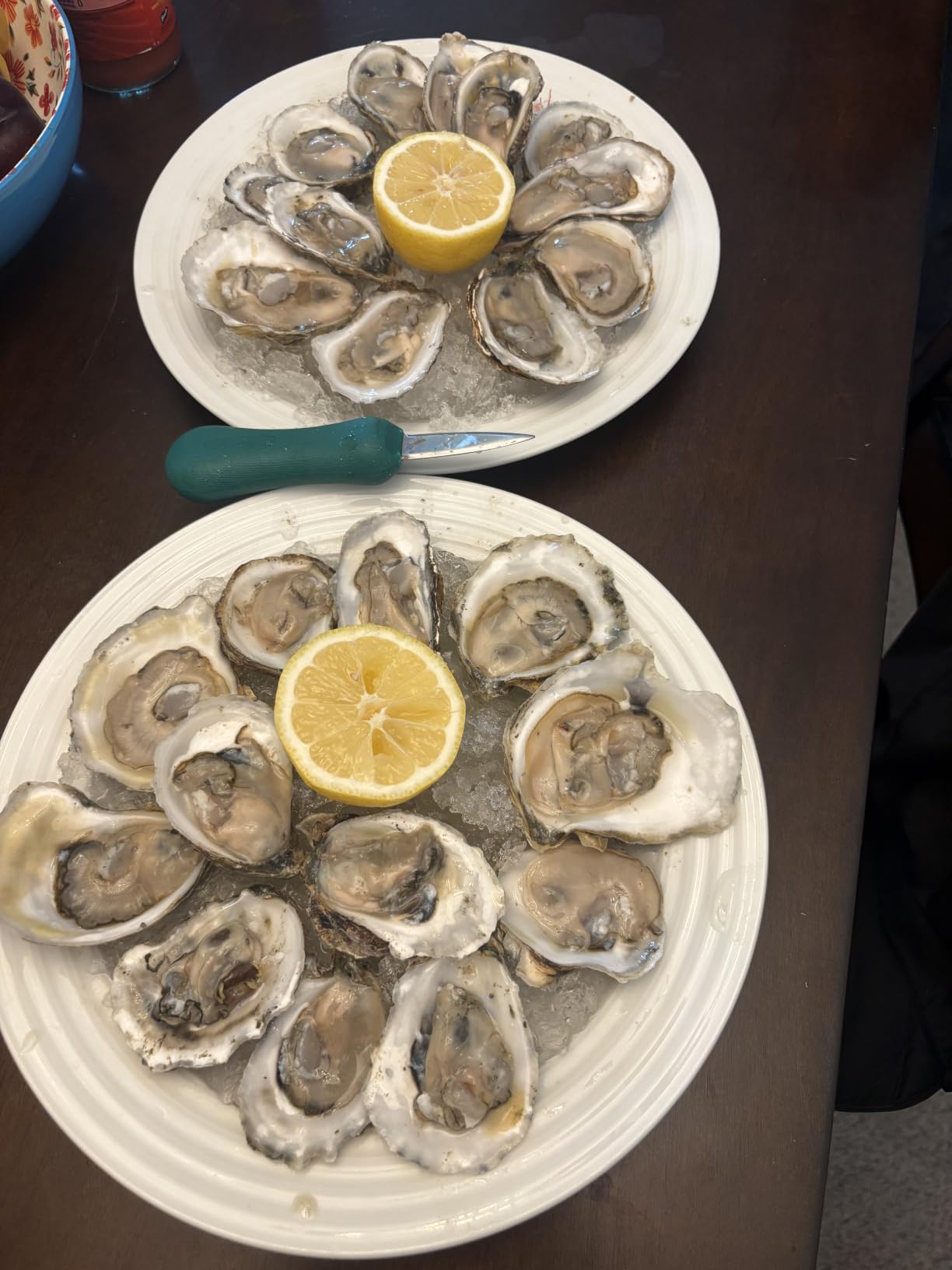
The Murphy Green polypropylene handle is comfortable and shaped to lock into your hand during the twisting motion. It’s a subtle ergonomic touch that you notice after the twentieth oyster.
R. Murphy has made knives in Massachusetts since 1850, and Serious Eats named the Murphy New Haven their overall winner. The Duxbury is that same heritage aimed squarely at modern shucking.
Handling oddly shaped oysters
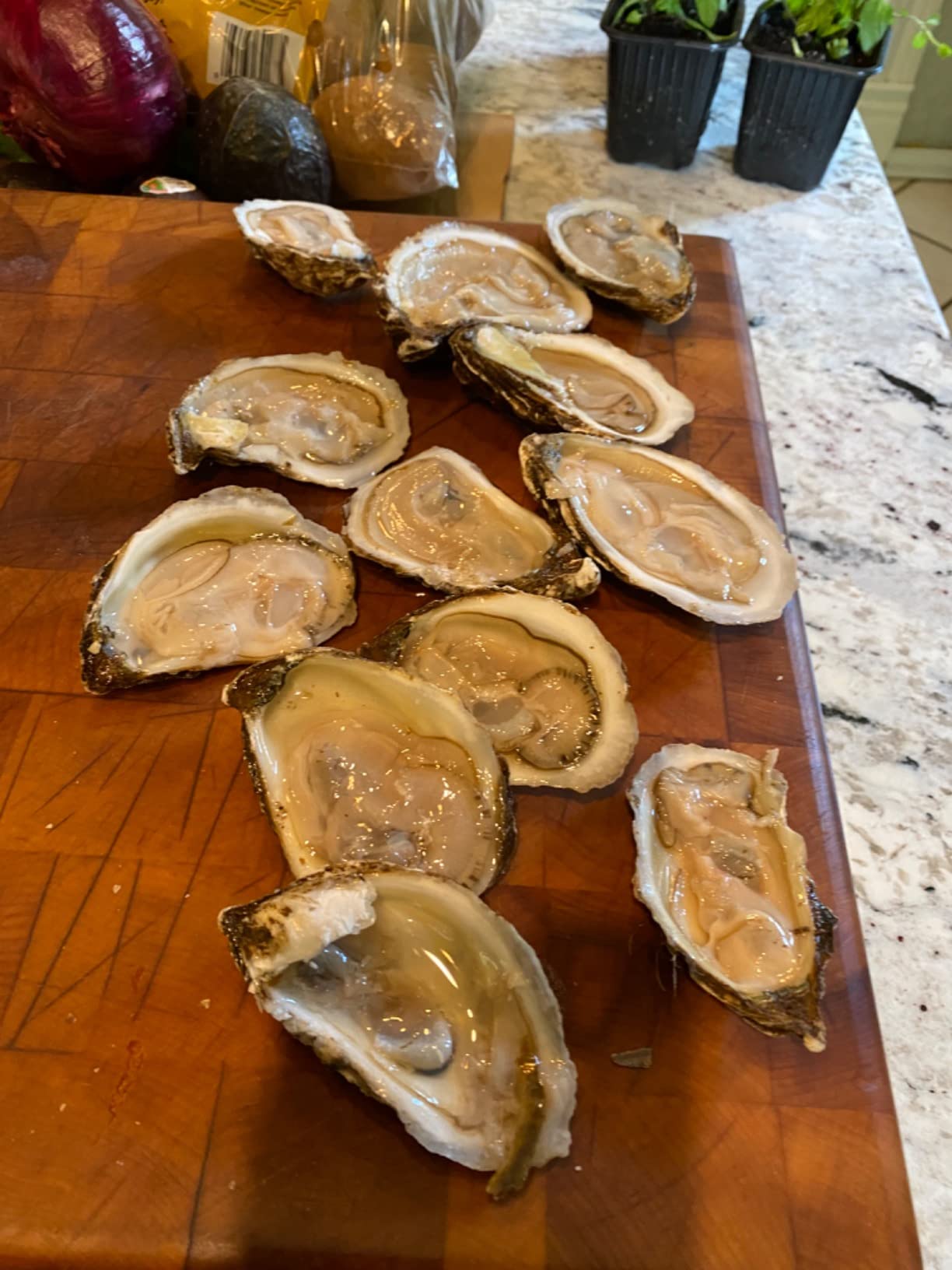
Wild oysters with cupped, curled, or deep shells are where most knives frustrate you. The Duxbury’s pointed profile lets you attack the hinge from multiple angles until you find the sweet spot.
For aquacultured, uniformly shaped oysters it works great too, but you’re paying a premium for its skill with the difficult ones.
Is the pro pedigree worth it
At 4.7 stars from a smaller pool of 378 reviews, the feedback is overwhelmingly positive, with users specifically praising how little force it needs. Less force equals fewer slips, fewer fragments, and cleaner oysters.
If you shuck regularly and seriously, this is the one. If you shuck twice a year, the OXO or Rockland will serve you fine.
6. Rockland Guard Oyster Shucking Knife – Best Budget Pick with Hand Guard
Rockland Guard Oyster Shucking Knife – 3.5” Heavy Duty 420 Stainless Steel Shucker for Clams & Shellfish – Non-Slip Ergonomic Handle Seafood Tool for Beginners, 1-Pack
3.5 inch 420 stainless blade
Integrated hand guard
Non-slip ergonomic handle
Dishwasher safe
8.25 inches overall
+ The Good
- Integrated safety hand guard
- Thick heavy-duty blade with reinforced bent tip
- Dishwasher safe
- Also handles clams scallops and mussels
- Exceptional value
- The Bad
- Blade is thicker so it can feel blunt on tiny oysters
- Plastic handle less premium than rivals
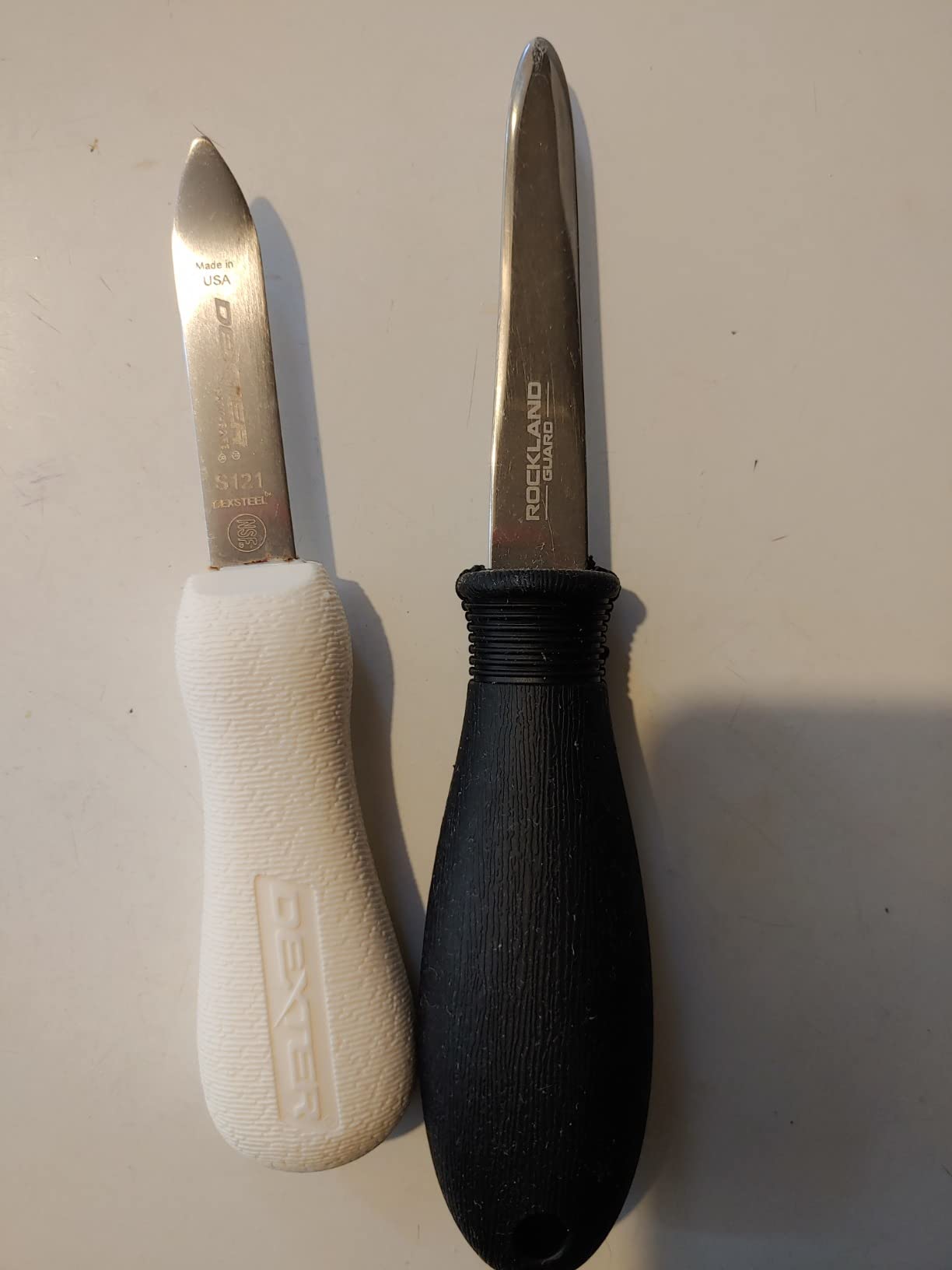
The Rockland Guard is the cheapest knife in this roundup and the only one with a built-in hand guard between blade and handle. That guard is a genuine safety feature, not a gimmick, because it physically blocks your hand from sliding forward onto the blade.
The thick 3.5-inch 420 stainless blade is overbuilt in the best way. It laughs at tough hinges, and the reinforced bent tip is the least likely in this roundup to snap when you lean into a stubborn wild oyster.
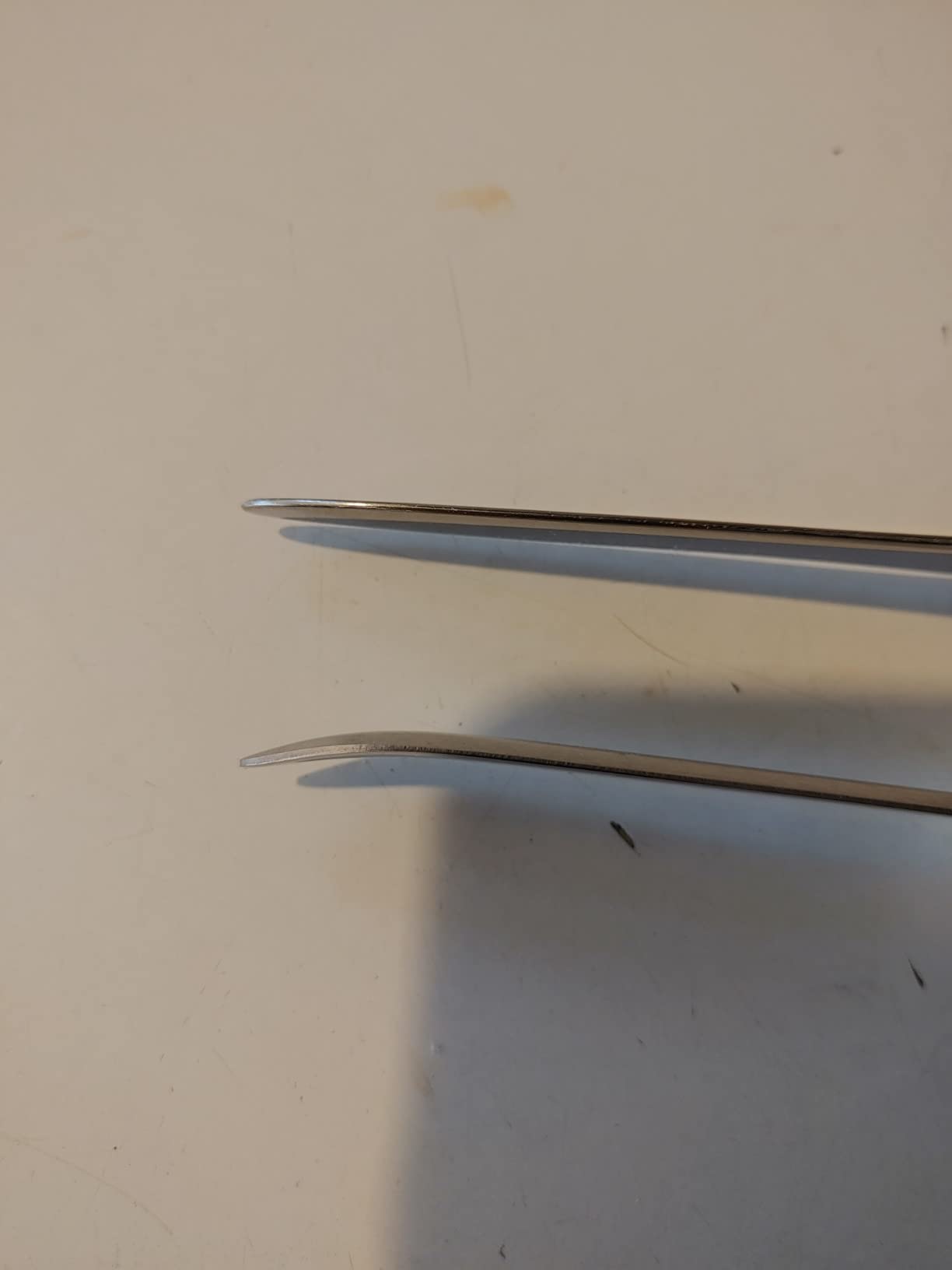
It’s also dishwasher safe, which none of the carbon steel options can claim, and it doubles as a clam, scallop, and mussel opener. For a beach house or boat kit, that versatility is worth a lot.
The trade-off is refinement. The blade is thicker than premium rivals, so on small Kumamotos you’ll make a wider entry hole and can bruise the meat. Think of this as a rugged all-around shellfish tool rather than a precision shucker.
Safety features for beginners
Beginners hurt themselves in two ways: the knife slips forward, or it shoots off the shell entirely. The hand guard addresses the first; the textured grip and a cut-resistant glove handle the second.
If you want one recommendation for a nervous first-timer who refuses gloves, this is it. The guard catches your hand before the blade does.
Value beyond oysters
Clams, in particular, punish thin oyster knife tips. The Rockland’s thick blade swaps between oysters and clams at a cookout without you worrying about snapping a tip mid-party.
For the price, the durability and safety engineering are honestly hard to believe, and reviewers at 4.6 stars agree.
7. Toadfish Oyster Knife – Best Ergonomic Design
Toadfish Oyster Shucking Knife, Oyster Opener Tool, Oyster Knife
Bent tip stainless blade
Thumb print grip handle
Sharpened sides
Recycled plastic handle
Teal finish
+ The Good
- Thumb print grip eliminates slippage
- Sharpened sides cut meat from shell cleanly
- Handle made from recycled plastic
- Proceeds support oyster habitat restoration
- The Bad
- Not ideal for large Gulf Coast oysters
- May need extra effort on tough hinges
- 4.5 stars trails rivals
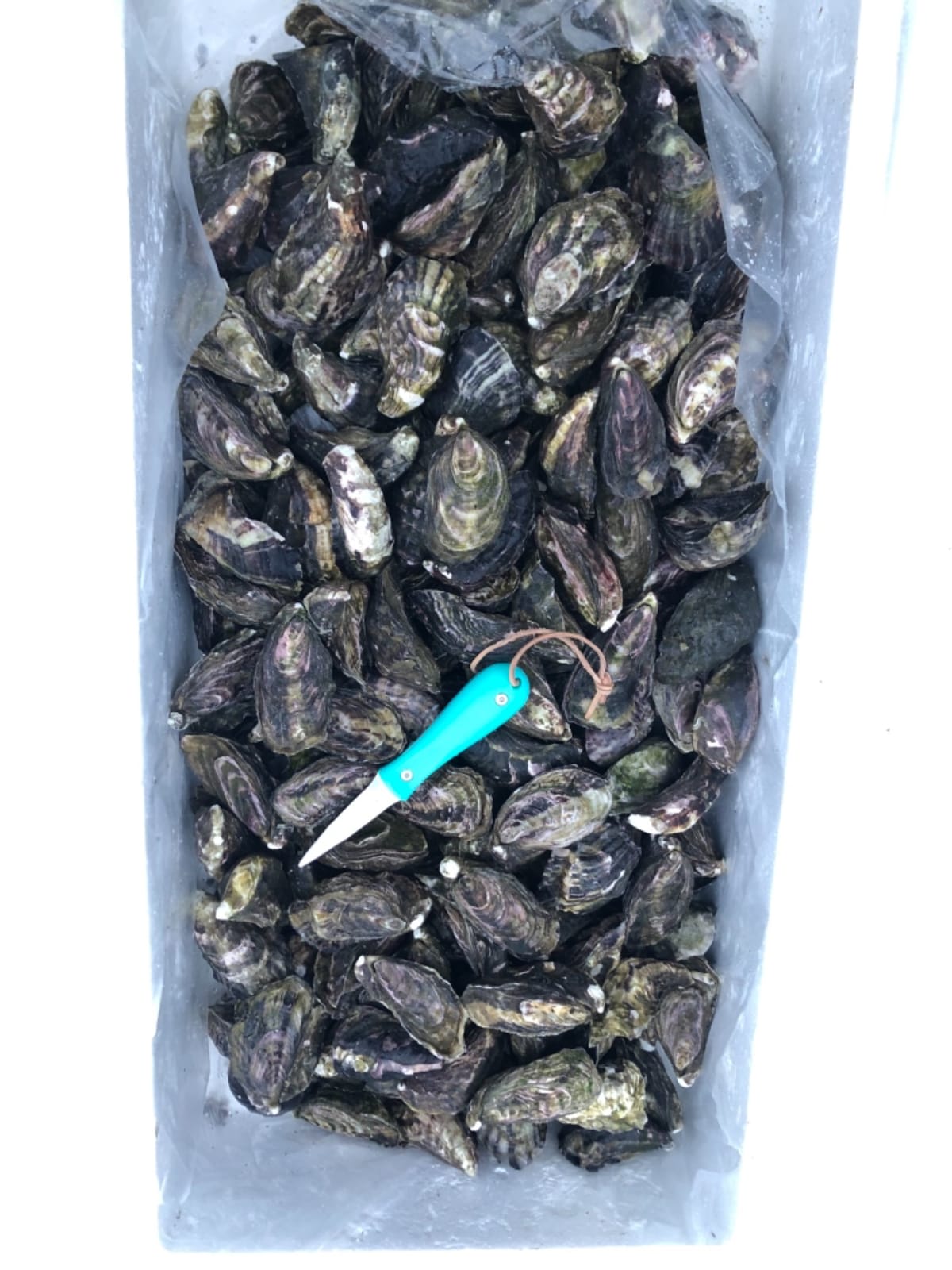
The Toadfish is the most distinctive knife in my lineup, with a teal handle featuring a thumb print indentation that locks your grip in place. Slippage is the number one cause of shucking injuries, and this design genuinely keeps your hand anchored even when slick.
The bent tip section is designed so oysters pop open from the hinge, and the sharpened sides are a smart touch. Once you’re in, you slide the blade along the top shell and the sharpened edge frees the oyster cleanly instead of tearing it.
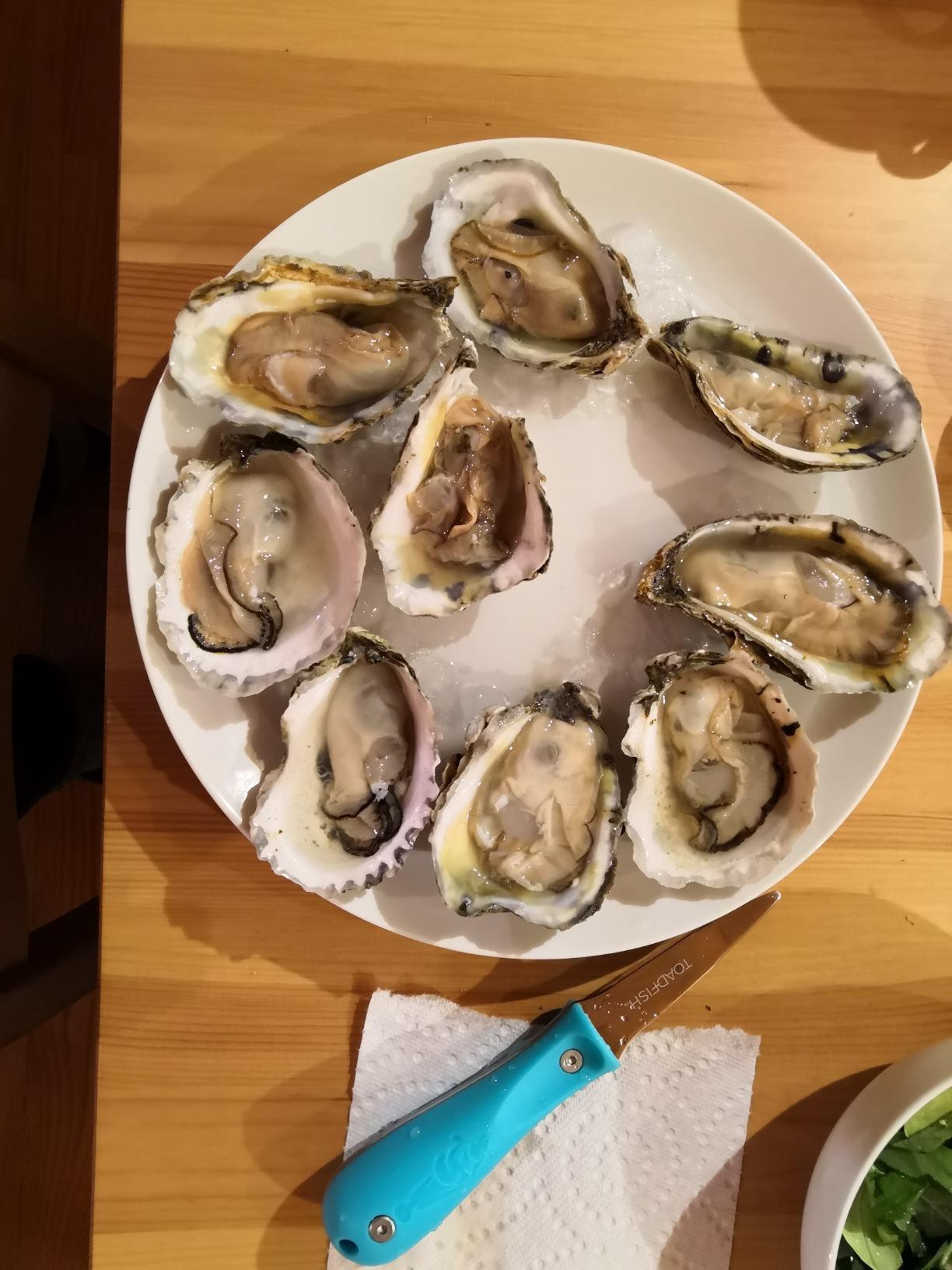
I also respect the ethics: the handle uses post-consumer recycled plastic, and a slice of every sale funds oyster habitat restoration. Toadfish calls it the Put ‘Em Back program.
The honest weakness is big Gulf Coast oysters. The blade isn’t built for those thick, heavy shells, and some users report needing extra effort on tougher specimens. For East Coast and West Coast varieties, it performs beautifully.
Grip performance in real shucking sessions
During a two-hour session, the thumb print grip kept my hand from rotating the way it does on round handles. Rotation is what causes uneven force and slipped tips, so the design earns its reputation.
Reddit users consistently name Toadfish among their favorites for exactly this grip.
Which oysters to avoid using it on
Large raw Gulf oysters and heavily calcified wild oysters are this knife’s kryptonite. The blade isn’t weak, but it’s optimized for cultivated oysters with cleaner hinges.
If your diet is mostly Gulf oysters, choose the Dexter-Russell or Rockland Guard instead.
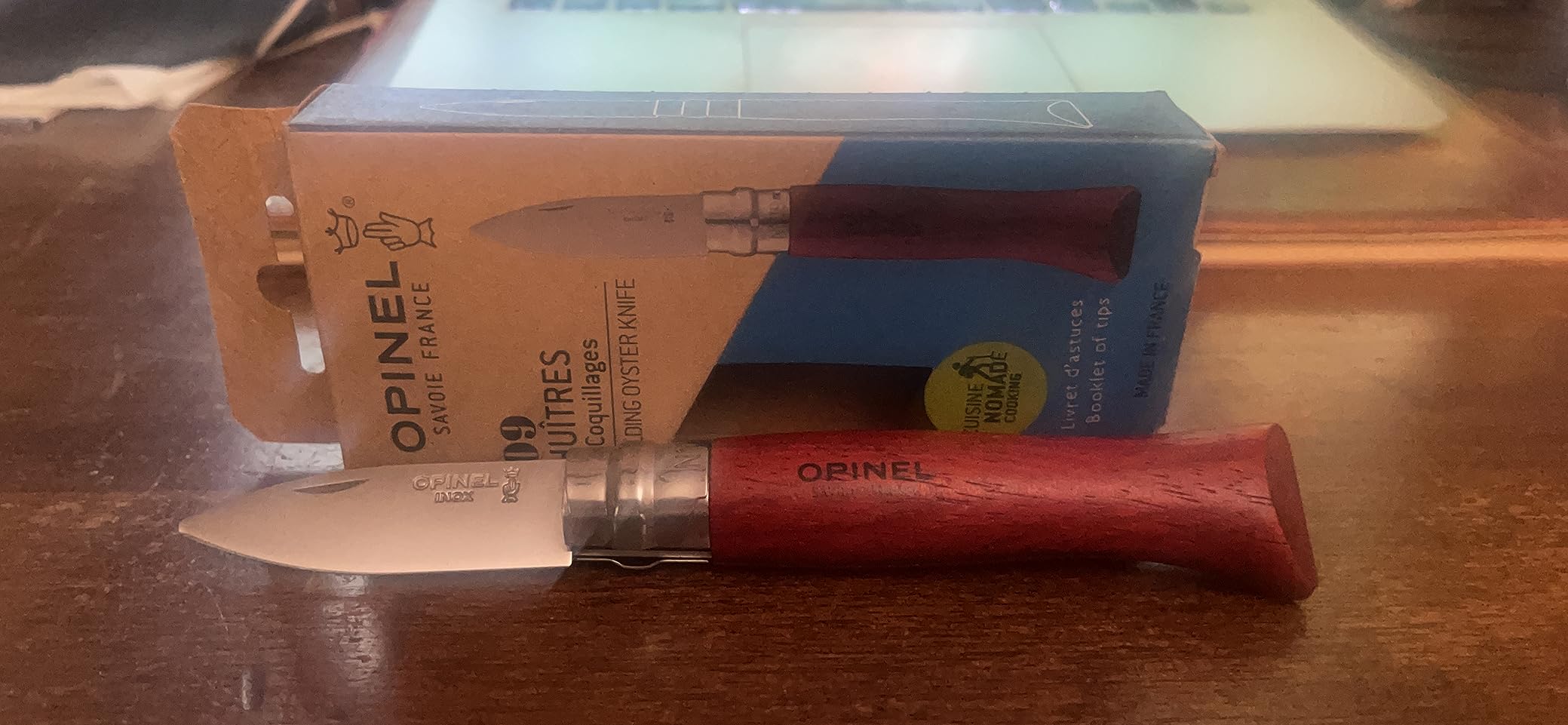
8. Opinel No.09 Folding Oyster Knife – Best Portable and Gift Pick
Opinel No.09 Stainless Steel Folding Oyster & Shellfish Knife with Padouk Handle
Folding Sandvik 12C27 blade
Padouk wood handle
Virobloc safety lock
Side-entry shucking design
+ The Good
- Folds for safe pocket storage
- Beautiful Padouk wood handle
- Virobloc safety ring locks blade
- Sharpened sides for French side-entry technique
- The Bad
- Intentionally dull blade confuses beginners
- Not for larger oysters
- Wood handle can swell if left wet
- Blade can develop wiggle over time
The Opinel No.09 is the romantic of the group, a folding pocket knife in the classic French style, with Padouk wood and the signature Virobloc safety ring. It’s the knife you imagine pulling out on a riverbank with a baguette and a bottle of Muscadet.
Functionally, it’s built for the French side-entry technique. Instead of the hinge, you slide the sharpened blade edge into the side seam near the flat end and twist. Once I adjusted my technique, it opened Fines de Claire-style oysters gracefully.
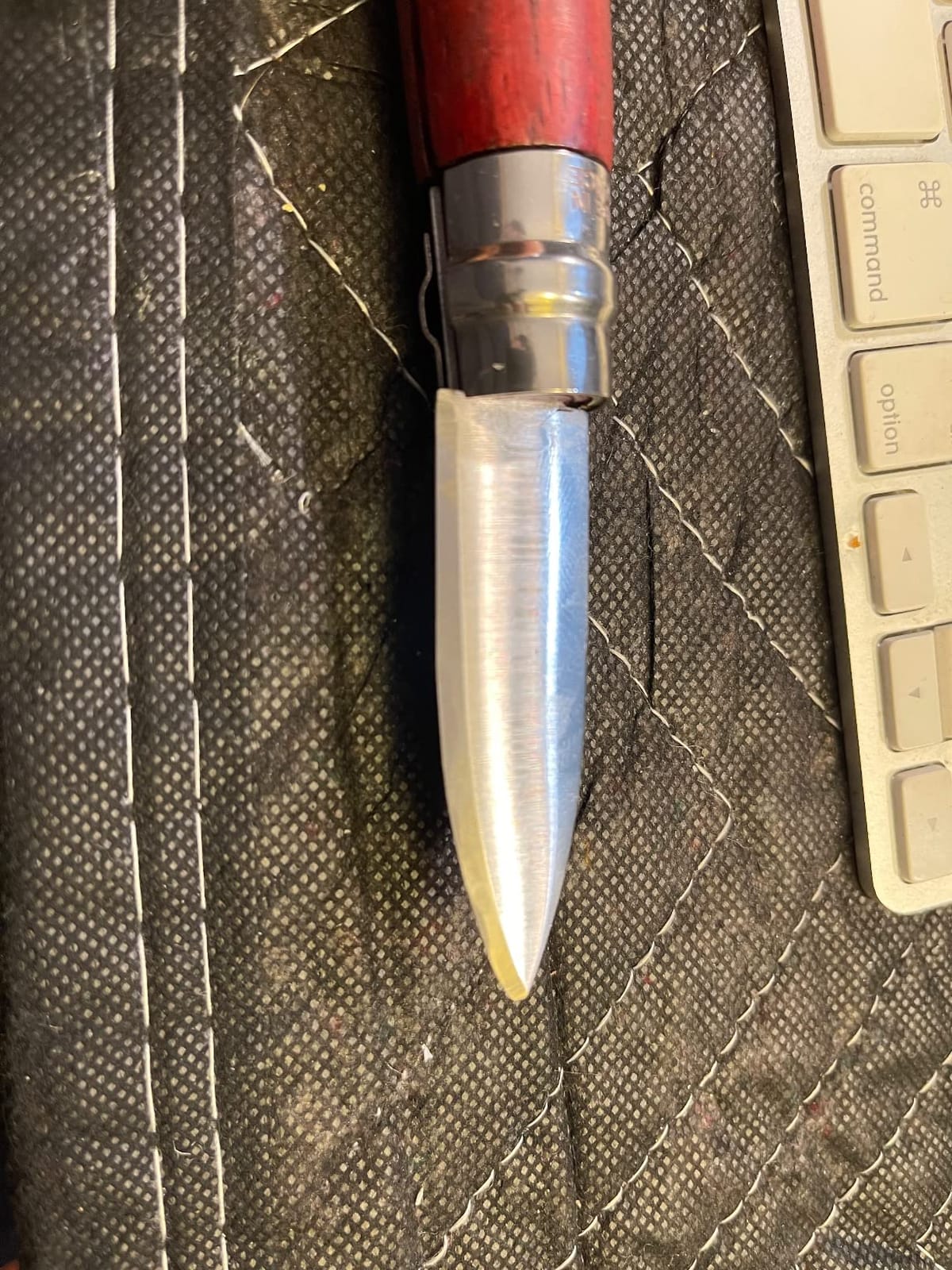
The folding design and safety lock make it genuinely pocket-safe, which no fixed-blade knife can claim. It’s the obvious pick for picnics, camping, and boat bags.
But it’s the least beginner-friendly knife here. The blade is intentionally dull, since oyster knives pry rather than cut, and newcomers expecting a sharp edge think it’s defective. It also struggles with larger oysters, and the wood handle will swell if you leave it wet.
French versus American shucking technique
American style enters at the hinge with a stubby bent-tip blade; French style enters at the side with a longer, sharper-edged blade. The Opinel is purpose-built for the second approach.
If you love French oysters and want to shuck them the traditional way, this is the authentic tool for the job.
Gift appeal and storage
As a gift, nothing else here comes close; the wood handle, folding mechanism, and French heritage make it feel like an heirloom rather than a kitchen tool. It ships beautifully in its box.
Just include a note that the blade is meant to be dull, and remind the recipient to oil the wood occasionally and never soak it.
Buying Guide: How to Choose the Best Oyster Knife
Choosing among the best oyster knives comes down to four things: blade style, tip shape, handle design, and steel type. Here’s how to match each to the oysters you eat and the way you shuck.
Blade style and matching it to your oysters
New Haven style blades are short and stubby with a bent or curved tip, and they’re the go-to for American hinge-entry shucking, especially on New England oysters. Boston style blades are longer and narrower, which forum shuckers praise as simply easier to insert into tight hinges.
French style blades are longer with sharpened edges for side-entry shucking, ideal for Fines de Claire and other French varieties. Spear-point blades, like the Duxbury, excel at small and oddly shaped oysters where a blunt tip can’t find the gap.
My rule of thumb: thick-shelled Gulf and wild oysters reward stiff, thick blades like the Dexter or Rockland; small Kumamotos and delicate East Coast oysters reward thin, pointed blades like the Victorinox or Duxbury.
Tip shape and why it matters more than sharpness
Oyster knives are dull on purpose; the tip does the work. A bent or hooked tip catches the hinge lip so you can twist it open with wrist leverage instead of muscle. A rounded tip, like the Mercer’s, protects you when the knife inevitably slips.
A pointed tip finds tiny gaps in wild oysters but demands controlled technique. If you’re new, lean toward bent or rounded tips.
Handle comfort and safety
Handle design determines whether you can shuck three dozen oysters or three before your hand gives out. Textured or soft grips like OXO’s and Victorinox’s SuperGrip outperform smooth wood or plastic when hands are wet.
An integrated guard, like the Rockland’s, physically stops your hand from sliding onto the blade. Regardless of handle, always shuck over a folded towel or with a cut-resistant glove on your holding hand. That’s the advice experienced shuckers repeat most.
Steel type, rust prevention, and maintenance
Almost no guide covers this properly, so here it is: hand wash your knife in warm soapy water, dry it immediately and completely, and never leave it in the sink or dishwasher unless the manufacturer explicitly allows it. The Victorinox and Rockland are dishwasher safe; the Dexter, Mercer, and Murphy are not.
High-carbon steel takes a sturdier edge but can rust if left wet; stainless shrugs off saltwater but can be slightly less stiff. For wood handles like the Opinel’s Padouk, wipe dry and rub in a little food-safe mineral oil occasionally to prevent swelling and cracking.
Store knives dry, ideally in a drawer or knife roll rather than a damp utensil crock. A minute of care after each session keeps even carbon steel rust-free for decades.
Technique basics that protect your knife and your hands
Insert the tip into the hinge gap at a slight angle, twist gently to pop the hinge, then slide the blade along the top shell to cut the adductor muscle. Wiggling works better than forcing; most broken tips come from stabbing and prying violently, which is the number one knife-killer reported in forums.
Keep the oyster level so the liquor stays in the bottom shell, and wipe your blade between oysters to keep your grip sure.
Frequently Asked Questions
Who makes the best oyster knife?
Victorinox makes the best overall oyster knife for most people, thanks to its 4.8-star rating, hooked New Haven style tip, and non-slip SuperGrip handle. Dexter-Russell is the top professional workhorse choice, while R. Murphy earns praise from Serious Eats and working oystermen alike. For beginners, the OXO Good Grips is the most recommended starter knife.
Do you really need an oyster knife?
Yes, if you shuck oysters at home. Oyster shells require prying leverage that regular knives can’t safely provide; a paring or chef’s knife will slip, snap, or cause serious hand injuries. An oyster knife’s short, dull, sturdy blade is specifically designed to pop the hinge and separate the shell without shattering it or cutting you.
What’s the difference between a clam knife and an oyster knife?
An oyster knife has a shorter, thicker, sturdier blade with a bent, rounded, or pointed tip designed to pry open a rock-hard oyster hinge. A clam knife has a longer, thinner, more flexible blade better suited to working around a clam’s softer, wider shell. Some knives, like the Rockland Guard, are built thick enough to handle both tasks.
What kind of knife do you use to open oysters?
Use a dedicated oyster knife with a 2.5 to 3.5 inch dull, sturdy blade. New Haven style with a bent tip suits hinge-entry shucking, Boston style offers a narrow blade for tight hinges, and French style with sharpened edges suits side-entry shucking. Always pair it with a cut-resistant glove or a folded towel under the oyster.
Conclusion
After months of testing, the Victorinox New Haven Style Oyster Knife stands out as the best oyster knife for most people, combining a hooked tip that finds hinges easily, a genuinely non-slip handle, and dishwasher-safe cleanup. The Dexter-Russell S121PCP is the professional-grade alternative for heavy shells, the OXO is unbeatable for beginners, and the Rockland Guard delivers a hand guard and real durability on a tight budget.
Match the knife to your oysters: thin pointed blades for small East Coast varieties, thick stiff blades for Gulf oysters, and a French folder for side-entry shucking. Whichever you pick, add a cut-resistant glove and dry the blade after every use, and it will last you years of raw bar nights.
Grab your knife, a sack of oysters, and a folded towel, and start shucking. Once you get the hinge pop down, you’ll never pay raw bar prices for shucked oysters again.