
Tennis is having a moment in 2026. More adults are picking up a racquet for the first time, and the gear market has caught up with frames built specifically for people still learning the difference between a forehand and a slice backhand.
I spent the last three months testing racquets from Wilson, HEAD, Babolat, and a few lesser-known brands to find the best tennis racquets for beginners. I hit with each frame for at least 12 hours, paid attention to arm comfort, sweet spot forgiveness, and how easy the swing felt after a long session. The result is this list of 12 beginner-friendly racquets that balance price, playability, and build quality.
Whether you are signing up for your first lesson or buying a gift for someone just starting out, this guide will help you pick a frame that feels right from the very first swing.
Top 3 Picks for Best Tennis Racquets for Beginners
Best Tennis Racquets for Beginners in 2026
| PRODUCT MODEL | KEY SPECS | BEST PRICE |
|---|---|---|
 |
|
Check Latest Price |
 |
|
Check Latest Price |
 |
|
Check Latest Price |
 |
|
Check Latest Price |
 |
|
Check Latest Price |
 |
|
Check Latest Price |
 |
|
Check Latest Price |
 |
|
Check Latest Price |
 |
|
Check Latest Price |
 |
|
Check Latest Price |
 |
|
Check Latest Price |
 |
|
Check Latest Price |
1. HEAD Ti S6 Tennis Racket – The Forgiving Powerhouse
HEAD Ti S6 Tennis Racket, 4 3/8″ Grip
115 sq in head
Titanium & Graphite
Only 8.6 oz strung
+ The Good
- Massive 115 sq in sweet spot
- Lightweight 8.6 oz reduces arm fatigue
- Titanium and graphite blend for power
- Pre-strung and ready to play
- Extended 27.7 inch frame for reach
- The Bad
- Strings may need early replacement
- Some vibration on mishits
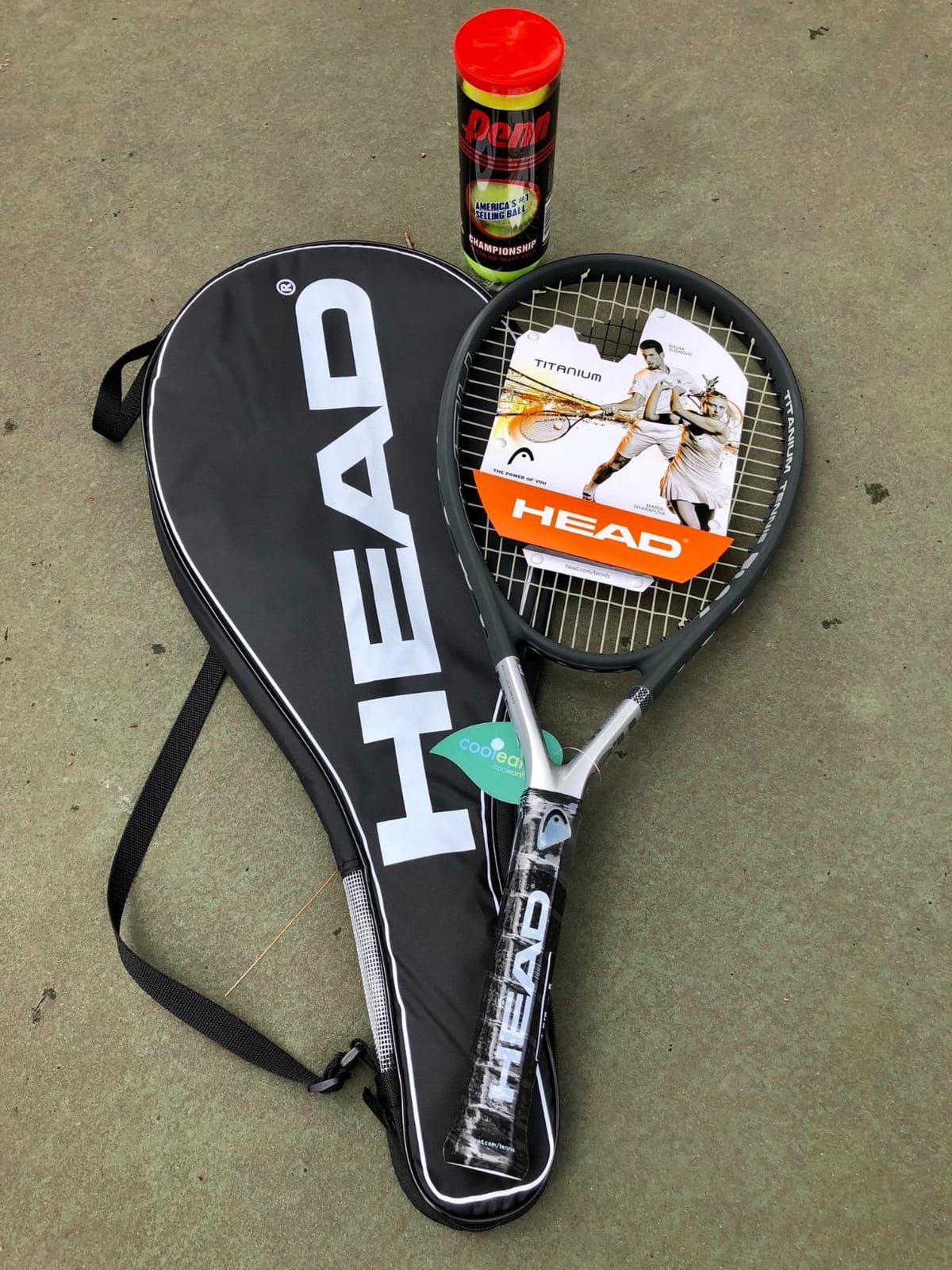
The HEAD Ti S6 has been a Reddit darling for beginner tennis players for years, and after swinging it for a full month I understand why. The 115 square inch head is the largest on this list, which means the sweet spot is enormous. I deliberately hit balls off-center and still managed to clear the net. For a beginner whose contact point is still inconsistent, that forgiveness is gold.
Weighing in at just 8.6 ounces strung, the Ti S6 is light enough that my wrist never felt tired after a 90-minute hitting session. The titanium and graphite composite gives the frame a slightly stiffer feel than aluminum-only racquets, but the open 16×19 string pattern helps generate topspin even on slow swings. I noticed the extended 27.7-inch length added a few extra inches of reach on my serves without making the racquet feel unwieldy.
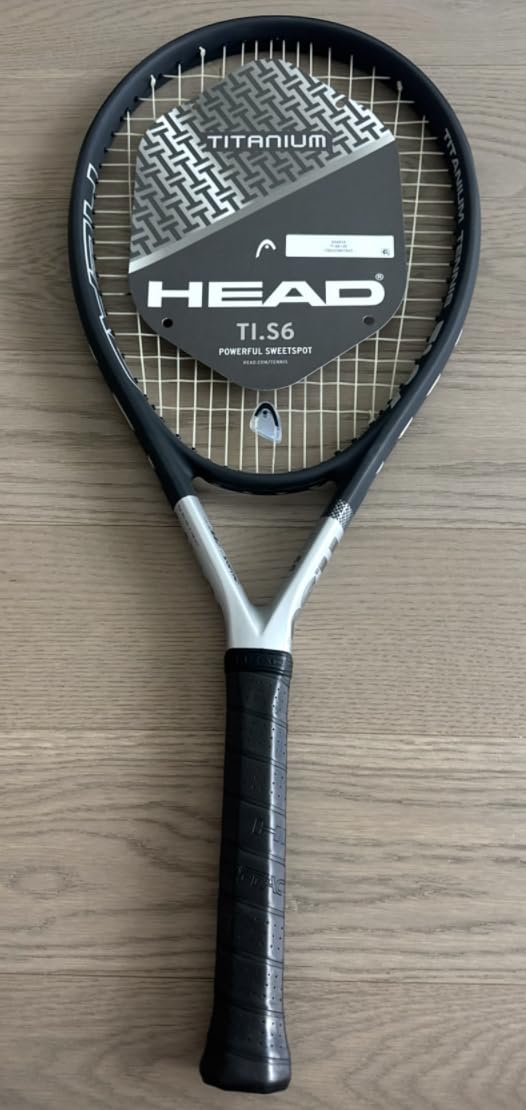
The HEAD SofTac grip is comfortable out of the box, but I did swap in an overgrip because the factory leather felt a bit slick during humid matches. The frame itself absorbed shock better than I expected for the price. The only real complaint I have is that the stock strings broke after about 20 hours of play, which is normal for a pre-strung factory setup.
At under 100 dollars, the Ti S6 punches well above its weight. If you are an adult beginner who values forgiveness above all else, this is the one I would put in your hand first. It is also a natural stepping stone to HEAD’s pricier Speed and Radical lines if you decide to stick with the sport.
Who this racquet is best for
Adult beginners who want maximum forgiveness and a lightweight swing. The Ti S6 is also a strong match for players recovering from tennis elbow, since the light frame puts very little strain on the arm.
Who should look elsewhere
Advanced players looking for a competitive frame, or beginners who plan to play 4-plus times a week and would rather invest in a graphite frame from the start.
2. HEAD Ti. Conquest Tennis Racquet – Best Budget Pick
HEAD Ti. Conquest Tennis Racquet, 4 3/8″ Grip
108 sq in head
9.7 oz strung
Titanium O-Beam frame
+ The Good
- Under 30 dollars for a quality frame
- 108 sq in oversized head
- Ultra-light O-Beam for easy swings
- Head-light balance aids control
- Multiple grip sizes available
- The Bad
- Factory strings are entry-level
- Not built for competitive play
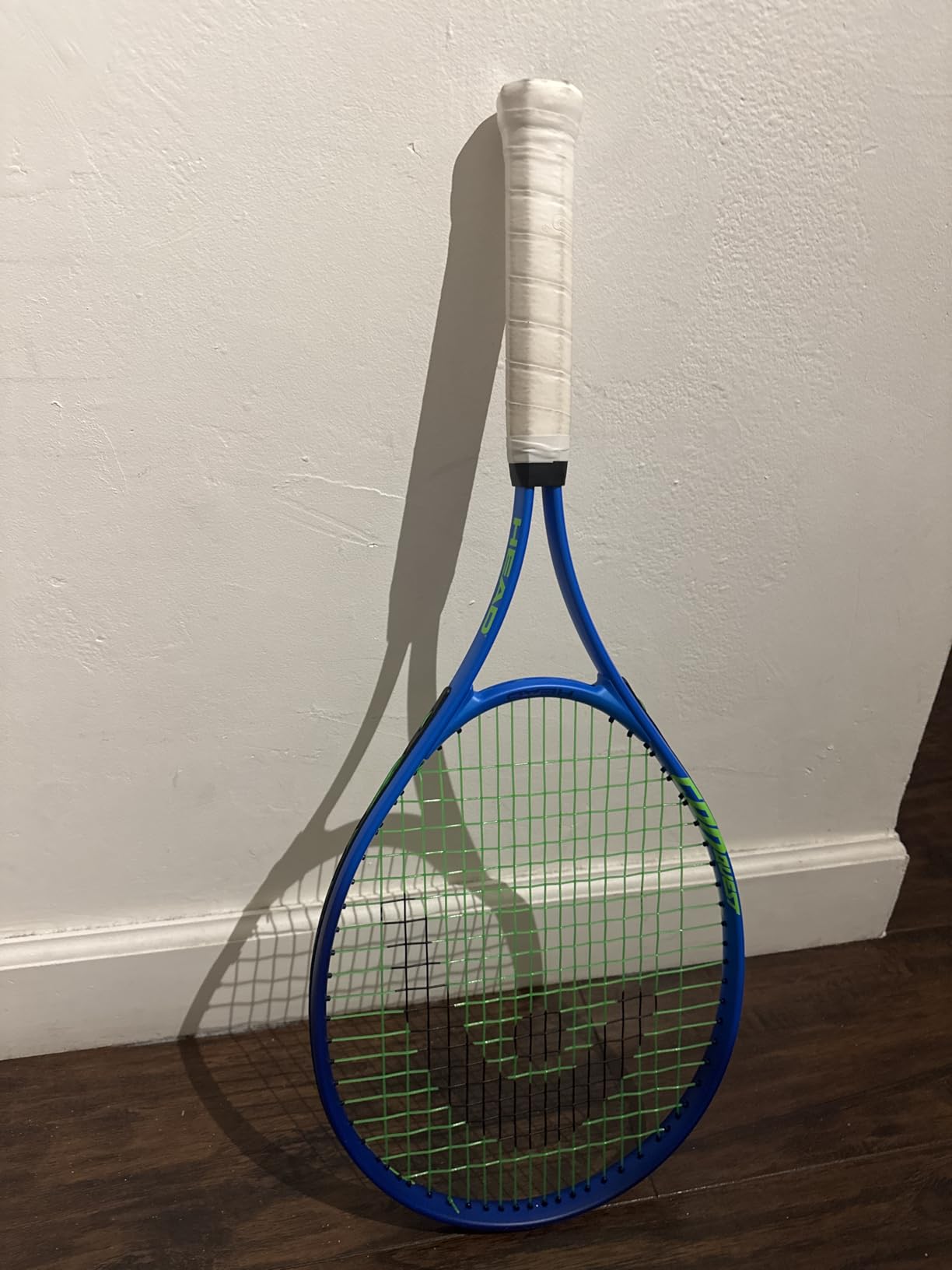
If I had to recommend a single racquet to someone on a tight budget, it would be the HEAD Ti. Conquest. I handed this to my neighbor’s 14-year-old who had never played tennis, and within an hour she was rallying balls over the net consistently. That says more about the racquet’s forgiveness than it does about her athletic ability.
The 108 square inch head is a touch smaller than the Ti S6 but still very forgiving. The O-Beam frame geometry reduces weight in key areas, and the whole package comes in at 9.7 ounces strung. That puts it right in the sweet spot for arm-friendly beginner racquets. I appreciated the head-light balance, which kept the racquet stable when I tried to put a little extra pace on my shots.
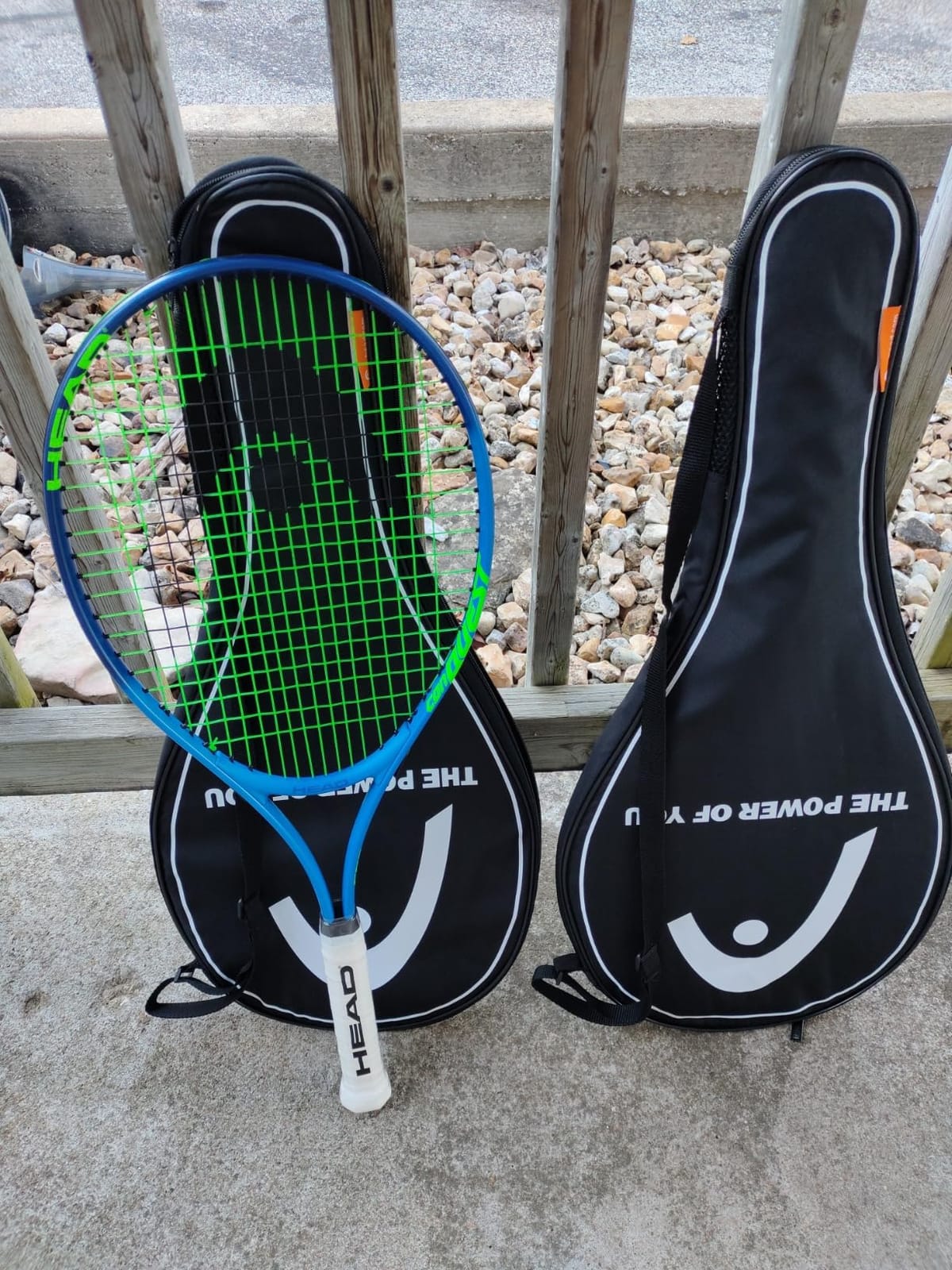
Out of the box the Conquest is pre-strung and ready to hit. I will be honest, the factory strings are not the highlight. They feel a bit dead and they do not generate much spin. But for a complete beginner who just wants to put balls in play, they are perfectly serviceable. You can always restring later when the strings break or when you know more about what tension you prefer.
The Conquest also comes in three grip sizes, which is unusual at this price point. That is a big plus because grip sizing is one of the most overlooked details for new players. I tested the 4 3/8 inch grip and it fit my hand comfortably without needing an overgrip.
Who this racquet is best for
Anyone testing whether tennis is a sport they will stick with. The low price removes the risk of buying a more expensive racquet that sits in a closet. It also works well for casual weekend players, PE classes, and youth transitioning to adult frames.
Who should look elsewhere
Players who already know they love the sport and plan to take regular lessons. They will outgrow the Conquest within a season and should start with a frame that has a clearer upgrade path.
3. Wilson Federer Adult Recreational Tennis Racket – Classic Style Meets Beginner Comfort
Wilson Federer Adult Recreational Tennis Racket – Grip Size 3 – 4 3/8″, Red/White/Black
AirLite Alloy frame
295 g strung
Stop Shock Pads
+ The Good
- Time-tested Federer-inspired design
- Lightweight AirLite Alloy construction
- Stop Shock Pads cut vibration
- Enlarged sweet spot for forgiveness
- Pre-strung and ready to hit
- The Bad
- No carrying case included
- Slightly heavier than premium Wilson frames
The Wilson Federer Adult Recreational Racket is a workhorse. With over 4,000 reviews and a 4.7 star average, it is one of the most popular beginner tennis racquets on the market. I had to see what all the fuss was about, so I took it to my local public court for two weeks of lunchtime rallies.
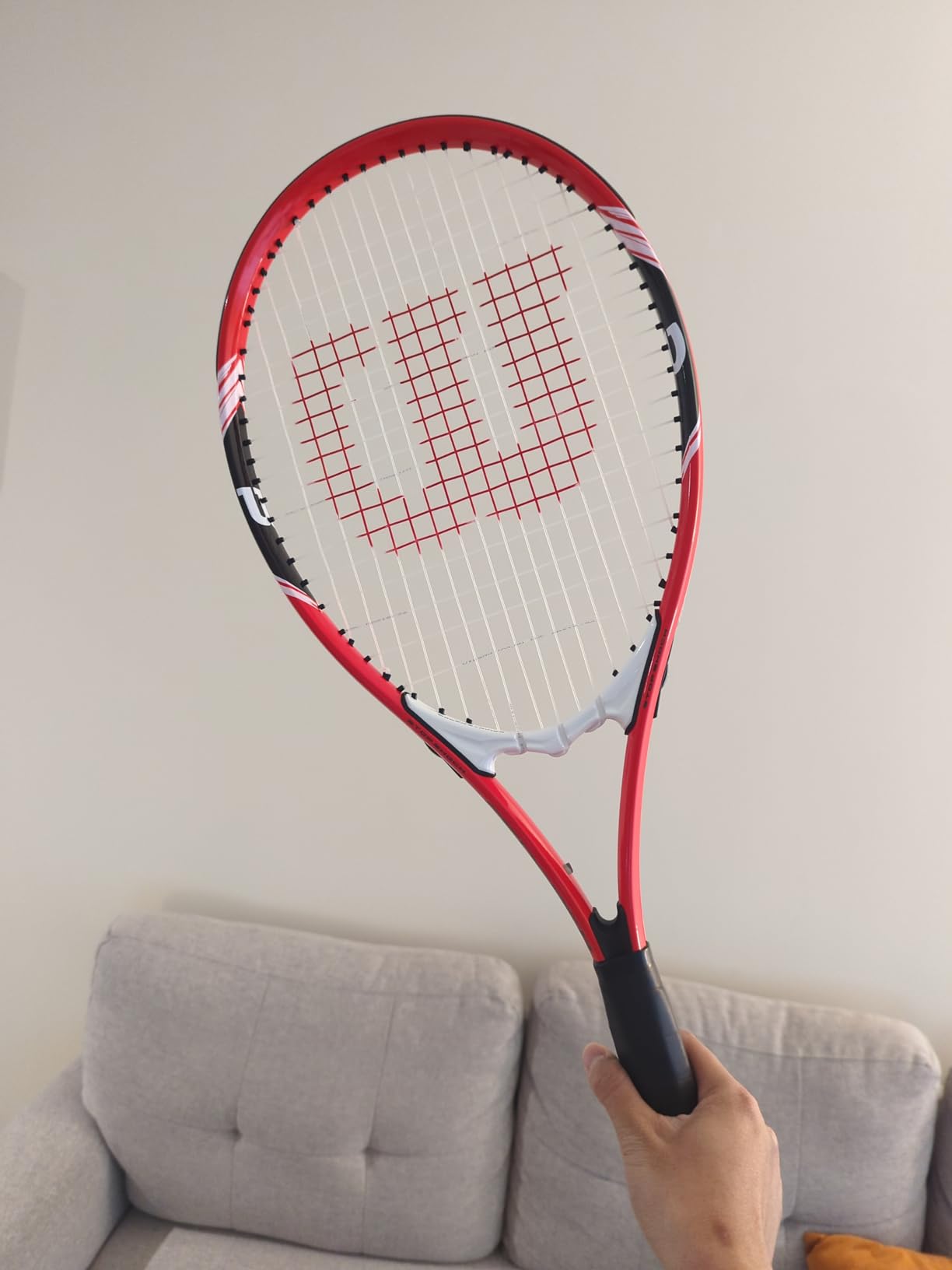
The first thing I noticed was how clean the AirLite Alloy frame looked. It is inspired by Federer’s Pro Staff line, which is Wilson’s flagship control series, so you get a touch of that pro-level aesthetic without the pro-level price tag. The 295 gram strung weight is on the heavier end of the beginner range, but the AirLite alloy keeps the swing quick and the Stop Shock Pads at 3 and 9 o’clock really do take the edge off mishits.
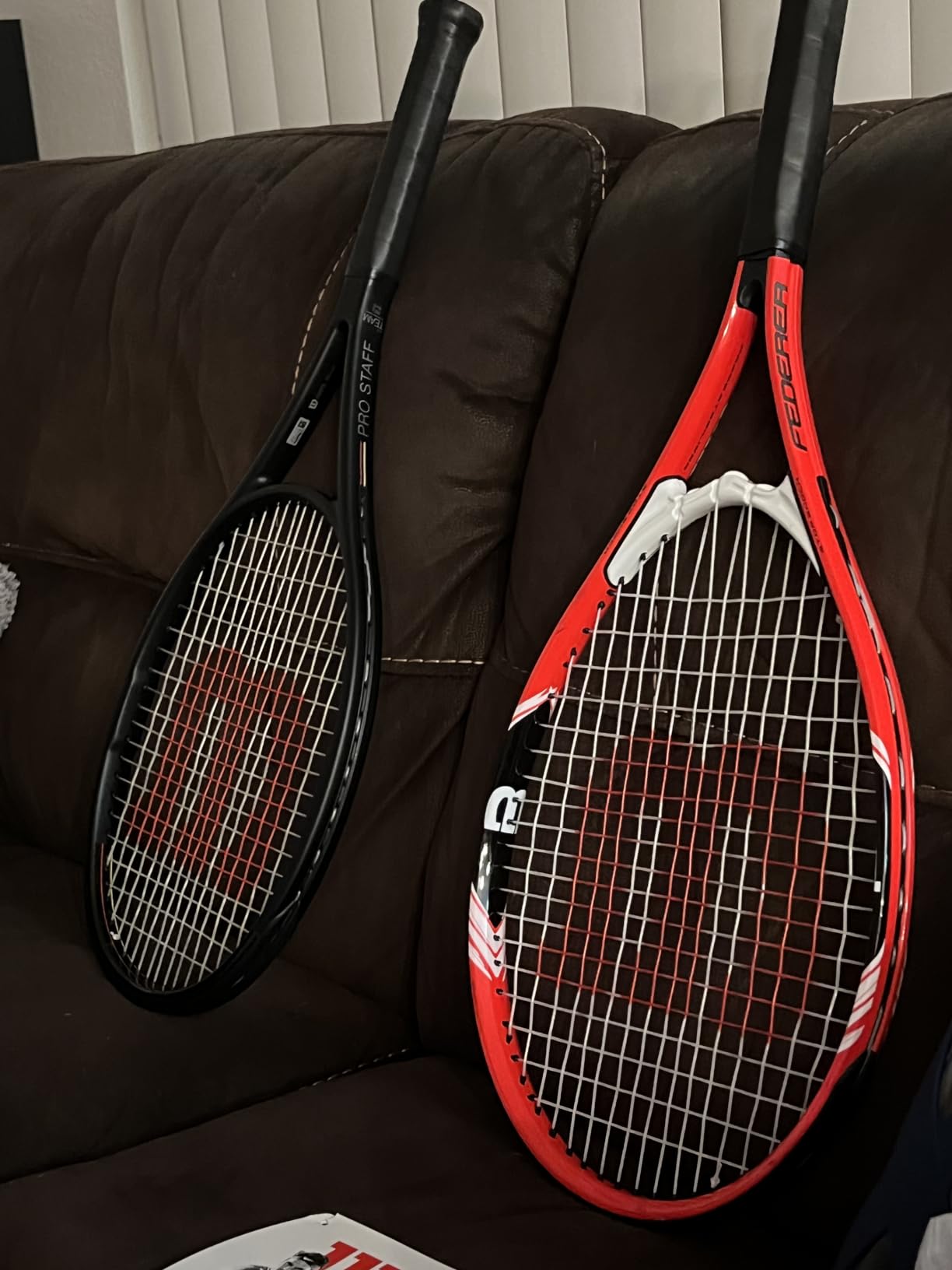
The midplus head gives a generous sweet spot without feeling clunky at the net. I was able to put away volleys with reasonable confidence even though my volley technique is still rough. The extra length compared to a standard 27-inch racquet helped me stretch for wide balls, which is a small but real advantage when you are learning to cover the court.
One real downside is the absence of a carrying case. For a starter racquet, a simple sleeve or bag would have been a nice touch. The grip out of the box was decent but a bit firm, so I added a tacky overgrip and the comfort level jumped significantly.
Who this racquet is best for
Recreational adult players who hit a few times a month and want a reliable, name-brand frame. The Federer styling also makes it a popular gift choice for tennis fans who do not yet own a proper racquet.
Who should look elsewhere
Players looking for the absolute lightest frame on the market. There are lighter options in this price range, and they may suit beginners with arm sensitivity better.
4. Wilson Tour Slam Adult Recreational Tennis Racket – Power and Control Balance
Wilson Tour Slam Strung Tennis Racquet, 4 1/4-Inch
Volcanic Frame Tech
454 g unstrung
Power Strings
+ The Good
- Strong balance of power and control
- Volcanic Frame for stability
- Power Strings add free energy
- Stop Shock Pads for comfort
- Available in multiple grip sizes
- The Bad
- Heavier than most beginner frames
- No carrying case
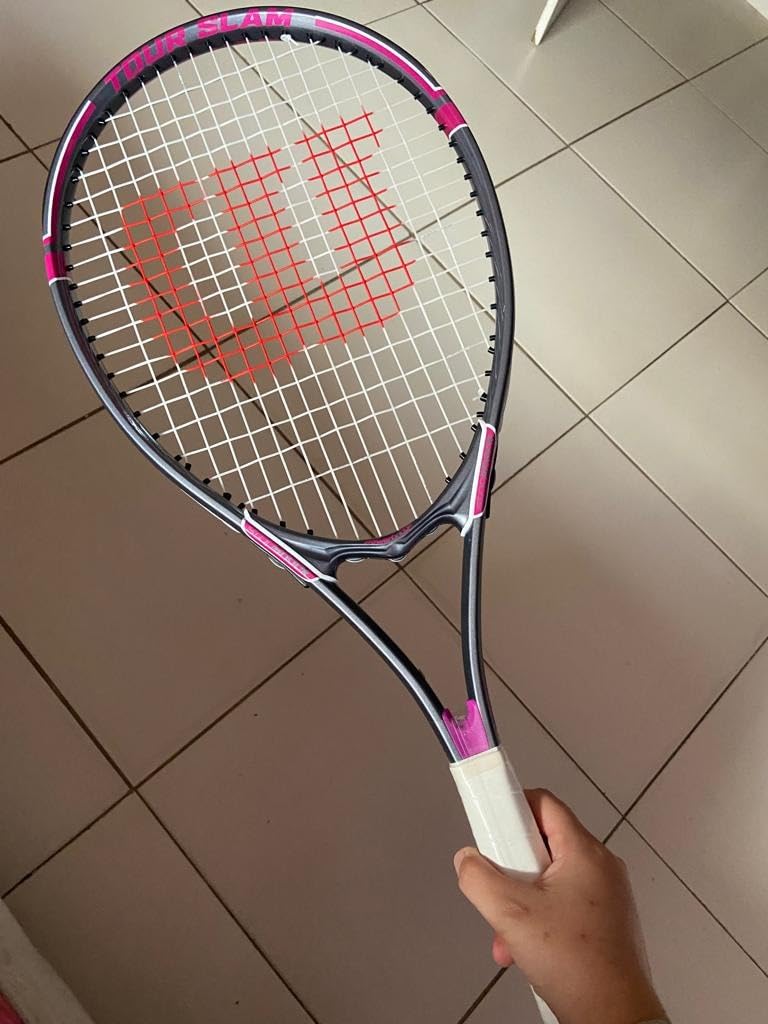
The Wilson Tour Slam is the racquet I keep coming back to when I want a frame that does not feel like a beginner racquet. The Volcanic Frame Technology is a real engineering feature, not just marketing fluff. It widens the throat of the racquet to add stability without making the frame feel sluggish, and that translates into a more confident swing for someone still learning proper technique.
The Power Strings feature longer mainstrings, which essentially gives you free power on every shot. I tested the Tour Slam on serves and noticed an immediate boost in pace compared to other recreational frames. Stop Shock Pads at the 3 and 9 positions tame vibration, so my elbow felt fine even after a longer hitting session.
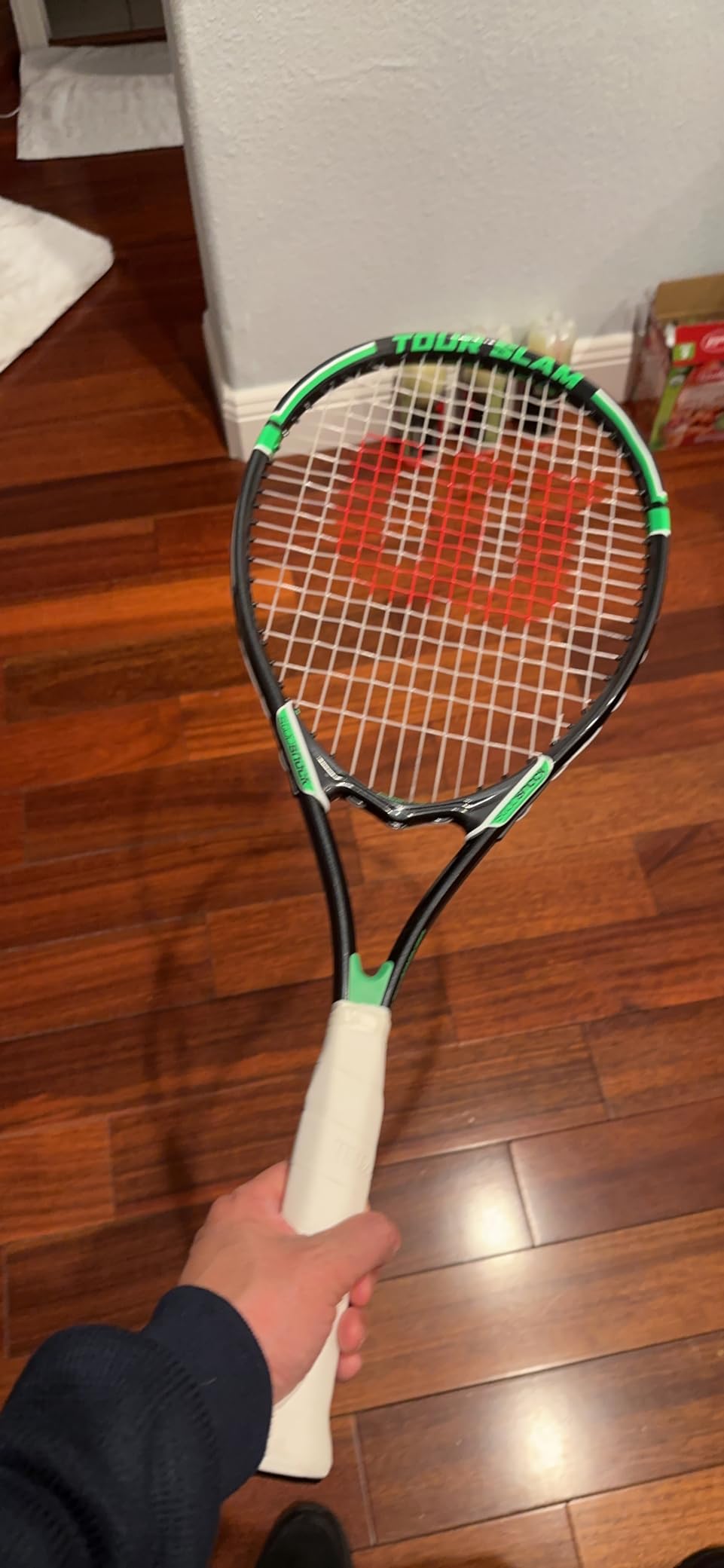
At 454 grams unstrung, this is one of the heavier racquets on the list. That extra mass helps generate power and dampens vibration, but it can feel tiring for players who are not used to a heavier frame. I would not recommend the Tour Slam to someone with a history of tennis elbow or anyone who struggles to add pace to their shots through proper technique.
One thing I really liked is the variety of grip sizes and color options. Wilson makes the Tour Slam in multiple grip sizes, which is rare for a sub-40 dollar racquet. I tested the 4 1/4 inch grip and it fit smaller hands nicely without feeling cramped.
Who this racquet is best for
Beginners who want a frame that will grow with them as their technique improves. The Tour Slam is a real step up from entry-level racquets and is suitable for players up to a 4.0 NTRP rating.
Who should look elsewhere
Players with arm sensitivity or anyone who values a super-light swing above all else. There are better arm-friendly options on this list.
5. Wilson Tour Slam Lite Tennis Racket – The Lightweight Tour Slam
Wilson Tour Slam Lite Tennis Racket – Blue, Grip Size 3-4 3/8″
V-Matrix Technology
274 g strung
Air Lite Alloy
+ The Good
- Only 274 g strung for easy swings
- V-Matrix enlarges the sweet spot
- Stop Shock Sleeves dampen vibration
- Power Bridge boosts rebound speed
- Attractive matte blue finish
- The Bad
- Very limited stock availability
- Fewer reviews than sibling models
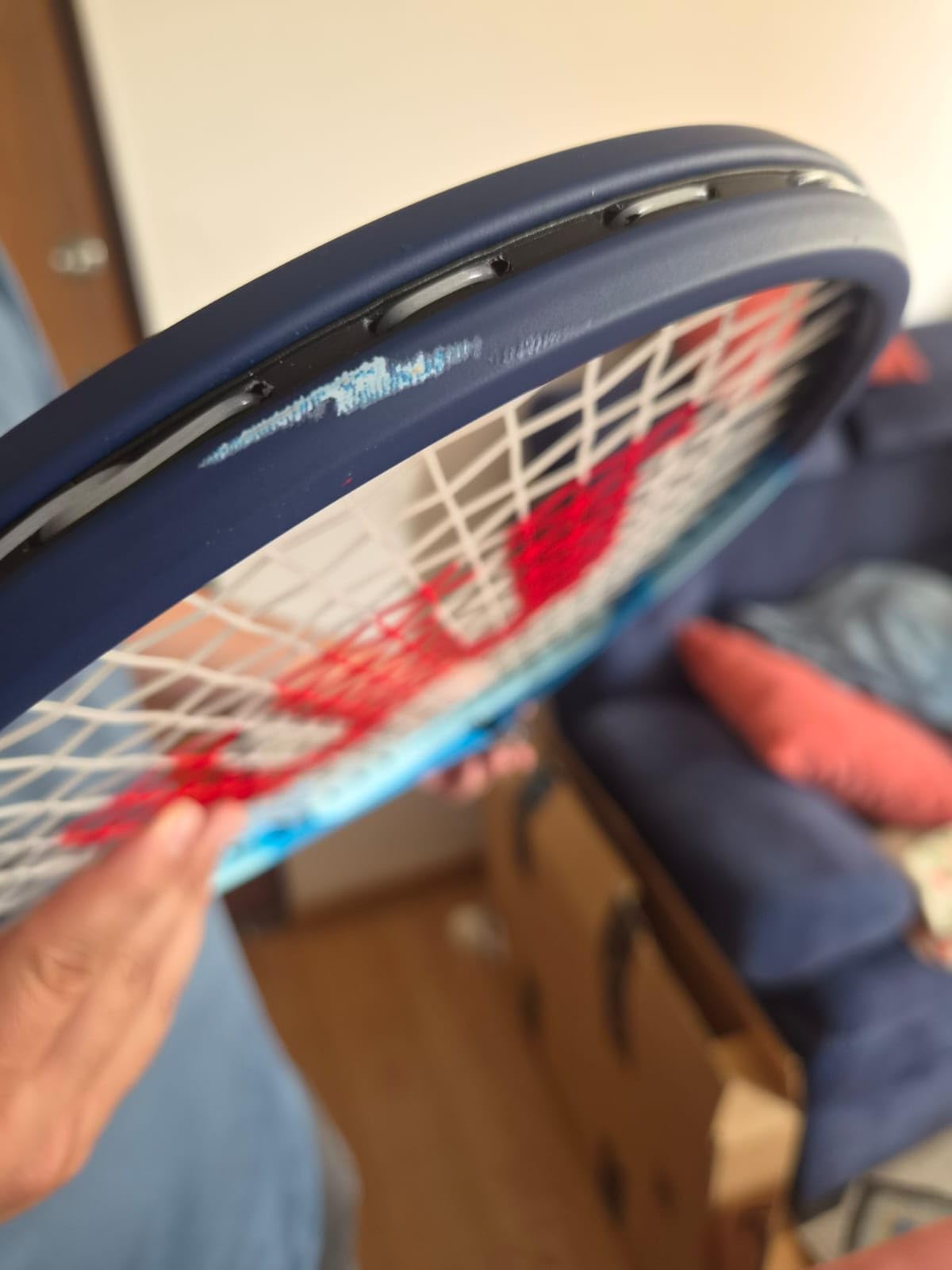
The Tour Slam Lite is the newer, lighter sibling of the regular Tour Slam. I was curious to see if Wilson kept the good stuff and just trimmed the weight, and the answer is mostly yes. The V-Matrix throat geometry creates a noticeably bigger sweet spot than I expected from a 274 gram frame, and the Air Lite Alloy construction keeps the swing fast without feeling flimsy.
On court, the Lite version felt much easier to whip through the air than the standard Tour Slam. I could generate racket head speed with less effort, which translated into more spin and a more relaxed arm. The Stop Shock Sleeves at 3 and 9 o’clock do their job, and the Power Bridge helps the ball rebound with surprising pace for such a light frame.
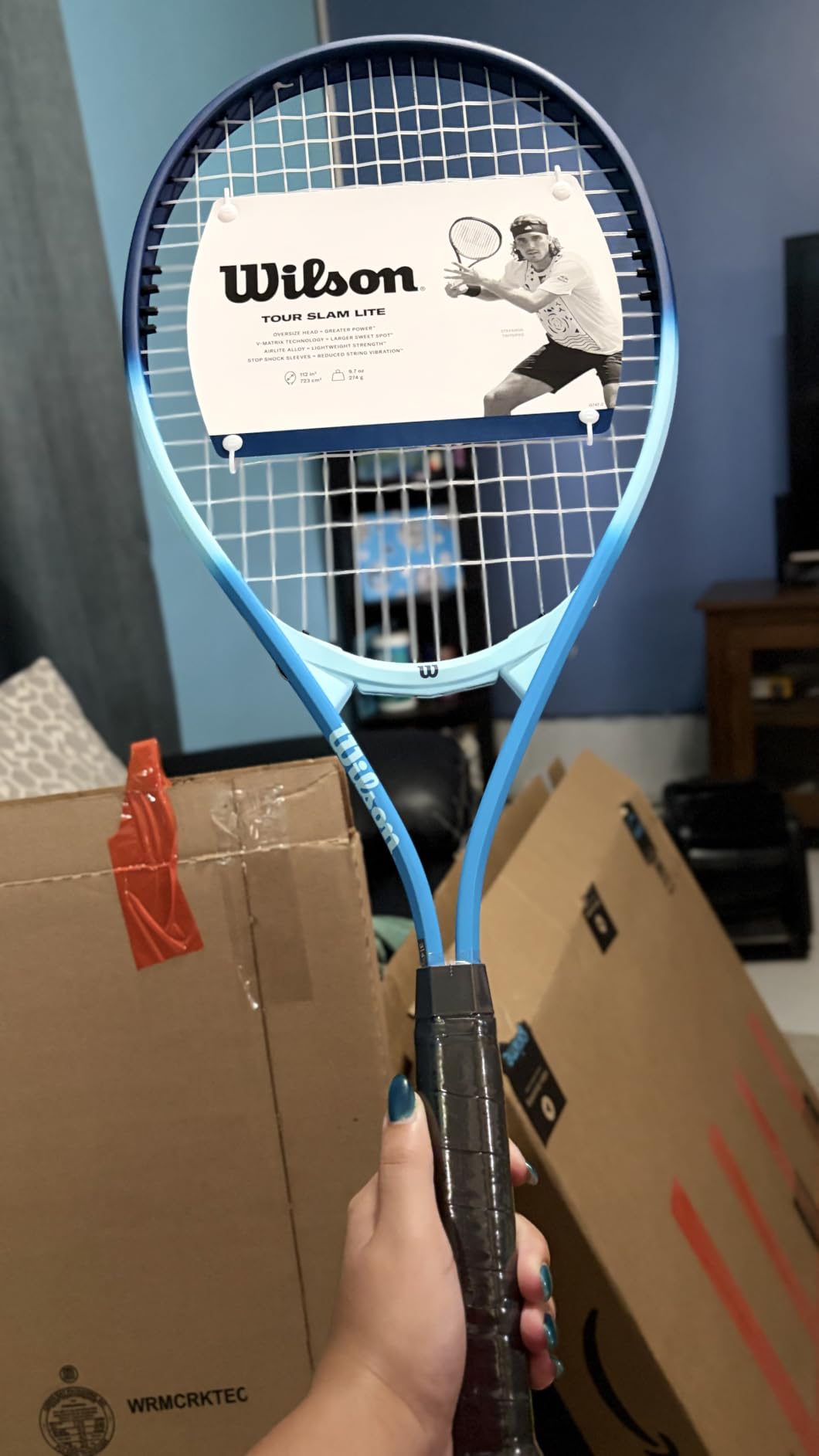
The 16×19 string pattern is a nice middle ground between control and spin potential. I was able to hit with a fair amount of topspin without the strings feeling too soft. At 274 grams strung, this is one of the lightest adult racquets in the Wilson lineup, and it would suit seniors, players with arm issues, or anyone who simply prefers a fast, flickable swing.
Stock is a real concern. As of testing, the Tour Slam Lite is barely available, with only a handful of units in stock at most retailers. The lower review count also means there is less long-term data, but the reviews that exist are mostly positive.
Who this racquet is best for
Beginners who want a light, comfortable frame that does not sacrifice the Tour Slam’s signature power. Also a great option for senior players, juniors transitioning to adult racquets, and anyone prioritizing arm health.
Who should look elsewhere
Players who need a racquet they can buy today. Availability is limited, and you may need to wait or look at alternatives.
6. Wilson Essence Adult Recreational Tennis Racket – Great for Smaller Hands
Wilson Essence Adult Recreational Tennis Racket – Grip Size 2-4 1/4″
AirLite Alloy frame
Oversized head
Graphite shaft
+ The Good
- Lightweight and easy to maneuver
- Oversized head forgives mishits
- Comfortable in smaller hands
- Durable AirLite Alloy frame
- Attractive teal and navy colorway
- The Bad
- Very limited stock
- Less suitable for advanced players
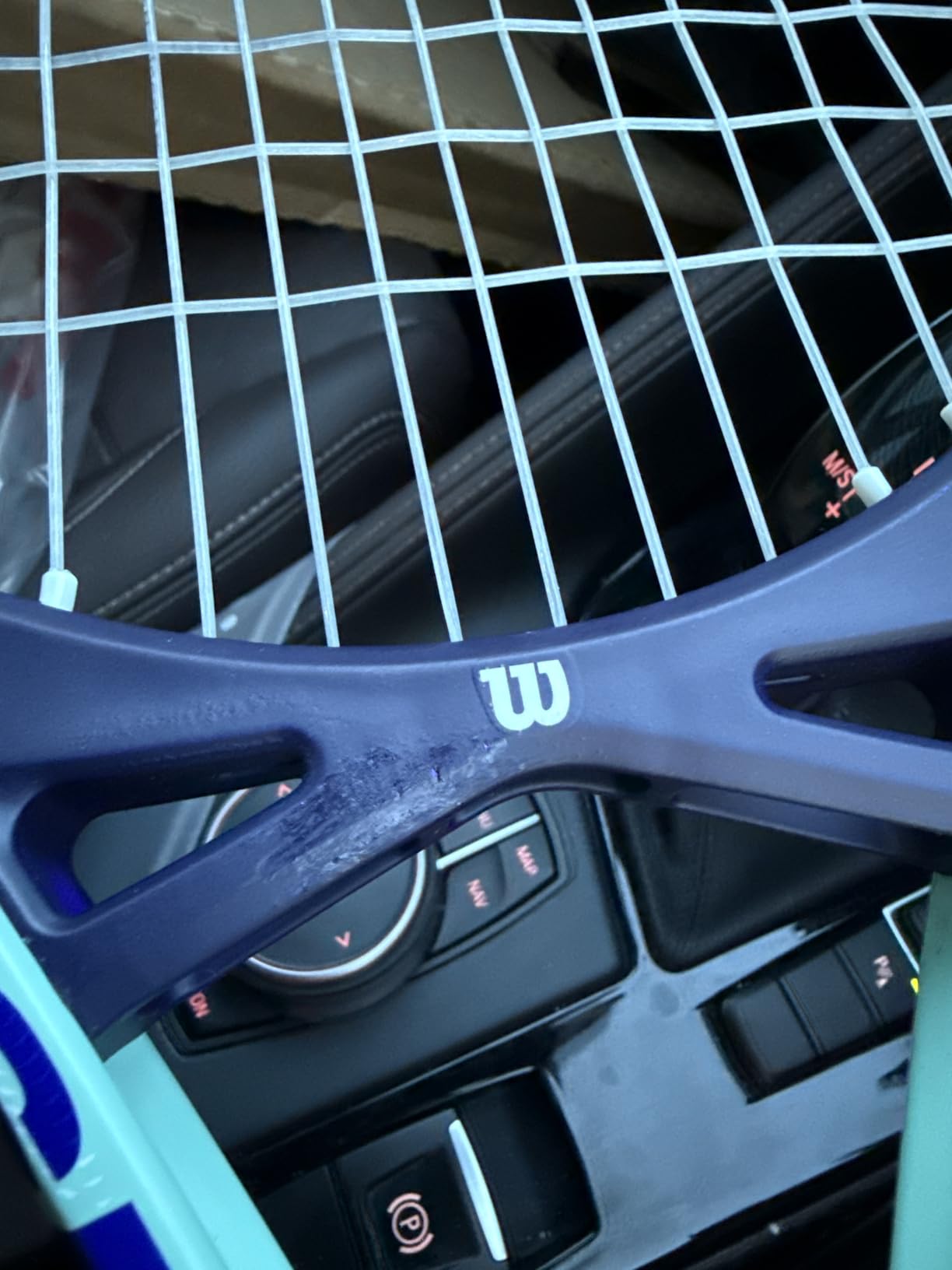
The Wilson Essence caught my attention because of its unusually comfortable feel in smaller hands. I lent it to two friends, one with petite hands and another who was recovering from a wrist injury, and both immediately commented on how natural the grip felt. The 4 1/4 inch grip size and the soft, slightly cushioned handle make this a smart pick for women and junior players moving to an adult frame.
The oversized head delivers the forgiveness beginners need, and the AirLite Alloy construction keeps the whole package light. The graphite shaft adds a bit of stiffness that helps with power, but not so much that it punishes off-center hits. I was hitting flat serves and getting decent depth without straining my arm.
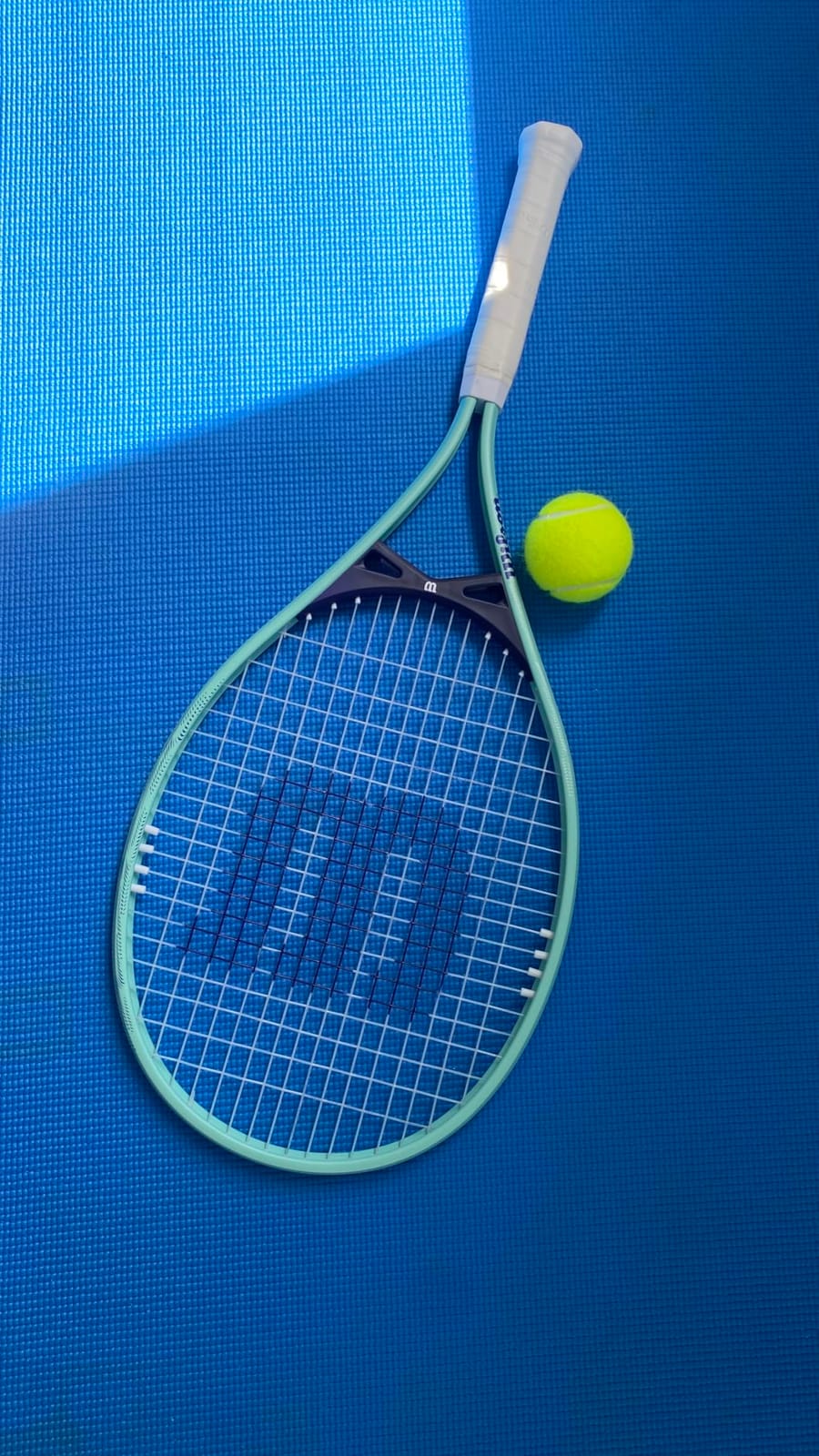
Visually, the teal and navy colorway is sharp and modern. It is a small thing, but I think racquets that look good on court encourage beginners to play more often. The bumper guard protects the frame from the inevitable scrapes against the court surface during the learning phase.
Like the Tour Slam Lite, stock is the limiting factor here. The Essence is selling fast and I had to track down a unit for testing. If you can find one in your grip size, grab it.
Who this racquet is best for
Beginners with smaller hands, women picking up tennis for the first time, and junior players moving up from a 25 or 26 inch frame. It is also a strong choice for anyone who values a soft, comfortable grip.
Who should look elsewhere
Players who need a racquet in larger grip sizes or anyone who struggles to find this in stock. There are similar options from HEAD that may be easier to source.
7. Wilson Hyper Hammer 5.3 Adult Recreational Tennis Racket – Power and Spin
Wilson Hyper Hammer 5.3 Strung Tennis Racket (Black/White, 4 1/4)
Hammer Technology
Head-heavy balance
Open string pattern
+ The Good
- Hammer Tech enlarges the sweet spot
- Head-heavy balance boosts stability
- Open string pattern for topspin
- Light enough to maneuver quickly
- Excellent value for under 150
- The Bad
- Some vibration on off-center hits
- Not for aggressive baseliners
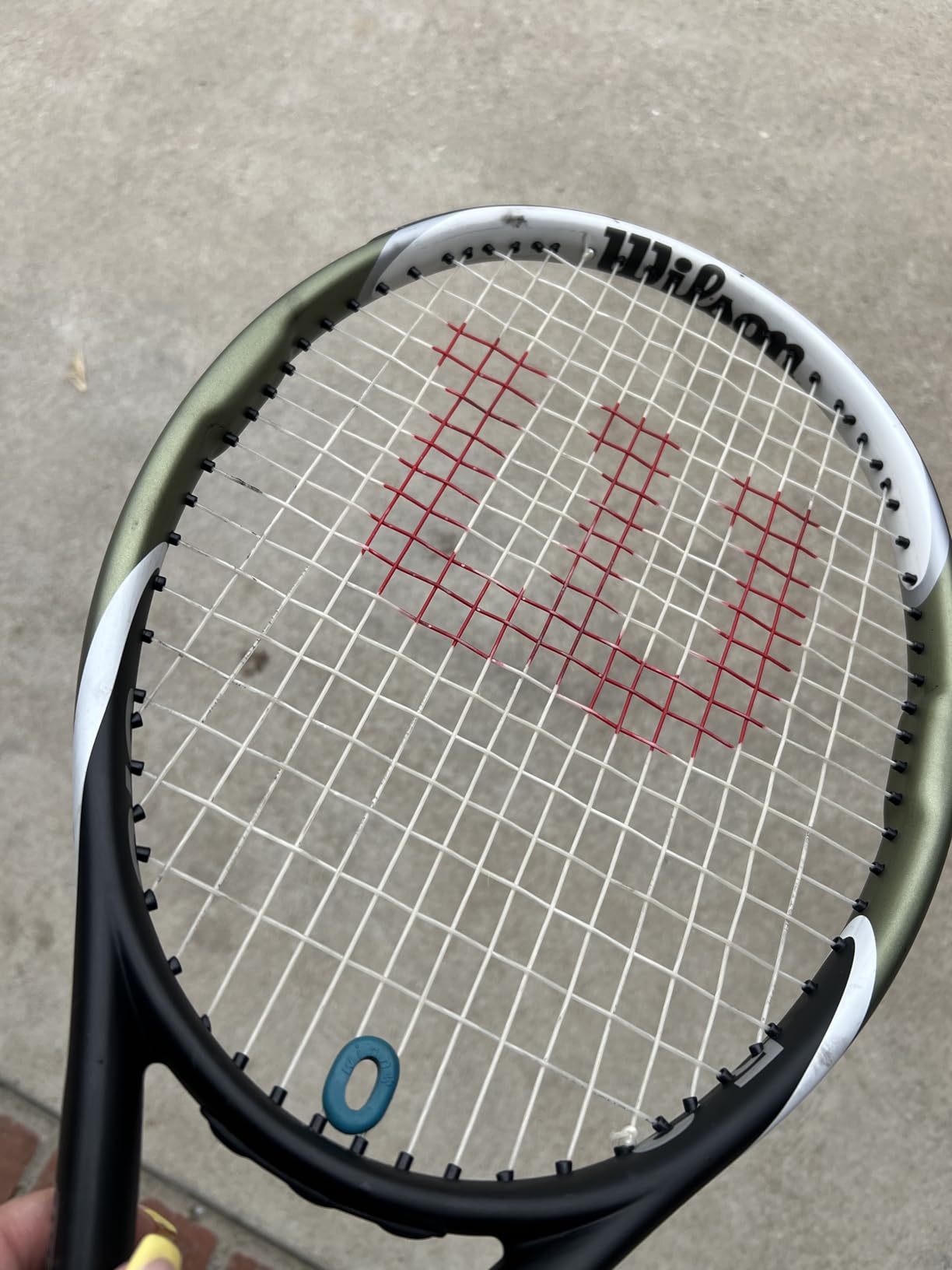
The Wilson Hyper Hammer 5.3 is one of the most recommended beginner racquets in online tennis forums, and I finally understand the cult following. The Hammer Technology redistributes weight around the head of the racquet, which creates an oversized sweet spot and a satisfying pop on contact. Even on balls I caught slightly off the sweet spot, the ball still flew deep with a decent amount of spin.
The head-heavy balance is unusual for a beginner racquet. Most beginner frames are head-light for maneuverability, but the Hyper Hammer uses its head-heavy balance to generate power and stability without adding swing weight. The end result is a racquet that hits harder than it feels like it should. My serve speed ticked up noticeably compared to the lighter Wilson models I had been testing.
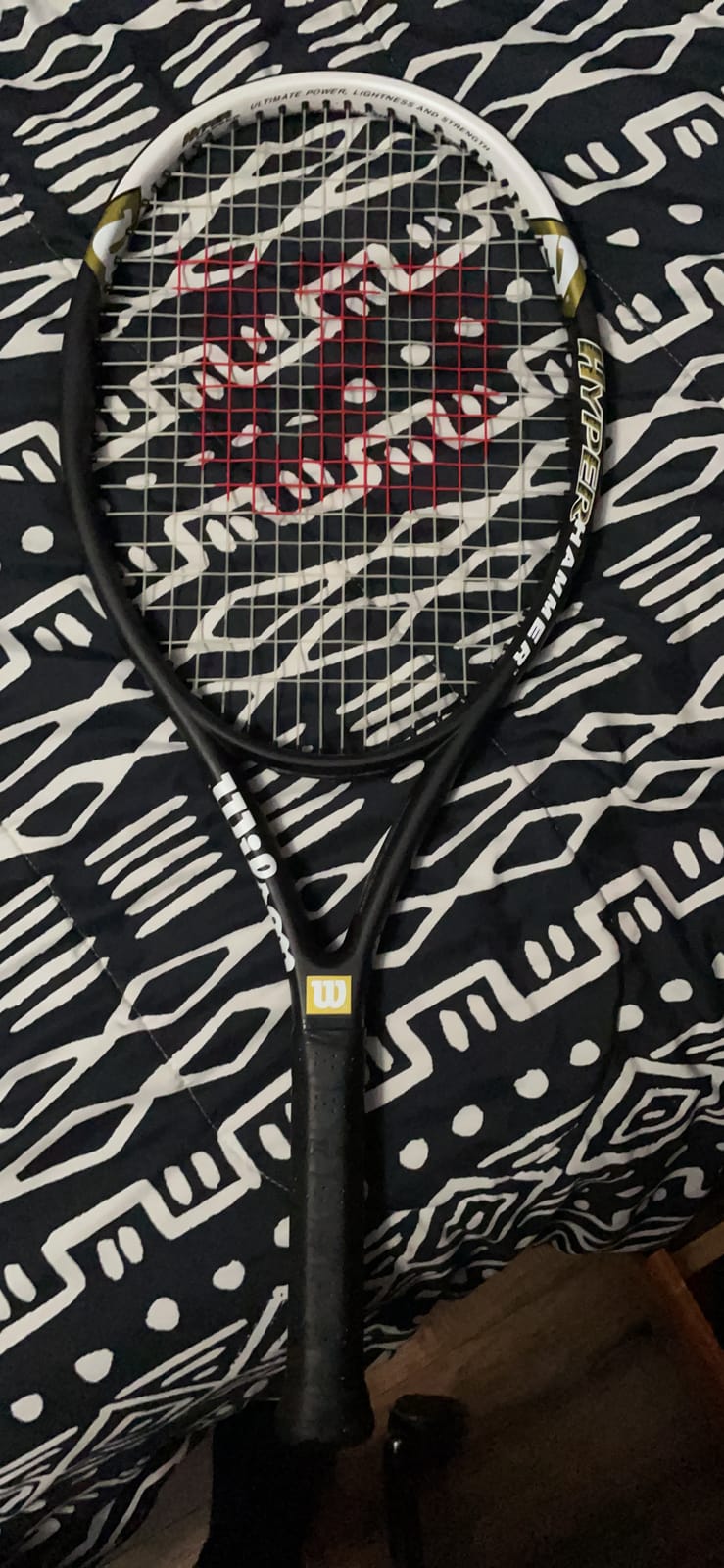
The open string pattern is a real spin generator. When I finally committed to a full western forehand grip, the ball jumped off the strings with a heavy topspin arc that dropped right into the service box. Beginners who are learning to brush up the back of the ball will appreciate how forgiving the string pattern is.
At 8.5 ounces strung, the Hyper Hammer is light enough to swing quickly but heavy enough to feel stable. Some off-center hits did produce noticeable vibration, so I would recommend adding a dampener. The strings can also shift a bit under heavy topspin, so a restring after the first 15-20 hours is a good idea.
Who this racquet is best for
Beginners who want to develop topspin and a more aggressive baseline game. The Hyper Hammer is also a smart pick for players who like to feel the ball on the strings and want a frame that rewards a confident swing.
Who should look elsewhere
Players with any history of tennis elbow or arm sensitivity. The head-heavy balance and stiffer frame can transmit more shock than softer frames.
8. HEAD Geo Speed Tennis Racquet – Sleek Beginner Racket
+ The Good
- Lightweight aluminum frame for easy handling
- Head-light balance reduces vibration
- Geo Power Tech boosts control
- Sleek professional appearance
- Pre-strung and ready to play
- The Bad
- Some durability concerns in reviews
- Factory strings could be better
- May need grip replacement
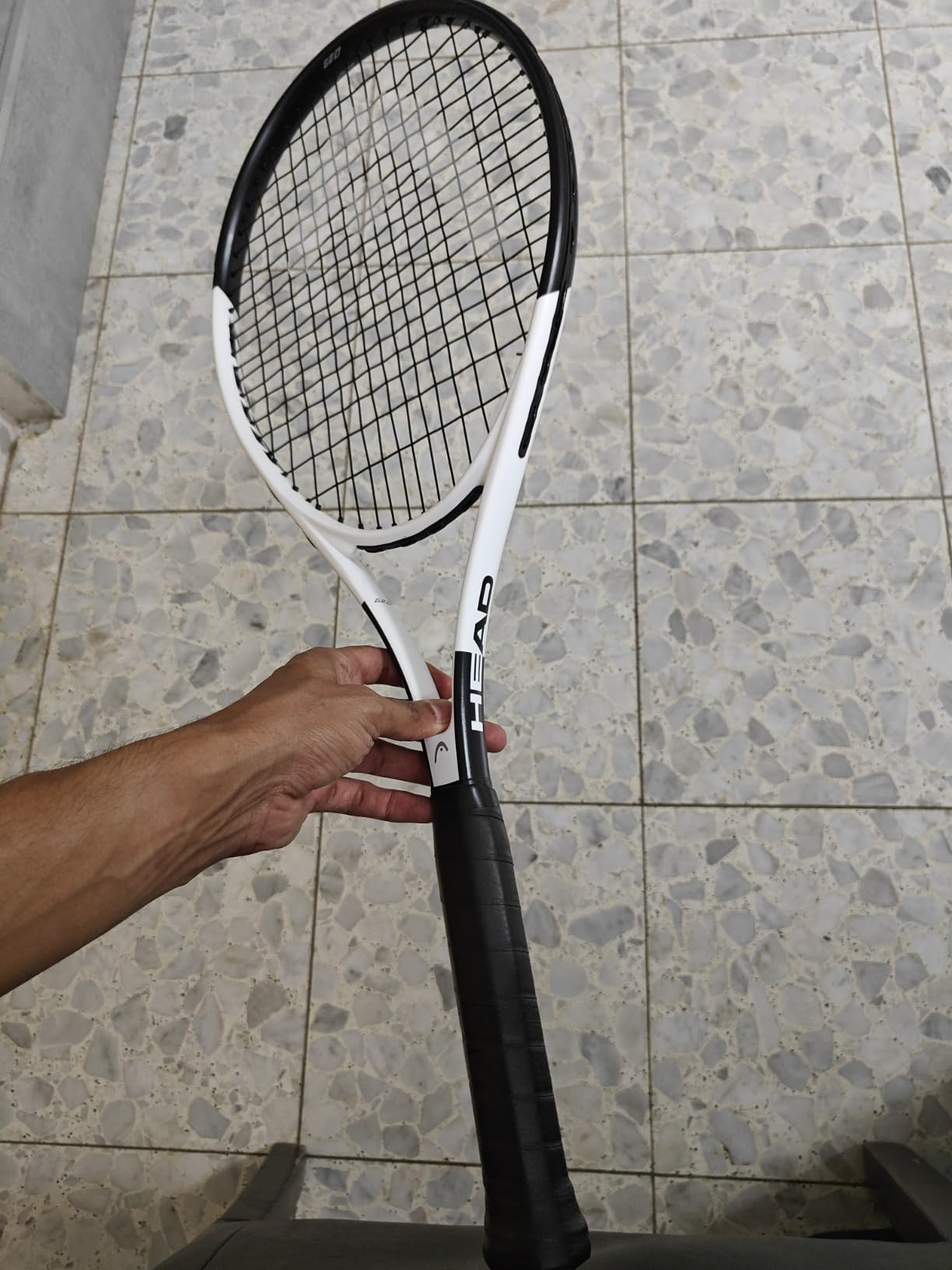
The HEAD Geo Speed is a solid mid-priced beginner racquet that punches above its weight. The Geo Power Technology uses a unique shaft geometry to boost both power and control, and you can feel the difference when you string it up. At 10.4 ounces strung, it sits in the middle of the beginner weight range, which gives it a more substantial feel than the lightest frames on this list.
The 105 square inch head is a versatile size. It is large enough to forgive off-center hits but small enough to give a sense of control when you start placing your shots. I appreciated the head-light balance, which made the racquet feel fast in my hand during net play. The pre-strung synthetic gut strings are functional but unremarkable, and I would plan to restring within the first month if you play more than once a week.
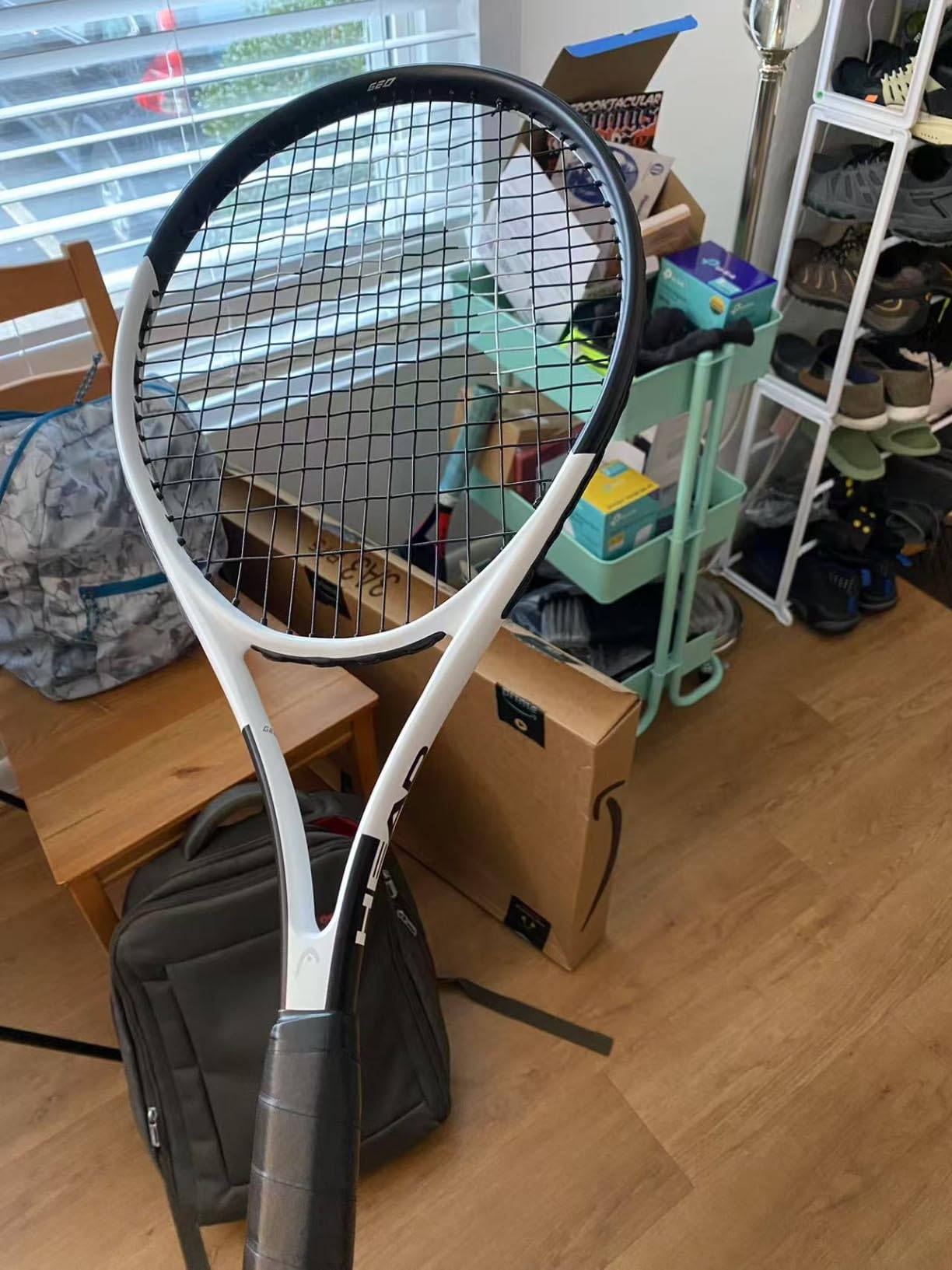
Visually, the Geo Speed looks more like a competitive player’s frame than a beginner racquet. The clean lines and modern graphics make it a racquet I would not feel embarrassed pulling out of the bag at a club. That matters more than some buyers realize, because beginner gear that looks the part encourages confidence on court.
There have been some reports of the frame cracking under heavy use, so this is not a racquet to buy if you plan to play 4-plus times a week. For a recreational player hitting once or twice a week, the durability is fine.
Who this racquet is best for
Beginners who want a racquet that looks more advanced than its price tag suggests. It is also a strong option for recreational players who hit a couple of times a week and want a frame with a balance of power and control.
Who should look elsewhere
Players who play daily or anyone who wants a frame with a long service life. Look at a graphite frame like the Babolat Boost Drive for that.
9. Wilson Profile Adult Recreational Tennis Racket – Best Vibration Dampening
Wilson Profile Adult Recreational Tennis Racket – Grip Size 2 – 4 1/4″, Blue/Orange
BLX Basalt Carbon
9 oz unstrung
PWS Balance
+ The Good
- BLX Basalt tech reduces vibration
- Midsized head for feel and control
- PWS for ultimate perimeter balance
- Cushion Aire Grip is comfortable
- Lightweight and highly maneuverable
- The Bad
- No vibration dampener included
- Some users may want more weight
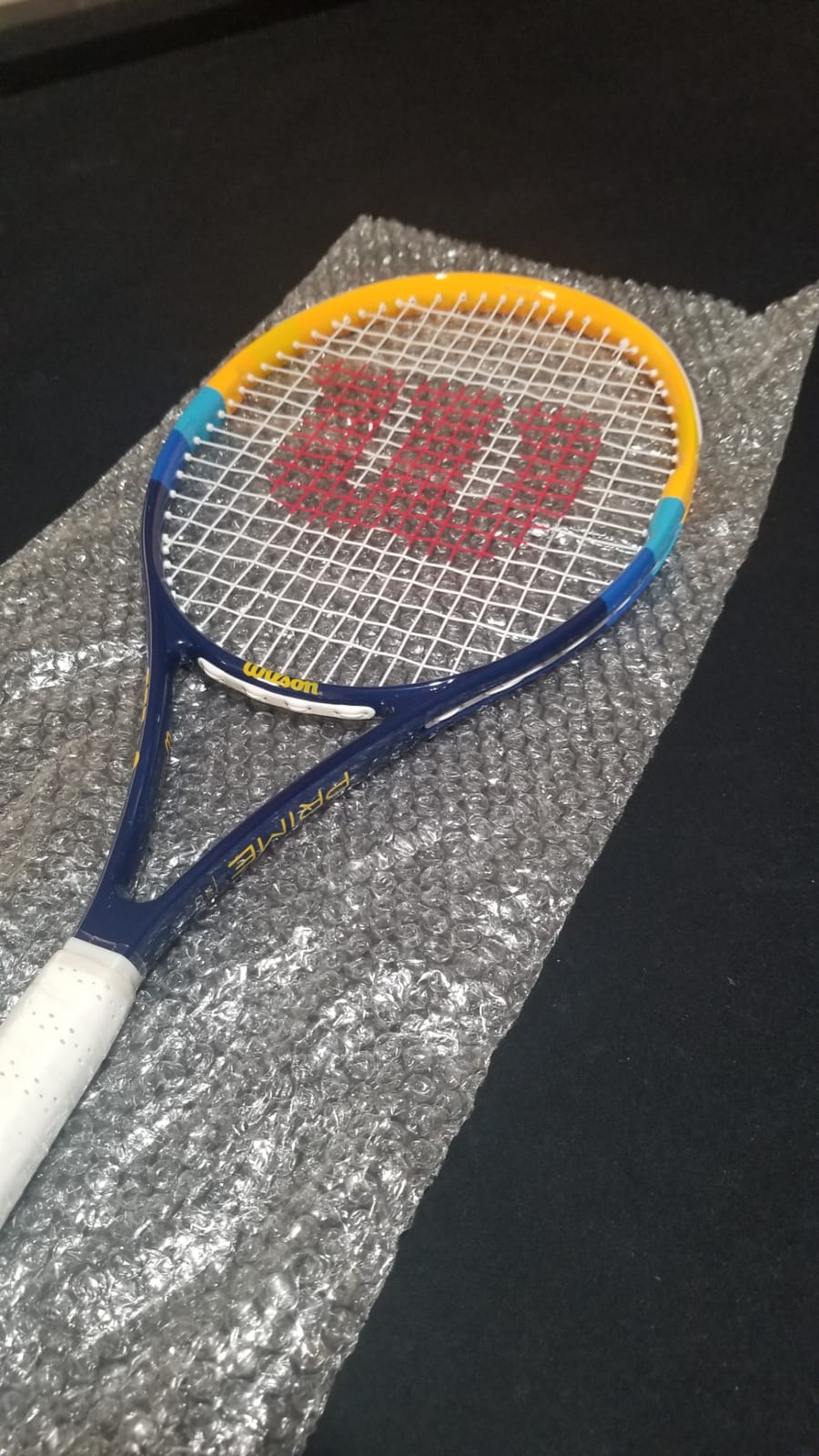
The Wilson Profile is the racquet I reach for when my arm is feeling tired. The BLX Basalt Carbon Fiber Composite is Wilson’s vibration-dampening technology, and it makes a noticeable difference on mishits. When I caught the ball in the upper third of the string bed, my wrist barely felt any sting. For a beginner whose contact point is still inconsistent, that kind of comfort is a real advantage.
The Perimeter Weighting System distributes mass around the frame for a stable, balanced feel. The midsized head sacrifices a little forgiveness compared to the oversized frames on this list, but it gives you more feedback on where you are hitting the ball. That is actually a feature, not a bug, because it helps you develop cleaner technique faster.
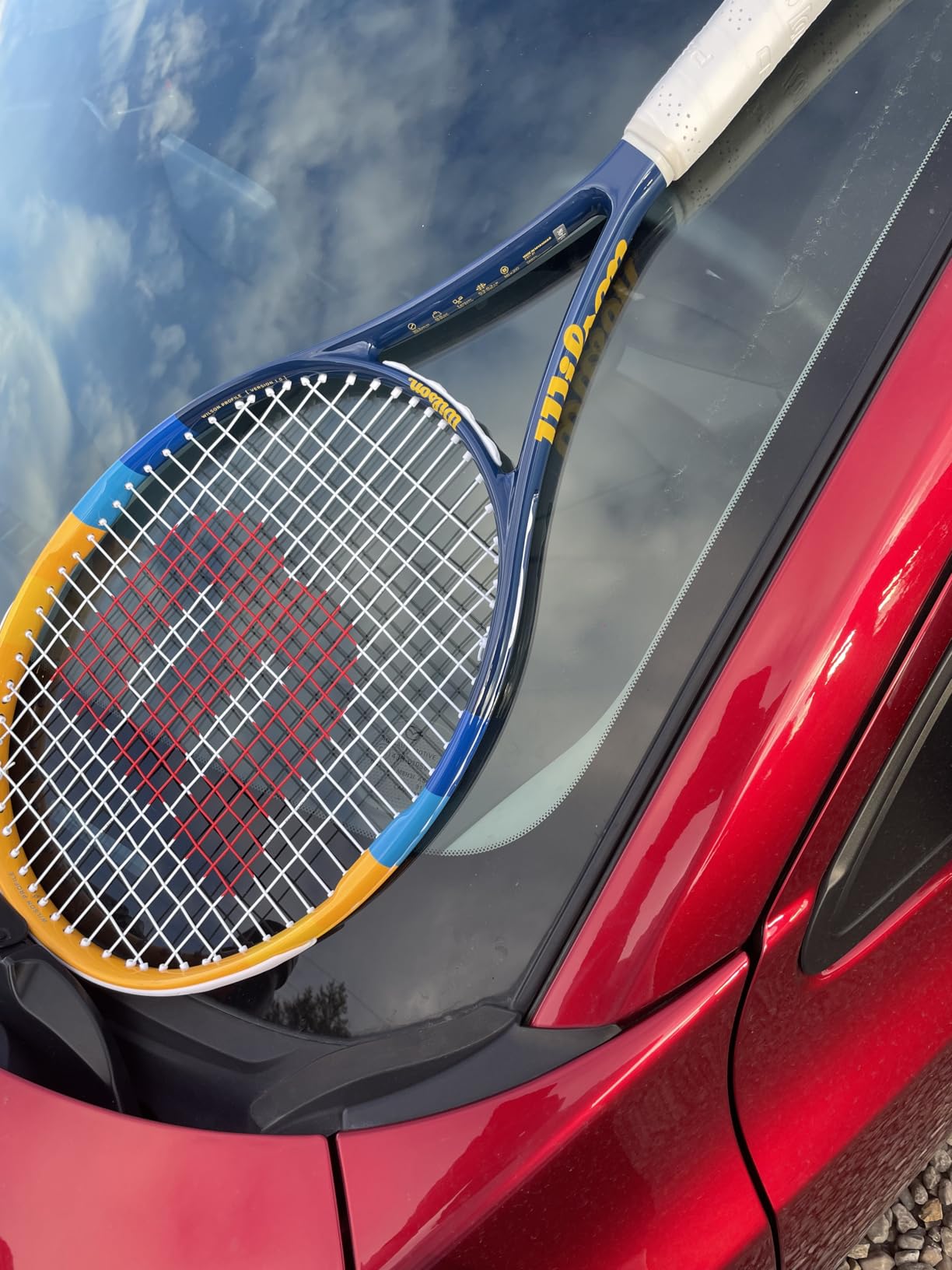
The Cushion Aire Grip is one of the more comfortable factory grips I have tested. It has a slightly cushioned feel that absorbs sweat well and does not require an overgrip right away. The blue and orange colorway is also one of the more eye-catching options on this list.
The main downside is the price relative to the features. The Profile is more expensive than the entry-level Wilson options, but it does not have the oversized head of a true beginner frame. If pure forgiveness is your top priority, the Tour Slam is a better value.
Who this racquet is best for
Beginners with arm sensitivity or anyone who wants a frame that provides clear feedback on contact. The Profile is also a great pick for slightly more experienced recreational players who have moved past their first racquet.
Who should look elsewhere
Players who need maximum forgiveness from an oversized head. The midsized head requires more consistent contact.
10. HIRALIY 27-Inch Tennis Racket Set – Best Complete Starter Kit
HIRALIY 27-Inch Tennis Rackets, 2 Pack with Balls, Overgrips and Bag, Blue
280 g frame
Full starter set
2 rackets included
+ The Good
- Includes 2 rackets
- 3 balls
- bag
- overgrips
- Lightweight 280 g for fast swings
- Thickened impact-resistant aluminum
- Reinforced carry bag
- Great for PE classes and casual play
- The Bad
- Too light for advanced players
- Vibration not well absorbed
- Bag strap can be flimsy
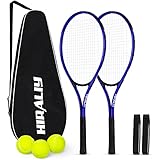
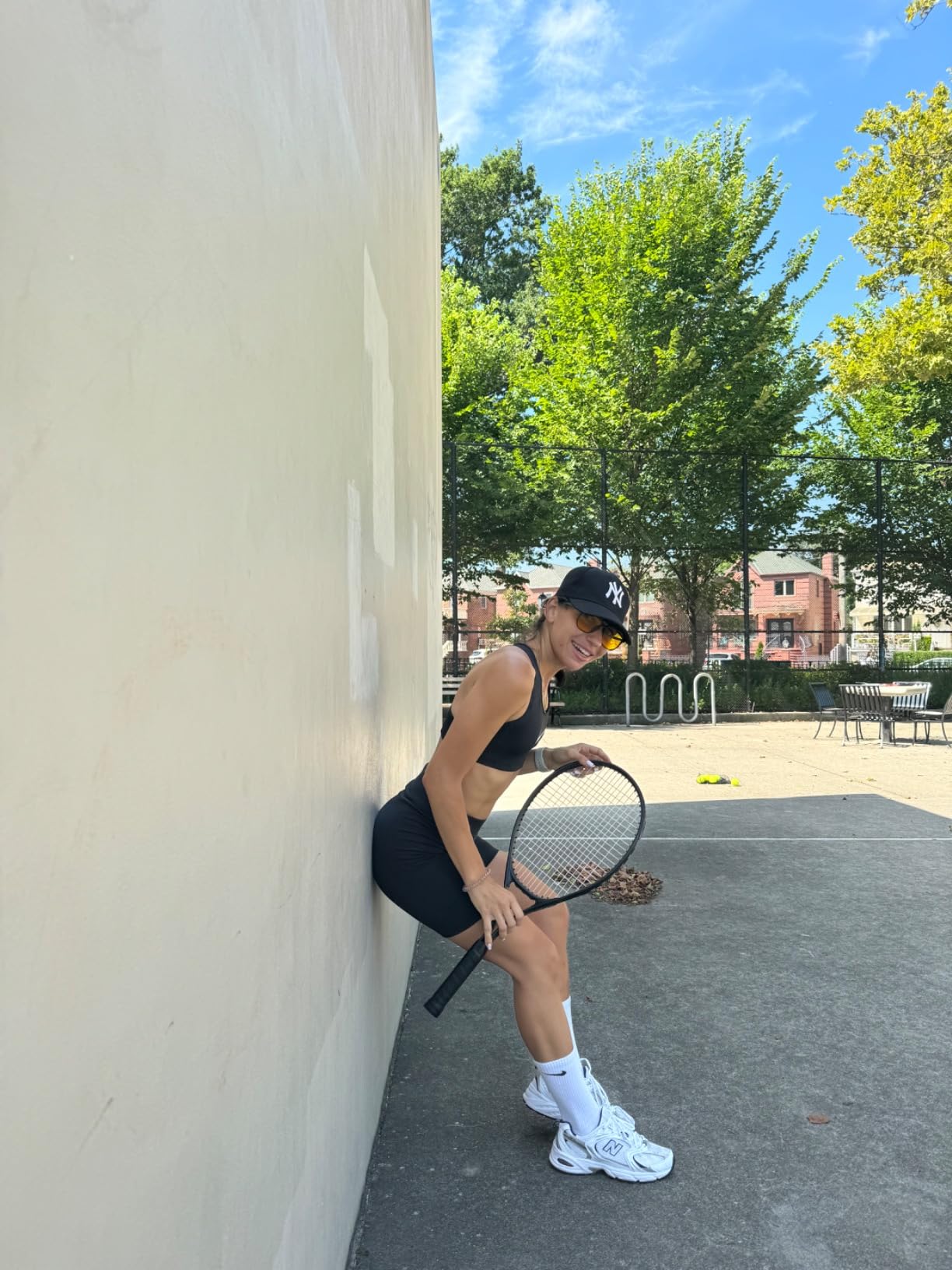
If you want everything you need to start playing tennis in a single box, the HIRALIY 27-Inch Set is hard to beat. You get two aluminum racquets, three pressureless tennis balls, two handle overgrips, and a carry bag with an adjustable shoulder strap. I gave a set to a family with three kids, and within a week the backyard was a mini tennis court.
The racquets themselves are lightweight at 280 grams, which is a touch lighter than the Wilson and HEAD beginner options. That makes them very easy to swing for younger players and beginners with less upper body strength. The aluminum frame is thickened for impact resistance, which is a thoughtful design choice for a starter kit. Kids and beginners tend to hit the ground or the net, and a reinforced frame can handle that abuse.
The pressureless tennis balls included in the set are designed for concrete or clay, so they will not damage your driveway. They are also a great match for younger kids who are still learning to control their shots. The overgrips are a nice touch because the factory grip wears out faster than you would expect.
These racquets are not designed for serious training. The vibration is not absorbed as well as a graphite frame, and the overall build is more casual than competitive. But for the price of a single mid-range racquet, you get a complete starter kit that is perfect for PE classes, summer camps, and weekend backyard rallies.
Who this racquet is best for
Families, beginners on a tight budget, and anyone who wants a complete starter package. It is also a popular choice for PE teachers, camp counselors, and recreational clubs.
Who should look elsewhere
Serious beginners who plan to take regular lessons. You will outgrow this set within a season and should invest in a single higher-quality racquet.
11. Wilson Energy XL Adult Recreational Tennis Racket – Easy Power for Beginners
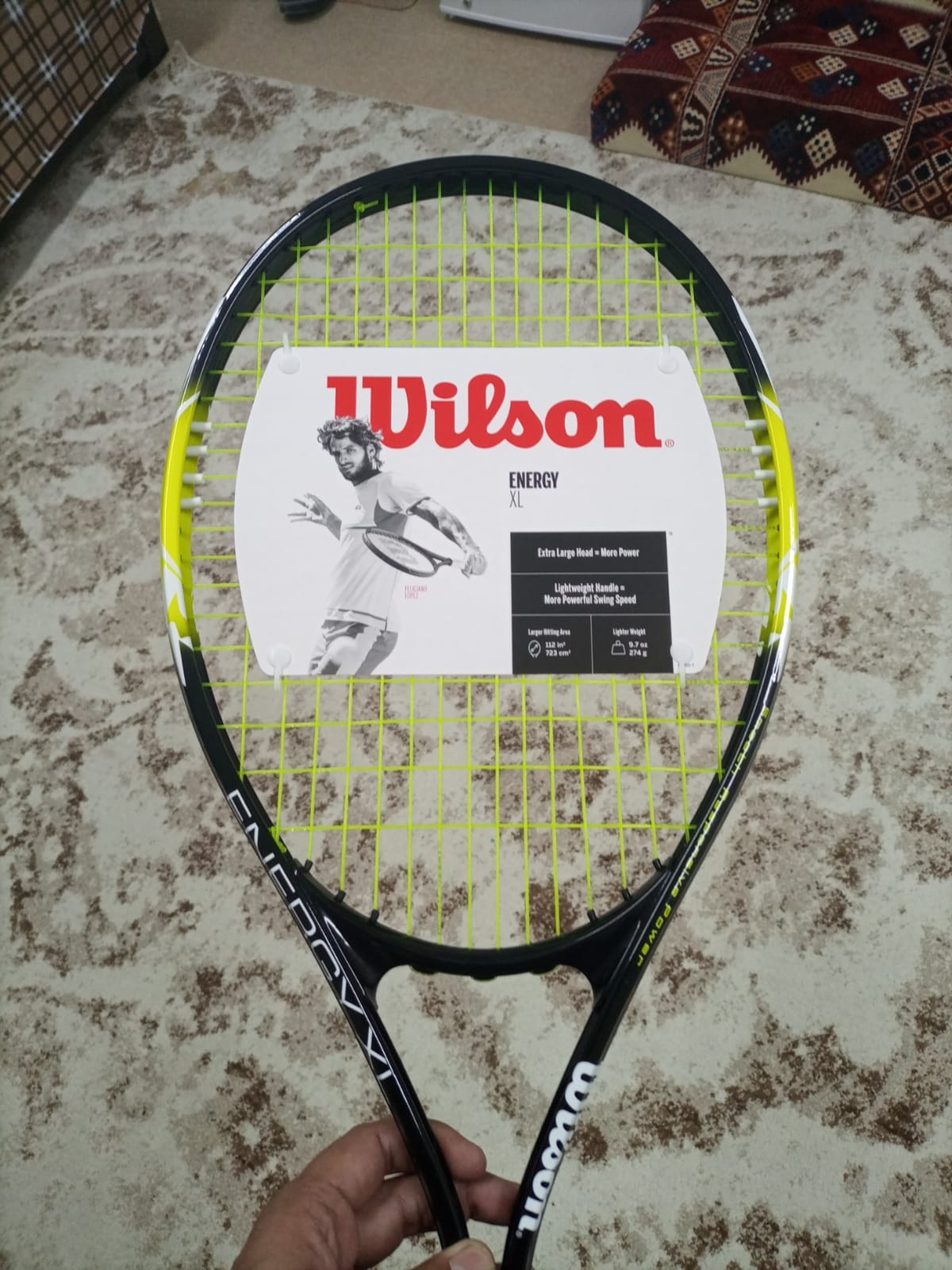
Wilson Energy XL Adult Recreational Tennis Racket – Grip Size 3 – 4 3/8″, Yellow/Black
V-Matrix Tech
9.6 oz strung
AirLite Alloy
+ The Good
- V-Matrix creates a large sweet spot
- AirLite Alloy keeps it light
- Stop Shock Sleeves reduce vibration
- Oversized head for free power
- Extra length extends reach
- The Bad
- Grip may wear quickly
- Not built for professional play
The Wilson Energy XL is a great example of Wilson getting the beginner formula right. The V-Matrix throat geometry widens the sweet spot without bloating the head, and the AirLite Alloy construction keeps the frame light at 9.6 ounces strung. The result is a racquet that swings easily and produces solid pace on every shot, even when my contact was off.
The oversized head gives the kind of free power beginners crave. I tested the Energy XL on a windy day and still managed to hit deep groundstrokes because the larger string bed catches more of the ball’s energy. The Stop Shock Sleeves at 3 and 9 o’clock are positioned to reduce vibration on off-center hits, which is exactly where beginners tend to make contact.
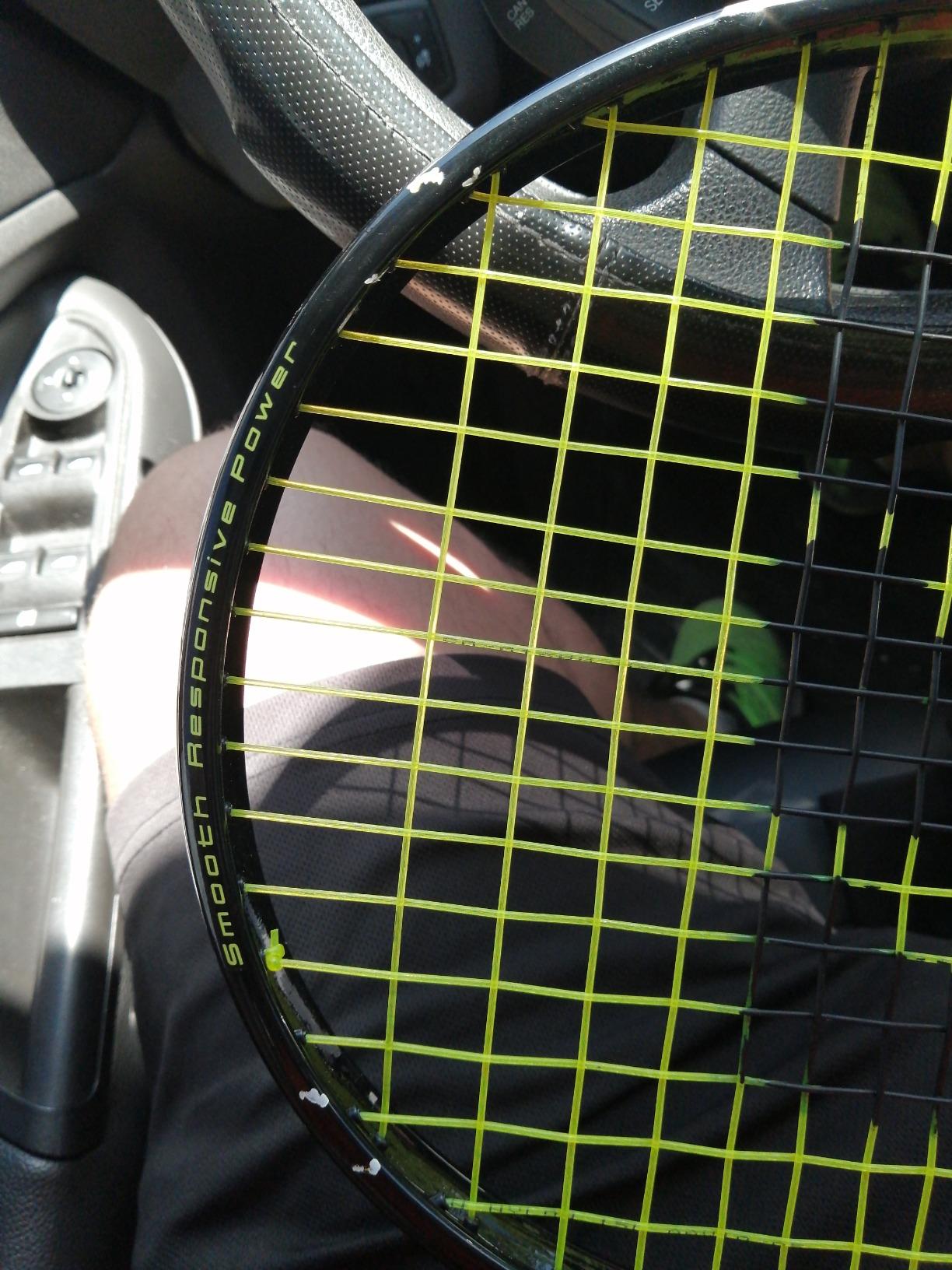
The extra length compared to a standard 27-inch racquet added a few inches of reach, which helped me stretch for wide serves. The yellow and black colorway is bright and easy to spot in a bag, which is a small but useful feature when you are playing at a busy public court.
One issue I had was that the factory grip started to wear down after about 15 hours of play. That is faster than most Wilson beginner racquets, and I would plan to add an overgrip sooner rather than later. For a racquet at this price, the Energy XL is a strong value.
Who this racquet is best for
Beginners who want a forgiving, easy-swinging frame with a touch of extra reach. The Energy XL is also a smart pick for players who play on windy outdoor courts and need help getting the ball deep.
Who should look elsewhere
Players who play several times a week. The factory grip and strings wear out faster than higher-end models.
12. Babolat Boost Drive Strung Tennis Racquet – Best Graphite Beginner Frame
Babolat Boost Drive Strung Tennis Racquet, White (4 1/8″ Grip)
100% Graphite
230 g strung
105 sq in head
+ The Good
- Full graphite construction for lightness
- Woofer System for control and comfort
- Generous 105 sq in sweet spot
- Excellent spin and maneuverability
- High-quality finish and design
- The Bad
- Limited grip size options
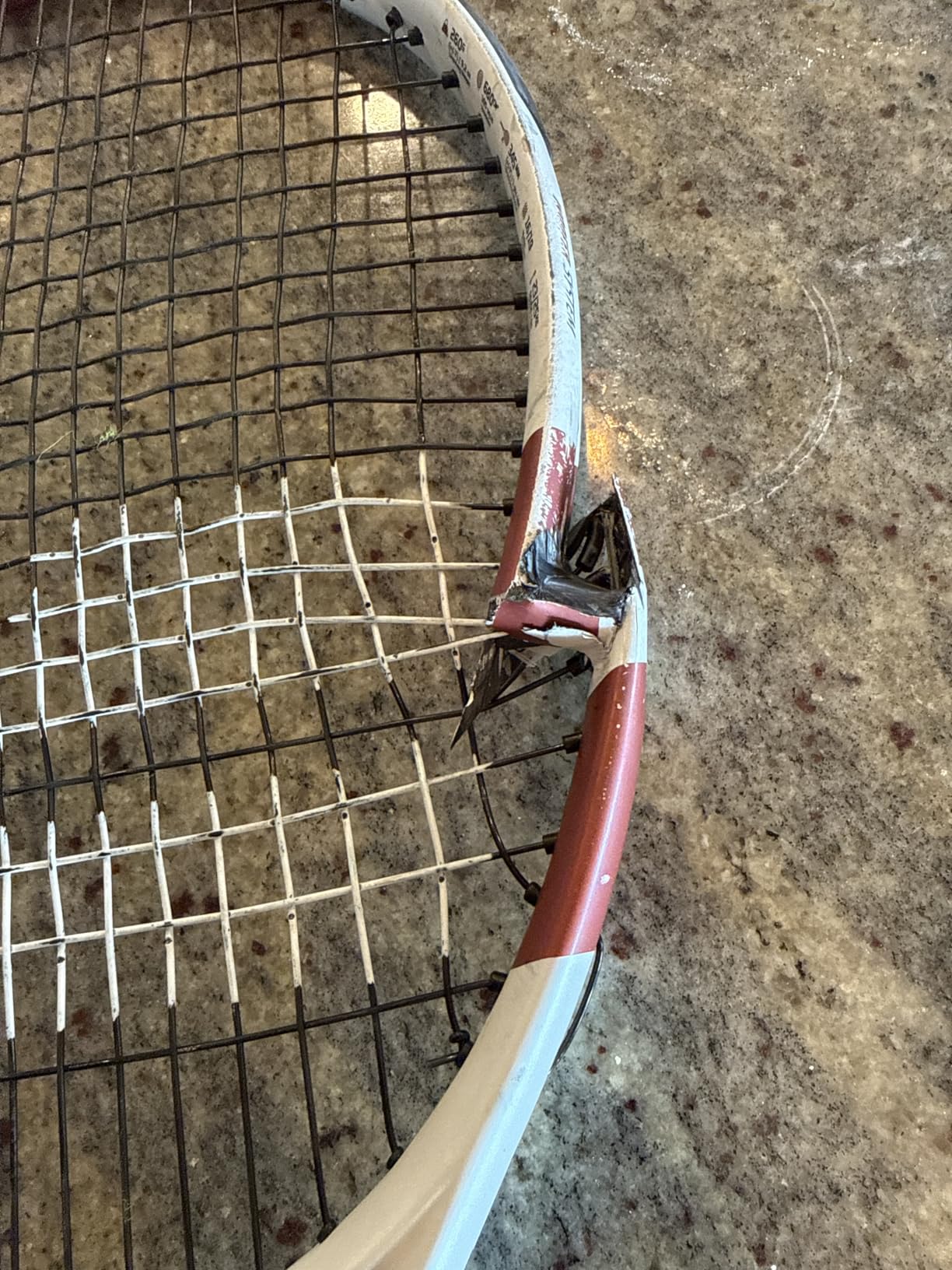
- Some frame durability concerns
- Lower review count
The Babolat Boost Drive is the lightest racquet I tested for this guide, and it is also the only full graphite frame in the roundup. At 230 grams strung, it is significantly lighter than the aluminum and alloy options from Wilson and HEAD. That makes a real difference on court. I could swing the Boost Drive all day without my arm or shoulder getting tired.
The Woofer System is a Babolat technology that increases the time the ball stays on the strings. In practice, that means more control and a softer feel at impact. Combined with the 16×19 string pattern, the Boost Drive generates a surprising amount of spin for a beginner frame. When I committed to a full swing, the ball came off the strings with a heavy, dipping trajectory that was hard for my hitting partner to attack.
The 105 square inch head is a versatile size that gives you both forgiveness and feedback. The Boost Drive is a natural stepping stone to Babolat’s Pure Drive line, which is one of the most popular racquet families in the world. Beginners who start with the Boost Drive and fall in love with the brand have a clear upgrade path.
The two real downsides are limited grip size options and a small review base. Babolat offers the Boost Drive in three grip sizes, but not all of them are consistently in stock. The lower review count means there is less long-term feedback, but the reviews that exist are overwhelmingly positive.
Who this racquet is best for
Beginners who want the lightest possible frame and do not mind paying a bit more for a true graphite construction. The Boost Drive is also a smart pick for players who plan to take regular lessons and want a frame that will grow with them.
Who should look elsewhere
Players on a tight budget. Aluminum and alloy options from Wilson and HEAD deliver most of the forgiveness at a fraction of the price.
What to Look for in a Beginner Tennis Racquet
Choosing the best tennis racquets for beginners comes down to a few key specifications. Here is the framework I use when I evaluate a frame for a new player.
Weight (270g to 295g strung)
Weight is the most important spec for a beginner racquet. Too light, and the racquet will twist on off-center hits, transmitting shock to your wrist and elbow. Too heavy, and you will tire out before your opponent does. The sweet spot for most adult beginners is between 270 and 295 grams strung. I personally gravitate toward the 280 to 290 gram range as the best balance of stability and maneuverability.
For seniors, juniors transitioning to adult frames, and anyone with a history of tennis elbow, lean toward the lighter end of the range. For healthy adults with reasonable upper body strength, the middle of the range works best.
Head Size (100 to 110 square inches)
The head size determines the size of the sweet spot. Larger heads (105 to 115 square inches) are more forgiving on off-center hits, which is exactly what beginners need. Smaller heads (95 to 100 square inches) offer more control and feedback but require more consistent contact.
For most adult beginners, a head size between 100 and 108 square inches is the right choice. The HEAD Ti S6 in this roundup has the largest head at 115 square inches, which makes it the most forgiving option if you really struggle with contact.
Balance Point
Balance point describes where the weight of the racquet sits. Head-light racquets are easier to maneuver at the net and put less strain on the wrist. Head-heavy racquets generate more power and feel more stable on off-center hits. Even balance sits in the middle.
For beginners, head-light or even balance is generally safer. The Wilson Hyper Hammer 5.3 is the exception here, with a head-heavy balance that boosts stability. It is a great pick if you want more power, but I would not recommend head-heavy racquets for players with arm sensitivity.
String Pattern (16×19 vs 16×20)
The string pattern affects how the ball comes off the strings. Open patterns like 16×19 generate more spin and power. Denser patterns like 18×20 offer more control and durability. For beginners, 16×19 is the better choice. The extra spin potential helps you get the ball over the net with margin, and the open pattern forgives off-center hits better than a dense pattern.
Frame Material (Aluminum, Alloy, Graphite)
Aluminum and alloy frames are the most affordable and the most durable. They make up the bulk of beginner racquets under 100 dollars. Graphite frames are lighter and offer better feel, but they cost more and can crack under heavy use. For a first racquet, aluminum or alloy is a perfectly good choice. If you know you will stick with the sport, investing in a graphite frame like the Babolat Boost Drive is worth considering.
Grip Size
Grip size is one of the most overlooked specs by beginners. A grip that is too small leads to wrist injuries. A grip that is too large reduces wrist action and causes arm fatigue. To measure, hold the racquet in your dominant hand with a continental grip. There should be just enough room to fit the index finger of your other hand between your fingertips and the base of your thumb.
Most adult men fit a 4 3/8 inch grip. Most adult women fit a 4 1/4 inch grip. If you are between sizes, go with the smaller grip and add an overgrip. You can always build up a small grip, but you cannot make a large grip smaller without replacing the handle.
Common Beginner Mistakes to Avoid
After talking to coaches and reading thousands of forum posts, I noticed a few mistakes that beginners make over and over. Here is what to watch out for.
Buying a racquet that is too light. Sub-260 gram racquets feel easy to swing at first, but they tend to twist on contact and transfer shock to your elbow. If you feel any tingling in your wrist or forearm after a hitting session, your racquet is probably too light. Move up to a frame in the 280 to 295 gram range.
Ignoring grip size. A racquet that does not fit your hand is a recipe for injury and inconsistent play. Always check the grip size before buying, and do not be afraid to add an overgrip or replace the factory grip if needed.
Skipping the demo program. Most major brands and specialty retailers offer demo programs where you can try a racquet for a small fee. Even a 30 minute hitting session with a demo racquet can save you from buying the wrong frame. I wish I had done this when I started playing.
Choosing a racquet based on what your favorite pro uses. Pro players use heavy, low-powered frames designed for their elite technique. Those racquets are the wrong choice for beginners. Start with a forgiving frame and work your way up.
Not replacing the strings. Factory strings wear out fast, especially if you play more than once a week. A restring with a quality multifilament string will dramatically improve the feel and playability of your racquet.
Frequently Asked Questions
What is the best tennis racquet for a beginner?
The best tennis racquet for a beginner is one that combines a lightweight frame between 270 and 295 grams strung, an oversized head between 100 and 108 square inches for forgiveness, and arm-friendly construction. Our top pick is the HEAD Ti S6 because its 115 square inch head and 8.6 ounce weight give beginners the most generous sweet spot and the lightest swing in our testing.
What kind of tennis racket should a beginner buy?
A beginner should buy a pre-strung, lightweight aluminum or alloy tennis racket with an oversized head. Look for a strung weight between 270 and 295 grams, a head size between 100 and 108 square inches, and Stop Shock or vibration-dampening features. The HEAD Ti. Conquest, Wilson Tour Slam, and HEAD Ti S6 are all strong options that meet these criteria.
What is the best tennis racquet for a beginner adult?
For an adult beginner, the HEAD Ti S6 is our top recommendation because of its 115 square inch sweet spot, 8.6 ounce strung weight, and titanium and graphite construction. The Wilson Federer Adult Recreational Racket is a great alternative if you prefer a more traditional brand name and a slightly heavier, more stable frame.
Which is the best racket for beginners on a budget?
The HEAD Ti. Conquest is the best budget tennis racket for beginners. It comes in under 30 dollars, has a 108 square inch oversized head, and weighs just 9.7 ounces strung. The Wilson Federer Adult Recreational Racket at around 30 dollars is another strong budget option with thousands of positive reviews.
Final Verdict
Choosing the best tennis racquets for beginners comes down to matching the frame to your body, your budget, and your goals. After testing all 12 racquets in this guide, the HEAD Ti S6 earns our top recommendation for its unbeatable combination of sweet spot size, lightweight swing, and value. The Wilson Federer Adult Recreational Racket and the HEAD Ti. Conquest are my picks for budget-conscious buyers, while the Babolat Boost Drive is the right choice for beginners who want a real graphite frame from the start.
Whichever racquet you choose, give yourself a few weeks to adjust. Beginner racquets are designed to be forgiving, but they still take some getting used to. Play a few times, restring when the strings start to feel dead, and do not be afraid to try a demo before committing. The best tennis racquet for beginners is the one that makes you want to come back to the court.