
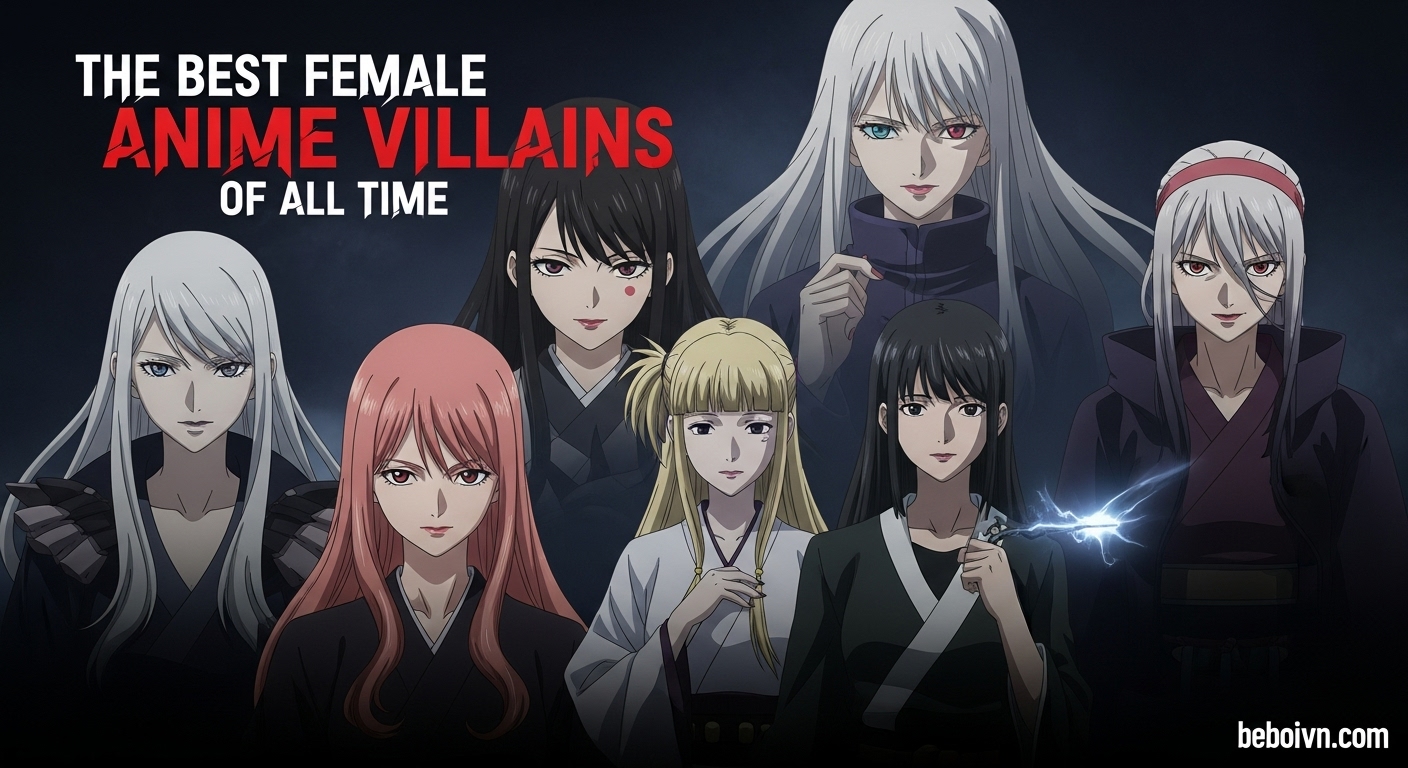
In the vast universe of anime, where heroes often steal the spotlight, there exists a special breed of antagonists who command attention through sheer force of personality, terrifying power, and complex motivations. Female anime villains, in particular, have evolved far beyond simple one-dimensional antagonists to become some of the most compelling characters in the medium. These women don’t just oppose the heroes—they redefine what it means to be a villain, blending charisma with cruelty, intelligence with insanity, and power with purpose.
The best female anime villains of all time have left indelible marks on their respective series and the anime landscape as a whole. They challenge our perceptions of good and evil, force us to question our allegiances, and sometimes even make us root for their success despite their nefarious goals. From sadistic generals who find joy in battle to master manipulators who pull strings from the shadows, these characters represent the pinnacle of villainous excellence in anime.
What Makes a Great Female Anime Villain?
Before diving into our comprehensive ranking, it’s essential to understand what elevates a female antagonist from merely evil to truly memorable. The most exceptional female anime villains share several key characteristics:
Complexity Beyond Simple Evil
The greatest villains aren’t evil for the sake of being evil. They possess depth, motivation, and often tragic backstories that make their actions understandable, if not justifiable. Whether it’s a desire for power, revenge, love, or simply a different worldview, their motivations feel genuine and human.
Unforgettable Presence and Design
Visual impact matters in anime, and the best female villains command attention through their distinctive appearances, mannerisms, and overall presence. Their designs often reflect their personalities, powers, or the themes they represent.
Formidable Power and Intelligence
Whether through supernatural abilities, strategic genius, or both, top-tier female villains pose genuine threats to their protagonists. They’re not easily defeated and often push heroes to their absolute limits.
Impact on the Story and Characters
The most significant villains fundamentally change the course of their narratives and leave lasting impacts on both the story world and the characters within it. Their actions have consequences that resonate throughout the series.
The Ultimate Ranking of Female Anime Villains
1. Esdeath (Akame ga Kill!)
The General Who Loved Battle Too Much
Esdeath stands as perhaps the most perfectly crafted female villain in anime history. As a high-ranking general in the Empire, she combines terrifying power with unexpected charm, creating a villain who’s both horrifying and fascinating. Her ice-based Imperial Arm makes her virtually unstoppable in combat, but it’s her personality that truly sets her apart.
What makes Esdeath exceptional is her complexity. She genuinely cares for her subordinates while showing absolutely no mercy to her enemies. Her love for battle borders on the sadistic, yet she operates by a personal code of honor. Perhaps most disturbingly, her obsessive love for the protagonist Tatsumi adds a layer of twisted romance to her character that makes her even more compelling.
Esdeath’s impact on Akame ga Kill! cannot be overstated. She represents the absolute power of the Empire and serves as the final barrier the heroes must overcome. Her defeat requires not just strength but strategy and sacrifice, making her the ultimate test for the series’ protagonists.
2. Makima (Chainsaw Man)
The Control Devil Who Redefined Manipulation
Makima represents a new evolution of anime villainy—one that operates through psychological manipulation rather than brute force. As the Control Devil, she possesses the terrifying ability to dominate those she considers inferior, which in her mind includes almost everyone. What makes Makima particularly chilling is how she presents herself as a benevolent authority figure while secretly pulling everyone’s strings.
Her relationship with Denji serves as the heart of her villainy. She exploits his desire for a normal life and basic human connection, using his affection as a tool for control. The revelation of her true nature and goals is one of the most shocking moments in recent anime history, completely recontextualizing everything that came before.
Makima’s power extends beyond her supernatural abilities. She represents the corrupting influence of absolute power and the dangers of blind faith in authority. Her character serves as a commentary on manipulation, control, and the nature of relationships themselves.
3. Lust (Fullmetal Alchemist: Brotherhood)
The Ultimate Femme Fatale
Lust embodies the perfect blend of seduction and lethality that defines the femme fatale archetype. As one of Father’s homunculi, she serves as both a deadly combatant and a master manipulator. Her ability to extend her fingernails into razor-sharp weapons makes her a formidable opponent, but it’s her intelligence and patience that truly make her dangerous.
What sets Lust apart is how she plays with expectations. Her name and appearance suggest she relies on seduction, but she’s equally capable of brutal violence and strategic thinking. She’s not just a pretty face—she’s a key player in Father’s plan to consume God.
Lust’s death scene is particularly memorable, as it reveals the fear beneath her confident exterior. This moment of vulnerability makes her more human and tragic, elevating her beyond a simple villain to a complex character with depth and pathos.
4. Himiko Toga (My Hero Academia)
The Charming Psychopath Who Redefined Madness
Himiko Toga represents a terrifying evolution of the “yandere” archetype in anime. Her obsession with blood and transformation makes her one of the most disturbing villains in recent memory, yet her cheerful demeanor and childlike innocence make her strangely endearing. This contradiction is what makes Toga so compelling and frightening.
Toga’s power to transform into those whose blood she consumes serves as a perfect metaphor for her desire to become the people she admires or loves. Her twisted logic about love and connection makes her sympathetic in a warped way, suggesting that her evil stems from a fundamental misunderstanding of human relationships.
As My Hero Academia progresses, Toga’s character develops beyond simple madness. We glimpse the trauma and isolation that shaped her, making her more than just a crazy villain—she becomes a tragic figure whose evil stems from pain and loneliness.
5. Ragyo Kiryuin (Kill la Kill)
The Mother of All Evil
Ragyo Kiryuin takes the concept of parental abuse to horrifying new heights. As the main antagonist of Kill la Kill, she represents the absolute corruption of power and the perversion of maternal love. Her experiments on her daughters Ryuko and Satsuki are among the most disturbing moments in anime history.
What makes Ragyo particularly effective is her combination of elegance and depravity. She carries herself with regal grace while committing unspeakable acts, creating a jarring contrast that makes her even more terrifying. Her obsession with Life Fibers and her desire to merge humanity with them represents the ultimate form of biological horror.
Ragyo’s impact extends beyond her role as a villain. She represents the dangers of unchecked power and the corruption that comes with it. Her defeat requires not just strength but the rejection of her entire worldview, making her a thematic as well as physical antagonist.
6. Junko Enoshima (Danganronpa)
The Queen of Despair
Junko Enoshima stands unique among anime villains because her primary weapon isn’t power or strength—it’s despair itself. As the mastermind behind the Killing Games, she doesn’t just want to kill people; she wants to break their spirits and spread hopelessness throughout the world.
What makes Junko fascinating is her motivation. Unlike many villains who seek power or revenge, Junko’s goal is simply to create and experience despair. She finds hope boring and despair exciting, making her a villain who’s evil for the sake of aesthetics rather than practical gain.
Junko’s ability to analyze and predict human behavior makes her particularly dangerous. She understands exactly how to break people, what hopes to crush, and what fears to exploit. Her multiple personalities and shifting appearances reflect her chaotic nature and make her unpredictable and terrifying.
7. Balalaika (Black Lagoon)
The Crime Lord with Military Precision
Balalaika represents a different kind of villain—one who operates in the moral gray areas of the criminal underworld. As the leader of Hotel Moscow, she combines military discipline with criminal enterprise, creating a villain who’s both professional and terrifyingly efficient.
What sets Balalaika apart is her complexity. She’s not purely evil; she operates by a code of honor and shows genuine care for her subordinates. Her military background and the scars that cover her body tell a story of survival and adaptation that makes her more than just a crime boss.
Balalaika’s presence in Black Lagoon elevates the series beyond simple action. She represents the reality of power in a lawless world and the compromises people make to survive. Her interactions with the protagonists show that sometimes the most dangerous villains aren’t the most evil—they’re the most competent.
8. Isabella (The Promised Neverland)
The Kind Face of Ultimate Betrayal
Isabella represents perhaps the most psychologically devastating type of villain—the one who betrays trust. As the “Mama” of Grace Field House, she presents herself as a loving caregiver while secretly preparing children to be slaughtered by demons. This duality makes her one of the most chilling villains in anime history.
What makes Isabella particularly effective is her believability. She’s not a supernatural being or a criminal mastermind—she’s a woman who made an impossible choice to save herself at the expense of others. Her backstory reveals that she was once an orphan in the same system, adding layers of tragedy to her villainy.
Isabella’s impact on The Promised Neverland is profound. She represents the corruption of maternal love and the ways systems of oppression force people to become monsters. Her presence makes the children’s struggle not just for survival but for their very humanity.
9. Medusa Gorgon (Soul Eater)
The Scientific Sadist
Medusa Gorgon embodies the perfect blend of intellectual cruelty and magical power. As a witch and scientist, she combines supernatural abilities with a cold, analytical approach to evil. Her experiments on her own child Crona represent the depths of her depravity and her complete lack of maternal instinct.
What makes Medusa particularly frightening is her patience and intelligence. She doesn’t rush her plans; she carefully manipulates events and people over years to achieve her goals. Her ability to possess others and her snake-based magic make her versatile and unpredictable.
Medusa’s relationship with Crona adds psychological depth to her character. She sees her child not as a person but as an experiment, creating one of the most disturbing parent-child dynamics in anime. This emotional cruelty makes her more than just a villain—she’s a monster in human form.
10. Annie Leonhardt (Attack on Titan)
The Warrior with a Conscience
Annie Leonhardt represents the complexity of modern anime villains. As the Female Titan, she’s responsible for countless deaths, yet she’s not purely evil. She’s a soldier following orders, burdened by guilt and questioning her mission. This moral ambiguity makes her one of the most compelling antagonists in recent anime history.
What sets Annie apart is her humanity. Unlike many villains who revel in their evil, Annie shows remorse and hesitation. Her combat skills are exceptional, but it’s her internal conflict that makes her fascinating. She’s not fighting for power or revenge but for a cause she’s not sure she believes in.
Annie’s impact on Attack on Titan extends beyond her role as an antagonist. She represents the moral complexity of war and the way ordinary people become monsters through circumstance. Her character challenges the audience to question who the real villains are in a world where everyone has reasons for their actions.
The Evolution of Female Villains in Anime
The landscape of female anime villains has evolved dramatically over the decades. Early anime often featured one-dimensional female antagonists who were either evil queens or jealous rivals. However, as the medium matured, so did its villainesses.
From Simple Evil to Complex Motivation
Modern female villains rarely commit evil acts simply for the sake of being evil. They have complex motivations, tragic backstories, and understandable (if not justifiable) reasons for their actions. This evolution reflects a broader trend in anime toward more sophisticated storytelling and character development.
The Rise of the Anti-Villain
Many contemporary female anime villains blur the line between antagonist and protagonist. Characters like Annie Leonhardt and Balalaika operate in moral gray areas, forcing audiences to question traditional notions of good and evil. This complexity makes them more relatable and memorable.
Beyond Physical Power: Psychological Villainy
While physical power remains important, many of the most effective modern female villains rely on psychological manipulation, intelligence, and emotional control. Characters like Makima and Junko Enoshima demonstrate that the most terrifying villains aren’t necessarily the strongest—they’re the smartest.
Why These Villains Resonate with Audiences?
The enduring popularity of these female anime villains stems from several factors that make them particularly compelling to modern audiences:
Representation of Female Power
These villains showcase different forms of female power—from physical strength to intellectual prowess to emotional manipulation. They demonstrate that women can be threatening and formidable without relying on male counterparts or traditional gender roles.
Exploration of Complex Themes
Through these villains, anime explores complex themes like the nature of evil, the corruption of power, and the gray areas between right and wrong. They serve as vehicles for philosophical and psychological exploration that resonates with mature audiences.
Emotional Depth and Relatability
Despite their evil actions, many of these villains possess emotional depth and relatable motivations. Audiences can understand, if not condone, their actions, creating a complex emotional response that goes beyond simple hatred.
The Future of Female Anime Villains
As anime continues to evolve, we can expect female villains to become even more complex and diverse. Future trends may include:
Greater Moral Complexity
The line between hero and villain will likely continue to blur, with more female antagonists occupying morally gray positions that challenge audience perceptions.
Diverse Motivations and Backgrounds
We’ll likely see female villains from a wider variety of backgrounds with more diverse motivations, reflecting the growing global audience for anime.
Subversion of Tropes
Future female villains will likely continue to subvert traditional tropes and expectations, creating fresh and innovative approaches to villainy that keep audiences engaged and surprised.
Conclusion: The Enduring Legacy of Female Anime Villains
The best female anime villains of all time have transcended their roles as simple antagonists to become some of the most memorable and influential characters in the medium. They challenge our perceptions, push boundaries, and force us to confront uncomfortable truths about power, morality, and human nature.
From Esdeath’s terrifying power to Makima’s psychological manipulation, from Lust’s seductive danger to Junko’s obsession with despair, these characters represent the pinnacle of villainous excellence in anime. They remind us that the most compelling stories often feature the most compelling villains—characters who are as complex, fascinating, and human as the heroes they oppose.
As anime continues to evolve and mature, we can only expect future female villains to build upon this legacy, creating new archetypes, exploring new themes, and continuing to push the boundaries of what makes a great villain. The best female anime villains of all time aren’t just obstacles for heroes to overcome—they’re essential components of the storytelling art form, without whom the medium would be far less rich and compelling.