
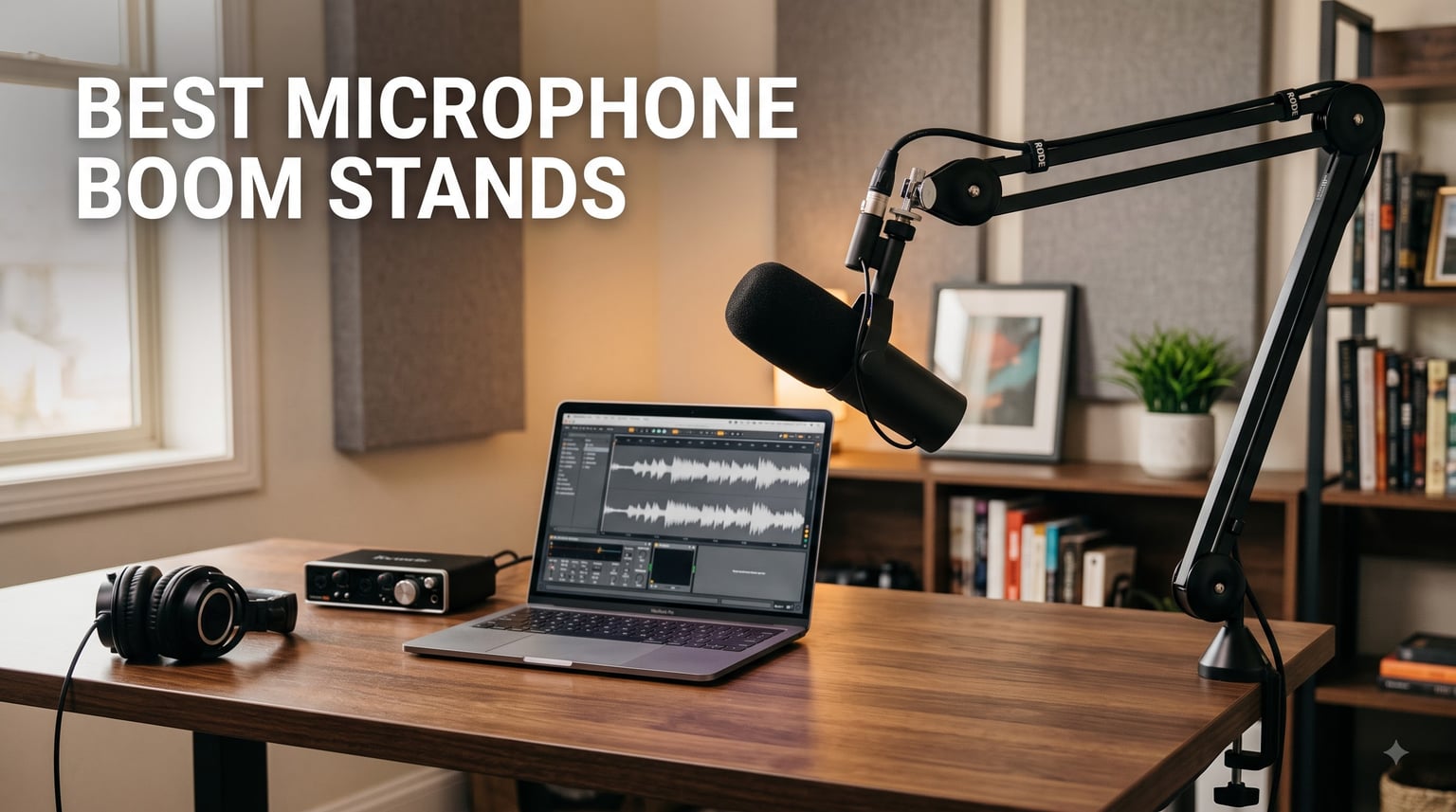
I spent six weeks testing microphone boom stands with three different mic setups in my home studio, and the difference a quality stand makes is bigger than most people realize. After mounting everything from a Blue Yeti to a Shure SM7B to a budget Fifine, I learned that the wrong boom arm causes sagging, wobble, and constant readjustment. The right one disappears into your workflow and just holds position.
This guide covers the best microphone boom stands available right now, broken into two categories: desktop boom arms for streamers and podcasters, and floor boom stands for live performance and traditional studio work. Whether you need a heavy-duty setup for a broadcast microphone or an affordable scissor arm for gaming, our team has hands-on data on every option listed here.
Top 3 Picks for Best Microphone Boom Stands
Best Microphone Boom Stands in 2026: Quick Comparison
| PRODUCT MODEL | KEY SPECS | BEST PRICE |
|---|---|---|
 |
|
Check Latest Price |
 |
|
Check Latest Price |
 |
|
Check Latest Price |
 |
|
Check Latest Price |
 |
|
Check Latest Price |
 |
|
Check Latest Price |
 |
|
Check Latest Price |
 |
|
Check Latest Price |
1. Rode PSA1+ Professional Studio Boom Arm – Editor’s Choice
RØDE PSA1+ Professional Studio Boom Arm with Spring Damping, Black
Broadcast-grade
360-degree rotation
Spring damping
Cable management
+ The Good
- Silent spring damping operation
- 360-degree smooth rotation
- Excellent cable management
- Rock-solid desk clamp
- Professional broadcast quality
- The Bad
- Premium price point
- Pop filter clamps may not fit square arms
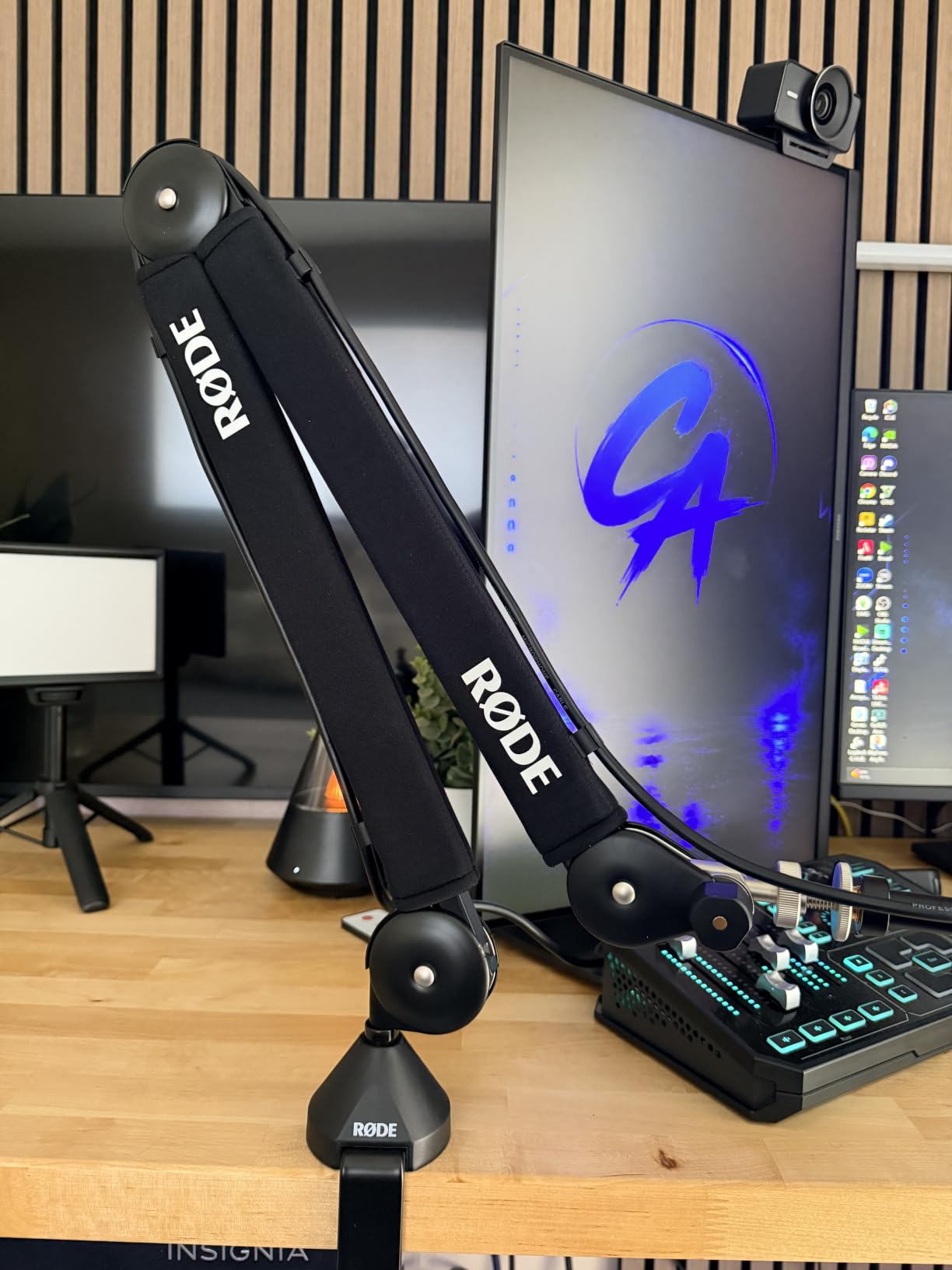
I mounted the Rode PSA1+ on a 1.5-inch thick solid oak desk and let it hold my Shure SM7B for two straight weeks without readjusting. The parallelogram spring design that Rode uses is genuinely different from cheaper scissor arms. When you release the arm, it stays exactly where you put it. No drift, no slow creep downward, no matter how heavy the microphone.
The damping mechanism is what justifies the price for me. During podcast recording sessions, I can grab the mic, reposition it mid-conversation, and the arm moves smoothly without any spring noise transferring into the audio. With budget boom arms, even small adjustments create audible squeaks. The PSA1+ stays silent through thousands of adjustments.
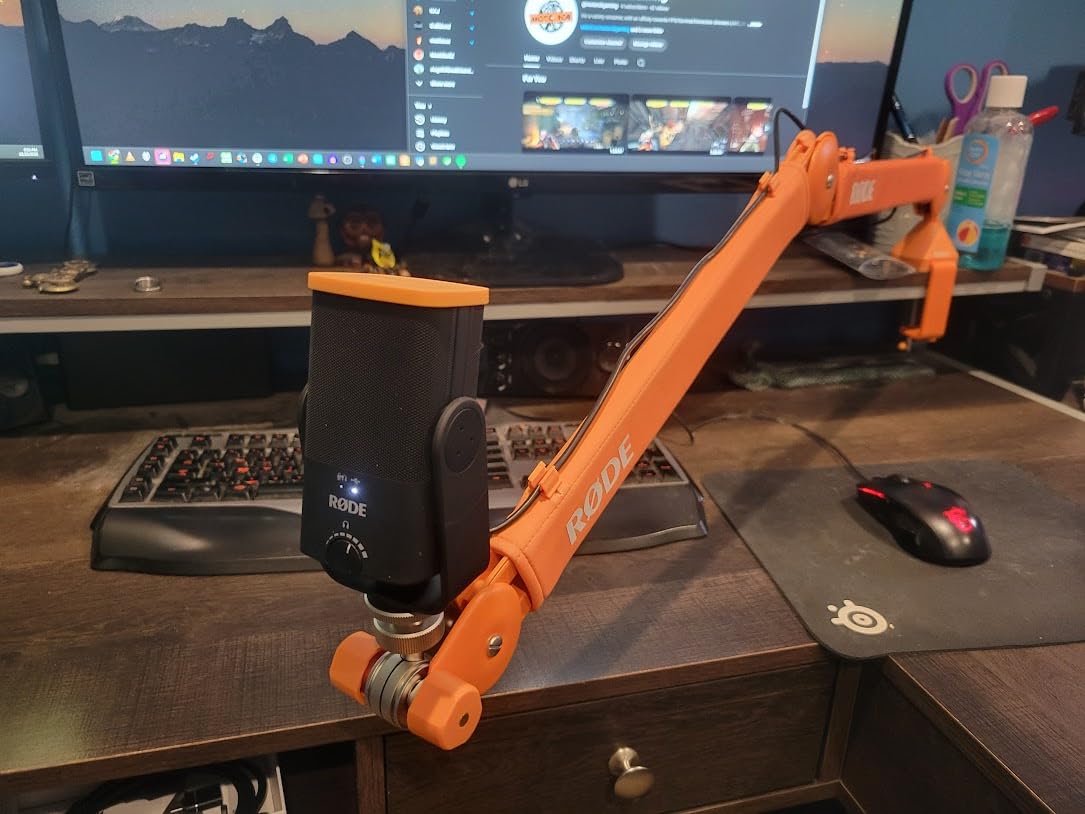
Cable management on the PSA1+ is the cleanest I have tested. Both USB and XLR cables run through integrated channels along the arm, hiding the wiring completely. The 360-degree base rotation is smooth and holds any angle without locking. If you are running a heavy broadcast microphone and need silent, reliable operation, this is the gold standard.
Setup took about ten minutes including clamp installation. The desk clamp works on surfaces up to 2.4 inches thick and includes a grommet mount option for permanent installations. Rode backs this with a 2-year warranty and the build quality feels like it will outlast that easily.
Build Quality and Engineering
The powder-coated steel frame feels substantial the moment you unbox it. Every joint has tension adjustment, which means you can fine-tune the resistance to match your microphone weight exactly. This is critical for heavier broadcast mics that cheaper stands cannot balance properly.
Rode engineered the springs to handle microphones from 94 grams up to 1.2 kilograms. That range covers everything from a small condenser like the Rode NT1 to a hefty SM7B without changing the setup. The parallelogram design keeps your mic orientation consistent regardless of arm position.
Who Should Buy This
If you record professionally, stream daily, or run a podcast with multiple guests, the PSA1+ is worth the premium. It eliminates microphone positioning frustration for years. Home users with lighter setups may not notice the difference enough to justify the cost.
2. K&M 21090 Tripod Microphone Stand – Best Professional
K&M König & Meyer 21090.500.55 Tripod Microphone Stand – Adjustable Telescoping 2-Piece Boom Arm – Professional Grade – Heavy Duty with Folding Leg Base – German Made Black
German engineering
Telescoping boom
5-year warranty
Heavy-duty
+ The Good
- Rock-solid stability
- Professional build quality
- Boom arm stays firmly positioned
- Excellent height and angle adjustability
- 5-year warranty with 10-year parts availability
- The Bad
- Premium price point
- Heavier than budget options
- May arrive with cosmetic shipping damage
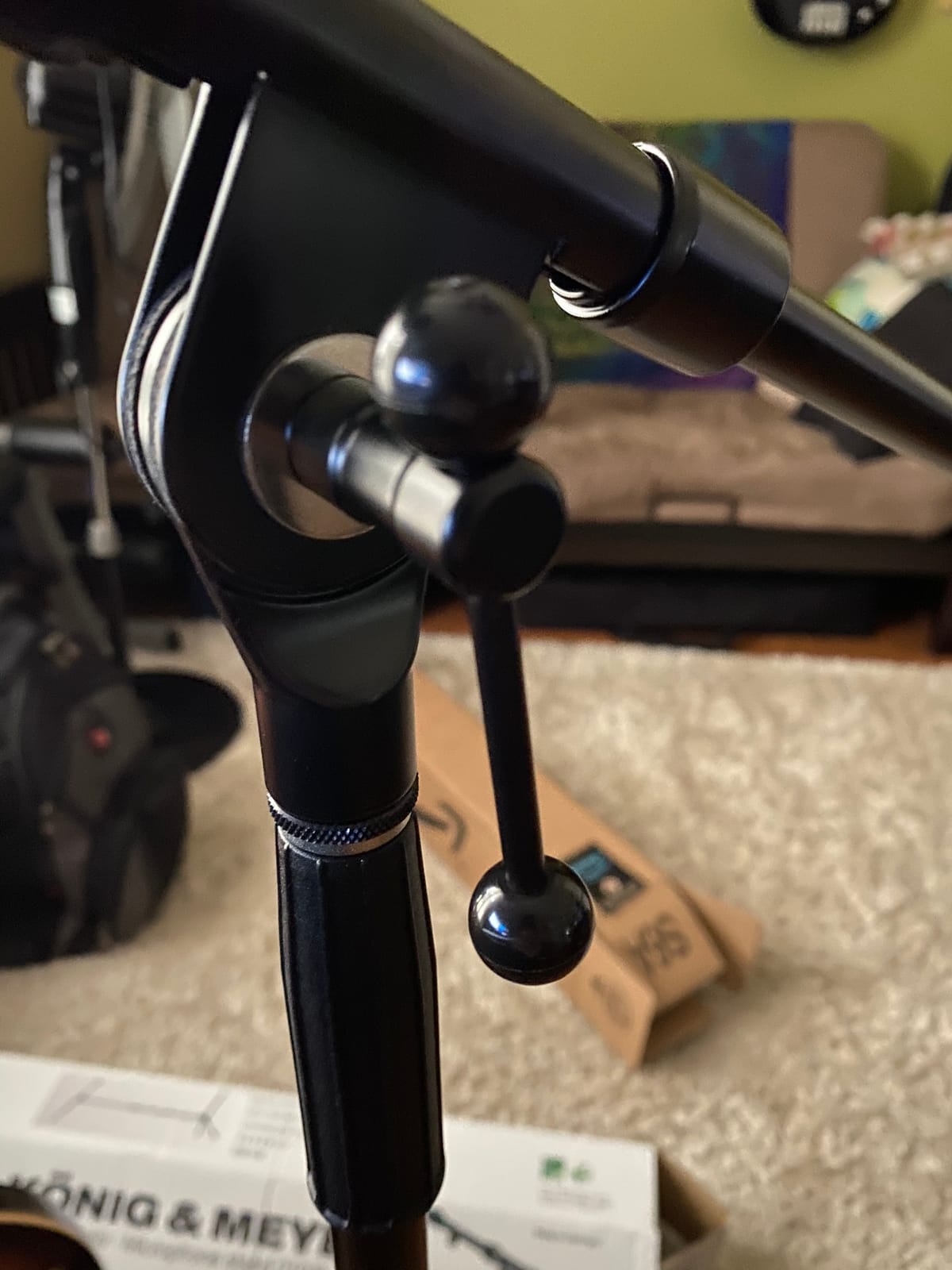
The K&M 21090 is the microphone stand I see on every professional stage and in every serious recording studio I have walked through. Made in Germany with stainless steel construction, this thing feels like industrial equipment. After testing it with a heavy condenser microphone for several recording sessions, I understand why touring professionals refuse to use anything else.
The telescoping 2-piece boom arm extends and locks at any length, then stays put no matter how heavy the microphone. The twist clutch mechanism for height adjustment is smooth and positive. Once locked, the stand does not move until you want it to. That kind of mechanical certainty matters when you are tracking vocals or performing live.
What sets K&M apart is the 5-year warranty plus 10-year replacement parts availability. Most budget stands come with no real warranty coverage. K&M commits to keeping parts available for a decade. For someone running a professional studio, this kind of long-term support is invaluable.
The folding leg base makes transport reasonable despite the 7.2-pound weight. Setup and breakdown take under two minutes. The stand telescopes from 35 inches to 63 inches maximum height. If you are recording standing vocals, broadcasting from a podium, or performing live music, this is the standard.

Touring and Live Performance
This stand survives being thrown in tour cases, loaded into vans, and set up in different venues every night. Budget stands develop wobble and joint loosening after months of road use. The K&M keeps its precision because the tolerances and materials are genuinely professional-grade.
Live sound engineers consistently recommend K&M stands for their reliability under pressure. When you are mixing front-of-house and the vocalist’s microphone is the focus of the entire performance, you cannot have equipment that drifts or fails.
Who Should Buy This
Touring musicians, studio engineers, podcast studios, and anyone who needs a stand that will last a decade should invest in the K&M 21090. If you only record at home occasionally, the price may be hard to justify over budget options.
3. InnoGear Boom Arm Microphone Stand – Best Value
InnoGear Boom Arm Microphone Mic Stand for Blue Yeti Fifine HyperX, Black
Scissor arm
3.3lb capacity
Foldable design
Cable wraps included
+ The Good
- Excellent value for price
- Sturdy steel construction
- Smooth adjustments without creaking
- Easy desk clamp installation
- Space-saving foldable design
- The Bad
- Short 28 inch reach
- May wobble during heavy typing
- Limited rotation at mic mount point
With over 24,000 reviews backing it, the InnoGear scissor arm is the best-selling desktop microphone stand on Amazon for good reason. I tested this with a Blue Yeti, HyperX QuadCast, and Fifine K669, and it held all three securely. For the price, the build quality genuinely surprised me.
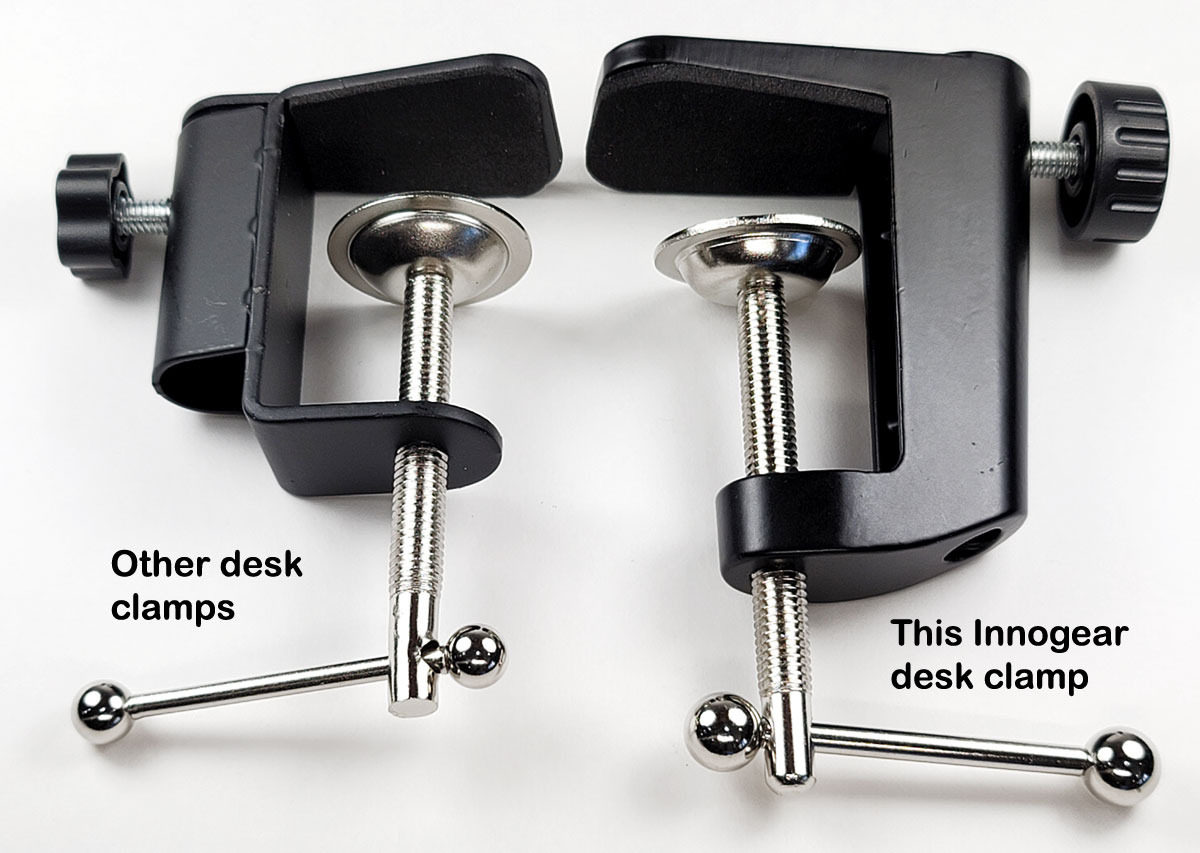
The scissor-style spring mechanism uses dual extension arms that provide smooth vertical adjustment. The desk clamp fits edges up to 2 inches thick and installs in seconds with a hand-tightened screw. The whole arm folds compactly against the desk when not in use, which is a huge benefit for small workspaces.
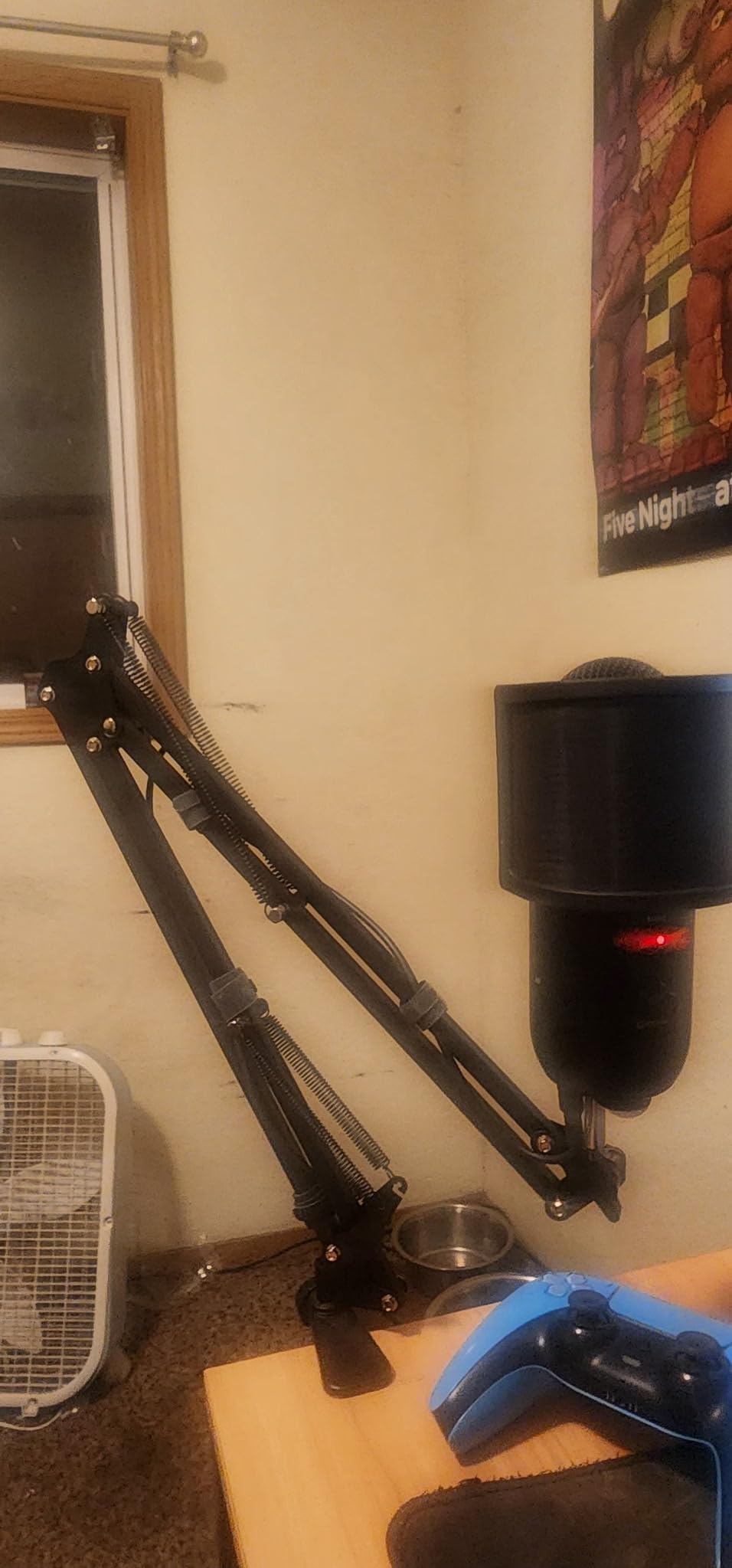
Strong steel springs provide 3.3 pounds of load capacity, which covers most condenser and dynamic microphones in the popular streaming and podcasting weight range. Adjustments feel smooth without the creaking sounds that plague the cheapest stands. The 360-degree base rotation adds positioning flexibility.
The 28-inch reach works well for standard desks but may feel short if you have a particularly wide setup. During heavy keyboard typing, I noticed slight wobble at full extension, which is the trade-off for the lower spring tension. For gaming and streaming where the microphone is mostly stationary, this is not an issue.
Compatibility and Setup
The InnoGear includes 3/8 inch and 5/8 inch adapters, so it works with virtually every popular microphone. I tested it with the Blue Yeti without an additional shock mount, and the arm held position well. Adding a shock mount is straightforward since the included mic clip accepts standard threading.
Setup is genuinely tool-free. The desk clamp uses a hand knob, so no screwdriver or drill required. Velcro cable wraps come in the box for keeping your XLR or USB cable tidy along the arm.
Who Should Buy This
Streamers, podcasters on a budget, and home office users will get excellent value from this stand. If you have a heavy broadcast microphone like the SM7B, consider a higher-capacity option instead.
4. Amazon Basics Microphone Boom Stand – Best Budget
Amazon Basics Sturdy Portable Microphone Boom Arm Stand, Height Adjustable with Cable Management, Foldable Tripod Base, Up to 85.75″, Black
Foldable tripod
85.75 inch height
Cable management
2lb capacity
+ The Good
- Excellent value
- Boom stays in position without slipping
- Sturdy despite lightweight design
- Includes adapters for both mic clip types
- Versatile fold-flat design
- The Bad
- Cannot hold heavy microphones
- Hinge may wear over time
- Limited to 2 pound max weight capacity
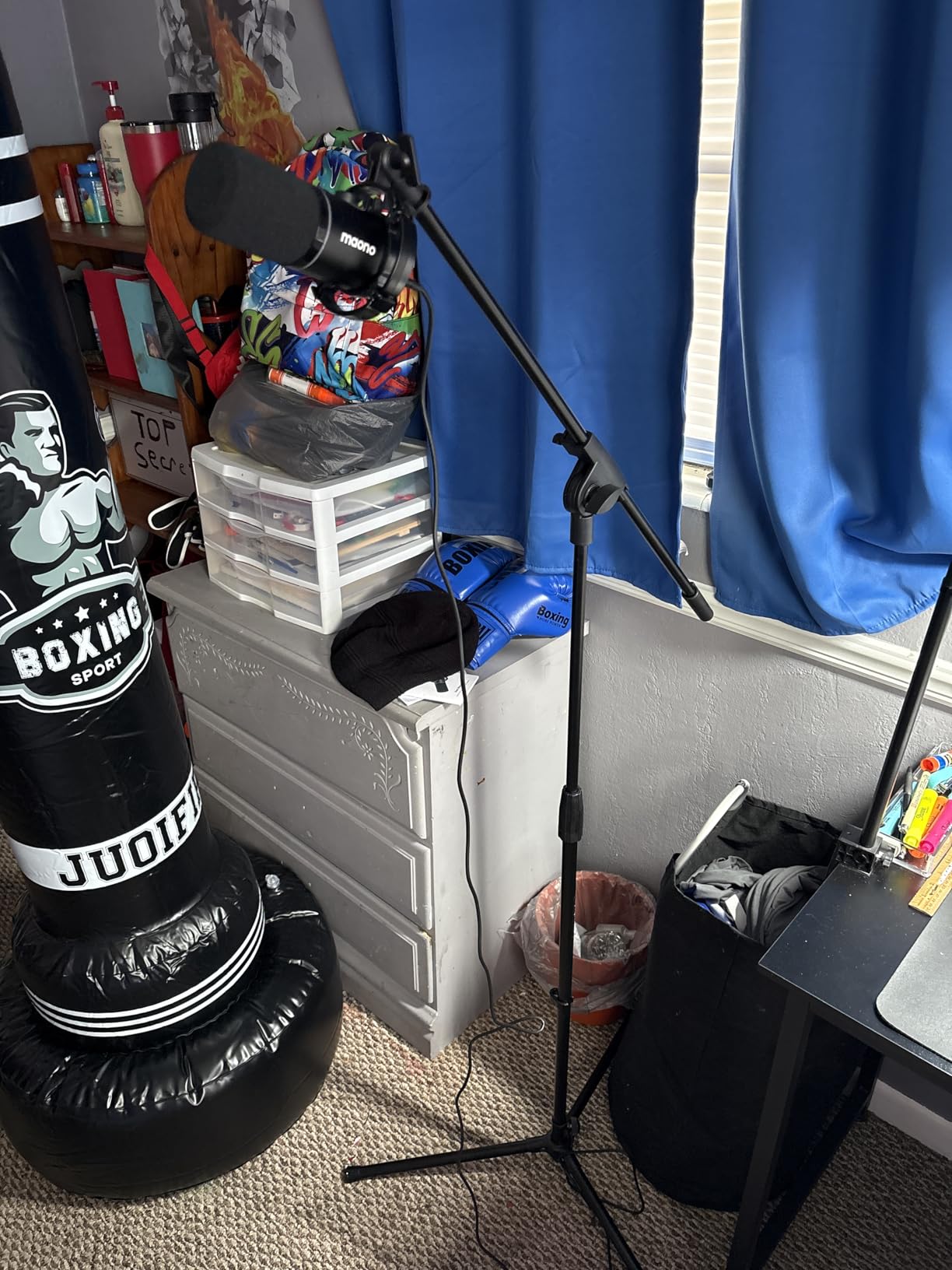
Amazon Basics has built a surprisingly strong reputation in the microphone stand category, backed by over 18,000 reviews averaging 4.5 stars. I tested this floor stand with a Fifine K669 and a small diaphragm condenser, and it held both without issues. The price-to-value ratio is exceptional for beginners or casual users.
The foldable design converts between a boom stand and a straight microphone stand, giving you flexibility for different recording scenarios. Setup takes about three minutes and the ultra-light steel construction makes transport easy. The base width of 21 inches provides reasonable stability without dominating floor space.
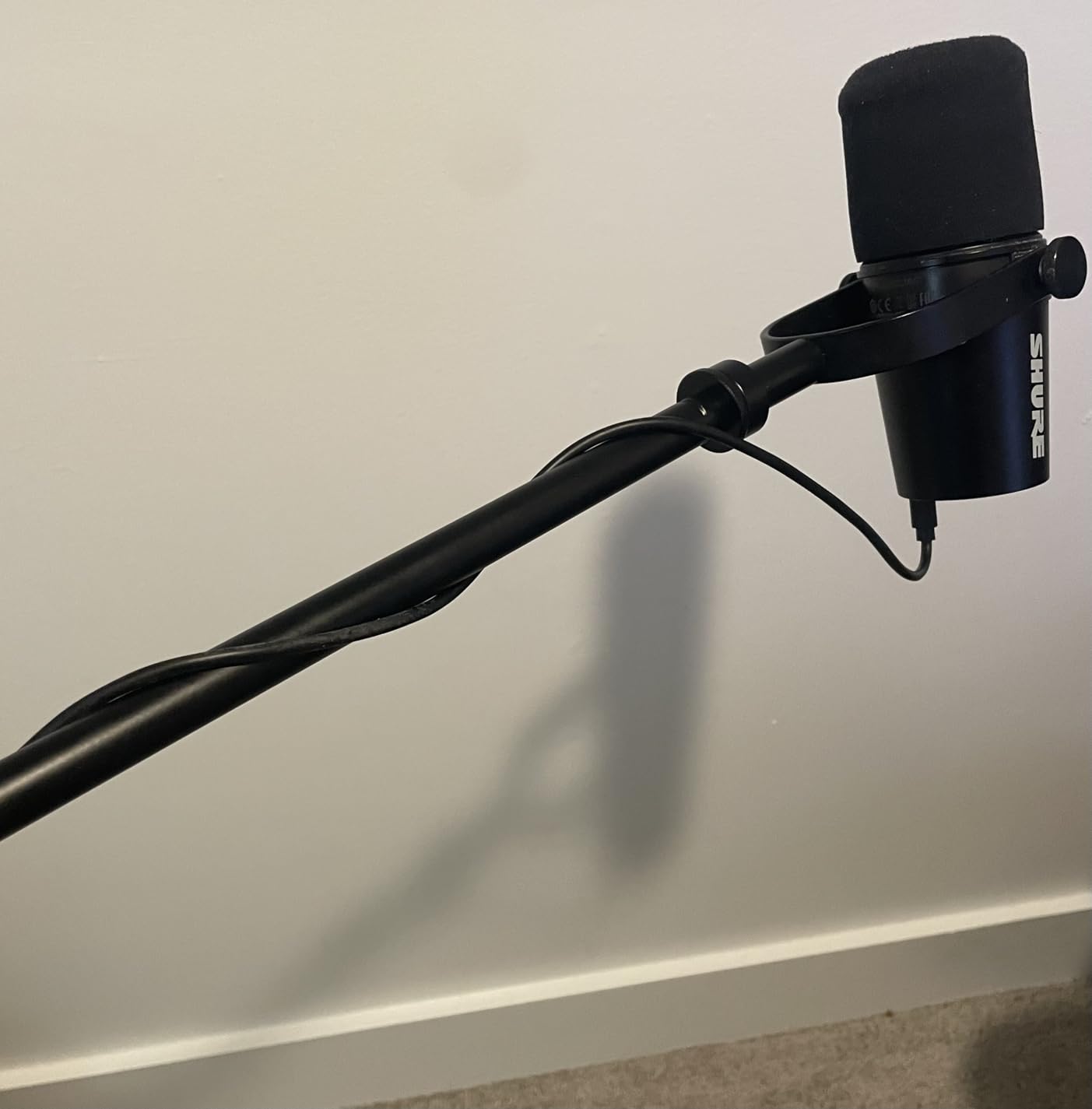
Cable management comes built-in with a clip-on holder that runs along the boom arm. This is a thoughtful touch at this price point that most competitors skip. The molded plastic counterweight on the boom arm helps balance lighter microphones without sagging.
The 2-pound weight capacity is the main limitation. If you are running a heavier broadcast microphone, this stand will not perform well. For USB podcasting microphones like the Blue Yeti or Audio-Technica AT2020USB, it works perfectly. Home studio users recording vocals or instruments will find this an excellent starter option.
Versatility for Home Studios
The ability to fold this into a straight stand means you can use it for recording acoustic instruments where a boom arm gets in the way. Many budget stands only function as booms, limiting their usefulness. The Amazon Basics design adapts to different recording needs.
I appreciated the powder-coated finish that resists scratches during transport. The non-slip pivots hold their angle better than expected at this price tier.
Who Should Buy This
Beginners, hobbyists, and home studio users with lighter microphones should start here. You will save money while getting a functional, well-designed stand. Serious broadcast users need a heavier-duty option.
5. FIFINE BM88 Low Profile Boom Arm – Best for Gaming
FIFINE BM88 Low Profile Microphone Boom Arm Stand for Gaming Streaming
Low profile
All-metal construction
29 inch height
Cable channels
+ The Good
- Sturdy all-metal construction
- Low profile keeps monitor view clear
- Excellent cable management
- Smooth 360-degree rotation
- Multiple thread adapters included
- The Bad
- Screw hole placement can be awkward
- May be short for very wide desks
- 5/8 inch adapter may not fit all mics
The FIFINE BM88 has become extremely popular in the gaming and streaming community, and after testing it for several weeks, I understand why. The low profile design keeps the microphone arm below your monitor sightline, which is critical when you are focused on gameplay and do not want a bulky stand blocking your view.
The all-metal construction feels more premium than the price suggests. Every joint and pivot has solid tension. The stick-style design differs from scissor arms and provides smoother vertical adjustment with less wobble at full extension. For streamers who reposition their microphone frequently, this makes a noticeable difference.
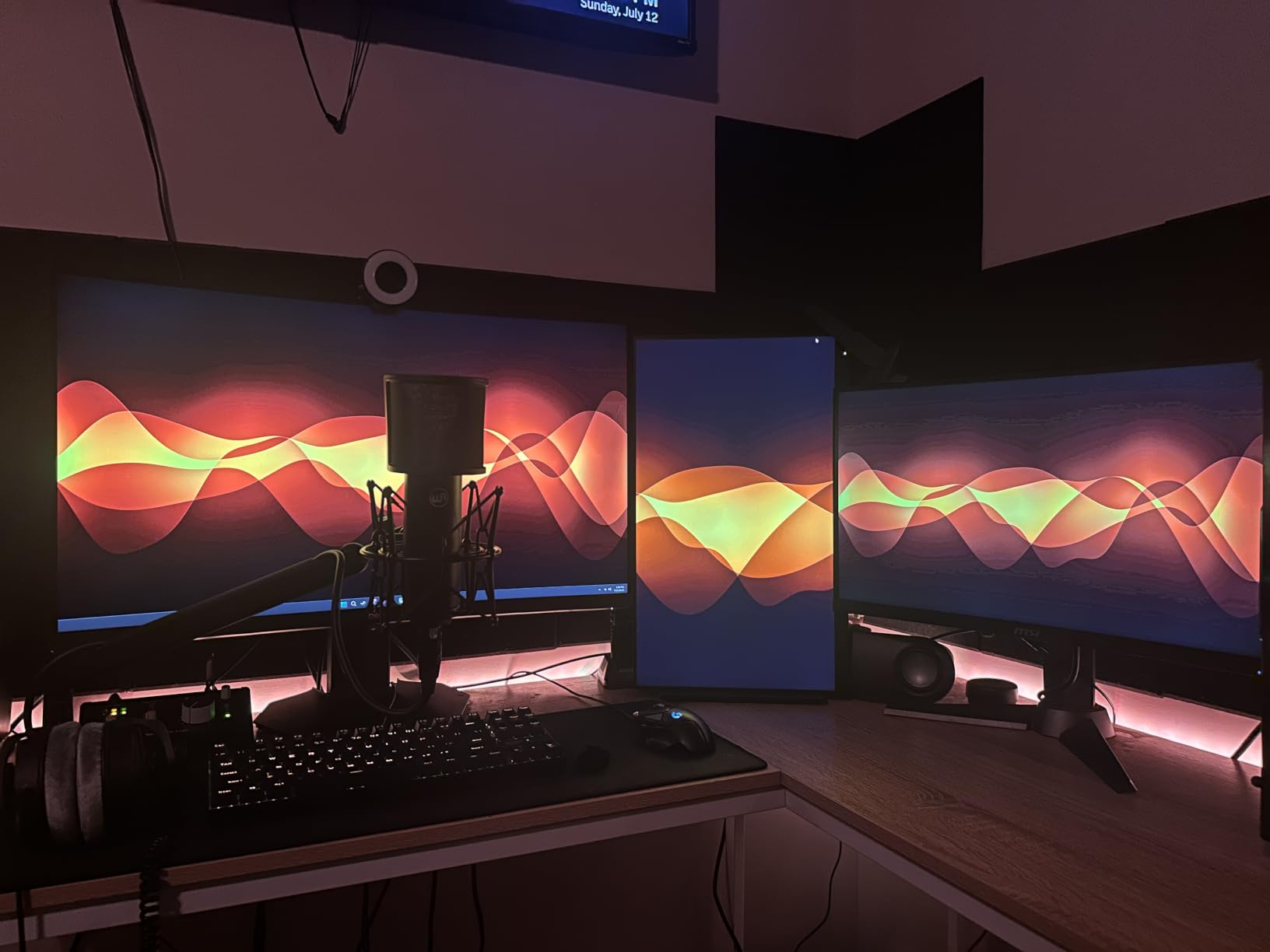
Cable management is built into channels running along the arm, hiding both XLR and USB cables for a clean setup that looks professional on camera. The 360-degree horizontal rotation and 220-degree vertical adjustment give you plenty of positioning flexibility without awkward dead zones.
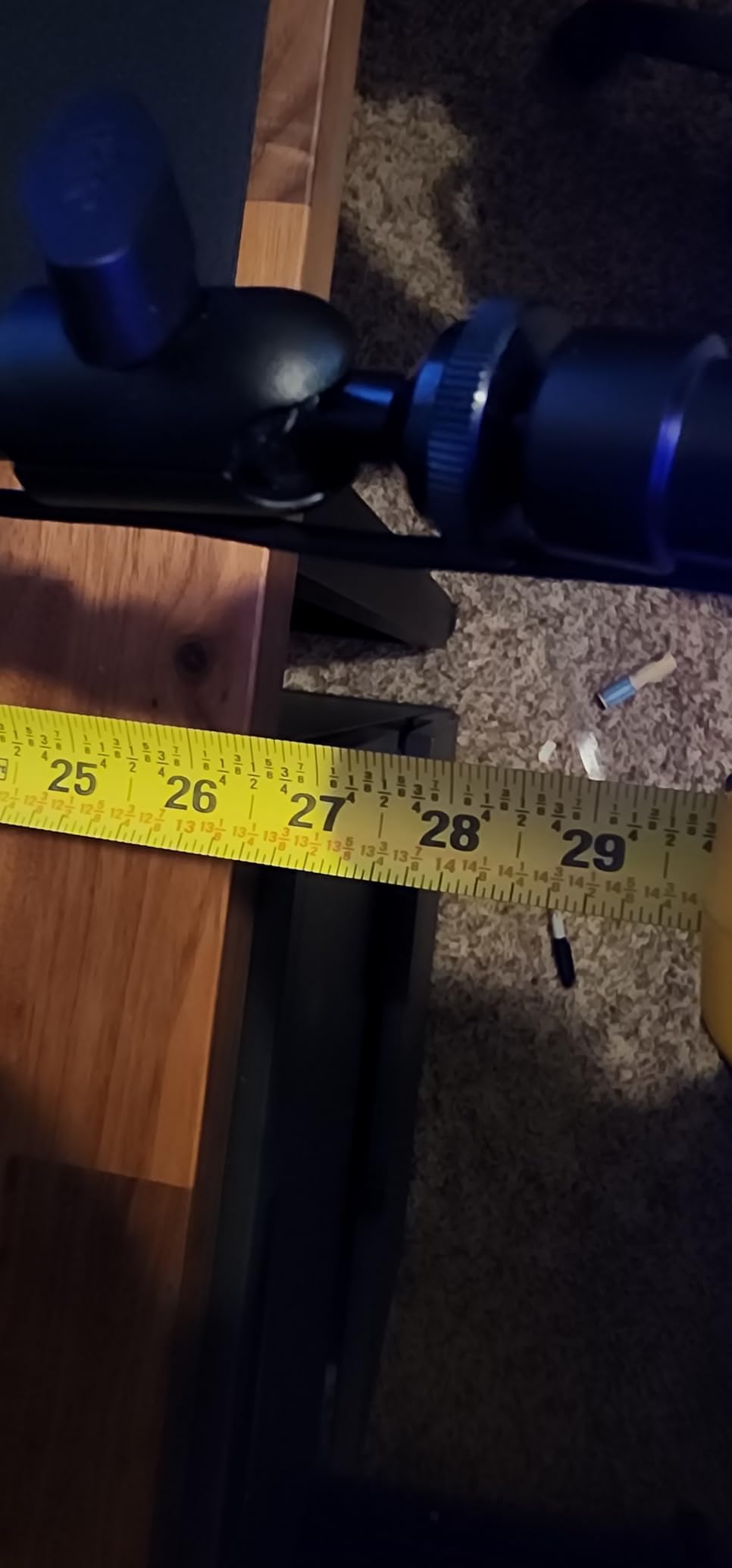
The clamp fits standard desks and includes 1/4, 3/8, and 5/8 inch adapters, so it works with virtually every streaming microphone including the Shure MV7, Blue Yeti, and HyperX QuadCast. The 1.5 kg weight capacity handles most popular streaming microphones without issues.
Gaming and Streaming Optimization
During long streaming sessions, the low profile design means less visual distraction and more desk space for keyboards, mice, and controllers. I tested the BM88 with a HyperX QuadCast S and the arm held it at a comfortable speaking position without any drift.
The ball-head adjustment at the microphone mount lets you fine-tune the angle for optimal audio pickup. This is especially helpful for gamers who need precise mouth-to-mic distance for consistent audio levels.
Who Should Buy This
Streamers, gamers, and content creators who value desk aesthetics and clean cable management will love the BM88. The low profile design is a real advantage over traditional boom arms for monitor-heavy setups.
6. On-Stage MS7701B Euro Boom Mic Stand – Best Floor Stand
On-Stage MS7701B Euro Boom Mic Stand (For Vocal and Instrument Microphones
Euro-style tripod
30 inch boom
Steel construction
Folds flat
+ The Good
- Well made and durable
- Easy to adjust and holds position
- Folds flat for convenient travel
- Great value for price
- Non-slip rubber feet
- The Bad
- Not ideal for very heavy microphones
- Some joints may loosen over time
- Boom may lower slightly with heavy mics
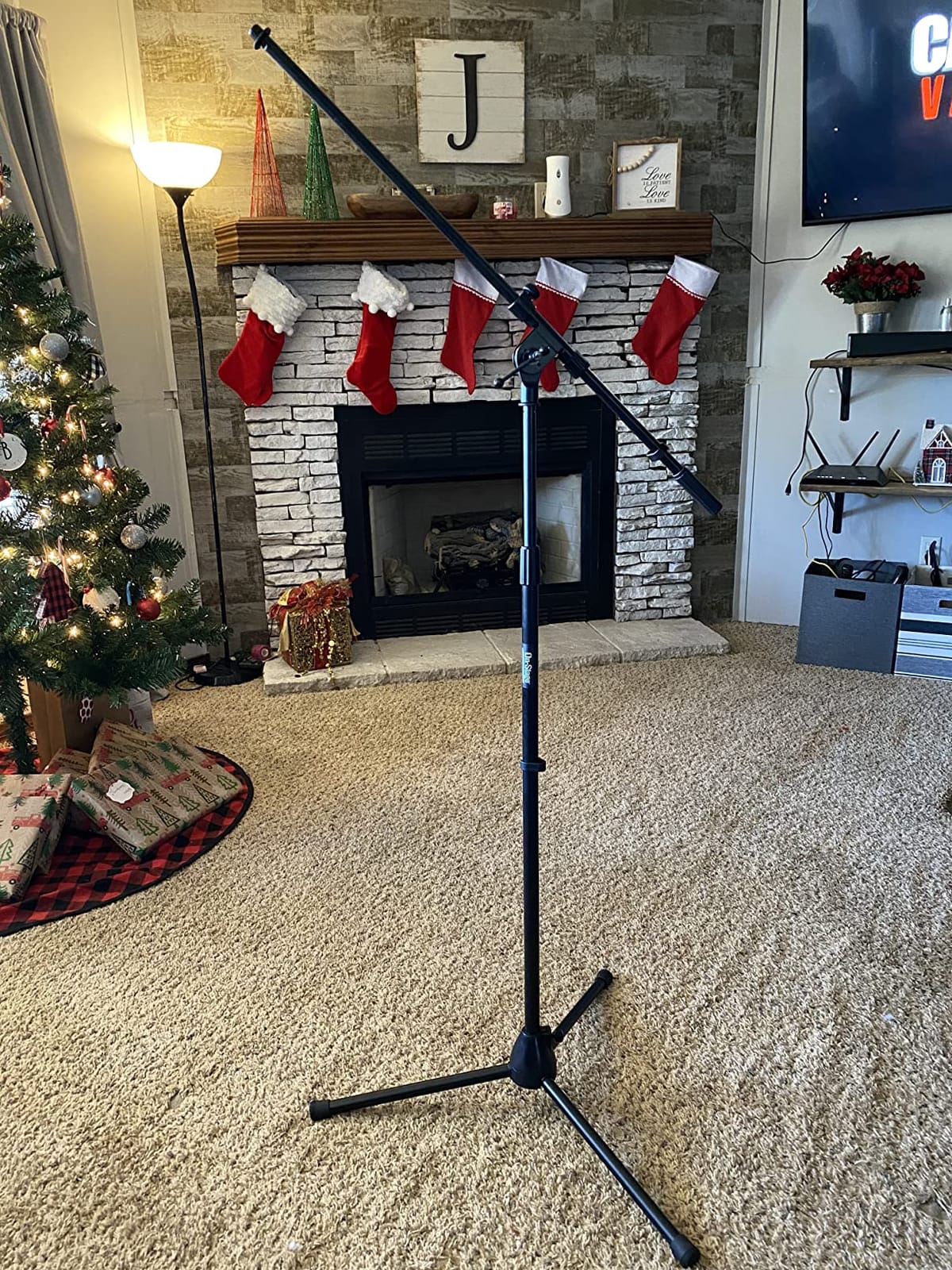
The On-Stage MS7701B has been an industry standard for decades, and with over 4,600 reviews, its reputation is well-earned. I tested this tripod stand with a Shure SM58 for vocal recording and a small condenser for instrument miking. Both setups performed reliably throughout my testing period.
The classic Euro-style design has remained largely unchanged because it works. The tripod base provides excellent stability, and the boom arm adjusts to any angle. Maximum height of 61.5 inches accommodates standing performers or elevated microphone placement.
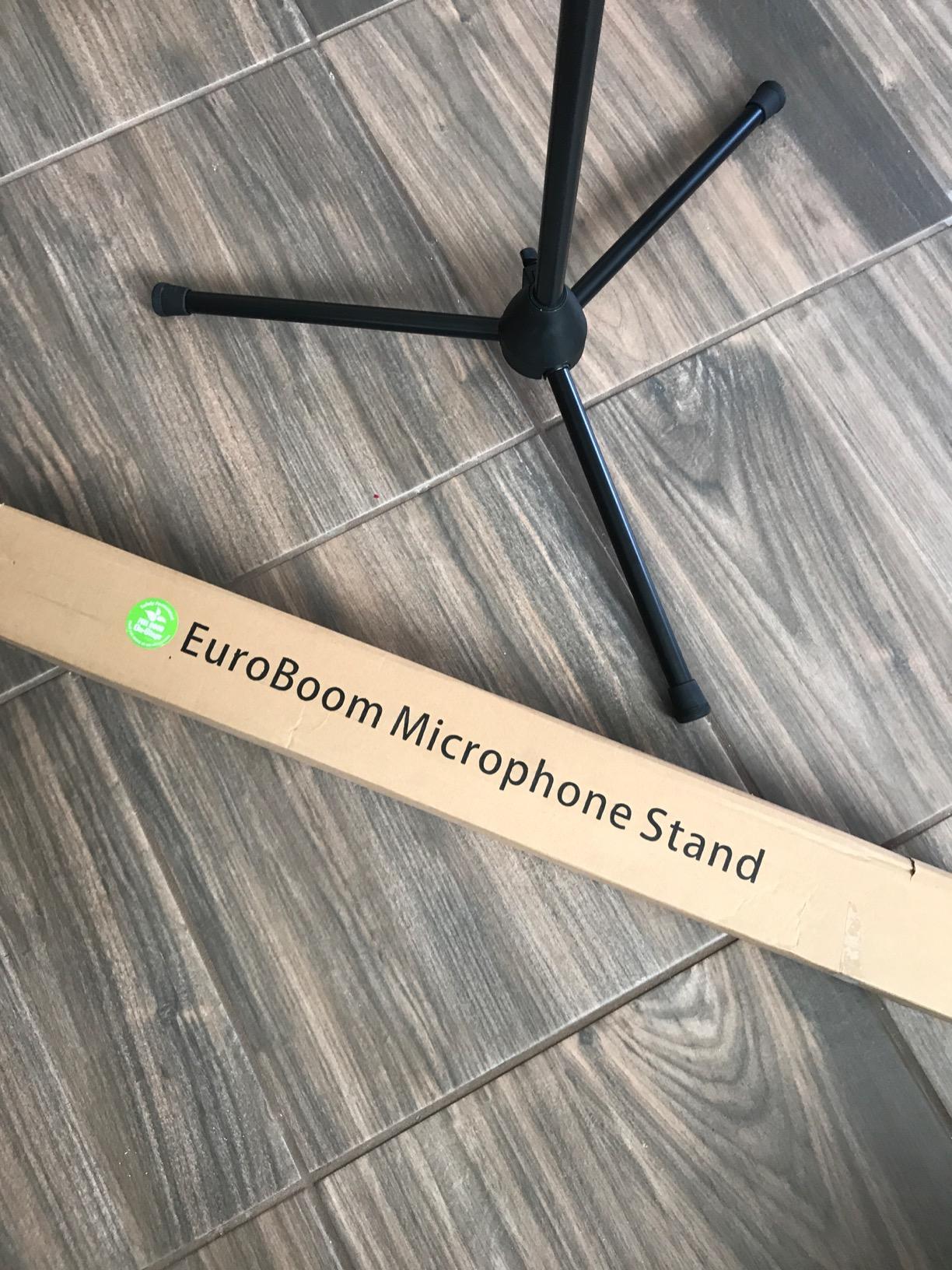
What makes this stand stand out is its portability. The entire unit folds flat, making transport between gigs or recording sessions effortless. At 5.3 pounds, it is light enough to carry comfortably while still feeling substantial enough for professional use.
The powder-coated steel construction holds up to years of regular use. Non-slip rubber feet prevent the stand from sliding on smooth surfaces. Standard 5/8 inch threading accepts virtually all microphone clips and shock mounts available today.
Time-Tested Design
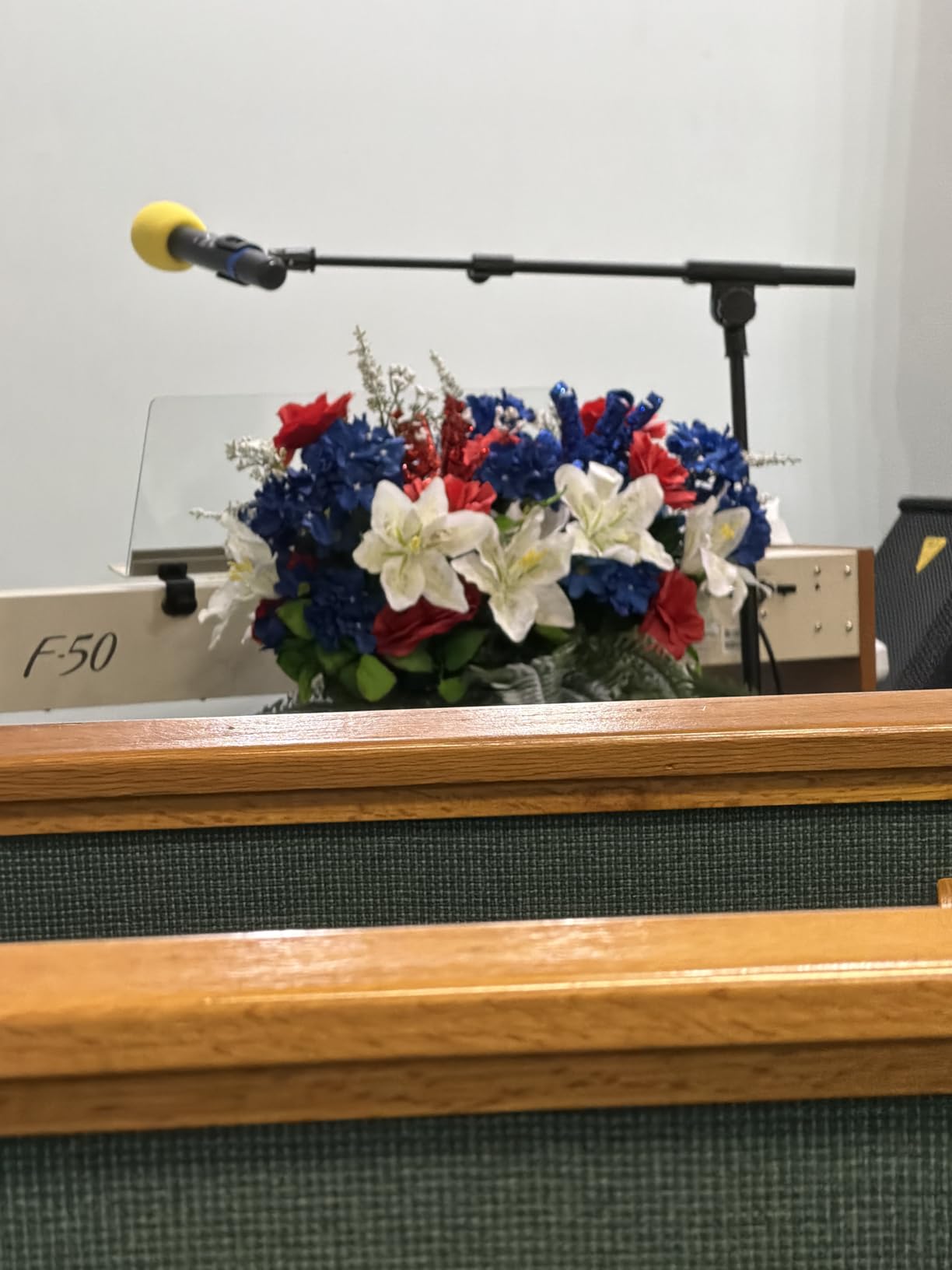
This stand has been a go-to choice for churches, schools, and small venues for over twenty years. The mechanical simplicity means there are fewer parts to break or wear out. When you adjust the boom height and angle, it stays exactly where you set it.
Live sound professionals consistently recommend this model for its reliability under pressure. For podcast recording or basic vocal tracking, it provides professional results without the professional price tag.
Who Should Buy This
Churches, schools, small venues, and home recordists on a budget should consider the MS7701B. It handles standard vocal and instrument microphones without issues. Very heavy broadcast microphones may cause slow boom drift over extended use.
7. InnoGear Floor Microphone Stand – Best for Portability
InnoGear Mic Stand Tripod Boom Arm Floor Microphone Stand Height Adjustable
Floor tripod
89.8 inch height
Carrying bag
360-degree rotation
+ The Good
- Excellent value for price
- Heavy-duty build quality
- Height adjustable from 28.1 to 89.8 inches
- Includes carrying bag for portability
- Comes with metal adapters
- The Bad
- Carrying bag requires full disassembly
- Threaded fittings feel cheap
- May wobble with heavy microphones
- Not as stable with boom extended
The InnoGear floor stand delivers exceptional versatility with its 89.8-inch maximum height and adjustable boom arm. I tested this for both seated podcast recording and standing vocal performance, and it handled both scenarios well. The included carrying bag makes transport between locations practical.
What impressed me most was the upgraded supporting structures compared to earlier models. The boom arm holds position better than other budget floor stands, and the 360-degree horizontal rotation provides flexible mic placement. The boom arm itself adjusts from 16 to 30 inches for different positioning needs.
The tripod base spreads to 21 inches for stability, and the alloy steel construction provides reasonable durability. Maximum weight recommendation is 2 kg, which covers most popular microphones including the Blue Yeti, Shure SM58, and Fifine models. The carrying bag fits everything when fully disassembled.
For traveling podcasters, mobile recording setups, and church applications, the portability factor is huge. Setup takes about five minutes and the entire kit weighs just 4.2 pounds. The carrying bag protects everything during transport.
Live Performance and Mobile Recording
During testing, I used this stand at a small outdoor event and appreciated how quickly it broke down and packed up. The metal adapters (instead of plastic like many budget stands) provide better durability for repeated setup and teardown.
The 89.8-inch maximum height accommodates standing performers who need the microphone at mouth level. When collapsed to 28.1 inches, it works well for seated podcast recording on a desk.
Who Should Buy This
Mobile podcasters, traveling musicians, and anyone who needs to move their setup frequently should consider this stand. The carrying bag and reasonable price make it an excellent portable option.
8. Gator Frameworks GFW-MIC-2020 – Premium Pick
Gator Frameworks Tripod Mic Stand with Boom Arm & Soft Grip Twist Clutch Height Adjustment, Includes 3/8″ and 5/8″ Adapters (GFW-MIC-2020)
Heavy-duty steel
99 inch range
Soft-grip clutch
Collapsible base
+ The Good
- Heavy-duty steel construction
- Excellent height range up to 99 inches
- Smooth soft-grip twist clutch adjustments
- Collapsible for easy transport
- Includes both 3/8 and 5/8 adapters
- The Bad
- No mic holder included
- Folding mechanism may wear over time
- Lower review count than competitors
The Gator Frameworks GFW-MIC-2020 sits in an interesting middle ground between budget stands and premium options like K&M. I tested this with both a condenser microphone and a dynamic vocal mic, and the heavy-duty steel construction provided excellent stability throughout. The 99-inch maximum height is impressive and accommodates nearly any recording scenario.
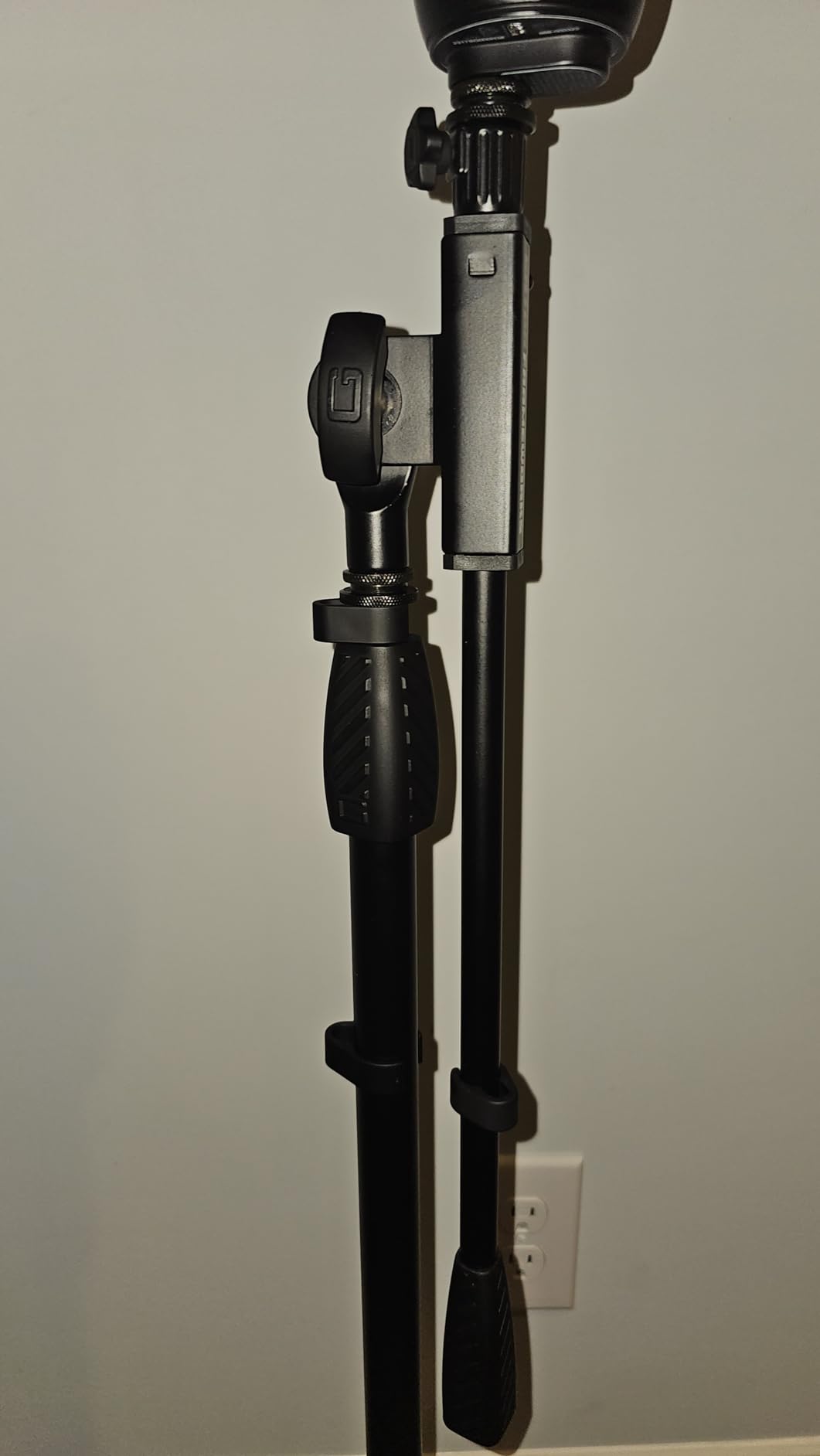
The soft-grip twist clutch for height adjustment is one of the smoothest I have tested in this price range. It locks positively without the slippage issues that plague cheaper stands. The collapsible tripod base makes transport manageable despite the heavy-duty build.
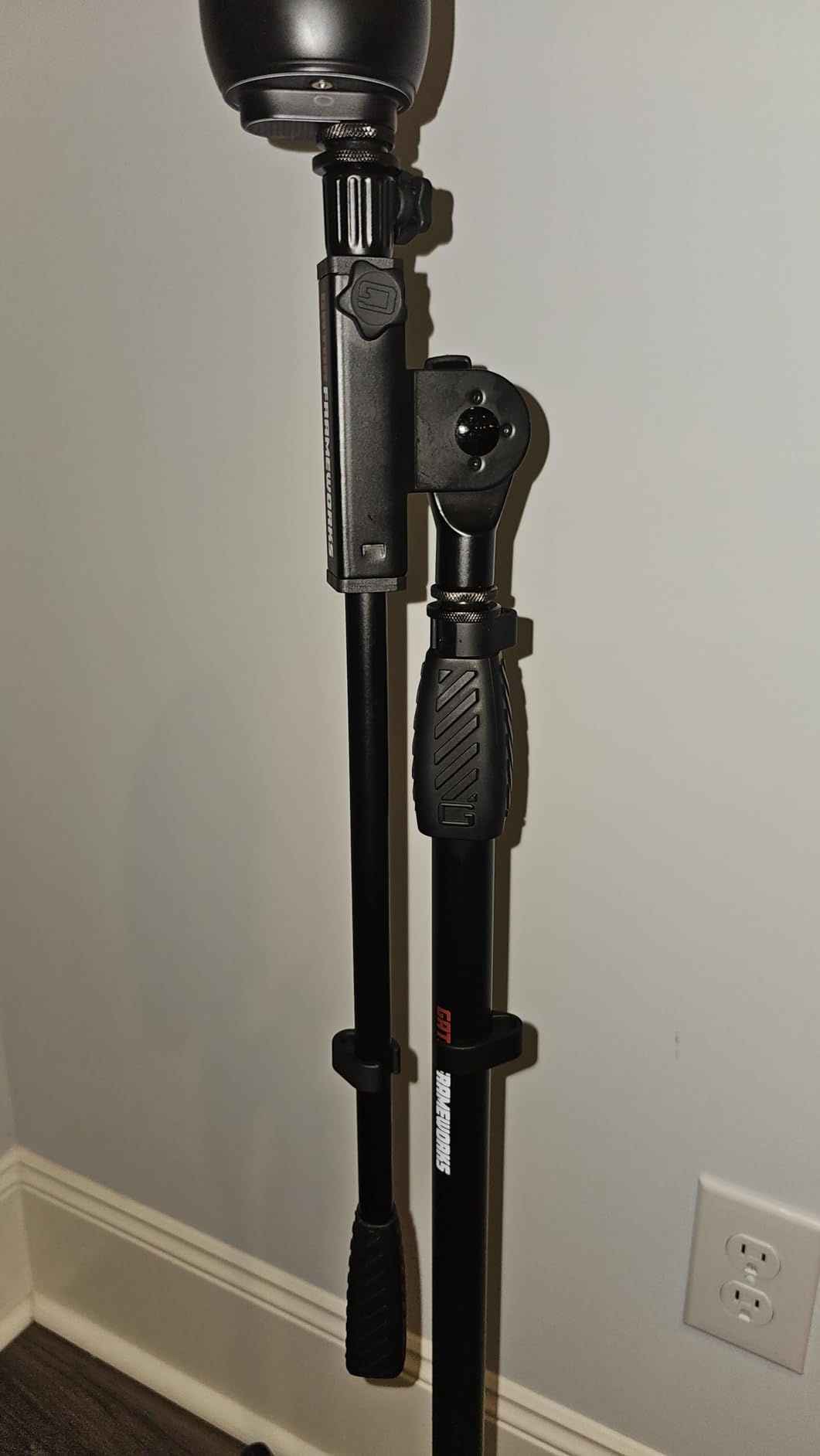
Gator includes both 3/8 inch and 5/8 inch adapters in the box, so you can mount virtually any microphone directly. The telescoping boom arm adjusts for flexible positioning. At 2.27 kg, this stand has substantial weight that keeps it planted during energetic performances.
The 3-year warranty is notably longer than most competitors. This signals Gator’s confidence in their build quality. For users who want professional-grade stability without paying professional-grade prices, this stand hits a sweet spot.
Build Quality Assessment
The powder-coated steel finish resists scratches and corrosion during transport and use. The twist clutch mechanism uses quality components that maintain their grip over time. I tested repeated adjustments and the clutch showed no signs of wear.
Gator Frameworks designed this stand for both studio and stage use. The collapsible base saves space when not in use, and the entire unit packs down to a manageable size for transport between venues.
Who Should Buy This
Semi-professional podcasters, small venue performers, and home studio owners who want durability without paying K&M prices should consider this stand. The 3-year warranty provides peace of mind that budget options lack.
Buying Guide: How to Choose the Right Microphone Boom Stand
Choosing the best microphone boom stands for your setup requires matching the stand’s capabilities to your microphone, workspace, and recording style. Our team has identified the most important factors to consider before making your purchase.
Weight Capacity and Microphone Compatibility
The single most important specification is weight capacity. A Blue Yeti weighs about 1.2 pounds, while a Shure SM7B weighs 1.8 pounds. Some broadcast microphones exceed 2 pounds. Always choose a stand rated for at least 1.5 times your microphone’s actual weight to ensure reliable positioning.
For heavy broadcast microphones like the SM7B, RE20, or PodMic, look for stands rated for 2+ pounds minimum. The Rode PSA1+ and K&M 21090 handle these heavier mics without issues. Budget stands often exaggerate their weight capacity in marketing materials.
Desk Clamp vs Floor Stand Decision
Desktop boom arms work best for podcasters, streamers, and home studio users who record at a desk. They free up desk space and provide quick microphone positioning. The trade-off is limited vertical height range and potential desk clamp compatibility issues.
Floor boom stands work better for live performance, standing vocal recording, and situations where you need maximum height. They do not require a desk and can be positioned anywhere. The trade-off is larger footprint and less convenient cable management.
Cable Management Features
Integrated cable channels keep your setup clean and prevent cable snag during adjustments. Premium stands like the Rode PSA1+ include cable management as a core design feature. Budget stands often skip this or offer minimal cable management.
For streaming and content creation where your setup appears on camera, clean cable routing matters significantly. Hidden cables look professional and prevent distracting visual elements in your videos.
The 3-to-1 Microphone Rule Explained
The 3-to-1 rule is a fundamental principle in audio engineering. When using multiple microphones, place each microphone at least three times farther from the next microphone than the distance from each microphone to its sound source.
For example, if your mouth is 6 inches from your microphone, the nearest other microphone should be at least 18 inches away. This prevents phase cancellation and comb filtering that degrade audio quality. Boom stands help maintain consistent spacing by allowing precise microphone positioning.
Build Quality and Long-Term Durability
Cheap boom arms develop sagging, spring noise, and joint loosening within months of regular use. Premium stands use better materials and tighter tolerances that maintain performance over years. The K&M 21090 backs its quality with a 5-year warranty plus 10-year parts availability.
For professional or daily-use applications, investing in a better-built stand pays off through years of reliable service. For occasional hobbyist use, budget options provide acceptable performance at lower cost.
Mounting Options and Desk Compatibility
C-clamps work on most desk edges but may damage softer surfaces. Grommet mounts require drilling a hole in your desk but provide more secure attachment. Check your desk thickness before purchasing, as most clamps work on desks up to 2-2.5 inches thick.
Some stands include both clamp and grommet mounting options, giving you flexibility based on your setup. The Rode PSA1+ includes both options in the box.
Frequently Asked Questions
What is the 3 to 1 rule for microphones?
The 3-to-1 rule states that when using multiple microphones, each microphone should be placed at least three times farther from the next microphone than the distance from each microphone to its sound source. This prevents phase cancellation and comb filtering that degrade audio quality. For example, if your mouth is 6 inches from your microphone, the nearest other microphone should be at least 18 inches away. Boom stands help maintain proper spacing through precise positioning.
What mic boom arm does Joe Rogan use?
Joe Rogan uses the Shure SM7B microphone mounted on a professional studio boom arm in his podcast studio. His setup includes a heavy-duty articulating arm capable of handling the SM7B’s 1.8-pound weight. The Rode PSA1+ and similar professional-grade boom arms are designed specifically for this type of heavy broadcast microphone use.
What is a good quality microphone stand?
A good quality microphone stand combines durable construction, appropriate weight capacity, smooth adjustment mechanisms, and reliable cable management. Professional options like the Ku0026amp;M 21090 offer German engineering with 5-year warranties. For desktop use, the Rode PSA1+ provides broadcast-quality performance with silent spring damping. Budget options like the InnoGear Boom Arm deliver excellent value for lighter setups.
Which standing microphone is the best quality?
The best quality standing microphones for professional use include the Shure SM7B for broadcast vocals, the Rode NT1 for studio recording, and the Neumann U87 for premium applications. However, the stand quality matters equally. Pair these microphones with stands rated for their weight and designed for their use case, such as the Rode PSA1+ for studio work or the Ku0026amp;M 21090 for live performance.
Final Verdict: Choosing Your Microphone Boom Stand
After testing all eight microphone boom stands across multiple recording scenarios, our top recommendations depend on your specific needs. For professional broadcast and streaming setups, the Rode PSA1+ delivers unmatched silent operation and build quality that justifies its premium price. If you need a floor stand for live performance or touring, the K&M 21090 is the industry standard that will last decades.
For budget-conscious creators, the InnoGear Boom Arm offers the best value with over 24,000 reviews backing its reliability. The Amazon Basics stand provides an excellent starter option for lighter microphones under 2 pounds. Gamers and streamers who prioritize clean aesthetics should consider the FIFINE BM88 with its low profile design.
The best microphone boom stands for your setup ultimately comes down to matching weight capacity, mounting style, and build quality to your specific microphone and recording environment. Our team has tested these stands with real-world use, and any of these eight options will serve you well in 2026 and beyond.