
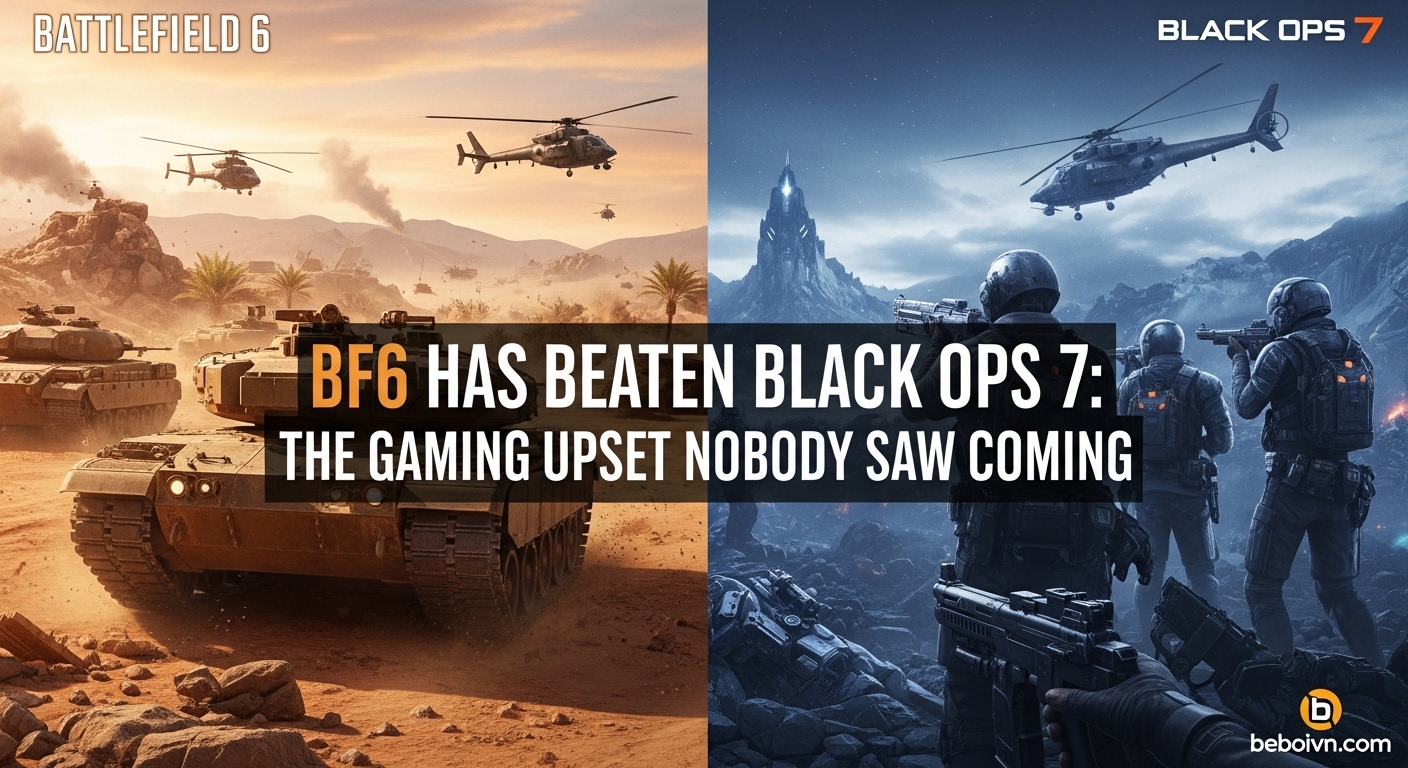
“BF6 has beaten Black Ops 7” was not something many expected to hear, yet here we are—and for good reason. In a stunning turn of events that has sent shockwaves through the gaming industry, Electronic Arts’ Battlefield 6 has not only outperformed Activision’s Call of Duty: Black Ops 7 but has achieved record-breaking success that has analysts and fans alike rethinking the FPS landscape. This isn’t just a minor victory; it’s a seismic shift in the decades-long rivalry between two of gaming’s biggest franchises.
The Numbers Don’t Lie: Battlefield 6’s Record-Breaking Performance
The sales figures tell a story that even the most optimistic Battlefield fans couldn’t have predicted. Battlefield 6 didn’t just succeed—it shattered records across the board. According to Circana’s gaming industry data, BF6 produced the highest single-month US physical and digital full-game tracked dollar sales total in three years. The last title to generate larger sales in a single month was Call of Duty: Modern Warfare II back in October 2022.
What makes this achievement even more remarkable is that Battlefield 6 became 2025’s best-selling game overall in the United States based on dollar sales after just three weeks on the market. It’s currently the #1 best-selling game on Xbox and PC for 2025, and ranks #2 on PlayStation (trailing only NBA 2K26). EA confirmed that Battlefield 6 sold 7 million copies out of the gate, with industry analysts suggesting that number has since grown to 10 million—making it the best-selling game in Battlefield franchise history.
Black Ops 7’s Struggle: A 60% Sales Decline
While Battlefield 6 was breaking records, Black Ops 7 was experiencing a dramatic sales decline that has left Activision executives scrambling. The numbers are sobering: Black Ops 7’s physical and digital sales are down over 60% compared to Black Ops 6. In Europe, the situation is even more dire, with sales down 63% compared to Battlefield 6 and over 50% compared to last year’s Call of Duty installment.
Even more telling is Activision’s unusual silence regarding sales figures. Unlike previous years where the company would proudly announce first-weekend performance metrics, this time around, no such data was shared—a clear indication that the numbers weren’t worth celebrating. On Steam, Black Ops 7’s peak player count reached only a third of what the previous entry achieved and nearly half of Black Ops 6’s numbers, with even joke games like “Escape From Duckov” outperforming it at times.
Why Battlefield 6 Succeeded Where Others Failed?
Return to Form: The Battlefield Experience Fans Craved
Battlefield 6’s success can be attributed to several key factors, chief among them being a return to what made the franchise great in the first place. Unlike the disappointing Battlefield 2042, which alienated longtime fans with its departure from core mechanics, BF6 delivers exactly what Battlefield enthusiasts have been asking for: grounded, dynamic multiplayer warfare scenarios that prioritize teamwork, role-playing, and long-term strategy.
Each Battlefield 6 match feels like a tightly choreographed war movie, with a sense of weight and atmosphere courtesy of its sheer scale and smartly implemented mechanics. The game features high-intensity infantry combat, aerial dogfights, environmental destruction, and the innovative Kinesthetic Combat System—all elements that create the signature Battlefield experience that had been missing in recent entries.
The Innovation Factor: Portal and Beyond
Battlefield 6 didn’t just rely on nostalgia; it introduced meaningful innovations that set it apart from the competition. The Battlefield Portal feature stands out as a game-changer—a powerful creation tool that allows players to design custom maps and game modes, similar to Fortnite’s creator islands. This has fostered a vibrant creative community and extended the game’s longevity significantly.
The multiplayer suite offers unprecedented variety, from large-scale modes like Conquest, Breakthrough, and Rush to fast-paced action with King of the Hill, Domination, and Payload. This diversity ensures that players of all preferences can find something to enjoy, whether they prefer epic 64-player battles or more intimate 8v8 Squad Deathmatch matches.
Black Ops 7’s Critical Missteps
A Campaign That Failed to Deliver
One of the most significant factors in Black Ops 7’s poor performance was its universally panned campaign mode. Players and critics alike considered it “utterly terrible”—not just one of the worst in Call of Duty history but among the worst campaigns in all of modern shooters. The sci-fi setting, which was supposed to be a fresh take, instead felt disconnected from what Call of Duty fans wanted.
The campaign’s failure was so complete that developers made the Endgame mode—originally intended as a post-campaign unlock—free for everyone less than a week after release. To salvage the situation, Activision had to offer substantial rewards (including double XP and exclusive items) just to incentivize players to experience the campaign content.
Technical Issues and Broken Promises
Black Ops 7 launched with numerous technical problems that severely impacted player experience. Despite promises of a new matchmaking system that would minimize Skill-Based Matchmaking (SBMM) and prioritize connection quality, players reported the opposite: longer matchmaking times (30 seconds to 1 minute), unstable ping, frequent high latency, and deteriorated hit detection.
The “No Disbanding Lobbies” feature, heavily promoted before launch, failed to materialize as advertised. Players found themselves being kicked from Persistent Lobbies despite exceptional performance, leading to widespread belief that developers had misled them about the Open Matchmaking feature. This ambiguity around SBMM implementation—described as “minimum considerations” without clear definition—created a trust deficit between players and developers.
The Game Pass Factor: A Double-Edged Sword
While Black Ops 7’s availability on Xbox Game Pass certainly impacted direct sales numbers, it doesn’t fully explain the 60% decline compared to Black Ops 6, which was also available on Game Pass. The subscription service may have accelerated the sales drop, but it wasn’t the root cause. Instead, it appears that Game Pass availability combined with poor quality and negative word-of-mouth created a perfect storm of commercial underperformance.
The Broader Industry Implications
A Shift in Gaming Dynamics
Battlefield 6’s success over Black Ops 7 represents more than just a single game outperforming another—it signals a potential shift in the FPS landscape. For years, Call of Duty has dominated the genre with seemingly unassailable market position. However, Battlefield 6’s achievement suggests that players are increasingly willing to abandon established franchises when they fail to deliver quality experiences.
The contrast between the two games’ receptions couldn’t be starker. While Battlefield 6 earned “Strong” ratings on OpenCritic and positive player feedback, Black Ops 7 struggled with critic scores in the high 60s across all platforms. Social media sentiment around Black Ops 7 has been described as “abysmal,” with viral clips often mocking the campaign or highlighting technical issues.
The Annual Release Model Under Scrutiny
Black Ops 7’s struggles have reignited debate about the sustainability of annual release schedules for major franchises. As one industry analyst noted, Call of Duty has become “the McDonald’s of the gaming world”—a reliable but increasingly shallow experience that’s lost its novelty and excitement. The annual cycle has robbed the franchise of the time needed for meaningful innovation and quality assurance.
Activision itself acknowledged “fatigue” around the Black Ops brand given the back-to-back releases of Black Ops 6 in 2024 and Black Ops 7 in 2025. This admission, combined with the poor sales performance, suggests that the industry may be reaching a breaking point with annualized sequels.
Expert Perspectives: What This Means for the Future?
The Battlefield Renaissance
Industry experts view Battlefield 6’s success as a renaissance for the franchise. After years of struggling to find its identity following Battlefield 2042’s disappointing launch, DICE has delivered a game that not only meets but exceeds fan expectations. The return to large-scale warfare, combined with meaningful innovations like Portal, has positioned Battlefield as the premier choice for players seeking authentic military shooter experiences.
“Battlefield 6 succeeded not only due to their standard game design just being back that just works but more importantly the solid gameplay overall,” noted one gaming analyst. This focus on core gameplay fundamentals, rather than chasing trends, appears to have resonated strongly with players.
Call of Duty at a Crossroads
Conversely, Black Ops 7’s performance represents a critical juncture for the Call of Duty franchise. Despite its historical dominance, the series now faces genuine questions about its future direction. The combination of technical issues, poor campaign quality, and player dissatisfaction with SBMM implementation has created a perfect storm of negative sentiment.
However, it’s important to note that Call of Duty remains a formidable franchise. Even in a down year, Black Ops 7 was still the best-selling game in Europe during its launch week. The franchise’s massive player base and brand recognition mean it could quickly recover with the right adjustments and a return to quality.
The Road Ahead: What Both Franchises Must Do Next?
For Battlefield: Maintaining Momentum
The challenge for EA and DICE now is maintaining Battlefield 6’s momentum. The game has proven that there’s substantial demand for large-scale, teamwork-focused military shooters, but success in the gaming industry is often fleeting. Continued support through regular content updates, community engagement, and addressing player feedback will be crucial for long-term success.
The Portal feature represents a significant opportunity for sustained engagement. By empowering the community to create content, Battlefield 6 could maintain relevance long after its initial launch window—a strategy that has proven successful for games like Fortnite and Minecraft.
For Call of Duty: A Return to Quality
For Activision, the path forward is clear but challenging: a return to quality. The Black Ops franchise needs a significant course correction, focusing on the elements that made Call of Duty great in the first place: tight gunplay, compelling campaigns, and technical excellence. This may require extending development cycles and moving away from the annual release model that has contributed to quality issues.
Addressing the SBMM controversy will also be crucial. Players have made it clear that they want more transparent matchmaking systems that prioritize connection quality and casual play experiences. Rebuilding trust with the community will require not just technical fixes but also clear communication about future development priorities.
Conclusion: A New Era in FPS Gaming
“BF6 has beaten Black Ops 7” was indeed a statement few expected to hear in 2025, yet the reasons behind this upset are clear when examining the evidence. Battlefield 6 succeeded by returning to franchise fundamentals while introducing meaningful innovations, creating an experience that resonated strongly with players. Meanwhile, Black Ops 7 stumbled due to poor quality, technical issues, and a failure to meet fan expectations.
This development represents more than just a single game’s success over another—it signals a potential shift in the FPS landscape where quality and player experience ultimately trump brand recognition and marketing budgets. As the gaming industry continues to evolve, both franchises will need to adapt to these changing player expectations.
For Battlefield, the challenge is maintaining this hard-won momentum and proving that this success wasn’t a fluke. For Call of Duty, it’s about rediscovering the magic that made it the dominant force in gaming for so long. One thing’s certain: the rivalry between these two titans of gaming has never been more exciting, and players stand to benefit from the competition.
Whether you’re a longtime fan of military shooters or new to the genre, there’s never been a better time to be an FPS enthusiast. The success of Battlefield 6 and the struggles of Black Ops 7 remind us that in gaming, as in all forms of entertainment, quality ultimately wins out. The question now is: what will both franchises learn from this unexpected turn of events, and how will they shape the future of first-person shooters?