
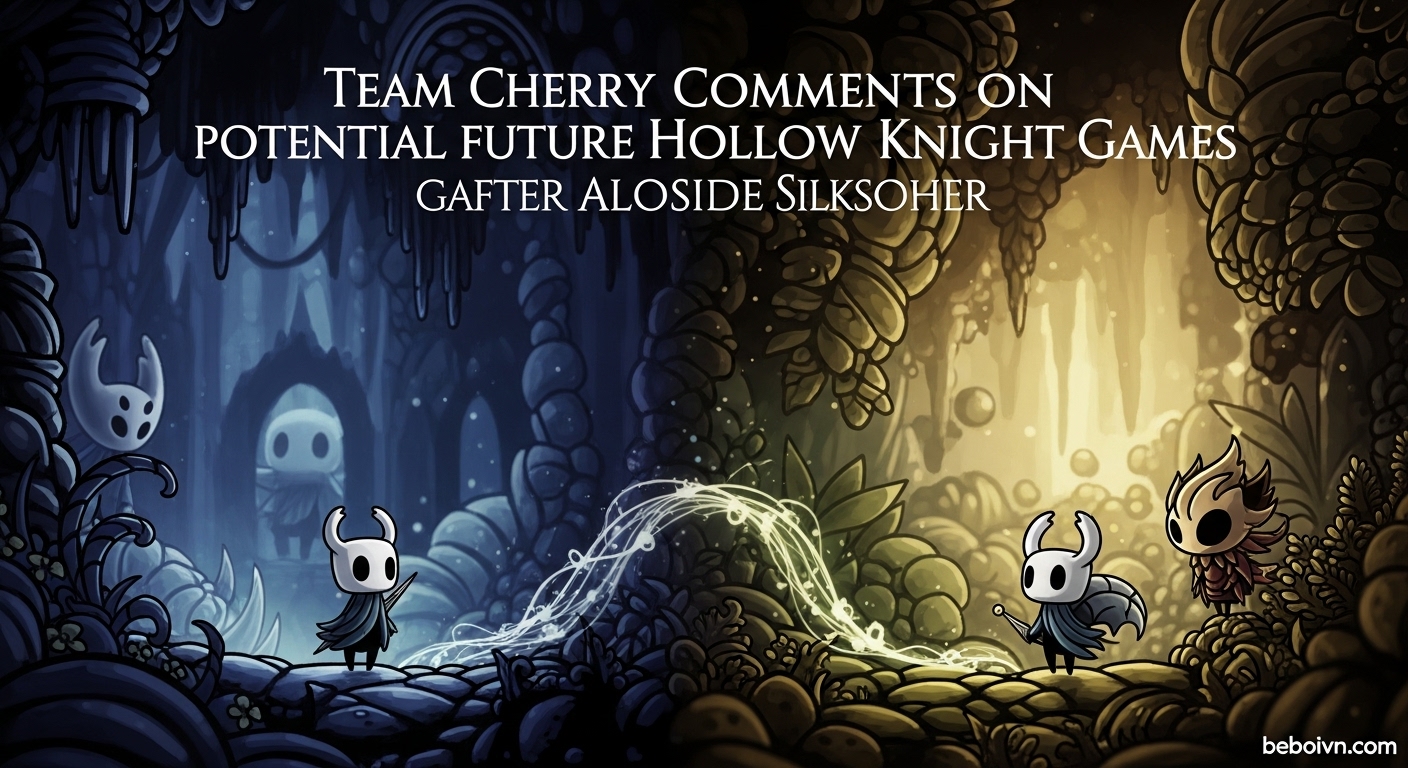
In the wake of Hollow Knight: Silksong’s monumental success, fans around the world have been wondering what’s next for Team Cherry and the beloved bug-themed universe they’ve created. The Australian developer, known for their meticulous attention to detail and commitment to quality over quantity, has finally broken their silence on the possibility of future Hollow Knight games. In a revealing interview with the Australian Centre for the Moving Image (ACMI), Team Cherry’s co-directors Ari Gibson and William Pellen shared their philosophy on how potential future entries would fit into the Hollow Knight canon—and their vision might surprise you.
The “Exist Alongside” Philosophy: Redefining Sequels in Gaming
Team Cherry’s approach to potential future Hollow Knight games challenges traditional sequel conventions in the gaming industry. Rather than creating a linear series where each entry builds directly upon the last, Gibson and Pellen envision a collection of standalone adventures that “just exist alongside one another.” This philosophy, as Gibson explained in the ACMI interview, means that “if there were ever others, we would hope that they all follow that same pattern—that the series is all games that just exist alongside one another.”
This approach represents a refreshing departure from the gaming industry’s obsession with direct sequels and cinematic universes. Instead of forcing players through a prescribed narrative order, Team Cherry wants each Hollow Knight game to be a complete, self-contained experience that can be enjoyed independently. As Gibson put it, players wouldn’t “feel like you lost anything, traveling back to the original game after playing Silksong.”
Silksong as the Blueprint: From DLC to Standalone Masterpiece
The foundation for this philosophy was laid during Silksong’s development, which itself underwent a significant transformation. What began as a DLC expansion for the original Hollow Knight evolved into a full-fledged standalone game—a decision that ultimately shaped Team Cherry’s entire approach to the franchise. This evolution wasn’t just a matter of scope; it reflected a deeper creative vision about how games in the Hollow Knight universe should relate to one another.
Silksong’s development journey—from Kickstarter stretch goal to independent epic—demonstrates Team Cherry’s commitment to letting each project find its own identity. The game introduces players to Pharloom, a completely new kingdom with its own lore, characters, and challenges, while maintaining the atmospheric tone and gameplay mechanics that made the original so beloved. This balance of familiarity and innovation appears to be exactly what Team Cherry hopes to achieve with any future entries.
The Creative Freedom Factor: Why Team Cherry’s Approach Works?
Team Cherry’s philosophy isn’t just about player convenience—it’s about preserving creative freedom. By treating each potential future Hollow Knight game as a standalone entity, the developers avoid the creative constraints that often plague long-running series. They’re not bound by cliffhangers that need resolving or narrative threads that must be picked up. Instead, they can explore new ideas, settings, and gameplay mechanics without the weight of continuity holding them back.
This approach aligns perfectly with Team Cherry’s established development ethos. The studio, consisting of just three core members, has always prioritized quality over quantity and creative integrity over commercial pressure. Their willingness to take nearly seven years to perfect Silksong, despite growing anticipation and occasional fan frustration, demonstrates their commitment to releasing only what they believe meets their exacting standards.
The Business of Bugs: Financial Success and Future Possibilities
The commercial success of both Hollow Knight and Silksong provides Team Cherry with the financial stability to pursue their creative vision without compromise. Silksong’s launch was nothing short of phenomenal, crashing multiple storefronts and reaching an estimated 5 million players within its first week. Notably, despite being available on Xbox Game Pass, approximately 3 million players chose to purchase the game on Steam, demonstrating the franchise’s strong commercial appeal.
This success creates an interesting dynamic for future development. On one hand, the financial security means Team Cherry isn’t pressured to rush out another Hollow Knight game to stay afloat. On the other hand, the proven market demand makes future entries more viable from a business perspective. However, if Team Cherry’s past behavior is any indication, commercial considerations will always take a backseat to creative vision.
The Development Timeline: Managing Expectations for Future Releases
If Silksong’s development cycle is any indication, fans should temper their expectations for quick follow-ups. The game took approximately six years from its official announcement to release, and likely even longer from the start of actual development. This timeline reflects Team Cherry’s iterative development process and their refusal to release products before they’re ready.
Gibson and Pellen have shown time and again that they’re willing to delay releases to ensure quality—a practice that has both frustrated and ultimately rewarded their patient fanbase. Any future Hollow Knight games would likely follow a similar development timeline, meaning fans might be waiting until the 2030s for another entry in the series.
The Lore Question: Balancing Connection and Independence
One of the most intriguing aspects of Team Cherry’s philosophy is how it handles the broader lore of the Hollow Knight universe. While each game is designed to stand alone, there are clear connections between Hollow Knight and Silksong that hint at a larger shared world. The question arises: how would future entries balance narrative independence with the rich lore that fans have come to love?
The answer seems to lie in Team Cherry’s approach to environmental storytelling and subtle world-building. Both games excel at creating deep, mysterious worlds that reward exploration and attention to detail, even if players don’t catch every reference or connection. Future entries would likely continue this tradition, offering enough context for newcomers while hiding deeper layers of lore for dedicated fans to uncover.
The Fan Perspective: Excitement Meets Patience
The Hollow Knight community has developed a reputation for both passionate enthusiasm and remarkable patience—qualities that will be essential if Team Cherry decides to create more games in the series. The “Silksanity” phenomenon, where fans created elaborate conspiracy theories and daily content during the long wait for Silksong, demonstrates the community’s dedication and creativity.
This fanbase has shown time and again that they’re willing to wait for quality, and Team Cherry’s transparency about their development process has helped manage expectations. The studio’s communication style—infrequent but honest—has built trust with their community, even during the longest silences.
The Indie Game Landscape: Team Cherry’s Influence on the Industry
Team Cherry’s approach to sequels and franchise management could have significant implications for the indie game industry as a whole. In an era where many indie developers feel pressured to create endless sequels or live-service games to maintain financial stability, Team Cherry offers an alternative model: create standalone experiences that can be enjoyed independently, build a brand based on quality rather than quantity, and maintain creative control by staying small and focused.
This philosophy is particularly relevant as the indie game market becomes increasingly crowded. Team Cherry’s success demonstrates that there’s room for games that prioritize artistic vision over commercial trends, and that players will respond positively to experiences that feel complete and self-contained.
The Technical Considerations: Building on a Strong Foundation
From a technical standpoint, Team Cherry’s approach makes perfect sense. By treating each game as a standalone entity, they can take advantage of technological advancements and lessons learned from previous projects without being constrained by legacy systems or engine limitations. This flexibility allows them to evolve their craft and push the boundaries of what’s possible within the 2D action-adventure genre.
Silksong already demonstrated significant technical improvements over the original Hollow Knight, with more fluid animations, complex enemy behaviors, and innovative mechanics centered around Hornet’s unique abilities. Future entries would likely continue this pattern of technical evolution while maintaining the handcrafted aesthetic that defines the series.
The Artistic Vision: Consistency in Diversity
Perhaps the most compelling aspect of Team Cherry’s philosophy is how it allows for both consistency and diversity in artistic expression. Each Hollow Knight game can maintain the distinctive visual style, atmospheric tone, and gameplay DNA that fans love, while exploring new artistic directions, themes, and visual motifs.
This approach is evident in the contrast between Hallownest’s gothic, decaying beauty and Pharloom’s more organic, vibrant aesthetic. Future games could explore entirely different visual styles while still feeling unmistakably like part of the Hollow Knight universe. This balance of familiarity and innovation is crucial for maintaining the series’ identity while keeping it fresh and exciting.
The Competitive Landscape: Standing Out in a Crowded Market
The metroidvania genre has become increasingly crowded since Hollow Knight’s initial release, with numerous games attempting to capture the magic of Team Cherry’s creation. However, few have managed to achieve the same level of critical and commercial success. Team Cherry’s approach to standalone entries could help future Hollow Knight games stand out even in a saturated market.
By ensuring each game offers a complete, self-contained experience, Team Cherry avoids the franchise fatigue that can plague long-running series. Each new entry can appeal to both newcomers and veterans, offering something fresh while maintaining the quality standards that have become the studio’s trademark.
The Future Possibilities: What Might Come Next?
While Team Cherry remains non-committal about specific future projects, their philosophy opens up exciting possibilities for the Hollow Knight universe. Potential future entries could explore:
- New kingdoms and realms: Just as Silksong introduced Pharloom, future games could explore entirely new regions of the Hollow Knight world, each with its own unique culture, challenges, and mysteries.
- Different gameplay perspectives: While the first two games focused on bug-like protagonists, future entries could experiment with different character types or gameplay mechanics while maintaining the series’ core identity.
- Varied narrative approaches: Each game could explore different themes and storytelling techniques, from horror to mystery to adventure, while contributing to the broader tapestry of the Hollow Knight universe.
- Innovative multiplayer experiences: Team Cherry has shown interest in multiplayer concepts in the past, and a standalone Hollow Knight game could be the perfect opportunity to explore this direction without compromising the single-player focus of existing entries.
The Development Team: Small Size, Big Impact
Team Cherry’s ability to create such ambitious games with such a small team is nothing short of remarkable. The studio consists of just three core members—Ari Gibson, William Pellen, and David Kazi—who handle everything from design and programming to art and sound. This small size allows for incredible creative cohesion and attention to detail, but also means that development timelines are naturally longer.
Any future Hollow Knight games would likely maintain this small-team approach, ensuring that every aspect of the game receives the same level of care and attention that made the first two entries so special. This commitment to quality over quantity is perhaps the most important element of Team Cherry’s philosophy.
The Community Impact: Fostering a Healthy Fan Culture
Team Cherry’s approach to game development has fostered an unusually healthy and creative fan community. By releasing complete, self-contained games and avoiding the exploitative practices common in the industry, they’ve earned the trust and respect of their players. This relationship has resulted in incredible fan art, theories, and even community events that celebrate the games without the toxicity that can sometimes plague online gaming communities.
Future Hollow Knight games would likely continue to nurture this positive fan culture, providing new material for creativity and discussion while maintaining the respectful relationship between developers and players that has become so rare in the industry.
The Long-Term Vision: Building a Legacy, Not Just a Franchise
Ultimately, Team Cherry’s comments on potential future Hollow Knight games reveal a long-term vision focused on building a legacy rather than just a franchise. They’re not interested in churning out sequels for commercial gain; they want each game to be a meaningful contribution to gaming that can stand on its own merits.
This approach has already established Hollow Knight as one of the most respected and beloved indie game series of all time. If Team Cherry continues to follow this philosophy, future entries could further cement their legacy as developers who prioritize artistry, innovation, and player experience above all else.
Conclusion: A Promising Future for the Hollow Knight Universe
Team Cherry’s comments on potential future Hollow Knight games after Silksong offer a fascinating glimpse into their creative philosophy and approach to franchise management. By envisioning standalone entries that “exist alongside one another,” they’re redefining what a game series can be—prioritizing creative freedom, player accessibility, and artistic integrity over traditional sequel conventions.
While the developers remain non-committal about specific future projects, their openness to the possibility is encouraging news for fans. The success of both Hollow Knight and Silksong has proven that there’s an audience for their unique brand of atmospheric, challenging, and beautifully crafted games. If Team Cherry does decide to create more entries in the series, players can be confident that they will receive the same care, attention to detail, and creative vision that made the first two games so special.
In an industry often criticized for sequelitis and creative stagnation, Team Cherry’s approach offers a refreshing alternative. Their commitment to standalone, self-contained experiences that can be enjoyed independently while contributing to a larger universe represents a bold vision for the future of game franchises. As fans eagerly await any news of potential future projects, they can take comfort in knowing that Team Cherry’s comments on potential future Hollow Knight games after Silksong suggest a future where quality, creativity, and player experience remain the top priorities.