
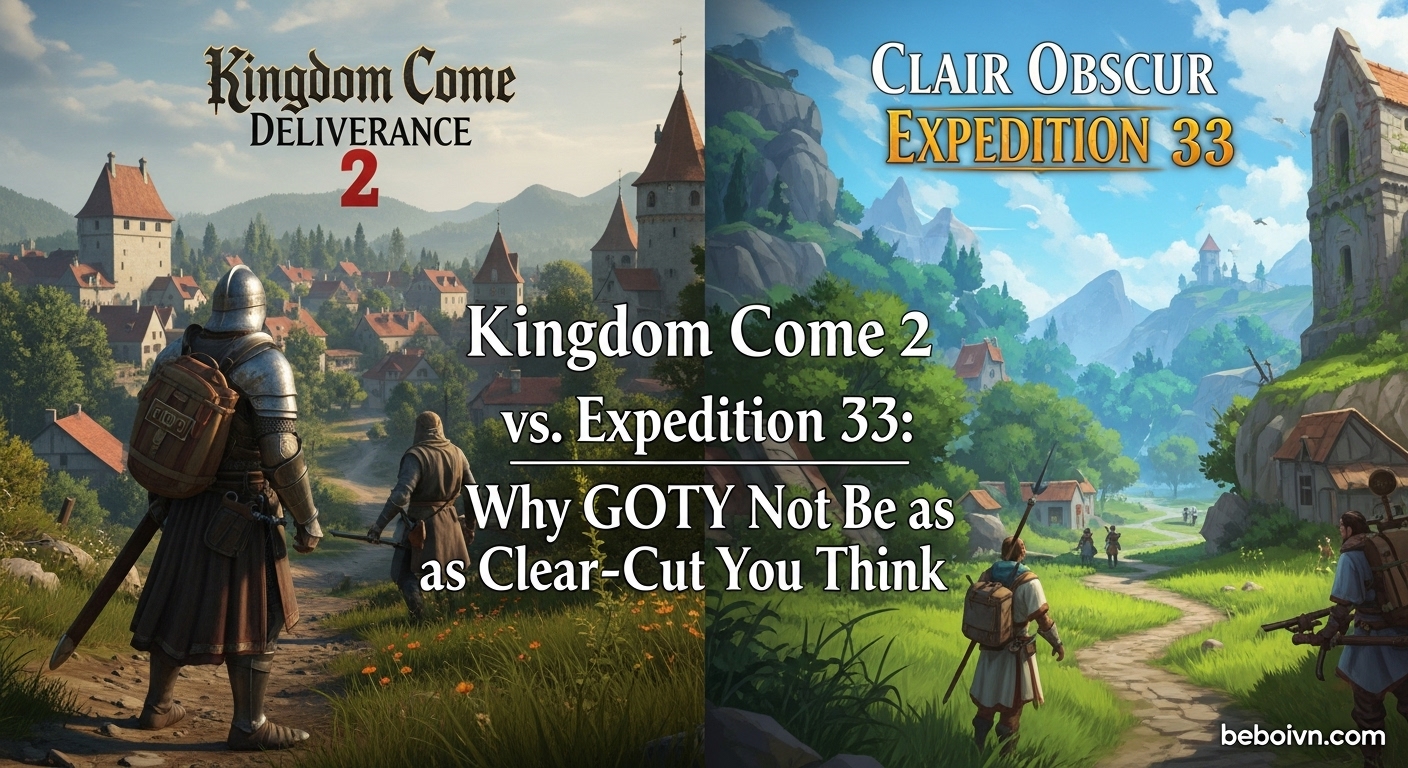
The gaming world is buzzing with debate as we approach the 2025 Game Awards, and at the center of this storm stands an unexpected rivalry: Kingdom Come: Deliverance 2 versus Clair Obscur: Expedition 33. While many critics and award shows have already crowned Expedition 33 as the undisputed champion of 2025, the reality of this Game of the Year race is far more nuanced than the headlines suggest. As someone who has followed both games’ journeys from release to their current award-season dominance, I’m here to explain why this particular GOTY battle might just be the most fascinating in recent memory.
The Numbers Game: Why Statistics Don’t Tell the Whole Story?
Let’s start with the obvious: Clair Obscur: Expedition 33 has been cleaning house in the awards circuit. The French-developed RPG has already secured seven Golden Joystick Awards, tying Baldur’s Gate 3’s record, and boasts an unprecedented 12 Game Awards nominations—the most in the show’s history. These numbers are staggering, and on paper, they suggest a clear-cut victory.
However, Kingdom Come: Deliverance 2 presents a compelling counter-narrative. Warhorse Studios’ medieval RPG secured second place at the Golden Joystick Awards’ Ultimate Game of the Year category, finishing just behind Expedition 33. More importantly, KCD2 has cultivated a passionate fanbase that argues passionately for its superiority, despite the numerical disadvantage in award nominations.
Beyond the Metacritic Scores: What Really Makes a GOTY Contender?
One of the most fascinating aspects of this debate is how both games represent fundamentally different approaches to RPG excellence, yet both have legitimate claims to gaming’s highest honor.
Expedition 33: The Revolutionary Turn-Based Masterpiece
Clair Obscur: Expedition 33 has captivated audiences with its innovative approach to the turn-based RPG genre. Developed by a core team of just 33 people at Sandfall Interactive, this game has achieved what many thought impossible: making tactical RPGs accessible to action-game fans while maintaining the depth that genre enthusiasts demand.
The game’s strengths are numerous and well-documented:
- Character Development: Expedition 33 features some of the most nuanced character writing in recent gaming history. From Gustave’s brotherly protectiveness to Lune’s vulnerability masked by strength, each character feels like a living, breathing entity rather than a collection of stats.
- Emotional Range: The game masterfully balances humor with heart-wrenching drama, creating an emotional journey that resonates long after the credits roll.
- Combat Innovation: By incorporating elements from Souls-like games into traditional turn-based combat, Expedition 33 has created something truly unique that appeals to multiple gaming demographics.
- Production Values: Despite its indie origins, the game boasts AAA-quality voice acting, with three performers nominated for Best Performance at the Game Awards.
Kingdom Come: Deliverance 2: The Ambitious Sequel That Delivered
Kingdom Come: Deliverance 2, on the other hand, represents the pinnacle of what can be achieved when a developer learns from their past and improves upon it. Warhorse Studios took the foundation of their ambitious but flawed first game and refined it into something truly special.
KCD2’s case for GOTY rests on different but equally valid pillars:
- Realism and Immersion: Few games have captured the feeling of living in a specific time and place as effectively as KCD2. The medieval Bohemia setting is not just backdrop but an active participant in the narrative.
- Meaningful Choices: Unlike many RPGs where choices feel cosmetic, KCD2’s decisions have genuine weight and consequences that ripple throughout the entire experience.
- Technical Achievement: The improvements over the first game are substantial, with better combat, more polished mechanics, and a world that feels alive and responsive.
- Underdog Story: There’s something compelling about a European developer creating a historically accurate RPG that competes with global giants, and this narrative resonates with many gamers.
The Historical Precedent: Why Past Awards Matter?
To understand why this GOTY race isn’t as clear-cut as it appears, we need only look at recent history. The 2022 Game Awards provide a perfect case study: God of War Ragnarök received 11 nominations and won 6 awards, yet Elden Ring walked away with Game of the Year despite having fewer nominations.
This pattern repeats throughout gaming awards history. The game with the most nominations doesn’t always win the top prize, and for good reason. GOTY voting considers factors beyond raw numbers, including cultural impact, innovation, and that intangible “it” factor that makes a game truly special.
The Industry Insider Perspective: Why the Debate Continues?
What makes this particular GOTY battle so fascinating is the division within the industry itself. While many critics and award shows have embraced Expedition 33, significant voices in game development prefer Kingdom Come: Deliverance 2.
Take, for example, Bucky from Pocketpair, the developer behind Palworld. When sharing their Game Awards votes, they chose Kingdom Come: Deliverance 2 as their GOTY pick over Expedition 33. This isn’t an isolated opinion—many developers who have played both games privately express similar sentiments, arguing that KCD2’s ambition and execution deserve recognition.
The voting process itself adds another layer of complexity. With public votes accounting for only 10% of the final tally and industry professionals making up the remaining 90%, the outcome could easily swing in unexpected directions. This weighted system means that passionate fan support for Kingdom Come: Deliverance 2 could translate into actual votes, despite Expedition 33’s dominance in public-facing awards.
The Genre Revolution: Why Both Games Matter?
Perhaps the most compelling argument for why this GOTY race isn’t clear-cut is that both games represent important, albeit different, revolutions in the RPG space.
Expedition 33 has proven that turn-based RPGs can achieve mainstream success without compromising their core identity. By blending tactical depth with action-game accessibility, Sandfall Interactive has created a template that could influence RPG design for years to come.
Kingdom Come: Deliverance 2, meanwhile, demonstrates that there’s still room for historical realism and simulation-style gameplay in an industry increasingly dominated by fantasy and sci-fi. Its success proves that players crave authenticity and depth, even when it comes at the cost of immediate accessibility.
The Cultural Impact Factor: Beyond the Games Themselves
When considering Game of the Year, we must also look at cultural impact—a metric where both games excel in different ways.
Expedition 33 has become a cultural phenomenon, particularly among younger gamers who appreciate its character-driven storytelling and innovative combat system. The game’s success has put French game development on the global map in a way few titles have managed.
Kingdom Come: Deliverance 2, conversely, has sparked renewed interest in historical gaming and educational potential within the medium. Schools and educational institutions have begun examining how the game could be used to teach medieval history, demonstrating gaming’s potential beyond entertainment.
The Verdict: Why This Race Remains Unpredictable?
As we approach the Game Awards ceremony in December, several factors make this particular GOTY race unusually difficult to predict:
- Split Voter Base: The gaming community is genuinely divided, with passionate arguments on both sides. This division likely extends to the industry professionals who cast the majority of votes.
- Different Merits: The games excel in such different areas that voters may prioritize different aspects when making their choices. Some may value innovation and character development (Expedition 33), while others prioritize ambition and technical achievement (Kingdom Come 2).
- Historical Precedent: As mentioned earlier, the game with the most nominations doesn’t always win GOTY. The voting body may decide to reward the underdog or the more ambitious project.
- Fatigue Factor: There’s always a question of whether voters will reward the obvious choice or make a statement by going against the grain.
What This Means for the Future of Gaming Awards
Regardless of which game ultimately takes home the trophy, this particular GOTY race represents something important for the gaming industry. It demonstrates that there’s no single formula for creating a Game of the Year contender, and that different approaches to game design can all lead to excellence.
The fact that we’re having this debate at all is a testament to the incredible quality of games released in 2025. Instead of a clear frontrunner running away with the prize, we have two genuinely outstanding titles that represent the best of what gaming can offer.
Final Thoughts: Celebrating Excellence in All Its Forms
As we await the final verdict at the Game Awards, perhaps the most important takeaway is that both Kingdom Come: Deliverance 2 and Clair Obscur: Expedition 33 deserve recognition as among the year’s finest games. The debate over which deserves the top spot is ultimately a celebration of gaming’s diversity and the incredible creativity on display in 2025.
Whether you’re team Expedition 33 or team Kingdom Come 2, one thing is certain: this particular GOTY race will be remembered as one of the most compelling in recent memory, not because of a clear winner, but because both games have made such strong cases for gaming’s highest honor.
The real winner here is gaming itself, and that’s something we can all celebrate regardless of which name Geoff Keighley reads from that envelope come December.