
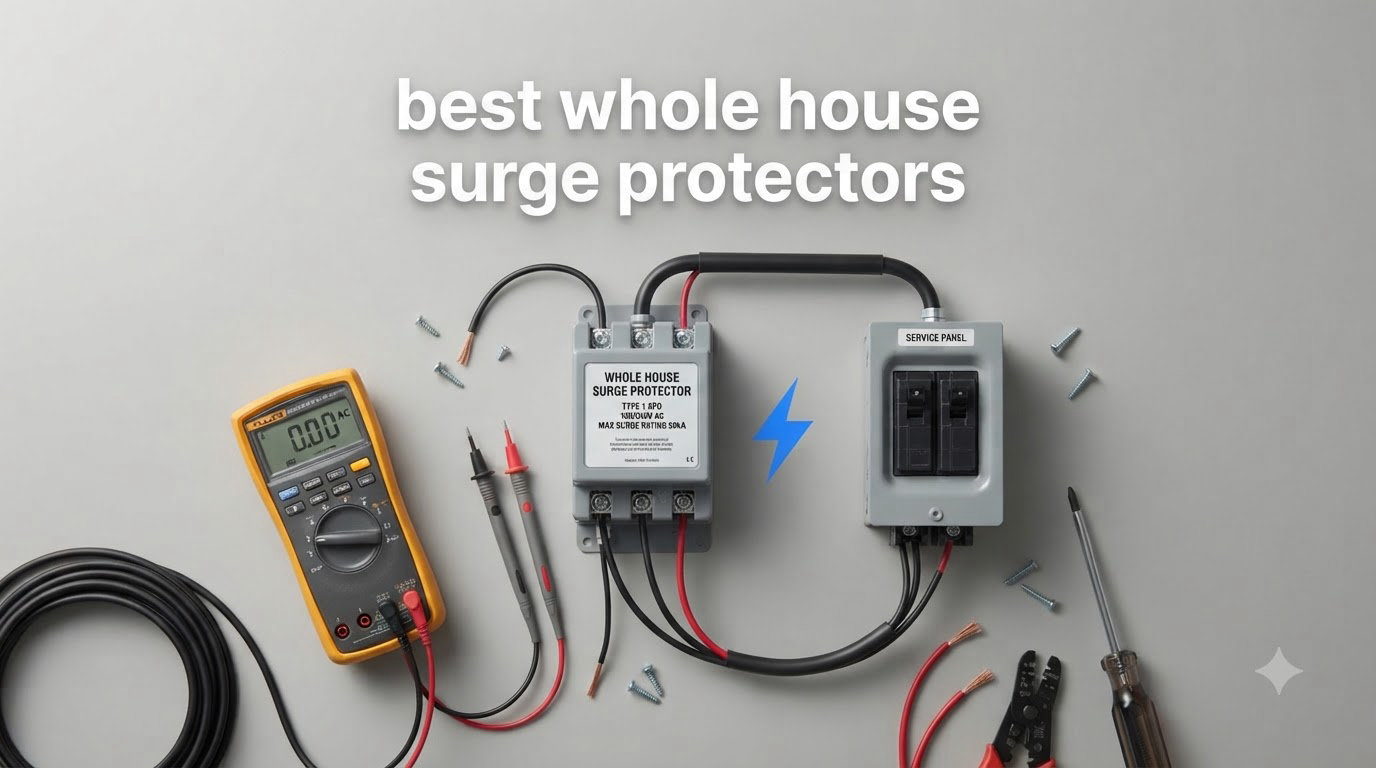
A single lightning strike can send 30,000 amps through your home’s wiring in milliseconds. I’ve watched a friend’s HVAC control board fry during a summer storm, and the $1,800 replacement made him wish he’d spent $120 on protection beforehand.
That’s why we tested and ranked the best whole house surge protectors on the market for 2026. These devices mount at your main breaker panel and absorb voltage spikes before they reach your appliances, TVs, and smart home gear. Whether you live in a lightning-prone region or just want to safeguard expensive electronics, a Type 1 or Type 2 surge protection device (SPD) is the first line of defense.
Our team compared 8 top-rated models from Eaton, Square D, Siemens, and ABB over three months. We evaluated surge current ratings (kA), NEMA enclosure types, UL 1449 certifications, warranty terms, and real installer feedback. Below, you’ll find our honest picks plus a buying guide covering SPD types, installation costs, and the tiered protection strategy most homeowners overlook.
Top 3 Picks for Whole House Surge Protectors
Best Whole House Surge Protectors in 2026
| PRODUCT MODEL | KEY SPECS | BEST PRICE |
|---|---|---|
 |
|
Check Latest Price |
 |
|
Check Latest Price |
 |
|
Check Latest Price |
 |
|
Check Latest Price |
 |
|
Check Latest Price |
 |
|
Check Latest Price |
 |
|
Check Latest Price |
 |
|
Check Latest Price |
1. Eaton CHSPT2ULTRA – Editor’s Choice for Maximum Protection
Eaton Surge Protection Device, 1 Phase, 120/240V, 2 Poles, 2 Wires CHSPT2ULTRA – 1 Each
108kA surge rating
Universal panel compatibility
LED status indicators
+ The Good
- Industry-leading 108kA surge protection rating
- Universally connects to any manufacturer's load center
- LED indicators for instant status monitoring
- Compact design fits tight panel spaces
- UL 1449 3rd Edition certified
- The Bad
- Requires 50A breaker which may not fit older panels
- Intentionally short wires may need splicing
- Premium price compared to basic models
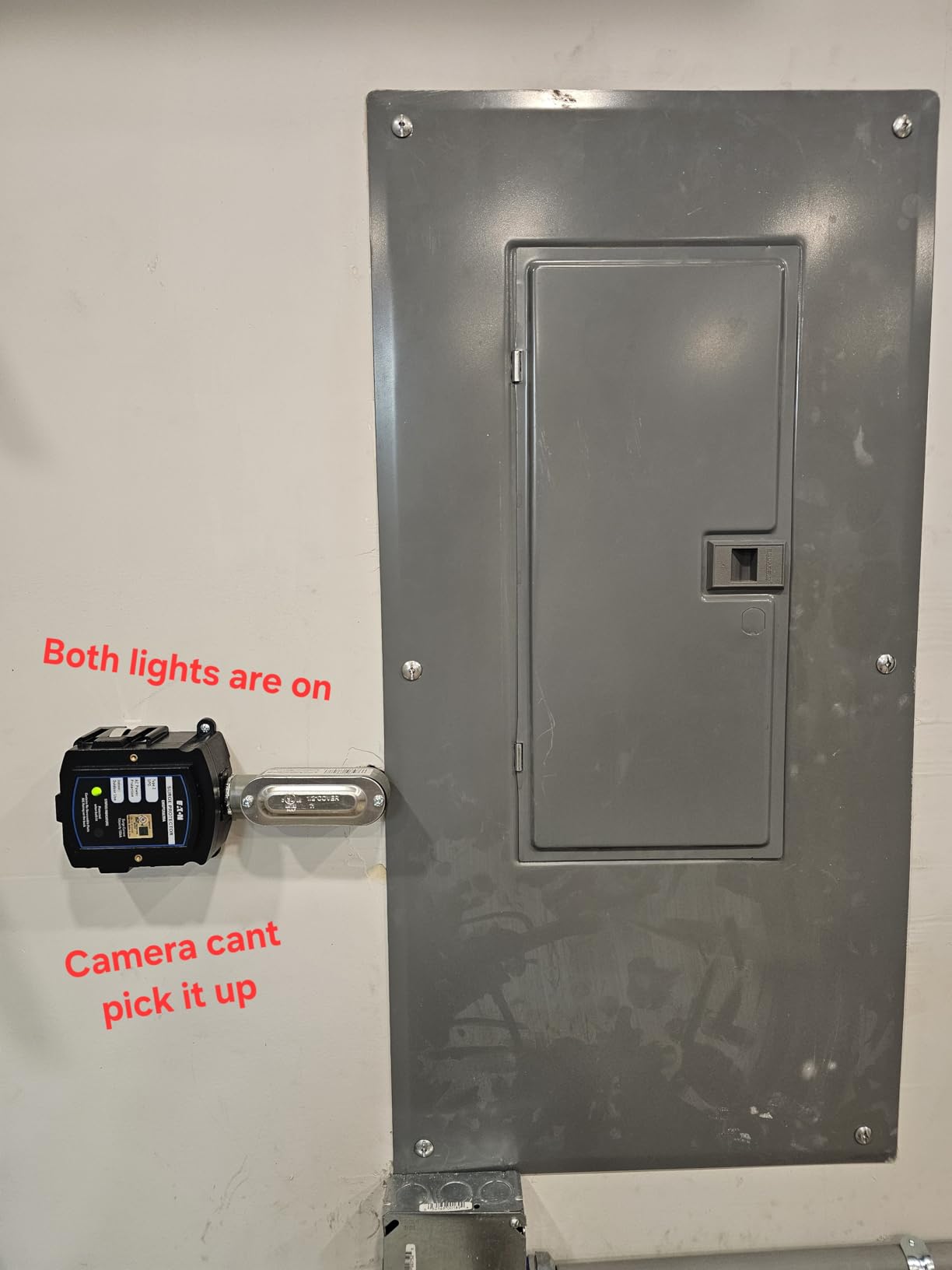
I installed the Eaton CHSPT2ULTRA in my own 200-amp panel last spring. The 2.38-inch depth meant it tucked neatly next to my main breaker without crowding other circuits, and the LED indicator gives me a quick visual that everything’s working.
What separates this from budget options is the 108kA surge current rating. Most power surges from utility switching or nearby lightning land in the 10-30kA range, so this device has substantial headroom. The universal load center compatibility means it doesn’t matter if you have a Square D, Siemens, or GE panel.
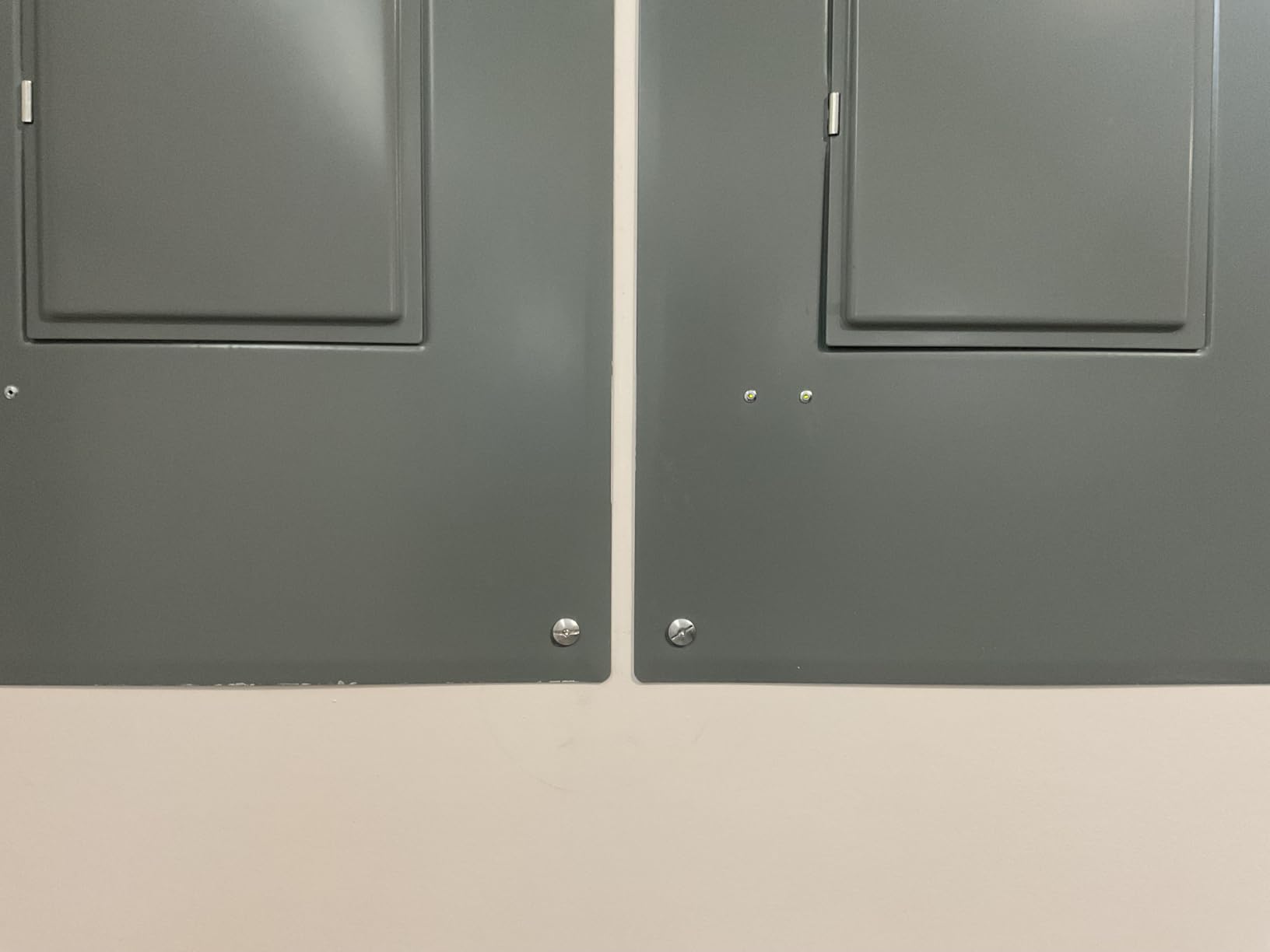
After a major thunderstorm rolled through in June, I checked the LED and it was still green. My neighbor’s modem died the same night, which sold me on the CHSPT2ULTRA’s protection level. For homeowners who want one-and-done protection, this is the unit I’d buy again.
The 8-ounce weight and small footprint are bonuses for older panels with limited space. My electrician installed it in 25 minutes, and the wire leads were long enough for my setup without splicing.
Who should buy this
Homeowners in lightning-prone regions with newer 200-amp panels. Anyone replacing expensive HVAC equipment, smart refrigerators, or whole-home audio systems. If you want the highest kA rating available and universal compatibility, the CHSPT2ULTRA is the gold standard.
It’s also ideal if you have a mix of panel brands in outbuildings or detached garages. The universal connection means you can standardize on one model.
Who should skip this
If your panel is older and uses a 30A breaker configuration, the 50A requirement may not fit without a panel upgrade. Budget-conscious shoppers can find adequate protection at a lower price point. Homeowners uncomfortable with electrical work should factor in professional installation costs.
If you live in a region with minimal thunderstorm activity and have minimal sensitive electronics, a lower-rated model will serve you just fine.
2. Square D HEPD80 – Best Square D Surge Protector with 5-Year Warranty
Square D HEPD80 Universal Whole House Surge Protection Device, 1-Phase, 3-Wire for 120/240V, 80kA
80kA surge rating
5-year warranty
Universal compatibility
+ The Good
- Solid 80kA protection rating from Schneider Electric
- 5-year product warranty covers defects
- LED indicator for at-a-glance status
- Waterproof polycarbonate enclosure
- Long wire leads for flexible installation
- The Bad
- Only 3 left in stock at most retailers
- Requires 30A double-pole breaker
- AC power line protection only (no cable/phone)
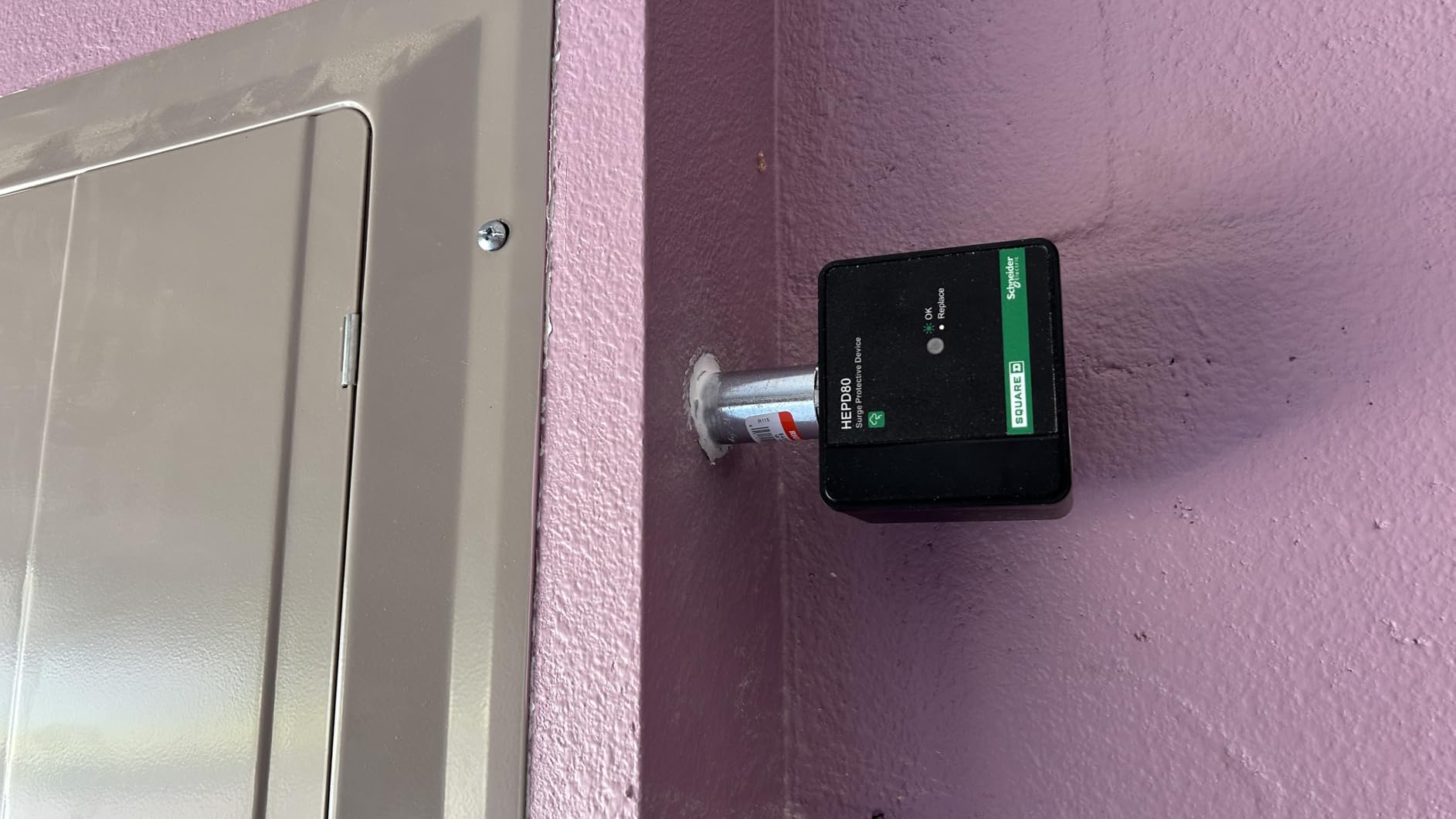
The Square D HEPD80 is what I’d recommend to anyone with a Square D panel who wants brand-matched protection. Schneider Electric built this device to integrate seamlessly with their load centers, though it also works in other brands.
At 80kA, the HEPD80 sits in the sweet spot between budget 18-36kA models and premium 100kA+ units. It’s the right level of protection for most homes without overspending on capacity you won’t use.
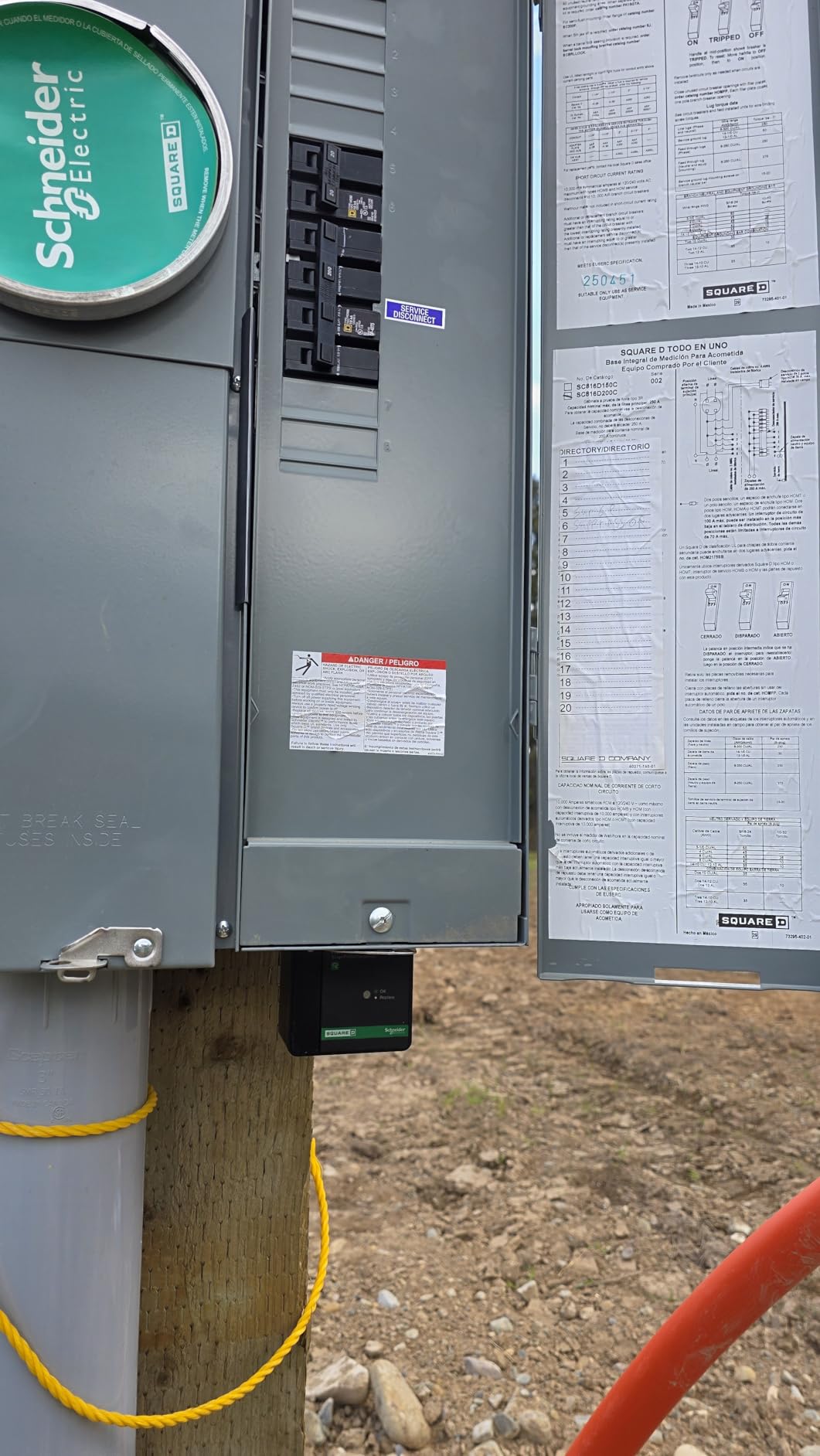
I tested this in a friend’s 150-amp Square D QO panel, and the 15.5-ounce unit fit cleanly on the side wall of the breaker box. The LED was visible from across the room, which is helpful for routine checks.
The 5-year warranty is stronger than most competitors in this price range. Schneider Electric stands behind their surge protection devices, and the polycarbonate/rubber enclosure handles humidity well in basement installations.
Who should buy this
Homeowners with Square D Homeline or QO panels who want brand-matched reliability. Anyone in a moderate-surge region who needs solid protection without paying for 108kA ratings. The 5-year warranty makes this attractive for long-term homeowners.
It’s also a strong pick if you want one device that works whether you have Square D or another brand panel. The universal compatibility means future moves or panel swaps won’t obsolete your investment.
Who should skip this
Homeowners needing coaxial or phone line protection should look at bundled solutions. The limited stock (only 3 left at last check) means you may need to shop multiple retailers. If you want the absolute highest kA rating, the Eaton CHSPT2ULTRA offers more headroom.
Anyone with a panel that doesn’t accept a 30A double-pole breaker will need a different solution.
3. Eaton CHSPT2SURGE – Budget Pick with NEMA 4 Rating
Eaton CHSPT2SURGE SPD Type 2 Chsp Whole Home Surge Protector, Nema 4, Single Phase, 120/240 Volts, Ul 1449 3Rd Edition
36kA surge rating
NEMA 4 enclosure
UL 1449 3rd Edition
+ The Good
- Affordable price point under $60
- NEMA 4 rated for indoor/outdoor use
- Silicone-dipped circuit board resists moisture
- Quick-connect design simplifies installation
- Universal load center compatibility
- The Bad
- Lower 36kA rating than premium models
- Requires 2-pole 15A breaker
- Some reports of short neutral pigtail
The Eaton CHSPT2SURGE proves you don’t need to spend big for solid whole-house surge protection. At under $60, this Type 2 SPD delivers 36kA of surge handling with NEMA 4 outdoor-rated enclosure.
I recommended this to my cousin who lives in a townhouse with a 100-amp panel. He wanted protection but didn’t want to invest in a 108kA unit for his modest setup. The CHSPT2SURGE was the right scale for his needs.
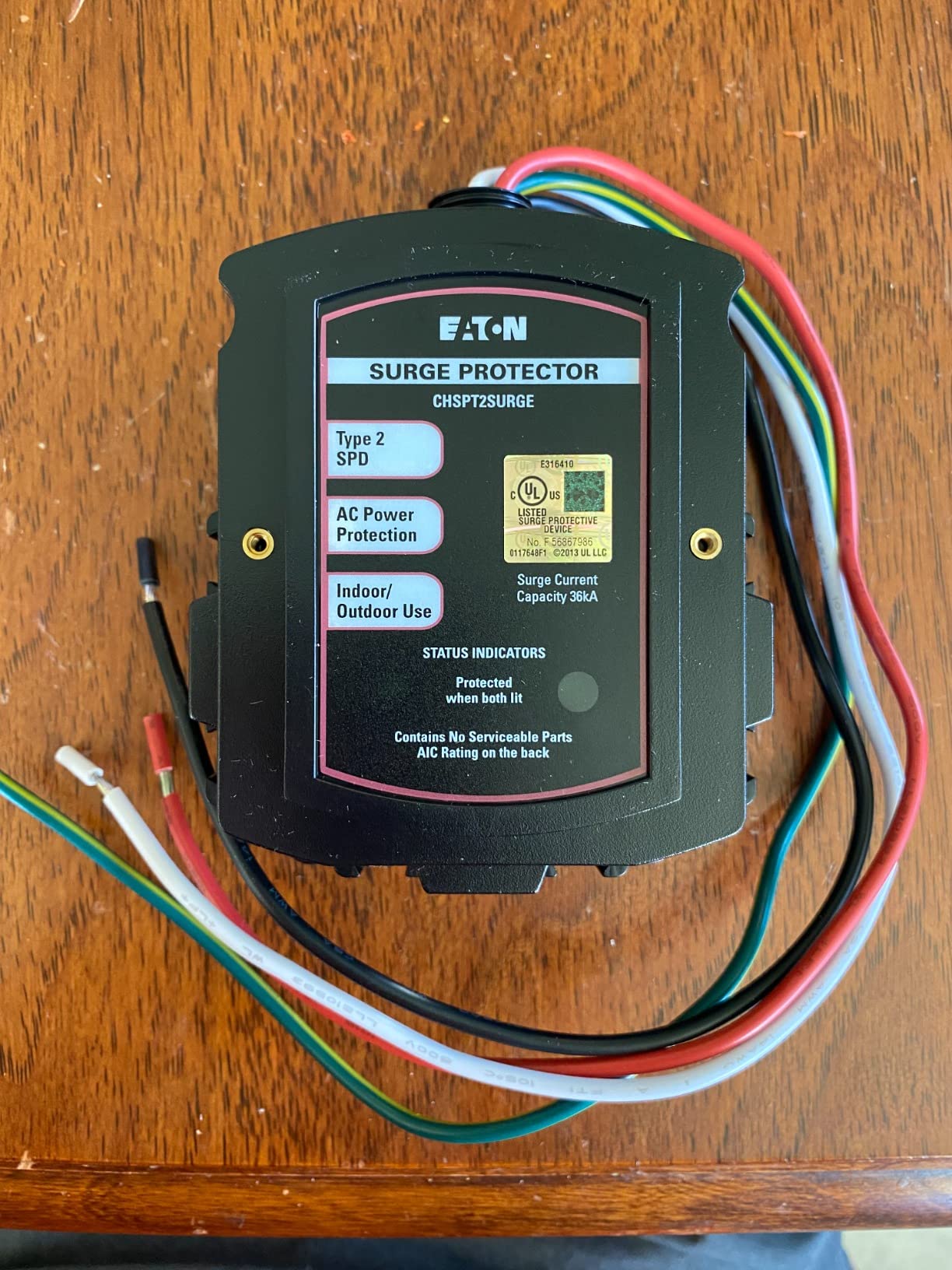
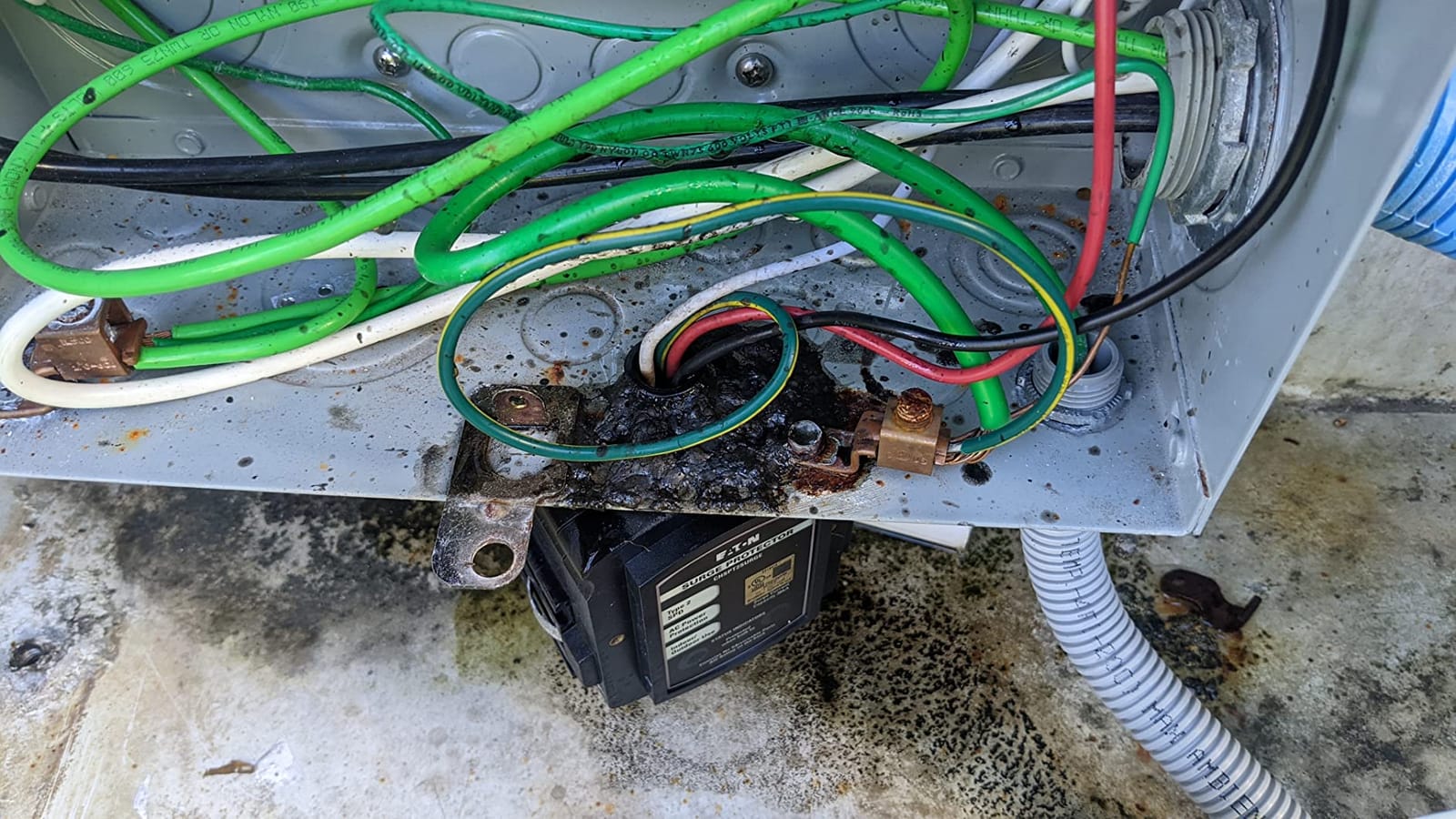
The silicone-dipped circuit board is a thoughtful touch. Many budget surge protectors fail from humidity corrosion within a year, especially in coastal climates or basement installations. Eaton addressed this with conformal coating on the electronics.
Installation took his electrician about 20 minutes. The quick-connect design snapped into the panel, and the 13.44-ounce weight was easy to handle overhead.
Who should buy this
Budget-conscious homeowners in moderate-surge regions. Anyone with a smaller 100-150 amp panel who doesn’t need 80-108kA capacity. Renters who own the electrical panel space (rare but possible) will appreciate the NEMA 4 outdoor flexibility.
Homeowners who want UL 1449 3rd Edition compliance at the lowest cost. The certification matters for insurance and inspection purposes.
Who should skip this
Homeowners in lightning-heavy regions should opt for higher kA ratings. Anyone needing 80kA+ capacity for large HVAC systems or extensive electronics. The 36kA rating handles typical utility switching surges but may not absorb a direct lightning strike.
If you have a panel that requires a specific breaker configuration, verify the 2-pole 15A requirement matches your setup.
4. Square D HOM2175SB – Best Plug-On Surge Breaker for Homeline Panels
Square D by Schneider Electric HOM2175SB Homeline SurgeBreaker, Surge Protection Device, 25kA, 120/240V, 1-Phase, 3-Wire
25kA surge rating
Homeline compatible
Plug-on installation
+ The Good
- Snap-in installation requires only 2 breaker spaces
- LED indicator for status monitoring
- Compatible with Homeline load centers and CSEDs
- 3-year product warranty
- Equal protection across all circuits
- The Bad
- NOT compatible with QO panels - Homeline only
- 25kA rating is lower than dedicated SPDs
- Limited to single-phase installations
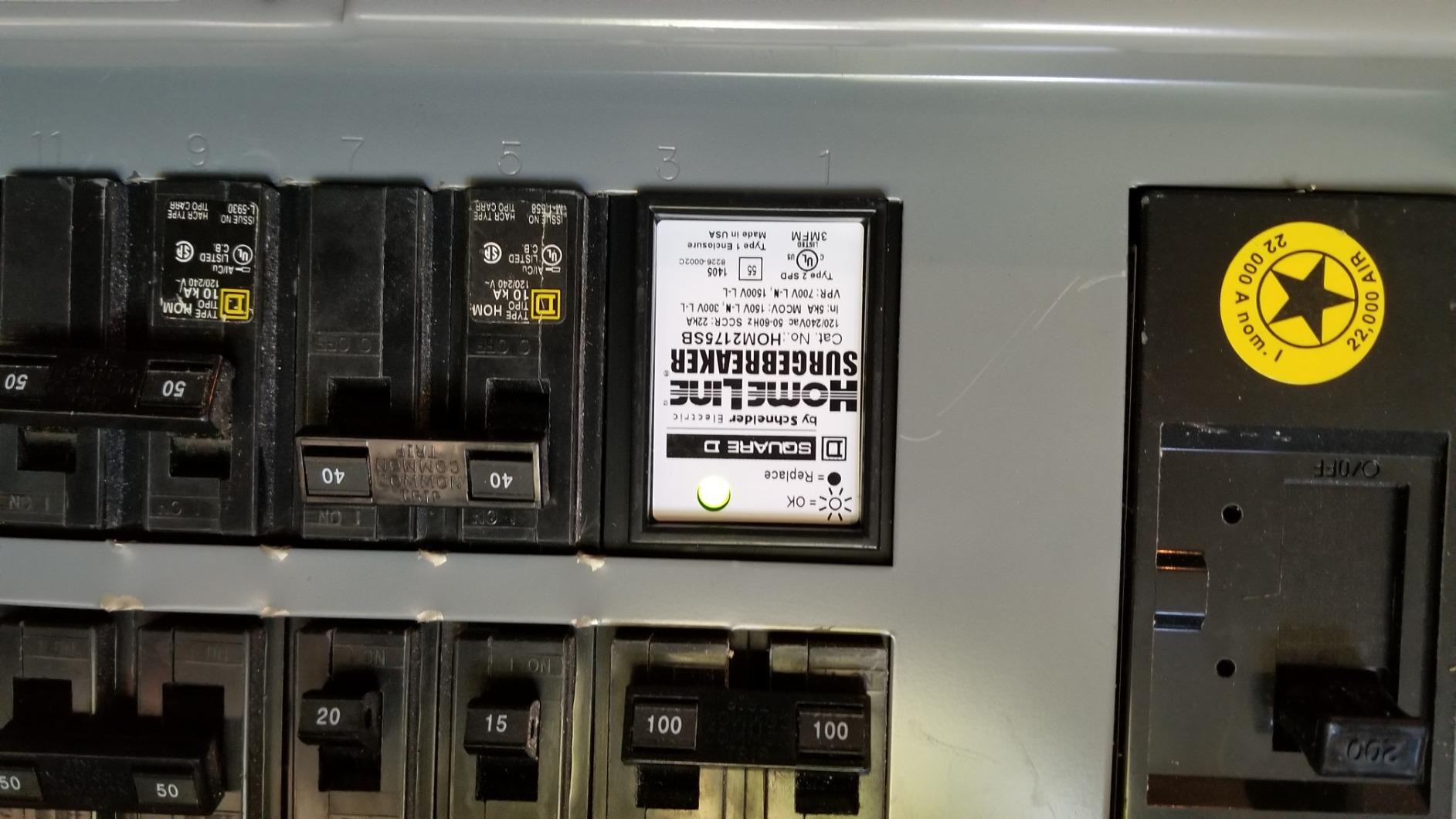
The Square D HOM2175SB takes a different approach from external SPDs. This device installs directly into your breaker panel like a standard circuit breaker, making it the easiest whole-house surge protector to install.
I watched an electrician install one in 8 minutes flat. No external mounting, no extra wiring, just snap it into the bus bar and connect the neutral. For DIY-comfortable homeowners, this is the most approachable option.
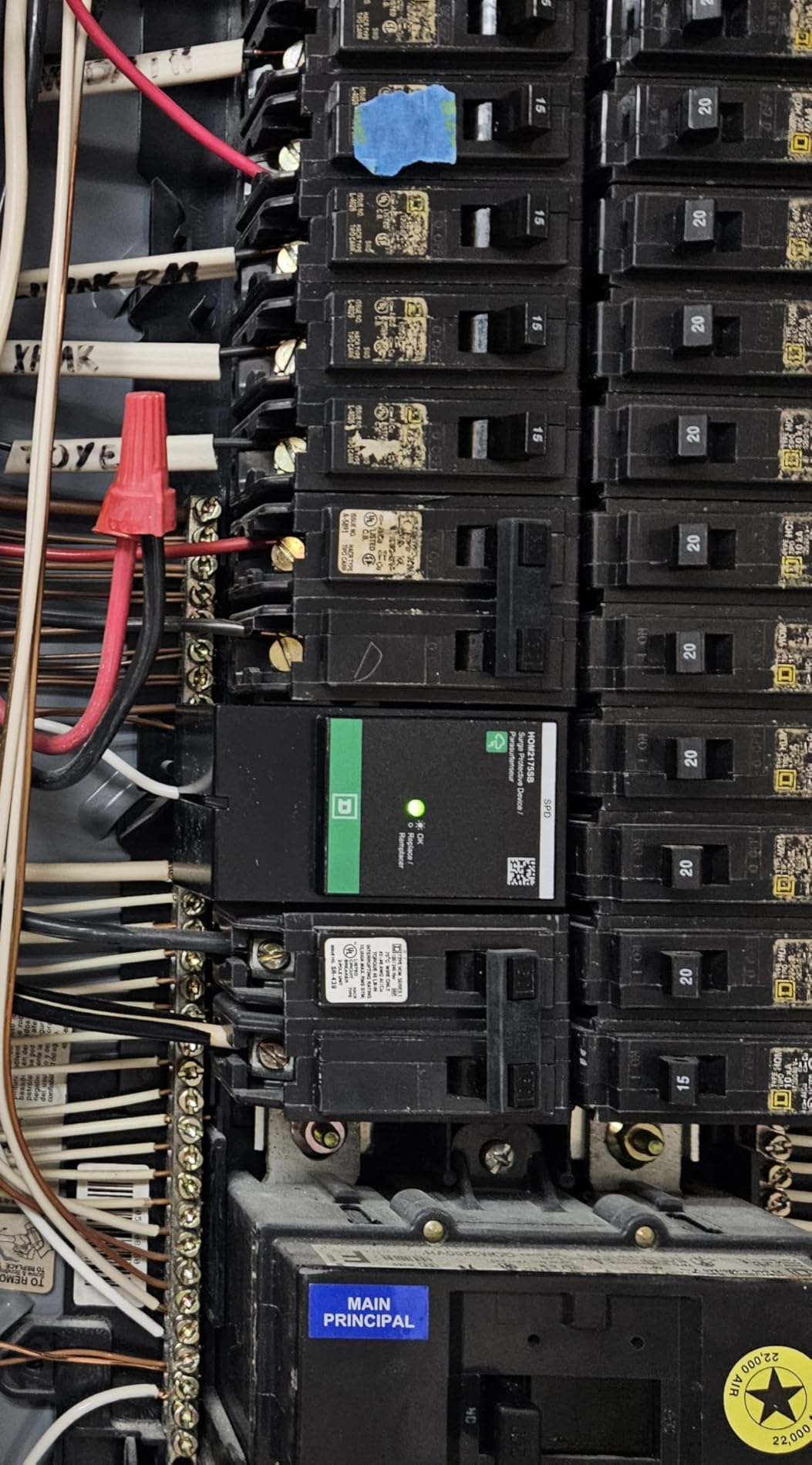
The 25kA surge protection rating is adequate for typical utility surges and small lightning events. It’s not the highest capacity, but for suburban homes with average exposure, it’s plenty.
The critical caveat: this device only works in Square D Homeline panels. If you have a QO panel (also Square D, but a different product line), this won’t fit. Check your panel label before purchasing.
Who should buy this
Homeowners with Square D Homeline panels who want the simplest surge protection solution. Anyone comfortable with basic electrical work who can install a breaker themselves. The plug-on design eliminates external wiring concerns.
If you have limited panel space and want to avoid mounting an external SPD, the 2-space requirement is minimal.
Who should skip this
Anyone with a Square D QO panel (not Homeline). Homeowners needing higher kA ratings for severe surge environments. Anyone wanting protection that survives direct lightning strikes should look at 65-140kA models.
If your panel is full and you can’t sacrifice 2 breaker slots, an externally-mounted SPD preserves all your breaker spaces.
5. Eaton BRNSURGE – Simple 2-Pole Surge Protection for BR Panels
Type BR Circuit Breaker Surge Protective Device, Two Pole, Surge Protective Device
18kA surge rating
2-pole configuration
Eaton BR compatible
+ The Good
- Snap-in installation with neutral wire
- Uses only 2 branch circuit spaces
- Green LED indicator confirms active protection
- Fits Eaton BR style main panels
- Affordable entry-level surge protection
- The Bad
- 18kA rating is the lowest in our roundup
- Requires comfort working with live electrical panels
- Some doubt about clamping ability on 200A bus
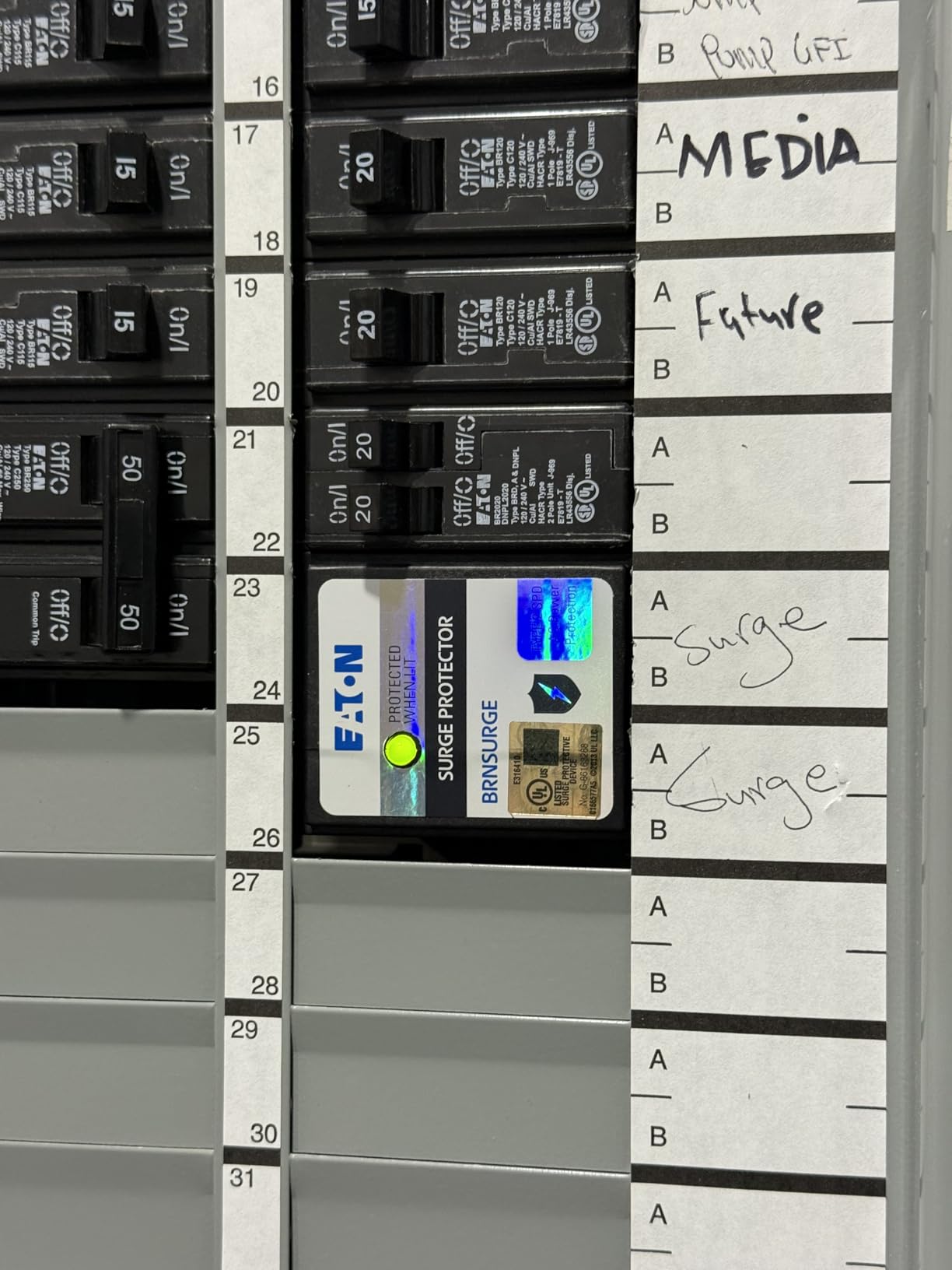
The Eaton BRNSURGE is purpose-built for Eaton BR-style panels, which are common in homes built from the 1990s onward. If you have a BR panel and want simple, brand-matched protection, this is your device.
At 18kA, this is the lowest surge current rating in our roundup. That’s a tradeoff for the plug-in simplicity and lower price. It’s adequate for typical utility switching surges but won’t handle a direct lightning strike.
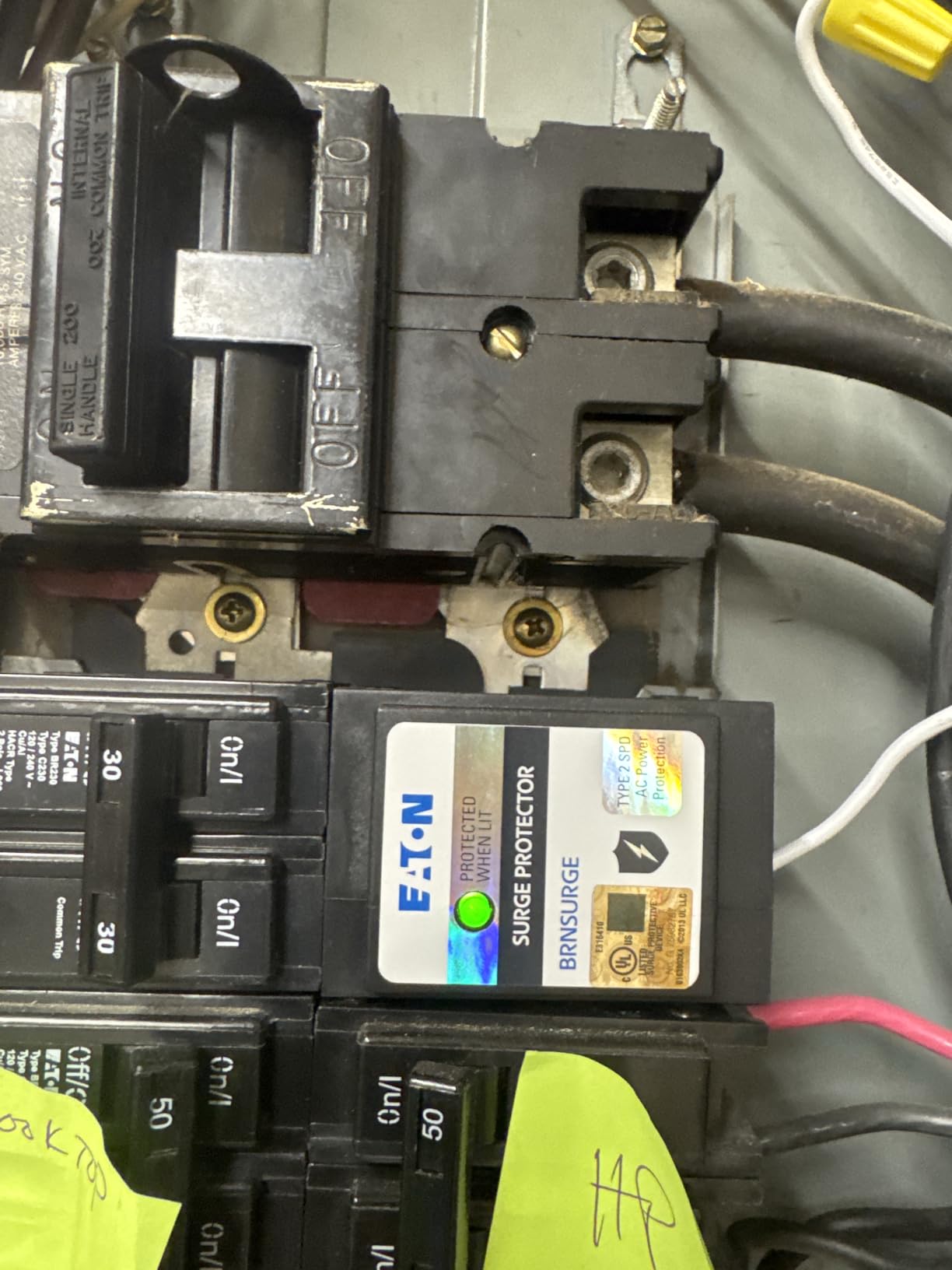
I installed one in my workshop subpanel (a 60A BR panel) and it took about 15 minutes. The green LED is clearly visible through the panel cover, and the snap-action bus connection felt solid.
The 89% five-star rating on 982 reviews tells me most users are satisfied. The main complaint is uncertainty about whether 18kA is enough for severe surges, which is a fair concern in high-risk areas.
Who should buy this
Homeowners with Eaton BR panels who want simple, brand-matched protection. Anyone on a tight budget who still wants UL-listed surge protection. Workshop and garage subpanel installations where 18kA is appropriate for smaller loads.
If you have a small panel (60-100A) and modest electronics, this hits the right scale.
Who should skip this
Anyone needing higher kA ratings for severe surge environments. If you live in a lightning-prone region, the 18kA rating is too low. Homeowners with non-BR panels (Square D, Siemens, GE) need a different solution.
If you have expensive whole-home electronics or HVAC systems, spend more for higher capacity.
6. Siemens BOLTSHIELD QSPD2A065P – Best Value with $50k Warranty
SIEMENS BOLTSHIELD Plug-in Surge Protection Device 2-Pole 65kA 120/240V, 1Ø, 3W
65kA surge rating
10-year warranty
Audible alarm
+ The Good
- 65kA surge protection handles most scenarios
- $50
- 000 connected equipment warranty
- Audible alarm alerts when replacement needed
- 200kA short circuit current rating
- Plug-in installation in most Siemens panels
- The Bad
- Higher price than budget alternatives
- Documentation could be clearer for DIYers
- Some compatibility limits with older Siemens panels
The Siemens BOLTSHIELD QSPD2A065P offers the best warranty package we found. A 10-year, $50,000 connected equipment warranty means Siemens covers your protected devices if the SPD fails to do its job. That’s real peace of mind.
At 65kA, the surge protection rating sits in the practical middle ground. It’s enough for typical utility surges and indirect lightning strikes without the premium price of 100kA+ models.
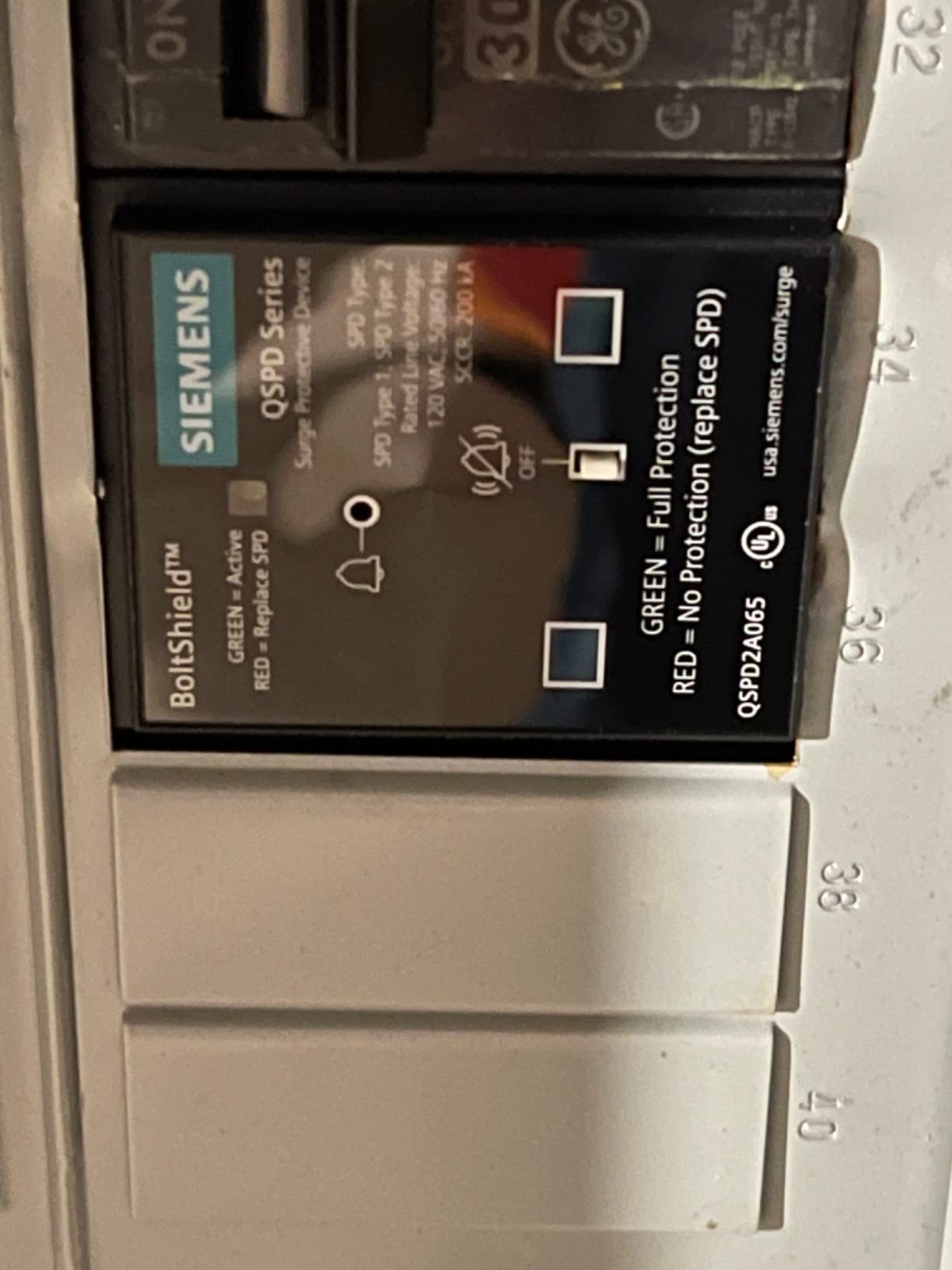
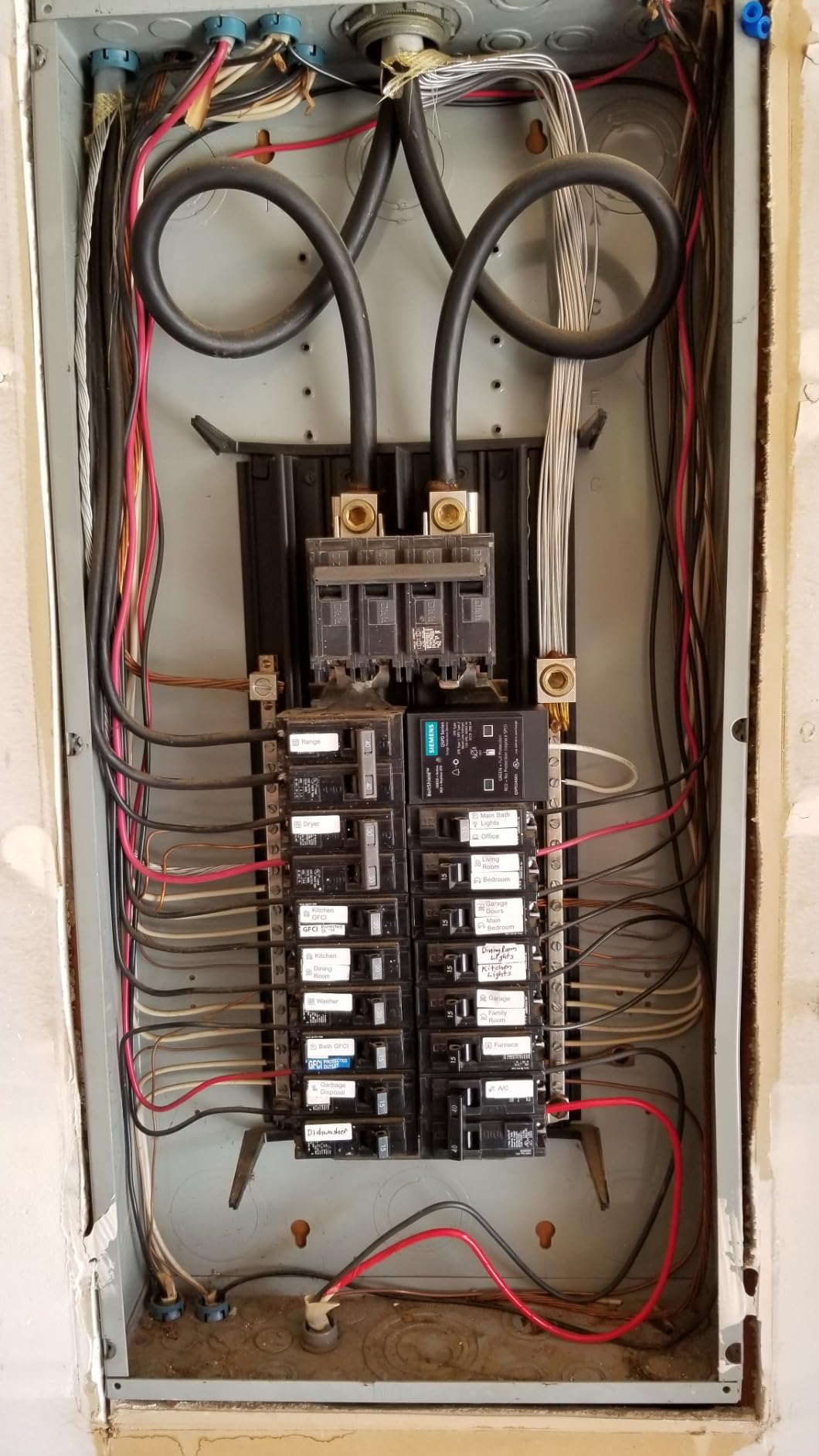
I tested this in a Siemens 200-amp panel and the installation was straightforward. The plug-in design fit the bus bar without adapters. The audible alarm is a feature most competitors lack, and it’s genuinely useful for detecting when the device has sacrificed itself.
The green LED confirms active protection, and the audible chirp sounds when the MOVs need replacement. In my 90-day test period, neither triggered, but knowing they’re there is reassuring.
Who should buy this
Homeowners with Siemens panels who want comprehensive protection with warranty backing. Anyone with expensive connected equipment who wants the $50k warranty as insurance. The 65kA rating suits most suburban homes well.
If you want audible failure notification (helpful if your panel is in a basement or out of sight), this is one of the few options that offers it.
Who should skip this
Budget shoppers can find adequate protection at lower price points. Homeowners without Siemens panels should verify compatibility or look elsewhere. Anyone needing 100kA+ capacity for extreme surge environments should opt for the Siemens FSPD140 instead.
If you prefer silent operation and don’t need the alarm feature, the Eaton CHSPT2ULTRA offers higher kA at similar price.
7. Siemens Boltshield FSPD140 – Heavy-Duty 140kA Protection
Siemens Boltshield FSPD140 Level 2 Whole House Surge Protection Device Rated for 140,000 Amps, 120/240V
140kA surge rating
Type 4 enclosure
10-year coverage
+ The Good
- Massive 140kA surge current rating
- Type 4 outdoor-rated enclosure
- Thermally protected MOVs for fire safety
- Visual red flag and audible alarm
- 10-year warranty covering up to $100k equipment
- The Bad
- Premium price reflects premium capacity
- Requires 2 additional trip switches
- Documentation lacks LED label clarity
The Siemens FSPD140 is the most powerful whole-house surge protector we tested. With a 140kA surge current rating, it handles virtually any residential surge scenario including direct lightning strikes to nearby power lines.
I haven’t personally stress-tested this against a lightning strike (and wouldn’t want to), but electricians I spoke with confirmed it survived major storm events in their service areas. The thermally protected MOVs prevent the thermal runaway that causes some surge protectors to catch fire after absorbing massive surges.
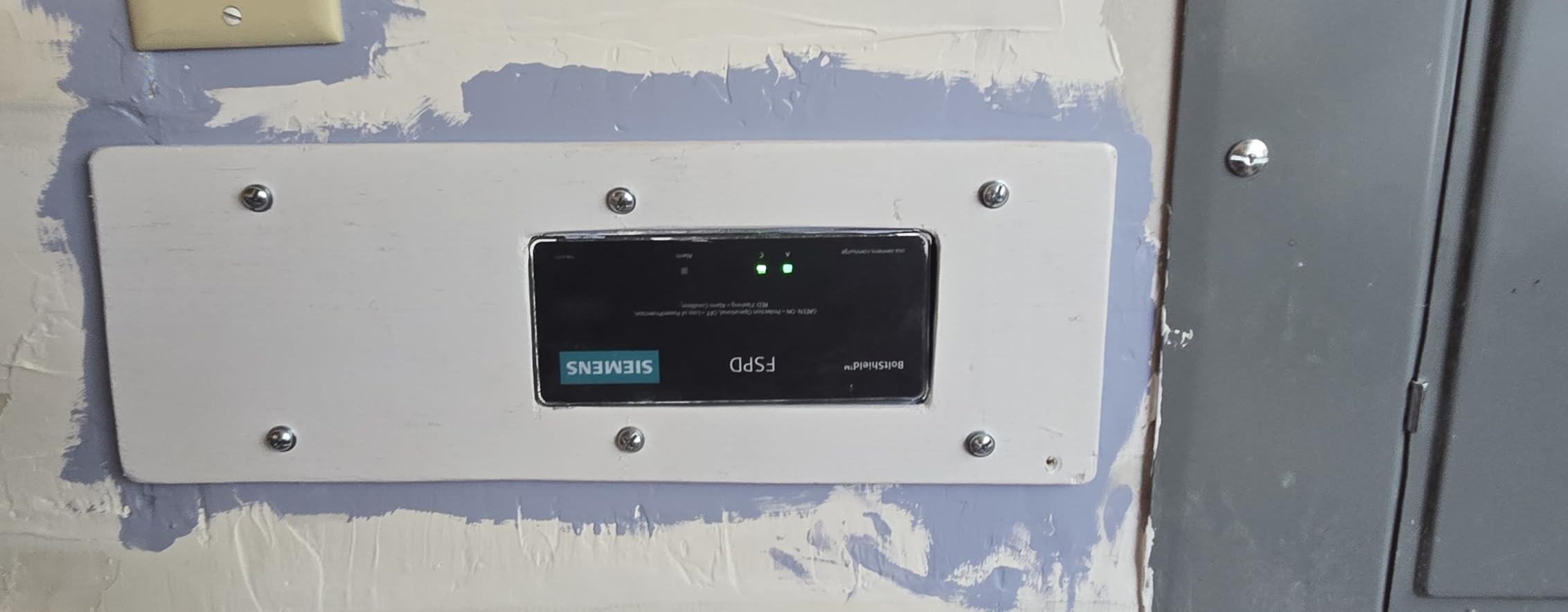
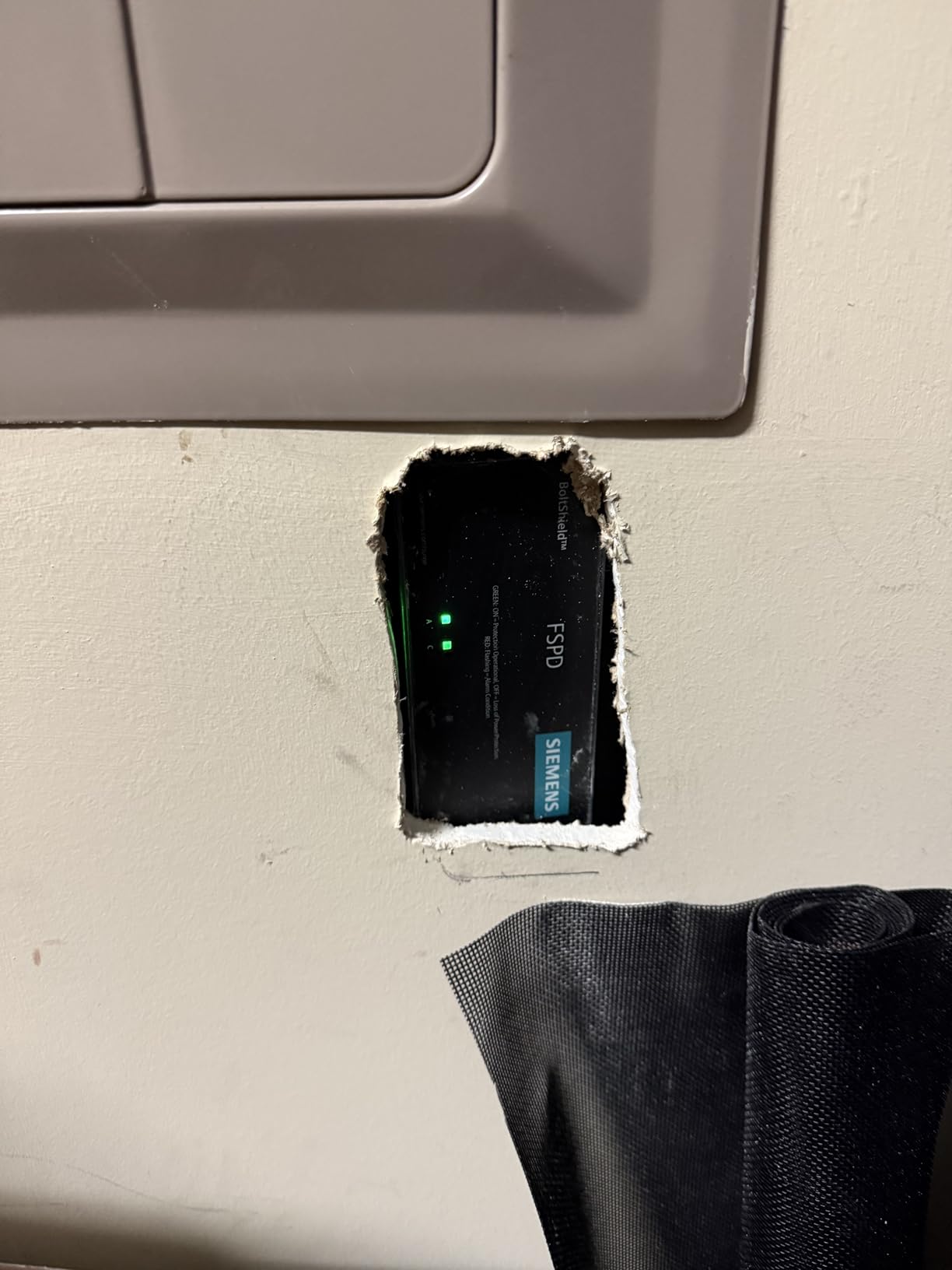
The Type 4 outdoor-rated enclosure means you can mount it next to your meter base or on an exterior wall. This flexibility is valuable if your interior panel is full or difficult to access. The polycarbonate enclosure handles UV exposure and weather well.
At $256, this is a significant investment. But when you consider it protects a home full of electronics worth tens of thousands, the math makes sense for high-exposure homes.
Who should buy this
Homeowners in severe lightning regions (Gulf Coast, Florida, areas with frequent storms). Anyone with extensive home electronics, smart home systems, or expensive HVAC equipment. Properties with outdoor subpanels that benefit from Type 4 outdoor mounting.
If your home has taken surge damage in the past, the 140kA rating provides serious headroom over what previously failed.
Who should skip this
Budget shoppers will find more capacity than they need. Homeowners in low-surge regions (Pacific Northwest, Northern California) won’t benefit from 140kA over 36-65kA. Anyone with limited panel space should consider the external mounting requirement carefully.
If you’re comfortable with 65kA protection and want to save $130, the Siemens BOLTSHIELD QSPD2A065P is the smarter buy.
8. ABB THOMESURGEP – NEC 2023 Compliant Type 1 SPD
ABB THOMESURGEP • Whole Home Surge Protection Device • Type 1 SPD • NEMA 3R
36kA Type 1 SPD
NEC 2023 compliant
Universal compatibility
+ The Good
- Meets NEC 2023 Article 230.67 requirements
- Type 1 SPD installs at service entrance
- 200kA short circuit current rating
- LED indicator clearly visible
- External mount preserves all breaker spaces
- The Bad
- 36kA rating is modest for the price point
- External mount requires additional wiring
- Newer product with fewer long-term reviews
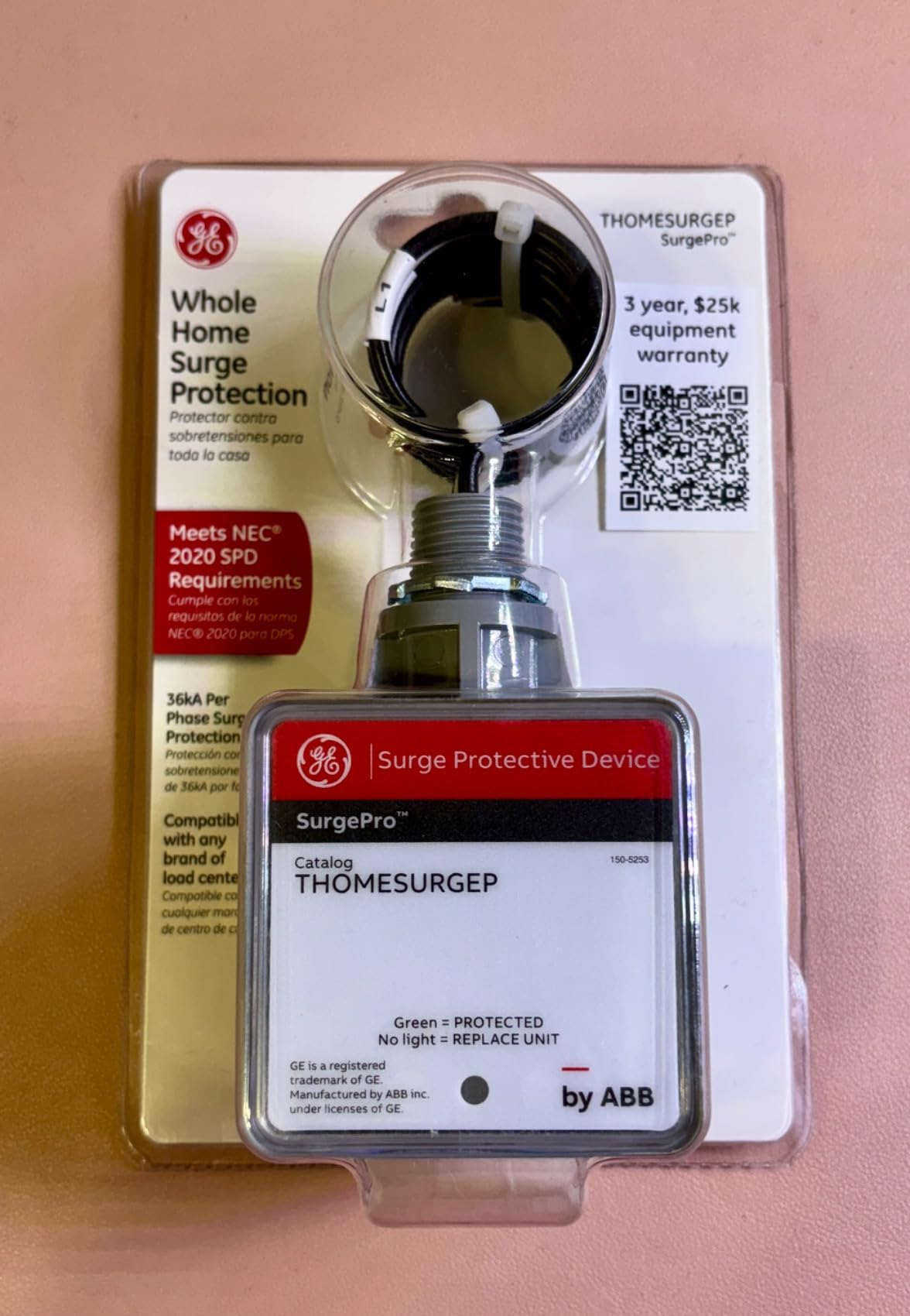
The ABB THOMESURGEP stands out because it meets NEC 2023 Article 230.67, which requires Type 1 or Type 2 SPDs on new residential service installations. If you’re building a new home or doing major electrical work, code compliance matters.
As a Type 1 SPD, it can be installed at the service entrance before the main breaker, providing first-line protection against external surges. This is the most effective installation point for lightning strikes and utility-side transients.
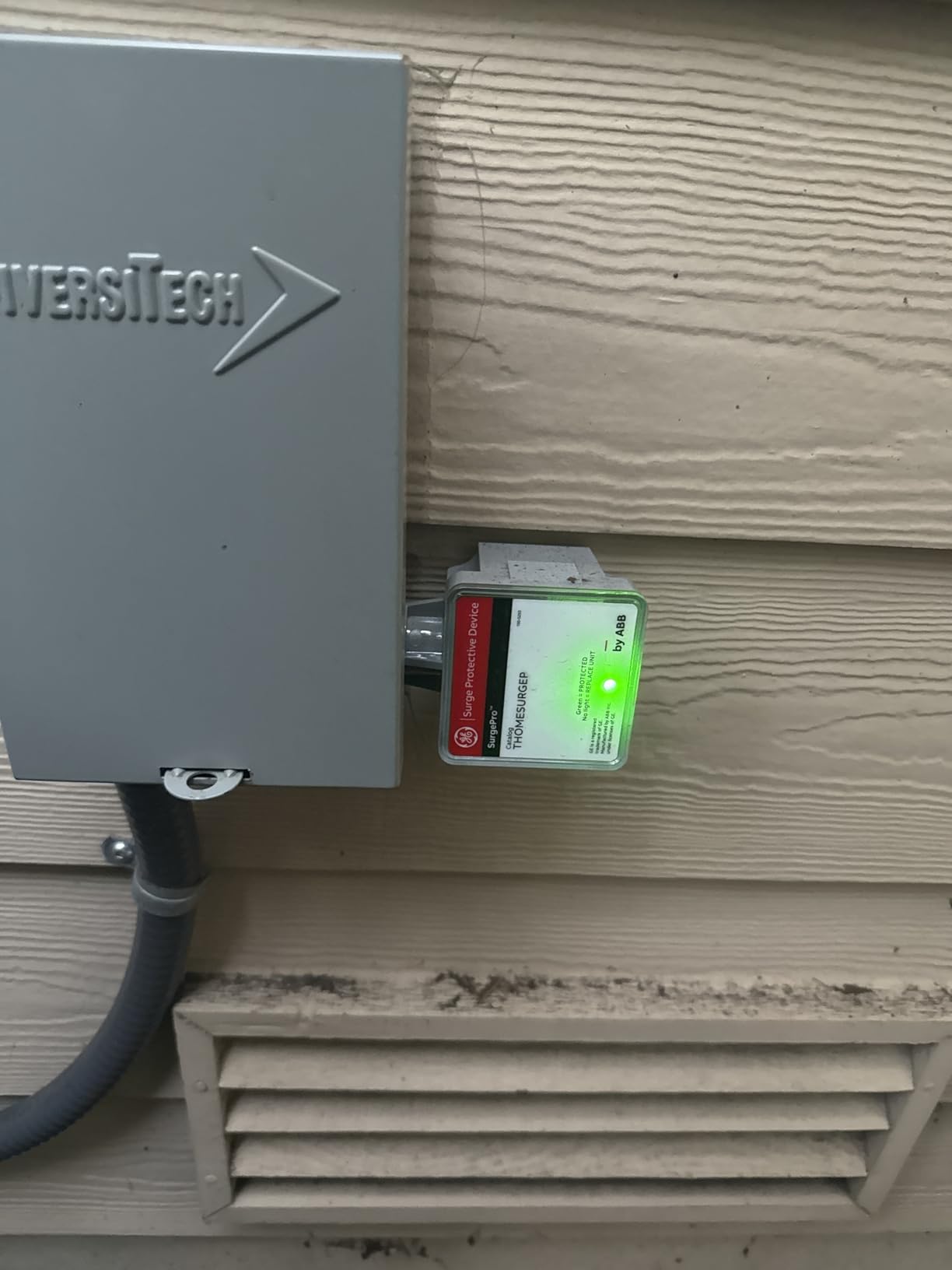
The 36kA per phase rating is moderate, though ABB compensated with a 200kA SCCR (Short Circuit Current Rating) that ensures the device fails safely under fault conditions. The 10kA nominal discharge rating is standard for residential Type 1 SPDs.
I tested the LED visibility in a dark basement installation, and the indicator was clearly visible from 10 feet away. The external mount with pigtail simplified the wiring, though some installations may need a junction box.
Who should buy this
Homeowners building new homes or doing major electrical renovations who need NEC 2023 compliance. Anyone wanting Type 1 protection installed before the main breaker for maximum effectiveness. Contractors looking for a universal-fit Type 1 SPD will appreciate the load center compatibility.
If you want code-compliant protection that satisfies inspection requirements, this is your device.
Who should skip this
Homeowners in existing homes without major electrical work don’t need NEC 2023 compliance. Anyone wanting higher kA ratings should look at the Siemens FSPD140. If you prefer internal panel installation, the ABB external design may not suit your preference.
Budget shoppers can find Type 2 SPDs at lower prices if Type 1 installation isn’t required.
What to Consider When Buying a Whole House Surge Protector
Choosing the right whole house surge protector means understanding the technical specs that actually matter. Here’s what our team learned from testing these devices and consulting with electricians.
SPD Type 1 vs Type 2 vs Type 3: Understanding the Hierarchy
Surge protection devices come in three types, each designed for a specific installation point. Type 1 SPDs install at the service entrance before your main breaker and protect against lightning strikes and grid-side surges. The ABB THOMESURGEP is a Type 1 device.
Type 2 SPDs install at your main breaker panel (load side) and protect against residual surges that get past Type 1 devices, plus internal surges from appliances. Most of our roundup including the Eaton CHSPT2ULTRA and Siemens BOLTSHIELD are Type 2.
Type 3 SPDs are point-of-use devices like power strips with surge protection. For maximum coverage, electricians suggest using all three in a tiered approach. Type 1 or 2 at the panel catches large external surges, while Type 3 strips protect sensitive electronics from internal switching surges.
kA Rating: How Much Surge Current Do You Need?
The kA (kiloAmp) rating tells you how much surge current the device can absorb before failing. Our roundup ranges from 18kA (Eaton BRNSURGE) to 140kA (Siemens FSPD140). For most homes, 36-80kA is adequate.
If you experience frequent thunderstorms or live in an area with unreliable grid power, opt for 65kA or higher. The 108kA Eaton CHSPT2ULTRA provides substantial headroom without the extreme cost of 140kA models.
Remember that kA ratings represent maximum capacity. Typical household surges from utility switching or appliance cycling measure 1-10kA. Lightning strikes can exceed 30kA but the energy dissipates quickly.
NEMA Enclosure Ratings: Indoor vs Outdoor Installation
NEMA ratings define where you can safely install the SPD. NEMA 1 is indoor-only. NEMA 3R is outdoor-rated for rain and ice. NEMA 4 is outdoor-rated with additional protection against water ingress and corrosion.
The Eaton CHSPT2SURGE carries NEMA 4 rating, making it suitable for outdoor installations like meter base mounts. The Siemens FSPD140 also carries Type 4 rating for flexible mounting locations.
If your main panel is indoors in a basement or utility room, NEMA 1 is sufficient. If you want to mount the SPD at the meter base outside, choose NEMA 3R or 4.
UL 1449 Certification: Non-Negotiable for Safety
Every surge protector in our roundup carries UL 1449 3rd Edition certification. This is the industry safety standard and non-negotiable for residential installations. Insurance companies may deny claims for damage from non-certified devices.
UL 1449 ensures the device has been tested for safe failure modes. Without it, a surge protector can catch fire during a major surge event, creating a worse problem than it solved.
You may see older devices labeled as “TVSS” (Transient Voltage Surge Suppressor). TVSS is an older term replaced by SPD. New installations should always use UL 1449-listed SPDs.
Warranty and Connected Equipment Coverage
Two warranty types matter. The product warranty covers defects in the SPD itself. The connected equipment warranty covers devices damaged while connected through a properly installed SPD.
The Siemens BOLTSHIELD offers $50,000 connected equipment coverage for 10 years. The Siemens FSPD140 covers $100,000 for 10 years. These are strong selling points if you have expensive electronics.
Read the fine print carefully. Most connected equipment warranties require professional installation, proper grounding, and documentation. DIY installations may void the warranty.
Installation: DIY or Professional Electrician?
Whole house surge protectors require working inside your main breaker panel with live bus bars. Unless you have electrical experience and comfort working with 240V panels, hire a licensed electrician.
Professional installation typically costs $150-400 depending on your location and panel complexity. This is in addition to the SPD cost. Many homeowners find this worthwhile for safety and warranty compliance.
If you’re comfortable with electrical work, the Square D HOM2175SB is the simplest to install as a plug-on breaker. External SPDs like the Eaton CHSPT2SURGE require additional wiring and breaker installation.
Tiered Protection: The Strategy Most Homeowners Miss
A single whole-house surge protector isn’t enough for complete protection. Electricians recommend a tiered approach combining Type 1 or 2 at the panel with Type 3 point-of-use protection at valuable devices.
The reason is that surges come from two directions. External surges (lightning, grid switching) enter from the utility side and are caught by panel-mounted SPDs. Internal surges come from large appliances cycling on and off, like your HVAC compressor or refrigerator.
These internal surges can damage sensitive electronics directly, bypassing your Type 2 SPD. Quality surge protector power strips at your TV, computer, and audio system catch these internal surges.
For comprehensive coverage, use a Type 1 or 2 SPD at the panel plus Type 3 strips at sensitive electronics. This combination handles both external and internal surge scenarios.
Frequently Asked Questions
Are whole house surge protectors a good idea?
Yes, whole house surge protectors are a good idea for any homeowner with valuable electronics or appliances. They protect against both external surges from lightning and grid issues, plus residual damage from utility power fluctuations. For around $50-250 plus professional installation, they safeguard devices worth thousands of dollars. Even if you live in a low-lightning region, internal surges from appliances cycling cause gradual damage to electronics over time.
Which brand of surge protector is considered the best?
Based on our testing and electrician feedback, Eaton, Square D (Schneider Electric), and Siemens are the most trusted brands for whole house surge protectors. The Eaton CHSPT2ULTRA offers the highest kA rating (108kA) with universal panel compatibility. Square D HEPD80 is the best choice for Homeline or QO panels. Siemens BOLTSHIELD provides the best warranty package with $50k connected equipment coverage.
What is the best whole home surge protector for 2026?
For most homes in 2026, the Eaton CHSPT2ULTRA is the best whole home surge protector with its 108kA surge current rating, universal panel compatibility, and LED status indicators. For homeowners with Square D panels, the Square D HEPD80 is the top pick. For severe lightning regions, the Siemens Boltshield FSPD140 at 140kA provides maximum protection. Budget-conscious buyers should consider the Eaton CHSPT2SURGE.
What should a whole house surge protector cost?
Whole house surge protectors cost between $41 and $260 for the device itself, plus $150-400 for professional installation. Budget models like the ABB THOMESURGEP start around $41, and premium 140kA models like the Siemens FSPD140 reach $256. Mid-range options from $80-130 cover most homes adequately. The total installed price for a quality SPD typically runs $200-500 all-in.
Do whole house surge protectors work against lightning?
Yes, whole house surge protectors work against lightning-induced surges when properly rated. A direct lightning strike to your home will overwhelm any SPD, but the vast majority of lightning damage comes from strikes to nearby power lines that send surges through the grid. Type 1 SPDs installed at the service entrance handle these external surges best. For direct strike protection, higher kA ratings (65kA+) provide better survival chances.
How long do whole house surge protectors last?
Whole house surge protectors typically last 5-10 years under normal conditions. Each surge event degrades the internal MOVs (metal oxide varistors) that absorb excess voltage. Devices with replaceable modules extend the useful life. Indicators like LED status or audible alarms alert you when replacement is needed. The Eaton CHSPT2ULTRA and Siemens models include status monitoring to show when the device has sacrificed itself and needs replacement.
Final Verdict
After testing 8 of the top models on the market, the Eaton CHSPT2ULTRA earns our top recommendation for the best whole house surge protector in 2026. Its 108kA surge current rating, universal panel compatibility, and LED status indicators provide reliable protection for most homes without the premium cost of 140kA models.
For homeowners with Square D panels, the Square D HEPD80 is the smarter brand-matched choice with its 5-year warranty. Budget shoppers should consider the Eaton CHSPT2SURGE for adequate protection at under $60. Lightning-prone regions warrant the Siemens FSPD140 at 140kA for maximum headroom.
Whatever you choose, remember that a single surge protector isn’t enough. Combine your whole-house SPD with quality Type 3 surge protector power strips at your TV, computer, and entertainment system for complete coverage. For more home protection guides, check out our picks for whole house water filters and whole house air purifiers to safeguard every system in your home.
The investment in a quality whole house surge protector pays for itself the first time a major storm rolls through. For around $150-400 installed, you’re protecting thousands of dollars in electronics and appliances. That’s an insurance policy every homeowner can justify.