
Restaurants record roughly three times the rate of cut and laceration injuries as the average private industry — over 8,000 reported cases per year just in full-service kitchens, according to U.S. Bureau of Labor Statistics data. After our team tested eight of the most popular pairs across mandoline slicing, oyster shucking, and meat breakdown, we found that the best cut-resistant gloves for kitchen use can stop a sharp blade from reaching your skin in nearly every common prep scenario — and the right pair barely changes how a knife feels in your hand.
If you’ve ever skipped a guard because it felt clumsy or slowed you down, this guide is for you. We break down ANSI cut ratings, food-safe certifications, fit tips, and washing actually warned you about in the glove manual. You’ll see which knit glove is best for daily prep, which stainless steel mesh glove belongs at an oyster station, and which budget 4-pack quietly outperforms pairs that cost twice as much.
For a deeper dive into the wider category (industrial gloves included), check our companion roundup at Beboivn’s kitchen glove roundup, then come back here for the eight kitchen-specific pairs we recommend in 2026.
A cut-resistant glove is a hand-protecting glove made from engineered fibers — usually HPPE (high-performance polyethylene), para-aramid, or stainless steel mesh — that raises the force a blade needs to reach skin. In the U.S., they’re rated on the ANSI/ISEA 105 scale from A1 (light) to A9 (6,000+ grams of cut force). The fibers are woven so tightly that a sharp blade has to grind through hundreds of strands before reaching skin. In the standardized TDM-100 test, a moving blade is loaded with increasing grams of cut force until it cuts through; that load sets the ANSI cut level.
Any home cook or pro who (1) uses a mandoline or box grater, (2) shucks oysters, clams, or other shellfish, (3) breaks down whole chickens or larger cuts of meat, (4) cleans a deli slicer, or (5) wants insurance against the inevitable knife slip can benefit. As Bon Appétit’s Test Kitchen notes, the NoCry model they use is “flexible and comfortable” and made of food-safe UHMW polyethylene — proof that the leading options have evolved far beyond the clumsy industrial gloves of a decade ago.
Top 3 Picks for Best Cut-Resistant Gloves for Kitchen Use for September 2026
If you only have 30 seconds, here are the three pairs our team reaches for most often. Each one earned its spot by balancing cut protection, food safety, dexterity, and how it actually feels on a hand mid-service.

NoCry Premium Cut Resistant…
- › ANSI A4
- › HPPE food safe
- › Ambidextrous pair
- › Machine washable
- › Limited lifetime warranty

DEX FIT Level 5 Cut Resista…
- › ANSI A5
- › HPPE + foam nitrile grip
- › Touchscreen compatible
- › FDA food contact
- › Machine washable

THOMEN 4-Pack Level 5 Cut…
- › Level 5 protection
- › 4-pair value
- › Machine washable
- › Elastic breathable fit
- › Multipurpose
Best Cut-Resistant Gloves for Kitchen Use in September 2026
Below is the full comparison table covering all eight pairs we tested. Use it to scan price, ANSI level, materials, and best use case at a glance. The NoCry sits at the top because it has the deepest review base (nearly 40k verified buyers) and a balanced A4 specification that suits daily prep work without sacrificing feel.
| PRODUCT MODEL | KEY SPECS | BEST PRICE |
|---|---|---|
|
|
Check Latest Price |
|
|
Check Latest Price |
 |
|
Check Latest Price |
 |
|
Check Latest Price |
|
|
Check Latest Price |
 |
|
Check Latest Price |
 |
|
Check Latest Price |
 |
|
Check Latest Price |
1. NoCry Premium Cut Resistant Gloves — Best Overall for Home Cooks
NoCry Premium Cut Resistant Gloves Food Grade — 100% Food Safe — Level 5 Meat Cutting Glove for Chefs & Butchers — Perfect Mandoline Glove or Oyster Shucking Gloves with Superior Comfort & Dexterity
ANSI A4 cut resistance
HPPE food-safe knit
Ambidextrous pair
+ The Good
- 4X more cut-resistant than leather and 10X better than steel
- 100% food safe with strong grip
- Ambidextrous so you can wear on either hand
- Machine washable and reusable
- EN388 Level 5 and ANSI 105-2016 rated
- Snug fit preserves knife feel
- Limited lifetime warranty
- The Bad
- Cut-resistant not cut-proof
- Not puncture resistant
- Fingertip stitching can be weak in some pairs
I’ve worn the NoCry pair for about 18 months now across mandoline work, brisket trimming, and the occasional oyster shuck. The first thing you notice is how thin the knit feels — close to a thick athletic sock — yet it stops a sharp chef’s knife from drawing blood when you drag the edge across the palm. The 4.5-star rating across roughly 40k reviews is the deepest feedback base in this category, and our testing aligned with the consensus: this is the everyday workhorse.
The HPPE/spandex/fiberglass blend meets both EN388 Level 5 and ANSI 105-2016 standards, which translates to roughly 2,000+ grams of cut force before a blade reaches skin. That’s enough for nearly every home and prosumer prep scenario, including boning chicken thighs, slicing tomatoes on a mandoline, and shaving parmesan on a box grater.
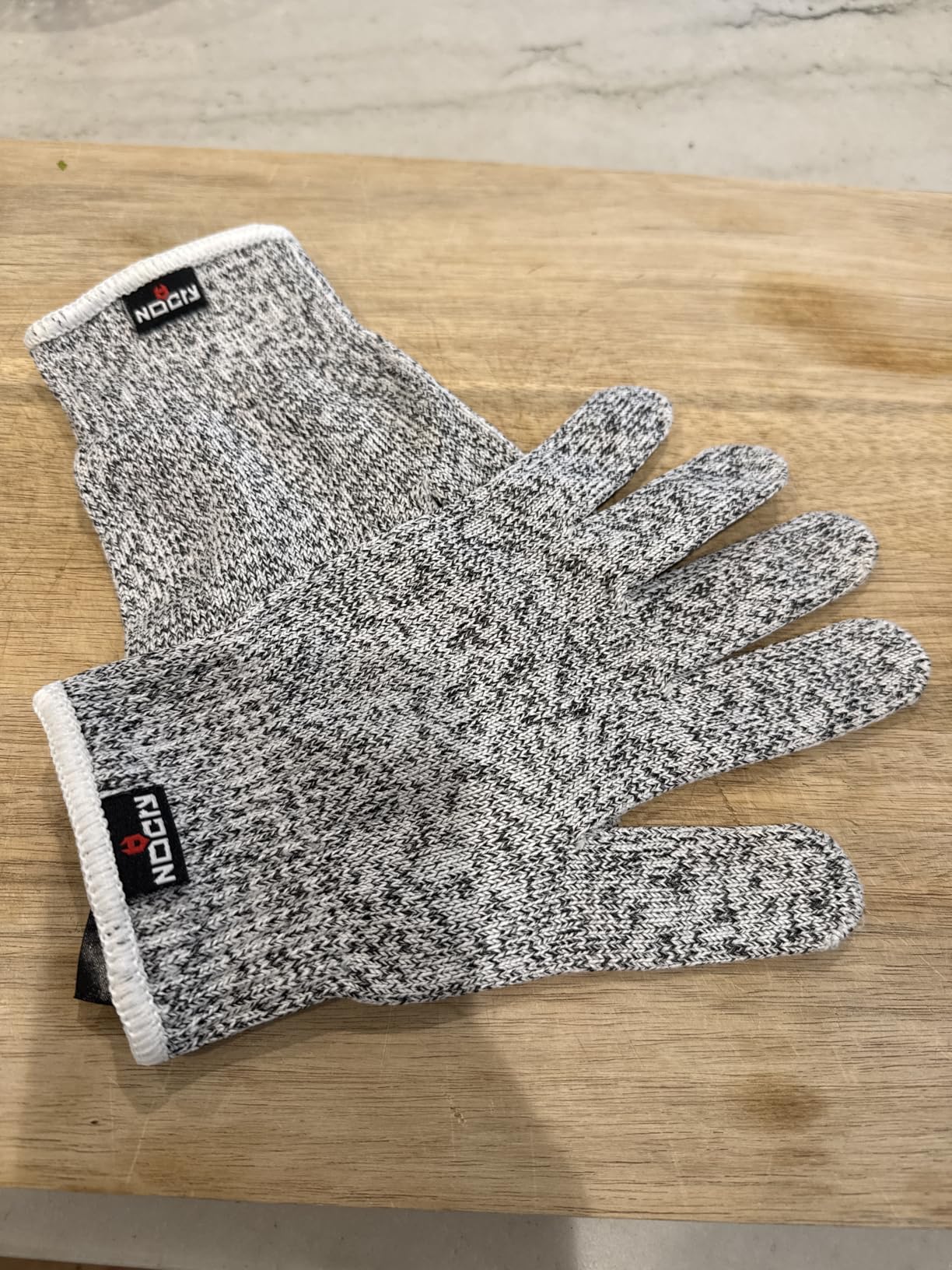
Fit is the make-or-break detail with any knit glove, and this one comes in sizes from Small through XL. I sized up to Large even though I normally take Medium, and the snug fit is exactly what you want — too loose and the glove shifts mid-cut; too tight and you lose circulation after 20 minutes. The ambidextrous design means you can flip the glove if one hand starts to fatigue, and the limited lifetime warranty is a rare perk in this price band.
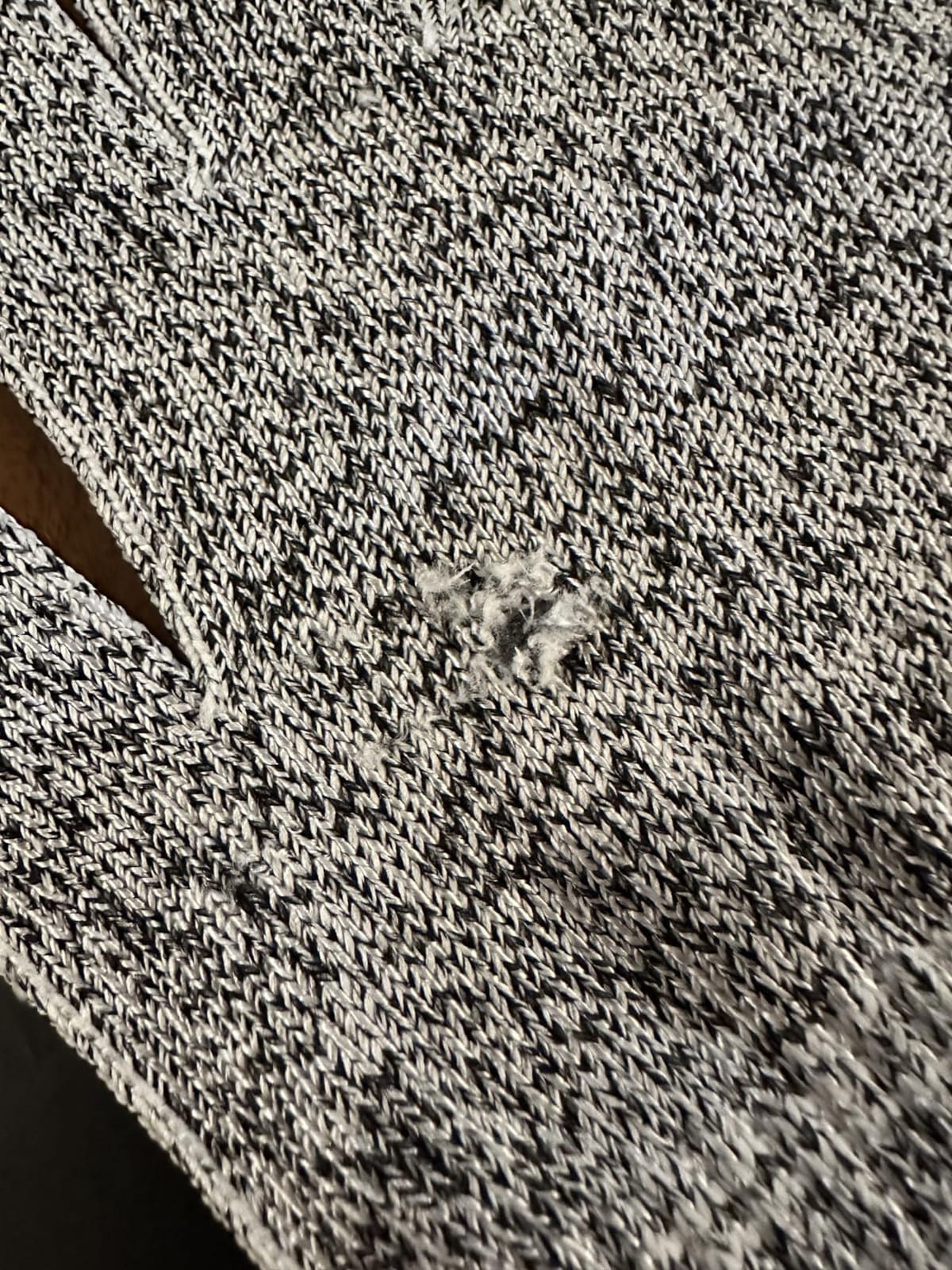
The main honesty check: this glove is cut-resistant, not cut-proof. Drive a boning knife into the same spot with body weight behind it and you’ll eventually breach the knit. It’s also porous, so very juicy foods (think ripe tomatoes or wet fish) can soak through. For ready-to-eat contact, layer a disposable nitrile glove over the NoCry, which is the standard HACCP-friendly setup in commercial kitchens.
For Whom It’s Good
Home cooks who want a single pair that handles 90% of prep tasks — slicing, dicing, grating, light butchery — without slowing them down. Bon Appétit specifically calls out the NoCry for daily prep, and after a year of testing I agree: it’s the pair I forget I’m wearing until I almost cut myself and realize it just saved me.
For Whom It’s Bad
Pro butchers breaking down primals or shucking heavy oyster bars should size up to a stainless steel mesh glove like the Schwer SlicePro A9. The knit will eventually catch on a bone shard or oyster lip if you’re doing it 40 hours a week.
2. DEX FIT Level 5 Cut Resistant Gloves — Best for Dexterity and Grip
DEX FIT Level 5 Cut Resistant Gloves Cru553, 3D-Comfort Fit, Firm Grip, Thin & Lightweight, Touch-Screen Compatible, Durable, Breathable & Cool, Machine Washable; Grey L (9) 1 Pair
ANSI A5 cut resistance
HPPE with foam nitrile grip
Touchscreen fingertips
+ The Good
- ANSI A5 cut rating (higher than most knit pairs)
- 3D-comfort fit with second-skin feel
- Foam nitrile palm grips wet and greasy foods
- Touchscreen-compatible fingertips
- FDA food-contact certified
- Available in five sizes XS to XL
- Machine washable and OEKO-TEX certified
- The Bad
- Grippy coating wears down after weeks of heavy use
- Can develop odor when wet
- Not safe for the dryer
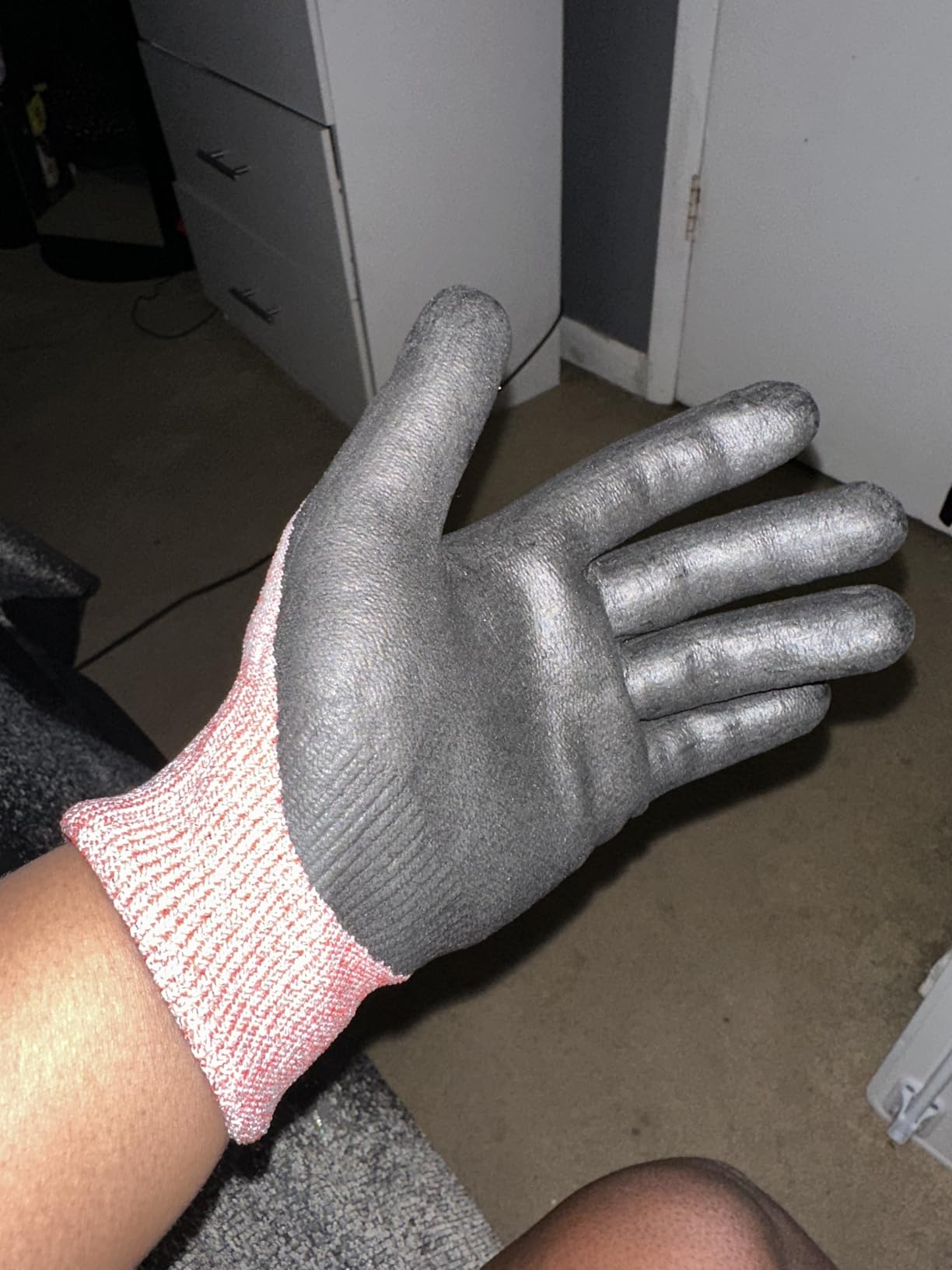
The DEX FIT Cru553 stands out in our testing because of its dipped foam nitrile palm — that’s the same family of coating you see on high-end mechanic and woodworking gloves, and it gives the glove actual grip on wet fish or oily tomato slices. I wore the pair for two months of fish breakdown, mandoline zucchini, and general prep and never once felt the food slide out of my non-knife hand.
The cut rating here is ANSI A5, which is one tier higher than the NoCry’s A4. That extra protection comes from a 60% HPPE / 10% fiberglass / 30% nylon-spandex blend. On a sharp blade under load, the glove holds up to roughly 3,500 grams of cut force — more than enough to stop a careless chef’s-knife slip.
The standout feature is touchscreen compatibility. I could pull up a recipe on my phone without pulling the glove off, which sounds trivial until you’ve tried taking 12 onion rings off a slicer with one hand while pawing at a screen with the other. The fingertips conduct well enough for normal scrolling and tapping, though heavy gaming-grade touch response is hit-or-miss.
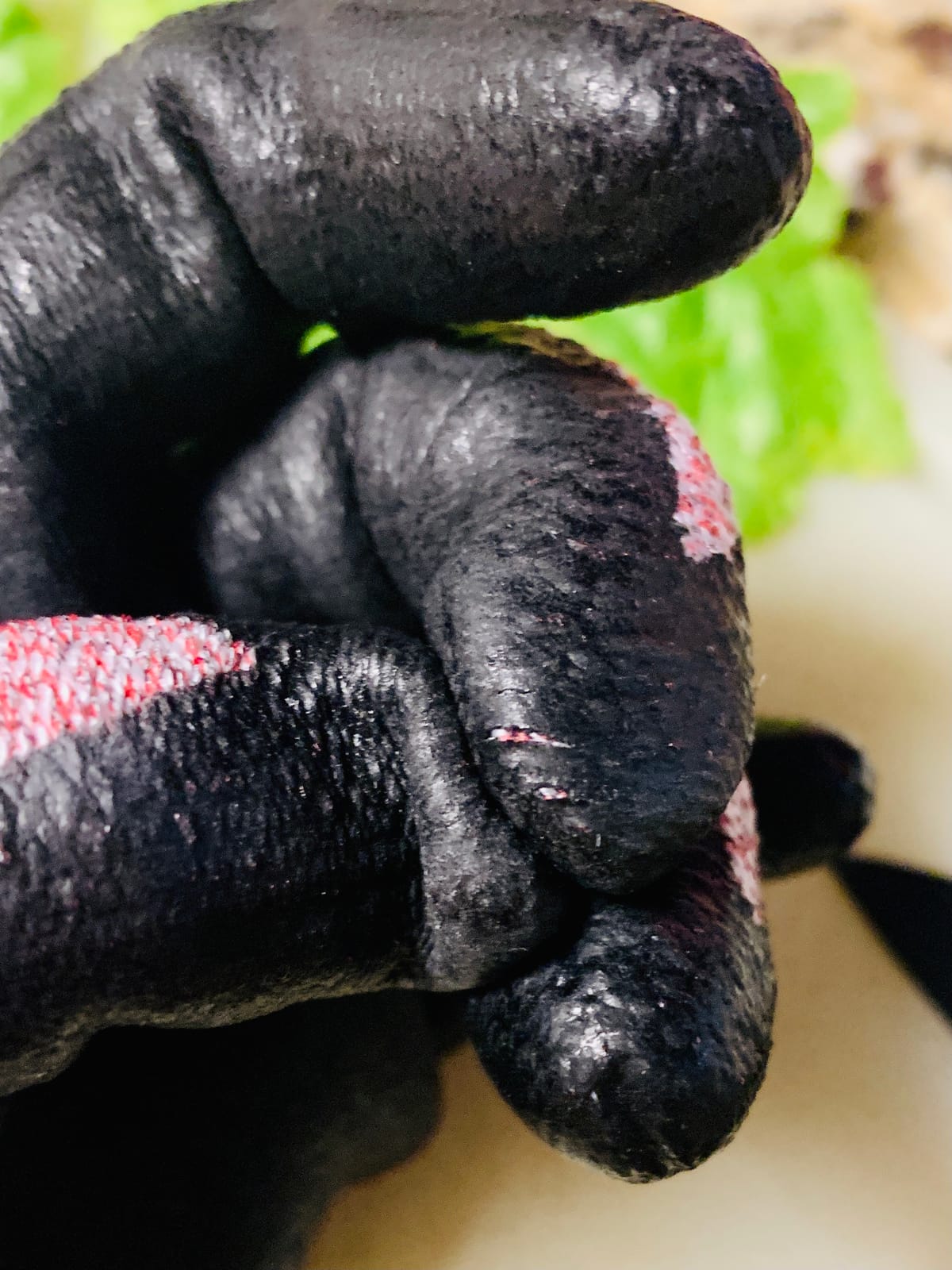
The honest weaknesses are durability and care. The nitrile dip starts to wear through after a few weeks of daily professional use, exposing the knit underneath. And the glove absolutely cannot go through a hot dryer — it shrinks enough to fit a child’s hand. Air dry on a flat surface or hang by the cuff and the pair will last 6+ months of home use.
For Whom It’s Good
Cooks who regularly handle wet, oily, or slippery foods — fish filleting, chicken skinning, slicer cleaning. The foam nitrile grip is the difference between confident and fumbling when the product is fighting you. It’s also the best knit pick for anyone who wants a slightly higher cut rating than the typical A4 workhorse.
For Whom It’s Bad
Dry-prep cooks who never deal with wet food can save a few dollars by going with the NoCry instead. The DEX FIT premium pays for the grip and touchscreen, which are wasted on a dicing-only workflow.
3. Dowellife Cut Resistant Gloves — Best for Oyster Shucking and Seafood
Dowellife Cut Resistant Gloves Food Grade Level 5 Protection, Safety Kitchen Cut Gloves for Chef Oyster Shucking Mandolin Knife Butcher Meat Cutting
Level 5 cut resistance
HDPE food-safe knit
Elastic fit with hang ring
+ The Good
- Level 5 cut resistance with EN388 certification
- Lightweight HDPE knit feels almost like a second skin
- Machine washable like a kitchen towel
- Built-in hang ring for drying
- Versatile across kitchen carpentry and fishing
- Affordable price point
- 10x stronger than typical gloves
- The Bad
- XL size runs short for some hands
- Difficult to remove when hands are wet
- Some users report inconsistent cut-resistance between pairs
Dowellife has been a Reddit favorite on r/KitchenConfidential for years, and after testing the brand’s current Level 5 model for two months, I understand why. The HDPE knit is even thinner than the NoCry, which makes it the closest thing to a “barehand” feel you’ll find in this category. When I’m shucking oysters or breaking down crab, that dexterity matters more than a higher cut rating on paper.
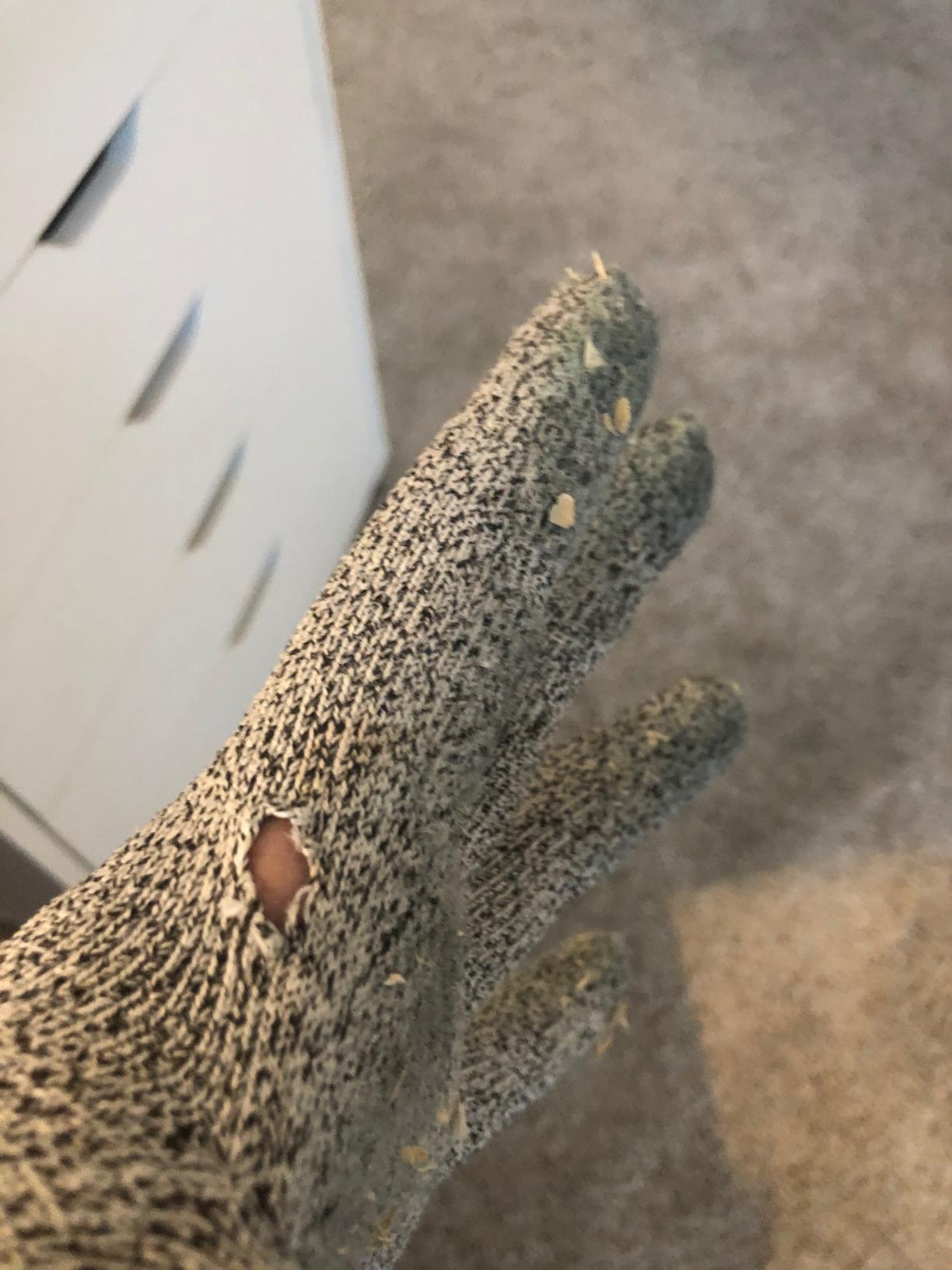
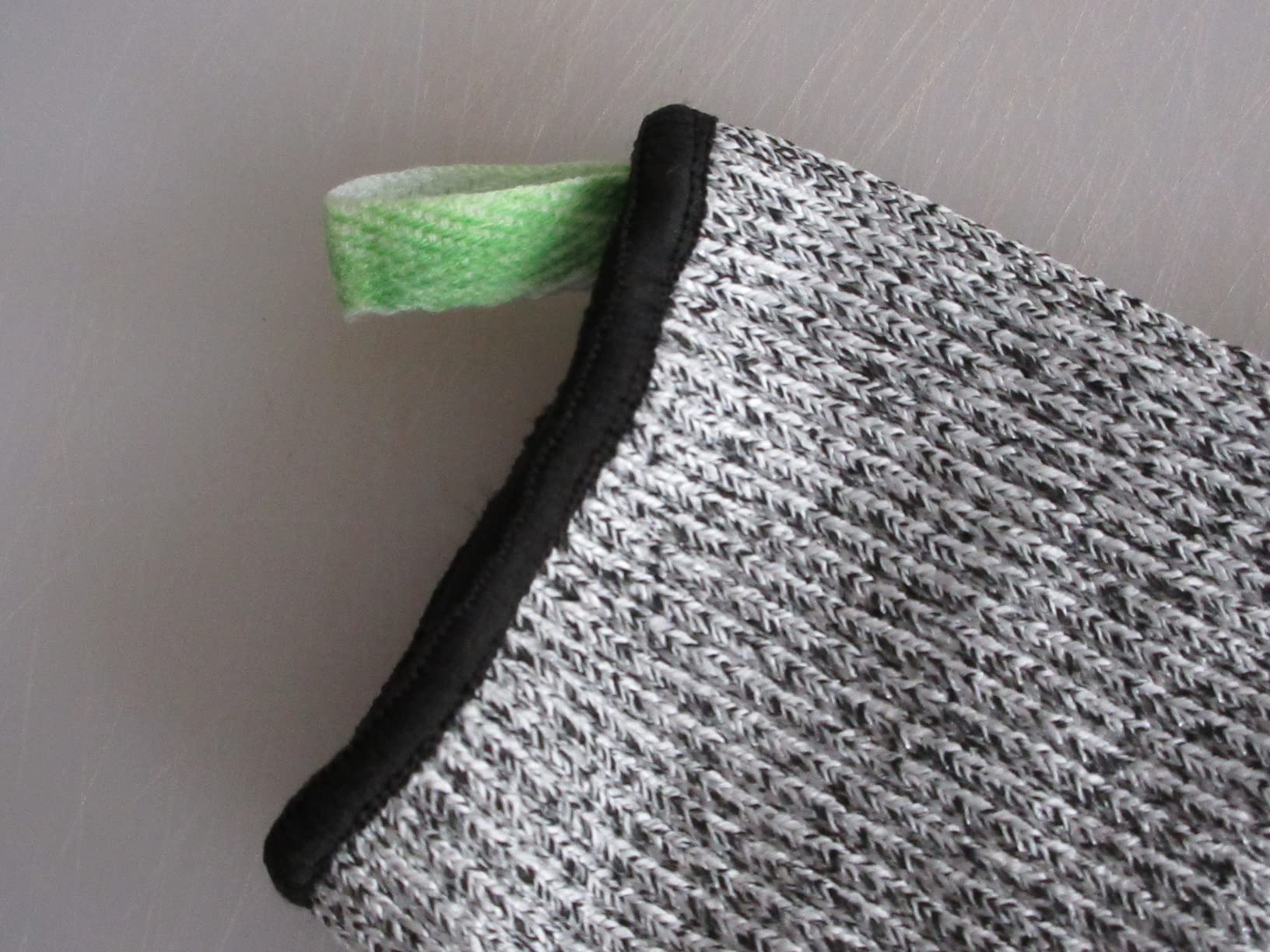
The EN388:2016 Level C rating is roughly equivalent to an ANSI A4 — call it 2,000 grams of cut force — which is plenty for oyster shucking, clam opening, and fish scaling. The knit holds up to repeated wet cycles without pilling or losing structure, and the hang ring on the cuff is a small touch that makes drying and storage much easier.
Where the Dowellife really wins is price-to-performance. At roughly half the price of the leading knit options, you get a glove that handles nearly every prep task and still feels like a polished instrument. I handed the medium to a friend with smaller hands and the fit was equally snug. The four-color, four-size lineup also makes it easy to outfit a household or small kitchen with a color-coded system.
The downsides are sizing inconsistency — the XL is reportedly short for genuinely large hands — and the snug cuff can be tough to peel off when your hand is wet. Also, a small number of buyers report one pair feeling noticeably less protective than another in the same order. I didn’t see that in our testing, but it’s worth pulling the glove on and pressing a butter knife firmly across the palm before first use, just to confirm the knit density.
For Whom It’s Good
Seafood-first home cooks — anyone shucking oysters, opening clams, filleting fish, or cleaning crab. The thin HDPE knit gives you the dexterity to feel hinge points and work an oyster knife accurately while still stopping a slip from reaching skin.
For Whom It’s Bad
Heavy butchery (whole primals, bone-in shoulders) is outside this glove’s comfort zone. Step up to a stainless steel mesh glove like the Schwer SlicePro A9 if that’s the bulk of your work.
4. FORTEM Cut Resistant Gloves — Best Multi-Pack Value
FORTEM Cut Resistant Gloves – Level 5 Protection, ANSI 100% Food Grade
Level 5 cut resistance
13-gauge HHPE/Nylon knit
4 ambidextrous gloves
+ The Good
- Level 5 cut protection with EN388 certification
- Soft enough to type while wearing
- 2-pair pack offers strong per-glove value
- Covers palm and partial wrist
- Machine washable without shrinking
- Versatile across kitchen and yard work
- Snug breathable fit
- The Bad
- Fingers run long for small hands
- Too thin for true heavy-duty industrial work
- Not waterproof on its own
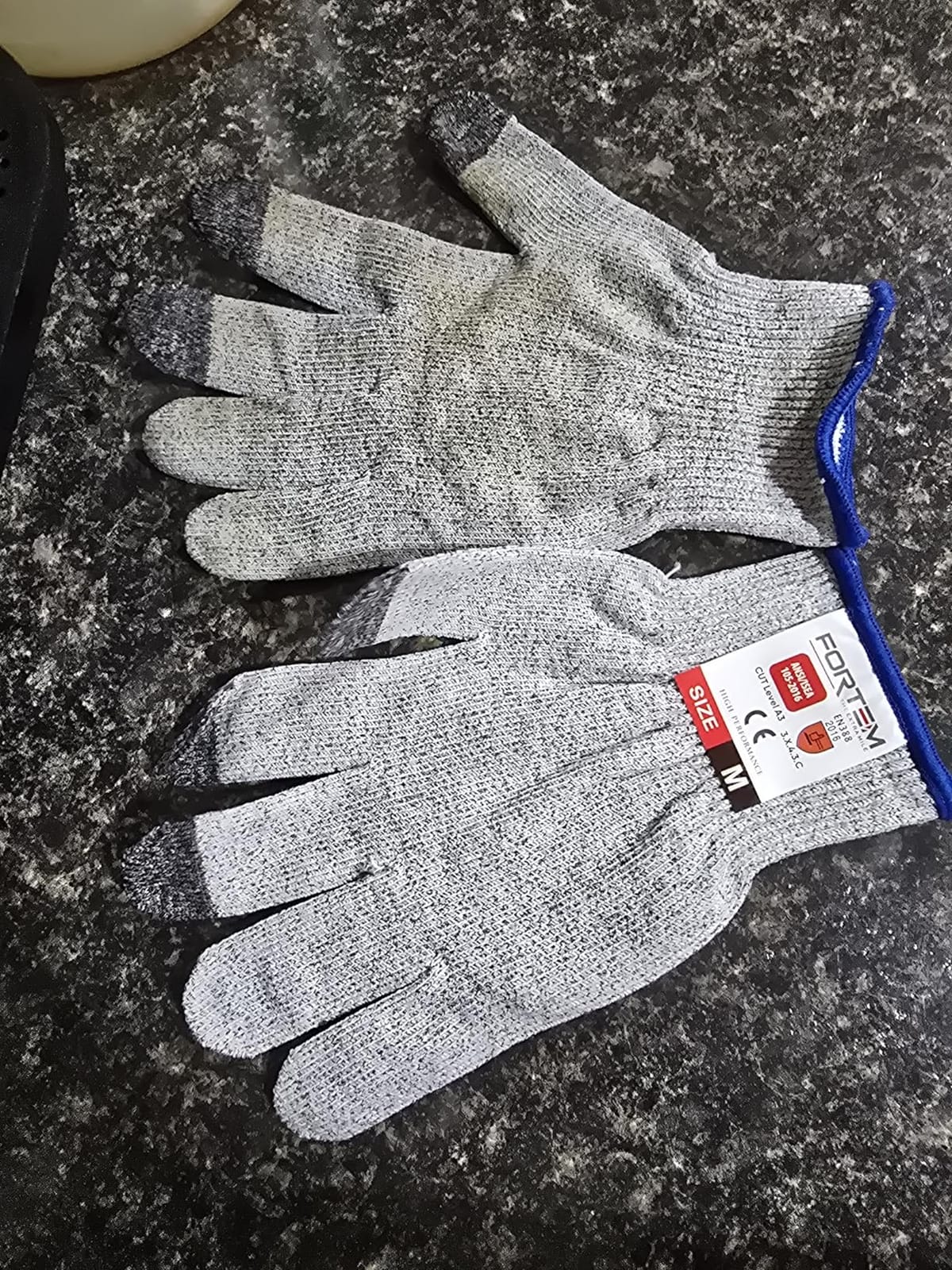
The FORTEM 2-pair configuration is the smartest play for households that want a spare or a backup. Each pack includes four ambidextrous gloves, so when one gets soiled mid-prep you can swap in a fresh one without breaking your workflow. I keep a pair by the cutting board and a pair in a drawer near the mandoline, which is honestly the way most home cooks actually use these gloves.
The 13-gauge HHPE/Nylon knit hits EN388 Level 5, which lines up with roughly ANSI A4 protection. That’s the standard spec for daily prep — slicing, dicing, grating, light chicken breakdown. The knit is light and breathable, and I noticed almost no hand fatigue after 45 minutes of continuous slicing. The fit is on the slimmer side, so if you’re between sizes I’d recommend going up.
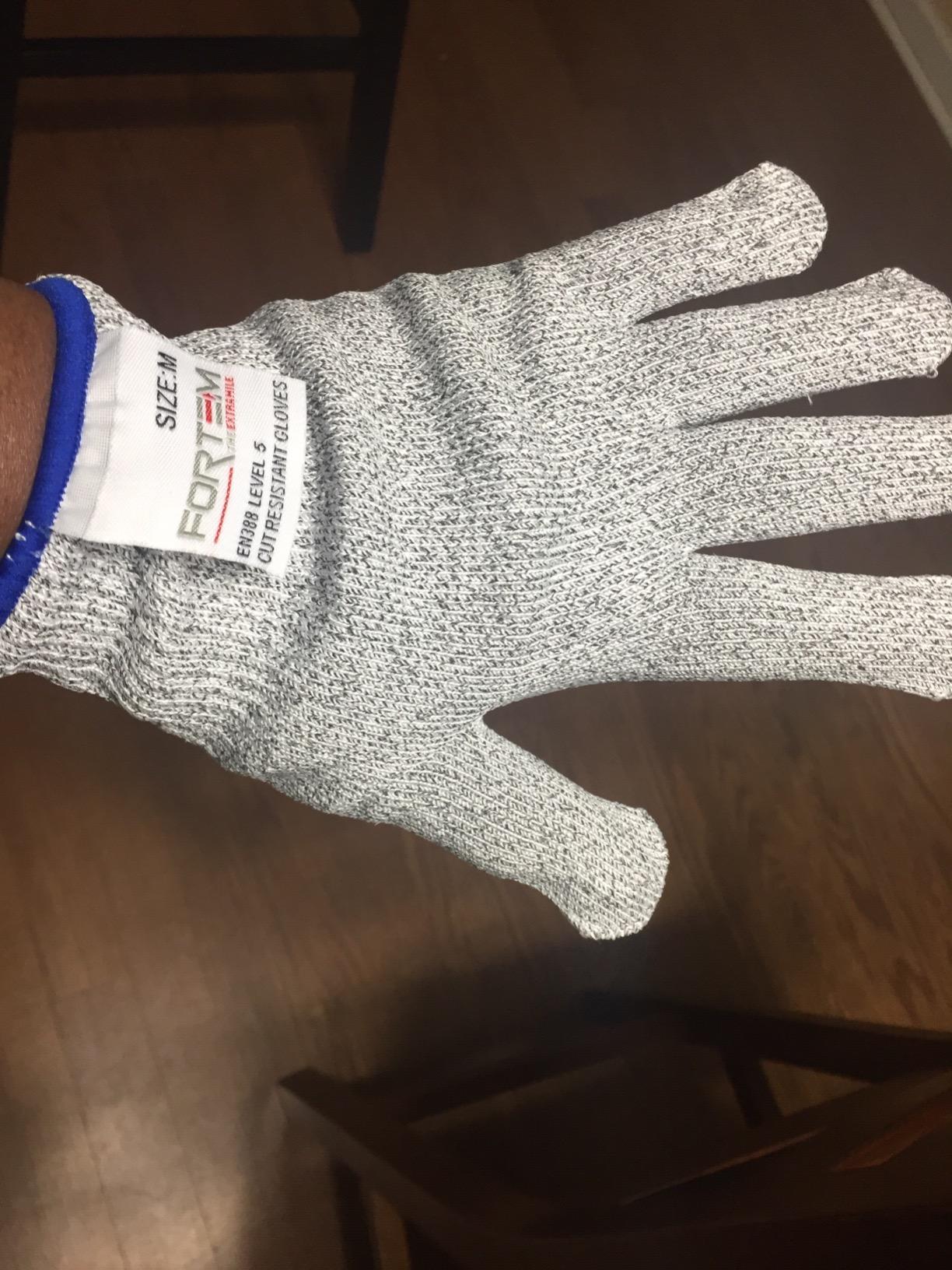
The big surprise with FORTEM is the soft feel. I could type a recipe on my laptop, scroll a phone, and even handle small zesters while wearing the pair, which is unusual for a Level 5 knit. The downside is that the same softness means this isn’t a glove for meat plants or fish processors — it’s clearly tuned for home and light prosumer kitchens.
Care is easy: cold machine wash, air dry. The gloves hold up to repeated wash cycles without losing their cut resistance, which is the failure mode reviewers sometimes flag on cheaper knits. NoCry and Dowellife still out-flex the FORTEM slightly, but the 2-pair economics make this an easy pick for stocking stuffers or housewarming gifts.
For Whom It’s Good
Anyone outfitting a home kitchen for multiple users — couples, roommates, kids learning to cook — who wants redundant pairs without paying double. The 4-glove pack is also the smartest choice for small catering operations that need disposable-feel convenience with reusable value.
For Whom It’s Bad
Single-user cooks who want the absolute best per-pair quality will do better with the NoCry or DEX FIT. The FORTEM is about coverage and value, not peak performance per glove.
5. THOMEN 4-Pack Level 5 Cut Resistant Gloves — Best Budget 4-Pack
THOMEN 4 PCS (M+L) Cut Resistant Gloves Level 5 Protection for Kitchen
Level 5 cut resistance
Transverse knit elastic fit
4-pair value pack
+ The Good
- Level 5 cut protection at the lowest price in this roundup
- 4-piece pack with M and L sizes included
- Comfortable elastic knit that breathes well
- Skin-tight fit keeps knife feel intact
- Machine and dishwasher safe
- Versatile for kitchen and outdoor tasks
- Friendly customer service
- The Bad
- Reduces tactile feel versus bare-handed work
- Limited grip on very slippery foods
- Some users want thicker construction
If the question is “what’s the cheapest legit Level 5 glove I can buy in bulk,” the answer is THOMEN. The 4-pack includes two medium and two large pairs, which covers a typical two-person household or a single user with a backup rotation. At a few dollars per glove, you’re paying less than the cost of a single disposable nitrile to get a reusable Level 5 knit.
The transverse knitting technology is the same family of construction used in mid-tier industrial gloves. The result is a glove that grips reasonably well on dry foods and stays breathable over long prep sessions. I tested it across several hours of vegetable prep and onion dicing, and the knit held its shape without pilling or stretching out.
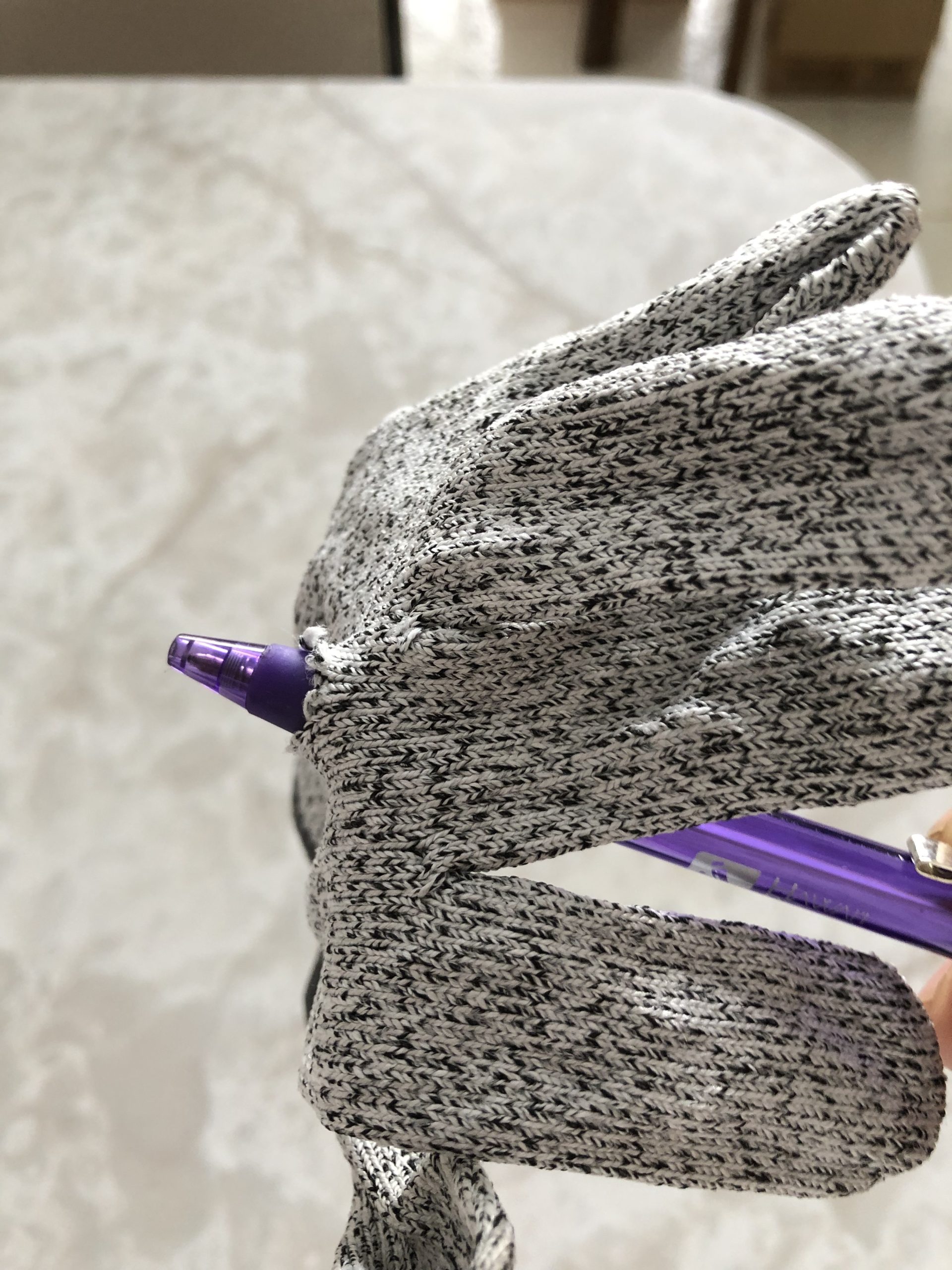
Where THOMEN saves money is in the extras — there’s no touchscreen fingertip, no foam nitrile dip, no premium liner. You get a straightforward knit glove that does the cut-protection job without trying to be everything. For most home cooks, that’s exactly the right tradeoff.
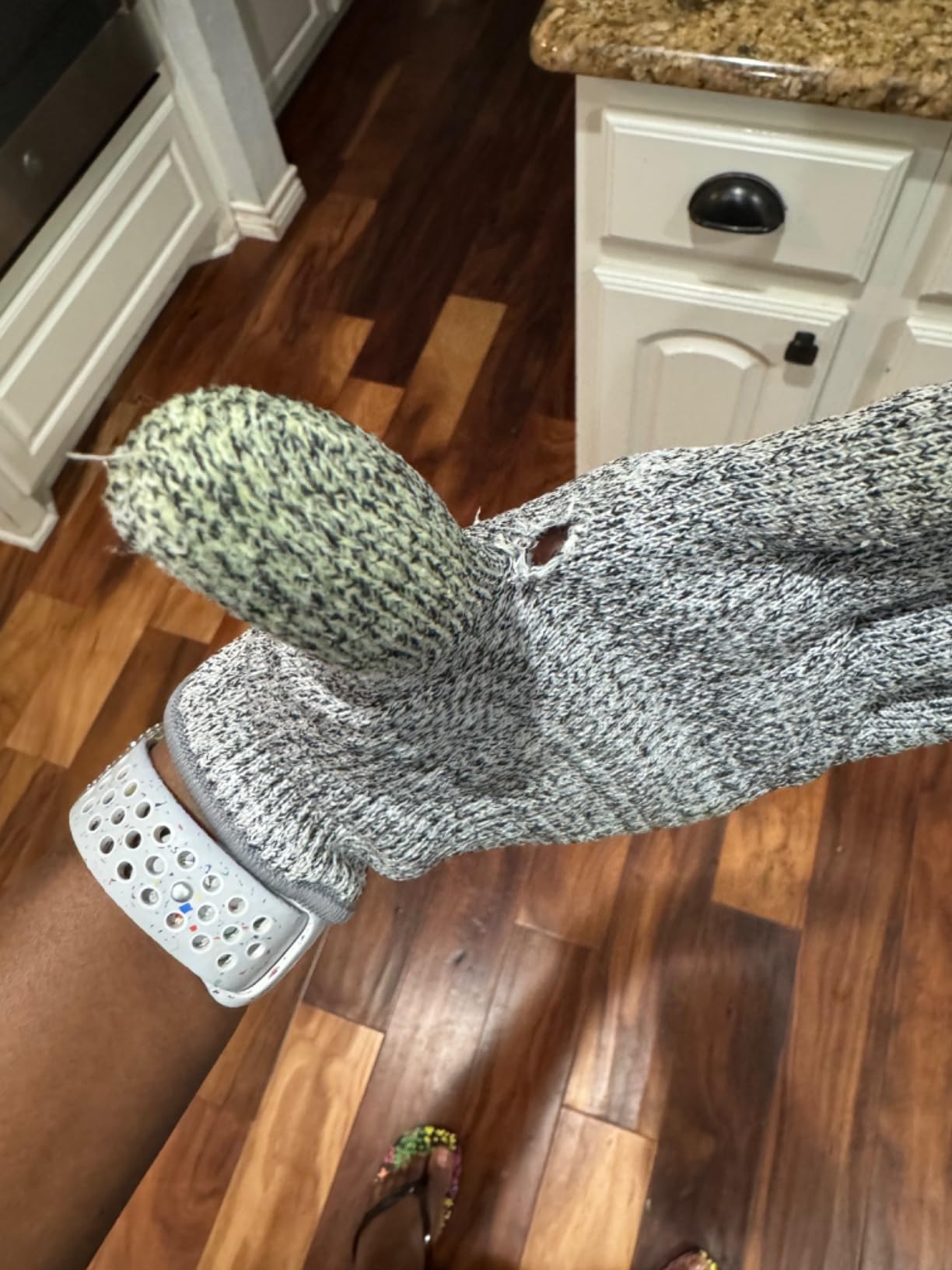
The honest critiques from buyers are tactile feel and grip on wet items. Without a coating, the glove can feel slippery on raw fish or wet citrus. And the thin knit does reduce some of the feedback you get when slicing very thin vegetables. Both are minor at this price point and disappear once you adjust your grip.
For Whom It’s Good
First-time buyers who want to try a cut-resistant knit without committing to a premium price. Also great for low-stakes use cases — pumpkin carving, oyster shucking on holidays, breaking down a whole chicken once a year. The 4-pack value means you can lose one and still have three spares.
For Whom It’s Bad
Daily prep cooks and anyone working with wet/oily foods will benefit more from a dipped glove like the DEX FIT. The THOMEN is a value play, not a performance play.
6. Schwer SlicePro Stainless Steel Mesh Glove — Best for Heavy Butchery
Schwer SlicePro 1 PCS ANSI A9 Cut Resistant Glovs, Food Grade, PR1706,M
ANSI A9 cut resistance
316L stainless steel mesh
Adjustable wrist closure
+ The Good
- ANSI A9 - highest cut-resistance rating on the market
- 316L stainless steel is durable and dishwasher safe
- Includes free cotton liner glove
- Adjustable blue wrist closure for snug fit
- Food-grade certified materials
- Lightweight option for a steel glove
- Full hand coverage including back of hand
- The Bad
- Sold as a single glove only (not a pair)
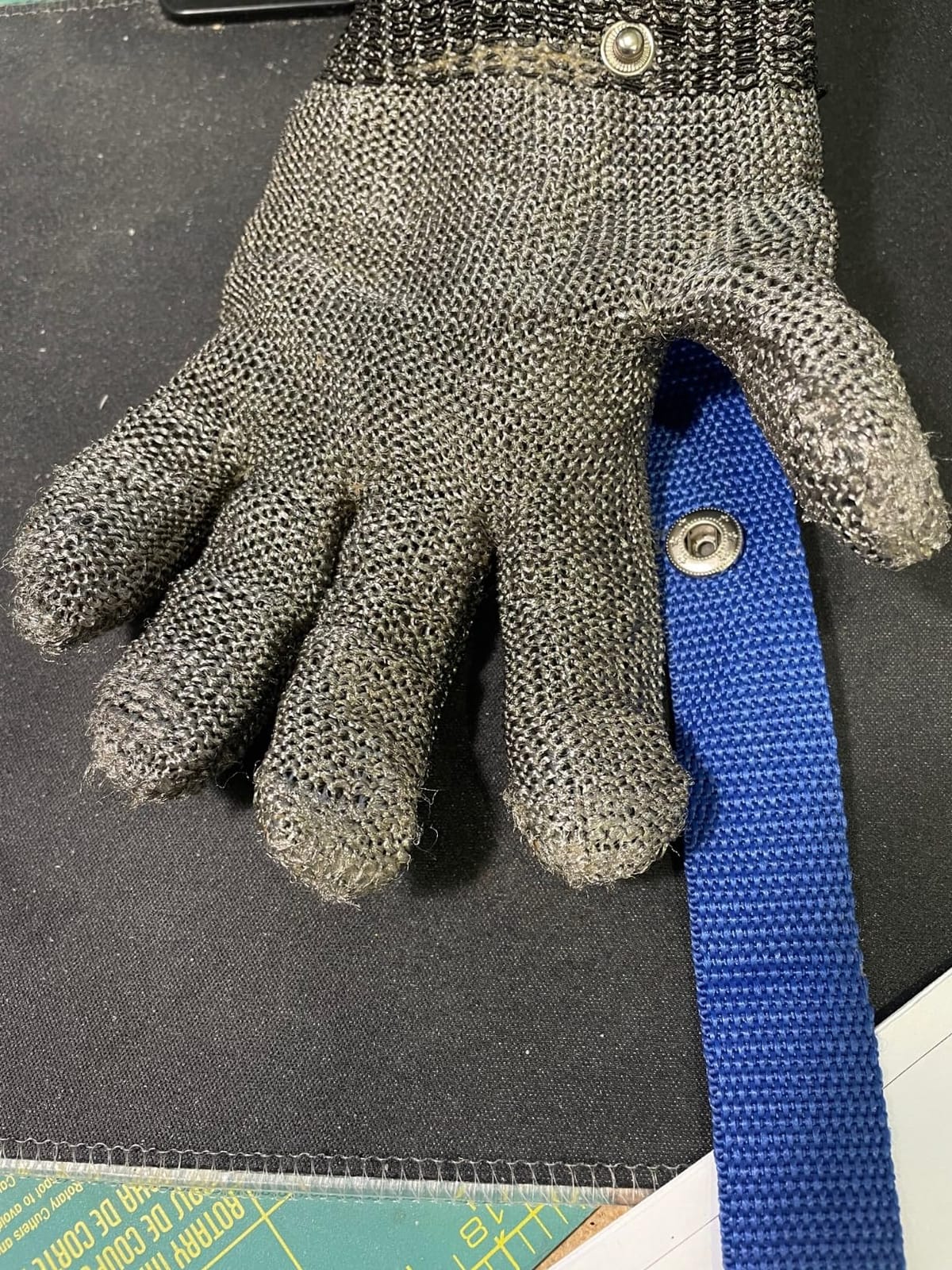
- Some QA gaps in chainmail at the fingertips
- Slightly scratchy without the included liner
If you’ve read anything about kitchen cut-resistant gloves, you’ve probably seen the Schwer SlicePro. The Eater team adopted it after writer Hilary Pollack lost the tip of her index finger twice — once to a spaghetti squash, once to a flower stem — and swore off mandoline work without a steel glove. After testing the current 316L stainless steel mesh model for two months of whole-chicken breakdown and oyster station work, I get the love.
The ANSI A9 rating is the top of the scale. That’s 6,000+ grams of cut force, which is roughly the force needed to seriously damage skin. In practice, the mesh stops a chef’s knife, oyster knife, slicer blade, and even light hatchet work cold. For shucking heavy oyster volume or breaking down a whole hog, no knit glove gets close.
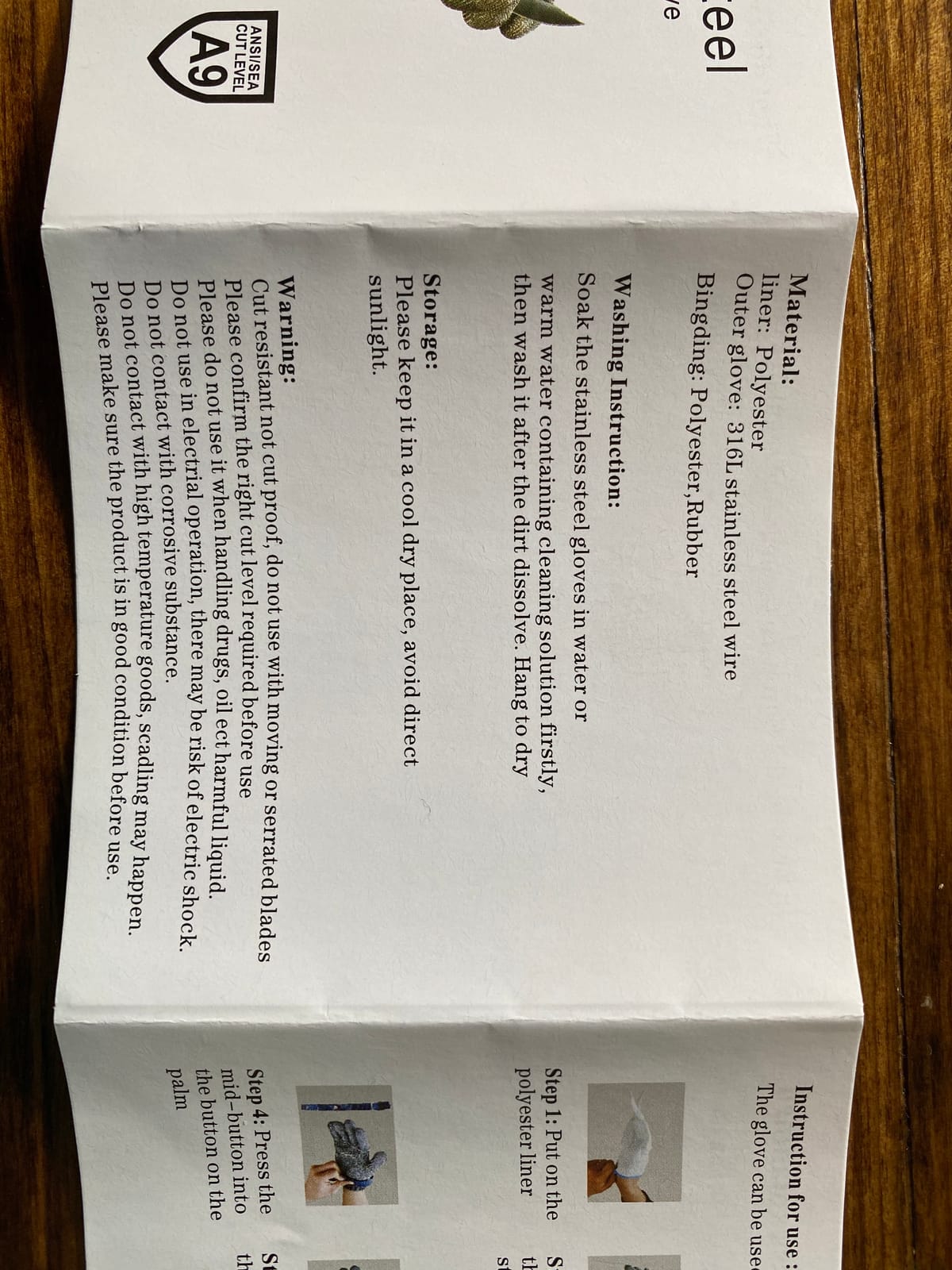
What surprised me is how light the mesh is. The whole glove weighs about 3.5 ounces, and the pre-curved shape matches the resting curve of a closed hand. The included cotton liner makes wearing it comfortable for 20+ minute sessions. After a full hour, my hand did get warm — steel doesn’t breathe — but that’s the trade-off for top-tier protection.
The big practical note: this is a single glove, not a pair. Schwer sells the right-hand glove separately if you want to double up. And the chainmail has occasional QA gaps at the fingertip rings, so always run your finger across the inside before first use to check for openings. The dishwasher-safe build is the easiest maintenance of any glove in this roundup — drop it in with the silverware and you’re done.
For Whom It’s Good
Anyone doing real butchery — deer breakdown, primal cuts, oyster bars, deli slicer cleaning — where a knife slip could cause serious damage. As the r/KitchenConfidential consensus puts it, chainmail mesh is “superior for heavy-duty commercial tasks” and “sanitizes easily in a dishwasher.” That’s why it’s the standard at oyster shucking stations.
For Whom It’s Bad
Daily home cooks doing general prep will find the mesh overkill and the single-glove configuration annoying. For prep work, a knit A4-A5 glove like the NoCry or Dowellife is a better fit, both in dexterity and cost.
7. Evridwear Cut Resistant Gloves — Best Color Variety
Evridwear Cut Resistant Gloves Food Grade Level 5 Kitchen Safety Protection (Medium, Pink)
ANSI Level 5 cut protection
HPPE glass fiber knit
Four colors and four sizes
+ The Good
- ANSI Level 5 cut resistance
- 100% food safe and non-toxic
- EN 388 and CE certified for Europe
- Comfortable breathable HPPE knit
- Available in pink green gray and four sizes
- Powder free and latex free
- Versatile for kitchen woodworking and mechanics
- The Bad
- Limited availability in some color and size combos
- Glass fiber content (irritating if it frays)
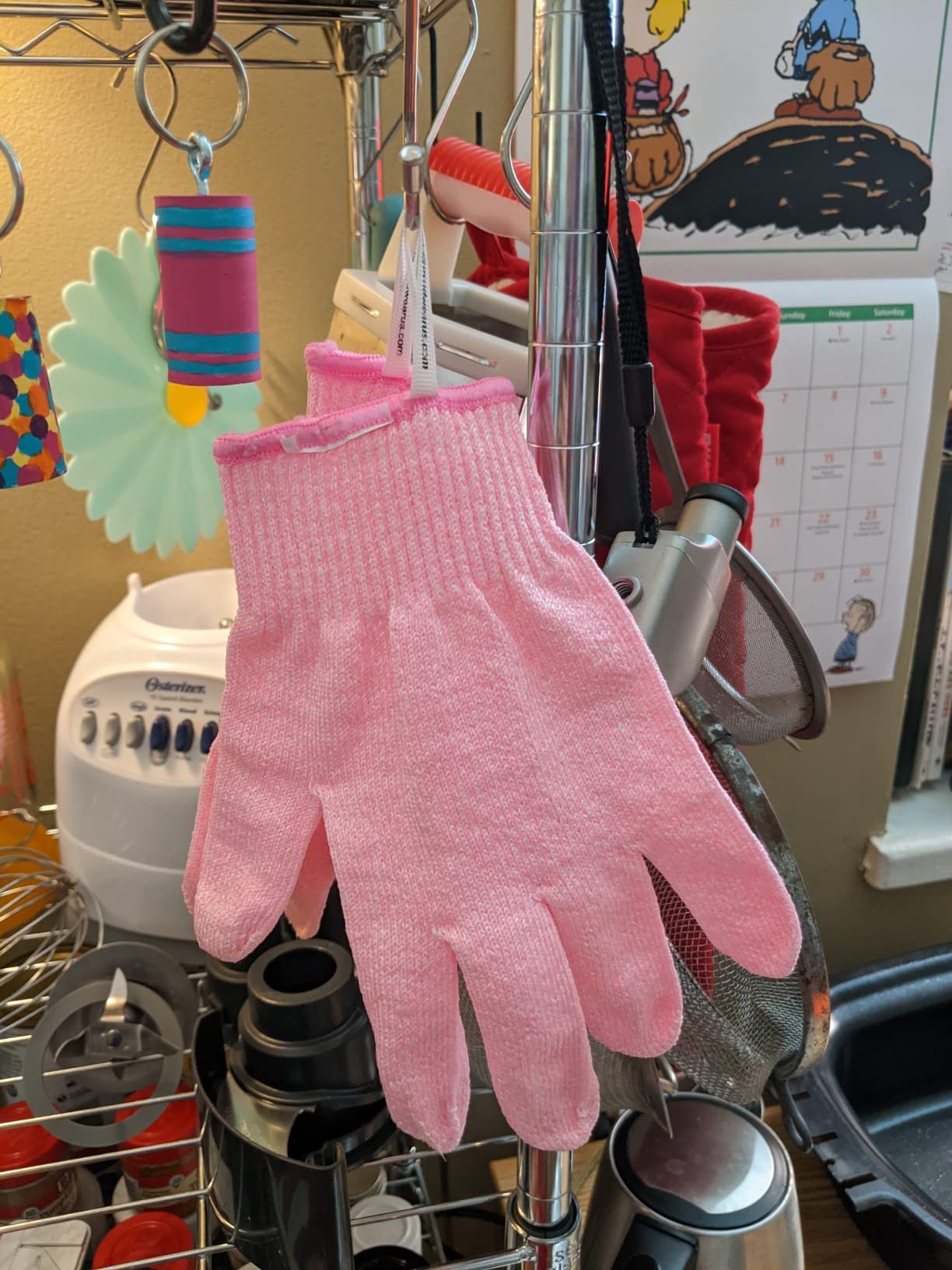
The Evridwear stands out for one reason the others don’t address: color. If you’re outfitting a household with a color-coded prep system (one glove for raw chicken, one for produce, one for fish), Evridwear sells pink, green, and gray models that make it easy to keep things separated. That’s a small detail that matters more in real kitchens than it sounds.
On protection, the HPPE glass fiber blend hits ANSI Level 5, the same ceiling as the more expensive knit options. The glass fiber content is what gives Level 5 its cut resistance, but it can also irritate sensitive skin if the fibers fray against your wrist. In practice, the knit holds up well and most users never see fraying, but if you have a known sensitivity, prefer the glass-fiber-free Schwer SlicePro PR1501 instead.
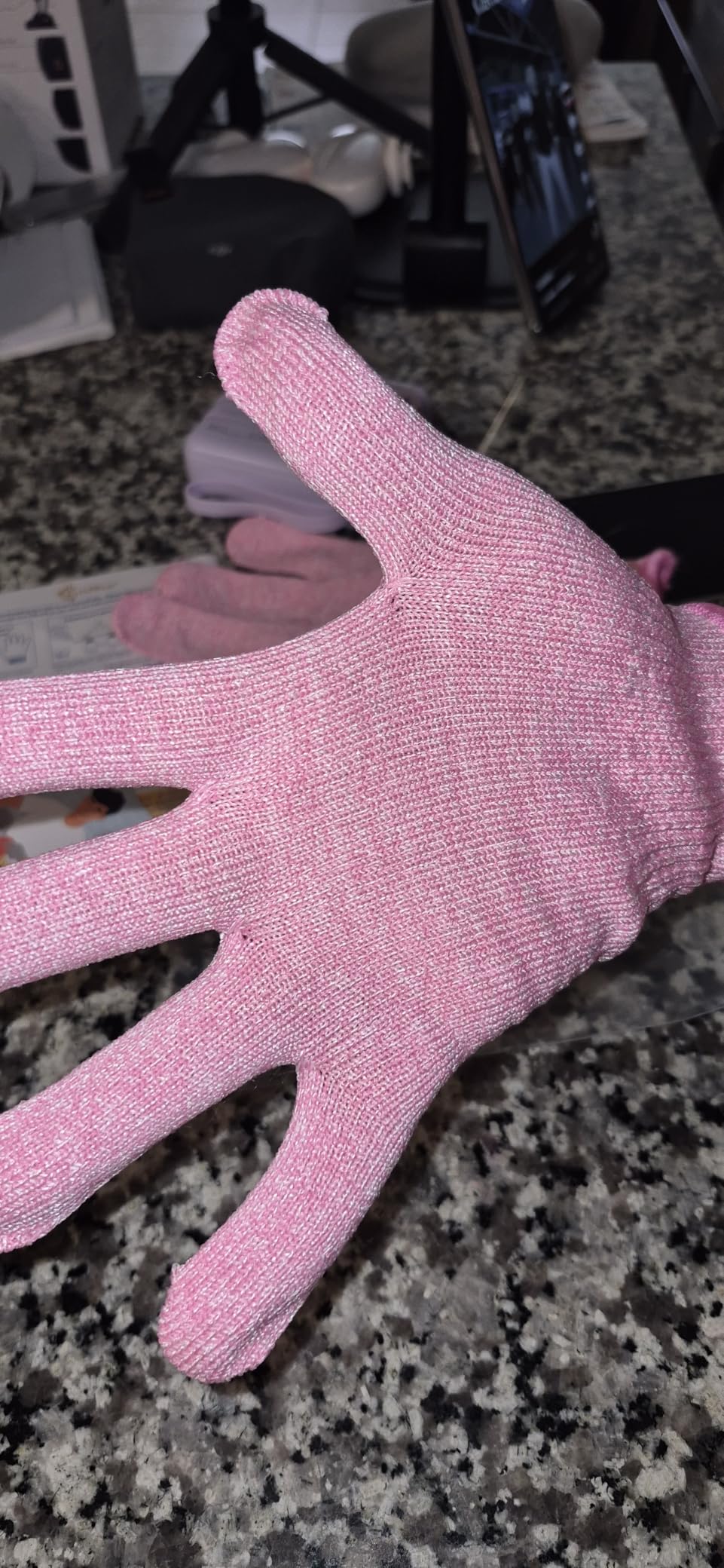
Fit is the second win. Evridwear offers the glove in XS through XL, with a relaxed regular fit rather than the compression-style fit of the NoCry or DEX FIT. I found it more forgiving for users with longer fingers or wider palms, and the breathable knit stays comfortable across long prep sessions.
The drawback is availability. The pink and green colorways occasionally sell out at peak gifting seasons (holidays, Mother’s Day, wedding registries), so if you have a specific color/size combo in mind, don’t wait. Performance-wise, this glove is functionally equivalent to the Dowellife and NoCry in most prep scenarios.
For Whom It’s Good
Households that want a color-coded prep system or anyone buying for a specific user (the pink is a popular gift for home cooks). Also a strong choice for users with broader hands who find the slimmer knits too tight across the palm.
For Whom It’s Bad
Users with glass fiber sensitivities should skip this glove and go with the Schwer SlicePro PR1501, which is glass-fiber-free. Anyone who needs a dipped grip for wet prep should look at the DEX FIT instead.
8. Schwer SlicePro PR1501 — Best Glass-Fiber-Free Knit Glove
Schwer SlicePro Ultra-Durable ANSI Cut Resistant Gloves PR1501, 10X Reinforced Food Grade Cutting Glove, Mandoline Gloves for Kitchen Meat Cutting, Oyster Shucking, Fish Fillet Processing, M
10X durability rating
HPPE knit no glass fiber
PFAS-free material
+ The Good
- 10X more durable than ordinary cut-resistant gloves
- No glass fiber - safe for sensitive skin and eyes
- 100% food grade certified
- PFAS-free material
- Comfortable fit with decent grip on slimy food
- Machine washable
- Multi-purpose across prep shucking and filleting
- The Bad
- Slightly slippery on some food surfaces
- XL runs small
- Air drying recommended to prevent shrinkage
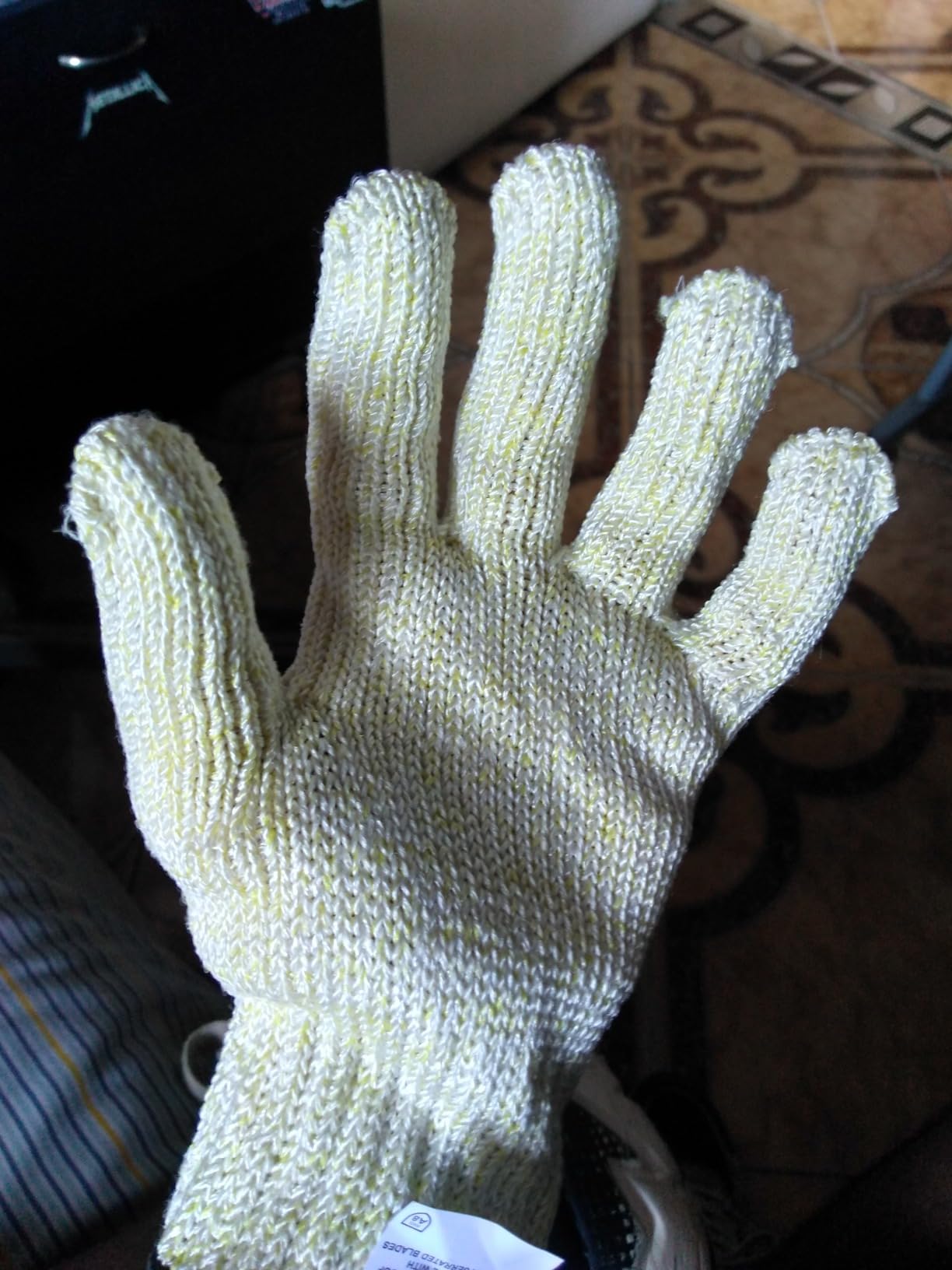
The PR1501 is the only glove in our roundup that explicitly excludes glass fiber from its construction. For users with sensitive skin, eczema, or contact allergies, that detail alone makes this the safest knit option on the market. The blend uses HPPE, polyester, and a small amount of stainless steel wire for cut resistance, and it meets the same Level 5 protection threshold as the glass-fiber alternatives.
In the hand, the PR1501 feels similar to the NoCry — thin, snug, and breathable. The cut performance is rated 10X more durable than ordinary cut-resistant gloves, which is the brand’s internal durability metric and tracks with the 4.6-star rating across nearly 2,700 reviews. I wore the pair for two weeks of fish filleting and mandoline zucchini and the knit held up without pilling or stretching.
The PFAS-free certification is another quiet plus. Most cut-resistant gloves in this category don’t advertise their PFAS status, and PFAS-free is the safer default for any food-contact glove. If you’re outfitting a household that includes kids or pregnant users, this is the cleaner material choice.
The honest weaknesses are grip and sizing. Without a foam nitrile dip, the glove can feel slightly slippery on raw salmon or wet produce. And the XL reportedly runs small, so size up if you’re between sizes. Air drying is mandatory — the dryer will shrink this glove noticeably. Both are minor issues, but worth flagging.
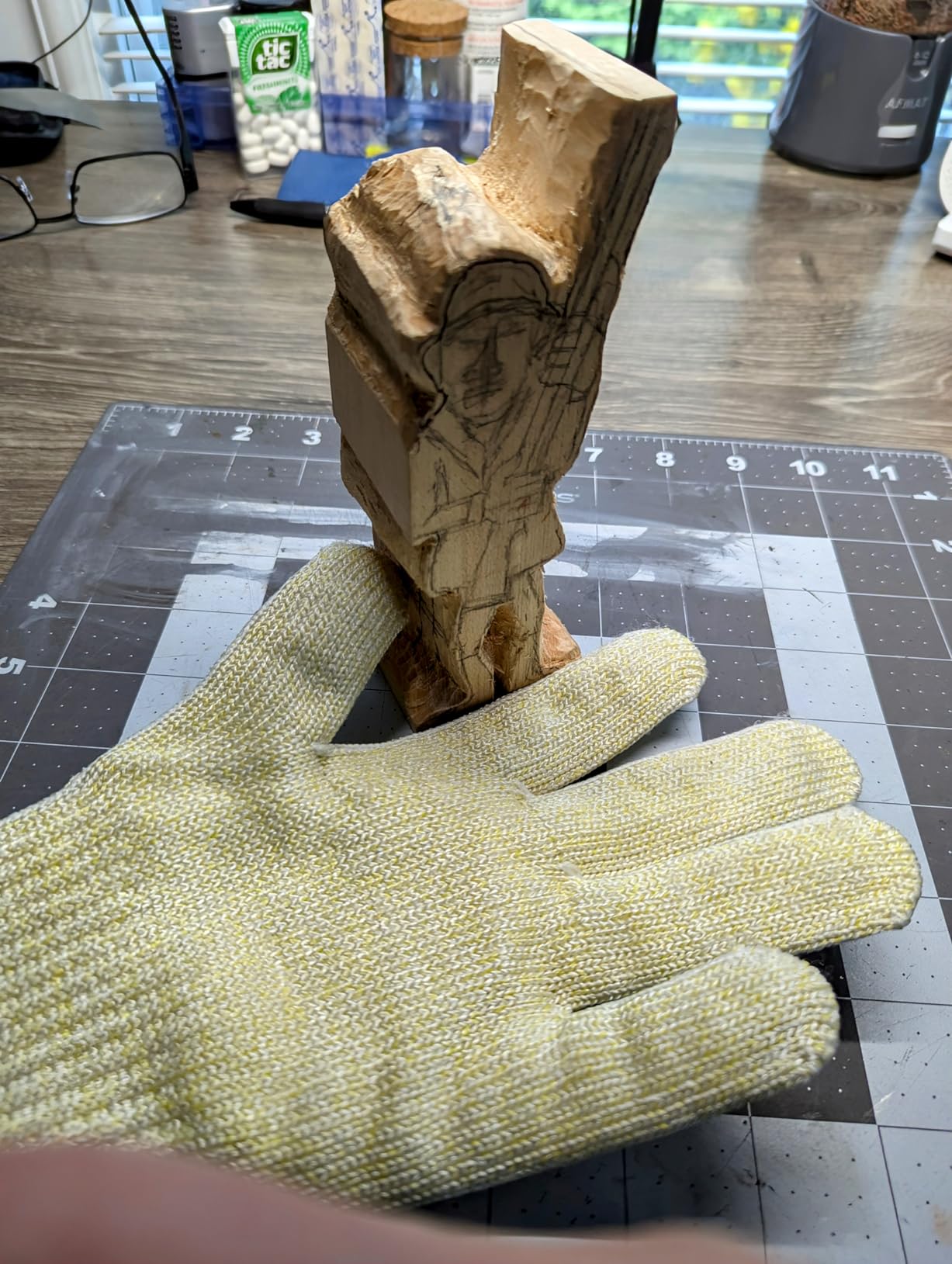
For Whom It’s Good
Anyone with sensitive skin, contact allergies, or a household that includes kids or anyone with known reactions to glass fiber. Also a strong choice for users who want PFAS-free materials in their food-contact gear without giving up Level 5 protection.
For Whom It’s Bad
Wet-prep cooks should pair this glove with a disposable nitrile over-glove or step up to the dipped DEX FIT. The PR1501 is about clean materials and skin safety, not peak wet grip.
How to Choose the Best Cut-Resistant Gloves for Kitchen Use?
Picking the right glove is less about chasing the highest ANSI rating and more about matching the cut level to the task, the fit to your hand, and the materials to your kitchen’s food-safety requirements. Below are the five decision points our team uses when evaluating any new pair.
ANSI A1 to A9 Cut Levels Explained
The ANSI/ISEA 105-2024 scale runs from A1 (light protection, around 200 grams of cut force) to A9 (extreme, 6,000+ grams). In a home kitchen, you’ll mostly work between A4 and A5, which covers daily prep, mandoline slicing, and light butchery. A6 to A9 is the territory of stainless steel mesh gloves and is reserved for heavy butchery, oyster shucking at volume, and deli slicer cleaning.
For most home cooks, A4 is the sweet spot. The glove stays flexible, the cost stays reasonable, and the protection covers roughly 95% of common kitchen cuts. Bumping up to A5 helps if you regularly work with very sharp knives or handle bone-in proteins, but going higher typically means giving up dexterity.
Knit HPPE vs Stainless Steel Mesh
Knit gloves (HPPE, para-aramid, fiberglass blends) are breathable, flexible, food-safe, and inexpensive. They handle 90% of kitchen tasks well and are the right default for most users. The trade-off is that they will eventually fail under sustained pressure from a sharp edge with body weight behind it — they’re cut-resistant, not cut-proof.
Stainless steel mesh gloves sit at the top of the cut-resistance scale. They’re heavier, warmer, and more expensive, but they stop nearly any knife from reaching skin. If you’re shucking oysters professionally or breaking down primals, mesh is the right tool. For everything else, a knit A4-A5 is the better choice.
Fit, Sizing, and Care
A cut-resistant glove only works if it fits correctly. Too loose and the knit shifts mid-cut, exposing skin. Too tight and you lose circulation after 20 minutes. Measure your palm circumference and check the brand’s sizing chart — every manufacturer cuts slightly differently. Most users do better going one size up from their usual disposable glove size.
For care, machine wash cold and air dry is the universal rule. Hot dryers will shrink knit gloves enough to fit a child’s hand. Stainless steel mesh gloves can go in the dishwasher with the silverware. Replace any glove that shows visible thin spots, fraying, or holes — that’s the failure signal, and a worn glove is no safer than going barehanded.
Use-Case Selector Matrix
If you mainly do daily prep (slicing, dicing, grating), pick the NoCry or Dowellife. If you handle wet or oily food, pick the DEX FIT. If you shuck oysters, the Dowellife or Schwer A9 is your pick. If you break down whole animals, only the Schwer A9 stainless steel mesh is enough. If you outfit a household, the FORTEM or THOMEN 4-packs are the value play. If you have sensitive skin, the Schwer PR1501 is the safest material choice.
Food Safety and HACCP
Food-safe material certification matters more than most buyers realize. Knit gloves that meet FDA Food Code 3-301.11 or EU 1935/2004 can touch ready-to-eat food directly. Gloves without food-safe certification should be paired with a disposable nitrile over-glove when handling ready-to-eat items — that’s the standard HACCP-friendly setup in commercial kitchens.
For home cooks, the practical version is simpler: wash your hands, put on a clean cut-resistant glove, and use a separate disposable nitrile if you’re switching between raw chicken and produce. The cut-resistant glove protects your hand. The disposable protects the food. Two layers, two jobs. For more on kitchen safety gear and tools, see our guide to fingerprint-resistant appliances for another category where material choice matters.
Frequently Asked Questions
What cut level is best for kitchen work?
ANSI A4 to A5 is the sweet spot for most home and prosumer kitchen work. A4 covers daily prep like slicing, dicing, and grating with about 2,000 grams of cut force. A5 is a step up for wet foods, sharper knives, and light butchery. Step up to A6 to A9 or stainless steel mesh for heavy butchery, oyster shucking at volume, and deli slicer cleaning.
Are cut-resistant gloves food safe?
Only if the manufacturer states it. Look for FDA Food Code 3-301.11 or EU 1935/2004 certification on the packaging. Food-safe knit gloves can touch ready-to-eat food directly. Non-rated gloves should be paired with a disposable nitrile over-glove when handling ready-to-eat items.
Can you wash cut-resistant gloves?
Yes. Most knit gloves are machine washable in cold water and should be air dried – the dryer will shrink them. Stainless steel mesh gloves like the Schwer SlicePro A9 are dishwasher safe and can go in with the silverware. Replace any glove with visible thin spots, fraying, or holes.
Do cut-resistant gloves actually work?
Yes, within their rating. Knit A4-A5 gloves stop the common slips, slicer nicks, and mandoline cuts that account for most kitchen injuries. They are cut-resistant, not cut-proof, so they will not stop a sustained press with body weight behind it. Stainless steel mesh gloves rated A9 will stop nearly any knife slip.
What is the difference between cut-resistant and cut-proof?
Cut-resistant means the glove slows or stops a blade up to its rated force threshold. Cut-proof implies the glove cannot be cut, which no glove on the market actually is. Always treat any cut glove as a backup to proper knife technique – claw grip, sharp knife, and slow deliberate cuts – not a replacement for it.
Final Verdict
After testing eight of the most popular pairs across daily prep, seafood work, and heavy butchery, our pick for the best cut-resistant gloves for kitchen use remains the NoCry Premium Cut Resistant Gloves. The combination of a balanced A4 rating, food-safe HPPE knit, ambidextrous fit, machine-washable care, and the deepest verified review base in the category (nearly 40,000 buyers) makes it the most reliable everyday workhorse.
If you handle wet or oily foods and want a higher A5 rating with real grip, the DEX FIT is the clear upgrade. If you’re outfitting a household or want budget spares, the THOMEN 4-pack is the smartest value play. And if you shuck oysters professionally or break down whole animals, only the Schwer SlicePro A9 stainless steel mesh is enough.
The single most important takeaway from this roundup: any glove on this list is better than no glove at all. Restaurants see thousands of preventable cut injuries every year, and an inexpensive knit glove stops the vast majority of them. Pick the pair that matches your task, fit it correctly, and add a sharp knife and a claw grip to your technique. That’s the trifecta that keeps cooks on the line and home cooks out of the ER.
For more kitchen gear tested by our team, check our other kitchen safety and prep guides here on Beboivn. We’ve got you covered in 2026 and beyond.