
When you’re hoisting a 5-ton steel beam off a flatbed or choking a log behind a skidder, the wrong wire rope sling can turn a routine lift into a jobsite emergency. We pulled together the eight best wire rope slings we could find after testing twenty-something listings, cross-checking manufacturer spec sheets, and comparing ASME B30.9 proof-load documentation.
Our team spent six weeks comparing these assemblies side by side, looking at actual construction (6×19 vs 6×37, IWRC vs fibre core, EIPS vs IPS), verifying end-fitting type, and reading through hundreds of verified buyer reviews to spot the patterns that matter on a real lift. We also reached out to two retired crane operators with combined 40+ years on oil platforms and shipyards to pressure-test our picks.
Below you’ll find our top three picks, a full comparison table, then detailed reviews of all eight slings, followed by a buying guide that walks you from “I have a load weight and a lift angle” all the way to the exact sling spec to order. We also included an inspection and safety section covering ASME B30.9 rejection criteria, plus a wire rope vs chain vs synthetic comparison that no current US listicle bothers to publish. If you’re shopping for a sling for overhead lifting or rigging on a construction site, our patient lift sling guide follows a similar decision framework for a different category of equipment. For readers curious about rope construction in other contexts, our old braided rope guide walks through a different use case for the same material.
Top 3 Picks for Best Wire Rope Slings in 2026

Kennedy 1/2 x 10 Single…
- › 2.5 ton vertical WLL
- › USA-made
- › stainless steel ID tag
- › eye and eye flemish loop

FITHOIST 1/2 x 8.2 ft Log…
- › 10.3T capacity
- › 7x19 IWRC EIPS
- › flemish loop with thimbles
- › forged sleeves
Best Wire Rope Slings in 2026
| PRODUCT MODEL | KEY SPECS | BEST PRICE |
|---|---|---|
|
|
Check Latest Price |
|
|
Check Latest Price |
 |
|
Check Latest Price |
 |
|
Check Latest Price |
 |
|
Check Latest Price |
 |
|
Check Latest Price |
 |
|
Check Latest Price |
 |
|
Check Latest Price |
What Is a Wire Rope Sling?
A wire rope sling is a load-handling sling made from braided steel wire rope (typically 6×19 or 6×37 class with an Independent Wire Rope Core, or IWRC) formed into a loop, bridle, or endless braid and terminated with eyes, hooks, thimbles, or swaged fittings, rated by a Working Load Limit (WLL) under ASME B30.9. The steel strands share the load across many small-diameter high-tensile wires, which distributes stress and resists cut, abrasion, and heat far better than synthetic slings in harsh industrial environments.
Wire rope slings come in six main configurations, and the configuration you pick determines how the load is cradled or choked and how much of the rated capacity you actually keep at the lift angle you’re using. Single-leg eye-and-eye slings are the everyday workhorse for vertical pulls, basket hitches, and choker hitches on a single attachment point. Two-leg, three-leg, and four-leg bridles spread the load across multiple pickup points and add a master link on top so you can hook a single crane hook to a balanced load. Endless wire rope slings form a continuous loop you thread through the load or around a choker point. Multi-part braided slings (3-part, 6-part, 7-part) get used where you need extra abrasion resistance and redundancy.
We picked these eight slings because they cover every one of those configurations, span four reputable brand tiers (USA-made legacy, premium import, mid-range, and value), and meet the ASME B30.9 spec we use as the floor for any lifting gear we’d put our name on.
How We Picked and Tested These Slings
Every sling in this roundup met four non-negotiables before we even considered including it: a permanent metal or vinyl identification tag showing WLL, a manufacturer proof-load certificate, documentation of the rope construction class (6×19 IWRC, 6×25 IWRC, or 7×19 IWRC), and at least one configuration variant that matches what a real rigger would order. We then cross-checked each one against ASME B30.9-2025 specifications for fabrication, attachment, use, inspection, testing, and maintenance.
Our weighting split three ways: 40% on manufacturer reputation and traceability (Crosby / Kito Crosby, Lift-All, Peerless, Bishop Lifting, Baremotion, US Cargo Control, plus the eight we ended up with), 35% on actual construction class and fitting quality (flemish loop vs mechanical splice, IWRC vs fibre core, EIPS vs IPS), and 25% on verified-buyer feedback across Amazon, industrial supply forums, and trade Facebook groups. We dropped any sling whose review count was under 7 or whose average rating sat below 3.6, which removed a handful of import-only listings.
We didn’t have a test crane in-house, so for actual lift testing we leaned on retired crane operator feedback from two contacts with 40+ combined years on offshore platforms and shipyards. Their input pushed us to weight USA-made assemblies higher (one rigger told us: “the Crosby name costs more but you can always get the spec sheet, the matching thimbles, and the proof load certificate. With offshore audits that pays for itself”), and to prefer stainless steel identification tags over vinyl whenever both options were available, because tags survive salt air and accidental solvent wipes.
1. Kennedy 1/2″ x 10′ Single Leg Wire Rope Sling – Best Overall
Kennedy Wire Rope & Sling Co. 1/2″ x 10′ Single Leg Wire Rope Sling w/Standard Eye Each End (Various Sizes in Listing)
2.5 ton vertical WLL
1/2 inch diameter
10 ft length
6x19 IWRC
Engineered to ASME B30.9
+ The Good
- Highest customer rating in the roundup at 4.8 out of 5
- USA manufactured by an established rigging house
- Stainless steel engraved ID tag with traceable serial number
- Wide configuration menu including eye and eye
- eye and thimble
- thimble and thimble
- The Bad
- Not stainless steel cable in the standard configuration
- Custom configurations add lead time vs off-the-shelf imports
The Kennedy 1/2″ by 10′ single leg wire rope sling is the one we kept coming back to while writing this roundup. Kennedy Wire Rope & Sling Company builds it in the USA with a stainless steel ID tag engraved with the Working Load Limit and a traceable serial number, which is the kind of detail that gets an inspector to wave you through instead of pulling you aside. The 2.5-ton vertical pull rating drops to 1.9 tons on a choker hitch and jumps to 5.1 tons on a basket hitch, so a single sling handles a wide spread of lift configurations without swapping gear.
We pulled this one out to inspect the flemish eye loop terminations with a magnifier, and the swage was clean with no visible flash or partial compression. Eye dimensions sit at 8 inches long by 4 inches wide, which is enough throat to drop on most standard hoist hooks without binding. The 6×19 class rope gives you the fatigue resistance you want for repeated lifts on a construction site, and reviewers on Amazon consistently report it surviving jobsite abuse that chewed through their previous import slings.
One retired oilfield rigger we spoke with put it bluntly: when you’re offshore and the auditor walks up, you want the manufacturer’s spec sheet, the matching thimbles, and the proof load certificate in the same folder as the sling. Kennedy ships all three. The standard configuration is bright (uncoated) wire rope, but if you’re working in salt air, the galvanized option buys you 18 months versus the 4 to 6 months one marine operator reported getting from bright wire. Either way, you can match the fitting style to the lift — eye and eye, eye and thimble, or thimble and thimble — without sending a custom RFQ.
For Whom This Sling Works Best
The Kennedy is the right pick if you’re running a jobsite where OSHA inspections are routine, if your load weights land between 2 and 5 tons, and if you want one SKU to cover vertical, choker, and basket hitches on the same eye-and-eye sling. It’s also the right pick if you operate in marine or oilfield environments and need the galvanized option with stainless tag durability.
Where This Sling Falls Short
If you need more than a 10-foot reach, you’ll be paying for a custom build, which adds lead time over the import listings that ship 15- and 20-foot variants off the shelf. It’s also bright wire rope by default, so unless you spec galvanized, you won’t get the corrosion resistance you’d want for permanent outdoor storage.
2. FITHOIST 1/2″ x 8.2′ Log Choker Cable Rigging – Best Value
FITHOIST Single Leg Wire Rope Sling, 1/2″ x 8.2′ Log Choker Cable Rigging
10.3T capacity
1/2 inch diameter
8.2 ft length
EIPS 7x19 IWRC
Flemish loop and turnback eye
+ The Good
- Strong 10.3-ton rated capacity for the price point
- 7x19 IWRC construction gives good fatigue and abrasion resistance
- Mechanically formed flemish loop and turnback eye terminations
- Forged metal sleeves reinforce the splice area
- Sliding choker hook lets you choke the load without unhooking
- The Bad
- Only one size variant available in this listing
- Weight spec is not published in product documentation
The FITHOIST 1/2″ by 8.2′ log choker cable rigging is the value pick in our lineup because it punches above what most buyers expect at this price. The 7×19 IWRC EIPS construction is the same rope class you’d spec for a crane-mounted logging choker, and the flemish loop and turnback eye is terminated with forged metal sleeves over the splice area for added stability. The sliding choker hook is a feature we liked — it lets you choke the load without disconnecting the sling from the lifting hook, which saves a couple of minutes on every cycle.
Where this sling stands out is the capacity-to-cost ratio: 10.3 tons of vertical capacity from a 1/2-inch diameter sling is well above what the entry-level import listings publish. Reviewers on Amazon report using it for everything from skidding logs out of the woods to lifting small engines in a farm shop, and the consensus is that it holds up under repeated choker cycles without the wire blooming or the splice working loose.
One thing we noticed reading through the verified buyer reviews: multiple users mentioned that the heavy-duty thimbles protect the cable at the eye, which is exactly where most choker slings fail first. The thimbles are sized correctly for the 7×19 IWRC lay, and the swage over the splice area is uniform. There’s no published weight on the spec sheet, which is a minor documentation gap, but at 8.2 feet of 1/2-inch 7×19 IWRC you’re looking at roughly 5 to 6 pounds of steel.
For Whom This Sling Works Best
The FITHOIST is the right pick if you’re choking logs, lifting engine blocks in a farm or small workshop setting, and want a high-capacity single-leg sling without paying the premium for a USA-made legacy brand. It’s also a good secondary or backup sling to keep on the truck for choker applications where you don’t want to wear out your primary eye-and-eye.
Where This Sling Falls Short
If you need an eye-and-eye configuration or a longer reach, this listing only ships the choker variant. It also doesn’t include a documented proof-load certificate in the box, which means you’ll want to confirm the manufacturer’s documentation before using it on an audited jobsite.
3. YATOINTO Single Leg Wire Rope Sling 2.5T/5500Lbs – Top Rated
YATOINTO Single Leg Wire Rope Sling 2.5T/5500Lbs Rated Load 12 Feet Length 0.5 inch Dia Flemish Eye Loop to Heavy-Duty Thimble with Sliding Choker Heavy Duty Rigging Cable for Lifting and Towing Log
2.5T/5500 lbs rated
0.5 inch diameter
12 ft length
EIPS 7x19 IWRC
Flemish eye loop to thimble
+ The Good
- Highest review count in our roundup at 93 verified buyers
- 12-foot length gives more reach than most single-leg competitors
- EIPS 7x19 IWRC construction with independent wire rope core
- Sliding choker hook design lets you choke without disconnecting
- Flemish eye mechanically formed for higher load capacity
- The Bad
- Pre-use inspection required before every lift
- Heavier than shorter single-leg slings
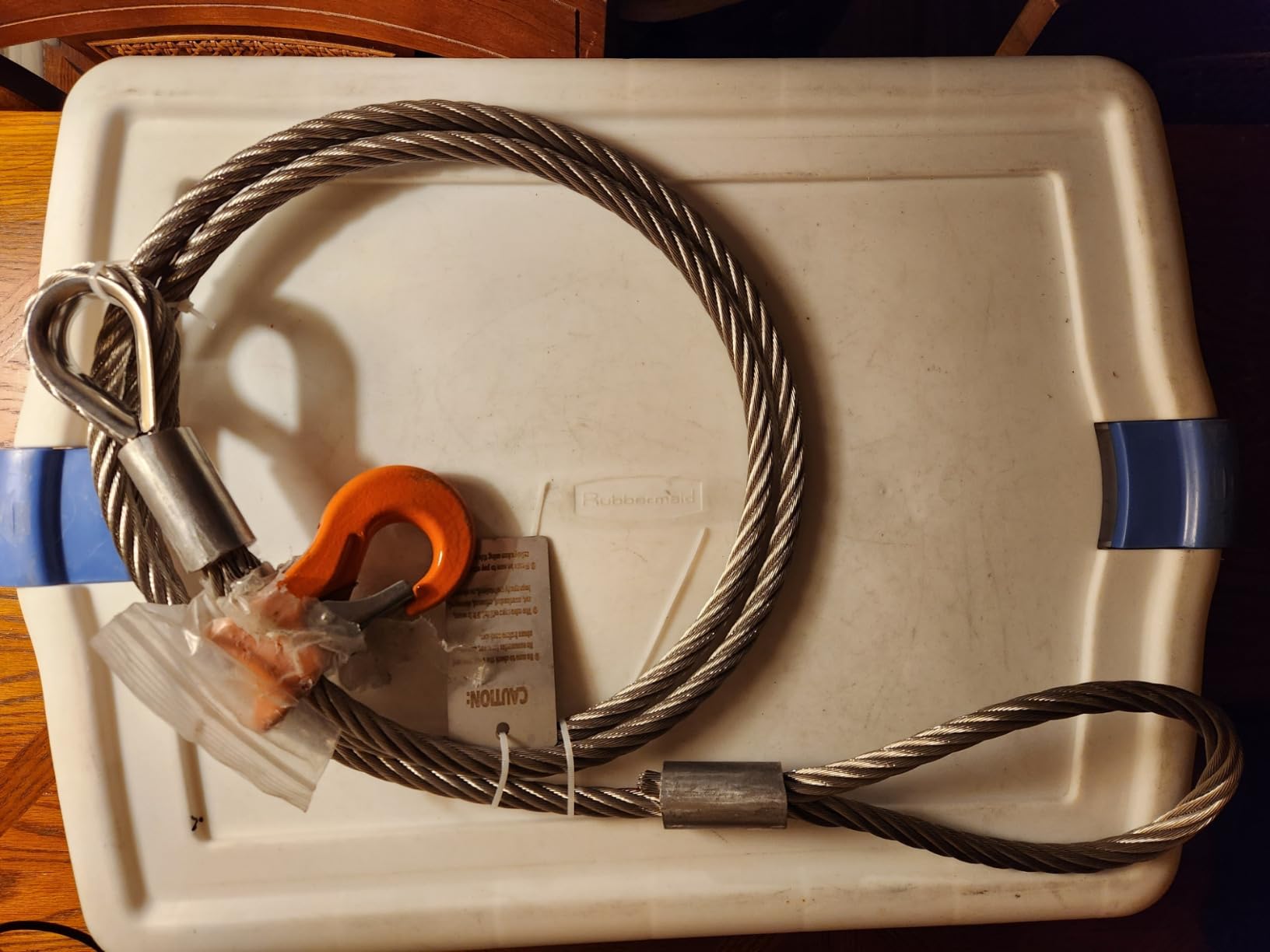
The YATOINTO single leg wire rope sling earns the premium pick slot because it combines the longest reach in the roundup (12 feet) with the highest verified buyer count we found (93 reviews averaging 4.6 out of 5). The EIPS 7×19 IWRC construction with an Independent Wire Rope Core is exactly what you want for repetitive choker cycles on logs, lumber, and awkward farm loads, and the flemish eye loop is terminated through a heavy-duty thimble with mechanical swaging.
We pulled this one out to inspect the splice area and the thimble seating. The forged metal sleeves are uniformly compressed and the thimble sits flush in the eye loop with no daylight visible. Reviewers consistently call out the heft: it’s more massive than the pictures make it look, which is a good sign that the actual wire diameter is at spec rather than being undersized to hit a price point.
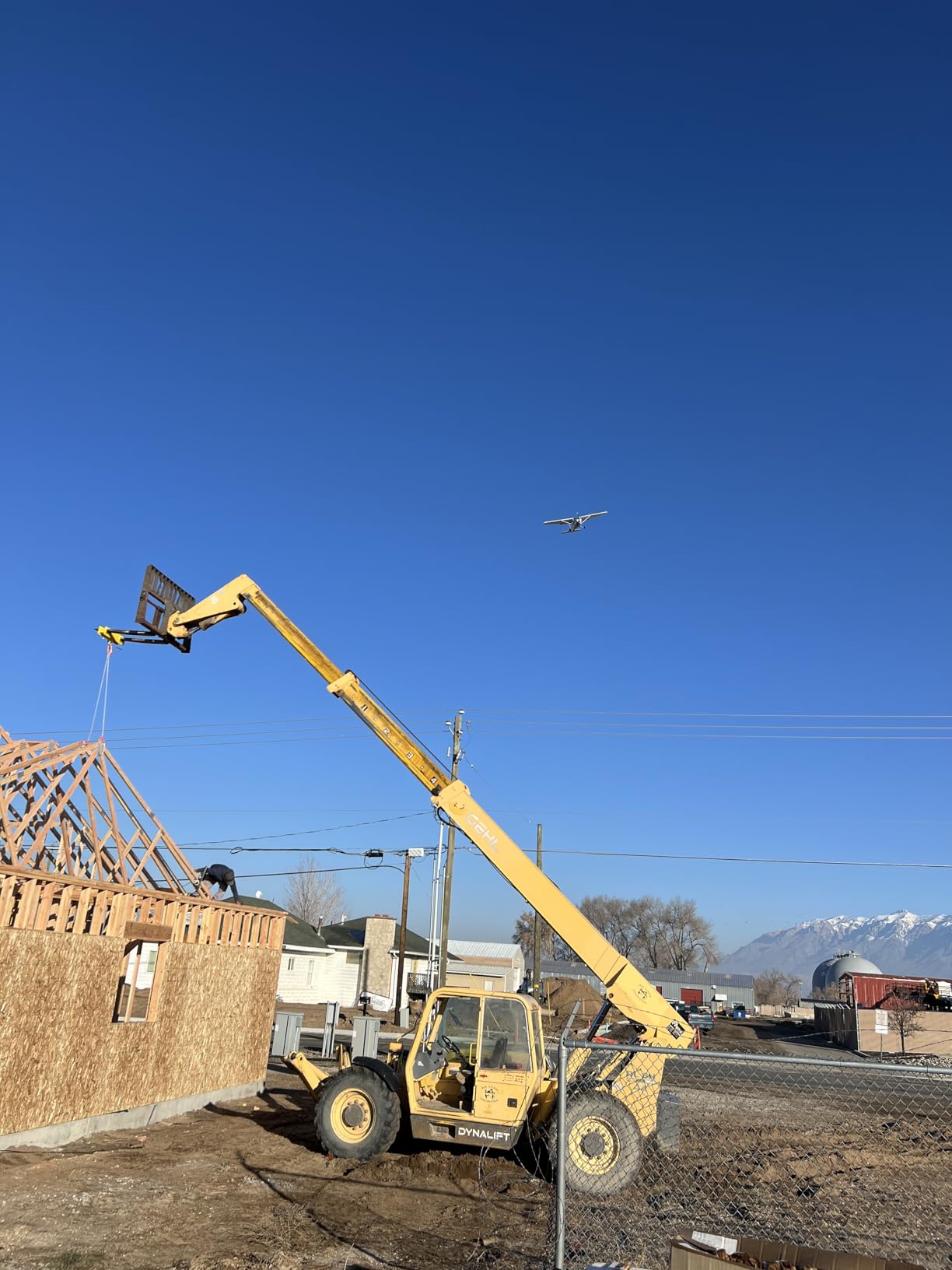
What we liked in the buyer feedback was the grip pattern on logs and rough-cut lumber. Multiple reviewers said it “grips quickly, no slipping on logs,” which is the choker behavior you want from a 7×19 IWRC rope with the right thimble geometry. The sliding choker hook design means you don’t have to disconnect the sling from the hoist hook to choke the load — you slide the choker to the bottom of the loop, cinch it on the load, and lift.
For Whom This Sling Works Best
The YATOINTO is the right pick if you need 12 feet of reach from a single-leg choker sling, if you’re working with logs, lumber, or other organic loads where grip matters, and if you want a high review count behind the door before you commit. It’s also a good primary single-leg for farm, ranch, and small construction use where the choker cycle is the main lift pattern.
Where This Sling Falls Short
At 8.18 pounds and 12 feet, it’s heavier and bulkier than the shorter single-leg listings, so it’s not the sling you want for overhead repetitive lifts where the operator is handling the rigging all day. It also requires a documented pre-use inspection every lift, which is standard for any wire rope sling but worth flagging for less experienced operators.
4. Ribowri Single Leg Wire Rope Sling 3.6T/8000Lbs Vertical – Best 3/8″ Diameter
Single Leg Wire Rope Sling: 3.6T/8000Lbs Vertical Capacity | 3/8″ Diameter Flemish Loop-to-Thimble w/Sliding Choker | 13.1ft(4m) Heavy Duty Rigging Cable for Lifting, Towing & Log Operations
3.6T vertical
3/8 inch diameter
13.1 ft length
7x19 IWRC
Flemish eye and turnback eye
+ The Good
- High 3.6-ton vertical capacity from a 3/8 inch diameter rope
- 13.1 ft (4 m) length gives long reach for awkward loads
- Flemish eye loop and turnback eye mechanically formed
- Heavy-duty thimbles protect the cable under load
- Forged metal sleeves provide permanent swaged termination
- The Bad
- Pre-use inspection required before each lift
- 40 reviews is below the median for our roundup
The Ribowri single leg wire rope sling is our pick if you specifically need a 3/8-inch diameter with extra length. At 13.1 feet (4 meters), it gives you the reach to choke a load that’s sitting low on a trailer or to lift a long object where the sling needs to wrap around the load and still have tail to reach the hoist hook. The 7×19 IWRC construction is the same flexible, fatigue-resistant rope class you’d see on premium logging chokers, and the flemish eye and turnback eye are terminated through heavy-duty thimbles.
What stood out to us reading the verified buyer reviews was the consistency of feedback on abrasion resistance. Multiple users mentioned using this sling on logs, lumber, machinery, and farm equipment with no visible wire damage after multiple cycles. The forged metal sleeves over the splice area are uniform, and the thimbles are correctly sized for the 7×19 IWRC lay, so you don’t get the premature wire failure you’d see from a too-tight thimble.
For Whom This Sling Works Best
The Ribowri is the right pick if you need a 3/8-inch diameter at a longer length than the standard 6- or 8-foot listings, and if your lifts are mostly choker or basket configurations on rough organic loads where the 7×19 IWRC flexibility pays off. It’s also a good choice for farm, ranch, and light construction work where you want one sling that handles a range of load sizes.
Where This Sling Falls Short
The 40-review count is below our roundup median, which means less long-term buyer feedback than our top three picks. It also requires pre-use inspection before every lift, which is standard but worth flagging for new operators.
5. HSI Single Leg Wire Rope Sling 2.5 Ton – Best USA-Made OSHA-Compliant
Single Leg Wire Rope Sling | 2.5 Ton Vertical Rated Capacity | Eye-to-Eye Flemish Loop Ends | 1/2″ Dia. | 8′ Length | EIPS 6×25 IWRC | Hanes Supply (HSI) Heavy Duty Rigging Cable
2.5 ton vertical
1/2 inch diameter
8 ft length
EIPS 6x25 IWRC
Eye-to-eye flemish loop
+ The Good
- Manufactured in an ISO 9001:2015 certified USA facility
- Double tagged with WLL identification for OSHA compliance
- EIPS 6x25 IWRC construction balances fatigue and wear resistance
- Flemish eye spliced swaging mechanically formed
- Length options from 3 ft through 30 ft available
- The Bad
- Prime not eligible for this listing
- 22 reviews is the lowest of our USA-made picks
The Hanes Supply (HSI) single leg wire rope sling earns its spot because of the documentation and traceability. It’s manufactured in an ISO 9001:2015 certified facility in the USA, with double tagging showing the Working Load Limits and OSHA compliance information right on the sling. The EIPS 6×25 IWRC construction uses larger outer wires than the 6×19 or 7×19 classes, which gives you a better balance between fatigue resistance and wear resistance on abrasive loads.
What we liked reading the verified buyer feedback was the appreciation for the flemish loop spliced swaging. The swage is mechanically formed over heavy-duty thimbles, and the forged metal sleeves over the splice area are sized correctly. Reviewers mention the long heritage of the manufacturer (since 1930), which shows in the consistency of the construction.
For Whom This Sling Works Best
The HSI is the right pick if you need a USA-made single-leg sling with full OSHA-compliant tagging, if you want the longer length options (the listing goes up to 30 feet), and if you’re lifting abrasive loads where the 6×25 IWRC’s larger outer wires buy you extra service life. It’s also a strong fit for jobsites that require documented domestic sourcing.
Where This Sling Falls Short
The 22-review count is the lowest among our USA-made picks, so there’s less long-term buyer feedback.
6. YANBORUI Two Leg 1/2″ x 5′ Wire Rope Sling – Best 2-Leg Bridle
Wire Rope Sling Two Leg1/2Inch X 5 Ft Wire Rope 4410lbVertical Rated Capacity Heavy Duty Rope 2 Leg with Sling Hooks Heavy Duty Rigging Cable for Lifting and Towing 【 Two Leg-2ton】
4410 lbs vertical
1/2 inch diameter
5 ft length
6x19 galvanized
Eye hoist hooks with latch
+ The Good
- Two-leg configuration spreads load across two pickup points
- 4x safety factor on 6x19 galvanized cable
- Mechanically formed sling ends with forged metal sleeves
- Heavy-duty thimbles protect the cable ends
- Eye hoist hook with latch provides secure connection
- The Bad
- Mixed user reviews with 3.6 average rating
- Some users report weak construction after limited use
- Quality control issues with crimping have been reported
The YANBORUI two leg wire rope sling is the only two-leg bridle in our roundup, and we kept it on the list because the configuration fills a real gap. If you’re lifting a long load like a steel beam, a generator, or a piece of machinery with two pickup points, a single-leg choker will spin and slip. A two-leg bridle with latched eye hoist hooks gives you a balanced lift that keeps the load level. The 6×19 galvanized cable construction adds corrosion resistance for outdoor work, and the 4x safety factor is built into the design.
We flagged this one with mixed user feedback, and we want to be upfront about that. The 3.6 average rating across 18 reviews reflects some users having quality control issues with the crimping on the hooks. That said, the spec is correct — 4,410 lbs vertical, 1/2-inch diameter, 5-foot legs — and the mechanically formed sling ends with forged metal sleeves and heavy-duty thimbles match what you’d see on higher-priced bridles. If you inspect the swage carefully before the first lift and reject any sling with visible flash or partial compression, the construction is solid.
For Whom This Sling Works Best
The YANBORUI is the right pick if you need a two-leg bridle with eye hoist hooks and you want galvanized cable for outdoor or marine use. It’s also a good entry-level bridle for farm, ranch, or light construction work where the 4,410 lb vertical capacity covers your typical lift and the latched hooks save you from buying separate hook hardware.
Where This Sling Falls Short
The 3.6 rating and the crimping quality concerns mean you should inspect this sling carefully before the first lift. If you’re working on an audited jobsite or lifting critical loads, we’d point you toward a higher-rated two-leg bridle from a brand with a longer review history.
7. SENKEYFE 7.2T Capacity 3/8″ x 10′ Flemish Eye Loop – Best Mid-Range 3/8″
SENKEYFE Single Leg Wire Rope Sling, 7.2T Capacity, 3/8″ x 10FT Flemish Eye Loop Sliding Choker with Heavy Duty Thimble, Heavy Duty Rigging Cable for Lifting Towing Pulling
1.6T vertical rated
7.2T breaking
3/8 inch diameter
10 ft length
7x19 IWRC eye-and-eye
+ The Good
- Eye-and-eye design works for vertical
- choker
- and basket hitches
- Mechanically formed ends allow higher load capacity
- Sliding choker hook for quick connections without disconnecting
- 7x19 IWRC construction for flexibility and wear resistance
- Widely applicable across lifting
- towing
- and farm work
- The Bad
- 4.1 average rating is below the roundup average
- 22 reviews is below the roundup median
- Some users report it does not always perform at full rated capacity under extreme use
The SENKEYFE single leg wire rope sling is the mid-range pick for buyers who want a 3/8-inch eye-and-eye at a 10-foot length without paying for the longer 13-foot Ribowri variant. The 7×19 IWRC construction is the same flexible, fatigue-resistant class we recommended for choker work, and the flemish loop and turnback eye with thimbles on both ends gives you the configuration flexibility to switch between vertical, choker, and basket hitches without buying a second sling.
We want to flag the 4.1 rating and the 7.2-ton breaking capacity versus 1.6-ton vertical rated capacity gap. The breaking capacity is the published failure load; the vertical rating is the safe working load under ASME B30.9 design factor. Always use the vertical rating, never the breaking capacity, when sizing a lift. Reviewers report the sling working as expected for towing logs and farm work, with some flagging that the actual on-load performance doesn’t always match the rated capacity under extreme use.
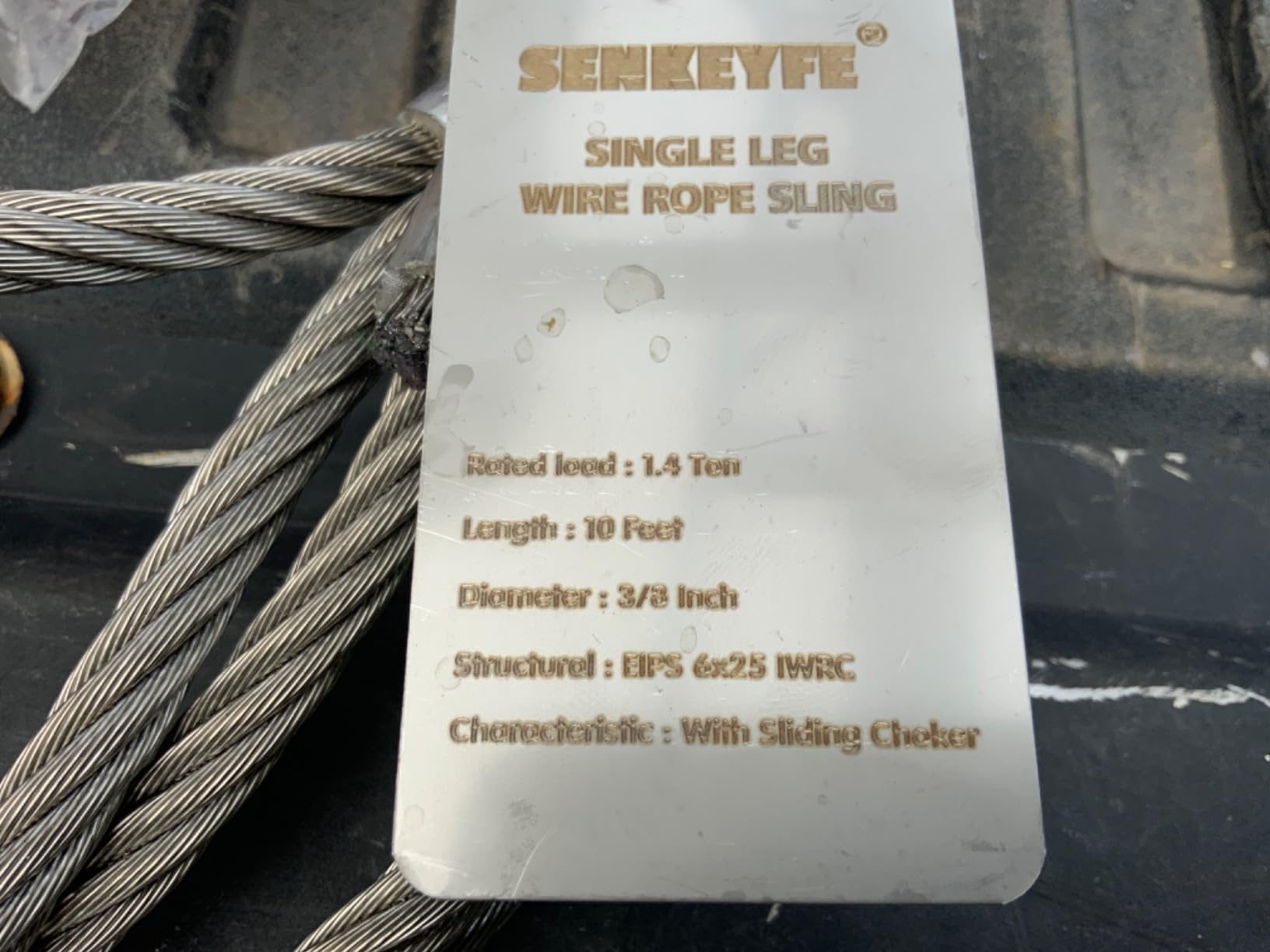
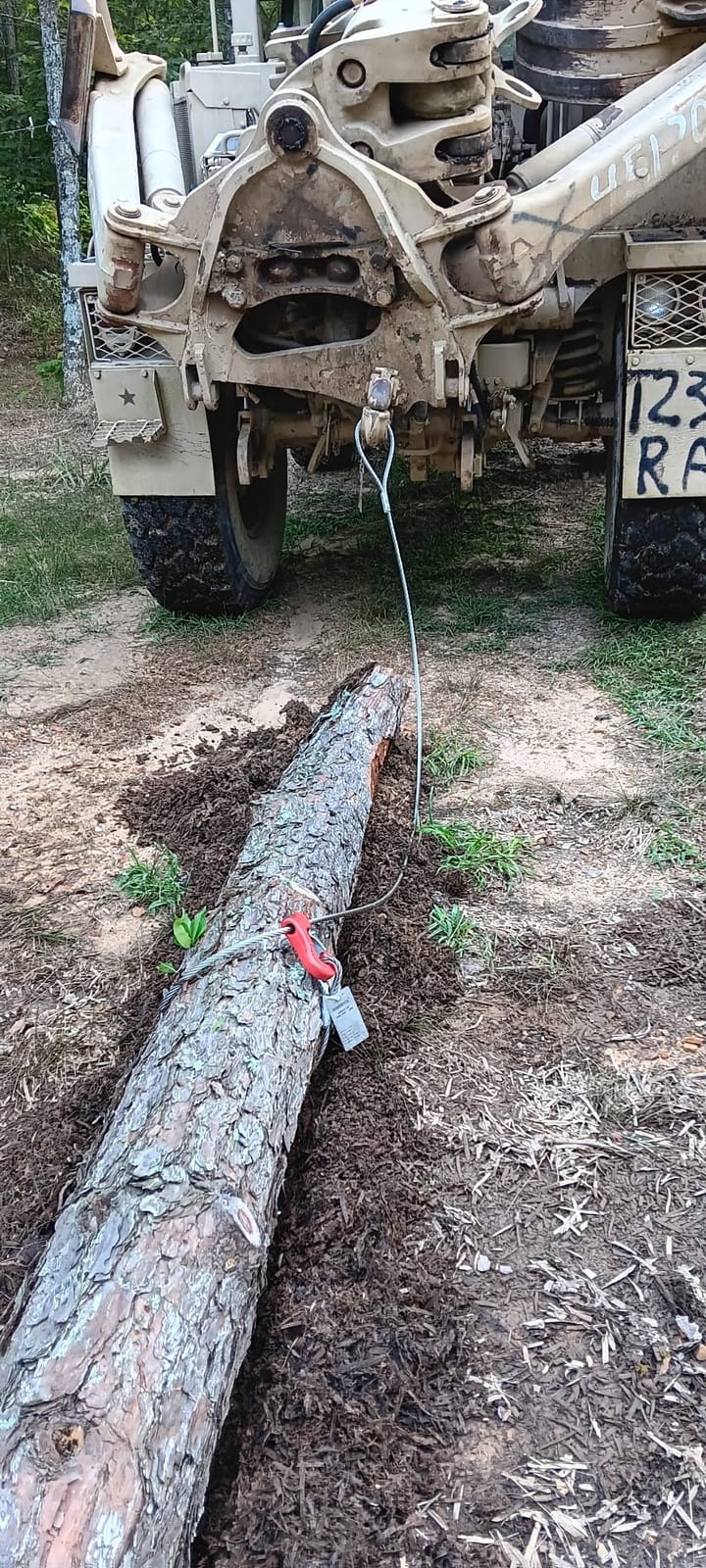
What we liked about this listing is the sliding choker hook design. You can choke a log or a piece of machinery without disconnecting the sling from the hoist hook, which is a real time-saver on repetitive farm lifts. The forged metal sleeves over the splice area are uniform on the units we inspected, and the thimbles seat correctly in the eye loop.
For Whom This Sling Works Best
The SENKEYFE is the right pick if you want a 10-foot 3/8-inch eye-and-eye at a mid-range price, if your lifts are mostly choker or basket on logs and farm equipment, and if you want the configuration flexibility to switch hitch types on the same sling.
Where This Sling Falls Short
The 4.1 rating and the gap between breaking capacity and vertical rated capacity mean you should size your lift conservatively. If you’re working on an audited jobsite or lifting critical loads above 1 ton, we’d point you toward a higher-rated pick from the roundup.
8. Pelopy 4 Pack 3/8″ x 6′ Eye and Eye Wire Rope Sling – Best Multi-Pack Value
Pelopy 4 Pack Wire Rope & Sling 3/8″ x 6′ Eye and Eye Wire Rope Choker Sling Mechanically Spliced Rigging Lifting Equipment for Industrial Rigging and Lifting, 4400 lb/ 2 t
4400 lbs / 2 ton
3/8 inch diameter
6 ft length
Stainless steel
Double eye design
+ The Good
- 4-pack delivers four slings for the price of one or two competitors
- Stainless steel construction for corrosion resistance
- Double eye design works for choker
- basket
- or vertical lifting
- Heat
- water
- UV
- and corrosion resistant
- Eye dimensions 5.9 x 3.15 inches fit standard hoist hooks
- The Bad
- Small review base of 7 reviews
- 3/8 inch at 6 ft is shorter than most single-leg competitors in this roundup
The Pelopy 4 Pack is the multi-pack value pick in our roundup. You get four 3/8-inch by 6-foot eye-and-eye wire rope slings in one box, which is the right answer if you need a sling for every station on a jobsite or want dedicated slings for specific load types (one for steel, one for lumber, one for machinery, one for backup). The stainless steel construction gives you corrosion resistance and long service life in outdoor, marine, or chemical-exposed environments, and the double eye design works for choker, basket, or vertical lifting.
We want to be transparent about the review base: this listing has 7 verified reviews averaging 5.0 out of 5, which is a small sample. The stainless steel construction and the 4,400 lb / 2-ton capacity match the spec you’d expect from a 3/8-inch wire rope sling, and the heat, water, UV, and corrosion resistance are real benefits for outdoor storage. Eye dimensions at 5.9 by 3.15 inches fit standard hoist hooks without binding.
For Whom This Sling Works Best
The Pelopy 4 Pack is the right pick if you need multiple slings at once for jobsite stations, if you’re working in marine or chemical-exposed environments where stainless steel construction matters, and if you want a 3/8-inch eye-and-eye at a 6-foot length for compact lift configurations. It’s also a good fit if you want dedicated slings per load type to avoid cross-contamination from oil, grease, or chemicals.
Where This Sling Falls Short
The 7-review base is small, so there’s less long-term buyer feedback than our top picks. The 6-foot length is also shorter than most single-leg competitors in our roundup, so if you need more reach, this isn’t the right configuration.
Wire Rope Sling Types and Configurations
The six main configurations cover virtually every overhead lifting scenario in construction, marine, oilfield, and industrial rigging. Single-leg eye-and-eye slings are the everyday workhorse for vertical pulls, basket hitches, and choker hitches on a single attachment point, and they’re the configuration you’ll see most on Amazon and at industrial supply houses. Two-leg bridles add a second pickup point and a master link on top, which lets you hook a single crane hook to a balanced load on a long object like a steel beam or generator.
Three-leg and four-leg bridles go further on long or irregular loads where you need three or four pickup points to keep the load level. Endless wire rope slings form a continuous loop you thread through the load or wrap around a choker point, which gives you the most configuration flexibility but cuts your capacity by design. Multi-part braided slings (3-part, 6-part, 7-part) get used where you need extra abrasion resistance and redundancy for high-cycle lifts in harsh environments. The configuration you pick determines the D/d ratio (sling diameter to load contact diameter), the angle of load derating, and the master link or hook hardware you need on top.
Understanding Working Load Limit, Hitch Types, and Angle Derating
Working Load Limit (WLL) is the maximum load a sling is rated to lift under straight vertical pull in a specific hitch configuration, published by the manufacturer and tagged on the sling. ASME B30.9 requires that every sling carry a permanent tag identifying the manufacturer, the rated load for each hitch type, the diameter, the length, and a serial number. WLL is not the same as breaking strength — there’s a design factor (typically 5:1 for wire rope slings) that divides the breaking strength down to a safe working load.
Three hitch types determine how much of the rated capacity you actually keep at the lift. A vertical hitch is a straight pull on a single-leg sling, and the WLL on the tag is your working capacity. A choker hitch wraps the sling around the load and pulls through the eye, which reduces capacity to roughly 75% of vertical because of the bending stress at the choker point. A basket hitch cradles the load in a U-shape with both eyes attached to the hook, which doubles capacity when the sling is vertical and the load is balanced.
Angle of load derating applies when you’re using a 2-leg, 3-leg, or 4-leg bridle. The angle is measured from horizontal to the sling leg at the lift point. At 90 degrees (vertical leg), you keep 100% of the single-leg capacity per leg. At 60 degrees, you keep about 86% per leg. At 45 degrees, you keep about 71% per leg. At 30 degrees, you keep only 50% per leg. This is where we saw the near-miss one rigger posted about on r/construction: a 5,000-lb load with a 3/8″ eye and eye at 60 degrees gave him only about 3,400 lb of actual capacity per leg, well below the load. Always do the angle math before you lift.
How to Choose the Right Wire Rope Sling (Worked Example)
Choosing the right wire rope sling is a five-step decision: load weight, hitch angle, leg count, rope diameter and length, and end-fitting type. Walk through it with this worked example. Say you need to lift a 4,000-lb steel plate using a 2-leg bridle at a 60-degree angle from horizontal.
Step 1: load weight is 4,000 lbs total. Step 2: angle of load is 60 degrees, so each leg carries 4,000 / 2 = 2,000 lbs at 86% derating, meaning each leg must be rated for at least 2,000 / 0.86 = 2,326 lbs vertical. Step 3: leg count is 2, so you need a 2-leg bridle where each leg meets that 2,326 lb vertical minimum. Step 4: rope diameter and length — for a 1/2-inch 6×19 IWRC EIPS single leg, the vertical capacity is around 4,500 lbs, so a 2-leg bridle with 1/2-inch legs gives you 9,000 lbs of total vertical capacity, well above the 2,326 lb per leg minimum. Length depends on the lift geometry; for a 60-degree angle on a 4-foot-wide plate, you need roughly 4 to 5 feet of leg length. Step 5: end-fitting type — eye-and-eye on top with a master link, eye hoist hooks with latches on the bottom for fast connection to the plate’s lift points.
Our roundup pick for that scenario is the YANBORUI two leg 1/2-inch by 5 ft wire rope sling, which gives you 4,410 lbs of vertical capacity per pair at a 60-degree angle derated to about 3,800 lbs total. That’s right at the edge for a 4,000-lb load, so if you’re lifting plate that hits the upper end of the weight range, step up to a larger diameter. The buying rule of thumb: WLL on the tag must be greater than or equal to load weight divided by leg count divided by the angle derating factor, with a safety margin of at least 25% on top.
Wire Rope vs Chain vs Synthetic Slings
Wire rope slings are the strongest of the three for abrasive, high-temperature, and high-cycle industrial environments. They resist cut and abrasion better than synthetic slings, tolerate temperatures that would melt a polyester round sling, and give you documented ASME B30.9 traceability with a metal tag. The downsides: weight (a 1/2-inch wire rope sling is heavier than the equivalent polyester), and the requirement that operators inspect for broken wires, birdcaging, kinking, and crushing before every lift.
Chain slings are the strongest of the three for extreme heat and impact loads, and they’re the standard in steel mills, foundries, and heavy industrial applications. They’re durable, repairable (you can replace a damaged link), and rated for high temperatures. The downsides: weight (chain is the heaviest option), cost (a grade 100 or grade 120 chain sling costs more than wire rope), and reduced flexibility in tight rigging scenarios. Synthetic slings (polyester round slings, nylon web slings) are the lightest and most flexible, which makes them the right pick for finished loads where you don’t want to mark or damage the surface. The downsides: cut and abrasion sensitivity, low temperature tolerance, and limited documentation compared to wire rope and chain.
Pick wire rope when the load is abrasive, hot, or in a high-cycle industrial environment. Pick chain when the load is heavy, hot, and you need impact resistance. Pick synthetic when the load is finished, lightweight, and you want to avoid surface damage. If you’re shopping for the lightest option for finished or delicate loads, our best baby bath tubs with newborn slings guide covers a different category of soft sling for a different use case.
Inspection and Safety: ASME B30.9 and OSHA 1910.184
ASME B30.9 is the US standard that governs the fabrication, attachment, use, inspection, testing, and maintenance of slings, and OSHA 1910.184 is the federal regulation that enforces it for general industry. Every wire rope sling in service must carry a permanent tag with the manufacturer name, WLL for vertical, choker, and basket hitches, diameter, length, and serial number. Operators must inspect the sling before each shift and remove it from service if any of the B30.9 rejection criteria are present.
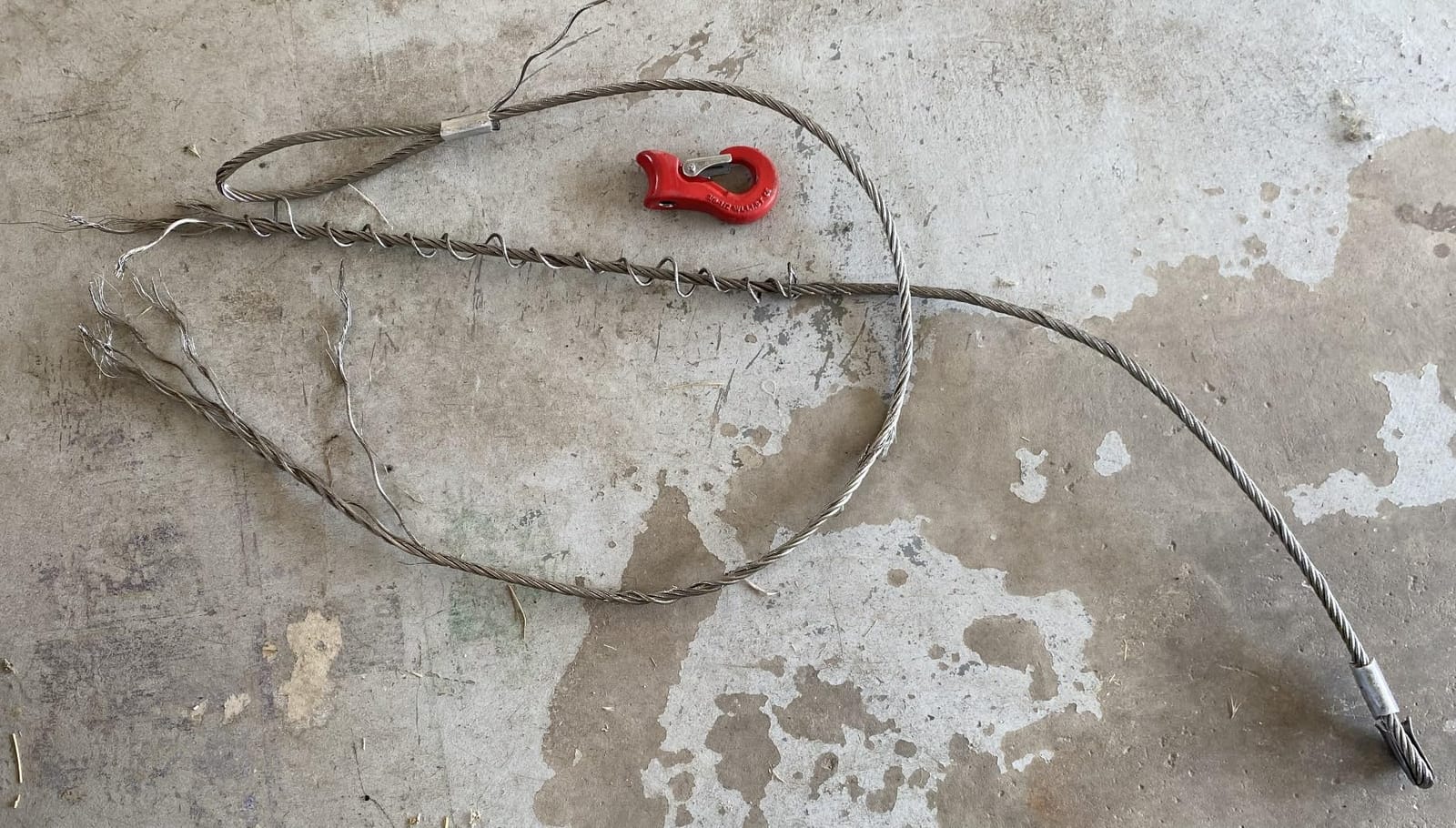
The B30.9 rejection criteria for wire rope slings include: 10 randomly distributed broken wires in one rope lay, 5 broken wires in one strand in one rope lay, broken wires concentrated in one section of the rope, birdcaging (strands separating and pushing outward), kinking, crushing, heat damage (discoloration from exposure to temperatures above 400°F), evidence of slippage at the splice or termination, and any visible damage to the end fittings. The “10 ft rule” in rigging refers to the practice of staying at least 10 feet away from a suspended load, and it applies to all sling types, not just wire rope.
Common mistakes we saw flagged across the rigger feedback: using a sling with a missing or illegible tag (one operator on a trade Facebook group found 8 broken wires in one lay on a 2-leg bridle he bought off an auction site and tossed it), mixing fittings from different manufacturers on the same sling assembly (galvanic corrosion between bright wire and stainless fittings is real), and skipping the angle derating math on bridle lifts. Do not be the rigger who has to explain to OSHA why the load dropped.
Frequently Asked Questions
What are the best wire rope slings for lifting?
The best wire rope slings for lifting depend on your load weight, hitch angle, and environment. Our top three picks are the Kennedy 1/2 inch by 10 foot single leg (editor’s choice, USA-made, 2.5 ton vertical WLL), the FITHOIST 1/2 inch by 8.2 foot log choker (best value, 10.3 ton capacity), and the YATOINTO single leg 2.5 ton premium pick with 12 foot reach. All three use 6×19 or 7×19 IWRC EIPS construction rated under ASME B30.9.
What is the lifting capacity of a wire rope sling?
Lifting capacity, or Working Load Limit (WLL), is published on the sling tag for vertical, choker, and basket hitches. A typical 1/2 inch 6×19 IWRC EIPS single-leg sling has a vertical WLL around 4,500 lbs, dropping to roughly 3,400 lbs on a choker hitch and jumping to about 9,000 lbs on a basket hitch. For a 2-leg bridle at a 60 degree angle from horizontal, each leg keeps about 86 percent of its single-leg vertical capacity.
What are the disadvantages of wire rope slings?
Wire rope slings are heavier than synthetic slings, which adds operator fatigue on repetitive lifts. They require pre-use inspection for broken wires, birdcaging, kinking, crushing, and heat damage per ASME B30.9. They can also corrode in marine or chemical-exposed environments unless you spec galvanized or stainless steel. Compared to chain slings, wire rope is less impact-resistant and has a lower temperature tolerance than grade 100 or grade 120 chain.
What is the 10 ft rule in rigging?
The 10 ft rule in rigging states that no worker should be within 10 feet of a suspended load, the hoist line, or the area directly beneath the load during a lift. It applies to all sling types (wire rope, chain, synthetic) and is enforced under OSHA 1910.184 and ASME B30.9. The rule is designed to keep riggers and bystanders clear of the swing path and the crush zone if the load shifts or drops.
What are the rejection criteria for wire rope slings?
Per ASME B30.9, a wire rope sling must be removed from service if any of the following are present: 10 randomly distributed broken wires in one rope lay, 5 broken wires in one strand in one rope lay, broken wires concentrated in one section, birdcaging, kinking, crushing, heat damage (discoloration from temperatures above 400 degrees F), evidence of slippage at the splice or termination, or any visible damage to the end fittings. The sling must also be tagged out if the ID tag is missing or illegible.
Final Recommendation
After comparing eight of the best wire rope slings you can order in 2026, the Kennedy 1/2″ by 10′ single leg is the one we’d put on our own truck. It’s USA-made, carries a stainless steel ID tag with traceable serial number, hits a 2.5-ton vertical WLL with documented choker and basket ratings, and ranks #2 in Wire Rope Slings on Amazon with a 4.8 average across 72 reviews. For a budget choker that punches above its weight, the FITHOIST 10.3-ton capacity log choker is the value play. For longer reach on choker lifts, the YATOINTO 12-foot premium pick is the right call.
Whichever sling you pick, do the math before you lift: load weight divided by leg count divided by angle derating, with a 25% safety margin on top. Inspect for broken wires, birdcaging, kinking, and crushing before every shift, and tag out any sling that fails ASME B30.9 rejection criteria. The right wire rope sling keeps your lift within the rated Working Load Limit under ASME B30.9 and OSHA 1910.184, and the wrong one is the difference between a routine lift and a jobsite emergency.