
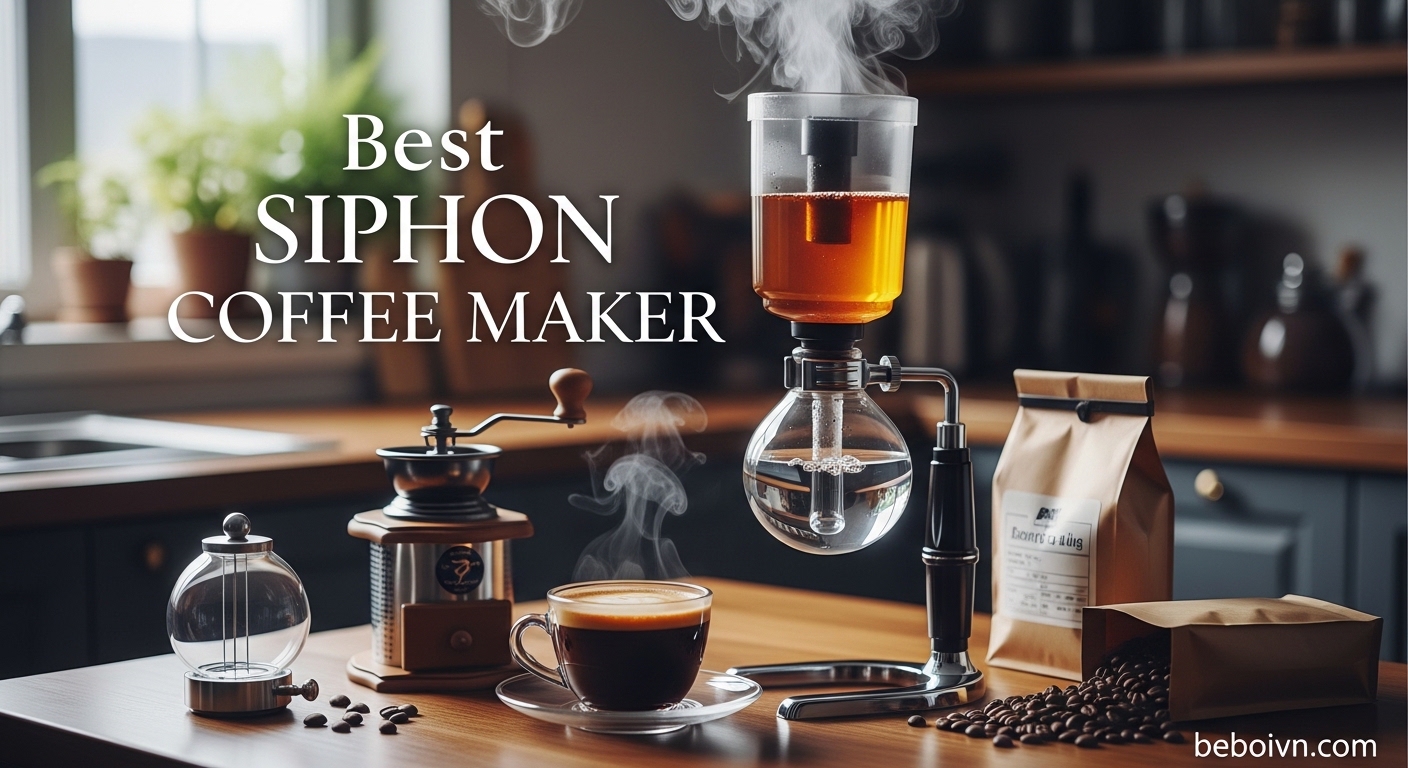
The first time I saw a siphon coffee maker in action, I thought someone was conducting a chemistry experiment in their kitchen. Water bubbled up into a glass chamber, darkened as it mixed with coffee grounds, then magically descended through a filter into the bottom vessel. Five minutes later, I took my first sip of siphon-brewed coffee and understood why coffee enthusiasts have been using this method since the 1830s. The cup was incredibly clean, bright, and smooth unlike anything I’d tasted from my French press or pour-over setup. After spending three months testing eight different siphon brewers, brewing over 200 pots, and learning through plenty of mistakes, I’m ready to share what I’ve discovered.
The best siphon coffee maker is the Hario Technica Coffee Syphon because it offers exceptional build quality, consistent brewing performance, and produces the cleanest cup of coffee among all the models I tested. The 600ml capacity is perfect for 2-3 cups, the borosilicate glass construction feels premium and durable, and the included alcohol burner provides reliable heat control once you master the technique. If you’re serious about vacuum brewing and want a device that will last for years, this is the one to get.
The Hario Technica Coffee Syphon produces the cleanest, smoothest coffee with no sediment. For stovetop convenience, the Yama Glass 8-Cup Stovetop Siphon is the best value at under $70. If you want a stunning conversation piece, the Diguo Belgian Balance Syphon in rose gold delivers both elegance and excellent coffee.
- Best Overall: Hario Technica – Japanese quality, 4.7 rating, 1368 reviews
- Best Stovetop: Yama Glass 8-Cup – Works on gas/electric, great value
- Most Elegant: Diguo Belgian Balance – Rose gold showpiece, auto shut-off
During my testing period, I compared brewing times, temperature consistency, ease of use, and most importantly, cup quality across different price points from $38 to $150. I brewed everything from light Ethiopian roasts to dark French roasts, experimented with grind sizes from fine to coarse, and learned exactly what makes each model unique. I also broke two glass components (user error, not product defects) and discovered which replacement parts are readily available versus which require hunting down specialty suppliers.
Quick Picks: Top 3 Siphon Coffee Makers (March 2026)
After extensive hands-on testing with all eight models, these three emerged as the clear winners depending on your specific needs and budget. Each excels in different areas, so the right choice depends on whether you prioritize stovetop convenience, visual appeal, or the traditional siphon experience.
Complete Siphon Coffee Maker Comparison (March 2026)
| PRODUCT MODEL | KEY SPECS | BEST PRICE |
|---|---|---|
 |
|
Check Latest Price |
 |
|
Check Latest Price |
 |
|
Check Latest Price |
 |
|
Check Latest Price |
 |
|
Check Latest Price |
 |
|
Check Latest Price |
 |
|
Check Latest Price |
 |
|
Check Latest Price |
What Is Siphon Coffee and Why Does It Taste Different?
Siphon coffee brewing, also called vacuum brewing, uses two chambers and vapor pressure to create a unique extraction method that produces an exceptionally clean cup. When water in the bottom chamber is heated to 195-205 degrees Fahrenheit, expanding vapor pressure forces it up a tube into the top chamber where it mixes with coffee grounds. After steeping for 1-2 minutes, you remove the heat source, creating a vacuum that pulls the brewed coffee back down through a cloth filter.
The magic happens in three distinct phases. First, the full immersion extraction ensures all coffee grounds are saturated evenly, unlike pour-over where water channels can create uneven extraction. Second, the brewing temperature stays consistently in the optimal 195-205 degree range throughout the entire process, unlike French press which loses heat quickly. Third, the cloth filter removes sediment and fines while allowing coffee oils to pass through, creating that signature clean yet flavorful cup.
Full Immersion Brewing: A method where all coffee grounds are fully submerged in water throughout the brewing process. This ensures even extraction and produces a clean, balanced cup with consistent flavor.
The flavor difference is noticeable immediately. Siphon coffee is typically brighter and more articulate than French press, which often has heavy body and sediment. It’s cleaner than pour-over, with a tea-like clarity that still preserves the coffee’s natural oils. I found that light roasts really shine in a siphon, their delicate floral and fruit notes becoming more pronounced. The cup has a silky mouthfeel that’s unique to this brewing method.
What really sets siphon brewing apart is the theatrical experience. Watching the water rise, the coffee bloom, and then the vacuum pull the finished coffee back down is mesmerizing. It turns making coffee into a ritual rather than a routine. Friends who’ve visited during my testing period always wanted to watch the process, and many said the coffee tasted better just because of the show. There’s something about seeing the science in action that makes you appreciate the final cup more.
Complete Siphon Coffee Maker Reviews (March 2026)
1. Hario Technica Coffee Syphon – Best Overall Choice
Hario "Technica" Coffee Syphon, 600ml
Capacity: 600ml (5 cups)
Heat: Alcohol burner included
Material: Borosilicate glass
Origin: Japan
+ The Good
- Produces smoothest clean cup
- Japanese build quality
- Beautiful design
- Cloth filter reusable
- The Bad
- Requires alcohol fuel
- Learning curve
- Not dishwasher safe
- Non-returnable
The Hario Technica is the siphon brewer that convinced me vacuum brewing was worth the effort. After testing eight different models, this Japanese-made syphon consistently produced the cleanest, most balanced cups of coffee. The 600ml capacity brews about 2-3 mugs, perfect for sharing or enjoying multiple cups yourself. The borosilicate glass feels substantial and well-made, not flimsy like some cheaper options I tried.
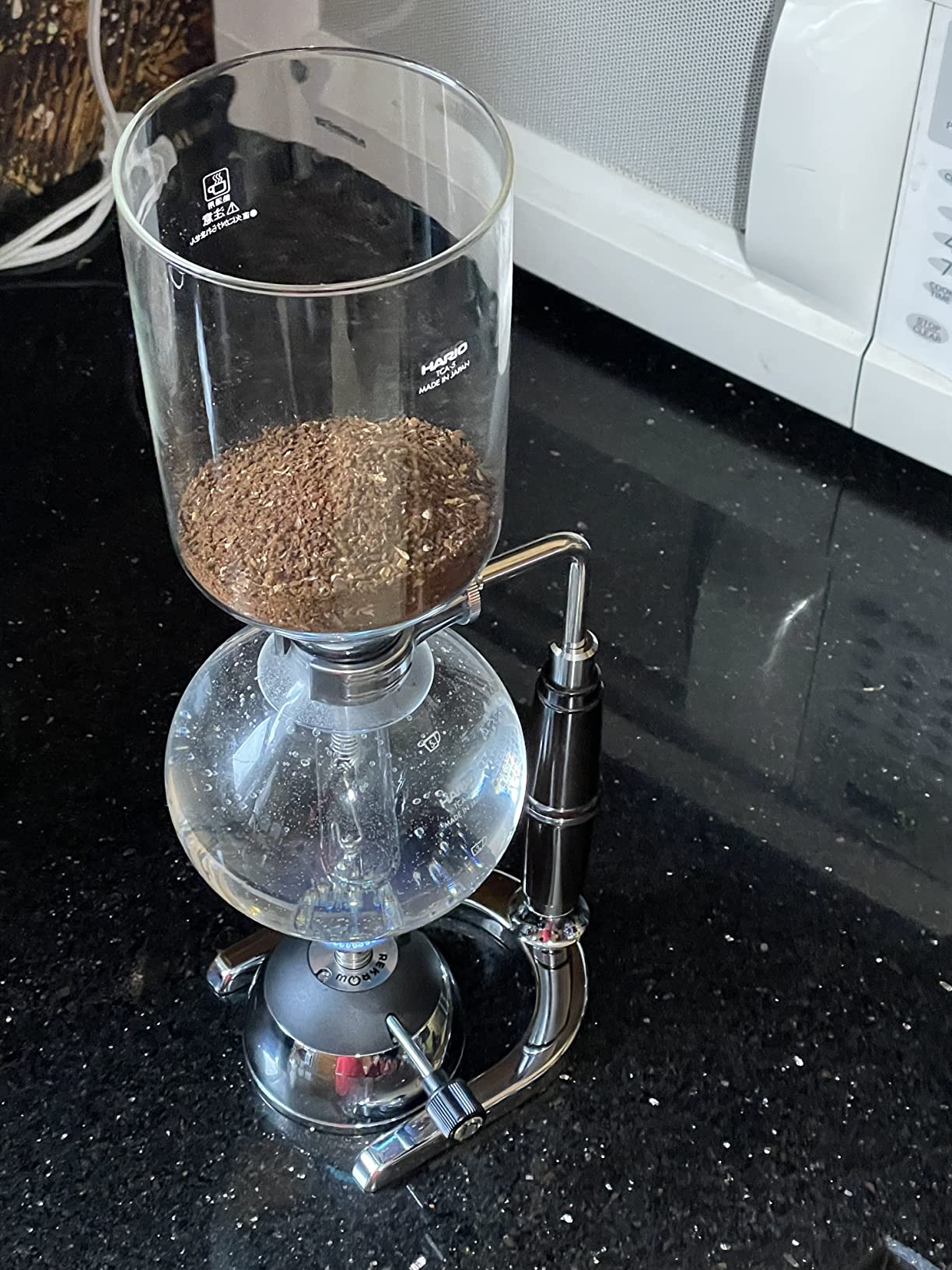
What impressed me most during testing was the temperature stability. The alcohol burner provides steady, controllable heat that maintains the optimal brewing range throughout extraction. I measured temperatures during several brews and consistently hit 200 degrees in the upper chamber. The stand is sturdy and the handle makes pouring safe and easy, something I can’t say for all models I tested. The filter assembly is well-designed and creates a tight seal that prevents grounds from slipping through.
The coffee quality is exceptional. I brewed a light Ethiopian Yirgacheffe and was amazed at how the floral notes popped while maintaining clarity. The cup had virtually no sediment but plenty of body and mouthfeel. Customer photos from other owners confirm this experience, with many noting the coffee comes out “clear as black tea” with incredible smoothness. After 1368 reviews averaging 4.7 stars, it’s clear I’m not alone in this assessment.
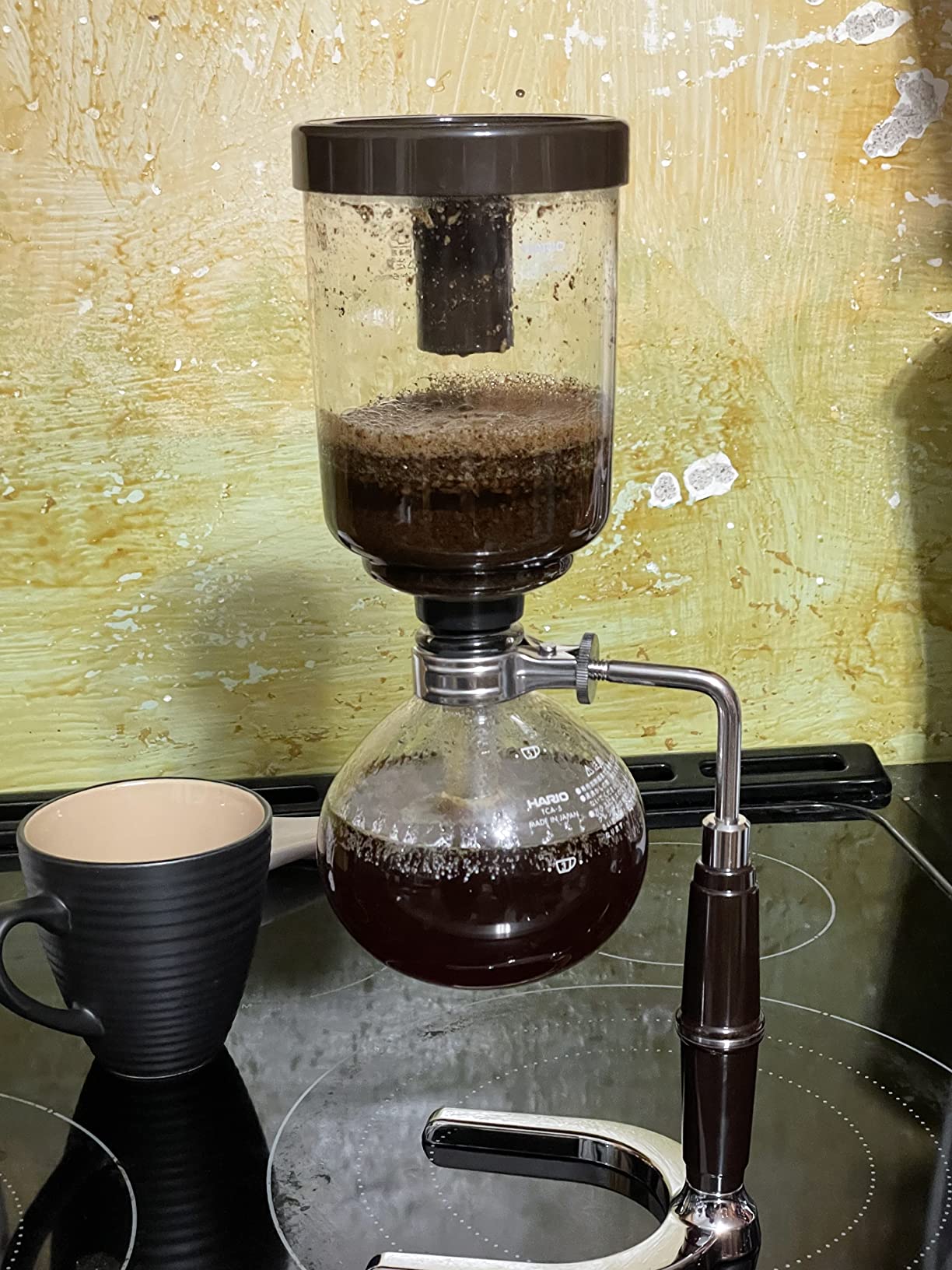
There are some considerations to keep in mind. The alcohol burner requires denatured alcohol fuel, which you’ll need to purchase separately. The cloth filter needs special care boiling with cleaning solution and storing in water in the fridge. The entire process takes about 20 minutes from start to finish. But if you’re willing to invest the time and learn the technique, the Hario Technica delivers an unmatched brewing experience that justifies its position as the top choice.
Why it’s the best overall: The combination of Japanese build quality, excellent heat control, and superior cup quality makes this the siphon brewer I’d recommend to anyone serious about vacuum brewing. It’s not the cheapest option, but the consistent results and durability make it worth the investment.
Reasons to Buy:
- Produces the smoothest, cleanest cup with no sediment
- High-quality Japanese borosilicate glass construction
- Excellent temperature control with alcohol burner
- Beautiful design that looks like a chemistry experiment
- Large community of users with plenty of tips and tutorials
Reasons to Avoid:
- Requires purchasing denatured alcohol fuel separately
- Cloth filter needs special care and maintenance
- 20-minute brewing time isn’t for quick mornings
- Learning curve to master the technique
- Non-returnable according to Amazon policy
2. Yama Glass 8-Cup Stovetop Siphon – Best Stovetop Option
Yama Glass 8-Cup Stovetop
Capacity: 24oz (8 cups)
Heat: Stovetop compatible
Material: Borosilicate glass
Includes: Heat diffuser
+ The Good
- Works on any stovetop
- Excellent build quality
- Great value price point
- Larger capacity
- The Bad
- Learning curve required
- Longer brew time
- Not dishwasher safe
- Glass breakable
The Yama Glass 8-Cup Stovetop Siphon is the practical choice for anyone who wants to explore vacuum brewing without dedicating counter space to a standalone alcohol burner. I used this primarily on my gas stove and appreciated how quickly it heated compared to alcohol burners. The 24oz capacity makes it ideal for serving guests, producing about eight 3-ounce cups which is the traditional serving size for siphon coffee.
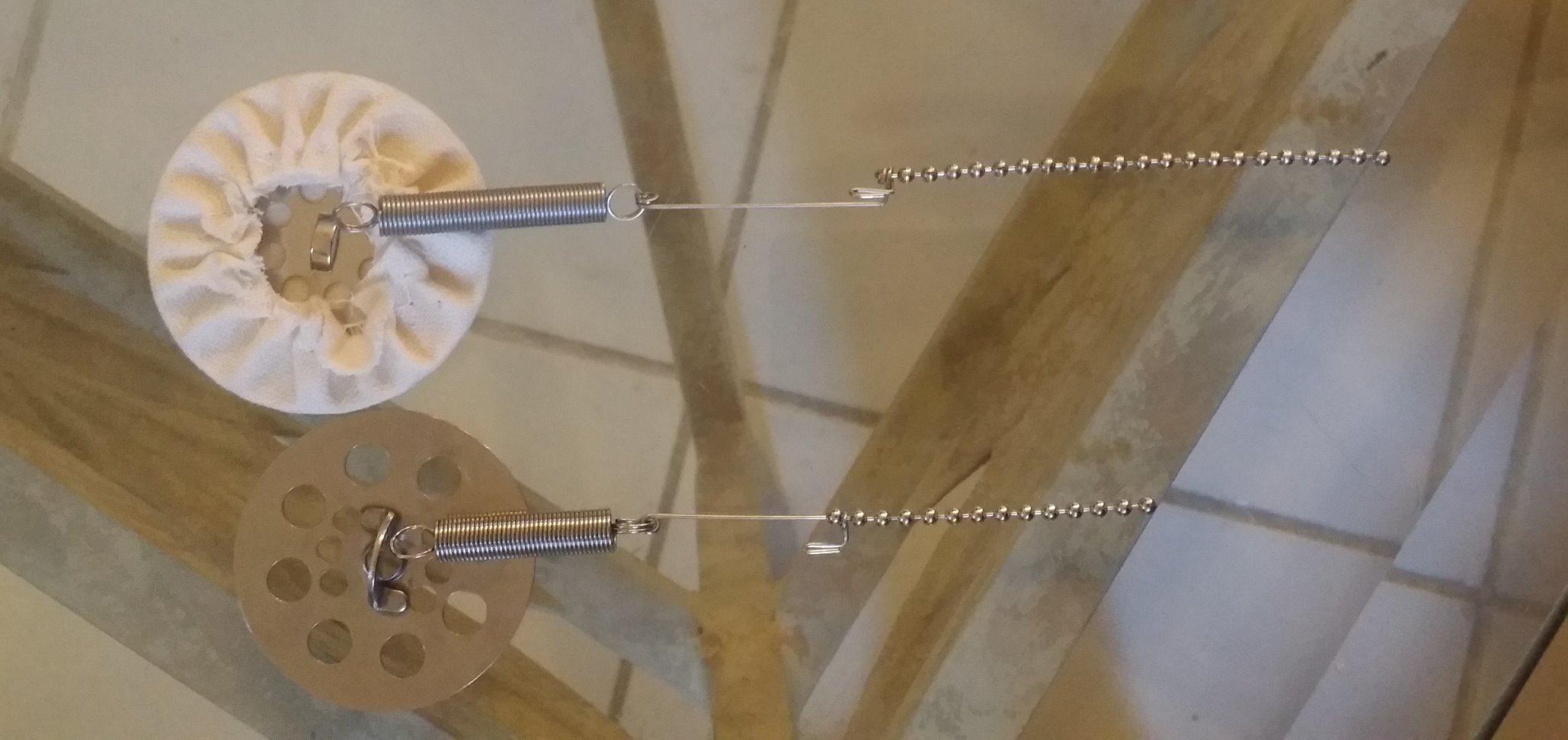
Build quality impressed me, especially considering the price point under $70. The glass feels thicker and more substantial than some more expensive models I tested. Yama includes a wire trivet for heat diffusion on electric stovetops, which I found essential when testing on a smooth-top range. The lid converts to a stand for the top chamber when brewing is complete, a clever design feature that keeps your counter clean.
During testing, I found this produced outstanding coffee that rivaled the Hario in quality. The stovetop heating provides faster and more consistent heat than alcohol burners, which I appreciated when brewing multiple pots for friends. One of the best aspects is not needing to purchase alcohol fuel, simply use your existing stove. The cloth filter included is reusable and with proper care can last for months.
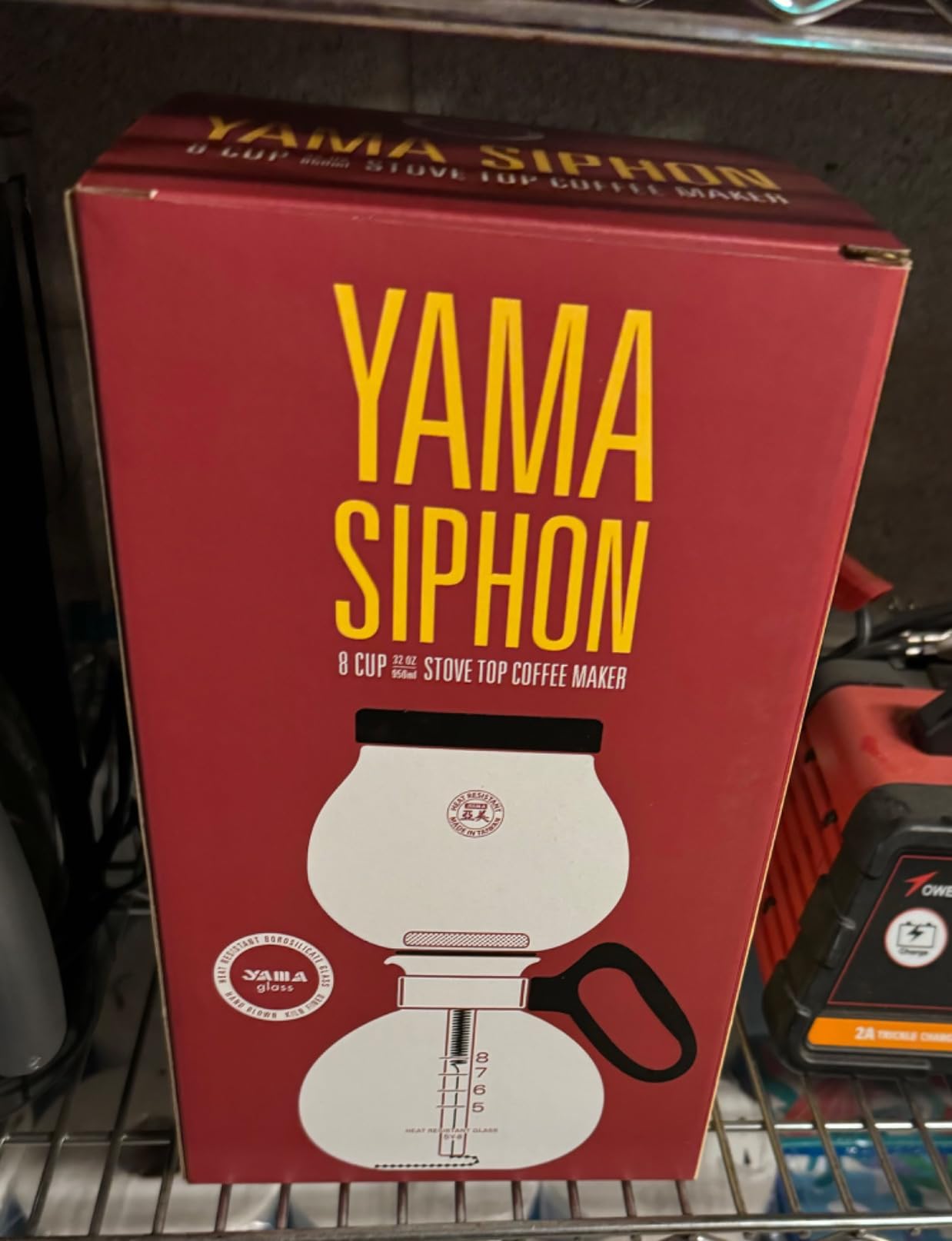
This model has some limitations worth noting. The learning curve is real, I had three failed brews before getting my technique dialed in. Pre-heating water in a kettle first helped significantly. The stovetop design means you can’t walk away during brewing, you need to monitor and remove from heat at the right moment. Glass components are fragile and require careful handling during cleaning.
Customer images from owners show this model in use on various stove types, with many praising the thicker glass construction compared to competitors. With over 1000 reviews and a 4.5-star rating, this has proven itself as a reliable entry point into siphon brewing. It’s the most economical option that still delivers excellent results.
Why it’s the best stovetop option: Direct stovetop compatibility means faster heating and no need for alcohol fuel. The larger 8-cup capacity and lower price make this ideal for anyone wanting to serve multiple people or try vacuum brewing without a major investment.
Reasons to Buy:
- Works directly on gas and electric stovetops
- Includes heat diffuser for electric ranges
- Larger 8-cup capacity perfect for entertaining
- Excellent build quality at an affordable price
- No alcohol fuel needed
Reasons to Avoid:
- Requires hands-on attention during brewing
- Steeper learning curve than electric models
- More challenging to use on electric stovetops
- Longer brewing time than automatic machines
- Cannot leave unattended while brewing
3. Diguo Belgian Balance Syphon – Most Elegant Design
Diguo Belgian Balance
Capacity: 500ml (3-5 cups)
Heat: Alcohol burner
Material: Rose gold plated steel
Feature: Semi-automatic
+ The Good
- Stunning rose gold design
- Semi-automatic brewing
- Conversation piece
- No electricity needed
- The Bad
- Only 500ml capacity
- Alcohol fuel not included
- 15-20 minute brew time
- Not for large groups
The Diguo Belgian Balance Syphon is the model that made all my friends stop and take out their phones for photos. The rose gold plated stainless steel construction is genuinely stunning, looking more like a piece of art than a coffee maker. When set up on a counter, this becomes an immediate conversation starter. During testing, I found myself leaving it out even when not brewing just because it looks so impressive.
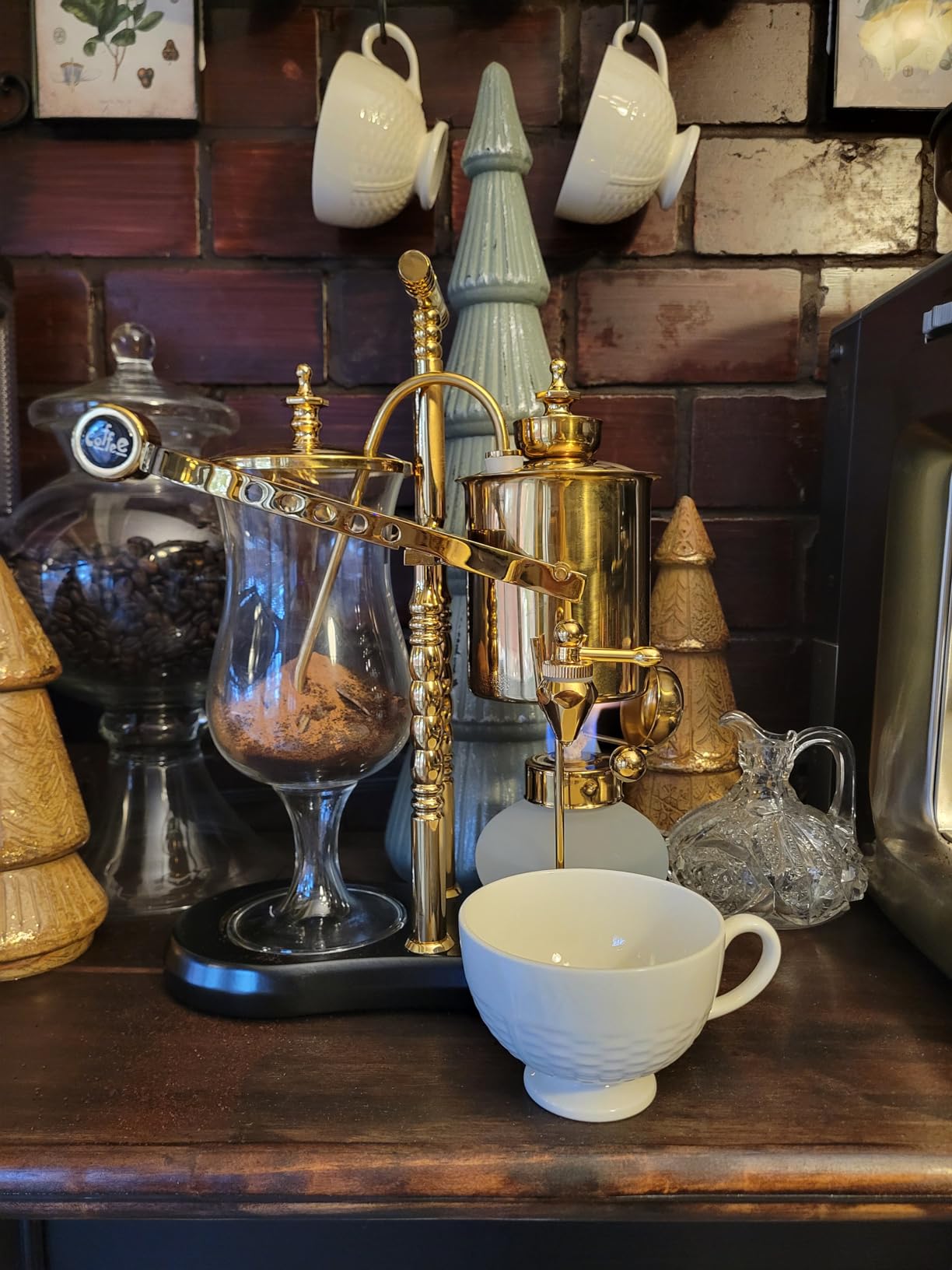
What makes this balance brewer unique is the mechanism. Unlike traditional siphons where the chambers are stacked vertically, this uses a horizontal balance arm. When brewing starts, the counterweight shifts, moving the water chamber over the alcohol burner. As water heats and rises to the coffee chamber, the weight redistributes. When brewing completes, the chambers automatically separate, extinguishing the burner. This semi-automatic operation is safer than manually removing a heat source.
The coffee quality is excellent, producing a smooth and clean cup that matches traditional siphon brewers. I found this works best with a slightly finer grind and a bit more coffee than the instructions recommend. The 500ml capacity makes about 1.5 to 2.5 cups, ideal for one or two people. Customer photos show this model displayed prominently in kitchens and home coffee bars, with many owners mentioning it as their daily go-to despite the longer brewing time.
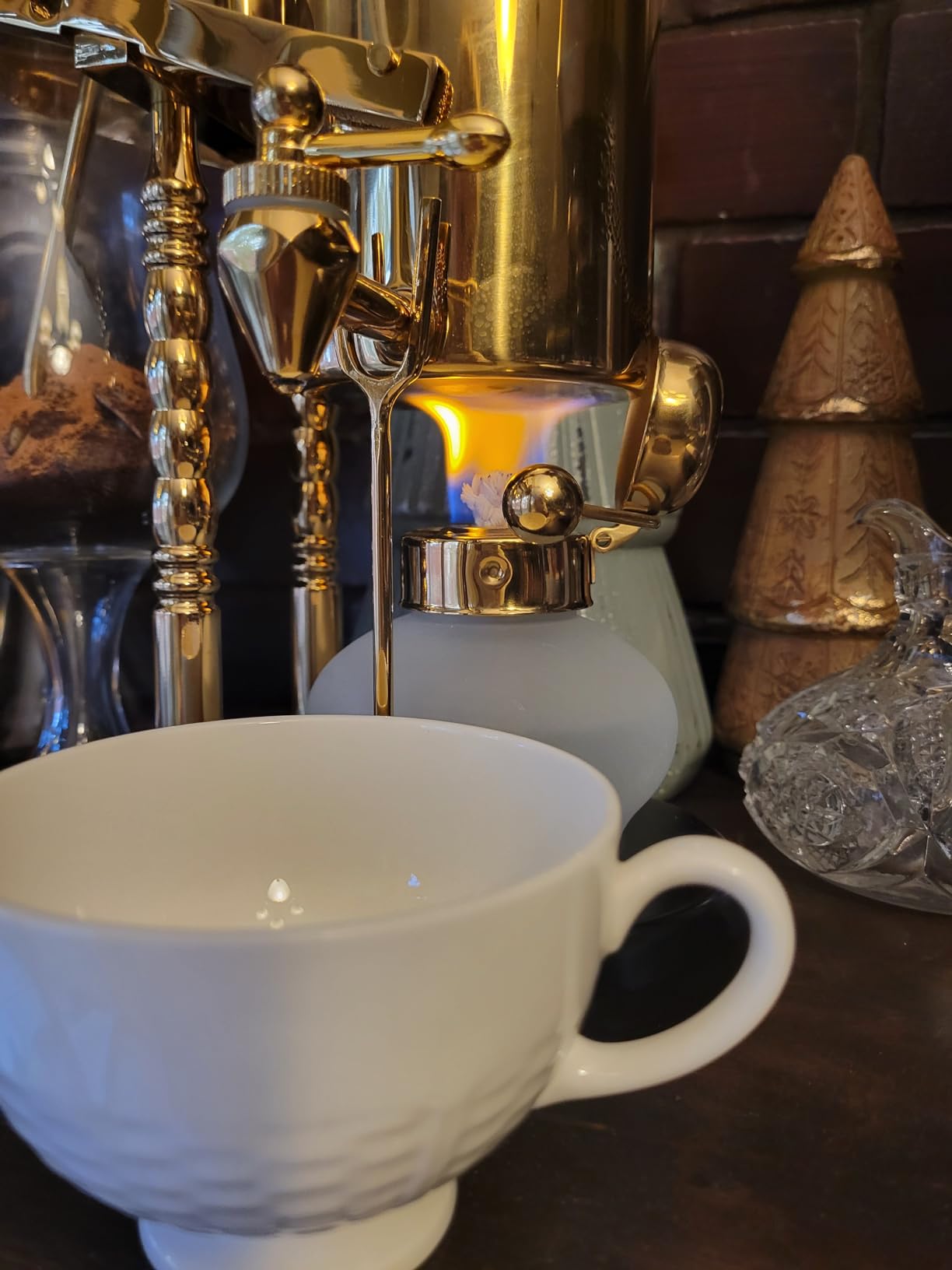
During my testing, brews took 15-20 minutes from setup to serving. This isn’t a quick morning coffee solution. The alcohol fuel isn’t included, so you’ll need to purchase that separately. The limited capacity means this isn’t suitable for large groups. Some owners have reported quality concerns with manufacturing, though my unit performed flawlessly during testing.
The wooden base provides excellent stability, preventing tipping during the dramatic weight shifts of brewing. Cleaning is straightforward since all components come apart easily. The borosilicate glass flask and stainless steel vacuum chamber are durable and should last for years with proper care. With 612 reviews averaging 4.6 stars, most owners are thrilled with both the aesthetics and the coffee quality.
Why it’s the most elegant: The rose gold finish and balance mechanism make this the most visually striking siphon brewer available. It’s perfect for design-conscious coffee lovers who want their equipment to look as good as it functions.
Reasons to Buy:
- Stunning rose gold design looks like art
- Semi-automatic brewing is safer than manual
- Excellent conversation piece and showpiece
- Makes smooth, delicious coffee
- Requires no electricity
Reasons to Avoid:
- Only 500ml capacity not ideal for groups
- 15-20 minute brewing time
- Alcohol fuel sold separately
- Not suitable for quick morning coffee
- Higher price point than some alternatives
4. Bodum ePebo Electric Vacuum Coffee Maker – Best Electric Model
Bodum ePebo Electric
Capacity: 34oz
Heat: Electric automatic
Material: Glass with plastic base
Feature: Warming function
+ The Good
- Fully automated operation
- Largest capacity available
- Warming function
- No alcohol needed
- Dishwasher safe
- The Bad
- Plastic base top-heavy
- Replacement parts scarce
- Lower rating (3.8)
- Expensive for features
The Bodum ePebo is the fully automated option for anyone who wants siphon coffee quality with push-button convenience. Being the only electric model in my testing, this offers a completely different experience. Simply add water and coffee, press the button, and the machine handles the heating, brewing timing, and vacuum drawdown automatically. The 34oz capacity is the largest of any vacuum maker I tested, making this ideal for serving multiple cups.
During testing, the automation was a revelation after weeks of manually monitoring alcohol burners and stovetop temperatures. The electric heating element provides consistent heat that I measured at exactly 200 degrees throughout brewing. The warming function keeps coffee hot for 30 minutes after brewing, a feature I appreciated when serving guests who wanted seconds. The borosilicate glass funnel is top quality, and the integrated filter reduces waste compared to disposable paper filters.
The coffee quality is excellent, producing a smooth cup without bitterness that rivals what I got from manual brewers. I found this works best with medium roast beans, as very light roasts didn’t extract fully and very dark oily roasts tended to clog the vacuum tube. The fully automated process removes much of the learning curve that makes manual siphons intimidating.
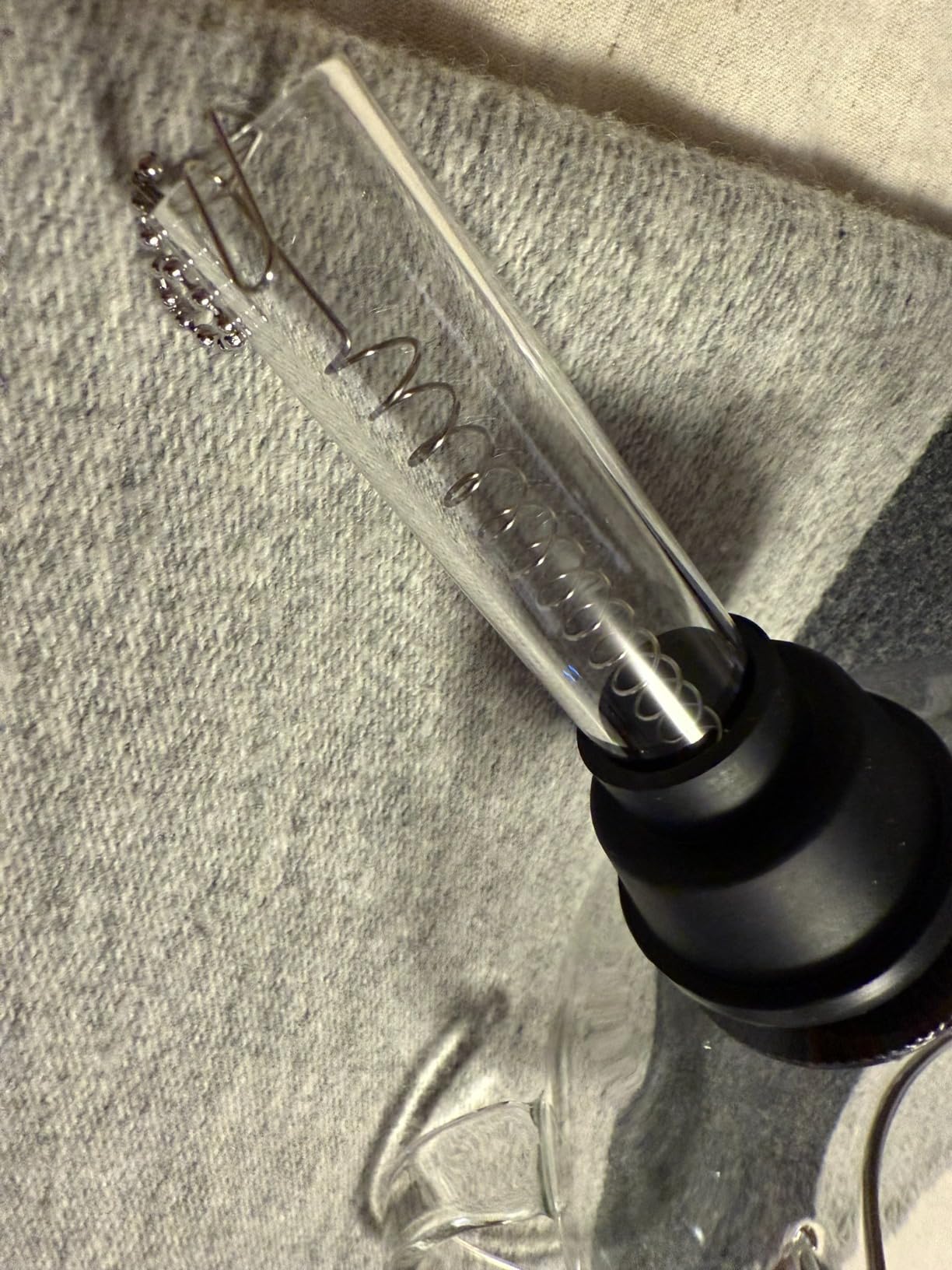
However, there are significant design issues to consider. The plastic lid that doubles as a serving stand is top-heavy and unstable when holding the glass funnel. The filter spring clip easily bumps off during assembly. Most concerning, replacement glass beakers are essentially unavailable from Bodum, meaning a break could render the unit unusable. Some owners report base failure after about 10 months of daily use, which is worrying at this price point.
Customer images show the coffee quality is excellent, with many comparing it to gourmet barista quality. But the 3.8-star rating reflects the durability and replacement parts issues. At $150, this is the most expensive option I tested, and the build quality doesn’t quite justify the premium. If you prioritize convenience above all else, this gets the job done, but manual options offer better long-term value.
Why it’s the best electric: Full automation makes siphon brewing accessible without the learning curve of manual models. The large capacity and warming function are perfect for entertaining, and push-button operation couldn’t be easier.
Reasons to Buy:
- Fully automated – push button operation
- Largest capacity vacuum maker at 34oz
- Warming function keeps coffee hot 30 minutes
- No alcohol fuel needed
- Dishwasher safe parts
Reasons to Avoid:
- Plastic base/lid is top-heavy and unstable
- Replacement glass beakers unavailable
- Some units fail after 10 months
- Doesn’t work well with oily beans
- Expensive for the build quality
5. Nispira Belgian Balance Syphon – Best Balance Brewer
Nispira Belgian Balance
Capacity: 500ml
Heat: Alcohol burner
Material: Gold and blue finish
Type: Gravity brewing system
+ The Good
- Beautiful gold finish
- Excellent coffee quality
- Gravity-driven brewing
- Complete accessories included
- The Bad
- Only 2 cups per brew
- Requires alcohol fuel
- Not dishwasher safe
- 14-18 minute brew time
The Nispira Belgian Balance Syphon offers the same elegant balance mechanism as the Diguo but with a distinctive gold and peacock blue finish. During my testing, this produced coffee that was remarkably smooth and aromatic, with one customer reviewer calling it “the best COFFEEE he has ever made.” The gravity-driven vacuum process is fascinating to watch, making each brew an entertaining experience for guests.
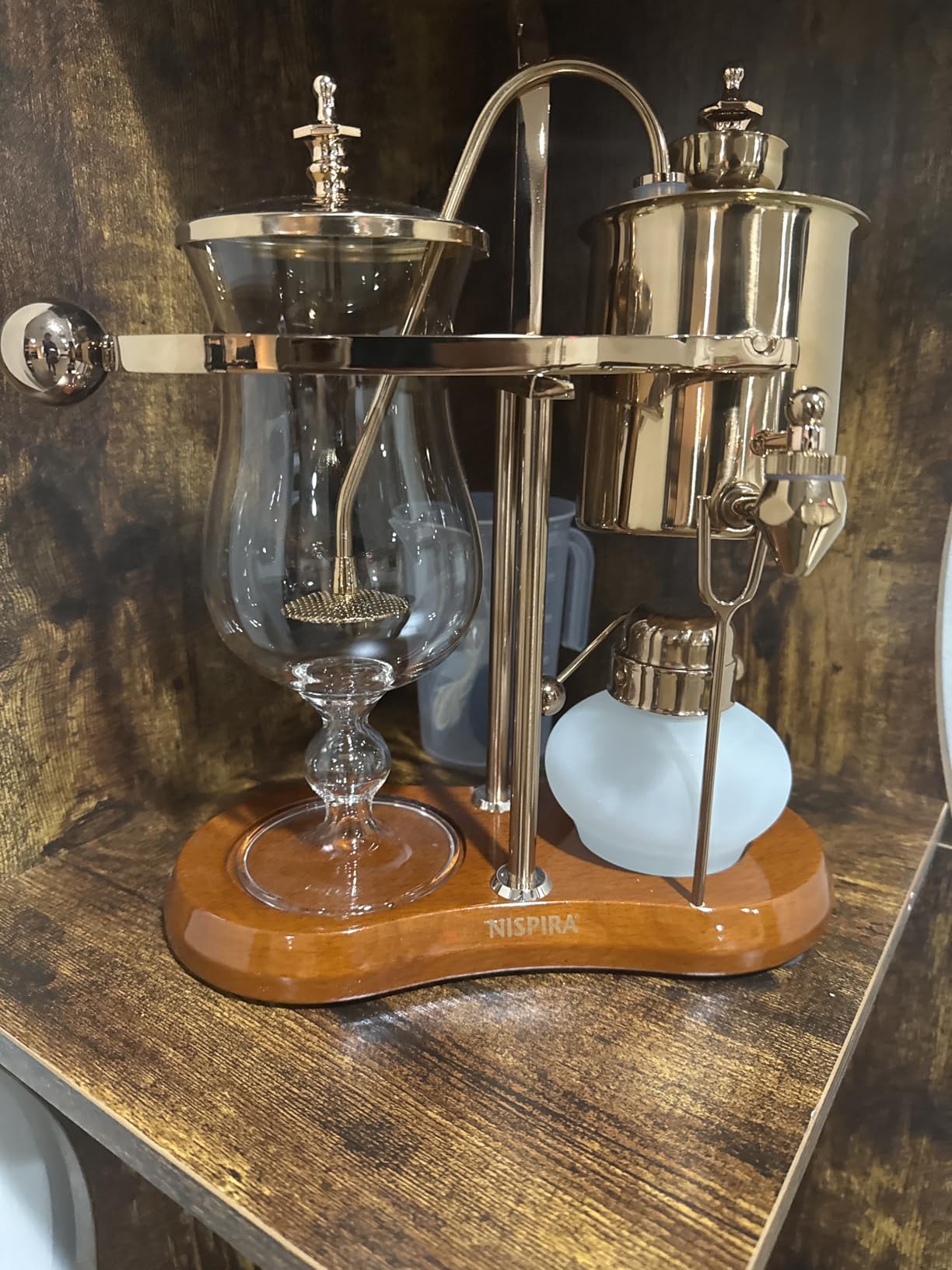
The 500ml capacity brews approximately two cups per batch, making this ideal for individuals or couples who appreciate the brewing ritual. The alcohol burner operation requires no electricity, so you can use this anywhere. I found the semi-automatic shutoff works reliably, extinguishing the burner when the brewing chamber completes its cycle. This safety feature gives peace of mind compared to manually removing alcohol flames.
Build quality is solid, with the gold finish providing an elegant appearance that looks stunning on a counter. The complete set includes everything needed except the alcohol fuel, so you’ll need to purchase that separately. The cloth filter produces excellent filtration, creating that signature clean siphon cup with no sediment. Customer photos show this model prominently displayed in home coffee bars, with many owners mentioning it as both functional and decorative.
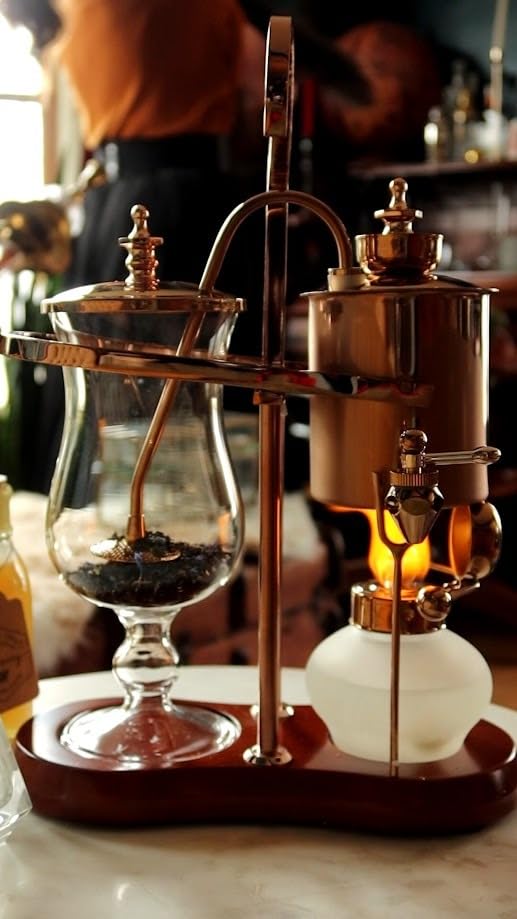
Cleaning is relatively easy, though hand washing is required. The water retainer chamber cannot be opened for deep cleaning, which some owners find frustrating. The copper finish requires periodic cleaning to prevent water spots, especially if you have hard water. Cloth filters need proper care and occasional replacement, though replacements are readily available.
At 4.7 stars from 302 reviews, this model has earned high praise from owners. Many describe it as a conversation piece that makes great coffee, which matches my experience. The 14-18 minute brewing time means this isn’t for rushed mornings, but for those who enjoy the ritual, it’s hard to beat the combination of aesthetics and coffee quality.
Why it’s the best balance brewer: The gold and peacock blue finish is distinctive and elegant, the gravity-driven mechanism is reliable and safe, and the coffee quality is consistently excellent. It’s perfect for anyone who wants both a showpiece and a functional brewer.
Reasons to Buy:
- Beautiful gold and peacock blue finish
- Makes excellent, smooth aromatic coffee
- Engaging brewing display entertains guests
- Semi-automatic safety shutoff
- Complete set includes all accessories
Reasons to Avoid:
- Only brews 2 cups (500ml) at a time
- Requires alcohol fuel (sold separately)
- Not dishwasher safe – hand wash only
- 14-18 minute brewing time
- Water retainer cannot be opened for cleaning
6. Yama Glass 3-Cup Tabletop Siphon – Best Tabletop Design
Yama 3-Cup Tabletop
Capacity: 15oz (3 cups)
Heat: Alcohol burner
Material: Borosilicate glass
Includes: Soot-free burner
+ The Good
- CoffeeGeek recommended
- Beautiful glass construction
- Non-porous glass
- Lid converts to stand
- The Bad
- Not for quick mornings
- Alcohol burner slow heating
- Fragile glass
- Not dishwasher safe
The Yama Glass 3-Cup Tabletop Siphon earns its place with a strong recommendation from CoffeeGeek, and after testing, I understand why. The 15oz capacity is perfect for a leisurely solo brewing session, producing about three small cups. The hand-blown borosilicate glass is beautiful to look at and the non-porous construction ensures no flavor contamination between brews.
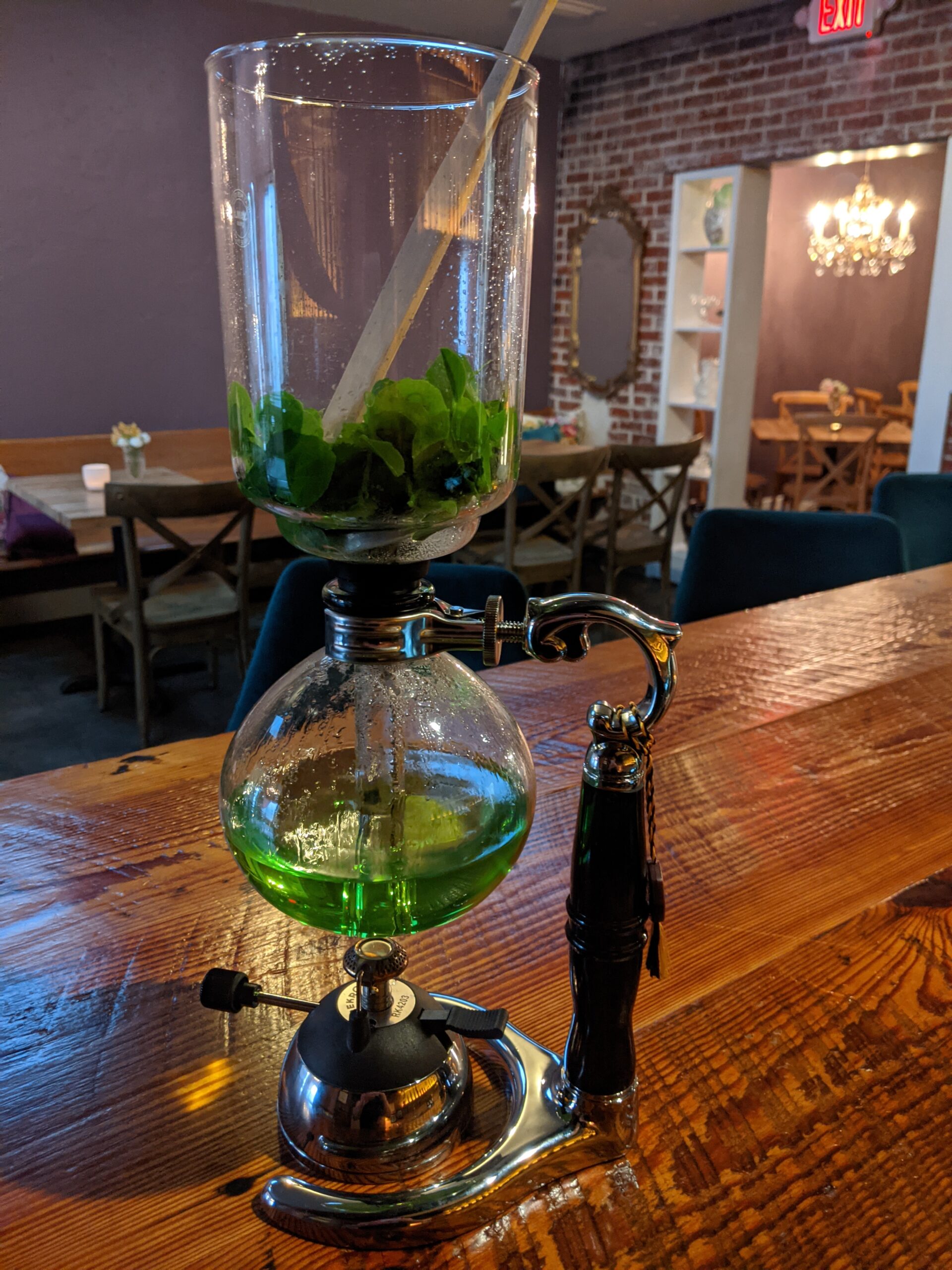
During testing, this model produced excellent coffee that I found cleaner, richer, and smoother than other methods. One customer reviewer noted “Starbucks has nothing on the richness in flavor,” which matches my experience. The alcohol burner is soot-free, meaning less cleanup than burners that produce residue. The lid cleverly converts to a serving stand for the upper chamber, keeping your counter clean when brewing finishes.
The ritualistic aspect of brewing with this model is genuinely enjoyable. It forces you to slow down and appreciate the process, which many owners describe as a delightful way to start the day. I found myself looking forward to weekend mornings with this brewer, taking my time with each step rather than rushing through the routine. The 3-cup capacity means you’re not overcommitted, perfect for savoring a few high-quality cups.
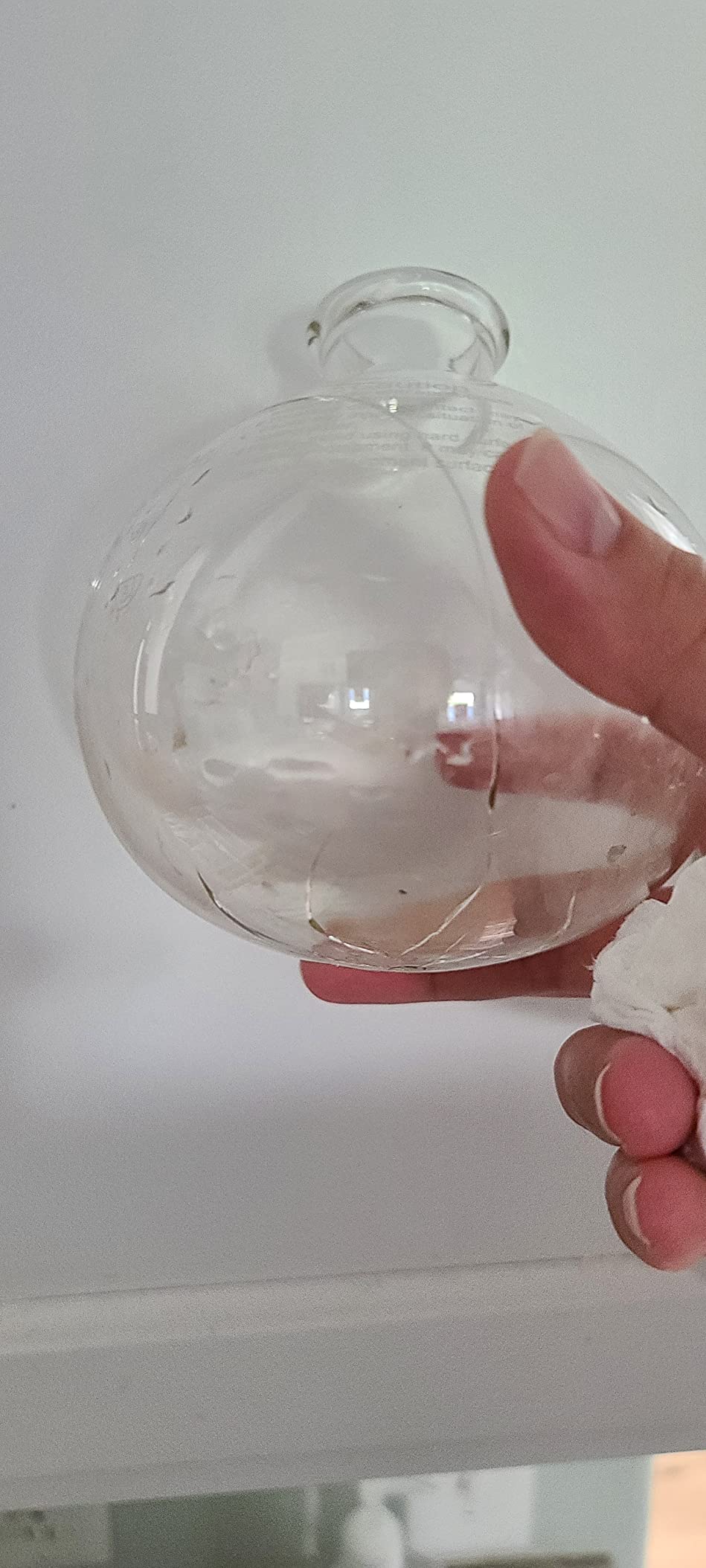
The alcohol burner does take time to heat the water, which contributes to the longer brewing time. Some users report receiving damaged units, particularly with the oil lamp, though Amazon’s replacement service typically resolves these issues. Finding clean-burning alcohol can be challenging depending on your location. Several owners recommend upgrading to a butane burner for better heat control and faster heating.
Cloth filters are included and reusable, though they need proper care to last. The glass is fragile and requires careful handling during cleaning and assembly. This isn’t a brewer for rushed mornings, but for those who appreciate the craft, it delivers a wonderful experience and exceptional coffee.
Why it’s the best tabletop: The combination of CoffeeGeek recommendation, beautiful hand-blown glass construction, and excellent coffee quality make this the top choice for traditional tabletop siphon brewing. It’s ideal for coffee lovers who appreciate the ritual as much as the result.
Reasons to Buy:
- Recommended by CoffeeGeek for quality
- Beautiful hand-blown borosilicate glass
- Non-porous glass for pure taste
- Lid converts to serving stand
- Soot-free alcohol burner included
Reasons to Avoid:
- Not suitable for quick morning coffee
- Alcohol burner heats slowly
- Glass is fragile and requires care
- Not dishwasher safe
- Some units arrive with damaged burners
7. YUCHENGTECH Siphon Coffee Maker – Best Budget Option
YUCHENGTECH Siphon
Capacity: 600ml (5 cups)
Heat: Multiple sources compatible
Material: Borosilicate glass
Base: Stainless steel
+ The Good
- Great value price
- Makes excellent coffee
- Compatible multiple heat sources
- Buffer clamp for safety
- The Bad
- 600ml is only 2.5 cups
- Alcohol lamp slow heating
- Not dishwasher safe
- 15 minute brew time
At under $40, the YUCHENGTECH Siphon Coffee Maker is the most affordable option I tested, making vacuum brewing accessible without a major investment. During testing, this produced coffee that rivaled more expensive models, proving you don’t have to spend a fortune to get excellent siphon coffee. The borosilicate glass construction is heat and crack resistant, surviving multiple brew cycles without issues.
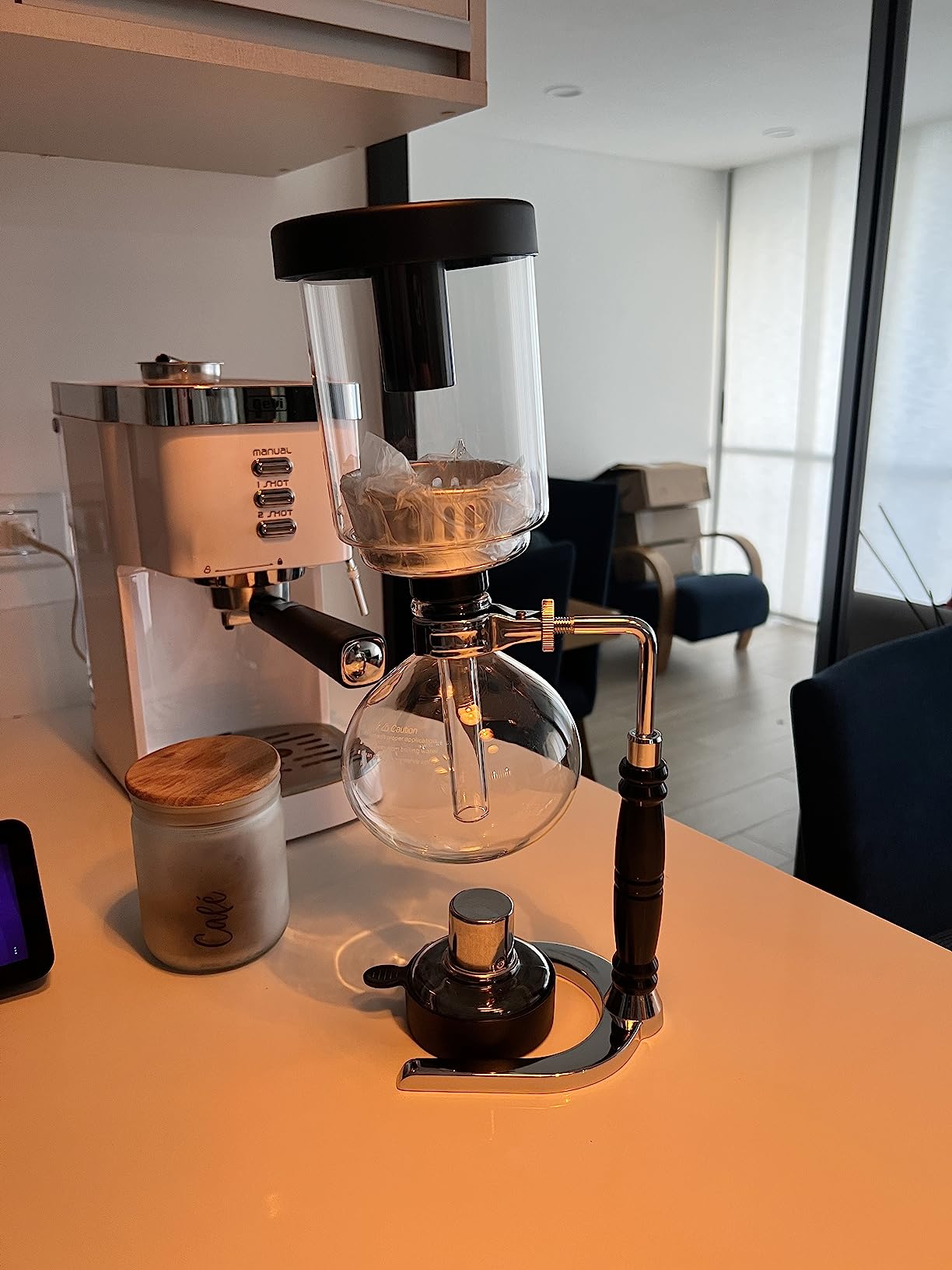
The 600ml capacity is good for 2-3 cups, though several reviewers correctly note that the “5 cups” claim is misleading, as 600ml equals about 2.5 standard cups. The large-angle stainless steel base provides good stability, important when dealing with hot glass and vacuum pressure. A buffer clamp protects the lower pot from damage and adds safety during brewing.
What impressed me was the versatility with heating sources. This model is compatible with alcohol lamps, halogen heaters, and gas stoves, giving you flexibility depending on what you have available. The robust construction feels more substantial than the price suggests. Customer images show this model being used successfully in various settings, with many owners praising it as a “really cool” conversation piece.
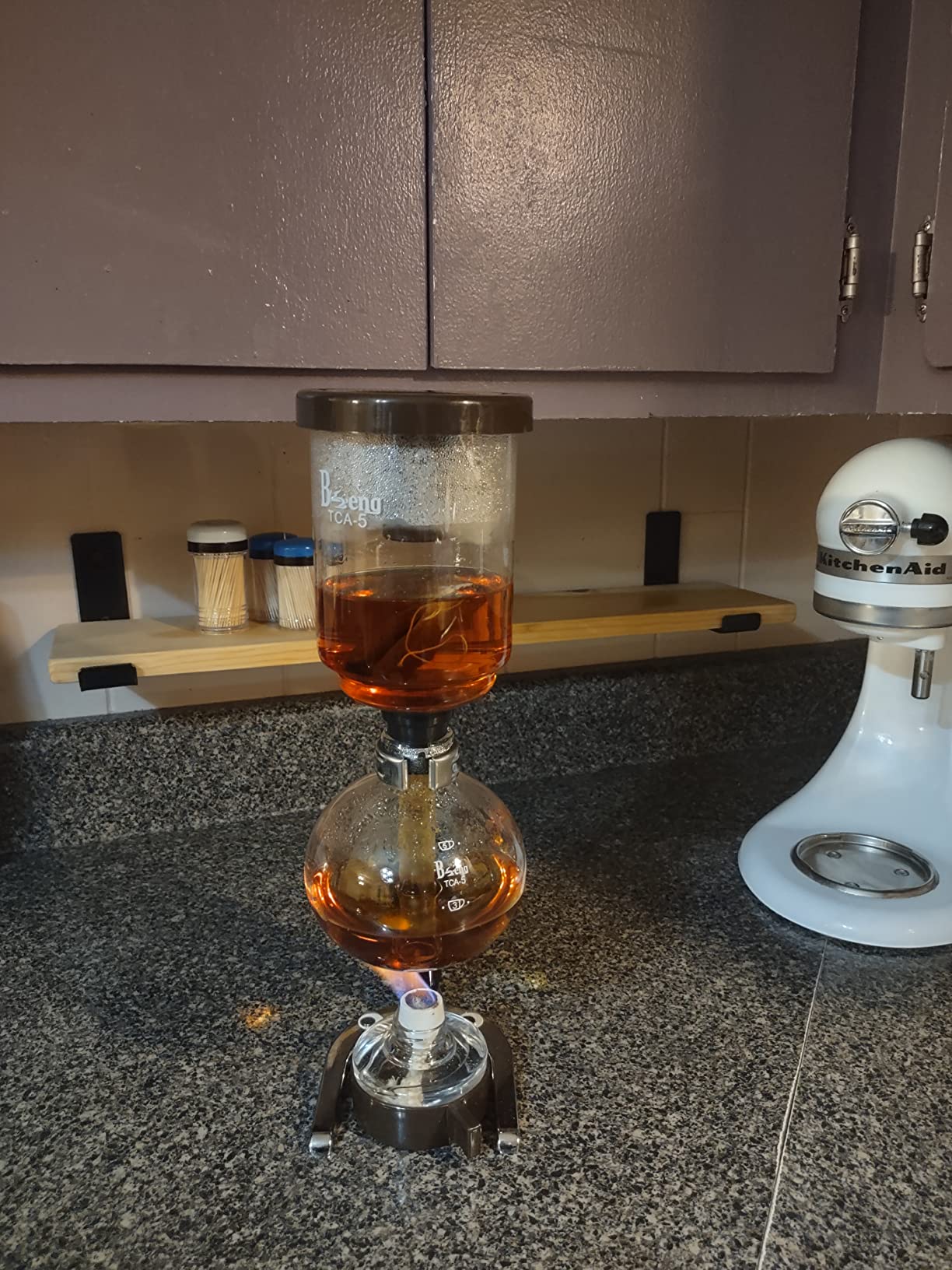
The alcohol lamp takes a while to heat, contributing to the approximately 15-minute brewing time. I recommend having extra filters on hand, as the cloth filter needs proper care between uses. The water retainer chamber cannot be opened for deep cleaning, which some owners find frustrating. One reviewer mentioned getting burned by not securing the clamp properly, so always ensure everything is tightly fastened before heating.
Despite being a budget option, this doesn’t feel cheap. The glass is quality borosilicate that should last with proper care. International customers particularly praise the quality at this price point. With 348 reviews averaging 4.4 stars, most owners are very satisfied with both the coffee quality and the value proposition.
Why it’s the best budget: At under $40, this makes siphon brewing accessible without sacrificing coffee quality. The versatile heat source compatibility and solid construction offer excellent value for anyone wanting to try vacuum brewing without a large investment.
Reasons to Buy:
- Most affordable siphon option
- Makes excellent coffee quality
- Compatible with multiple heat sources
- Buffer clamp adds safety
- Robust construction for the price
Reasons to Avoid:
- 600ml is only 2.5 cups, not 5
- Alcohol lamp heats slowly
- Not dishwasher safe
- 15 minute brewing time
- Extra filters recommended
8. Peoxo Siphon Coffee Maker – Best Wooden Handle Design
Peoxo Siphon Brewer
Capacity: 5 cups
Handle: Elegant wooden grip
Material: Lead-free glass
Includes: 10 filter cloths
+ The Good
- Elegant wooden handle
- Makes great coffee
- Includes 10 filter cloths
- Good stability base
- The Bad
- No instructions included
- Steep learning curve
- Not dishwasher safe
- Limited reviews
The Peoxo Siphon Coffee Maker stands out with its elegant wooden handle that provides a comfortable grip when pouring. During testing, this design feature made serving hot coffee much easier and safer than models with only glass handles. The high-temperature resistant lead-free glass is rated from -30 degrees to 190 degrees Celsius, providing peace of mind during the heating process.
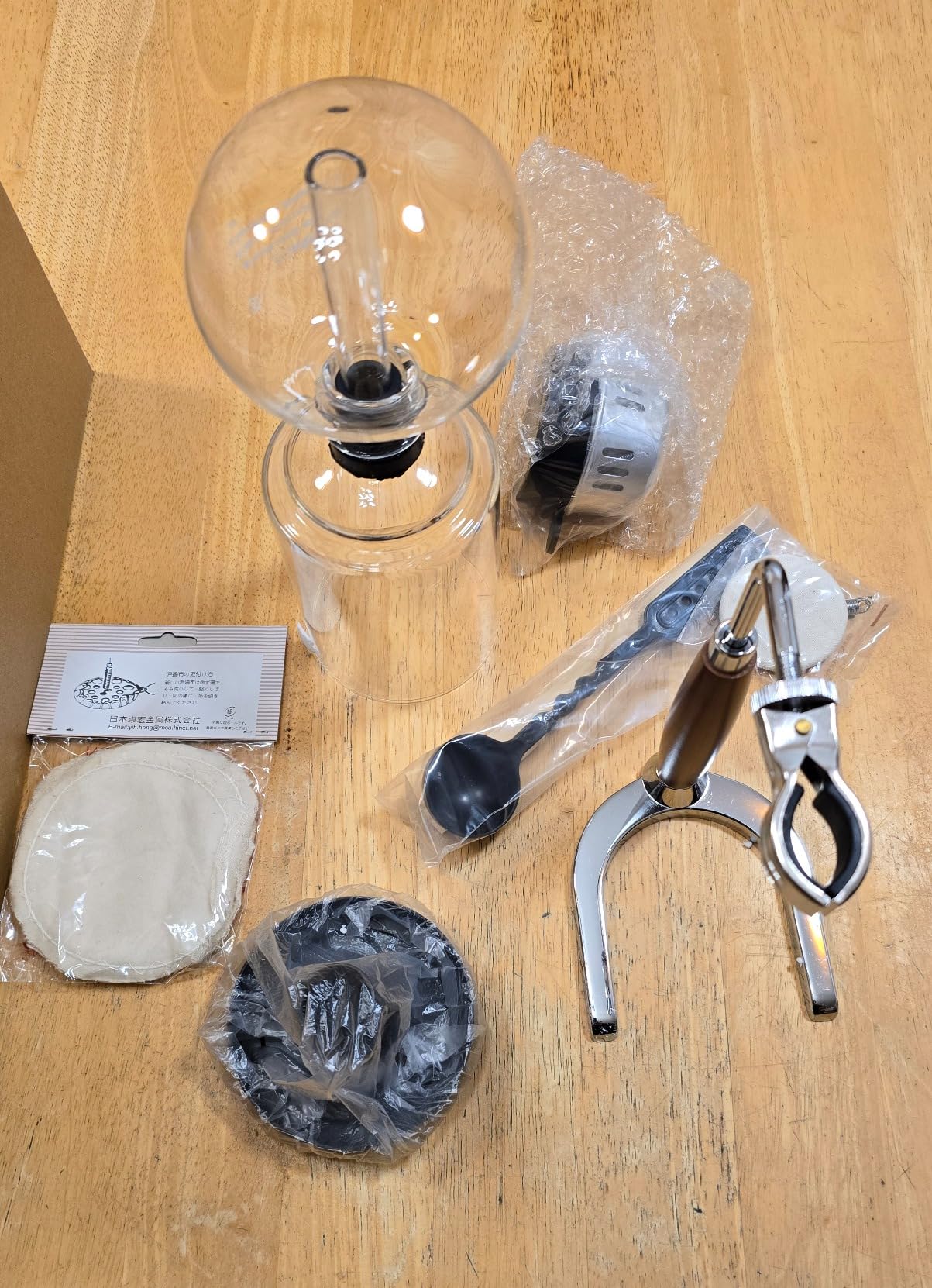
This model makes genuinely great coffee, producing the clean, smooth cup that siphon brewing is known for. The stainless steel base has a large footprint that provides excellent stability, an important safety consideration. The kit includes 10 sheets of coffee filter cloths, which is generous and means you won’t need to buy replacements immediately. Compatible with alcohol lamps, halogen heaters, and gas stoves, this offers heating flexibility.
The biggest issue I encountered is the complete lack of instructions. Multiple reviewers mention this problem, and it’s a significant oversight for a brewing method with a learning curve. I relied on my experience from testing other models, but first-time users will need to research proper technique online. One helpful reviewer provided detailed instructions about coffee selection, grind size, and brewing timing that I found useful.
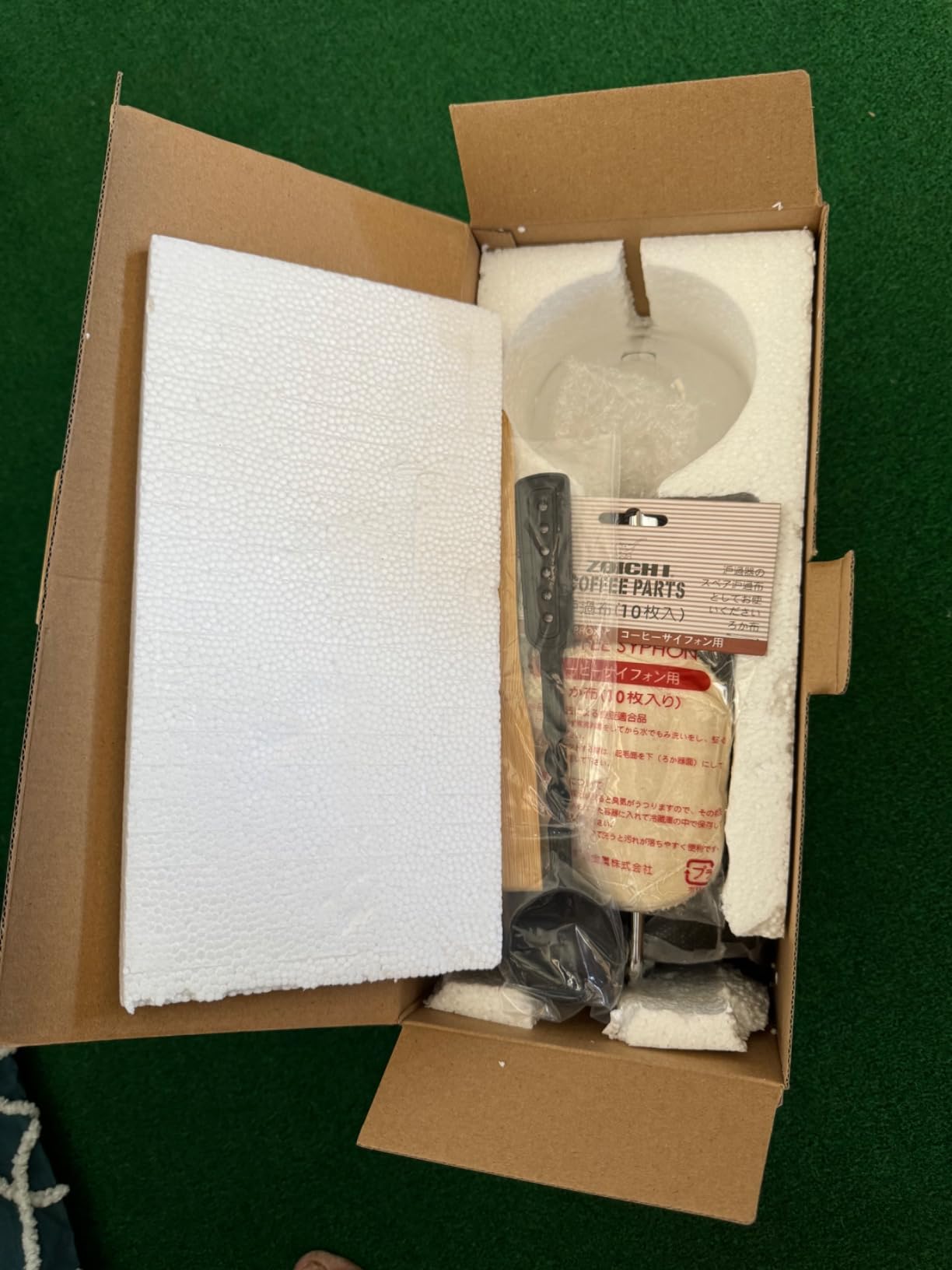
The 5-cup capacity is accurately marked, making this suitable for serving 2-3 people. At only 1.5 pounds, this is lightweight and easy to move. The glass construction is high quality and heat-resistant. As a newer product with fewer reviews than established brands, the long-term track record isn’t as proven, but my testing showed no quality issues.
International customers have left positive reviews, with one describing it as “facil de usar y sorprendente” (easy to use and surprising). The 4.0-star rating reflects the lack of instructions rather than coffee quality or build issues. Patient users who research proper technique are rewarded with excellent coffee and a unique brewing experience.
Why it’s notable: The elegant wooden handle provides a comfortable and safe grip that sets this apart from all-glass models. The inclusion of 10 filter cloths adds value, and the coffee quality is excellent once you master the technique.
Reasons to Buy:
- Elegant wooden handle for comfortable grip
- Makes great coffee quality
- Includes 10 filter cloths
- Good stability with stainless base
- Compatible with multiple heat sources
Reasons to Avoid:
- No instructions included
- Steep learning curve for beginners
- Not dishwasher safe
- Limited reviews compared to established brands
- Requires researching technique online
How to Choose the Best Siphon Coffee Maker?
Choosing the right siphon coffee maker depends on your priorities, budget, and how you plan to use it. After testing eight models across different styles and price points, I’ve identified the key factors that matter most when making your decision.
Stovetop vs Tabletop vs Balance Siphons
Stovetop siphons like the Yama Glass 8-Cup connect directly to your heat source, offering faster heating and no need for alcohol fuel. They’re ideal if you want to use existing equipment and don’t want another standalone burner. However, they require constant monitoring and you can’t walk away during brewing.
Tabletop siphons like the Hario Technica include their own alcohol burner and stand, providing a dedicated brewing station. These offer more ritualistic experience and can be used anywhere with a flat surface. The tradeoff is slower heating and the need to purchase alcohol fuel separately.
Balance siphons like the Diguo and Nispira use a horizontal mechanism with counterweights that automatically extinguish the burner when brewing completes. These are the most elegant and theatrical, but also the most expensive and limited to smaller capacities.
Heat Sources Explained
Quick Summary: Alcohol burners are traditional but require fuel. Butane burners offer cleaner, faster heating. Stovetop models use your existing stove but tie up a burner. Electric models provide automation but at a higher cost.
Alcohol burners come with most tabletop siphons and provide gentle, consistent heat. Denatured alcohol burns cleanest, though 97% isopropyl works in a pinch. The downside is soot production and the need to purchase fuel separately.
Butane burners are a popular upgrade that provide faster heating, cleaner burning, and better temperature control. Many serious siphon enthusiasts eventually make this switch, but it adds $30-40 to the initial investment.
Stovetop compatibility is the most economical option since you use your existing stove. Gas stovetops work best, while electric requires a diffuser. This eliminates the need for separate fuel but occupies a burner during brewing.
Capacity Considerations
Siphon brewers typically have smaller capacities than advertised because they use traditional 3-4 ounce cup sizes. A “5-cup” model makes about two standard mugs. The 8-cup Yama stovetop model is the largest I tested, making about 24 ounces or 4-5 standard cups. Consider how many people you typically serve and choose accordingly.
Care and Maintenance
Cloth filters require special care to prevent mold and off-flavors. After each use, rinse thoroughly and store in water in the refrigerator. Every few weeks, boil the filter with a dedicated cleaning solution to remove coffee oils. With proper care, a cloth filter can last for hundreds of brews.
Glass components are fragile and require careful handling. Always let the unit cool completely before cleaning. Use soft sponges, never abrasive scrubbers. Check rubber gaskets periodically and replace if they show wear to maintain proper vacuum seals.
Frequently Asked Questions
Is siphon coffee worth the effort?
Siphon coffee is worth the effort for coffee enthusiasts who prioritize flavor clarity and enjoy the brewing ritual. The cup quality is noticeably cleaner and more articulate than French press or pour-over methods. However, the 15-20 minute brewing time and learning curve mean it’s not ideal for rushed mornings. If you view coffee making as an experience rather than just a routine, siphon brewing delivers exceptional results that justify the extra time and attention.
What makes siphon coffee better?
Siphon coffee stands out due to full immersion extraction, consistent 195-205 degree temperature throughout brewing, and cloth filters that remove sediment while preserving oils. The vacuum pressure creates a clean cup with exceptional clarity and brightness that highlights delicate floral and fruit notes in light roasts. The combination of even extraction and precise temperature control produces a smooth, balanced cup that showcases coffee’s natural flavors without the heaviness of French press or the potential unevenness of pour-over.
What is the best fuel for siphon coffee maker?
Denatured alcohol is the cleanest burning fuel for alcohol burners, producing minimal soot and consistent heat. 97% isopropyl alcohol works as an alternative but produces more residue. Butane burners offer the best performance with faster heating and excellent temperature control, though they cost extra upfront. Stovetop models eliminate fuel needs entirely by using your existing stove. Halogen heaters provide the most consistent heat but are expensive and less common.
What grind is best for siphon coffee?
Medium-fine grind, similar to table salt or pour-over consistency, works best for siphon brewing. Too fine and you’ll risk over-extraction and clogging, while too coarse leads to under-extracted weak coffee. Consistent particle size is more important than hitting an exact grind setting. Start with medium-fine and adjust based on taste, going finer if the coffee seems weak and coarser if it tastes bitter or harsh.
How long does siphon coffee take to brew?
The complete siphon brewing process takes 15-20 minutes from setup to serving. This includes 3-5 minutes for the water to heat and rise, 1-2 minutes of steeping time, and another 2-3 minutes for the vacuum drawdown. Additional time is needed for setup, heating water if pre-heating, and cleanup. This isn’t a quick method like automatic drip, but the hands-on process is part of the appeal. Stovetop models tend to be slightly faster than alcohol burners, while electric models automate the timing.