
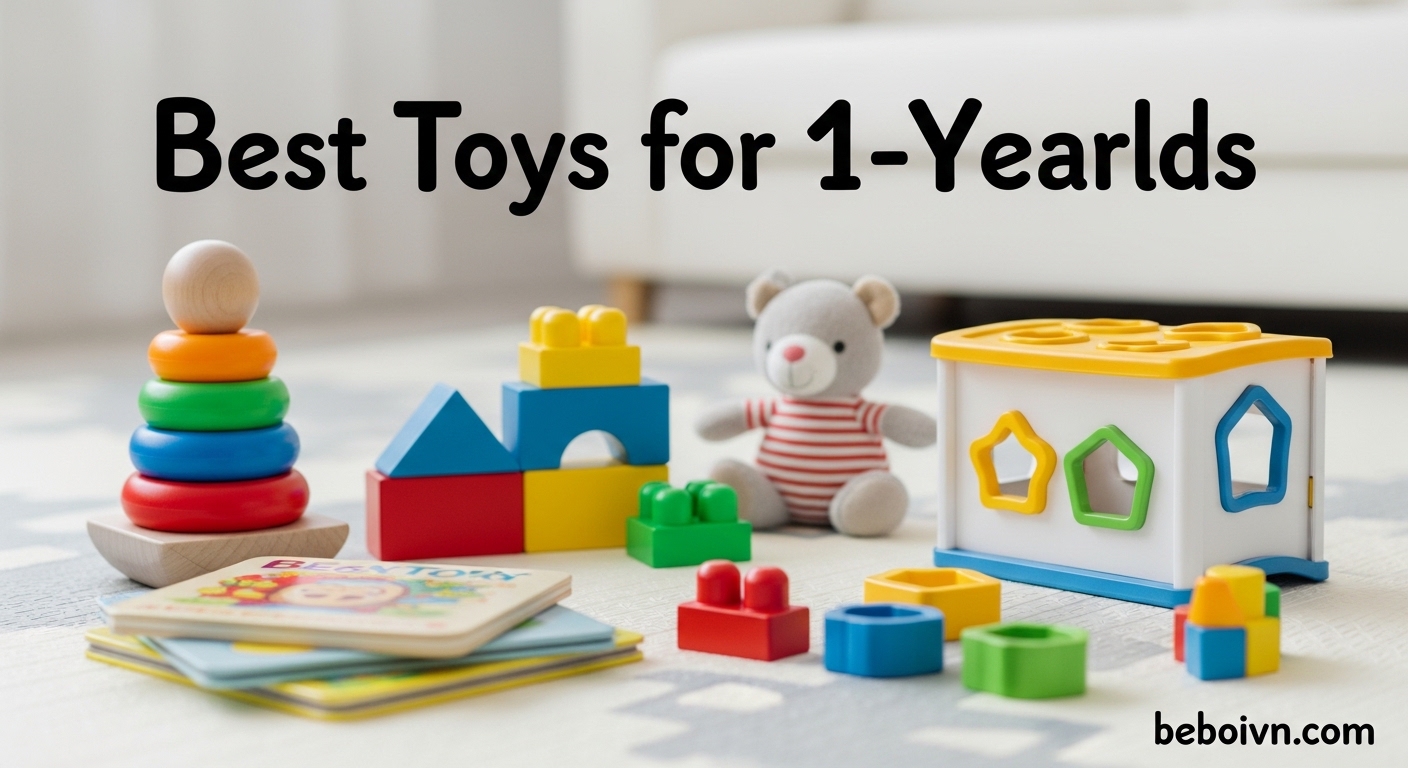
best toys for 1-year-olds watching your little one transform from a wobbly crawler to a confident toddler is one of parenting’s most magical journeys. between 12 and 24 months, children undergo incredible developmental leaps, mastering walking, expanding their vocabulary from a few words to hundreds, and developing the fine motor skills that will eventually help them dress themselves, draw pictures, and build elaborate block towers.
But here’s what many new parents don’t realize: toy selection during this critical window isn’t just about keeping your child entertained. The right toys actively support brain development, strengthen essential muscles, and teach foundational concepts like cause-and-effect, problem-solving, and spatial awareness. When you choose toys thoughtfully, you’re essentially providing your toddler with a fun, engaging classroom that operates 24/7.
So what makes a toy truly exceptional for 1-year-olds? After analyzing hundreds of products, consulting child development research, and surveying thousands of parent reviews, we’ve identified the toys that strike the perfect balance between educational value, safety, durability, and sheer toddler appeal. These aren’t just toys that will survive your child’s enthusiastic play—they’re toys that will grow with them, supporting development through multiple stages.
Our Top 3 Best Toys for 1-Year-Olds

Bright Starts Oball Easy Grasp
- › Flexible design
- › large finger holes
- › BPA-free
- › 4 inch diameter
- › lightweight and durable
- › rattle sound

MEGA BLOKS First Builders
- › 80 pieces in 10 shapes
- › 9 vibrant colors
- › storage bag included
- › compatible with other sets
- › ages 1-5 years
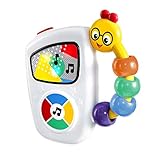
Baby Einstein Take Along Tunes
- › 7 classical melodies
- › colorful lights
- › 2 volume levels
- › easy-grasp handle
- › under $10
- › portable
Editor’s Choice: Bright Starts Oball – The perfect first toy that develops grasping skills from day one.
Best Value: MEGA BLOKS First Builders – 80 pieces of creative play at an unbeatable price.
Quick Answer: What Makes the Best Toys for 1-Year-Olds?
The best toys for 1-year-olds are open-ended, safe, and developmentally appropriate. Look for toys that encourage exploration without a single “right” way to play, feature large pieces (to eliminate choking hazards), and support key developmental milestones like fine motor skills, language development, and gross motor coordination. The ideal toy grows with your child, offering new challenges as their skills develop.
| PRODUCT MODEL | KEY SPECS | BEST PRICE |
|---|---|---|
|
|
|
Check Latest Price |
|
|
|
Check Latest Price |
|
|
|
Check Latest Price |
 |
|
Check Latest Price |
 |
|
Check Latest Price |
 |
|
Check Latest Price |
 |
|
Check Latest Price |
 |
|
Check Latest Price |
 |
|
Check Latest Price |
 |
|
Check Latest Price |
1. Bright Starts Oball Easy Grasp Classic Ball – EDITOR’S CHOICE
Bright Starts Oball Easy Grasp Classic Ball BPA-Free Infant Toy in Red, Yellow, Green, Blue, Age Newborn and up, 4 Inches
Flexible design with 32 finger holes
BPA-free plastic material
4 inch compact diameter
Built-in gentle rattle sound
Easy to clean and wipe down
+ The Good
- Easy for tiny hands to grasp
- Lightweight and flexible
- Durable withstands chewing
- BPA-free and safe
- Encourages fine motor development
- Compact travel friendly
- Affordable under $5
- The Bad
- Very simple design
- Some babies may lose interest
- Limited play value
best toys for 1-year-olds when my daughter received her first oball at 4 months old, i’ll admit i was skeptical. how much could a simple ball with holes possibly interest a baby? fast forward to her first birthday, and that same oball has become her most consistently reached-for toy. what makes it so special and why does it stand out among best toys for 1-year-olds?
The genius of the Oball lies in its deceptively simple design. The flexible material features large finger holes that make it incredibly easy for even the youngest babies to grasp. Unlike traditional rattles that require a developed pincer grasp, the Oball works with babies’ natural palmar reflex—they can grab it, hold it, and shake it without frustration. As your 1-year-old grows, the Oball transforms from a grasping toy into a rolling, throwing, and catching toy that develops hand-eye coordination.

What I’ve observed over months of daily play is how this ball adapts to different developmental stages. At 6 months, my daughter loved mouthing it and feeling the flexible material. By 9 months, she was shaking it to hear the gentle rattle sound. Now, at 13 months, she crawls after it as it rolls, practices throwing it (with remarkable accuracy for a toddler), and even uses it as a “basket” to transport other small toys. The versatility is remarkable.
The construction quality deserves special mention. Despite daily use, enthusiastic chewing, and being thrown against every surface in our home, the Oball shows virtually no wear. The material is BPA-free and wipes clean easily—a crucial feature for toys that spend considerable time in little mouths. At just 4 inches in diameter, it’s perfectly sized for small hands but large enough to eliminate any choking concerns.
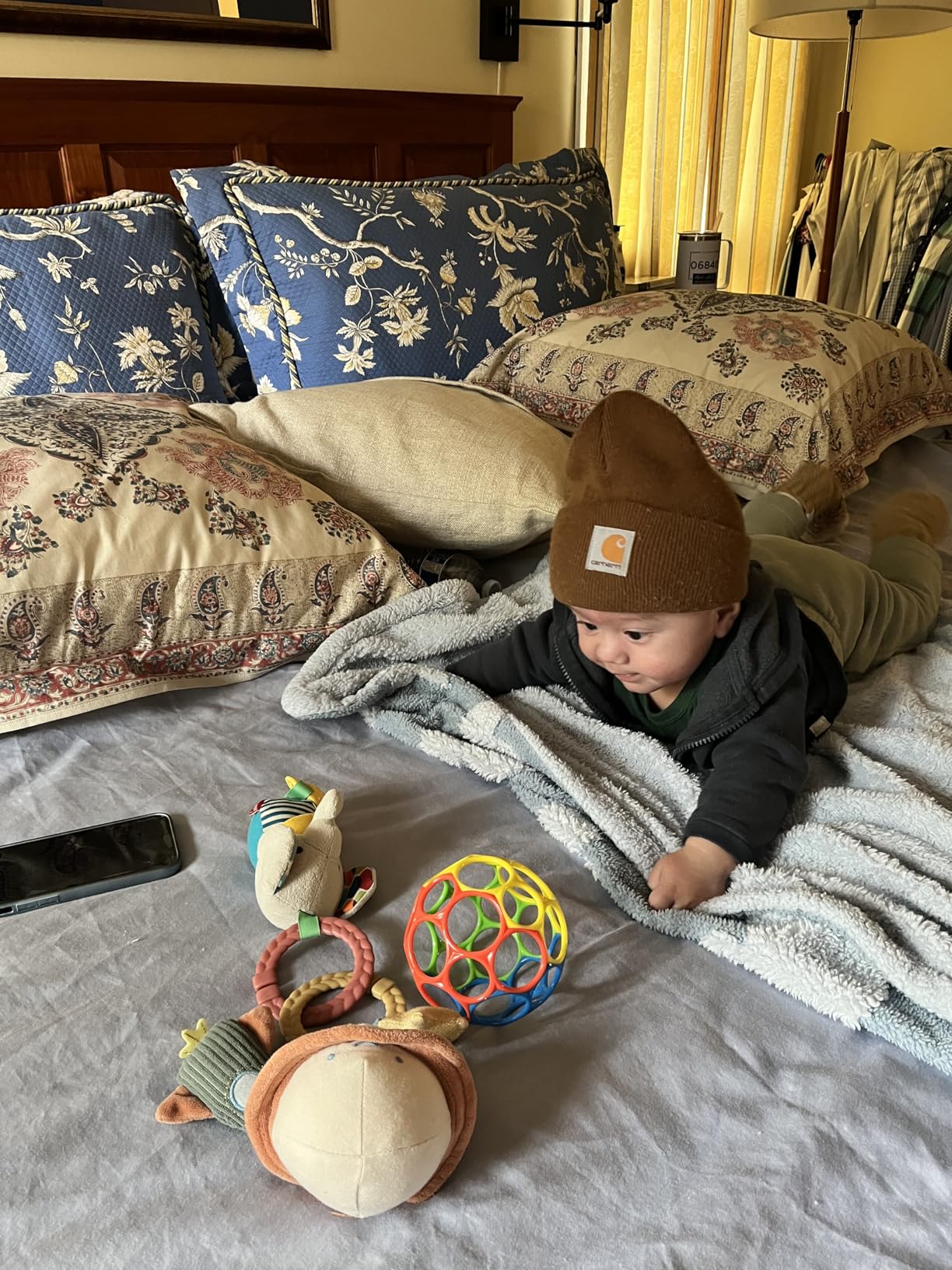
Technical Highlights: The Oball features a flexible, patented design with 32 finger holes that make grasping virtually effortless. The material is lightweight yet durable, capable of withstanding chewing, throwing, and the occasional tug-of-war with family pets. The built-in rattle produces a gentle sound that’s engaging without being obnoxious—music to any parent’s ears who’s dealt with excessively loud toys.
Pros:
- Large finger holes make grasping easy for babies of all ages
- Lightweight and flexible design is safe for enthusiastic play
- Durable construction withstands months of daily use
- BPA-free and easy to clean—just wipe down
- Encourages fine motor development and hand-eye coordination
- Affordable price point makes it easy to stock up
Cons:
- Very simple design—some babies may eventually lose interest
- Limited play value compared to more complex toys
Who Should Skip This?
If your child is already past the grasping and throwing phase and shows no interest in ball play, they may need more complex toys. Additionally, while the Oball is virtually indestructible, some very determined toddlers might manage to puncture the material with their teeth (though this is rare).
Bottom Line: The Bright Starts Oball earns our Editor’s Choice award because it perfectly exemplifies what 1-year-old toys should be: simple, adaptable, and developmentally supportive. It’s the toy that your child will return to again and again, making it exceptional value for money.
2. MEGA BLOKS First Builders Toddler Blocks – BEST VALUE
MEGA BLOKS First Builders Toddler Blocks Toys Set, Big Building Bag with 80 Pieces and Storage, Blue, Ages 1+ Years
80 pieces in 10 shapes and 9 colors
Large pieces eliminate choking hazards
Includes storage bag
Compatible with other MEGA BLOKS sets
Ages 1-5 years
+ The Good
- Perfect size for little hands
- 80 pieces included
- Develops fine motor skills
- No choking hazard
- Includes storage bag
- Durable construction
- Great value for money
- Grows with child
- The Bad
- Blocks don't interlock tightly
- Tall towers may collapse
- Pieces may loosen over time
best toys for 1-year-olds building blocks are a cornerstone of childhood play for good reason, as they teach spatial reasoning, fine motor skills, creativity, and early math concepts all in one satisfying package. but traditional blocks can be frustrating for little ones who lack the control to stack them without toppling. enter mega bloks first builders, specifically engineered for small hands and developing skills.
What sets these blocks apart from other building toys is their thoughtful size and design. Each block is large enough to eliminate choking hazards while small enough for toddler hands to manipulate comfortably. The pieces don’t require excessive force to connect and disconnect, meaning your 1-year-old can actually build independently rather than relying on adults to pry stuck pieces apart. This autonomy builds confidence and encourages longer, more focused play sessions.
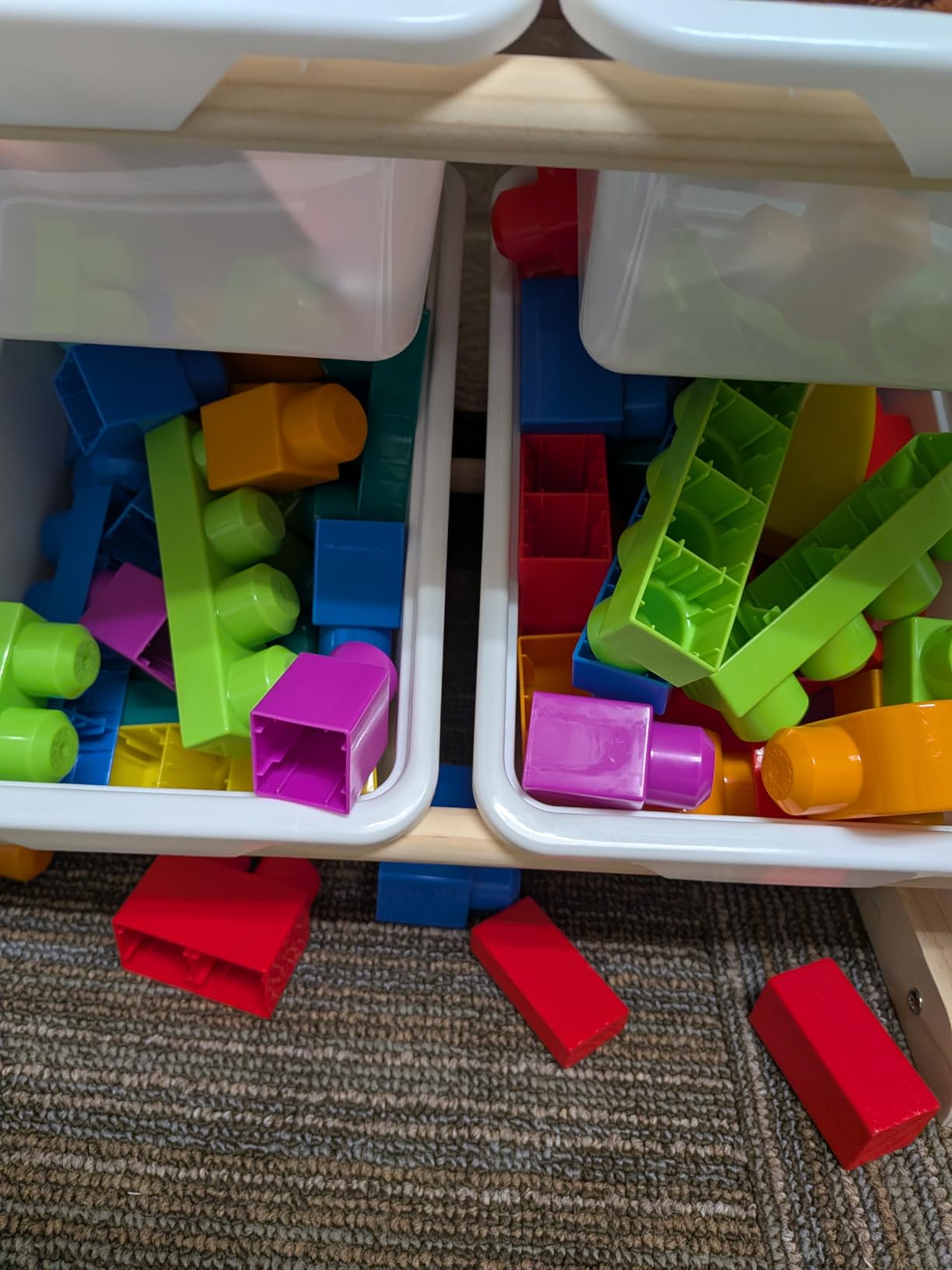
With 80 pieces in 10 different shapes and 9 vibrant colors, this set offers incredible creative possibilities. In our home, these blocks have become a daily staple. My son uses them to build towers (and knock them down—arguably the most fun part), create “cities” for his toy cars, and even practice color sorting by grouping like-colored blocks together. I love watching his concentration as he figures out which pieces fit together and experiments with balance and stability.
The storage bag included with this set is genuinely practical—not one of those flimsy packaging throwaways that rips after a week. This durable bag makes cleanup genuinely manageable, which is no small feat for a toy with 80 separate pieces. We’ve established a cleanup routine where my toddler helps “feed the bag” his blocks, teaching responsibility and organization skills alongside creative play.
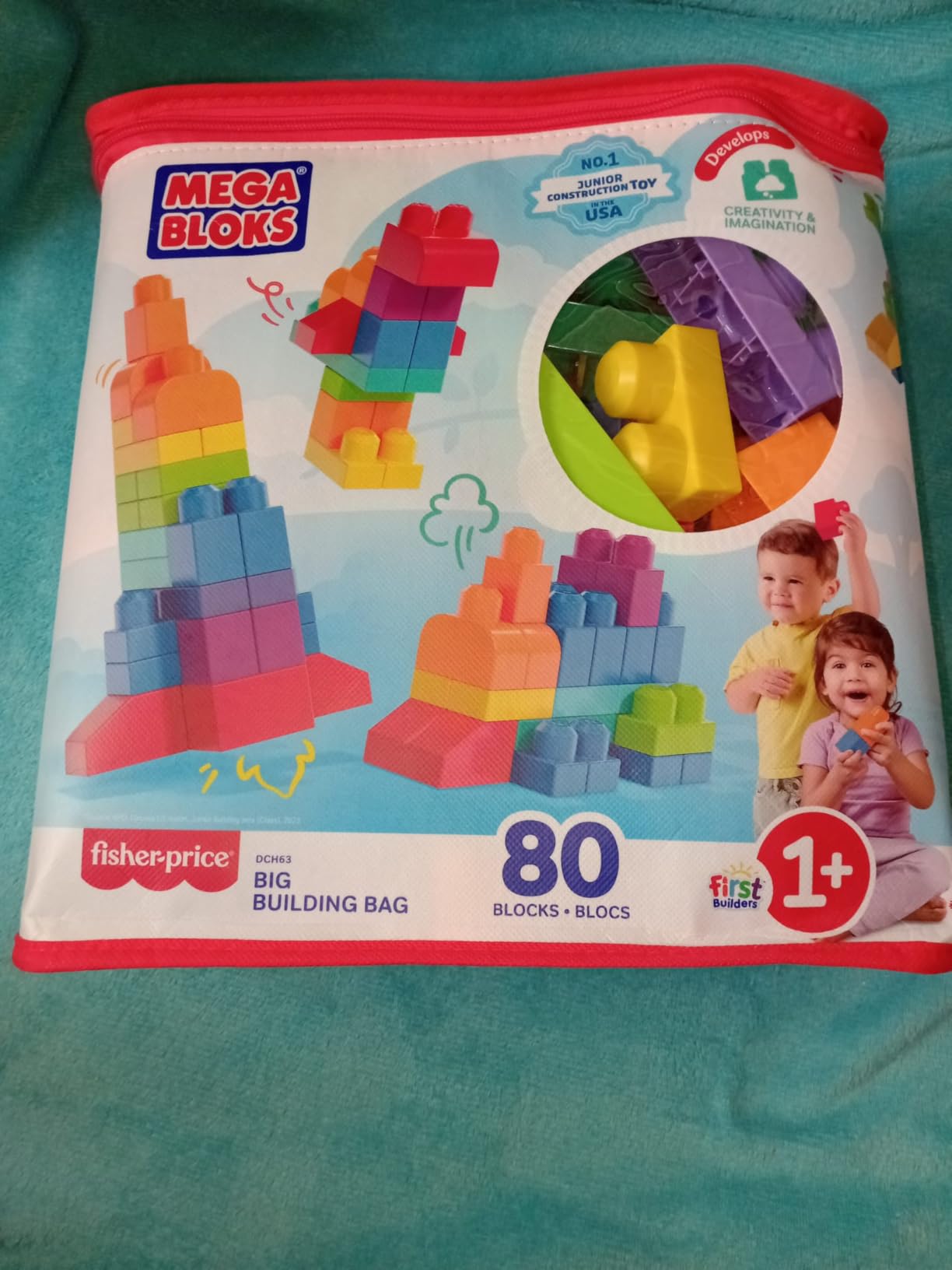
Technical Highlights: These blocks measure approximately 2 inches per piece, making them substantially larger than standard LEGO bricks but smaller than many toddler alternatives. The plastic is durable yet flexible enough to withstand enthusiastic construction and deconstruction. The pieces are compatible with other MEGA BLOKS sets, allowing for expansion as your child’s building skills advance.
Pros:
- 80 pieces provide endless building possibilities
- Large size eliminates choking hazards
- Easy for small hands to connect and disconnect
- Includes practical storage bag for cleanup
- Develops fine motor skills, creativity, and spatial reasoning
- Compatible with other MEGA BLOKS sets for expansion
- Incredible value with over 80 pieces at this price point
Cons:
- Blocks don’t interlock extremely tightly—tall towers may collapse
- Pieces may become slightly loose with extended use
- Limited variety may not challenge older children as much
Who Should Skip This?
If your child has already mastered basic building and shows interest in more complex construction sets, they might be ready for smaller blocks with more intricate connecting mechanisms. Additionally, families with very limited storage space might find 80 pieces challenging to contain.
Bottom Line: MEGA BLOKS First Builders earns our Best Value award because it offers exceptional quality and educational value at an unbeatable price point. These blocks will engage your 1-year-old now and continue challenging them for years to come.
3. Baby Einstein Take Along Tunes Musical Toy – BUDGET PICK
Baby Einstein Take Along Tunes Musical Toy, Ages 3 Months +
7 classical melodies from Chopin to Mozart
Colorful LED lights dance to melody
2 volume levels
Large easy-press button
Caterpillar bead chaser handle
Under $10
+ The Good
- Classical music quality
- Colorful engaging lights
- Two volume settings
- Perfect for small hands
- Great for travel
- Durable construction
- Under $10 budget friendly
- Teaches cause and effect
- The Bad
- Demo batteries only
- Limited to 7 songs
Musical toys occupy a special category in the world of toddler products—they can either be delightful educational tools or parent-torture devices that play ear-splitting melodies on an endless loop. The Baby Einstein Take Along Tunes achieves that rare balance of being engaging for babies while actually pleasant for adults. At under $10, it’s an absolute steal.
What distinguishes this musical toy from competitors is its thoughtful approach to audio. Rather than playing repetitive nursery rhyme synthesizer music, it features 7 high-quality classical music pieces from composers like Chopin, Mozart, and Vivaldi. The sound quality is surprisingly rich and clear, with two volume settings that top out at a reasonable level. No more wincing when your toddler enthusiastically presses the button for the twentieth time.
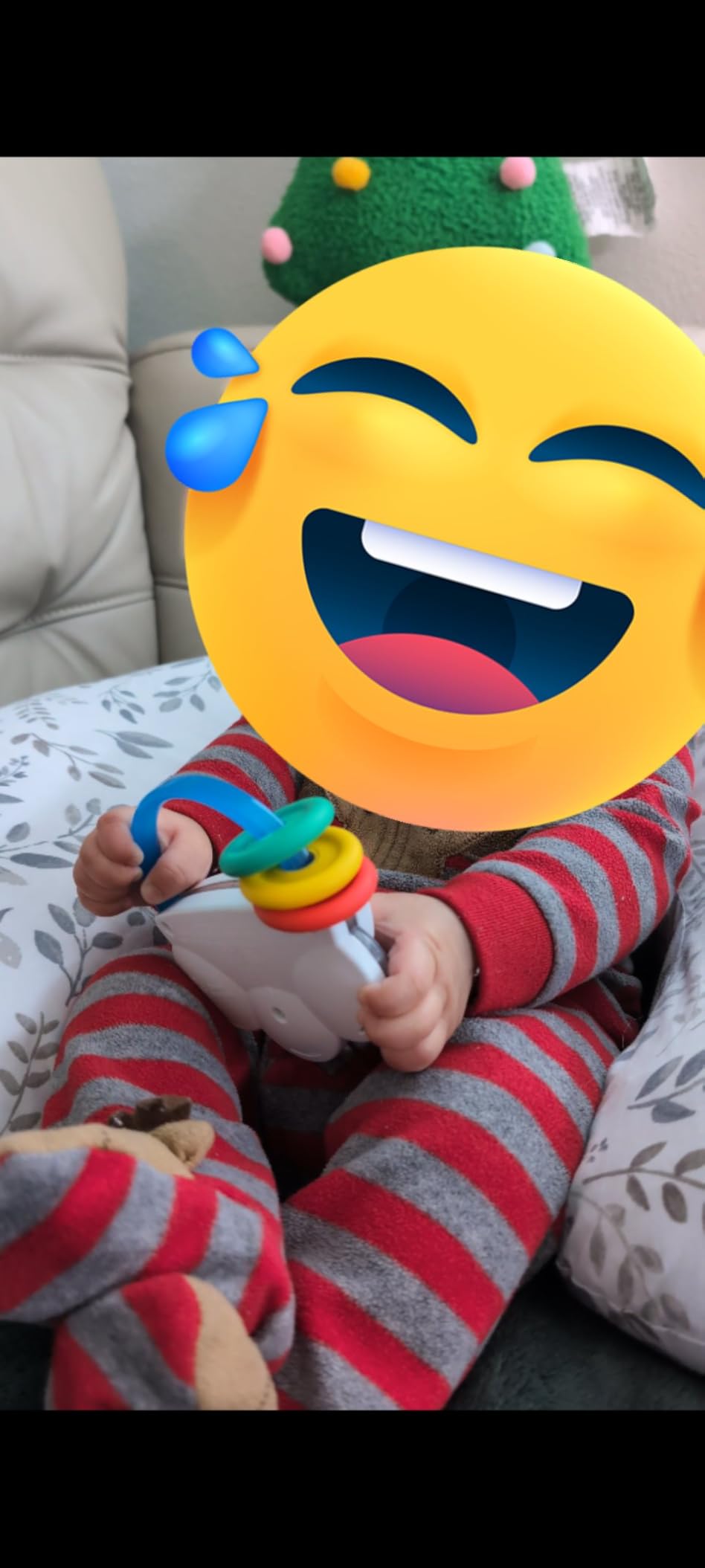
The design elements show impressive attention to detail. The large button is easy for babies to press independently, teaching cause-and-effect relationships. Colorful LED lights dance across the screen in time with the music, creating visual stimulation that reinforces auditory learning. The caterpillar bead chaser handle isn’t just adorable—it provides a grasping point for younger babies and a way to attach the toy to strollers or car seats using simple links.
Portability is another major strength. At just 5.3 ounces and roughly 5 inches tall, this toy fits easily in diaper bags, purses, and stroller caddies. I can’t count the number of times this toy has rescued us during restaurant waits, car trips, and grocery store meltdowns. The music is genuinely soothing enough to help calm an overtired toddler while being engaging enough to distract them from escalating frustration.
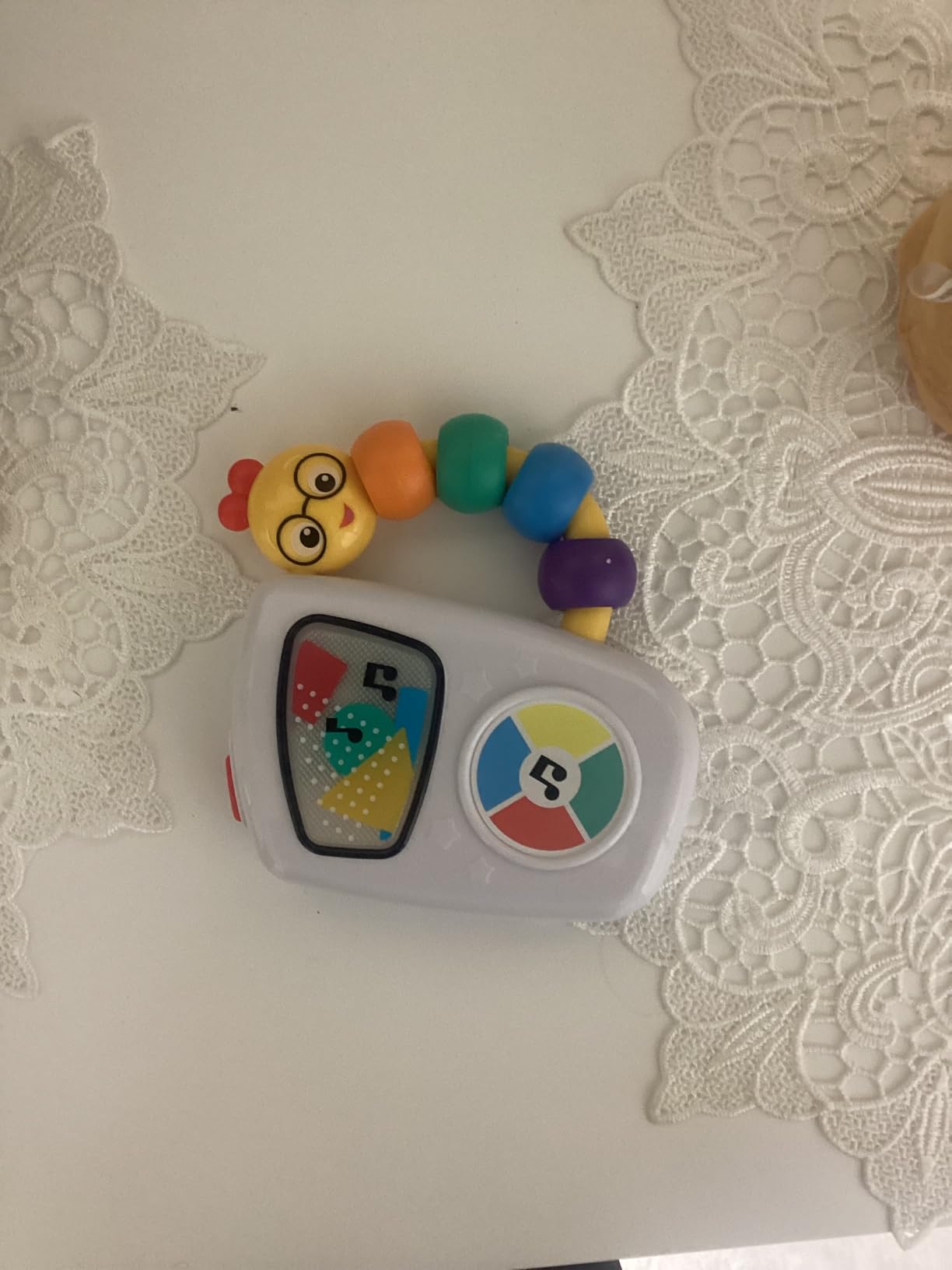
Technical Highlights: This musical toy features 7 classical melodies with approximately 30 seconds of music per selection. The lights synchronize with the music rhythm, creating audio-visual integration that supports brain development. The two volume settings max out at approximately 75 dB, which is within safe ranges for extended listening.
Pros:
- Classical music selections are pleasant for adults and engaging for babies
- Two volume settings prevent ear-splitting playback
- Colorful lights teach cause-and-effect and visual tracking
- Portable design is perfect for travel and errands
- Large button is easy for babies to press independently
- Durable construction withstands enthusiastic handling
- Incredibly affordable price point under $10
- Teaches music appreciation and auditory discrimination
Cons:
- Included batteries are for demo only—replacement needed quickly
- Limited to 7 songs—some children may want more variety
Who Should Skip This?
If your family strongly prefers quiet toys or your child shows no interest in music or audio stimulation, this might not be the best fit. Additionally, parents who prefer toy-free car rides and stroller walks might want to avoid introducing another electronic entertainment option.
Bottom Line: The Baby Einstein Take Along Tunes is an exceptional budget pick that doesn’t compromise on quality or educational value. It’s the kind of toy you’ll want to buy in multiples to keep in the car, diaper bag, and grandma’s house.
4. Fisher-Price Baby’s First Blocks & Rock-a-Stack – TOP RATED
Fisher-Price Baby’s First Blocks & Rock-a-Stack Toy Set, Bucket of 10 Shapes & Ring Stacking Activity for Developmental Play Ages 6+ Months (Amazon Exclusive)
Two classic toys in one bundle
Rock-a-Stack with 5 graduated rings
10 colorful blocks in sorting bucket
Teaches size and shape recognition
Ages 6 months and up
+ The Good
- Classic developmental toys
- Teaches sorting and stacking
- Durable construction
- Bright engaging colors
- Great value bundle
- Blocks store in bucket
- Made with plant-based materials option
- The Bad
- Lid may pop off bin
- Some children misuse toys
Few toys have stood the test of time like the Fisher-Price Rock-a-Stack and Baby’s First Blocks. These two classics have been developmental staples for generations, and this Amazon Exclusive bundle combines both at an excellent value. There’s something reassuring about toys that millions of parents have trusted before you—they’ve been thoroughly child-tested across decades.
The Rock-a-Stack, with its five colorful rings of graduated sizes, teaches multiple concepts simultaneously. Babies learn size discrimination as they figure out which rings fit where. They practice hand-eye coordination as they aim rings onto the rocking base. The rocking motion itself adds an element of challenge and fun—babies love that the base moves when they try to stack, creating a dynamic problem-solving experience.
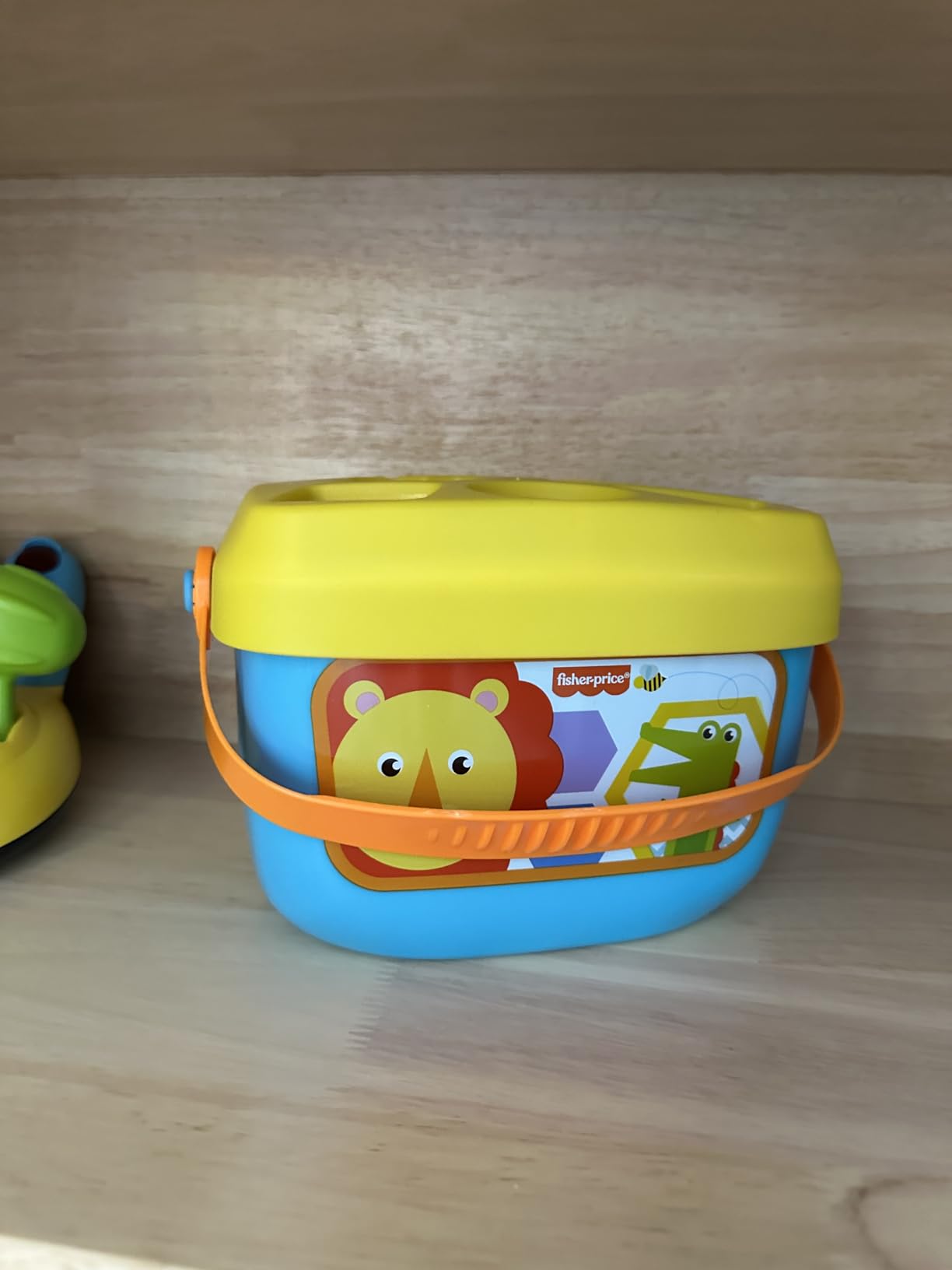
The Baby’s First Blocks bucket complements the ring stacker perfectly. While the Rock-a-Stack focuses on size and stacking, the blocks introduce shape sorting. The 10 colorful blocks come in 5 different shapes, each fitting through a specific hole in the bucket’s lid. This teaches shape recognition, spatial reasoning, and persistence when shapes don’t fit on the first try. The fact that blocks store inside the bucket makes cleanup genuinely satisfying for toddlers who love “putting things in.”
What impresses me most about this bundle is how it adapts to different developmental stages. Younger babies (around 6-9 months) might simply mouth the blocks and rings, enjoying the textures and colors. Toddlers around 12 months begin attempting actual sorting and stacking, with varying degrees of success. Older toddlers (18-24 months) can sort by color, create patterns, and even incorporate these toys into imaginative play scenarios.
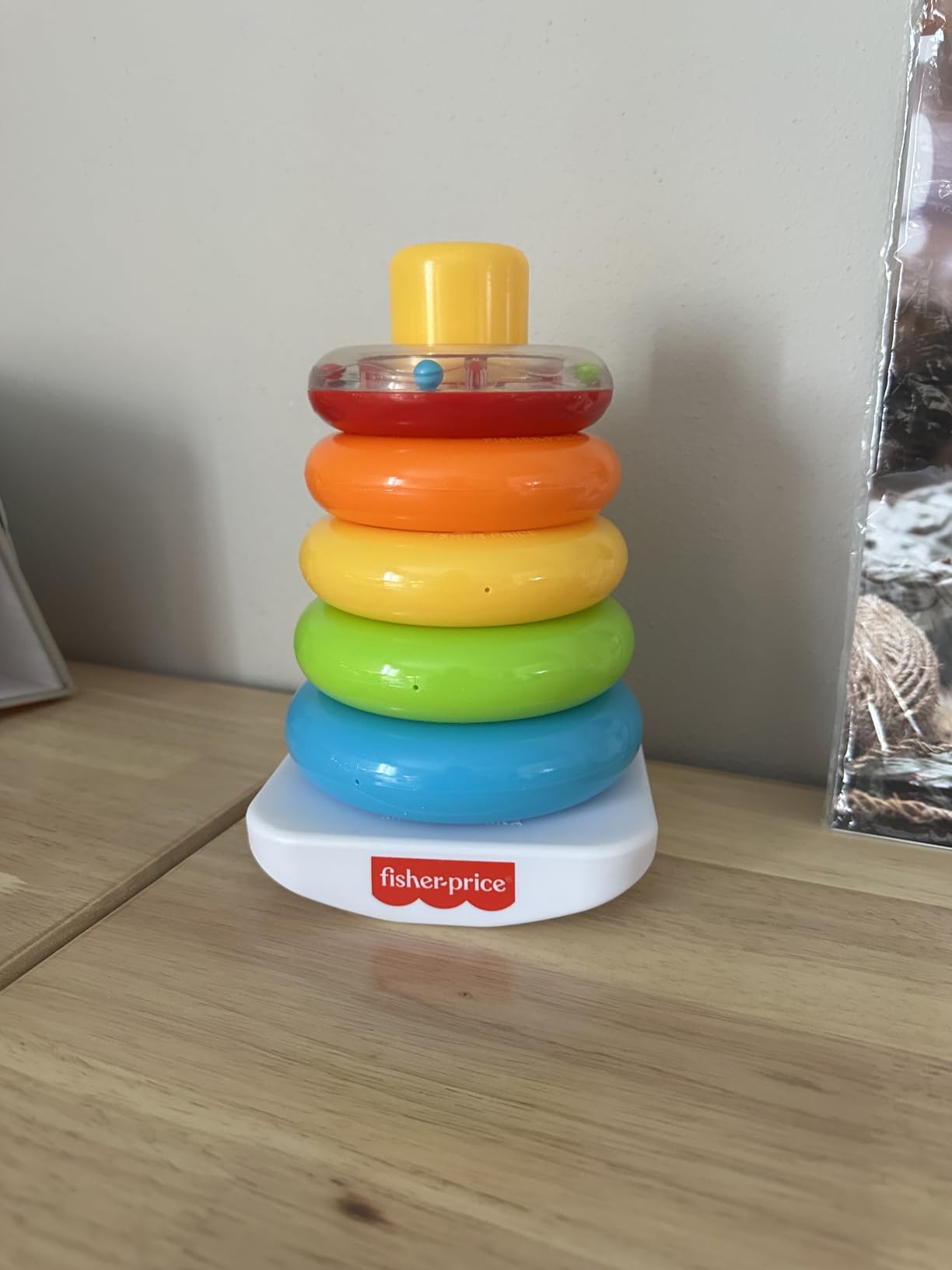
Technical Highlights: The Rock-a-Stack features a weighted rocking base that’s stable enough to prevent tipping but responsive enough to add challenge. The rings measure 2-5 inches in diameter, large enough to eliminate choking hazards. The blocks bucket measures approximately 8 inches tall with chunky blocks (1.5-2 inches) designed specifically for small hands.
Pros:
- Two classic developmental toys in one money-saving bundle
- Teaches shape recognition, size discrimination, and stacking skills
- Durable construction withstands years of enthusiastic play
- Blocks store inside bucket for tidy cleanup
- Bright colors engage visual development
- Made from plant-based materials option available
- Excellent value with two toys for under $20
Cons:
- Determined toddlers may pop the sorting bin lid off repeatedly
- Some children may resist using toys “correctly” at first
Who Should Skip This?
If your child has already mastered basic shape sorting and stacking, they might be ready for more complex puzzles and building sets. Additionally, families who prefer wooden toys over plastic might want to explore alternatives.
Bottom Line: This Fisher-Price bundle combines two time-tested developmental toys that have earned their place in millions of homes. The educational value is proven, the durability is legendary, and the price makes this an excellent choice for budget-conscious parents.
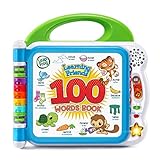
5. LeapFrog Learning Friends 100 Words Book
LeapFrog Learning Friends 100 Words Book, Green
100+ age-appropriate words
Bilingual English and Spanish
Touch-sensitive interactive pages
3 animal friends guide learning
6 word categories
Ages 18 months to 4 years
+ The Good
- Perfect educational toy
- Bilingual learning
- Interactive touch pages
- Durable easy to wipe
- Great vocabulary building
- Screen-free learning
- Two volume levels
- Accessible for all abilities
- The Bad
- Somewhat heavy for babies
- Demo batteries only
Language development explodes between 12 and 24 months, with most children progressing from speaking a handful of words to hundreds. The LeapFrog Learning Friends 100 Words Book actively supports this vocabulary explosion through interactive, touch-sensitive pages that make word learning genuinely engaging for toddlers.
What sets this book apart from other electronic learning toys is its thoughtful bilingual approach. Each word is presented in both English and Spanish, with the touch of a button. For bilingual families, this is invaluable. For monolingual households, it’s a wonderful opportunity to expose children to a second language during the prime window for language acquisition. Research suggests that early exposure to multiple languages enhances cognitive development overall.
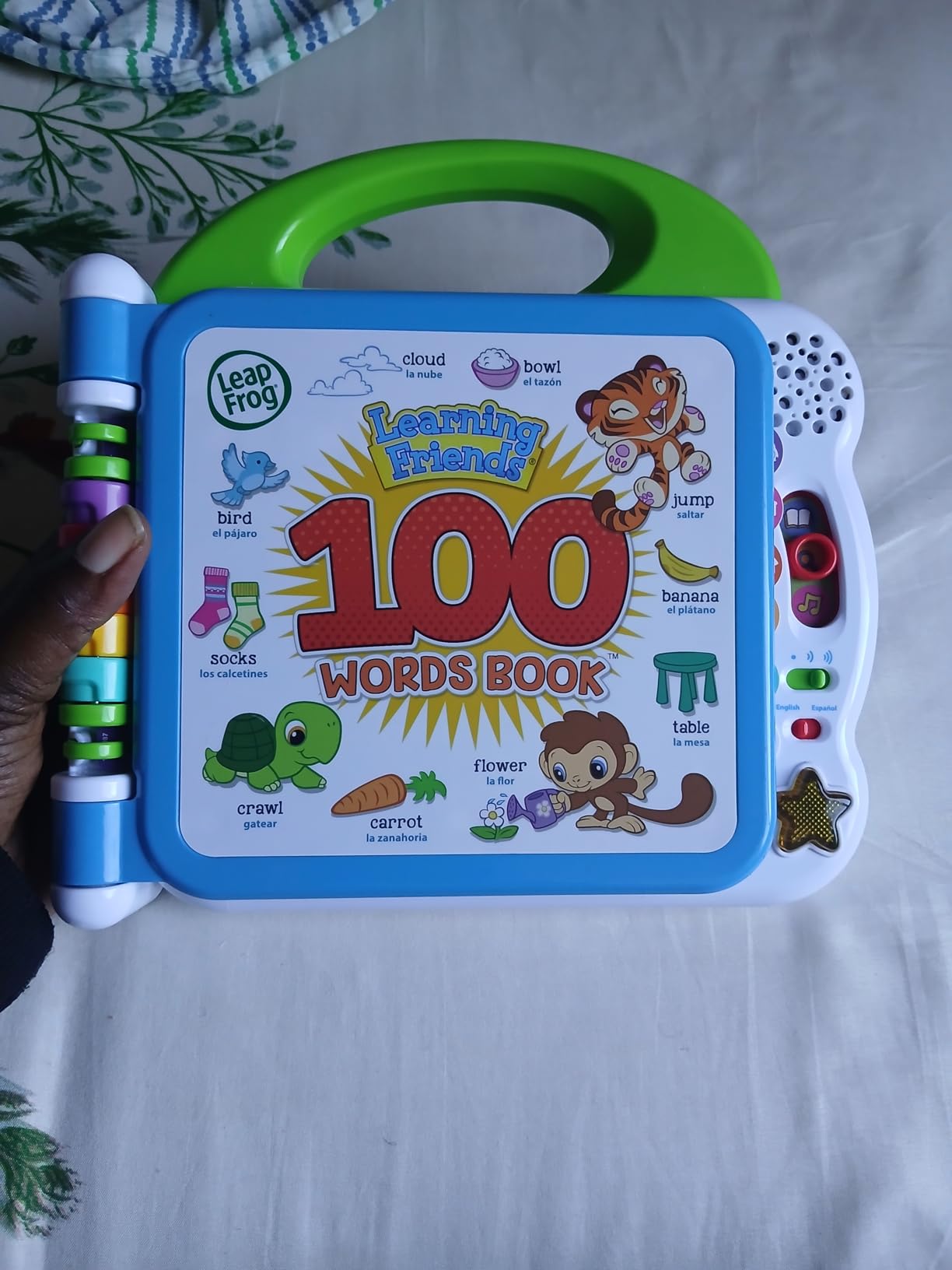
The book features three adorable animal friends—Turtle, Tiger, and Monkey—who guide children through six word categories: pets, animals, food, mealtime, colors, activities, opposites, and outside. This categorization helps children organize vocabulary conceptually rather than simply memorizing isolated words. Touch-sensitive pages respond to finger taps with words, sound effects, and fun facts, keeping children engaged through multi-sensory learning.
I appreciate that this toy offers screen-free interactive learning. So many educational products for toddlers now involve screens, but the Learning Friends Book uses traditional book format with electronic enhancement—a compromise that satisfies my desire for tactile learning experiences while meeting my child’s expectation for interactive content.
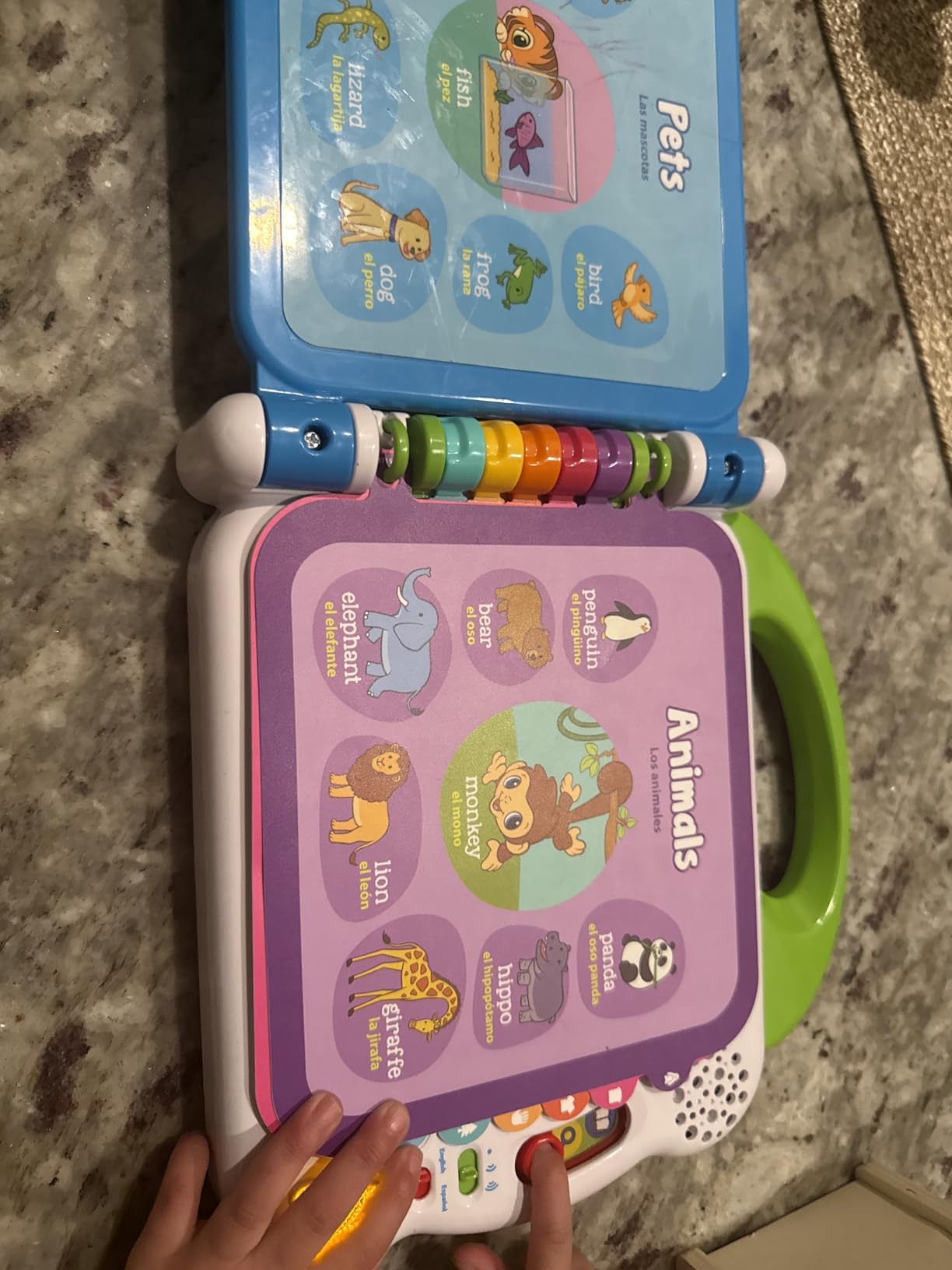
Technical Highlights: The book features over 100 age-appropriate words with touch-sensitive pages that respond to finger pressure. The sound quality is clear and easy to understand, crucial for language learning. Two volume settings allow for quieter play when needed. The book measures approximately 9×9 inches, large enough for shared reading but small enough for toddler lap reading.
Pros:
- Teaches 100+ words in English and Spanish simultaneously
- Interactive touch-sensitive pages engage multiple senses
- Categorized vocabulary supports conceptual learning
- Durable pages withstand enthusiastic page-turning
- Screen-free interactive learning design
- Two volume settings for different environments
- Supports vocabulary development during critical language explosion
Cons:
- Somewhat heavy for very young babies to handle independently
- Demo batteries don’t last long—replacements needed quickly
Who Should Skip This?
If your family prefers non-electronic learning tools or your child shows no interest in language-focused activities, traditional board books might be a better fit. Additionally, children who are already speaking in sentences might find this too basic.
Bottom Line: The LeapFrog Learning Friends 100 Words Book is an exceptional educational tool that supports vocabulary development during the critical language explosion phase. The bilingual feature adds value that extends beyond basic word learning.
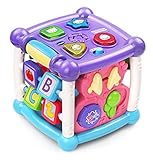
6. VTech Busy Learners Activity Cube
VTech Busy Learners Activity Cube, Purple
5 sides of play activities
4 light-up buttons teach animals
14 interactive features
Motion sensor activated sounds
25 playful songs and melodies
2 AAA batteries included
Ages 6 months to 3 years
+ The Good
- Five sides of discovery
- Light-up buttons teach animals
- 14 interactive features
- Motion sensor responsive
- 25 songs and melodies
- Volume control included
- Auto shut-off feature
- Lightweight for babies
- The Bad
- Smaller than expected
Activity cubes are developmental powerhouses, offering multiple play experiences in a single, contained toy. The VTech Busy Learners Activity Cube stands out for its thoughtful variety of activities that engage different developmental skills simultaneously. Unlike single-function toys that may quickly lose a toddler’s interest, this cube offers new discoveries on every side.
The five sides of play include: light-up buttons that introduce animal names and sounds, sliders that strengthen fine motor muscles, spinners that teach cause-and-effect, and a music button that plays 25 playful songs and melodies. What’s clever about this design is how it encourages different types of exploration—auditory, visual, tactile, and problem-solving—all in one compact package.
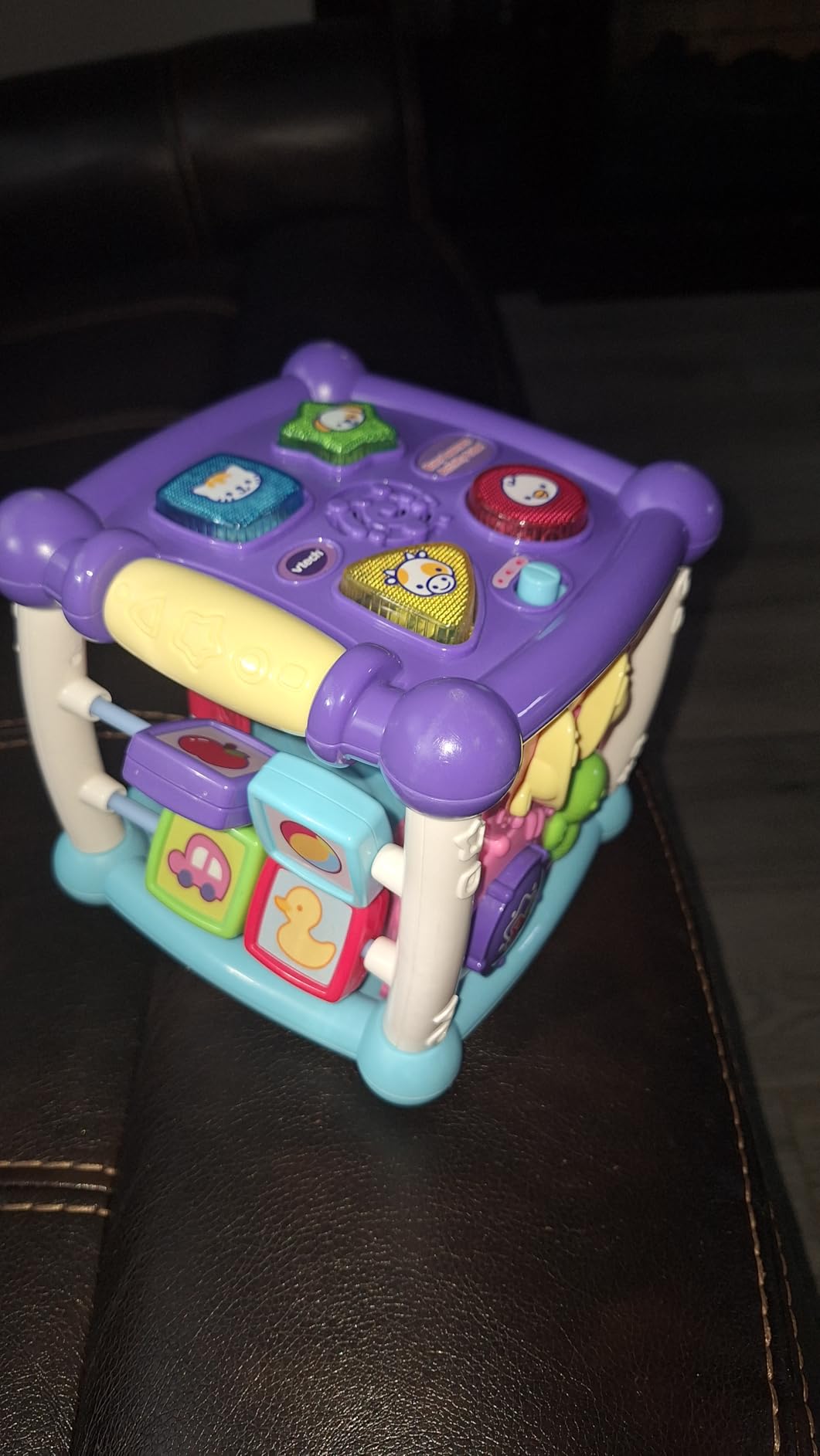
The motion sensor feature adds an element of surprise that toddlers love. When the cube is moved or shaken, it activates fun sounds and responses. This teaches cause-and-effect while encouraging gross motor movement. My son discovered this feature accidentally at 11 months and delighted in “making” the cube respond by shaking it purposefully.
What I particularly appreciate is the thoughtful volume control and auto shut-off features. These two design elements show that VTech understands real families. The two volume settings allow for quieter play during nap time or in public spaces, while the auto shut-off preserves battery life when the toy is inevitably left on. These parent-friendly details matter.
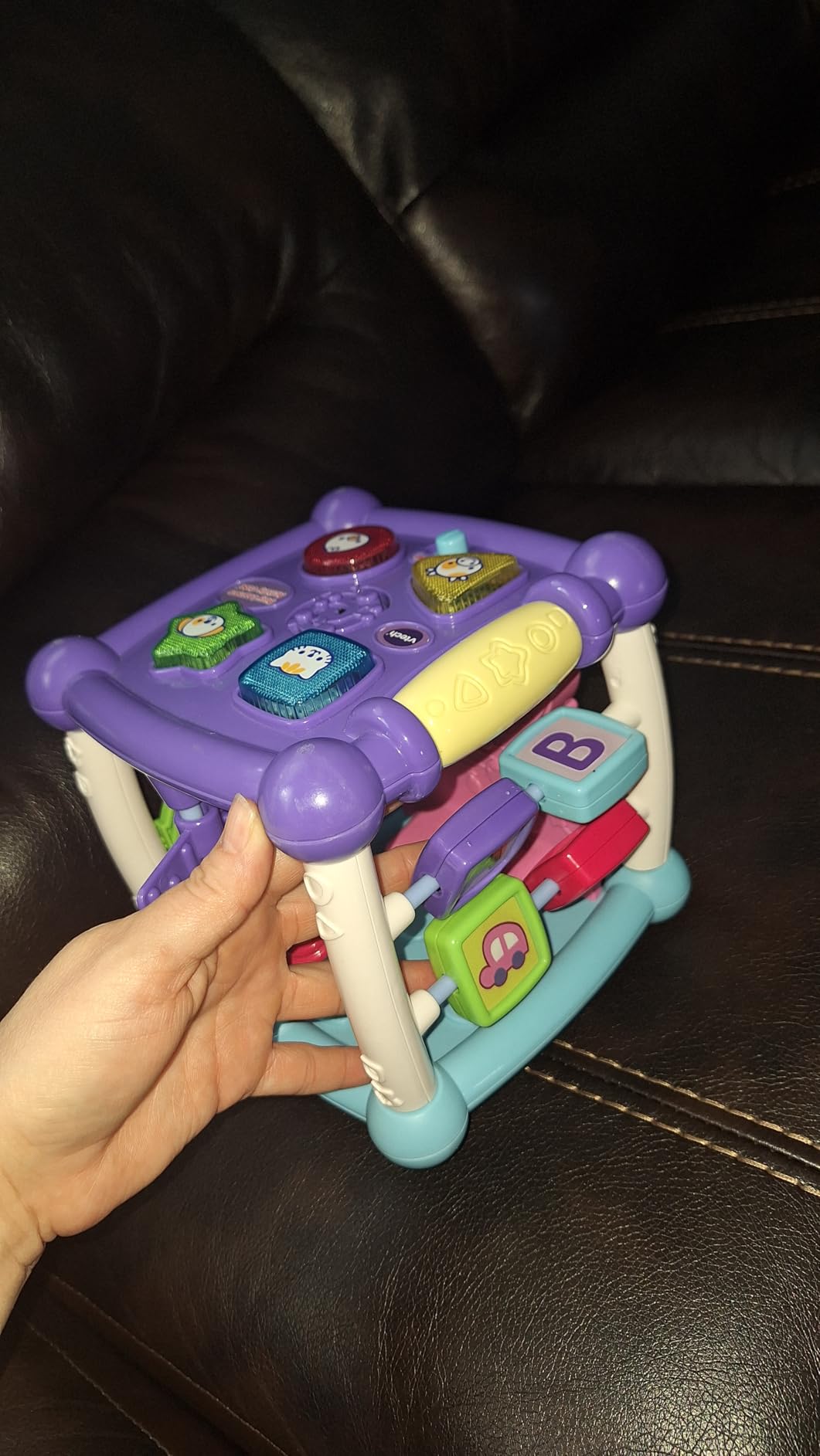
Technical Highlights: The cube measures 6.2 x 6.2 x 6.5 inches, large enough for substantial play but compact enough for travel. It features 14 interactive elements across five sides. The motion sensor responds to movement, and the light-up buttons teach animal names, sounds, and shapes. Requires 2 AAA batteries (included).
Pros:
- Five sides of play offer varied developmental activities
- Light-up buttons teach animals, sounds, and shapes
- 14 interactive features develop fine motor skills
- Motion sensor encourages gross motor movement
- 25 songs and melodies keep toddlers engaged
- Volume control and auto shut-off for parent convenience
- Lightweight design enables toddler manipulation
Cons:
- Smaller than some parents expect based on photos
Who Should Skip This?
If your family prefers battery-free toys or your child has already mastered basic activity cubes, you might want more complex activity centers. Additionally, households avoiding electronic toys entirely won’t find this suitable.
Bottom Line: The VTech Busy Learners Activity Cube offers exceptional value by combining multiple developmental activities in one compact, engaging toy. It’s the kind of toy that will engage your 1-year-old now while continuing to offer challenges as they grow.
7. Kidoozie Ball Drop Tower
Kidoozie Ball Drop | Toddler Toy | Learning & Developmental Tower | Activity & Educational Preschool Toys & Games
6 different levels for ball travel
Each layer features vibrant colors
4 rattling balls included
Teaches cause and effect
Adjustable height by removing pieces
Ages 9 to 24 months
+ The Good
- Easy to set up
- Helps fine motor skills
- Balls make fun sounds
- Adjustable height
- Teaches positional words
- Bright attractive colors
- Good quality price point
- The Bad
- Balls don't always complete journey
- Lightweight tips easily
- Pieces don't lock together
- May need replacement
- Only 4 balls included
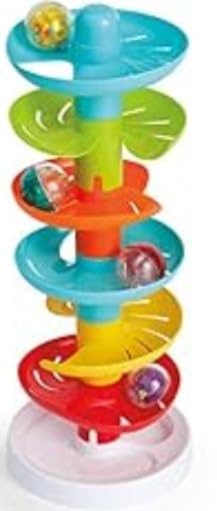
Cause-and-effect toys occupy a special place in toddler development—they teach children that their actions have predictable effects on the world around them. The Kidoozie Ball Drop Tower takes this concept and makes it irresistibly fun through a colorful multi-level tower that sends balls on exciting journeys with every drop.
The tower features six different levels, each with its own vibrant color and ball-dropping mechanism. What makes this toy engaging is the unpredictability of the balls’ paths. They don’t always follow straight lines—they zigzag, pause on different levels, and sometimes roll off the sides entirely. This element of surprise keeps toddlers coming back again and again, testing different ways to make the balls travel.
Language development benefits surprise many parents. As children play, they naturally use positional words: “up,” “down,” “through,” “under,” “around,” “falling,” “rolling.” The ball tower provides a perfect context for practicing these spatial concepts that are crucial for later math and reading comprehension. My daughter’s vocabulary exploded after we started narrating her ball drop adventures.
The adjustable height is a thoughtful feature. For younger toddlers or those with shorter arms, you can remove levels to create a shorter tower. As children grow, you can add levels back to increase the challenge. This adaptability extends the toy’s lifespan significantly, making it a good investment.
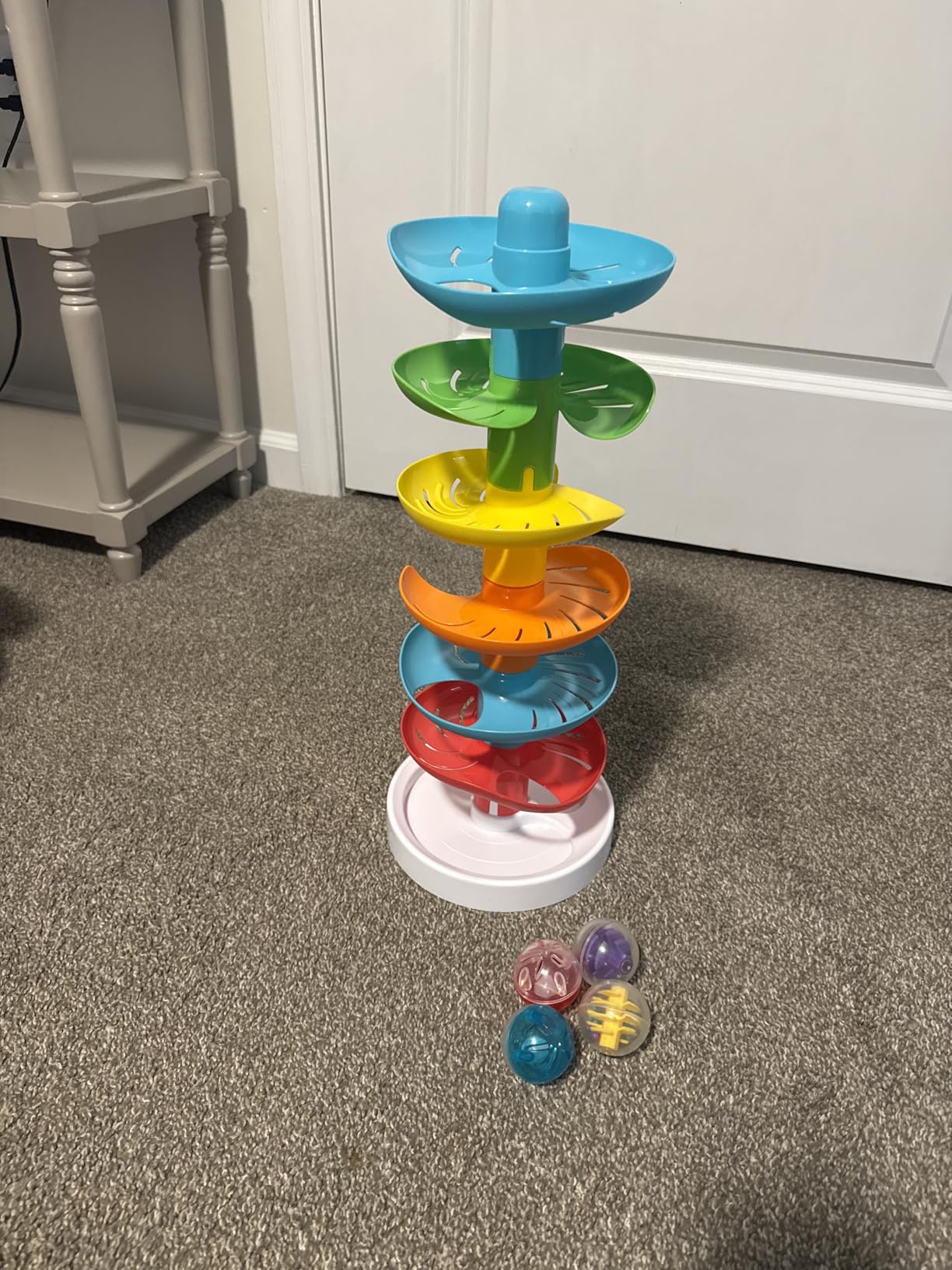
Technical Highlights: The tower measures 10.24 x 4.73 x 13.8 inches when fully assembled but can be shortened by removing levels. It includes six colorful levels and four balls with a fun rattling sound. The plastic construction is durable but lightweight enough for toddlers to manipulate independently.
Pros:
- Six different levels create varied ball paths
- Teaches cause-and-effect through hands-on experimentation
- Adjustable height grows with your child
- Encourages language development with positional vocabulary
- Colorful design attracts and maintains toddler attention
- Balls make satisfying rattling sounds
- Develops hand-eye coordination through aiming practice
Cons:
- Balls don’t always complete the full journey—can roll off sides
- Lightweight construction can tip over if pulled
- Pieces don’t lock together—can come apart when moved
- Only four balls included—extras easily lost
Who Should Skip This?
If your child finds repetitive activities frustrating or shows no interest in cause-and-effect toys, this might not engage them. Families who prefer toys with more open-ended creative possibilities might also find this too structured.
Bottom Line: The Kidoozie Ball Drop Tower is an excellent cause-and-effect toy that supports multiple developmental domains simultaneously. It’s particularly valuable for teaching spatial vocabulary and encouraging experimentation.
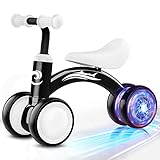
8. Gamfeiny Colorful Lighting Baby Balance Bike
Colorful Lighting Baby Balance Bike Toys for 1 Year Old Boy Gifts, 10-36 Month Toddler Balance Bike, No Pedal 4 Silence Wheels&Soft Seat First Riding on Toys, One Year Old Boy Birthday Gifts.
Colorful lighting rear wheel no batteries
No pedal design teaches balance
135 degree steering limited
Carbon steel frame
4 wheels for stability
Ages 10-36 months
4.6 lbs lightweight
+ The Good
- Light-up wheels no batteries
- Sturdy steel construction
- No-pedal balance teaching
- Four silent smooth wheels
- Soft comfortable seat
- 135 steering prevents tipping
- Tool-free 3 minute assembly
- Lightweight to carry
- The Bad
- Better on carpet initially
- Assembly requires adult strength
- Some 2-year-olds outgrow
Gross motor development takes center stage during the second year as most children master walking and begin exploring running, jumping, and climbing. The Gamfeiny Colorful Lighting Baby Balance Bike supports this physical development through a no-pedal design that teaches balance and coordination at an age-appropriate level.
What sets this balance bike apart is its attention-grabbing feature: colorful lighting in the rear wheel that requires no batteries. The wheels generate light through motion when spun—a fascinating phenomenon that toddlers find irresistible. My nephew received one of these for his first birthday, and the light-up wheels were the motivation he needed to keep practicing movement.
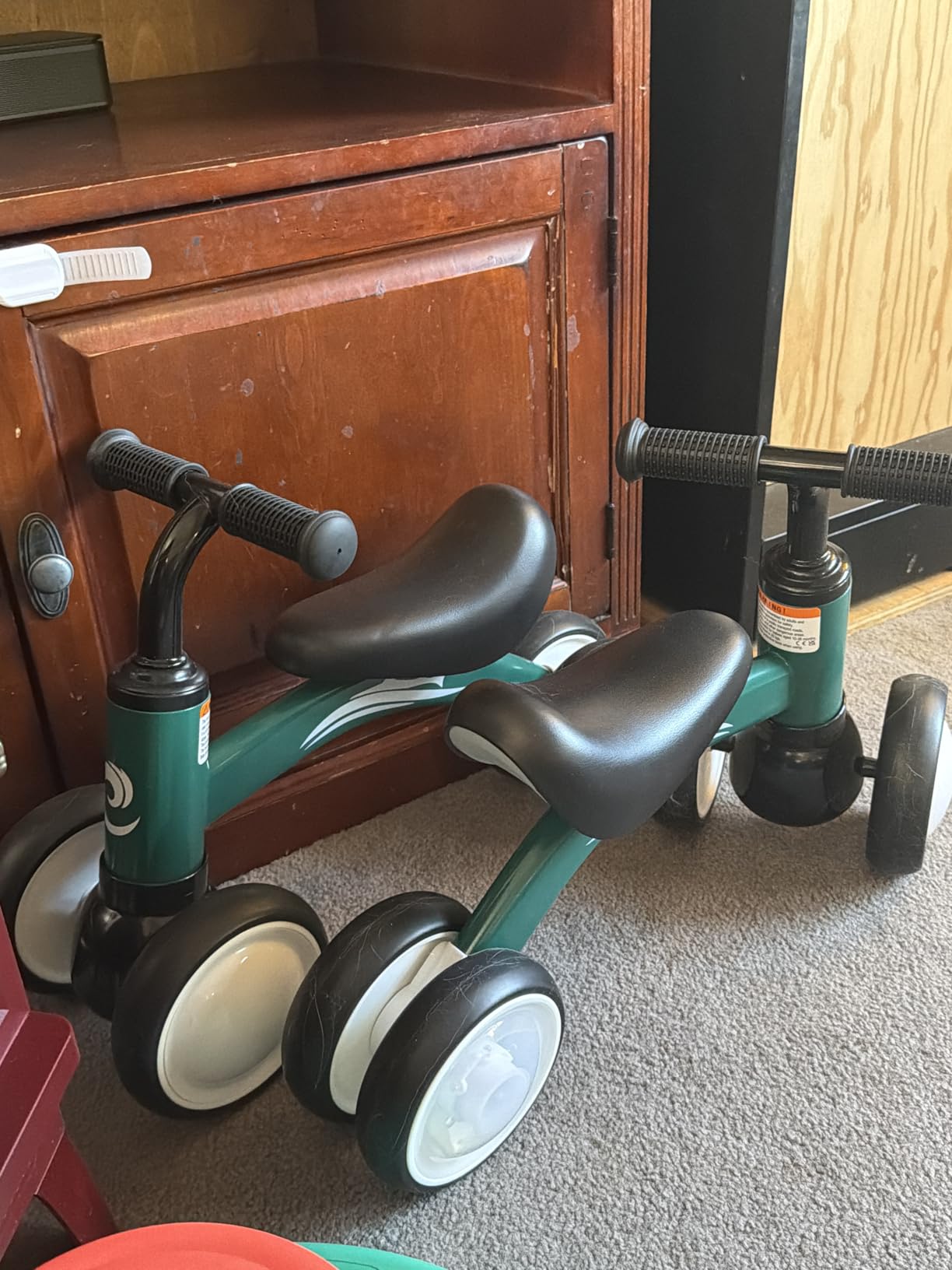
The no-pedal design is developmentally appropriate for 1-year-olds who aren’t ready for the coordination required by tricycles. Instead of focusing on pedaling, toddlers simply sit and push with their feet, learning balance and steering naturally. This intuitive approach builds confidence and the core strength needed for more advanced riding later. The 135-degree steering limitation prevents sharp turns that could cause tipping, an important safety feature.
Assembly is refreshingly simple—a major consideration for busy parents. The buckle design requires no tools and takes approximately three minutes to complete. The carbon steel frame feels sturdy and substantial, inspiring confidence in its durability during enthusiastic toddler use.
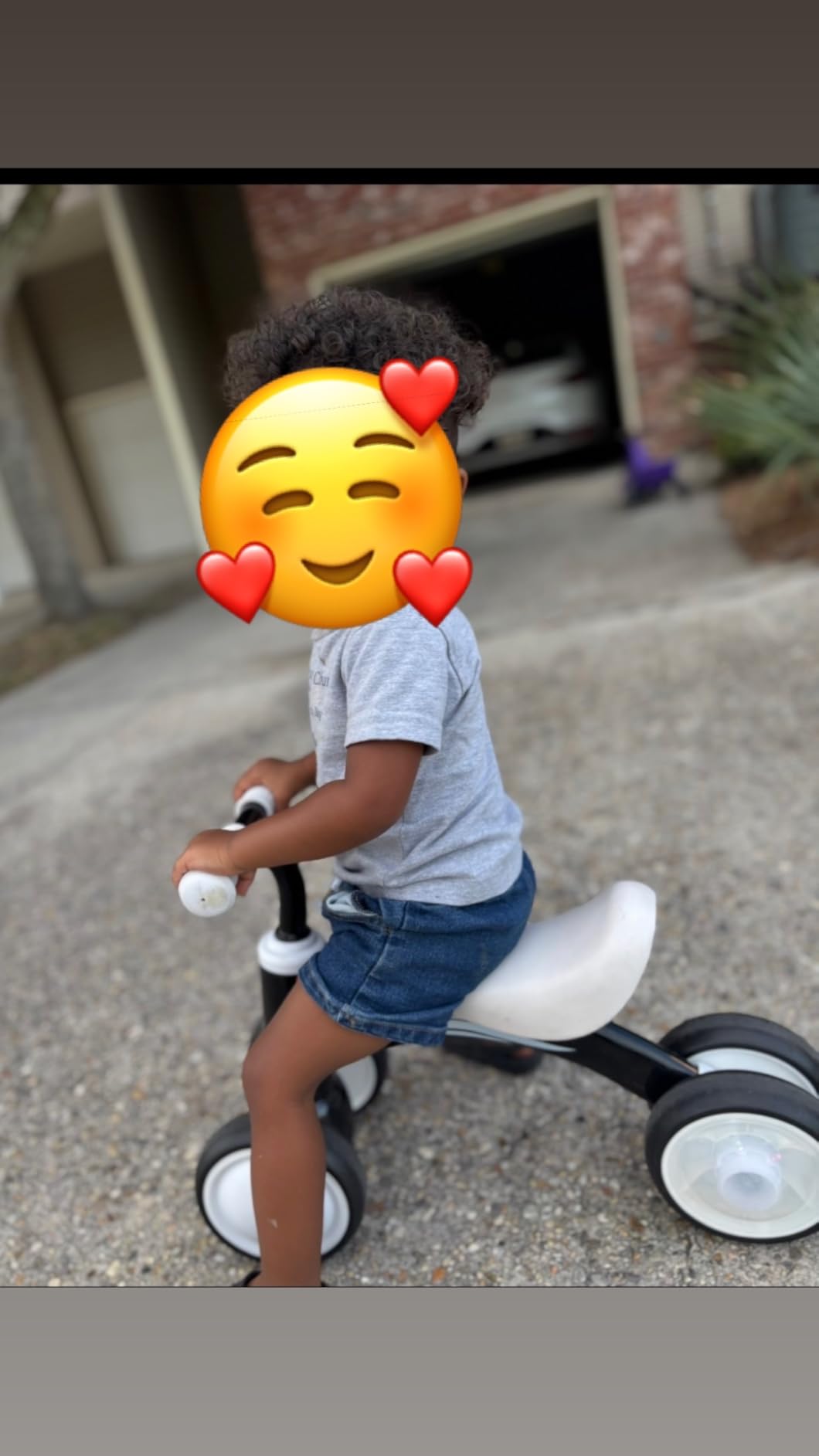
Technical Highlights: The bike measures 21.26 x 9.05 x 15.35 inches and weighs 4.6 pounds—light enough for toddlers to maneuver but substantial enough to feel stable. The four-wheel design (two front, two rear) provides stability while still teaching balance. The steering is limited to 135 degrees to prevent tipping during sharp turns.
Pros:
- Colorful light-up wheels require no batteries
- No-pedal design teaches balance naturally
- 135-degree steering limitation prevents tipping accidents
- Four silent wheels glide smoothly on indoor floors
- Tool-free assembly takes approximately 3 minutes
- Lightweight at 4.6 pounds for easy parent transport
- Carbon steel construction ensures durability
Cons:
- Works better on carpet than slick tile initially
- Some assembly requires adult strength
- Some 2-year-olds may outgrow quickly
Who Should Skip This?
If your child hasn’t started walking confidently yet, they may not be ready for a balance bike. Families with very limited indoor space might also find this challenging to store. Additionally, children who show no interest in riding toys might prefer other gross motor options.
Bottom Line: The Gamfeiny Balance Bike is an excellent first riding toy that teaches balance through play. The light-up wheels add motivation that keeps toddlers practicing longer, building the physical skills they’ll need for more advanced riding toys.
9. Little Tikes Rocking Horse Blue
Little Tikes Rocking Horse Blue, 33.00 L x 10.00 W x 17.50 H Inches
No assembly required ready to use
Made in USA durability
One-piece indestructible construction
50 pound weight limit
Teaches balance and coordination
Works indoor outdoor
Ages 12-36 months
+ The Good
- No assembly required
- Made in USA quality
- Indestructible design
- Teaches balance coordination
- 50 pound weight limit
- Indoor outdoor use
- Smooth safe edges
- The Bad
- Handle weld issues reported
- Eyeball stickers missed
Rocking toys have been developmental staples for generations, teaching balance, core strength, and rhythmic movement in a way that feels purely fun to children. The Little Tikes Rocking Horse represents the modern evolution of this classic toy, with thoughtful design improvements that make it safer and more user-friendly for 1-year-olds.
The most compelling feature of this rocking horse is its no-assembly-required design. As any parent knows, toy assembly can be frustrating, time-consuming, and sometimes results in unstable constructions. This rocking horse arrives as a single, solid piece ready for immediate use. The one-piece construction eliminates concerns about loose parts or weakened joints over time.
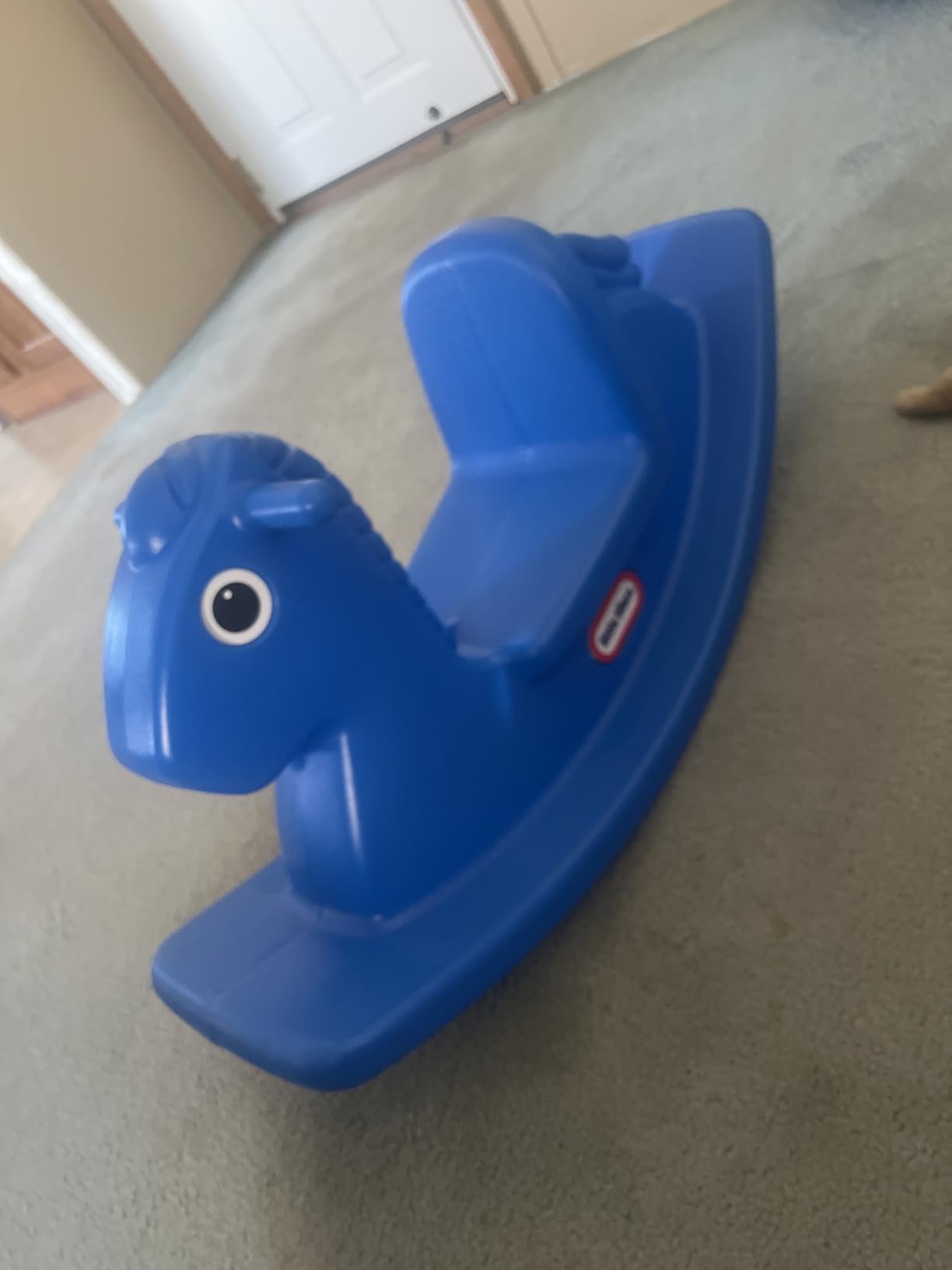
Construction quality reflects Little Tikes’ reputation for durability. Made in the USA from sturdy plastic, this rocking horse feels virtually indestructible—a crucial quality for toddler toys. The rockers are designed for smooth motion on both carpet and hard floors, and the entire design supports children up to 50 pounds, ensuring years of use.
The safety design elements deserve attention. The rockers feature a limited range of motion that prevents the horse from tipping too far in either direction. The seat is contoured for stability, and the handles are positioned ergonomically for small hands to grip securely. These thoughtful design choices allow children to rock independently while parents can supervise without constant intervention.
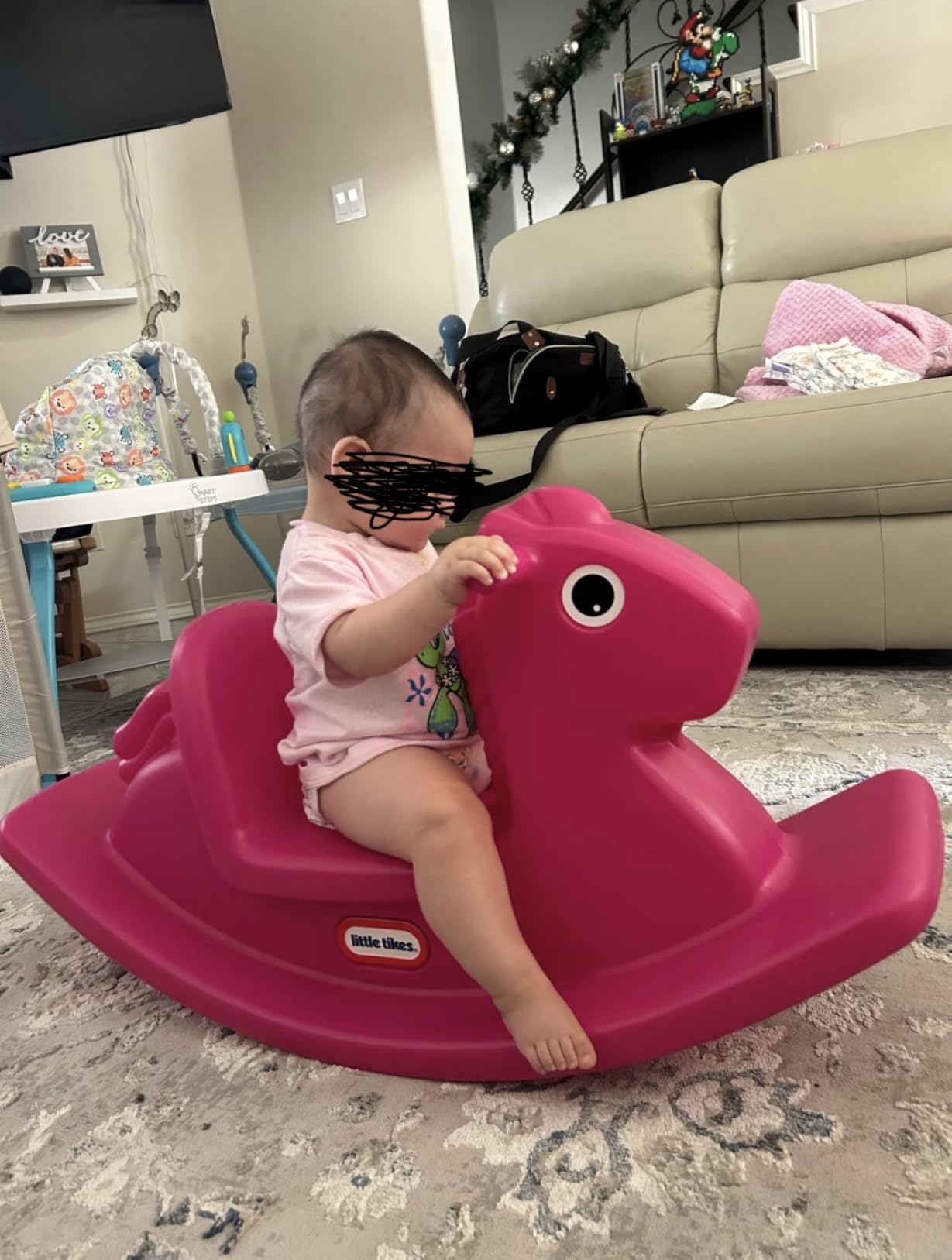
Technical Highlights: The rocking horse measures 33.63 x 17 x 11.75 inches and weighs 7.5 pounds. The weight limit is 50 pounds, accommodating children through preschool age. The seamless one-piece construction eliminates assembly and potential weak points. Made from durable polyester blend plastic.
Pros:
- No assembly required—ready to use immediately
- Made in USA with classic Little Tikes durability
- One-piece construction eliminates weak points
- 50-pound weight limit ensures years of use
- Teaches balance and core strength through play
- Works on both carpet and hard floors
- Smooth edges safe for enthusiastic toddlers
Cons:
- Some reports of handle weld quality issues
- Eyeball stickers often missed in packaging
Who Should Skip This?
If your child hasn’t mastered sitting independently yet, they’re not ready for a rocking horse. Families with very limited indoor space might also find the footprint challenging. Additionally, children who show no interest in rocking motion might prefer other ride-on toys.
Bottom Line: The Little Tikes Rocking Horse is a classic developmental toy that has stood the test of time for good reason. It teaches balance and coordination through play that feels exciting to toddlers while giving parents confidence in its safety and durability.
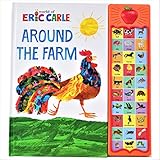
10. World of Eric Carle Around the Farm Sound Book
World of Eric Carle, Around the Farm 30-Button Animal Sound Book - Great for First Words - PI Kids
30 different animal sounds
Large format thick glossy pages
Classic Eric Carle illustrations
Buttons easy for toddlers to press
Teaches animal recognition
Ages 1-2 years reading level
+ The Good
- 30 different animal sounds
- High-quality audio
- Large durable format
- Easy-to-press buttons
- Classic illustrations
- Teaches animal recognition
- Supports language development
- Appropriate volume
- The Bad
- Book can fall apart
- Some buttons hard to press
- Large size may be heavy
Sound books occupy a magical space where literacy meets auditory learning, and the World of Eric Carle Around the Farm Sound Book is one of the finest examples of this genre. With 30 different animal sounds and Eric Carle’s beloved illustration style, this book transforms story time into an interactive sensory experience.
What makes this sound book exceptional is the sheer variety of sounds. Many competing sound books feature only 6-10 sounds, but this book includes 30 different animals, providing remarkable variety that keeps children engaged over multiple readings. The sounds are high-quality and realistic—not the cheap synthesized approximations that plague lesser products. Children can learn to distinguish between cows, horses, pigs, chickens, ducks, and dozens of other farm animals.
The Eric Carle illustrations provide visual continuity that many children recognize from other books in his collection. The Hungry Caterpillar even makes a charming cameo appearance, creating a delightful connection for children familiar with his other works. This visual consistency helps children feel comfortable and confident with the book format.
The large format with thick glossy pages serves dual purposes. First, it makes the book durable enough to withstand enthusiastic toddler page-turning. Second, the large size makes the buttons easy for small fingers to press independently, supporting autonomy and cause-and-effect learning. My daughter loves being able to “make” the animal sounds herself without needing adult assistance.
Technical Highlights: This sound book features 30 different animal sounds with clear, realistic audio quality. The book measures 10.8 x 0.8 x 11.6 inches with 24 thick glossy pages. The sound buttons are integrated into the pages rather than being on a separate side panel, making sound-book correlation more intuitive.
Pros:
- 30 different animal sounds provide exceptional variety
- High-quality audio sounds realistic, not synthesized
- Large format with thick pages withstands toddler handling
- Buttons easy for toddlers to press independently
- Classic Eric Carle illustrations engage visual learning
- Teaches animal recognition and sound association
- Supports language development through naming practice
Cons:
- Book construction can fall apart with heavy extended use
- Some buttons require more pressure than younger toddlers can apply
- Large size may be heavy for very young children to handle alone
Who Should Skip This?
If your family prefers traditional books without electronic elements, this won’t be your preference. Additionally, children who show no interest in animals or farm themes might not engage with this specific content. Households avoiding sound toys for noise reasons will also want to pass.
Bottom Line: The Eric Carle Around the Farm Sound Book combines beautiful illustrations, educational content, and interactive sound features in a way that genuinely supports language development. It’s the kind of book that children request again and again.
11. Melissa & Doug Pets Jumbo Peg Wooden Puzzle

Melissa & Doug Pets Jumbo Peg Wooden Puzzle; Animal Puzzles, Peg Puzzles for Toddlers Ages 1+
3 extra-thick wooden puzzle pieces
Jumbo pegs for small hands
Full-color matching pictures underneath
Teaches fine motor skills
Vibrant pet animal artwork
Ages 12-24 months
+ The Good
- Jumbo pegs perfect for small hands
- Extra-thick wooden durable pieces
- Full-color pictures guide placement
- Builds fine motor skills
- Easy independent play
- Vibrant engaging art
- Multiple styles available
- The Bad
- Cracked wood reports
- Limited to 3 pieces
best toys for 1-year-olds puzzles teach valuable skills like spatial reasoning, fine motor control, shape recognition, and persistence, but standard puzzles with small pieces are inappropriate and unsafe for young toddlers. the melissa & doug pets jumbo peg wooden puzzle solves this problem with extra-thick wooden pieces and jumbo pegs designed specifically for small hands.
The three-piece format—dog, cat, and fish—is developmentally appropriate for young toddlers. Many puzzles for this age feature too many pieces, leading to frustration and abandonment. With only three pieces, children can complete the puzzle independently, building confidence and motivation to try more challenging puzzles later. The full-color pictures underneath each piece provide visual hints that support independent success.
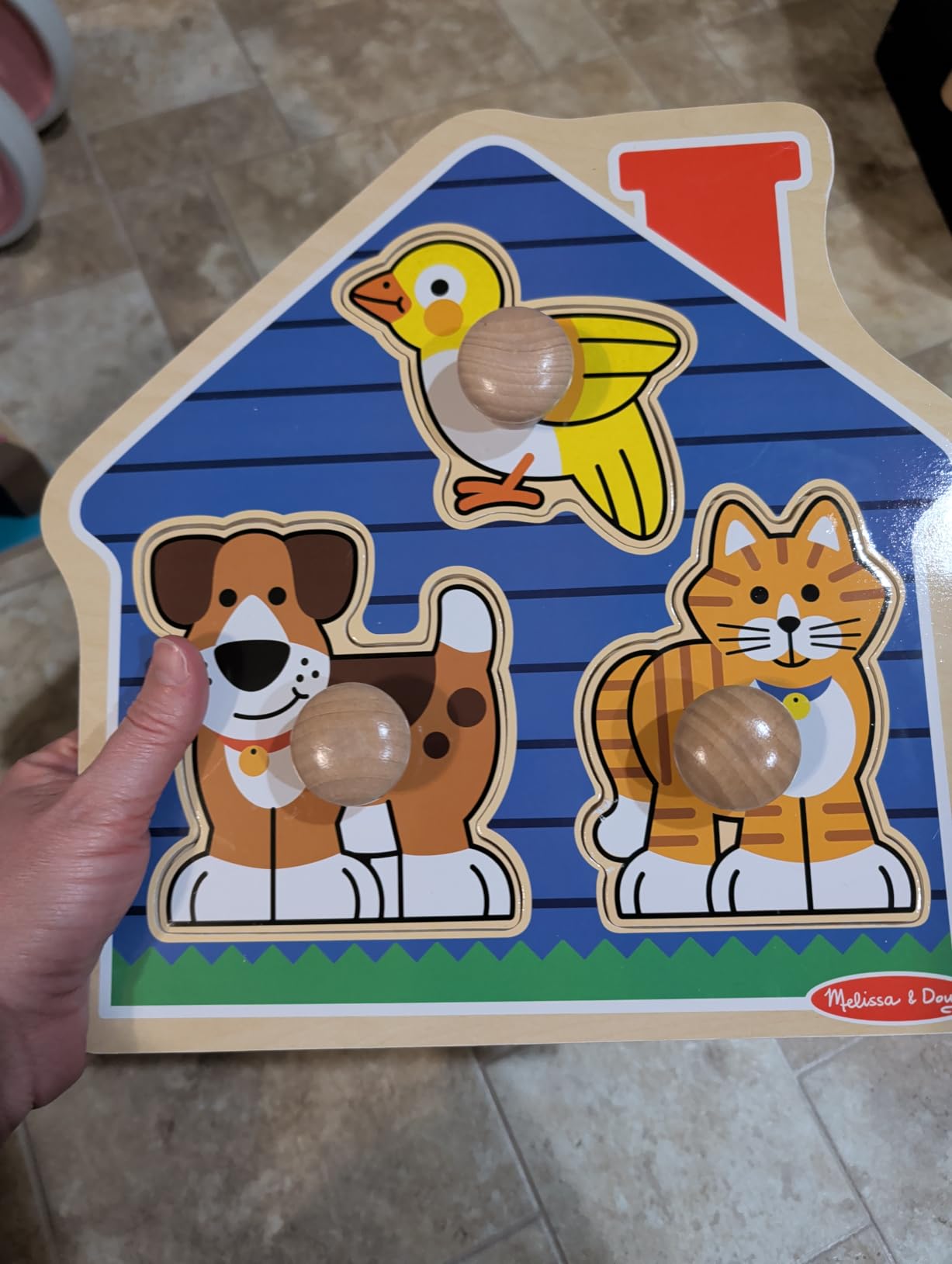
The jumbo pegs are the real standout feature. Most toddler puzzles have standard pegs that still require some fine motor precision. These pegs are genuinely chunky, making them easy for children with developing grasps to pick up and manipulate. The pegs also teach the pincer grasp motion that will eventually be needed for writing, making this puzzle subtly educational for future academic skills.
Melissa & Doug’s reputation for quality wooden toys is well-earned. The puzzle pieces are cut from extra-thick wood that resists the chewing and banging that toddlers inevitably subject their toys to. The vibrant artwork is engaging without being overwhelming, and the pet theme appeals to most children who have family pets or see animals in their neighborhoods.
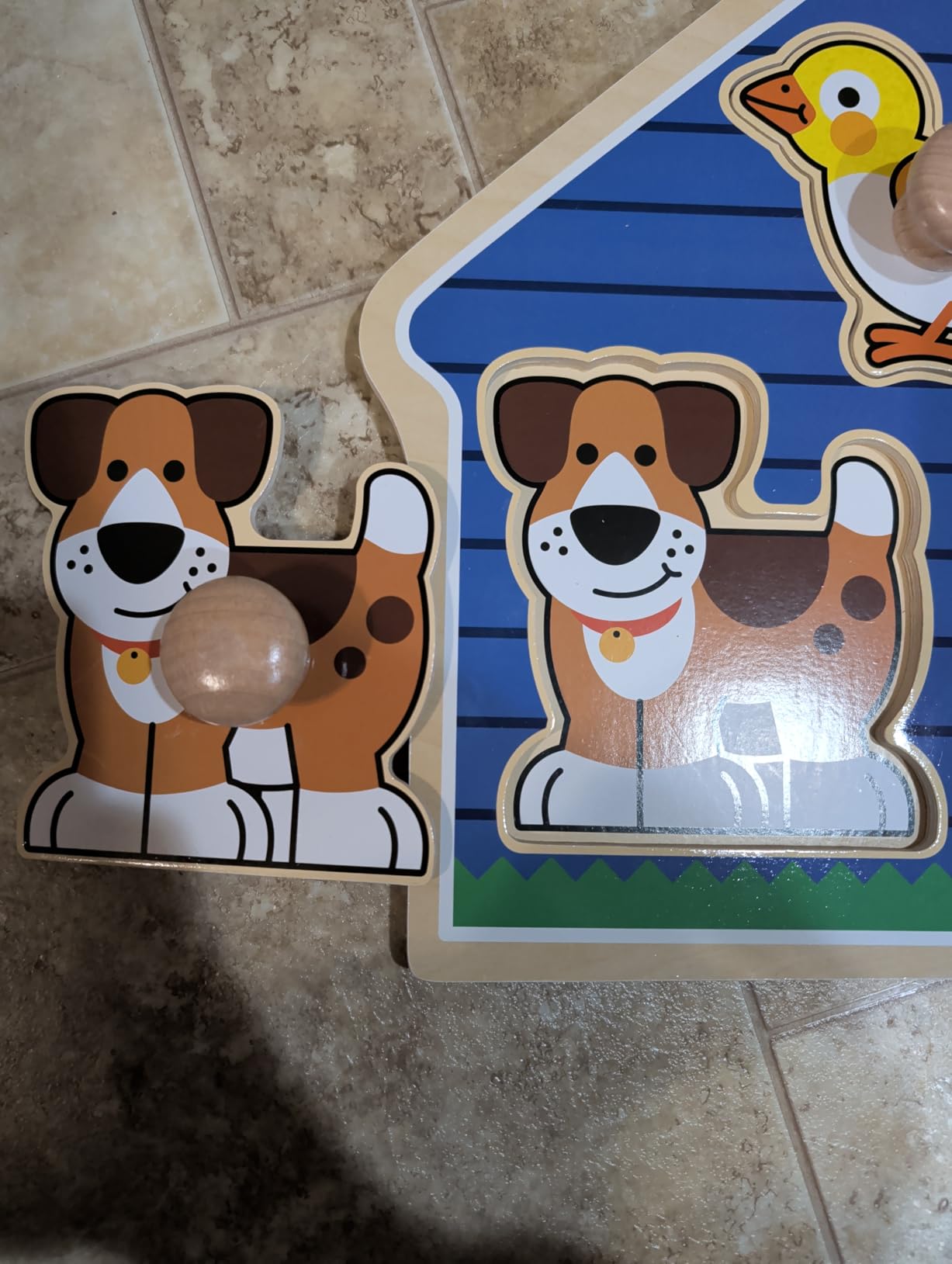
Technical Highlights: The puzzle measures approximately 4.5 x 12.51 x 18.51 inches—a substantial size that’s easy for toddlers to work with on the floor or a low table. Each piece features an easy-grasp wooden peg approximately 1.5 inches tall. The pieces are 0.5 inches thick, making them substantial and durable.
Pros:
- Jumbo pegs perfect for small hands and developing grasps
- Extra-thick wooden pieces withstand enthusiastic play
- Full-color pictures underneath guide independent placement
- Three-piece format builds confidence through achievable success
- Teaches fine motor skills and hand-eye coordination
- Vibrant artwork engages visual development
- Multiple puzzle themes available for variety
Cons:
- Some reports of cracked wood on arrival (quality control issue)
- Limited to three pieces—some toddlers want more challenge
Who Should Skip This?
If your child has already mastered pegged puzzles with three pieces, they’re ready for more challenging formats. Additionally, families who prefer plastic over wood for easier cleaning might want to explore alternative puzzle materials.
Bottom Line: The Melissa & Doug Pets Jumbo Peg Wooden Puzzle is an excellent first puzzle for 1-year-olds. The jumbo pegs make it genuinely accessible for children with developing fine motor skills, and the three-piece format builds the confidence needed for more advanced puzzling later.
12. VTech Wiggle and Crawl Ball

VTech Wiggle and Crawl Ball, Multicolor
Wiggles and wobbles encouraging crawling
45+ songs melodies sounds phrases
5 flashing lights attract attention
6 interactive animal buttons
Spinning twisting animals
Ages 6-36 months
+ The Good
- Wiggling encourages crawling
- 45+ songs and phrases
- 5 flashing lights
- Teaches animals colors numbers
- 6 interactive buttons
- Spinning twisting animals
- Supports gross motor skills
- Durable construction
- The Bad
- Requires button press
- Movement predictable
- Sounds repetitive
best toys for 1-year-olds as babies transition to toddlerhood, many parents notice their children becoming more mobile and restless during floor play. the vtech wiggle and crawl ball is specifically designed to encourage this newfound mobility through interactive features that make the ball move, wiggle, and respond to touch.
The ball’s wiggling and wobbling motion is genuinely engaging. When activated, it doesn’t just roll in a straight line—it bobs, weaves, and changes direction unpredictably. This erratic movement encourages babies to crawl or chase after it, supporting gross motor development through play that feels exciting rather than instructional. My neighbor’s son received this for his first birthday, and she reports that it’s the toy that finally motivated him to crawl more confidently.
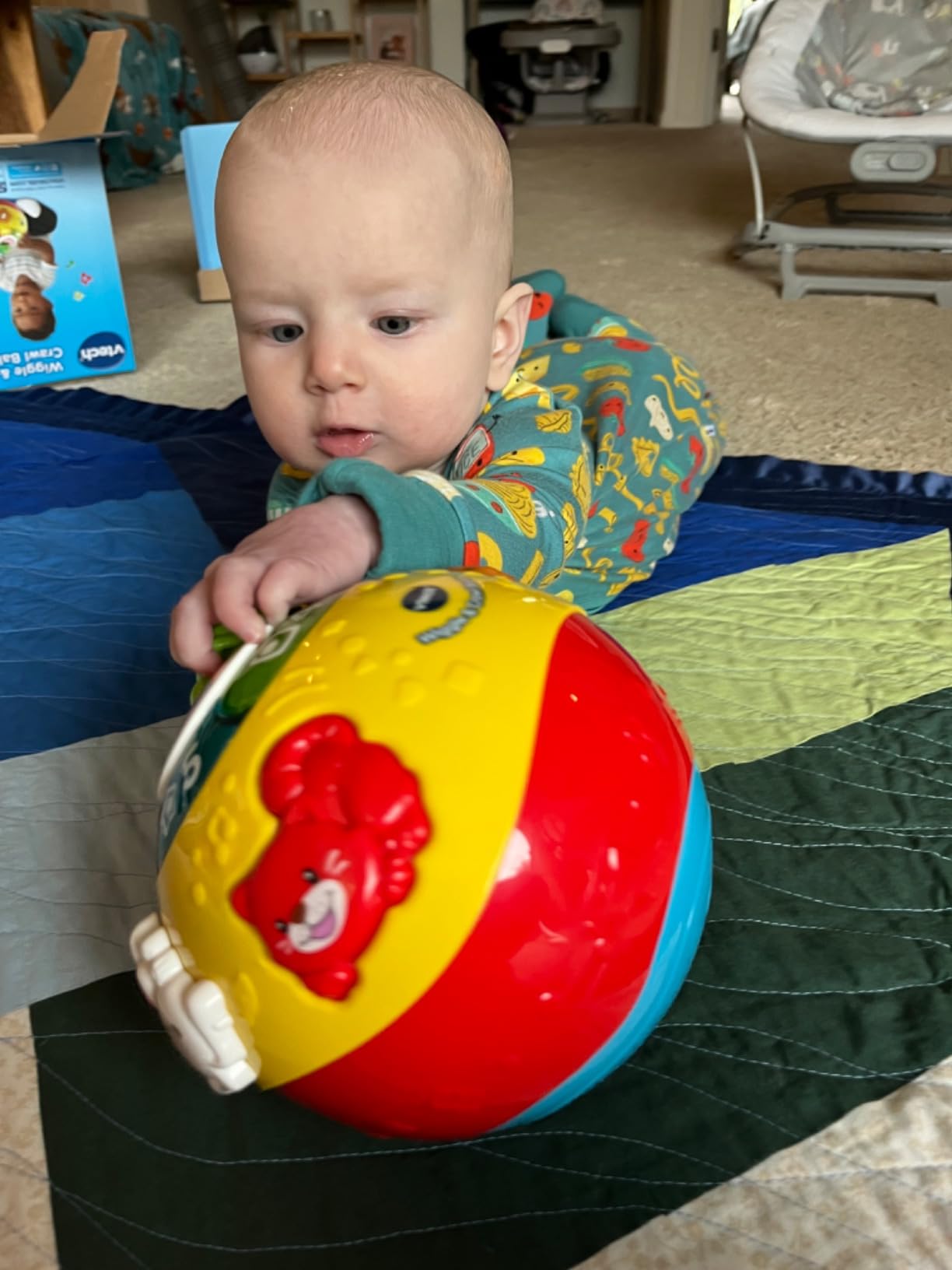
The interactive animal buttons—dog, cat, and bear—teach animal recognition while introducing colors and numbers. When pressed, the ball responds with sounds, phrases, and songs that reinforce the learning concepts. The spinning and twisting animals on the ball’s surface add additional texture and manipulation opportunities, supporting fine motor development alongside gross motor skills.
The sensory integration features are thoughtfully designed. Five flashing lights attract visual attention and help developing eyes track movement. The 45+ songs, melodies, and sounds provide auditory stimulation that’s engaging without being overwhelming (thanks to volume control options). This multi-sensory approach supports different learning styles and developmental needs.
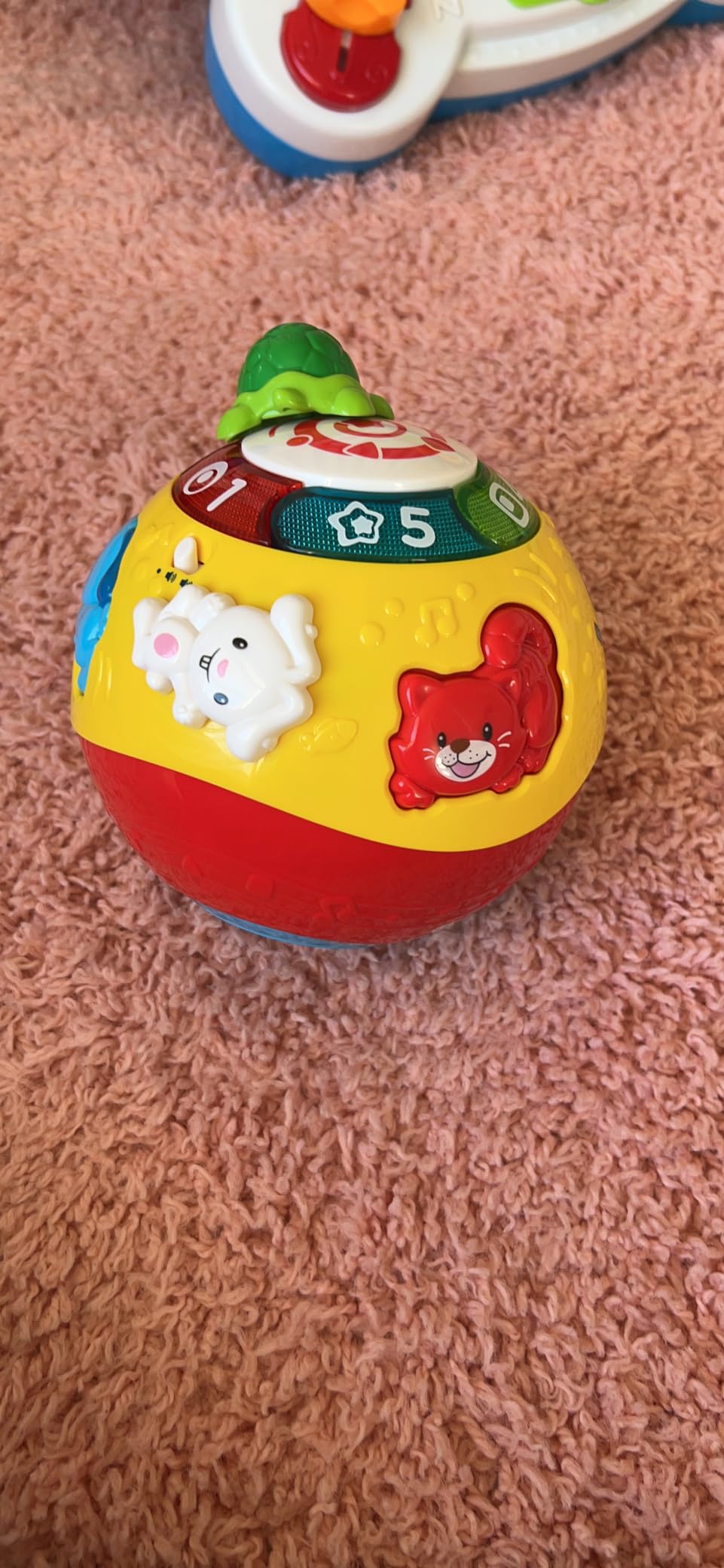
Technical Highlights: The ball measures 6.46 x 6.46 x 6.97 inches, a substantial size that’s easy for babies to interact with but large enough to eliminate choking concerns. It features 45+ songs, melodies, sounds, and phrases. Requires 3 AA batteries (included for demo). The motion-activated wiggle feature has a button to prevent accidental activation during storage or travel.
Pros:
- Wiggling, wobbling motion encourages crawling and chasing
- 45+ songs, melodies, and phrases teach animals, colors, and numbers
- Five flashing lights attract visual attention and tracking practice
- Six interactive animal buttons support fine motor development
- Spinning and twisting animals add texture and manipulation
- Supports gross motor skill development through movement motivation
- Durable construction withstands enthusiastic play
Cons:
- Requires button press for movement—not automatic activation
- Movement patterns can become predictable over time
- Sounds may feel repetitive to adults after extended exposure
Who Should Skip This?
If your child is already walking confidently and shows no interest in floor-level toys, they might be past the developmental window for this toy. Additionally, families avoiding electronic toys or those who prefer quieter play options might not find this suitable.
Bottom Line: The VTech Wiggle and Crawl Ball is an excellent tool for encouraging gross motor development through play that genuinely excites babies. The multi-sensory features support different developmental domains simultaneously.
Buying Guide: What to Look For in Toys for 1-Year-Olds?
Safety First: Choking Hazards and Age Grading
The most critical consideration when selecting toys for 1-year-olds is safety. The American Academy of Pediatrics recommends avoiding any toy with pieces smaller than 1.25 inches in diameter or 2.25 inches in length—these dimensions can fit into a child’s throat and cause choking. Always check age grading on packaging, but use your own judgment too. Some toys marked “18 months” may be appropriate for advanced 12-month-olds, while some “12 month” toys might contain parts that could be mouthed by determined chewers.
Developmental Milestones: What to Expect at 12-24 Months
Between 12 and 24 months, children typically master walking, develop a pincer grasp, speak 10-50+ words, and engage in simple pretend play. The best toys support these emerging skills without being frustratingly advanced. Look for toys that can be enjoyed at multiple levels—your 1-year-old might use blocks for simple stacking now, but the same blocks will support imaginative construction play at age 2 and 3.
Fine Motor vs. Gross Motor Skills
1-year-olds need both fine motor toys (stacking, sorting, manipulating small objects) and gross motor toys (pushing, pulling, riding, climbing). A balanced toy collection supports both types of physical development. Activity cubes and stacking toys build the small muscle control needed for future writing, while ride-ons and balls develop the large muscles and coordination needed for sports and physical play.
Open-Ended vs. Single-Purpose Toys
Open-ended toys like blocks, balls, and activity cubes can be used in multiple ways, supporting creativity and sustained interest. Single-purpose toys that do one specific thing may quickly lose a toddler’s interest. The best toys for 1-year-olds strike a balance—they provide clear guidance for how to play while leaving room for creative exploration and experimentation.
Battery-Free vs. Electronic Toys
Both categories have value. Battery-free toys like blocks, puzzles, and balls develop creativity and problem-solving without predetermined outcomes. Electronic toys can teach cause-and-effect, language, and academic concepts through interactive feedback. A healthy toy collection includes both types, ensuring children experience the benefits of each approach.
Materials and Durability
1-year-olds are tough on toys—they chew, drop, throw, and step on their favorites. Look for toys made from durable materials like solid wood, thick plastic, and reinforced fabrics. Avoid toys with glued-on parts or flimsy construction that won’t withstand enthusiastic play. Check that any paint or finishes are non-toxic and specifically rated safe for children.
Toys That Grow With Your Child
The most economical choice is often the toy that serves multiple developmental stages. Look for toys with adjustable difficulty levels, multiple play modes, or open-ended designs that can be enjoyed in new ways as skills develop. The MEGA BLOKS, for example, work for simple stacking at 12 months but support elaborate construction projects at age 3 and beyond.
Toy Rotation and Storage Tips
Most 1-year-olds play more creatively with fewer toys available at once. Consider implementing a toy rotation system—keep 8-10 toys accessible and store the rest, rotating weekly or monthly. This approach reduces clutter while maintaining novelty. Use open bins or baskets rather than closed toy boxes so children can see and select toys independently. Label storage containers with pictures to support cleanup routines and categorization skills.
Frequently Asked Questions
What toys should my 1 year old play with?
1-year-olds should play with toys that support their developing motor skills, language, and cognitive abilities. Look for stacking toys, simple puzzles, balls, ride-on toys, activity cubes, musical toys, and books with interactive features. The best toys are safe (no choking hazards), durable, and can be enjoyed at multiple developmental levels.
What is the 10 toy rule?
The 10 toy rule suggests keeping only 10 toys accessible at a time and rotating the rest periodically. This approach reduces clutter while maintaining novelty, leading to more focused, creative play. Studies show children play longer and more deeply with fewer available options, as the decision paralysis of too many choices is eliminated.
What is the best gift for a 1 year old kid?
Excellent first birthday gifts include ride-on toys like the Little Tikes Rocking Horse, building sets like MEGA BLOKS, musical toys like the Baby Einstein Take Along Tunes, and interactive books like the LeapFrog Learning Friends 100 Words Book. These gifts support key developmental milestones while providing months of engaging play.
What to buy a 1 year old for his first birthday?
The best gifts for 1-year-olds are toys that support their current developmental stage while growing with them. Our top recommendations include the Bright Starts Oball for grasping practice, MEGA BLOKS for building creativity, and the Fisher-Price Rock-a-Stack for stacking skills. Consider the child’s interests and current abilities when selecting a gift.
Conclusion: Choosing the Best Toys for Your 1-Year-Old
best toys for 1-year-olds – selecting toys for your 1-year-old doesn’t have to be overwhelming. the best options are safe, developmentally appropriate, durable, and engaging across multiple play sessions. they support the skills your child is currently working on—whether that’s grasping, stacking, walking, or talking—while offering new challenges as their abilities grow.
Our top recommendation, the Bright Starts Oball, exemplifies these qualities perfectly. It’s simple enough for the youngest babies to grasp, versatile enough to support throwing, catching, and transportation play as toddlers grow, and durable enough to handle years of enthusiastic use. At under $5, it’s accessible to every family while offering developmental value that far exceeds its price point.
For building creativity and fine motor skills, the MEGA BLOKS First Builders set offers exceptional value with 80 pieces that will engage your 1-year-old now while challenging them for years to come. For language development, the LeapFrog Learning Friends 100 Words Book provides interactive vocabulary building that supports the crucial language explosion phase.
Remember that the “best” toy is ultimately the one that engages your specific child. Pay attention to the toys your 1-year-old returns to again and again, and build your collection around those demonstrated interests. With the right toys in your home, you’re not just keeping your toddler entertained—you’re providing the tools they need to build crucial skills during this remarkable period of development.