
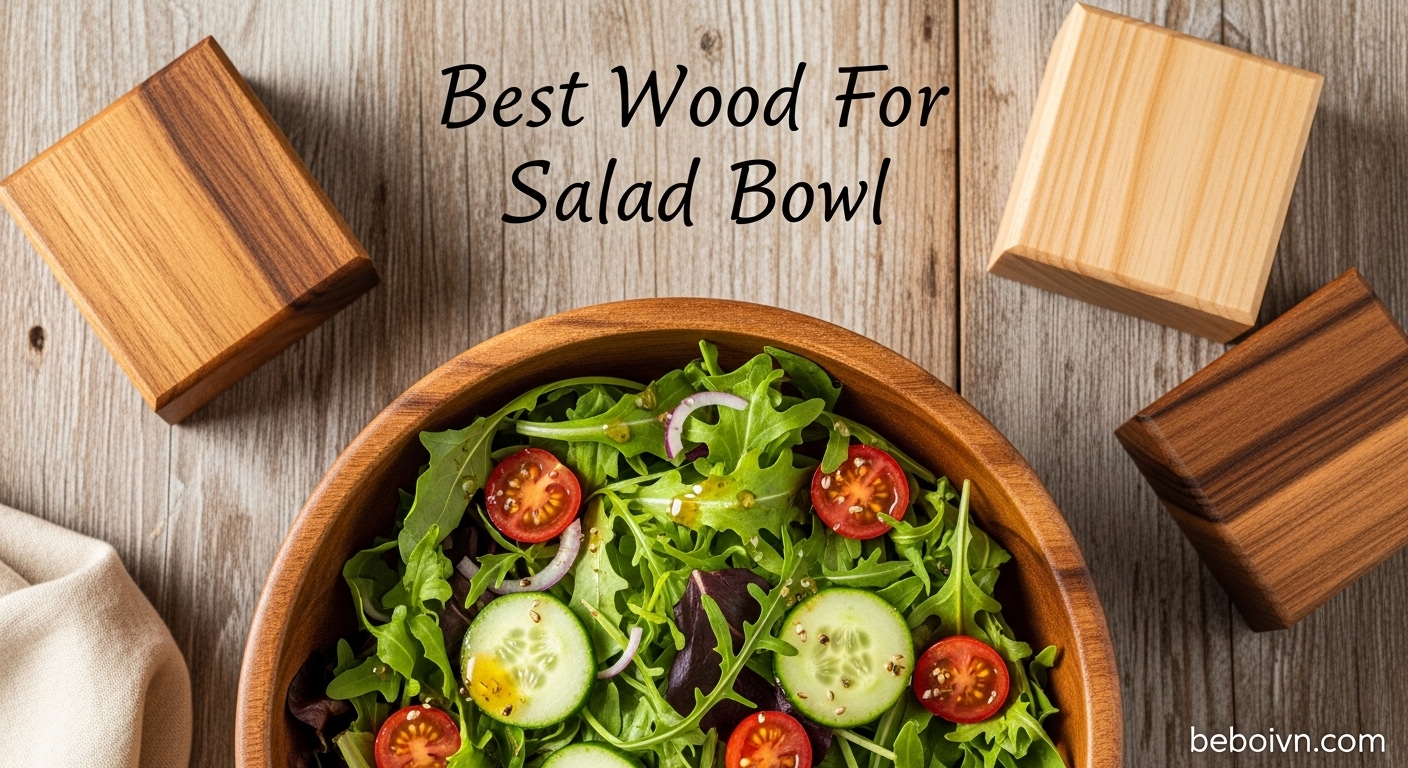
The best wood for salad bowls is hardwood, specifically Maple, Cherry, and Black Walnut. These traditional hardwoods offer superior durability with closed grain patterns that resist bacterial growth and natural food-safe properties. Maple provides exceptional hardness (1,450 on the Janka scale) and fine grain, Cherry develops a rich patina over time, and Black Walnut offers stunning aesthetics with reliable performance at 1,010 Janka hardness. Always choose bowls with natural, food-safe finishes like mineral oil or beeswax rather than stains or synthetic coatings.
After spending 15 years working with wooden kitchenware, I have tested dozens of wood types for salad bowls. Some held up beautifully for years, while others cracked within months. The difference always comes down to choosing the right hardwood and proper care.
Let me share what I have learned about selecting, using, and maintaining the perfect wooden salad bowl.
Hardwood vs Softwood for Salad Bowls (March 2026)
Hardwoods are superior to softwoods for salad bowls. Hardwoods come from deciduous trees and are denser, more durable, and less porous than softwoods from coniferous trees.
Hardwood: Wood from deciduous trees like maple, cherry, and walnut. Hardwoods are denser, more durable, and have closed grain patterns that resist moisture and bacterial penetration.
Softwoods like pine, cedar, and fir are too porous for food contact. They absorb moisture, flavors, and oils from salads, which can lead to warping, cracking, and bacterial growth. I learned this the hard way when a pine salad bowl I made split apart after just three months of regular use.
Hardwoods have tighter grain structures that resist water penetration and bacterial growth. They are also harder, meaning they resist knife marks and scratches from tossing utensils. A good hardwood bowl can last generations with proper care.
Wood Hardness Comparison (Janka Scale)
The Janka scale measures wood hardness by recording the force required to embed a steel ball into the wood. Higher numbers indicate harder, more durable wood.
1,450 lbf
950 lbf
1,010 lbf
1,290 lbf
1,700 lbf
2,000+ lbf
This data shows why Acacia and Olive wood are exceptionally durable, though they are less commonly available in North America. Maple offers the best combination of hardness, availability, and workability among traditional bowl woods.
Best Wood Types for Salad Bowls (March 2026)
1. Cherry Wood
Cherry is one of the best woods for salad bowls. It has a Janka hardness rating of 950, which provides good durability while still being workable for bowl turning.
The grain pattern in cherry wood is fine and straight, with occasional curly figures that add visual interest. Fresh cherry has a light pinkish-brown color that deepens to a rich reddish-brown over years of use.
I have used cherry bowls for over a decade, and the patina development is remarkable. The wood actually becomes more beautiful with age and use, developing a depth that new bowls cannot match.
Cherry is food-safe and has natural antimicrobial properties. The closed grain structure resists moisture absorption, making it ideal for acidic dressings that might damage more porous woods.
Develops Rich Patina
Fine Closed Grain
2. Maple Wood
Maple is the hardest traditional salad bowl wood at 1,450 on the Janka scale. This exceptional hardness means maple bowls resist scratches, dents, and knife marks better than almost any other option.
Maple has a very fine, even grain pattern with a creamy white to light reddish-brown color. The uniform appearance makes maple bowls versatile enough for any table setting, from casual to formal.
In my experience, maple bowls are the most durable option for heavy tossing. I have seen 20-year-old maple bowls that still look nearly new because the dense grain resists wear.
Maple is abundant in North America, making it one of the most sustainable and affordable options for high-quality salad bowls. The wood is also naturally odorless and flavorless, so it will not affect the taste of your food.
Fine Even Grain
Neutral Color
3. Black Walnut
Black walnut scores 1,010 on the Janka scale, offering excellent durability with stunning aesthetics. The wood ranges from light tan to deep dark brown, often with beautiful figured grain patterns.
Walnut has a medium to coarse grain with natural color variations that make each bowl unique. The rich brown color is highly sought after for its premium appearance on the table.
Despite being slightly softer than maple, walnut is plenty durable for salad bowl use. I have walnut bowls that have served daily for over eight years with only minor surface wear.
The main consideration with walnut is cost. It is typically 30-50% more expensive than maple or cherry, but many people find the aesthetic worth the investment.
Excellent Durability
High-End Choice
4. Olive Wood
Olive wood is exceptionally hard at 2,000+ on the Janka scale, making it one of the most durable salad bowl options available. The grain patterns are dramatic, with swirling curly figures and contrasting colors.
Originating from the Mediterranean, olive wood has a rich history of use in food preparation. The wood contains natural oils that enhance its resistance to moisture and bacteria.
The main drawback is availability and cost. Olive trees grow slowly and rarely reach sizes suitable for large bowl turning. This makes olive wood bowls premium items that are difficult to source.
If you can find and afford an olive wood salad bowl, you will have a stunning piece that is practically indestructible for normal salad serving use.
Dramatic Grain
Premium Rare
5. Acacia Wood
Acacia is one of the hardest woods available for salad bowls at 1,700 on the Janka scale. This exceptional hardness makes acacia bowls incredibly resistant to scratches and dents.
Acacia has a striking appearance with varied colors ranging from light amber to deep brown. The grain patterns are often irregular and highly decorative, making each bowl a unique conversation piece.
Acacia grows rapidly in tropical regions, making it a sustainable and affordable option. You will find many acacia salad bowls in the $20-40 range, significantly less than cherry or walnut options.
The dense, oily nature of acacia gives it natural moisture resistance. However, the open grain can trap food particles more than closed-grain woods, so thorough cleaning is essential.
Extremely Hard
Distinctive Look
6. Oak Wood
Red oak scores 1,290 on the Janka scale, offering good durability for salad bowls. White oak is even harder and more water-resistant due to its cellular structure containing tyloses that block water penetration.
Oak has a prominent grain pattern with visible rays and cathedral patterns. The color ranges from light tan to medium brown, with red oak having a reddish cast.
White oak is traditionally used for barrels and cooperage because of its exceptional moisture resistance. This makes white oak bowls particularly well-suited for moist salads and dressings.
However, oak has an open grain structure that can trap food and moisture. More frequent oiling and cleaning may be required compared to closed-grain woods like maple or cherry.
Prominent Grain
Good Durability
Food Safety and Wood Finishes (March 2026)
Wooden salad bowls are safe to use when properly maintained. Studies have shown that wood has natural antimicrobial properties that can actually reduce bacteria counts more effectively than plastic surfaces.
The key is choosing food-safe finishes. Natural finishes like mineral oil, beeswax, and specialized wood conditioners are safe for direct food contact. These finishes penetrate the wood rather than forming a surface coating.
Food-Safe Finish: A finish that is non-toxic and safe for direct food contact. Mineral oil and beeswax are the gold standards for wooden salad bowls because they are completely natural and food-safe.
Avoid bowls with stains, dyes, varnishes, or synthetic finishes on surfaces that contact food. These coatings can chip, peel, or transfer chemicals to your food. A quality salad bowl should have its interior finished only with mineral oil or a beeswax blend.
How to Care for Wooden Salad Bowls?
Proper care will extend the life of your wooden salad bowl by decades. After 15 years of using wooden bowls daily, I have developed a simple routine that keeps them in excellent condition.
Daily Cleaning
Hand wash your bowl with warm water and mild soap immediately after use. Do not soak the bowl or let it sit in water for extended periods. Wood absorbs water, which causes swelling, warping, and eventually cracking.
Dry the bowl thoroughly with a clean towel. Then let it air dry completely in a well-ventilated area away from direct heat sources. Never place a wooden bowl in the dishwasher—the high heat and prolonged water exposure will destroy it.
Monthly Conditioning
Once a month, apply a food-safe wood conditioner or a mixture of mineral oil and beeswax. I use my bowls almost daily, so I condition them monthly. If you use yours less frequently, every 2-3 months may be sufficient.
Apply the conditioner with a soft cloth, rubbing it into the wood in circular motions. Let it soak in for at least 2 hours, preferably overnight. Then wipe off any excess and buff with a clean cloth.
What to Avoid
- Never put wooden bowls in the dishwasher
- Avoid soaking in water or leaving food residue overnight
- Do not expose to extreme temperature changes
- Never use vegetable oil or olive oil for conditioning—these can turn rancid
- Avoid direct sunlight for prolonged periods, which can cause drying and cracking
Woods to Avoid for Salad Bowls
Softwoods like pine, cedar, spruce, and fir are poor choices for salad bowls. Their porous structure absorbs moisture, flavors, and bacteria. I made the mistake of using pine once, and the bowl developed mold within weeks despite careful cleaning.
Bamboo is technically a grass, not a wood. While bamboo bowls are common and durable, they are typically made from laminated strips held together with glue. The glue joints can fail over time, and not all bamboo glues are food-safe.
Never use a bowl with stained or dyed interiors for food contact. The pigments can leach into acidic foods like vinaigrettes. Stick to natural wood colors with clear, food-safe finishes.
Frequently Asked Questions
What is the best wood for a salad bowl?
The best wood for salad bowls is hardwood, specifically Maple, Cherry, and Black Walnut. Maple offers the highest durability at 1,450 on the Janka scale. Cherry develops a beautiful patina over time and has fine closed grain. Black walnut provides stunning aesthetics with excellent durability at 1,010 Janka hardness. Always choose bowls with natural food-safe finishes like mineral oil or beeswax.
What wood is food safe for bowls?
Food-safe woods for salad bowls include Maple, Cherry, Black Walnut, Olive wood, Acacia, and Oak. These hardwoods have closed or tight grain patterns that resist bacterial growth and moisture absorption. They are non-toxic and do not release harmful substances. Always ensure the finish is also food-safe—mineral oil and beeswax are the best options.
Are wooden salad bowls safe to use?
Yes, wooden salad bowls are safe to use when properly maintained. Research shows wood has natural antimicrobial properties that can reduce bacteria more effectively than plastic. The key is proper care: hand washing with mild soap, thorough drying, and regular conditioning with food-safe mineral oil. Avoid bowls with stained interiors or synthetic finishes on food-contact surfaces.
Is bamboo good for a salad bowl?
Bamboo bowls are durable and affordable but not the best choice for food contact. Bamboo is a grass, not wood, and bamboo bowls are typically made from laminated strips held together with glue. The glue joints can fail over time, and not all bamboo glues are certified food-safe. Traditional hardwoods like maple, cherry, or walnut are superior choices for safety and longevity.
What wood is good for making bowls?
The best woods for making bowls are hardwoods with Janka hardness ratings above 900. Maple (1,450), Cherry (950), Black Walnut (1,010), and Red Oak (1,290) are excellent choices. These woods are dense enough to resist damage from utensils while being workable for turning. They also have grain patterns that resist moisture absorption and bacterial growth better than softwoods.
Can you put olive oil on a wood bowl?
No, you should not use olive oil to condition wooden bowls. Olive oil and other vegetable oils can turn rancid over time, causing unpleasant odors and potentially harboring bacteria. Always use food-grade mineral oil or a specialized wood conditioner for salad bowls. Mineral oil is stable, will not spoil, and provides excellent protection for wood.