
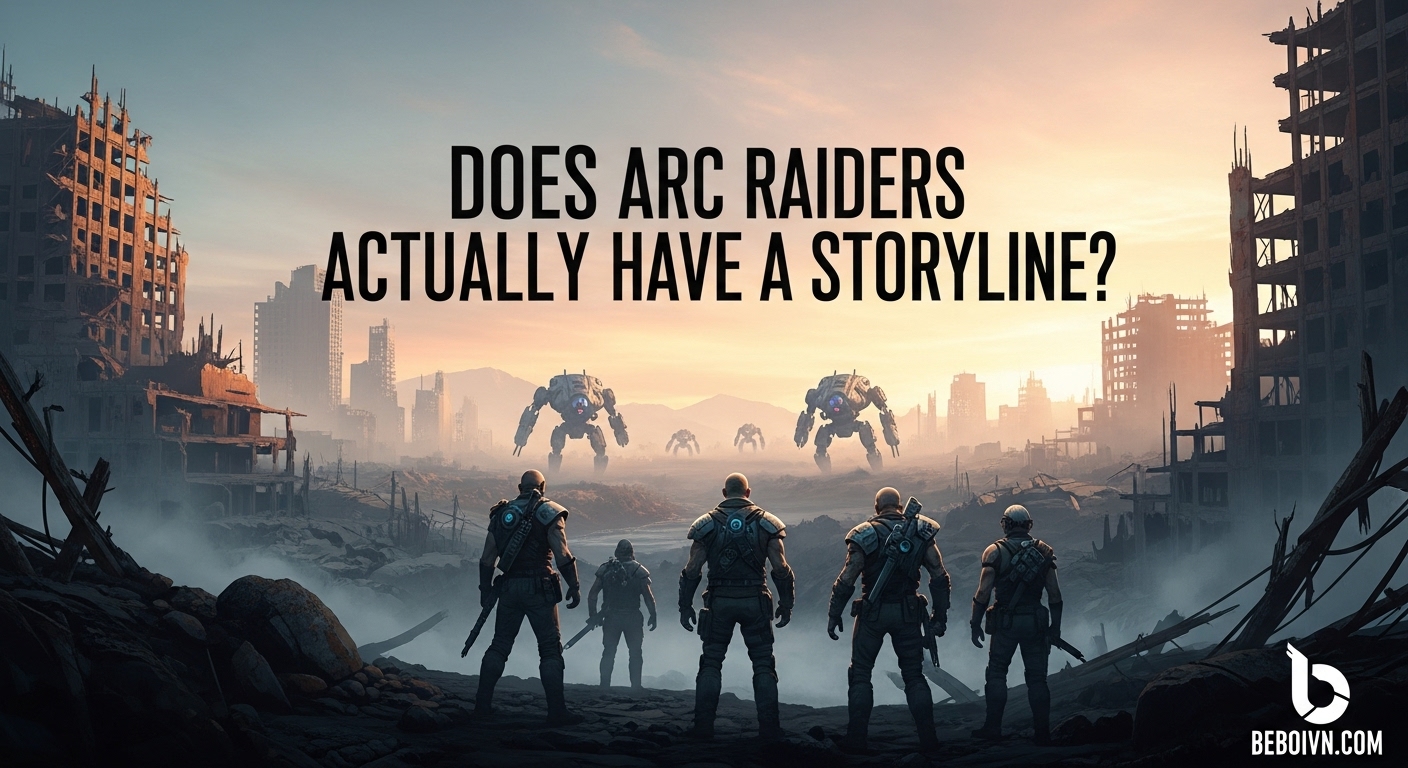
When you first jump into Arc Raiders, you might assume it’s just another extraction shooter focused solely on looting and surviving against both AI enemies and other players. After all, the premise seems simple: gear up, head to the surface, grab valuable resources, and extract before you lose everything. But does Arc Raiders actually have a storyline? The answer might surprise you.
Beneath its PvPvE exterior lies a surprisingly rich narrative tapestry that unfolds through environmental storytelling, community events, and hidden lore fragments. While you won’t find traditional cutscenes or a linear campaign, Arc Raiders delivers its story in a way that feels organic to its multiplayer, live-service nature.
The World of 2180: More Than Just a Backdrop
Arc Raiders is set in the year 2180, decades after a catastrophic environmental collapse nearly wiped out humanity. But this isn’t just another post-apocalyptic setting thrown together for flavor—it’s a carefully crafted world with history, conflict, and mystery.
The game takes place in the Rust Belt, a region that was once part of Italy but now stands as a wasteland of deserts and ruined cities. Above ground, mysterious ARC machines patrol relentlessly, making the surface lethal for humans. Below, in underground settlements like Speranza and Toledo, the remnants of humanity struggle to survive.
What makes this setting compelling is how every location tells a piece of the story. The Dam Battlegrounds, for instance, isn’t just a map—it’s the site of a major battle between raiders and the First Wave of ARC machines. As you explore, you’ll find wreckage and clues that reveal what happened during this pivotal moment in history.
The Exodus: A Story of Abandonment and Resentment
One of the most fascinating aspects of Arc Raiders’ storyline is the Exodus—a pivotal event that shaped the current world. When environmental collapse began, those with wealth and power didn’t face the crisis alongside everyone else. Instead, they fled Earth in rockets, heading to off-world colonies and leaving the rest of humanity behind.
This mass evacuation created a deep rift in human society. Those left behind—now the ancestors of today’s raiders—feel a lingering resentment toward those who abandoned Earth. The Spaceport map beautifully illustrates this part of the story, with locations like the Rocket Assembly and Launch Towers showing how the wealthy made their escape.
The Exodus isn’t just background flavor; it’s a crucial element that explains the current social dynamics in the underground settlements. It also raises intriguing questions: Are the colonists still out there? Do they know what’s happening on Earth? Could they return?
The First Wave: Humanity’s Desperate Stand
Arc Raiders’ lore speaks of the First Wave—the initial ARC invasion that nearly finished what the environmental collapse started. During this period, humanity faced extinction as crude machines began falling from the skies.
What makes this part of the story compelling is how it’s revealed through gameplay rather than exposition. In missions like “Keeping The Memory,” players visit memorials to those lost in the First Wave, searching through wreckage to find personal items like a fallen raider’s helmet. These environmental storytelling moments make the history feel tangible and personal.
The First Wave wasn’t just a disaster—it was also a learning experience. Though raiders lost many battles, the knowledge gained about ARC’s weaknesses and patterns allowed survivors to establish the underground settlements that exist today. This explains why current raiders are so effective at fighting ARC machines; they’re building on generations of hard-won experience.
The Second Wave: A New Era of Threat
Players enter Arc Raiders during what’s known as the Second Wave—a new, more sophisticated ARC invasion that’s forcing humanity to race against time for survival. Unlike the First Wave’s crude machines, these new ARC enemies are more advanced, featuring special alloys and complex behaviors.
This Second Wave serves as the game’s present-day story setting, with community events and live-service updates advancing the narrative in real-time. For example, when players collectively worked to unlock the Stella Montis map, they weren’t just getting new content—they were participating in the ongoing story of humanity’s struggle against ARC.
The Second Wave also introduces new questions: Why did ARC return? What’s different about these new machines? And perhaps most importantly—where did they come from in the first place?
Environmental Storytelling: Every Map Tells a Story
What makes Arc Raiders’ narrative approach unique is how it uses its maps as storytelling devices. Each location isn’t just a battlefield; it’s a chapter in the larger story:
- Dam Battlegrounds: Shows the aftermath of the First Wave battle, with wreckage and environmental clues revealing what happened
- Spaceport: Tells the story of the Exodus, showing how the wealthy abandoned Earth
- Buried City: Reveals glimpses of pre-collapse civilization and how people lived before the disaster
- Stella Montis: Perhaps the most mysterious map, this abandoned research facility in snowy mountains suggests humanity was preparing for some kind of apocalyptic scenario
As you explore these locations, you’re not just looting—you’re uncovering history. The environmental details, from ruined buildings to scattered documents, gradually piece together the larger narrative of what happened to Earth and its inhabitants.
The Raiders: More Than Just Looters
In many games, players would just be faceless looters, but Arc Raiders gives its raiders context and purpose. These aren’t just people grabbing resources—they’re survivors with a stake in their community’s future.
Raiders brave the surface to scavenge materials not just for themselves, but for the underground settlements that depend on these resources. They repurpose ARC parts and scrap into new weapons and tools, showing ingenuity and adaptability in the face of overwhelming odds.
What’s interesting is that raiders have their own agendas beyond just helping their communities. Like post-apocalyptic cowboys, they’re jaded and resilient, looking for opportunities to thrive in this desolate world. This complexity makes them more than just heroes or villains—they’re survivors doing what they must in a harsh world.
Community-Driven Storytelling: A Living Narrative
Perhaps the most innovative aspect of Arc Raiders’ storyline is how it evolves through community participation. Unlike traditional games with fixed narratives, Arc Raiders tells its story in real-time through player actions and live-service updates.
When players collectively contribute resources to unlock new areas or participate in community events, they’re not just progressing through content—they’re shaping the narrative. This approach makes the story feel alive and responsive, with the community becoming part of the storytelling process.
For example, the Breaking New Ground event that followed the unlocking of Stella Montis wasn’t just new content—it was the next chapter in the ongoing story, with players working together to uncover the facility’s secrets.
Hidden Lore: Piecing Together the Mystery
Arc Raiders doesn’t spoon-feed its story to players. Instead, it hides lore fragments throughout the game, waiting for dedicated players to discover and piece them together. These fragments come in various forms:
- Codex entries: Scattered throughout maps, these provide background information on the world, ARC machines, and historical events
- Quest descriptions: The missions you undertake often contain subtle hints about the larger narrative
- Environmental details: From ruined buildings to scattered documents, the world itself tells stories
- NPC dialogues: Characters in the underground settlements share their perspectives and knowledge
This approach to storytelling rewards exploration and attention to detail, making the discovery of lore fragments feel like genuine achievements rather than just checking boxes.
The Mystery of ARC: Origins and Intentions
Perhaps the biggest question in Arc Raiders’ storyline is: Where do the ARC machines come from, and what do they want? The game deliberately keeps this mystery alive, dropping hints but never providing definitive answers.
Some clues suggest ARC might be of human origin—perhaps automated defense systems gone rogue or terraforming machines with a different definition of “ideal conditions.” Other hints point to extraterrestrial origins, with the machines being invaders from beyond Earth.
The most intriguing theory, supported by lore hints in the game, is that a human faction might be controlling the ARC machines. Some ARC enemies drop technology that’s compatible with Raider equipment, suggesting a human—or at least human-like—intelligence behind them.
This mystery isn’t just background flavor; it’s the central question driving the narrative forward, with each update and community event potentially revealing new clues.
Future Story Possibilities: Where Does the Narrative Go From Here?
Arc Raiders’ storyline is far from complete. The game’s live-service nature means the narrative will continue to evolve, with several exciting possibilities on the horizon:
New Areas Beyond the Rust Belt
Current gameplay is focused on the Rust Belt, but lore hints suggest there are other regions to explore. The game’s “Voluntary Wipe Mechanic” and Legacy System might be paving the way for these new areas, with players’ actions potentially unlocking access to previously unexplored parts of the world.
Human Factions and Civil War
The possibility of hostile raider settlements or human factions controlling ARC machines opens the door for faction-based gameplay and storylines. Imagine turf wars against rival groups or the revelation that some humans have sided with the machines—these developments could dramatically change the game’s narrative landscape.
The Exodus Colonists’ Return
What if those who fled during the Exodus decided to return? Their advanced technology and different perspective could create fascinating story conflicts, especially if they view the current survivors as primitives or have their own plans for dealing with the ARC threat.
The Truth About ARC’s Origins
Eventually, the game will need to address the central mystery of where ARC came from. Whether they’re human-made, extraterrestrial, or something else entirely, revealing their true nature will be a pivotal moment in the game’s narrative.
Why Arc Raiders’ Storytelling Approach Works
At first glance, Arc Raiders might seem to lack a traditional story, but its approach to narrative is actually brilliant for several reasons:
It Fits the Multiplayer Nature
A linear campaign with a fixed protagonist wouldn’t work in a multiplayer game where every player has their own experience. By making the story environmental and community-driven, Arc Raiders ensures every player can engage with the narrative at their own pace.
It Rewards Exploration
In a game about scavenging and exploration, it makes sense that the story would be hidden in the world itself. This approach encourages players to explore thoroughly and pay attention to their surroundings.
It Creates a Living World
By evolving the story through live-service updates and community events, Arc Raiders makes its world feel alive and changing. Players aren’t just experiencing a fixed story—they’re part of an ongoing narrative.
It Builds Community
The community-driven aspects of the storytelling foster a sense of shared experience among players. When everyone works together to unlock new content or participate in events, it creates a stronger connection to both the game and fellow players.
Conclusion: Yes, Arc Raiders Absolutely Has a Storyline
So, does Arc Raiders actually have a storyline? The answer is a resounding yes—it just doesn’t tell its story in the way you might expect. Instead of traditional cutscenes and a linear campaign, Arc Raiders weaves its narrative through environmental details, community events, and hidden lore fragments.
The game’s story of humanity’s struggle against mysterious machines, the abandonment of the Exodus, and the fight for survival in a post-apocalyptic world is rich and compelling. What makes it special is how it unfolds organically through gameplay, with every raid potentially revealing new pieces of the puzzle.
As Arc Raiders continues to evolve through live-service updates, its storyline will only grow deeper and more complex. The mysteries of ARC’s origins, the fate of the Exodus colonists, and the future of humanity all remain to be explored, ensuring that players will have compelling narrative reasons to keep returning to the surface.
In a gaming landscape filled with predictable stories, Arc Raiders’ approach to narrative is refreshing and innovative. It proves that even in a multiplayer extraction shooter, a deep, engaging storyline can thrive—you just need to know where to look for it.