
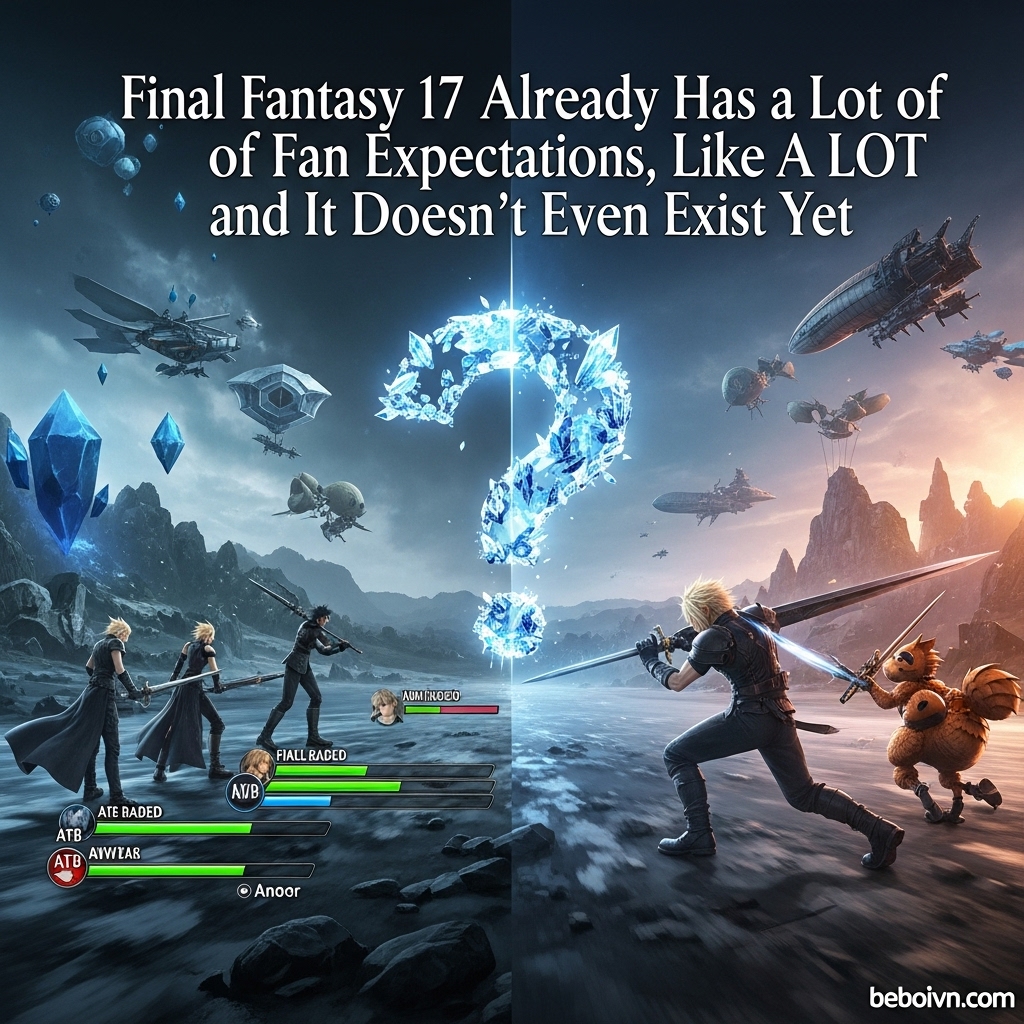
It’s fascinating how Final Fantasy 17 already has accumulated an enormous amount of fan expectations despite not even being officially announced by Square Enix. The gaming community is buzzing with theories, wishes, and predictions about what the next mainline entry in the legendary franchise should deliver. From combat system debates to setting preferences and protagonist discussions, fans are already building up an almost impossible set of expectations for a game that likely won’t see the light of day until at least 2029 or 2030.
The Combat System Conundrum: Action vs. Turn-Based Warfare
One of the most heated debates surrounding Final Fantasy 17 expectations centers on the combat system. The franchise has experimented with various battle mechanics over the years, and fans are deeply divided on which direction the next entry should take.
The FF7 Remake Hybrid Model Gains Traction
According to discussions on Reddit’s r/FFXVII community, many fans are leaning toward the Final Fantasy 7 Remake style of combat as the ideal middle ground. In a poll conducted on the subreddit, the FFVIIR-style action/ATB hybrid system received 12 votes, significantly outpacing traditional turn-based (4 votes), pure action (4 votes), and classic ATB (3 votes). This suggests that while fans appreciate strategic elements, they also want the excitement and fluidity that real-time combat provides.
The hybrid system’s popularity makes sense when you consider how successfully it balanced accessibility with depth. Players could enjoy the spectacle of real-time combat while still having access to the strategic decision-making that made classic Final Fantasy games so compelling. It’s a compromise that honors the series’ roots while embracing modern gaming expectations.
The Clair Obscur Influence and Turn-Based Renaissance
However, the success of Clair Obscur: Expedition 33 has reignited the turn-based debate in a big way. This indie RPG demonstrated that turn-based combat can still feel fresh, modern, and visually spectacular when executed well. Square Enix even acknowledged this success publicly, leading many fans to speculate that Final Fantasy 17 might return to the franchise’s turn-based roots.
ComicBook.com’s analysis argues that Square Enix needs to “look back to its roots rather than doubling down on real-time action combat.” The article points out that while Final Fantasy 16 was critically acclaimed, many longtime fans felt something was missing without the strategic depth that turn-based systems provide. Clair Obscur proved there’s still a substantial market for thoughtful, turn-based RPGs that don’t sacrifice visual flair.
What Naoki Yoshida Says About Combat Systems?
Final Fantasy 14 and 16 producer Naoki Yoshida has addressed these expectations in interviews, stating that the combat system for Final Fantasy 17 will depend on “what the creators want to deliver to the audience.” He emphasized that Square Enix won’t limit whoever is in charge of the project to just doing turn-based or action combat, suggesting that the direction will ultimately come down to the creative vision of the development team.
This approach makes sense from a creative standpoint, but it also means fans will have to wait patiently to see which direction Square Enix decides to take with the next mainline entry.
Protagonist Expectations: It’s Time for a Female Lead
Another major topic in the Final Fantasy 17 expectation conversation is the desire for a female protagonist. The franchise has had several notable female leads throughout its history, including Lightning from Final Fantasy 13 and Terra from Final Fantasy 6, but recent mainline entries have predominantly featured male protagonists.
The Case for Diversity in Leadership
Reddit discussions on r/FFXVII frequently mention that a female protagonist for Final Fantasy 17 is “the most obvious choice at this point,” considering the male-dominated entries the series has seen most recently. Fans argue that diversity in protagonist representation would not only be refreshing but would also open up new storytelling possibilities that haven’t been explored in recent games.
Some fans have specifically mentioned characters like Lightning and Terra as examples of well-executed female protagonists, hoping that Final Fantasy 17 could deliver a similarly compelling female lead with depth, agency, and an engaging personal journey.
Breaking the Mold: Beyond Traditional Archetypes
Beyond just wanting a female protagonist, many fans are hoping for a lead character who breaks away from traditional Final Fantasy archetypes. The expectation is for someone who doesn’t necessarily fit the brooding, sword-wielding hero mold that has become somewhat common in recent entries.
This desire for innovation extends to character design as well, with fans hoping for a protagonist whose appearance, personality, and abilities feel fresh and distinct from what we’ve seen in previous games. The success of diverse character designs in games like Final Fantasy 14 has shown that there’s room for experimentation within the Final Fantasy universe.
Setting and World: Where Should Final Fantasy 17 Take Us?
The setting and world-building of Final Fantasy 17 is another area where fans have already developed strong expectations and preferences. The franchise has explored everything from medieval fantasy to cyberpunk, and each new entry typically introduces a unique world with its own rules, cultures, and conflicts.
Post-Apocalyptic and Modern Fantasy Preferences
According to discussions across multiple fan communities, there’s significant interest in seeing Final Fantasy 17 explore a post-apocalyptic setting, similar to elements seen in Final Fantasy 10. Other popular suggestions include wild west, cyberpunk, and space opera settings. These preferences suggest that fans are looking for something that feels distinctly different from the medieval fantasy of Final Fantasy 16 while still maintaining the series’ signature blend of magic and technology.
The Superjump magazine article suggests a steampunk setting could be a refreshing change, hearkening back to Final Fantasy 6’s industrial revolution aesthetic. This would differentiate the entry from recent games while honoring the franchise’s history of exploring different technological and magical paradigms.
The Sci-Fi Spectrum: How Far Should They Go?
There’s also debate about how far into science fiction territory Final Fantasy 17 should venture. Some fans are hoping for a high sci-fi aesthetic similar to Final Fantasy 13, while others prefer something more grounded in fantasy elements with technological undertones.
The Inverse article speculates that Final Fantasy 17 might “shift towards a high sci-fi aesthetic for its next story” to differentiate itself from the Game of Thrones-style fantasy of Final Fantasy 16. This could involve space travel, advanced technology, or even interplanetary conflict—elements that have been explored in previous entries but never as the primary focus of a mainline game.
Artistic Vision: Who Should Design Final Fantasy 17?
The visual style and artistic direction of Final Fantasy 17 is another area where fans have developed strong preferences, with several notable artists being frequently mentioned in community discussions.
The Akihiko Yoshida Dream Team
Many fans are hoping that Akihiko Yoshida, known for his work on Final Fantasy Tactics, Final Fantasy 12, and Final Fantasy 14, will take the lead artistic role for Final Fantasy 17. Yoshida’s distinctive art style, characterized by elegant character designs and rich attention to detail, has made him one of the most beloved artists in the franchise’s history.
Other frequently mentioned names include Yusuke Mogi and Osamu Kamikokuryo, both of whom have contributed significantly to the series’ visual identity over the years. The expectation is that whoever takes the artistic lead should bring a fresh perspective while maintaining the high visual standards that fans expect from the franchise.
Balancing Nostalgia and Innovation
Fans are also hoping for a visual style that balances nostalgic elements with modern innovation. The success of games like Octopath Traveler, which combined pixel art with modern lighting effects, has shown that there’s room for creative visual approaches that honor the past while embracing new technologies.
The expectation is that Final Fantasy 17 should push visual boundaries while still feeling recognizably like a Final Fantasy game—a delicate balance that will require both technical expertise and artistic vision.
Story and Tone: Beyond the Grand Epic
While recent Final Fantasy games have focused on grand, world-saving narratives, there’s a growing expectation that Final Fantasy 17 might benefit from a more personal or comedic approach to storytelling.
The Case for Comedy and Light-Hearted Adventure
The Inverse article makes a compelling argument that Final Fantasy 17 should embrace the series’ comedic roots more fully. Citing examples like the Hildibrand quests in Final Fantasy 14 and the surreal humor in Final Fantasy 7 Rebirth, the article suggests that the franchise has underutilized its comedic strengths in recent years.
Final Fantasy 5, with its sentient tree villain and talking turtle companion, is held up as an example of how the series successfully balanced humor with meaningful storytelling. Fans are hoping that Final Fantasy 17 might take inspiration from this approach, delivering a story that doesn’t take itself too seriously while still providing emotional depth and character development.
Personal Stories vs. World-Saving Epics
There’s also discussion about whether Final Fantasy 17 should scale back from the world-saving narratives that have dominated recent entries. The Superjump article suggests that a more personal story with “smaller scope” could be refreshing, allowing for deeper character development and more intimate storytelling.
This doesn’t necessarily mean abandoning the epic elements that Final Fantasy is known for, but rather finding a better balance between personal stakes and larger conflicts. The success of games like Final Fantasy 9, which balanced personal character journeys with world-threatening events, is often cited as an example of this approach done well.
Technical and Gameplay Expectations
Beyond story and setting, fans have developed specific expectations about the technical aspects and gameplay features they hope to see in Final Fantasy 17.
The Return of Traditional RPG Elements
Many fans are hoping for a return to more traditional RPG elements that have been downplayed in recent entries. This includes things like:
- Multiple playable party members with distinct roles
- Robust character customization and progression systems
- Strategic equipment and ability management
- Meaningful side quests that expand the world and characters
The ComicBook.com article specifically mentions the desire for “strong story and a multitude of playable characters,” suggesting that fans want to return to the ensemble casts that characterized earlier entries in the series.
Airships and World Exploration
The return of airships as a primary means of transportation is another frequently mentioned expectation. While modern open-world games have made traditional world maps less necessary, fans still hope for some form of airship or large-scale transportation that makes exploration feel epic and rewarding.
The Superjump article specifically calls for bringing back airships, noting that “it’s easy to see why an airship in today’s open-world games might be a bit difficult” but that some form of large-scale transportation would help maintain the sense of adventure and discovery that’s central to the Final Fantasy experience.
Platform and Release Expectations
When it comes to practical matters like release timing and platform availability, fans have developed realistic expectations based on Square Enix’s recent patterns.
The Long Wait Ahead
Most analysts and fans agree that Final Fantasy 17 likely won’t arrive until 2029 or 2030 at the earliest. The gaps between mainline entries have been growing longer, with approximately seven years passing between Final Fantasy 15 and 16. Given that Final Fantasy 16 released in 2023, and considering Square Enix’s current focus on completing the Final Fantasy 7 Remake trilogy (expected around 2028), a 2029-2030 timeline seems realistic.
Multi-Platform Release Strategy
There’s also a strong expectation that Final Fantasy 17 will launch simultaneously across PlayStation, Xbox, and PC platforms. The underperformance of PlayStation-exclusive titles like Final Fantasy 16 and Final Fantasy 7 Rebirth has led many analysts to believe that Square Enix will abandon exclusivity deals for future mainline entries.
The Inverse article specifically states that “Final Fantasy 17 will most likely be released simultaneously across the PlayStation, Xbox, and PC to grab the biggest audience possible,” reflecting both business realities and fan desires for broader accessibility.
Managing the Impossible: Can Final Fantasy 17 Meet These Expectations?
Perhaps the most fascinating aspect of the Final Fantasy 17 conversation is how fans are already acknowledging that their collective expectations might be impossible to meet. The sheer volume and diversity of wishes—from turn-based combat to action systems, from female protagonists to specific art styles, from epic narratives to comedic adventures—creates a situation where Square Enix simply cannot satisfy everyone.
The Danger of Overhype
There’s genuine concern among fans that the massive expectations being built up around Final Fantasy 17 could lead to disappointment regardless of the game’s actual quality. This is a pattern that has played out with previous entries in the series, where years of anticipation created unrealistic expectations that no game could possibly fulfill.
Some fans are already trying to temper expectations, reminding others that the game hasn’t even been announced yet and that it’s unfair to judge a game that doesn’t exist. However, the very nature of fan communities means that speculation and expectation-building are inevitable parts of the experience.
Finding the Middle Ground
The most realistic approach might be hoping that Final Fantasy 17 finds a middle ground that honors different aspects of the franchise’s history while introducing fresh ideas. This could mean a hybrid combat system that appeals to both action and turn-based fans, a setting that feels new but familiar, and a story that balances personal stakes with larger conflicts.
Ultimately, the success of Final Fantasy 17 will depend on Square Enix’s ability to listen to fan feedback while staying true to their creative vision—a delicate balance that has defined the series’ best entries.
Conclusion: The Weight of Expectation on a Game That Doesn’t Exist
Final Fantasy 17 already carries an enormous weight of expectation despite not even being officially announced. From combat systems to protagonist preferences, from setting choices to artistic direction, fans have developed a comprehensive wishlist that would be impossible for any single game to fully satisfy.
What’s most remarkable about this phenomenon is how it demonstrates the enduring passion and investment that fans have in the Final Fantasy franchise. Even without any official information, the community is actively engaged in discussions about what the next entry should be, sharing ideas, debating preferences, and building excitement for a game that likely won’t materialize for another five to seven years.
As we wait for official announcements about Final Fantasy 17, it’s worth remembering that the best entries in the series have often been those that took risks and tried new things rather than simply catering to fan expectations. Whether Final Fantasy 17 can balance the weight of these massive expectations while delivering something fresh and exciting remains to be seen, but one thing is certain: the conversation surrounding its eventual development will be as fascinating as the game itself.