
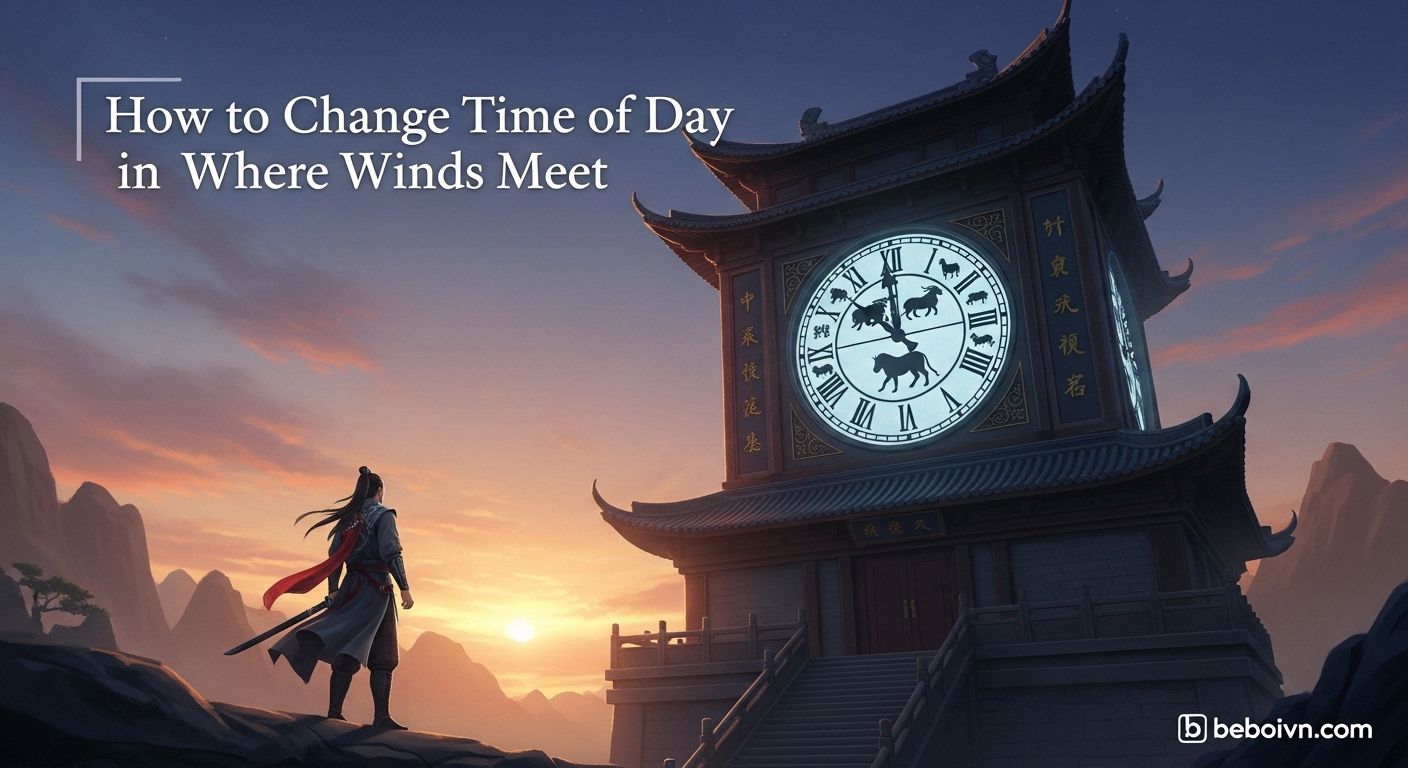
In the vast, immersive world of Where Winds Meet, time flows like the ancient rivers of China—mysterious, cyclical, and deeply connected to the game’s rich cultural heritage. Understanding how to change time of day in Where Winds Meet isn’t just a convenience; it’s essential for progressing through countless quests, uncovering hidden secrets, and fully embracing the game’s authentic Wuxia experience. Whether you’re a seasoned Jianghu wanderer or just beginning your journey, mastering the time manipulation mechanic will elevate your gameplay from casual exploration to strategic mastery.
The Ancient Chinese Time System: More Than Just Clocks
Before diving into the mechanics, it’s crucial to appreciate the cultural foundation that makes Where Winds Meet’s time system unique. Unlike typical games that use simple 24-hour formats, Where Winds Meet embraces the traditional Chinese timekeeping system that divides each day into 12 distinct periods, each spanning two hours and associated with specific animals from the Chinese zodiac.
This isn’t just cosmetic—it’s a deliberate design choice that immerses players in authentic ancient Chinese culture. Each time period carries its own significance, influencing everything from quest availability to NPC behavior patterns. The system dates back thousands of years and was used for everything from agricultural planning to imperial ceremonies. In Where Winds Meet, this ancient wisdom becomes a practical gameplay mechanic that rewards players who take the time to understand its deeper meaning.
How to Access the Time Change Feature?
Changing time in Where Winds Meet is straightforward once you know where to look. The developers have made this feature accessible but not immediately obvious, encouraging players to explore the game’s menus and discover its depth.
Method 1: Quick Menu Access (Recommended)
The fastest way to change time is through the quick menu:
- Open the Quick Menu: Press ESC on PC, Start on your controller, or the Touchpad on PS5
- Locate the Clock Icon: Look for the clock symbol, typically positioned as the third icon in the vertical menu, right below the letter/mail icon
- Select Time Option: Click on the clock to bring up the comprehensive time interface
Method 2: Main Menu Navigation
Alternatively, you can access time settings through the main menu:
- Enter the Main Menu: Use your platform’s designated menu button
- Navigate to Settings: Browse through the menu options until you find the time-related settings
- Select Clock Feature: Choose the clock option to access the time manipulation interface
Both methods lead to the same sophisticated clock interface, so choose whichever feels more comfortable for your playstyle.
Understanding the Chinese Zodiac Clock Interface
When you first access the time change feature, you’ll encounter a beautifully designed clock that might seem intimidating at first glance. Don’t worry—once you understand its components, it becomes an intuitive and powerful tool.
The Dual Display System
The clock features two distinct display systems working in harmony:
Outer Ring – Traditional Chinese Hours: The outer ring displays the 12 traditional Chinese time periods in their Pinyin names:
- Zi (23:00-01:00) – Rat
- Chou (01:00-03:00) – Ox
- Yin (03:00-05:00) – Tiger
- Mao (05:00-07:00) – Rabbit
- Chen (07:00-09:00) – Dragon
- Si (09:00-11:00) – Snake
- Wu (11:00-13:00) – Horse
- Wei (13:00-15:00) – Sheep
- Shen (15:00-17:00) – Monkey
- You (17:00-19:00) – Rooster
- Xu (19:00-21:00) – Dog
- Hai (21:00-23:00) – Pig
Inner Ring – Modern Time Reference: For players unfamiliar with Chinese timekeeping, the inner ring provides a more familiar reference with numbers (though only odd numbers are displayed, creating a unique aesthetic that bridges ancient and modern).
Navigating the Clock
To change time:
- Observe Current Time: The clock shows your current position in the daily cycle
- Select Desired Time: Click on any time period to advance to that hour
- Confirm Selection: The game will process your request and transition to the new time
Remember, you can only advance time forward—you cannot rewind to earlier periods. This limitation adds strategic depth to your time management decisions.
Cultural Significance of Each Time Period
Understanding the meaning behind each time period enhances both your gameplay and appreciation of Chinese culture. Each zodiac animal represents specific characteristics and activities associated with that time of day.
Zi Hour (23:00-01:00) – The Rat’s Domain
Rats are most active during this time, foraging for food under cover of darkness. In Where Winds Meet, this period often relates to stealth activities, nocturnal quests, and encounters with mysterious NPCs who prefer the shadows.
Chou Hour (01:00-03:00) – The Ox’s Vigil
Named for the ox chewing cud in the pre-dawn darkness, this hour represents quiet determination. Quests during this time often involve patience, persistence, and overcoming obstacles through steady effort rather than brute force.
Yin Hour (03:00-05:00) – The Tiger’s Hunt
Tigers awaken to hunt at dawn, making this hour perfect for combat-related quests and challenges that require courage and predatory instincts. Many martial arts masters are more likely to appear or offer training during this time.
Mao Hour (05:00-07:00) – The Rabbit’s Medicine
Associated with the Jade Rabbit preparing herbal medicines, this hour connects to healing, alchemy, and preparation. It’s an ideal time for crafting potions, visiting apothecaries, or undertaking wellness-related quests.
Wu Hour (11:00-13:00) – The Horse’s Peak
Representing the horse’s midday energy, this hour is perfect for travel, mount-related activities, and quests requiring peak physical performance. The famous Halo Peak Tower Solar Puzzle must be activated during this hour when the sun reaches its zenith.
This cultural depth transforms what could have been a simple time-skipping mechanic into a rich, educational experience that rewards players who engage with the game’s authentic Chinese heritage.
Practical Applications: Why Change Time?
Understanding how to change time is one thing; knowing when and why to do it is what separates casual players from true Jianghu masters. Here are the most common scenarios where time manipulation becomes essential:
Quest Progression and Time-Sensitive Objectives
Many quests in Where Winds Meet are designed with specific time requirements, adding layers of complexity and realism to the game world:
- Man in the Well Encounter: This mysterious side quest requires players to return during the Zi hour (late night) to progress, as the supernatural events only occur when the veil between worlds is thinnest.
- March of the Dead Quest: A haunting narrative that unfolds specifically during the Mao hour (early morning), when spirits are said to walk among the living before retreating with the rising sun.
- Twelve Years of Grudges: This emotional Kaifeng side quest demands nighttime progression, forcing players to either wait for natural nightfall or strategically advance time to continue the story.
Fishing and Resource Gathering
The game’s ecosystem follows realistic patterns where certain resources and creatures appear only during specific times:
- Nocturnal Fish: Many rare fish species only appear during the Zi, Chou, or Hai hours, making time manipulation essential for completionist anglers.
- Herb Availability: Some medicinal herbs follow the traditional Chinese medicine principle of being most potent when harvested during specific hours, such as the Mao hour for healing herbs.
- Mineral Spawns: Certain rare minerals may only be visible or accessible during particular lighting conditions tied to specific times of day.
Strategic Gameplay Advantages
Smart players use time manipulation to gain tactical advantages:
- Stealth Operations: Criminal activities or stealth missions are significantly easier during nighttime hours (Xu, Hai, Zi) when visibility is reduced and NPCs are less alert.
- Merchant Schedules: Some vendors and craftsmen follow traditional working hours, appearing only during specific periods like Chen (morning) or Shen (afternoon).
- Weather Manipulation: While you can’t directly control weather, advancing time will eventually change weather conditions, which can be crucial for quests requiring specific environmental conditions.
Limitations and Strategic Considerations
While the time change feature is powerful, it comes with important limitations that players must understand to use it effectively:
Mode Restrictions
The time manipulation feature only works in Solo Mode. This is a crucial limitation that affects multiplayer strategies:
- Multiplayer Limitations: When playing in cooperative or online modes, the time is synchronized across all players and cannot be individually manipulated.
- Session Management: To complete time-sensitive quests with friends, the host must set the appropriate time before inviting others to join their session.
- Planning Ahead: Cooperative groups must coordinate their time-based activities, as spontaneous time changes aren’t possible once a multiplayer session begins.
Time Progression Rules
Understanding how time advancement works is essential for effective planning:
- Forward Only: You can only advance time forward, never backward. This means if you miss a specific time window, you’ll need to wait for the next day’s cycle.
- Daily Limits: You can advance time up to “the day after tomorrow” in a single session, after which you’ll need to change time again to progress further.
- No Cooldowns: Unlike many game mechanics, there are no cooldowns or restrictions on how often you can change time—you can adjust it as frequently as needed.
Mission Restrictions
Time manipulation has specific limitations during certain game states:
- Active Missions: While you can technically access the time change feature during missions, the changes won’t take effect until the mission is completed or abandoned.
- Story Progression: Some main story quests may temporarily disable time manipulation to maintain narrative pacing and tension.
- Safe Zones Only: Time changes can only be made when you’re in safe zones or free-roaming areas—not during combat or critical story moments.
Advanced Tips and Pro Strategies
Mastering time manipulation in Where Winds Meet goes beyond basic mechanics. Here are advanced strategies used by expert players:
Quest Optimization
Experienced players create efficient quest routes by grouping time-sensitive objectives:
- Time Blocking: Organize your quest log by required times, completing all Zi-hour quests together before advancing to the next time block.
- Buffer Planning: Always advance time slightly earlier than needed to account for travel time and unexpected delays.
- Reset Awareness: Keep track of daily reset times for recurring quests and events, as some may only be available once per in-game day.
Resource Management
Smart time management leads to better resource efficiency:
- Energy Conservation: Use time skips instead of waiting around, preserving your character’s energy for important activities rather than idle standing.
- Spawn Timing: Learn the respawn patterns of rare resources and plan your time advances accordingly to maximize collection efficiency.
- Market Timing: Some trading posts and markets offer better prices during specific hours, following traditional Chinese business hours.
Combat and Tactical Advantages
Time manipulation can provide significant combat advantages:
- Ambush Setup: Use darkness hours (Zi, Chou) to set up ambushes or approach enemy camps undetected.
- Visibility Control: Certain areas may be easier to navigate during specific lighting conditions—use time changes to optimize visibility for your playstyle.
- Enemy Behavior: Some enemy types may have different patrol patterns or spawn rates depending on the time of day.
Common Questions and Troubleshooting
Even experienced players encounter confusion with Where Winds Meet’s time system. Here are solutions to frequently asked questions:
Why Can’t I Change Time?
If the time change feature isn’t working, check these common issues:
- Game Mode: Confirm you’re in Solo Mode—time manipulation doesn’t work in multiplayer.
- Mission Status: Some missions temporarily disable time changes; complete or abandon current missions to regain access.
- Menu Navigation: Double-check that you’re selecting the correct clock icon in the menu system.
What Happens to My Progress When I Change Time?
Many players worry about losing progress when manipulating time:
- Quest Progress: Most quest progress is preserved when changing time, but always save before major time advances.
- Resource Nodes: Some resource nodes may respawn when time changes significantly, while others remain on their natural timers.
- NPC Status: NPCs will reset their positions and schedules based on the new time, which can be both beneficial and inconvenient.
How Does Time Change Affect Weather?
While you can’t directly control weather, time advancement influences environmental conditions:
- Weather Transitions: Advancing time will eventually cycle through different weather patterns, though the exact changes aren’t directly controllable.
- Seasonal Progression: Significant time advances can trigger seasonal changes, affecting both weather and available activities.
- Visual Effects: Different times of day offer unique lighting conditions and atmospheric effects that can enhance both gameplay and screenshot opportunities.
Conclusion: Mastering Time in Where Winds Meet
Understanding how to change time of day in Where Winds Meet is more than just learning a game mechanic—it’s about embracing the rich cultural heritage that makes this game truly special. The ancient Chinese time system adds depth, authenticity, and strategic complexity that elevates the entire gameplay experience.
By mastering time manipulation, you’ll unlock new quest opportunities, optimize your resource gathering, and gain tactical advantages in combat. More importantly, you’ll develop a deeper appreciation for the cultural wisdom embedded in every aspect of Where Winds Meet’s design.
Remember that time in Jianghu flows like a river—constant, cyclical, and powerful. Learning to navigate its currents isn’t just about convenience; it’s about becoming a true master of the Wuxia arts. Whether you’re completing the Man in the Well Encounter under the Zi hour’s watchful eye or activating the Halo Peak Tower Solar Puzzle at Wu hour’s zenith, your understanding of time will be the key to unlocking Where Winds Meet’s greatest mysteries.