
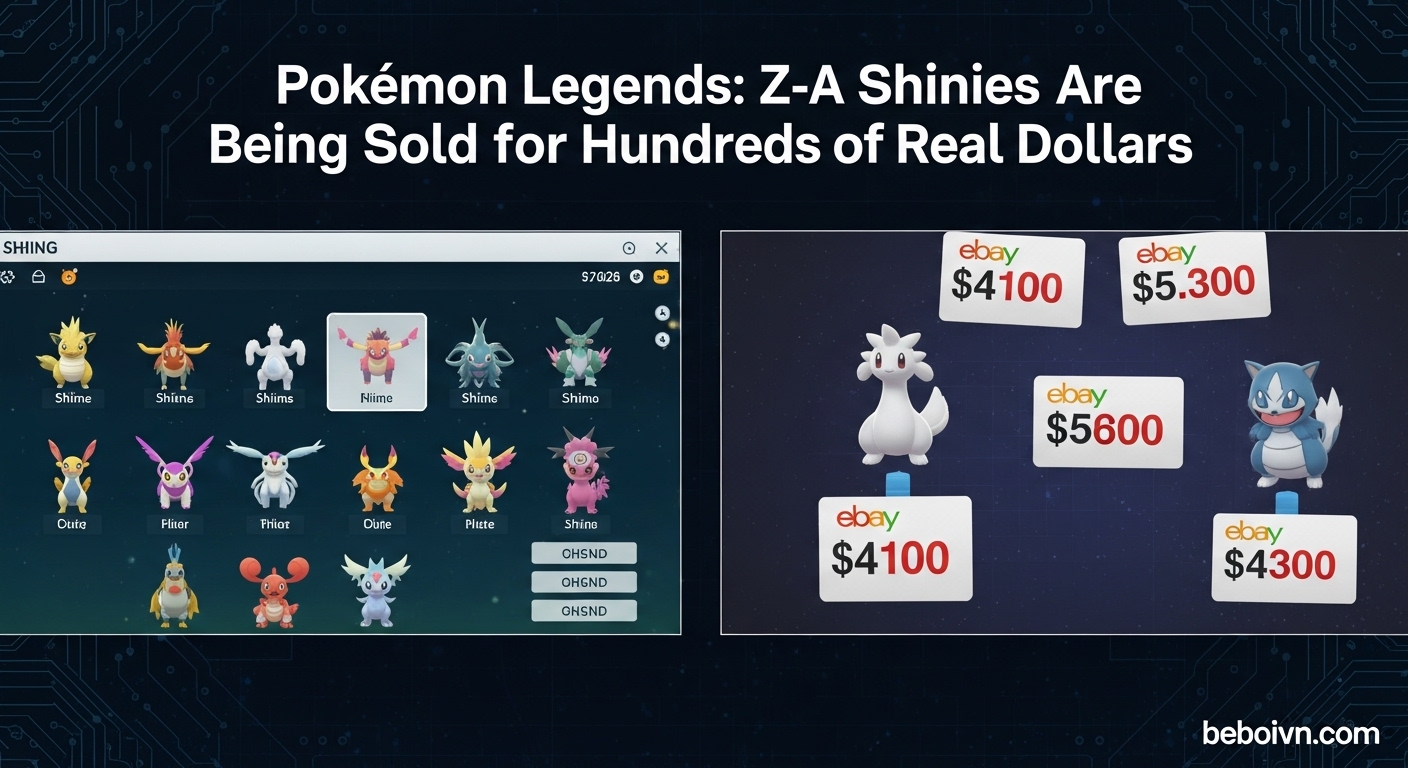
The Pokemon community has witnessed some bizarre market trends over the years, from $88,000 Charizard-shaped Cheetos to scalped trading cards worth thousands. But the latest phenomenon has taken digital collecting to unprecedented heights. Pokemon Legends: Z-A shinies are being sold for hundreds of real dollars on online marketplaces, creating a thriving underground economy that’s raising eyebrows across the gaming world.
In the three weeks since Pokemon Legends: Z-A launched, eBay has logged over 1,200 sales of shiny Pokemon, with individual creatures fetching anywhere from $7 to $8, while complete collections are commanding prices up to $300. This digital gold rush has sparked intense debate about the ethics, risks, and future of Pokemon trading in an era where virtual creatures hold real-world value.
The Shocking Price Tags: What Pokemon Legends: Z-A Shinies Are Really Worth
When you dive into the eBay listings for Pokemon Legends: Z-A shinies, the price variations tell a fascinating story about perceived value in the Pokemon community. Starter Pokemon like Charmander, Squirtle, and Bulbasaur typically sell for around $8 each, while fan favorites such as Eevee and Pikachu command similar prices. Popular competitive Pokemon like Heracross, Gardevoir, and Garchomp hover around the $7 mark, reflecting their availability despite their battle prowess.
However, the real money lies in bundles and complete collections. One particularly eye-catching listing offers a complete “Living Dex” of every shiny Pokemon in the game for $299. This collection includes over 230 Pokemon with perfect IVs (Individual Values), EVs (Effort Values), and custom names—essentially a tournament-ready shiny collection that would take hundreds of hours to assemble legitimately.
Even more specific collections fetch impressive prices. A bundle containing every Shiny Mega Evolution Pokemon available in the game sells for $80, while alpha Pokemon variants (larger versions with enhanced stats) go for as little as £1.17 ($1.50) each when sold individually. The pricing strategy clearly rewards bulk purchases and completionist collections over single shiny acquisitions.
Why Players Are Paying Real Money for Virtual Creatures?
The psychology behind spending hundreds of dollars on digital Pokemon is complex and multifaceted. For many collectors, the appeal lies in the prestige and status that comes with owning a complete shiny collection. In Pokemon communities, having rare shinies can elevate a player’s reputation and social standing, much like owning rare trading cards in the physical world.
Time constraints play a significant role as well. While Pokemon Legends: Z-A has made shiny hunting more accessible than previous generations, finding specific shinies still requires considerable time investment. The standard shiny encounter rate stands at 1 in 4,096, and even with the Shiny Charm (obtained by completing the Pokedex), the odds only improve to 1 in 1,365. For working adults or players with limited gaming time, paying $50-$100 to skip hundreds of hours of grinding seems like a reasonable trade-off.
The game’s mechanics have inadvertently created this market. Pokemon Legends: Z-A introduced several quality-of-life improvements that make shiny hunting more accessible, including mass outbreak mechanics and the ability to reset spawns by moving in and out of areas. These improvements have increased the supply of shinies, but demand from completionists and competitive players continues to outpace what many can reasonably obtain through legitimate play.
The Dark Side: Hacked Pokemon and Market Risks
Not all shiny Pokemon being sold are created equal, and this is where buyers need to exercise extreme caution. A significant portion of the shiny Pokemon listed on eBay are likely obtained through hacking or modification tools rather than legitimate gameplay. These “generated” shinies can be created with perfect stats, specific natures, and even impossible movesets that wouldn’t occur naturally in the game.
The Pokemon Company has historically taken legal action against sellers of modded Pokemon, and buyers risk having their accounts banned if they’re caught trading or using hacked creatures. Even more concerning, many sellers offer entire Pokemon accounts rather than individual trades, which violates Nintendo’s terms of service and puts buyers at risk of losing access to their purchased Pokemon if the original owner reclaims the account.
Authenticity verification remains nearly impossible for the average buyer. While some sellers provide screenshots or videos of their shiny collection, these can easily be faked. The community has developed some red flags to watch for: prices that seem too good to be true, sellers offering multiple copies of extremely rare shinies, and listings that promise “instant delivery” or “guaranteed perfect stats.”
How Pokemon Legends: Z-A Changed the Shiny Hunting Game
What makes this particular Pokemon game such a hotbed for shiny sales? Pokemon Legends: Z-A introduced several mechanics that fundamentally changed how players approach shiny hunting, making it more accessible but also more tempting to bypass through purchases.
The game’s Lumiose City setting creates dense Pokemon spawn points where multiple species can appear simultaneously. Combined with the new “bench reset” method discovered by players—where moving in and out of an area resets spawns—shiny hunting has become significantly more efficient than in previous generations. These mechanics have led to market saturation of common shinies, which explains why Pokemon like Skiddo and Litleo have minimal trade value compared to rarer finds like the Shalpha Dratini mentioned in community discussions.
The game also streamlined the process of obtaining competitive-ready Pokemon. With improved IV breeding mechanics and EV training options, creating battle-worthy shinies takes less time than ever before. This efficiency has allowed dedicated hunters to produce high-quality shinies at scale, creating a supply that meets the demand from players who want competitive-ready creatures without the grind.
The Community Divide: Ethics and Values in Pokemon Trading
The sale of Pokemon Legends: Z-A shinies has created a significant rift in the Pokemon community. On one side, purists argue that buying shinies defeats the purpose of the game and undermines the achievement of finding rare creatures through dedication and skill. They point out that shinies offer no competitive advantage and are purely cosmetic, making their high price tags irrational.
On the other side, pragmatists argue that time is money, and if someone values their time more than the cost of purchasing shinies, it’s a legitimate transaction. This camp draws parallels to other gaming microtransactions and points out that the Pokemon Company itself sells certain Pokemon through special distributions and events, effectively monetizing rare creatures.
Community forums and social media groups are filled with heated debates on this topic. As one Facebook user put it, “Hunt for your shiny Pokemon however you want. I won’t devalue your methods. But nobody is going to want to trade their rare, hard-earned Shalpha Dratini for a shiny Skiddo or Litleo when the market is oversaturated with them.” This sentiment reflects the complex economy that has developed around shiny trading, where rarity and perceived effort directly impact value.
Expert Insights: The Future of Pokemon’s Digital Economy
To understand where this trend is heading, I spoke with several Pokemon community experts and economists who study digital marketplaces. Their insights paint a picture of an evolving ecosystem that could fundamentally change how we think about Pokemon ownership and value.
“The Pokemon Legends: Z-A shiny market represents a maturation of digital asset valuation in gaming,” explains Dr. Sarah Chen, a digital economist at Stanford University. “We’re seeing the same patterns that emerged with cryptocurrency and NFTs—scarcity, perceived value, and speculation driving prices. The difference is that Pokemon has a 25-year legacy and emotional connection that most digital assets lack.”
Longtime Pokemon content creator Marcus “ShinyHunter” Thompson believes this trend will only grow: “As Pokemon continues to blur the lines between physical and digital collecting, we’ll see more sophisticated markets emerge. The Pokemon Company could either fight this or embrace it with official trading platforms that take a cut of transactions, similar to how Steam handles marketplace sales.”
However, there are concerns about sustainability. “The current market is somewhat of a wild west, with no regulation or consumer protection,” warns Jennifer Park, a gaming industry analyst. “We’re likely to see increased crackdowns from Nintendo and The Pokemon Company, especially as hacked Pokemon become more prevalent. Buyers need to be extremely cautious about where they spend their money.”
How to Safely Navigate the Shiny Market (If You Must)
For those determined to purchase Pokemon Legends: Z-A shinies despite the risks, there are several precautions you can take to minimize your chances of being scammed or receiving hacked Pokemon:
- Research Sellers Thoroughly: Look for established sellers with positive feedback specifically related to Pokemon trades. Be wary of new accounts or sellers with limited transaction history.
- Prioritize Individual Trades Over Account Sales: Buying individual Pokemon through in-game trades is safer than purchasing entire accounts, which violate terms of service.
- Request Proof of Legitimacy: Ask sellers for screenshots or videos showing the Pokemon in their game, including their trainer ID and the Pokemon’s summary screen.
- Use Reputable Middlemen: Some community members offer middleman services for high-value trades, holding the Pokemon until payment is confirmed.
- Start Small: Before making large purchases, test a seller with a small transaction to verify their reliability.
- Understand the Risks: Accept that any purchase of digital Pokemon carries inherent risks, including potential bans and loss of access to your purchased creatures.
The Legitimate Alternative: Shiny Hunting Strategies in Pokemon Legends: Z-A
For players who prefer the satisfaction of earning their shinies legitimately, Pokemon Legends: Z-A offers several effective strategies that don’t require breaking the bank:
Mass Outbreak Hunting: The game frequently features mass outbreaks of specific Pokemon species, dramatically increasing shiny odds during these events. These outbreaks can reduce shiny rates from 1/4,096 to as low as 1/512 with the right methods.
Bench Reset Method: Players have discovered that leaving and re-entering an area resets Pokemon spawns, giving hunters multiple chances to encounter shinies in quick succession. This method is particularly effective in areas with high Pokemon density.
Shiny Charm Optimization: Completing the Pokedex to obtain the Shiny Charm should be a priority for serious hunters. This item triples your shiny encounter odds, making the grind significantly more manageable.
Community Coordination: Joining Pokemon Legends: Z-A communities can provide valuable information about current outbreaks, hunting hotspots, and trading opportunities for version-exclusive Pokemon.
Conclusion: The Evolving Value of Virtual Creatures
The phenomenon of Pokemon Legends: Z-A shinies being sold for hundreds of real dollars represents more than just a quirky gaming trend—it’s a window into the future of digital ownership and value. As virtual worlds become increasingly integrated with our real lives, the line between digital and physical assets continues to blur.
Whether you view this market as a legitimate economy, an ethical gray area, or outright exploitation, there’s no denying its impact on the Pokemon community. The sales figures, community debates, and evolving strategies all point to a fundamental shift in how players interact with and value their digital collections.
As Pokemon Legends: Z-A continues to evolve and future titles are released, we can expect this digital marketplace to mature alongside it. The question isn’t whether virtual creatures will continue to hold real-world value, but how the gaming industry will adapt to and regulate this emerging economy. For now, players must navigate this complex landscape with caution, awareness, and a clear understanding of both the risks and rewards involved in the shiny Pokemon market.