
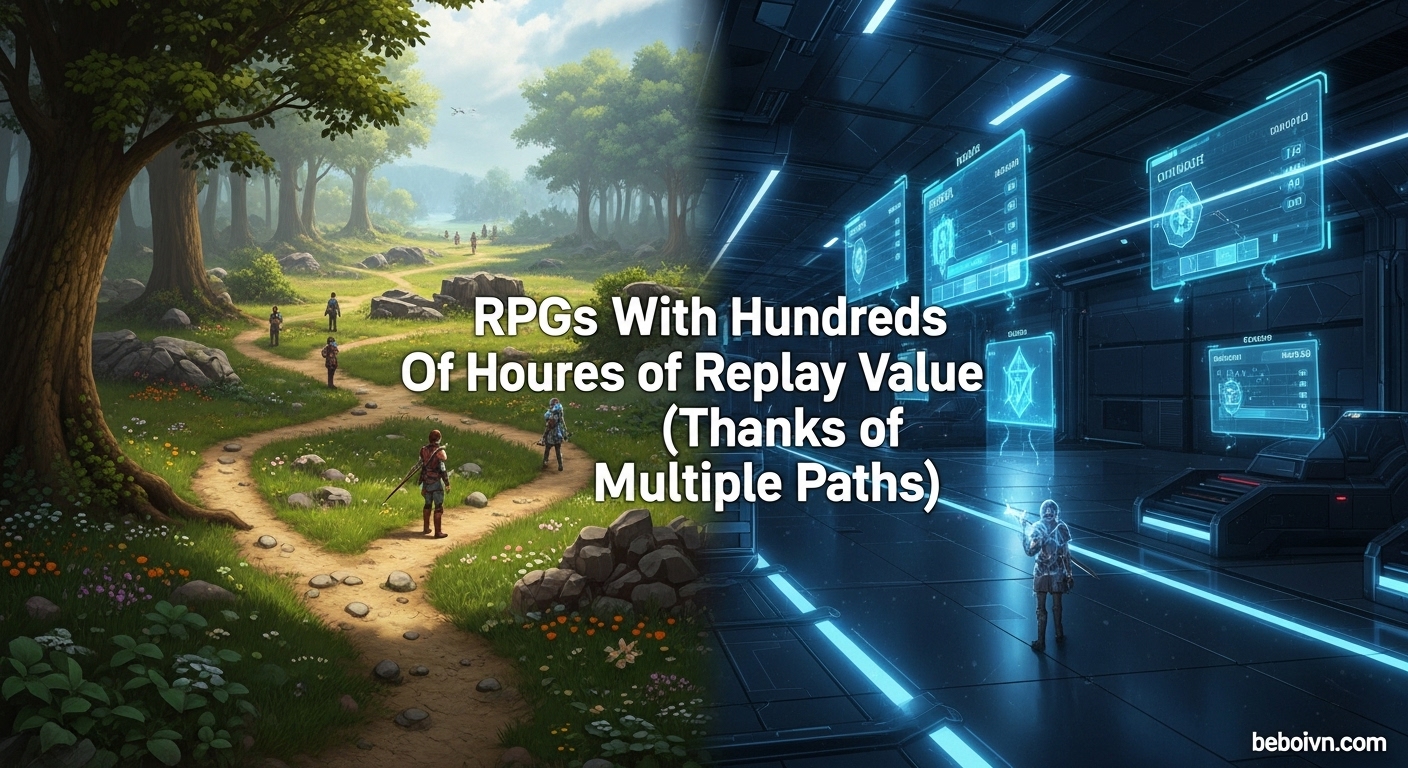
In the vast landscape of role-playing games, few experiences match the thrill of discovering that your choices have fundamentally altered the course of your adventure. RPGs with hundreds of hours of replay value represent the pinnacle of interactive storytelling, where every decision, every alliance, and every moral compromise can lead to dramatically different outcomes. These aren’t just games you play once and shelve—they’re living, breathing worlds that evolve based on your actions, inviting you back time and again to explore roads not taken.
As someone who has sunk thousands of hours into these narrative masterpieces, I can tell you that the magic lies in their ability to surprise you even on your third, fourth, or tenth playthrough. Let’s dive into the most remarkable examples of RPGs that offer unparalleled replayability through their intricate branching paths and meaningful choices.
The Holy Trinity of Modern Replayable RPGs
Baldur’s Gate 3: The Gold Standard of Player Agency
When discussing RPGs with hundreds of hours of replay value, it’s impossible to ignore the phenomenon that is Baldur’s Gate 3. Larian Studios has created something truly extraordinary—a game where your character creation alone can unlock entirely different storylines, dialogue options, and quest resolutions.
What makes Baldur’s Gate 3 special isn’t just its 17,000 potential ending variations, but how seamlessly your choices weave into the fabric of the world. Play as a Drow, and you’ll face prejudice in certain settlements but find unexpected allies in the Underdark. Choose the Dark Urge origin, and you’ll experience a unique descent into madness that other players never see. The game’s genius lies in making every choice feel meaningful, from whether to spare a minor NPC to which god you pledge allegiance to.
The replay value extends beyond just narrative choices. Different class combinations, party compositions, and even approaches to combat (stealth vs. brute force vs. magic) can transform how you experience entire chapters. It’s not uncommon for players to discover completely new questlines on their third playthrough that they never knew existed.
Cyberpunk 2077: The Comeback Kid of Choice-Based Gaming
While Cyberpunk 2077 had a rocky launch, its current state represents one of the most impressive redemption stories in gaming history. More importantly, it stands as a testament to how multiple paths can create hundreds of hours of engaging gameplay.
Unlike many RPGs where choices primarily affect dialogue, Cyberpunk 2077’s branching paths fundamentally alter how you approach missions. Play as a stealthy Netrunner, and you’ll hack your way through obstacles that a Solo character would smash through. Choose different lifepaths (Nomad, Street Kid, or Corpo), and you’ll experience unique opening chapters and dialogue options that persist throughout the entire game.
The game’s replay value is further enhanced by its multiple endings, which aren’t just cosmetic changes but entirely different conclusions based on your relationships with key characters and major decisions. Each playthrough can feel like a different genre—from corporate thriller to street-level action movie—all within the same richly detailed world.
Disco Elysium: The Thinking Gamer’s Paradise
Disco Elysium proves that you don’t need flashy combat or expansive open worlds to create incredible replay value. This isometric RPG focuses entirely on dialogue, skill checks, and narrative choices, yet offers more meaningful branching paths than games ten times its size.
What makes Disco Elysium remarkable is how your character build directly influences your personality and available options. Play as a high Intellect, low Physique character, and you’ll solve problems through deduction and wit. Focus on Volition and Psyche, and you’ll navigate social situations with emotional intelligence. Each combination of 24 skills creates a fundamentally different experience, with unique dialogue options, quest solutions, and even internal monologues.
The game’s three main endings and numerous variations are just the tip of the iceberg. The real replay value comes from discovering how different approaches to the same situations yield wildly different results. It’s not uncommon for players to have completely different experiences of major plot points based on their character build and choices.
Hidden Gems: Underrated Masters of Replayability
The Age of Decadence: Where Every Choice Truly Matters
While mainstream RPGs often promise meaningful choices, few deliver on this promise as consistently as The Age of Decadence. This indie RPG from Iron Tower Studio is a masterclass in branching narrative design, where your character background, skills, and decisions create fundamentally different playthroughs.
What sets The Age of Decadence apart is its commitment to consequence. Unlike many games where you can eventually access all content regardless of choices, this RPG locks entire questlines, locations, and story arcs based on your decisions. Join one faction, and you’ll be locked out of joining its rivals. Choose certain skills during character creation, and you’ll solve problems in ways completely unavailable to other builds.
The game’s relatively short playtime (10-15 hours per playthrough) is actually a strength for replayability. Each run is dense with meaningful choices, and the brevity makes it easy to jump back in and explore different paths. It’s not uncommon for players to complete the game half a dozen times and still discover new content on their seventh playthrough.
Tyranny: Playing the Villain Has Never Been This Compelling
Obsidian Entertainment’s Tyranny flips the script on traditional RPG morality by placing you in the role of an enforcer for an evil overlord who has already conquered the world. This unique premise creates incredible replay value as you navigate complex moral choices where there are no good options—only different shades of bad.
The game’s standout feature is its Conquest system, which lets you make decisions about how the world was conquered before the game even begins. These choices dramatically alter the game world, available factions, and even major plot points. Combined with a reputation system that tracks your standing with different factions, Tyranny offers remarkable narrative depth.
What makes Tyranny special is how your choices don’t just affect the ending—they reshape the entire middle portion of the game. Different faction alliances can lead to completely different questlines, companions, and even final confrontations. It’s a masterclass in how to make player choices feel meaningful throughout the entire experience, not just at the end.
Pathfinder: Wrath of the Righteous: The Ultimate Class-Based Replayability
While many RPGs offer different classes, few make them as meaningfully distinct as Pathfinder: Wrath of the Righteous. This isometric CRPG takes the concept of class-based gameplay to its logical extreme, with each of its 25+ classes (and numerous prestige classes) offering fundamentally different ways to experience the game.
The game’s Mythic Path system elevates this further. At certain points in the story, you can embrace supernatural powers that transform your character and unlock entirely new abilities, questlines, and even endings. Whether you become an angel, demon, lich, or something more exotic, each Mythic Path offers a unique gameplay experience and narrative perspective.
What makes Wrath of the Righteous remarkable for replay value is how deeply these systems intertwine. Your class affects which Mythic Paths are available, your Mythic Path unlocks new abilities that change how you approach combat, and your choices throughout the game determine which companions join you and how the story unfolds. It’s not uncommon for players to have completely different experiences of major battles and story beats based on their build and choices.
Classic RPGs That Still Deliver Unmatched Replay Value
Chrono Trigger: The Pioneer of New Game+
Long before Baldur’s Gate 3 was making headlines, Chrono Trigger was revolutionizing RPG replayability with its innovative New Game+ system. This 1995 classic introduced the concept of carrying over your levels and equipment into new playthroughs, allowing you to experience the story from different angles and access new content.
What makes Chrono Trigger special is how its multiple endings are tied to when and how you choose to fight the final boss. With over a dozen different endings, ranging from the standard “good” ending to bizarre joke endings, the game encourages experimentation and multiple playthroughs.
The genius of Chrono Trigger’s design is how it makes replaying the game feel fresh. By starting with your endgame equipment and abilities, you can approach challenges differently, access areas earlier than intended, and make different choices that lead to new outcomes. It’s a design philosophy that modern RPGs are still learning from decades later.
Fallout: New Vegas: The Gold Standard of Open-World Choice
While newer Fallout games have their merits, none match the sheer replay value of Fallout: New Vegas. This Obsidian Entertainment masterpiece is widely regarded as one of the best examples of how to create meaningful player choice in an open-world setting.
What makes New Vegas special is how your choices ripple throughout the entire game world. The faction system is particularly brilliant—align with the NCR, Caesar’s Legion, Mr. House, or go independent, and you’ll experience completely different questlines, companion interactions, and endings. Your reputation with different factions affects how NPCs treat you, what quests are available, and even how major story events play out.
The game’s skill system further enhances replayability. Different skill opens unlock unique dialogue options and quest solutions that are completely unavailable to other builds. A high Speech character can talk their way through situations that a combat-focused character would need to fight through, while a character with maxed Science or Lockpick can access areas and information that others never see.
The Witcher 2: Assassins of Kings: Branching Paths Done Right
Before The Witcher 3 became a cultural phenomenon, The Witcher 2 was already pushing the boundaries of narrative choice in RPGs. This game is famous for its Chapter 2 branching, where a single decision early in the game leads to completely different locations, characters, and questlines for the entire middle portion of the game.
What makes The Witcher 2 remarkable is how substantial these differences are. We’re not just talking about different dialogue options—we’re talking about entirely different cities, factions, and story arcs that can span 10-15 hours of gameplay. Players who make different choices will have fundamentally different experiences of the game’s middle act.
The game’s multiple endings are just the icing on the cake. What really makes The Witcher 2 worth replaying is discovering how different choices lead to completely different perspectives on the same events. It’s a masterclass in how to create meaningful branching paths that encourage multiple playthroughs.
Modern JRPGs That Excel at Replayability
Persona 5 Royal: Social Links and Beyond
While many JRPGs focus on linear storytelling, the Persona series has always excelled at giving players meaningful choices, and Persona 5 Royal is the pinnacle of this design philosophy. The game’s Social Link system (now called Confidants) creates incredible replay value as you decide which characters to befriend and when.
What makes Persona 5 Royal special is how your time management decisions affect your available options. With limited time each day, you must choose between building relationships, improving your stats, or exploring dungeons. Different priorities lead to different abilities, dialogue options, and even story outcomes.
The game’s New Game+ mode further enhances replayability by allowing you to carry over your Social Links and stats, enabling you to explore relationships you missed the first time around. Combined with multiple endings based on your choices throughout the game, Persona 5 Royal offers hundreds of hours of content for completionists.
Triangle Strategy: Tactical RPGs With Meaningful Choices
Triangle Strategy proves that tactical RPGs can offer just as much replay value as their action-oriented cousins. This HD-2D masterpiece features a complex morality system where your choices affect which characters join your party, which battles you fight, and how the story unfolds.
The game’s Scales of Conviction system is particularly brilliant. At key moments, you’ll vote on important decisions, and your convictions (Morality, Liberty, Utility) will influence the outcome. These choices don’t just affect dialogue—they determine which paths are available to you and which endings you can achieve.
What makes Triangle Strategy special is how substantial these differences are. Different choices lead to different chapters, different party members, and even different final bosses. It’s not uncommon for players to have completely different experiences of major story beats based on their decisions throughout the game.
What Makes These RPGs Special: A Deeper Analysis
The Psychology of Meaningful Choice
What separates truly replayable RPGs from those that merely offer the illusion of choice? The answer lies in psychological investment. When players feel that their decisions genuinely matter—that they’re not just selecting different flavors of the same experience—they’re far more likely to replay the game to explore alternatives.
The best RPGs with hundreds of hours of replay value understand this principle. They create choices that players will think about long after they’ve put down the controller—choices that make them wonder “what if?” and inspire them to load up an earlier save or start a new playthrough entirely.
Beyond Binary Choices: The Spectrum of Possibility
Too many RPGs fall into the trap of offering binary choices—good vs. evil, paragon vs. renegade—that ultimately lead to similar outcomes. The games we’ve discussed here avoid this pitfall by offering a spectrum of possibilities where each choice feels unique and meaningful.
Take Disco Elysium, for example. Instead of simple good/evil choices, you’re navigating complex political ideologies, personal traumas, and philosophical questions that don’t have easy answers. Each playthrough can explore different aspects of your character’s personality and worldview, leading to genuinely different experiences.
The Role of Mechanics in Narrative Replayability
While narrative choices are crucial, the best replayable RPGs also understand that gameplay mechanics must support multiple approaches. A game that offers different story paths but forces you through the same combat encounters and puzzles every time will quickly feel repetitive.
That’s why games like Pathfinder: Wrath of the Righteous and Cyberpunk 2077 succeed where others fail. They ensure that different character builds and playstyles lead to fundamentally different gameplay experiences, not just different dialogue options. This mechanical variety keeps the gameplay fresh even when you’re revisiting familiar story beats.
How to Choose Your Next Replayable RPG?
For Story Lovers: Disco Elysium and The Age of Decadence
If you prioritize narrative depth and meaningful choices above all else, Disco Elysium and The Age of Decadence should be at the top of your list. These games focus almost exclusively on dialogue, skill checks, and narrative consequences, offering some of the most impactful choices in gaming.
For Combat Enthusiasts: Pathfinder: Wrath of the Righteous and Baldur’s Gate 3
If you love deep combat systems that change dramatically based on your character build, Pathfinder: Wrath of the Righteous and Baldur’s Gate 3 offer hundreds of hours of varied gameplay. Each class and build plays differently, and your choices affect both story and combat in meaningful ways.
For Open-World Explorers: Fallout: New Vegas and Cyberpunk 2077
If you prefer vast open worlds where your choices affect the entire game world, Fallout: New Vegas and Cyberpunk 2077 deliver unparalleled freedom. Both games feature faction systems, reputation mechanics, and branching storylines that make each playthrough feel unique.
For JRPG Fans: Persona 5 Royal and Triangle Strategy
If you love JRPGs but want more meaningful choices than the genre typically offers, Persona 5 Royal and Triangle Strategy are perfect choices. Both games feature complex choice systems that affect story, characters, and gameplay in significant ways.
The Future of Replayable RPGs
As gaming technology continues to evolve, we’re seeing exciting developments in the realm of replayable RPGs. Games like Baldur’s Gate 3 have raised the bar for what’s possible in terms of player agency and narrative branching, and future titles will undoubtedly build upon these foundations.
We’re also seeing indie developers push the boundaries of what’s possible with limited resources. Games like The Age of Decadence prove that you don’t need a massive budget to create meaningful player choice—you just need smart design and a commitment to making every decision matter.
Looking ahead, we can expect to see more RPGs that combine the narrative depth of games like Disco Elysium with the mechanical variety of titles like Pathfinder: Wrath of the Righteous. The future of replayable RPGs is bright, and players who love meaningful choices have never had it better.
Conclusion: Why These Games Matter?
RPGs with hundreds of hours of replay value represent more than just good value for your gaming dollar—they represent the pinnacle of interactive storytelling. These are games that respect your intelligence, trust your judgment, and reward your curiosity with experiences that evolve and change based on your choices.
In a medium often criticized for being too passive or too linear, these games stand as testaments to what makes gaming unique: the ability to create truly interactive experiences where your choices matter. Whether you’re exploring the branching narratives of Baldur’s Gate 3, navigating the moral complexities of Tyranny, or discovering new paths in The Age of Decadence, you’re participating in something special.
So the next time you’re looking for a game that will keep you coming back for more, consider one of these masterpieces of replayable design. You won’t just be playing a game—you’ll be crafting your own unique story, one choice at a time.