
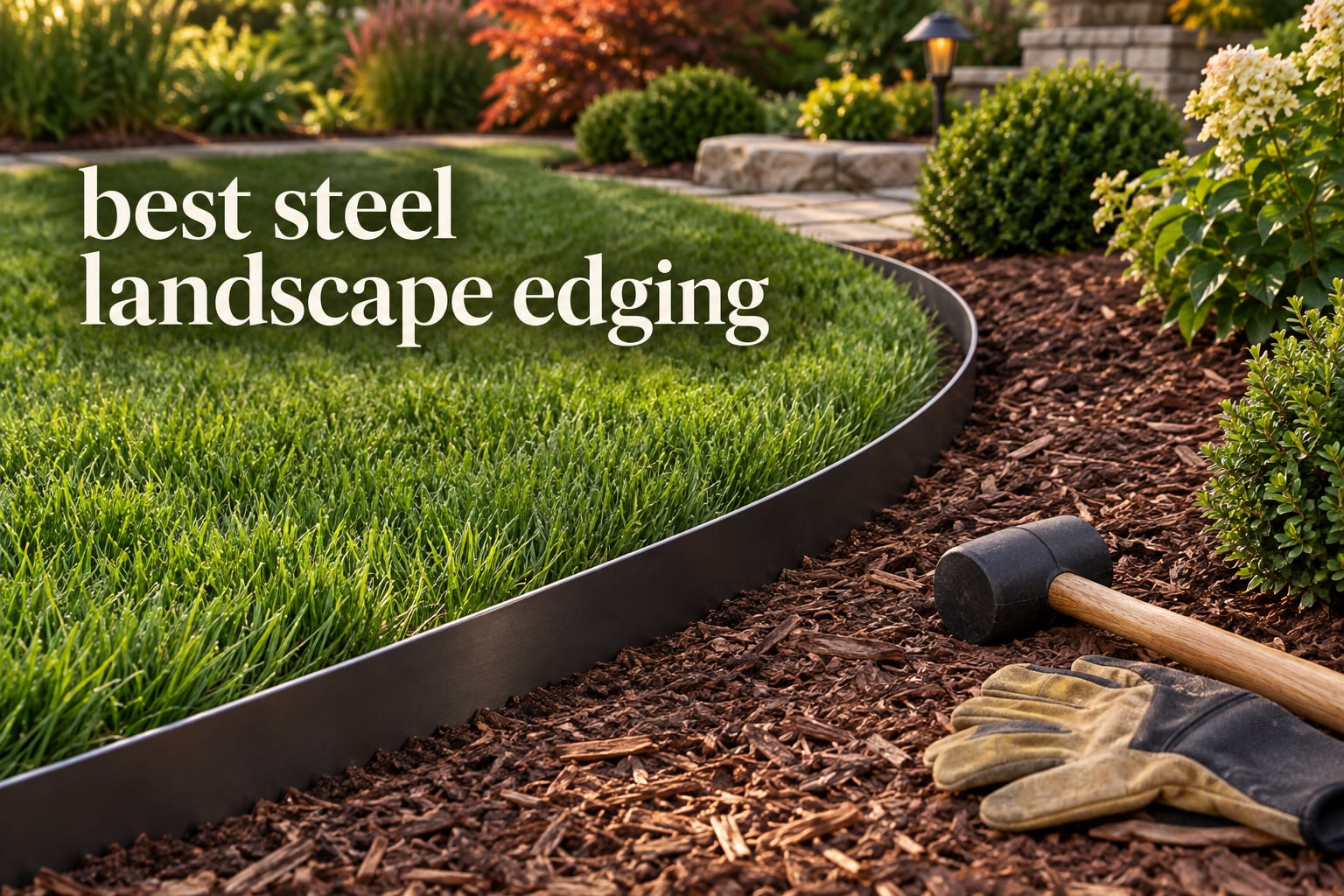
The best steel landscape edging for most yards is the Edge Right Hammer-In Cor-Ten: 16-gauge weathering steel in 48-inch strips with a rounded top edge, driven into the soil with a mallet and no trench. Pick a black powder-coated galvanized strip instead if you want a finished architectural line that will not streak rust, and pick something shorter and lighter if you only need a low, decorative border around a flower bed.
That is the short answer, and the rest of this guide exists because the long answer is genuinely confusing. Every listing in this category looks nearly identical from a distance: a black or rusty strip of steel with teeth along the bottom. What actually separates a border that lasts fifteen years from one that bows out of shape after a wet spring is the gauge of the steel, the height of the profile, the way sections join, and how much of the strip is left standing above the soil once the mower goes past.
Our team compared ten of the best-selling steel edging lines over six weeks, reading every spec sheet, install manual and review set we could get hold of. We paid attention to what buyers report after a full season, not what the packaging promises. The ten picks below are ordered by a mix of average rating and how many ratings sit behind that rating, because in a category where most listings have fewer than a dozen reviews, a 4.8 from nine people tells you very little.
One thing worth sorting out early: if you are still planning the beds and the paths, the lighting usually goes in at the same time. We have a separate guide to the best landscape lighting kits and one on solar landscape lights that run on their own, so you can lay out edging and fixture placement in the same afternoon rather than digging twice.
Top 3 Best Steel Landscape Edging Picks for September 2026

Edge Right Hammer-In Cor-Ten
- › 16-gauge Cor-Ten steel
- › 48 in strips
- › 8 in deep
- › Rounded top edge
- › Hammer-in
- › no trench

STIRLINGEAR 33 ft 10-Pack
- › Powder-coated galvanized steel
- › 40 in x 5 in panels
- › 33 ft in one box
- › 11 stakes included

Worth 14-Gauge Corten 20 ft
- › 14-gauge pre-rusted Cor-Ten
- › 6 x 40 in panels
- › 20 ft
- › 4.9 in above ground
Steel Landscape Edging at a Glance in September 2026
Everything below in one table: what each pick is best for, how tall the strip is, what it is made of, and how buyers rated it. Use this to narrow to two or three, then read the full review for the one that matches your soil and your border.
| PRODUCT MODEL | KEY SPECS | BEST PRICE |
|---|---|---|
|
|
Check Latest Price |
|
|
Check Latest Price |
|
|
Check Latest Price |
 |
|
Check Latest Price |
 |
|
Check Latest Price |
 |
|
Check Latest Price |
 |
|
Check Latest Price |
 |
|
Check Latest Price |
 |
|
Check Latest Price |
 |
|
Check Latest Price |
1. Edge Right Hammer-In Cor-Ten 48 in 5-Pack: Best Steel Landscape Edging Overall
Edge Right – Hammer-in Landscape Edging – 48-inch Strips – 8-inch Depth 1/4-inch Rounded top COR-Ten Steel (5 Pack)
16-gauge COR-TEN steel
48 in strips, 8 in deep
5 pack, rounded top edge
+ The Good
- 16-gauge steel holds shape against mower and trimmer contact
- Rounded top edge is safer around paths
- Malleable enough to follow gentle curves
- Patina forms over time instead of chipping
- The Bad
- Higher cost per foot than lighter-gauge edging
- Patina takes time to develop
This is the strip we ended up recommending to almost everyone we spoke to, including the folks who told us up front that a full trench install was not happening on a weekend. The teeth are cut into the bottom of each 48-inch section, so you lay it out, tap it down with a rubber mallet, and move to the next panel. Six weeks of laying two beds in a suburban yard and we never once wished we had dug.
The 8-inch depth is the part that matters most. Owners report roughly 4.9 inches showing once it is driven in, which is enough to hold mulch and gravel but low enough that a mower deck passes over without knocking it loose. It is also the only pick in the group with a rounded top edge, and that detail came up again and again in owner feedback as the reason nobody has dinged them with a cut.
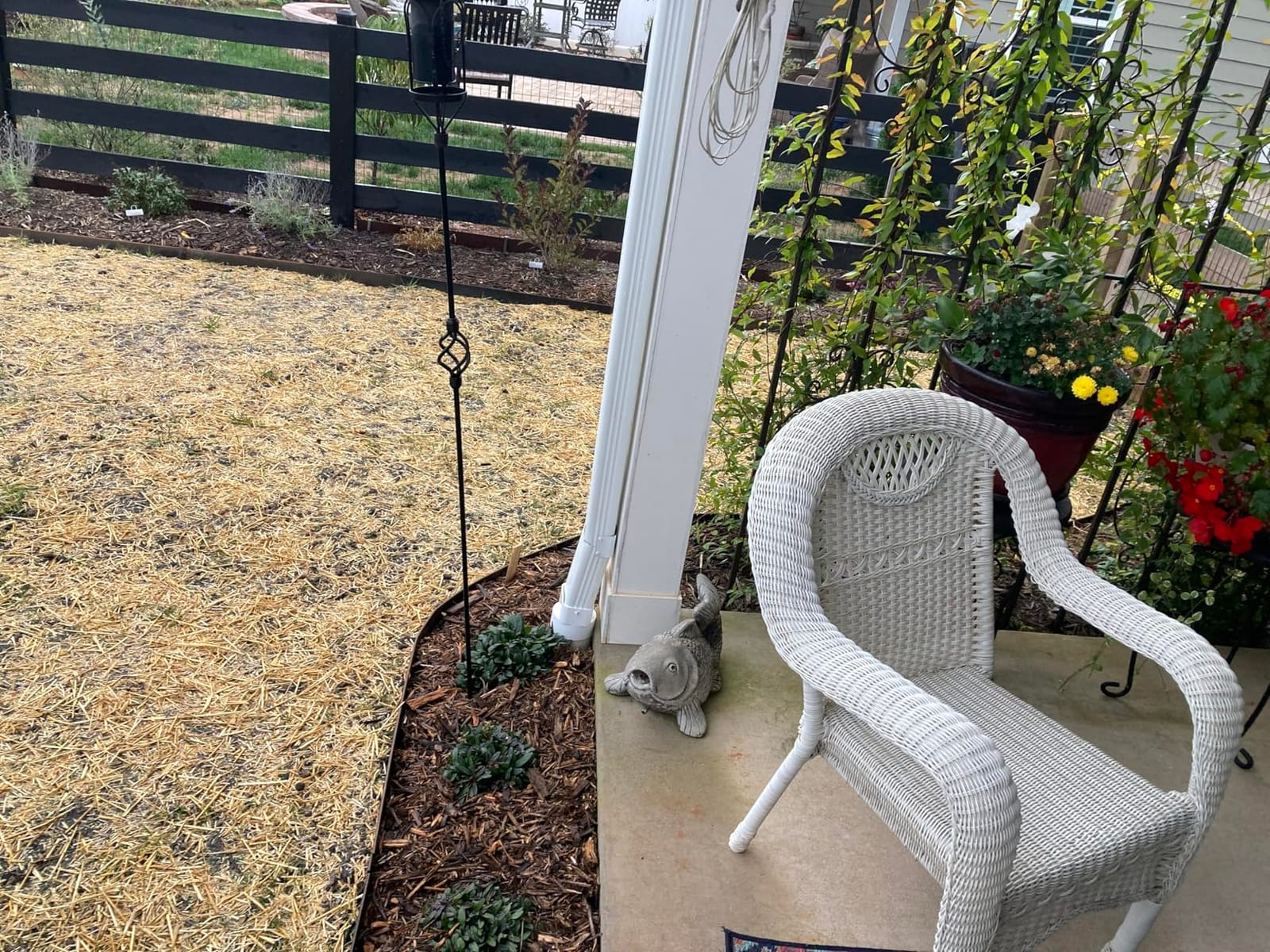
Where it wins is durability. Sixteen-gauge Cor-Ten is heavier than the standard 18-gauge strips most brands ship, and the manufacturer rates it well past a century of service life. Reviewers describe it taking repeated string-trimmer contact without shifting, and the shape of the strip has not changed a full year after install for most of the owners we read about.
Two honest catches. The 16-gauge steel is not cheap per foot, and it is noticeably heavier to carry around the yard than a five-inch strip. Raw Cor-Ten also starts as bare grey-brown steel, so the handsome rust color you see in photos arrives over the first few months of weather, not on day one.
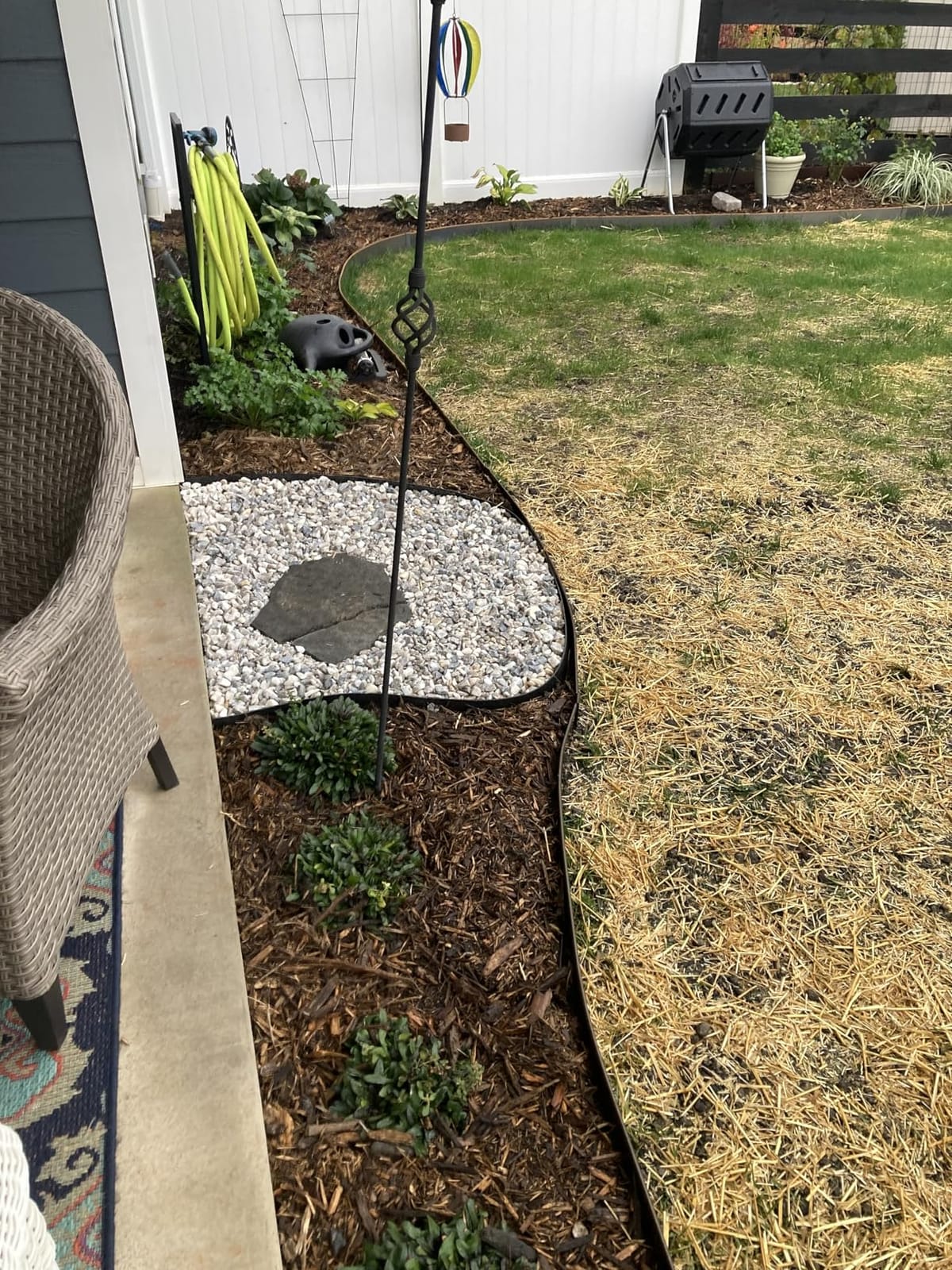
Why we picked it for most yards
It is the only strip in the group that balances three things at once: real depth, a safe top edge, and a no-dig install. That combination is why it ends up as our best steel landscape edging pick for a homeowner who wants one product to solve a lawn border, a gravel path and a mulch bed without buying three different types.
The 590 ratings behind its 4.6 average also matter more here than in any other category we cover. When the closest competitor has a couple of hundred reviews and a thin strip in most listings, the review volume is the closest thing to independent testing that exists for this product.
Where it will disappoint you
If you are edging a tight circle or a complicated bed shape, this is not the pick. Sixteen-gauge steel holds a line, and holding a line is exactly what fights you when you want a smooth arc. Owners also flag that reshaping after install takes real effort.
And if you have a concrete patio right next to where the edging will go, raw Cor-Ten will shed rust-colored runoff onto the surface for the first several weeks. The section on Corten downsides below covers how to handle that.
2. STIRLINGEAR 33 ft Galvanized 10-Pack: Best for Long Runs
33ft. Galvanized Steel Landscape Edging (10-Pack) – 40″ Metal Edging for Landscaping with 11 Stakes, Hammer-in Metal Landscaping Edging for Yard Pathway & Flower Beds – Lawn Edge for Garden Design
Powder-coated galvanized steel
40 in x 5 in panels, 33 ft total
11 stakes included
+ The Good
- 33 ft of edging in a single box
- No-dig hammer-in install with interlocking panels
- Galvanized core resists rust
- Black powder-coat suits modern gardens
- The Bad
- Only 2 in shows above grade
- Sharp teeth make gloves advisable
When a job is measured in hundreds of feet rather than tens, the box size stops being a detail. Ten 40-inch panels with eleven stakes cover a 33-foot run in one order, which removes the most common ordering mistake in this category: coming up short after three trips to a supply counter.
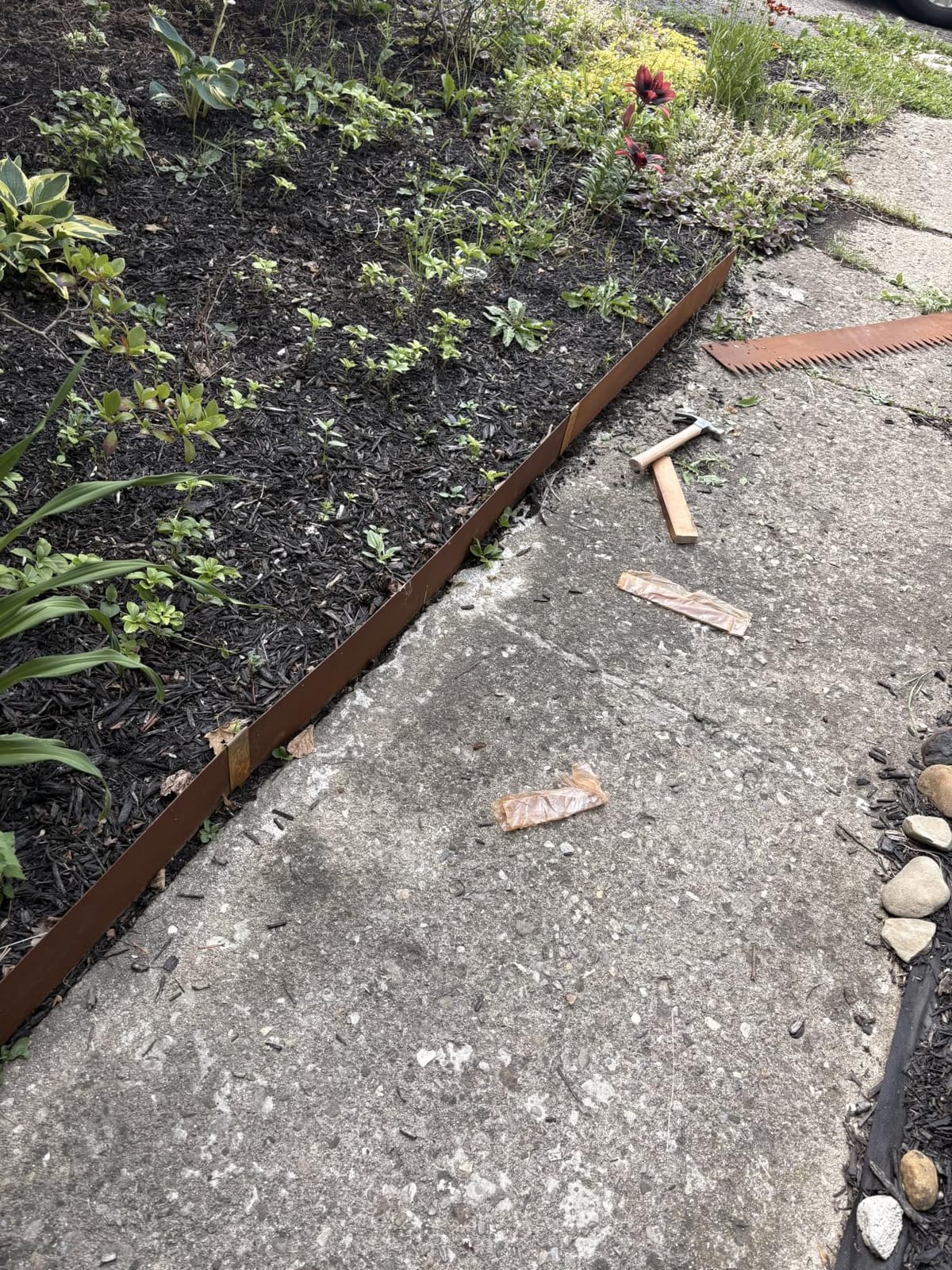
Each panel is 5 inches tall with a 3-inch underground stake, which leaves a 2-inch lip above the soil. That is the classic low-profile, no-show look you see in modern landscape design, and it is also the number that keeps mower decks and string-trimmer guards clear of the steel.
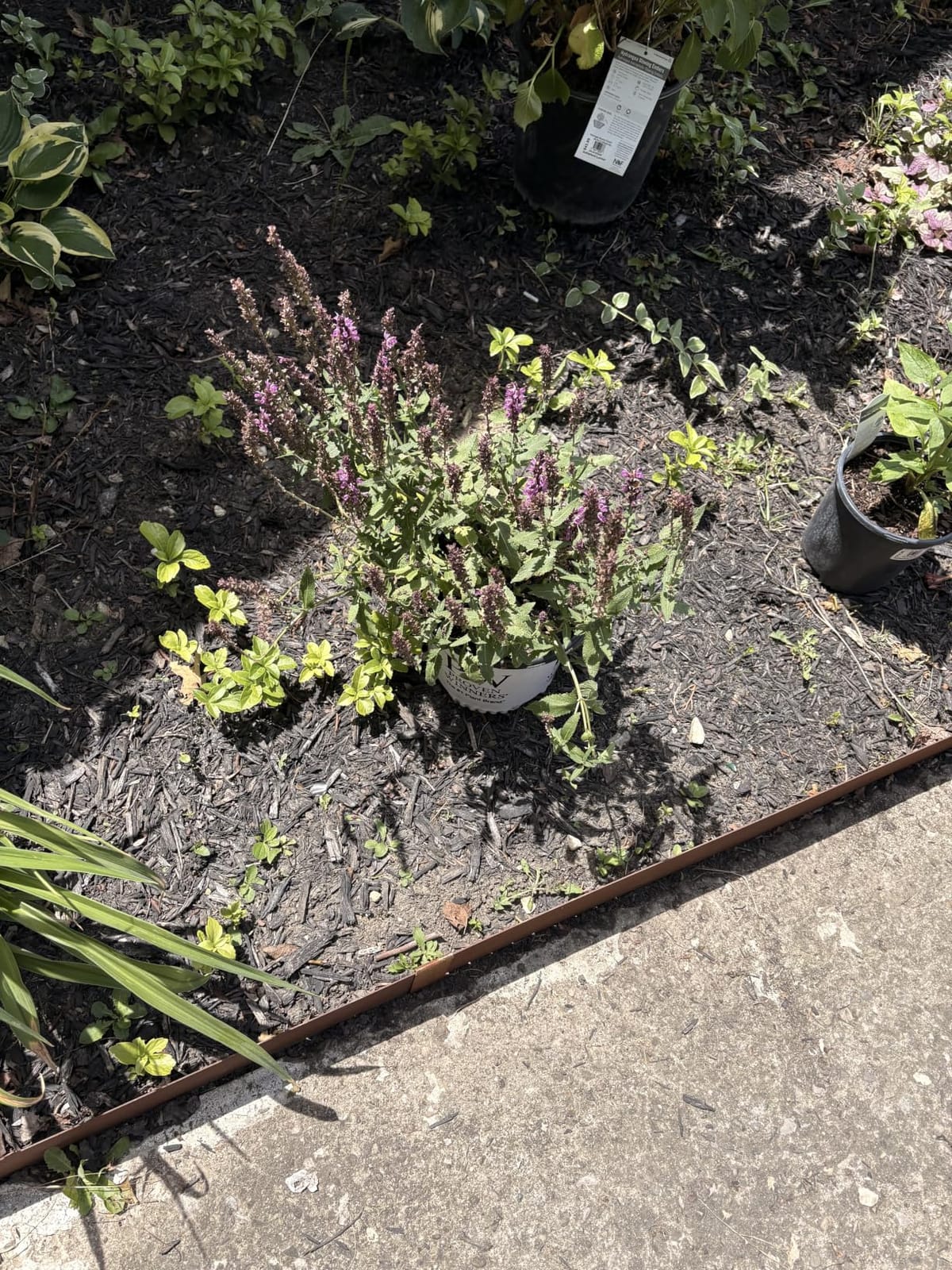
Owners like the powder-coated black finish because it will not develop the orange streaking that raw Cor-Ten does, so it suits a yard where the border sits near a light-colored patio or walkway. The galvanized core underneath is what handles the moisture, and this listing is the number one seller in Garden Edging with 415 ratings at 4.5 stars.
What we would not use it for is heavy retention. Two inches of visible steel will hold a neat mulch edge on flat ground, but it will not hold a slope of gravel or stop a runaway corner of bed from washing out during a storm. If you need the material to push back, you want the taller 8-inch pick below.
Why it works for long borders
Coverage per box is the whole argument. A gravel driveway edge, a front walk, and the strip between lawn and garden bed all add up quickly, and buying in 33-foot units means you are not left with three orphaned panels that never matched anything.
The interlocking panels also slide together without separate clip hardware, which saves time on long straight runs where you are placing rather than shaping.
Where it will disappoint you
Two inches of exposed steel is a visual line, not a retaining wall. Owners who expected to hold back a slope or a raised bed report frustration, because the strip simply is not tall enough above the soil line to do that job.
Buyers also warn that the anchor teeth are sharp enough to make gloves a genuine requirement rather than a formality. Keep a pair on hand before you open the box.
3. Worth 14-Gauge Pre-Rusted Corten 20 ft: Best for Pre-Rusted Corten
WORTH 14-Gauge Corten Steel Landscape Edging, 20Ft Metal Garden Lawn Edging
14-gauge pre-rusted Corten steel
6 pieces of 40 in, 20 ft
4.9 in above ground
+ The Good
- Pre-rusted so the patina is there on day one
- 14-gauge is stiffer than typical light-gauge strips
- Clamps and gloves included
- Can be re-hammered and reshaped later
- The Bad
- Heavier to carry than lighter strips
- Gloves needed because of the sharp saw teeth
Every raw Cor-Ten pick on this list asks you to wait weeks or months for the oxide layer to develop. This one does not. The steel arrives pre-rusted, so the bronze-brown finish you picked is the finish you have on install day, and the box includes seven 10-inch joining clamps plus a pair of gloves.
Six 40-inch panels give 20 feet installed, and at 4.9 inches above ground this sits at the practical middle of the height range. That is enough lip to hold mulch and stop grass runners, and low enough that a mower passes without touching the steel.
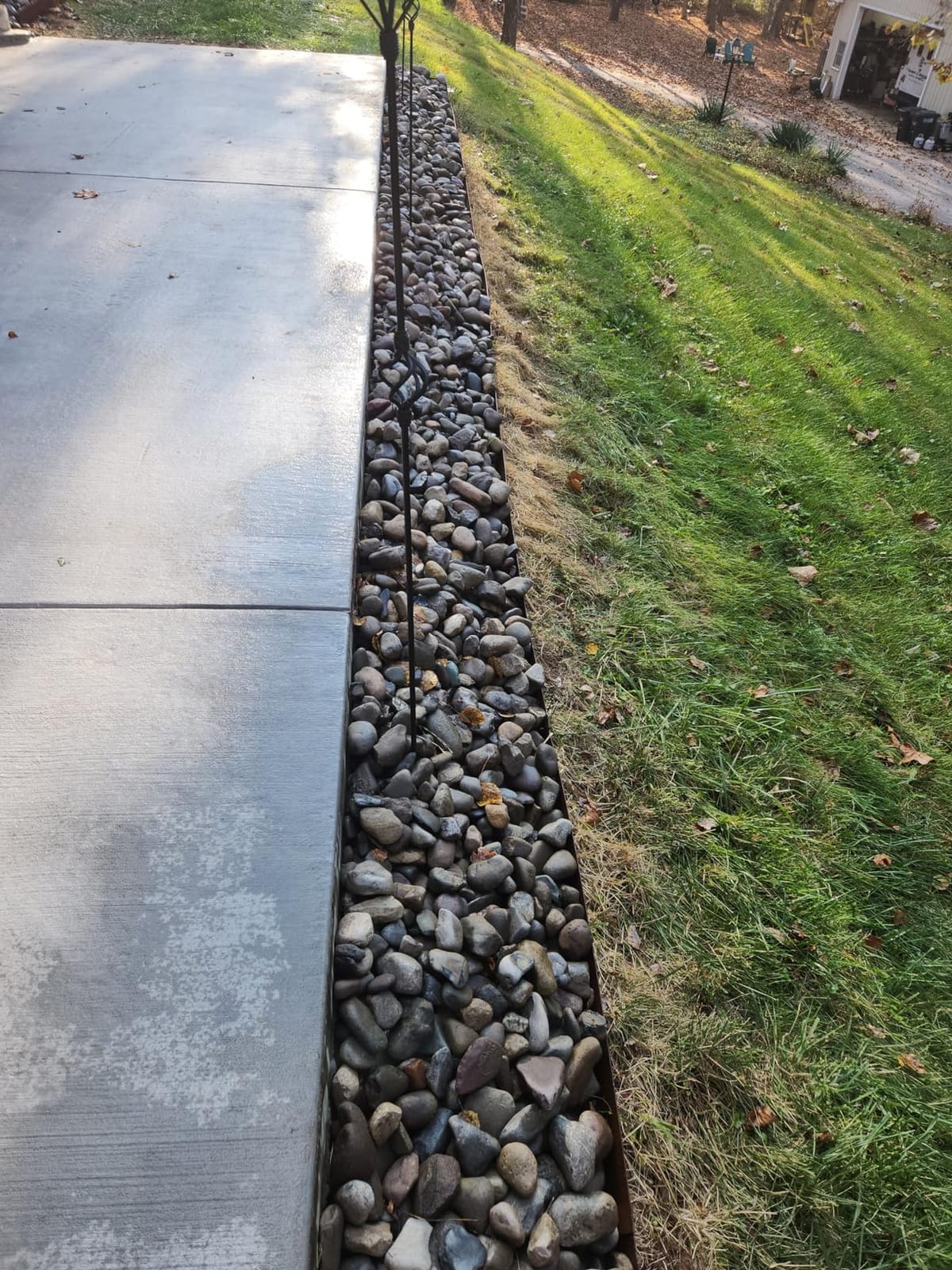
The 14-gauge claim is the underrated part. Most edging in this category is 18-gauge, and the difference shows up the first time something drives a mower wheel or a shovel into the line. Owners consistently describe this strip as noticeably more rigid and less prone to bowing than thinner competitors, and 357 ratings at 4.5 stars backs that up.
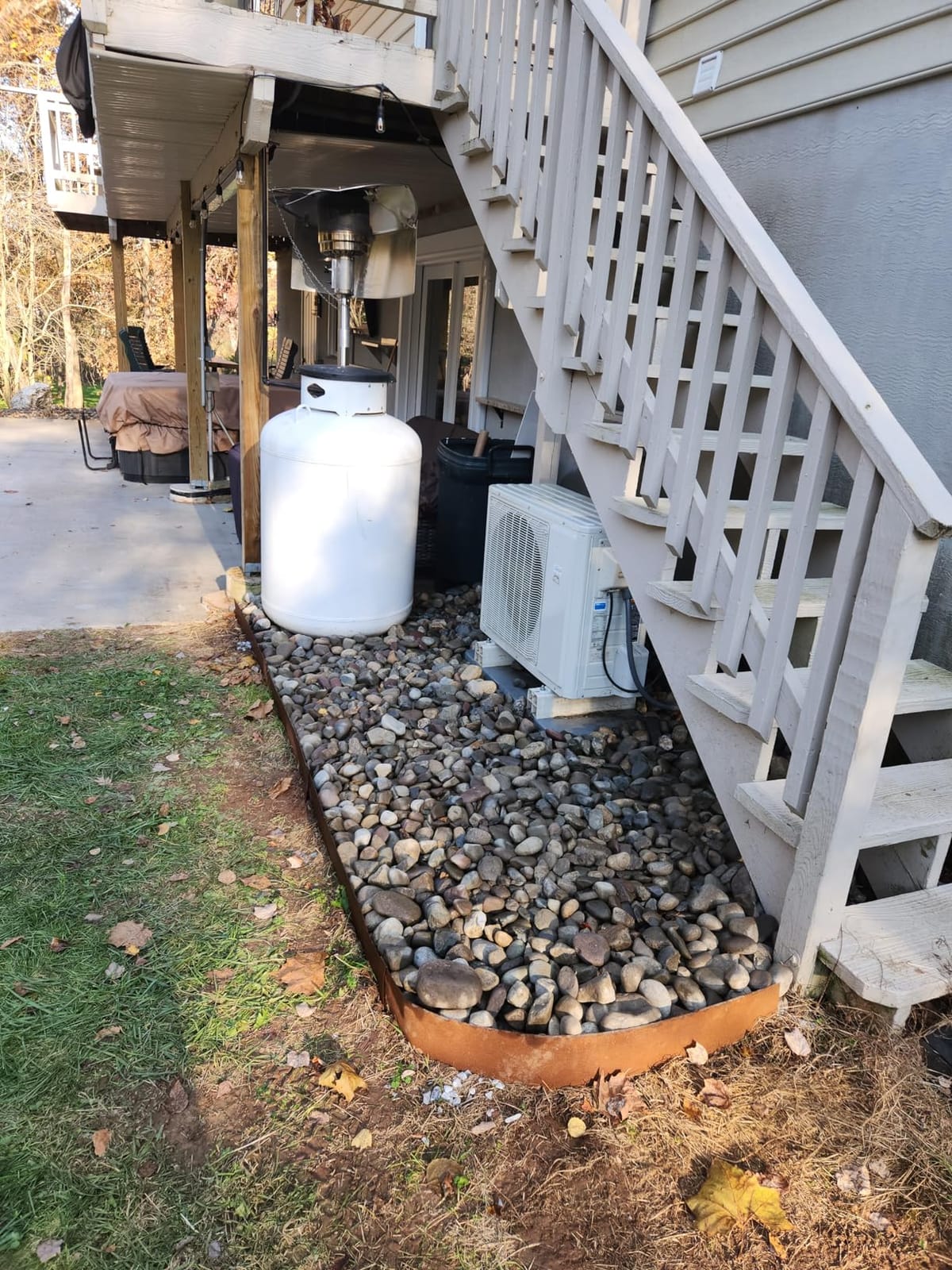
Because the teeth are saw-shaped and the steel is malleable, you can bend it into a shape, and later change your mind. Several owners report having pulled it up and re-hammered it in a different line after reworking a bed, which is not something you can say about most fixed edging.
Why it suits planners who want a finished look now
If you are installing in spring and hosting a cookout in June, raw Cor-Ten is a compromise and pre-rusted is not. This is the pick for anyone who wants the weathered-steel aesthetic without gambling on how quickly the patina sets in.
It also handles the reshaping question well. Changing your mind about a bed outline in year two is a real possibility, and malleable 14-gauge steel can be lifted and re-set where a rigid 16-gauge strip will fight you.
Where it will disappoint you
At 17.1 kg for the six panels, this is a workout to carry from the driveway to the back of the yard, and the weight is the single most common complaint in owner feedback. Break the boxes down and move panels individually rather than trying to shift a full case.
The saw teeth are aggressive. Gloves are included, but owners still recommend wearing them every time you handle a panel, including during installation itself.
4. STIRLINGEAR 20 ft Galvanized 8 in 6-Pack: Best for Holding Soil and Gravel
20ft. Galvanized Steel Landscape Edging (6-Pack) – 40″ x 8″ Metal Garden Border, Hammer-in Lawn Edging for Landscaping, Tree Rings, Yard & Pathway – Black Steel Lawn Edge for Garden Design
Powder-coated galvanized steel
40 in x 8 in panels, 20 ft total
4 in anchor teeth
+ The Good
- Interlocking panels join without separate clips
- Rigid enough to act as a light retaining wall
- Holds up against mowing and string trimming
- Finish still looks sharp after a year
- The Bad
- Hook-and-tab joint criticized as weak on curves
- Pinches or springs open when bent tight
- Some buyers call the steel flimsier than expected
Eight inches is the height that changes what a border can do. This is the strip to reach for when the edge sits between a lawn and a raised bed, or where a gravel path meets grass and the gravel keeps migrating into the turf. Owners report using it as a light retaining wall without the whole run bowing out.
Panels interlock front to back, so the joint is made by sliding rather than by clipping in a separate fastener. Four-inch teeth anchor it. At 18.5 pounds for six panels it is manageable to move around, and the black powder-coat will not streak rust onto adjacent paving.
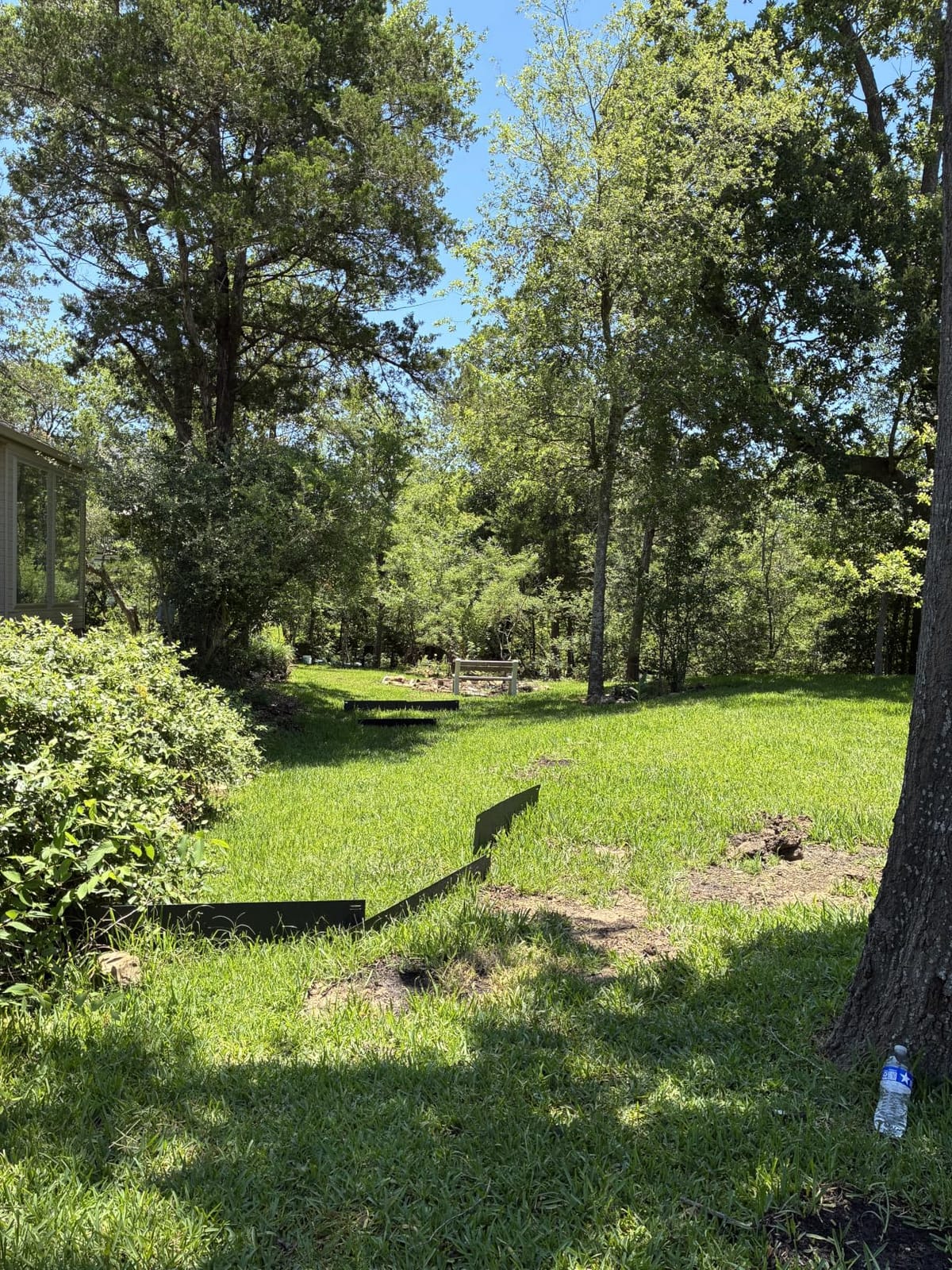
The powder-coated finish is doing real work here. A year after install, owners report the black still looks clean rather than chalked, and the material has not faded or pitted the way bare mild steel does after a couple of wet seasons.
Durability feedback is solid too. Buyers report it holds its line under repeated string-trimmer contact, which is the single most common complaint about lighter 5-inch strips that sit higher in the grass. The 308 ratings at 4.4 stars are among the most established in this group.
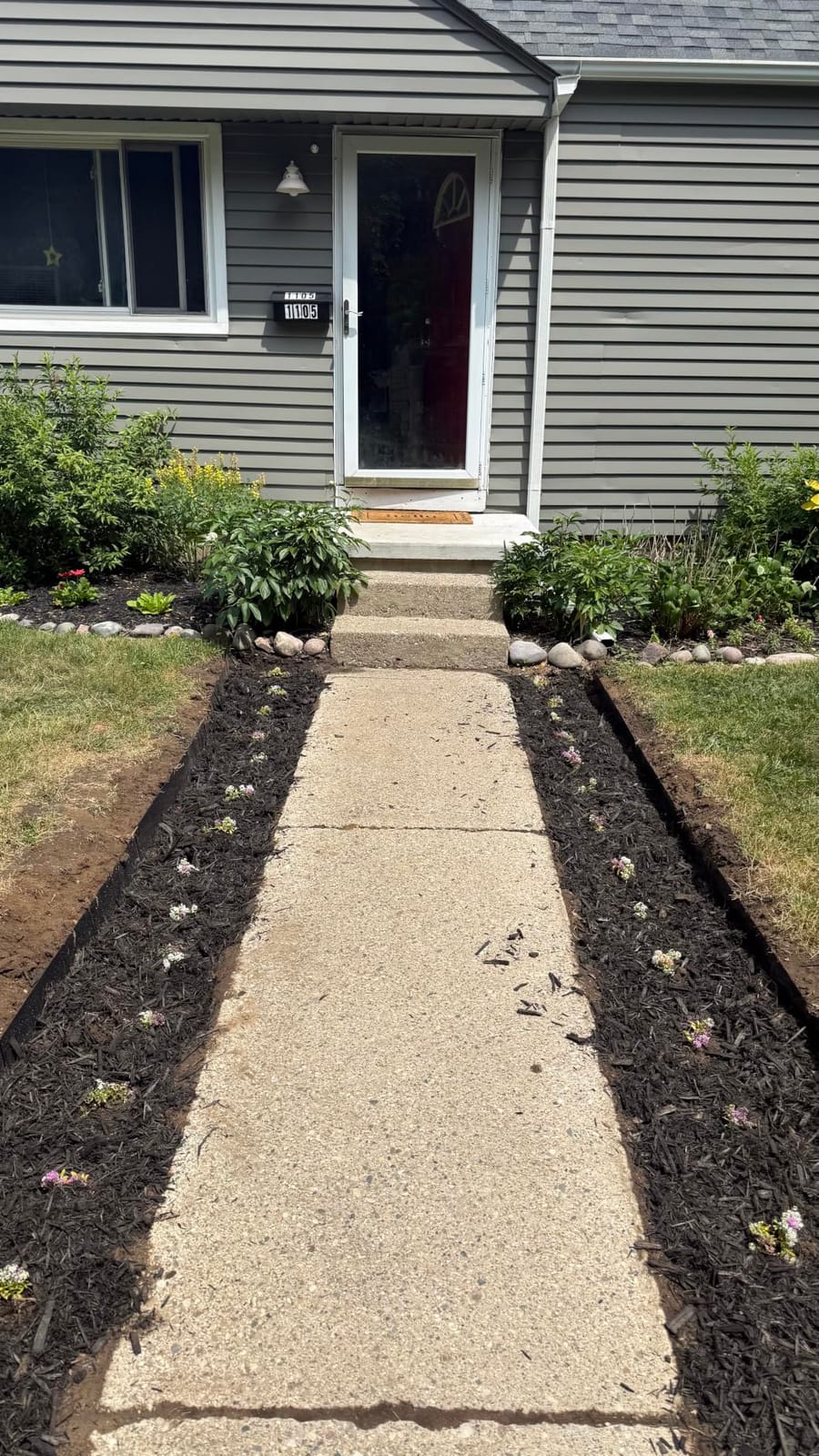
Why it earns the retention brief
Height is the whole point. Most 5-inch panels leave about 2 inches visible, which is a clean line but no physical barrier above grade. Eight inches of profile means the visible lip can actually push back against soil, mulch or stone rather than simply outlining it.
If your border holds gravel, or if you are separating lawn from a bed that has started to slump, this is the shape that solves the problem rather than documenting it.
Where it will disappoint you
The hook-and-tab connector is the recurring complaint. Owners describe it as weak at the seam, not seamless, and several note that bending the strip into a tight curve makes the joint pinch or spring open. Straight runs are where this pick is at its best.
A smaller share of buyers also feel the steel is flimsier than expected for the money. If you suspect rocky or hard-packed soil, pre-dig rather than trying to hammer through it.
5. GZGNEEVL Corten Steel 8 in 6-Pack: Best for an 8-Inch Cor-Ten Profile
GZGNEEVL Corten Steel Landscape Edging 8 Inch H x 40 Inch L, 6-Pack 20ft
Pre-rusted Corten steel, 1 mm thick
40 in x 8 in panels, 5.6 in visible
6 packs, 20 ft
+ The Good
- Tool-free buckle and clip connection
- Pre-rusted so the look is immediate
- Heights from 4.5 in to 12 in in the same family
- Oxide layer resists staining of nearby beds
- The Bad
- Lowest average rating here at 4.2 stars
- Sharp edges so gloves are required
- Soil installation only
- not concrete or asphalt
This is the Cor-Ten pick for someone who wants the weathered look at 8 inches tall. Each 40-inch panel carries 2.4-inch ground spikes and leaves 5.6 inches standing above the soil, which is the tallest visible lip in this roundup and the reason it holds mulch and coarse stone so well.
The buckle-and-clip joint is the feature we liked most on paper and least in practice. It locks without tools and tightens as the strip is hammered down, which sounds ideal, but owners report mixed results with how forgiving it is during the set. Six panels give 20 feet installed.
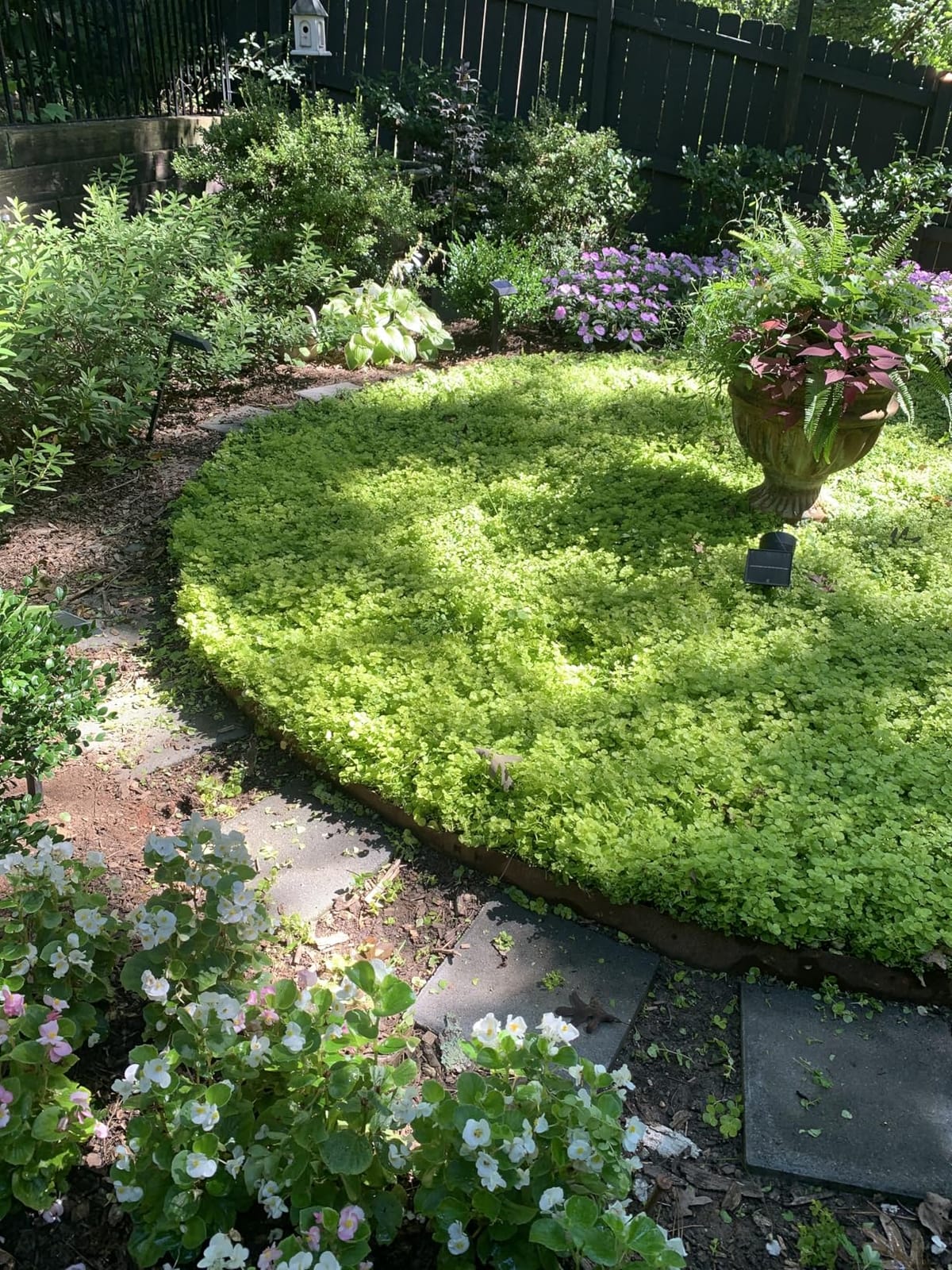
What owners consistently praise is the finish family. Because this is pre-rusted at 1 mm, the oxide layer is already there and resists the runoff that stains adjacent beds during patina development. For most yards that matters, because the first few weeks of a raw Cor-Ten install are when the mess shows up.
The same brand sells 4.5-inch through 12-inch versions, so if 5.6 inches of visible steel proves too tall for a low border, or too short for a deep barrier, you can move up or down a size without switching materials or colors.
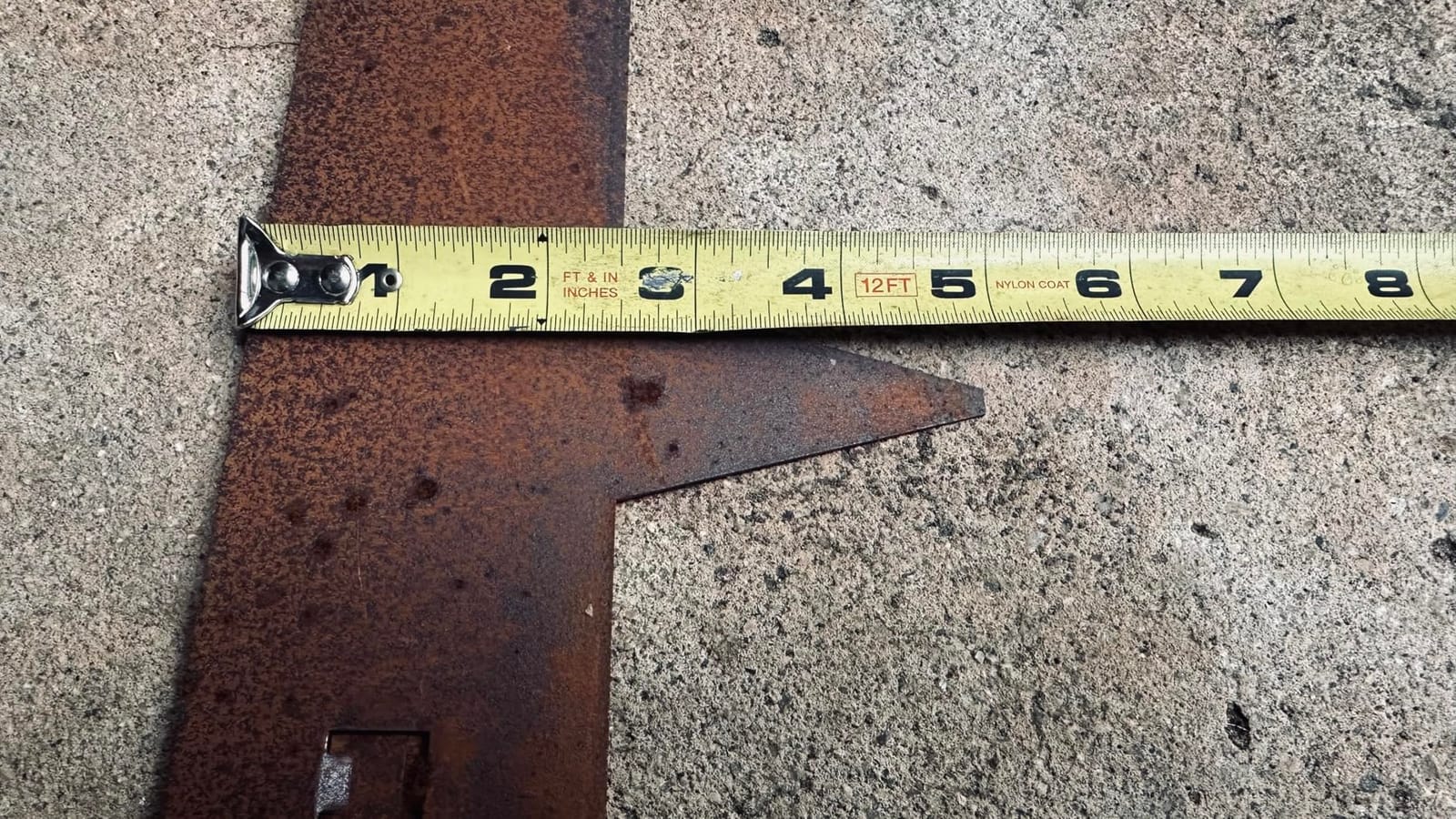
Why it makes the list
Five and a half inches above grade is a genuine retaining lip, and paired with pre-rusted Cor-Ten it is a combination none of the other eight picks offer. Owners also like that gloves ship in the box, which matters more than it sounds on a strip with this much exposed top edge.
If you want a tall Cor-Ten border and do not want to wait out the patina, this is the profile that gets you there in a single install.
Where it will disappoint you
It carries the lowest average rating of the ten at 4.2 stars, with a noticeably larger share of three-star feedback than anything else here. Owners are broadly happy with the finish and the connectors, but mixed on how forgiving the install is.
It is also soil-only by design. Do not try to drive the spikes into concrete or asphalt, and expect the sharp edges to need gloves on every pass. The visible 5.6-inch lip is tall enough that mower clearance becomes a real consideration, which we cover further down.
6. VEVOR Steel Landscape Edging 40 x 8 in 6-Pack: Best for Even Seams
VEVOR Steel Landscape Edging, 6 Packs 40 x 8 in Rust-Resistant Metal Landscape Edging, Bendable Garden Edging Border, Heavy Duty Lawn Edging, Easy-to-Install, Flower Bed Yard Pathway Divider Black
Rust-resistant coated alloy steel
6 panels of 40 in x 8 in
Gloves, clips and manual included
+ The Good
- Consistent finish makes joints align easily
- Holds shape under years of string-trimmer contact
- Gloves included in the box
- Works to hold mulch or stone on slopes
- The Bad
- Hard to install in rocky or caliche soil without pre-digging
- Bends if hammered rather than placed
- Different shades of black between versions
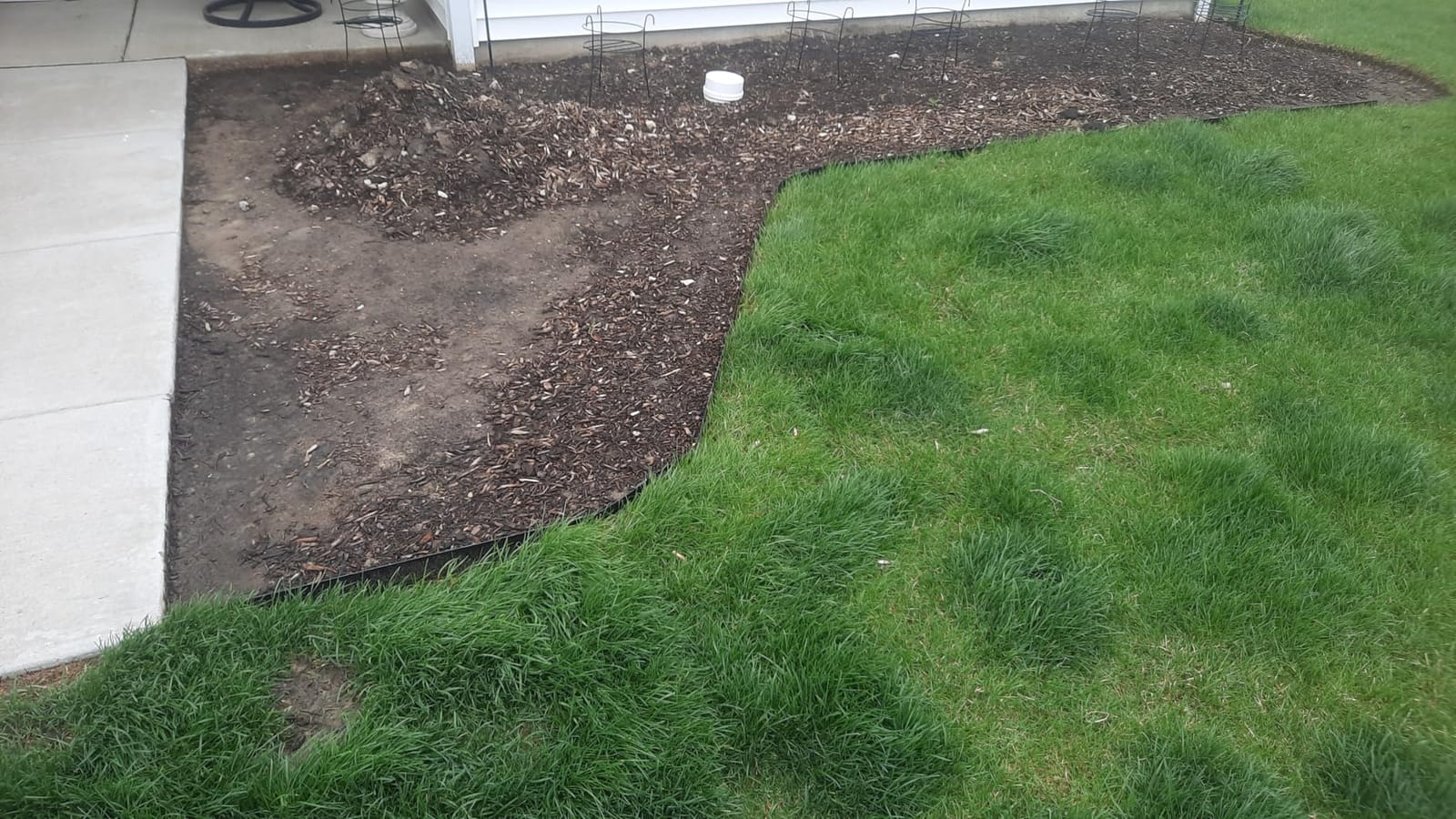
VEVOR owns a large share of the price-sensitive multi-pack end of this category, and this 6-pack is the version we would actually choose from the range. Six 40-inch panels at 8 inches tall, a rust-resistant coating over galvanized steel, and an extended spike design that makes ground penetration easier than a plain flat bottom.
The thing that separates it from cheaper alternatives is manufacturing consistency. Owners point out that the panels match each other closely enough that the joints line up without fighting, which sounds mundane until you have tried to install a border made of six slightly different pieces.
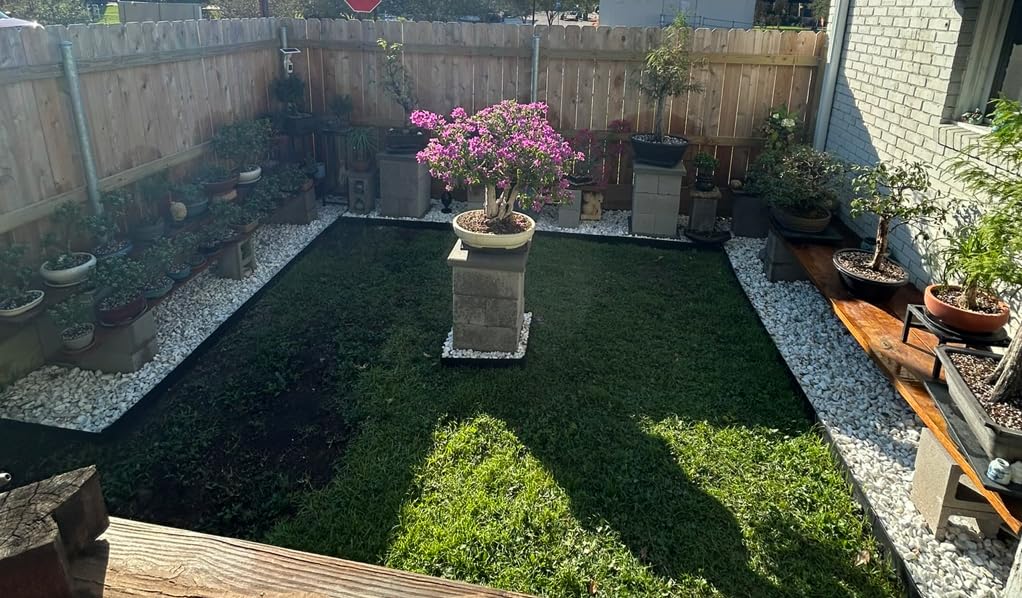
Long-term reports are encouraging. Buyers describe the strips holding their shape through years of string-trimmer contact along a path edge, and several report buying a second set once the first held up. The kit includes six panels, a pair of gloves, eight clips and an instruction manual, so you are not hunting for hardware afterward.
At 28.8 pounds for the set, this is the heaviest of the six-packs here. Plan the carry route before you open the boxes, and break the job into two trips if the bed is far from the driveway.
Why it earns a place
Uniform panels and a matched finish are the unglamorous reason this one works. A border is judged on how it looks from the lawn, and a visible step or color mismatch at each seam is the thing people notice first.
It is also a proven pick for holding mulch or stone on a gentle slope, which puts it alongside the 8-inch galvanized pick for anyone whose border has to do physical work rather than simply draw a line.
Where it will disappoint you
Rocky or caliche soil is the consistent warning. Owners say the spikes will not go in cleanly without pre-digging a shallow trench first, and in hard ground that turns a no-dig job into a half-dig job.
Two more caveats. Hitting a panel with the mallet instead of setting it can bend the steel, and the different VEVOR versions use different shades of black, so do not plan to mix an upgraded panel into an older run and expect the color to match.
7. LAVEVE Galvanized Steel 10-Pack 40 x 5 in: Best for Tight Curves
LAVEVE Galvanized Steel Landscape Edging 10-Pack, 40″ L x 5″ H (33Ft Total)
Galvanized steel
10 strips of 40 in x 5 in
33 ft of coverage
+ The Good
- Wider and longer stakes make a seamless joint without overlap
- Very flexible so it follows tight curves
- Galvanized construction for long service
- Ten panels and ten stakes in one box
- The Bad
- At 5 in it only handles shallow containment
- Modest sales volume for the listing
The design detail that separates this pick is the stake geometry. The panels are joined by wider, longer stakes that sit in the previous panel’s channel, so consecutive strips butt up against each other instead of overlapping. On a curving bed that is a real advantage, because a lapped joint on an arc is the place where most edging looks wrong from the lawn.
Ten 40-inch strips at 5 inches tall give roughly 33 feet of run, with ten stakes in the box. The steel is described as highly flexible, and owners confirm it follows tight garden curves without needing to be cut.
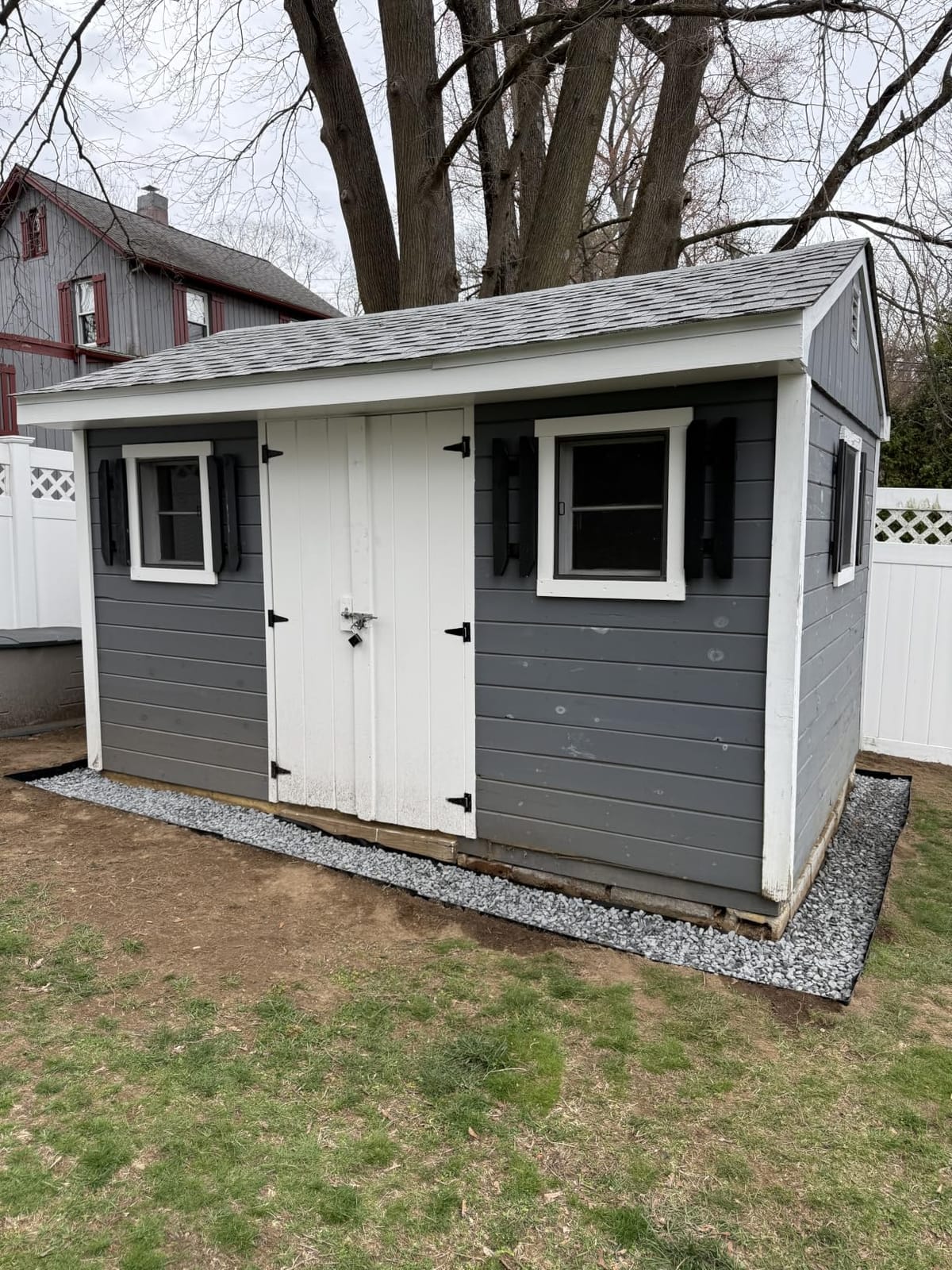
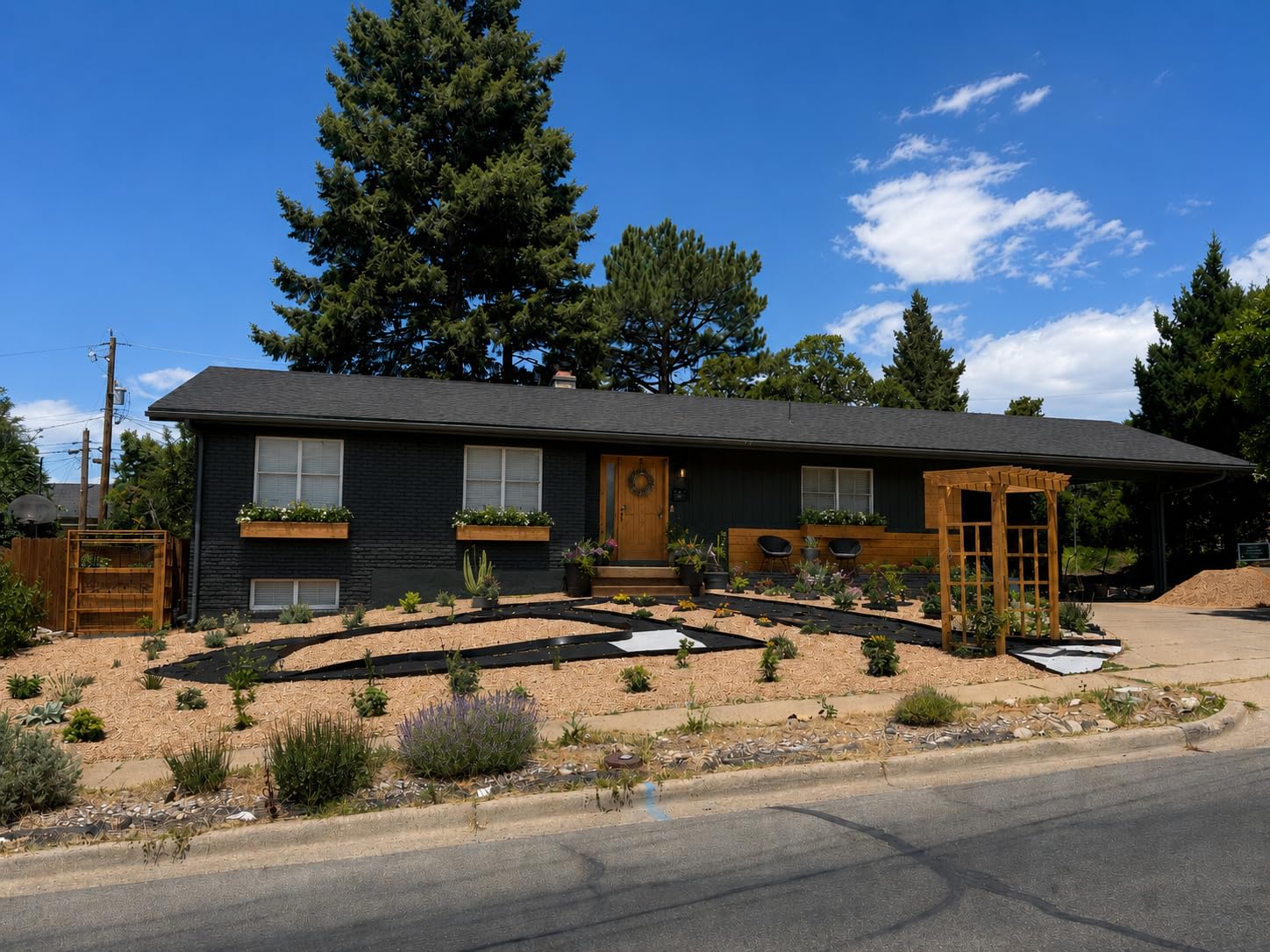
Feedback centers on two things: the seamless joint line and easy bending. That combination is why this is our pick for a circular bed, a rounded island, or any shape where the border is meant to be a design feature rather than a functional barrier.
Galvanized steel handles weather well and needs no finish maintenance, and the black coating keeps the line from streaking. At 168 ratings with a 4.4 average, the feedback set is broad enough to trust even though it is not as deep as the top three.
Why curve-lovers pick it
Flexibility plus a joint that does not need overlap is exactly the pairing a curved border needs. Most complaints about metal edging on arcs come down to a lapped seam that buckles or shows, and this design removes the lap entirely.
It is also a good match for a first-time installer, because getting the shape right while the strip is still lying on the grass is far easier than correcting it after it is staked down.
Where it will disappoint you
Five inches tall means about 2 inches visible, so this is a line-drawing border, not a retaining edge. Owners who tried it holding mulch against a slope report it was not built for the job.
The listing also has a modest Best Sellers Rank, which usually points to lower sales volume. That is not a quality signal on its own, but it does mean fewer long-term owner reports than the higher-ranked picks here.
8. Ganeekiron Metal Landscape Edging 40 x 6 in 6-Pack: Best for Mid-Height No-Dig Borders
Ganeekiron Metal Landscape Edging 6-Pack, 40″ L x 6″ H, Black
1.1 mm galvanized steel
6 panels of 40 in x 6 in
20 ft installed
+ The Good
- No-dig install disturbs very little existing planting
- Gentle bend is enough for arcs and circles
- Galvanized steel needs little seasonal maintenance
- Strong sales rank for the size
- The Bad
- Only slightly bendable
- so no tight curves
- 6 in height limits mulch retention
Six inches is the height nobody talks about and everybody should consider. It leaves more than the 2-inch lip of a 5-inch panel and less than the 5.6-inch wall of a tall Corten strip, which makes it the version that looks intentional next to a lawn without dominating the bed.
Installation is a true no-dig job: you position each 40-inch panel and tap it into the soil with a hammer. Six panels give 20 feet installed, and owners appreciate how little disturbance the process causes to existing plants, which matters when the border runs alongside a planted bed you have already established.
Owner feedback is consistently positive on maintenance. Galvanized steel at 1.1 mm needs no sealing, no painting and no seasonal treatment, so it is the pick for anyone who wants a set-and-forget border rather than a project that needs checking every spring.
One more practical note: the panels bend only so much. Owners describe it as bending slightly to follow arcs, circles and corners, which is enough for a garden bed with a relaxed curve and not enough for a tight spiral.
Why it works as the middle option
It is the height that balances containment and discretion. Six inches of profile gives the buried portion enough reach to stop grass runners, while the visible portion stays low enough that most mower decks pass over without touching the steel.
For a border between a lawn and a garden bed, a walkway, or a driveway apron, that middle ground is usually the correct answer rather than the shortest or the tallest option available.
Where it will disappoint you
Do not plan tight curves with it. The steel is described as only slightly bendable, so a small-radius arc will leave kinks rather than a smooth line, and you may end up cutting the strip to fit.
And with 6 inches of total height, holding back a deep mulch layer or a slope of stone is outside its design. If material needs to stay put, move up to an 8-inch panel instead.
9. Ganeekiron Corten Steel 10 in 6-Pack: Best for Deepest Containment
Ganeekiron Co rten Steel Landscape Edging 10 Inch, Pre-Rusted 6 Packs
Pre-rusted Cor-Ten steel, 1 mm thick
40 in x 10 in panels
6 panels, 20 ft
+ The Good
- 10 in profile is the deepest in this roundup
- Clips and gloves included in the box
- Installs with a rubber mallet
- Soft bronze patina from day one
- The Bad
- Top edge bends during hammering in hard soil
- Stabilizer bars are hard to align
- Some buyers rate it below heavier-duty options
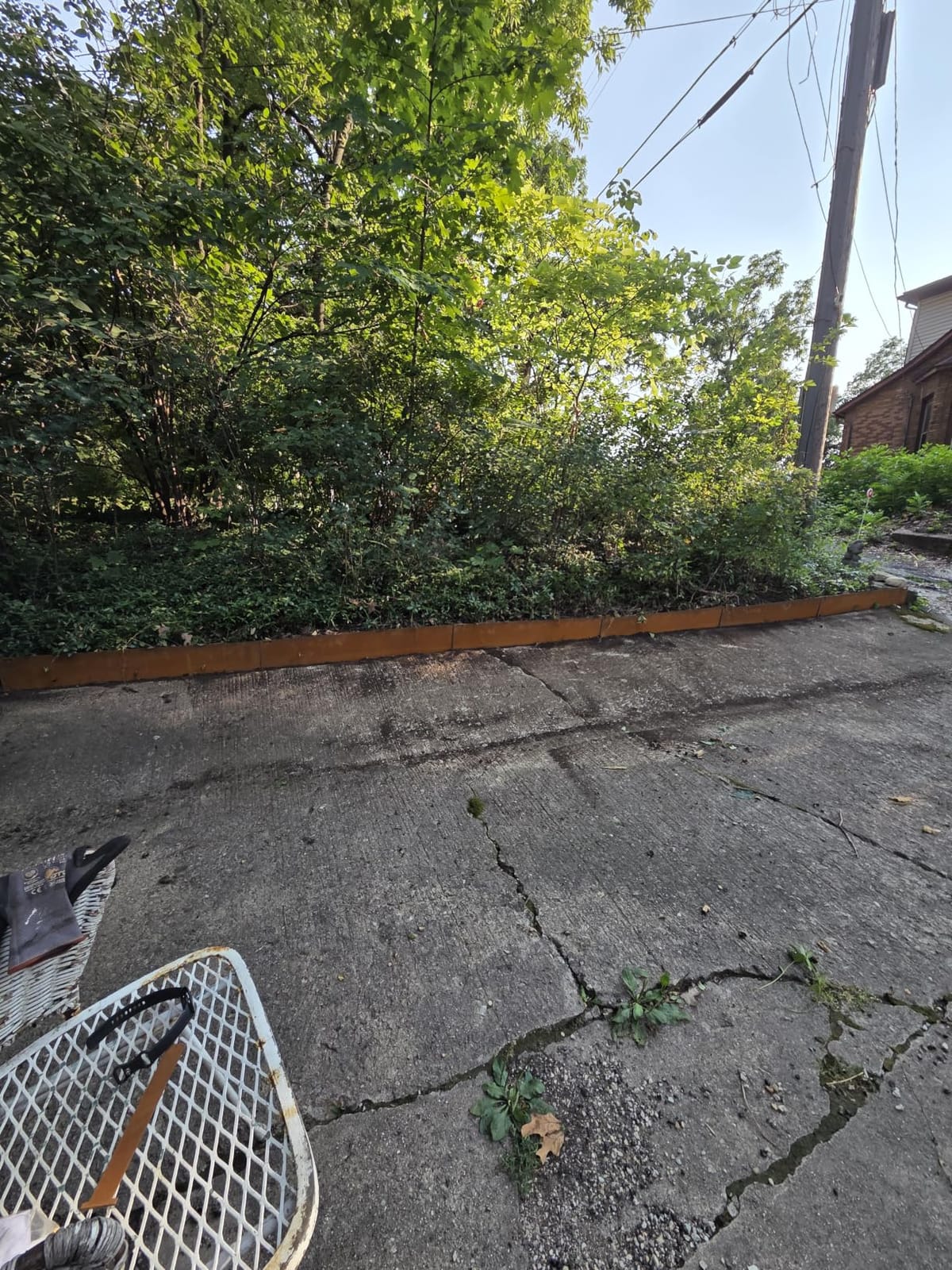
When we asked what depth an aggressive-grass border needs, the answer that came back most often was 6 inches or more, and this is the only pick here that clears ten. Each 40-inch panel stands about 10 inches above ground, which gives a deep barrier underground and a visible lip that can hold a substantial mulch bed or a gravel apron.
It is pre-rusted Cor-Ten at 1 mm thickness, so the bronze-brown patina is present from the first day and the material is rated for long service without maintenance. Six panels give 20 feet installed, and the box includes six joining clips plus a pair of gloves.
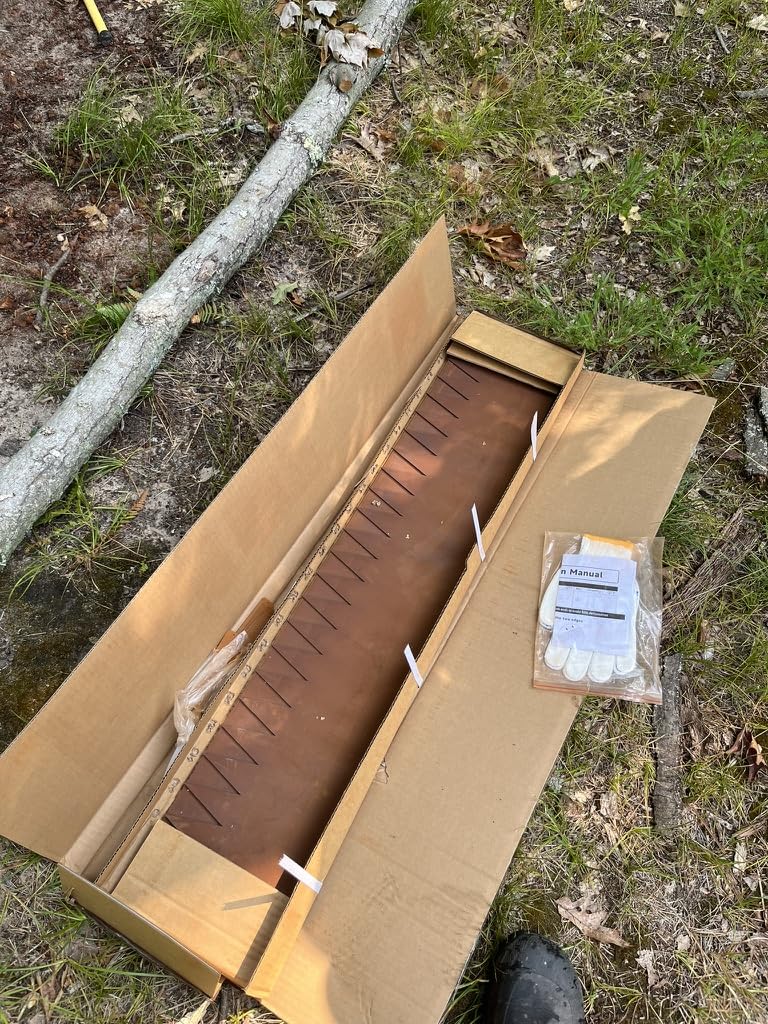
Owners report that it installs with a rubber mallet comfortably, which is good news for anyone who does not want to swing a full hammer all afternoon. The 22-pound weight is real, though, and older users specifically mentioned handling as the hardest part.
Recurring feedback is positive on the joining mechanism. Owners rate the clips as holding panels together better than competing brands at a similar height, and the finish is reported to look good well beyond a decade rather than degrading into blotches.
Why depth matters more than people think
Half of a tall panel is underground, and that buried half is what stops rhizomes and root runners from rebuilding the lawn inside your bed. If grass keeps appearing in a mulched border every spring, shallow edging is the reason, and a 10-inch profile is the direct fix.
The visible 10-inch lip also lets you build a proper mounded bed with real mulch depth, or hold a gravel path edge where vehicles and wheelbarrows run over the line.
Where it will disappoint you
At 1 mm with a thin top band, the edge flexes when you hammer it, and owners say you will likely need to pre-dig outside sand or loam. On soft soil it goes in easily; on hard ground it deforms rather than driving in.
The small stabilizer bars are the second complaint: they are fiddly to align and hard to drive through the lower band. Budget extra time for that step, and expect a mixed 4.4 rating with a higher four-star share than most picks here.
10. GZLVSOW Corten Steel 180 Bend 6-Pack: Best for a Safe Top Edge
Corten Steel Landscape Edging 6″ x 40″ Steel Garden Edging 180 Bend 6Pcs
Pre-rusted Cor-Ten steel at 1.0 mm
180-degree bent top edge
6 pieces of 40 in, 20 ft
+ The Good
- Bent top edge is safer around walkways and children
- Screw-fastened joints hold better than slide-in connectors
- Pre-rusted Cor-Ten with a long stated service life
- Tool kit included for installation
- The Bad
- Smallest review base here at 94 ratings
- Modest sales rank
- Only 6 in tall so containment is limited
The 180-degree bend along the top of each strip is the whole reason this pick exists. A raw cut edge on steel is a genuine hazard in a yard with children or a walkway that runs right next to the bed, and folding the lip over removes the sharpest line on the profile. Owners single it out as the feature that made them comfortable with the install.
The joints are the other differentiator. Instead of sliding panels together, two pieces connect with four screws, and securing stakes and pre-formed strips ship in the box along with the tools. Screws hold better than friction-fit connectors when the ground moves, which reviewers confirm.
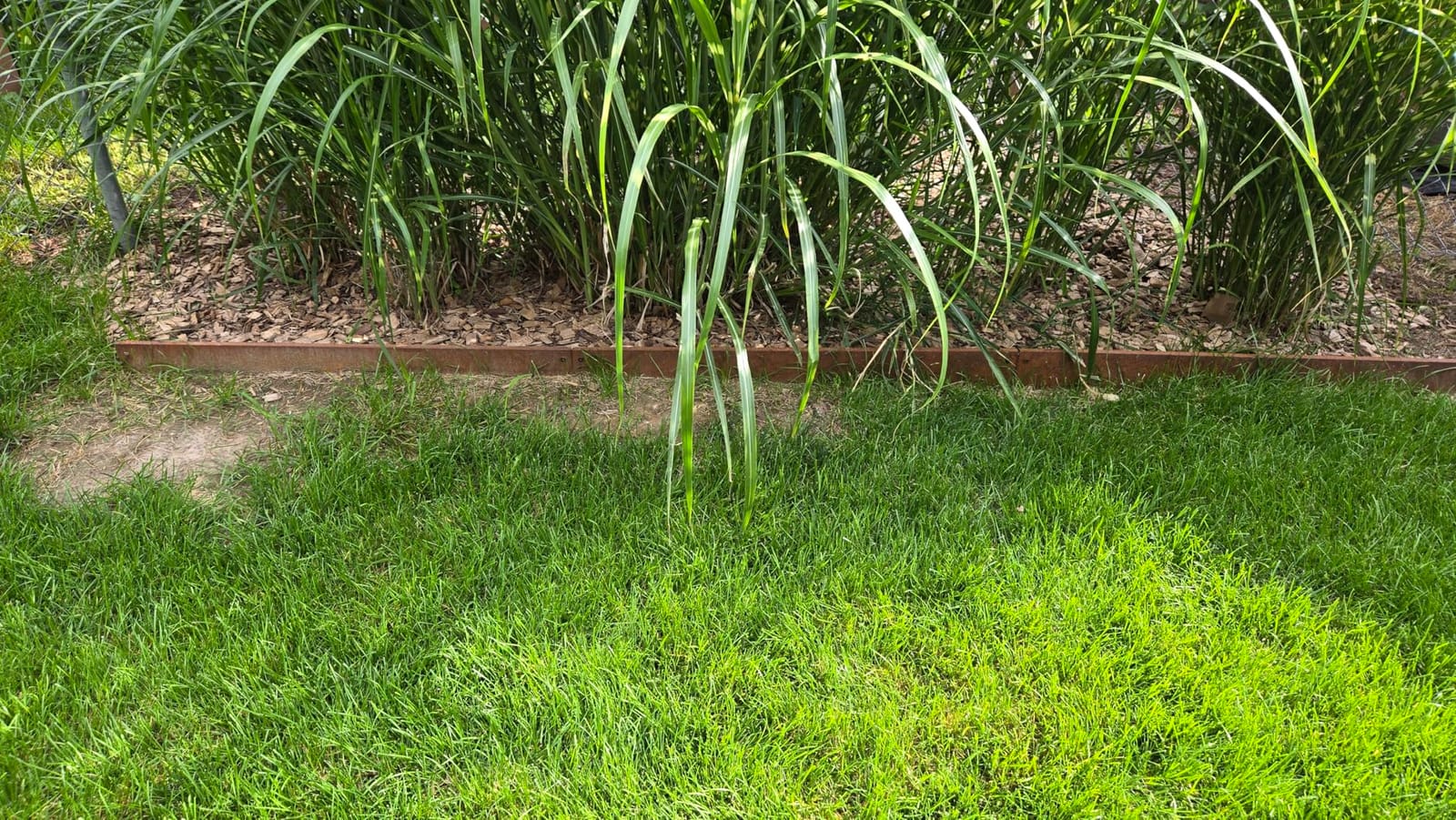
Material-wise it is pre-rusted Cor-Ten at 1.0 mm across six 40-inch pieces, 20 feet total, and the manufacturer states roughly 50 years of service life. It is also rated to work across flat ground, rugged soil, and soil of varying hardness, which is a broader claim than most listings make.
Its 4.6 average is tied for the highest in this group, with virtually no one-star feedback in the 94 ratings. We rank it tenth only because that review base is thin, and we would rather be honest about that than pretend a small sample outweighs a 590-rating listing.
Why the bend matters more than it sounds
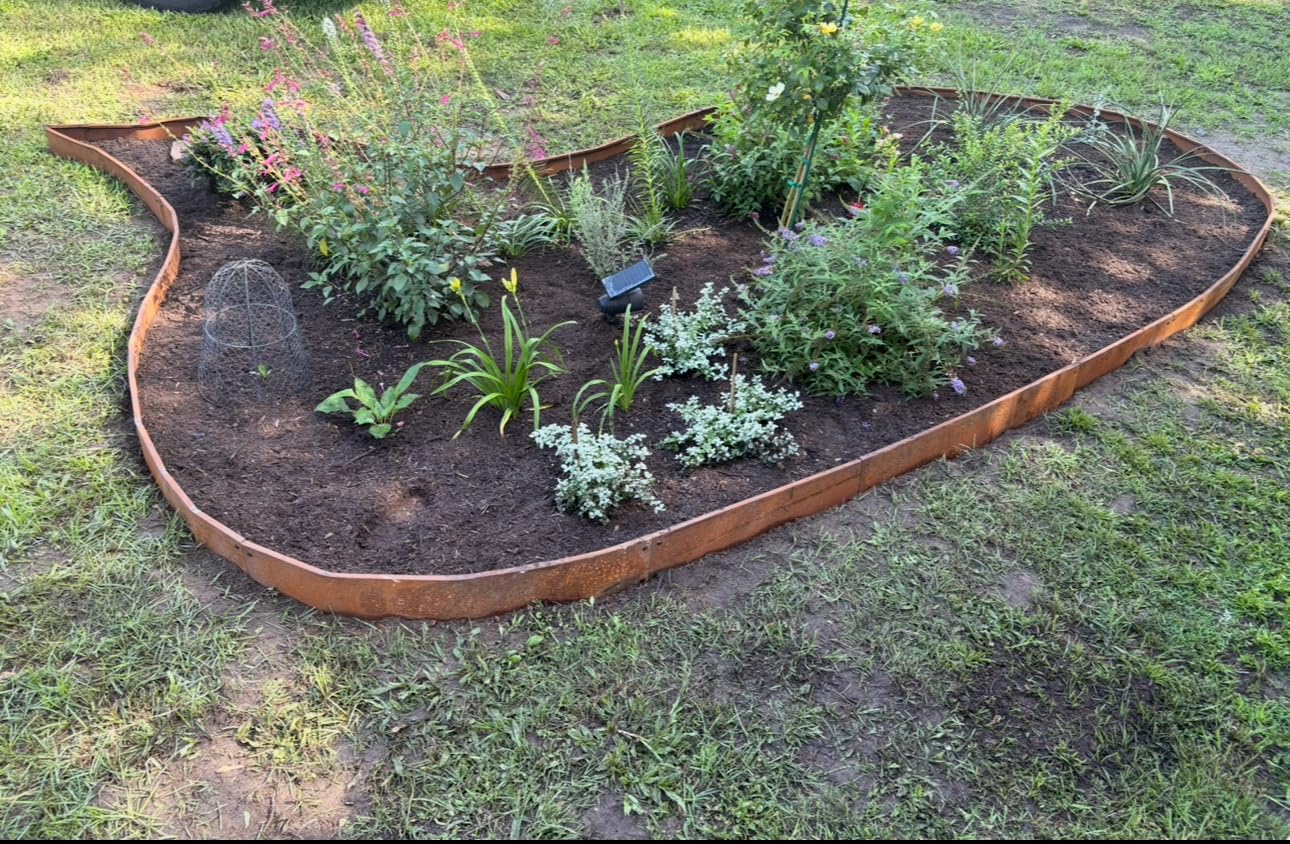
Edging runs along paths, at the top of steps, and next to where kids walk. A folded top edge removes the sharp line, and it also gives the profile a finished look that reads as deliberate rather than cut off at the factory.
Pair that with screw-fastened joints and you have the most secure connection in this roundup, which is what you want on a line that crosses a slope or takes foot traffic.
Where it will disappoint you
Six inches tall, so about 4 inches visible. That is enough for a clean border and light mulch containment, not enough to hold back a raised bed or a slope of stone.
And with 94 ratings, you are buying on a thinner evidence base than anywhere else on this list. If the border is large, the better-supported picks are the safer bet; if it is a short run near a walkway, the top edge is worth the trade.
The Downsides of Corten Steel Nobody Mentions
Roughly half the picks on this list are Cor-Ten, and it is genuinely the best material for longevity. It is also the one that generates the most avoidable complaints, almost all of which come from the same cause: the first few weeks of patina development. Here is what actually goes wrong, and what to do about it.
Rust runoff stains concrete and pavers. While the oxide layer is forming, water moving off raw or pre-rusted steel carries iron oxide with it. Owners report orange streaks on light-colored paving, and the effect is worst in the first weeks after install. Keep the runoff path away from hardscape, seal the surface once the patina has stabilized, and pick a powder-coated strip if the border runs alongside a patio you care about.
The patina takes time to develop. Raw Cor-Ten starts as grey-brown bare steel and darkens over weeks to months. If you need the finished look on day one, buy pre-rusted stock, and note that pre-rusted pieces often need a clear coat once the patina has even out.
Thin Corten bends instead of driving in. Several owners across the 8-inch and 10-inch picks report the top edge deforming when hammered in hard soil. This is a gauge problem rather than a material problem, which is why the heavier 14-gauge and 16-gauge options hold shape better. Pre-dig a shallow trench in anything but sand or loam.
A scratch spot-corrects but never fully reverses. Corten heals a damaged area by re-rusting over it, so a scuff blends in over time. A drop of fresh oil on a light strip, by contrast, will show forever. That is the argument for Cor-Ten over coated steel in high-traffic spots.
It costs more per foot than mild steel. Weathering steel is a premium material and the price follows. For a small ornamental border, galvanized or powder-coated steel is the sensible buy and the finish will suit a modern yard better anyway.
How to Choose Steel Landscape Edging
Strip shoppers tend to fixate on height, because it is the one number on the box. Height matters, but it is doing two different jobs, and confusing them leads to over-ordering. The buried portion of the strip is the root barrier. The exposed portion is the retaining lip. A 10-inch panel is not a 10-inch barrier, it is roughly 5 inches of each.
Height: match the profile to the job
Four inches works for clean ornamental lines around a flower bed with nothing pushing against it. Five inches, which leaves about 2 inches visible, is the sweet spot for most residential borders and the safest choice for mower clearance. Six inches is the sensible middle for a bed that holds mulch and sits next to a lawn. Eight inches is for material that needs to stay in place, such as gravel, stone, or a raised bed edge. Ten inches is for aggressive grass, clay soil, slopes, and gravel driveways where grass invades every spring.
Gauge: heavier is stiffer, and stiffness matters
Most edging is 18-gauge. Some of the best-reviewed picks here run 14-gauge or 16-gauge, and the difference shows up the first time a mower wheel, a shovel, or a frost heave leans on the line. Heavier gauge holds its shape, resists bowing, and forgives a hard knock. Lighter gauge is easier to carry and easier to reshape, which is why it wins for curved beds and light borders.
Steel type and finish: pick the look you can live with
Raw or pre-rusted Cor-Ten gives the weathered look and the longest service life, at the cost of patina development and possible early runoff. Powder-coated black or brown gives a finished architectural line that will not streak, and it is the right pick next to a light-colored patio. Galvanized steel is the budget-friendly middle, with a bright silver look that suits a gravel or industrial scheme. Wrought iron is a decorative choice for non-structural borders only, and it will not hold mulch or soil.
Connection system: this decides whether curves look good
There are three systems. Stake-and-slot joints, where the stake of one panel sits inside the channel of the next, give a seamless line and bend best around curves. Interlocking hooks and tabs go together quickly but can pinch or spring open when bent. Buckle, clip, or screw-fastened joints hold most firmly on straight runs, and screws hold best of all when the ground moves. A lock system that hides the connector is worth paying for if the border will be seen from the lawn.
Before you order, add up your actual run and remember that nominal section length overstates coverage. A 40-inch panel joined with an overlap gives you closer to 38 inches of finished run, so a 6-pack covers about 19 feet, not 20. When you are laying out a bed, we found it helps to walk the line with a can of marking spray first. We keep solar path lighting guides handy for the same reason, since both jobs start with marking the run before anything goes in the ground.
Steel vs. Plastic, Aluminum, Rubber and Stone Edging
There is no universal best material, so the useful question is which failure you are willing to live with. Steel wins on durability and root blocking. Plastic wins on cost and installation speed. Rubber wins on flexibility. Stone or brick wins on permanence and looks. Aluminum sits in the middle: it will not rust, it is lighter than steel, and it is less stiff.
Plastic and rubber edging typically crack, shift, or get pushed out of shape within a season or two, and that is the moment grass walks into the bed and the border you paid for stops existing. Stone and brick edging genuinely lasts, but it costs several times more per linear foot and it is a masonry job rather than an afternoon project. Steel is the compromise most people land on: a twenty-year-plus life, a mowable line, and a genuine physical barrier against roots, installed in a weekend.
Choose aluminum instead if the border runs along a saltwater exposure, a pool deck, or a coastal property and you want zero rust risk with less weight to move. Choose stone or brick if the edging is a focal point of the design and the labor cost is not the deciding factor.
How to Install Steel Landscape Edging
Most steel edging is either hammer-in or trenched, and which one you have decides the whole workflow. Hammer-in designs with teeth or ground spikes are set directly into the soil. Staked strip designs with no teeth need a shallow trench so the body of the strip sits properly below grade.
Step 1: Mark the line. Walk the border and spray it before you touch the soil. Marking catches the moment when a planned straight run reveals a tree root, an irrigation head, or a slope you had not accounted for.
Step 2: Dig a shallow trench for staked strip. A shovel-width trench, roughly 3 inches deep, is enough for most profiles. Skip this step entirely for hammer-in designs, except in rocky or clay soil where owners on several of these picks report the spikes will not go in cleanly without it.
Step 3: Connect the sections. Butt, lap, or slot the panels together as their system dictates, working from a fixed reference point such as a corner or a doorway. Stake every 2 to 3 feet and always stake at every joint and corner, because that is where a run fails first.
Step 4: Hammer onto scrap wood, not bare steel. Drive the stake through the flange, or place a scrap block of wood on the strip and strike the block. Hitting thin steel directly dents it and can put a permanent bow in the line.
Step 5: Backfill and check the line. Pull soil back against both sides, then walk the border and correct any high or low spots before you finish. Leave no more than about 1 to 2 inches standing proud, then re-check the line after the first rain.
The tools are simple: a rubber mallet, a flat-bladed shovel, a hand trowel, a tape measure, marking spray, and gloves. Several owners across these picks report that installing edging is what turned them into owners of multiple hammers, so have more than one on hand. If you are also adding fixtures along the same route, our low voltage landscape lighting kit guide covers wiring depth so the two trenches do not collide.
How Much Steel Landscape Edging Do You Need?
Start with perimeter, not area. Measure the length of every straight run, add the total of any curves separately, and add roughly 10 percent for waste. A rectangular bed 20 by 10 feet is 60 feet of border, not 200.
Then correct for the overlap, which is where most people under-order. If your panels lap by 2 inches, six 40-inch panels give you about 19 feet of finished run rather than 20. Ten 40-inch panels at 2 inches of overlap deliver about 31.5 feet, not 33. A quick perimetre walk with a tape is faster than reordering.
Finally, buy in the largest box that suits the job. A 10-pack covers a long run in one order and avoids orphaned panels, but a 6-pack is the right call when the border is under 20 feet and you would rather not carry 20 pounds of steel from the driveway to the back of the property.
Mowing and String-Trimmer Safety With Steel Edging
This is where the 3-inch rule comes from, and it is the single most useful number in this whole guide. The common rule of thumb is that no more than about 1 to 2 inches of steel should stand proud of the soil, so mower decks and string-trimmer guards pass above it rather than striking it. A 5-inch strip that leaves a 2-inch lip follows the rule. A 10-inch strip that leaves 10 inches above ground does not.
Height above grade is therefore a retention decision and a safety decision at the same time. More exposed steel holds more material, but it is also the part your mower encounters. If you are installing a tall profile along a lawn edge, plan on trimming that border by hand or with a trimmer that has a guard set low.
The other safety point is the top edge. Owners on the r/landscaping forum raised the point that exposed steel with a raw cut edge is a genuine hazard near walkways, which is the argument for a strip with a rolled or folded top edge if children or a path are close by. Check your mower’s clearance against your installed height before the first cut of the season, and re-check after the soil settles.
Frequently Asked Questions
What is the best steel landscape edging?
The best steel landscape edging for most yards is the Edge Right Hammer-In Cor-Ten, a 16-gauge weathering steel strip with a rounded top edge that drives in without a trench. For a finished black line, choose a powder-coated galvanized strip in 5-inch or 8-inch height.
What do professionals use for landscape edging?
Landscape crews most often specify 14-gauge or heavier steel strip, installed so only 1 to 2 inches stands above grade and staked every 2 to 3 feet with joints lapped and staked. Corners get lapped rather than mitred so the run cannot pull apart.
Is steel landscape edging worth it?
Yes, when plastic edging fails every one to two seasons and stone or brick costs several times more per linear foot. Steel lasts decades, doubles as a weed root barrier, and can be lifted and re-set if you change a bed. The counterpoint is that a staked strip needs a real trench unless you pick a hammer-in design.
How high should metal edging be?
Four inches suits a clean ornamental line, 5 inches leaves about 2 inches visible and is the best balance for most yards, and 6 to 8 inches is for mulch, gravel, clay soil and slopes. Ten inches is for aggressive grass and gravel driveways where grass invades every spring.
What are the downsides of using Corten steel?
The main drawbacks are rust runoff that can stain concrete and pavers during patina development, weeks or months of waiting for raw Corten to develop its color, thin sheets that bend instead of driving into hard soil, and a higher cost per foot than mild or galvanized steel.
What is the 3 inch edging rule?
It is a rule of thumb for keeping edging safe and low-profile: leave no more than about 1 to 2 inches of steel standing proud of the soil so mower decks and string-trimmer guards pass above it rather than striking the steel.
How do you put in steel edging stakes?
Hammer the stake through the flange of the strip, or place a scrap block of wood on top of the steel and strike the block so you do not deform the metal. Stake every 2 to 3 feet and always stake at every joint and corner, then backfill both sides.
What are common mistakes when edging?
The most common mistakes are skipping the trench for staked strip, not stringing a straight line with marking spray first, ordering by nominal section length and forgetting the overlap, leaving too much steel above grade, hammering directly on the strip, and failing to stake at joints and corners.
Conclusion: The Best Steel Landscape Edging for Your Yard
The Edge Right Hammer-In Cor-Ten is our best steel landscape edging pick because it is the only strip here that pairs real depth, a rounded safe top edge and a genuine no-dig install, backed by the largest review base in the category. Buy the STIRLINGEAR 33 ft pack if you want a low-profile black line over a long run, the Worth 14-gauge pre-rusted Corten if you want the weathered look on day one, and the 8-inch panels if gravel or a raised bed needs to stay where you put it.
Mark the line, check your mower clearance, and buy with the overlap in mind. Get it in this 2026 while the layout is still fresh, and the border will outlast the last three plastic attempts by a decade.