
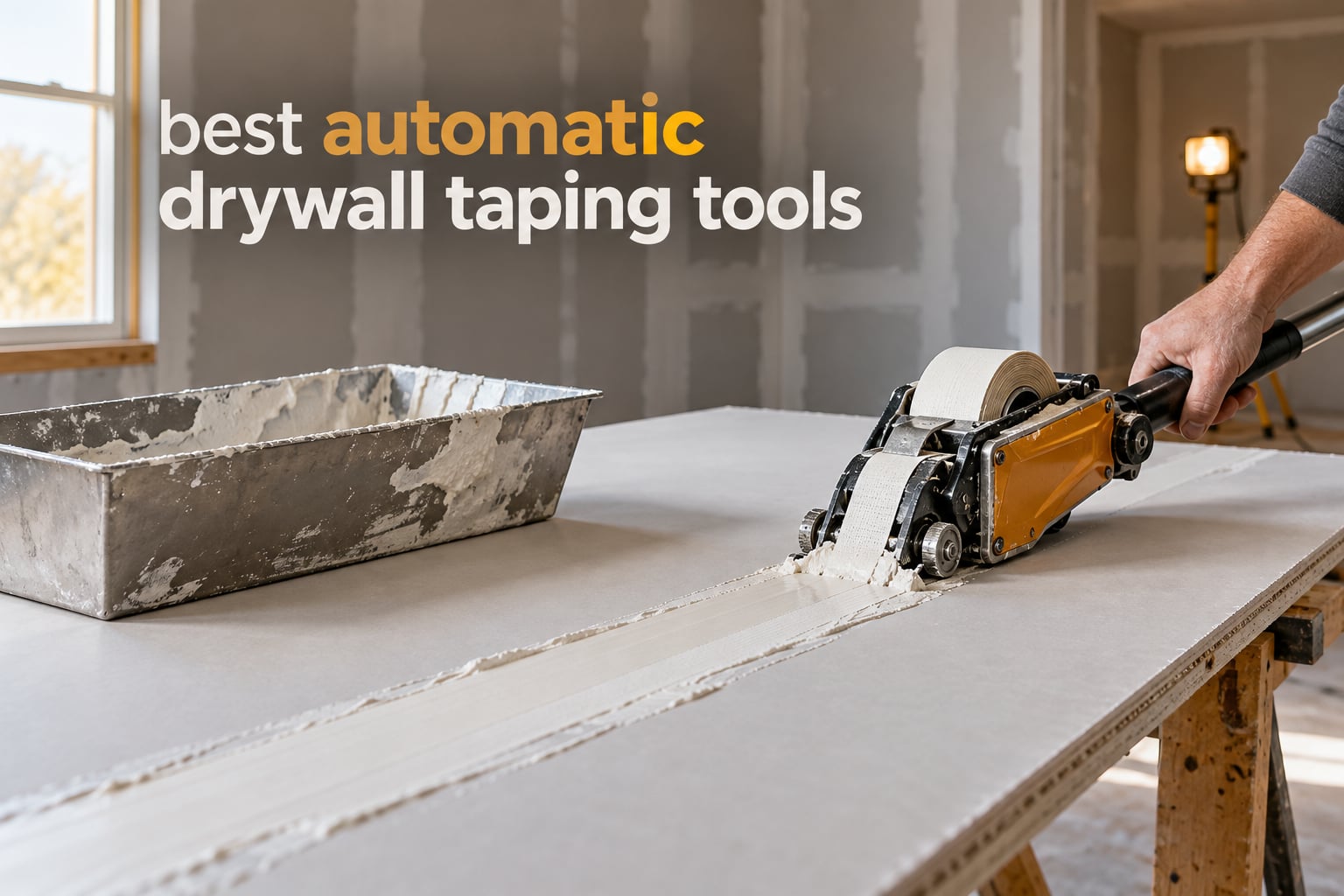
An automatic drywall taper is a wheeled tool that lays joint compound and paper tape into a drywall seam in one continuous pass, then cuts the tape off at a measured length as you roll. The trade calls it a bazooka, and it is the single biggest productivity step a finishing crew can make. In 2026 the best automatic drywall taping tools fall into two very different camps: the pump-fed, wheeled bazookas built for volume work, and the smaller hand banjos and semi-automatic tapers that cover the same ground for one crew or one room at a time.
Our team pulled apart ten of the most-reviewed taping tools on the market, compared the build materials, capacity, mud-flow control and real-world complaints in the reviews, and sorted them by the job each one actually solves. We also leaned on what finishers say on r/drywall, DrywallTalk and ContractorTalk, because that is where the honest verdicts live. The short answer up front: automatic tools are worth it when you are finishing more than roughly 10 to 15 sheets a day, and they are overkill for a patch job.
One thing to clear up before we start. A great many people searching for the best automatic drywall taping tools are actually after their first taping tool, not a production bazooka. So this roundup runs the full ladder, from a light all-plastic dispenser up to a complete automatic system with flat boxes, angle heads and a pump. Each entry names the audience and the job, so you can stop reading the moment you find yours.
Top 3 Automatic Drywall Taping Tools in September 2026
Our three fastest-recommended picks cover the widest spread of real jobs: a first taping tool that almost anyone can run, the strongest all-round value in the category, and the cheapest way into flat joints and inside corners together.

Buddy Tools TapeBuddy
- › Applies compound and paper tape in one pass
- › Two mud flow settings for bubble-free seams
- › Rinses clean with water
- › Lightweight 1.8 lb HDPE body

Delko Tools ZUNDER
- › Double-ended applicator for flats and inside corners
- › Adjustable soft-grip handles for either hand
- › Compound flow dial within reach
- › Holds tape rolls up to 500ft

Delko DELKOtaper Package
- › Patented internal corner attachment included
- › Covers flat joints and square set with one tool
- › Two mud control dials in the box
- › 2.25 kg compound capacity
All 10 Automatic Drywall Taping Tools Compared in September 2026
Every tool in this roundup, side by side, with the specs that actually change how you work. Ratings and review counts are taken straight from the listing data.
| PRODUCT MODEL | KEY SPECS | BEST PRICE |
|---|---|---|
|
|
Check Latest Price |
|
|
Check Latest Price |
|
|
Check Latest Price |
 |
|
Check Latest Price |
 |
|
Check Latest Price |
 |
|
Check Latest Price |
 |
|
Check Latest Price |
 |
|
Check Latest Price |
 |
|
Check Latest Price |
 |
|
Check Latest Price |
A note on what is missing from that table. There is not a single pump-fed automatic taper in the affordable half of the market other than the TapeTech 07TT-C, and that is not a gap in the research. It is the market. Wheeled bazookas with matching flat boxes and corner heads are sold as dealer packages rather than as single retail listings, which is why a full system shows up as one boxed set instead of eight separate products.
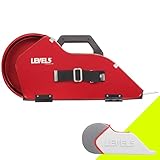
1. Buddy Tools TapeBuddy – Best First Taping Tool and Best All-Rounder
Buddy Tools TapeBuddy Drywall Taping Tool
HDPE body
1.8 lb
6 x 5.5 x 20.5 inches
Two mud flow settings
+ The Good
- Applies compound and paper tape in a single pass
- Two mud insert settings let you dial flow to the seam
- Rinses clean with water
- Lightweight HDPE body
- Made in the USA
- The Bad
- All-plastic body is less rigid than aluminium pro banjos
- Best suited to homeowner and small-job scale
The TapeBuddy is the highest-reviewed tool we looked at, with 1,853 ratings averaging 4.4 stars, and that number tells you something real about this category. People who buy a bazooka are usually disappointed. People who buy their first tape applicator tend to be delighted, because the jump from a knife and a pan to a wheeled dispenser is immediate and obvious. This is the tool where that jump happens.
What you get is a free-standing dispenser that puts mud on the paper tape as the tape feeds, so the embed coat happens in one pass instead of three separate steps. The mud insert tab has two settings, and switching between them is how you stop bubbles: too much compound under the tape is the single most common first-coat defect, and being able to throttle the flow is the fix.
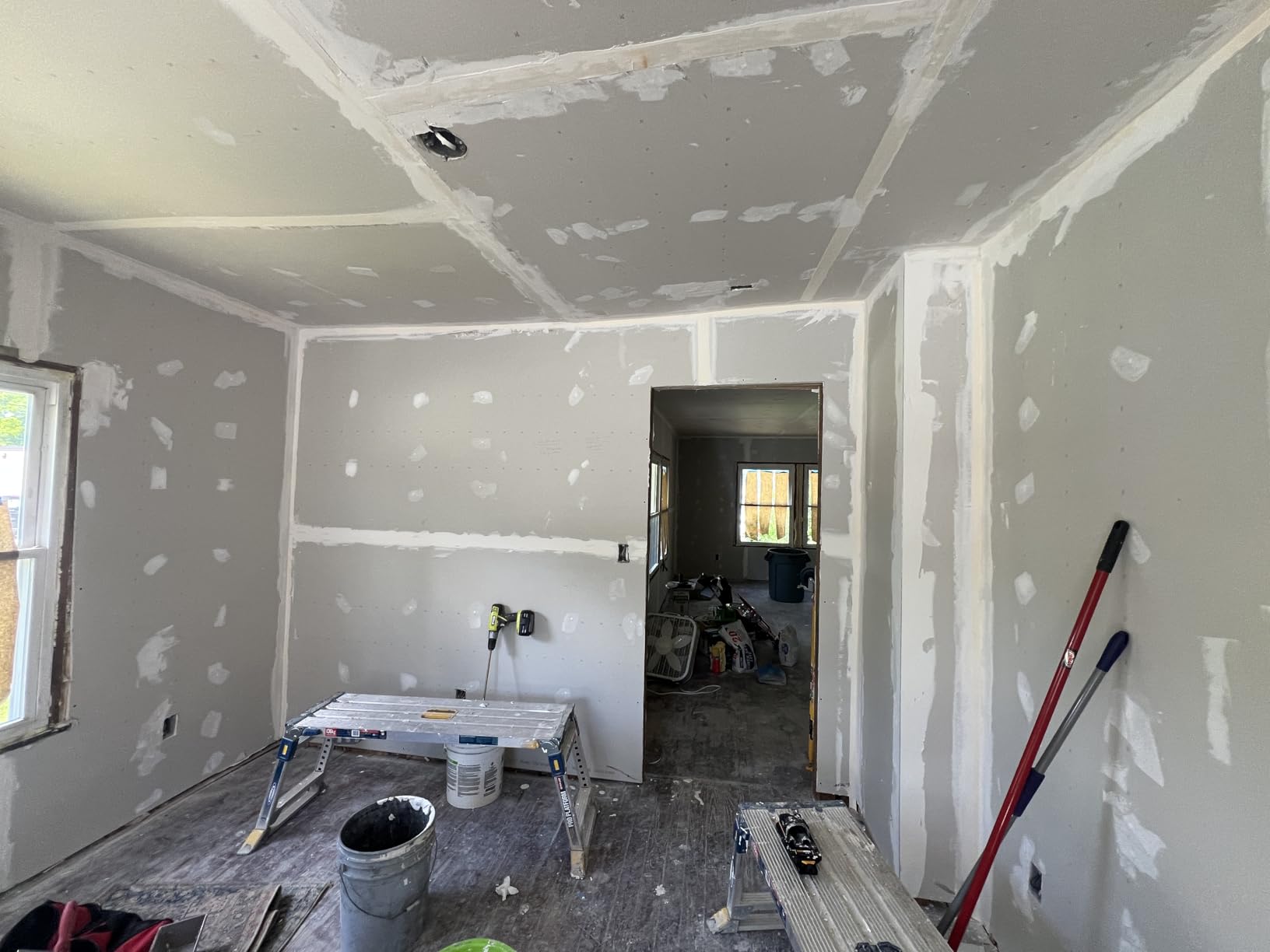
At 1.8 pounds it is the lightest tool in this roundup, and the whole body is HDPE, which is why cleanup is a matter of rinsing with water rather than scraping dried mud off metal. Reviewers repeatedly single out exactly that: you fill the sink, dunk the tool, scrub the insert tab, and the job is done. On a weekend patch or a single room, that rinse-and-go cycle is what makes the tool worth owning.
The trade names on the pro forums set the limits honestly. DrywallTalk regulars mix and match brands by tool type rather than buying one system, and nobody on those threads is arguing that a plastic dispenser belongs in a production finish-out. The r/drywall consensus runs the same direction: buy the machine for the sheets you hang, not the sheets you wish you hung.
How much work it takes to earn its place
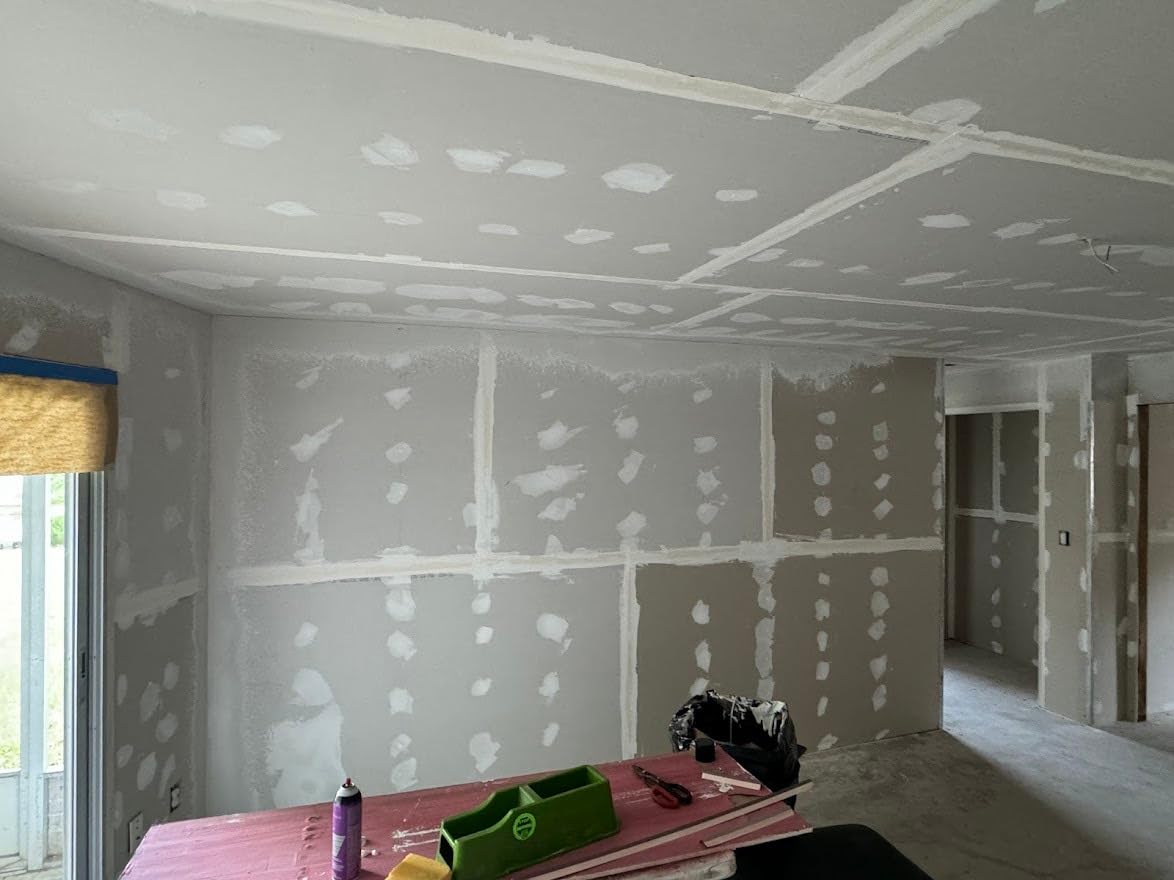
For a first room, a bathroom re-tape, or a rental property turnaround, this is the right tool. The 500ft-class tape capacity and two-stage flow control mean you are not stopping every twenty feet to re-dial the mud, which is where most beginners lose time with a cheap banjo.
For a 40-sheet production day, it is the wrong tool. A plastic body does not have the rigidity to keep a consistent bead over a long run, and the light frame transmits more of the flex into your hands as fatigue builds.
What to check before you order
Decide how many inside corners you have. This dispenser lays tape on flat seams; the corner work still comes off a knife and a corner tool. If corners are the majority of your job, look at the double-ended ZUNDER in the next entry instead, because it handles both in one pass.
Second, check the free-standing base. The tool stands upright on its own, which matters if you are working alone and want to set it down mid-run without mudding the floor.
2. Delko Tools ZUNDER – Best Banjo for Inside Corners
ZÜNDER by Delko Tools Drywall Taping Tool Banjo with Patented Double Ended applicator for Both Flat and Internal Joins. ZÜNDER is the World’s Best Selling Taping Tool.
Polycarbonate ABS
1.3 kg
2.2L compound capacity
Accepts 500ft rolls
+ The Good
- Patented double-ended applicator covers flats and internal corners
- Two adjustable soft-grip handles for either hand
- Compound flow dial stays within reach
- Single-clip design for fast loading and cleaning
- Works with paper and paperless tape
- The Bad
- Weak point is cutting tape at the end of a run
- At full capacity the 1.3 kg tool feels heavy and messy
- Check the box on arrival for a missing hinge piece
The ZUNDER is the one hand tool here that genuinely earns the word double. The patented double-ended applicator swaps the discharge end so you can lay tape on a flat seam and finish an internal corner with the same body, the same mud charge and the same flow dial. For anyone taping a room with four walls and a ceiling, that is a genuine saving, not a marketing line.
It holds 2.2L of compound, or about 2.5kg, and takes tape rolls up to 150m, so a full room rarely means a mid-run reload. The two adjustable soft-grip handles can be set for either hand, which matters more than it sounds if you are right-handed and working on a left-hand corner all afternoon.
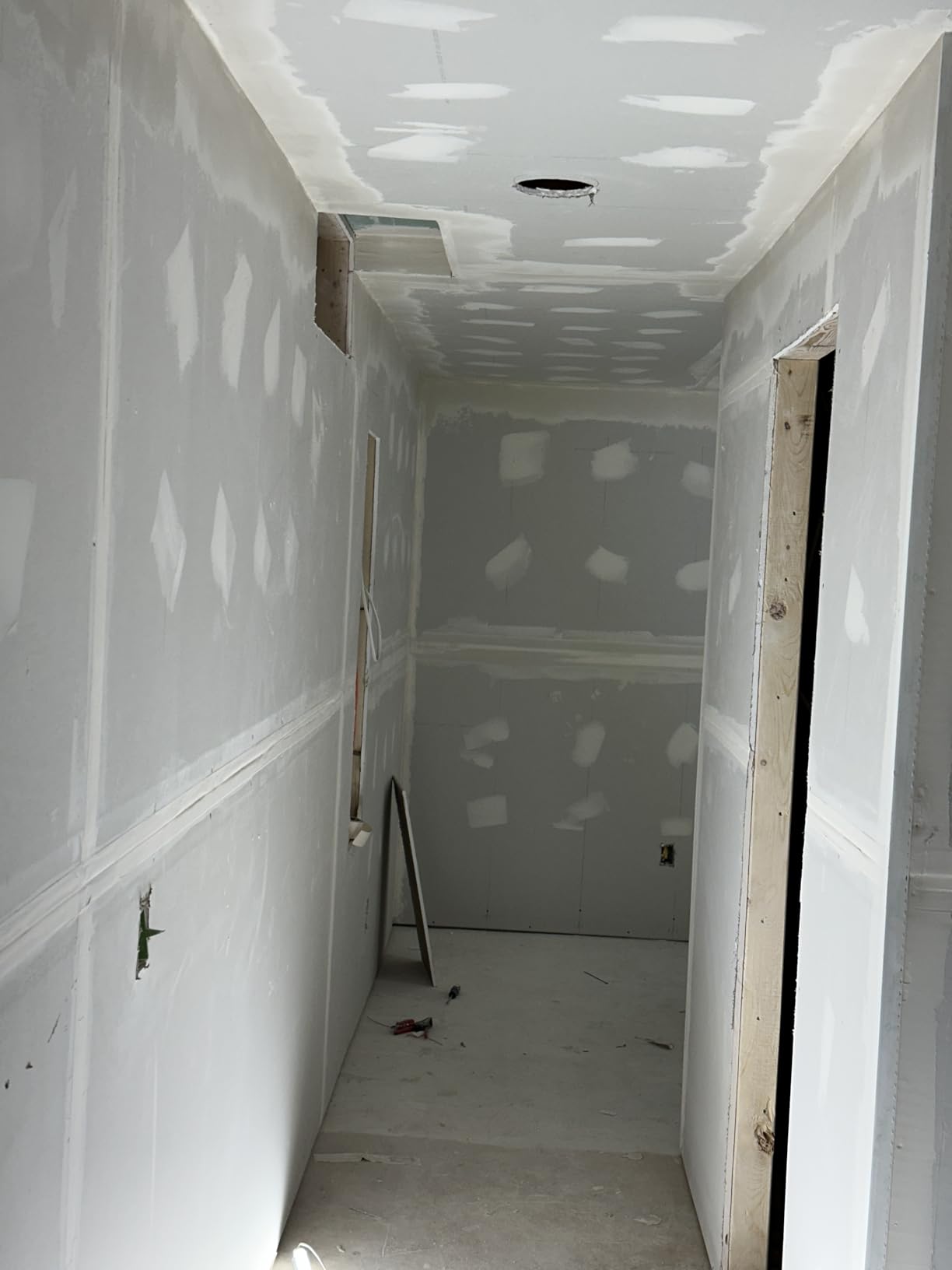
Buyers doing full rooms and barndominium shells report a large speed increase over hand taping and call the paper lay-down excellent. The 4.2 average across 769 ratings reflects a tool that is very good at the one thing it was designed for, with a narrow, repeatable flaw.
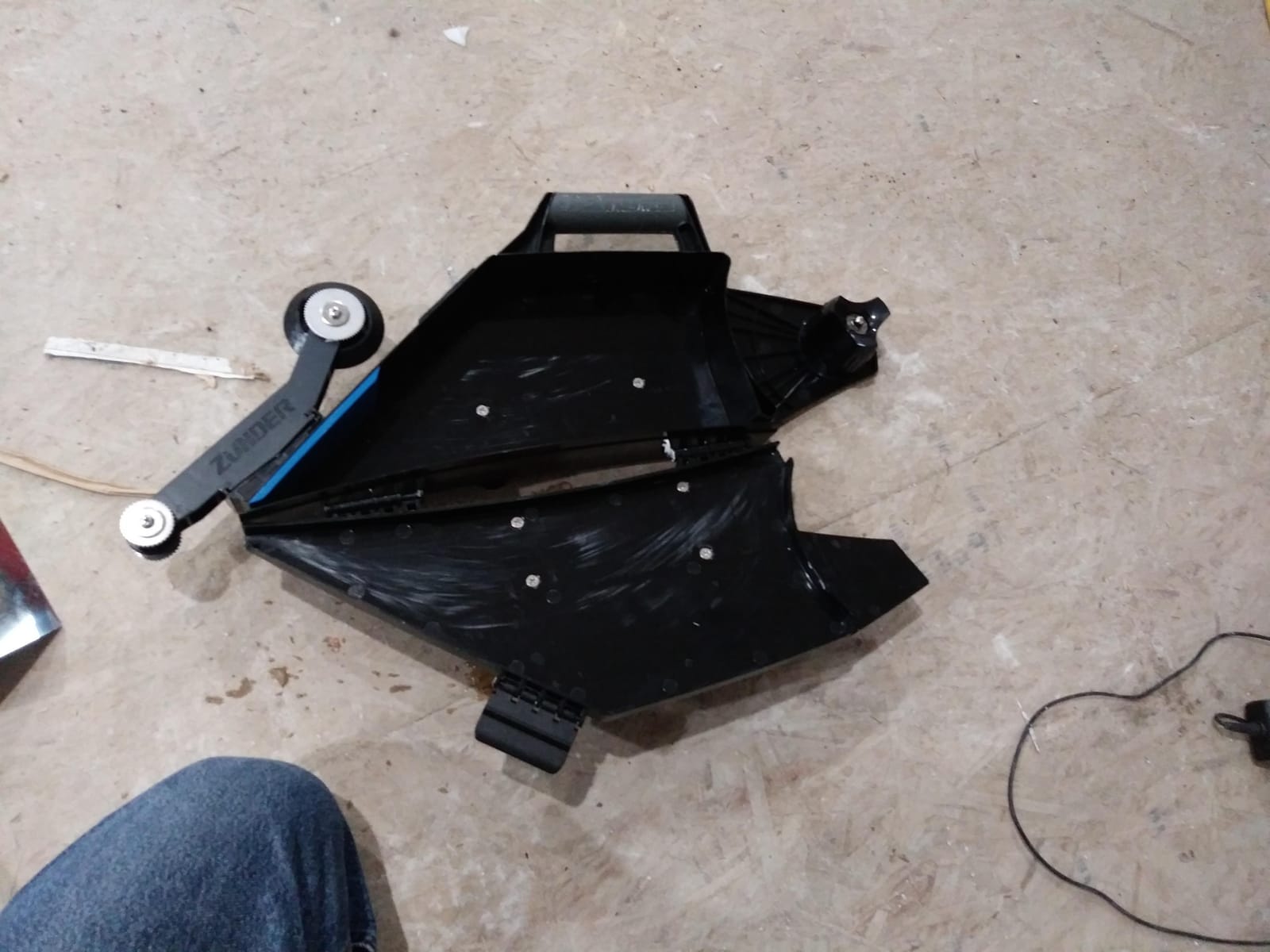
That flaw is the end-of-run cut. Owners report the tape often tears or retracts into the body when the roll runs out at the seam end, and the usual fix is to finish the cut with the corner of a taping knife. It is a ten-second workaround, but it happens on every seam, and you should know about it before you buy rather than after.
How it handles heavier compound
The flow dial is accessible while you work, which is the right design, but the useful range depends on how thin your mud is mixed. Reviewers running all-purpose compound report smooth results; heavier mixes are where the tool strains. Dial it back and slow the pass rather than forcing the volume.
One user note worth repeating from the reviews: at full capacity this is a 1.3 kg tool with a hinge door that can pop open under load. Do not fill it to the top for ceiling work. Fill it to about three quarters and you trade a refill for a tool that stays closed.
Who should look elsewhere
If your work is almost entirely flat seams in long runs with few inside corners, a straight banjo like the LEVEL5 5-311 is simpler and has a cleaner built-in cut-off. The ZUNDER earns its complexity when the corner count is high.
If the corner work is the whole job, neither of these is right. A corner applicator box or a corner roller is built for a single inside corner in a way no flat-dispenser design can match.
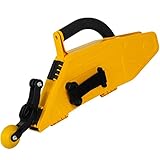
3. Delko DELKOtaper Package – Best Budget Buy for Flats and Corners Together
DELKOtaper drywall taping tool – the Delko Taping Tool and Internal Corner Attachment Package enables contractors to finish flat joints, internal corners and square set with one taping tool.…
ABS body with corner attachment
1.76 lb
15.75 x 7.87 x 3.94 inches
2.25 kg mud capacity
+ The Good
- Includes the patented internal corner attachment
- Covers flat joints
- internal corners and square set with one tool
- Two mud control dials in the box
- Speed clips give fast internal access
- Adjustable hook-and-loop side strap
- The Bad
- 4.1 average shows a wider spread of experiences than the ZUNDER
- Some ratings report mud flow inconsistency on heavier compounds
This is the value pick of the roundup, and the reason is specific: the package ships with Delko’s patented internal corner attachment already in the box. You are not buying a flat-only banjo and then discovering you also need a second tool for corners. The same package covers flat joints, internal corners and square set.
That capability is what separates it from a plain banjo. A square set, where walls meet an angled ceiling, is genuinely awkward by hand and miserable to fake, and having the attachment in the box means a first-timer can finish a whole room without ever switching tools mid-project.
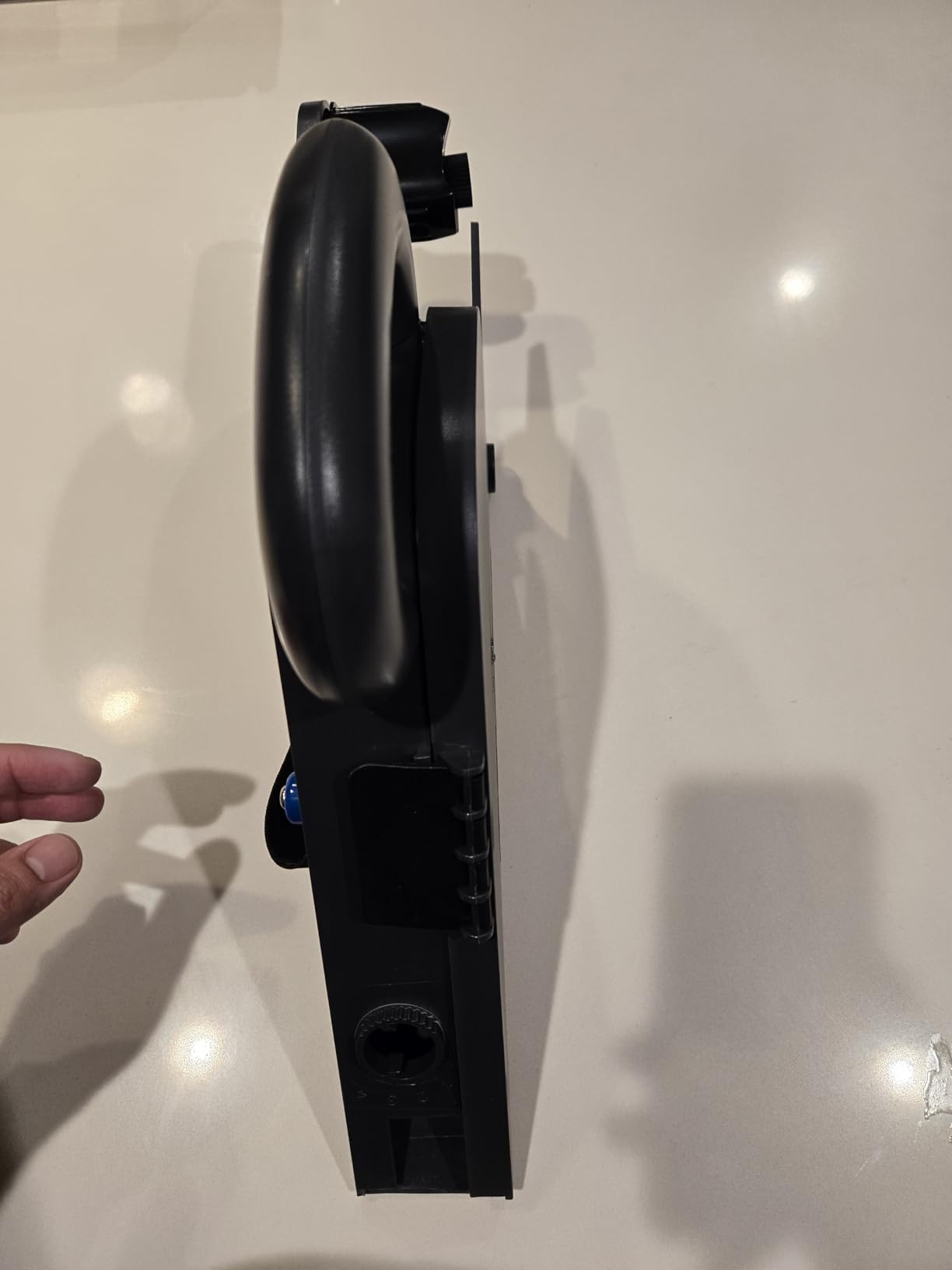
Two mud control dials come in the box, and the speed clips open the body for loading and cleaning without unhooking anything. Capacity is 2.25 kg of compound with rolls up to 150m accepted, which is right in line with the ZUNDER and ahead of most entry tools.
The 4.1 average across 699 ratings is the honest part. Sixteen percent of the ratings sit at three stars, and the pattern behind those is mud flow, not build quality. Buyers report that some compound consistencies feed unevenly through the gate, so the flow setting takes more attention than the price suggests.
What you give up against the ZUNDER
Nothing in the corner capability, which is genuinely close. What you give up is the double-ended discharge, the soft-grip handles and the cleaner hinge. If corner work is your primary task, the ZUNDER above handles the transition between flat and corner with one hand movement instead of an attachment swap.
There is also a supply-quality note in the reviews: a number of deliveries turned up with a missing hinge piece. Check the box before you start a seam rather than at the halfway point.
Where it fits in a tool wall
Treat this as the corner-capable first tool. If you are finishing a whole house as a homeowner over a few months, the package count and the corner attachment cover nearly everything except high-wall and ceiling work, which needs a different head entirely.
For a working taper, the honest read from the forums is that this is a small-job and repair tool, not a production head. The pros on DrywallTalk mix and match by tool type for exactly this reason.
4. Goldblatt Banjo and 10 Inch Knife Kit – Best Two-Tool Starter Kit
Goldblatt Drywall Banjo Taping Tools with 10” Tape Knife for Finishing
Aluminium banjo plus 10 inch blue steel knife
2.43 kg
Serrated tape cut
500ft roll
+ The Good
- Ships as a complete two-piece kit
- Blue steel blade is flexible enough to cut hand fatigue
- Serrated tip cuts tape off quickly
- Front thumb screw controls compound output
- Lid clamps lock firmly against leaks
- The Bad
- Dry tape chamber suits thinner compounds only
- Tape rides low in the chamber on horizontal and ceiling runs
- Tape roll not included and dried mud must be cleared fast
Most first-time finishers end up buying a banjo and then realising they also need a knife, so this kit solves the ordering problem by shipping both. You get an aluminium banjo and a 10 inch blue steel taping knife in one box, which is exactly the pair most beginners end up assembling on their own a week later.
The blue steel blade is the quiet advantage. It has a degree of flex that reduces hand fatigue during the embed coat, and it is thin enough to knock down ridges without the effort a thicker blade demands. Owners who floated a whole shell home list it among the handful of tools they would not replace.
The serrated tip cuts tape off quickly, and the front thumb screw gives straightforward control of compound output. Lid clamps lock firmly enough that the reviews do not complain about leaks, and a carrying strap on one side plus a wood top handle make long sessions easier on the hands.
The consistent complaint is specific and predictable: this is a dry-tape chamber, so the tape path runs along the bottom of the chamber. On vertical runs that is fine. On horizontal and ceiling seams it makes the feed harder to keep straight, and owners report tearing tape on those runs.
Which seams to run it on
Use it for vertical flat seams and for the embed coat on walls. Those are the runs the dry chamber was built for, and doing them well matters more than doing every seam at once.
For ceilings and long horizontal runs, step up to a tool with a wet chamber and a proper flow gate. The LEVEL5 5-311 below is built for exactly that transition.
Compound consistency matters here
Because the chamber is dry, thin compound is the right choice. Thinner mud lets the putty grab the paper tape as it feeds; heavier mixes can stall the feed or tear the tape before the shoe seats it.
Also plan on cleaning it the same day. Dried mud inside a dry chamber is the main reason owners retire these tools, and a ten-minute rinse while the compound is still workable prevents the whole problem.
5. LEVEL5 5-311 Semi-Automatic Banjo – Best for a Growing Crew
LEVEL5 Semi-Automatic Drywall Banjo Taping Tool | Professional Grade, Aircraft-Grade Aluminum Body, Ergonomic & Corrosion Resistant | 5-311
Aircraft-grade aluminium
20 inch size
2.66 kg
Anodized finish
+ The Good
- Integrated flow gate and tape cutter remove the need for a joint knife
- Aircraft-grade aluminium body built for commercial use
- Anodized surfaces resist corrosion
- Wide-opening hinged cover simplifies cleaning
- The Bad
- 14 percent of ratings are one-star
- Flow output has to be dialled to each compound consistency
The defining feature of the 5-311 is the integrated flow gate and tape cutter. On most banjos you finish the run and reach for a taping knife to slice the tape. This one cuts it for you as part of the pass, which removes one of the two most common interruptions in a production day.
The body is aircraft-grade aluminium with anodized surfaces, so it resists corrosion and stays dimensionally stable where a plastic housing flexes. At 20 inches it is a full-size tool with a real compound chamber, and the wide-opening hinged cover means cleaning is a matter of opening it up rather than disassembling anything.
Reviewers consistently describe it as learnable in minutes, which matters more for a growing business than for a single operator. A tool that takes an afternoon to hand to a new employee is a tool that gets used; one that takes a week gets set aside on a shelf.
The 4.2 average across 181 ratings has a specific shape: 75 percent of ratings are five-star, and 14 percent are one-star. There is very little middle. That pattern usually means the tool performs exactly as designed when the compound is mixed right, and disappoints completely when the flow setting is wrong for the mud.
How it handles ceiling and horizontal runs
Much better than a dry-chamber banjo. The wet chamber and integrated gate keep the tape loaded and seated rather than riding low, which is the specific complaint that sinks most entry tools on overhead work. If ceilings are a meaningful share of your job, this is the tool to move up to.
Expect to set the gate for each mud consistency rather than once and forgetting it. That is a five-second adjustment, but it is an adjustment, and crews that skip it are the ones producing the one-star reviews.
What the forums say about this brand
Level 5 is genuinely polarizing in the trade. One r/drywall commenter put it plainly: Level 5 would be the worst tools to work on. That is one view, not a consensus, and the same thread recommended Drywall Master and Columbia. The brand earns its place in a crew, but the finishers who post on forums are not converging on it.
For a business scaling headcount, weigh the anodized aluminium body and the teachable controls more heavily than the brand name. Those are what survive a busy season.
6. Marshalltown TapeShooter – Best Hand Taper for Raw Speed
Marshalltown TapeShooter Drywall Taper, Taping Tool, Assembled in the USA
Aluminium construction
2.3 lb
One size
Right-hand style
+ The Good
- Applies mud to the tape as it is dispensed with simple flow adjustment
- Latched spool door loads one-handed
- DuraSoft handle with adjustable web side handle and thumb rest
- Built-in tape cutter
- Available in right or left handed styles
- The Bad
- Mud hopper latch is a weak riveted point that can fail
- Needs a refill roughly every 40ft of tape
- Some deliveries arrive with missing fixings
With 108 ratings at a 4.3 average, the TapeShooter has the most consistently enthusiastic feedback of any hand taper in this roundup. Owners describe it as a permanent fixture in their kit, and the number that comes up again and again is speed: multiple reviewers report roughly three times faster taping than the knife-and-pan method, with one user taping 85 sheets in four hours.
Those figures are individual reports rather than a controlled test, but the mechanism is visible in the design. Mud is applied to the tape as the tape dispenses, the latched tape-spool door loads one-handed so you are not two-handed at the reload, and the built-in cutter ends the run without a knife.
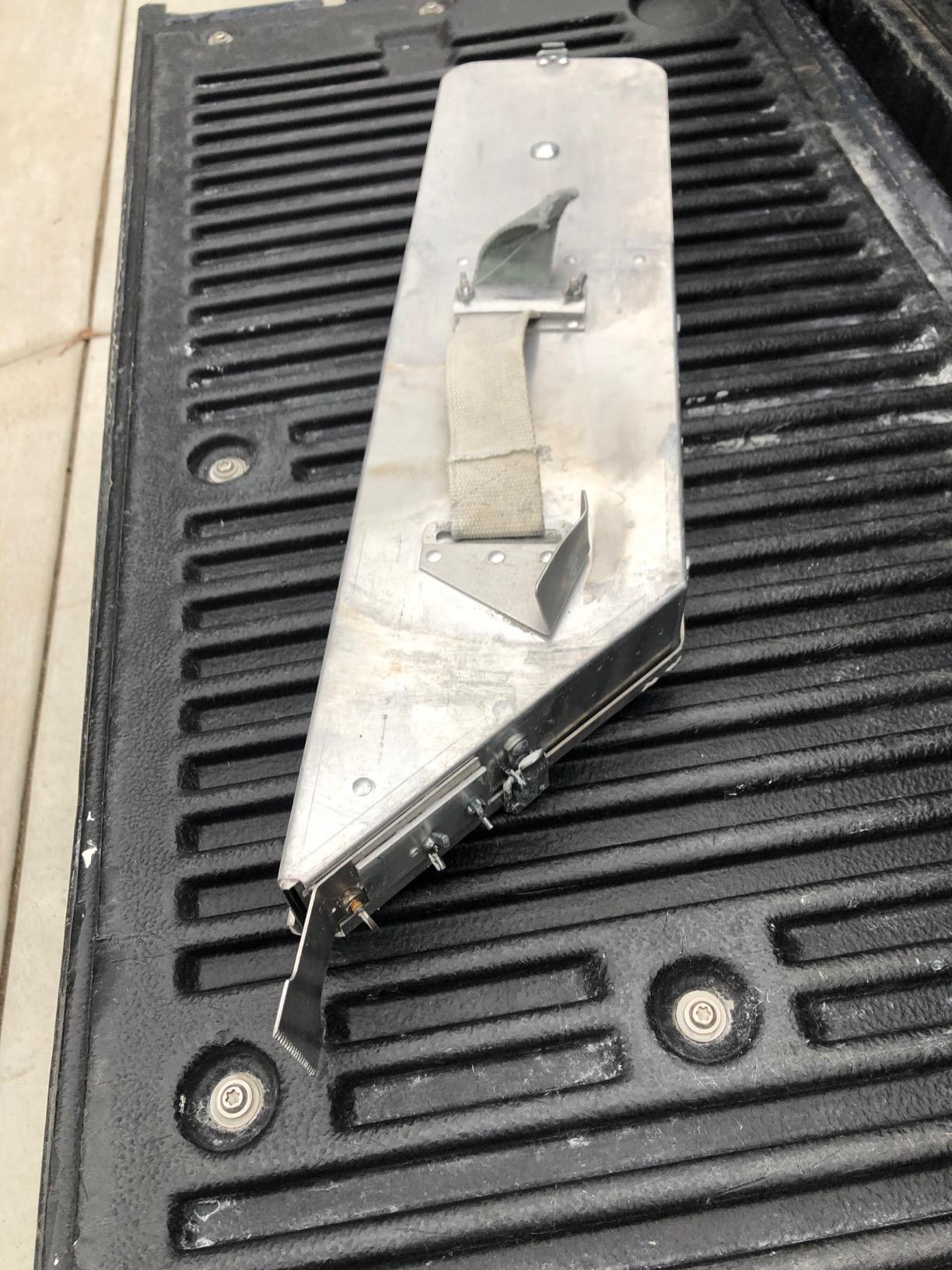
At 2.3 pounds in aluminium, it is light for a tool with a metal hopper and a mechanical cutter. The DuraSoft comfort handle, the adjustable web side handle and the thumb rest give you a three-point grip, which is what keeps the tool steady when you are tired at the end of a long run.
That three-point grip only works if the tool stays put on your hip, and a padded belt makes the difference on a long shift. Our shortlist of tool belts for drywall installers covers the options that carry a loaded taper without bouncing.
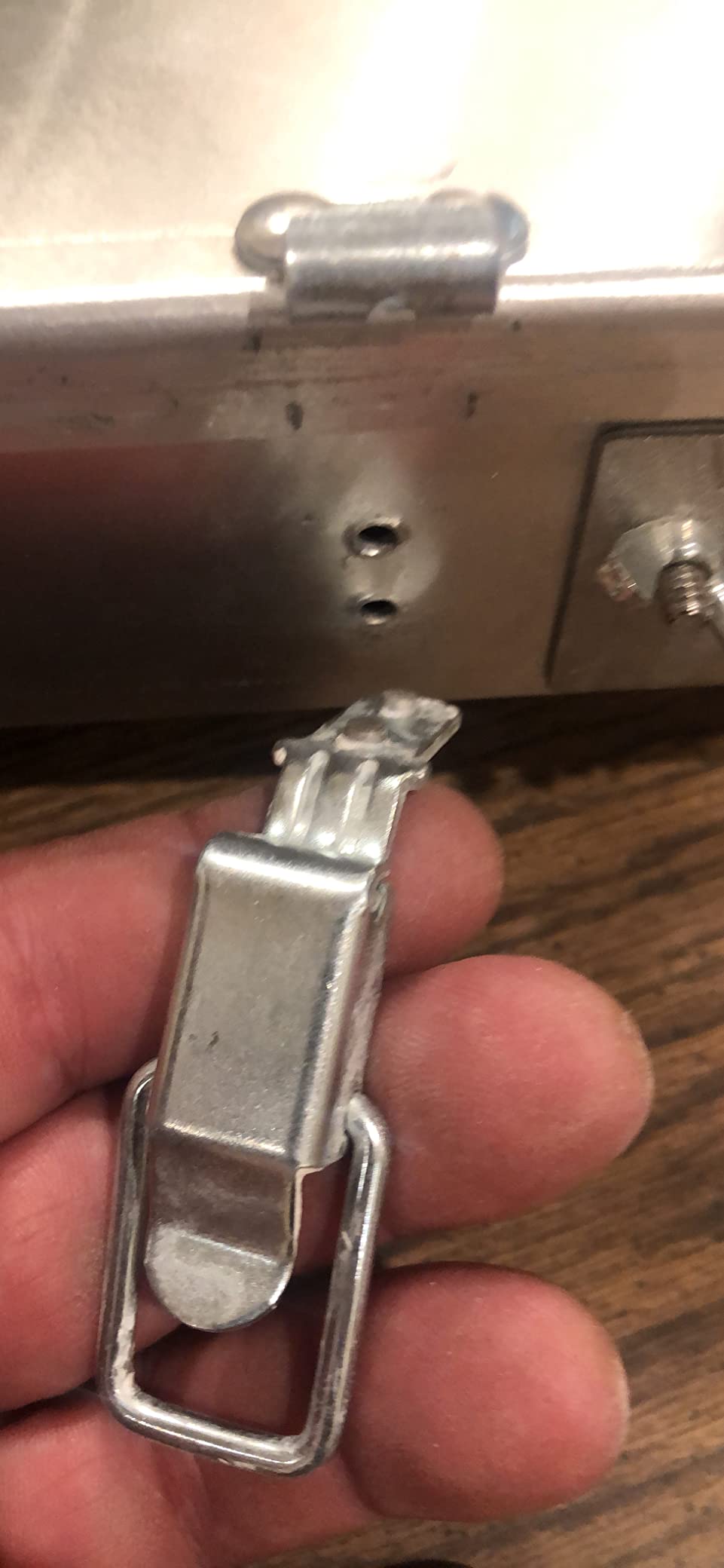
The weak point is named clearly in the reviews: the mud hopper latch. It is a riveted fitting that several owners have re-riveted or replaced with bolts. That is a five-minute fix with basic tools, and owners who have done it report the tool then performs as designed.
What the 40ft refill cycle means for a real job
Plan your compounds. A refill roughly every 40ft of tape sounds trivial until you are on a 400-sheet job, at which point it is a dozen scheduled breaks rather than interruptions you discover mid-seam.
Batch your mixes around the refill interval and keep a second hopper of mixed compound staged. The tool is fast; the workflow around it is what determines whether the speed shows up in your day or gets eaten by mud logistics.
Which hand you are
It is offered in right and left handed styles, so pick the one that matches your dominant hand rather than whatever is on the shelf. A right-handed model used by a left-handed taper will feel heavy and awkward for an entire season.
Against the LEVEL5 5-311 above, the TapeShooter wins on reported speed and the three-point grip. The 5-311 wins on corrosion resistance and the teachability of its controls for new hires.
7. TapeTech Mud Dog Premium Banjo – Best for High Mud Capacity
TapeTech Mud Dog Premium Taping Banjo
Polycarbonate and ABS body
2.52 kg
33% more capacity
Holds 500ft rolls
+ The Good
- 33 percent more compound capacity than comparable entry banjos
- Transitional head covers flats and corners with one tool
- Traditional cutting blade included and easy to install
- Lightweight body reduces fatigue against metal banjos
- The Bad
- Only 42 ratings
- so the long-term durability record is thin
- Polycarbonate and ABS body is less rigid than anodized aluminium
The Mud Dog is built around one number: 33 percent more compound capacity than comparable entry banjos. On a long flat run, capacity translates directly into fewer reloads, and reloads are the difference between a tool that saves time and one that does not.
The transitional head is the other reason to look at it. One head covers both flats and corners, so the tool does not need a second implement when the job moves from a wall seam to an inside corner. It holds rolls up to 500ft and works for either hand.
Its 4.4 average across 42 ratings is the cleanest distribution in the roundup: 72 percent five-star and about 3 percent one-star. Buyers point to capacity and the dual-purpose head as the practical wins, and the ratings spread suggests the tool rarely surprises anyone.
Here is the honest caveat. Forty-two ratings is a small sample, and the long-term durability record is thin compared with the Delko and Marshalltown banjos. A product that entered the category more recently has not been tested by five years of daily use.
When capacity beats rigidity
Capacity wins when you are running long, uninterrupted flat seams and you have disciplined compound logistics. If you can stage refills, you will feel the 33 percent advantage on every single run of the day.
Rigidity wins when you are tired, working overhead, or running inconsistent mud. A polycarbonate and ABS body flexes more than anodized aluminium under load, and on a bad mud day that flex is what makes the bead inconsistent.
What to verify before it goes on a truck
Check the cutting blade. It is a traditional blade and it is easy to install, but it is a consumable, and a banjo without a working cut-off turns into a two-step job. Treat it like a part you replace on a schedule, not a feature you discover is missing.
Also confirm the transitional head handles the corner geometry you actually have. It is a good compromise head, not a full corner applicator box.
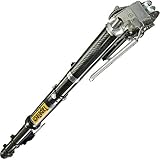
8. TapeTech 07TT-C Carbon Fiber Automatic Taper – Best Fully Automatic Bazooka
TapeTech Carbon Fiber Automatic Drywall Taper 07TT-C – Lightest Tape-Tech Taper Ever
Carbon fiber bazooka
5.65 lb
Automatic operation mode
Quick-change tape bail
+ The Good
- About 20 percent lighter than a standard taper at 5.65 lb
- Carbon fiber tube resists denting and impact better than aluminium
- Temperature-neutral tube stays warmer in cold weather
- Upgraded longer control tube with new glide wheels
- Quick-change tape bail and adjustable braking
- The Bad
- Steep learning curve and several owners say learn it before buying
- One delivery arrived with a bent section on the metal-toothed wheel
- Only 32 ratings
- so it is thinly validated
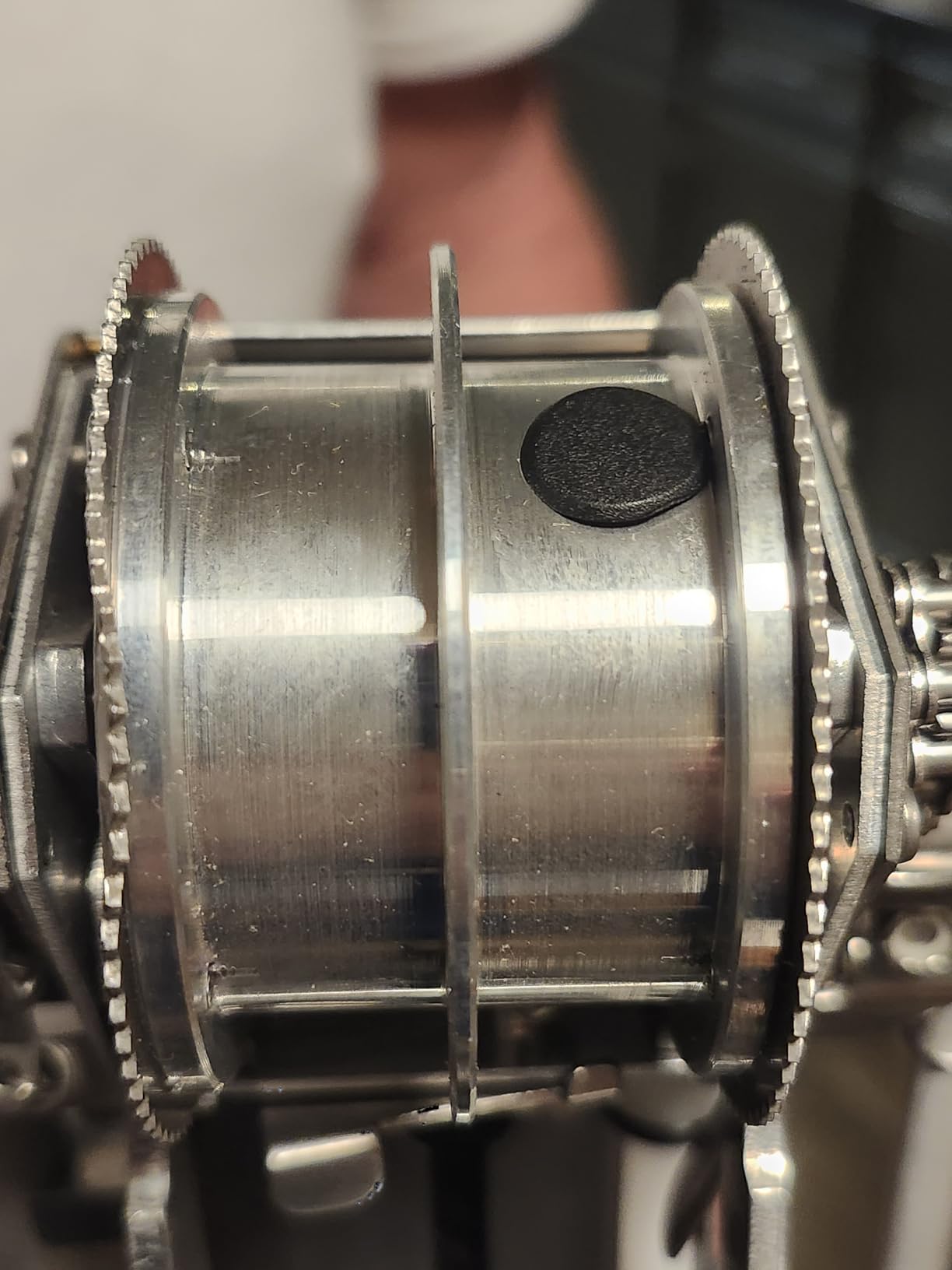
This is the only true automatic drywall taper in the roundup, and it is the machine everything else is measured against. It runs off a pump-loaded hopper, meters a consistent bead of compound along the seam, seats the tape with its shoe and cuts the tape to a measured length before the next run. That single-pass logic is the whole reason a production crew pays for one.
The 07TT-C is the carbon fibre version, and the material choice is the product. At 5.65 pounds it is roughly 20 percent lighter than a standard taper, which sounds modest until you are holding it at shoulder height for four hours.
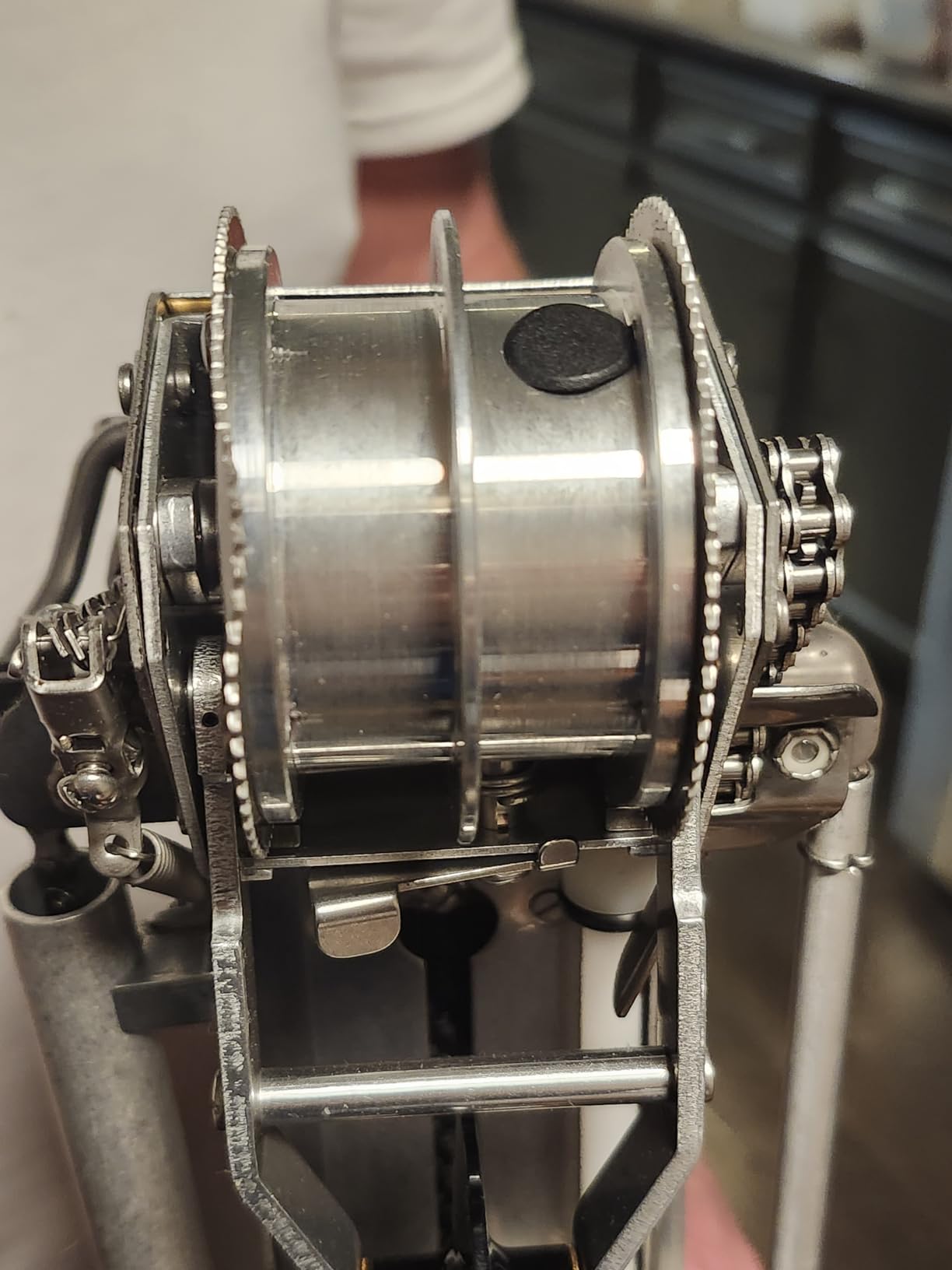
Carbon fibre also does not dent or bend the way aluminium does, and it is temperature-neutral, so the tube stays warmer to hold in cold weather. A 15-year taper quoted in one of the trade group threads put the ceiling on the whole category: all the automatic tools can be run by one person, but the true art of the craft is hand finishing. This machine raises your production ceiling, it does not replace your judgement.
The 4.6 average across 32 ratings is the highest in the roundup, with 81 percent five-star. Feedback centres almost entirely on weight and handling, and the only substantive complaints are the learning curve and one report of transit damage to the cut-off wheel.
Whether you are ready for one
The learning curve is not a marketing disclaimer here, it is the review consensus. First-time finishers repeatedly post poor first-coat results with too much mud under the tape when they pick up a fast machine. A bazooka accelerates a skill you still have to learn, and it accelerates mistakes just as efficiently.
If you cannot already finish a room properly with a knife and a pan, this is the wrong purchase order. Learn the hand skills, then buy the machine.
What else your system needs
A pump is not optional. ContractorTalk users make the point repeatedly: a flat box set is a great investment but you will also need a pump to fill the boxes. Plan for the loading pump and the gooseneck as part of the same purchase decision, not as an accessory you discover later.
Add the head width you actually run. A 10 inch box and a 12 inch box cover most residential flat seams, and the wider head is a finishing tool rather than an embed tool. Start with the narrower one and add the second when you have volume.
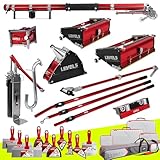
9. LEVEL5 4-600 Automatic Taping and Finishing Set – Best All-in-One System
LEVEL5 Automatic Drywall Taping and Finishing Tool Set | 4-600 | Automatic Taper, 10”/12″ Flat Boxes, 3” Angle Head, 7” Corner Applicator Box, Corner Roller, Standard Handles, Pump, Gooseneck
Aluminium bodies with stainless steel blades
57 x 16 inches
Corner roller, pump and gooseneck included
+ The Good
- Complete package: taper
- 10in and 12in flat boxes
- 3in angle head
- 7in corner applicator box
- Covers flats
- inside corners and angles in one system
- Each tool arrives in its own protective bag
- Responsive after-sales support and parts supply
- The Bad
- Requires real practice before output climbs
- Heavy 57 inch kit that is awkward to move and store
- One order was missing an advertised hand tool
The 4-600 is the only product here that arrives as a complete automatic system. In the box: an automatic taper, 10 inch and 12 inch flat boxes, a 3 inch angle head, a 7 inch corner applicator box, a corner roller, standard handles, a compound pump and a gooseneck. There is no second purchase, no dealer conversation and no guessing which head fits which handle.
That completeness is the argument. Every other automatic tool in this roundup is a single head, and a single head leaves you hand-finishing the other half of the job. This set covers flats, inside corners and angles without ever mixing hand and automatic tools on the same seam.
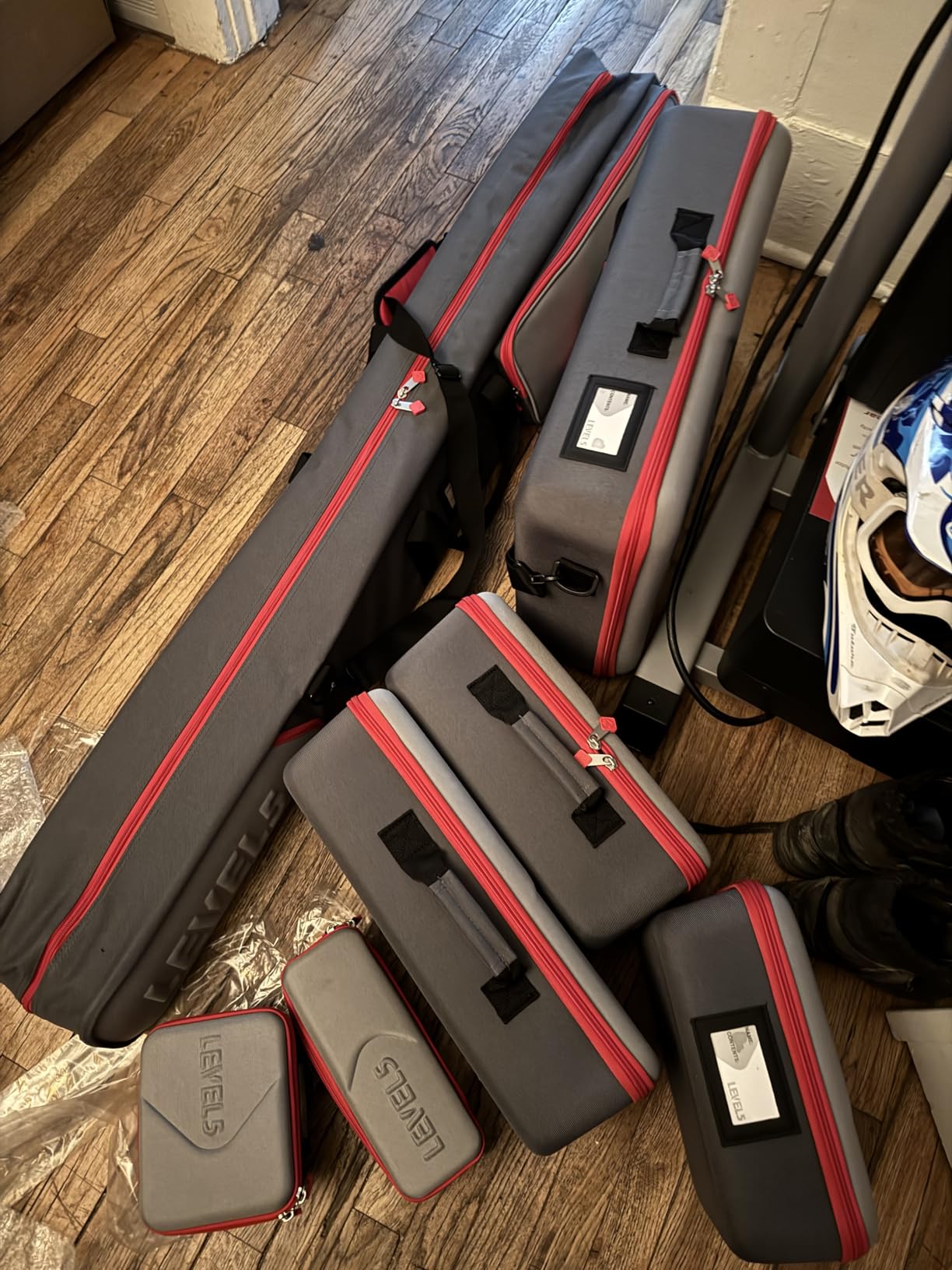
Each tool arrives in its own protective bag, which owners note makes the kit look and feel professional on site. The bodies are aluminium with stainless steel blades, and the support is described as responsive with real parts supply, which is the part that matters once the kit is in daily use.
The 4.5 average across 79 ratings comes with 77 percent five-star. The dominant sentiment is that once the crew masters the auto taper, it transforms job speed. The critical caveat is that experienced finishers describe the learning curve as a genuine trade skill rather than something the purchase alone provides.
What you are committing to
At 57 inches long, this is a heavy kit. Several owners note it is awkward to move and store without the cases, so budget for a van or a dedicated rack, not a corner of a garage. A system you cannot move to the work is a system that goes unused.
Also decide honestly whether you will use the corner roller. It is included, and forums are blunt that pros mix and match by tool type rather than committing to one system wholesale, so a corner roller you never reach for is dead weight in the rack.
Who should take this route and who should not
Take it if you are moving from hand finishing to automatic finishing as a business, or if you are a crew that wants every seam on the same system. The 10 inch and 12 inch flat boxes alone cover the volume residential work that would otherwise take years to accumulate.
Do not take it if you are finishing one house. Overbuying is the single most common regret in this category, and beginners who buy a full automatic set they will not use most of are the ones who regret it. A banjo, a set of knives and a pump will finish a house on its own.
10. Kraft Tool DC401 Drywall Taper – Best for Two-Handed Control
Kraft DC401 Drywall taper with Wood and Web Hdl
Wood and adjustable web side handle
2.91 lb
27 x 3 x 5 inches
Limited warranty
+ The Good
- Dual handle setup with a wood handle and adjustable web side handle
- Established masonry brand with a limited warranty
- Finishers who switched to it report long service life
- Right-handed configuration suited to traditional hand finishing
- The Bad
- Heavier than competing aluminium banjos at 2.91 lb
- No built-in tape cutter
- Only 62 ratings and minimal listing detail
- Transit damage reported on a few deliveries
The Kraft DC401 is a traditional hand taper built around a two-handed grip. You get a wood handle plus an adjustable web side handle, which gives you a wide, stable hold for laying compound on the tape. For finishers who came up on hand tools and want that control retained, that configuration is the reason to buy it.
Kraft Tool is an established masonry brand with a limited warranty and a long production history, and the buyer base is loyal and repeat. Finishers who switched to the DC401 report that it holds up over years, which is a claim the shorter review count on this listing makes harder to verify but the brand history supports.
The criticism is consistent and modest. At 2.91 pounds it is heavier than the aluminium banjos it competes with, and the listing does not describe it as all-aluminium. The feature set is no-frills, with no built-in tape cutter, so you finish every run with a knife the way finishers have always finished runs.
With 62 ratings the sample is thin and the listing detail is minimal, so there is less published feedback on mud flow settings than the higher-rated tools here. A few deliveries also arrived dented, which is a packing issue rather than a build issue but worth a note.
When a heavier tool is the right tool
Weight becomes an advantage when the mud is heavy and the seams are long. A two-handed grip stabilises the tool when the compound is at the thick end of the range, and that is exactly when a single-hand aluminium banjo starts to wander.
It becomes a liability on overhead work and at the end of a long shift, which is the trade for the extra control. If your volume is mostly walls, not ceilings, the heavier build costs you little.
What to check on arrival
Inspect the body and the base plate before you load mud, given the transit-damage reports. Check that the web side handle adjusts and locks, because a loose side handle is worse than no second handle at all.
Confirm the handle configuration suits your dominant hand before you commit. This is a right-handed model, and the Kraft range covers the other side separately.
Are Automatic Drywall Taping Tools Worth It?
Automatic drywall taping tools are worth it once you are finishing more than roughly 10 to 15 sheets a day, and they are a waste of money below that. The reason is simple: the machine removes steps, not effort per step, so the time saving scales with volume.
Below that threshold, a good banjo, a set of 12 inch knives and a corner tool will finish the same job with more versatility and far less to learn. A patch job, a single room, a rental turnover, or your first house will not move the needle that a bazooka is supposed to move.
The honest counterweight comes from the forums. Automatic tools raise production, they do not replace hand skill, and beginners who pick one up first routinely produce worse first coats because they are laying too much compound under the tape. A taper with a pump gives you a heavier, fixed mud load than a knife does, and it will not bridge a recessed joint.
Rental is the sensible middle path for a one-off project. Buy-versus-rent is a live question in this category and no editorial competitor addresses it, but the logic is unremarkable: if the tool would not earn its keep on a recurring schedule, rent it for the week you need it and keep the money.
How to Choose an Automatic Drywall Taper
Start with volume, not brand. Count the sheets you finish in a normal week, and if that number sits near or above 100, an automatic system is in play. If it sits below 30, a banjo and knives are the correct answer and no amount of brand research will change that.
Then count your corners. Corner applicator boxes, angle heads and corner rollers exist because flat-seam heads are geometrically wrong for a 90 degree inside corner. A house with few inside corners leans on flats; a commercial tenant improvement with corridor after corridor is mostly corner work, and the money goes in the corner head instead of the flat box.
Next, pick a head width. A 10 inch box handles butt joints and tight flat seams, a 12 inch box is the general workhorse for residential flats, and a 14 inch box is a finishing tool for wide seams and knock-down coats. Most crews run a pair and use each for what it is good at. The clear benefit of the right head width is coverage per pass: a wider box puts down more compound, which cuts the number of passes a wide seam needs.
Finally, budget the system, not the head. ContractorTalk users flag the pump dependency as the recurring surprise cost, and they are right. An automatic taper with no pump is a very expensive paperweight, because you cannot refill a hopper without one. Plan for the loading pump, the gooseneck, the handles and the storage as a single purchase decision.
One more practical point on materials. Carbon fibre resists impact and stays temperature-neutral, cast aluminium is the standard pro build and repairs most easily, and stainless steel blades are what you want on the finishing side of the set. For most crews, aluminium bodies with stainless blades are the balanced answer.
What a Complete Automatic Taping Set Actually Includes
A complete automatic taping set is eight tool categories, and buyers routinely underestimate how many of them they need. Here is the actual inventory, with what each piece does and when you can skip it.
Automatic taper (bazooka). Applies compound and tape to flat seams in one pass and cuts the tape to length. This is the core machine, and it is the only non-negotiable item in the list.
Flat boxes. 10 inch, 12 inch and 14 inch are the standard widths. A flat box is the finishing counterpart to the taper: the taper embeds, the box feathers and smooths. A crew finishing volume work runs at least two widths.
Angle head and corner applicator box. The angle head lays compound into an inside corner, and the corner applicator box, typically 7 inch, places the tape. The 3 inch angle head is the finishing head for the same corner after the tape is set. You need both to corner a job with automatic tools.
Corner roller. Presses tape into the corner compound and is the fastest way to get full contact on a long inside corner run.
Compound tube. A caulk-gun-style tube that loads mud into corner applicator boxes without a scoop, which is what makes corner work continuous rather than intermittent.
Loading pump and gooseneck. The pump fills the taper and flat boxes; the gooseneck directs compound into them. Skipping the pump is the most common budget mistake in this category.
Handles. Extension handles for the boxes and the standard handles for the taper. On ceilings and high walls these are not accessories, they are how the tool reaches the work.
Nail spotter. Worth addressing directly, because one DrywallTalk user with tools from almost every available brand put it bluntly: hate nail spotters, regardless of brand. They are the one universally disliked tool in the category. If your board is screwed rather than nailed, you do not need one at all.
What is genuinely missing from most sets is sanding equipment. Note it and plan for it separately, because no automatic package solves the dust problem on the other side of the finish.
Automatic Drywall Taper Brands Compared
There is no best drywall tool brand, and experienced finishers know it. Pros buy by tool type, not by system, and one DrywallTalk user running tools from almost every available brand laid out the actual practice: prefer TapeTech applicator boxes, a Drywall Master taper, Drywall Master and Northstar angle heads, and a Columbia roller and Columbia handles. Here are the brands that show up across those categories, and what each is known for.
TapeTech and Tapepro are the reference point for automatic finishing, with the widest dealer-backed head range in the category. In our data, the 07TT-C carbon fibre taper and the Mud Dog banjo represent the two ends of that range, and the brand is named on Facebook trade groups as a top all-round set alongside Northstar. The trade-off is dealer pricing, which is the most expensive way to buy a full head lineup.
Columbia Taping Tools carries the strongest pro endorsement in the research. r/drywall consensus names Columbia and Drywall Master together as the most respected makers, and Columbia handles and rollers come up repeatedly in the mix-and-match advice.
LEVEL5 dominates retail listings and complete packages, including the 4-600 system in this roundup, and the 5-311 has the anodized aluminium body most pros look for. It is also genuinely polarizing in the trade. One r/drywall commenter was blunt that Level 5 would be the worst tools to work on. Judge it per tool, not per brand.
Drywall Master gets the strongest single endorsement in the research, with the lead r/drywall recommendation for a taper, and is paired with Northstar for angle heads by the DrywallTalk user who has tried nearly everything.
Northstar appears in the same angle-head recommendation and alongside TapeTech in the trade-group all-round set verdicts. It is the name to check when you are buying corners rather than flats.
Goldblatt and Marshalltown sit in the accessible middle with proven aluminium hand tapers, and Kraft Tool holds the traditional two-handed end. The honest summary is that the big brands are close within a tool type and meaningfully different across tool types, so buying one system is a shortcut that costs you performance somewhere.
Five Tools You Can Skip as a Beginner
Our ten reviews are broken down by tool type, so you can stop as soon as you find yours. Nobody publishes this section, and it is the most useful thing in this guide if you are new. Dealers sell full sets because that is the margin, not because a first-timer will touch every piece.
Skip the full automatic system. Unless you are finishing 100 or more sheets a week, the 4-600-style package leaves you with a corner roller you never pick up. A banjo, a 10 inch knife and a 12 inch knife will finish an entire house.
Skip the bazooka. This is the most common overbuy in the category. A pump-fed automatic taper without flat boxes and corner heads to match is a machine that does one job well while you hand-finish everything around it.
Skip the nail spotter. The forums are unanimous and unkind about this one. If your boards are screwed, which most modern work is, you will never load it.
Skip the carbon fibre premium. The 20 percent weight saving on the 07TT-C is real and it only becomes obvious at high volume. On a low-volume schedule, the money is better spent on a second flat box width you will use every day.
Skip the 14 inch box. Wide heads are finishing tools for wide seams. A beginner will spend that money far better on knives, compound and a pump.
What you should buy first, in order: a decent banjo, a 10 inch knife, a 12 inch knife, a corner tool, and a pump when you own your first box. Add the bazooka when the sheets-per-day number justifies it, not before.
Cleaning and Maintaining Automatic Taping Tools
Automatic tools fail mostly because nobody cleans them, not because the metallurgy is wrong. Mud left inside a chamber or a joint will seize, and a seized tool costs more time than the machine ever saved.
After every job, same day. Rinse plastic-bodied tools under running water and scrub the mud insert tab with a stiff brush. For metal chambers, dump the mud and run water through the gate before it skins over. Ten minutes while the compound is still workable prevents an hour of scraping later.
Weekly, on metal tools. Oil the moving parts. This is the single highest-value maintenance habit in the category and the one most often skipped, because it is invisible until the joint seizes on a Tuesday afternoon in a house you are behind on. Any automatic tool needs a wipe-down and an oiling of its moving joints once a week, and more often in summer.
Know what wears out first. On a taper, the cut-off mechanism and the glide wheels wear before the body does. On a banjo, it is the cutting blade, then the hinge and the gate. On a pump, the seals and the o-rings. Budget for these as consumables rather than treating a failing part as a tool failure.
Replace parts, do not replace tools. The most common frustration in the category is that replacement parts can cost close to the price of a new head. Check the parts list and dealer network before you buy, not after the first failure, because that availability is the real difference between a brand and a product.
For moving tools to and from site, a drywall cart keeps the mud out of the cab and stops the damage that owners report on heavy kits. Our picks for those are in the drywall cart roundup, and the tool belt options are covered in our tool belt guide.
Frequently Asked Questions
Are automatic drywall tools worth it?
Automatic drywall tools pay for themselves when you are finishing more than roughly 10 to 15 sheets a day. Below that volume, a good banjo, a 10 inch and 12 inch knife and a corner tool will finish the same job for far less and with more versatility. Automatic tools speed up production but do not replace hand finishing skill.
What are some good automatic taping tools for drywall?
The Buddy Tools TapeBuddy is the easiest first taping tool and the most reviewed option. The Delko ZUNDER handles flat joints and inside corners with one tool. The Marshalltown TapeShooter and LEVEL5 5-311 are the faster hand tapers, and the TapeTech 07TT-C carbon fibre automatic taper is the true bazooka. The LEVEL5 4-600 is the complete boxed system.
Who makes the best drywall tools?
There is no single best brand, because pros mix and match by tool type. TapeTech and Tapepro lead automatic finishing heads, Columbia and Drywall Master take the strongest pro endorsement for tapers and handles, and Northstar is regularly named for angle heads. The practical answer is to pick the best head for each tool rather than the best system.
What is the best drywall corner tool?
For laying tape in an inside corner, a corner applicator box loaded by a compound tube is the fastest tool. A 3 inch angle head finishes the same corner afterward, and a corner roller presses the tape into full contact. A corner finisher is for precision final work while a corner flusher is built to survive more abuse.
Should you prefill joints before taping?
Yes, pack deep or recessed joints with quick-set or setting compound before running an automatic taper. A taper applies a fixed, heavy mud load and will not bridge a gap, so an unfilled joint gets a thick embed coat and a visible ridge that costs more to fix than the prefill did.
What are the best tools for drywall taping?
A working kit needs an automatic taper or banjo for embedding, 10 inch and 12 inch flat boxes for finishing, a 3 inch angle head and 7 inch corner applicator for inside corners, a corner roller, a compound tube, a loading pump with gooseneck, and extension handles. A nail spotter is only needed on nailed board, and sanding equipment has to be bought separately.
The Best Automatic Drywall Taping Tools in 2026: Where to Start
If you are finishing your first room or your first house, start with the Buddy Tools TapeBuddy. It carries the most ratings in this roundup, it is the lightest tool on the list, and the two mud flow settings give you the bubble control that beginners need. Add a 10 inch and a 12 inch knife and you are equipped for a whole house.
If inside corners are a large share of your job, the Delko ZUNDER is the better first buy because its double-ended applicator handles flats and corners in one pass. The DELKOtaper package gets you the same corner capability for less if you want to spend less.
If you are finishing more than 10 to 15 sheets a day, the conversation changes. The Marshalltown TapeShooter and the LEVEL5 5-311 are the fastest hand tapers, and the TapeTech 07TT-C is the real automatic taper once you have flat boxes and corner heads to feed it.
Our overall pick, though, is the Buddy Tools TapeBuddy, because the best-selling tool in this category is not the one with the most features. It is the one that the most people finished real work with and rated highly. Buy the tool that matches your sheet count, clean it the same day you use it, and buy the bazooka when the volume arrives rather than before.