
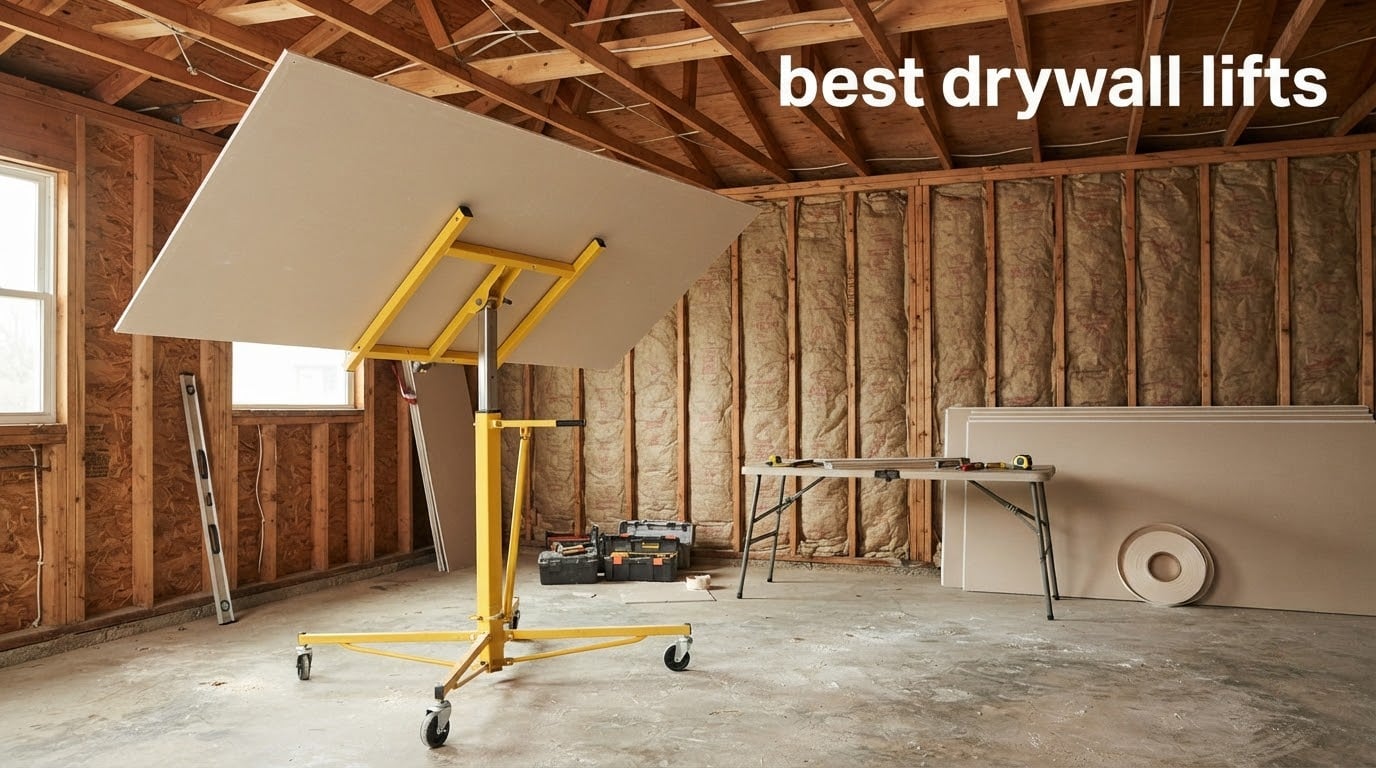
Drywall hanging used to mean finding a second pair of hands for every sheet. A drywall lift replaces that helper: it takes a full panel off the floor, raises it to ceiling height on a cable or chain, and holds it there while you drive screws. We went through ten of the most reviewed units on the market to find the best drywall lifts for 2026, and the Panellift 125 comes out on top for its alloy steel frame, winch drive, and 150 lb load capacity.
That matters because of a simple piece of arithmetic. A 4×8 sheet of half-inch drywall weighs roughly 50 to 60 pounds, and a 4×12 sheet runs 80 to 100 pounds. Once you add the lift cradle and the angle of the panel as it leans into the mast, you are asking one machine to handle the equivalent of 100 pounds or more of off-balance load. Nearly every lift in this roundup is rated at 150 lb, and that number is the practical ceiling for a single sheet, not a limit on how many sheets you could stack.
A drywall lift, drywall hoist, and panel lifter are three names for the same category of tool. A drywall jack and a panel carrier are not. A jack is a hand-operated lever for feeding a sheet up to a helper; a carrier is a wheeled cart with an A-frame rack for moving bundles across a site. Neither replaces a lift for solo ceiling work. If you also need to move material around the jobsite, our picks for the best drywall carts cover that side of the job.
In this guide you will find a quick comparison table, ten individual reviews, a buying guide that explains the specs that actually matter, and an honest look at when a lift is not worth buying. Last reviewed for 2026, and every rating and review count below is taken from live retailer listings at the time of writing.
Top 3 Drywall Lift Picks for September 2026
Best Drywall Lifts Compared in September 2026
| PRODUCT MODEL | KEY SPECS | BEST PRICE |
|---|---|---|
 |
|
Check Latest Price |
 |
|
Check Latest Price |
 |
|
Check Latest Price |
 |
|
Check Latest Price |
 |
|
Check Latest Price |
 |
|
Check Latest Price |
 |
|
Check Latest Price |
 |
|
Check Latest Price |
 |
|
Check Latest Price |
 |
|
Check Latest Price |
1. Panellift 125 Drywall Lift: Best Overall Alloy Steel Lift
PANELLIFT® Drywall Lift, Sheetrock Hoist 125, 150 lbs, Rolling Panel Lift, Drywall Installation, Rolling Lifter, Sheetrock Lift, Drywall Lifter, Adjustable
150 lb capacity
Winch and crank drive
Alloy steel
100 lb frame weight
+ The Good
- Solid welded alloy steel joints
- Aircraft grade cable
- Flexed outriggers resist bowing
- Handles tall ceilings and long sheets
- The Bad
- Heaviest frame in the group at 100 lb
- Higher cost than marketplace models
- Crank handle is bulky to stow
Panellift built the first rolling drywall lift, and the 125 still shows that lineage in the details. The frame is alloy steel with welded joints rather than light-gauge folded steel, and the outriggers flex slightly under load so the base does not bow when a full sheet leans into the mast. That distinction is the one we kept coming back to while reading owner reports on r/drywall, where people consistently warn that lighter frames deform after a few loan-outs.
Weighing 100 pounds, this is the heaviest lift we tested, and that is not an accident. The mass is part of why it stays planted when the cable is cranked and the sheet swings. If you are hanging full 4×12 sheets on a vaulted ceiling by yourself, that stability is worth the extra effort of moving it across a jobsite floor.
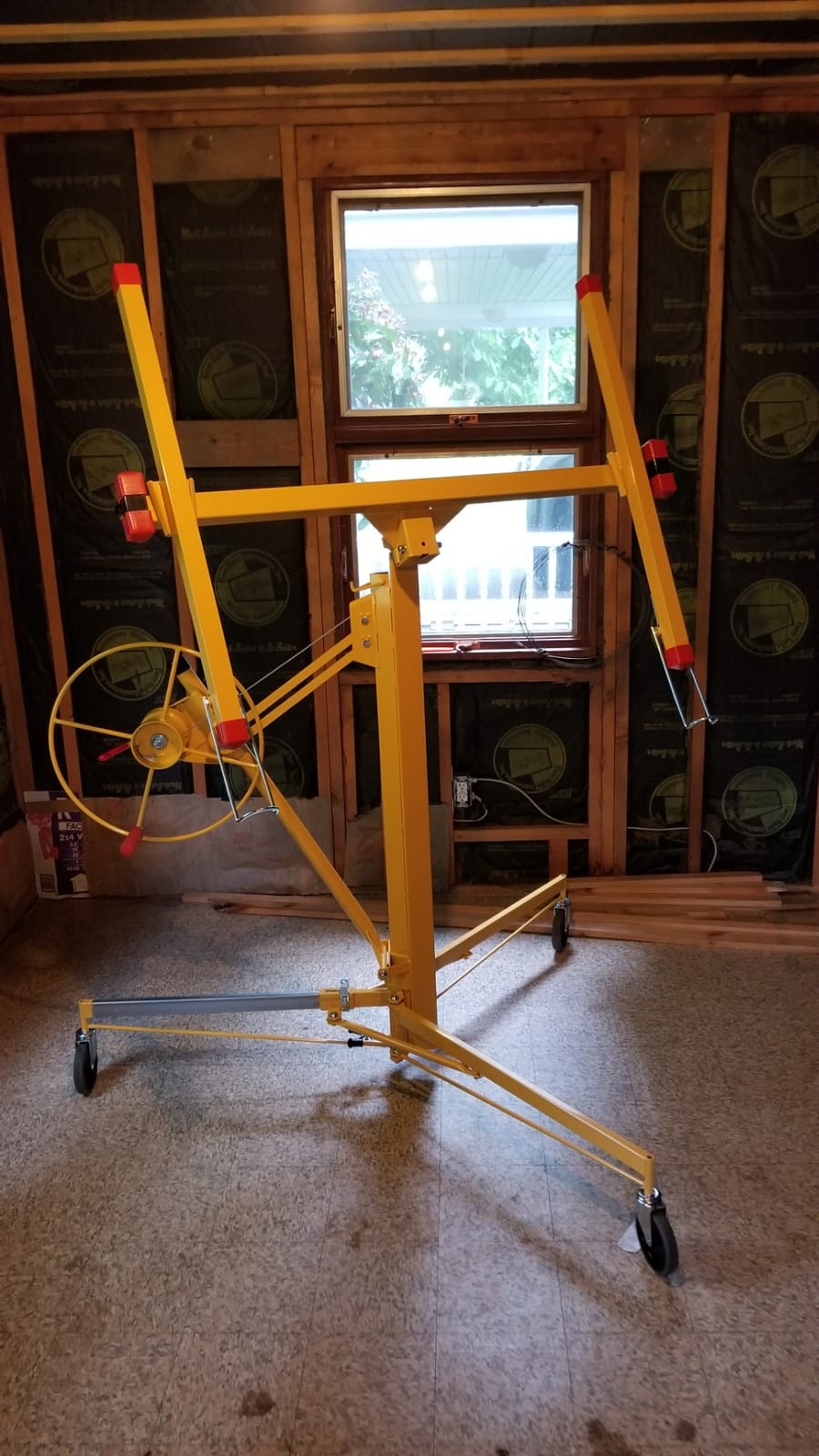
The drive is a hand winch with a crank handle, and the cable is aircraft grade. Cranking feels slower than a chain hoist on the first few sheets and much better by the fifth, once you settle into a rhythm. Owners note you need to keep the cable tensioned so it does not jump a pulley, which is the one operating habit worth learning before your first lift.
The cradle swivels, and the adjustable arms take 12 foot sheets without a fight. The company is American owned, the unit is assembled elsewhere, and it carries a 1 year limited warranty with the frame, tripod, casters, cradle, winch, and crank in the box. For a contractor running sheets every day, this is the one I would buy once and keep.
What you should know before buying
At 100 pounds, plan your path through the building before you unbox it. It will not fit down a tight stairwell the way a folding frame does, and it needs a clear path to wherever the ceiling work starts. Bring a second person for moving it, not for operating it.
The 49 by 49 by 56 inch footprint is stable but square, so turning corners in a gutted room takes planning. Lock the casters as soon as the sheet touches the cradle, every time, because a swinging 4×12 is the fastest way to bend a frame you just paid a premium for.
Who should skip it
If this is one bathroom and one weekend, the money is better spent elsewhere. You are paying for build quality you will use a fraction of the time, and the weight is dead weight in a small room where you are constantly repositioning.
Dedicated drywall hangers buying their first lift should also weigh renting once to see how their own body works under the load. Plenty of pros on forums say they reach for a lift only for tall vaults and awkward sheets, not for standard ceilings.
2. Winado 16 ft Drywall Lift: Best Folding Frame for Tight Spaces
Winado 16 ft Drywall Lift Panel Rolling Hoist Jack Lifter for Sheetrock
132 inch lift height
150 lb steel frame
360 degree cradle
86 lb weight
+ The Good
- Folds flat to about 72 inches long
- Tool-free assembly and breakdown
- Rotating cradle handles angled ceilings
- Arm reaches 114 inches for long panels
- The Bad
- Cable can catch at full extension
- Instructions are thin
- Casters are basic
The Winado reaches 132 inches of lift travel, which puts it a full foot higher than an 11 foot model and makes it a good match for a tall single-story or shop ceiling. The frame is steel, the capacity is 150 pounds, and the telescopic arm adjusts from 49 inches to 114 inches so the same machine handles a 4×8 and a 4×12.
Assembly is tool-free, and it folds down to roughly 72 by 17 by 6 inches, so it fits in a car or a pickup bed. That matters more than it sounds. One r/drywall user described loaning a lift to a friend and getting it back banged up, which is exactly the scenario a fold-flat design survives and a welded 100 pound frame does not.
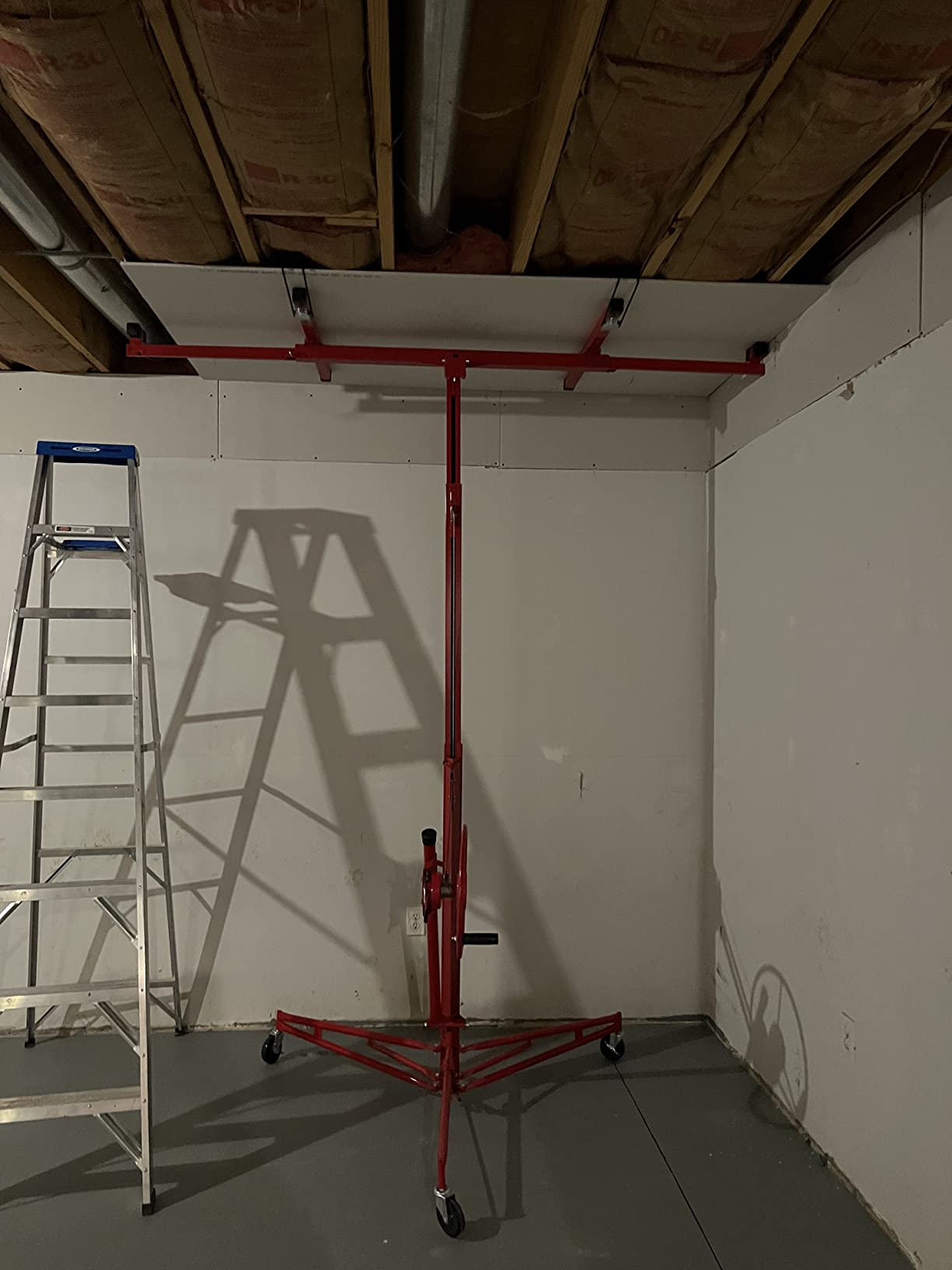
The 360 degree rotating cradle tilts the panel to the angle your ceiling needs, which turns the same tool into a wall lifter for the lower half of a gutted room. Four lockable caster wheels keep it planted, and the whole rig runs on a hand winch with a cable.
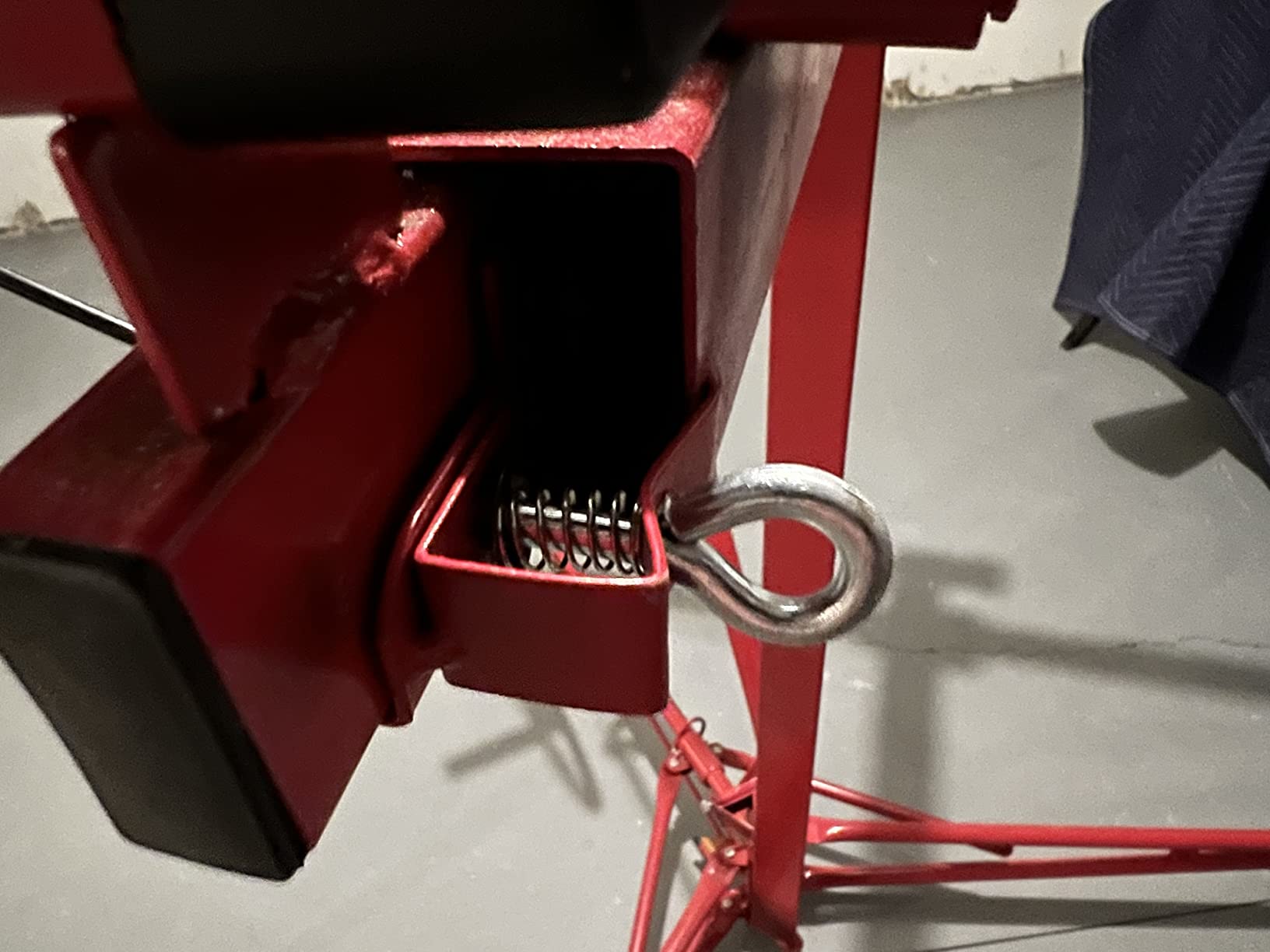
Owner reports are good on value and mostly cautionary on the cable. Some units need a C-clamp or a better cable retainer at height, and a few people report the line catching or slipping as the panel nears the top of travel. Check the retainer before every lift rather than after the first surprise.
Reach versus platform height
The 132 inch figure measures the top of the lift travel, not the height at which the panel sits. Real ceiling reach is always a few inches under the rated number once the cradle angle is set, so measure your actual ceiling height before you commit to a tall-ceiling model.
For a 10 foot ceiling you have plenty of margin here. For a 12 foot or vaulted space, this is one of the few affordable lifts that gets the panel above your head without a scaffold, and that is the whole reason to buy it.
Who should skip it
If your ceilings are all under 9 feet, the extra reach is dead weight in the frame. A smaller 11 foot lift folds tighter, costs less, and is easier to move through a doorway, which you will do many times in a gut remodel.
Daily commercial users should look elsewhere. Reviews describe it as excellent for weekend projects and warn that light-gauge steel does not enjoy being dropped, kicked, or dragged around a busy site every day.
3. Rovibek 11FT Drywall Lift: Best Value Ceiling Lift
Rovibek 11FT Drywall Lift, Drywall Jack Lift for Ceiling
150 lb capacity
11 ft lift height
54 inch loading height
Welded steel
+ The Good
- Reinforced base legs cut wobble
- Low loading height simplifies sheet placement
- Winch with safety brake
- Good review volume for the tier
- The Bad
- Wobbles at full extension with 10 ft sheets
- Brake handle has no positive lock
- Not built for daily contractor use
The Rovibek 11FT is the pick I recommend most often to a homeowner doing a single room or a garage ceiling. It costs a fraction of the pro units, carries 150 pounds, and lifts to 11 feet with a telescopic arm that supports panels up to 4 by 11 feet.
The detail that impressed us most is the 54 inch loading height. You slide a sheet onto the rack at roughly waist height instead of hoisting it up, which is a real ergonomic win when you are working alone. The base uses thicker reinforced steel legs than earlier versions of the same design, and that shows up as noticeably less shake at working height.
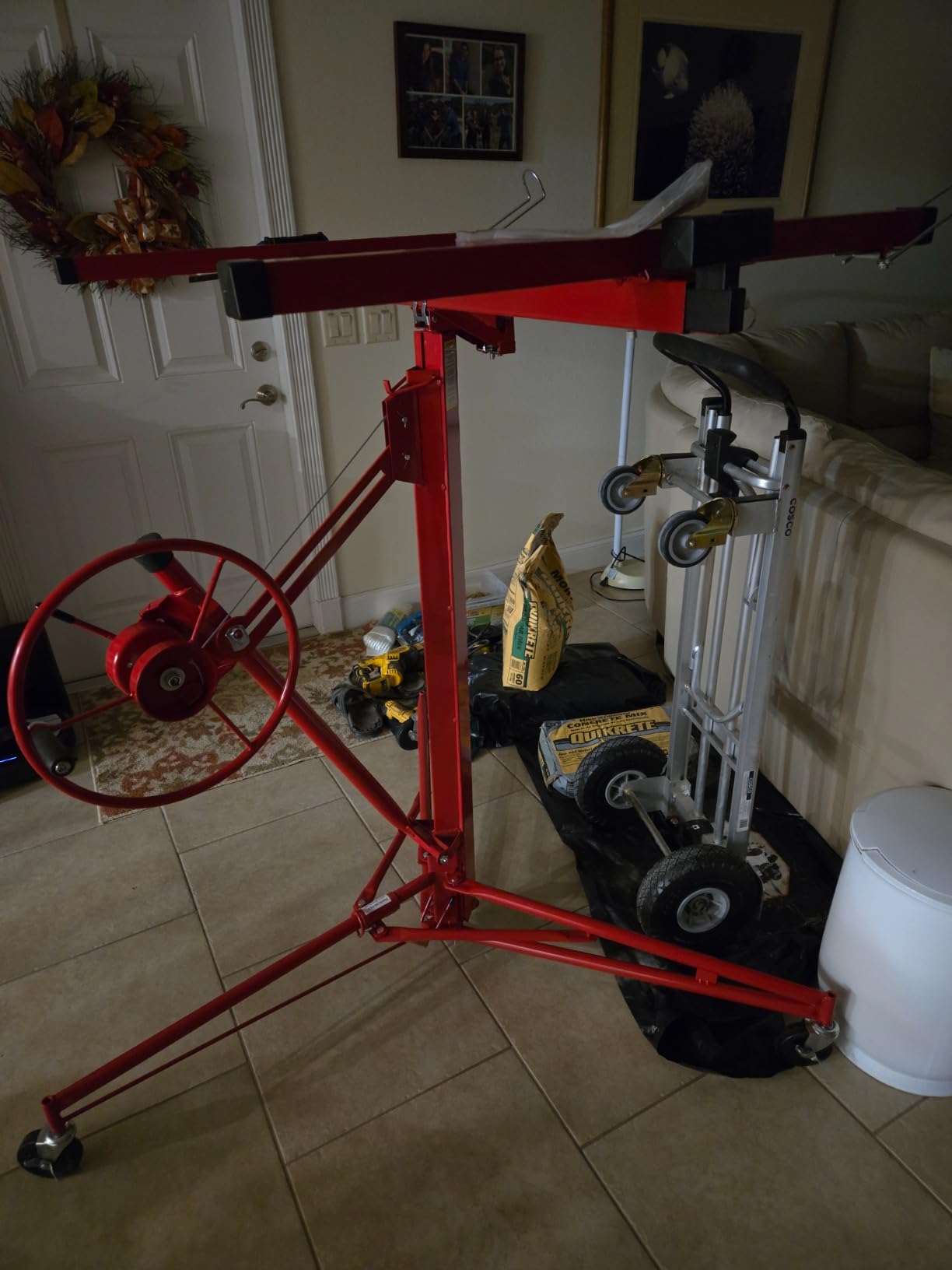
Drive is a built-in winch with a safety brake, so the panel holds where you put it without your hand on the lever. The frame is welded steel with a powder coated finish, and the tripod has non-slip feet plus lockable wheels for uneven garage floors.
The honest weakness is top-end stability. Owners with 10 foot sheets at full extension report wobble, and the brake handle has no positive lock, so it can be knocked loose. Treat this as a project tool for a room or two rather than an all-day production machine.
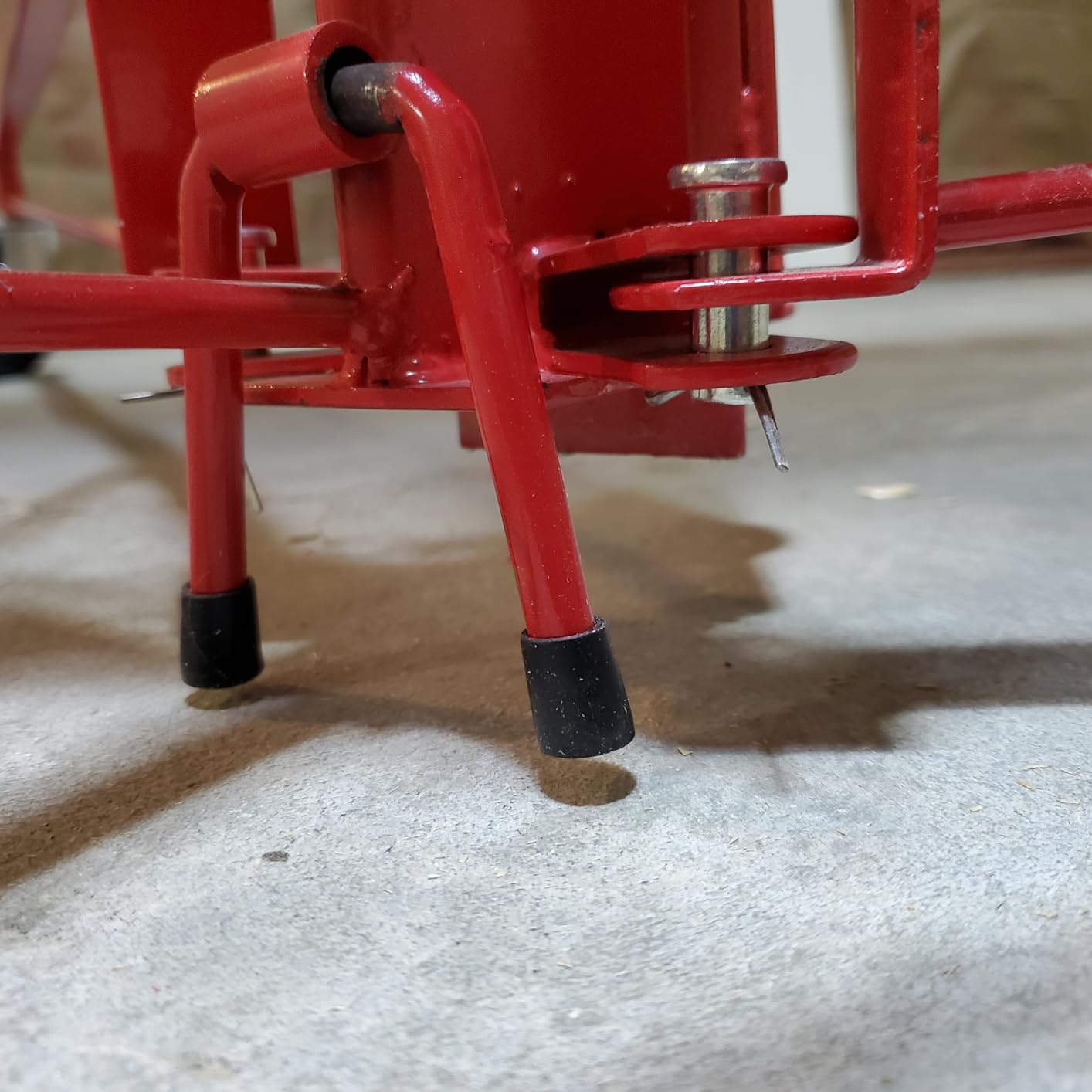
Why the 54 inch loading height matters
Most lift complaints online are really loading complaints. If the rack sits at 54 inches, a full sheet slides on flat with one hand. If it sits lower, you are lifting 60 pounds of awkward board to chest height before the machine does any work, and you have lost the solo advantage before you start.
The tripod also folds for transport, so you can carry it into a basement or an upstairs room in two trips rather than trying to maneuver it through a stairwell.
Who should skip it
Skip it if you are hanging vaulted or cathedral ceilings. Eleven feet of travel does not cover a steep slope, and the wobble at full extension becomes a real problem when the panel is not near vertical.
Contractors running sheets daily should also move up a tier. A handful of reviews describe this frame deforming under repeated abuse, and a bent base on a busy site is a safety problem, not an inconvenience.
4. ELOMBR 16FT Sheetrock Lift: Best for 4×16 Sheets
ELOMBR 16FT Drywall Lift Sheetrock Lift, Panel Hoist with 4 Lockable Wheels for Ceiling, Drywall Rolling Lifter Panel, 150LBS Drywall Jack Lift for Home & Commercial Use, Red
16 ft lift height
150 lb capacity
Four lockable casters
Quad stand base
+ The Good
- Four caster wheels instead of three
- Generous wheelbase resists tipping
- All welded steel frame
- Telescoping arm covers 4 by 16 sheets
- The Bad
- Smallest review base in the group
- Newer design with limited long term data
- No published unit weight for the frame
This 16 foot ELOMBR is built around a quad stand base with four 3.5 inch lockable caster wheels, and that is the feature that separates it from every other 16 footer here. Four points of contact means a bigger effective wheelbase, which is exactly what you want when a 100 pound sheet is swinging at the top of its arc over a full 4×16 panel.
The telescoping arm runs from 46 inches to 115 inches, so a 4×16 sheet is genuinely supported rather than cantilevered off one end. The cradle rotates 360 degrees and tilts 60 degrees forward and back, and the winch is described as an upgraded, smoother-running version of the usual cable setup.
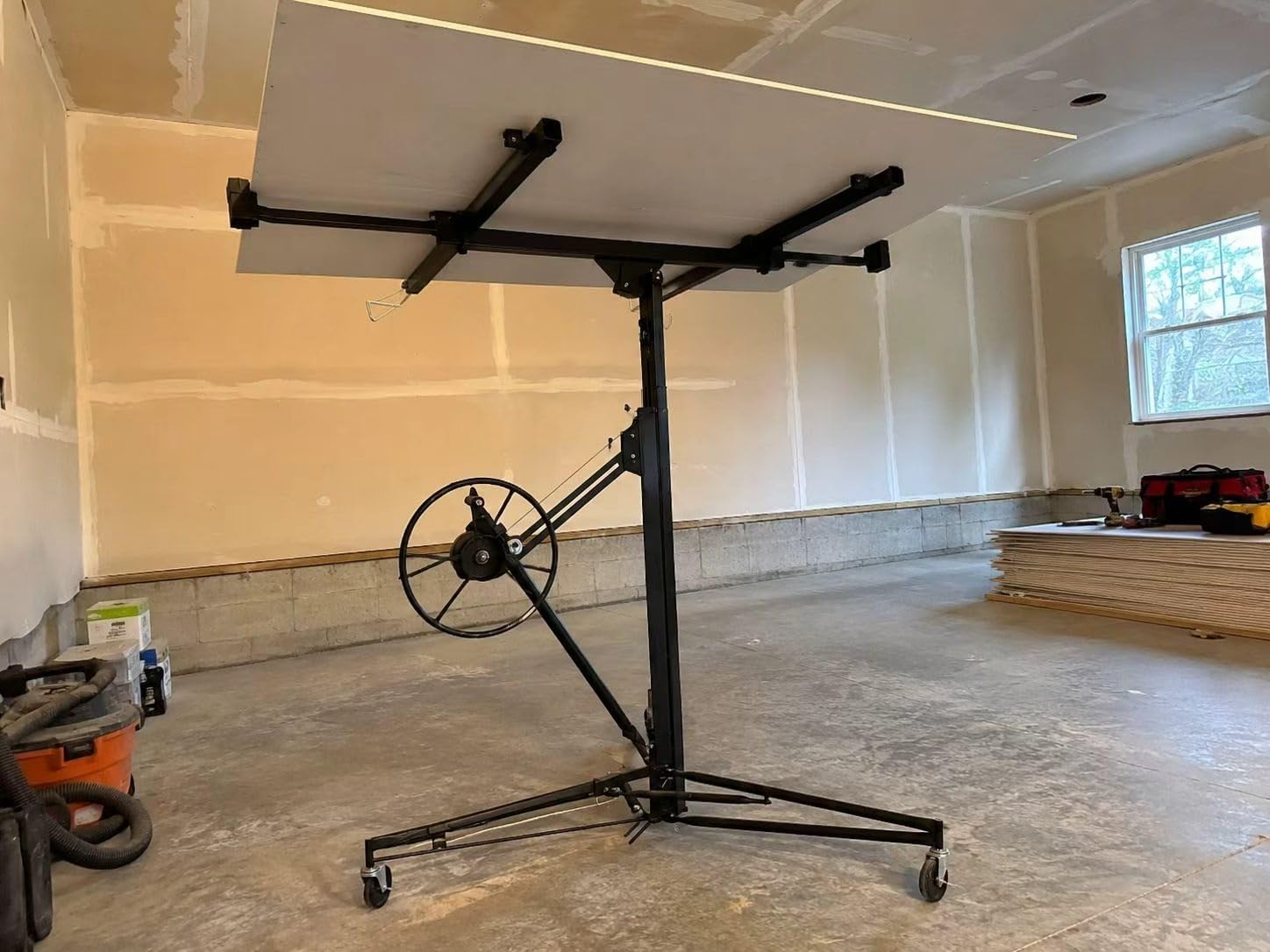
Tool-free assembly takes three steps, the frame is all welded steel, and there is a 1 year warranty with CE compliance and 24/7 support listed. Color and size variants cover both 11 foot and 16 foot versions if you want one brand across the shop.
The honest caveat is the sample size. Thirteen reviews is a thin foundation, and this design is recent enough that nobody has logged years of job-site history with it yet. A perfect rating across a small sample tells you the early buyers were happy, not that it will still be straight in five years.
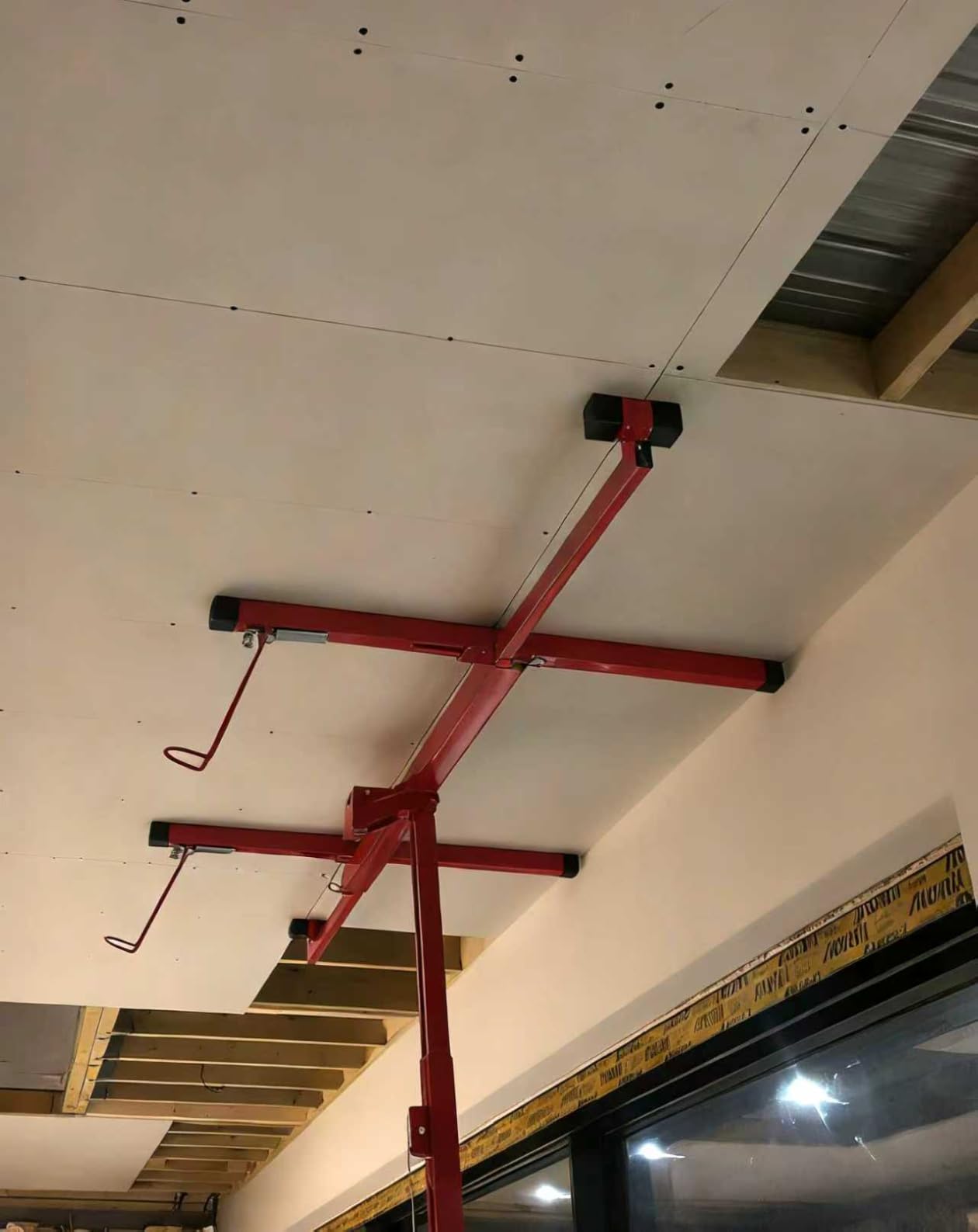
When four wheels earn their keep
Three wheeled bases rely on the mast to stop the rig from tipping forward under load. Four wheels spread that load across a wider footprint, so the panel can be positioned at an angle without the machine wanting to follow it down. On walls and sloped ceilings, that is the difference between confident and cautious.
If your project involves long sheets, a four point base with a 46 to 115 inch arm is the geometry you want. Short sheets on flat ceilings do not need it, and a lighter frame will serve you better.
Who should skip it
Skip it if you are on a strict budget and working on standard 9 foot ceilings. The money here buys reach and base width you would never use, and there are better options lower down the list for flat residential work.
Buyers who want a long track record should also pass. We have seen forums flag this brand family for a sibling model with different safety characteristics, and matching a brand to one well-reviewed unit is not the same as trusting all of them.
5. VOWAGH 11FT Drywall Lifter: Best Budget Hand Chain Lift
11FT Drywall Lifter Panel Hoist Dry Wall Rolling Caster Lifter Construction Tool 150LB Heavy Duty Sheetrock Hoist Holder (Red)
150 lb capacity
11 ft height
Hand chain drive
79.6 lb frame
+ The Good
- Welded steel with powder coat finish
- Automatic load holding brake
- Extendable tripod base
- Non-marring rubber casters with locks
- The Bad
- Hand chain needs more effort than a crank
- Stiffness at full height with heavy panels
- Topped out at 11 ft reach
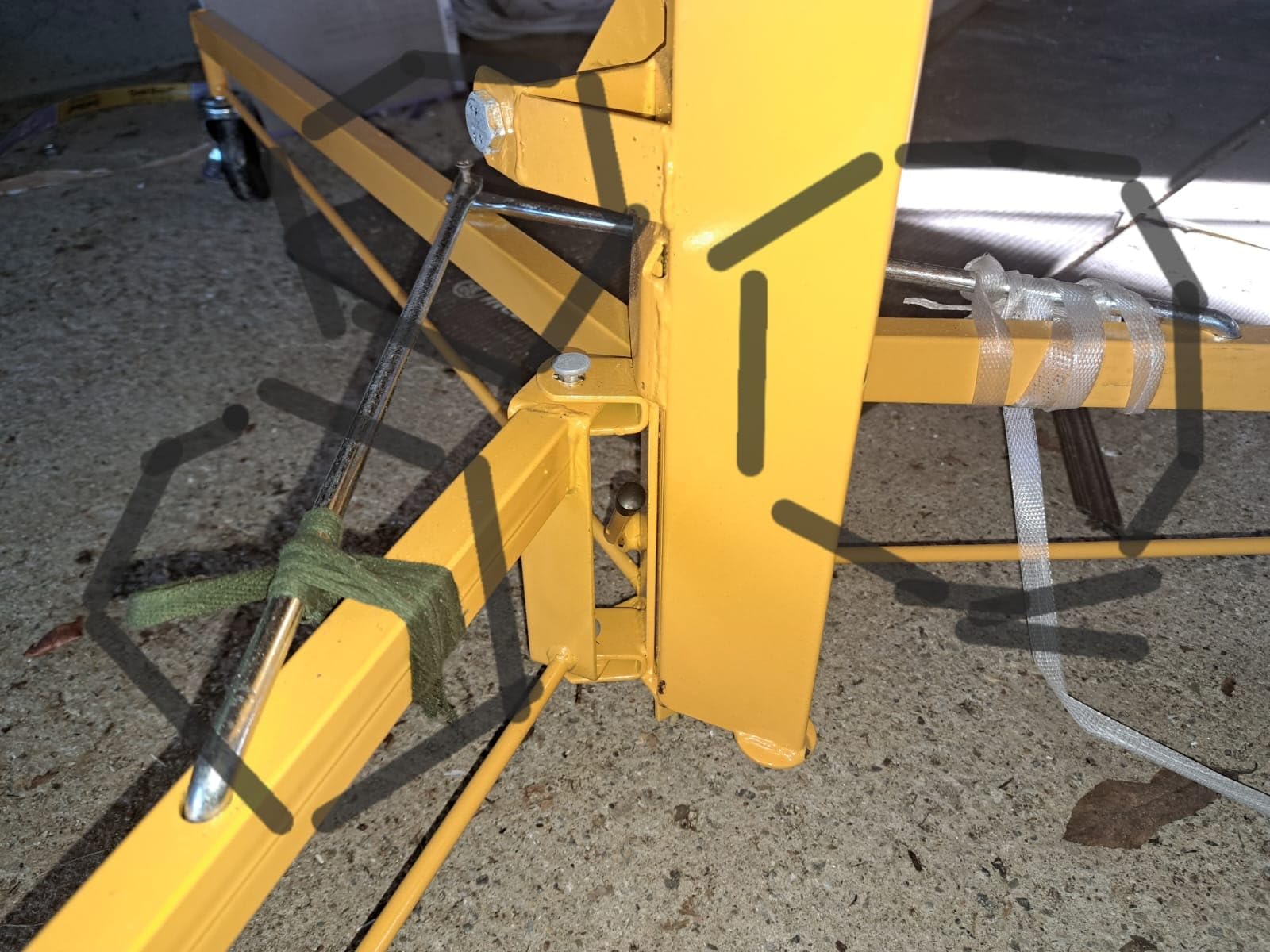
The VOWAGH 11FT is the least expensive lift in this roundup and the only one driven by a hand chain rather than a crank. The chain gives you finer control on the way up, which some people love, and an automatic load holding brake that keeps the panel put when you let go of the chain. There is no separate brake lever to manage.
Construction is welded steel with a powder coat finish and a 150 pound rating, and the base extends into a tripod for stability. Casters are non-marring rubber with locks, which matters in a finished room where you do not want scuffed floors or a lift rolling into a wall.
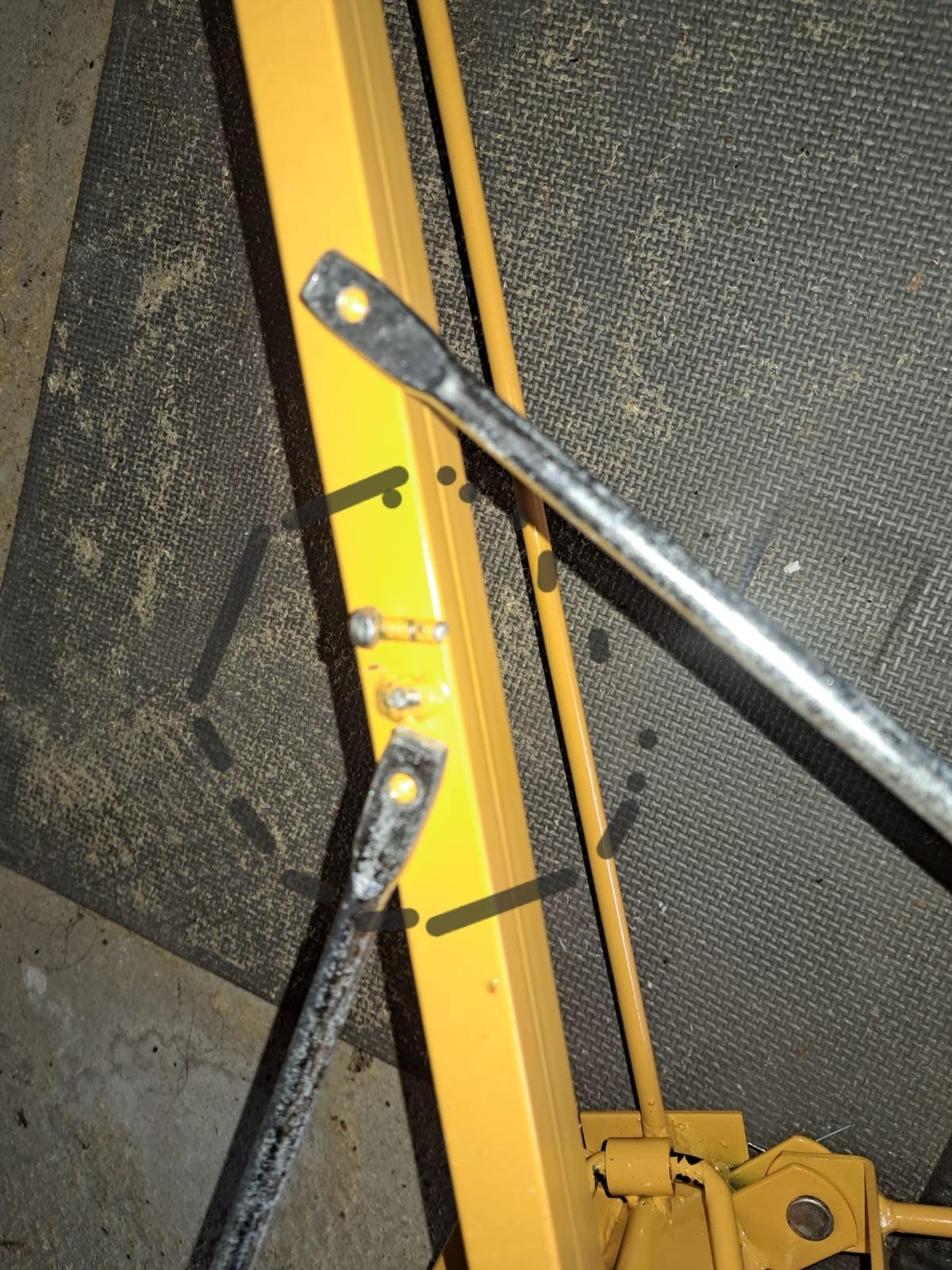
The plate handles panels up to 4 by 11 feet, and the whole unit assembles and disassembles without tools. It weighs 79.6 pounds, which is light enough for one person to move through a doorway and heavy enough that it will not wander on its own.
The trade-off is effort. A chain takes more pulls than a crank handle for the same lift, and owners report some stiffness when raising a heavy panel near the top of travel. Budget for a few extra pulls per sheet on the first project while you learn the rhythm.
Chain drive versus winch drive
A chain hoist is mechanically simple with few moving parts and nothing to grease, which is why rental desks have used them for decades. It is slower and it needs more hand strength. A winch trades that for a crank handle that is easier on the wrists over a long day.
For an occasional project the chain is fine. For a full gut with a hundred sheets to hang, the crank will feel better by hour three, and the price difference between the two is small compared with what you save in fatigue.
Who should skip it
Skip it if your ceilings run past 11 feet. This is the shortest reach in the group, and there is no extension kit mentioned in the documentation, so an 11 foot lift in a 12 foot room is an expensive doorstop.
It is also not a professional daily-use tool. The frame is sound welded steel, but the finish, the hardware, and the chain are entry level, and a crew running it every day will wear it out faster than the warranty covers.
6. VEVOR 11ft Drywall Lift: Best for Walls and Flat Ceilings
VEVOR 11ft Drywall Lift, Heavy-Duty 150 lbs Sheetrock Hoist with Adjustable Telescoping Arm, Lockable Wheels, Drywall Lifter Panel Jack Hoist Tools Ideal for Ceiling & Wall Installation (Red)
150 lb capacity
11 ft height
60 degree tilt
360 degree rotation
+ The Good
- Wide tripod base with three lockable wheels
- Lockable legs add support
- Tool-free assembly
- Winch saves manpower on every sheet
- The Bad
- No catch on telescoping sections
- Cable is exposed at the pinch points
- Play at full 11 ft extension
The VEVOR 11ft uses Q235B carbon steel, carries 150 pounds, and reaches 11 feet on a telescoping arm that adjusts from just over 4 feet to 9.58 feet. The cradle tilts 60 degrees and rotates a full 360 degrees, so the same machine loads a flat ceiling, a wall, or a sloped surface without swapping heads.
That articulation is why this earns the wall badge. Positioning a 4×8 on a wall at shoulder height and screwing it off without a second person holding the top corner is the single most useful thing a lift does in a room renovation, and the tilt range here is wide enough to do it comfortably.
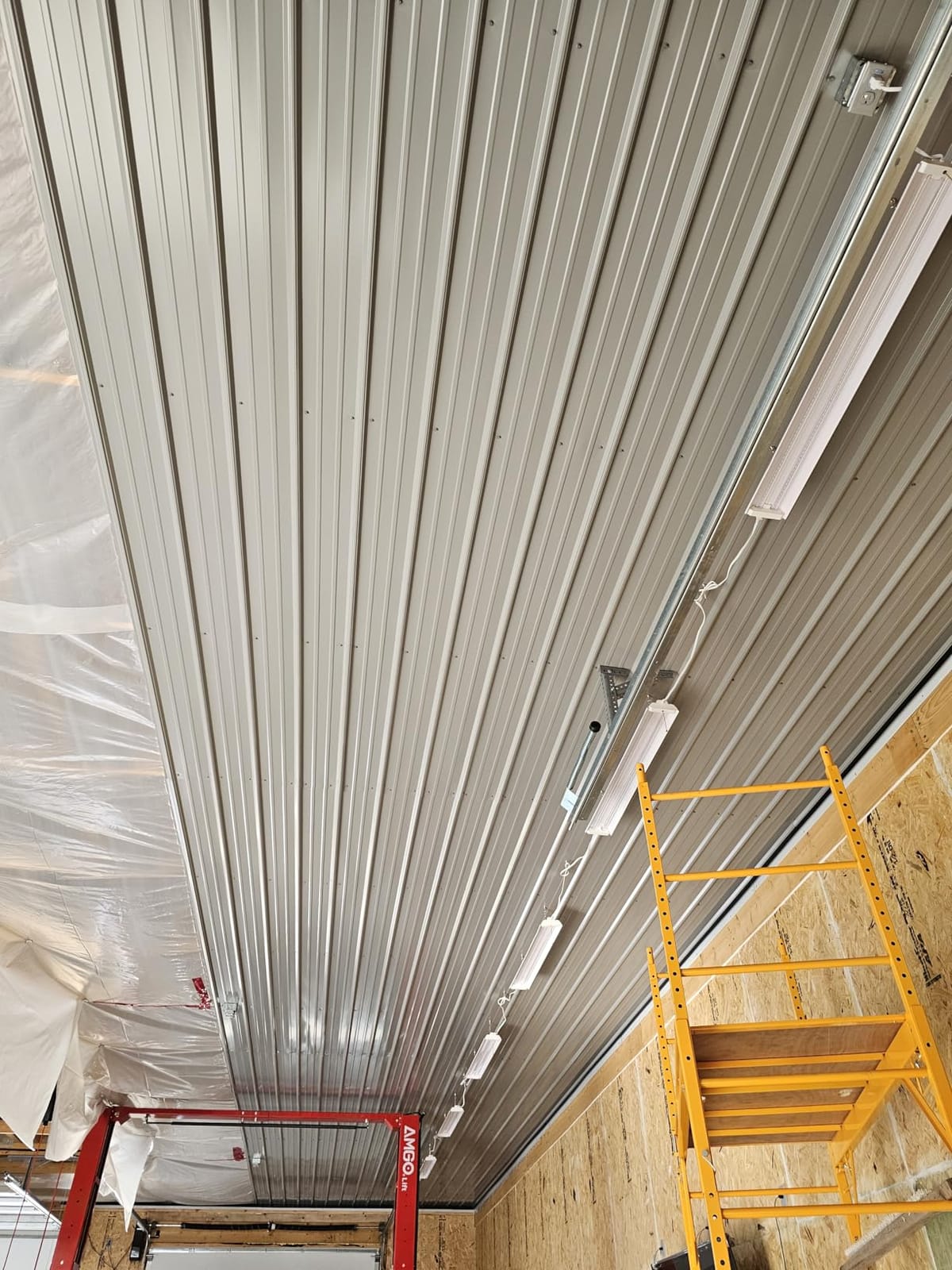
The base is a wide tripod with three non-slip lockable wheels plus lockable legs, and assembly is tool-free. A winch handle comes in the box with the base, crossbeams, upright column, brackets, and arms, and the manual is included.
Two build details deserve a look before you commit. There is no catch to stop the telescoping sections sliding out under load, and the cable runs exposed near pinch points. Owners also mention the wing adjustment moved to small wing nuts and the rubber caps on the arms slip off when you shift a sheet.
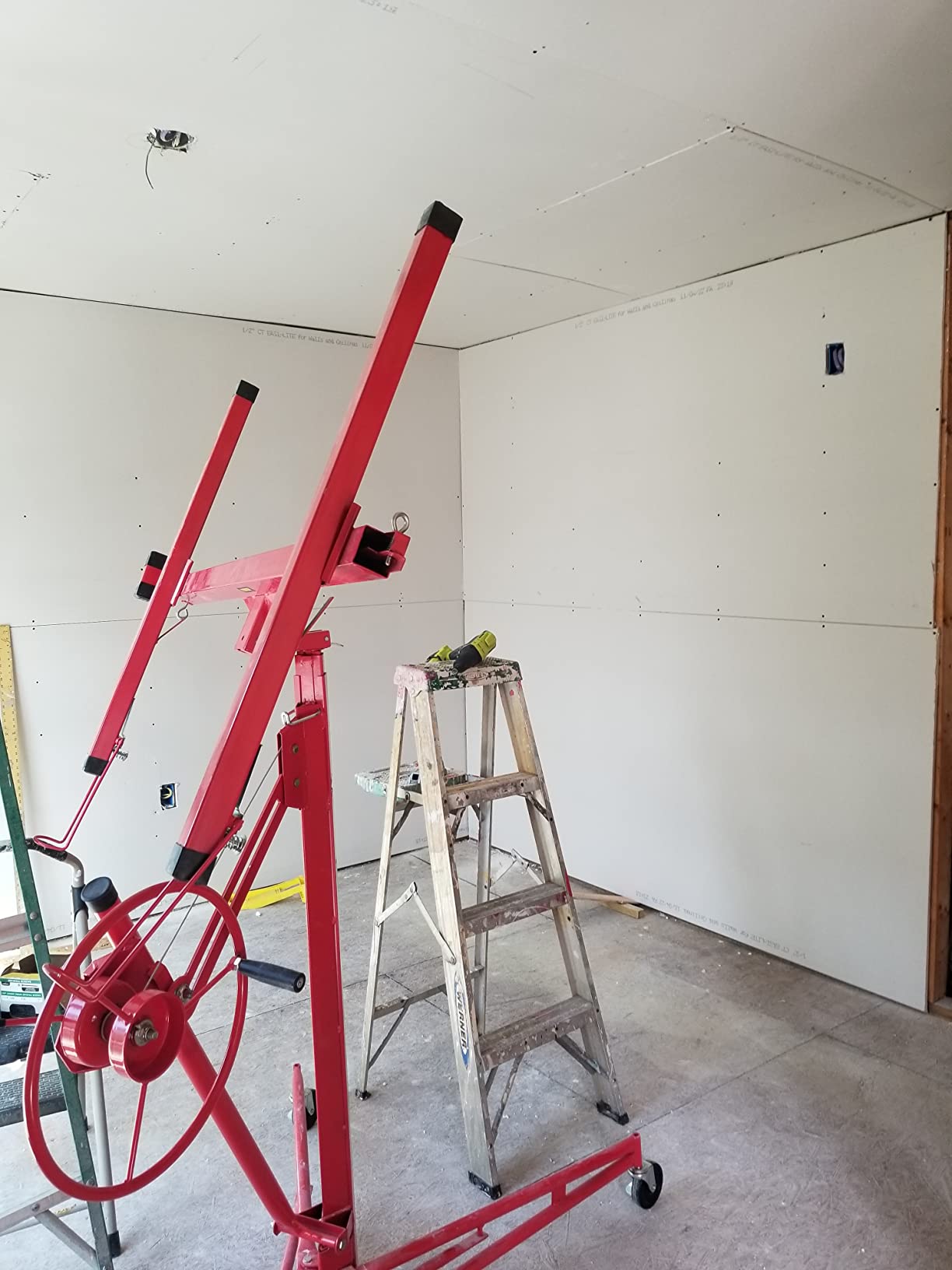
Why 60 degrees of tilt matters on walls
A panel on a flat ceiling rides near vertical. A panel on a wall rides at a shallow angle, and the operator needs to be underneath the lower edge, not beside it. Sixty degrees of forward and back tilt is what gets the sheet into that position while the cradle keeps the top corner tight to the framing.
The 360 degree rotation then lets you bring the panel around a corner or set it at an angle to a room without repositioning the whole machine. On long walls this is the difference between finishing a wall in one pass and moving the lift every eight feet.
Who should skip it
Skip it if you are hanging sheets overhead every day. A few owners report failures after only a handful of sheets, and the missing section catch means a telescoping arm can creep out under a heavy load with no warning.
Anyone working above 11 feet should also skip it, and anyone who is squeamish about exposed cables should pick a model with an enclosed line. For a garage ceiling or a single gutted room, though, the articulation makes this a genuinely capable tool.
7. Rovibek 11FT Drywall Lift Blue: Best All-Rounder for Home Projects
+ The Good
- Same proven 11 ft platform as the yellow model
- Winch with brake for controlled raises
- Folds down for basement and stairwell transport
- Lockable universal casters
- The Bad
- Essentially a color variant of another model here
- Same top-end wobble reports
- 11 ft ceiling is the limit
This is the blue colorway of the same Rovibek 11FT platform, and it deserves its own section because the two listings carry different owner histories. The specs line up with the yellow version: 150 pound capacity, 11 foot reach, a telescopic arm from 49 to 115 inches, a 54 inch loading height, and a winch with a brake.
Two things stand out. It is CE standards compliant, which matters if you are buying for a shop or a rental business rather than your own garage, and the tripod uses non-slip foot stops plus lockable universal casters that roll on finished flooring without marking it.
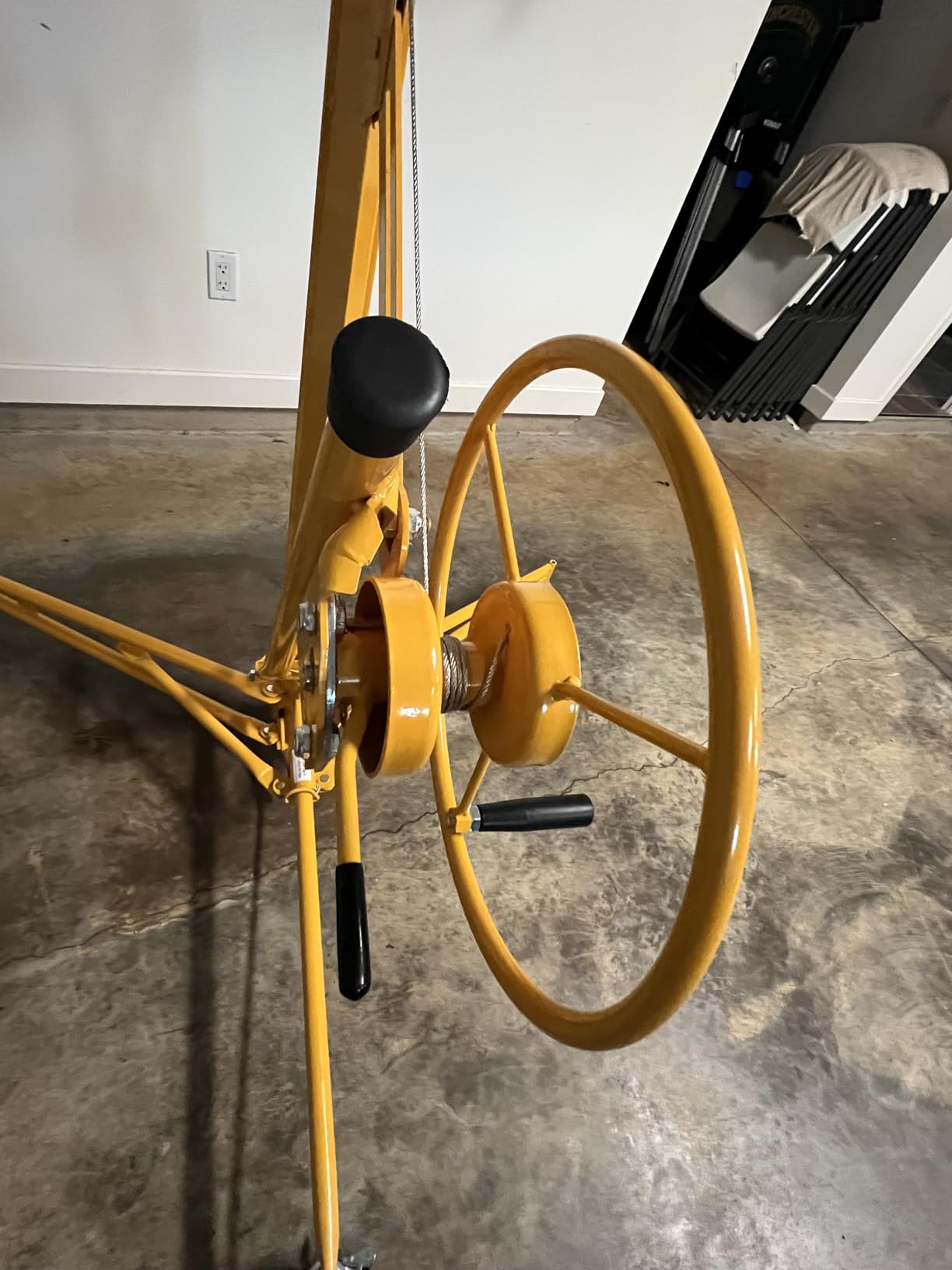
Owner reviews describe it as solid for home improvement work, with good feedback on the smooth brake and easy folding for storage. The frame is welded steel with a powder coat finish, and the whole unit folds down when a project ends.
Be clear-eyed about what you are buying. This is the same machine as the yellow Rovibek in a different color, so expect the same 11 foot ceiling limit and the same reports of wobble at full extension with the longest sheets. Pick it for the finish, the compliance, or the color your shop is painted.
What to check on arrival
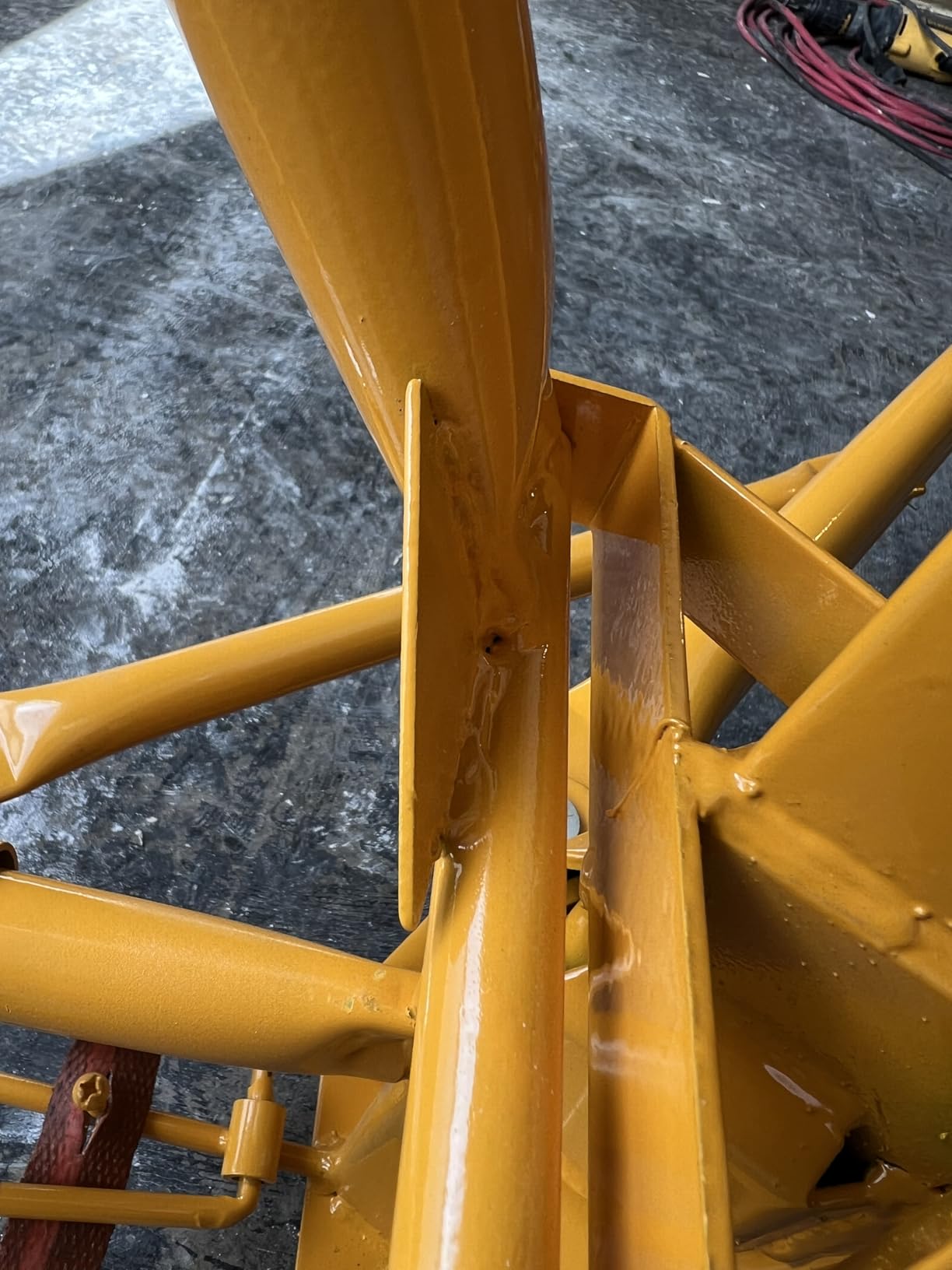
Unpack it on flat ground and check the telescoping arm for straightness before you put a sheet on it. These are welded frames shipped in boxes, and a bent section from transit will not show up until the arm is loaded and extended.
Run the winch up empty and watch the cable seat itself on the drum. Cable that cross-wraps is the most common cause of the jerky lowering that shows up in reviews, and it is easy to fix before it becomes a problem.
Who should skip it
Skip it if you have already chosen the yellow version of the same platform, because buying both means owning two of one machine. Pick whichever listing has the better warranty terms and the color you prefer.
Also skip it for vaulted ceilings and for walls above eight feet. The 11 foot travel and the modest tilt range make it a residential flat ceiling tool, and stretching it beyond that is where the wobble complaints come from.
8. GarveeTech 11 ft Drywall Lift: Best for Stability
GarveeTech 11 ft 150 LBS Drywall Lift, Sheetrock Lift Drywall Lift
150 lb capacity
11 ft height
83.8 lb frame
Carbon steel
+ The Good
- Heavy base resists tipping on uneven floors
- Locking outriggers secure the cradle
- Quiet running with minimal squeaking
- Sixty degree angle and 360 degree swivel
- The Bad
- Smallest review base at twenty reports
- Heaviest of the 11 ft models
- No long term durability history yet
Stability is the entire argument for this one. The GarveeTech 11 ft weighs 83.8 pounds in carbon steel, and that mass is deliberate, marketed as maximum stability rather than a portability problem. On an unfinished garage slab or a basement with a sloped floor, a lift that does not creep while a 90 pound panel swings is worth more than a lighter one that wanders.
The cradle adds locking outriggers that pin it in place during a raise, and it angles to 60 degrees while swiveling 360 degrees. The tripod sits on three anti-slip locking casters. The telescopic arm covers 4 to 9.5 feet, and the drive is a hand winch.
Owners single out the quiet operation, which is not a small detail in a closed room at seven in the morning. Squeaky winches and dry bearings get on the nerves of whoever is in the house, and this one is reported as noticeably silent through a full raise.
The catch is the evidence. Twenty reviews is a very small sample, and this design is recent enough that nobody has five years of job-site wear to report. The same brand also sells a 16 foot version, and that one drew more caution from owners, so judge this unit on its own reviews rather than the badge.
When extra base weight is the right trade
Weight is a liability in a small room where you move the lift constantly and an asset on a slab where you set it once and raise twenty sheets. If your floor is flat and finished, the lighter 11 foot models move faster. If the floor is rough, sloped, or bare concrete, stability wins every time.
Locking outriggers matter for the same reason. They stop the cradle from creeping inward while the panel is being positioned, which is the moment of highest sideways force and the moment most tip-over stories start.
Who should skip it
Skip it if you need to carry the lift up stairs or between floors often. Eighty-four pounds plus a 4×12 sheet on the cradle is a two-person carry, and that friction will show up in your project plan.
Anyone who wants a proven long-term record should also pass. This is a new design with a small review base, and no amount of good early feedback substitutes for a few seasons of use.
9. Parts-Diyer 16ft Panel Hoist: Best Lightweight Frame
16ft Drywall Panel Hoist with Lockable Wheels Drywall Rolling Lifter
16 ft reach
150 lb capacity
39 lb frame
Welded steel
+ The Good
- Lightest frame in the group by a wide margin
- Tool-free assembly and breakdown
- Powder coated welded steel
- Lockable wheels with foot stops
- The Bad
- Loading height forces a two person lift
- Listed minimum height is not accurate
- Light frame raises stability questions
At 39 pounds, this 16 foot hoist is less than half the weight of the Panellift and roughly half of most of the 16 foot models here. If your project involves stairs, a walk-up basement, or a building where you will reposition the lift many times a day, that is the whole pitch. One person can move it.
The listing claims 16 foot ceiling and wall capability at a 150 pound rating, and it is powder coated welded steel with tool-free assembly, lockable wheels, and safety foot stops. The warranty is six months, which is the shortest in this group and worth reading carefully.
There is a real catch, and owner reviews are blunt about it. The center post is about 6 feet tall, so the minimum working height is nearer 6 feet than the 4 feet printed on the listing, and you have to raise a sheet to roughly 57 inches to get it onto the rack. At that point you need a second person for the loading step, which undercuts the solo premise.
The light frame also raises fair questions about how it behaves with a full sheet at the top of its travel. Twenty two reviews is a thin record for a machine sold on reach rather than on proven durability.
When a light frame is the right answer
Portability wins when the lift changes rooms more than once. A renovation spread across a basement and three upstairs bedrooms means carrying the machine through doorways and up a flight of steps, and a 39 pound frame turns a scheduling problem into a non-event.
It is also the right shape for a one-time job where you will hang maybe thirty sheets. You get the reach, you do the work, and the frame is light enough that one person can get it in and out without a helper.
Who should skip it
Skip it if you are working solo. The loading height is the deal breaker, because a lift you cannot load by yourself has removed the reason you bought it. A second set of hands for loading changes the whole workflow.
Skip it for daily contractor work as well. Six months of warranty, light gauge construction, and a small review base are a poor combination for a machine that gets used every day and moved constantly.
10. GarveeTech 16 ft Drywall Lift: Best for Vaulted Ceilings
16 Ft Drywall Lift,150LBS Sheetrock Lift Drywall Rolling Lifter Panel
16 ft reach
150 lb capacity
65 degree tilt
Triangular base
+ The Good
- Sixty five degree horizontal tilt for sloped ceilings
- Telescopic arm spans 4 to 11 feet
- Built-in winch and brake
- Folds flat for storage
- The Bad
- Lowering speed is not controlled
- Cable failure reported by one owner
- Wobbles at maximum height
The defining feature here is a 65 degree horizontal tilt alongside the standard 60 degree tilt and 360 degree rotation of the cradle. On a vaulted or cathedral ceiling, the panel has to lean well off vertical to match the slope, and a cradle that stops at a shallower angle leaves you supporting the top corner by hand at exactly the moment you least want to.
The frame is alloy steel with a triangular base structure, rated 150 pounds, reaching 16 feet on a telescopic arm that spans 4 to 11 feet. A 54 inch loading height makes sheet placement manageable, and the built-in winch and brake run single-person operation by design.
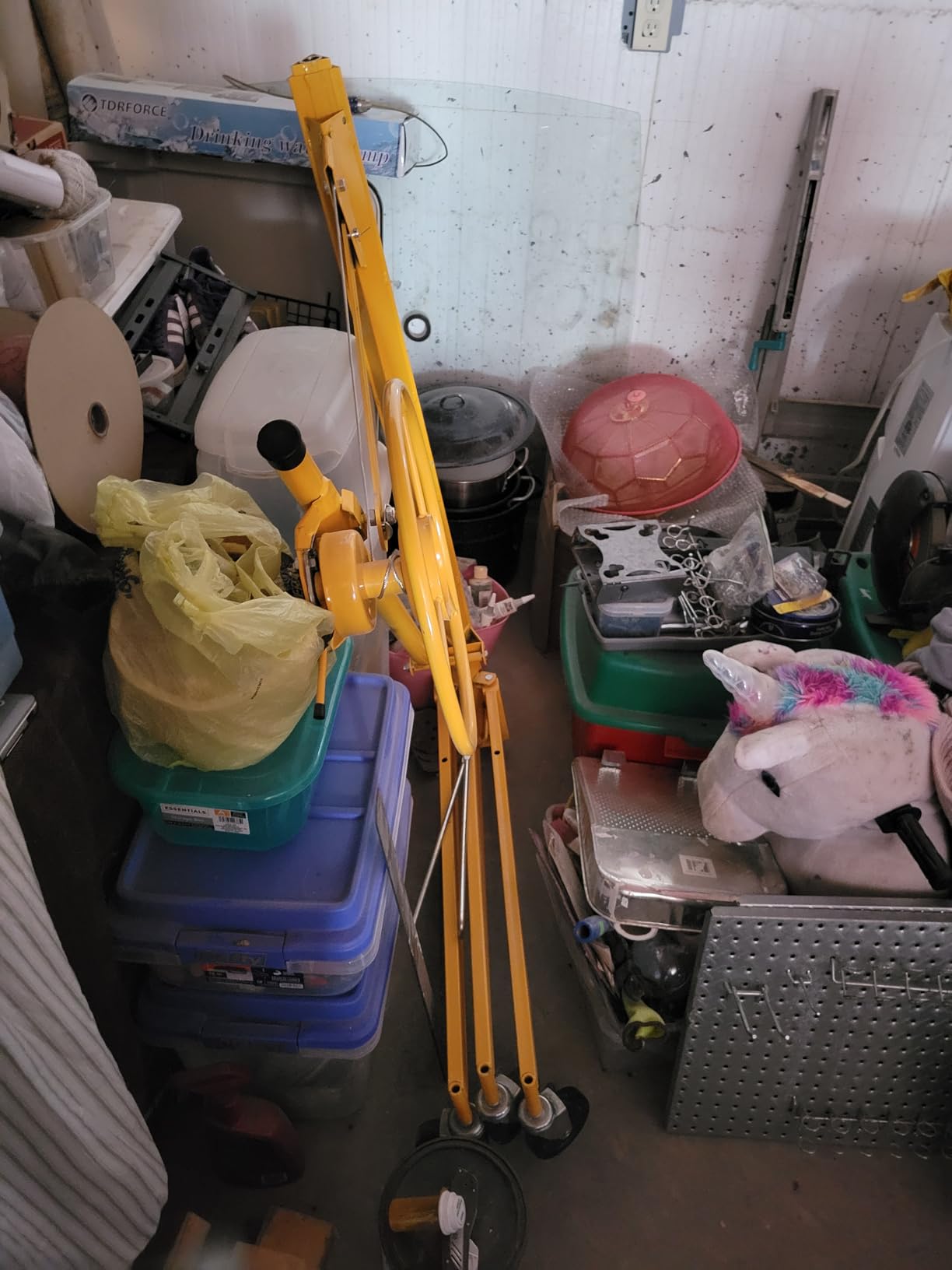
Be cautious with the descent. One of the more serious complaints in owner reports is that the panel free falls on the way down because there is no speed control on the lowering side. Add a pinch point warning check before every lift, and keep your hands clear of the cradle arms.
There is also a report of a cable snapping while the lift was elevated, and owners describe wobble at full height along with cable cross-wrapping. For a single sloped ceiling in a home, those are manageable with care. For repeated daily use, they are not.
Sloped ceilings have their own rules
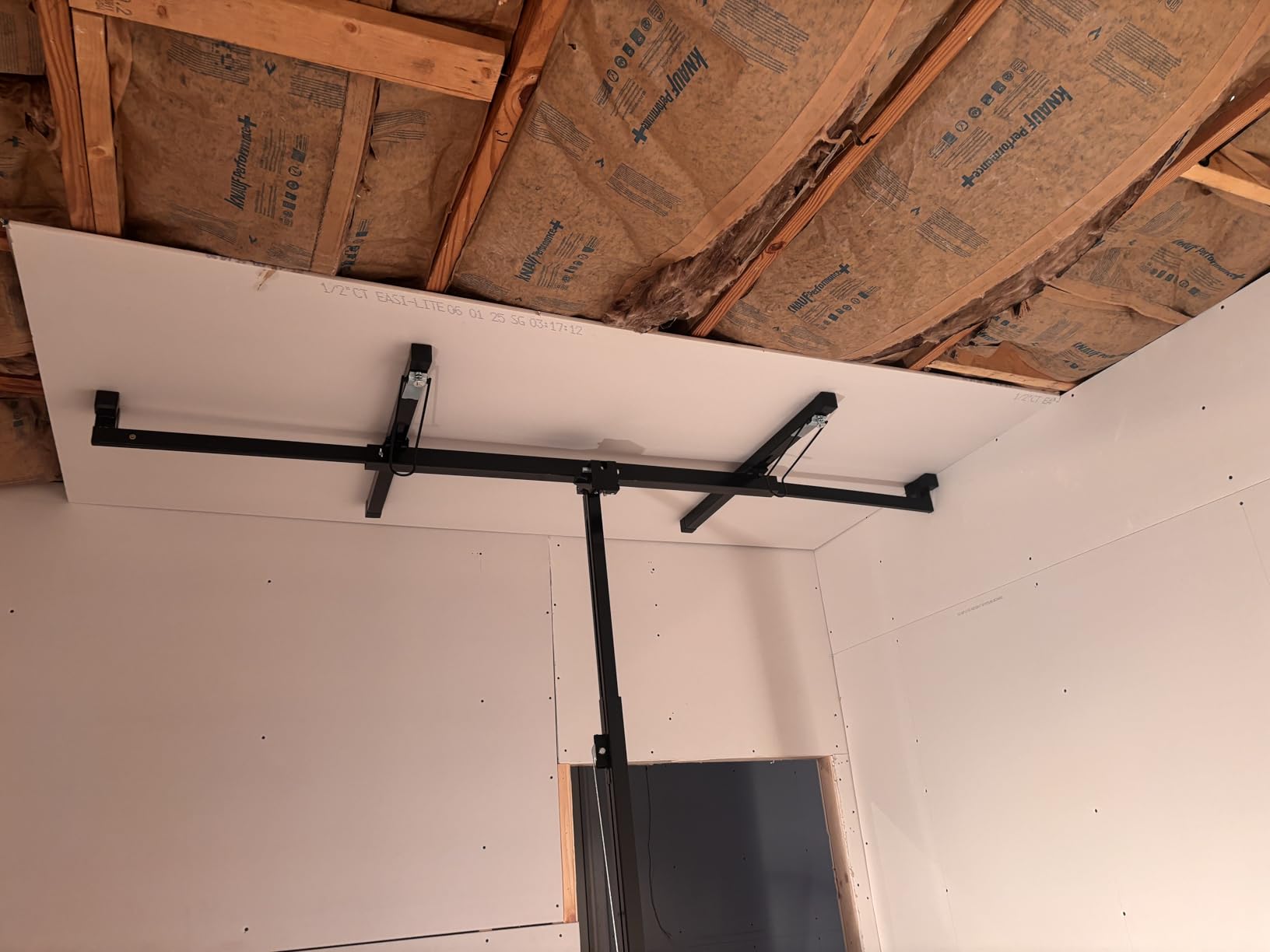
Working a vault means the panel is never square to the floor, and gravity is pulling it toward the low end the entire time you screw. That is why tilt range and base width matter more here than anywhere else, and why a rig with three narrow legs and a fast descent is a poor match for a steep slope.
If your vault is over 16 feet at the peak, none of the machines in this roundup will reach. Past that point you are into scaffolding or a multi-stage setup, and the math changes completely.
Who should skip it
Skip it if you are not comfortable working around pinch points and uncontrolled descent. The reported cable and brake issues are not cosmetic, and the fastest way to use this well is to know exactly where your hands are at every moment.
Skip it for a long renovation schedule too. A shorter review history than the Panellift and more caution flags in owner reports make it a reasonable choice for a weekend, and a questionable one for a month of consecutive work.
How to Choose a Drywall Lift in 2026?
Start with ceiling height, because it eliminates most options immediately. Measure the tallest ceiling you plan to board, subtract a few inches for the cradle angle, and buy to that number. Anything at or under 9 feet is served by an 11 foot lift. Anything from 9 to 12 feet wants the 16 foot models. Above 12 feet, you are looking at scaffolding territory.
Next, sort out sheet size. Nearly every lift here handles a 4×8 comfortably and most claim 4×12 support. Few genuinely cover 4×16, and only the units with an arm that extends past 110 inches do it properly. If you are hanging 4×12 to cut down on seams in a large room, check the telescopic arm range against the panel length before you buy.
Load capacity is simpler than the listings make it sound. Every unit in this roundup is rated at 150 pounds, so capacity is not a differentiator. What does matter is how that rating is used. A 4×8 sheet at 50 to 60 pounds is comfortable. A 4×12 at 80 to 100 pounds puts you near the limit once the panel is leaning at an angle, which is why a wide base and a brake matter more than a headline number.
Drive type decides how the work feels. A winch with a crank handle is easier on your hands over a long day and gives you faster raises. A hand chain gives finer control and has fewer parts to maintain, at the cost of more pulls. Any lift you buy should have a load holding brake, because you will need both hands for screws.
Casters decide whether you regret the purchase. Look for locking wheels on every model here, and check that the wheelbase is wide enough for the load. A tripod with a narrow stance plus a heavy panel at 16 feet is a tipping combination, which is the main reason the four wheel quad base model is worth a look for tall work.
Finally, consider assembly and storage. Most lifts in this roundup fold or break down without tools, and the folded sizes range from a 39 pound frame you can carry with one hand to a 100 pound frame that takes two. If the machine has to live in a garage and travel to three different rooms, portability is not a luxury feature. Our guide to the best tool belts for drywall installers covers the rest of the kit you will want on your hips while you screw.
Rent or Buy a Drywall Lift
Renting runs to roughly 50 dollars for an eight hour window according to one r/drywall user who ran 10 foot ceilings on a rented unit, and the trip to the rental desk and back is part of the deal. If your project fits in a single long day, renting wins outright. There is no setup cost, no storage, and no risk of a bent frame sitting in your garage for a decade.
Buying wins on the second project. A mid-range 11 or 16 foot lift pays for itself within a handful of days of rental fees, and after that it is free. Break-even gets faster if you can borrow a truck, since the fold-flat models fit in a car and the heaviest one does not.
The honest middle case is a single room. One bathroom, one ceiling, a weekend. Renting a lift for eight hours to hang four sheets is overkill, and borrowing one is better still. A lift really earns its place when you are doing a whole gut, a garage, or a second story.
When a Drywall Lift Is Not Worth It
Two people boarding an open 10 foot ceiling are faster than any lift, and the pros say so plainly. The consensus on r/drywall is that lifts are slow compared to a two man crew, and a crew can throw a full ceiling alone and faster. If you have a helper and a straightforward flat ceiling, you do not need a machine.
Low ceilings are the second case. Under 8 feet, most installers can support a panel on a scaffold plank or a ceiling joist with one hand and screw with the other. A lift adds setup time for very little gain.
A single small room is the third. Between renting, borrowing, and using a pair of panel carriers for material, the economics never justify ownership for one bathroom ceiling. Save the money for a better orbital sander and finish the job in a day.
One more: if your project is mostly walls rather than ceilings, a lift is still useful but reach height matters less than tilt range. Pick for cradle articulation and a stable base rather than for the biggest number on the box.
Frequently Asked Questions
What is the best drywall lift on the market?
For most people the Panellift 125 is the best overall drywall lift because its alloy steel frame, welded joints, and aircraft grade cable survive daily use. Winch drive, 150 lb capacity, and a swivelling cradle handle 4×12 sheets. Budget DIY projects are better served by a mid-range 11 ft unit.
How much weight will a drywall lift lift?
Almost every drywall lift on the market is rated at 150 pounds, so capacity is rarely the deciding spec. A 4×8 sheet weighs roughly 50 to 60 pounds and a 4×12 sheet runs 80 to 100 pounds. Because the panel leans at an angle against the mast, a wide base and a load holding brake matter more than the rated number.
How tall will a drywall lift go?
Standard 11 ft models reach about 132 inches at the top of travel, and 16 ft models reach 192 inches. Those figures are lift travel, not panel height, so your usable ceiling reach is always a few inches less once the cradle angle is set. Measure your tallest ceiling before choosing a model.
Do drywall lifts work on walls?
Yes, though most listings focus on ceilings. A cradle with 60 degrees of tilt or more lets you lean a panel at a shallow angle against a wall so you can screw it off without a second person holding the top corner. Check tilt range and rotation rather than reach height when a project is mostly walls.
Is a drywall hoist worth it?
It is worth it for a solo installer on 10 foot or taller ceilings, for 4×12 sheets, and for vaulted rooms where you cannot support the panel overhead. It is not worth it for a two person crew on flat ceilings, for a single small room, or for low ceilings. For one day of work, renting is usually the better call.
Final Verdict for the Best Drywall Lifts in 2026
The Panellift 125 is our pick for the best drywall lifts overall. Its alloy steel frame, welded outriggers, and aircraft grade cable are the reason it holds up when a 4×12 sheet swings at full height, and the 150 pound rating matches every competitor in this roundup while the build quality does not.
For a single room on a standard ceiling, the Rovibek 11FT gives you the core job for a fraction of the money, and the Winado 16 ft covers the tall ceilings the Panellift cannot quite reach. Measure your tallest ceiling, decide whether you are working alone, and pick the frame that fits your floor and your storage space.
Whichever one you choose, lock the casters, check the cable retainer, and keep your hands out of the cradle arms. Those three habits do more for your safety than any badge on the box.