
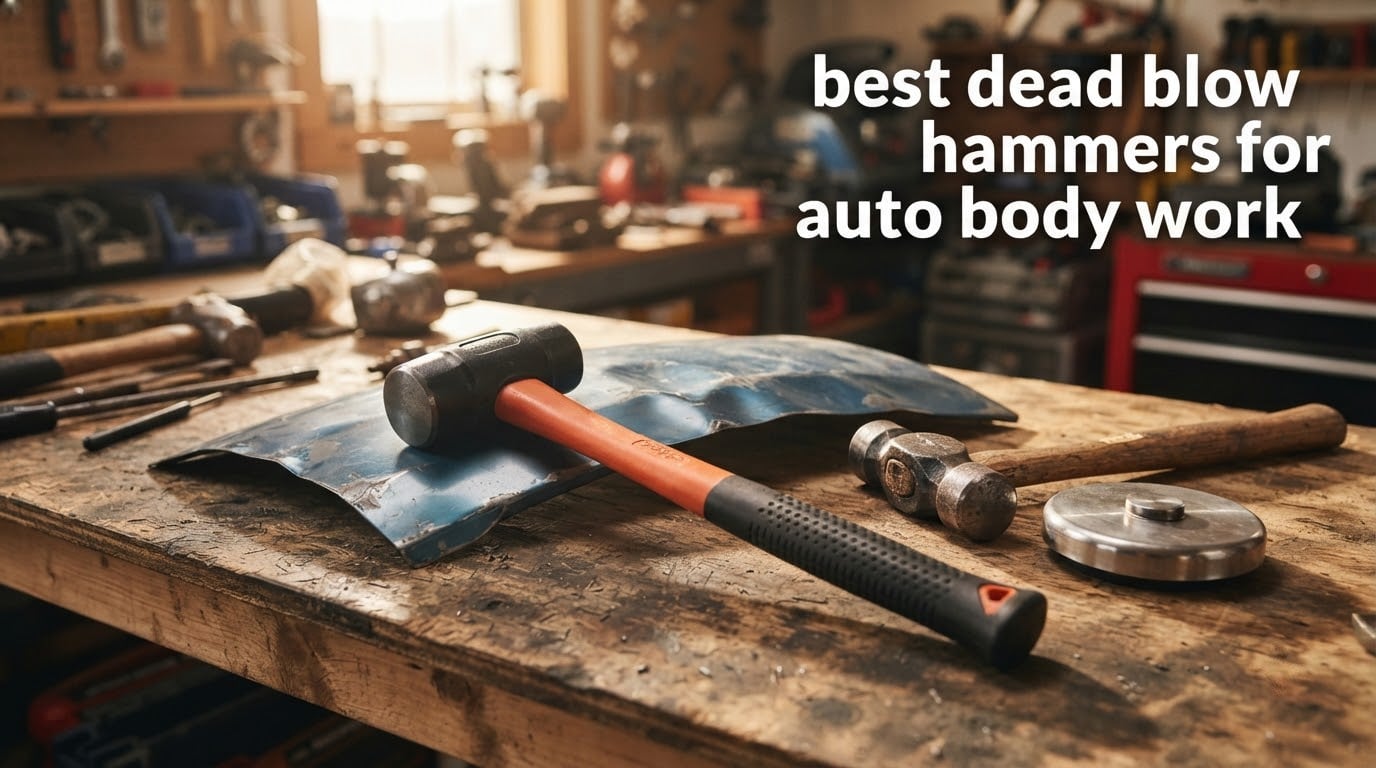
A dead blow hammer is a hammer with a head filled with loose steel shot. On impact the shot shifts forward and eats the energy that would normally send the head bouncing back, so the face stays in contact with the metal instead of rebounding. That single difference is why these hammers show up on car panels at all.
Rebound is the enemy in auto body work. A bouncing steel hammer pushes shock into the panel and into your wrist on every strike, and a tech chasing a rebounding tool is a tech overshooting the dent. Body technicians posting in r/Autobody routinely point out that the damage from a bad strike comes from the second impact, not the first one. A dead blow removes that second impact entirely.
Below are the best dead blow hammers for auto body work, ranked across ten models we compared for rebound control, face marring risk, shank durability, grip and weight range. We also cover where a dead blow belongs in a body shop and, just as importantly, where it does not.
Top 3 Dead Blow Hammers for Auto Body Work for September 2026

NEIKO 02888A 3-Piece Set
- › Steel shot filled heads
- › 1lb 2lb and 3lb in one set
- › Unibody molded poly body
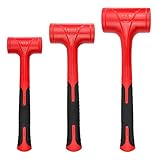
YIYITOOLS 3-Piece Set
- › 16oz 27oz and 45oz
- › No rebound shock-proof heads
- › Contoured grip resists oils
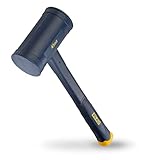
Estwing CCD45 45 oz
- › Vibration dampening shot fill
- › Polyurethane handle with steel core
- › Oil and chemical resistant
All 10 Dead Blow Hammers at a Glance in September 2026
| PRODUCT MODEL | KEY SPECS | BEST PRICE |
|---|---|---|
|
|
Check Latest Price |
|
|
Check Latest Price |
 |
|
Check Latest Price |
|
|
Check Latest Price |
 |
|
Check Latest Price |
 |
|
Check Latest Price |
 |
|
Check Latest Price |
 |
|
Check Latest Price |
 |
|
Check Latest Price |
 |
|
Check Latest Price |
1. NEIKO 02888A 3-Piece Set – Best Overall for Auto Body Work
NEIKO 02888A Dead Blow Hammer Set, 3pc Neon Orange Deadblow Mallet, 1lb, 2lb, 3lb Hammers, Spark and Rebound Resistant, Unibody Molded, Checkered Grip
Three shot-filled hammers at 1lb, 2lb and 3lb
Unibody molded poly body
1-3/4in to 2-1/2in head diameters
+ The Good
- Highest rated in this group at 4.8 across 6684 reviews
- Shot-filled heads with no rebound and no spark
- Unibody molding removes the head-to-handle seam that fails first
- Diamond-textured grip holds after impact
- Three weights cover panel nudging through disassembly
- The Bad
- Soft polyurethane faces can mark on very hard or sharp edges
- Heavier in hand than a single-purpose rubber mallet
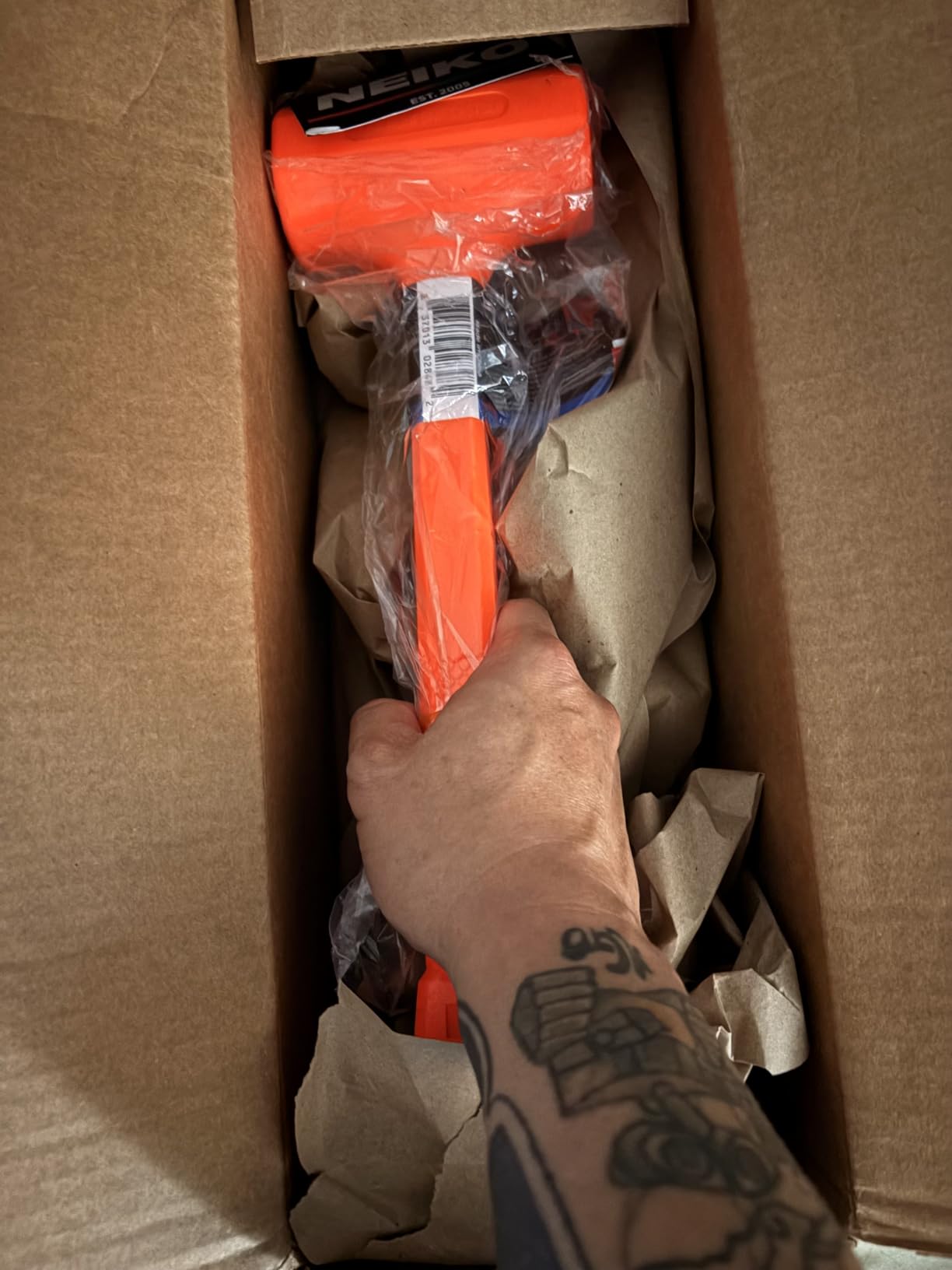
I put the NEIKO 02888A on the bench first because it is the only set here that covers the full weight ladder a body shop actually cycles through. The 1lb hammer handles trim and light assembly, the 2lb is the general panel and bracket hammer, and the 3lb covers seized hardware and mount work. Having all three in one grab is the difference between finishing a job and walking to the toolbox mid-teardown.
The construction detail that matters most is the unicast poly molding. Rather than bolting or gluing a head onto a handle, this is one continuous molded body, which removes the joint where cheap dead blows typically separate. Reviewers report the diamond-textured grip still grips after a solid impact, which is when your hand is most likely to slip.
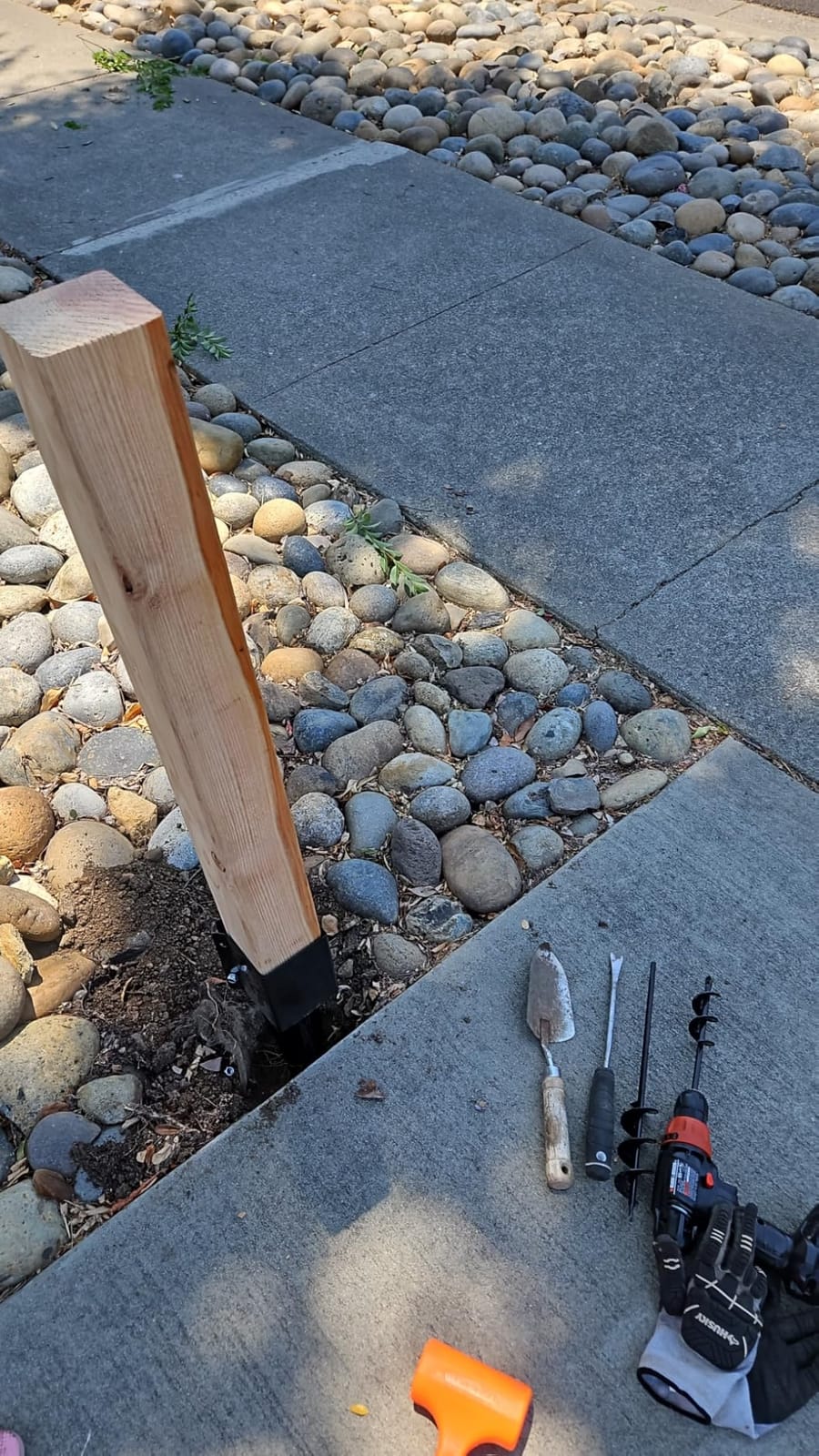
The dimensional spread is generous for a molded set. The 1lb carries a 1-3/4in by 3-9/10in head at 14-3/8in overall, the 2lb steps up to a 2-1/8in by 3-7/8in head at 13-3/8in, and the 3lb reaches 2-1/2in by 4-5/8in. That head diameter range means the 1lb is genuinely usable inside an engine bay or between frame rails where a wide face simply will not fit.
Steel shot fill gives the impact more sustained force than a plain rubber mallet, and it will not spark. That non-sparking property is why this set is safe around fuel lines, battery areas and any spot where a spark is a genuine hazard. The trade-off is the soft polyurethane face, which reviewers note can scuff or mark on a sharp or very hard edge. Keep it off burrs and raw cut edges.
What it handles well in a body shop
This is the set for a general repair shop that does its own teardown. A tech can work a door skin, pull a bracket and knock a seized fastener loose without changing tools. At 4.8 across 6684 reviews it is the strongest rating and review combination of the ten, and it holds the number one best sellers rank in the Dead-Blow Hammers category.
Where it falls short
The polyurethane faces are soft, so this is the wrong hammer for a panel with a rough cut edge or a tailgate lip that has already been sanded. It is also a molded plastic tool rather than a steel-shanked one, so if your work involves driving a punch hard enough to shock the head, expect a shorter service life than a welded-shank hammer gives you.
2. YIYITOOLS 3-Piece Set – Best Value Range of Weights
YIYITOOLS Dead Blow Hammer Set, 3 Piece/16oz(1LB),27oz(1.5LB),45oz(3LB),Red and Black, Shockproof Design, No Rebound Mallet Unibody Molded Checkered Grip Spark and Rebound Resistant (YY-3-013)
16oz, 27oz and 45oz steel ball filled heads
Double percussion face design
Contoured plastic and steel handles
+ The Good
- Three graduated weights for a sensible spend
- Well balanced and comfortable over long sessions
- Handles resist oils and chemicals and stay secure when sweaty
- No rebound cuts wrist fatigue
- Double percussion face keeps the striking surface undamaged
- The Bad
- Polyurethane coating wears sooner under constant heavy striking
- Less effective than a metal-compatible dead blow for some metal assembly
- A rubber mallet still earns its place alongside it
The YIYITOOLS set is the pick if you want the whole ladder without the premium name. The 16oz, 27oz and 45oz spread covers light assembly through heavier knockdowns, and reviewers in machine shops and automotive contexts report daily use holding up well for the money.
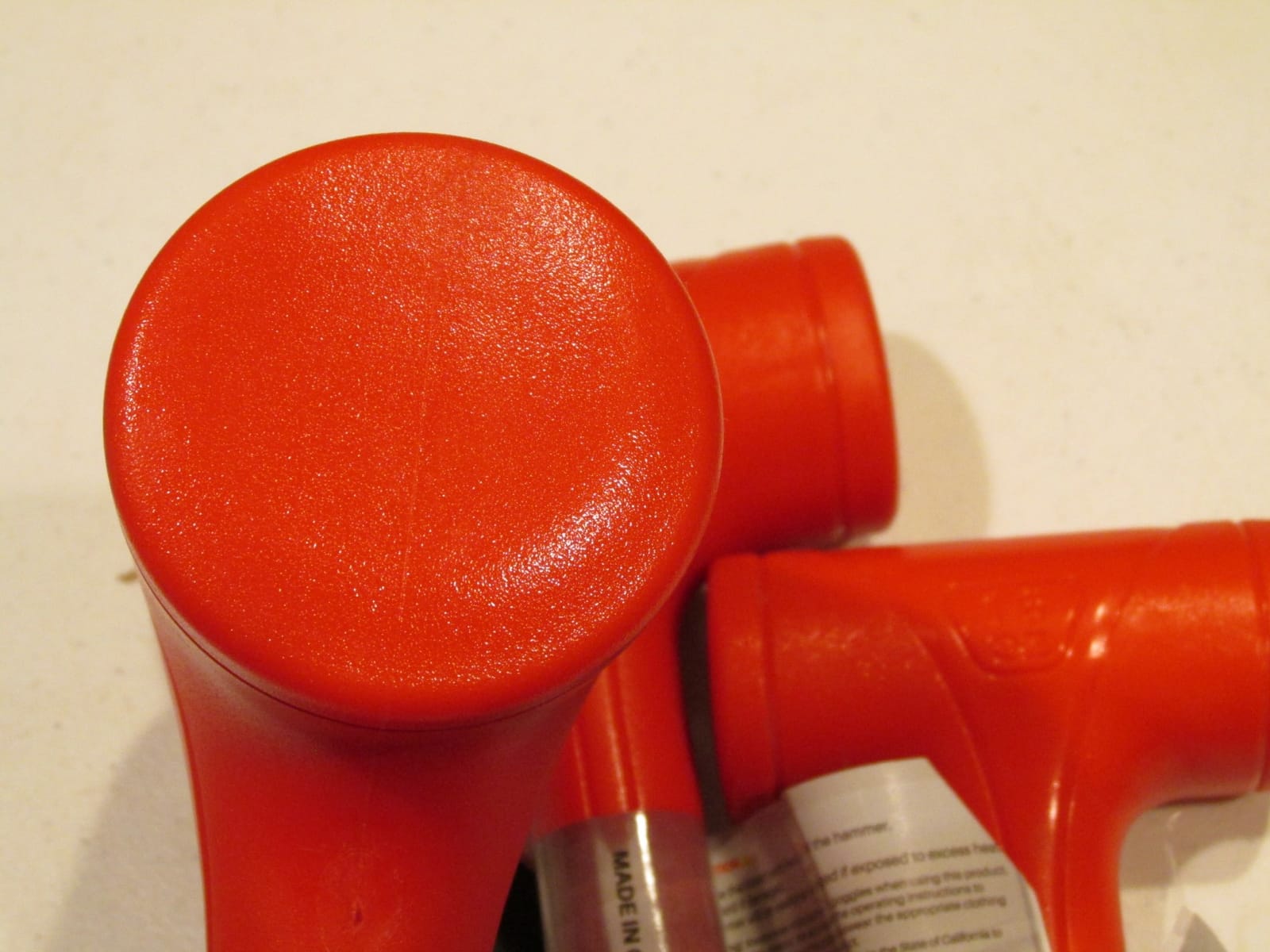
Two design points stand out. The double percussion surface is a second striking surface that takes the abuse so the primary face stays flat and useful. And the head and handle are molded tightly together, so the connection resists deformation under heavy blows rather than letting the head twist off the shaft.
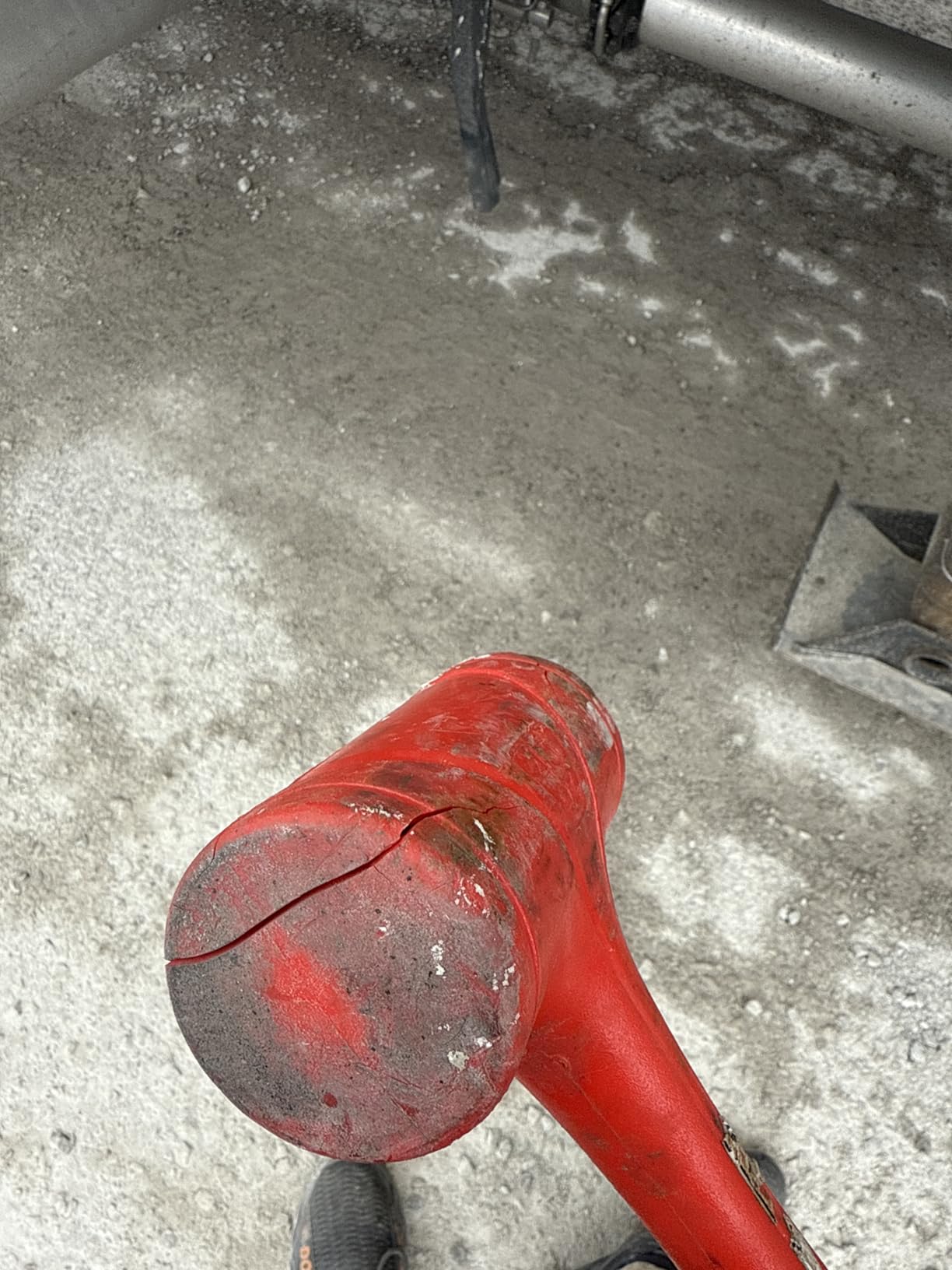
The practical benefit reviewers mention most is balance. The swing feels centered, so a long afternoon of knocking parts off does not wreck your wrist the way a top-heavy head does. A tech in The H.A.M.B. forum put it plainly: balance matters more than the badge on the handle, and a well-balanced hammer changes how much work you get through in a day.
Nobody claims the coating is indestructible. Under near-constant heavy striking the polyurethane wears sooner than a steel-cored design would, and for some metal assembly tasks a metal-compatible dead blow simply performs better. Treat it as the workhorse and keep a separate rubber mallet in the bay for the jobs where you want a softer kiss.
Who should buy this set
A home garage tech or a small independent shop that does mixed work. The three weights mean you are not tempted to swing a 45oz hammer at a trim clip because it is the only one on the bench. Reviewers consistently cite avoiding over-hammering as the main reason to own three sizes.
Where it falls short
It is a molded plastic construction, so it will not outlast a welded steel shank under abusive work. And because all three heads are polyurethane, none of them will drive a punch or shape unhardened metal the way a ball peen or brass cap can.
3. ABN 3 lb Unicast Mallet – Soft-Face Heavy Hitter
ABN Dead Blow Hammer, 3 lb Pound – Unicast Mallet with Non-Marring Rubber Coating
3 lb unicast rubber mallet
11 inch rubber-coated serrated handle
Will not spark on impact
+ The Good
- Soft rubber head leaves no marks on metal or finished surfaces
- 3 lb weight drives seized wheel hardware and fasteners loose
- Serrated rubber-coated handle gives a secure grip
- Bright orange is easy to find in a toolbox
- Holds up to daily use in a tire shop
- The Bad
- Soft rubber face scuffs and marks over time
- Hitting ends began separating after about a year of heavy daily use
- Only one weight included
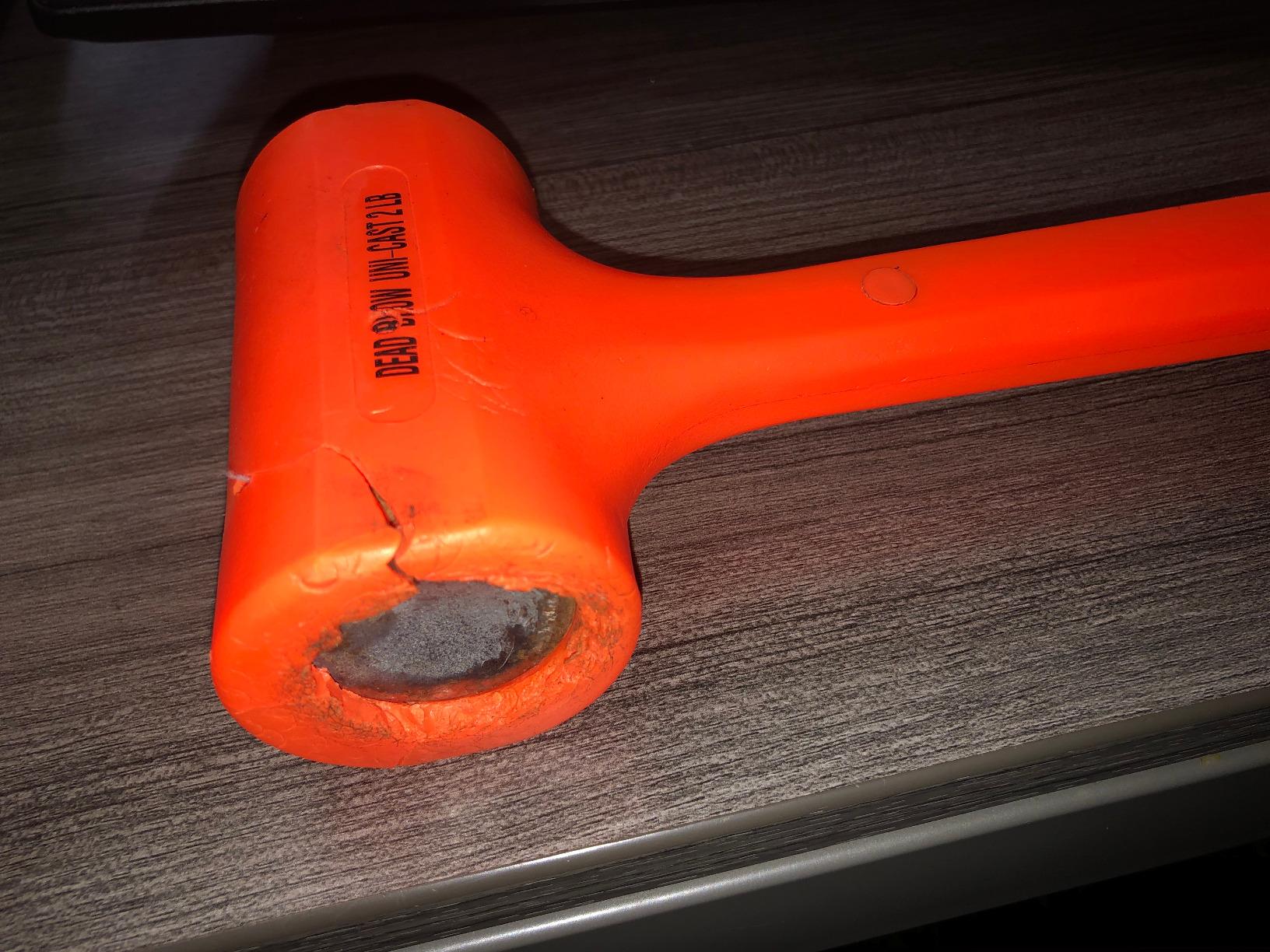
When the job is separation rather than shaping, mass is the answer and the ABN 3 lb is built for exactly that. Reviewers use it to knock apart seized wheel rims and fasteners, and a 3 lb soft face delivers the momentum to break a bond without a steel face landing a mark on the assembly.
The unicast bright orange design is a single molded piece, which minimizes damage and deadens noise on every strike. The soft rubber head will not spark and will not break through a delicate surface, which makes it the safe choice around a finished surface when you need real force.
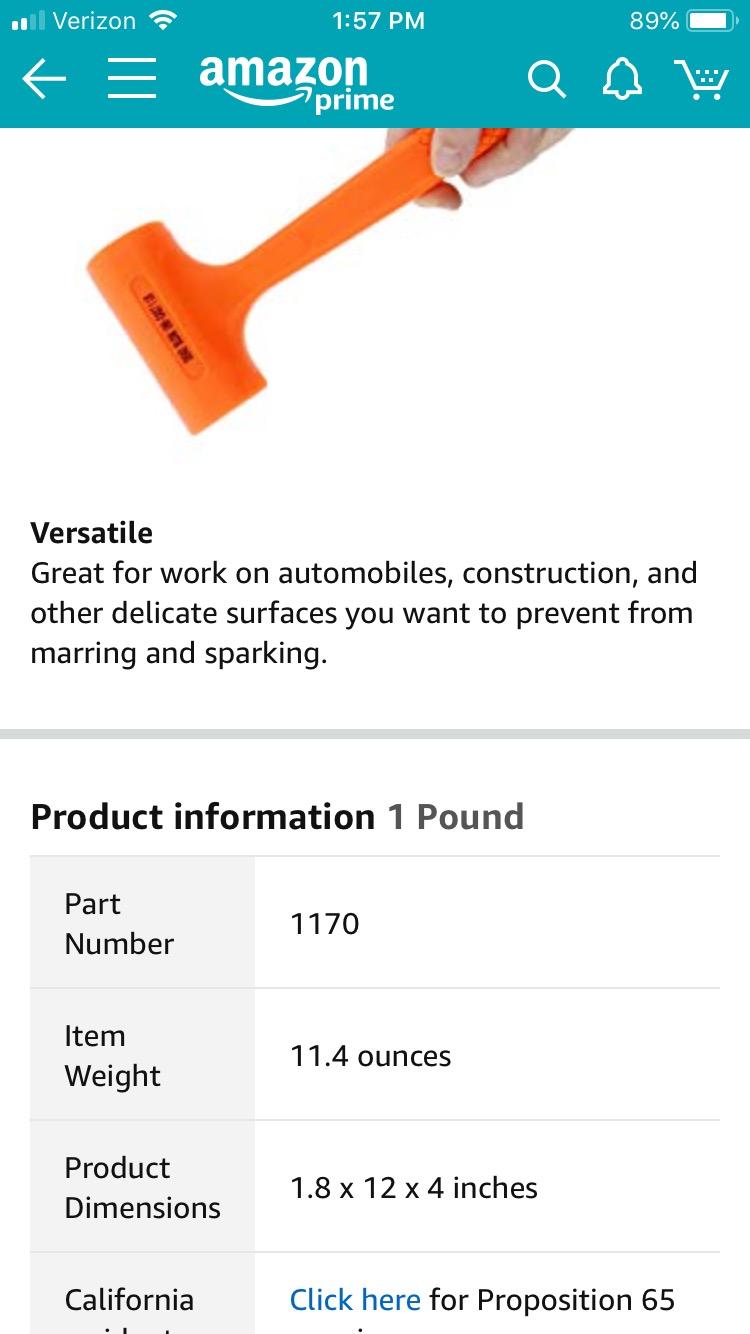
The 11 inch rubber-coated serrated handle is longer than a typical stubby mallet, and that extra length is what lets you generate the swing the weight needs. If you are reaching for a dead blow to free a frozen bolt, the handle length is doing as much work as the head.
The honest caveat is longevity. A few owners report the hitting ends beginning to come apart after roughly a year of near-daily use, and the soft face picks up marks as it ages. It also ships as a single weight, so a shop that needs a light hammer and a heavy hammer ends up buying two.
What it handles well in a body shop
Separation work on wheels, brackets, bushings and suspension pieces where a hard face would chew the mating surface. The soft face is the entire point: you get the force of three pounds without the paint damage. It is also the right choice near a fuel or battery area because rubber does not spark.
Where it falls short
It will not shape metal. A 3 lb soft face is a separation tool, not a bossing tool, and using it to move a low spot in a panel just flattens the area without planning it. Planishing and high spot work need a face with a defined edge, which this one does not have.
4. Estwing CCD45 45 oz – Premium Steel-Cored Performer
ESTWING Dead Blow Hammer – 45 oz Mallet with No-Mar Polyurethane & Cushion Grip Handle – CCD45
45 oz deadblow mallet
Polyurethane handle with steel core
Cushion grip vinyl handle
+ The Good
- Truly dead blow feel with heavy dampening shot and no bounce
- Steel-cored polyurethane handle survives hard repeated impact
- Cushion grip stays secure in wet or greasy conditions
- 45 oz is heavy enough to persuade stubborn parts
- Does not mar or track-mark finished surfaces
- The Bad
- Material can chip off if it hits the edge of steel
- Made in Taiwan despite US brand expectations
- Premium pricing for a single hammer
- Some buyers unsure how it differs from a rubber mallet
The Estwing CCD45 is the one we would hand a tech who is going to abuse a tool. The handle is polyurethane over a steel core, and long-term owners describe driving metal sleeves into shafts without damaging the cover, which is not a claim the molded plastic hammers in this group can make.
The head holds vibration dampening shot, and the difference versus a plain rubber mallet is real: more force per swing, more control, and no bounce. The cushion grip vinyl handle holds in all conditions, including the kind of greasy hands that come with pulling a transmission.
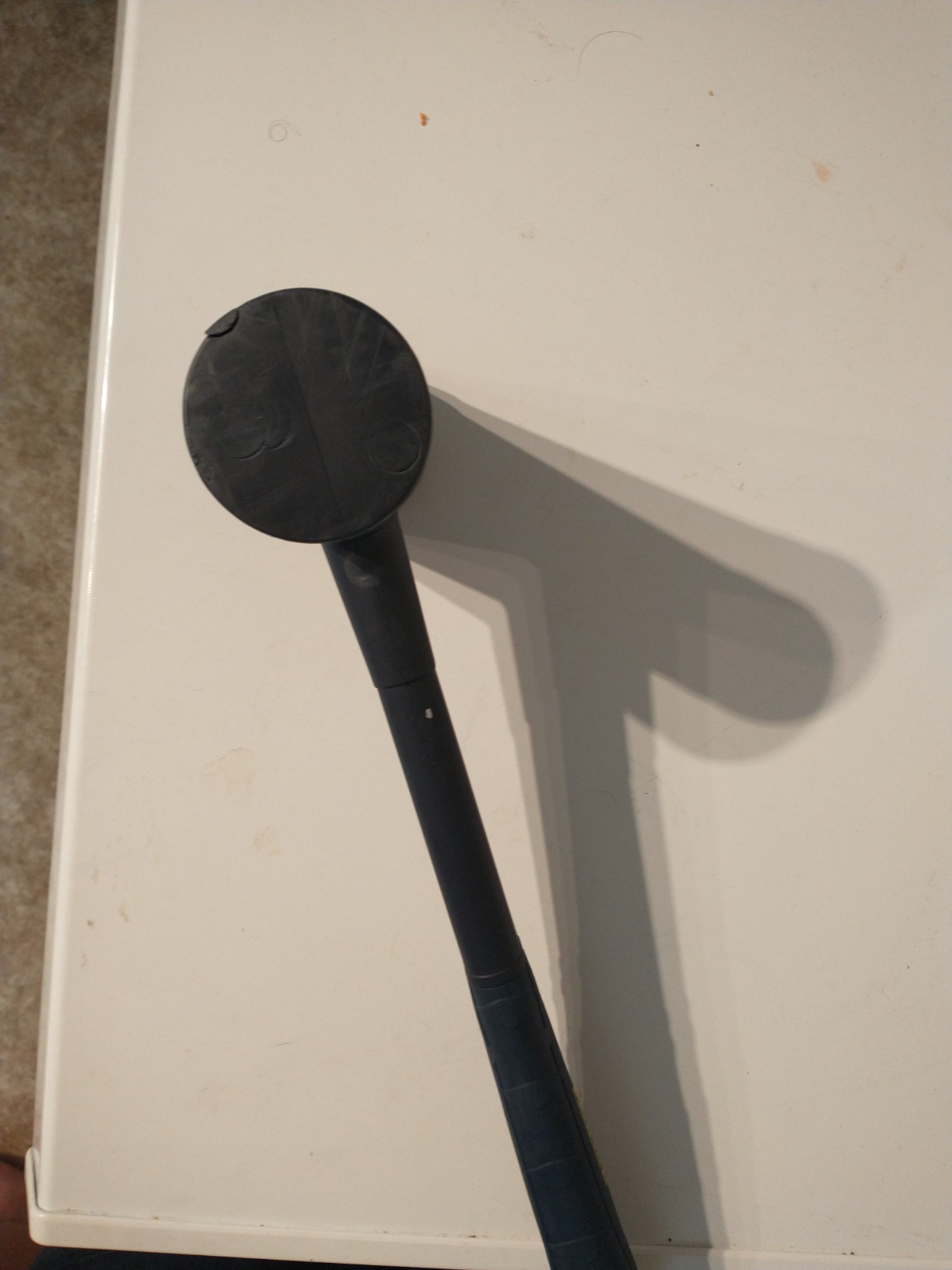
At 45 oz with a 15in overall length, this is a full-size swing weight that still stays manageable over a long day. It is listed for sheet metal forming, upholstery, automotive, furniture assembly, tile and flooring, and it is oil and chemical resistant, which is the requirement for a working garage.
The criticisms are consistent. The material chips if it catches the edge of steel, which is common when you are hammering near a panel flange. And buyers are disappointed that a tool with an American brand name is manufactured in Taiwan at a premium price, which is worth factoring into any shop budget conversation.
What it handles well in a body shop
Sheet metal forming and general automotive striking where the handle takes real punishment. If your work involves a steel core punch, a rivet setter or a stubborn bracket, the shank is built to take it. It also will not track-mark a finished surface, so it is safe on trim and paint in a pinch.
Where it falls short
It is one weight. There is no light option in the box, so finesse work means buying something else. And the premium is real money for a single hammer, which is hard to justify if you are outfitting a whole bay rather than choosing one tool for yourself.
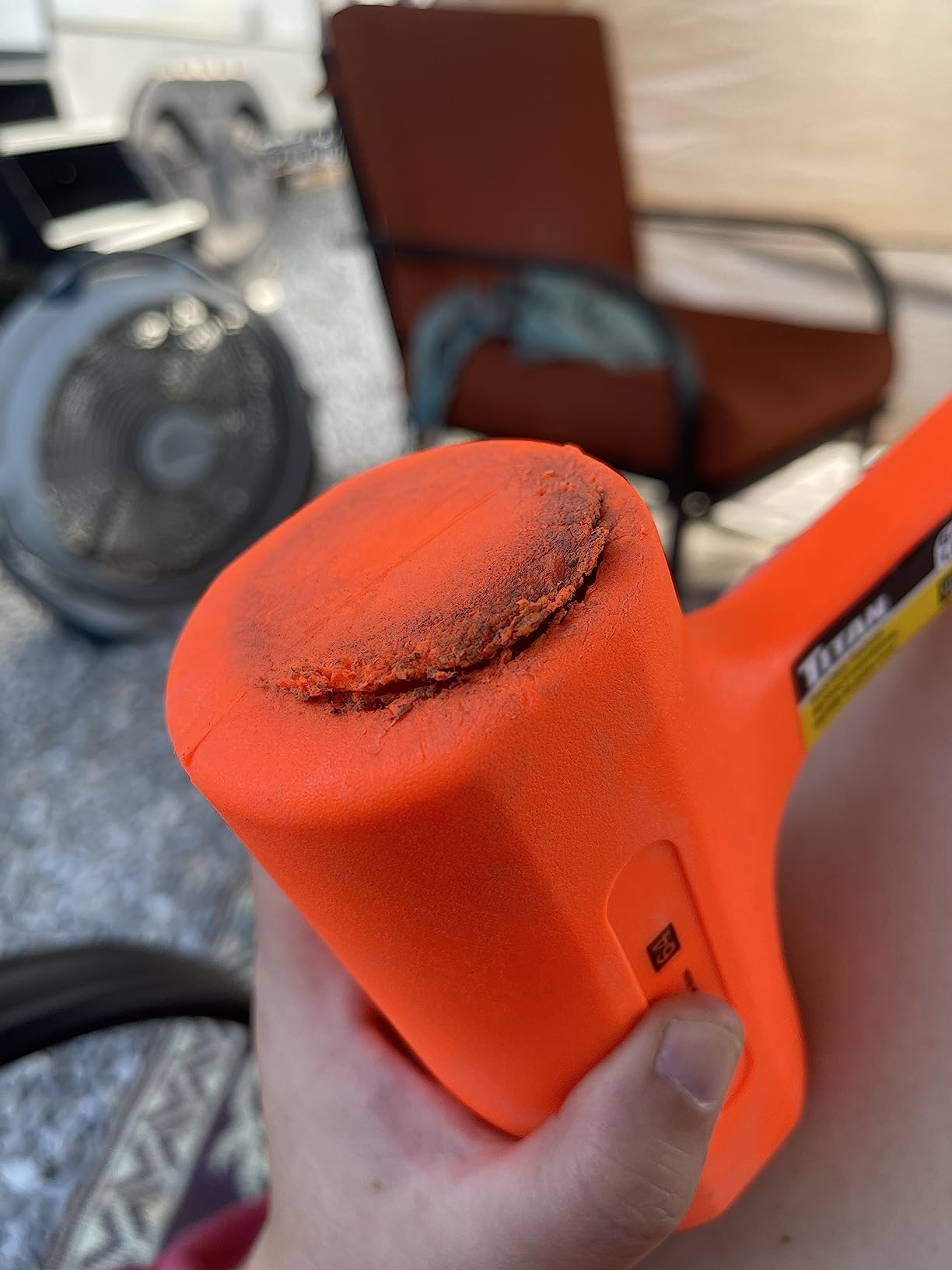
5. Titan 63142 2-Piece Set – Heavy Duo for Assembly Work
Titan 63142 2-Piece Dead Blow Hammer Set, Includes 2lb & 3lb with Non-slip Diamond Textured Handles, Spark & Rebound Resistant
One 32oz and one 48oz dead blow hammer
Double-faced steel shot filled heads
Non-slip diamond textured handles
+ The Good
- Double-faced shot filled head delivers strong impact without rebound
- Urethane jacket keeps delicate surfaces from marring
- Diamond textured handles with steel core resist slipping
- Marketed for automotive and machine assembly work
- The Bad
- Only two weights
- so no light hammer for panel nudging
- Black color is harder to spot in a cluttered tool bag
The Titan 63142 is deliberately heavy. Shipping a 32oz and a 48oz hammer rather than a light and a medium one tells you the intended work is assembly and teardown, not panel work. If your day is spent on brackets, mounts and machine components, this is the right pair.
The double-faced steel shot filled head is what gives the impact its weight without a rebound return. The urethane rubber jacket is there to stop the head marring delicate surfaces, and the diamond textured handle has a steel core so it does not twist or snap.
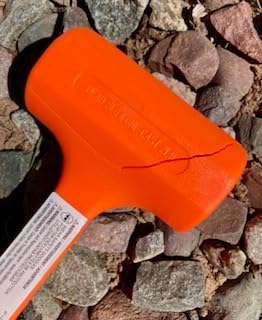
Reviewers like the grip and the jacket most. The handle texture stays put under load, and the non-marring jacket means you can work close to a finished assembly without protecting it first. That combination is why it holds a 4.7 across 609 reviews.
What you give up is range. With nothing under 32oz there is no finesse tool in the set, so any low-speed panel nudge has to be done with a different hammer. Black also disappears in a cluttered bag compared to the high-visibility orange most techs prefer.
What it handles well in a body shop
Automotive and machine assembly work where you need to persuade a part into place or apart. The 48oz is a genuine teardown weight, and the urethane jacket keeps it civil to finished surfaces. It is also a sensible pair to keep in a service bay alongside a lighter hammer.
Where it falls short
There is no small hammer. Anything requiring finesse, from tapping a trim clip to easing a low spot, is out of scope for this set. And if you buy only one dead blow for a mixed workload, a ladder with a light option serves you better.
6. Capri Tools C098 3 lb – Backed by a 10 Year Warranty
Capri Tools 10098 C098 Dead Blow Hammer Orange Pu, 3 lb
3 lb polyurethane dead blow
Steel shot filled canisters absorb shock
Round ergonomic grip
+ The Good
- Steel shot canisters absorb shock and maximize delivered force
- Polyurethane head will not mar surfaces and does not absorb liquids
- Steel-reinforced handle resists breaking on impact
- Round grip feels natural in the hand
- 10 year manufacturer warranty behind it
- The Bad
- Only one weight per purchase
- Soft PU faces still mark on sharp hard edges
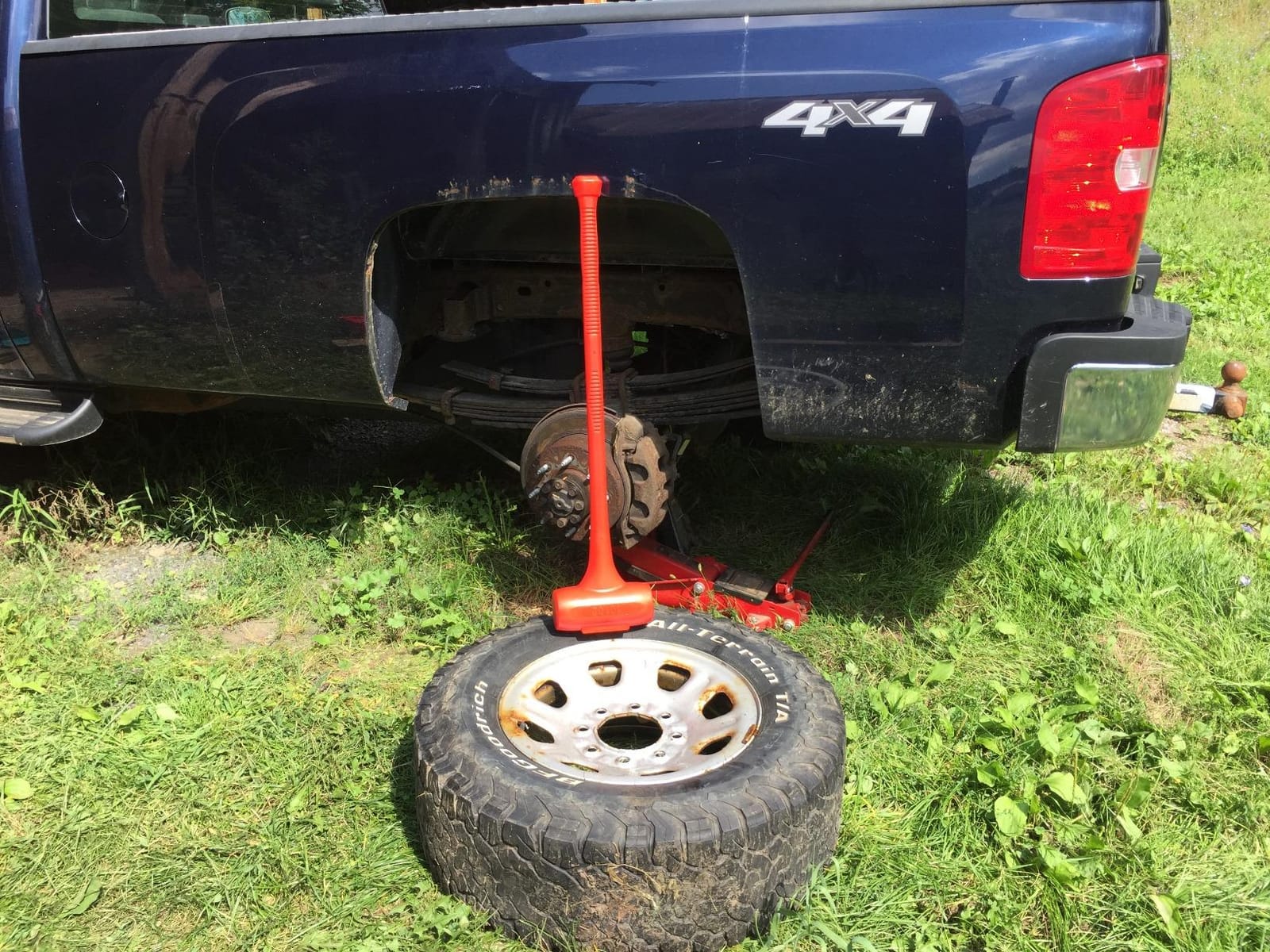
The Capri Tools C098 stands out on two points a body tech cares about. The polyurethane head does not absorb liquids, which matters when the panel is wet, dirty or freshly washed. And the steel-reinforced handle is built specifically to prevent breakage on impact, which is the failure mode that retires most dead blows.
The steel shot canisters absorb the shock of impact, reduce rebound and maximize the force delivered. That combination is what makes a 3 lb hammer feel controlled rather than wild on a single strike.
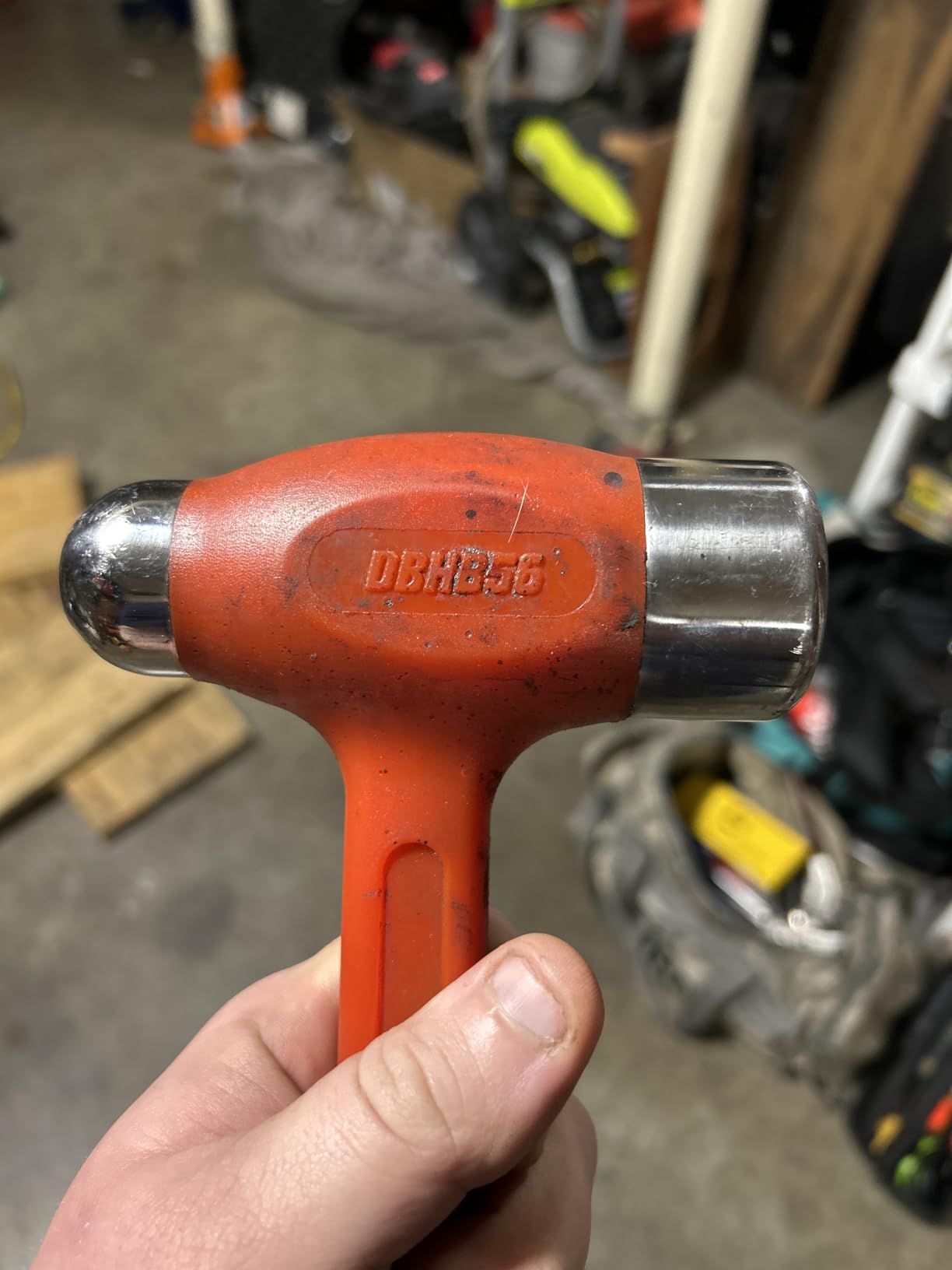
Capri Tools builds this model across a wide ladder, from 1 lb and 2 lb up through 26 oz, 36 oz, 46 oz, 4 lb, 6 lb, 9 lb and 12 lb. So the weight you want at 3 lb does not lock you into this brand forever, and the same handle and head design carries across the range.
The 10 year manufacturer warranty is the strongest coverage in this group for a single-shot dead blow purchase. The trade-offs are familiar: one weight per purchase, and a soft PU face that will still mark if you catch a sharp hard edge.
What it handles well in a body shop
General striking on finished surfaces, including panels that are wet or have been washed. The non-absorbing head means a damp panel does not get a swollen or soft spot, and the steel-reinforced handle holds up when the work gets physical.
Where it falls short
It is a single weight, so building a full bay means buying several units. The soft face is still polyurethane, and anyone working around burrs or freshly cut flanges will mark it sooner or later.
7. OEMTOOLS 25517 3-Piece Set – Starter Set for a Home Garage
OEMTOOLS 25517 3 Piece Dead Blow Hammer Set, 1/2 Lb., 1 Lb., and 2 Lb., Non Marring Mallet, Automotive Hammer, Non-Slip Grip, Steel-Shot Filled for More Force
Half pound, 1 lb and 2 lb steel-shot filled mallets
Handle lengths 10.25in, 11.75in and 13.75in
Soft rubber non-slip grips
+ The Good
- Three graduated weights cover general maintenance and hobby work
- Non-sparking and non-marring construction safe around finished surfaces
- Soft rubber handles give a secure non-slip grip
- Backed by a limited lifetime OEMTOOLS warranty
- The Bad
- Heaviest weight is only 2 lb
- limiting heavy disassembly
- Rubber heads are not replaceable if worn out
- Lowest average rating in this group with more 3-star feedback
For a home garage, this set covers the range most DIY work actually needs. A half pound for trim and interior, 1 lb for general knockdowns, and 2 lb for the heavier jobs that a small rubber mallet cannot handle. The graduated handle lengths of 10.25in, 11.75in and 13.75in give you a longer swing as the weight climbs.
Steel-shot filled for more force with zero rebound, and the construction is both non-spark and non-marring, so you can work around a finished surface without a sacrificial layer between the head and the paint.
The listing names machinist, mechanic and general shop use, and owners in general shop and light automotive contexts confirm it does the job. The soft rubber handles stay secure, which is what you want on a sweaty Sunday afternoon in a warm garage.
The 4.5 average is the lowest of the ten and comes with a visibly wider spread of middling reviews. Two things drive that: the 2 lb ceiling is modest for heavy disassembly, and the rubber heads are not replaceable, so a worn face means a new set rather than a new face.
What it handles well in a body garage
Light automotive work, interior trim, general maintenance and hobby projects. It is a safe starter set because nothing in it will spark or mar, and the three weights mean you are never forced to over-strike a small part because the only hammer on the bench is heavy.
Where it falls short
Two pounds is the ceiling, and that rules out separating seized suspension hardware or freeing a rusted-on component. The non-replaceable head is the bigger long-term issue in a shop that uses tools daily.
8. Performance Tool M7234 Set – Non-Sparking Brass and Ball Peen Trio
Performance Tool M7234 3-Piece Orange Urethane Dead Blow Hammer Set
12 oz brass cap, 16 oz ball peen and 24 oz dead blow
Steel face and peen for punches and chisels
Diamond grip pattern
+ The Good
- Three different hammer types cover striking shaping and non-marring work
- Brass cap gives a genuinely non-sparking option near fuel or chemical areas
- Ball peen and steel face allow driving punches and chisels
- Diamond grip holds when hands are covered in grease
- Orange hammers are easy to find in a shop
- The Bad
- Several buyers received an 8 oz dead blow instead of the advertised 24 oz
- Only one of the three pieces is an actual dead blow hammer
- Light weights cannot shift heavy seized components
- Plastic can become brittle in sub-zero temperatures
- No manufacturer warranty
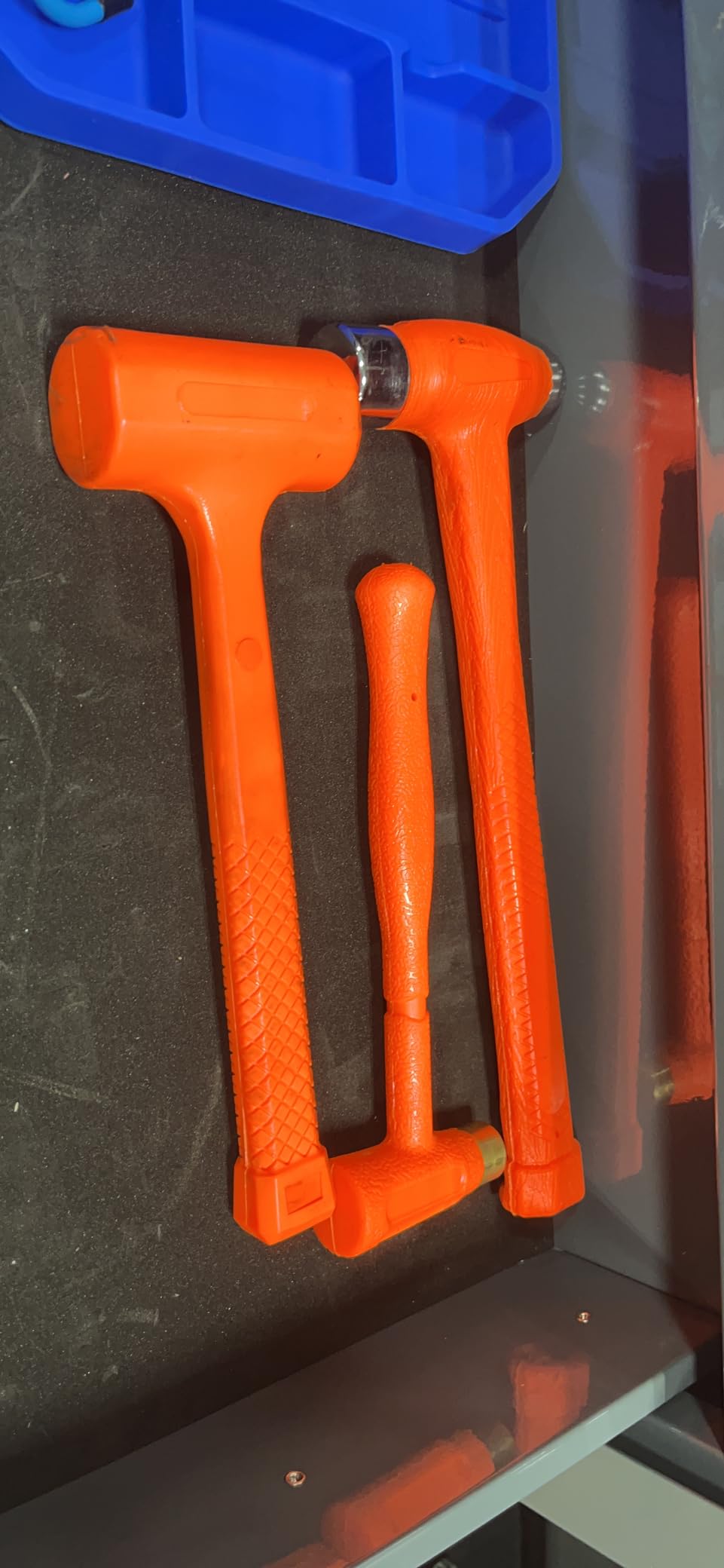
This set is a mixed hammer kit rather than three dead blows, and that is exactly why it earns a place. The brass cap hammer is the non-sparking option for fuel-tank and chemical areas, where a steel face is a genuine hazard. The 16 oz ball peen drives punches and chisels and shapes unhardened metal. The 24 oz dead blow handles the non-marring striking.
Having brass, ball peen and dead blow in one tray covers most of what a body tech reaches for in a single afternoon, and the diamond grip pattern holds in greasy hands.
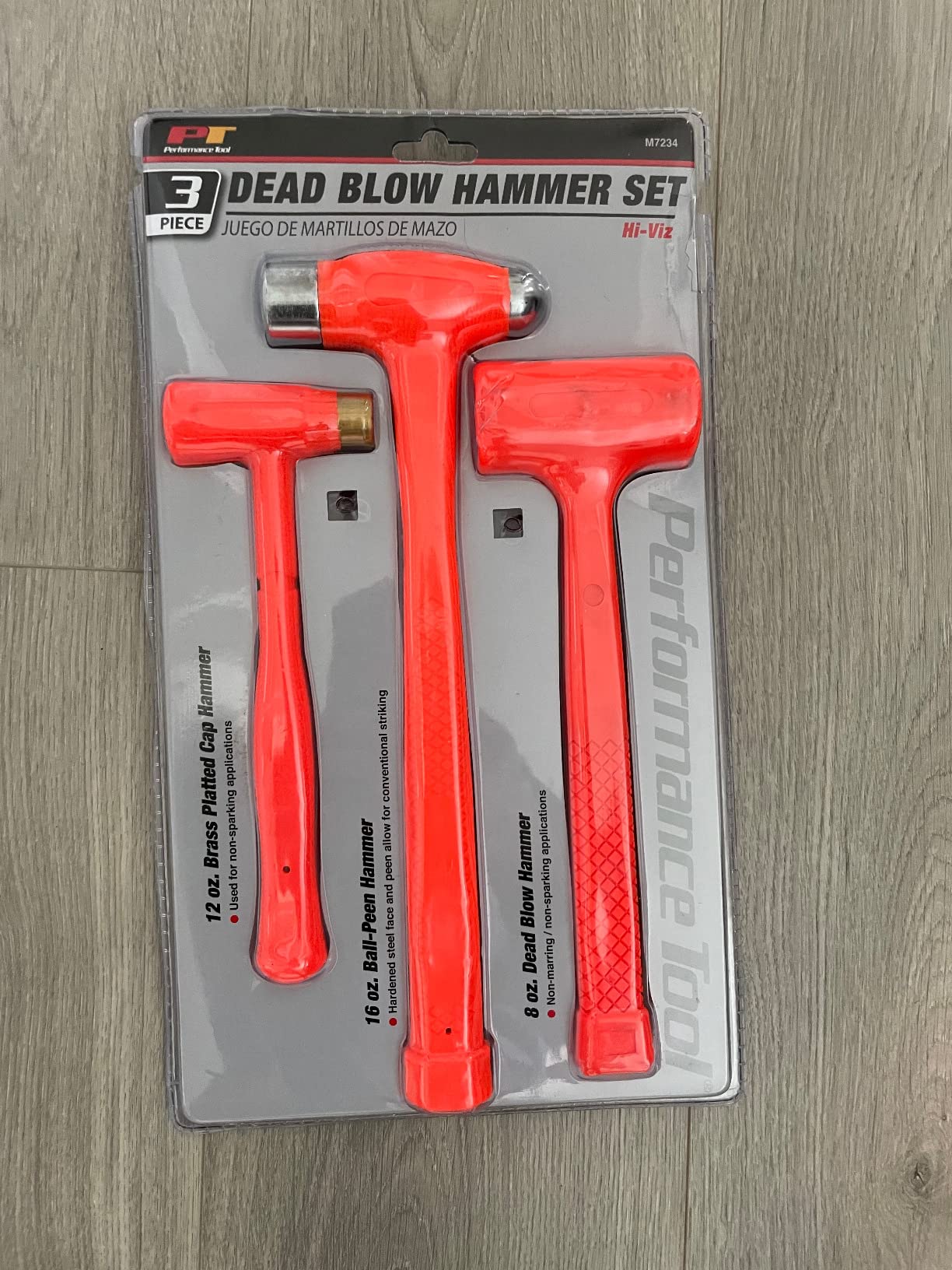
Be aware of what you are buying. The 4.4 rating is held back by a much larger share of 3-star and 1-star reviews than the leading sets, and the most common complaint is expectation rather than quality: people expecting three dead blows find only one, and several report the dead blow arriving as an 8 oz unit rather than the advertised 24 oz.
There is also no manufacturer warranty, and the plastic reportedly becomes brittle in sub-zero temperatures, which matters if the shop is unheated in winter.
What it handles well in a body shop
Non-sparking work near fuel systems and chemical areas, plus rivet setting and light metal shaping. The brass cap is the reason to own it, because it is the one face in this entire group designed for a non-sparking strike on a hard surface.
Where it falls short
The light weights cannot shift heavy seized components, and the mixed contents mean it does not substitute for a proper dead blow set. Verify the dead blow weight on arrival, because that is where the reported problems concentrate.
9. XtremepowerUS 32 oz Dual Head – Ball Peen and Flat in One Tool
XtremepowerUS 32oz Dead Blow Hammer Dual Head 2lbs Pound Ball Peen and Flat Face for Metalworking Auto Repair, Striking with Non Slip Grip Handle, 2-Pounds, Orange
2 lb dual head with ball peen and flat face
Welded steel shank through the handle
Shot-filled dead blow action
+ The Good
- Dual head switches between ball peen and flat face without swapping tools
- Shot-filled action cuts rebound so you can strike harder with less wrist strain
- Welded steel shank is stronger than a plain molded handle
- Textured overmold grip with a flared end resists slipping
- Useful for punches
- chisels
- rivets and unhardened metal
- The Bad
- Ball peen side has a different feel from the shot-filled flat face
- Soft faces mark on hard or sharp edges
- Only a single 2 lb weight in this listing
This is the pick for rivets and sheet metal shaping, and the reason is the dual head. One side is a ball peen, the other a flat face, so setting a rivet or flaring a panel and then spreading metal on the same tool takes one hammer instead of two on the bench.
The construction detail that separates it from the molded sets is the welded steel shank, welded to the canister head and running throughout the handle. Pros repeatedly name the welded shank as the top durability predictor, and that is exactly the joint that fails first on a low-cost dead blow.
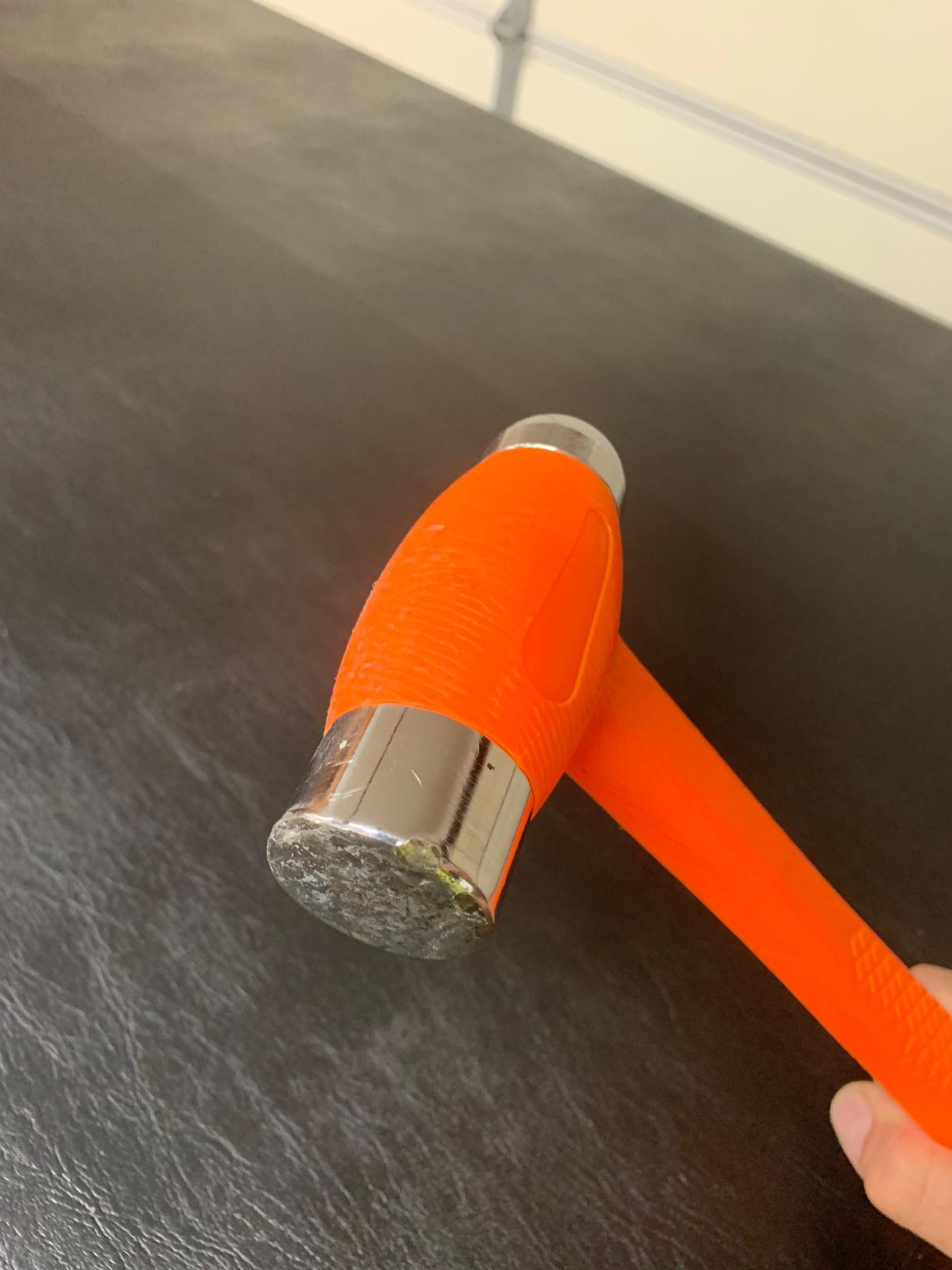
Shot-filled action reduces rebound, which means you can put more of your swing into the work without the tool bouncing back into your hand. The textured polymer overmold grip with a flared end keeps the hammer planted through a rivet-setting stroke.
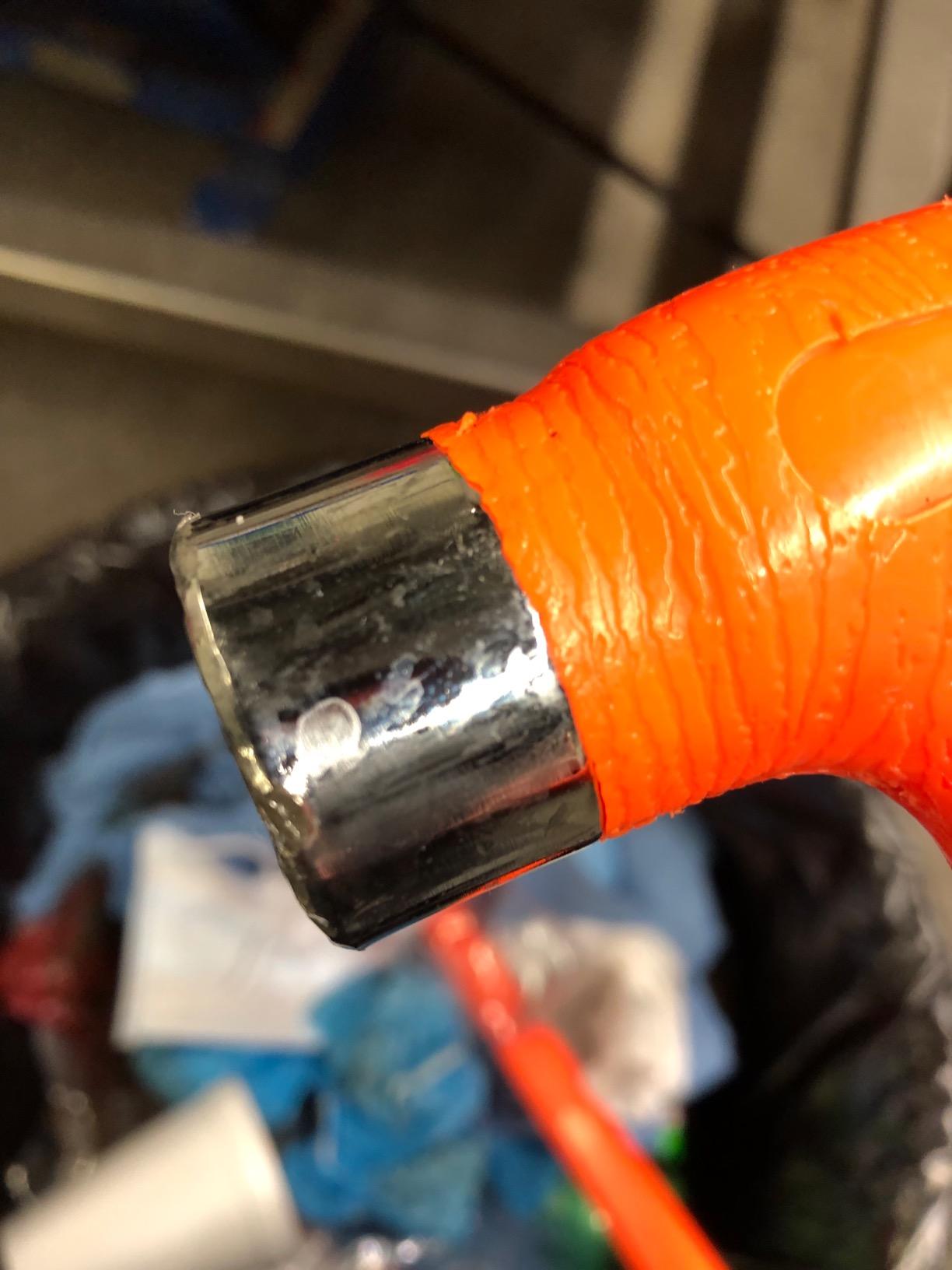
One real drawback is that the two faces do not feel the same. The ball peen side is not filled the same way as the flat face, so the deadening is not identical and you have to adjust. The soft faces also mark on hard or sharp edges, and this is a single 2 lb unit rather than a set.
What it handles well in a body shop
Rivet setting, flaring, driving punches and chisels, and shaping unhardened sheet metal. It is aimed directly at auto repair, and the welded shank makes it the one to keep if your work involves hard, repeated striking rather than delicate taps.
Where it falls short
It is a metal-shaping tool, not a panel-safe tool. The soft face marks finished surfaces, and if your body work is mostly trim assembly and dent work on painted panels, a dedicated soft-face set is a better use of the bench space.
10. REAL STEEL 0318 45 oz – Forged Carbon Steel Core Build
REAL STEEL Dead Blow Hammer 45 Oz Rubber Mallet Non-Marring and Sparking Resistant with Steel Shot-filled Head Ideal for DIY,Automotive,Furniture (0318)
45 oz with a 14.5in overall length
Forged carbon steel core wrapped in TPE
Head 4.8in long by 2.6in wide
+ The Good
- Forged carbon steel core gives more backbone than all-plastic dead blows
- TPE outer jacket is oil and chemical resistant for shop use
- Flat face reduces marring and impact noise on panels and trim
- 45 oz is a versatile all-rounder across automotive and upholstery work
- The Bad
- Only a single hammer
- so no size range for different jobs
- Fewer customer reviews than the leading sets
- TPE jacket is softer than PU and wears faster under heavy abuse
The REAL STEEL 0318 uses a three-layer structure: a one-piece forged carbon steel core wrapped in a high quality TPE jacket. That core is the reason it feels more solid in the hand than a fully molded plastic dead blow, and it is the construction most likely to survive being used as a general shop hammer.
The flat striking face is designed to reduce marring and impact noise, which makes it a reasonable choice on panels and trim where a steel face would leave a mark. The jacket is wear resistant and oil and chemical resistant, both requirements in a working garage.
Dimensional detail worth noting: 14.5in overall length with a head measuring 4.8in long by 2.6in wide at 45 oz. That is a long, full-size swing weight, and the length is what makes the head size manageable at that weight.
The honest limitation is the review base. At 156 reviews it has the thinnest long-term wear data of the ten, though the distribution is tight with very few neutral or negative ratings. The TPE jacket is also softer than polyurethane and will wear faster under heavy abuse, so treat it as a shop hammer rather than a beater.
What it handles well in a body shop
Mixed automotive work where you want a steel-backed hammer with a non-marring face. The forged core handles moderate striking and the flat face keeps noise down, which matters in a bay where a ringing steel hammer gets old fast.
Where it falls short
One weight only, and the TPE jacket wears faster than a PU face under constant heavy striking. If you already own a molded set, this is an upgrade in backbone rather than an expansion of your range.
Choosing the Right Size: A Weight-to-Job Guide for Body Work
Weight is the decision that matters most in a body shop, and getting it wrong is what causes the overshoot. The rule is simple: match the hammer to the mass of the part you are moving, not to the strength you have.
8 oz to 12 oz – Interior trim clips, emblem removal, light tapping, working next to a finished surface where a heavier face would mark it. This is the finesse weight.
16 oz to 21 oz – General panel work, bracket tapping, light assembly, and the default weight for a tech who does a bit of everything. Most shops live here.
26 oz to 32 oz – Panel beating on a supported panel, sheet metal shaping, and separating moderately stuck trim and mouldings.
36 oz to 48 oz – Frame rail and chassis work, suspension component removal, and knocking apart seized assemblies. This is the teardown weight.
3 lb to 4 lb – Heavy frame and suspension work, frozen fasteners and genuinely seized components. Use with a dolly behind the panel.
The pro preference in this niche is the slimline head shape for tight work. A Garage Journal tech described slimline heads as the hands-down favorite style because the narrow head reaches where a standard head cannot. If you work in engine bays and between frame rails, head width is as important as weight.
Balance is the other half of the decision. A well-balanced hammer swings where you expect it to, and that is why a tech on The H.A.M.B. forum argues cheaper hammers are not automatically worse, just less well balanced. Try a few in the hand before committing.
How to Use a Dead Blow Hammer Without Damaging a Panel?
Five steps keep the panel intact while still letting you move metal.
Support the back side with a dolly. A dead blow head on unsupported sheet metal will just push the low spot somewhere else. The dolly gives the metal somewhere to go.
Work off the high spot. Find the highest point of the dent and strike that first. Pushing on the low spot creates a second low spot, which is the classic way a small dent becomes a big one.
Match the face to the substrate. A soft polyurethane or TPE face is safe on steel panel, e-coat and finished paint. A steel or brass face is for raw metal, rivets and shaping, not for a painted surface. A brass cap is the non-sparking choice near fuel areas.
Start light and increase gradually. Several light controlled strokes beat one heavy swing. The rebound-free action means you can repeat a strike without chasing the tool.
Check your stroke before you commit. Test the hammer on a piece of scrap of the same gauge. If the head is not dead on contact, stop and pick a different tool.
On face material, the short version: soft PU and TPE for anything with paint or e-coat on it, brass for non-sparking work on harder surfaces, nylon for the softest taps, and hardened steel faces for shaping bare metal, rivets and frame work only. A dead blow with the wrong face will mark a panel just as readily as a ball peen hammer would.
And when a job turns to teardown rather than shaping, remember the dead blow is not always the answer. For the truly heavy work, our guide to the best demolition hammers covers the tools built for breaking structure down rather than shaping it.
Where a Dead Blow Hammer Fits in the Body Shop – and Where It Does Not
Are dead blow hammers worth it? In a body shop, yes, but only for a specific slice of the work. They are excellent at light striking, assembly, separation and non-marring contact on finished surfaces. They are a support tool in paintless dent repair alongside PDR rods, not a primary dent-removal method.
Here is where each tool actually belongs:
Body hammer and dolly – The real metal-shaping pair. A body hammer drives metal with a defined face against a supporting dolly. This is the tool for actual panel beating and planishing.
Dead blow hammer – Non-marring striking where you need force without a bounce or a mark. Assembly, separation, and working near finished surfaces.
Shrinking hammer – Stretching already-thin metal, typically with a shrinking disc. A dead blow will not do this job at all.
Slide hammer and stud welder – Pulling a dent out from behind rather than pushing it from the front. This is the correct first move for a large dent, and a dead blow is a distant second.
PDR rods – Working a dent out from behind the panel with no paint damage at all. The specialist choice when the paint is worth protecting.
Air hammer and magnetic hammer – Pneumatic and electric dead blow alternatives for high-volume production work where a tech can generate more consistent force than a manual swing.
When not to use a dead blow hammer, specifically: do not drive nails or fasteners into it, because a sharp point splits a molded head. Do not use it for punch or chisel work, which is what a ball peen is for. Do not thin metal that is already thin. Do not planish or finish a surface, because a flat soft face has no edge to work with. And do not use it as the first tool on a large dent, because pushing from the front is what creates the low spot a slide hammer or PDR rod would have removed directly.
That last point is the one that splits opinion in the trade. In a Facebook body-shop group, most experienced techs advise against beating out a fender dent with a dead blow at all, recommending dent pullers, proper body hammers or PDR techniques. Where a dead blow earns its keep is the work around the dent: freeing a moulding, knocking a bracket off, setting a trim clip, separating a stuck component.
For the heavy structural work that needs genuine powered force rather than a swing, we cover the pneumatic and electric side in our roundup of the best rotary hammers.
How We Picked
We compared ten dead blow hammers already listed for automotive and sheet metal use, and weighted six criteria in this order.
Rebound control – Every one of these claims a shot-filled head, so the differentiator is how the head is actually filled and whether the shot stays free-flowing. Packed or settled shot changes the feel and the deadening over time.
Face marring risk – For body work this matters more than price. We favoured soft PU and TPE faces for anything touching a panel.
Head and shank durability – A welded steel shank running through the handle is the strongest construction we found. Unibody molded bodies are the next best, since they remove the glue joint. Heads separating from handles is the most common failure.
Grip – Diamond texture, cushion grip and flared ends all matter on a greasy hand mid-swing.
Weight range – A set that gives you a light and a heavy option beats a single hammer for a mixed workload.
Warranty – A 10 year warranty and a limited lifetime warranty both signal manufacturer confidence in the handle and head.
Ratings and review counts are reproduced exactly as published. Where reviews mention head cracking, chipping or separating ends, we treated it as a design and usage signal rather than a defect, because driving a sharp fastener into a dead blow head is the fastest way to split one.
Frequently Asked Questions
Which dead blow hammer is considered the best?
For auto body work, the NEIKO 02888A 3-piece set ranks first in our testing because it covers 1 lb, 2 lb and 3 lb in one unibody molded body, with steel shot filled heads that do not rebound or spark and a 4.8 rating across 6684 reviews. For a single premium hammer with a steel-cored handle, the Estwing CCD45 45 oz is the stronger build.
What size dead blow hammer for automotive work?
Most body work is done with a 16 oz to 32 oz hammer, which covers panel beating on a supported panel, bracket work and light teardown. Move up to 36 oz through 4 lb for frame rails, suspension components and seized fasteners. Drop to 8 oz to 12 oz for interior trim and anything next to a finished surface.
When not to use a dead blow hammer?
Do not use one to drive nails or fasteners, because a sharp point splits a molded head. Skip it for punch and chisel work, for thinning metal that is already thin, and for finish planishing. Most experienced body techs also advise against making it the first tool on a large dent, since a slide hammer, stud welder or PDR rod pulls that out from behind instead of pushing a new low spot into the panel.
What is the best hammer for automotive work?
It depends on the task. A body hammer and dolly pair does the actual metal shaping. A soft face dead blow hammer handles non-marring striking, assembly and separation on finished surfaces. A ball peen or brass cap hammer covers rivets, punches, chisels and non-sparking work near fuel systems, and a slide hammer or PDR rod is the right first move on a large dent.
Is a dead blow hammer the same as a rubber mallet?
No. A rubber mallet bounces and delivers less sustained force, though it is softer and quieter. A dead blow hammer is filled with steel shot that shifts on impact, which absorbs the energy, kills the rebound and delivers more force with less wrist strain. That deadening action is what makes it usable on a supported panel.
Final Recommendation
The NEIKO 02888A 3-piece set is the best dead blow hammer for auto body work overall, because the three weights cover real shop tasks and the unibody molded body removes the seam that fails first. It is also the highest rated option we found, at 4.8 across 6684 reviews.
Pick the YIYITOOLS 3-piece set if you want the same weight ladder for less. Go with the Estwing CCD45 45 oz if you need a steel-cored handle that survives abusive work, and add the Performance Tool M7234 if non-sparking brass work near fuel systems is part of the job.
Whichever you choose, support the panel from behind, match the face to the finish, and start light. Get the tool set right in 2026 and your dent work will go faster with less rework.