
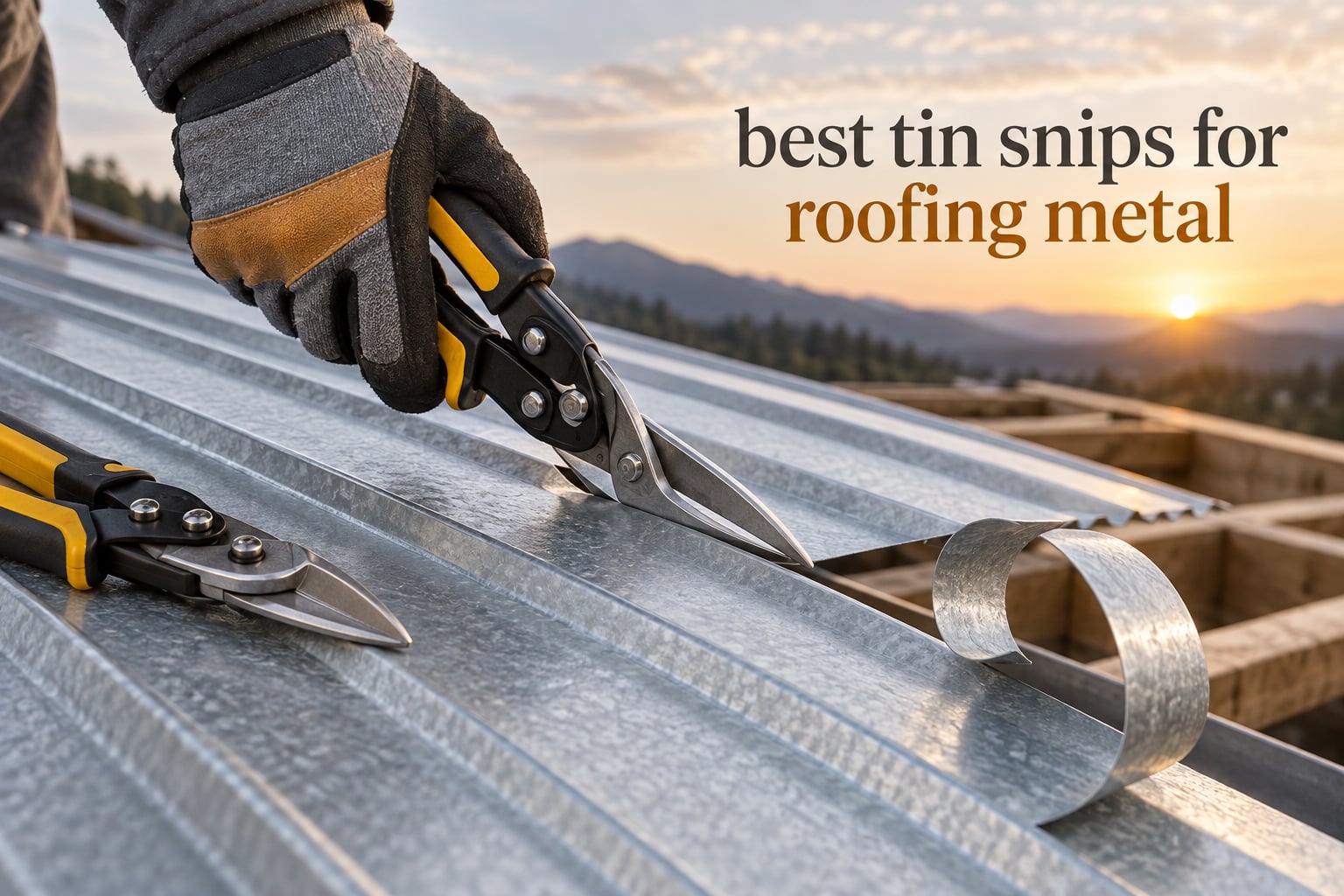
Short answer: yes. Tin snips – also called aviation snips or tinner snips – are hand shears with serrated jaws that shear through thin sheet metal instead of chopping it. For roofing they handle 26 and 29 gauge galvanized steel and Galvalume panels up to about 12 inches wide, and offset models keep your knuckles clear of the panel edge. They cut cold, so the factory coating survives.
That cold shear is the whole reason snips own the final cut on a metal roof. An angle grinder or cutoff wheel burns the Galvalume coating and showers the deck with metal swarf that rusts into orange speckles within weeks. Snips leave no heat, no saw teeth and no debris field.
Snips do lose to power tools on speed. For a long rip down a 29 gauge 5-rib panel, pros reach for a nibbler or a power shear. For trims, notches, ridge cap ends, chimney and vent cutouts, and panel swaps, snips win on control and on the finish. The honest workflow is a hybrid: rough cut with the powered tool, final half inch to the line with snips.
On brand, the roofing forums are unusually consistent. In the r/HVAC snips threads, the repeated verdict is that Midwest snips are the reference standard, Malco is the accepted second pick, and power-tool-branded snips get the sharpest criticism – specifically for serrations that are too aggressive and an offset that is too shallow to clear a gloved hand. That consensus shapes every pick below.
One more note before we start. Whatever snips you choose, you are cutting overhead on a slope, and a full-body harness is non-negotiable on a roof deck. Our full-body harness picks for roofing cover the fall-arrest side of the job, and if you are driving fasteners afterward, our roofing nailer guide handles the other end of the panel.
Below are 12 snips, ranked by what a roofer actually needs: clean cut capacity on light gauge, offset that clears the hand, edge retention, and a pivot that stays tight. We also tell you where each one stops being the right tool.
Top 3 Tin Snips for Roofing Metal for September 2026

Crescent Wiss M3R Straight…
- › Cuts 18 gauge cold-rolled steel
- › Spring action for low-effort feed
- › Free float pivot for longer life

Midwest Bulldog MWT-6716B
- › Forged austempered molybdenum blades
- › Cuts 18 gauge with 20% less effort
- › USA made with limited lifetime warranty

Amazon Basics Straight Cut…
- › Cuts 18 gauge steel and 22 gauge stainless
- › Chrome vanadium with high-frequency heat treat
- › Rubberized grip with one-hand latch
All 12 Snips Compared in September 2026
| PRODUCT MODEL | KEY SPECS | BEST PRICE |
|---|---|---|
|
|
Check Latest Price |
|
|
Check Latest Price |
 |
|
Check Latest Price |
 |
|
Check Latest Price |
|
|
Check Latest Price |
 |
|
Check Latest Price |
 |
|
Check Latest Price |
 |
|
Check Latest Price |
 |
|
Check Latest Price |
 |
|
Check Latest Price |
 |
|
Check Latest Price |
 |
|
Check Latest Price |
1. Crescent Wiss M3R – our pick for straight cuts on roofing panel
Crescent Wiss 9-3/4″ Straight, Left, & Right Cut Aviation Snips | M3R
9-3/4 inch compound action
Cuts 18 gauge cold-rolled steel
12 ounces
Spring feed with free float pivot
+ The Good
- Cuts straight lines and slight curves cleanly in 18 gauge
- Compound action and spring feed cut hand fatigue on repetitive work
- Free float pivot design extends tool life
- Safety latch and hang hole for belt or bag
- The Bad
- Straight cut only
- so it cannot follow tight left or right curves
- Sharp enough that a slip causes a serious injury
- A small number of reports of units breaking early
At 9-3/4 inches and 12 ounces this is the tool we would hand someone cutting their first metal roof. It is light enough to run one-handed on a ladder, and the spring feed does most of the opening for you. Owners also report pairs that have lasted a decade or more.
The blades are precision cast molybdenum with conk ground edges and serrations spread across the jaw. That serration pattern is what keeps light gauge panel from walking out of the jaws, and it is why the tool rates to 18 gauge low carbon cold rolled steel.
What you are buying is a straight-cut tool. The compound action and yellow handles are for identification on a crowded belt, and the handles work from either hand. The design also controls blade bypass at the end of a cut, which is what suppresses the fish hook curl that ruins a trim line.
The free float design on the pivot bolt is a small detail with a real payoff. Instead of the two blades pinching to a fixed stop as they wear, they float slightly, so load spreads across the edge rather than the point. That buys edge life and it is a design you rarely see outside Wiss.
What you should know before buying
This is not a curve tool. If your job list includes notching around a plumbing vent or following a tight radius, you need an offset left or offset right snip in the bag as well. The yellow-handled M3R is the straight-line and gentle-curve half of the kit.
On a 26 gauge panel the cut is easy. Push past 18 gauge cold rolled steel and you will be levering the jaw rather than shearing, and the edge will go dull quickly.
Where it falls short
Owners warn repeatedly about the injury risk. These snips open like a trap at the tip, so cut-resistant gloves are not optional on a roof deck, and the safety latch should be used when the tool is in the pouch.
A small number of buyers report units breaking earlier in life than the tool’s reputation suggests. Treat it as a consumable with a long shelf life rather than a lifetime tool, and keep a spare pair in the truck.
2. Amazon Basics AMAS04 – the budget snip that over-delivers on light gauge
Amazon Basics Straight Cut Aviation Tin Snips, Metal Cutters with Safety Latch
9.84 inch straight cut snip
Chrome vanadium steel
12.8 ounces
Cuts 18 gauge steel and 22 gauge stainless
+ The Good
- Sharp out of the box with no tightening or sharpening
- Compound leverage makes thick-edge cuts reach the tip easily
- Rubberized grip stays comfortable on extended work
- Strong value against name-brand snips of similar performance
- The Bad
- Blades can surface-rust quickly if left wet
- so oil after use
- Straight cut only
- not for tight curves or notches
- A few users find it slightly heavy with a weak spring return
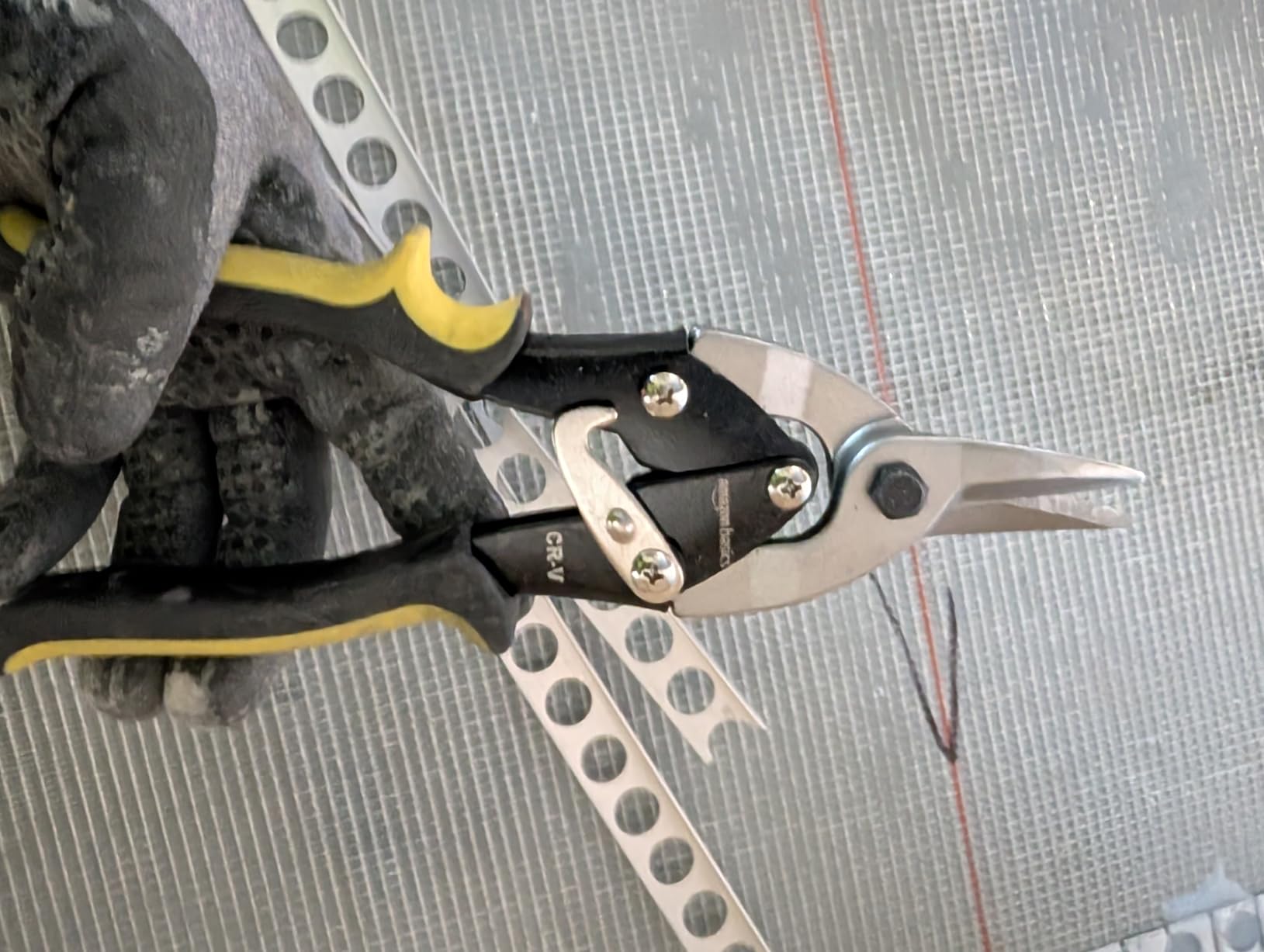
This is the snip we hand to a first-year apprentice and to anyone cutting a shed roof alone on a Saturday. It arrives sharp, the compound action is genuine, and the cut quality on 26 gauge galvanized is clean.
The steel is chrome vanadium run through high-frequency heat treatment, and the jaws rate to 18 gauge cold rolled and 22 gauge stainless. On 29 gauge 5-rib panel it will move without a struggle, which is exactly the range most residential roofing falls into.
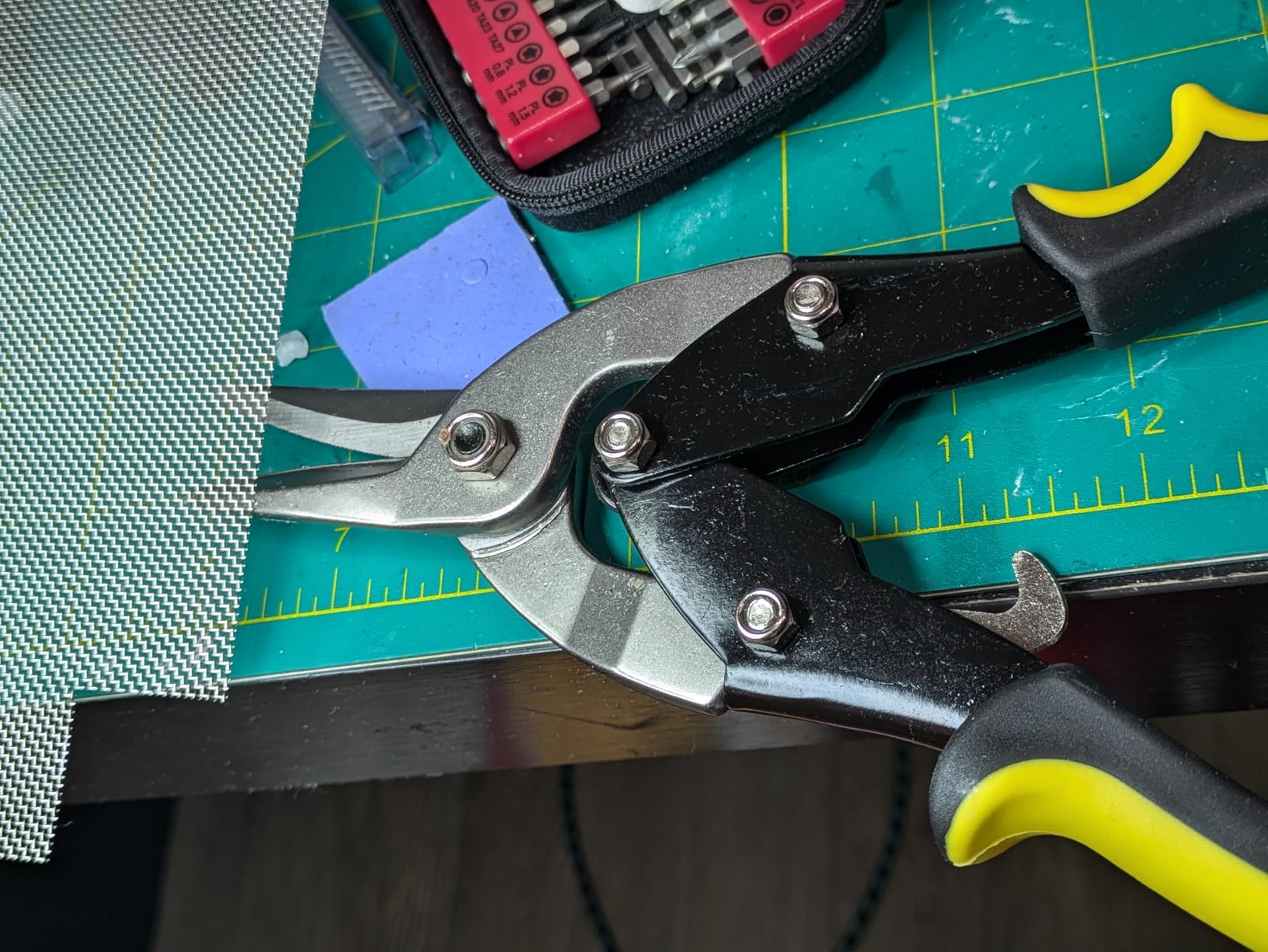
Reviewers routinely compare it favorably to big-box name brands, and the jobs listed in reviews are the roofing jobs: aluminum strips, thin sheet, mesh, and siding notching. At 12.8 ounces and just under 10 inches it is a comfortable one-hand tool at height.
The rubberized two-color handle and one-handed auto-release latch are the small things you notice at the end of a long trim run. The latch matters more than it sounds like it should – a snip that springs open in your tool bag is a snip that gets damaged.
What you should know before buying
The one-year warranty is the shortest in this list, and the blade is not a replaceable part. When it dulls, the tool is finished. Plan on oiling the pivot and wiping the jaws dry after each session, because the most repeated review note is surface rust appearing on blades left damp.
If you are working thin aluminum flashing rather than steel panel, note the rating is for cold rolled steel. Aluminum is softer and cuts more easily, so you are well inside the limit.
Where it falls short
Straight cuts and gentle curves only. A tight radius at a chimney corner or a deep notch for a ridge vent will leave a hook that you have to file off.
A few users also report the spring return feeling weak, which means the tool tends to stay partly closed between cuts and you are opening it by hand more than you should. On a long job that is fatigue you do not need.
3. HURRICANE 02-024 – grip and reach for gutters, flashing and light panel
HURRICANE 10 inch Aviation Tin Snips, Straight Cut Metal Shears with Non-Slip Tyregrip Handle, Cr-V Steel Blades Shears for Thin Sheet Metal, Aluminum, Gutter & DIY Projects
10 inch straight cut
Forged chrome vanadium with micro-serrations
20 gauge cold rolled rating
0.4 kg with hanging hole
+ The Good
- Cuts 18 to 20 gauge steel
- galvanized sheet
- copper and aluminum cleanly
- Tyregrip handle is soft and non-slip on long jobs
- Light enough for one-handed work at height
- Holds a #1 category ranking in Nippers and Snips
- The Bad
- Not for tight circles
- sharp angles
- hardened steel or heavy mesh
- Exceeding the rated gauge dulls the blade quickly
- Safety latch can stick or jam and needs adjustment
At 10 inches this is one of the longer straight snips in the group, and that extra inch is the point. It gives you more travel per squeeze, which is what you want when you are trimming a run of gutter or following a long line on flashing.
The blades are forged chrome vanadium with micro-serrations, engineered to grip rather than slip. They are rated at 20 gauge cold rolled and 22 gauge stainless, so you have margin above the 26 and 29 gauge panels that make up most residential roofs.
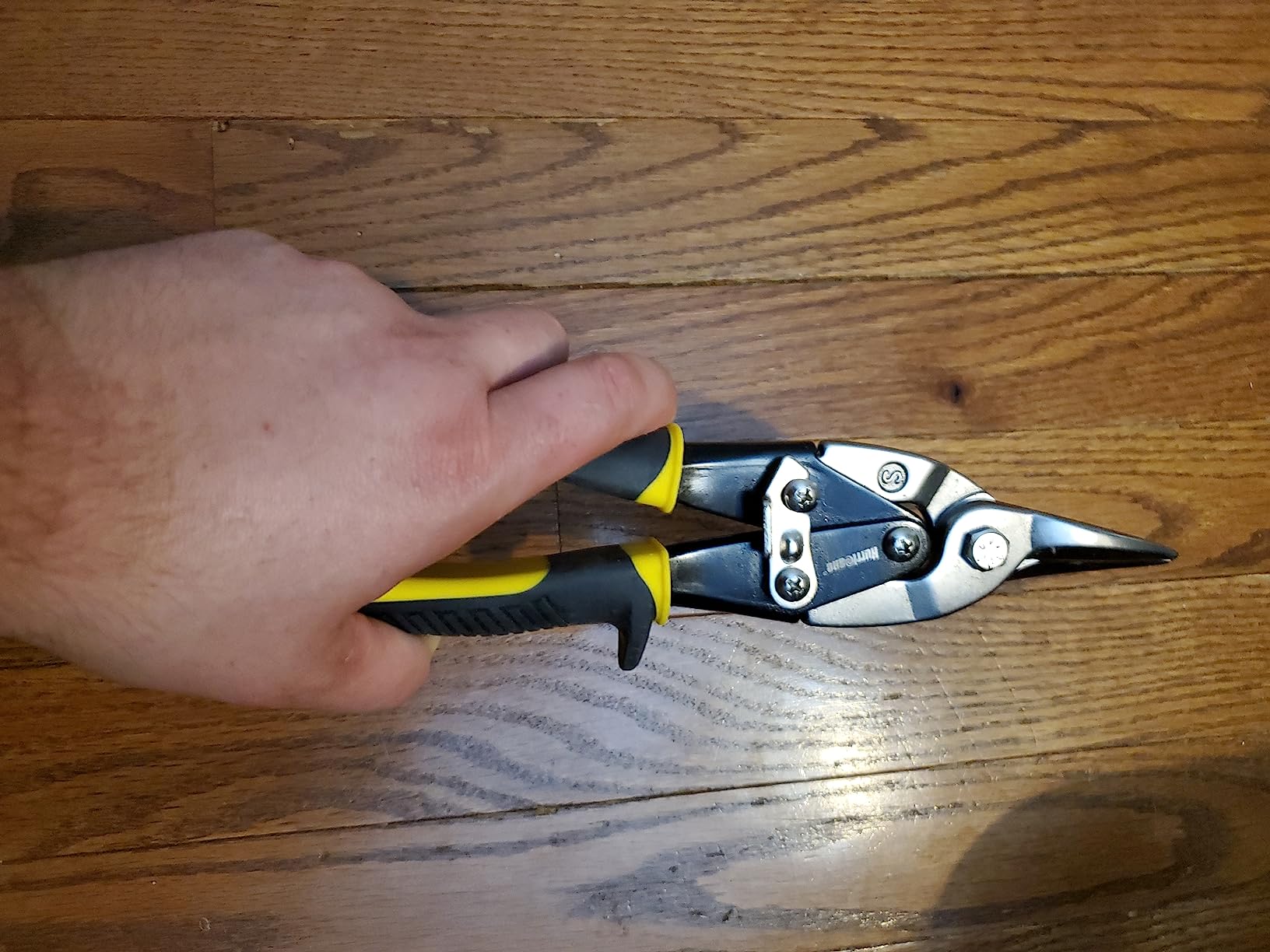
Reviewers list the same jobs over and over – gutters, flashing, license plates, hardware cloth and roofing sheets – and describe the cuts as clean with minimal hand force. That is the honest capability ceiling of a straight snip: light, soft sheet in long runs.
The self-opening spring with a manual safety latch means you can leave it open on a belt loop between cuts or lock it shut in the pouch. The built-in hanging hole is a small quality signal that this tool was designed by someone who carries it.
What you should know before buying
Ten inches and 0.4 kg is a real length and weight to hold at arm’s length over a fascia board. If your cuts are mostly short notches in the field, a shorter snip will feel better. If they are long trims, this length helps.
The rated gauge matters. At 20 gauge cold rolled, this tool is a light-gauge specialist. Pushing into heavier material is what dulls the edge quickly, and reviewers call that limit out more than any other issue.
Where it falls short
Not for tight circles, sharp angles, hardened steel, rod or heavy wire mesh. If your work involves 18 gauge stainless flashing, this is the wrong tier and you should step up to a forged blade tool.
The latch sticking or jamming comes up often enough to be worth checking when the tool arrives. It is usually a five-minute adjustment, but it is an adjustment nobody wants to make on a roof in the rain.
4. CRAFTSMAN CMHT73756 – induction hardened edge and quarter-inch markings
CRAFTSMAN Aviation Snips, Straight Cut (CMHT73756)
Stainless steel body
Induction hardened cutting edge
Quarter-inch blade markings
18 gauge and 22 gauge capacity
+ The Good
- Holds its edge under daily trade use on fascia and downspout work
- Quarter-inch markings make repeated identical cuts fast
- Rigid stainless construction stays tight at the pivot
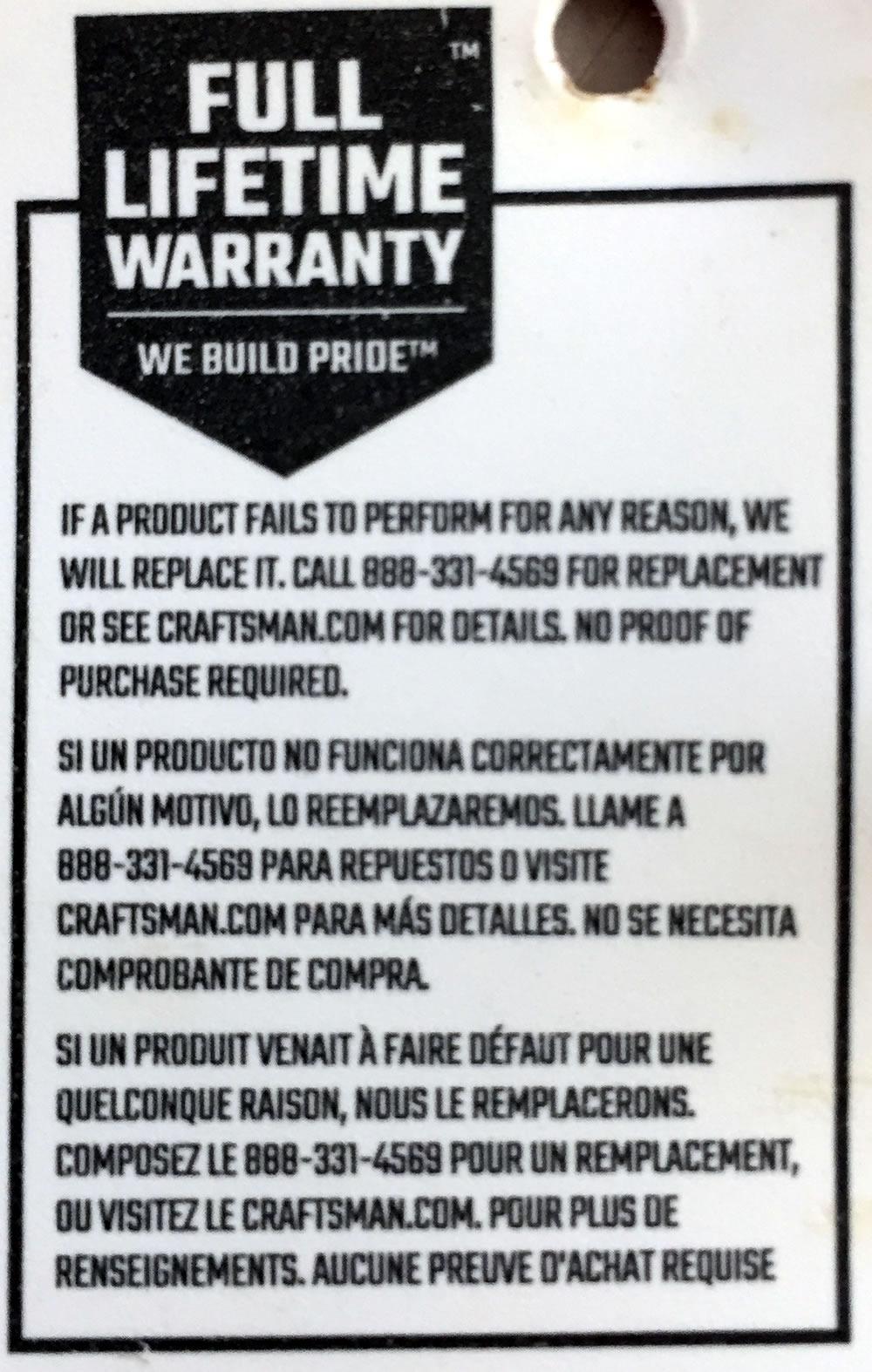
- Backed by a full lifetime warranty
- The Bad
- Straight cut only
- so notches and tight curves need another tool
- Thumb and hand can get sore during heavy repeated cutting
Drylining and roofing crews report this one outlasting cheaper competitors over a year-plus of daily use, with the spring release still working. That is the single most useful thing a roofer can ask of a straight snip, because a snip that sags open halfway through a cut is a safety problem.
The cutting edge is induction hardened, which means the outer surface of the jaw is treated after forming. It holds sharpness longer than a plain ground edge, and on galvanized and Galvalume that difference shows up around month six.
The quarter-inch blade markings are the feature nobody advertises and everybody who uses them appreciates. When you are cutting the same width of ridge cap or drip edge forty times, you stop eyeballing it. That makes this the pick for repetitive, identically sized trim cuts.
Capacity is 18 gauge cold rolled and 22 gauge stainless, with a spring-assisted latch for fast one-handed opening. The body is stainless, so the corrosion question that flattens cheaper tools is largely answered.
What you should know before buying
Understand what the quarter-inch markings are. They are reference increments printed on the blade for gauging cut width, not a blade length claim, and they only help on straight, repetitive work.
This is a straight-cut tool. Reviewers doing roofing work use it for fascia, downspout and edge trim, which is the category it is genuinely built for.
Where it falls short
Notches and tight curves need a different tool, and the same warning about the jaw applies as with any aviation snip: it is sharp enough to require cut-resistant gloves.
Users with less hand strength report a sore thumb after heavy repeated cutting. The spring helps, but it does not eliminate the squeeze, so on very high-volume trim work a compound-action offset pair is the better long-run answer.
5. Midwest Bulldog MWT-6716B – austempered blades that cut to the tip
MIDWEST Bulldog Aviation Tin Snip – Straight Cut Regular Tinner Shears, Made in the USA – MWT-6716B
Straight cut Bulldog pattern
Forged austempered molybdenum blades
13.6 ounces
Cuts 18 gauge cold rolled
+ The Good
- Highest average rating in this roundup with owners calling it the best snips they have used
- Forged austempered blades hold a long-lasting edge on hard sheet
- Pinch-Thru-Point geometry cuts heel to tip with 20 percent less effort
- Secure grip stays comfortable through long sessions
- The Bad
- Heavier and less maneuverable for hands with limited grip strength
- Carries a USA-made premium over comparable imports
Reviewers call these the reference standard for tin snips, citing durability, precise clean cuts and comfortable handling across decades of use. Roofers in the r/HVAC threads keep landing on Midwest as the first name, and the Bulldog is the model most often named as the one they keep in the pouch.
The Bulldog pattern matters more than the brand does. The jaws meet in a way that concentrates force at the front of the cut, so the Pinch-Thru-Point geometry pushes all the way to the tip instead of fading out before it gets there. On a notch cut that means the last half inch is as easy as the first.
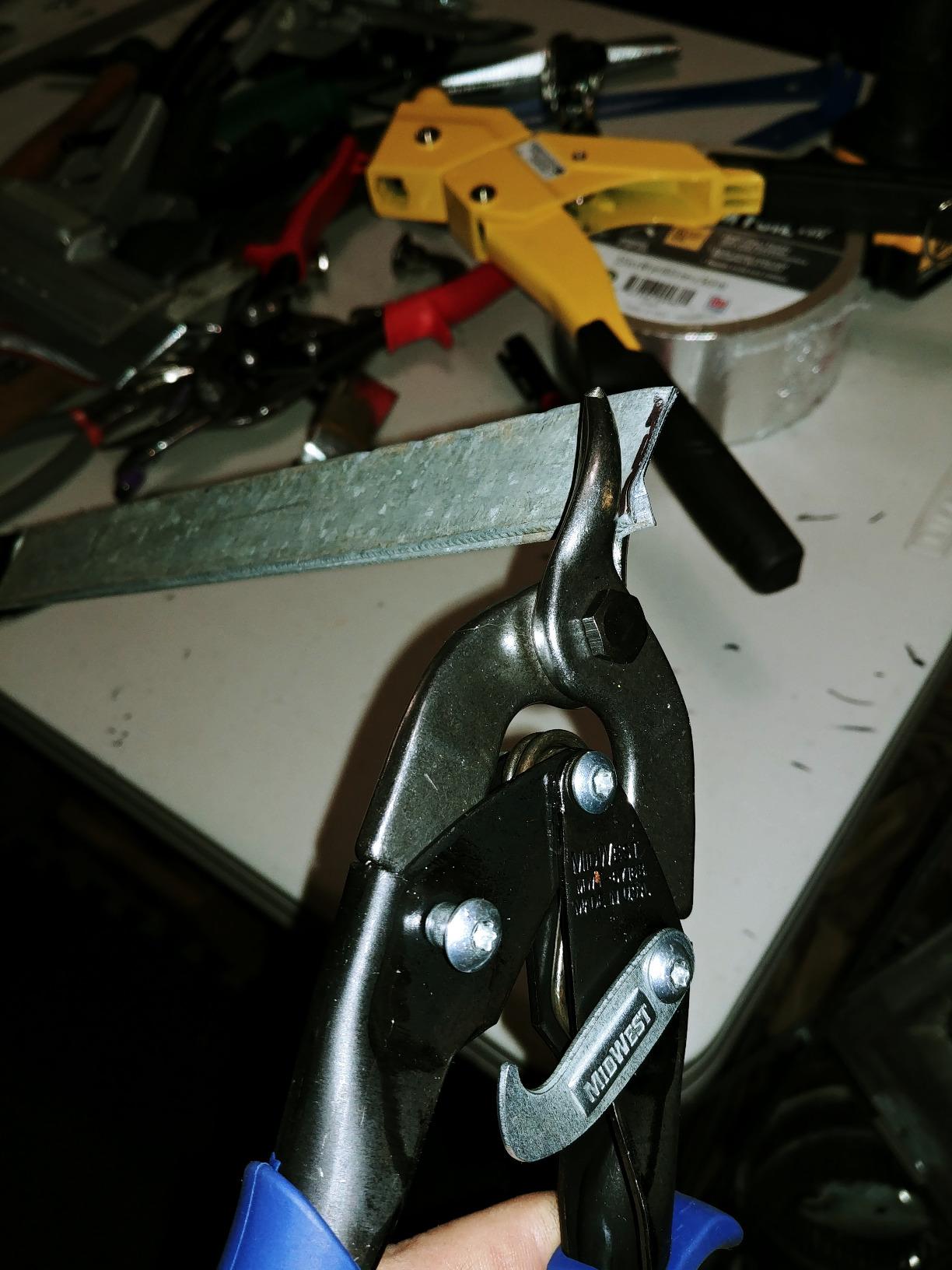
The blades are hot drop-forged molybdenum alloy steel and austemper heat treated. Austempering is the step that makes the difference: it hardens without making the steel brittle, which is exactly what you want on a jaw that is going to hit a fastener screw or an edge of a panel.
Owners say it cuts locked stainless and heavier sheet with very little effort, and the Kush’N-Power chemical-resistant grips hold through a full day. Rated to 18 gauge cold rolled from heel to tip, with a limited lifetime warranty covering the blades and spring.
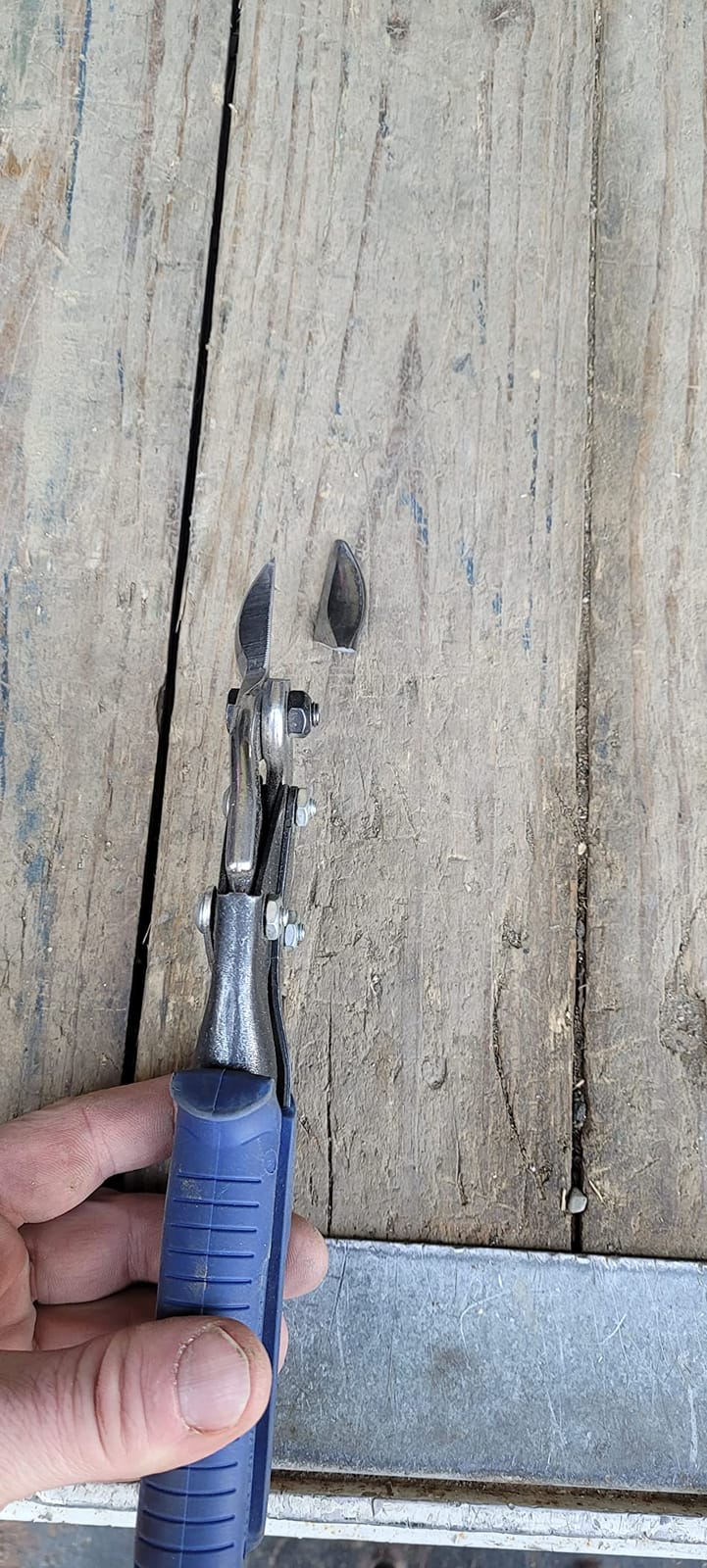
What you should know before buying
It is a straight-cut Bulldog, not an offset. That means excellent straight lines and wide curving left and right cuts, but the body is not shaped to clear your knuckles from the panel edge on a long cut.
At 13.6 ounces it sits in the middle of the weight range in this list. If your hands are the limiting factor rather than your time, the lighter straight snips will keep you cutting longer into the day.
Where it falls short
Reviewers with hand joint problems and arthritis specifically flag the weight. On a full day of notching and trimming, that is a real complaint from people who otherwise love the tool.
There is also a visible gap between it and visually similar imports in the price. For a roofer cutting panels daily, that gap earns itself back in edge life. For someone trimming four panels of shed roofing, it may not.
6. Midwest Special Hardness MWT-SS6510L – for stainless flashing and hard alloys
MIDWEST Special Hardness Aviation Snip – Left Cut Offset Stainless Steel Cutting Shears, Made in the USA – MWT-SS6510L
11.5 inch left cut offset
Black oxide coated blades
15.04 ounces
Aimed at stainless, inconel and titanium
+ The Good
- Beefier construction and better edge retention than standard snips on stainless
- Long-serving roofers report pairs lasting up to eight years
- Precise on straight lines and tight left curves
- Chemical-resistant grips stay secure in all-day use
- The Bad
- Will not slice thick plastic gutter guard
- Heavier than typical snips and tiring for some hands
- A minority of users feel the standard Bulldog cuts better than this version
Roofers who cut stainless flashing know that ordinary snips chew the edge and then work twice as hard for the rest of the cut. This is the Midwest answer to that problem, and the offset body is the part that changes how the tool feels on a roof rather than at a bench.
Offset means the cutting hand sits below the line of the jaws. On a long trim on a panel, your knuckles stay clear of the sheet and you can see the cut line instead of your own hand. That single geometry change is why offset snips dominate on the roof.
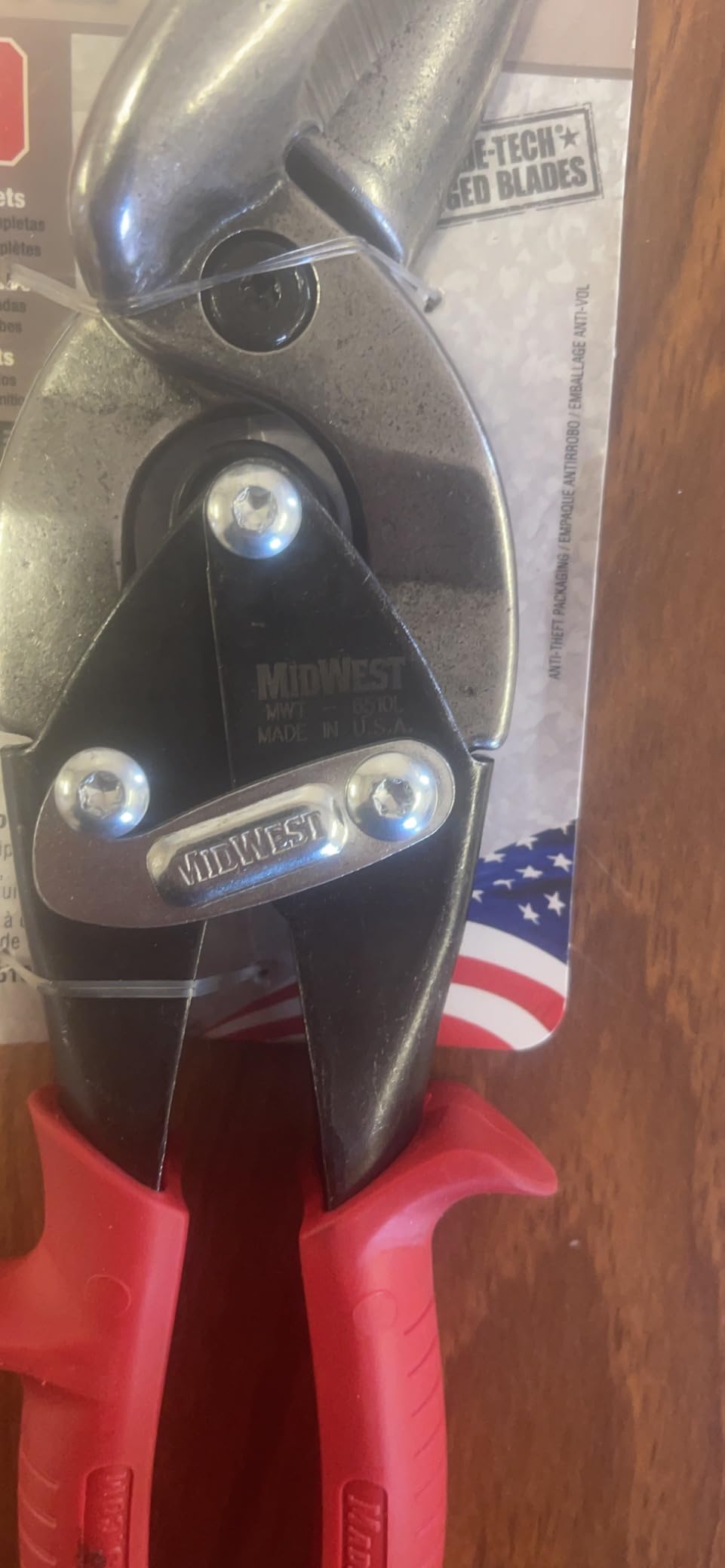
The blades are the special hardness line – hot drop-forged molybdenum alloy, austemper heat treated, then black oxide coated. That coating is the reason for the 4.5 rating rather than a 4.8: it is built for stainless, inconel and titanium, and on soft 26 gauge roofing it is more blade than you need.
Experienced tradespeople report years of service from these, with the Pinch-Thru-Point geometry still cutting to the tip at 20 percent less effort. It is a left cut offset, so it follows left arcs and straight lines, not right curves.
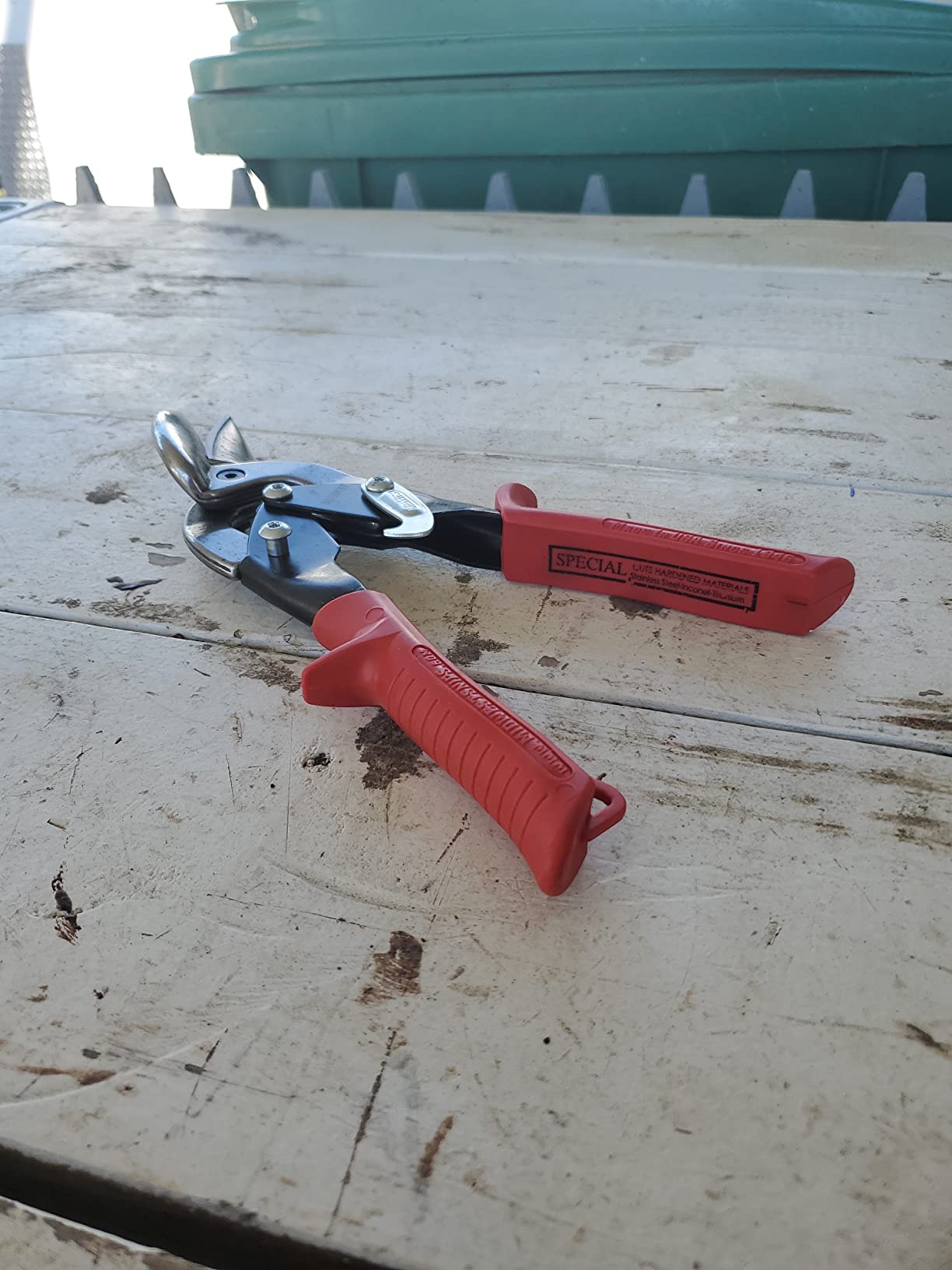
What you should know before buying
Check what you are actually cutting. If your roofing work is galvanized or Galvalume panel at 26 and 29 gauge, the standard Bulldog is the better-matched tool and this one is over-specified. If stainless flashing, chimney cricket flashing or fabricated trim is on your list, this is the one.
At 15.04 ounces and 11.5 inches, this is a substantial hand tool. Offset buys you visibility and clearance, and it costs you some maneuverability in tight corners.
Where it falls short
No hand snip of this class will slice thick plastic gutter guard, and one reviewer found that out the hard way. Keep a separate cutting disc for that job rather than forcing the snips and ruining the edge.
A minority of users feel the standard Bulldog model actually cuts better than this special hardness version, and one buyer reported receiving the standard MWT-6510L instead of the advertised special hardness variant. Check the model number on the box before you rely on it for stainless work.
7. Midwest Blackout MWT-6510LO – fine point left cut offset for notching
MIDWEST Blackout Aviation Snips, Left Cut Offset, Tin Snips
Left cut offset with fine point
Black oxide coated alloy steel blades
15.04 ounces
Pinch-Thru-Point cutting to the tip
+ The Good
- Black oxide coating resists rust and extends blade life
- Fine point blades make precise notch and long trim cuts
- Offset body keeps the cutting hand clear of the metal edge
- USA made with a limited lifetime warranty on blades and spring
- The Bad
- Left cut offset only
- so it will not follow right-hand curves
- Higher cost than general-purpose straight snips
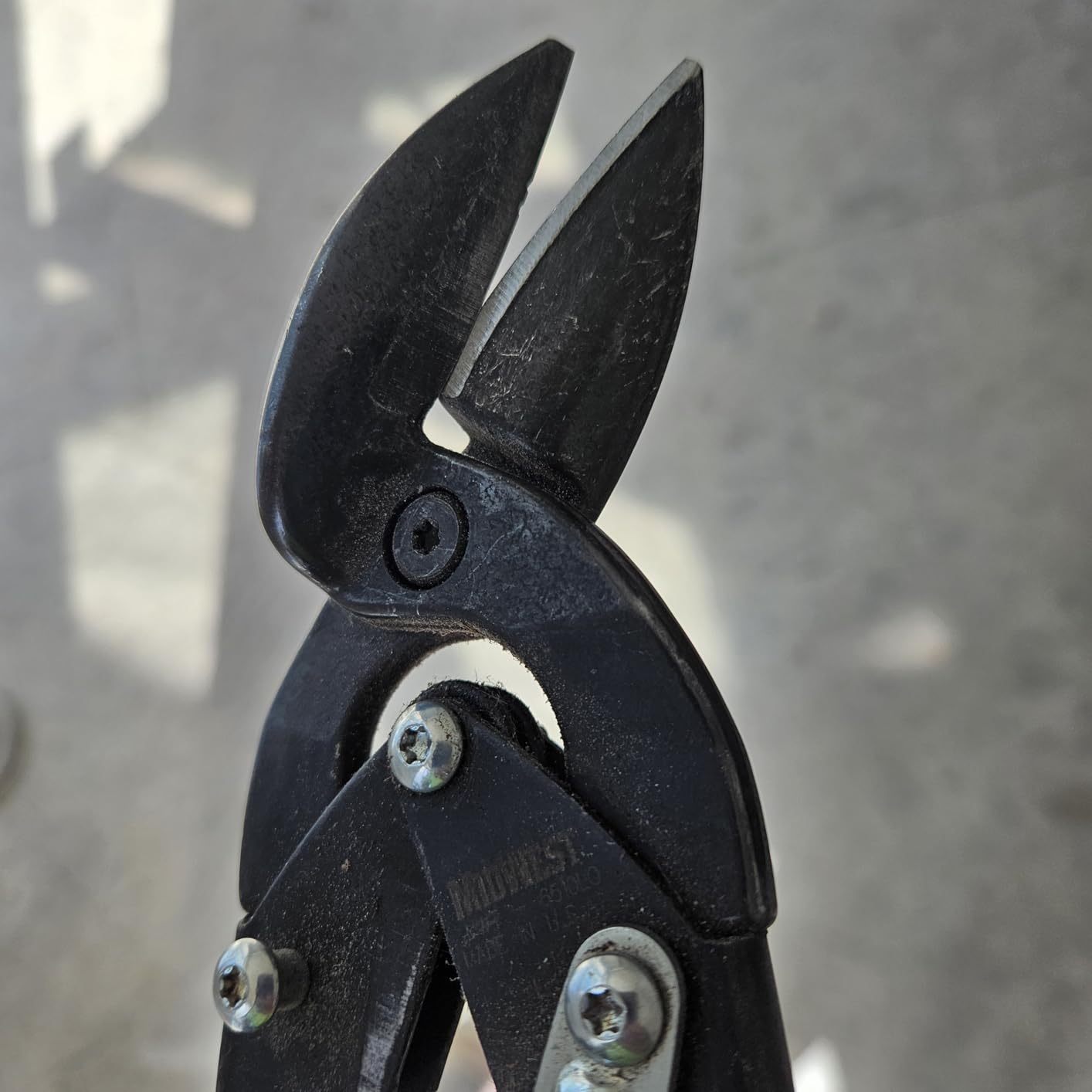
Where the special hardness model is aimed at stainless, the Blackout is the general purpose offset in the Midwest line, and it is the one that shows up on roofing trim, flashing and pattern work. The finish on the blades is the reason: black oxide coating resists rust and corrosion, which matters when a snip lives in a wet truck bed through a rainy season.
The fine point is what makes it a notching tool. A narrow tip reaches into a corner where a blunt jaw cannot, which is exactly what you need when you are cutting around a vent or forming a relief notch in a ridge cap.
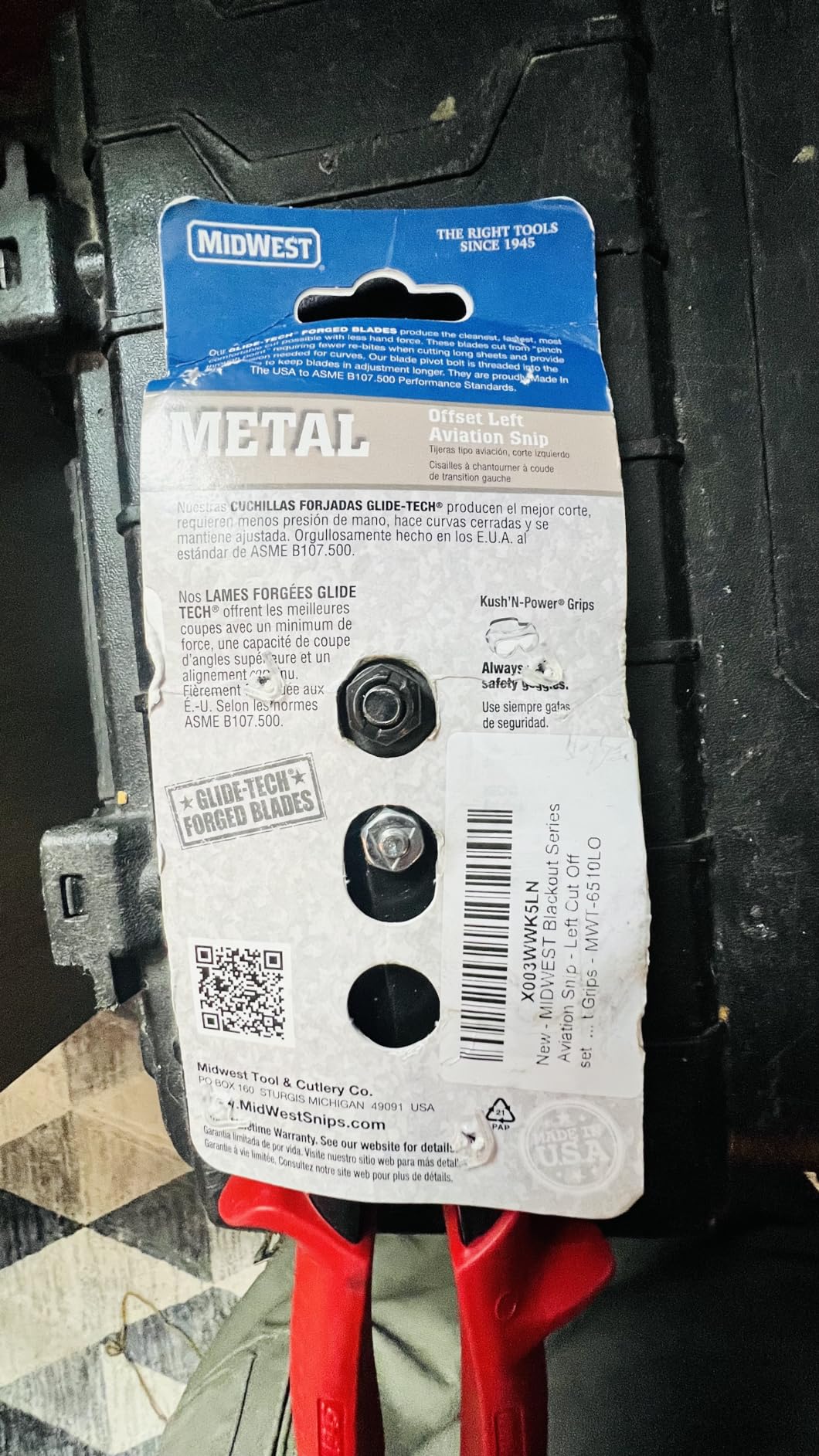
Underneath, the design is the same family as the Bulldog: hot drop-forged molybdenum alloy blades, austemper heat treated, with Pinch-Thru-Point geometry that cuts 18 gauge cold rolled from the heel to the tip with 20 percent less effort. The Kush’N-Power grips are chemical resistant and slip free.
Users value the combination for roofing specifically – offset clearance for a long trim, fine point for a notch, and coated blades that do not spot with rust after a season of use. The compromise is that the offset body is left cut only.
What you should know before buying
Handedness is not a preference on a roof, it is a geometry decision. This snip turns counter-clockwise, so it follows left arcs and cuts straight. If you normally work right-hand curves, you need the mirrored model and this is the wrong pair.
It is also 15.04 ounces, which is at the heavy end. On a roof deck, that weight is offset by the offset body keeping your hand out of the cut line, but it is still real.
Where it falls short
It will not follow right-hand curves, full stop. That is the defining limitation and it is why serious roofers carry a matched pair or a set rather than one snip.
The other trade-off is price. You are paying for forged austempered steel, a coating and US manufacture, and if your cutting is limited to 26 gauge galvanized trims, a straight snip delivers most of that result for far less.
8. IRWIN 21304ZR – flat blade that cuts straight lines and curves
IRWIN 21304ZR Tin Snip, Multi Purpose, 11-3/4-Inch (21304)
11-3/4 inch flat blade
24 gauge cold rolled and 26 gauge stainless capacity
449 grams
Precision-ground edges
+ The Good
- Flat blade cuts both straight lines and curves
- Long 11-3/4 inch reach suits pattern work and long trim cuts
- Owners in gutter and exterior trades report it outlasting cheaper snips
- Hot drop-forged blades with a durable spring washer
- The Bad
- Spring return is weak and the jaws can stick closed mid-run
- Capped at 24 gauge cold rolled and 26 gauge stainless
- Not as heavy-duty as premium forged-blade snips
Most straight snips make you choose: straight lines or gentle curves, never both. This one has a flat blade profile that takes a straight run and then follows a curve without a tool change, which makes it genuinely versatile for siding, soffit and fascia work.
At 11-3/4 inches it is one of the longest tools in the roundup. That reach is useful for pattern work and long trim cuts where a short snip would need a dozen more squeezes and a much longer cut line to stay true.
The blades are hot drop-forged steel with precision-ground edges, and a durable spring washer holds them tightly together under load. The practical capacity is 24 gauge cold rolled steel and 26 gauge stainless – lighter than the forged-blade tools in this list, and that is the honest ceiling.
Siding, soffit, fascia and gutter installers report these surviving roughly nine months of heavy daily use with occasional oiling, and some prefer them outright to costlier brands. That is a reasonable trade for a tool this long and this versatile.
What you should know before buying
24 gauge cold rolled steel is your limit on hard material. That covers 26 and 29 gauge roofing with room to spare, but it will not touch 20 gauge flashing or 18 gauge stainless without a fight.
The 11-3/4 inch length also means 449 grams of tool out at the end of your arm. On a ladder that is a longer moment of leverage than most people expect, and it is worth weighing before you commit.
Where it falls short
The single most common complaint is the spring return. A weak return leaves the jaws partly or fully closed, so you end up opening the tool by hand or with two hands mid-cut, which is both slower and less safe on a roof.
Users also note it does not feel as heavy-duty as premium forged-blade snips, and at 24 gauge you are buying less capacity per dollar than the Malco or the Klein. Buy it for versatility, not for strength.
9. Malco M2006 Max2000 – the offset that cuts circles and straight runs
Malco M2006 Max2000® 10 inch Offset Aviation Snips | 18ga. Capacity | Offset Sheet Metal Snips | Offset Tin Snips | Metal Shears (Offset – Cuts Left, Straight & 5in Dia. Circles)
10.7 inch left offset
18 gauge capacity
Cuts left, straight and 5 inch diameter circles
Adjustable pivot bolt
+ The Good
- Compound linkage multiplies hand effort for a given squeeze
- Offset geometry handles left curves
- straight runs and circles up to 5 inches
- Serrated lower jaws grip sheet metal firmly and resist slipping
- Adjustable pivot bolt lets you tune blade tension
- The Bad
- Higher cost than general-purpose straight-cut snips
- Needs practice to get the compound action and offset angle working together
Malco is the accepted second pick in the roofing forums, and the Max2000 is the model most often named there. The reason is the combination of compound linkage with an offset body: that is the geometry that makes a snip feel lighter than its weight suggests.
Compound linkage multiplies the force your hand puts in, so the jaws close through 18 gauge cold rolled steel with less squeeze than a conventional pair demands. On a long trim at arm’s length, that is the difference between finishing a panel and putting the tool down.
Owners highlight the compound leverage and the serrated lower jaws as the reasons it moves through layered metal, vinyl and seam work without fighting. The serrations give real gripping power, which matters on a smooth finished panel where the blade is otherwise inclined to skate.
The versatile part is the cut range. It cuts left curves, straight runs and circles up to 5 inches in diameter, which covers pipe penetrations, vent boots and the round cutouts around plumbing stacks without needing a different tool. The adjustable pivot bolt lets you reset blade tension as the edge wears.
What you should know before buying
The offset is left cut. It follows left arcs and straight lines, and it will not follow a tight right-hand curve. Most roofers who buy one Malco offset eventually add the mirrored model, and the listing notes it cuts vinyl plastics and layered metal well as a bonus.
Rating is 18 gauge capacity. That covers every residential roofing panel you will meet and it is not the tool for 16 gauge flashing or heavier structural trim.
Where it falls short
Price is the first reservation owners name, and it is a fair one against general-purpose straight snips that do most of the same jobs on 26 gauge. You are paying for the compound linkage and the offset body.
Several users describe an adjustment period while learning the compound action and finding the right hand position for the offset angle. That is normal for offset snips, but if you are picking this up on a deadline, plan an hour with scrap sheet before you start on a panel you care about.
10. Klein Tools 1202S – forged serrated blades for electricians and HVAC trim
Klein Tools 1202S Metal Shears, Aviation Snips, Straight Cut
10.5 inch straight cut
1.5 inch forged serrated blades
14.4 ounces
18 gauge steel and 22 gauge stainless
+ The Good
- Heat-treated forged serrated blades hold their edge on 18 gauge steel
- Color-coded contoured grips stay comfortable through extended use
- Self-open latch gives convenient one-handed operation
- Backed by the Klein Tools limited lifetime warranty
- Doubles as a wire cutter
- The Bad
- Straight cut only
- so tight curves and notches need another tool
- Can feel heavier and less nimble than lighter budget snips on delicate work
If your metal cutting is mostly rooftop mechanical work – duct, curbs, flashing, panel trims around equipment – this is the snip that shows up on almost every HVAC and electrical truck. Electricians and technicians favor it for routine sheet metal trimming and it doubles as a wire cutter for those who need one.
The blades are forged from heat-treated steel and serrated, rated for 18 gauge steel and 22 gauge stainless. The 1.5 inch blade length is short by the standards of this list, which makes the tool precise at a notch and quick to control in a tight mechanical space.
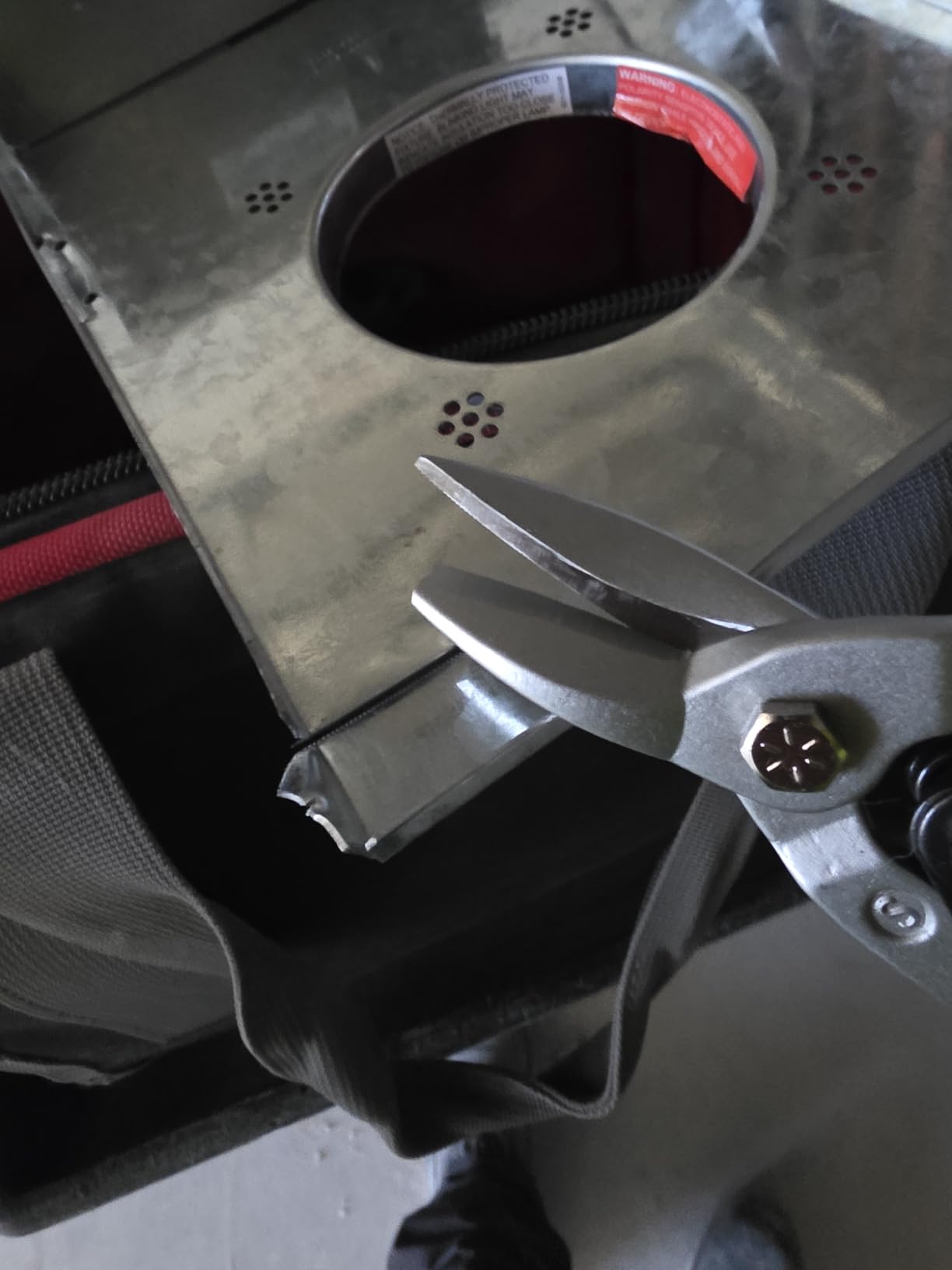
The self-open latch is a genuine one-handed operation feature, so you are not using both hands to open the tool while the other hand is holding a panel in the wind. The contoured color-coded grips are the part reviewers mention most, because they stay comfortable through long sessions.
It is backed by the Klein Tools limited lifetime warranty, which matters more for a tool you expect to keep for a career. At 14.4 ounces and 10.5 inches it is a substantial hand tool, closer to the offset snips in feel than to the light budget options.
What you should know before buying
Capacity is 18 gauge steel and 22 gauge stainless, so 26 and 29 gauge roofing panel is well inside the limit. The serration is fine enough that it holds material without tearing light coating at the cut line.
Because the jaws also cut wire, do not assume the blade is indestructible. A careless bite on a screw or a nail will put a chip in the edge that no amount of oiling will fix.
Where it falls short
Straight cut only. Tight curves and notches need a different tool, and the 1.5 inch blade is not built for long rips on a full panel.
Several reviewers find it heavier and less nimble than lighter budget snips for delicate work. On a mechanical rooftop where you are working in tight corners rather than on open trim lines, that is the wrong trade.
11. Crescent Wiss M6M7AMZ – both curve directions in one set
Crescent Wiss 2 Piece Offset Aviation Snips Including M6R & M7R | M6M7AMZ
Two piece offset set
M6R left arcs and M7R right arcs
Cuts up to 18 gauge steel
Spring action handles
+ The Good
- Set covers both left and right offset cuts plus straight trimming
- Offset blades keep the working hand clear of the sheet metal edge
- Compound action and spring feed reduce effort on 18 gauge material
- Serrations improve both cut quality and tool life
- The Bad
- Two full-size snips add bulk to a tool bag
- Not designed for hardened stock or material above 18 gauge
One of the most common questions on roofing forums is what to do about the fact that no single snip cuts straight and both curves. The conventional answer is that you buy two. This set is that answer, from a brand with the compound action already proven.
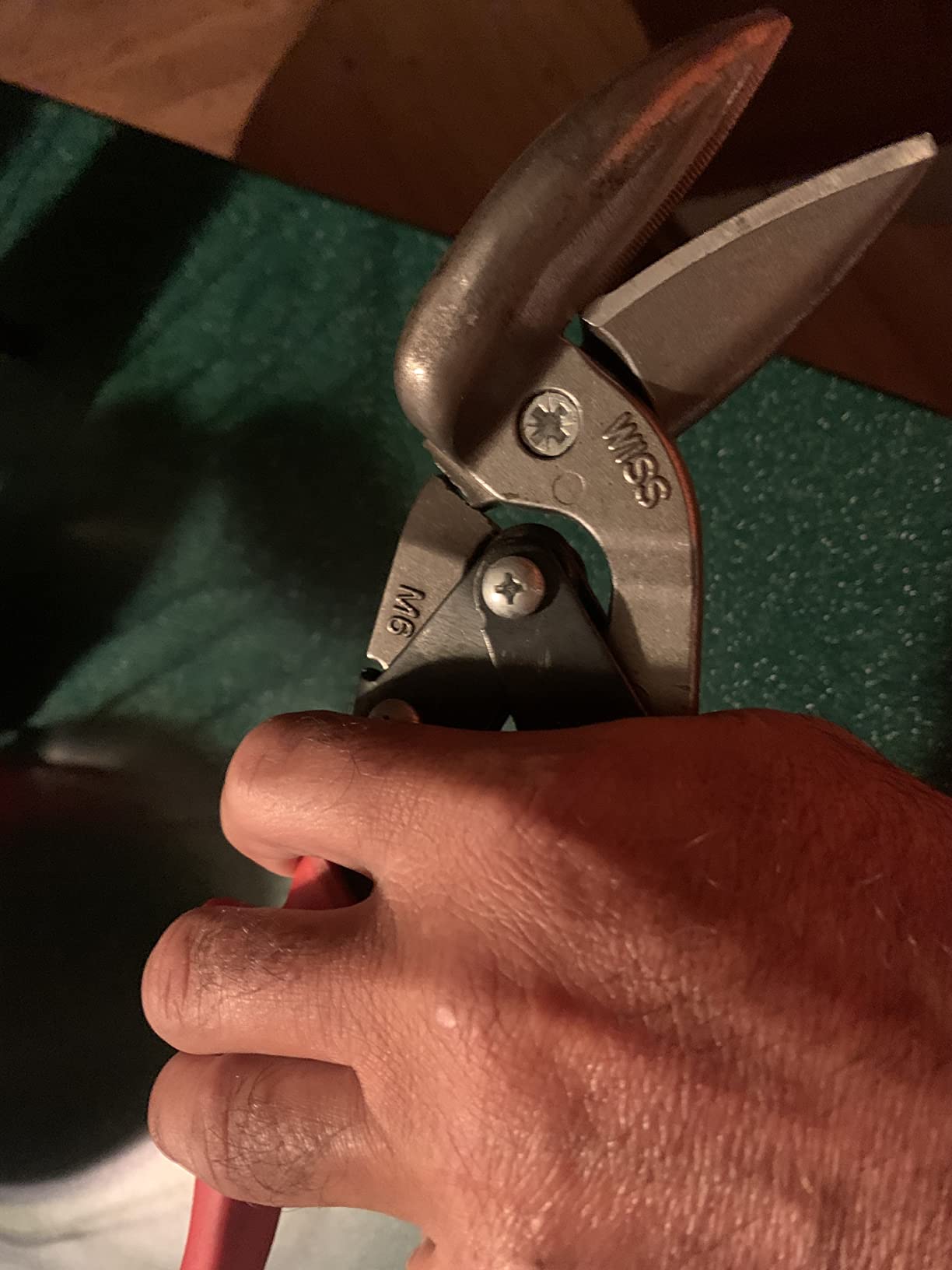
The M6R cuts straight lines and left arcs. The M7R cuts straight lines and right arcs. Between them you can follow a curve in either direction and trim a straight run, which removes the single most common reason a roofer swaps tools mid-cut.
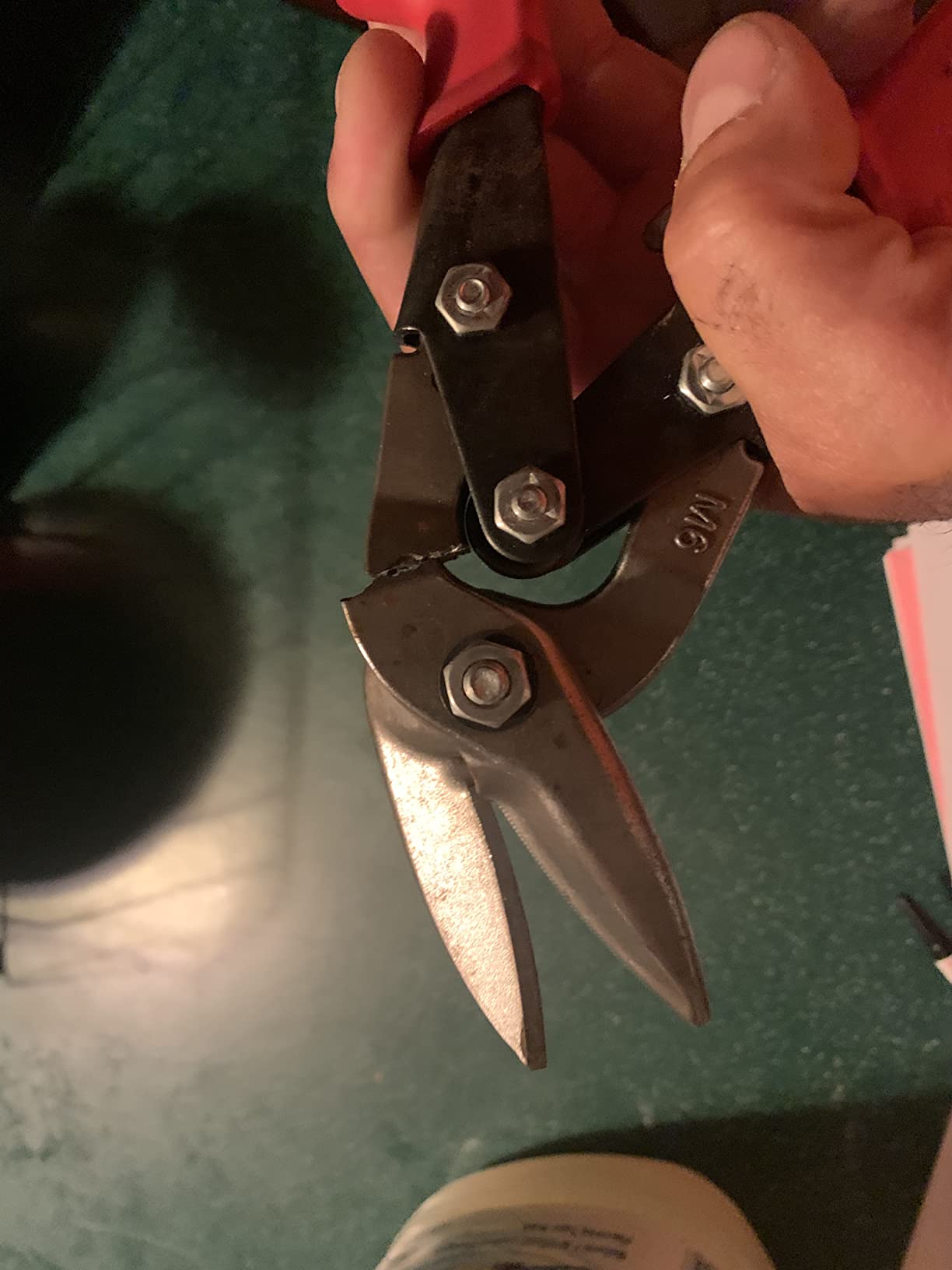
Offset is the feature that matters on a roof. Both snips keep your hand below the cut line, so the knuckles stay clear of the panel edge and you can see the cut as you make it. Reviewers cite the offset geometry as a safety and clearance benefit on roofing and fabrication work specifically.
Blade serrations hold the material firmly and spread cutting force across the edge, which improves both cut quality and tool life. Spring-action handles give a faster, effortless feed, and the pair is rated to 18 gauge low carbon rolled steel.
What you should know before buying
You are carrying twice the tool. At more than two pounds for the pair, that bulk is real on a ladder, and it is the reason some roofers keep one snip on the belt and leave the second in the truck.
Neither snip is a notching or straight-cut specialist. If a lot of your work is straight trims on flat panel, a straight snip at the 18 gauge rating would be lighter and simpler.
Where it falls short
Nothing here is rated above 18 gauge, and neither tool is intended for hardened stock. That covers residential roofing panel and light flashing, and it stops there.
If you only ever cut one curve direction, this set doubles your investment for a tool you will not use. Confirm your handedness before you buy a pair.
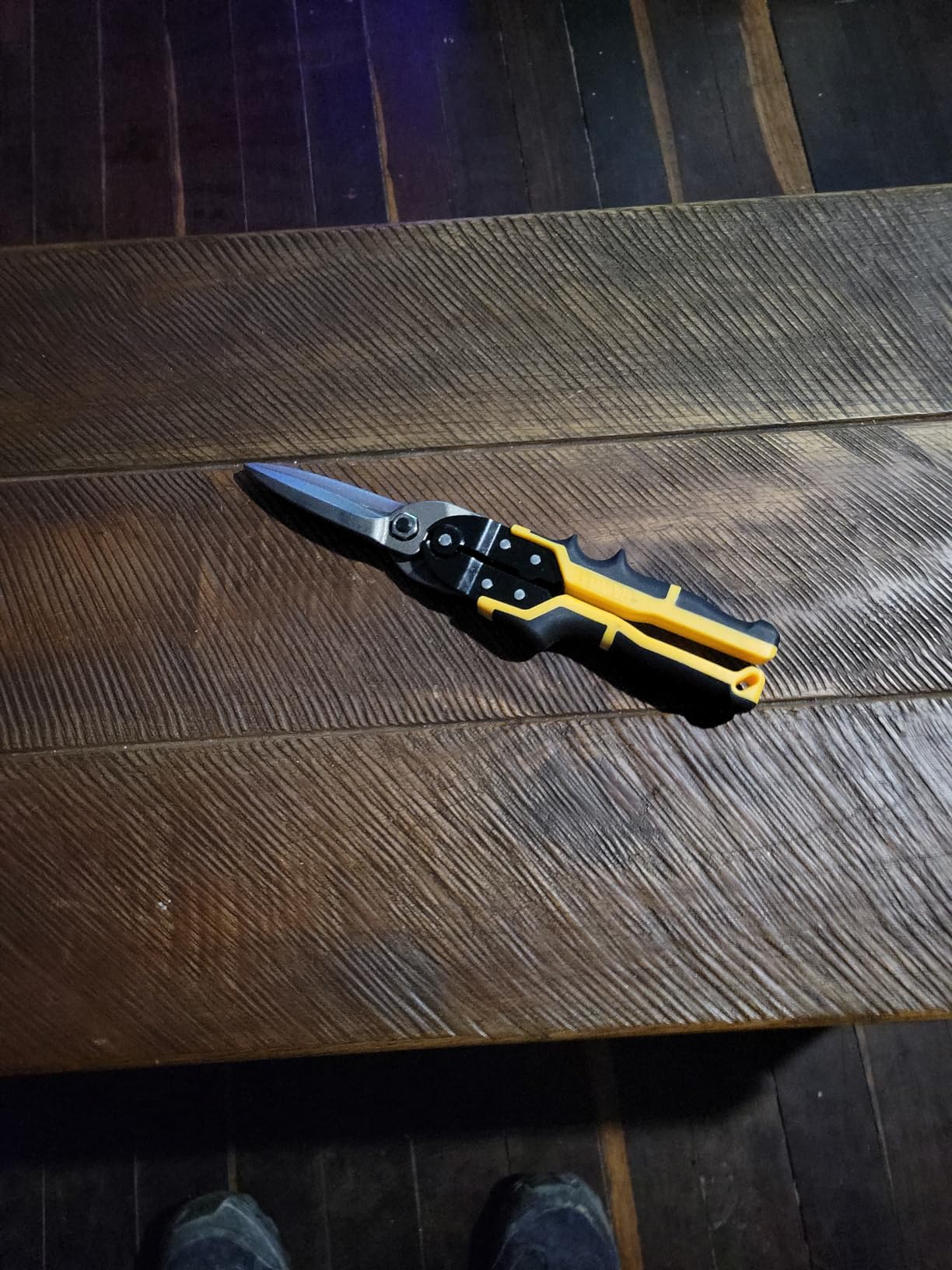
12. DEWALT DWHT14681 – extended blade for wire screen and mesh
DeWalt DWHT14681 Straight Long Cut Aviation Snip (1 Pack)
13.3 inch overall with extended blade
Cuts 18 to 22 gauge sheet metal
Forged chrome vanadium blades
Reduced handle span
+ The Good
- Longer blade than most aviation snips for more reach per cut
- Forged chrome vanadium blades hold their edge on heavy trim work
- Reduced handle span lowers the muscle effort needed
- Flush hardware cuts smoothly without snagging
- External latch is correctly positioned and easy to operate
- The Bad
- Heavier than most competing aviation snips
- Straight cut only with no offset or curve capability
- One buyer received a unit with pivot play and mismatched blade tips
This one is in the list because of a specific job, not because power-tool-branded snips are broadly recommended. Roofers in the r/HVAC threads consistently criticise that tier for serrations that are too aggressive and an offset too shallow to clear a gloved hand, and the listing here gives no offset body at all – the blade is straight.
What it does have is length. The extended cutting blade takes more material per cut than a standard snip, and owners single out window screen and stainless mesh as the places where shorter snips chew and snag. For cutting guard material around a roof vent or trimming woven mesh, that is a real advantage.
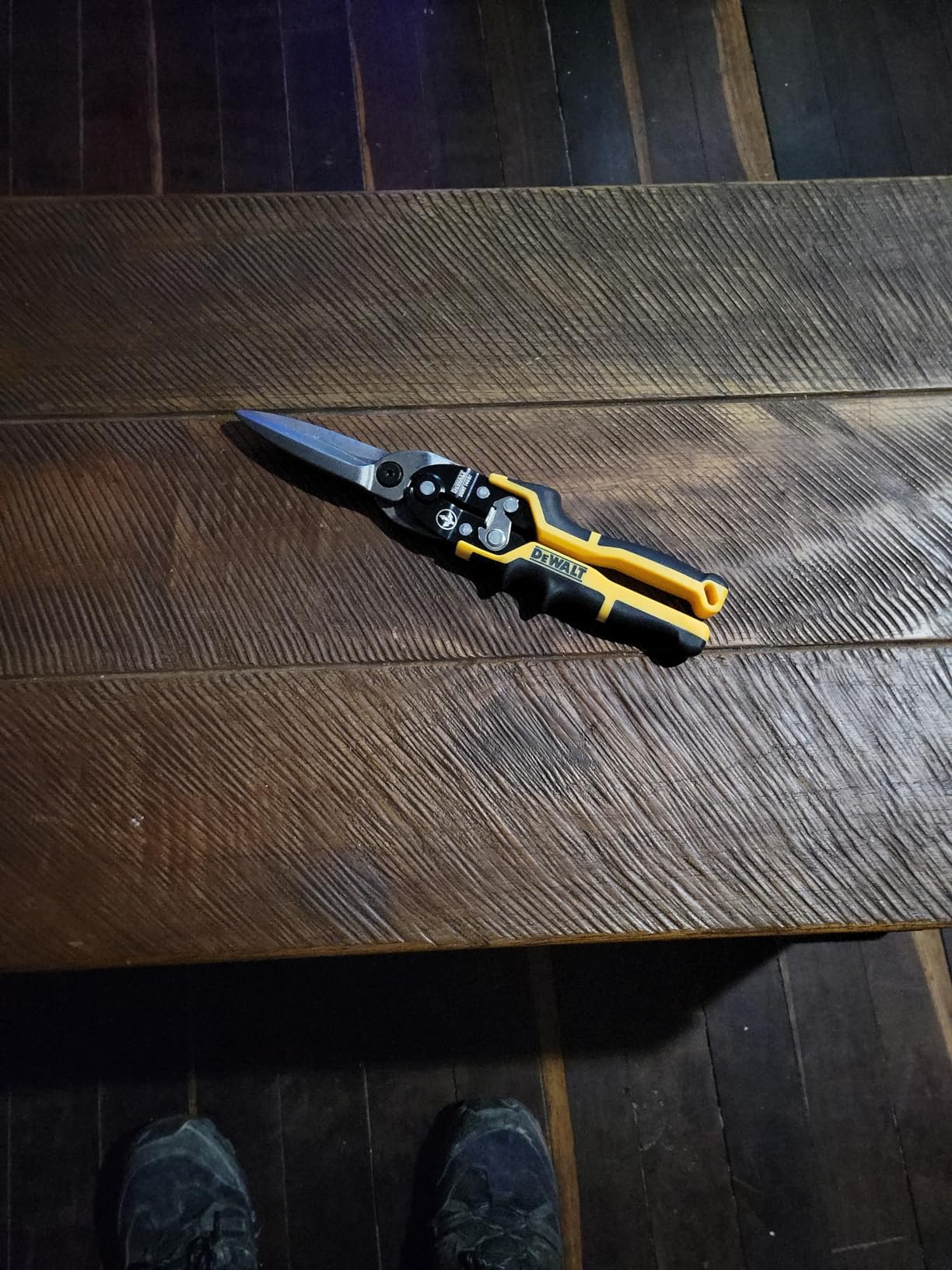
It is rated 18 to 22 gauge, which covers the full residential roofing range and gives it more headroom than the light straight snips. The blades are forged chrome vanadium and serrated to prevent the material slipping, and flush hardware keeps the cut from catching on fasteners.
The reduced handle span and bi-material cushion grip lower the muscle effort required, and several users with hand arthritis call that out specifically as the reason they keep using it. At 1.1 pounds it is the heaviest tool in this roundup, and that is a fair trade only if the reach is doing work for you.
What you should know before buying
Check the shape before you commit. A straight, non-offset body means your hand sits on the line of the cut. On a long trim that is uncomfortable and it puts your knuckles near the moving blade, which is exactly the criticism the roofing community levels at this brand tier.
It also suits a specific material. Sheet metal, screen and mesh are what this blade length was designed around, not roofing panel trims where a lighter offset snip is more comfortable.
Where it falls short
Straight cut only, no offset, no left or right curve capability. Every notching job on your list needs a different tool.
Several owners mention the tool is heavier than expected, and one reported a defective unit with play at the pivot and mismatched blade tips. Inspect the pivot and the tip alignment as soon as it arrives, before you are on a roof relying on it.
How to Choose Tin Snips for Roofing Metal?
Most buyers lose time on the wrong variable. They fixate on brand or price and ignore the two things that actually decide whether a cut is clean: how far the blades can reach, and how the jaws are finished. Get those two right and the rest is preference.
What snip type actually changes on the roof
There are four snip types you will meet in a roofing context, and they differ in the cut line they can hold.
Straight snips cut a straight line and gentle curves. Yellow handles mark them in the common convention. This is the general-purpose default and the right answer for trims on flat panel.
Offset snips are shaped so the cutting hand sits below the jaws. Green handles are the usual marking for a right-cut offset, red for a left-cut offset. The offset clears your knuckles from the panel edge and lets you see the cut line, which is why offset dominates on a roof.
Combination snips cut straight and follow both left and right curves. They solve the handedness problem in one tool and cost you some weight for the compromise.
Bulldog snips have jaws that concentrate force at the front of the cut and drive to the tip. They excel at notching and at thicker, harder sheet, and they are the pattern the Midwest Bulldog is built around.
Offset length and cut direction
Handedness is not a preference, it is a geometry decision. A left-cut snip turns counter-clockwise and follows left arcs. A right-cut snip turns clockwise and follows right arcs. Buying the wrong one means the cut curves away from your line, and experienced roofers learn this by wasting a panel once.
Left-handed roofers face a thinner catalogue, and the recurring complaint on the roofing forums is that purpose-built left-hand options are hard to find. The practical answer is that offset geometry, not the operator’s handedness, is what governs which snip works, so a left-handed roofer can use the same tool as a right-handed one as long as the cut direction matches the curve they need.
Matching the tool to the gauge and the metal
Gauge is the single most useful number on a snip listing. Lower gauge means thicker metal and more force. Most of the tools here rate between 18 and 22 gauge cold rolled, and residential roofing panel at 26 and 29 gauge sits well inside every one of those limits.
Stainless and aluminum behave differently from cold rolled steel. Stainless is the hard case – it dulls ordinary snips quickly, which is why the special hardness tools exist. Aluminum is soft and cuts more easily than the rating suggests, so a general-purpose straight snip handles it fine.
29 gauge 5-rib panel is the case where gauge stops being the deciding factor. It is thin enough to distort if you fight it, and long enough that a hand snip will fatigue before the cut finishes. That is a nibbler job, and no snip in this list changes that.
What separates a good snip from a bad one
Forged versus stamped jaws, and how the blade steel was treated. Forged molybdenum alloy with austemper heat treatment is the top tier. Induction hardened and high-frequency heat treated ground steel sits a step below and performs well. Stamped jaws with no edge treatment are where the criticism starts.
Serration quality, and this is the one the forums hammer on. A serration that is too aggressive grips the panel hard enough to tear the coating and drag the sheet out of line. A blade that is not sufficiently serrated lets light gauge walk. The right serration is firm without shredding.
Offset depth, again from the forums: a shallow offset fails because your knuckles hit the panel before the cut does, and you end up fighting the tool on every stroke. Deep offset is what lets a long trim run straight.
Then look at the pivot. A free float pivot spreads load across the blade and extends life. A spring return that actually opens the tool matters more than most buyers think, because a snip that stays half closed is a snip you open by hand all day. A grease point on the pivot is a sign the manufacturer expects the tool to be maintained.
When not to use tin snips at all
This is the part most roundups get wrong, and it is the part that keeps a roof looking right. Snips own the final cut. They do not own the whole job.
Long rips on 29 gauge 5-rib panel go to an electric or pneumatic nibbler. Contractors on the roofing forums are consistent on this: a nibbler makes a clean cut without damaging the coating, and a hand snip on the same run will fatigue and distort the panel before it finishes.
Long straight cuts in general are faster with a circular saw fitted with a metal-cutting blade, provided you tape the base plate so it does not scratch the finished side. Snips finish the last half inch to the line. That hybrid is the most repeated technique across every roofing forum, and it produces a straight edge with no saw teeth and no burned paint.
Score and snap with a carbide scoring tool gives a perfectly straight line with no heat at all, and some crews use it for long panel breaks. It takes practice and a steady hand.
Angle grinders and cutoff wheels are the tool to avoid on a finished roof. They burn the Galvalume coating, throw swarf that rusts into orange speckles, and leave an edge that has to be finished afterward. Use one only for the rough cut, and sweep every chip off the deck immediately or the panel corrodes where the debris lands.
If you are planning a shed, barn or porch roof rather than trade work, our metal storage shed guide covers the panel profiles these cuts usually come on.
How to Cut Metal Roof Panels Without Damaging the Coating?
The tool matters less than the sequence. Even a mid-tier snip produces a clean cut on 26 gauge Galvalume if you set the panel up correctly and feed it slowly.
Six steps for a clean field cut
1. Support the panel at both ends. A panel that is unsupported along its length flexes as you cut and distorts the line. Blocks under each end stop the twist.
2. Keep the finished side up. The curl from a snip should come off the back of the panel, where you do not see it and where the fastener heads are.
3. Mark a scribed line, not a chalk line. A sharp scribe or a machinist marker is a cut line. Chalk transfers loosely and disappears the moment the panel flexes.
4. Start at the valley and work up to the rib. Crossing a raised rib cold is the hardest cut there is. Starting at the low point and stopping at the top of each rib means you are never levering a closed blade down into a hump.
5. Feed slowly and leave the blade slightly open. Closing the blade completely at the end of a cut is what produces a fish hook. Let the jaws finish the last fraction of an inch partly open and the curl stays small.
6. Deburr the edge immediately. A file or a hand deburring tool on the cut line before you move the panel. It takes under a minute and it stops a sharp burr from tearing a glove or a knee later.
Cutting across the ribs
Avoid cutting over the top of a raised rib with a closed snip. The blade tip catches the rib crown, the panel tips up, and the cut line runs out of true. The reliable sequence is to make a series of short relief cuts from the valley up to just short of the rib crown, then complete the cut through the rib itself with the snip fully closed and the panel supported underneath.
If you have a powered nibbler, this is the job to hand to it. The nibbler removes material in a small reciprocating punch rather than shearing the full width, so it does not distort a thin panel the way a snip does.
Finishing the cut edge so it does not rust
A snipped edge exposes bare steel, and on Galvalume that exposed steel will spot with rust if it is left alone. The sequence that roofing contractors use is short: deburr the edge, coat it with zinc-rich primer, then apply touch-up paint matched to the panel finish, and hem the edge if it is exposed to view or handling.
Clean off metal dust and chips as you work, not at the end of the day. Trained roofers are emphatic about this, and they are right: swarf left sitting on a Galvalume panel starts spotting within weeks.
For the safety side, cut-resistant gloves, safety glasses and a fall-arrest harness are the minimum. Aviation snips open fast and the jaws are sharp enough that a slip draws blood, and on a slope the consequence of that slip is the fall, not the cut.
Frequently Asked Questions
Can I cut metal roofing with tin snips?
Yes. Tin snips shear through 26 and 29 gauge galvanized steel and Galvalume panels up to about 12 inches wide without heat, so the factory coating survives. Offset models keep your knuckles clear of the panel edge. Snips are the right tool for trims, notches, ridge caps, cutouts around vents and chimneys, and panel swaps. Long rips on 29 gauge 5-rib panel are better handled by an electric or pneumatic nibbler.
What are the best roofing snips?
For straight cuts and gentle curves on 26 to 29 gauge panel, the Crescent Wiss M3R and the Midwest Bulldog MWT-6716B lead our list. The Wiss offers spring feed and a free float pivot for long light-gauge work, while the Bulldog’s pinch-thru-point geometry drives to the tip for notching. On the roofing forums Midwest is the most repeated recommendation and Malco the most accepted second pick.
What is the best tool for cutting across metal roofing?
For a cut across a raised rib, a powered nibbler is the best tool because it removes material in a small reciprocating punch rather than shearing the full width, so a thin panel does not distort. With hand tools, start at the valley between ribs and cut up to just short of each rib crown, then complete the cut through the crown with the snip closed and the panel supported underneath.
Are nibblers better than shears for cutting metal roofing?
For long rips on 29 gauge 5-rib panel, yes. A nibbler makes a clean cut without damaging the coating and without the hand fatigue that distorts thin sheet. Shears and tin snips win on control, visibility and finish for trims, notches and cutouts, and they are the tool that finishes the last half inch to the line after a rough powered cut.
Why do my snips leave a burr or fish hook at the end of a cut?
Usually because the blade is fully closed at the end of the cut. Close the jaws completely and the last fraction of an inch gets pulled into a curl. Feed the cut slowly and leave the jaws slightly open at the finish. A dull blade makes it worse, so check edge retention and finish the edge with a file or hand deburring tool before the panel is installed.
What do red and green handled snips mean?
In the common aviation snip convention, red handles mark a left-cut snip, which cuts counter-clockwise and follows left-hand arcs. Green handles mark a right-cut snip, which cuts clockwise and follows right-hand arcs. Yellow handles mark straight-cut snips. The convention is a quick visual identifier, not a guarantee, so check the listing for the actual cut direction before you buy.
The Snip to Buy First in 2026
Start with the Crescent Wiss M3R if your work is straight trims and gentle curves on 26 and 29 gauge panel, because the spring feed and free float pivot carry up to 18 gauge and the tool is light enough for one-handed work at height. If you are notching or cutting thicker, harder sheet, put the Midwest Bulldog MWT-6716B in your hand instead, because the pinch-thru-point geometry reaches the tip and the austempered forged blades hold an edge for years.
Whatever you buy, buy a matched offset pair rather than one snip. The straight snips on this list are the tools, and the offset snips are the tools that make a roof cut finish clean. The best tin snips for roofing metal are the ones whose offset clears your hand and whose serrations hold the panel without tearing it.
Check each cut edge before the panel goes down, deburr it, and prime it. A primed cut edge outlives the panel. An unprimed one spots with rust inside a single season.