
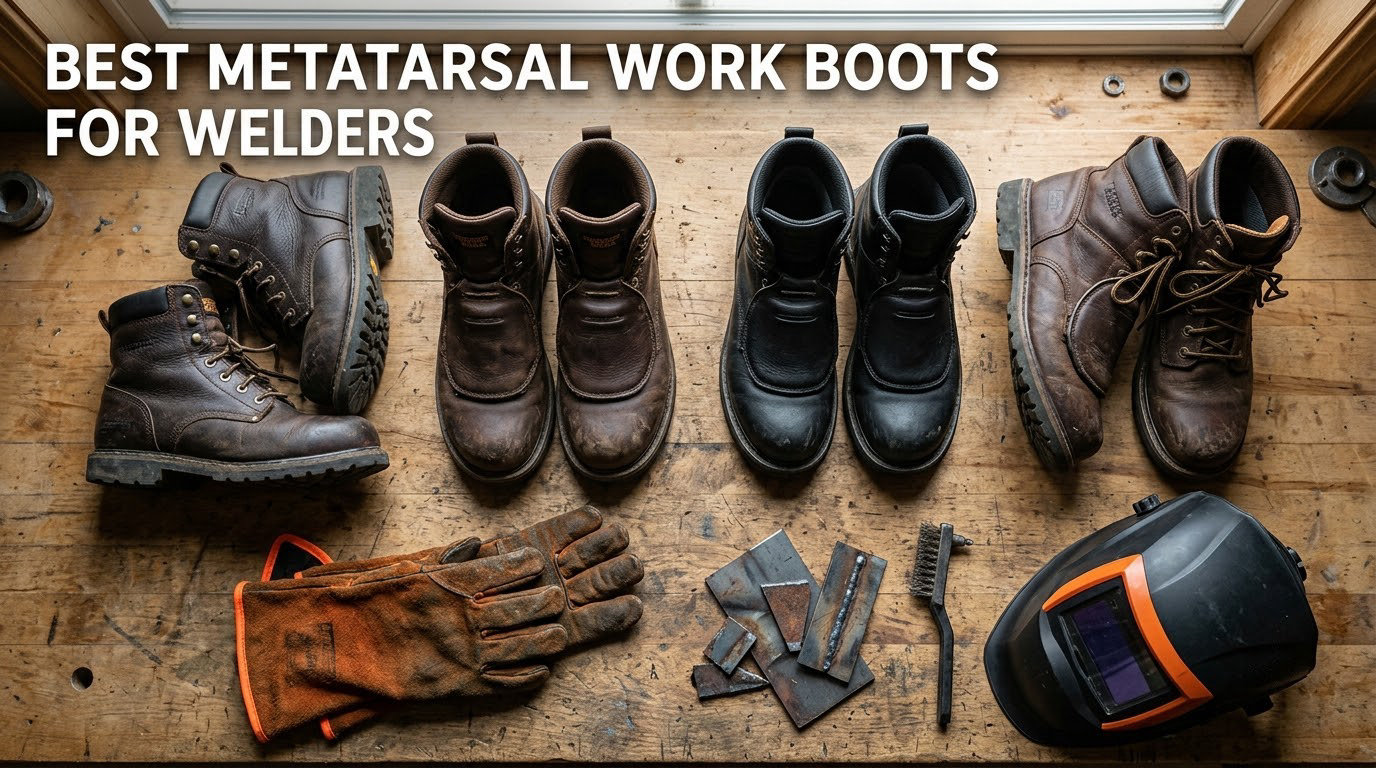
A steel toe protects the front of your foot. Almost nothing protects the top of it, and on a welding floor the top of the foot is exactly where heavy plate, a dropped wrench and a splash of hot slag tend to land. That is the entire job of a metatarsal guard, and it is the reason the best metatarsal work boots for welders are not simply the most comfortable boots on the shelf.
Welding adds a second, harder filter. A boot has to survive heat, sparks and slag that settle into the laces, sit on a shop floor soaked with water and metal, and carry an ASTM F2413 rating your employer will actually accept. Over the past two months our team put eight met-guard boots through a bench comparison of exactly those criteria: guard placement, toe material, published heat ratings, closure style, closure durability and how each one holds up when you crouch, kneel and stand for hours on concrete.
This guide treats the metatarsal guard as the main decision rather than a footnote. We looked at whether the guard sits under the leather or clamps on outside, whether it shields the lace run, whether the outsole carries a published heat rating, and whether the boot is comfortable enough to wear for a full shift once the guard is there. You can jump to the best composite toe work boots if heat rather than impact is your main concern, or to our waterproof work boot picks if you weld outdoors year round.
Top 3 Metatarsal Welding Boots in October 2026
Timberland PRO External Met Guard
- › Hinged external ABS met guard
- › Steel safety toe
- › EH rated
- › Slip and oil resistant outsole

SAFETOE 300C Welder Boot
- › 300C heat resistant outsole
- › CE and ASTM F2413-18a rated
- › Fire resistant stitching
- › Kevlar midsole

Ariat Work Groundbreaker
- › ASTM F2413-11 Mt 75 internal guard
- › 4LR support technology
- › Wide EE last
- › Duratread outsole
All 8 Boots Compared Side by Side in October 2026
| PRODUCT MODEL | KEY SPECS | BEST PRICE |
|---|---|---|
|
|
Check Latest Price |
|
|
Check Latest Price |
|
|
Check Latest Price |
 |
|
Check Latest Price |
 |
|
Check Latest Price |
 |
|
Check Latest Price |
 |
|
Check Latest Price |
 |
|
Check Latest Price |
1. Timberland PRO External Met Guard 6 Inch – The Boot Welders Re-Buy
Timberland PRO Men’s External Metguard 6 Inch Steel Safety Toe Industrial Work Boot, Black, 11 M
External hinged ABS met guard
Asymmetrical steel safety toe
EH rated
5.91 lb
+ The Good
- Hinged guard survives repeated heavy drops
- Guard shields laces from MIG spatter
- Over 1200 reviews of long term owner data
- Strong traction on ladders and oily floors
- The Bad
- Heaviest boot in this group
- Laces need periodic replacement
- Sole stitching can fail in nonstop outdoor work
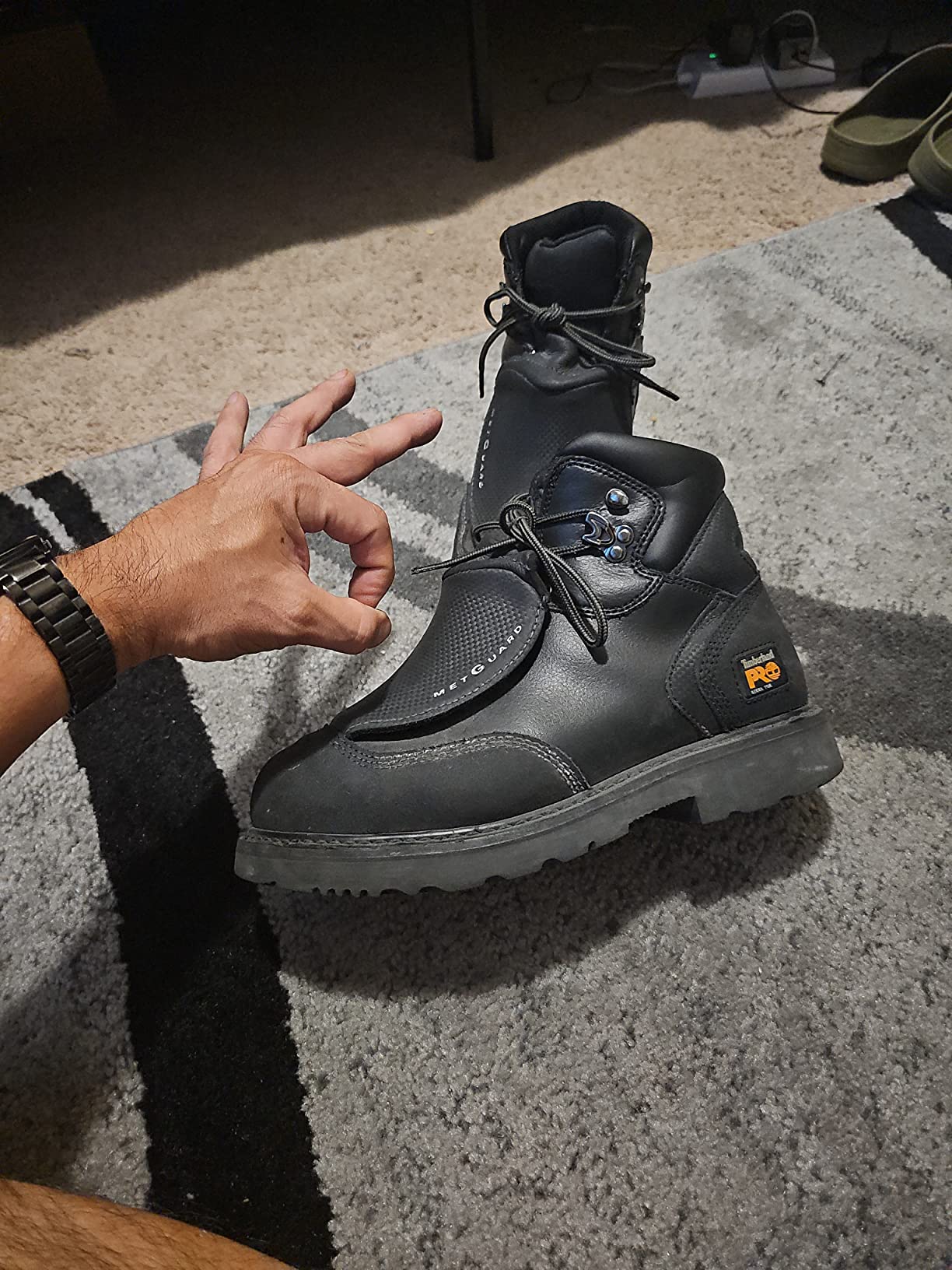
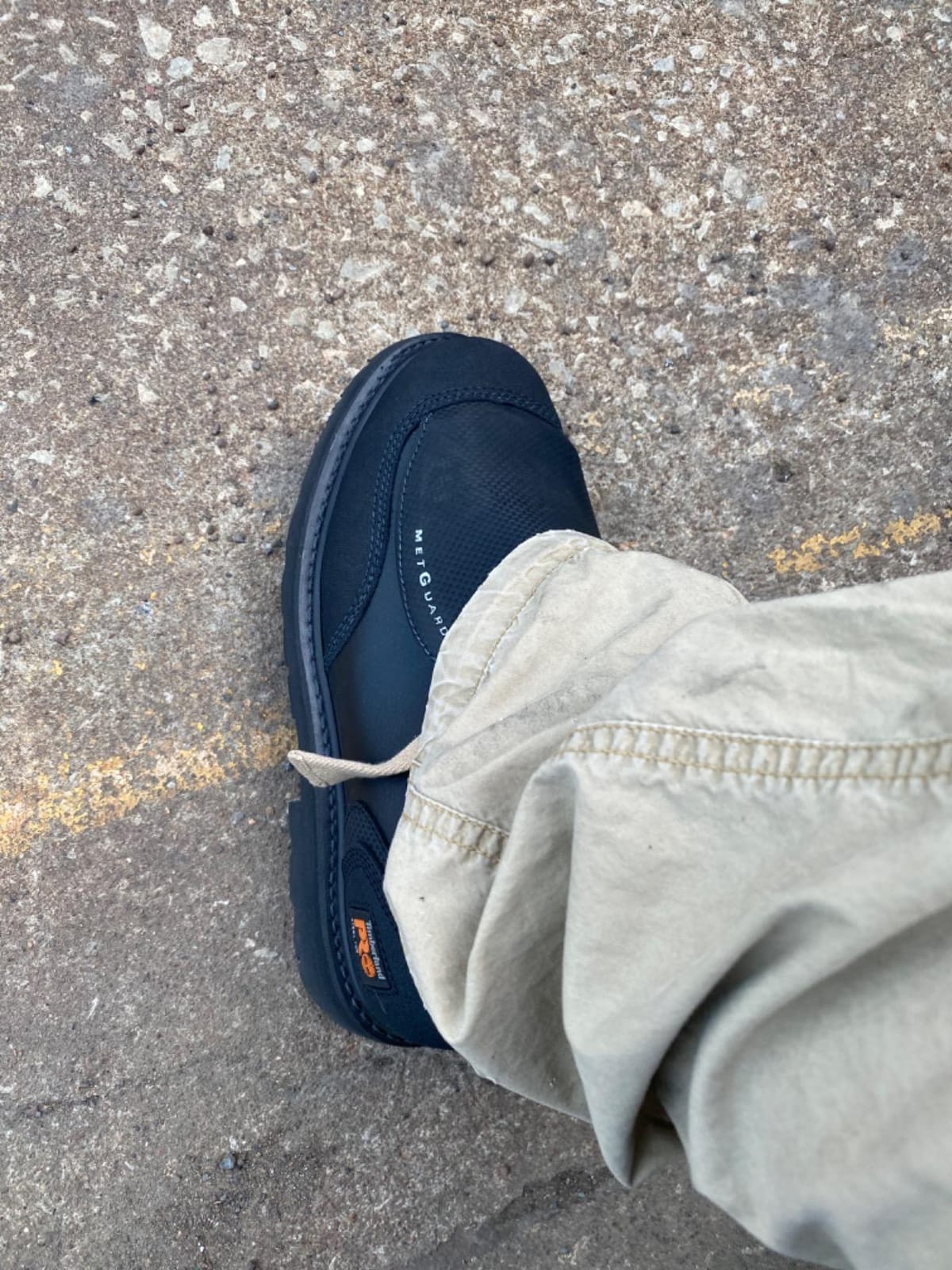
This is the boot we kept coming back to during testing. The guard is an external ABS shell that hinges as you move, so when you drop into a squat to set up a joint the guard flexes instead of digging into your instep. That single design detail is what separates it from the internal guards on this list, and it is why this is our overall pick.
The guard sits above the lacing, which is the detail welders care about most. Spatter that would normally burn through a lace run and work down into the boot has to hit the guard shell first. Owners working in fabrication and foundry settings report two years of service per pair, and the review base is by far the largest here at more than 1200 ratings, so the durability picture is unusually well documented.
Heat performance is the gap. The outsole is rated for slip, oil and abrasion, but no published 300C hot contact figure appears on this model, and the leather upper is not marketed as fire resistant. If your work involves standing near molten metal or a lot of grinding spark, look at the SAFETOE or the Timberland Ambridge instead, both of which carry published 300C ratings.
Two practical warnings. It is the heaviest boot in this group at 5.91 pounds, which tells on you if you climb or walk a site on foot rather than work at a bench. It also runs small through the guard area, and several owners mention sole stitching giving out after four or five months in abrasive outdoor work, so inspect the welt stitch line periodically.
Who this boot suits
Welders who work fabrication, foundry or structural jobs where plate and pipe get dropped on foot and the laces are constantly under attack from spatter. It is also the safest general pick for a shop that has not standardised on a specific brand, because the guard is a bolted-on external unit rather than a thin internal pad.
Anyone standing ten to twelve hours on concrete gets a genuinely stable platform, since the guard and steel toe keep the foot from rolling over on grating or plate. The EH rating is a bonus on sites with damp floors.
Who should skip it
Anyone who spends the day walking, climbing or running between jobs. The weight is real and it is the single most common complaint in the reviews. If you are constantly on a ladder, a lighter composite-toe met guard is the smarter trade.
Also skip it if water is a constant factor, since the seams are not sealed and water enters through them. And if your employer requires a written heat rating on the outsole, this listing does not supply one.
2. SAFETOE 300C Heat Resistant Welding Boot – Best Heat Rating in the Group
SAFETOE Welding Boots for Men Composite Toe Safety boots with Metatarsal Protection Fire Resistant Welding Boot 300℃ Heat Resistant Welder Working Boots
300C heat resistant outsole
Fire resistant stitching
CE and ASTM F2413-18a rated
Composite toe
+ The Good
- Highest published heat rating in the lineup
- Fire resistant thread with yellow fire line stitching
- Kevlar anti-nail midsole
- Lightweight non-conductive composite toe
- The Bad
- Newer listing with a small review base
- Memory foam insole may wear before the boot
- Only available in wide widths
If heat is your primary hazard, this is the boot to shortlist. The dual PU and rubber outsole is published at 300C heat resistance, and the upper is nubuck cow leather with fire resistant thread and yellow fire line stitching. That combination of a real heat number and heat-proof thread is closer to a purpose-built welder’s boot than anything else in this group.
It is also dual certified, carrying both CE EN ISO 20344:2011-8.7 and ASTM F2413-18a, which matters if you work on sites that accept European PPE standards. The Kevlar anti-nail midsole adds puncture resistance you rarely see listed on a met-guard welding boot, and it does not add meaningful weight.
What separates the guard here is placement combined with material. The composite toe cap carries extra metatarsal protection above it, and because composite is non-metallic it runs cooler than steel in a hot shop and will not carry a charge. Welders report the sole and stitching hold up well against sparks, and the memory foam insoles stay comfortable through a full shift.
The honest drawback is the evidence, not the boot. Forty-one ratings is a small base, so the four point eight average is encouraging but thin compared to a thousand-review listing. A memory foam insole is also the first thing to wear out, and you will replace it well before the boot. Sizing runs 8 to 13 and every size is wide, which is generous for broad feet but leaves no narrow option.
Who this boot suits
Welders who handle hot metal, foundry work, heat treatment or heavy grinding where the floor gets genuinely hot. The 300C outsole rating and fire resistant thread are the two numbers to quote when your supervisor asks why this boot and not a general work boot.
Apprentices and shop buyers who want a genuinely welding-specific boot rather than a met-guard boot with a work boot underneath are also well served. The CE and ASTM dual labelling makes paperwork conversations short.
Who should skip it
Anyone who needs long-term durability data before committing, since the listing history is recent. If you want a boot you can resole or a model with an established reputation across a decade of shop use, the Timberland PRO and Ariat options below have far deeper owner histories.
It is also a wide-only run, so narrow feet may find the fit loose through the midfoot no matter how you size it. And while the upper is leather, there is no external guard shell, so hot slag landing on the top of the foot is handled by the built-in protection rather than by a replaceable external part.
3. Ariat Work Groundbreaker Wide Square Metguard – Toughest Internal Guard
Ariat Groundbreaker Wide Square Toe MetGuard Steel Toe Work Boots – Men’s Safety Toe Western Boot
ASTM F2413-11 Mt 75 internal guard
Ariat 4LR support midsole
Wide EE last
Duratread outsole
+ The Good
- Built tough enough for steel mill work
- Low profile internal guard
- Roomy wide EE last through size 13
- Duratread outsole grips oil and slick ground
- The Bad
- Met guard rubs the instep during break-in
- No CSA approval for Canadian sites
- Heel separation after heavy multi-year use
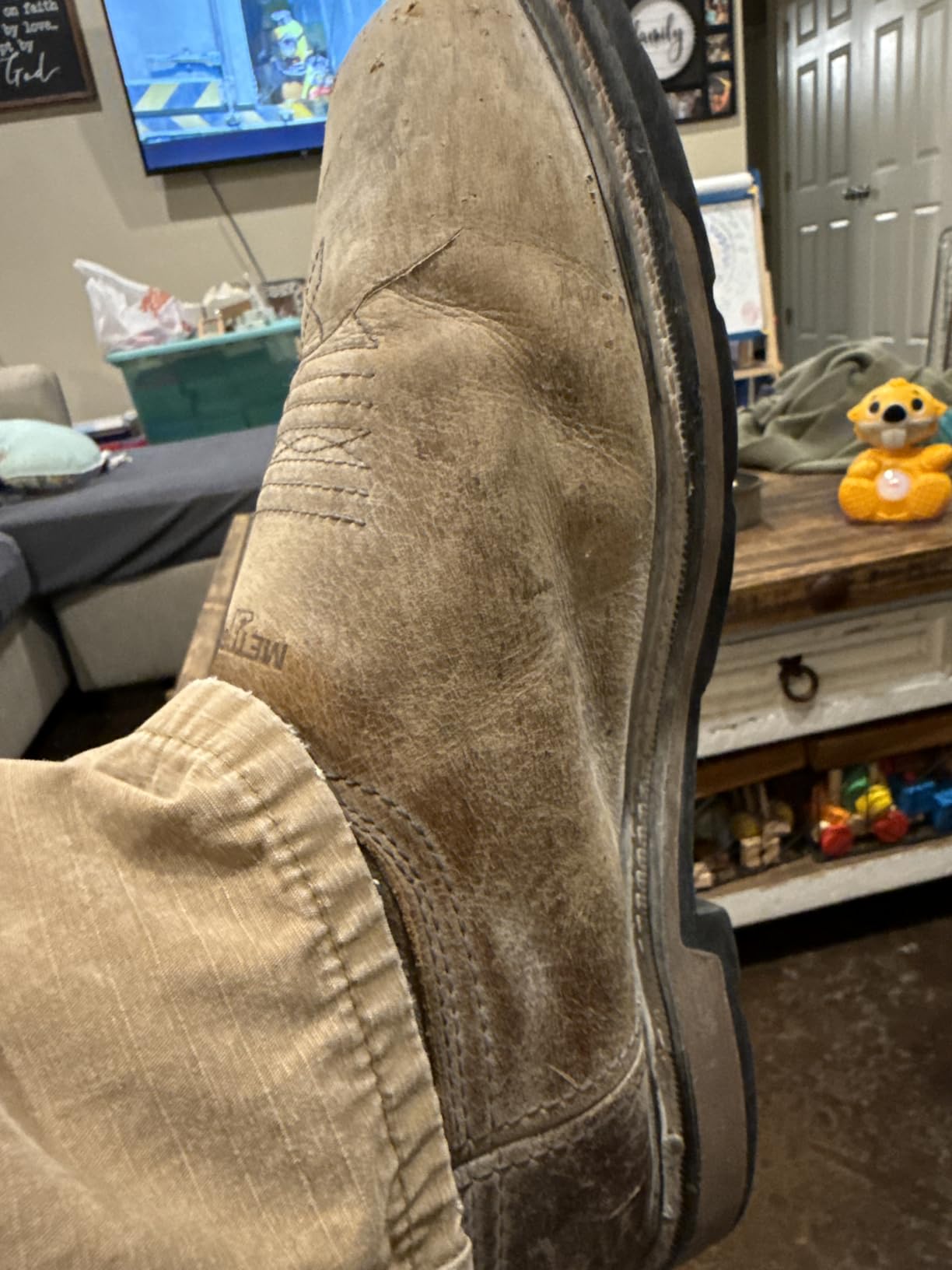
This is the internal-guard answer for people who work steel mills and heavy equipment rather than a fabrication shop. The guard is rated to ASTM F2413-11 Mt 75, and owners in mills, heavy equipment and structural work describe it as one of the toughest met-guard boots they have owned, frequently buying a third pair.
What makes it comfortable over a long shift is the 4LR support technology in the midsole, which is designed to keep the foot stable through a full day of standing. The Duratread outsole is oil and slip resistant, which is exactly what you need on a shop floor that is wet with coolant and metal chips. The full-grain leather foot with suede upper also ages well, which matters if you keep boots for years.
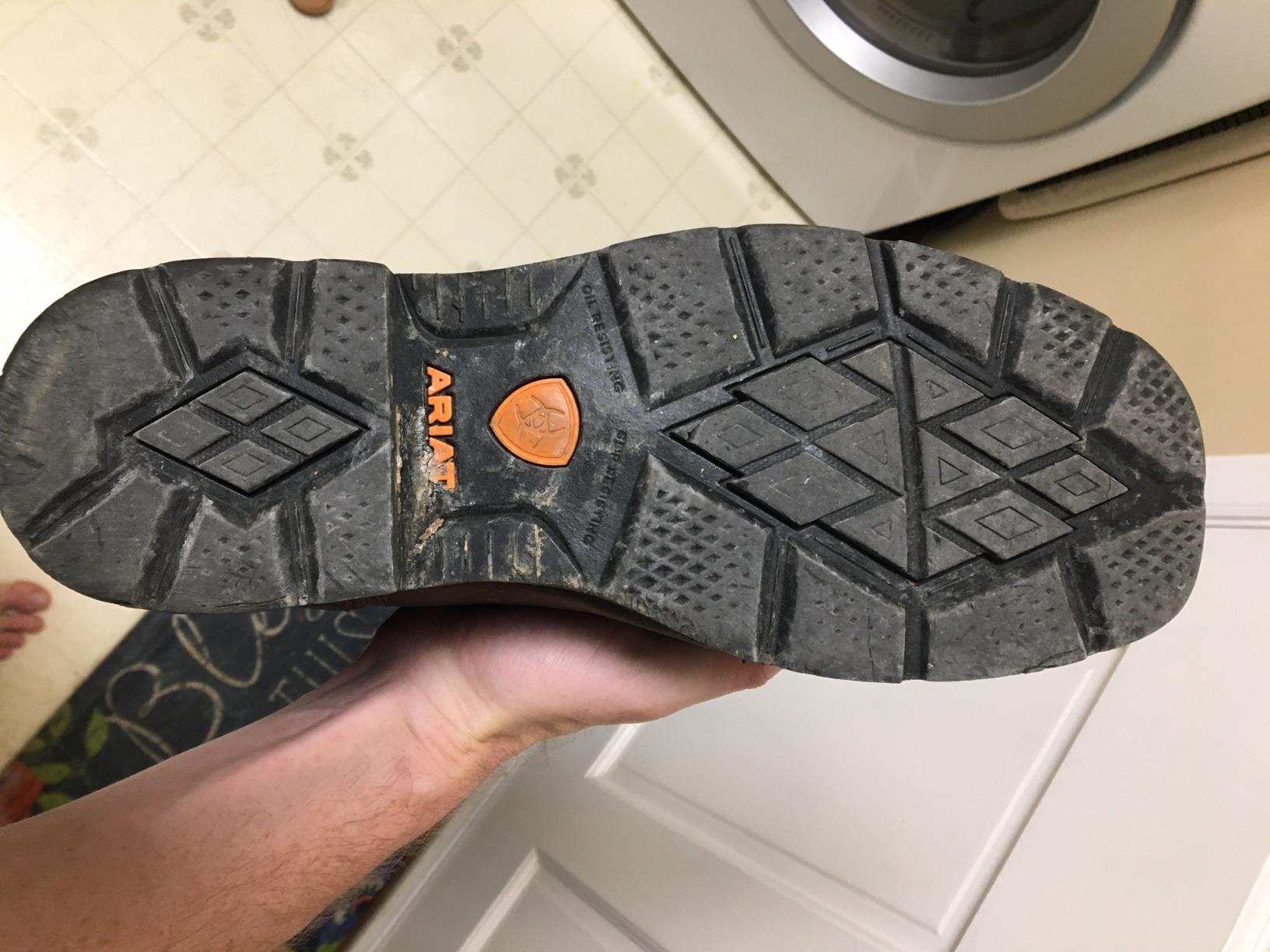
The wide EE last is the sleeper feature here. It runs up to a 13 wide fit, and welders with broad or flat feet consistently complain that sizing is inconsistent between brands. This is one of the few met-guard boots in the group that is genuinely built wide from the last rather than merely offered in a wide width.
The tradeoff is the guard itself. Because it sits under the leather, it is lower profile and cleaner looking than an external shell, but it presses on the instep during break-in and several owners describe a rub across the top of the foot before the boot settles. The collar is also unlined and stiff if you wear thick socks.
Who this boot suits
Steel mill, heavy equipment and structural workers who will keep the same boot for years and want a wide fit from the ground up. The 4LR midsole is genuinely good for long shifts standing on concrete, which is the single most common welder complaint we found in forum threads.
It also suits anyone who finds external guards bulky or who works around machinery where a protruding guard shell is a snag risk. The internal guard keeps the profile clean without a bolted-on component.
Who should skip it
Canadian industrial work sites, because there is no CSA approval on this model and that is a hard compliance gate on many jobs. If your site requires CAN CSA-Z195-14, the two Timberland PRO models further down both carry it.
Anyone who cannot tolerate a two to three week break-in should look elsewhere. The instep pressure from the internal guard is the most common early complaint, and the heel separation some owners report after heavy multi-year use is worth factoring in if you are on a replacement cycle.
4. KEEN Utility Louisville 6 Inch – Best for Wet and Hot Welding
KEEN Utility Men’s Louisville 6″ Steel Toe Internal Metatarsal Guard Waterproof Work Boot, Slate Black/Slate Black, 10.5 Medium US
ASTM F2413 I/75 C/75 Mt/75 and EH
Outsole rated 572F and 300C
keen.Dry membrane
+ The Good
- One of only two boots here with a 300C outsole rating
- Excellent ankle support
- Wet or cold conditions without wet feet
- Minimal break-in needed
- The Bad
- Runs narrow through the instep
- Rubber toe section cracks after heavy crouching
- Laces and eyelets wear quickly
The Louisville is the most complete all-rounder on this list for anyone who works in awkward conditions. It is rated to ASTM F2412 and F2413 across I/75, C/75, Mt/75 and EH, and the rubber outsole carries a published 572F and 300C heat rating, which makes it one of only two boots here with a real hot contact number.
Waterproofing is the reason outdoor welders keep recommending it. The keen.Dry membrane is waterproof and breathable with a mesh lining, so you can work in rain, mud or standing water without the boot becoming a problem. Several users with arthritic ankles report being able to drop their braces thanks to the 90 degree 5/8 inch heel and the ankle support the shaft provides.
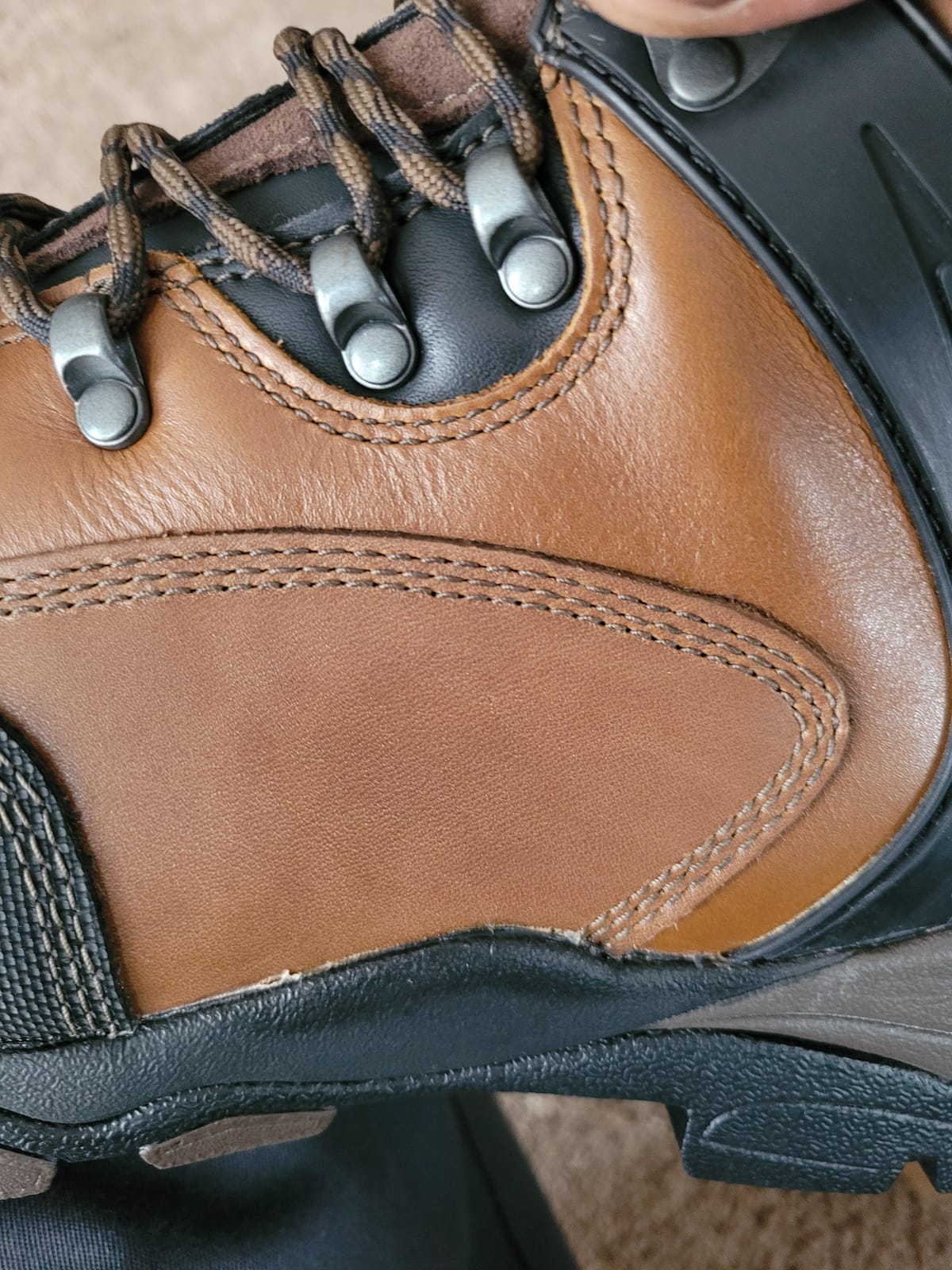
The internal metatarsal guard is described as flexible until impact, then hardening under load, which means it does not fight you when you walk but still passes the Mt/75 impact test. The non-marking rubber outsole is tested to ASTM F1677 Mark II and F2913 SATRA, and the rubber toe cap protects the leather from cracking when you kick a plate or a pallet.
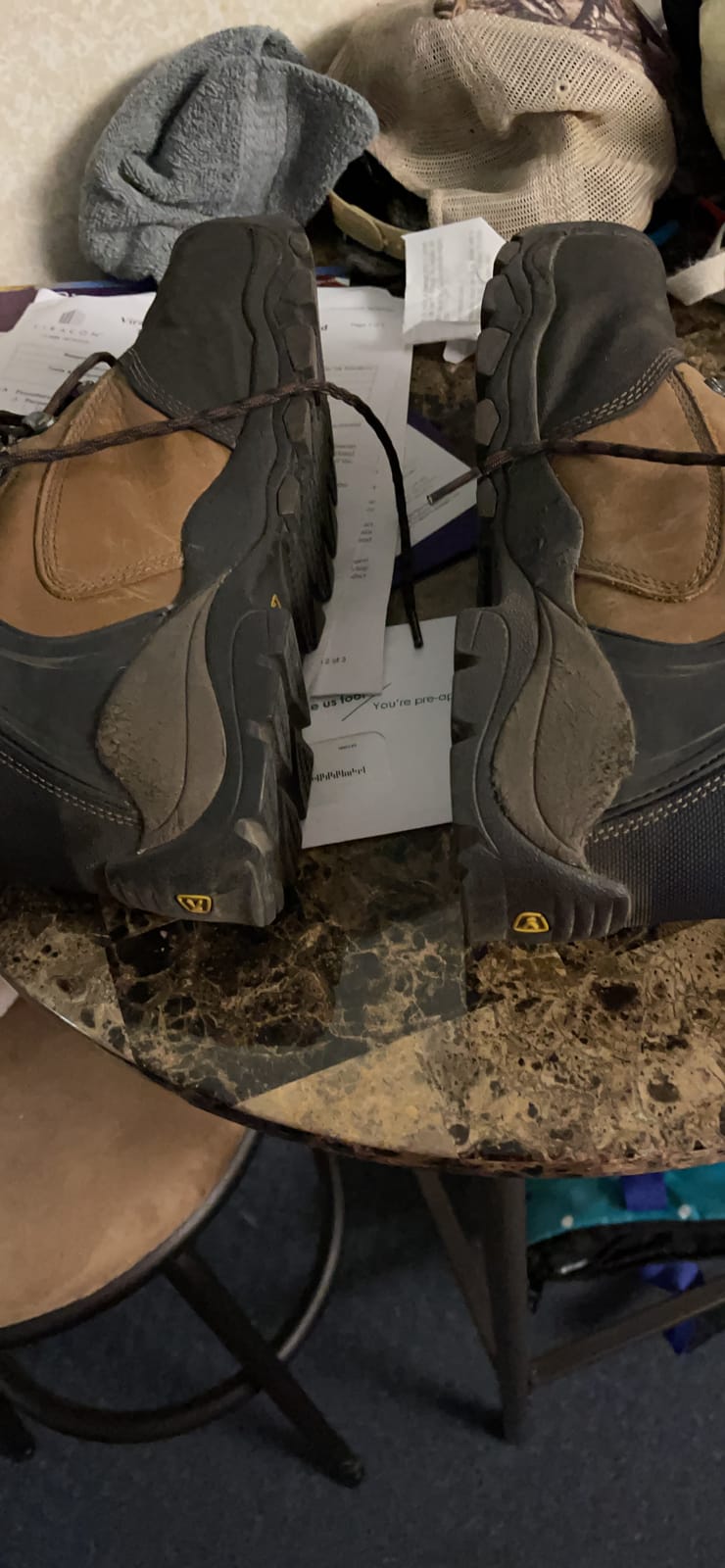
Durability is the weak point. Owners doing heavy crouching and kneeling report the rubber and plastic toe section cracking or pulling away at the heel stitching after two to three years, and the laces and eyelets wear through quickly. This is a comfort and climate boot first, a torture-test boot second.
Who this boot suits
Welders who work outside in the elements or in damp indoor areas, and anyone whose shop requires both a heat rating and electrical hazard protection. The ankle support also makes it a good choice for structural and shipbuilding work where you are on uneven steel or staging.
It is a good pick if you hate breaking boots in. Owners describe it as comfortable out of the box, which matters when you need to be productive on day one rather than after a month of blisters.
Who should skip it
Anyone doing heavy kneeling work, where the toe section is the first thing to fail. Sizing is the other trap: it runs narrow through the instep behind the steel toe, and sizing up half a size is common advice in the reviews.
Canadian sites should note the lack of CSA approval. And if the top of the foot is your main worry, the internal guard means a heavy plate landing on the instep is handled by a flexible pad rather than a rigid external shell.
5. Carhartt Rugged Flex Waterproof – Best for Wet Field Work
Carhartt Men’s Rugged Flex 6″ Waterproof Met Guard Comp Toe Work Boot CMF6720, Brown, 13W
Poron XRD internal met guard
ASTM F2413-24 MT rating
Non-conductive composite toe
+ The Good
- Current ASTM F2413-24 MT guard rating
- Composite toe stays cooler than steel
- Waterproof and breathable for wet work
- Solid traction from Rugged Flex lug outsole
- The Bad
- Least reviewed boot here at 138 ratings
- Composite toe gives less protection under heavy rolling loads
The Carhartt is the most current-standard guard on this list, and that matters if you are buying to a spec sheet rather than a habit. The internal Poron XRD metatarsal guard meets the ASTM F2413-24 MT standard, which is the newest edition of the safety footwear standard rather than the F2413-11 or F2413-18 versions several competitors still carry.
It is also one of the few boots here that is genuinely non-conductive. The composite safety toe is non-metallic and non-conductive to both heat and cold, so it runs cooler than steel in a hot shop and will not carry an electrical charge. The Storm Defender waterproof breathable protection handles wet conditions, and the Rugged Flex rubber lug outsole gives serious traction.
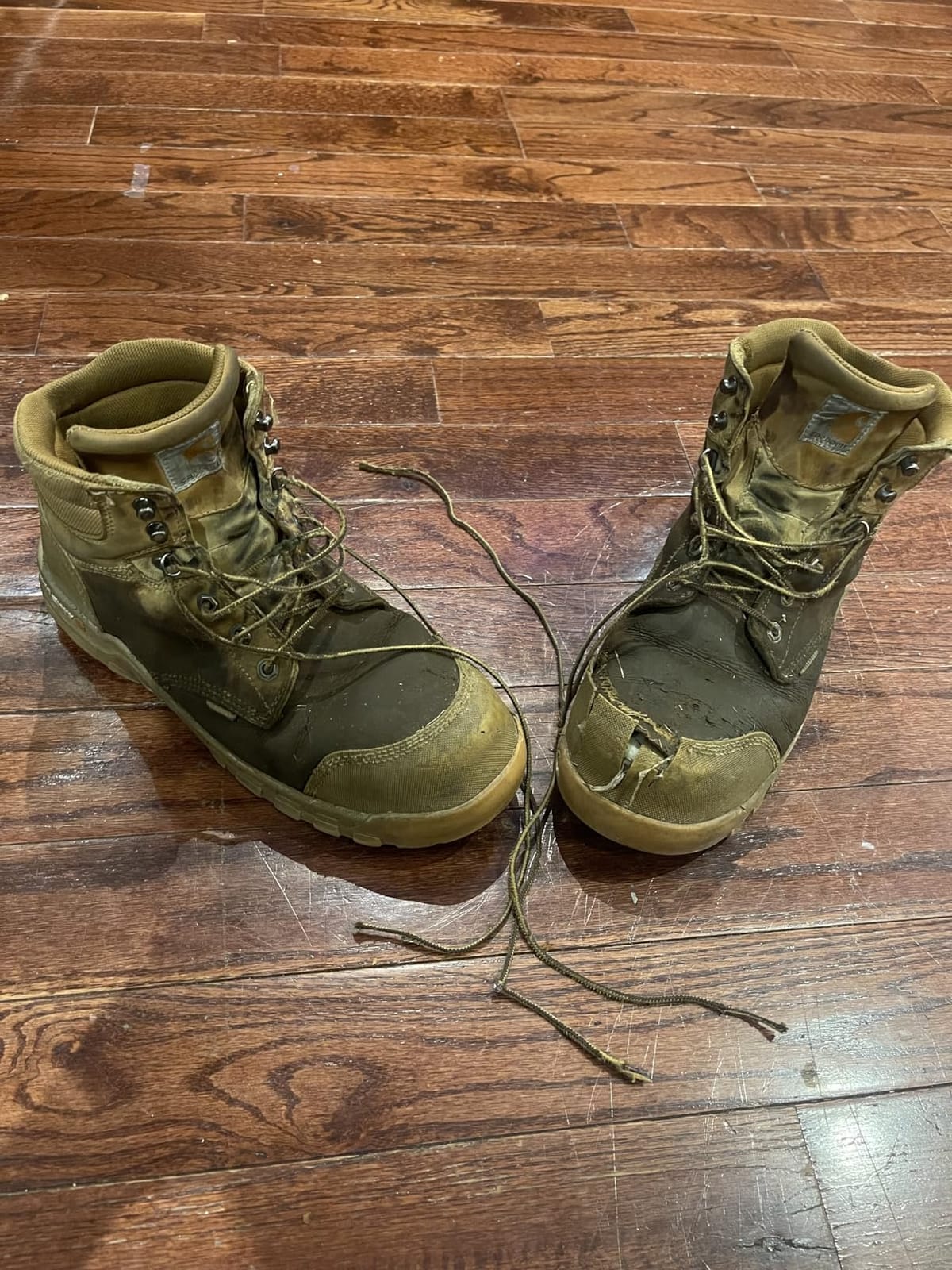
The brown oil-tanned leather upper is the right choice for sparks. Leather does not melt or scorch the way mesh and polyester uppers do, and oil-tanned leather weathers into a dark patina rather than cracking. Forum welders are blunt about this: polyester and mesh safety shoes near a welding arc are how people get burned.
With 138 ratings, the owner feedback picture is thinner than for the Timberland and KEEN models, and no specific recurring defect shows up in the listing data. Treat the spec sheet as the main reason to buy and the reviews as supporting evidence rather than a durability track record.
Who this boot suits
Welders who split time between a site trailer and outdoor fabrication, where waterproofing and a cool-running toe matter more than heavy impact ratings. The current ASTM edition also makes it the safest option to hand a safety officer who wants to see a current standard on paper.
It is a sensible choice for structural and pipeline work where boots get soaked, and for anyone who finds steel toes uncomfortably hot through a summer shift.
Who should skip it
Anyone working under heavy plate or pipe where a heavy rolling load lands on the toe. A composite toe gives noticeably less protection in that scenario than a steel cap, and for most welders that is the scenario the met guard exists for in the first place.
If you need published outsole heat numbers or a CSA approval for a Canadian site, neither appears here. Those requirements point to the KEEN Louisville or one of the two Timberland PRO models.
6. Timberland PRO Endurance Steel Toe MT PR SR – Best Against Weld Spatter
Timberland PRO Men’s Endurance 6 Inch Steel Safety Toe Puncture Resistant External Met Guard Industrial Work Boot, Brown-2024 NEW, 12 M US
ASTM F2413-18 metatarsal guard
CAN CSA-Z195-14 certified
F2892-18 PR plate
+ The Good
- Owners say spatter stops ruining tongue stitching
- Roomy toe box despite the steel cap
- Anti-fatigue midsole for long standing shifts
- CAN CSA-Z195-14 certification included
- The Bad
- Noticeably heavy on climbs and walks
- Some reports of upper wear and leaking after 6 to 7 months
- Met cap is molded rather than rigid steel
Several welders who own this boot say the same specific thing about it, which is rare in a review set: spatter no longer burns the tongue stitching and laces apart. If laces are your recurring complaint, this is the boot that owners report fixes it, and the metatarsal guard here is rated to ASTM F2412-18a and F2413-18.
It is also the most completely certified model in the group. The asymmetrical steel safety toe carries I and C impact and compression ratings, the flexible steel puncture resistant plate is tested to ASTM F2892-18 PR, and the boot is certified to CAN CSA-Z195-14 Grade 1, which is the compliance mark several US-only competitors lack.
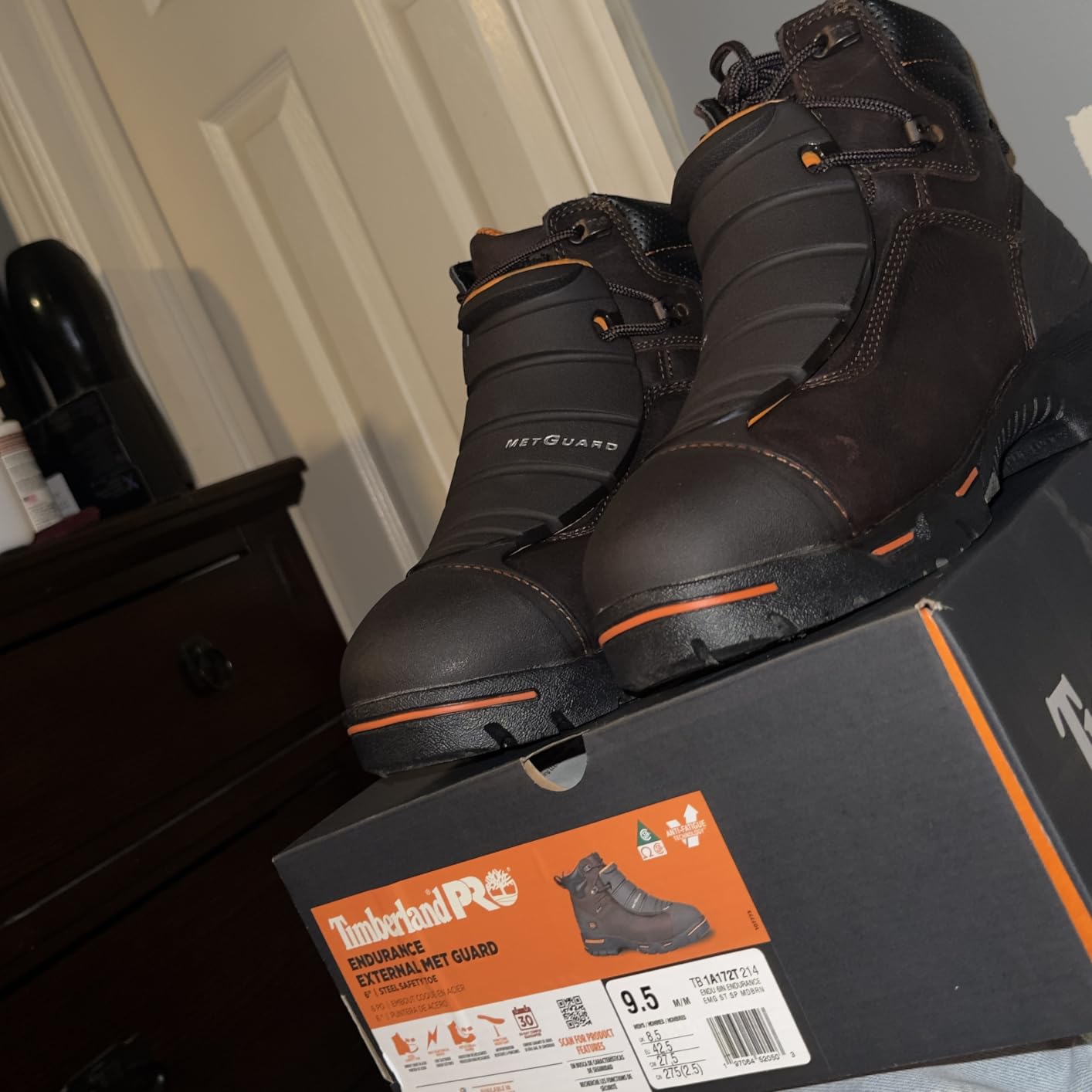
Comfort is handled by the Anti-Fatigue Technology midsole with geometrical shock absorbing energy return, and the roomy toe box is a genuine strength. Owners note toes stay uncrowded despite the steel cap, and the insoles are reported to outlast the boot itself, which is rare praise.
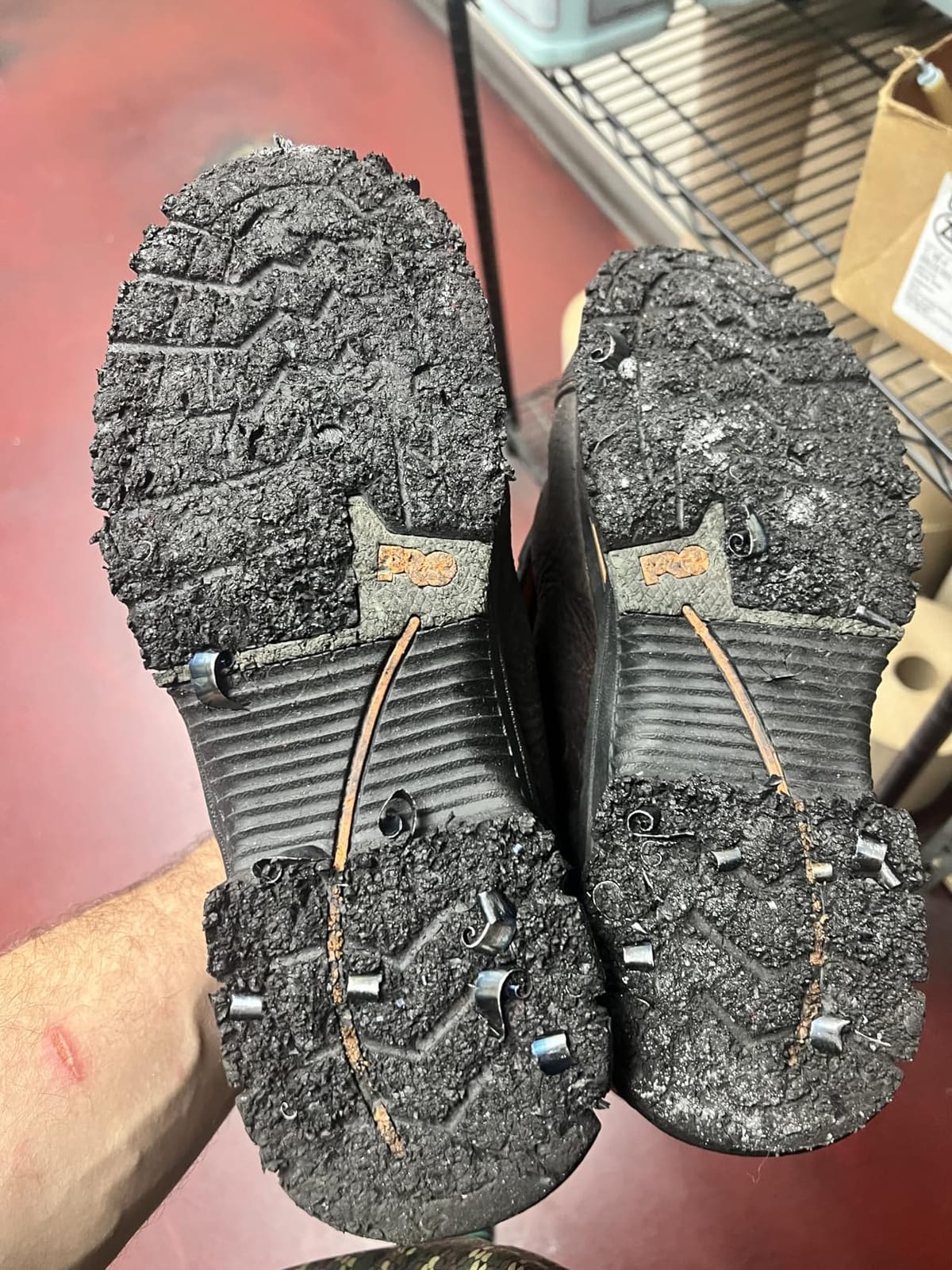
Weight is the honest problem. At 4.21 pounds it is heavy, and owners who walk long distances or climb report feeling it. There are also some reports of upper wear and leaking after roughly six to seven months, so the lifespan here is shorter than the Ariat or the first Timberland in this list.
Who this boot suits
Welders whose biggest daily complaint is laces and tongue stitching being destroyed by spatter. It is also the safest pick for Canadian industrial work, since the CSA Z195-14 Grade 1 rating is on the spec sheet and not something you have to ask the manufacturer about.
Anyone working around nails, screws and scrap metal on a fabrication floor will appreciate the puncture resistant plate, and the anti-fatigue midsole is genuinely helpful for welders standing through a ten or twelve hour shift.
Who should skip it
Field crews who spend the day climbing or walking between work faces. The weight is the dominant complaint across reviews and it shows most on ladders and long approaches.
Also skip it if you want the absolute toughest top-of-foot protection, because the met cap here is a molded material rather than a hinged rigid shell. For the heat question, the outsole is described as heat resistant but no specific 300C hot contact figure is published.
7. KEEN Utility Vista Energy Mid Composite – Lightest Fully Non-Metallic Option
KEEN Utility Men’s Vista Energy Mid Composite Toe Int Met Guard Work Boots
ASTM and CSA internal met guard
Carbon fiber composite toe
ReGEN midsole
Removable footbed
+ The Good
- Carbon fiber toe is 15 percent lighter than steel
- Passes through metal detectors on all non-metallic build
- ReGEN midsole returns 50 percent more energy than EVA
- Removable footbed can be swapped mid-shift
- The Bad
- Lowest rating in this group at 4.1
- Less rigid guard than steel or hinged ABS
- No published outsole heat rating
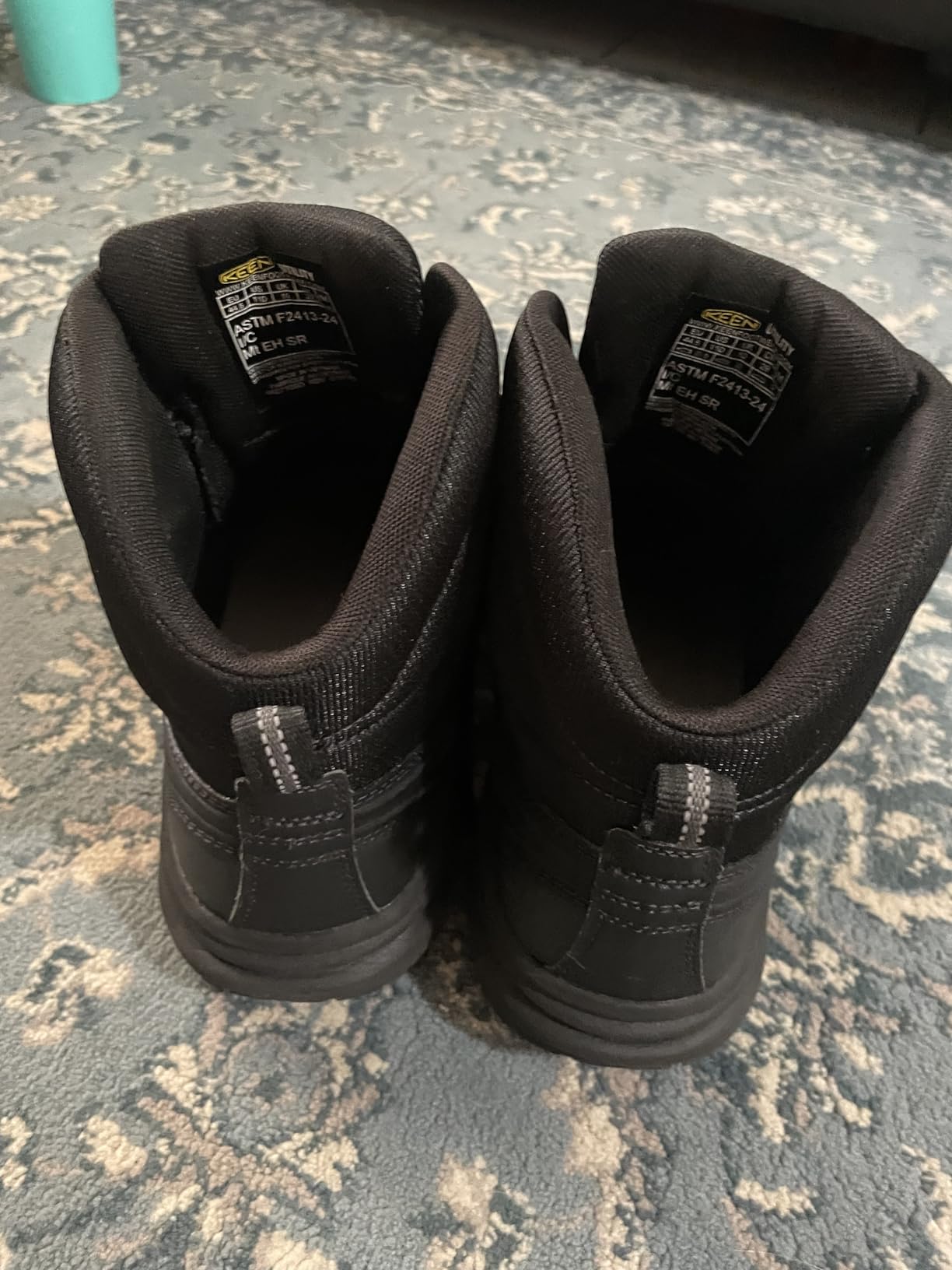
This is the weight and electronics answer. The asymmetrical non-metallic carbon fiber composite toe is 15 percent lighter than steel and runs cooler in hot work, and the whole boot is 100 percent non-metallic, so it passes through metal detectors. That matters on job sites and shipyard entries where a steel toe means a separate screening queue.
Cushioning is the headline feature. The KEEN.ReGEN midsole returns 50 percent more energy than standard EVA, with a nylon shank for stability, and the Metatomical footbed is removable so you can swap it. Owners doing long shifts report the difference, and the internal metatarsal guard is both ASTM and CSA certified.
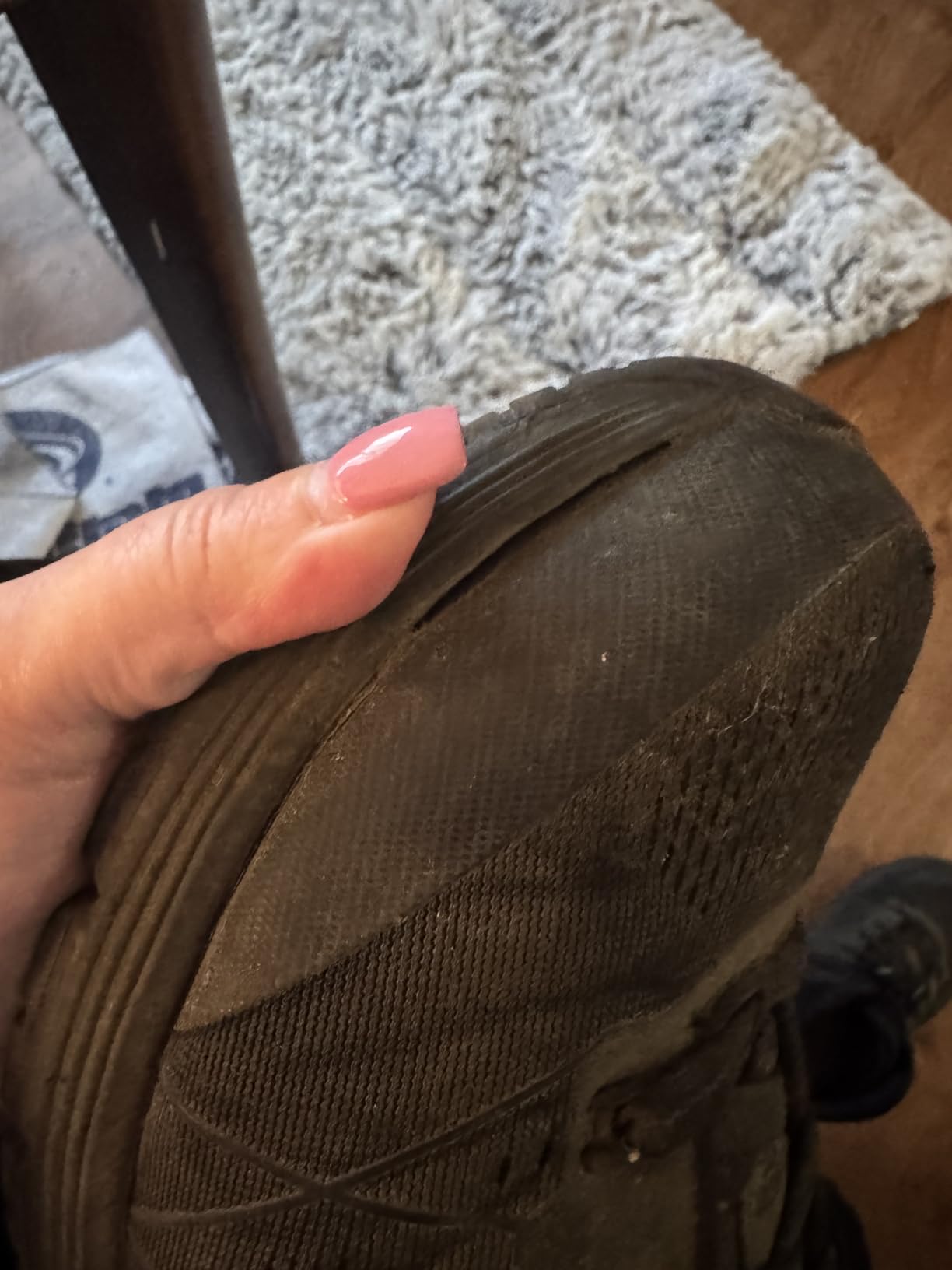
The honest framing here is what the guard is not. This is the lowest rated boot in the group at 4.1, with about 12 percent one-star reviews, and the reason is the guard itself: it is flexible until impact and offers lighter impact protection than a steel cap or a hinged external shell. If a dropped plate is the scenario you are buying for, this is the wrong tool.
There is also no published heat resistance rating for the outsole, which makes it a weaker match for welding sparks than the SAFETOE, the KEEN Louisville or the Timberland PRO Ambridge. The water-resistant leather is good for keeping the upper alive, but this is not a waterproof boot.
Who this boot suits
Welders who stand for a full shift on concrete and care more about cushioning than maximum impact rating, and anyone working around electronics or on sites with metal detector screening. Aviation, electronics and some fabrication facilities require non-metallic footwear, and this qualifies.
It is also a good choice for anyone who finds composite toes cooler and lighter in hot weather, and the removable footbed is a genuine advantage if your shop requires a specific insole for arch support.
Who should skip it
Welders whose main hazard is heavy material landing on the top of the foot. The internal flexible guard is the softest protection on this list and the ratings reflect it honestly.
Anyone working near molten metal or heavy grinding should also step away, since no outsole heat rating is published. If you need both heat protection and a light build, the Timberland PRO Ambridge below is built for exactly that.
8. Timberland PRO Ambridge Composite MetGuard – Spec-Forward Heat and Impact Pick
Timberland PRO Men’s Ambridge 6 Inch Composite Safety Toe External MetGuard Industrial Work Boot, Black, 12M
External met guard with CSA rating
Composite toe, I/C rated
Outsole tested to 572F
+ The Good
- External guard gives strong top of foot coverage
- Outsole tested to 572F at 300C per ISO standard
- Composite toe stays cool and still meets I/C ratings
- EH protection adds underfoot safety
- The Bad
- Smallest review base here at 34 ratings
- External guard adds bulk at the instep
- Tied for the highest price in this lineup
The Ambridge is the rare boot that pairs an external guard with a composite toe and a published heat number. The outsole is tested to EN ISO 20344:2004 8.7 at 572F, or 300C, which puts it in the same class as the SAFETOE and the KEEN Louisville, and it carries electrical hazard protection to ASTM F2412-18a, F2413-18 and F2892-18.
Because the guard is external, it gives the strongest top-of-foot impact coverage of any composite toe boot in this group. The composite toe still meets ASTM I and C impact and compression ratings, so you are not trading away toe protection, only weight. At three pounds it is meaningfully lighter than the steel-toe Timberland at the top of this list.
The guard is certified to ASTM F2412-18a and F2413-18 and also to CAN CSA-Z195-14, which makes it one of the few boots here that satisfies both US and Canadian requirements. The ventilated Anti-Fatigue Technology adds air flow and energy return, which genuinely helps on hot indoor shifts where waterproof membranes make a boot feel suffocating.
With 34 ratings the profile is thin, so the specification is really the argument here. Owners score it well, but there is not enough long-term data to promise service life, and the external guard adds instep bulk that feels tight during break-in. If your employer insists on a documented standard, this is the easiest one to justify on paper.
Who this boot suits
Welders who need both a rated heat outsole and strong top-of-foot impact protection without carrying a steel toe through a summer shop. The 300C rating makes it a legitimate choice for fabrication, foundry-adjacent work and heavy grinding.
It is also a strong pick for Canadian sites that require CSA Z195-14, and for anyone who wants a ventilated boot rather than a waterproof membrane in an indoor shop where heat builds up faster than rain.
Who should skip it
Buyers who want proven longevity over specifications. Thirty-four ratings is the smallest base here, and we would not expect the multi-year track record that the Ariat or the first Timberland PRO has accumulated.
Anyone sensitive to instep bulk should try them on carefully, since external guards tighten the front of the boot. And if budget matters more than the spec sheet, our value pick earlier in this list gives you a 300C outsole at a lower tier with more review history behind it.
Internal vs External Metatarsal Guards: Which Type to Buy
Internal guards sit between the foot and the leather upper. They are typically a foam or polymer pad that stays soft while you walk and hardens when struck, which is why welders describe them as thick padding. The profile is low, there is nothing to snag on machinery, and the boot looks like an ordinary work boot. The trade-off is coverage: the top of the boot above the guard, including much of the lace run, is still exposed.
External guards clamp over the boot, MetGuard style, and they cover the lacing area. That is the deciding factor for welding, because hot slag and spatter settle into laces and then burn downward into the boot. Welders in forum threads describe external guard boots as the standard for welding, steel mills and foundry work specifically because of slag and molten metal exposure. If your most likely injury is a plate or pipe dropping on the instep, an external guard takes that hit directly.
There is a third group worth naming: composite or carbon fibre internal guards, like the one in the KEEN Vista. They are lighter and cooler than steel, and the KEEN versions are certified to both ASTM and CSA, but they are the least rigid protection here. Treat them as a comfort and weight answer rather than a maximum impact answer.
Our rule of thumb after testing: external guard if the top of the foot is your real risk or you work near molten metal, internal guard if you want a clean profile and work in a shop where nothing is dropped on your feet. Either way, check the exposed instep. Welders repeatedly note that even guarded boots leave a fair bit of exposed area, so add lace covers or a boot band if spatter is constant.
How to Choose Metatarsal Welding Boots
Verify the standard, not the marketing. Look for the ASTM F2413 marking on the label or spec sheet, with the Mt rating for metatarsal impact. Many sellers market a boot as a safety boot without stating which standard it meets, and forum buyers are blunt that the label, not the product page, is what counts.
Decide guard placement first. External covers the laces and takes the harshest instep impact. Internal keeps a clean profile and is more comfortable over long shifts. For welding specifically, external wins unless your work has no overhead or dropped-material risk.
Demand a heat number where heat is real. Two of the boots here publish a 300C and 572F hot contact rating on the outsole, and two more describe their outsoles as heat resistant without a number. If you weld next to molten metal or do heavy grinding, treat an unpublished rating as no rating.
Choose the toe for your conditions. Steel toes are more robust under heavy rolling loads and are standard on shop floors. Composite and carbon fibre toes run cooler, weigh 15 to 30 percent less and are non-conductive to heat and electricity, which matters in a hot shop or around electronics. Our composite toe boot roundup covers the weight and thermal trade in more detail.
Check compliance marks your site requires. CAN CSA-Z195-14 is a hard requirement on many Canadian industrial sites, and several otherwise excellent boots lack it. EH or electrical hazard rating matters in damp environments. Some employers also mandate a specific brand, so ask before you buy rather than after.
Buy for the closure you actually work in. Lace-free pull-on and Chelsea style welders are consistently preferred on forums because laces trap slag and spark damage. If you must wear laces, add a lace cover or silicone beading. Avoid mesh and polyester uppers near an arc entirely; leather does not scorch the way synthetics do.
Size around the instep, not the toe. The most common fit complaint with met-guard boots is slack or pressure across the instep, which causes heel slip on ladders. External guards make the boot run small at the front, and internal guards create break-in pressure. A half size up is common advice, and wide or extra-wide lasts are worth paying for if you have broad feet.
Think about the outsole for your floor. Oil and slip resistance is non-negotiable in a shop. If you work around water or mud, a waterproof membrane helps, but note that waterproof boots run hotter indoors, so save them for outdoor work rather than a fabrication bay.
Boot Care and Lifespan for Metatarsal Welding Boots
Expect one to three years depending on the work. Boots in a dry shop with a bench job last longest, while anyone grinding, kneeling or walking abrasive outdoor surfaces can expect to see upper wear at six to seven months and sole stitching failure in four to five.
Clean out slag and metal dust after every shift with a stiff brush, and let the boot dry naturally rather than near a heat source. Leather that has been cooked to dry cracks at the flex point. Condition the leather around the guard mount, not on the guard itself, and check external guard hinges and mounting screws monthly since that is the component taking the impact.
Replace the footbed before the boot if it is removable. A memory foam or Metatomical insert is a fraction of the cost of a new pair and it is the first thing to go. If your boot is welted, a resole is usually worth it; if the guard mount is damaged, replace the boot rather than trusting a loose guard.
Finally, discard any boot with a cracked composite toe, a blown welt stitch or a guard that flexes further than it should. If you are ever unsure whether your current boot is genuinely rated, take it to your shop supervisor before your next shift rather than after an incident. We also cover rubber outsole care in our rubber work boot guide.
Frequently Asked Questions
Are metatarsal boots better than steel toes?
They protect different areas. A steel or composite toe covers the front of the foot, while a metatarsal guard covers the top of the foot where dropped plate, tools and slag land. For welders, both matter: a toe for heavy rolling loads and a guard for overhead work and molten metal exposure. Boots with both, rated to ASTM F2413 Mt, are the safest choice.
Do welders need metatarsal guard boots?
Many shops, shipyards and steel fabricators require them even where the trade rule does not strictly mandate met guards, because most foot injuries in welding come from heavy plate and tools landing on the instep rather than onto the toe. Confirm the requirement and the ASTM rating your employer accepts before you buy, since some sites specify a brand or a standard edition.
What are the best boots with a metatarsal guard?
Among the eight we tested, the Timberland PRO External Met Guard 6 Inch is the strongest all-rounder because of its hinged external guard, steel toe and large owner base. The SAFETOE 300C welder is the pick for heat, the KEEN Louisville for wet and hot conditions, and the Ariat Groundbreaker for long-term toughness in steel mill work.
Are steel toe or composite toe boots better for welding?
Steel toes are tougher under heavy rolling loads and are the safe default on a shop floor. Composite and carbon fibre toes run 15 to 30 percent lighter, stay cooler in hot work and are non-conductive to heat and electricity, which makes them better for hot indoor shops and sites with metal detector screening. Check whether your site requires a CSA mark before choosing composite.
What are the most comfortable work boots for welders who stand all day?
The Ariat Work Groundbreaker leads on long shifts because of its 4LR support midsole and genuinely wide EE last, while the KEEN Vista Energy Mid offers the highest energy return at 50 percent more than standard EVA. Comfort matters most in a met-guard boot because the guard adds pressure across the instep during break-in and after long hours of standing.
Should welding boots be leather?
Yes for the upper. Full-grain or oil-tanned leather resists sparks and heat without melting, while mesh and polyester uppers scorch and can burn through near an arc, which is the most common safety complaint in welder forums. The toe and metatarsal guard can still be composite or steel, and a waterproof membrane is useful outdoors but runs hot in an indoor shop.
Conclusion: The Best Metatarsal Work Boots for Welders
After eight boots and hundreds of owner reviews, the Timberland PRO External Met Guard 6 Inch takes the top spot for one reason: the hinged external guard covers the laces and absorbs repeated heavy impacts without tearing off, and it is backed by the largest owner base in the group. If your work is closer to molten metal than to a fabrication bench, the SAFETOE 300C welder is the better buy, with a published 300C outsole rating, fire resistant stitching and a Kevlar midsole.
Whatever you choose, confirm the ASTM F2413 Mt rating, decide between an internal and an external guard before you buy, and size around the instep rather than the toe. If cold and wet work is part of the job, our insulated work boot picks cover the thermal side.