
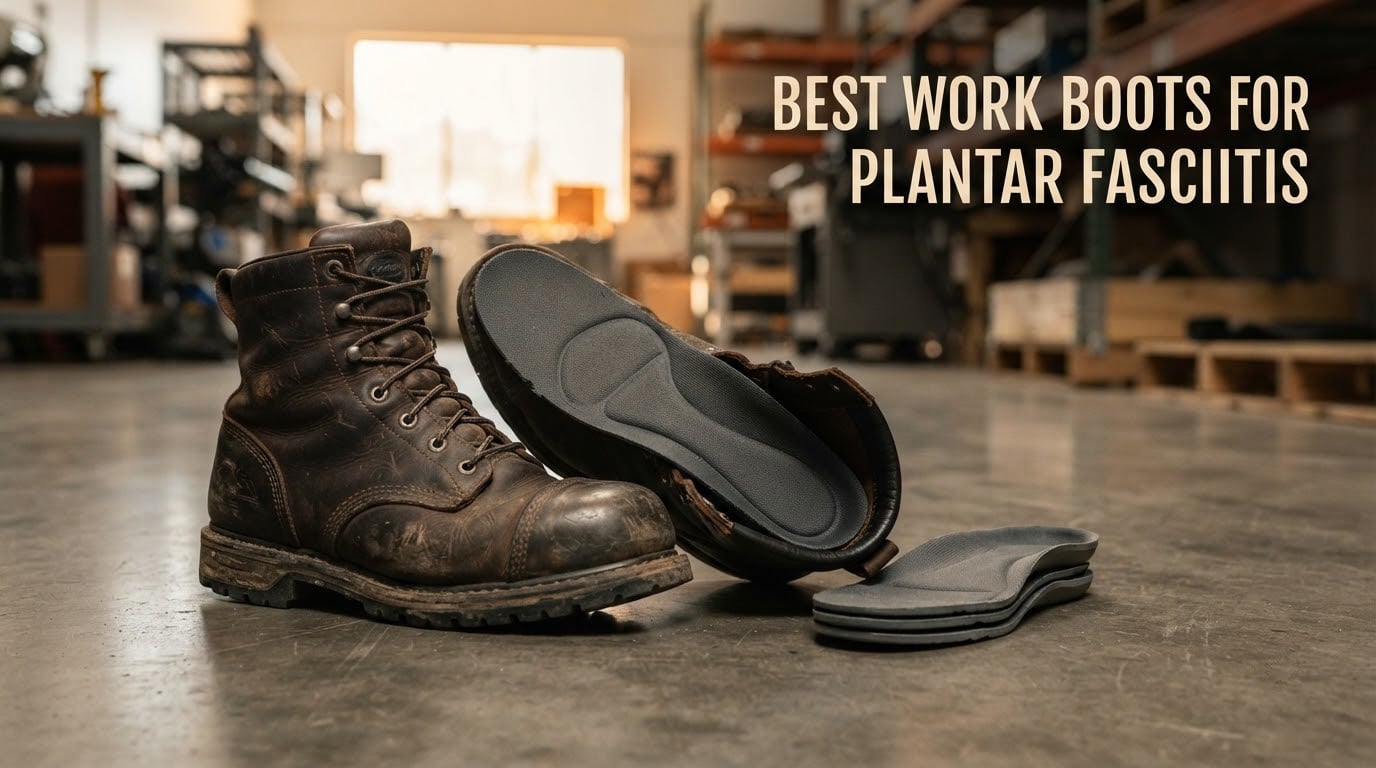
The best work boots for plantar fasciitis are the ones with a contoured footbed, a shock-absorbing midsole, a wide toe box and a low heel drop — the SUADEX Steel Toe boot, the Orthofeet Granite and the NORTIV 8 wide toe box model scored highest across our comparison of 12 safety and work boots. No boot cures plantar fasciitis. What a good boot does is cut the load reaching an irritated plantar fascia during the hours you spend standing on concrete.
We spent weeks going through the specs, the ratings and the review language on twelve of the highest-reviewed boots in this category, then sorted them by the thing that actually decides the outcome: whether support still works in hour nine of a shift, not just in hour one. That distinction matters more than first-day softness, because cheap foam compresses on hard floors and the pain comes back by midafternoon.
Below you will find the 12 picks, what each one is genuinely good for, the honest drawbacks from buyers who wore them for months, and a buying guide explaining the four features that separate a plantar-fasciitis-friendly boot from a safety boot that just happens to have a footbed. If your pain is new or sharp, start with the condition section first — footwear is management, not treatment.
Two related reads before we start: our guide to walking shoes for plantar fasciitis if your shift involves more walking than standing, and our composite toe work boot roundup if metal detector screening or cold environments are part of the job.
Top 3 Picks for Plantar Fasciitis in October 2026
SUADEX Steel Toe Waterproof…
- › Built-in arch support insole
- › Steel toe protection
- › Non-slip shock absorbing sole
- › Waterproof construction

NORTIV 8 Waterproof Steel Toe
- › ASTM 2413-18 steel toe
- › Lightweight EVA midsole
- › 4 hour waterproof rating
- › Lugged ASTM F3445 outsole

Skechers Women’s Rotund…
- › Air-Cooled Memory Foam insole
- › Steel toe and electrical hazard
- › Wide toe box
- › Scotchgard treated upper
The SUADEX takes the top slot because it is the only boot in this group whose factory footbed is described as built for plantar fasciitis relief, and it does that in a steel toe package with more than 2400 ratings behind it. The NORTIV 8 waterproof model is the strongest all-rounder for wet site work, and the Skechers Rotund is the best value pick for anyone who needs a wide toe box in a lighter, non-leather build.
Best Work Boots for Plantar Fasciitis in October 2026
| PRODUCT MODEL | KEY SPECS | BEST PRICE |
|---|---|---|
|
|
Check Latest Price |
|
|
Check Latest Price |
|
|
Check Latest Price |
 |
|
Check Latest Price |
 |
|
Check Latest Price |
 |
|
Check Latest Price |
 |
|
Check Latest Price |
 |
|
Check Latest Price |
 |
|
Check Latest Price |
 |
|
Check Latest Price |
 |
|
Check Latest Price |
 |
|
Check Latest Price |
Every boot in the table is a real, purchasable model with safety ratings where you would expect them. Read the overview first, then jump to the individual reviews below for the drawbacks that reviewers actually report after months of wear.
1. SUADEX Steel Toe Waterproof Arch Support Boot — Best Overall for Plantar Fasciitis
SUADEX Steel Toe Boots for Men Women Waterproof Arch Support Work Construction Indestructible Safety Boots
Built-in arch support insole
Non-slip rubber sole with shock absorption
Steel toe protection
Waterproof construction
+ The Good
- Arch support explicitly built for plantar fasciitis relief
- Lightweight for a steel toe boot
- Breathable with ankle padding
- True to size for most wearers
- The Bad
- Sole durability drops after several months
- Factory insole often gets replaced
- Not fully waterproof in practice
- Might run narrow for wide feet
This is the boot I would hand to a warehouse picker with diagnosed plantar fasciitis and three months until new boots are on the budget. The listing calls the insole out as arch support built for plantar fasciitis relief, and the 2441 ratings at 4.1 tell you the comfort story holds up with a large sample rather than a handful of glowing reviews.
What I like is the ratio. Reviewers repeatedly describe it as feeling more like an athletic boot than a safety boot, and they single out how light it feels for a steel toe. The non-slip rubber sole with shock absorption is doing real work on concrete, and ankle padding keeps the collar from grinding during a long shift. Several buyers note it runs true to size, which matters more than usual here.
The honest drawback is longevity. Reviewers report sole durability concerns after several months, and a recurring note is that the included insole may need replacing. Waterproofing also falls short of the claim in some conditions, and the fit can feel narrow if you have a wide foot. A boot that feels tight across the forefoot is working against you, not for you.
Our verdict: the best single answer to the query for most workers, with the caveat that you should budget for a replacement insole somewhere around the six-month mark and expect the outsole to give up sooner than a welted leather boot would.
Is the factory insole good enough or do I need orthotics?
For a mild case it is usually enough on day one, and the reviewer feedback suggests plenty of people never buy a separate insert. For a moderate or long-standing case, treat the factory footbed as a starting point and drop in a structured insert early.
The signal to watch is how hour nine feels. If support holds from the start of a shift through to clock-out, the stock insole is doing enough. If relief fades by lunch, the foam has compressed and a firmer arch insert will restore it. Because the insole sits in a conventional removable slot, swapping it is easy.
Will this work if I stand on steel grating all day?
Yes, and that is exactly the environment it is built for. Steel grating and concrete both return nearly all of the impact force straight into the heel, and the shock-absorbing sole plus the arch insole is the combination that reduces what reaches the plantar fascia.
The compromise is durability rather than comfort. If you are on grating daily, expect to resole or replace sooner than you would a Goodyear welted boot, and check the tread at the end of each month because wet steel is unforgiving once the lugs wear flat.
2. NORTIV 8 Waterproof Steel Toe Work Boot — Best All-Rounder for Wet Site Work
NORTIV 8 Waterproof Steel Toe Work Boots for Men,Brown/Black/Tan,10.5W
Steel toe meeting ASTM 2413-18
Lightweight EVA midsole
Mesh covered EVA insole
Lugged outsole ASTM F3445-13
+ The Good
- Comfortable straight out of the box
- Lightweight for a steel toe boot
- Good waterproofing for wet conditions
- Great traction across varied terrain
- The Bad
- Can run slightly large
- Heel design catches on jeans
- Dirt and rocks can enter from the top
- Not built for heavy industrial abuse
This is the highest-rated boot in the group at 4.5 across 1789 ratings, and it also holds the number one best seller position in its category. For most people comparing best work boots for plantar fasciitis, it is the safe middle path: a real safety boot, a real midsole, and no premium badge tax.
The lightweight EVA midsole does the shock absorption work, and the mesh-covered EVA insole is a sensible removable layer. Reviewers call it comfortable right out of the box, which is unusual in safety footwear and worth something when you have ten hours of standing ahead. Waterproofing holds up in wet conditions and the outsole grips well on varied terrain.
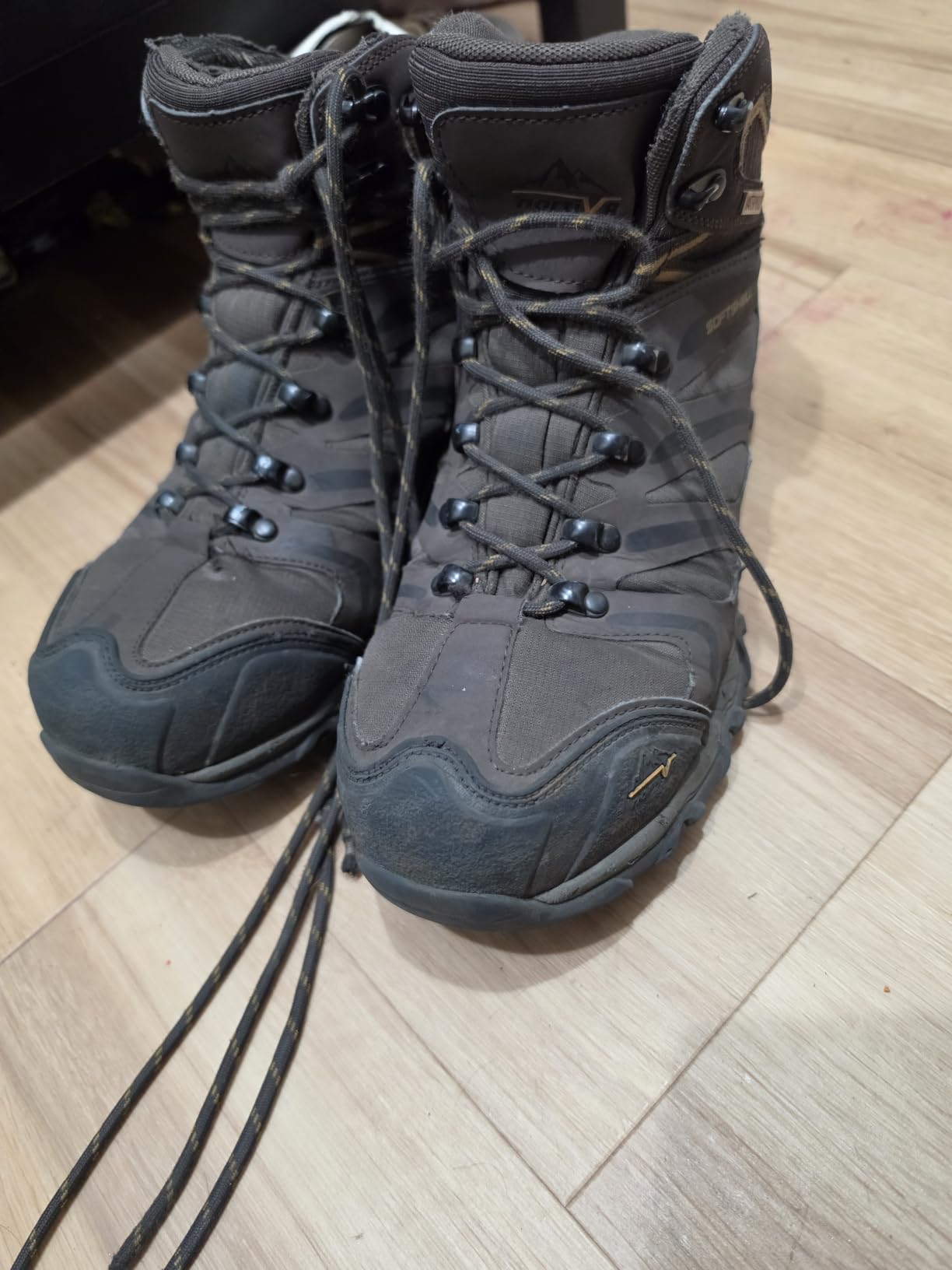
Where it slips is fine detail. The fit can run slightly large, which is a real problem for a narrow foot, and the heel design catches on jeans, which sounds trivial until you are pulling a boot on with one hand. Dirt and rocks entering from the top is another recurring note, and reviewers are clear that this is not the boot for heavy industrial work.
Our verdict: the strongest general-purpose pick. If your site is wet, muddy or cold and your arch pain is moderate, this handles the environment and the condition in one package without the weight of a leather-cored boot.
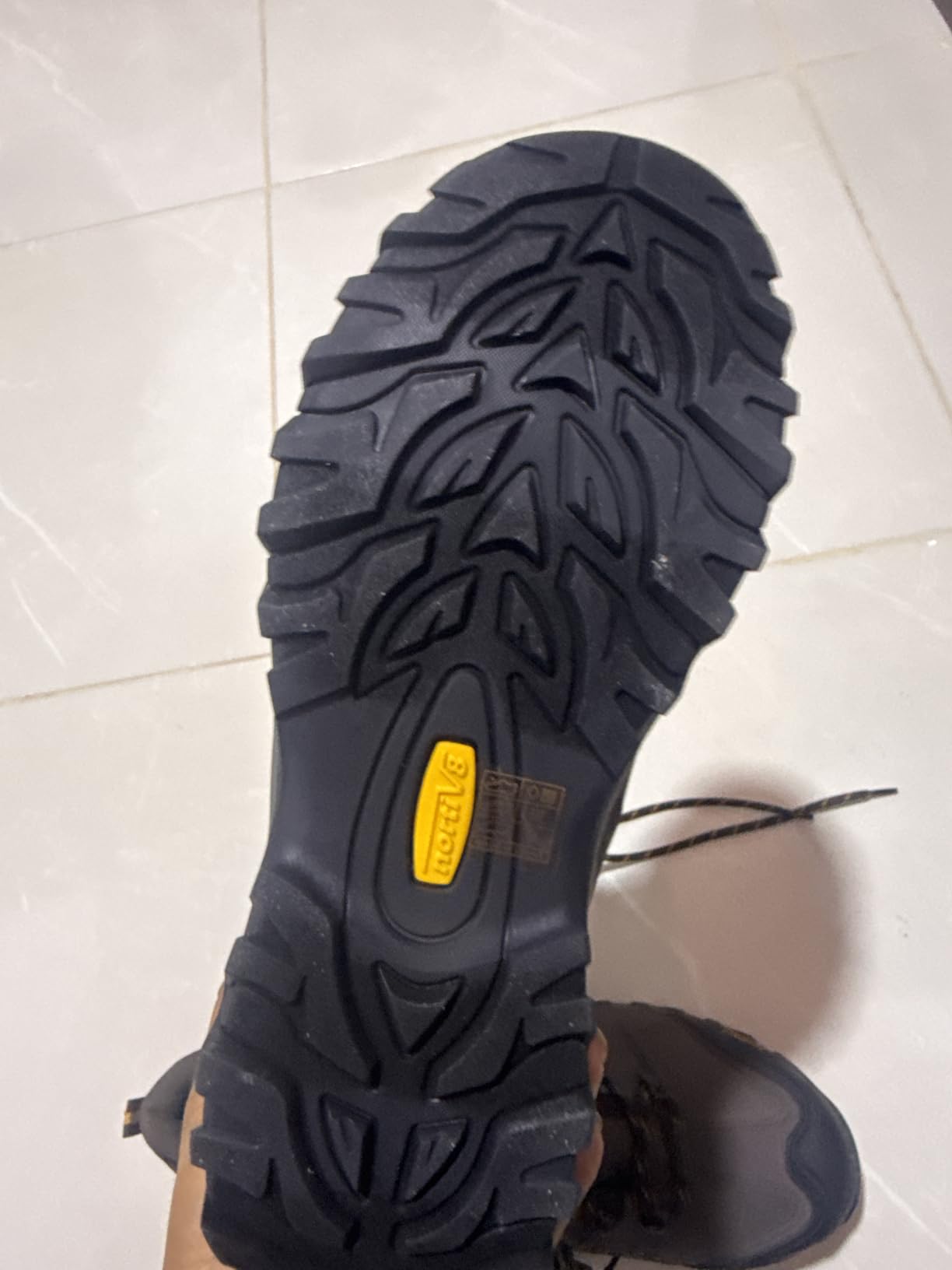
Does the EVA midsole compress over a long shift?
All EVA compresses eventually, and this is the tradeoff for a boot that feels light on day one. Reviewers who work long shifts describe the comfort holding for a full day, but they also flag that the inner liner may come loose over time on longer ownership.
Practical approach: keep a second pair or a fresh insole on hand for weeks when the job is permanently on hard flooring. The lightweight EVA is the reason your legs feel better at the end of a shift, so it is worth protecting with a rotation rather than wearing one pair into the ground.
Should I size down?
Only if you have a narrow foot. Most reviewers find it true to size, and the majority of sizing complaints run the other way, toward the boot being generous. For a plantar-fasciitis sufferer the toe box needs room, so sizing down is the wrong instinct here.
Instead, check the heel. A boot that is slightly long in the heel is far less damaging than one that squeezes the ball of your foot, and the lacing on this model lets you control heel lock without over-tightening the forefoot.
3. Skechers Women’s Rotund Darragh Work Boot — Best Value Pick with a Wide Toe Box
Skechers Women’s Work Rotund Darragh Work Lace-Up Boot Safety Toe, Black, 9.5
Air-Cooled Memory Foam insole
Steel safety toe meeting ASTM F2413
Electrical hazard protection
Slip resistant outsole
+ The Good
- Wide toe box suits broader feet
- Lightweight for a steel toe boot
- Good traction wet and dry
- Electrical hazard rated
- The Bad
- Stock insole may need replacing
- Canvas upper is not fully waterproof
- Sole separation after 6 months of heavy use
- Runs small for some wearers
The Rotund is one of the few picks here that is genuinely designed as a womens safety boot rather than a shrunk mens last, and at 3 pounds it is the lightest steel toe in the group. Women in the reviews single out the wide toe box, which matters enormously when plantar fasciitis is the reason you are shopping.
Air-Cooled Memory Foam in the footbed gives a softer initial feel than the leather boots further down this list, and the 4-inch shaft sits lower on the ankle, which reduces the calf fatigue that a tall boot can add over a long shift. The upper is Scotchgard treated and the outsole is slip resistant, so light-duty wet work is covered.
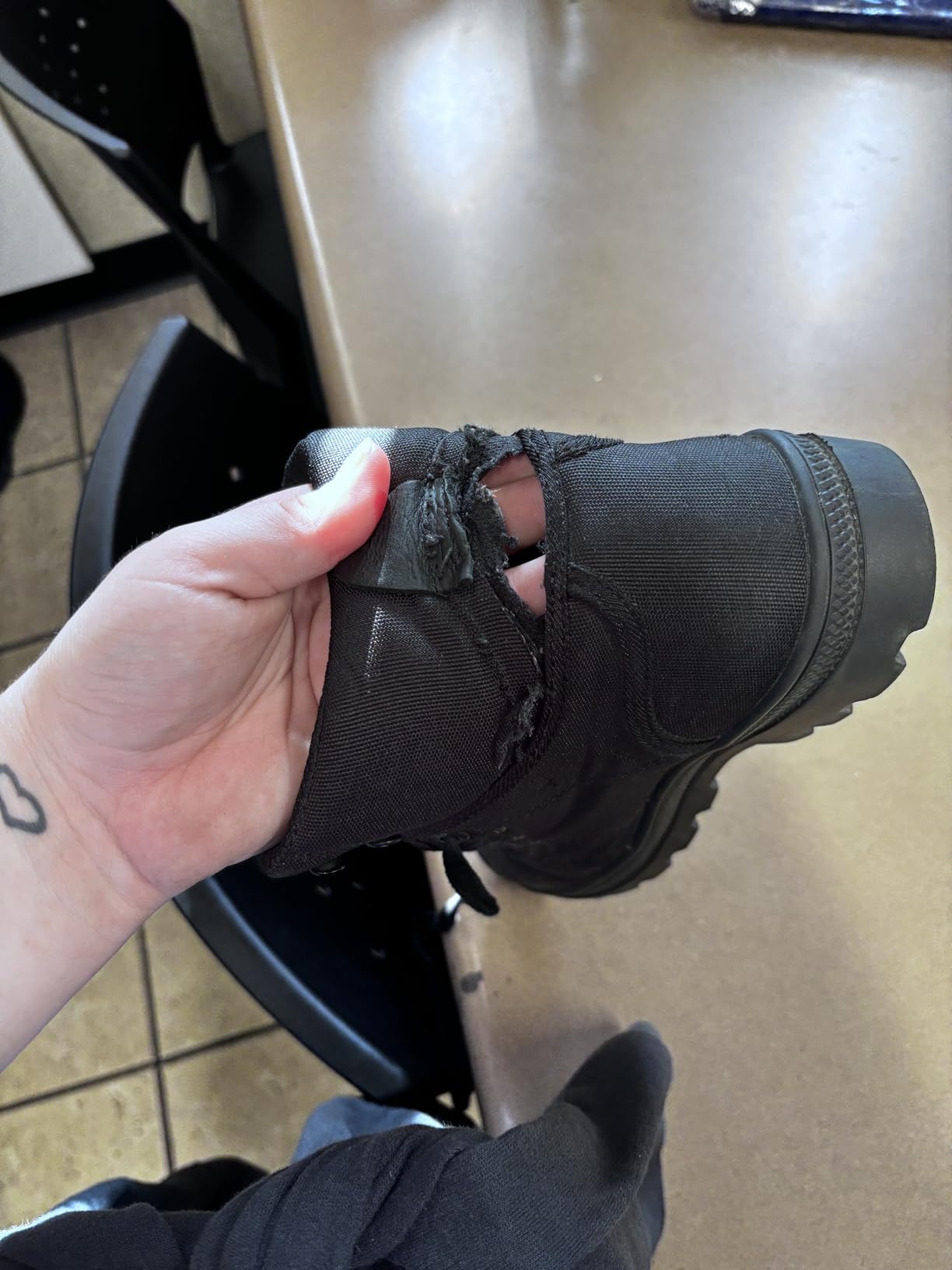
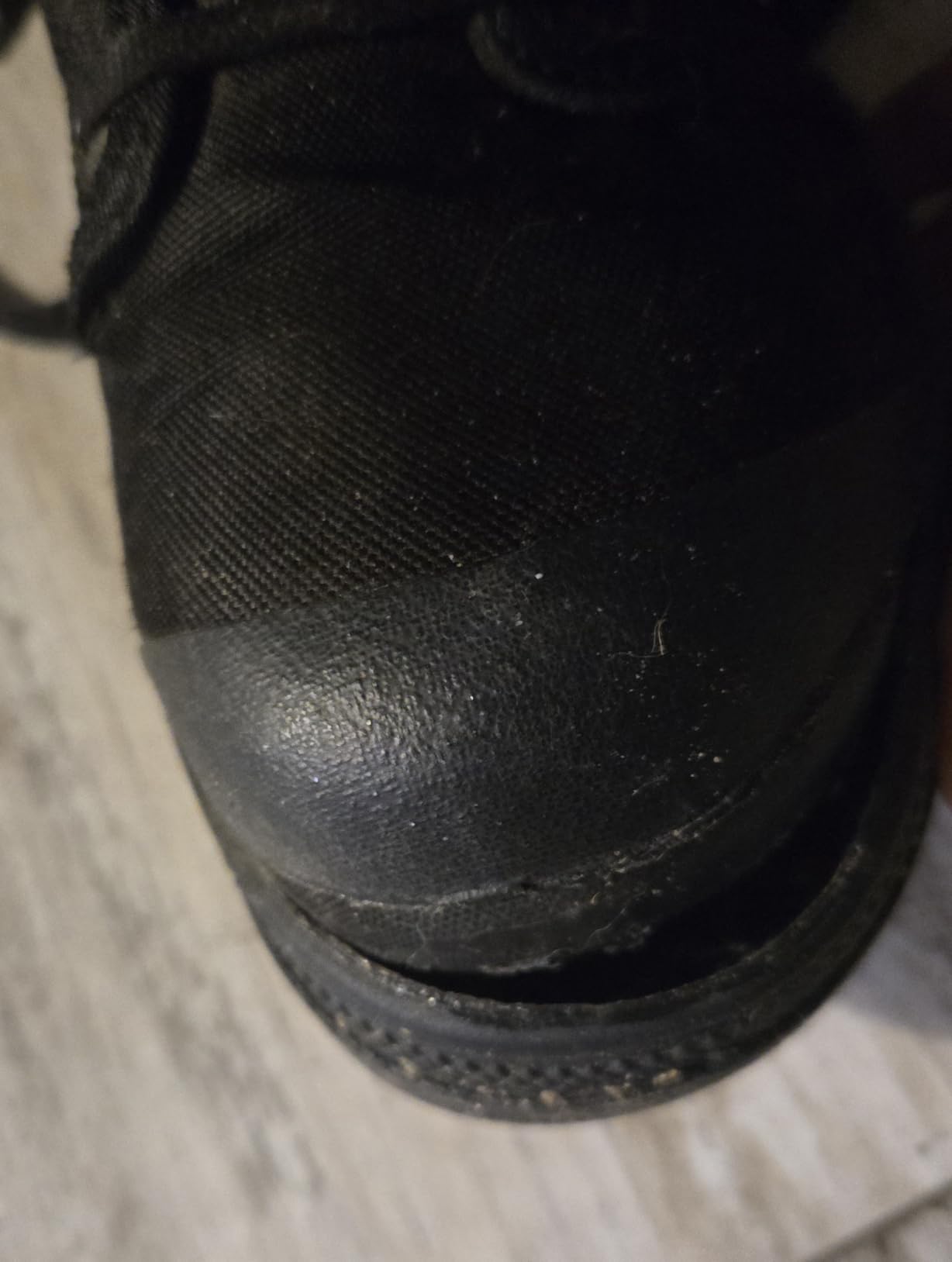
Two cautions. The heavy-duty canvas upper resists water but is not fully waterproof, and the included insoles may need replacing for all-day comfort, which is a pattern we see with memory foam footbeds generally. There are also reports of sole separation after six or more months of heavy daily use, so treat this as a light to moderate duty boot rather than a job-site workhorse.
Our verdict: the easiest recommendation for a woman who needs a wide toe box and a safety toe without a heavy leather build. If you want a boot that will still be intact after two years of warehouse work, look at the Carhartt welted moc toe instead.
Is a memory foam insole good for plantar fasciitis?
Memory foam is comfortable and it absorbs initial impact well, but it is not arch support. It conforms to whatever shape you already have, so if your arch is collapsing it will simply hold the collapsed shape.
That is why this boot suits mild to moderate symptoms rather than severe overpronation. If your pain is concentrated in the arch rather than the heel, plan on adding a structured insert within the first few weeks. The removable insole design makes that swap straightforward.
How long does it last on concrete?
Reviewers report the sole holding together for light to moderate work and separating after six or more months of heavy daily use. On bare concrete with a 10 to 12 hour shift, expect the mid-month checkpoint approach rather than a once-a-year inspection.
Because the upper is canvas, the failure mode is usually the sole bond rather than the leather cracking. A boot that starts to flex at the forefoot is telling you the midsole is done, and continuing to wear it on concrete puts stress on the plantar fascia at exactly the wrong time.
4. Carhartt Women’s Waterproof Moc Toe Boot — Most Versatile Built to Resole
Carhartt 6” Waterproof Moc Toe Boots for Women – Premium Rugged Leather, Goodyear Welt, Insite Tech Comfort Footbed, and Dual-Density Rubber Outsole, Black – 6W
Insite Tech comfort footbed
Goodyear welt construction
Storm Defender waterproof membrane
Dual-density slip resistant outsole
+ The Good
- Excellent waterproofing via Storm Defender membrane
- Premium oil-tanned leather
- Insite Tech footbed is genuinely supportive
- Goodyear welt allows resoling
- The Bad
- Heavier than synthetic alternatives
- Break-in period of a few weeks
- Sizing varies and half size up is often advised
- Higher price point
This is the boot to buy if you plan to keep working in it for years rather than months. Goodyear welt construction means a cobbler can replace the outsole when the tread goes, and for someone with a chronic foot condition that continuity matters more than a perfect first-day feel.
The Insite Tech comfort footbed is the part that serves plantar fasciitis. It is a contoured bed with real arch structure and a cushioned PU strobel pad underneath, which spreads load across the whole foot instead of letting it concentrate at the heel. The Storm Defender waterproof membrane is genuinely effective, and reviewers find the boot breathes despite being fully waterproof.
The dual-density rubber outsole gives a firmer contact patch under the heel and a softer one under the forefoot, which is a sensible arrangement for hard floors. It also grips well, and the moc toe profile gives a roomy forefoot that suits a swollen or wide foot.
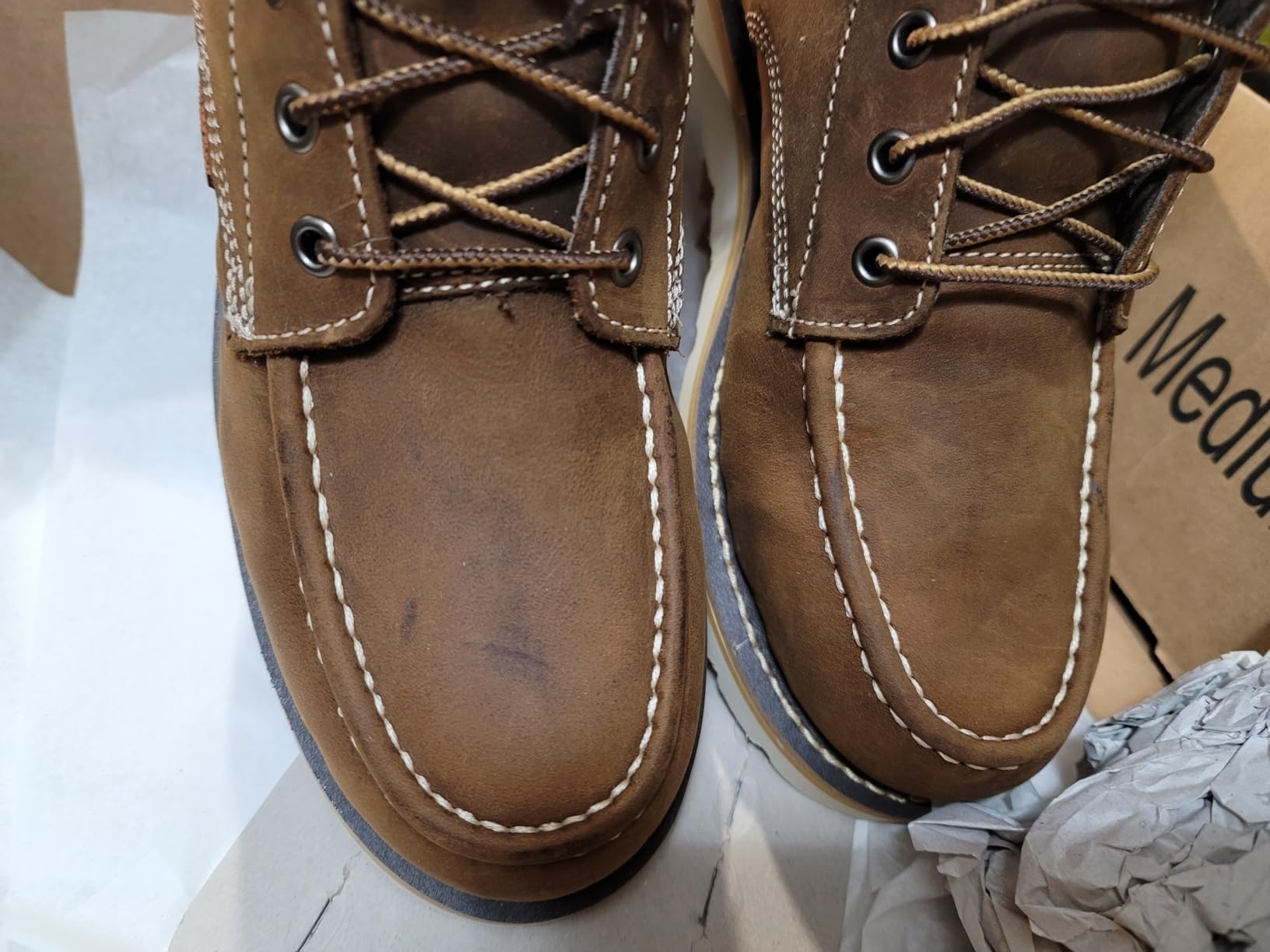
Be honest about the tradeoffs. The leather is heavy compared with synthetic boots, there is a break-in period, and sizing varies enough that reviewers frequently recommend ordering a half size up. If plantar fasciitis pain is severe right now, a stiff new welted boot is a hard first two weeks, so wear it around the house with thick socks first.
Our verdict: the best long-term investment here for anyone in wet outdoor or utility work who will keep the same boot for years.
How do I get through the break-in without aggravating the heel?
Wear them indoors for a few hours a day for the first week, on carpet or a soft floor rather than concrete. The leather gives at the ankle crease and the vamp first, and that is where the foot moves most, so the softening happens in the places that matter.
Do not lace the top eyelet tightly in week one. Pulling the instep down hard is the fastest route to a compressed forefoot, and for a plantar-fasciitis foot the lacing tension should be firm at the ankle and slack across the ball of the foot. A heel lock technique with a short lace run around the top hooks gives stability without squeezing the toe box.
Is Goodyear welt worth it for someone standing all day?
For long-term value, yes, and the reason is simple: a cemented boot is disposable when the sole separates, while a welted boot can be resoled. Reviewers who own the welted version report the construction holding up in a way the cemented models here do not.
The downside is weight. Full-grain leather plus a welt plus a dual-density outsole is a heavier boot, and heavy boots increase leg fatigue, which in turn increases loading through the arch. If your shifts are ten hours or longer, the welt is still the right call because foot fatigue compounds over years rather than months.
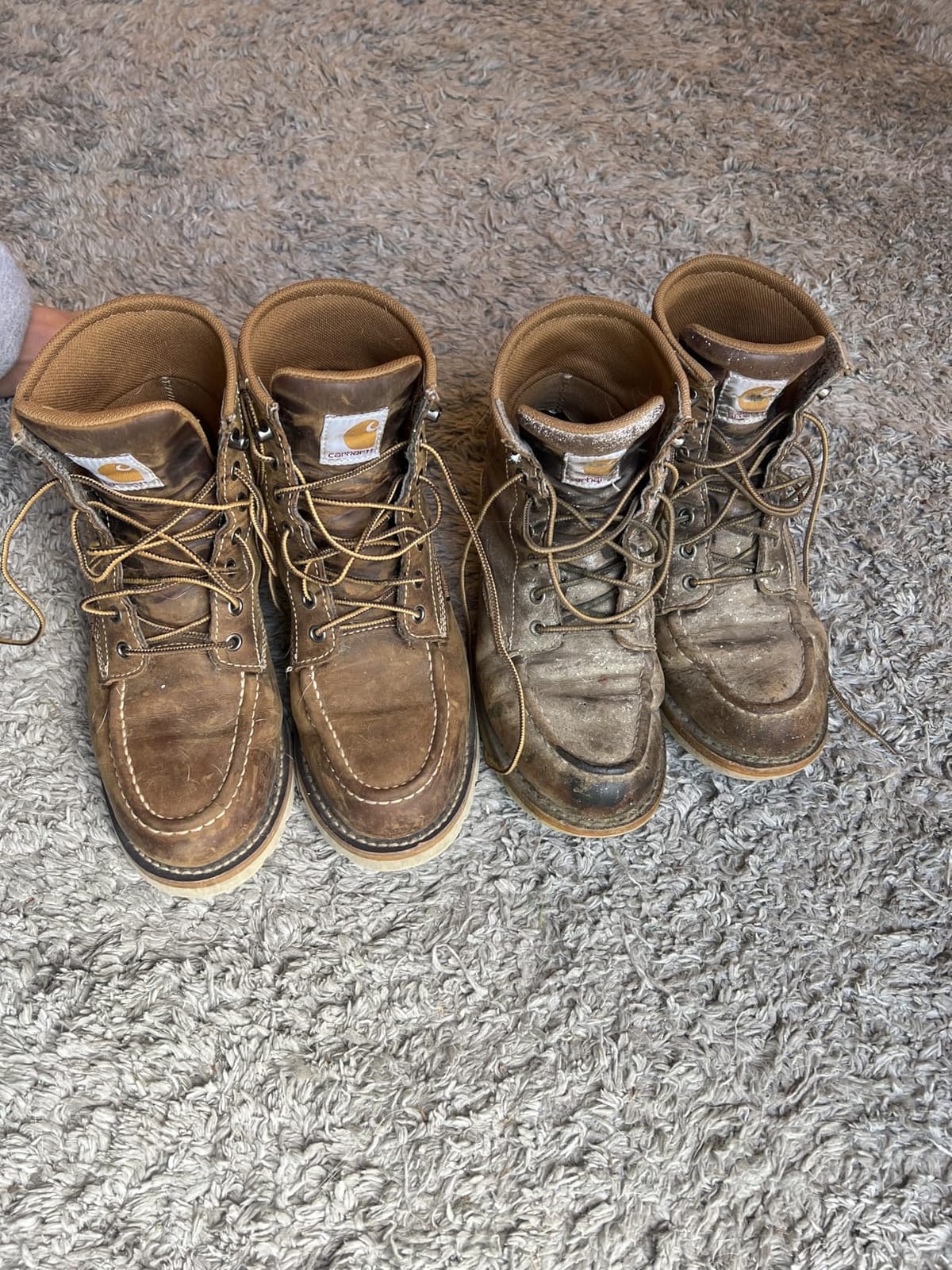
5. ANGRYRAM Steel Toe Waterproof Boot — Budget Pick for Light and Occasional Work
ANGRYRAM Steel Toe Work Boots Waterproof & Slip Resistant for Men Women
Memory foam footbed with arch support
Steel toe cap rated over 200J impact
Puncture resistant midsole
Anti-skid oil proof sole
+ The Good
- Very affordable entry point
- Comfortable out of the box
- Steel toe gives real impact protection
- Puncture resistant midsole adds safety
- The Bad
- Sole separation reported at 2 to 8 months
- Waterproofing degrades after 3 to 4 months
- Included insole quality is poor
- Traction on wet surfaces is mediocre
Think of this as a short-term or part-time boot rather than a career investment. It lists as both a mens and a womens work boot, it is comfortable in the first hour, and the steel toe cap is rated above 200J for impact and 15KN for pressure, which is a real specification rather than a marketing word.
The memory foam footbed with arch support is a reasonable starting point, and the puncture resistant midsole is a nice extra for sites with rebar and debris. The outsole pattern is aggressive, with a tread design meant to mimic an anti-skid tyre.
The durability data is the problem, and buyers are blunt about it. Sole separation is reported between two and eight months, and waterproofing degrades after three to four months of regular exposure. Reviewers also say the included insole quality is poor, which for a plantar-fasciitis shopper means you are replacing the cushioning from the start, and traction on wet surfaces is the weakest in this group.
Our verdict: a sensible first boot for someone who works a few shifts a week, a student trade course, or a weekend hobby where the job is not continuous. If you are walking 8000 to 12000 steps per shift on concrete, move up to the NORTIV 8 or the SUADEX.
Is it worth replacing the insole immediately?
Yes, and this is the single cheapest improvement you can make to this boot. Reviewers flag the stock insole as the weakest part, and a poor flat insole under a foot with arch pain is a common trigger for mid-shift pain that gets blamed on the boot itself.
Budget for a structured, cushioned insert rather than another thin gel. Gel feels great in the morning and compresses by midday on concrete, which is exactly the failure mode that leaves you worse off by the afternoon.
How do I know when to retire it?
Watch the sole bond line at the forefoot. Two to eight months is the reported range, and the tell is the boot starting to flex at the toe with no resistance, or the tread visibly separating at the heel.
Do not push past that point on concrete. A separating sole lets the foot move unpredictably, and unstable loading through the arch is what aggravates an already irritated plantar fascia. Retire it before the separation starts, not after.
6. Orthofeet Granite Orthopedic Work Boot — Best for Orthotic-Level Arch Support
Orthofeet Granite Orthopedic Men’s Work Boots, Brown, Size 11.5
Premium orthotic insole with anatomical arch
Wide toe box design
Composite toe guard and reinforced shank
Multi-layered cushioning
+ The Good
- Orthopedic support built for plantar fasciitis and flat feet
- Premium orthotic insole included
- Wide toe box fits natural foot shape
- Composite toe does not conduct heat or cold
- The Bad
- Premium price point
- Leather needs a break-in period
- Heavier than composite alternatives
- Limited color options
This is the boot in the group with an explicit medical orientation. The manufacturer lists plantar fasciitis, heel pain, flat feet, overpronation, bunions and diabetes as target conditions, and the insole is described as a premium orthotic with anatomical arch support rather than a standard footbed.
That design targets the actual mechanism of the condition. A contoured orthotic with a firm arch post and a deep heel cup does the work the strained ligament can no longer do, holding the arch in a supported position while the multi-layered cushioning manages the ground reaction force from each step. Reviewers with diagnosed foot conditions describe all-day comfort for standing and walking as the defining experience.
The wide toe box is a genuine feature for plantar-fasciitis feet, because a cramped forefoot forces the toes to splay and tightens the fascia across the ball of the foot. The composite toe guard and reinforced shank give safety protection without the cold bridge a steel toe creates, and review notes praise the slip resistance on wet and oily surfaces.
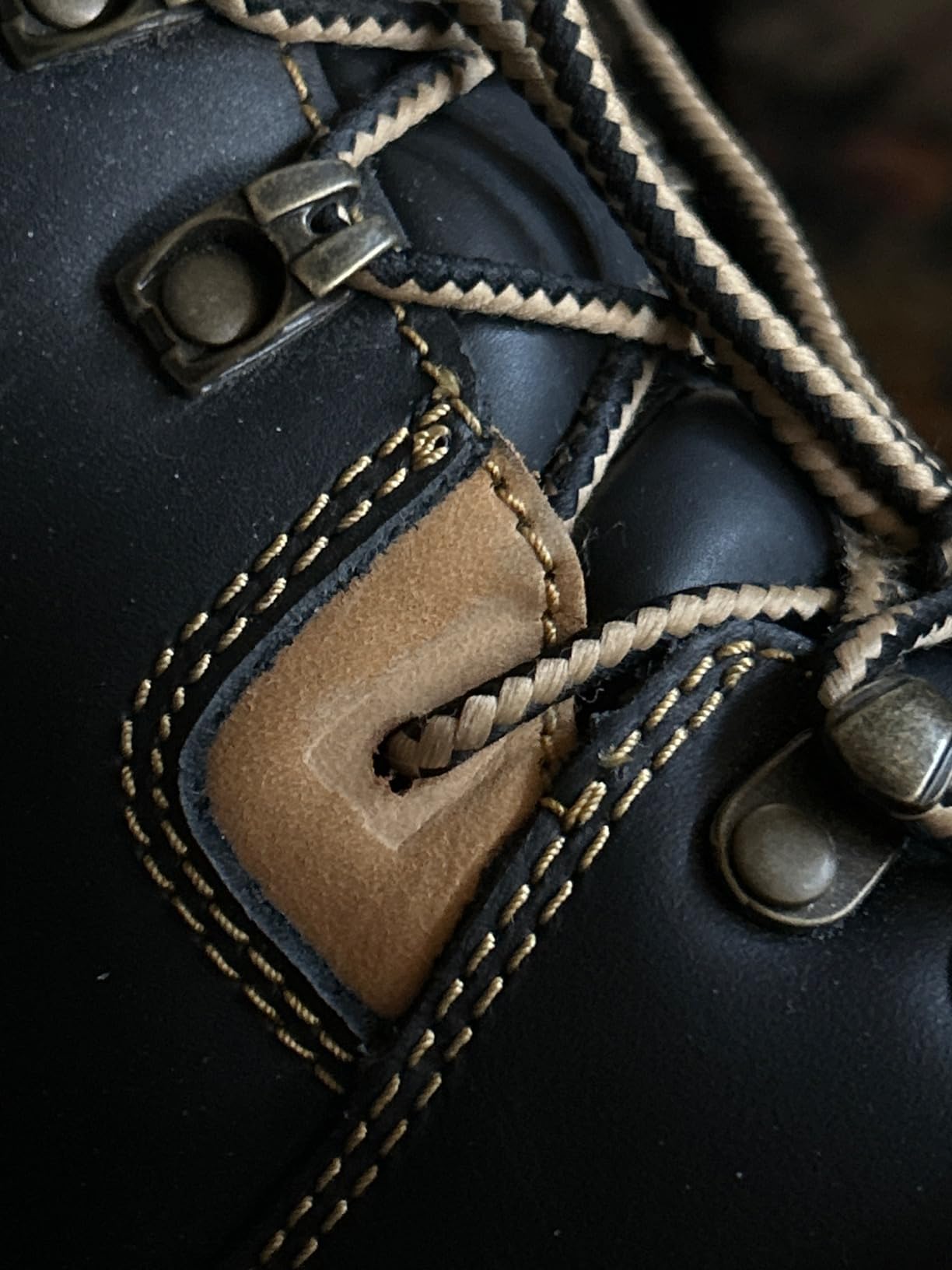
The tradeoffs are straightforward. It sits at the premium end of this list, the leather requires a break-in period, and it is heavier than the composite alternatives. Reviewers also note limited color options, which is a small thing but real if your employer has a uniform rule.
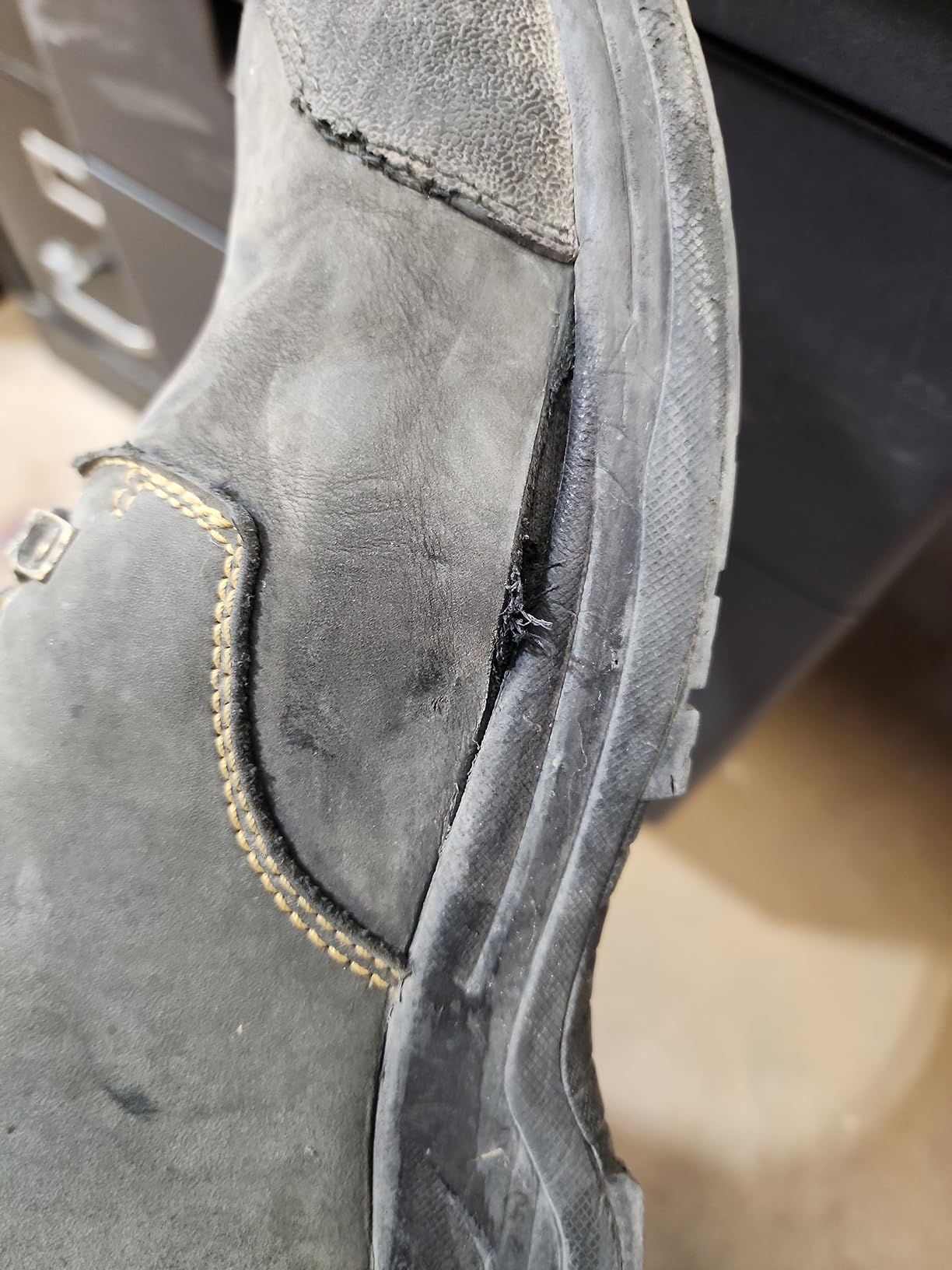
Our verdict: the best choice for anyone whose pain is arch-dominant, who has overpronation, or who has already been told by a clinician that they need structured support rather than cushioning alone.
Do I still need custom orthotics in this boot?
Probably not for most people, and that is the point. The stock orthotic is designed for the same correction a custom device provides for the average foot, so many workers with mild to moderate symptoms never need a second insert and simply swap the factory insole for a more neutral one.
If you already wear custom orthotics and they are not enough, the more interesting question is whether your pain is load-driven. Long shifts on concrete add load that no orthotic fully absorbs, which is exactly the argument for a boot with a wide toe box and multi-layer cushioning working together with your device.
Is a composite toe safe enough for site work?
For most jobs, yes. A composite toe guard with a reinforced shank gives impact and compression protection while weighing less than steel and not conducting heat or cold, which reviewers consistently call out as a comfort benefit on hot or cold sites.
The exception is any environment where penetration from a sharp object is the primary hazard, such as demolition or nail-heavy formwork. Steel or a rated plate handles that case better. Check your site safety rules before you assume a non-metallic toe is acceptable.
7. NORTIV 8 Composite Toe Work Boot — Best for Electrical Work and Cold Shifts
NORTIV 8 Men’s Composite Toe Work Boots Lightweight,Black,10.5W
Nano composite toe rated ASTM F2413-24 I/75 and EH
Lightweight at about 21 oz
Supportive EVA midsole
Side zipper for easy on and off
+ The Good
- Extremely lightweight for a safety boot
- Electrical hazard rated to current standard
- Side zipper makes it easy to get on and off
- No heat or cold transmission through the toe
- The Bad
- Runs large and may need sizing down
- Moisture can enter at the toe and lace area
- Tongue bunches and can irritate
- Plastic lace rivets can bruise the ankle
At roughly 21 ounces per boot in a size 9, this is the lightest safety-rated boot in the group by a wide margin, and weight is a real plantar-fasciitis factor because heavy boots accelerate leg fatigue and fatigue increases arch loading by the end of a long shift.
The nano composite toe meets the current ASTM F2413-24 standard for both impact and compression and carries an electrical hazard rating, which makes this a legitimate option for electricians and anyone working around energized equipment. The toe cap is corrosion resistant and does not transmit heat or cold, so it behaves in cold storage or hot shop environments in a way steel does not.
The supportive EVA midsole with shock absorption and the synthetic leather insole over EVA arch support handle the hard-floor part of the job. Reviewers appreciate the side zipper for entry and exit, and the reinforced TPU structure and wear-resistant nylon upper hold up well for the price.
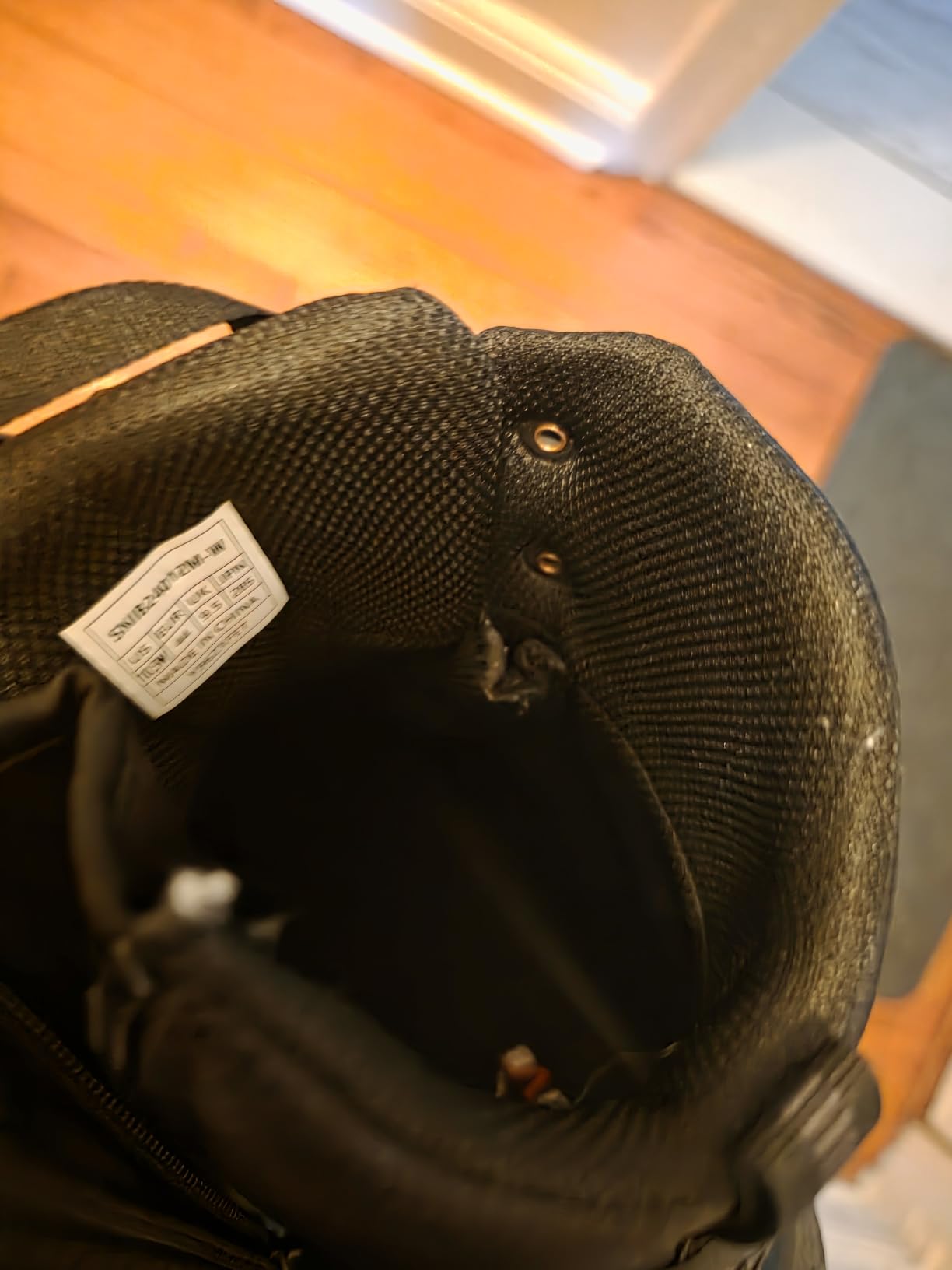
Reviewers are clear on two sizing and build issues: it runs large, so consider sizing down, and the tongue design bunches and irritates the top of the foot. Moisture intrusion at the toe and lace area is reported in snow and wet conditions, and the plastic lace rivets can bruise the ankle, which is an odd but repeatedly mentioned detail.
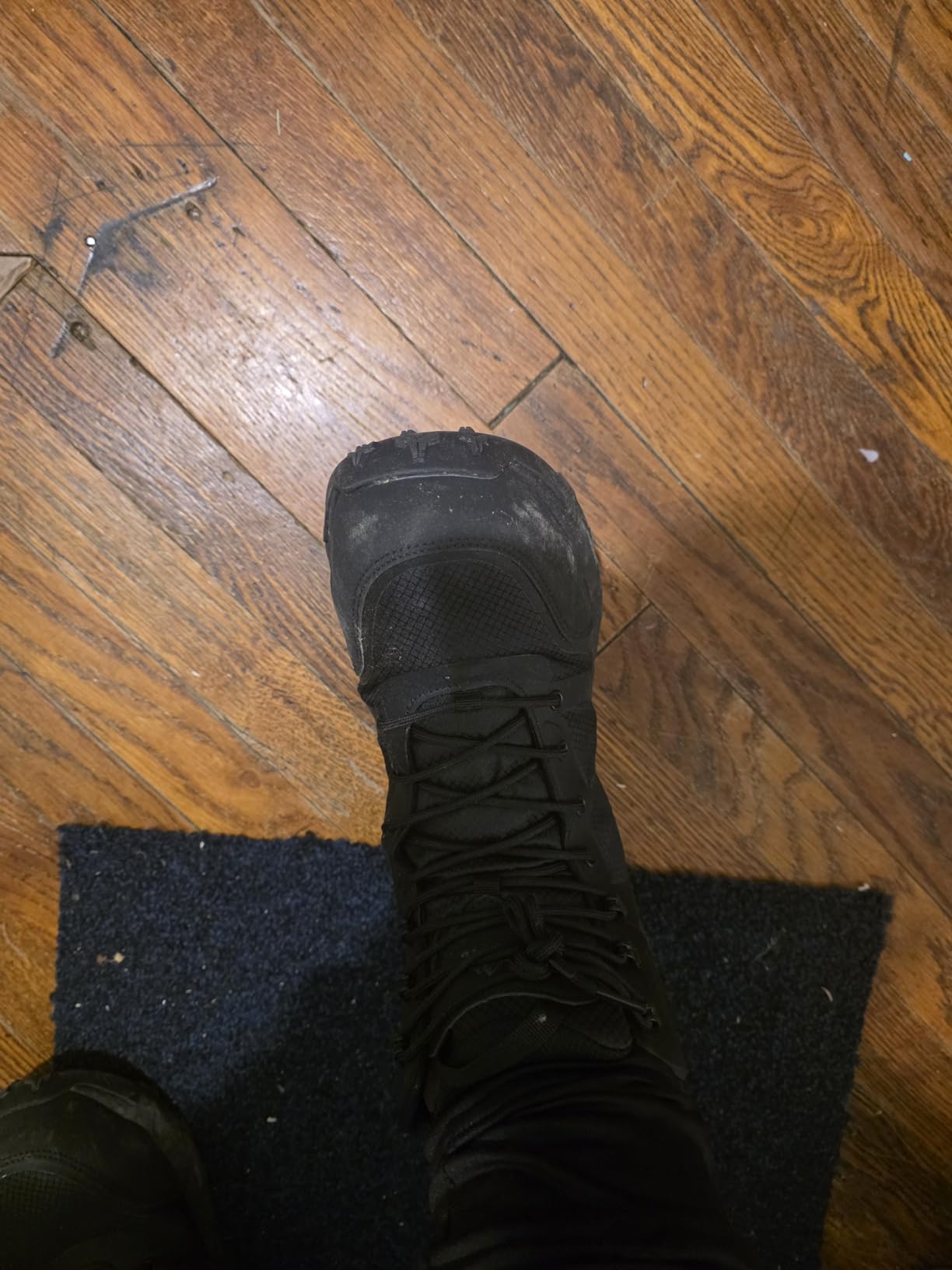
Our verdict: the pick for electricians, cold and hot environments, and anyone whose fatigue is the main problem rather than their arch profile.
Is a lightweight boot as supportive as a heavier one?
Lightness and support are not the same axis. A 21 ounce boot can have a genuinely supportive midsole, and this one does, with an EVA layer that absorbs impact and an arch support insole underneath it.
What lightness does buy you is less end-of-shift fatigue. Leg fatigue is under-rated in foot comfort discussions, and it matters because tired calves change how you stand, which changes how much load reaches the plantar fascia. For a ten hour shift that is a real difference.
How should I handle the tongue and lace rivet issues?
Both are fixable without new boots. Flatten the tongue and secure it to the boot with a strip of medical tape across the front so it cannot fold under itself, and swap the plastic rivet eyelet nearest your ankle for a metal grommet or remove that eyelet from the lace path entirely.
For moisture, treat the tongue area with a water-repellent spray and keep a spare pair of thin socks. The boot is not designed for prolonged wet exposure, and a wet sock against an irritated plantar fascia is its own problem.
8. NORTIV 8 Wide Toe Box Tactical Work Boot — Best True Wide Fit with a Low Heel Drop
NORTIV 8 Men’s Wide Toe Box Work Tactical Boots,Size 10.5,Black,SNMT25001M
True wide toe box for natural toe splay
5mm heel to toe drop
Lightweight EVA midsole
Metal side zipper with hook and loop strap
+ The Good
- Genuine wide toe box for broad feet
- No break-in needed
- Well suited to heel pain and plantar fasciitis
- Lightweight and flexible
- The Bad
- Runs large and may need sizing down
- Tongue fabric bunches and irritates
- Not fully waterproof despite some claims
- Material may not be genuine leather
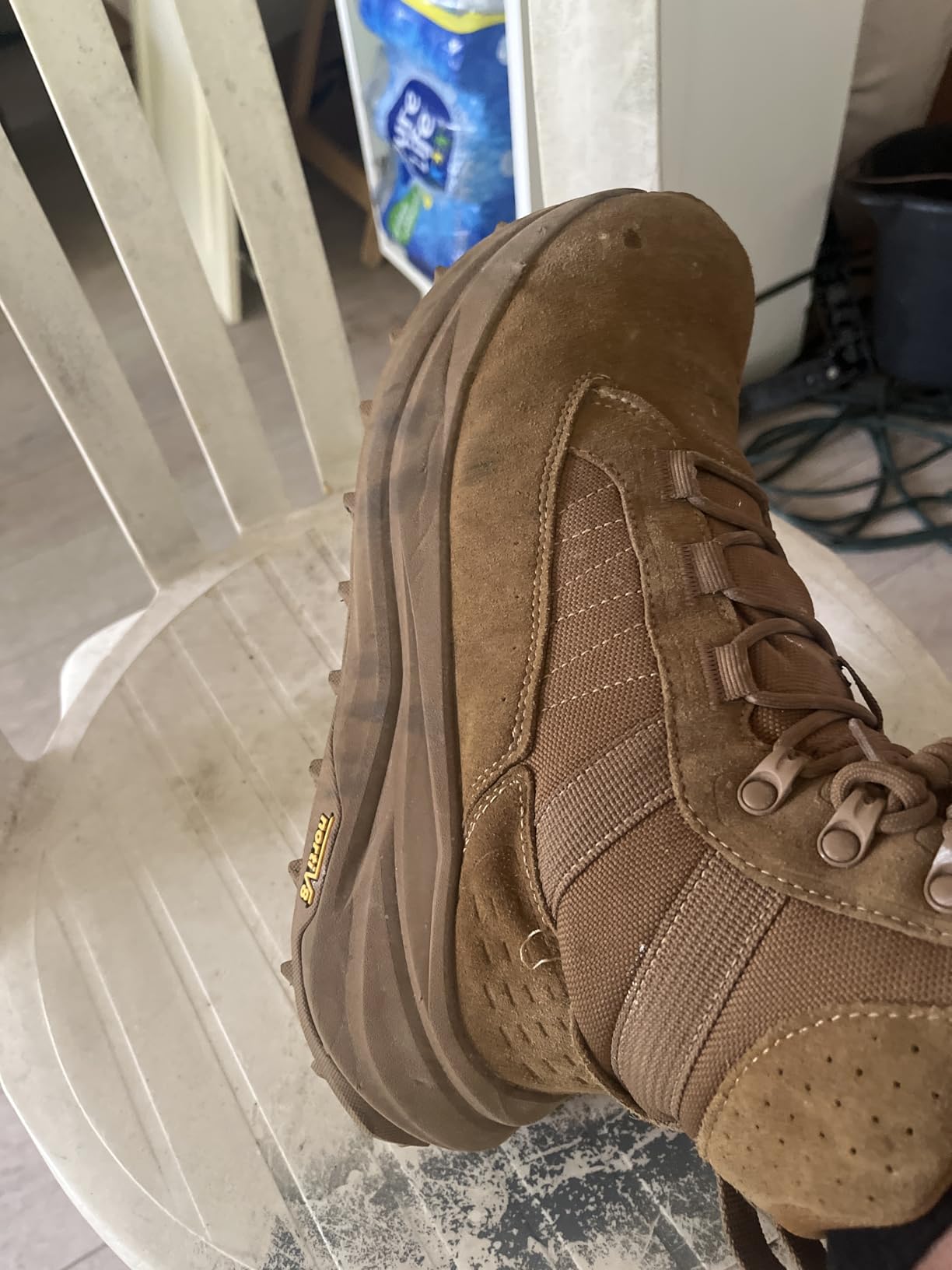
This is the boot to look at first if you have genuinely wide feet, and it is the only pick here with a stated 5mm heel-to-toe drop. A low drop keeps the heel close to the ground, which reduces the downward pull on the plantar fascia compared with a raised wedge heel, and that is one of the details a podiatrist looks at first.
The toe box is described as a true wide design for natural toe splay, and reviewers with wide feet call it the best in this group. Wide feet matter for plantar-fasciitis because the toes are meant to spread on impact, and when a toe box prevents that the arch has to work harder on every step.
Comfort arrives without a break-in period, which several reviewers call out as unusual and welcome when your foot is already painful. The lightweight EVA midsole absorbs shock, the leather and nylon mesh upper flexes easily, and the lugged outsole is designed to minimize mud buildup, which matters on a site where wet ground is daily.
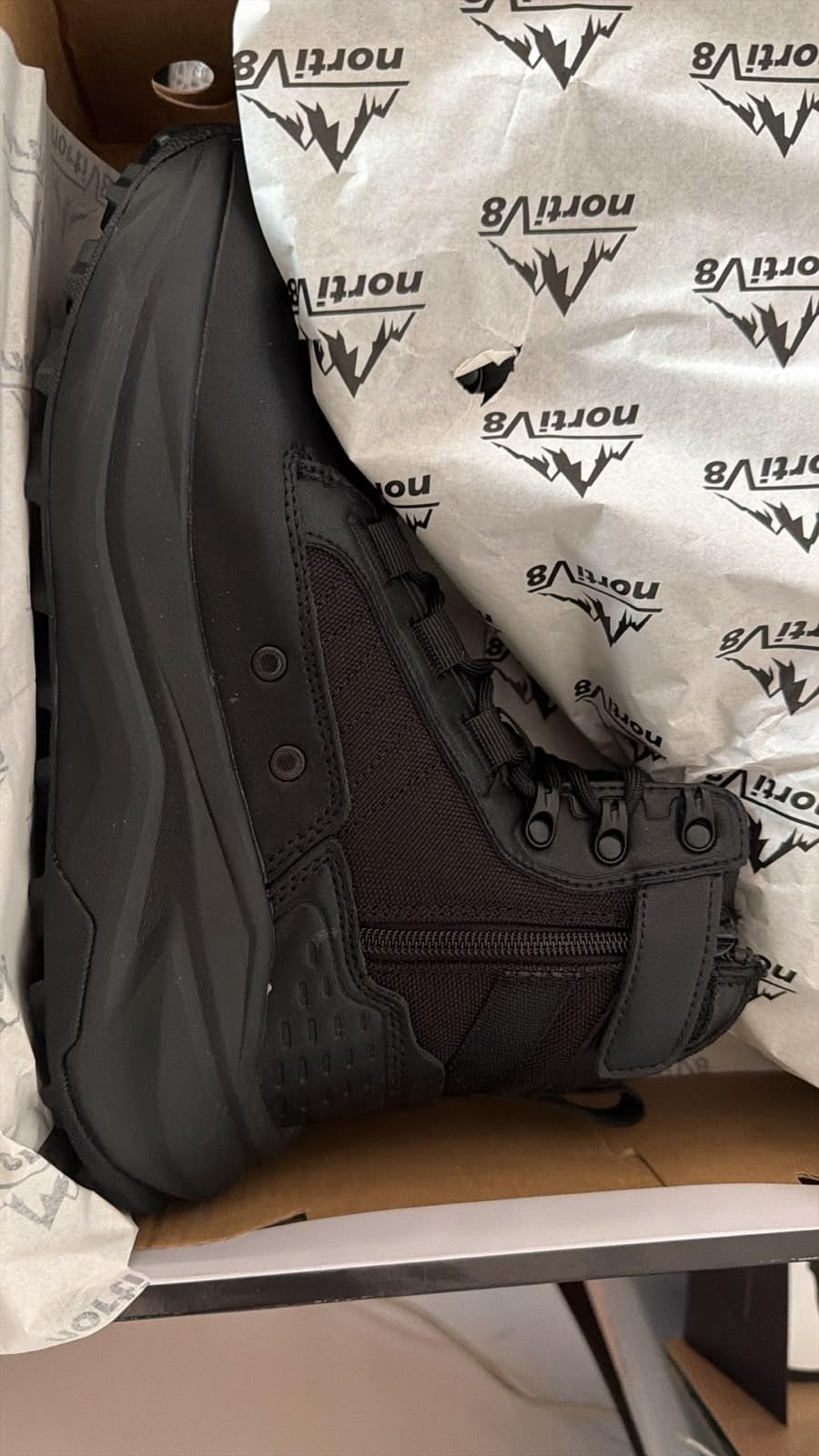
The recurring quality issues are the tongue fabric, which bunches, and the plastic lace rivets that can bruise the ankle. Reviewers also note it runs large, that it is not fully waterproof despite some claims, and that the material may not be genuine leather as described, so treat the listing description with some caution.
Our verdict: the best fit for wide feet and low-drop preference, and a genuinely sensible off-the-shelf option when a narrow safety boot is the reason your arch hurts.
Is a low heel drop actually better for plantar fasciitis?
Generally yes, and it is one of the more useful distinctions on this list. A raised heel shifts your weight forward and increases the stretch on the Achilles and the plantar fascia, while a low drop keeps the load more evenly distributed through the midfoot.
A 5mm drop is not the same as a completely flat shoe. Some heel is useful because it absorbs shock and keeps the Achilles from tightening over a long shift, which can create a different problem. The aim is a low wedge that spreads load without lifting the heel high above the forefoot.
What is the heel lock technique for PF feet?
It is a short lace run that anchors the heel without tightening the forefoot. Skip the bottom eyelet, lace up normally, then run a short piece of lace around the top two hooks and tie it off there, forming a loop that stops the foot sliding forward in the boot.
This matters because forward slide in a boot is a common cause of arch loading. When the heel migrates, the fascia tightens and the arch sags, and a heel lock fixes that without adding pressure across the ball of the foot where the fascia attaches.
9. Skechers Men’s Arch Fit Tarver — Best Podiatrist-Certified Arch Support
Skechers Men’s Work Arch Fit Tarver CT
Podiatrist-certified Arch Fit insole system
Composite safety toe with electrical hazard
Goodyear Rubber outsole
SATRA TM-77 tested waterproof
+ The Good
- Arch Fit insole built from 120000 foot scans
- Flat feet buyers report no separate insert needed
- Composite toe is light and works for motorcycle shifting
- Waterproof construction and strong wet traction
- The Bad
- Laces are consistently reported too short
- Seam stitching can pull after about 8 months
- Bulkier than most composite toe boots
- Less suited to long standing on hard surfaces
The Arch Fit insole is the reason this boot is here. Skechers describes it as podiatrist-certified and developed from 120000 foot scans, and buyers with flat feet report that it removed the need for separate arch support inserts entirely. That is a specific, testable claim rather than a comfort promise, and the review language backs it up.
Reviewers describe long-shift comfort, including one who stood ten hours on renovation carpentry work. The composite safety toe meets ASTM F2413 with electrical hazard protection and is light enough to work well for motorcycle use when shifting, and the Goodyear Rubber outsole grips in wet and dry conditions without holding mud in the lugs.
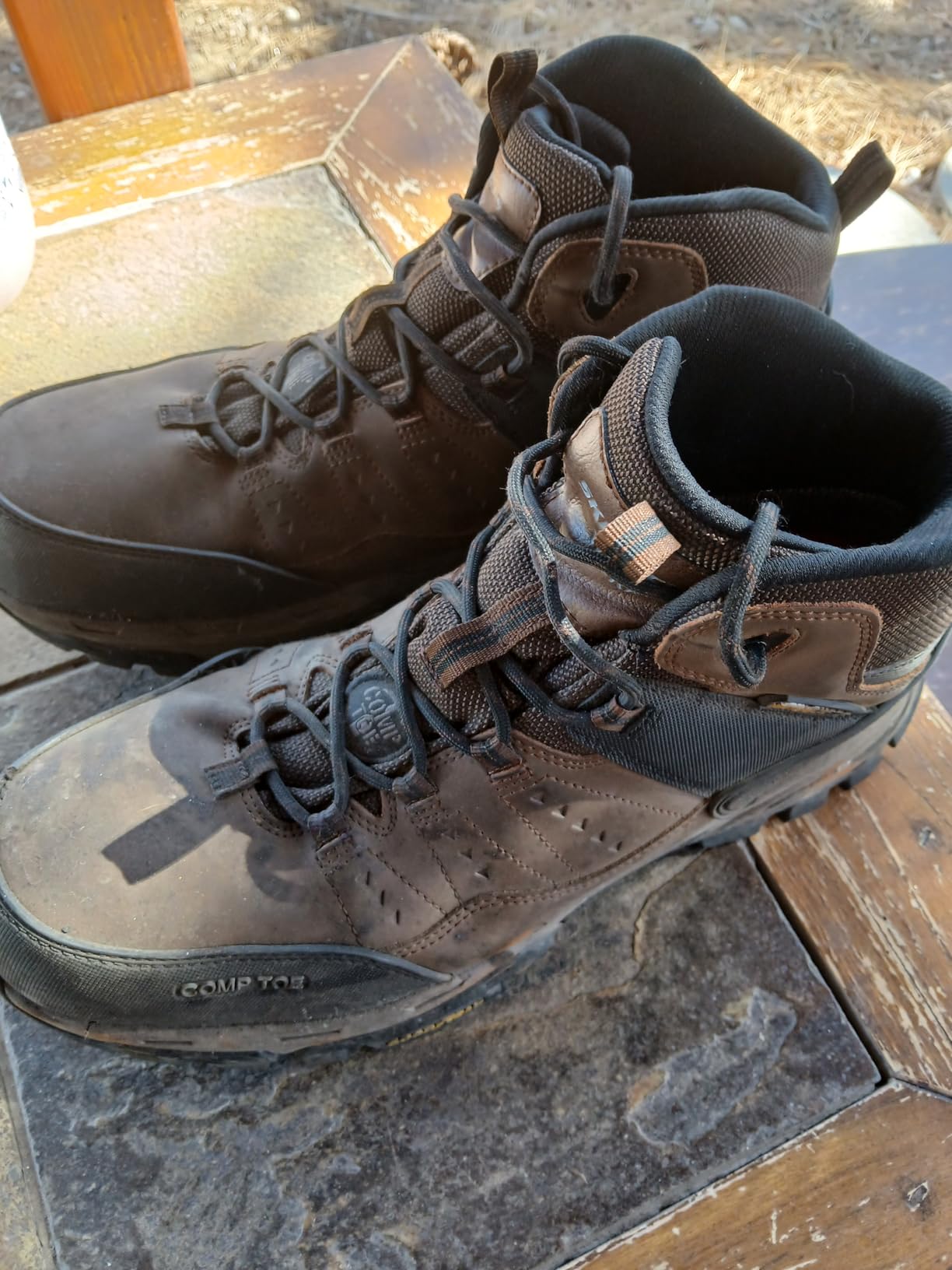
Waterproofing is SATRA TM-77 tested rather than claimed, and the upper is a mix of premium leather, synthetic and mesh with a secure lace-up closure. The toe box is roomy and reviewers with wide feet report no rubbing, while the fit stays true to size in the standard width.
Two consistent complaints. The laces are too short to tie and stay tied, so plan on buying a longer pair on day one. And several reviewers report stitching pulling out of the seams after about eight months. Reviewers also note the boot is heavy and bulky for a composite toe, and that it suits walking jobs better than standing all day on concrete.
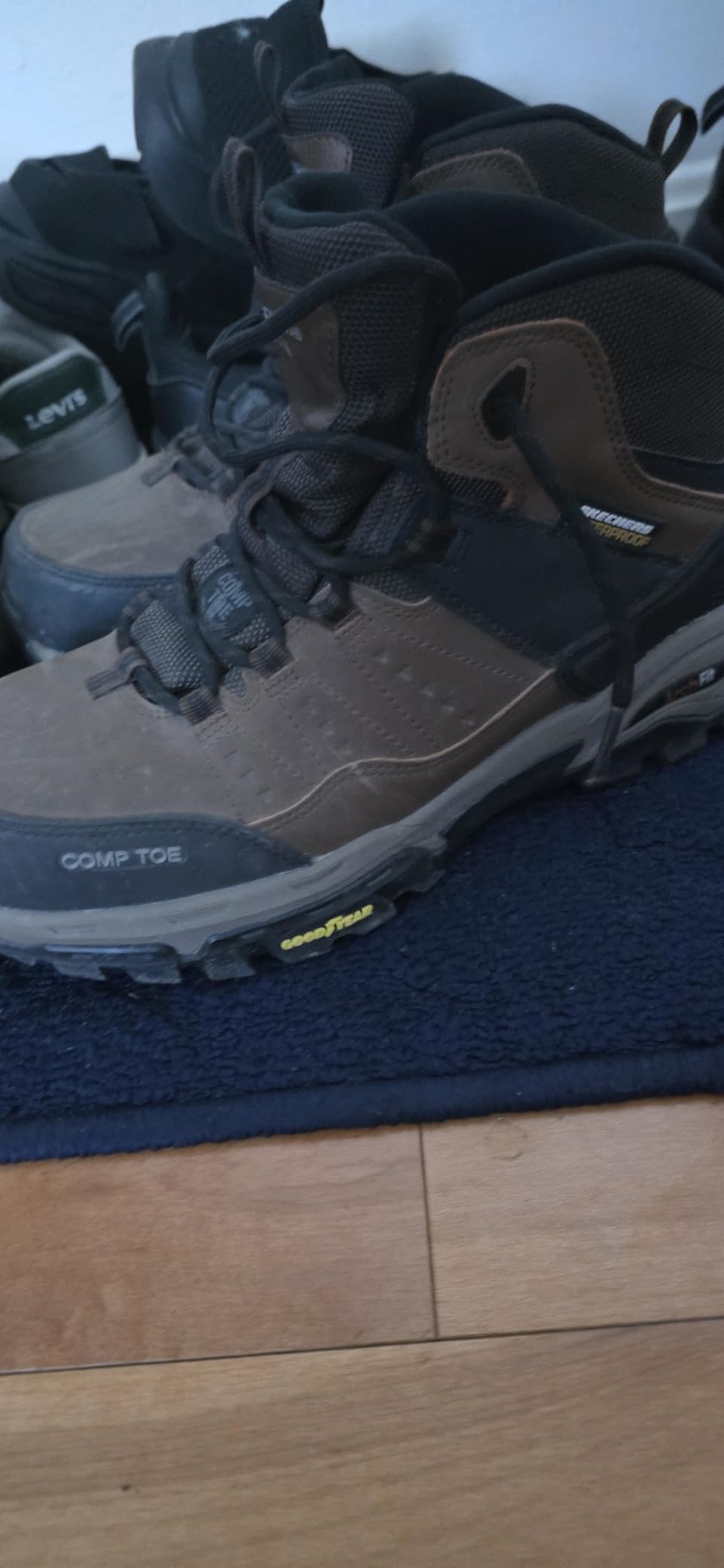
Our verdict: the strongest certified arch support in the group, and the right call for a job that involves a lot of walking rather than static standing.
Do I still need separate arch inserts in this boot?
For flat feet, most reviewers say no, which is unusual for a safety boot. The molded Arch Fit insole provides a firm, contoured arch that holds position rather than a soft layer that compresses, so it keeps working late into a shift instead of collapsing by lunch.
If you already own custom orthotics, test them in this boot before buying it. A factory insole that already feels firm may be too much under a custom device, and the removable footbed makes that comparison easy.
Is it waterproof enough for wet site work?
For rain, mud and standing water, yes. The construction is tested rather than asserted, and reviewers confirm the waterproofing holds up in wet work environments while the outsole still grips in both conditions.
For immersion, treat that as untested. No safety boot is designed for prolonged submersion, and standing water on a shift is where even good membranes eventually fail at the seam. If your work involves wading, use a dedicated waterproof boot and keep this one for the wettest but not submerged hours.
10. Ariat Women’s Fatbaby Work Pull-On Boot — Best for Ranch, Farm and Equestrian Work
ARIAT Women’s Fatbaby Work Pull-On Steel Toe Work Boot
4LR support and stability system
Removable All Day Cushioning insole
Duratread outsole rated to 300C
Steel toe meeting ASTM F2413
+ The Good
- Duratread outsole is oil and slip resistant
- Full-grain leather with cement construction
- Pull-on design needs no lacing
- 4LR system gives lightweight support
- The Bad
- Steel toe adds weight versus composite models
- Break-in stiffness and some early insole failures
- Cushioning is a fixed removable insole not an orthotic
- 8-inch shaft feels warm in hot weather
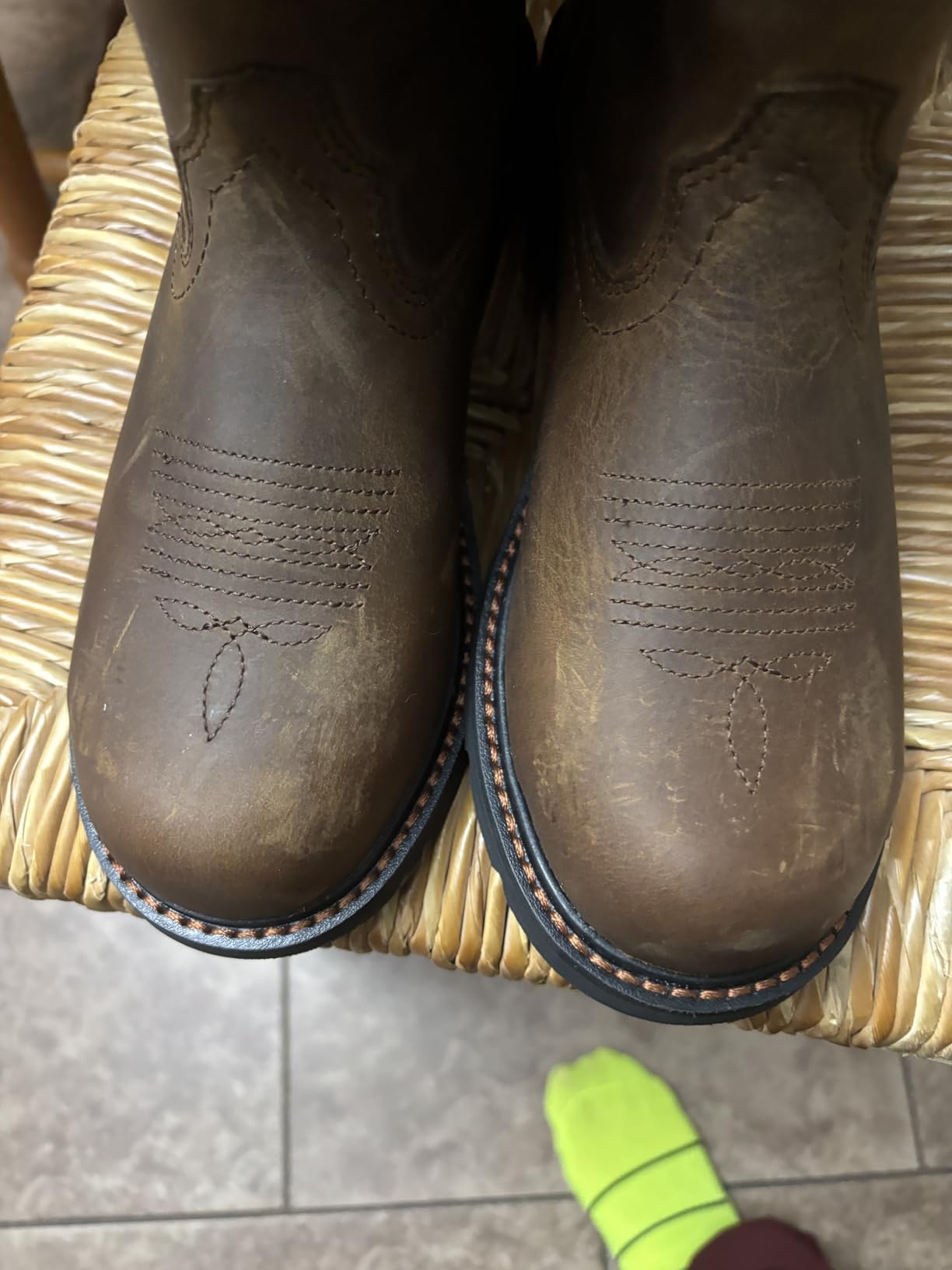
The Fatbaby is the ranch and equestrian boot in this group, and the outsole is the reason. The Duratread compound is oil resistant and slip resistant and passes a hot contact test at 300C, which matters if you work around machinery, hot asphalt or a stall floor covered in wet bedding.
The 4LR support system is designed to give stability without the weight of a heavier shank, and it works with the removable All Day Cushioning insole. The pull-on design is worth calling out for plantar-fasciitis feet: lacing takes time and fine motor effort in the morning, and a boot that goes on in one motion gets worn more consistently.
Steel toe protection meets ASTM F2413 and the outsole slip resistance meets ASTM F3445, so it is a proper safety boot rather than a lifestyle one. The full-grain leather upper with mesh lining on an 8-inch shaft is built for job-site durability, and the stirrup-friendly outsole profile works for riders as well as general work.
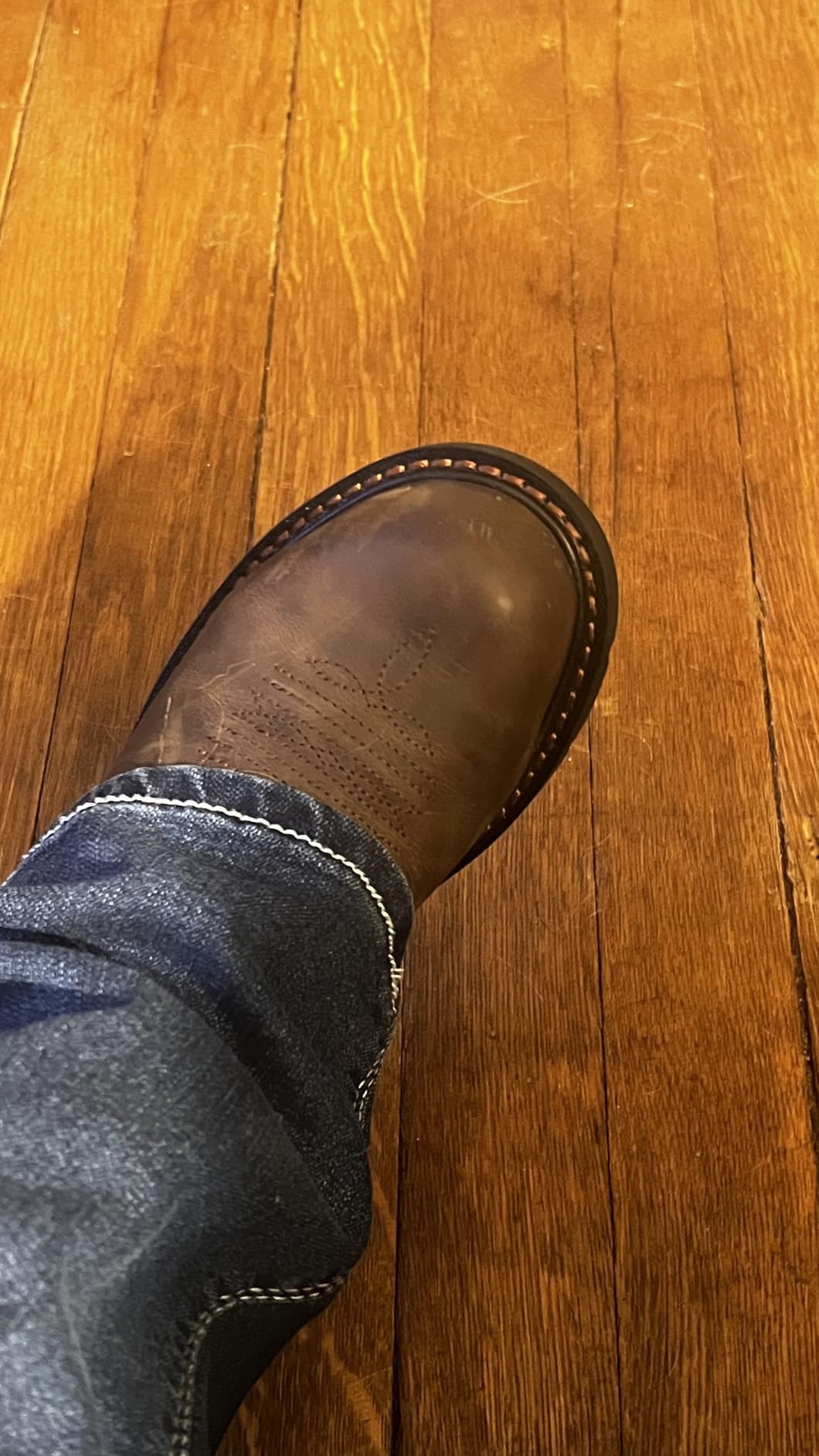
The rating spread tells the story. A meaningful share of 1-star reviews concentrate on break-in stiffness and on the insole or stitching failing early for some buyers. The steel toe also adds weight compared with composite models, and the fixed cushioned insole is not an orthotic, so plantar-fasciitis support depends on your own foot shape. In hot conditions the tall shaft is warm.
Our verdict: a strong pick for outdoor and ranch work where grip and heat resistance matter more than lightness, with the understanding that the insole is a good all-day cushion rather than structured arch support.
Is a pull-on boot easier on plantar fascia than a lace-up?
Often, yes, for a specific reason. Tying laces requires sustained pressure from the toes, and repetitive toe gripping can aggravate both plantar fasciitis and other forefoot conditions. Eliminating that task removes a small but real daily irritant.
The tradeoff is fit control. A pull-on boot cannot be tensioned across the midfoot, so heel lock is not available. If your arch is the main problem rather than the heel, make sure the boot is not slipping at the back as you walk, because that movement tenses the fascia.
Is the All Day Cushioning insole enough for arch pain?
For mild symptoms on softer ground, yes. It is a removable cushioned insole that works well through a full shift, and being removable means you can upgrade it without replacing the boot.
For moderate to severe arch pain, treat it as a starting point. The insole is a fixed cushion rather than an orthotic with an arch post, so a structured insert swapped into the same slot is an easy upgrade that costs far less than new boots.
11. OrthoComfoot Wide Waterproof Hiking Boot — Best for Heel Spurs, Bunions and Swollen Feet
Men’s Orthopedic Wide Hiking Boots: Plantar Fasciitis Orthotic Foot Pain Relief Trail Sneakers, Flat Feet Arch Support Comfortable Outdoor Adventures Sport Standing Durable Ankle Boots Khaki Size 11
Built-in orthotic arch support
Wide and X-Wide toe box sizing
Waterproof to 27 hours static
Extra insole pair included
+ The Good
- Orthotic support credited with relief through 10 hour shifts
- Wide and X-Wide sizing across many lengths
- Comfort reported to hold through 24 hour shifts
- Spare insole pair ships in the box
- The Bad
- Outsole reported slippery on smooth indoor floors despite deep tread
- Toe uppers tear after a few months
- Runs small length-wise and generates returns
- Bulky styling not suited to uniform rules
This is the most explicitly condition-targeted boot in the group. It is a wide and X-Wide orthopedic hiking boot rather than a safety boot, and the manufacturer positions it for plantar fasciitis, flat feet and heel spurs with a built-in orthotic arch support.
Reviewers with flat feet and heel spurs report genuine all-day relief and strong stability, and several describe comfort holding through 10 hour standing shifts, with at least one claiming it held through a 24 hour shift. The wide toe box is designed to accommodate bunions, hammertoes and swollen feet, and users say the wide sizing across many lengths stops toe pinching, which is a genuine problem when the toe box is what is aggravating your fascia.
Two practical details make this easier to live with. The waterproof upper is rated for continuous static waterproofing up to 27 hours with a breathable lining, and a spare pair of insoles ships in the box, so you can maintain comfort after the originals compress.
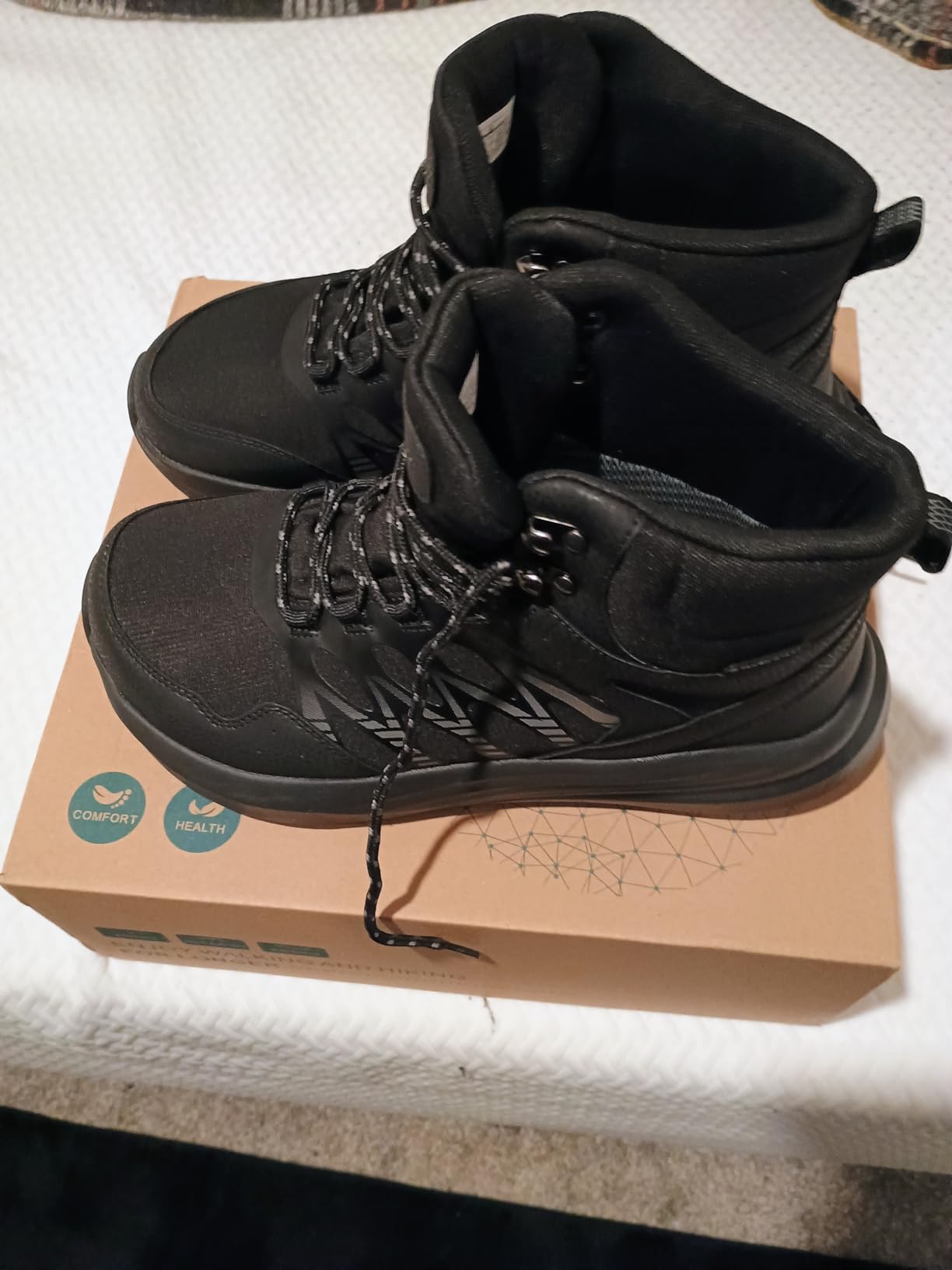
The grip warning is the most serious. Reviewers report the outsole rubber compound as noticeably slippery on smooth indoor surfaces despite the aggressive tread pattern, and that matters a great deal for anyone on polished concrete, sealed warehouse floors or steel stair treads. Toe uppers begin tearing after a few months for some owners, and the boot runs small length-wise, which is the usual cause of returns. Styling is also bulky and off-road rather than uniform appropriate.
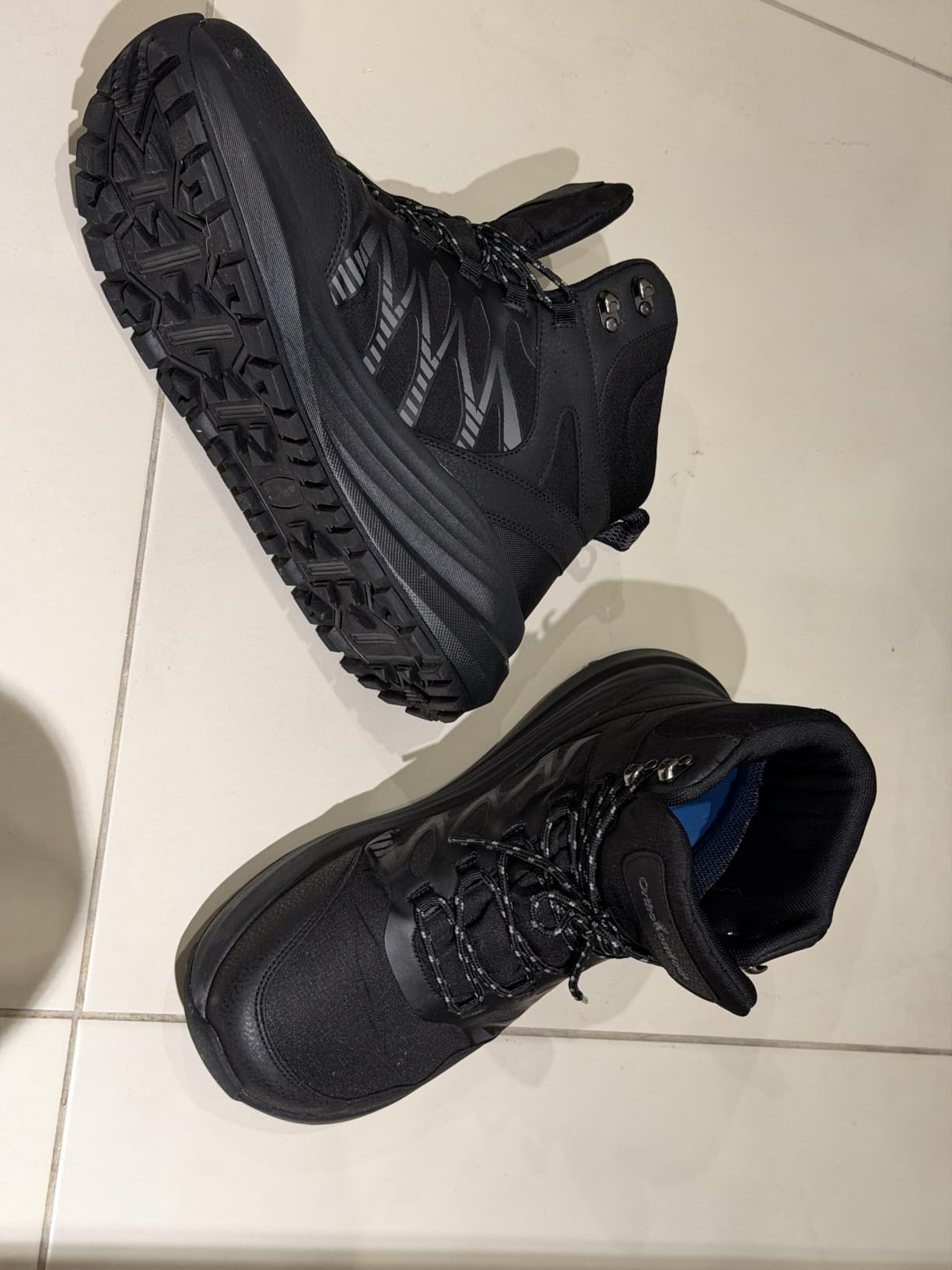
Our verdict: worth it for severe heel pain, bunions or swelling where a normal safety boot will not fit, but not for smooth indoor floors unless you address traction separately.
Is it safe to use on a warehouse floor with smooth concrete?
Not without addressing the grip first. Multiple reviews describe the outsole as slippery on smooth indoor surfaces, and smooth concrete is exactly where a slip turns into a load injury to a foot that is already compromised.
If you work indoors, add a high-friction insole with a grippy heel patch and test the traction in work socks before a full shift. A textured overshoe is the other option. Whichever route you take, do not rely on deep tread alone as evidence of slip resistance.
How does sizing work across wide and X-Wide?
The line runs through wide and X-Wide across many lengths, which is exactly the coverage most safety boot ranges lack. That makes it easier to find room for a wide forefoot without going up a full size and creating a gap at the heel.
The catch is that it runs small length-wise, so reviewers see plenty of returns when people order their labeled size. Order a half size up, confirm that the toe box still has room across the forefoot, and use the adjustable lacing to take out the slack at the ankle.
12. Carhartt Women’s Frontier Chelsea Steel Toe Boot — Best Light-Duty Women’s Pick
Carhartt Women’s Frontier Water-Resistant Chelsea Steel Toe Boots for Women – Lightweight EVA Midsole, Durable Rubber Outsole and Cushion Footbed, Bison Brown Oil Tan – 9
INSITE podiatrist-designed arch support footbed
Lightweight EVA midsole for rebound
Steel toe meeting ASTM F2413-24
FastDry moisture wicking lining
+ The Good
- Podiatrist-designed cushioned footbed with arch support
- Lightweight EVA midsole feels flexible and lively
- Chelsea styling means no laces to retie
- FastDry lining keeps feet dry on long days
- The Bad
- Chelsea elastic can stretch out of shape over time
- Sizing runs narrow through the toe box for some
- Water resistance is repellent not a full membrane
- Footbed is fixed and not a removable orthotic
The Frontier is the lighter, more modern alternative to the Carhartt welted moc toe, and its selling point is the INSITE footbed paired with a lightweight EVA midsole. INSITE is a podiatrist-designed high-rebound cushioned footbed with arch support, and the rebound response is what keeps it from flattening out late in a shift.
Compared with a traditional leather-cored work boot, the EVA midsole makes this noticeably lighter and more flexible, which reviewers consistently praise. The Chelsea pull-on styling removes laces entirely, and for anyone whose foot pain makes fine motor tasks unpleasant in the morning, that is not a minor benefit.
The steel toe meets the current ASTM F2413-24 standard for both impact and compression, the Rain Defender lining handles wet weather, and the FastDry sweat-wicking lining keeps feet comfortable on long days. The durable rubber outsole handles the ground contact.
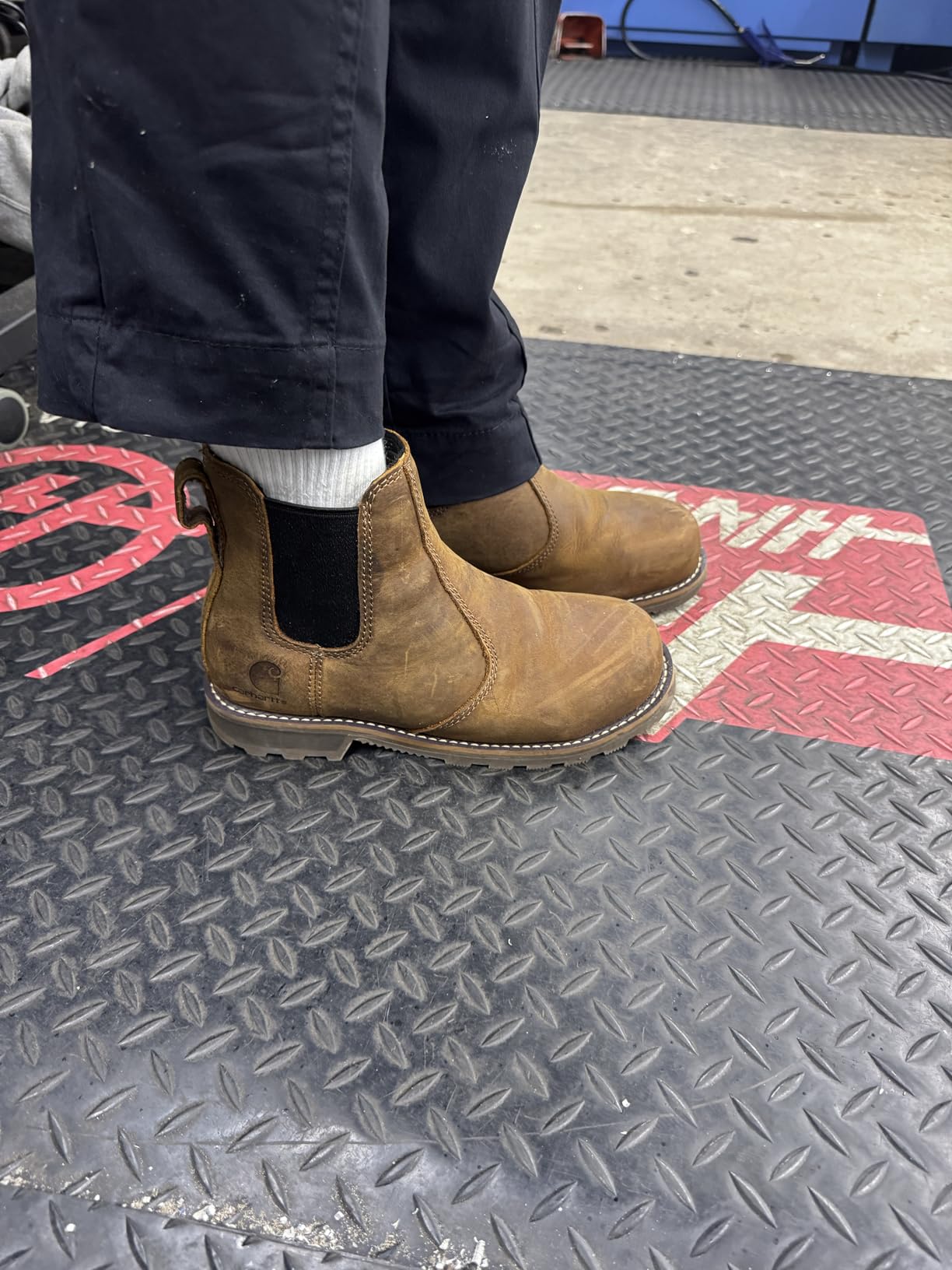
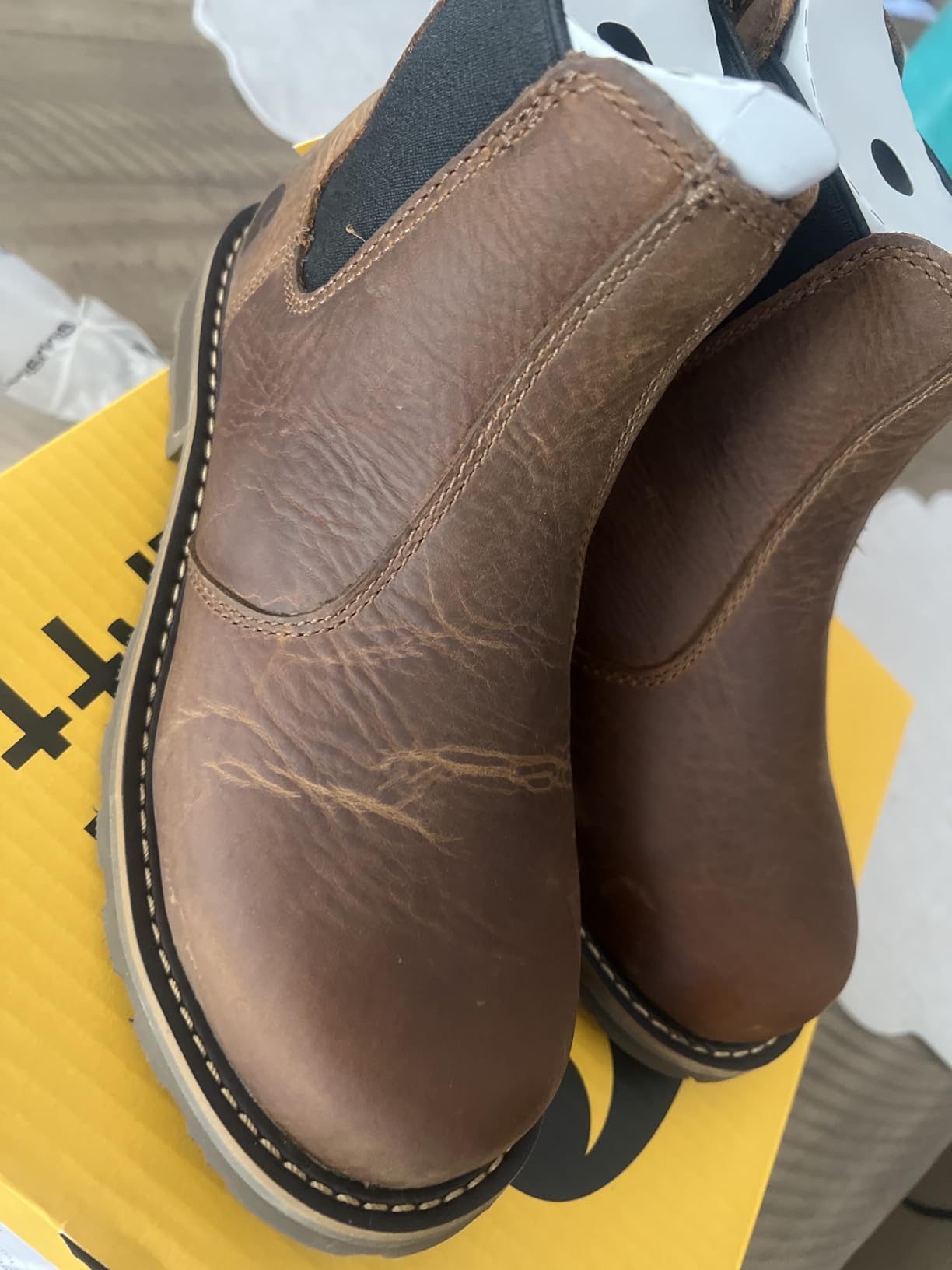
Be clear-eyed about the limits. The Chelsea elastic side panels can give after extended daily wear and stretch out of shape, sizing runs narrow through the toe box for some wearers which leads to returns, and the water resistance is a repellant treatment rather than a full waterproof membrane. Most importantly for this list, the arch support is a fixed cushioned footbed rather than a removable orthotic, so it cannot be swapped for custom inserts.
Our verdict: a good light-duty pick for women in office-adjacent, retail or utility settings, but the fixed footbed is a genuine limitation if your plantar fasciitis needs structured support.
Is a fixed footbed a problem for chronic plantar fasciitis?
It is a limitation rather than a dealbreaker. You cannot swap in a custom orthotic or a structured insert, so if the built-in cushioning is not firm enough for your arch, your only option is a different boot rather than a different insole.
That is exactly the situation we see in reviews of fixed-footbed boots generally, where the comfort is real but the ceiling is lower. If your pain is mild and you are on your feet for a few hours a day, the high-rebound footbed is genuinely fine.
How does this compare with the welted Carhartt moc toe?
The welted moc toe is the heavier, more durable, fully waterproof option with a break-in period and a resolable sole. The Frontier is the lighter, more flexible option with a lighter synthetic build and laces you do not have to tie.
Pick the welted boot for outdoor, wet and long-term work where longevity decides the value. Pick the Frontier for light to moderate indoor duty where lightness and easy entry matter more than a decade of service.
What Is Plantar Fasciitis and Why Footwear Matters
Plantar fasciitis is inflammation and micro-tearing of the plantar fascia, the thick band of tissue running from the heel to the toes that supports the arch of the foot. It is most often caused by repeated strain from standing and walking on hard surfaces, and it typically shows up as stabbing heel pain with the first steps of the morning.
The reason a work boot is a serious intervention rather than a fashion choice comes down to numbers. A worker on a warehouse or factory shift takes somewhere between 8000 and 12000 steps. Concrete and steel have essentially no give, so the full impact force of each step travels back up through the heel into the ankle, knee and lower back. A foot with plantar fasciitis turns that load into escalating pain and inflammation rather than absorbing it quietly.
A supportive boot reduces what reaches the fascia in two ways. A contoured footbed with firm arch support does the job the strained ligament can no longer do, and a shock-absorbing midsole plus a heel stabilizer cuts the ground reaction force of each step. Heel pain in the afternoon, rather than the morning, usually means the cushioning has compressed and the load has returned.
One more piece of the chain deserves attention: leg fatigue. Heavy boots make your legs tired by hour eight, tired legs change how you stand, and the new stance loads the arch differently. Keeping the boot light is therefore a foot comfort decision, not just a preference.
Best Work Boots for Plantar Fasciitis by Job and Environment
Matching the boot to the floor is the fastest way to get this right. A boot that works beautifully on gravel can be a slip liability on sealed concrete, and a heavy welted boot built for a ranch is unnecessary weight in a distribution centre.
Warehouse and logistics on concrete, 10 to 12 hour shifts: the SUADEX boot and the NORTIV 8 composite toe are the two to compare. Both keep the foot light and the midsole supportive through a full shift, and both have removable insole slots. For dry indoor floors add a grippy insole regardless of the outsole.
Construction and framing in wet or muddy conditions: the NORTIV 8 waterproof steel toe model, rated for static waterproofing up to four hours, is the practical choice when you are outside in rain. If the site is mud and standing water rather than rain, budget for a boot that has a full waterproof membrane rather than a treated upper.
Electrical work: the NORTIV 8 composite toe is rated to the current ASTM F2413-24 standard for impact, compression and electrical hazard, and the non-metallic toe will not pass a cold bridge from a steel pipe. Check your site rules on penetration protection before you accept a composite toe for demolition work.
Steel grating and factory floors: the Skechers Arch Fit Tarver and the Carhartt Frontier both pair a firm footbed with a flexible midsole. Walking jobs suit the Tarver, while static standing suits the lighter EVA construction in the Frontier.
Ranch, farm and equestrian work: the Ariat Fatbaby is built for it, with an oil and slip resistant Duratread outsole that passes a 300C hot contact test and a stirrup-friendly profile. The full-grain leather and cement construction handle outdoor abrasion better than any synthetic pick here.
Long-haul driving and transport: the NORTIV 8 composite toe is the most comfortable to sit in for hours because it is the lightest and flexes at the ankle, and the Skechers Tarver is also well regarded for motorcycle use when shifting. Driving is one of the few jobs where a steel toe is genuinely annoying, because the foot rests forward against the pedal box.
Landscaping, gravel and uneven terrain: the Orthofeet Granite has the slip resistance reviewers praise on wet and oily surfaces, and the NORTIV 8 wide toe box model has a lugged outsole designed to minimise mud buildup. Neither is a deep-lug boot, so if you are on loose rock daily, add a traction insole.
For more on specific job setups, our rubber work boot roundup covers wet and muddy ground, and our insulated work boot guide covers cold weather shifts where warmth and support compete for the same space.
How to Choose Work Boots for Plantar Fasciitis: 7 Features That Matter
These are the features that separate a boot which manages plantar fasciitis from a safety boot that happens to include a thin factory insert. Work through them in order and you can usually make a confident decision from the product page alone.
1. A contoured footbed with real arch structure. This is the first thing to check. A flat foam insert does nothing for a collapsing arch. Look for the words anatomical, contoured, orthotic or arch post, and treat a footbed that simply says cushioned as a comfort feature rather than a support feature.
2. Shock absorption in the midsole, not just the insole. Insole cushioning compresses within a shift. A midsole layer made of EVA or a similar foam compound keeps absorbing impact after the footbed has flattened, and that is what stops the afternoon pain pattern.
3. A low heel drop. A raised wedge heel pulls weight forward and increases the stretch across the plantar fascia. A low wedge, ideally with a heel-to-toe drop under about 10mm, distributes load more evenly. Full flat shoes are not the goal either, since some heel absorbs shock and keeps the Achilles from tightening.
4. A removable insole. This is the single most practical feature for a long-term purchase. A removable footbed means you can upgrade to a structured insert when your condition changes, or replace a compressed one, without buying new boots. Several picks here have a fixed footbed, which is a real limitation worth weighing.
5. A roomy toe box. Your toes are supposed to spread on impact. A cramped forefoot forces them to splay anyway and tightens the fascia across the ball of the foot, which is a common reason a safety boot makes heel pain worse. Wide and X-Wide options exist; the wide toe box picks in this roundup cover the range properly.
6. Weight. Heavier boots cause leg fatigue over an extended shift, and fatigue worsens overall foot loading. A composite toe can cut several ounces per boot compared with steel, which is why the composite picks are strong choices for long static shifts.
7. Closure style that suits your foot. Lace-ups give you heel lock and fit control, which matters if your arch is the problem. Slip-on and pull-on styles remove the lacing task, which helps if toe gripping aggravates your symptoms, but they sacrifice midfoot tension. For hands-free entry, a side zipper is the best compromise, and two picks here have one.
Decoding the safety rating. ASTM F2413 is the standard for protective footwear. The I rating covers impact, C covers compression, EH means electrical hazard rated, and SR means slip resistant. Steel toe is the heaviest and coldest option, composite and nano composite toes are lighter and do not conduct heat or cold, and carbon fibre toes are the lightest of all. Check your own site requirements rather than assuming any toe passes.
Finding your arch type. Wet your foot and stand on paper. A low print with most of the arch touching means flat feet, a print that shows a strong curve means high arches, and something in between is a medium arch. Flat feet and high arches both benefit from structured support, and the wet foot test is also the easiest way to check that a boot’s toe box is wide enough for your foot.
Women’s and Wide-Fit Work Boots for Plantar Fasciitis
Almost every ranking page in this niche lists men’s boots only, which is a genuine gap. Women make up a large share of warehouse, manufacturing and service workers, and a foot that is wider or more swollen than average needs a different last rather than a smaller size on a mens last.
Four picks in this roundup are womens models. The Skechers Rotund Darragh is the lightest steel toe option at 3 pounds and reviewers specifically praise its wide toe box. The Carhartt Frontier is the lightest-duty of the womens picks, with a podiatrist-designed INSITE footbed and a flexible EVA midsole, though its footbed is fixed. The Carhartt welted moc toe is the durable, waterproof, resolable option, and it is the one to pick if you will wear the same boot for years.
The Ariat Fatbaby serves ranch and equestrian work with a removable cushioned insole, a 4LR support system and a stirrup-friendly outsole, and its pull-on design removes lacing entirely if that helps your foot.
For wide feet regardless of gender, three picks stand out. The NORTIV 8 wide toe box model is the truest wide design in the group with a stated 5mm heel-to-toe drop, the Orthofeet Granite is built around a wide toe box and an orthotic insole, and the OrthoComfoot wide hiking boot runs wide and X-Wide across many lengths. Our work boots for women roundup goes deeper on the womens side if the picks here do not match your job.
One caution for womens boots specifically: sizing that runs narrow through the toe box is the most common return reason in the reviews, so buy from a seller with an easy return policy and check the toe box with the same finger-width test you would use for any shoe.
Insoles or New Boots: Which Comes First?
This is the question that stops a lot of purchases, and the honest answer is that a good insole is the cheaper first move for many people, but only if your current boot is not actively making the problem worse.
Start with an insole if your boots fit well and are not worn out, your pain is mild to moderate, and the problem is that relief fades by mid-shift. A structured insert under a footbed that is simply too flat is the most cost-effective fix available to a worker, and it is reversible.
Buy new boots if your current pair has a narrow toe box, a flat unstructured insole with no removable slot, a worn-out midsole, or a construction that has broken down. Adding an insert to a boot with no insole slot means cutting the insert to fit, and adding one to a narrow toe box does nothing because the compression happens above it.
Plan a replacement schedule. Reported insole lifespans on concrete vary widely by type: budget gel options last roughly six to eight weeks, mid-range structured inserts run four to nine months, and premium devices last eight to twelve months or more. Workers describe the pattern clearly: an insert helps for the first few weeks and then feels like walking on cardboard again. On concrete, treat six months as a reasonable replacement interval and mark it on your calendar.
Rotate two pairs. Alternating between two pairs across a week gives the foam in each pair a recovery window, and a worker quoted in an insole guide described the value bluntly: only one insole kept the same feel at the end of a shift as at the start. A second pair does not have to be expensive. Pair your structured boot with a lighter supportive one and swap them every other day.
Consider the total cost. Two mid-tier boots plus two insoles per year often costs less over three years than one premium boot replaced annually, and it also gives you a spare when one pair is wet. Weight that against the fact that a welted boot can be resoled, which changes the arithmetic in its favour over a long career.
Treatment, Stretches and When to See a Podiatrist
Boots manage load. They do not treat plantar fasciitis, and any page that suggests otherwise is overselling. What the right boot does is reduce the stress reaching an irritated ligament so that whatever else you are doing has a chance to work.
1. Stretch the calf and the plantar fascia, daily. The plantar fascia stretches most when the toes are dorsiflexed, so a stretch performed before the first steps of the morning matters more than one performed at night. A rolled towel under the forefoot with the heel flat, held for a few minutes, is the simplest version.
2. Load it progressively, not progressively and painfully. Walking is generally encouraged, but the common mistake is doing too much on day one of any change. Increase walking volume gradually, and expect the discomfort to lag two days behind the activity rather than arriving immediately.
3. Use a night splint if mornings are the worst part. Holding the foot at a neutral angle overnight keeps the fascia gently stretched, which is why morning pain is the classic presentation. This is a low-cost intervention that pairs well with a supportive boot during the day.
4. Give it six to eight weeks of consistent management. Most non-surgical approaches are assessed over that window. If you are doing all of the above and see no change, that is the signal to stop experimenting and see a professional.
5. Know when a work boot is not the answer. Severe morning pain that makes the first few steps unbearable, numbness or tingling, pain that radiates into the calf, visible deformity, or symptoms that have not improved after six to eight weeks of consistent stretching, inserts and footwear change all warrant a podiatrist visit. In some cases an orthopedic or medical-grade boot is the right tool, and no safety boot off a shelf will match it.
6. Address the job, not only the boot. An anti-fatigue mat at a standing station, a sit-stand bench, or simply more frequent position changes can remove more load per hour than any single boot. If your employer controls the workstation, that conversation is worth having.
This is general footwear and comfort information, not medical advice. Persistent or severe heel pain should be assessed by a qualified clinician, and any boot recommendation here should be treated as load management rather than treatment.
Frequently Asked Questions
What is the most comfortable work boot for plantar fasciitis?
The SUADEX Steel Toe waterproof boot is the most comfortable for plantar fasciitis in this roundup, because its factory insole is explicitly built for arch support and plantar fasciitis relief and it stays light enough to avoid end-of-shift leg fatigue. The Orthofeet Granite is the most supportive if your pain is arch-dominant, and the Skechers Rotund Darragh is the softest and lightest option in a wide toe box.
Are work boots good for plantar fasciitis?
Yes, when the footbed is contoured and the midsole absorbs shock, and no when the toe box is narrow or the insole is a flat piece of foam. A good work boot reduces the load reaching the plantar fascia by supporting the arch and cushioning each step on hard surfaces. A badly designed one can make the condition worse by compressing the forefoot.
What are the best safety boots for people with plantar fasciitis?
For steel toe, the NORTIV 8 waterproof model and the SUADEX boot are the strongest all-round options. For composite toe with electrical hazard protection, the NORTIV 8 nano composite toe is rated to the current ASTM F2413-24 standard. For womens sizing with a wide toe box, the Skechers Rotund Darragh is the pick.
What type of foot boots are best for people with plantar fasciitis?
Look for four things: a contoured footbed with anatomical arch support, a shock-absorbing EVA or similar midsole, a low heel drop ideally under about 10mm, and a roomy toe box that allows natural toe splay. A removable insole matters most over the long term, because it lets you upgrade support without buying new boots.
Do steel toe boots make plantar fasciitis worse?
They can, but the toe material is rarely the real issue. Narrow toe boxes are the bigger problem, because they force the toes together and compress the fascia across the ball of the foot. Steel itself adds weight, which increases leg fatigue over a long shift, so a composite toe is often the better option for comfort if your site rules allow it.
What finally cured my plantar fasciitis?
No single thing cures it. What tends to work is a combination: a supportive boot with a contoured footbed, a structured insole, daily stretching of the calf and plantar fascia, and gradual load management over six to eight weeks. Persistent or severe heel pain needs a podiatrist rather than another pair of boots.
Bottom Line
The best work boots for plantar fasciitis in 2026 come down to one honest test: does the support still work in hour nine, or does it collapse by lunch? The SUADEX Steel Toe boot wins this roundup on that score, pairing a plantar-fasciitis-oriented insole with a shock-absorbing outsole in a light steel toe package backed by the largest review base we looked at.
If you need more than that in one boot, take the NORTIV 8 waterproof steel toe for wet site work or the NORTIV 8 composite toe for electrical work and cold shifts. If your pain is arch-dominant rather than heel-dominant, the Orthofeet Granite and the Skechers Arch Fit Tarver are the two with genuine orthotic structure. If you have wide feet, the NORTIV 8 wide toe box model is the shortest route to a boot that stops squeezing you.
Two practical habits will do more than any single purchase: rotate two pairs across the week so the foam recovers, and replace your insole roughly every six months if you are on concrete daily. And if heel pain is still waking you up after six to eight weeks of consistent stretching and better footwear, see a podiatrist rather than buying a fourth pair of boots. No boot treats plantar fasciitis, but the right one makes a working day possible.