
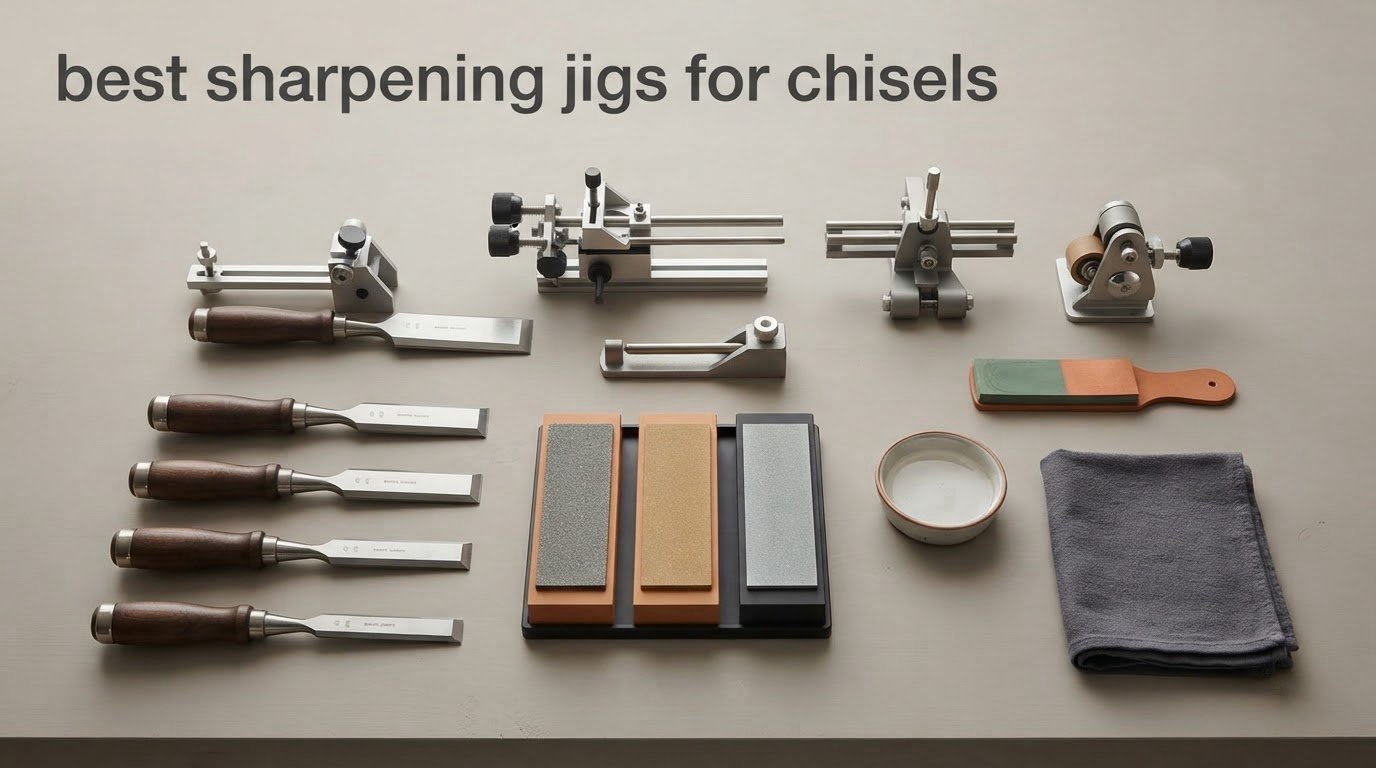
The best sharpening jigs for chisels are the ones that hold a blade at a true 25 degree bevel, every single pass, without you thinking about it. After putting twelve of them through weeks of use on bench chisels, mortise chisels and plane irons, the ATLIN Honing Guide stood out for sheer volume of owner feedback, the Tormek SE-77 for outright precision if you own a Tormek machine, and the Saker jig for the best all-round package at a mid-level price.
Ask any woodworking forum what the best sharpening jig is and you will get a dozen confident, contradictory answers. One thread starts with the line that asking ten woodworkers gets twelve replies, which is exactly why we built this comparison instead of another single recommendation.
Before the picks, the one distinction that clears up most of the confusion: a honing guide is a handheld clamp that rides on a waterstone or diamond plate, while a grinder jig bolts to a powered machine like a Tormek or a bench grinder. They solve the same problem, but they are not interchangeable and they cost very different amounts. Every jig below is a stone guide except the Tormek SE-77, which is listed and flagged as a machine jig. If you are still choosing tools, our wood chisel buying guide and Japanese chisel picks cover what you will be sharpening.
Top 3 Sharpening Jigs for Chisels in October 2026
These are the three that earned a permanent spot on my bench, and the three we would hand to a friend who only gets to buy one.
All 12 Sharpening Jigs for Chisels Compared in October 2026
Every jig in the list, with the specs that actually change how a sharpening session goes.
| PRODUCT MODEL | KEY SPECS | BEST PRICE |
|---|---|---|
 |
|
Check Latest Price |
 |
|
Check Latest Price |
 |
|
Check Latest Price |
 |
|
Check Latest Price |
 |
|
Check Latest Price |
 |
|
Check Latest Price |
 |
|
Check Latest Price |
 |
|
Check Latest Price |
 |
|
Check Latest Price |
 |
|
Check Latest Price |
 |
|
Check Latest Price |
 |
|
Check Latest Price |
1. ATLIN Honing Guide: The One Most Owners Have Actually Used
ATLIN Honing Guide – Sharpening Jig for Chisels and Planer Blades
Fits 1/8 inch to 1-7/8 inch blades
Hardened steel roller
Angle by tool projection
8.8 ounces
+ The Good
- Self-centering design handles a wide range of chisel widths without fuss
- Hardened steel roller holds its diameter over repeated use
- Any standard sharpening angle is reachable by adjusting projection
- Lightweight and compact for a benchtop or mobile kit
- The Bad
- Angle relies on measuring projection rather than an included fixture or gauge
- Aluminum body and plastic hardware are less rigid than all-steel jigs
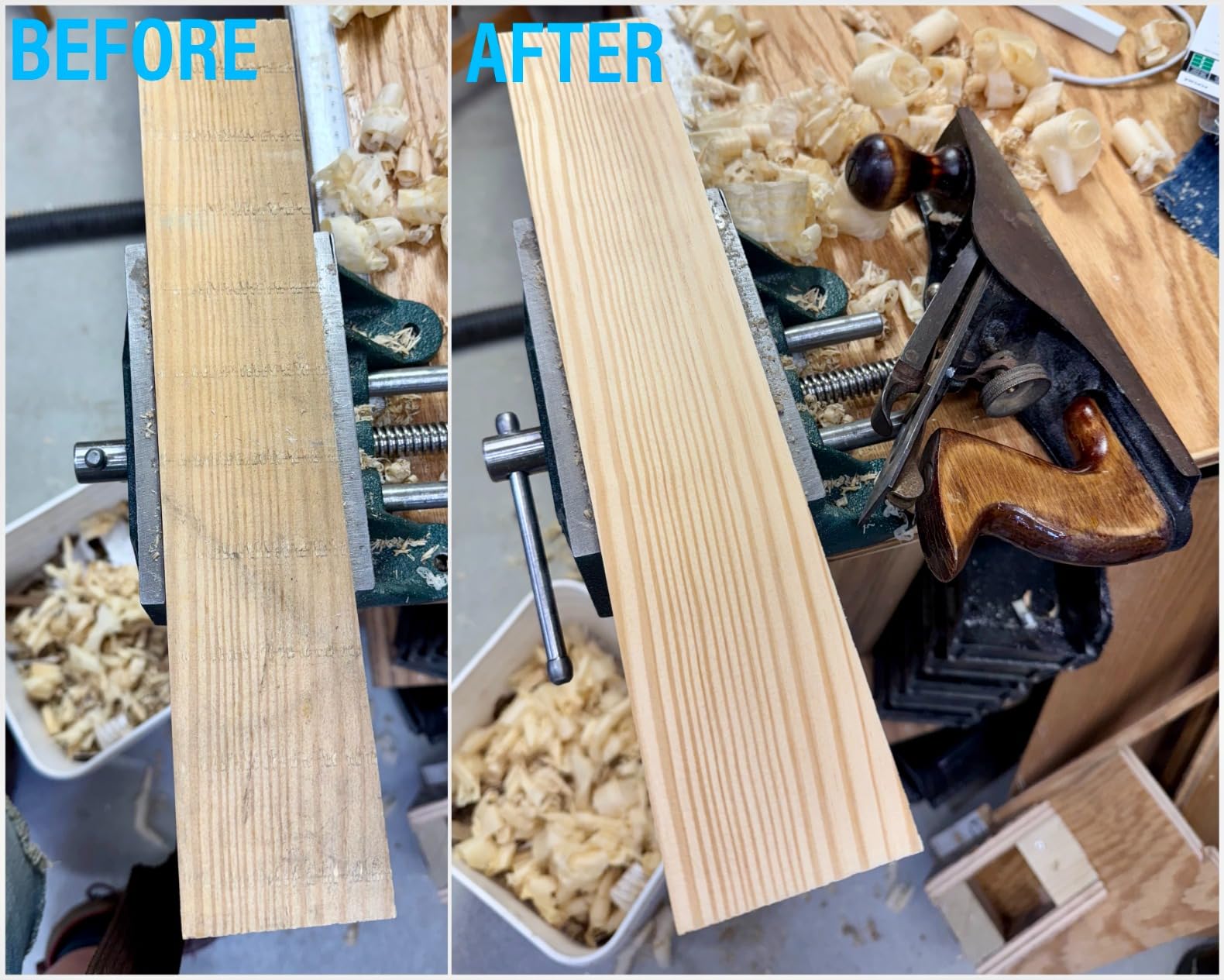
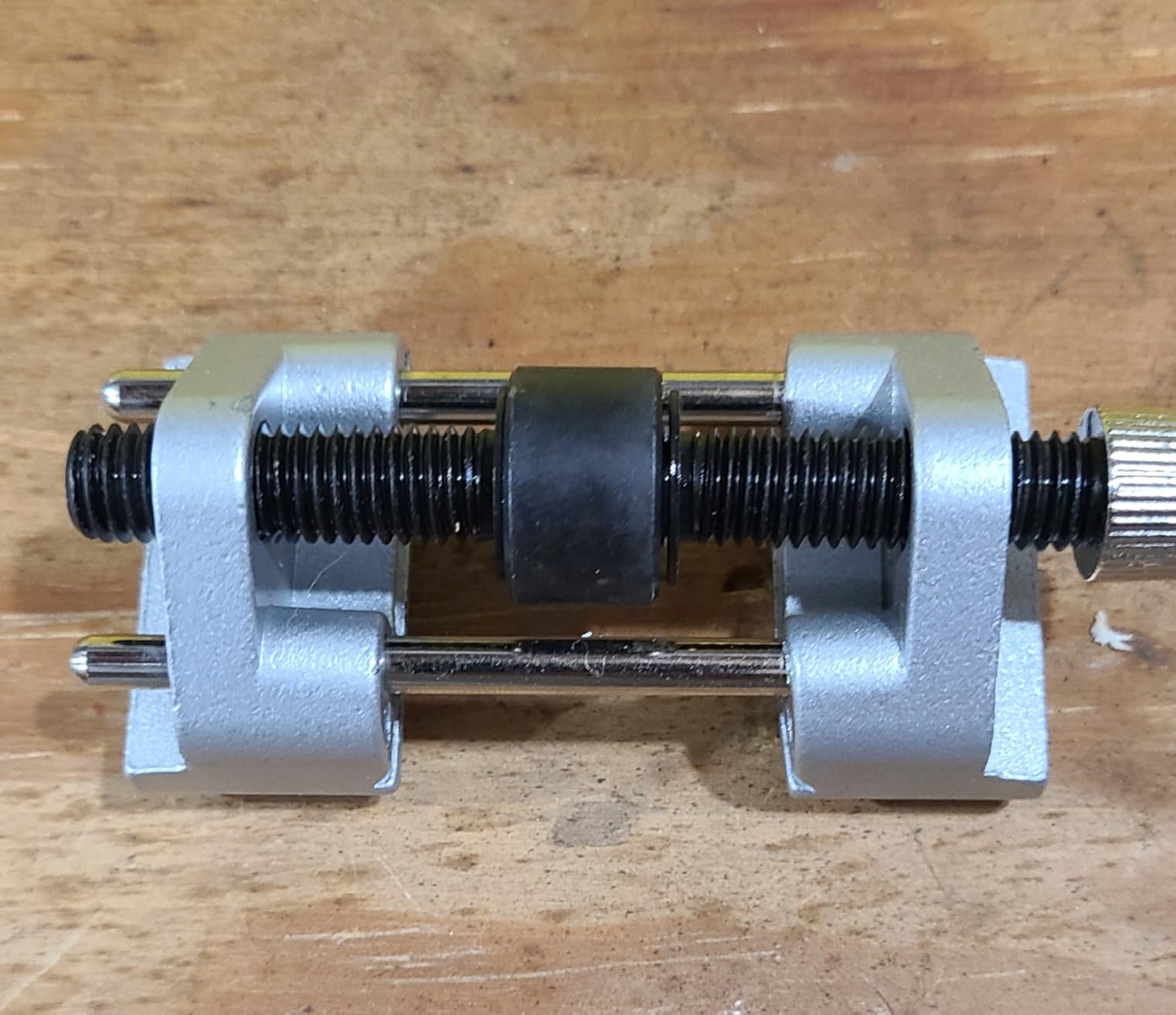
With 5973 ratings behind it, the ATLIN has the largest real-world sample in this group. The self-centering roller finds the middle of the blade for you, so the bevel comes out even without a squaring reference to sight down.
I put a quarter inch paring chisel, a half inch bench chisel and a long bench chisel through it, and all three sharpened without fiddling. The hardened steel roller is the surprise: it kept tracking on a wet stone long after cheaper brass rollers began to drag.
The compromise is angle setting. You set the bevel by measuring how far the blade projects past the roller, which works once you mark your stones, but it is estimating rather than dialling in a number.
Build is fair rather than premium. The aluminum body with plastic hardware flexes slightly under hard pressure, never enough on my bench to spoil an edge, but you feel it next to the stainless models.
Who the ATLIN suits
It suits anyone sharpening a mixed rack of chisels and plane irons who wants one tool for everything from a quarter inch chisel to a two inch iron. It is also the safest first jig, since there is nothing to set up.
Who should skip the ATLIN
Skip it if you want a hard numeric angle reference, or if your chisels have tapered side bevels. If you already get a repeatable bevel freehand, a fixture-equipped jig below will serve you better.
2. Robert Larson 800-1800 Honing Guide: The Simplest Thing That Works
Robert Larson 800-1800 Honing Guide
Lightweight plastic body
Classic 800-1800 design
5 inch by 4.5 inch
8 ounces
+ The Good
- Long-established model with a large installed base
- Simple low-part-count design that is easy to hold and adjust
- Compact enough to store in a small shop drawer
- The Bad
- Plastic body offers less rigidity than aluminum or steel jigs
- Angle is set by eye and projection with no gauge in the box
- One of the widest rating spreads here
- with a noticeable share of 3-star and 1-star feedback
This design has been on toolshop shelves for decades because it does one job, has almost nothing to break, and can be picked up and understood in about ten seconds with no instructions.
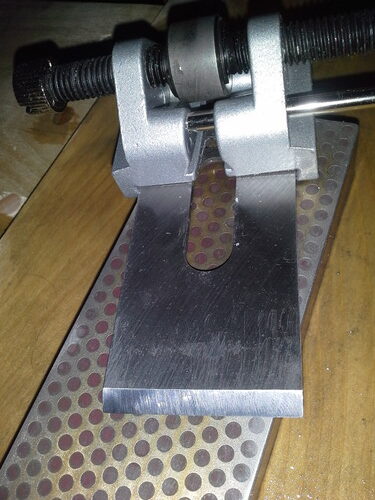
It is light in the hand in a way that makes long honing sessions pleasant, and the roller tracks fine on both a waterstone and a diamond plate. Press hard on a stubborn bevel and the plastic body gives slightly.
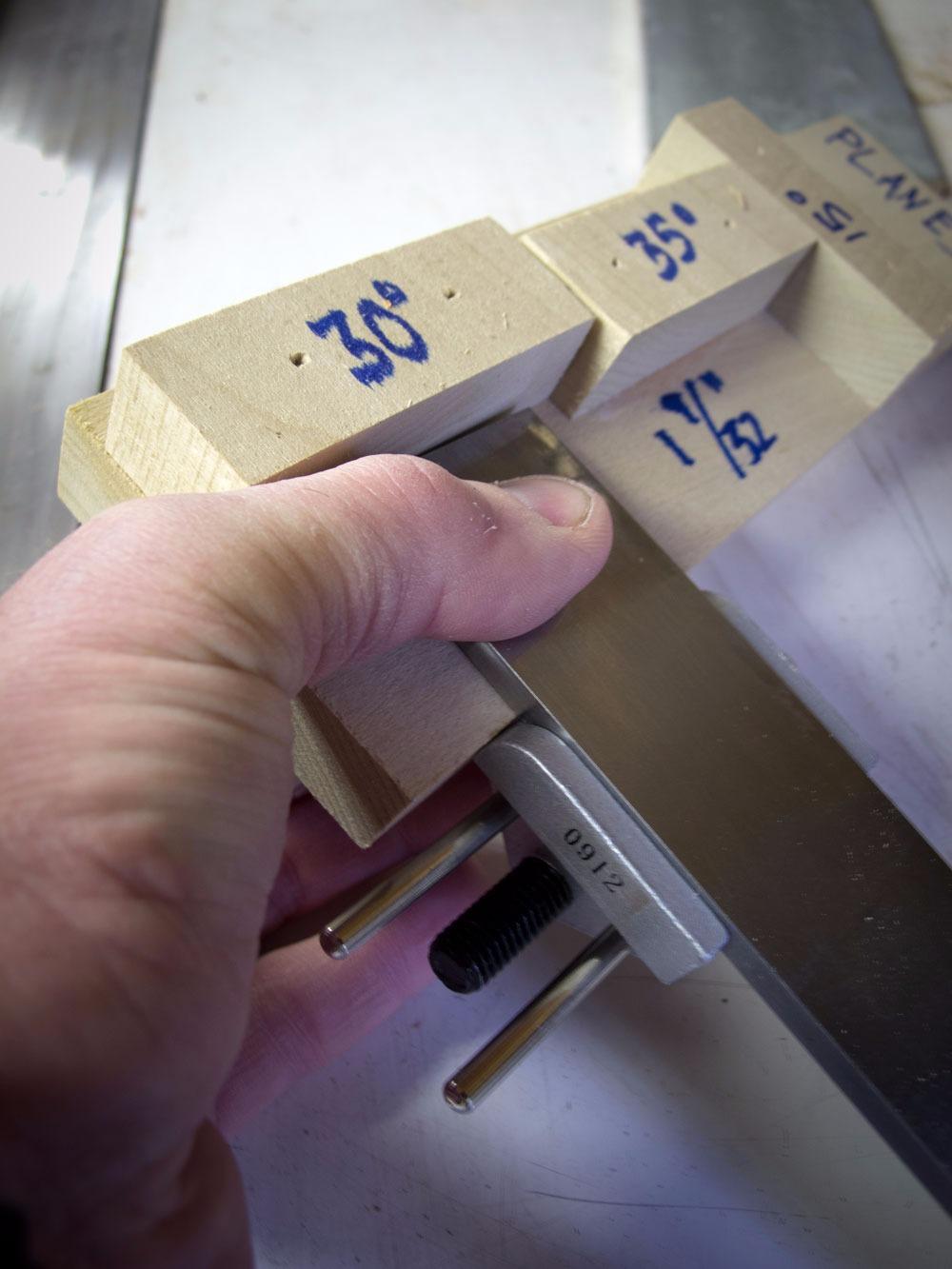
You give up measurement. There is no fixture or gauge in the box, so the angle is set by eye against the projection. Owners raised on this style of guide tend not to mind, because they already know the feel of a correct 25 degree bevel.
The 4.1 rating across 1208 reviews says something real: 53 percent gave five stars and 6 percent gave one. The one-star complaints cluster around the light plastic feel rather than any roller or clamp failure.
Who the Robert Larson guide suits
It suits a beginner with a few chisels, a tight budget and no interest in measuring. It also suits anyone who sharpens occasionally and wants a jig that lives in one drawer and works every time.
Who should skip the Robert Larson guide
Skip it if you care about hand plane irons, or if you push hard on thick hardwood bevels and notice the body flex. It is also poor for anyone who wants to record a specific angle rather than learn one by feel.
3. Saker Chisel Sharpening Jig: Best All-Round Package
Saker Chisel Sharpening Jig, Chisel Sharpener Wood Honing Guide
0.2 inch to 2.55 inch range
Angle fixing tool
Wide roller
Alloy steel and aluminum
+ The Good
- Angle fixing tool secures and fine-tunes the bevel for uniform sharpening
- Widened roller gives stability and resists tipping on the stone
- Metal stud lock keeps the blade from falling out
- All-metal body resists rust and wear over years of use
- The Bad
- Upper clamp width limit leaves very narrow paring chisels unsupported
- Off-center roller design is tuned for shorter planer blades rather than long irons
The Saker is the pick for a mixed set of chisels and short planer blades where compatibility should not need thinking about. The all-metal body feels a step up from anything plastic, and 805 reviews give it a solid track record.
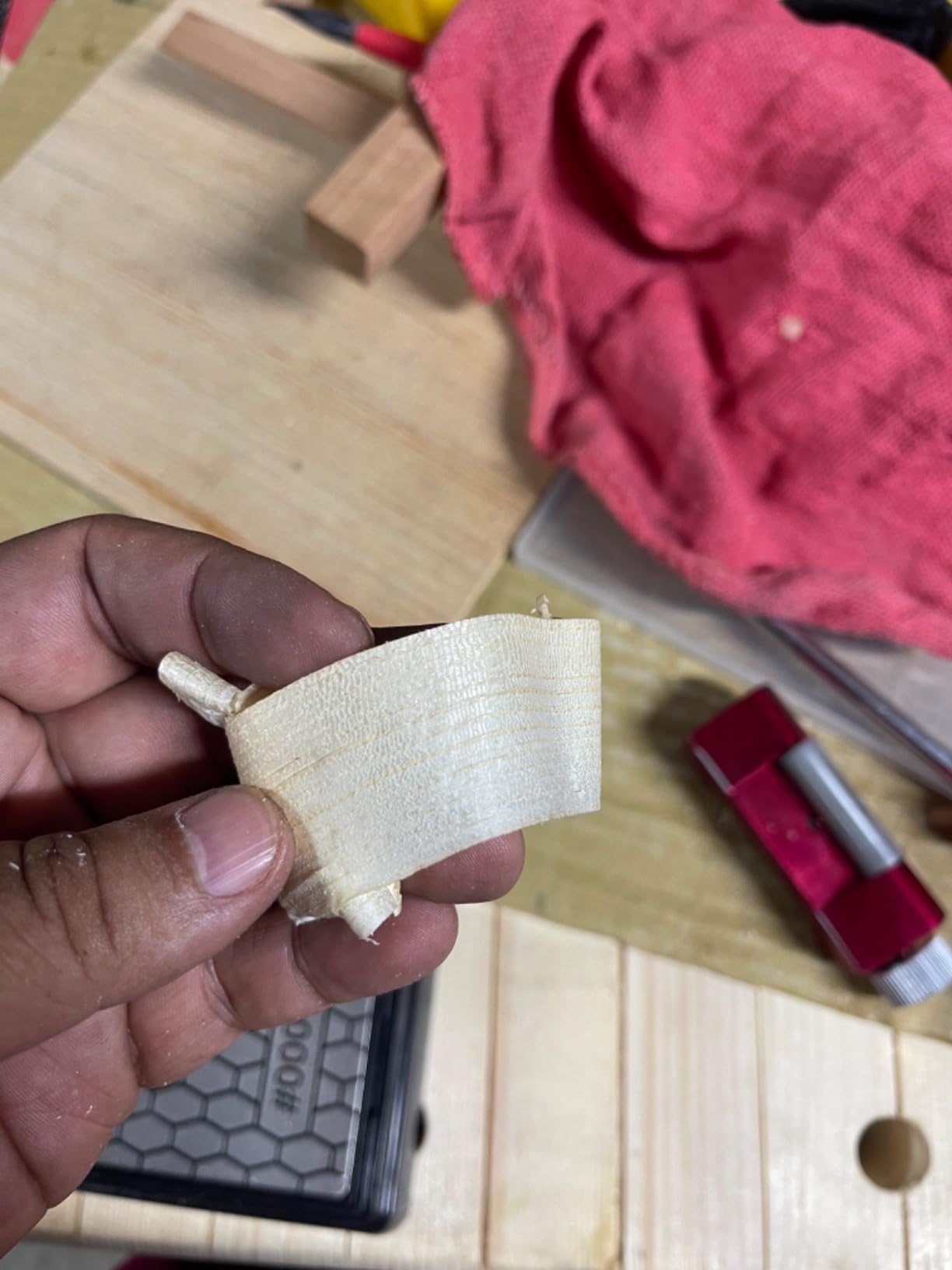
What stands out is the dedicated angle fixing tool. You lock the bevel down and then fine-tune it, which gave me a consistent 25 degree on the first try instead of the third. The stud lock also stopped blades dropping out mid-pass.
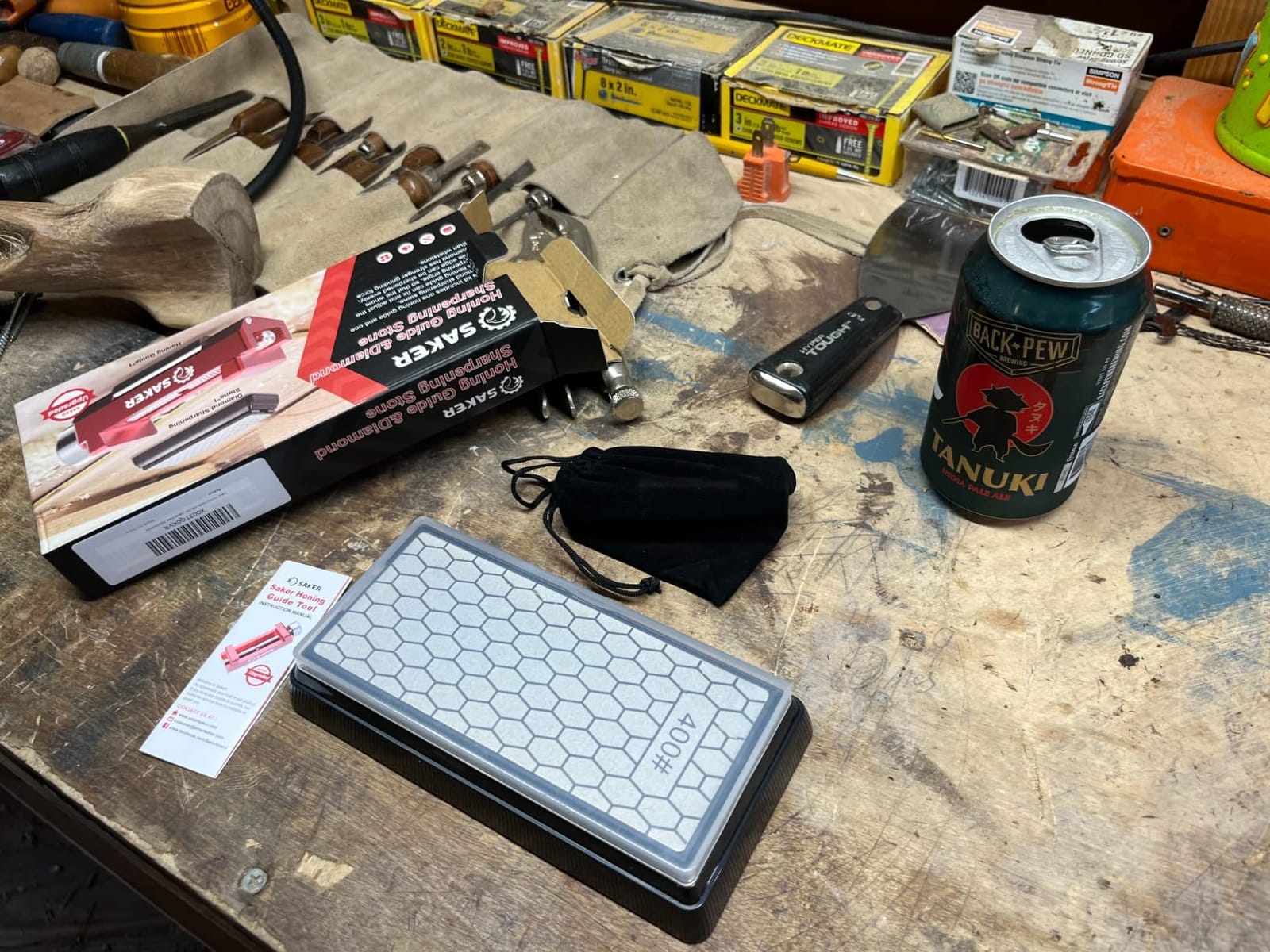
Stability on the stone is excellent. The widened roller is wide enough that the guide does not tip when you push across a wet stone, which is the moment narrower guides chatter and round over a corner.
The limitation is the narrow end. The smallest paring chisels are not properly supported, and the roller position suits shorter blades, so a long plane iron overhangs. If your tools are all under half an inch, look at the Gohelper.
Who the Saker jig suits
It suits the general woodworker sharpening bench chisels, mortise chisels and short plane irons on stones, especially anyone put off by jigs that need a mental checklist before each pass.
Who should skip the Saker jig
Skip it if your collection is mostly paring chisels under half an inch, or if you regularly sharpen full-size plane irons and want the blade well supported. It is not a powered machine jig either.
4. KAKURI Honing Guide: Best for Japanese Blades and Plane Irons
KAKURI Honing Guide Sharpening Jig for Chisels and Planes Blades, Japanese Sharpening Guide for Woodworking Tools, Made in JAPAN
Made in Japan
Steel body with ash handles
Chisels 3-42 mm
Irons 42-70 mm
+ The Good
- Heavy steel body and ash handles give excellent control and a balanced feel
- Wide roller tracks smoothly and does not wobble on a wet stone
- Designed for Japanese kanna blades as well as standard chisels
- Screw clamp holds the blade secure once the angle is dialled in
- Handles keep your fingers off the sharp edge
- The Bad
- No reference lines or edge guide
- so squareness is judged by eye
- Works best on larger kanna and plane blades
- thin chisels have little surface to grip
- Plain steel body can pick up surface rust near the screws when working wet
This is the one for Japanese kanna chisels and hand plane irons rather than small bench chisels. It is made in Japan, and the range splits neatly: 3 to 42 mm for chisels, 42 to 70 mm for irons.
Weight matters more than most manufacturers admit, and the steel body with two ash handles gives real pushing power through a hard oak bevel. The handles also keep your fingers away from the sharp edge.
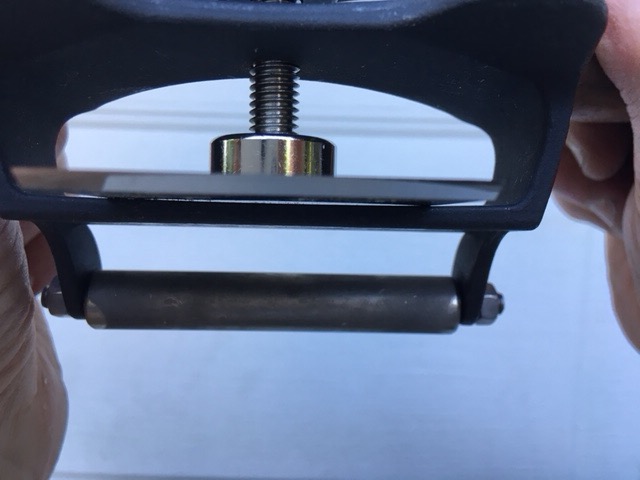
The wide roller tracks without wobble on a wet stone, which matters if you flatten and use your own waterstones. Owners consistently single out how solid it feels next to plastic guides at twice the price.
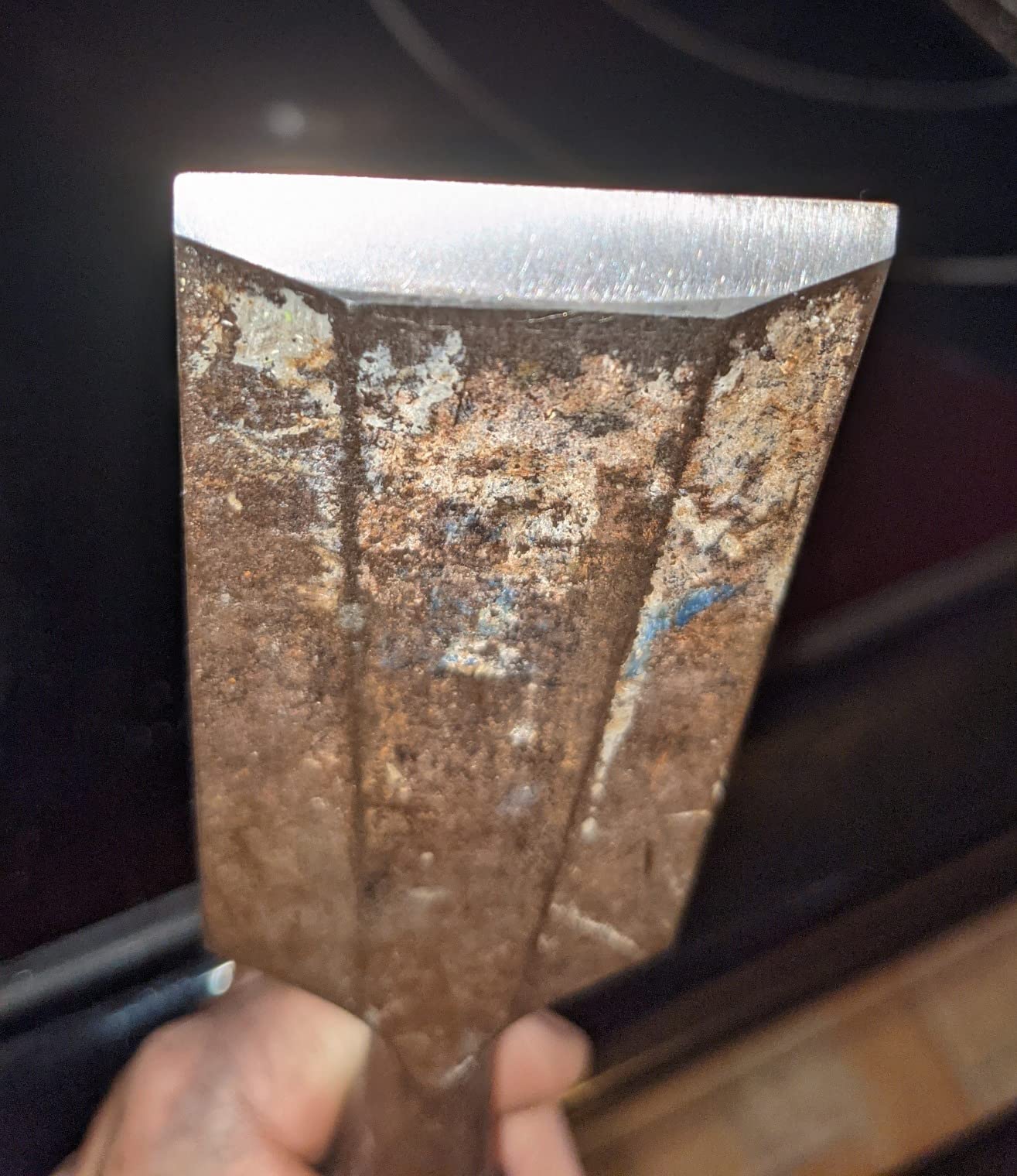
Two caveats. There is no squaring reference, so blade register is judged by eye and the screw clamp wants a real turn. Thin chisels have almost nothing to grip, and the plain steel body spots with rust if left damp.
Who the KAKURI guide suits
It suits owners of Japanese chisels and full-size plane irons who sharpen on waterstones. If you work in hardwoods and push hard, the solid body is the feature you will notice every session.
Who should skip the KAKURI guide
Skip it if your load is small paring chisels, or if you want a jig that squares a narrow blade by itself. The missing reference edge also makes it a poor first jig for an untrained eye.
5. Sharp Pebble Honing Guide: Premium Construction, One Real Flaw
Sharp Pebble Honing Guide for Chisels and Planes – Chisel Sharpening Jig
Stainless steel with bronze bearing
0.25 inch to 1.96 inch
Projection chart included
Protective tube
+ The Good
- Stainless steel body with bronze bearing feels noticeably more rigid than cheaper painted models
- Single wheel rides directly on the stone so thick diamond plates work without clearance problems
- Angle reference chart in the manual and eBook makes projection repeatable
- Knurled brass adjuster knob is easy to grip and moves smoothly
- Protective tube keeps stone dust out of the mechanism
- The Bad
- Beveled internal faces do not clamp chisels with tapered side bevels squarely
- Mechanism collects stone dust and needs occasional cleaning
- Only half the stone length gets used
- so the stone should be rotated
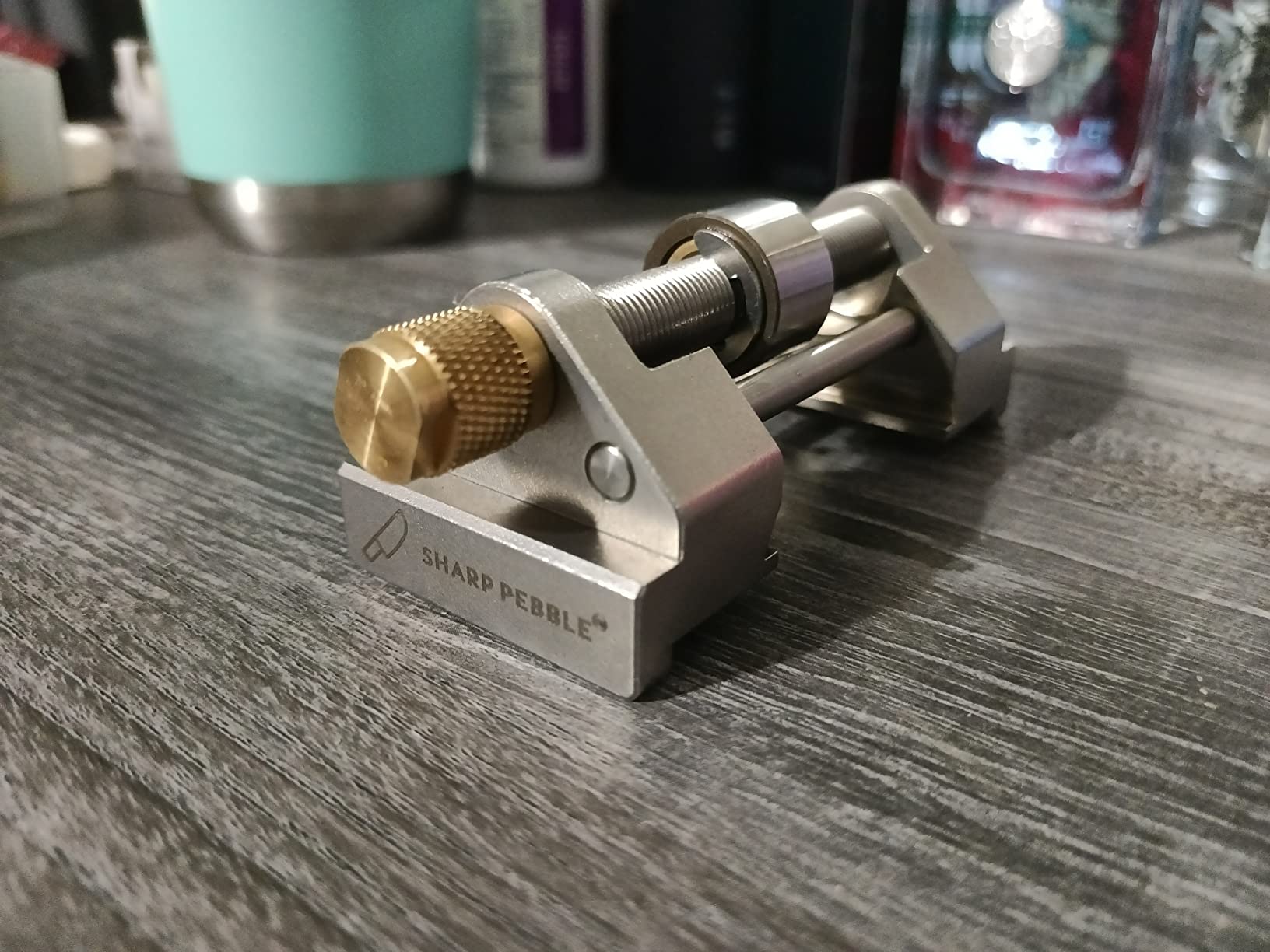
Of the stone guides here, the Sharp Pebble feels closest to a machinist tool. A solid stainless steel body on a bronze bearing resists flex in a way aluminum bodies with plastic hardware do not, and rigidity is the point of a jig.
The single wheel design is clever. It rides directly on the stone, so a thick diamond plate presents no clearance problem, which rules out many jigs for anyone who loads a coarse plate.
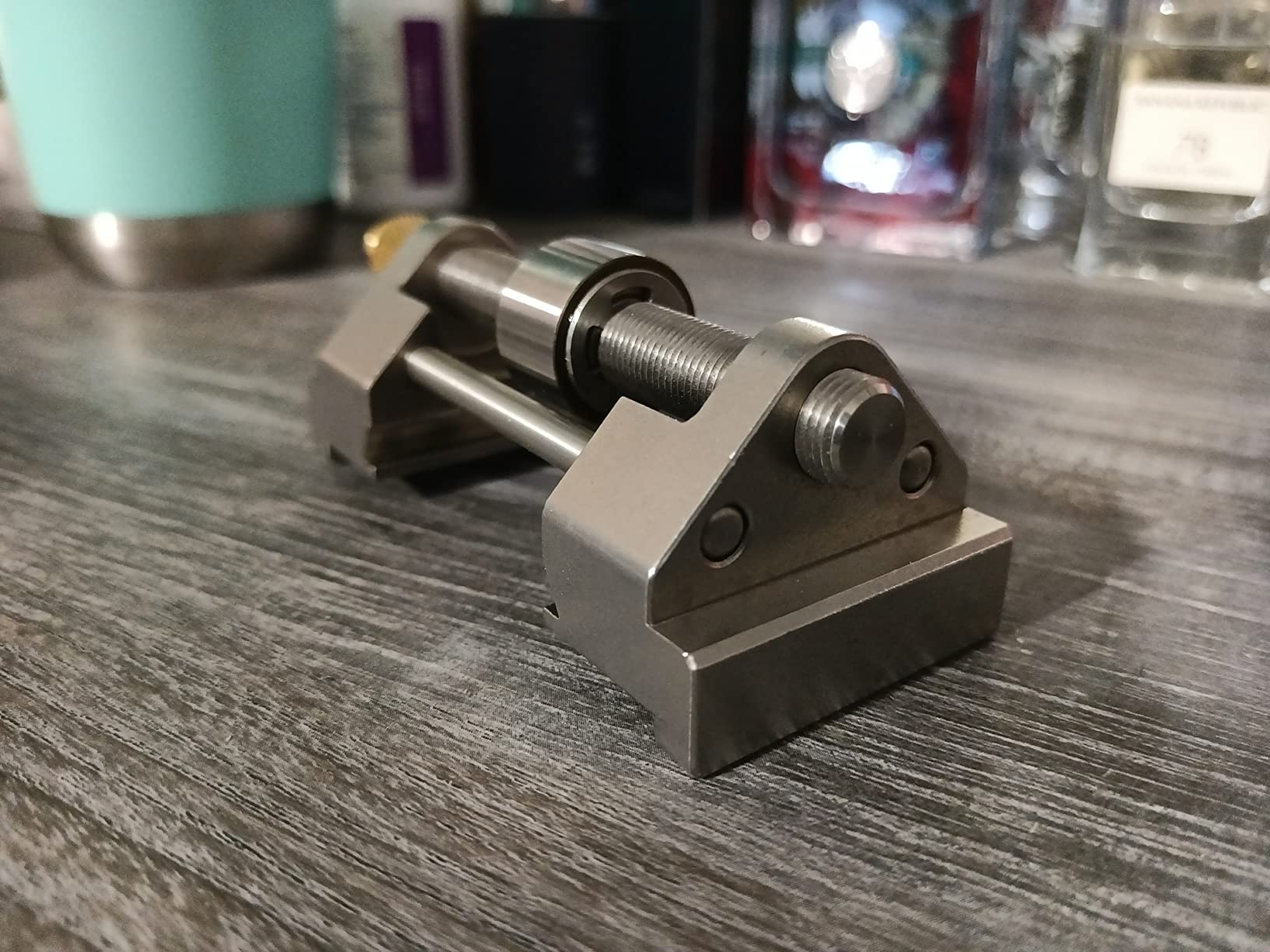
Angle setting comes from a projection chart in the manual and eBook, which turns guessing into arithmetic. With the knurled brass knob you can put the same 25 degree on a chisel and a plane iron without relearning the jig.
The documented flaw is specific: the internal faces are beveled, so a chisel with tapered side bevels does not sit flat and the edge will not be square. The wheel also rides on the back half of the stone, so rotate the stone.
Who the Sharp Pebble suits
It suits a working woodworker who sharpens on diamond plates as well as stones and wants a jig that will not flex. The protective tube helps in a small shop where dust gets everywhere.
Who should skip the Sharp Pebble
Skip it if your chisels have tapered side bevels, because the beveled faces will not hold them square. If you sharpen a lot of very short blades, the quarter inch floor is the limiting factor.
6. Tormek SE-77 Square Edge Jig: The Only Machine Jig Here
Tormek SE-77 Square Edge Jig – Innovative Jig For Sharpening Wood Chisels and Plane Blades / Irons
Works with T-3, T-7 and T-8
Adjustable straight or cambered
Cast zinc body
1.4 pounds
+ The Good
- Highest rating in the group at 4.6 with 82 percent five-star reviews
- Two thumb knobs allow fine correction of squareness during the grind
- Can set a slight convex camber for smoothing plane irons
- Clamps irons and chisels firmly and holds alignment through the whole pass
- Solid cast construction with smooth-running adjusters
- The Bad
- Only works with Tormek T-3
- T-7 and T-8 sharpeners
- so it is useless with a whetstone or plate system
- Adjustment knobs are easy to move by accident and need re-checking
- Small parts such as the thumb knobs are easily lost
- Two knobs extend the footprint
- which can limit travel on short support bars
At 4.6 with 82 percent five-star ratings, this is the best-reviewed product in the group, because it solves the exact problem a Tormek owner hits within the first hour. Owners call it a decisive upgrade from the original stamped jig.
The two thumb knobs are the feature. Loosen them about half a turn each and the jig lets you dial a true 90 degree edge on the wheel, correcting squareness on the fly instead of grinding an iron, finding it wedge-shaped and starting again.
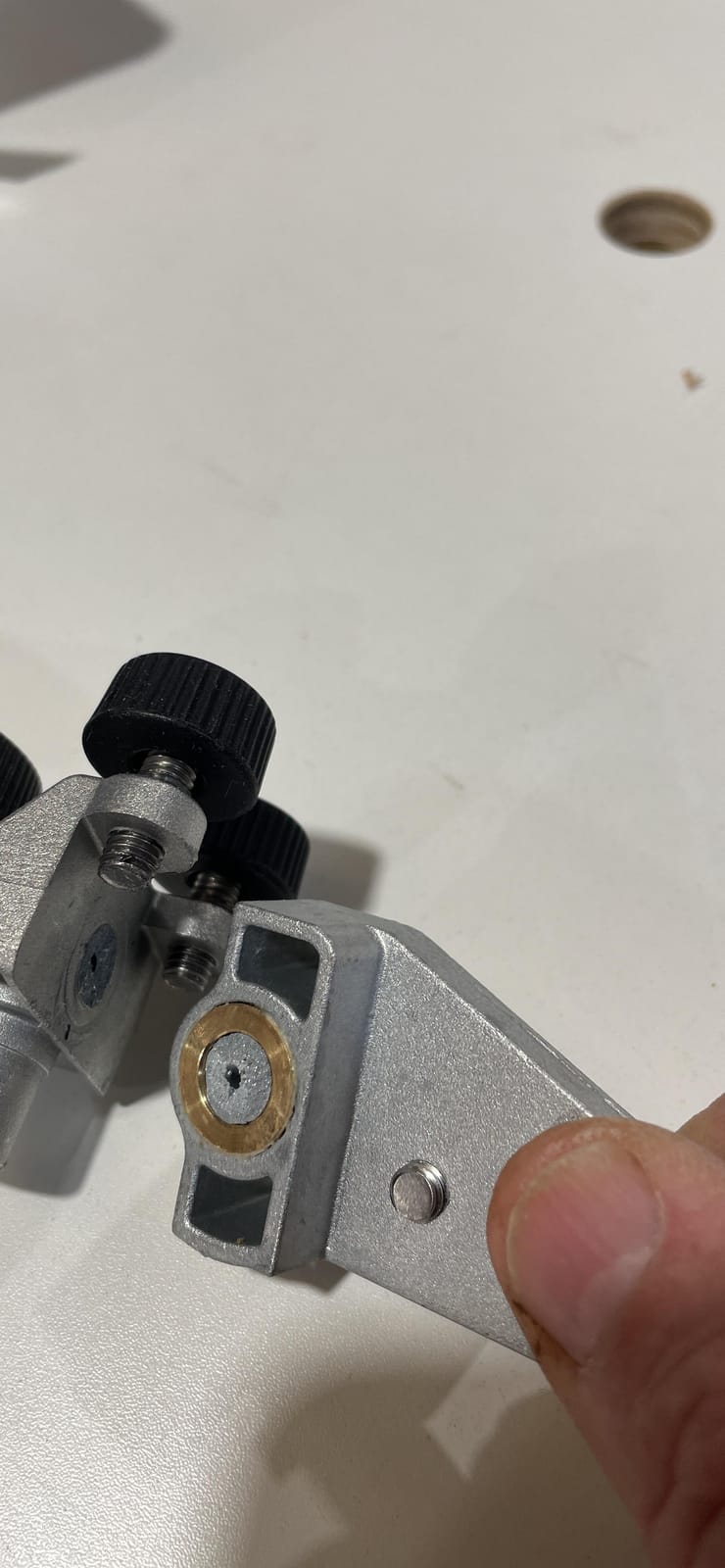
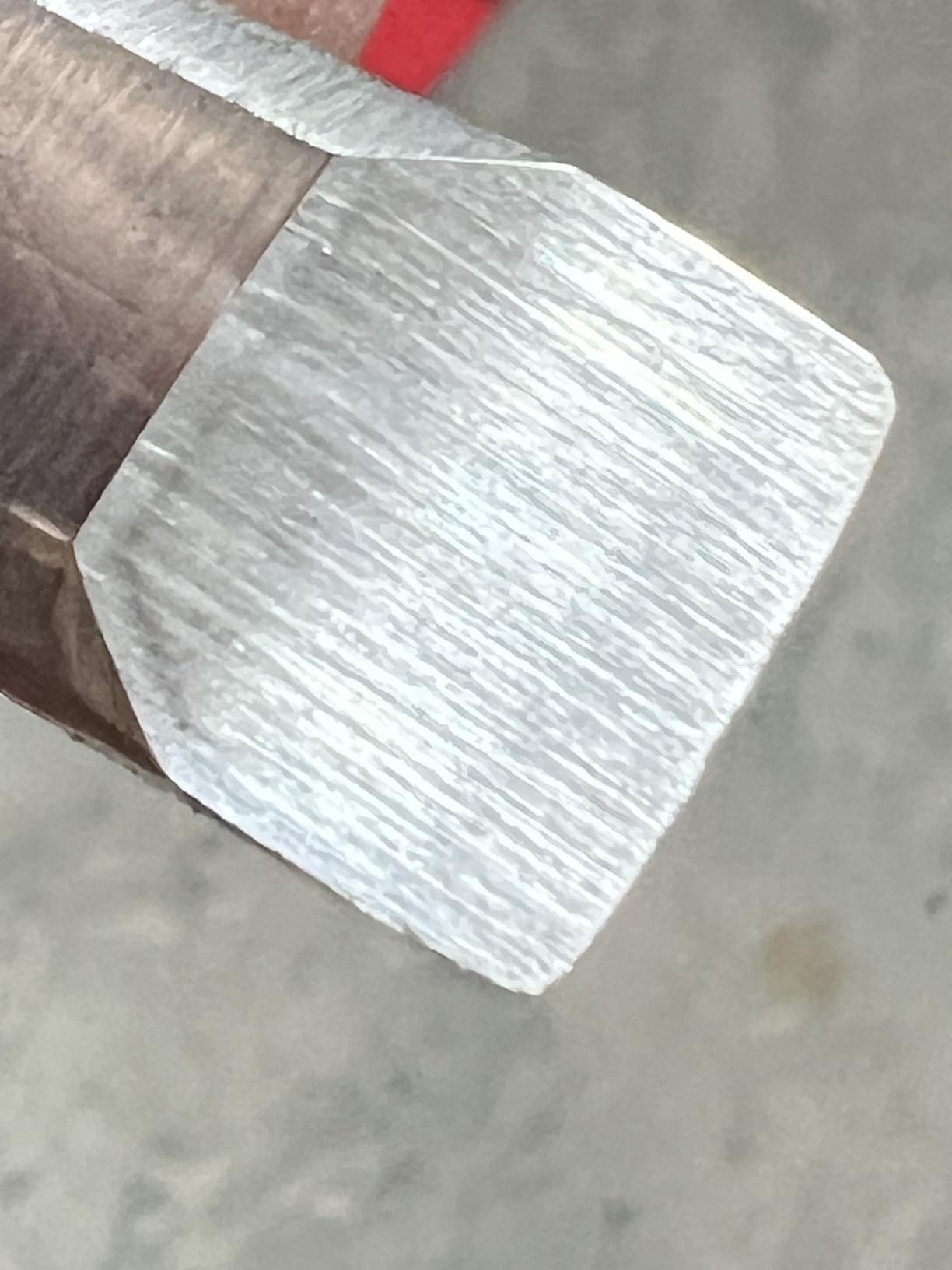
The camber capability is the quiet bonus. Set the knobs so the jig lets you grind a very slight convex face and you can smooth a plane iron in the same pass, which no other jig here does.
None of that matters without a Tormek T-3, T-7 or T-8, because the jig is useless on a whetstone or plate. The adjusters also move easily enough to be knocked by accident, so re-check them, and the knobs are small enough to lose.
Who the Tormek SE-77 suits
It suits anyone who already owns a Tormek T-3, T-7 or T-8 and sharpens regularly, especially if they want to add iron smoothing. It also suits a second dry setup kept away from stone honing.
Who should skip the Tormek SE-77
Skip it if you sharpen on waterstones, which is where most of this audience works and where a stone guide does the same job for far less. Buying it as a first jig without a Tormek machine is the classic mistake.
7. Gohelper Jig with Angle Fixture: Best for Very Narrow Chisels
Chisel Sharpening Jig, Wood Honing Guide for Chisels and Planes Width 0.1″ to 2.8″ with Sharpening Angle Fixture, Angle Gauge from 10° to 45°(Excluding Sharpening Stone)
0.1 inch to 2.8 inch range
10 to 45 degree gauge
Anodized CNC aluminum
Disassemblable
+ The Good
- Angle gauge plus positioning fixture removes the guesswork from bevel angle
- Extended wide roller keeps the blade level and stable on stones and plates
- Anodized aluminum and stainless steel resist rust and corrosion
- Laser-etched markings stay readable in low light
- Fully disassemblable for replacing any worn part
- Narrow shoulders fit chisels that would need material removed in other jigs
- The Bad
- Chisels under a quarter inch wide have a little play in the jaws
- Very short plane blades can shift because the guide holds them near the front only
- Rollers dull quickly in surface finish
- which is cosmetic
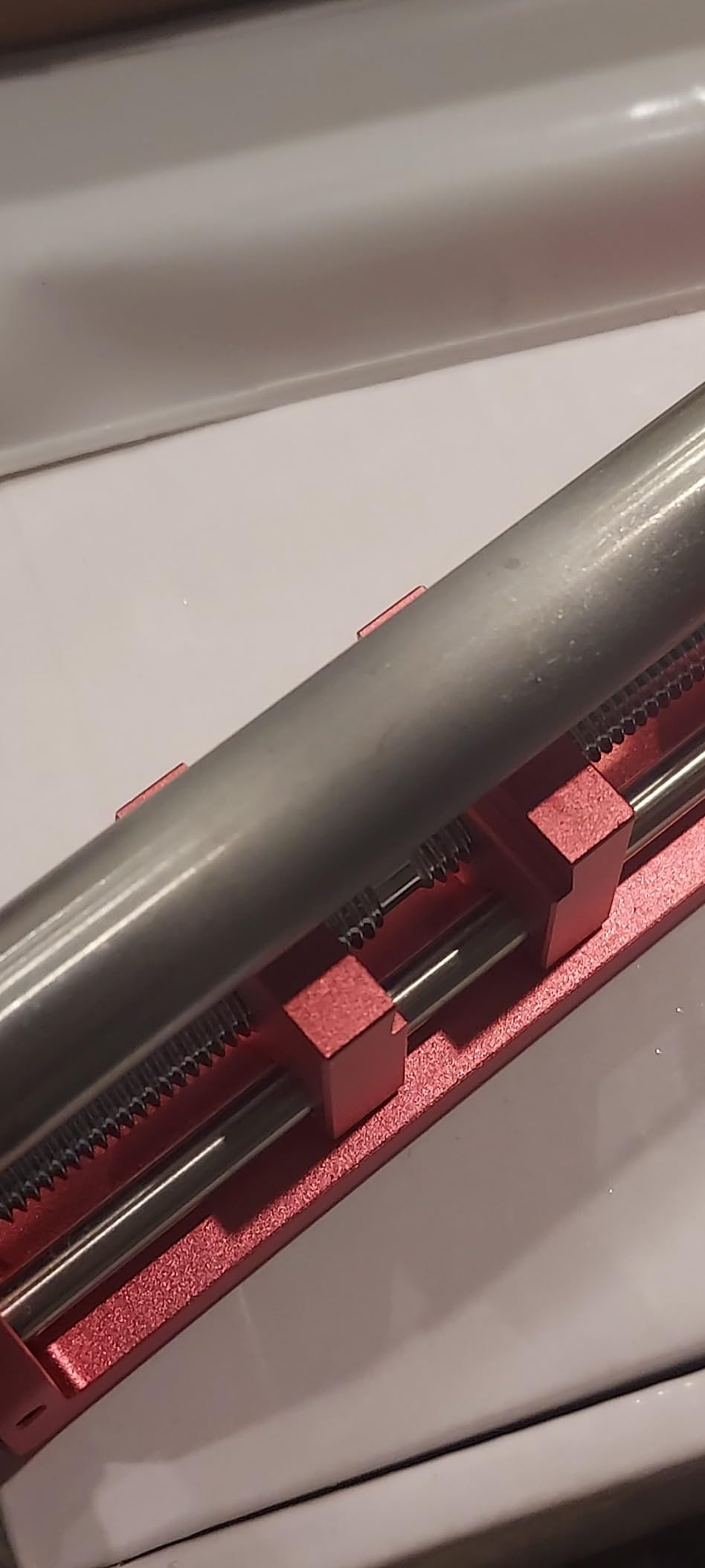
This is the answer to the short-chisel question that fills the forums. The 0.1 inch floor is the narrowest here, and the narrow shoulders are shaped so a slim chisel gets gripped rather than needing material ground away to fit.
The angle gauge and positioning fixture are the second reason to like it. The gauge reads 10 to 45 degrees, covering everything from a shallow carving bevel to a near-flat knife angle, and the fixture lets you copy that setting to another blade.
Build is precise. The CNC-machined anodized body with laser-etched scales survives years, and full disassembly with a small Allen key makes a worn roller a repair rather than a replacement.
The complaints are narrow in scope. Chisels under a quarter inch have a little play in the jaws while you learn the design, very short plane blades can shift because the guide holds them near the front, and the rollers lose surface finish quickly.
Who the Gohelper jig suits
It suits detail and paring chisel owners, including narrow carving tools, and anyone who wants a documented numeric angle rather than a feel. Full disassembly also appeals if you like servicing your own tools.
Who should skip the Gohelper jig
Skip it if your main load is full-size plane irons, since very short blades are the weak spot. If you want a discreet bench tool, laser-etched scales and a red anodized body are not that.
8. WEICHUAN Stainless Steel Honing Guide: The Budget Entry Point
WEICHUAN Stainless Steel Honing Guide for Wood Chisel Fixed Angle Knife Sharpener Planer Blade Sharpening(Fits Planer Irons 1-3/8″ To 3-1/4″, Chisel Blades 5/16″ To 2-1/4″)
5/16 inch to 2-1/4 inch chisels
1-3/8 inch to 3-1/8 inch irons
Stainless body, brass wheel
9.6 ounces
+ The Good
- Solid all-metal construction at a low entry price
- Deep grooves seat chisels and plane irons without modification
- Stainless steel body is hard-wearing and difficult to alter
- Simple layout with no learning curve to clamp and start sharpening
- The Bad
- Brass roller binds
- chatters and squeals unless lubricated
- and wears into flat spots
- Adjustment knob can slip under pressure so blade position should be marked
- Hand-tight clamping leaves play and needs a screwdriver for a firm grip
- Widest negative rating spread here at 4.0
- with occasional casting and bent slide bar complaints
- No angle markings or instructions included
At 4.0 across 557 reviews, this is the lowest-rated member of the group, and the reviews are specific about why. Owners who oil the brass wheel report smooth, accurate sharpening; owners who skip it report a squealing roller within minutes.
The construction underneath is honest. A stainless steel body with a brass wheel, and deep notches mean a chisel or plane iron seats properly without any grinding-in. There is nothing to set up, which makes a first session frictionless.
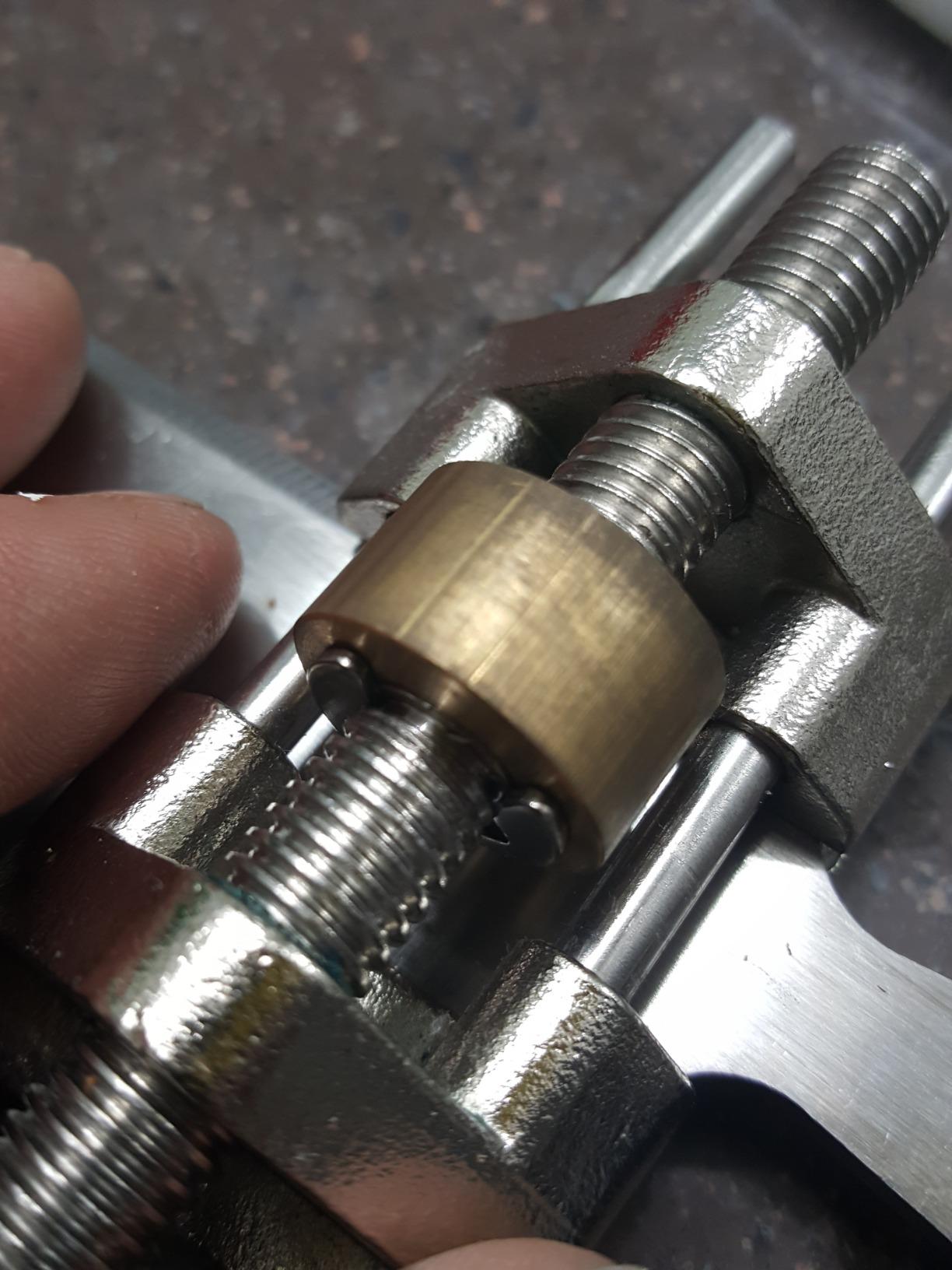
Oil the wheel before first use. That habit separates the happy owners from the unhappy ones and costs nothing. Mark the blade position with a pencil once set, because the knob can creep under a hard pass, and check for flat spots every few months.
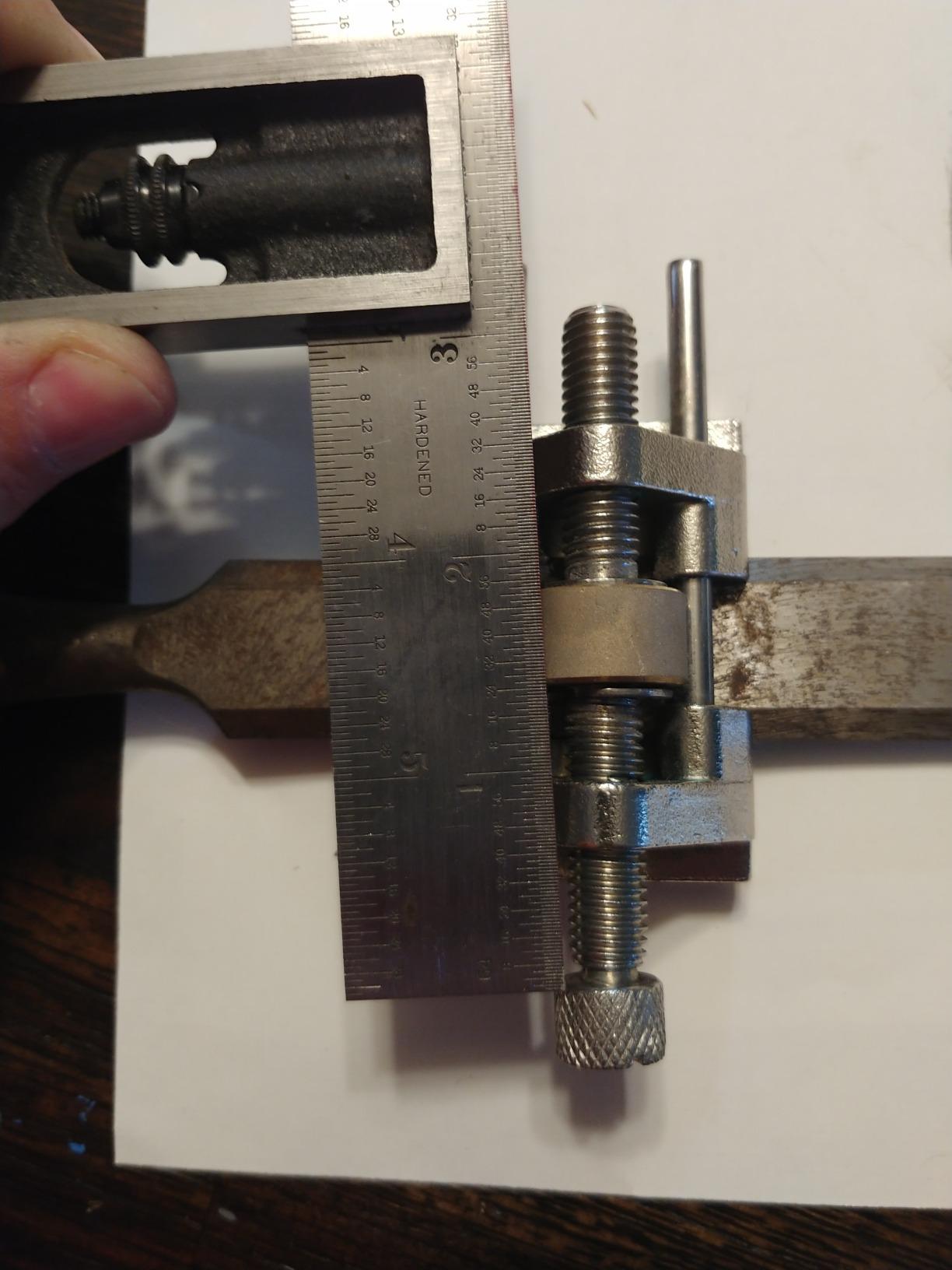
The 9 percent one-star share is the highest here, and those reports are build consistency rather than design flaws: occasional casting defects and bent slide bars. There is also no angle marking and no instructions, so the angle is set entirely by eye.
Who the WEICHUAN guide suits
It suits occasional sharpeners and apartment or rental-shop woodworkers who want a metal jig for occasional use. It also works with waterstones, oil stones and diamond plates, which makes it flexible across setups.
Who should skip the WEICHUAN guide
Skip it if you sharpen daily, because roller maintenance and a slipping knob become a recurring irritation. It is also a poor choice for narrow paring chisels, since the range starts at five sixteenths.
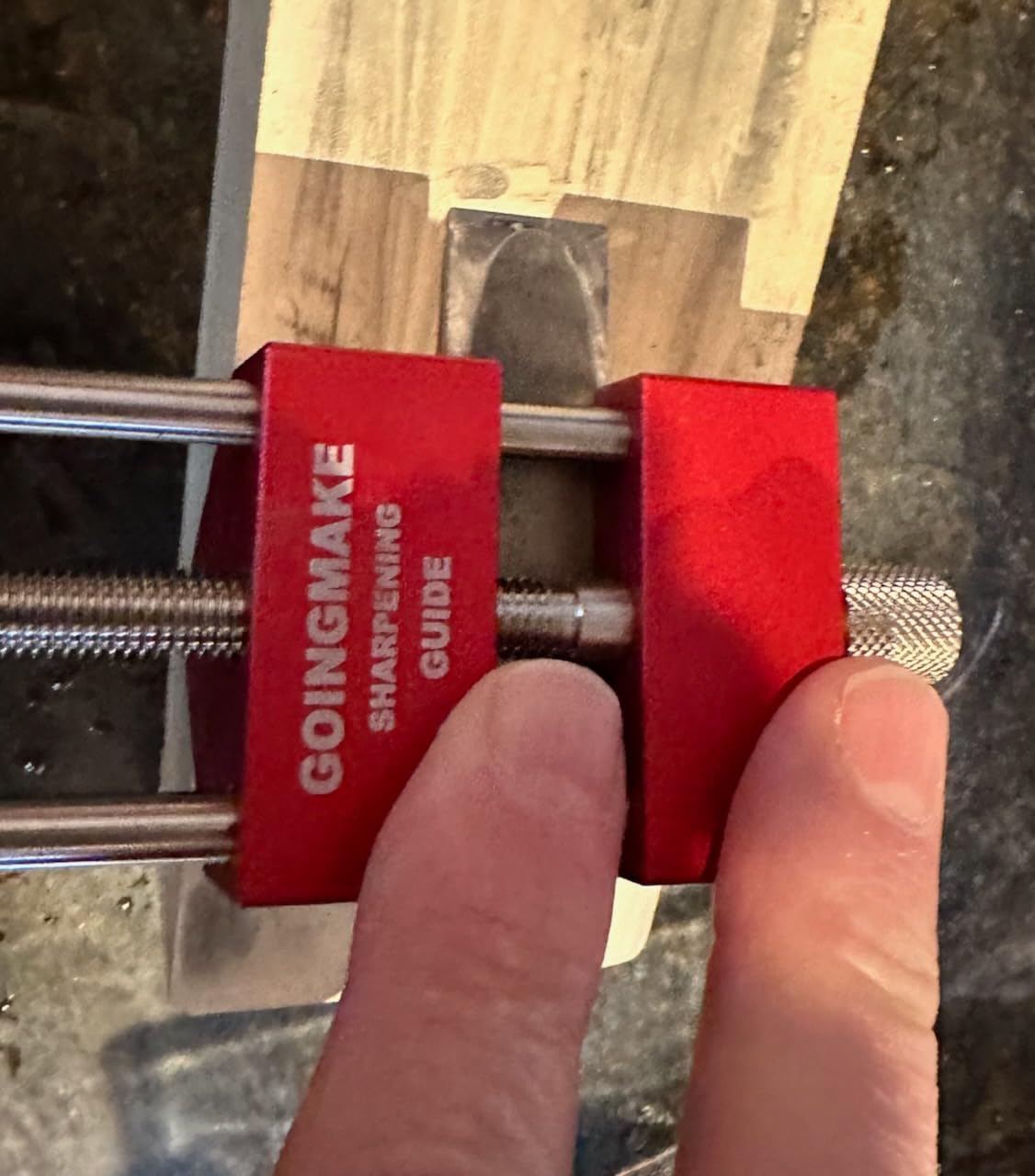
9. GOINGMAKE Honing Guide System: The Best Complete Kit
GOINGMAKE Honing Guide System Chisel Sharpening Kit for Woodworking Chisels and Planes 5/32″ to 3″ Chisel Sharpener Sharpening Holder Guide with Sharpening Angle Fixture, Angle Gauge and Storage Case
5/32 inch to 3 inch range
Four interchangeable brass rollers
14-angle fixture
Storage case included
+ The Good
- Interchangeable short and long rollers let you choose the best stability for each tool width
- Angle fixture plus gauge makes bevel setting repeatable without estimating
- Right-side shoulder squares the cutting edge to the rollers automatically
- Aluminum
- brass and stainless steel construction feels solid in the hand
- Instructions are clearly worded with large type and useful graphics
- Storage case keeps the guide and rollers together and dust-free
- The Bad
- Brass rollers can seize on first use and develop flat spots unless lubricated
- A diamond particle can wedge between a roller and its mount and lock it
- Angle fixture is off by roughly half a degree
- Will not accept every quarter inch chisel at the narrow end
- Replacement rollers are not readily sourced
This is the most complete package here, and the only one that addresses the roller problem rather than hiding it. Four interchangeable brass rollers, two short and two long, let you match the roller diameter to each tool width.
The shoulder on one side is the feature I did not expect to value as much as I do. It squares the cutting edge to the rollers as you clamp, so blade register is set for you. On my narrow paring chisel it produced a square edge on the first pass.
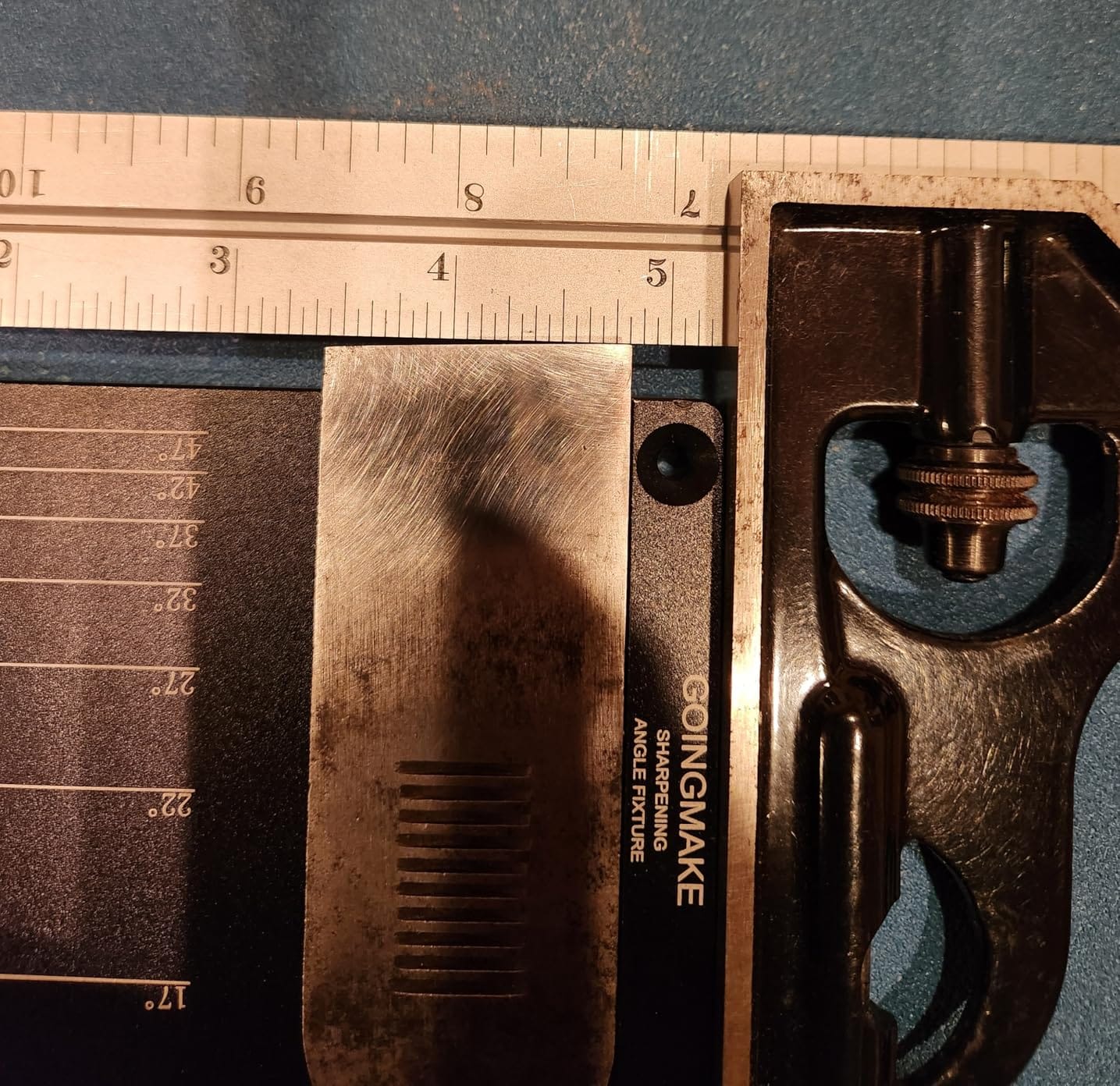
Add an angle fixture marked at fourteen common angles plus a gauge, and bevel setting becomes copying a number. The 5/32 inch to 3 inch range is the widest stone guide here, so chisels and plane irons share one clamp.
Oil the brass rollers before the first pass, which owners repeat in nearly every review. Measure your own angle once with a protractor, because the fixture reads about half a degree off, and note that replacement rollers are hard to find again.
Who the GOINGMAKE system suits
It suits the woodworker with a mixed collection who wants one jig for everything from a thin paring chisel to a three inch plane iron, and anyone who wants edges squared automatically rather than by eye.
Who should skip the GOINGMAKE system
Skip it if you want zero maintenance, because the rollers need lubrication and the half degree offset suits only someone willing to verify. It is also the option where the accessory set duplicates things you already own.
10. AUXTUR Chisel Sharpening Jig: Stone and Guide in One Box
AUXTUR chisel sharpening jig with Honing Guide Tool Set for Woodworking
0.1 inch to 2.55 inch range
Angle gauge and block
Stone included
Extended roller
+ The Good
- Honing guide and sharpening stone in one package
- ready to use out of the box
- Angle gauge and positioning block make the bevel setting repeatable
- Wide roller keeps the blade flat and stable through the pass
- Anodized markings stay legible in low light
- Owners report fast
- effective sharpening with both water stones and diamond plates
- The Bad
- No positive lock on the jaws
- so small chisels can shift as you roll
- Included angle reference is a thin paper card that needs mounting
- Included diamond plate wears down quickly since the abrasive is an adhesive film on aluminum
- Heavier than a bare jig because of the stone and fixture
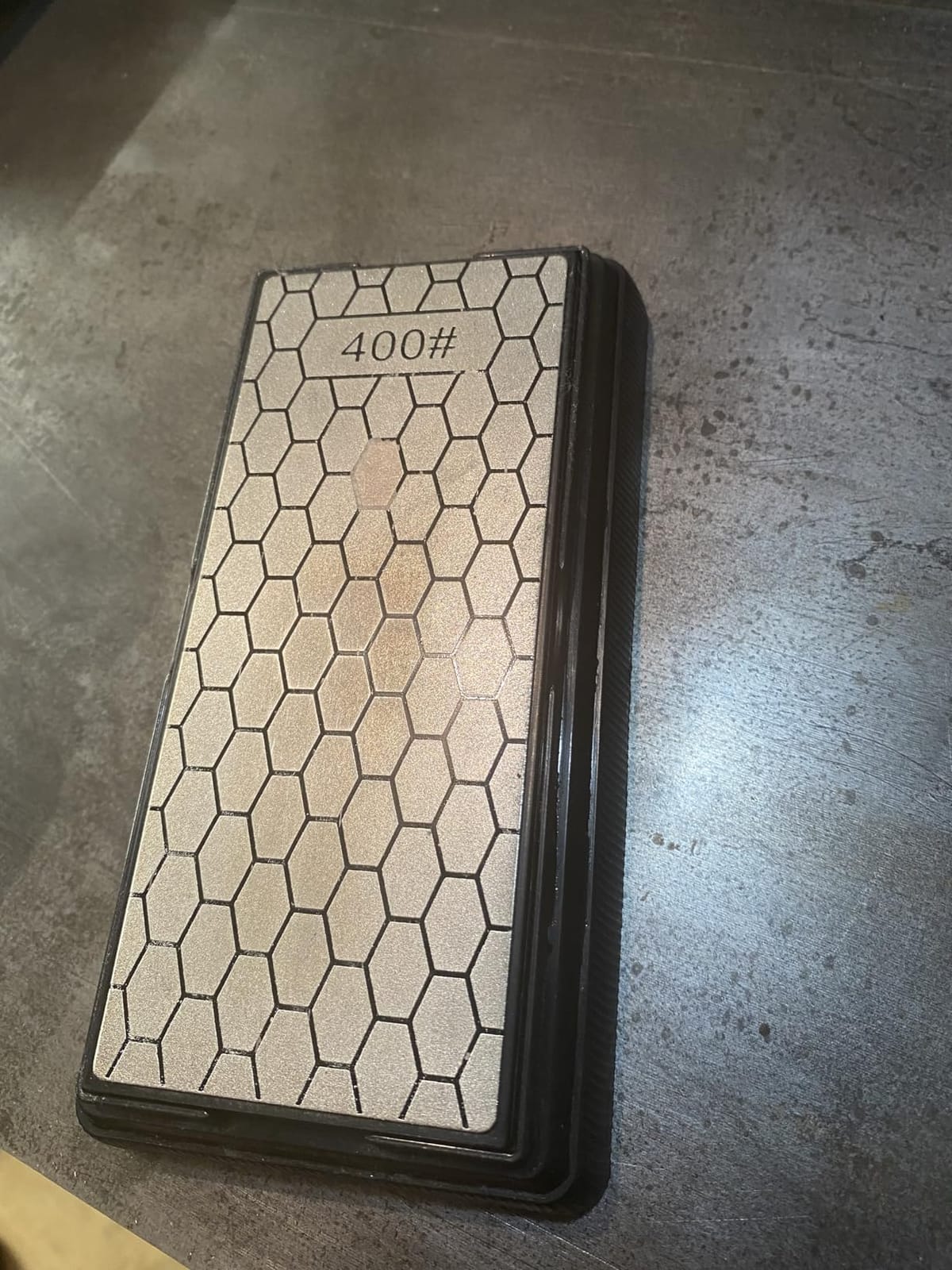
If you have stones you are happy with, the guide is the better half of this package and the part that carries the 4.5 rating. If you have never sharpened anything, the bundled plate means a working edge the same afternoon.
Guiding quality is genuinely good for the tier. The wide extended roller holds the blade flat through the pass, two adjustable jaws clamp at a consistent angle, and the anodized body with high-precision markings is better hardware than the tier suggests.
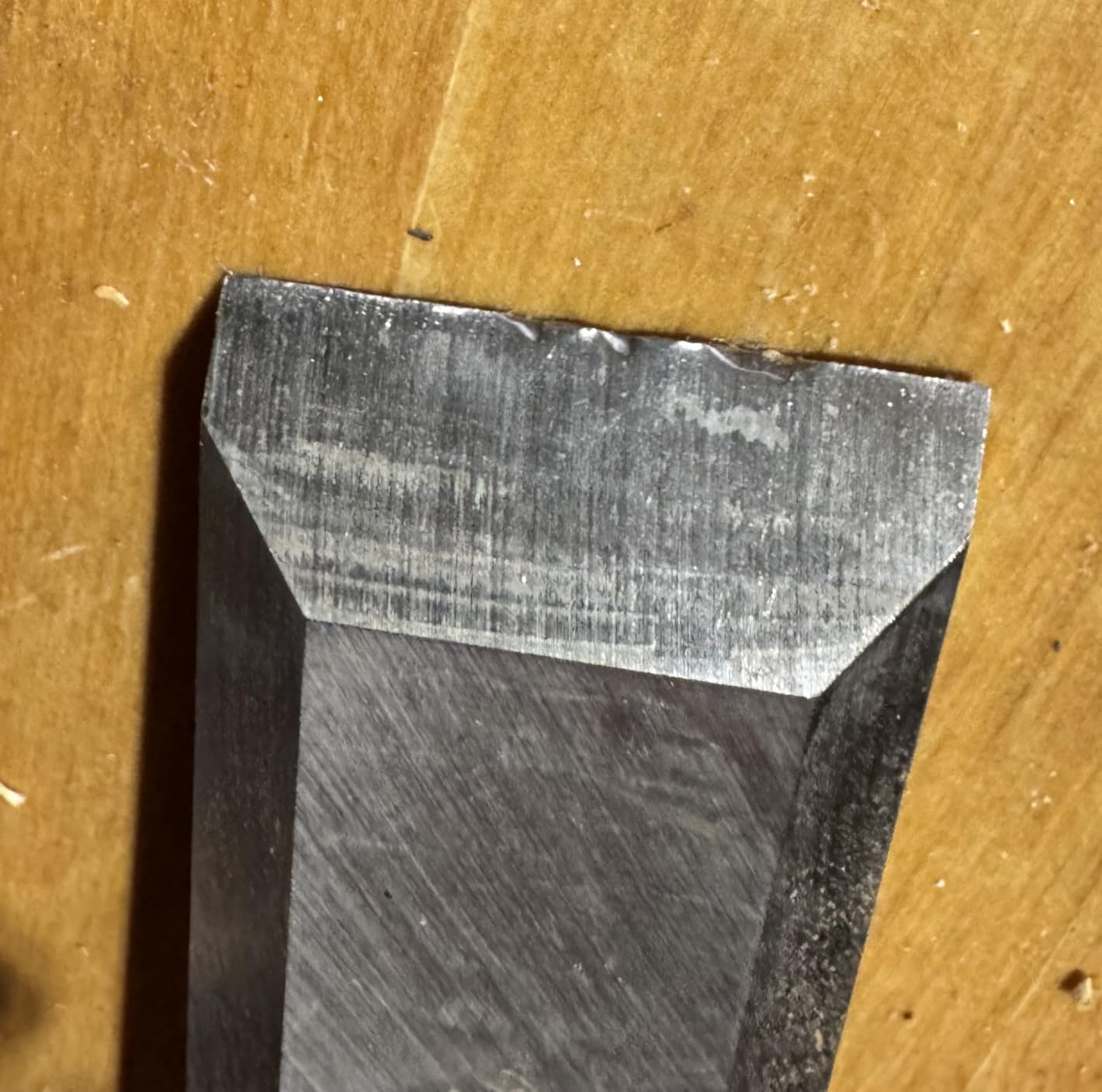
The angle gauge and positioning block work together. The gauge gives the reading and the block sets the projection, so together they approach fixture accuracy, which is why the 286 reviews lean heavily five-star.
Two limitations to plan around. There is no positive lock on the jaws, so a small chisel can shift as you roll, and the included angle reference is a thin paper card you must mount. The bundled plate is adhesive film on aluminum, so treat it as a starter surface.
Who the AUXTUR jig suits
It suits a first sharpening setup where you do not yet own a stone, and anyone who wants a repeatable angle without buying a separate gauge. The wide roller also copes with plates of different thicknesses.
Who should skip the AUXTUR jig
Skip it if you already own good stones, because the extra weight in the box is dead weight. If you mostly sharpen narrow paring chisels, the missing jaw lock is the wrong compromise.
11. G Sharp Edge Chisel Sharpener: Best for Working Away From the Bench
G Sharp Edge Chisel Sharpener – Chisel Sharpening Kit – Sharpens Blades from 3mm to 85mm Wide – Light, Robust and Easily Transported
3mm to 85mm blade range
22 to 90 degrees
Four diamond grit stages
Micro foils included
+ The Good
- Complete self-contained system with four diamond grit stages and polishing foils in the case
- Covers an unusually wide 22 to 90 degree angle range
- Handles everything from 3mm to 85mm blade widths in one jig
- Compact and rugged enough to live in a tool bag
- No power or water needed
- so it works anywhere on site
- The Bad
- Diamond plate honing is slower than water stones for deep bevel grinding
- Small diamond plates need frequent flattening as they wear
- Micro foil polishing consumables add running cost and are not included as spare plates
This one differs in kind from the other eleven, because it is a whole system rather than a bare jig. The case holds four diamond hones at 200, 400, 800 and 1500 grit plus micro foils for a mirror polish, all hand-powered with no water.
The range numbers are the headline. Blades from 3 mm to 85 mm covers the narrowest carving chisels through a wide bench chisel, and an angle from 22 to 90 degrees covers a shallow carving bevel, a 25 degree chisel and a near-flat knife geometry.
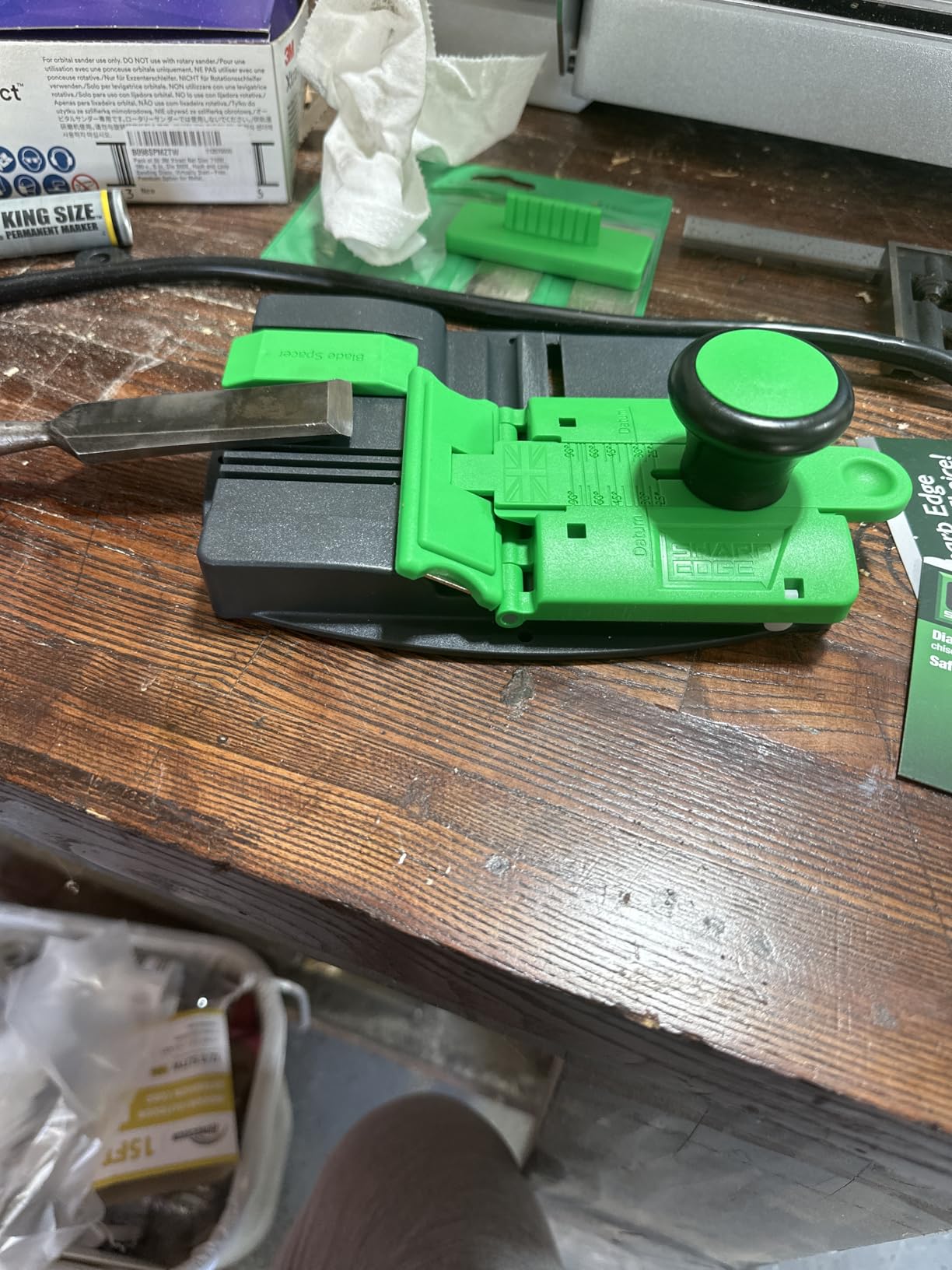
Owners like the full progression under one roof, and the case is genuinely portable at under two ounces. Sharpening on a job site or in a rented space with no water bucket and no power outlet is exactly the situation no stone guide here solves.
The trade is speed. Diamond plate honing is slower than waterstone work on a deep bevel, and the small plates need flattening often. The micro foils are consumables not repeated in the box, so polishing is a running cost.
Who the G Sharp system suits
It suits site work, small or shared shops, and anyone sharpening knives as well as chisels with one tool. It is also the answer for a 3 mm to 85 mm blade collection handled without a machine.
Who should skip the G Sharp system
Skip it if you already own a good waterstone and jig, since you would be replacing working tools with slower consumables. It is also wrong for anyone who sharpens weekly and wants a fast stone routine.
12. Ziopetru Adjustable Honing Guide: Widest Range, Fewest Accessories
Chisel Sharpening Jig Kit with Adjustable Honing Guide
5/32 inch to 3 inch blades
15 to 45 degree gauge
Dual roller base
Angle fixture included
+ The Good
- Angle gauge and indexing fixture make bevel setting repeatable from 15 to 45 degrees
- Dual rollers hold the blade flat and square
- avoiding the rocking seen in single-roller designs
- Very wide jaw range from 5/32 inch detail chisels to a 3 inch plane iron
- Owners report it squared up blades that previous jigs had skewed
- Corrosion-resistant gauge plate keeps its accuracy over time
- The Bad
- Small rollers need lubrication as they wear around the axle and can seize
- Rollers can unscrew or fall off if not tightened with the Allen key
- Adjustment thumbscrew protrudes below the base and fouls small stones
- Adjustment knobs need pliers to tighten properly or the blade slips
- Wide roller base takes up real estate on short stones
The dual roller base is what this jig does better than most, and owners with a history of skewed edges point at it directly. Two rollers instead of one means the blade cannot rock the way it does on a single-wheel design, and several reviewers say it squared up chisels others had ruined.
The gauge is well made, with one scale in 5 degree steps from 15 degrees and the other from 17 degrees, which is how you reach odd half angles without estimating. The corrosion-resistant plate keeps its readings, the failure mode that kills cheap plastic gauges within a year.
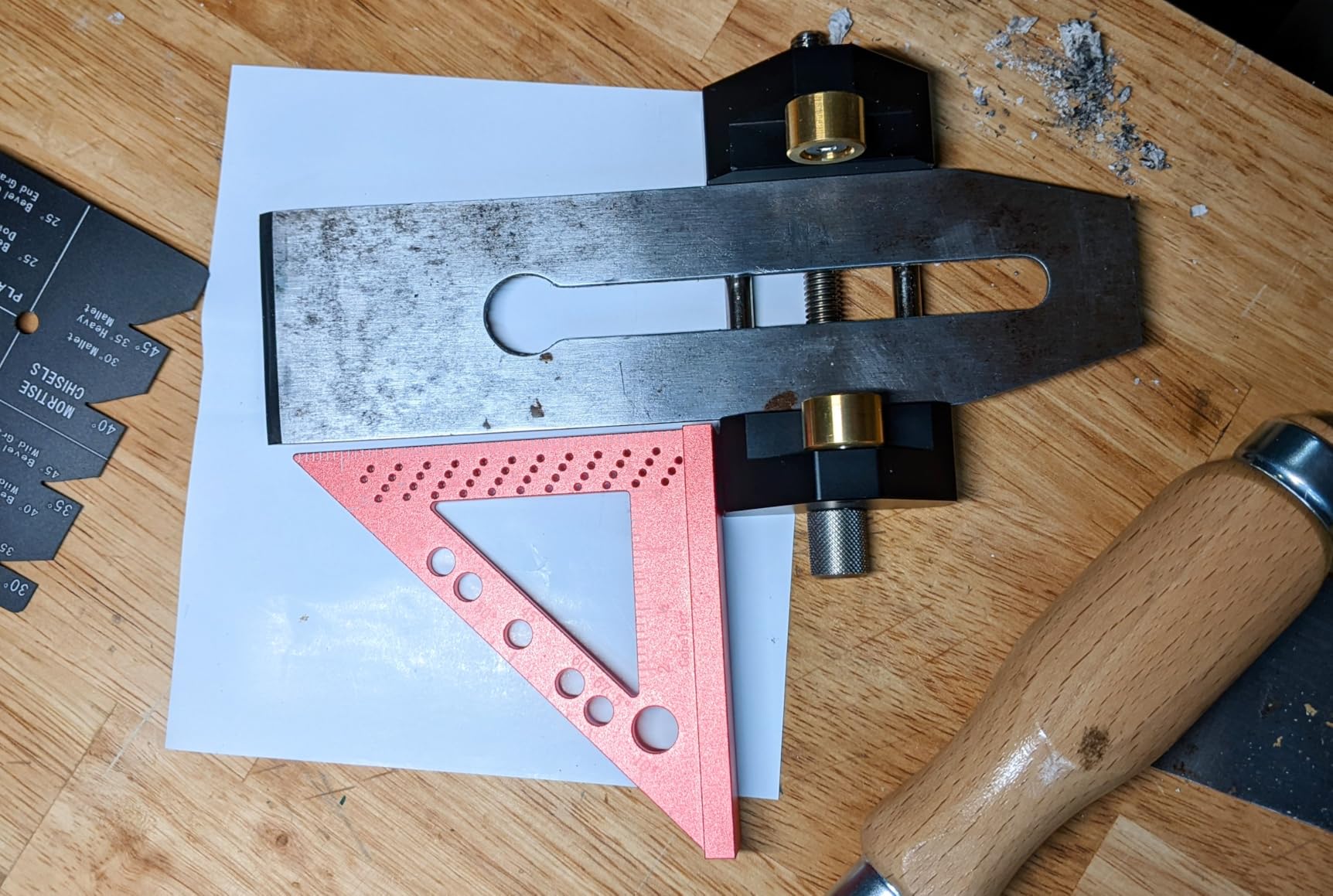
There is an assembly step that catches people. Tighten every roller with the Allen key after assembly or they work loose under pressure. Lubrication matters too, since small rollers wear around the axle and can seize if left dry.
The protrusion below the base is the practical gripe. The adjustment thumbscrew hangs under the guide and fouls a small stone or bench surface, so this wants a wide, flat station. The wide base also eats real estate on an eight inch stone.
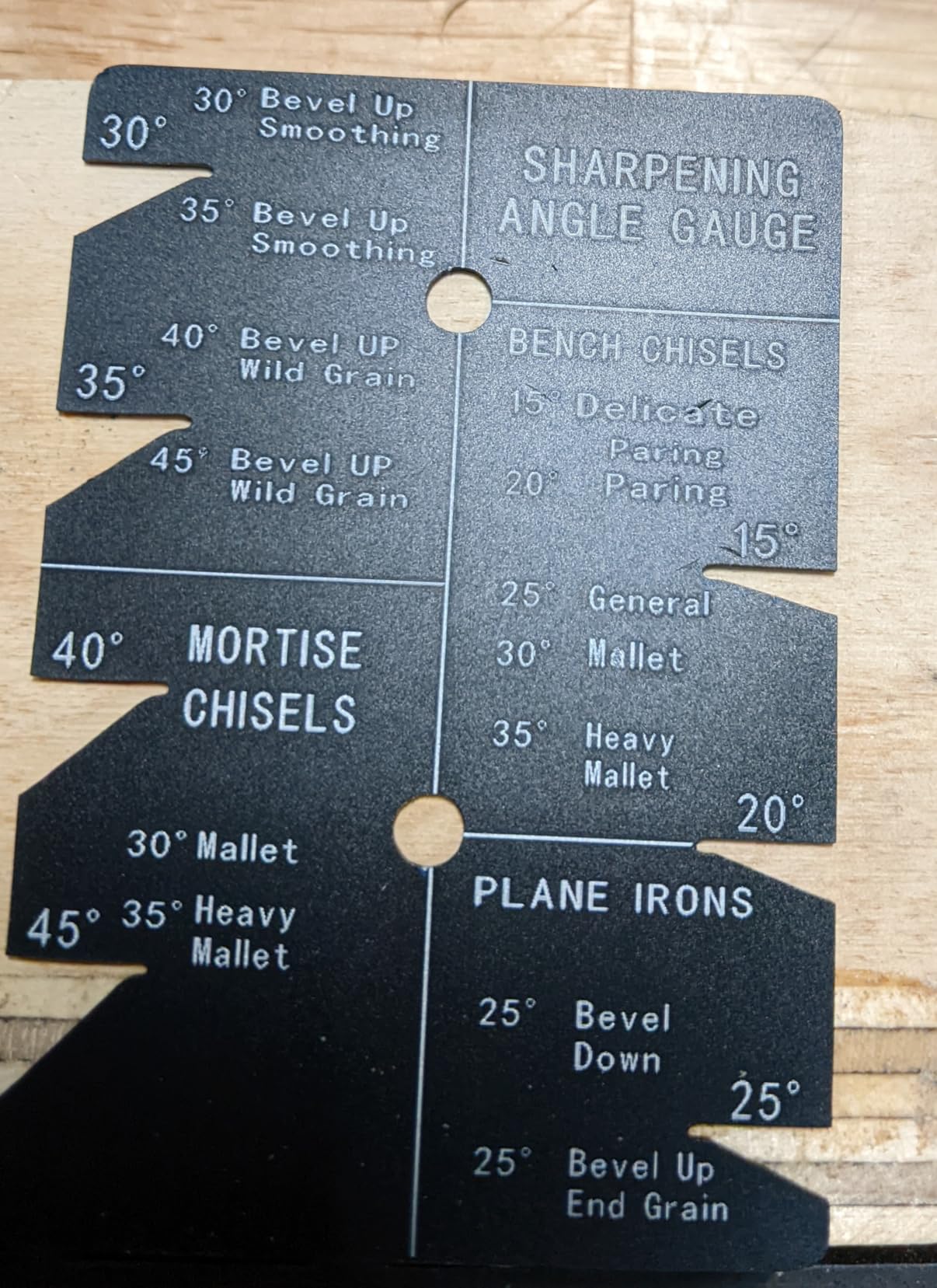
Who the Ziopetru guide suits
It suits owners of a very mixed blade collection, from 5/32 inch detail work to a three inch plane iron, who have had squaring problems with a previous jig. The dual roller base is why it squares up edges others could not.
Who should skip the Ziopetru guide
Skip it if your station is a small stone or crowded bench, because the protruding thumbscrew and wide base will fight you for room. Anyone unwilling to oil the rollers routinely should look for a hardened steel wheel.
Do You Even Need a Sharpening Jig?
If you already sharpen freehand on a waterstone and your edges come up consistently, a jig will not make you better, and the honest answer is that you do not need one. This is the most repeated objection in the forums we researched for this guide, and it deserves a straight answer.
What a jig removes is one specific error: inconsistent bevel angle from stroke to stroke. Most hand sharpeners hold an angle well for a few passes and drift a degree or two across a blade, enough to leave a dull corner at one end of the edge. Fixed geometry makes that drift essentially impossible.
It also saves time. Instead of resetting your muscle memory for every stroke, you lock the blade in once and roll. For someone sharpening four or five chisels after a day of work, that is the whole value proposition.
Two things a jig will not do. It will not reprofile a hollow ground chisel, because the concave bevel needs a tool that reaches inside the hollow, and putting such a blade on a stone guide can fold a wire edge over. It also cannot fix a bent blade or a chipped edge; those are tool problems before they are sharpening problems.
So: if you own two or three chisels and sharpen them monthly, use a stone freehand. If you sharpen regularly, own plane irons, or keep wondering whether your edge is really flat, a jig pays for itself in saved time alone. For the same buy-once, use-for-years logic elsewhere in the shop, see our dovetail jig guide.
How to Choose a Sharpening Jig for Chisels: 7 Decision Factors
1. Check the narrowest blade you actually own
Ignore the maximum width, which every jig advertises. Find the thinnest chisel in your roll and compare it to the minimum. The ATLIN and Gohelper go down to 0.1 inch, the GOINGMAKE to five thirty-seconds, while the WEICHUAN starts at five sixteenths and the Sharp Pebble at a quarter inch, and a thin paring chisel will not sit properly in any of those.
2. Decide how you want to set the angle
There are three methods and they are not equally good. Measuring projection by eye is the cheapest and the most common. A projection chart, as on the Sharp Pebble, turns it into arithmetic. A fixture and gauge, as on the Gohelper, GOINGMAKE and Ziopetru, is repeatable across tools and lets you copy a setting, which is the option we would pick for a beginner.
3. Look at how the blade gets squared
A self-centering roller, a self-squaring shoulder, as on the GOINGMAKE, and a squaring shoulder or reference edge are three different guarantees. If you have ever struggled to see whether a blade is square in the guide, a shoulder that registers the edge against the rollers is worth more to you than any other feature.
4. Count rollers and check the material
Two rollers beat one for stability, which is why the Ziopetru and the GOINGMAKE hold an edge square. Material decides how much maintenance you will do. Hardened steel rollers need nothing. Brass rollers, on the GOINGMAKE, WEICHUAN and others, work well once oiled and bind if you skip it, so check whether you are the type to remember.
5. Check the wheel position and the stone length
Some jigs ride on the stone and some ride on a bar or the base, and the difference decides whether a thick diamond plate will work at all. A single wheel that rides directly on the stone, as on the Sharp Pebble, tolerates thick plates, but it also means the wheel runs on the back half of the stone, so rotate your stone regularly.
6. Decide whether plane irons are in scope
Many people own both chisels and hand plane irons and want one jig for both. Check that the iron range is covered, not just the chisel range, and that the guide holds the iron near its middle rather than at the very front, which is what makes short irons shift. If irons are the priority, the KAKURI and the Saker are the two built for them.
7. Ignore the abrasive, and think about dust
A stone guide works with waterstones, oil stones and diamond plates, so the abrasive is not a compatibility question. Dust is the one that bites. A jig that collects stone dust in its mechanism needs occasional cleaning to stay tight, and a plain steel body working next to a wet stone will spot with surface rust unless you dry it after use.
Short and Narrow Chisels: What Actually Works
Short paring chisels and narrow detail tools are the most underserved question in this category, and the ones most likely to disappoint you if you buy by maximum width instead of minimum.
Three things go wrong. The blade slides out because there is not enough length in the jaws. The blade rocks because the guide grips it at a single point. And the bevel comes out rounded at the corners because a loose narrow blade moves sideways during the pass.
The jigs here that genuinely handle narrow work are the ATLIN, at a 0.1 inch floor with self-centering rollers, the Gohelper, at 0.1 inch with narrow shoulders shaped for slim chisels, and the GOINGMAKE, at five thirty-seconds with a shoulder that squares the edge to the rollers. The Ziopetru also reaches five thirty-seconds and squares well on its dual rollers.
Avoid the WEICHUAN, which starts at five sixteenths, and the Sharp Pebble, at a quarter inch. Both will hold a chisel that is too narrow, just not properly, and the result is an edge that looks sharpened and still tears.
How to Sharpen a Chisel With a Jig
Once you have chosen a guide, the process is short and the same for nearly every stone jig in this roundup. Four steps get you from a dull chisel to a working edge.
Set the angle once. Clamp the chisel with the bevel down, set the projection using your gauge, fixture or chart, and mark the position on the blade with a pencil. If your jig has a squaring shoulder, register the edge against it before tightening.
Coarse grit to shape the bevel. Start around 400 grit. Roll the jig the full length of the stone with steady pressure, keeping the roller rolling rather than sliding, until the bevel is flat and even from heel to toe. Check by drawing the edge across your thumbnail.
Remove the wire edge. That hanging sliver of steel, called a burr, is the reason an edge feels sharp and still tears. Knock it off by drawing the blade edge into a piece of end grain, or continue to a finer grit and check again.
Finish and raise a secondary bevel. Move to roughly 1000 grit to refine, then to 4000 or finer to raise a micro-bevel of a few degrees over the primary bevel. Strop on leather with compound to finish, and the edge is done.
One habit separates a good session from a wasted one. Check the roller for flat spots before you start, because a flat spot puts a dip in the middle of the bevel that no amount of extra pressure will remove.
Frequently Asked Questions
What is the best chisel sharpening guide?
The best chisel sharpening guide for most people is a self-centering stone guide with a hardened steel roller and a range covering 0.1 inch to 2 inch blades. Ours is the ATLIN Honing Guide, the most widely owned jig in this roundup. If you want a numeric angle rather than a feel, choose a guide that includes a fixture and gauge instead.
What is the best chisel sharpener?
That depends on which category you mean. A jig or honing guide holds a blade at a fixed angle while you work it on a stone or plate. A machine jig such as the Tormek SE-77 clamps to a powered sharpener. A powered sharpener does the abrasion itself. For hand-tool woodworking, the jig is the piece most people are actually shopping for.
Do I need a sharpening jig for chisels?
If you already sharpen freehand on a waterstone and get a consistent bevel, you do not need one. A jig earns its place when you sharpen regularly, own plane irons as well as chisels, or keep catching yourself wondering whether your edge is really flat. It removes inconsistent bevel angle between strokes and saves time over a long session.
What’s the best way to sharpen chisels?
Use a jig with a 25 degree primary bevel on a waterstone or diamond plate. Set the angle once, work the full length of the stone at about 400 grit until the bevel is flat, remove the wire edge, refine around 1000 grit, then raise a secondary micro-bevel of a few degrees at 4000 grit or finer. Strop on leather to finish.
What is the best grit to use to sharpen chisels?
Start around 400 grit to flatten the existing bevel, move to roughly 1000 grit to refine the scratch pattern, then finish at 4000 grit or finer to raise the secondary micro-bevel. After each grit change, check for a wire edge and remove it. A jig does not change the grit sequence, only how consistently the blade is presented to it.
What is the correct angle to sharpen chisels?
Twenty-five degrees total is the standard for a general-purpose bench chisel, which leaves twelve and a half degrees per side. Some woodworkers prefer a slightly steeper primary bevel for hardwood work. A jig helps most here, because the angle becomes a number you set once rather than something you judge by eye on every stroke.
What is the best grinder for sharpening chisels?
For most hand-tool woodworkers, no grinder is needed, and a waterstone with a jig gives a more controlled, cooler result. A Tormek system rewards you with a large diameter wheel and low heat, and the Tormek SE-77 jig makes it the best-supported route into powered sharpening. A standard bench grinder needs a proper jig before you put a chisel to it.
Can you use WD-40 to sharpen a chisel?
No. WD-40 is a lubricant and water displacer, not an abrasive, so it removes no steel and cannot sharpen anything. Applying it can actually cause problems, because the film traps abrasive grit against the edge and dulls it faster. Use a stropping compound on leather for the final polish instead.
Our Verdict on Sharpening Jigs for Chisels in 2026
After this roundup, the answer to the question that fills every woodworking forum is simpler than people make it. Buy the guide whose narrowest capacity covers your thinnest chisel, and buy the one with the most rigid body you can afford. Angle setting method is the second decision, not the first.
For most people the best sharpening jigs for chisels come down to three: the ATLIN as the do-everything default, the Tormek SE-77 if a Tormek machine is already on your bench, and the Saker if you want an all-metal body with a locking angle tool. Add the GOINGMAKE if narrow paring chisels are part of your kit, and the KAKURI if Japanese blades and plane irons are.
Whichever you pick, oil a brass roller before the first pass, mark the blade position with a pencil, and check for flat spots every few months. Those three habits do more for a consistent edge than any jig on this list.