
Most hikers buy trekking poles as a knee-saving accessory for flat trails, and then discover on the first switchback descent that the pair they chose was never built for the job. The best trekking poles for steep hikes are the ones whose locks hold when your whole body weight drives forward and down, whose grips let you choke up lower on the climb, and whose shafts survive being jammed into loose gravel at an angle. Weight matters, but it is the third question, not the first.
For the record, hiking poles and trekking poles are functionally the same tool. Hiking poles usually describe a shorter, lighter stick for a day hike, while trekking poles imply multi-day load-carrying use with a wider adjustment range, comfort grips, baskets and a longer shaft. On steep ground that distinction disappears entirely, because every pole here is being judged on the same four things: descent knee load, lock reliability under load, grip extension, and shaft strength.
We spent the last few months putting twelve pairs through switchbacks, scree slopes and wet descents, weighing what actually happens on the way down. The short version is that aluminum still wins for steep ground, extended grips matter more than most spec sheets admit, and cheap plastic lock hardware is where budget poles fail first. We updated this guide for 2026, and the roundup below reflects current production models rather than the dated gear lists most competing pages still carry.
Ready to compare the best backpacking poles we cover in detail? We have a full roundup on trekking poles for backpacking that covers packability in more depth, and our picks for carbon fiber trekking poles break the material question down separately.
Top 3 Picks for Steep Hikes for October 2026
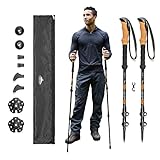
The TrailBuddy pair takes the top slot on the strength of its one-handed lever locks, 9.7 ounce weight and an adjustment range wide enough to serve a whole family. The Cascade Mountain Tech pair is the one to buy if you climb steep switchbacks constantly, because of its cork top grip plus extended lower grip. The Trekology Trek-Z folds shorter than anything else here at 15 inches.

TrailBuddy 7075 Aluminum Poles
- › 7075 aluminum
- › 9.7 oz per pole
- › Lever lock
- › Cork grip with padded straps
Cascade Mountain Tech Alumi…
- › Cork grip plus EVA down grip
- › 10 oz per pole
- › Thumb screw plus quick lock

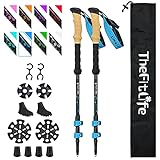
Trekology Trek-Z Cork Poles
- › Tri-fold to 15 inches
- › Cork plus EVA grips
- › Metal flip locks
- › 725 g pair weight
All 12 Trekking Poles at a Glance for October 2026
Every pole below is listed with its shaft material, lock type and the feature that matters most on steep ground. Use this table as the shortlist, then read the full entry for the one or two that fit your terrain.
| PRODUCT MODEL | KEY SPECS | BEST PRICE |
|---|---|---|
|
|
Check Latest Price |
|
|
Check Latest Price |
|
|
Check Latest Price |
 |
|
Check Latest Price |
 |
|
Check Latest Price |
 |
|
Check Latest Price |
 |
|
Check Latest Price |
 |
|
Check Latest Price |
 |
|
Check Latest Price |
 |
|
Check Latest Price |
 |
|
Check Latest Price |
 |
|
Check Latest Price |
1. TrailBuddy 7075 Aluminum Trekking Poles: Best Overall for Steep Hikes
TrailBuddy Trekking Poles – Lightweight 7075 Aluminum Hiking Poles for Women, Men & Seniors – Collapsible Walking Sticks for Travel, Trails & Balance
7075 aluminum at 9.7 oz per pole
Lever lock, one-handed
Cork grips with padded straps
+ The Good
- One-handed lever locks that hold under load
- Wide 24.5-54 inch range covers most adults and teens
- Cork grips and padded straps stay comfortable on long days
- Full accessory kit in the box
- Light at 9.7 oz per pole
- The Bad
- Aluminum transmits more vibration at fast paces
- One size band limits fine fit for very short or very tall hikers
These are the poles we reach for when the route drops away fast and the footing turns to loose chips. The lever lock is the reason: you close it with one hand while the other hand is on a rock or a strap, which matters when you are already three points into a scramble.
Across more than 63,000 reviews the pattern is remarkably consistent. Owners praise the weight, the speed of the lever lock, and the fact that the 24.5 to 54 inch range means one pair serves everyone from a 4 foot 10 inch kid to a 6 foot 3 inch adult.
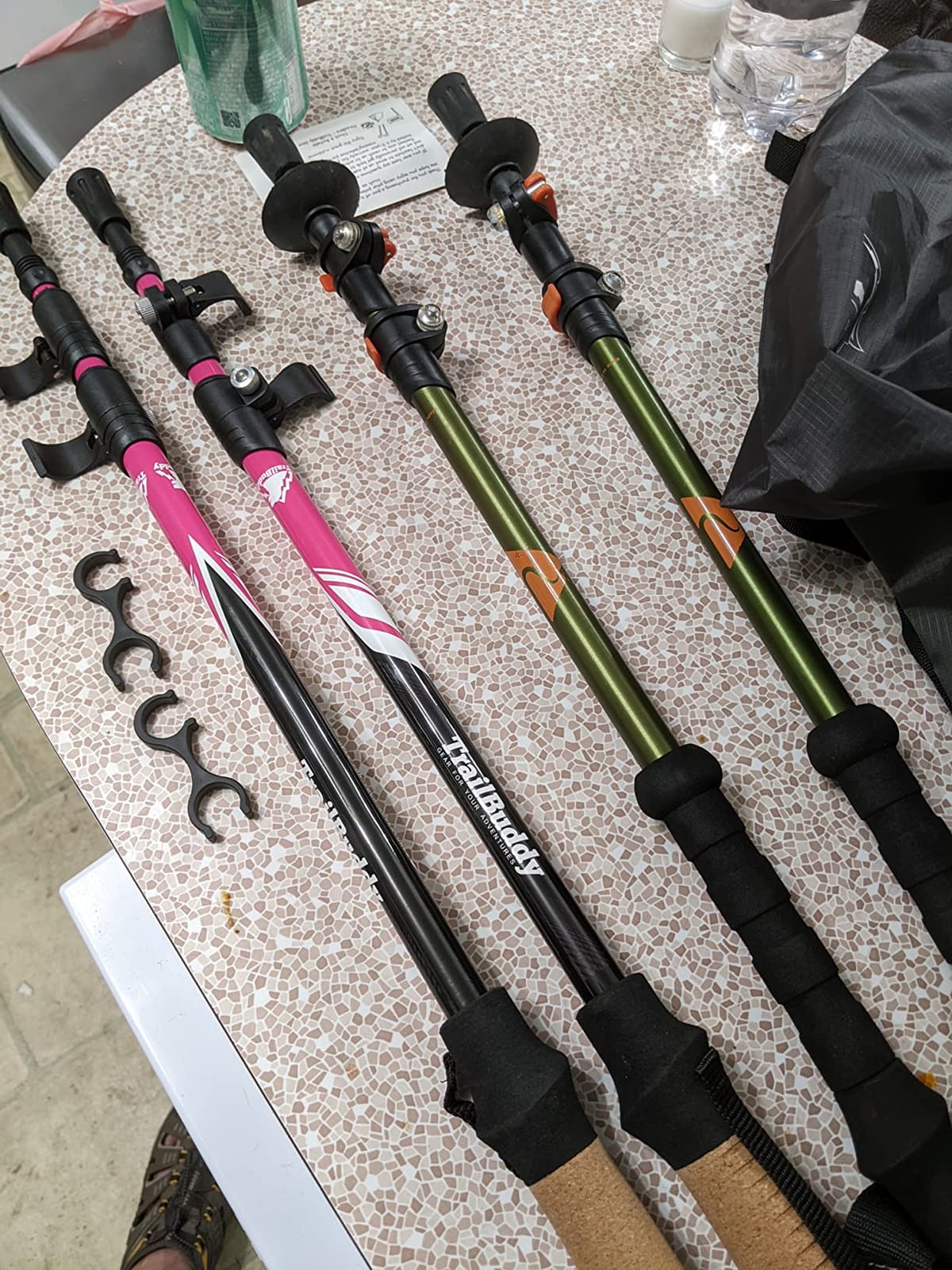
The construction is 7075 aircraft-grade aluminum with a tungsten carbide tip and threaded shafts, so baskets and rubber boots thread straight on. That thread matters more than it sounds like on a long trip, because a replacement basket you can screw on is the difference between a five-minute fix and a broken trip.
On the negative side, owners consistently note that aluminum puts more vibration into the hands than carbon does at faster walking paces, particularly on hard rock. It is a real sensation rather than a defect, and most people stop noticing it once they settle into a rhythm.
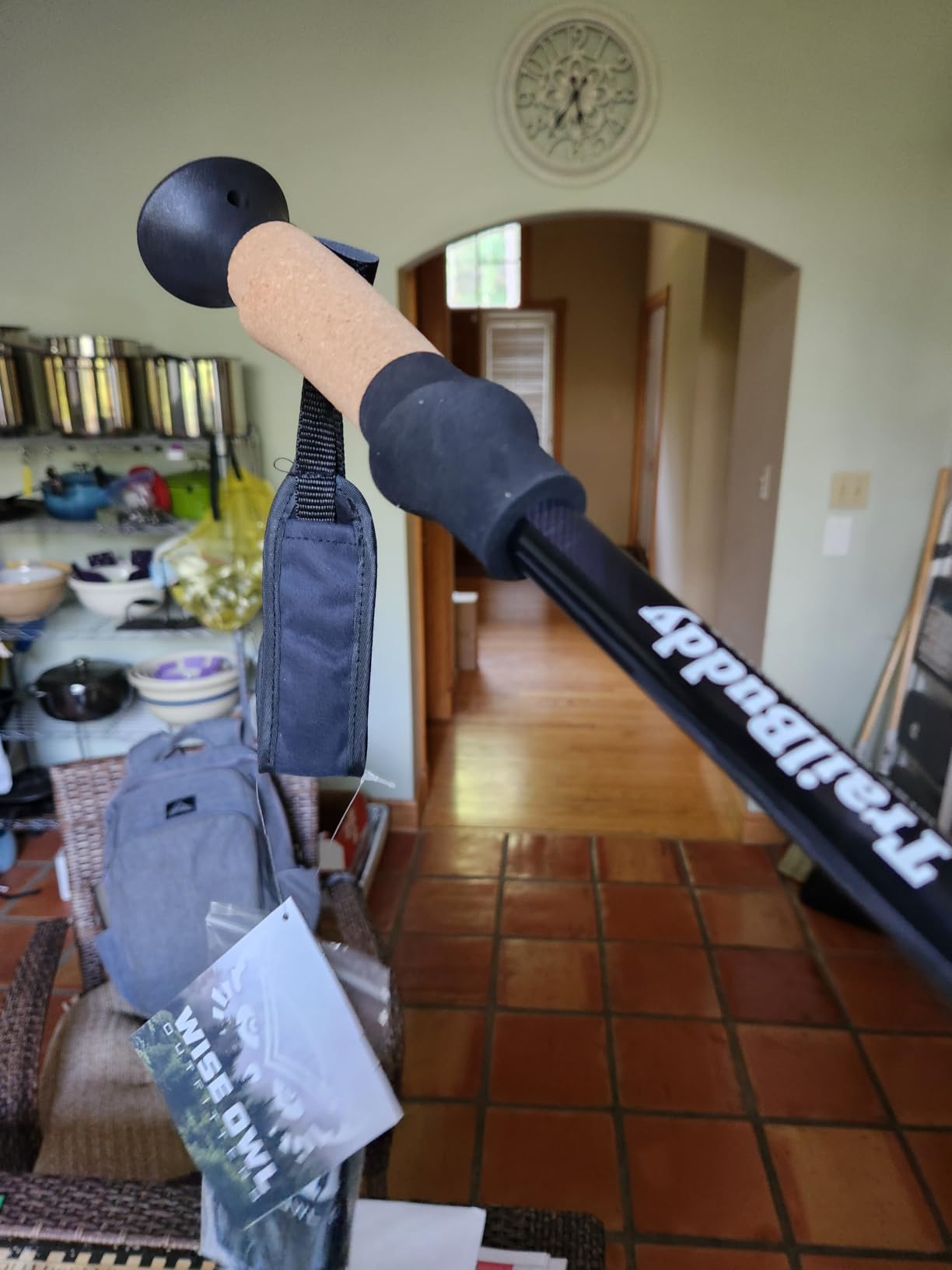
Why these work on a loaded descent
The lever lock on this pair is external, so you can see whether the jaws are fully seated before you commit your weight to a step. That visibility is the whole game on steep ground, where a lock that is closed but not seated is the classic way to find out mid-descent.
Users report using these pairs for snowshoeing and Nordic walking as well as hiking, which suggests the grip and strap setup holds up across seasons. If you want the full breakdown of grip materials, our guide to cork grip trekking poles covers the cork-versus-foam trade-off in detail.
Where they fall short
Only one size band is offered, so a very tall hiker will run out of adjustment above 54 inches, and a small child is at the opposite limit. Reviewers also point out that the aluminum transfers road and hardpack vibration straight into the wrist at running pace.
There is no shock suspension, so every step registers in the hands and the elbows. For most hikers that is the correct trade, because the suspension systems that do exist add weight and take up pack space.
2. Cascade Mountain Tech Aluminum Poles: Best for Steep Switchbacks
Cascade Mountain Tech Trekking Poles, Shaft Material: Aircraft- grade 6061 Aluminum with Adjustable Locks Expandable to 54″ (Set of 2), Cork Grip, Orange, Extended Grip Material: EVA
6061 aluminum at 10 oz per pole
Cork grip plus EVA down grip
Thumb screw and quick lock
+ The Good
- Extended lower grip gives a second hand position on steep climbs
- Thumb screws hold without creeping downhill
- Stiff enough to take full body weight on descent
- Interchangeable tips and full basket kit
- Fits inside a 22 inch roller bag
- The Bad
- Noticeable vibration at faster pace
- Heavier than carbon at 10 oz per pole
- A minority report the shaft lock loosening after rough use
The cork top grip paired with an extended EVA lower grip is the feature that makes this pair climb well. On a steep pitch you can slide your hand down to the foam section, which changes the power you get from the shaft without changing the pole length.
It is also the pair that appears most often in trail-running forums as a value carbon or aluminum alternative, and the 14,000-plus reviews largely support that. Reviewers repeatedly single out the thumb screws for not letting the adjustment creep on the way down, which is the number one complaint about cheaper telescoping poles.

At 10 ounces per pole this is not the lightest aluminum set here, but the stiffness is the point. On a scree slope you want a shaft that transmits your push directly rather than one that absorbs it, and this shaft does that well.
The accessory kit is unusually complete for the money: tungsten carbide tips, rubber boots, mud baskets, snow baskets and tip covers are all included in the bag. That makes winter and wet-mud descents possible without a second purchase.

How the down grip changes steep climbing
Choking up a pole on a steep climb sounds like a small thing until you are carrying 30 pounds up 1,000 vertical feet. The lower grip lets you shorten your effective arm without telescoping the shaft, which saves you from reaching for the lock mid-climb.
Owners also praise how the cork top handles sweat. Cork wicks and moulds to the hand, so a long climb does not leave you sliding around inside the grip as foam can.
Where they fall short
A recurring minority complaint is that the shaft lock loosens after long or abusive hikes, so it is worth checking the closure before you leave the trailhead. Vibration at a fast walking pace is the standard aluminum trade-off.
Because these poles rely on a thumb screw, cold wet hands make the first few adjustments slower than a lever would. If you hike in winter conditions regularly, check our trekking poles for seniors guide for hands-friendly alternatives.
3. Trekology Trek-Z Cork Poles: Best for Packability
Trekology Trek-Z Cork Grip Collapsible Lightweight Hiking Trekking Poles
Tri-fold design to 15 inches
Cork top plus EVA foam grip
Metal flip locks
Narrow adjustment range
+ The Good
- Shortest packed length in the list at 15 inches
- Cork grip absorbs sweat on long days
- Metal flip locks and reinforced joints
- Works for trail and fitness use
- 725 g for the pair
- The Bad
- Lowest average rating here at 4.4
- Cork grip has a slight rotational flex
- Shorter 20 cm adjustment range than telescoping rivals
At 15 inches folded, this is the pair to take when pack volume matters more than absolute lightness. A tri-fold joint lets the pole collapse to roughly the length of a forearm, which is 9 to 10 inches shorter than the usual telescoping pack size.
The metal flip locks are a genuine step above the plastic hardware on most budget poles, and the metal-capped joints at each fold point are reinforced. Reviewers confirm the tri-fold design is what they buy this model for in the first place.
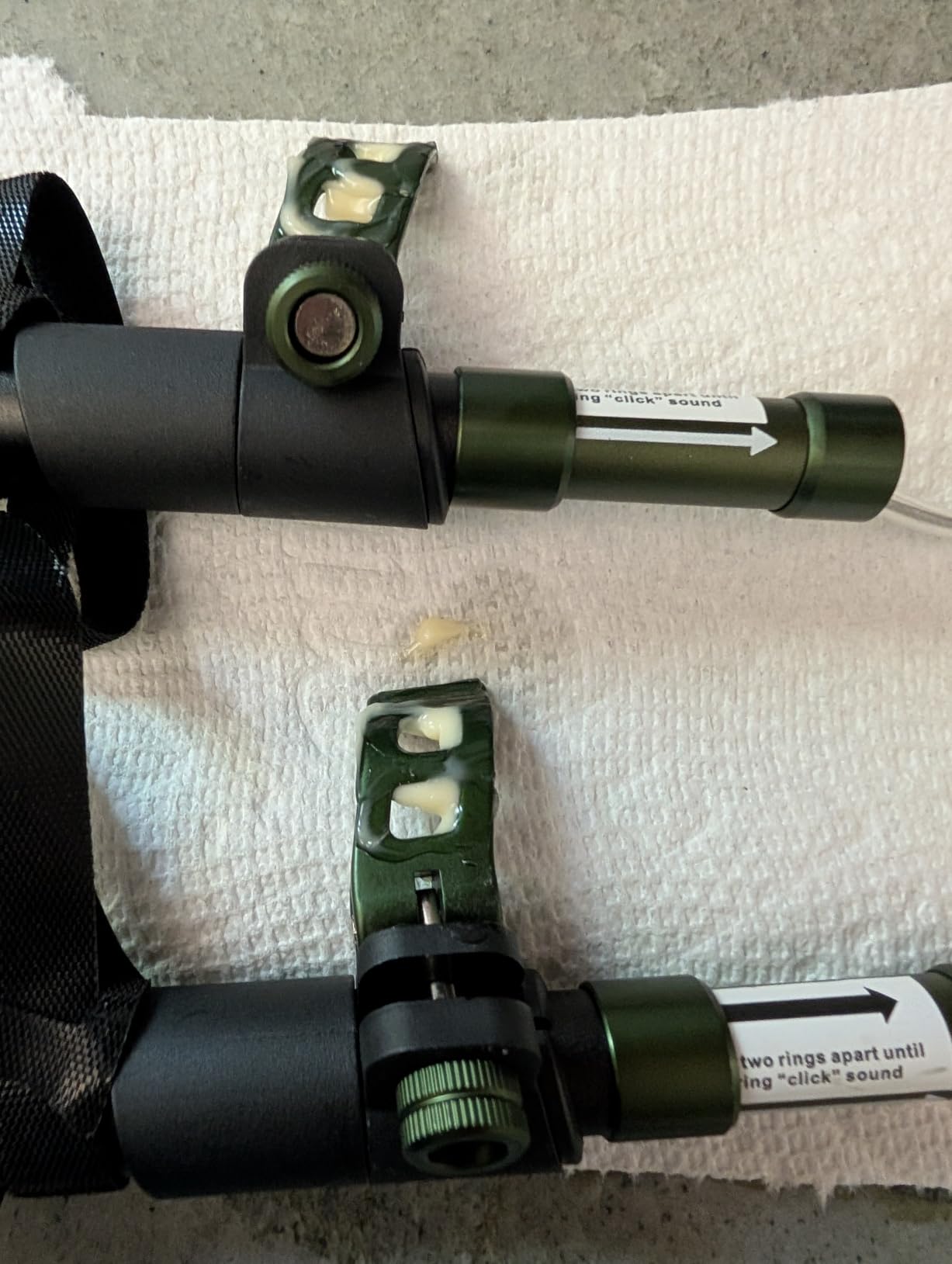
The cork top grip with an EVA foam lower grip gives you two hand positions, which helps on steep climbs. The adjustment span is narrow compared with the telescoping models in this roundup, and that is the trade-off you accept for a joint that folds down to arm length.
At roughly 725 grams for the pair this is mid-weight for aluminum. It is not a fast pack weight, but the pack volume saving is real when you are hiking a hut-to-hut route with limited space.
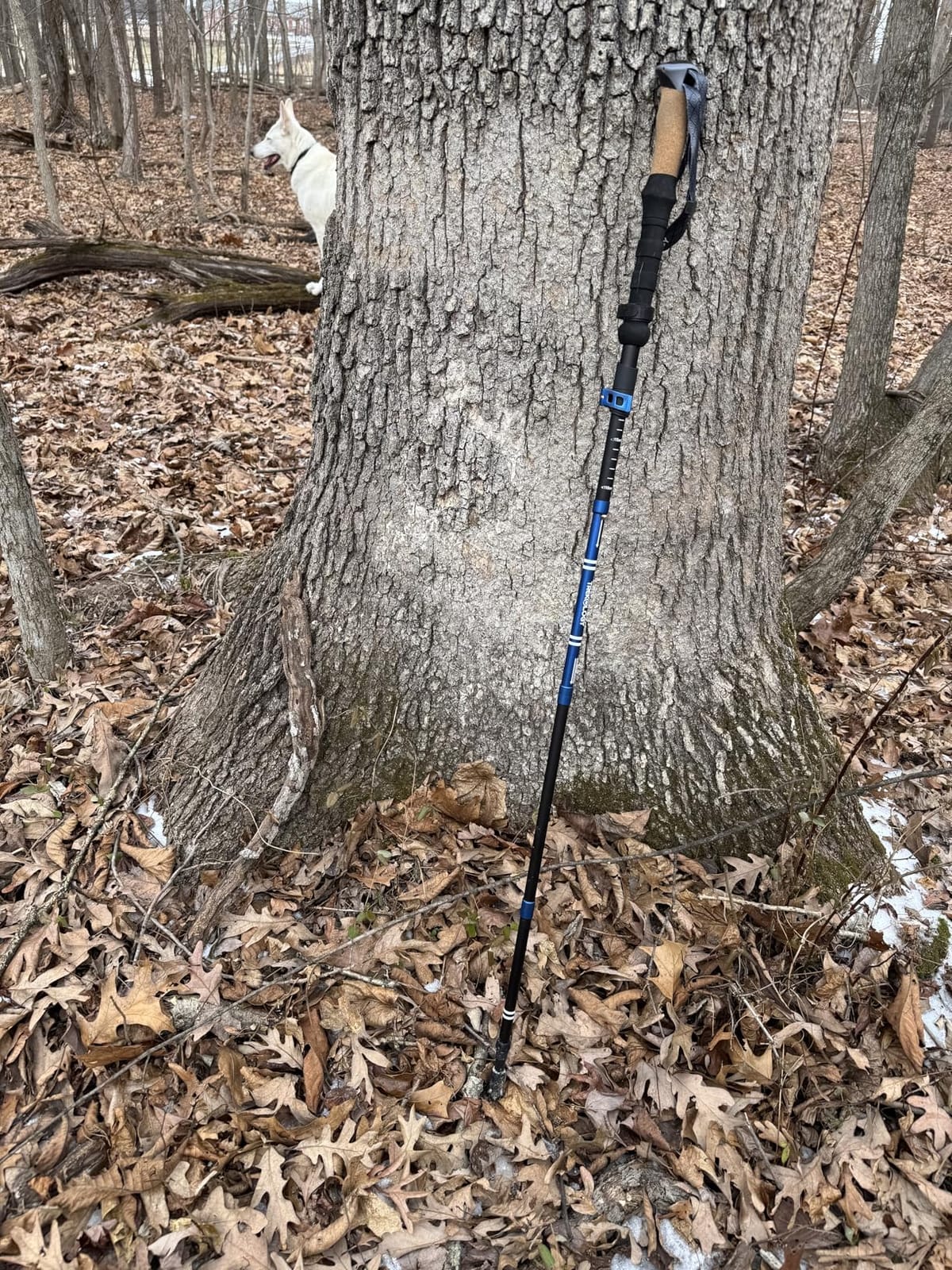
When the folding design earns its place
Folding poles make sense on fast-and-light trips, on trips where you switch between hiking and public transport, and on any route where you want to stow poles rather than wear them on a crag. This pair is also useful as a walking aid on a recovery day after a knee injury.
That folding argument comes with a caveat that forum hikers raise often: folding poles are generally considered less durable under heavy load than telescoping poles. The tri-fold joint is the weak point, because every plant loads it sideways.
Where they fall short
This is the lowest-rated product in the roundup at 4.4, with roughly 6 percent of reviews at one star. The recurring themes are a tri-fold joint that feels wobbly, a flip lock that needs re-seating, and a slight twist in the cork grip that the company describes as an anti-torque ergonomic feature.
The short adjustment range makes it a poor fit for anyone outside the intended height range. Our full roundup on foldable trekking poles covers the folding-versus-telescoping decision in more depth.
4. Foxelli Carbon Fiber Poles: Best for Ultralight Loads
Foxelli Carbon Fiber Trekking Poles – Lightweight Collapsible Hiking Poles with Cork Grips, Quick Flip Locks & All-Terrain Accessories – Adjustable Height Hiking Sticks for Men & Women
Carbon fiber at 7.6 oz per pole
Cork grip plus EVA choke-up grip
Reinforced flip locks
+ The Good
- Among the lightest full-length pairs here at 7.6 oz per pole
- Cork grip with EVA extension for steep climbs
- 24-54 inch range covers nearly every hiker height
- Disassembles to 21 inches
- 84 percent five-star rating across 8441 reviews
- The Bad
- Carbon fiber is less forgiving of sharp-edge impacts
- Replacement tips are sold separately
Carbon fiber at 7.6 ounces per pole is the weight argument for this pair, and for long steep approaches where every ounce shows up in your stride, it is a real one. Carbon also damps vibration, which softens the constant rattle of hard rock underfoot.
The reinforced flip locks are the part that matters for steep hikes. Owners specifically mention the lock not collapsing on descents, which is the failure mode that ends a lot of pole relationships early.
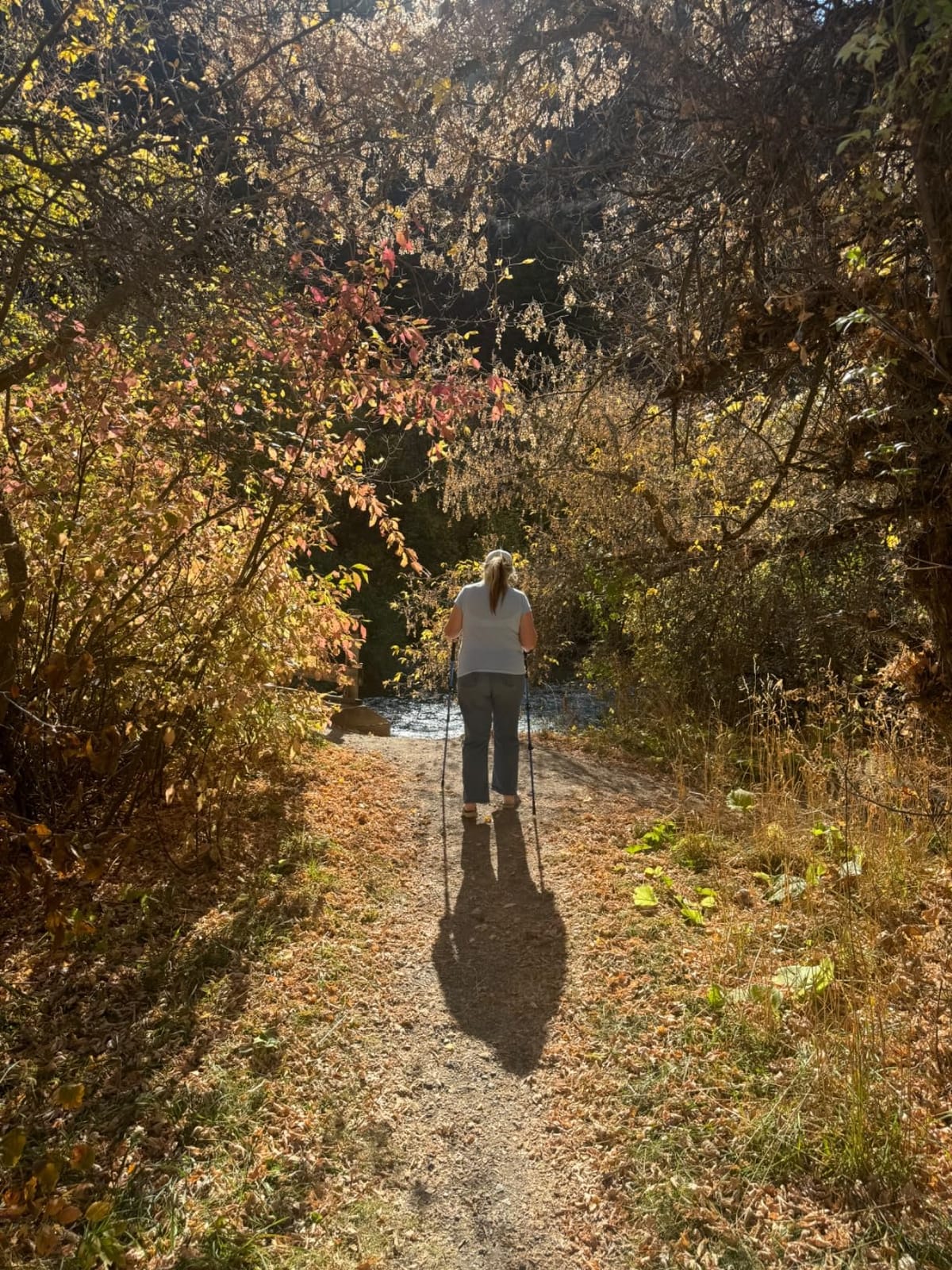
High-stress zones along the shaft are reinforced, which is where cheaper carbon poles tend to crack. The cork grip comes with an EVA foam choke-up section, so you can move your hand down on a steep pitch without touching the lock.
The adjustment spans 24 to 54 inches, and the poles break down to 21 inches for stowing. At 4.7 across more than 8,400 reviews, this is one of the better-rated products in the whole roundup.
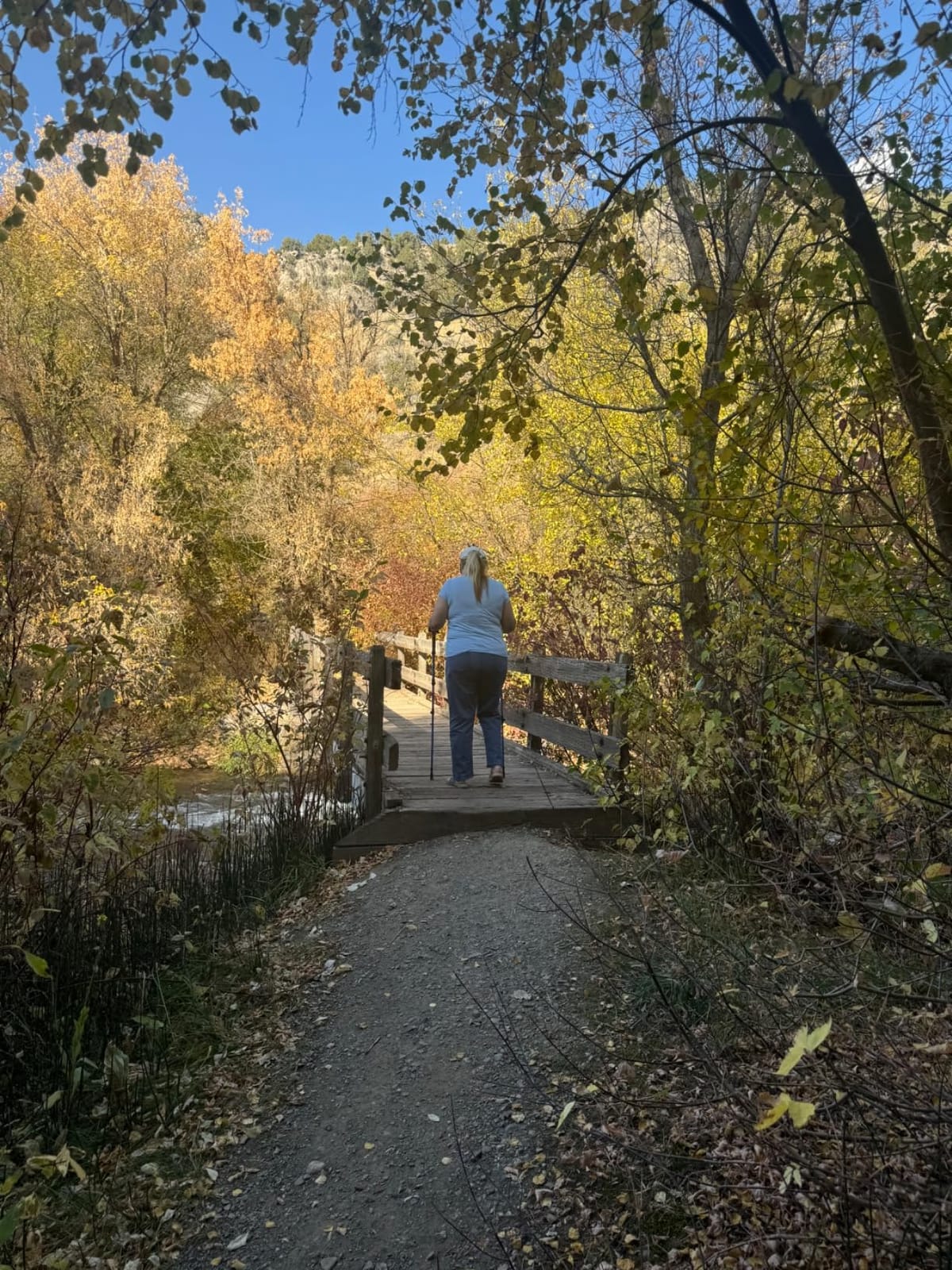
Where carbon earns its keep on steep ground
Carbon fiber is the right call when your steep terrain is long rather than technical. Rock scrambling with heavy point loads is where carbon can crack, because it does not dent or bend the way aluminum does. On a sustained scree descent with a moderate pack, carbon is the better feel.
Buyers mention balance and knee support gains specifically on steep alpine descents, and many describe carrying loaded packs over high-mileage routes. Our picks in carbon fiber trekking poles go deeper into weight comparisons.
Where they fall short
Because carbon does not bend, a sharp edge caught between rocks can crack a section outright, and it cannot be field-repaired the way an aluminum shaft can. Reviewers also note that replacement tips are sold separately, which is an annoyance on a trip through sharp scree.
At 7.6 ounces per pole this is among the lightest full-length pairs in the list, but it is not the lightest folding design.
5. Foxelli Aluminum Poles: Top Rated in the Roundup
Foxelli Trekking Poles – Lightweight Collapsible Aircraft Grade Aluminum Hiking Poles with Cork Grips Quick Locks & All-Terrain Accessories – Pair of 2
Aircraft-grade aluminum, 9.4 oz per pole
Cork grip plus EVA sleeve
Flip locks, 24-54 inch
+ The Good
- Highest average rating of any product here
- Cork grip plus extended EVA sleeve helps on switchbacks
- Flip locks hold full body weight on steep downhills once tensioned
- Six colourways including neon green
- Wide 24-54 inch range for shared family use
- The Bad
- Basket threads are thin plastic and can tear
- Wrist straps are basic and uneven between poles
- Lock tension needs practice adjustments out of the box
At 4.8 stars across 4,800-plus reviews, this pair has the highest average rating of anything we tested, and the review text backs the number up. Owners describe using these on steep rocky descents at well over 200 pounds, which is exactly the load case this roundup is about.
Aircraft-grade aluminum at 9.4 ounces per pole sits in the sweet spot. It is light enough not to be dead weight on the climb and stiff enough to feel solid when you plant it on the way down.

The cork grip with an extended EVA sleeve is a genuine extended grip rather than a decorative band. On switchbacks it gives you a lower hand position, which improves push and reduces wrist angle.
Flip locks handle the 24 to 54 inch range, and the poles break down to 21 inches for transport. Tungsten carbide tips come as standard, with mud baskets, snow baskets and rubber boots in the box.

Why the rating holds up under steep load
Reviewers emphasise that once the lock tension is dialled in, these hold full body weight on a steep downhill. That is the single most important thing a pole does on a descent, and it is where cheaper flip locks give up.
Long-term owners also note the cork grip stays grippy when wet or sweaty, which is when you need it most on a damp descent.
Where they fall short
Three components are consistently rated as the weakest parts: the thin plastic basket threading, which can tear if a pole gets stuck in mud, the basic wrist straps, which some owners find uneven between the two poles, and the rubber tip covers, which wear through on asphalt.
The locks need a few practice adjustments out of the box before they hold tension. Spend ten minutes with them before your first steep route rather than on it.
6. TheFitLife Carbon Fiber Poles: Best for Shock Absorption Without a Spring
TheFitLife Carbon Fiber Trekking Poles – Collapsible and Telescopic Walking Sticks with Natural Cork Handle and Extended EVA Grips, Lightweight Nordic Hiking Poles for Backpacking Camping (Blue)
100% carbon fiber at 0.44 lb per pole
Shock-absorbent construction
24-53 inch flip-lock adjustment
Cork grip with EVA sleeves
+ The Good
- Very low 0.44 lb carbon weight
- Shock absorption noticeably reduces knee load on long descents
- Printed measurement scale speeds length setting
- Eight colourways
- Holds up with 50 lb plus packs over multi-day trips
- The Bad
- Locking clips are plastic and can creep
- Rubber tips wear through quickly
- Adjustment hardware is plastic-heavy
- Collapsed length longer than folding designs
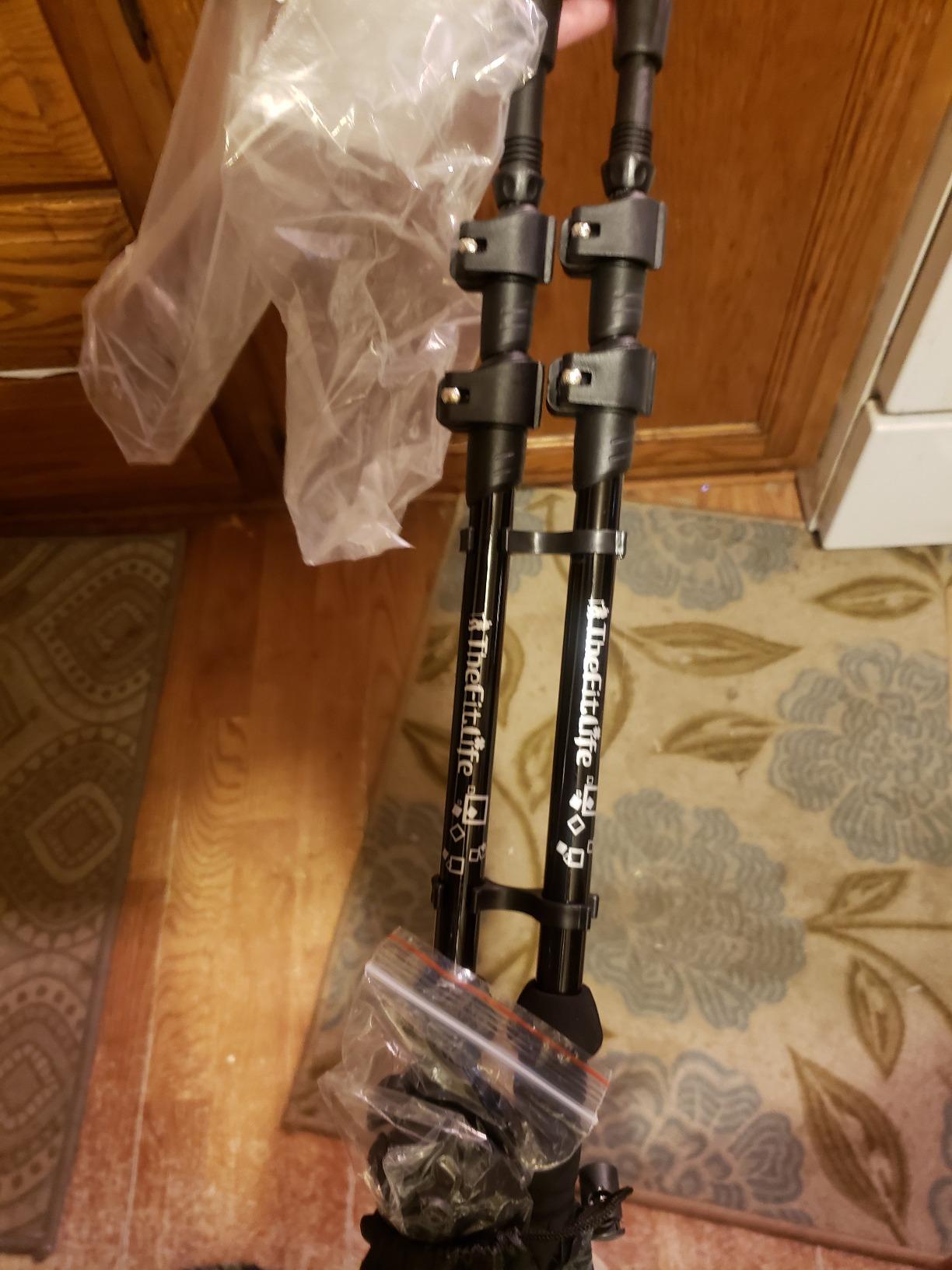
This is the cleverest shock absorption solution in the roundup, because there is no spring. The carbon construction itself is described as shock-absorbent, so the damping comes from the material rather than a moving part that can bottom out or rebound unpredictably.
Reviewers repeatedly name knee relief on long descents as the deciding benefit, and many describe multi-day trips with 50 lb or heavier packs over thousands of feet of gain. For steep hiking that combination is exactly what you want.

The flip-lock adjustment runs from 24 to 53 inches with a printed measuring scale on the shaft. That scale is a small touch that saves time at the trailhead, and it matters when you are setting up in fading light.
The grip is anti-slip cork with EVA foam sleeves, and the rubber tips are designed to add traction on mud, snow and loose rock. Accessories include mud stops, snow baskets, walking caps and a carry bag.
Shock absorption without the failure modes
Most spring-based anti-shock systems add weight, occupy pack space, bottom out under a heavy landing, and rebound in ways some hikers find aggravating. A damped shaft avoids all four problems because nothing moves.
The tradeoff is that carbon damping is fixed. You cannot dial the give up or down, and it will not replace a true suspension system for someone with significant joint problems.
Where they fall short
The plastic locking clips are the most cited complaint. They can creep if the adjustment screw is not tightened, which on a steep descent means a collapsing section at the worst possible moment.
Rubber tips wear through quickly at high mileage, and the collapsed length is longer than folding designs like the Trek-Z, so it takes more pack space.
7. KINGGEAR 7075 Aluminum Poles: Best Budget Workhorse
KINGGEAR Trekking Poles 7075 Aluminum Lightweight Hiking Sticks
7075 aviation-grade aluminum
Quick flip-lock 25.5-54 inch
Cork grip over EVA foam
Compression tungsten carbide tip
+ The Good
- Lowest price in this roundup with a full accessory kit
- 7075 aluminum rated stronger than carbon for rough terrain
- Cork grip stays grippy when sweaty
- Lock clamps do not budge once set
- Lifetime guarantee from a long-running brand
- The Bad
- Segment connectors are plastic
- Heavier than lighter alternatives at this price
- Cork grooves feel abrasive before sanding
- Wrist straps rub before breaking in
This is the pair to buy if you want a genuine workhorse without paying a premium brand rate. The 7075 aviation-grade aluminum shaft is rated stronger than carbon for rough terrain, and the review base of more than 3,000 ratings is large enough to be meaningful.
The lifetime guarantee stands out. Forum hikers consistently value long ownership reports over first impressions, and a lifetime warranty is a reasonable signal that a brand expects the poles to survive.
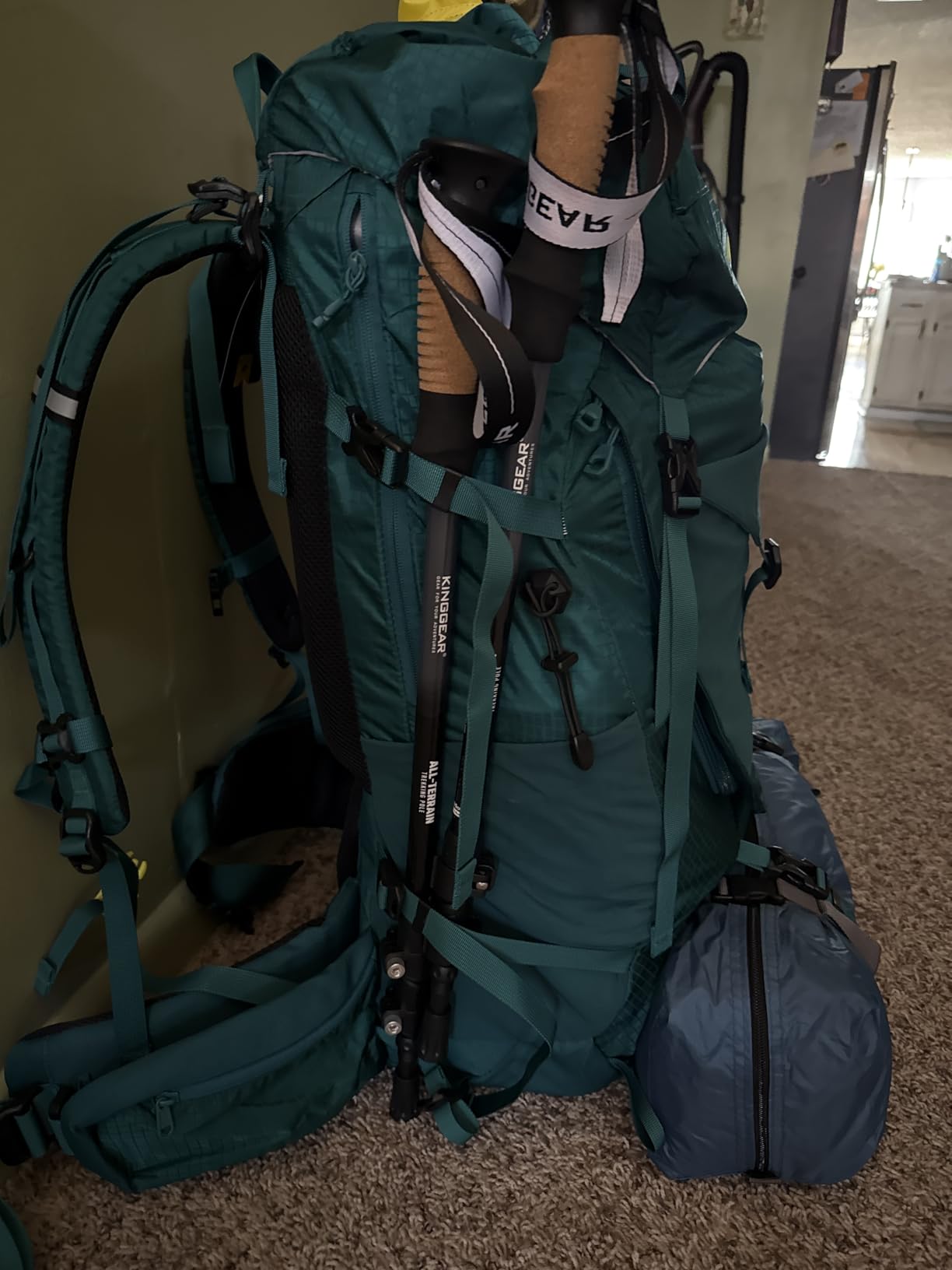
Quick flip locks cover a 25.5 to 54 inch range, and owners report the clamps do not budge once set, which is the requirement we care about most on steep ground. The cork grip sits over an EVA foam lower grip for a second hand position.
The accessory kit is the best in the value tier: tungsten carbide tip, snow baskets, mud baskets, rubber tips and Nordic walking boots all included.
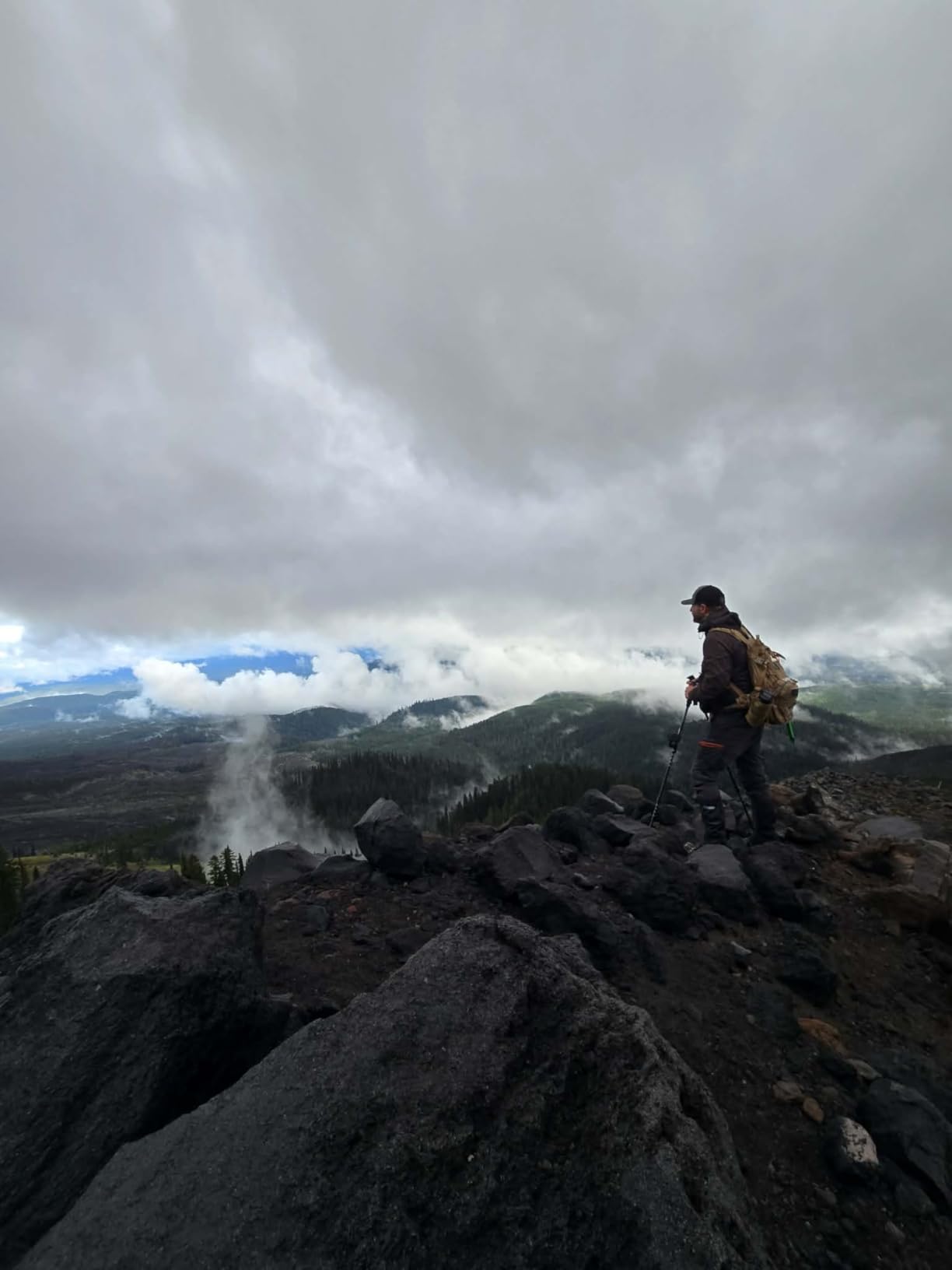
What 7075 aluminum actually gives you
7075 is a harder, higher-strength aluminum than the 6061 used in several rivals here. On steep ground the useful property is predictable behaviour under a point load. An aluminum shaft dents or bends before it breaks, and a bent shaft is a temporary annoyance you can straighten or replace in the field.
Carbon does the opposite. It stays light and stiff, but a sharp catch can crack a section outright with no field fix.
Where they fall short
The segment connectors are plastic rather than metal, which is the part reviewers flag most. Grip grooves can feel abrasive until you sand them down, and the wrist straps rub the back of the hand during the first few hours.
At 9.35 ounces per pole this is not the lightest aluminum option here, so ultralight hikers will find lighter carbon options in the same general bracket.
8. Hiker Hunger Outfitters Carbon Poles: Best Metal Lock Hardware on a Budget
100% Carbon Fiber Trekking Poles by USA Brand – Ultra Strong Lightweight Collapsible Hiking Poles with Cork and EVA Foam Grips & Quick Adjustable Flip Locks
3K 100% carbon fiber at 7.6 oz per pole
Metal flip locks
24-55 inch adjustment
Cork grip plus EVA extension
+ The Good
- Metal lock hardware instead of plastic
- unusual at this price
- Longest extension range here at 55 inches
- Cork grip plus EVA extension for quick hand changes
- Wide selection of grip and colour combinations
- The Bad
- Carbon does not bend or dent the way aluminum can
- 1 year manufacturing warranty is shorter than rivals
The reason this pair earns a place is the lock. Most carbon poles in this bracket use plastic flip-lock clips, and on a steep descent a plastic clip is the most likely thing on the pole to let go. Metal hardware here is genuinely unusual at the price point.
Owners highlight the metal locking hardware as the differentiator against cheaper carbon poles, along with lock security on descents and the light 7.6 ounce weight.

At 7.6 ounces per pole, this matches the lightest full-length pair in the roundup. The adjustment range reaches 55 inches extended, the longest here, which gives tall hikers or anyone using the poles as a tarp or tent support more room.
The grip is moisture-wicking cork with an EVA foam extension and neoprene straps, and there are 18 grip and colour combinations. Mud baskets, rubber feet, rubber tips and snow baskets are included.

Why lock hardware deserves this much attention
On a steep descent, force through a pole is directed fore and aft along the shaft, not along its designed compression axis. External lever and metal flip locks handle that direction far better than small plastic clips seated by friction.
If you have ever had a pole collapse mid-step, you know how quickly that erodes confidence. Swapping plastic clips for metal hardware is a modest upgrade, and it is why this pair sits on this list.
Where they fall short
The carbon shaft does not bend or dent, so a hard knock against rock can crack it and there is no field repair. The one-year manufacturing warranty is also the shortest in the roundup, against five years and lifetime coverage from some rivals.
Long-term durability is the one area where this pair is unproven compared to the aluminum sets with far larger review counts.
9. Montem Ultra Strong Poles: Best for Heavy Packs
Montem Ultra Strong Trekking, Walking, and Hiking Poles – One Pair (2 Poles) – Collapsible, Lightweight, Quick Locking, Weather-Resistant and Ultra Durable (Matte Black, EVA Foam)
7075 aluminum at 9.6 oz per pole
24-53 inch quick-lock
EVA foam grips with padded straps
Dual clips for pack stowage
+ The Good
- Holds a 230 lb hiker full weight on one pole
- Comfortable grips beyond five miles
- Collapses to 24 inches with dual clips
- Lifetime warranty from a US brand
- Quiet on hard ground
- The Bad
- Locking nuts must be tightened out of the box or poles slide
- One lower clip frequently slips
- Faux cork and top rubber wear with daily use
- No anti-shock suspension
Montem is listed here for one reason: strength under load. Owners report these holding the full weight of a 230 pound hiker on a single pole at full extension, and long-time owners describe poles still working after years of daily use.
That is the specific case where a heavy pack meets a steep descent, and it is the case where aluminum earns its place over carbon. Several reviewers bought additional sets for family members precisely because of the strength record.
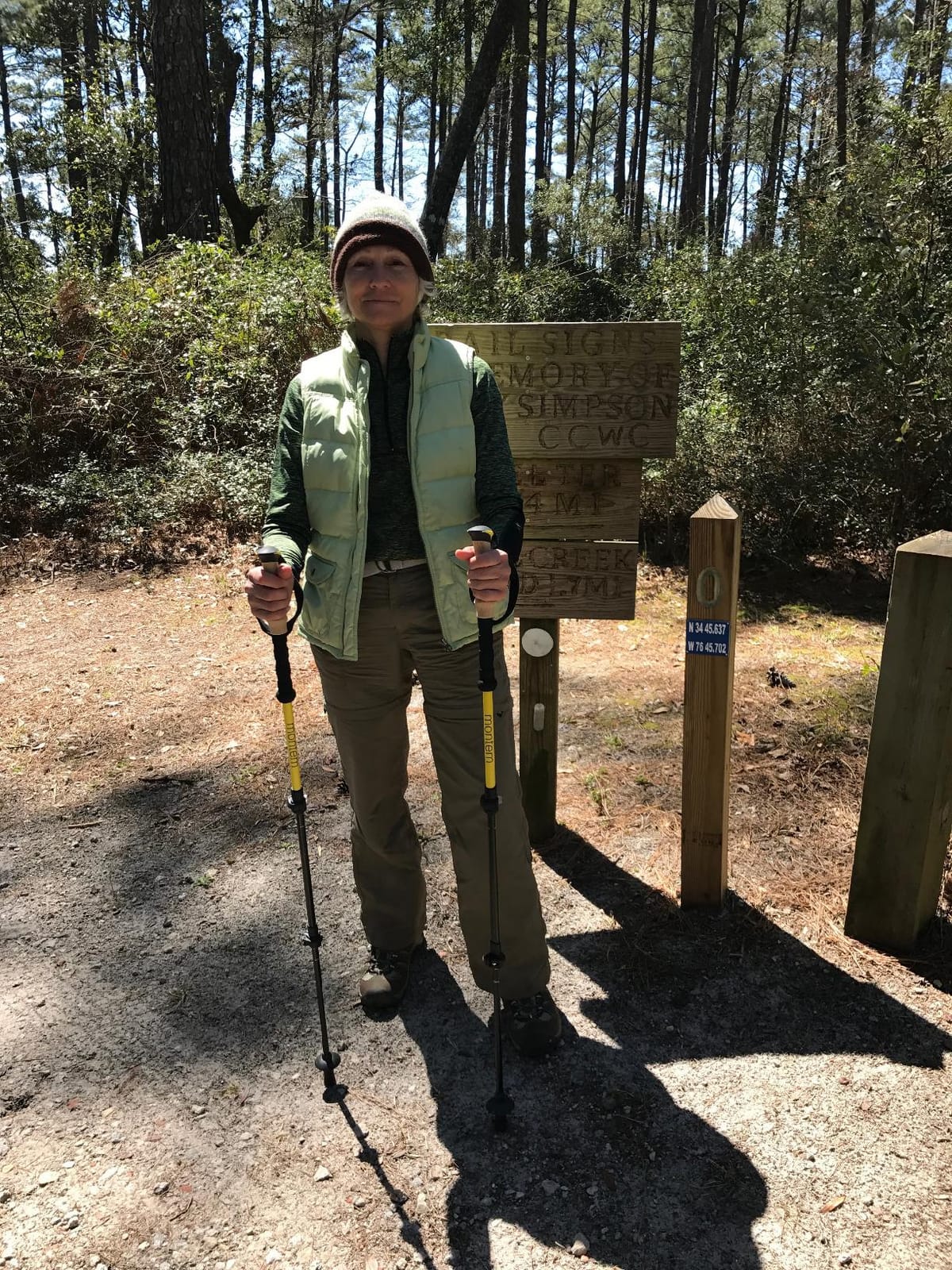
Quick-lock adjustment runs from 24 to 53 inches. Grips are EVA foam with padded wrist straps, and the listing notes explicitly that there is no anti-shock suspension, so ground feedback goes straight to your hands.
Dual clips keep the poles together when stowed on a pack, and they collapse to 24 inches. The lifetime warranty requires registration within a year of purchase.
Strength versus shock absorption
This pair represents the tradeoff clearly. You give up suspension, and with it some vibration, in exchange for a shaft that does not care how much weight you put on it. For a loaded descent that is usually the right side of the trade.
If your knees are the limiting factor rather than your pack weight, a suspended or damped carbon pole will feel better on long descents even if it is less rigid.
Where they fall short
The lock hardware is the dominant complaint. Tightening the nuts out of the box is mandatory or the poles will slide, and the lower clip slips frequently and needs readjusting on the move.
Long daily use wears out the faux cork grip and the top rubber, and one owner reported end caps gone in under a month.
10. Black Diamond Trail Aluminum Poles: Best for Multi-Day Mud and Snow
BLACK DIAMOND Trail Trekking Poles Aluminum (Pair), Picante
High-strength aluminum shaft
FlickLock one-handed adjustment
100-140 cm range
Dual-density foam choke-up grip
+ The Good
- Survived 14.5 hours of Florida Trail mud and swamp
- Very light with little flex or vibration
- FlickLock adjustments hold with no creep under load
- Carbide tips grip rock
- dirt and ice
- Extended choke-up section for uneven ground
- The Bad
- Rubber tips are sold separately
- Does not collapse as short as folding models
- Small review base of 527 ratings
Black Diamond and Leki are the two names that come up most often when hikers ask which poles survive the longest, and this is the entry-level Black Diamond in the roundup. The FlickLock system is an external lever lock that you can close one-handed and that does not creep under load.
One owner documented 14.5 hours on the Florida Trail through mud, swamp and standing water without a failure, and another covered 90 miles in nine days. Mud is where cheap poles fail, and these did not.
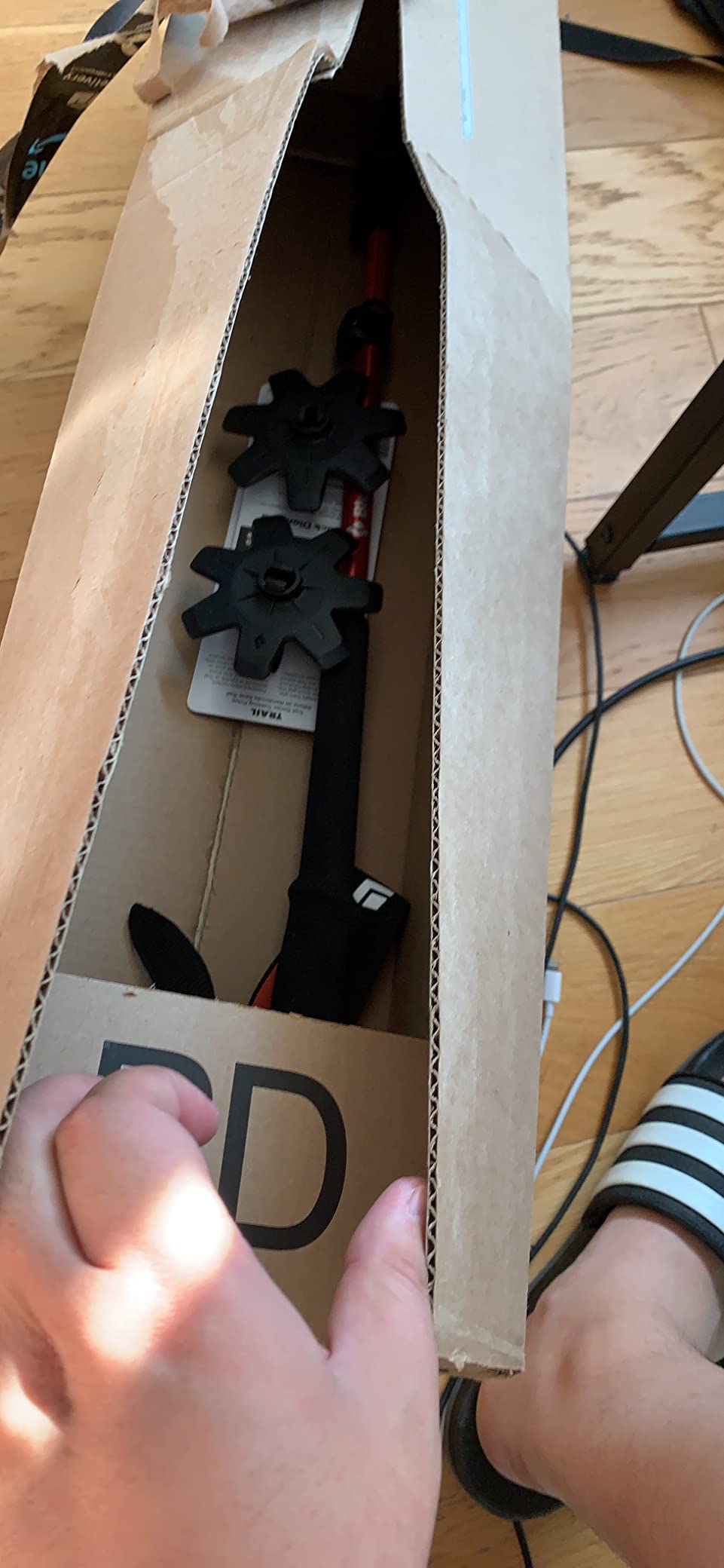
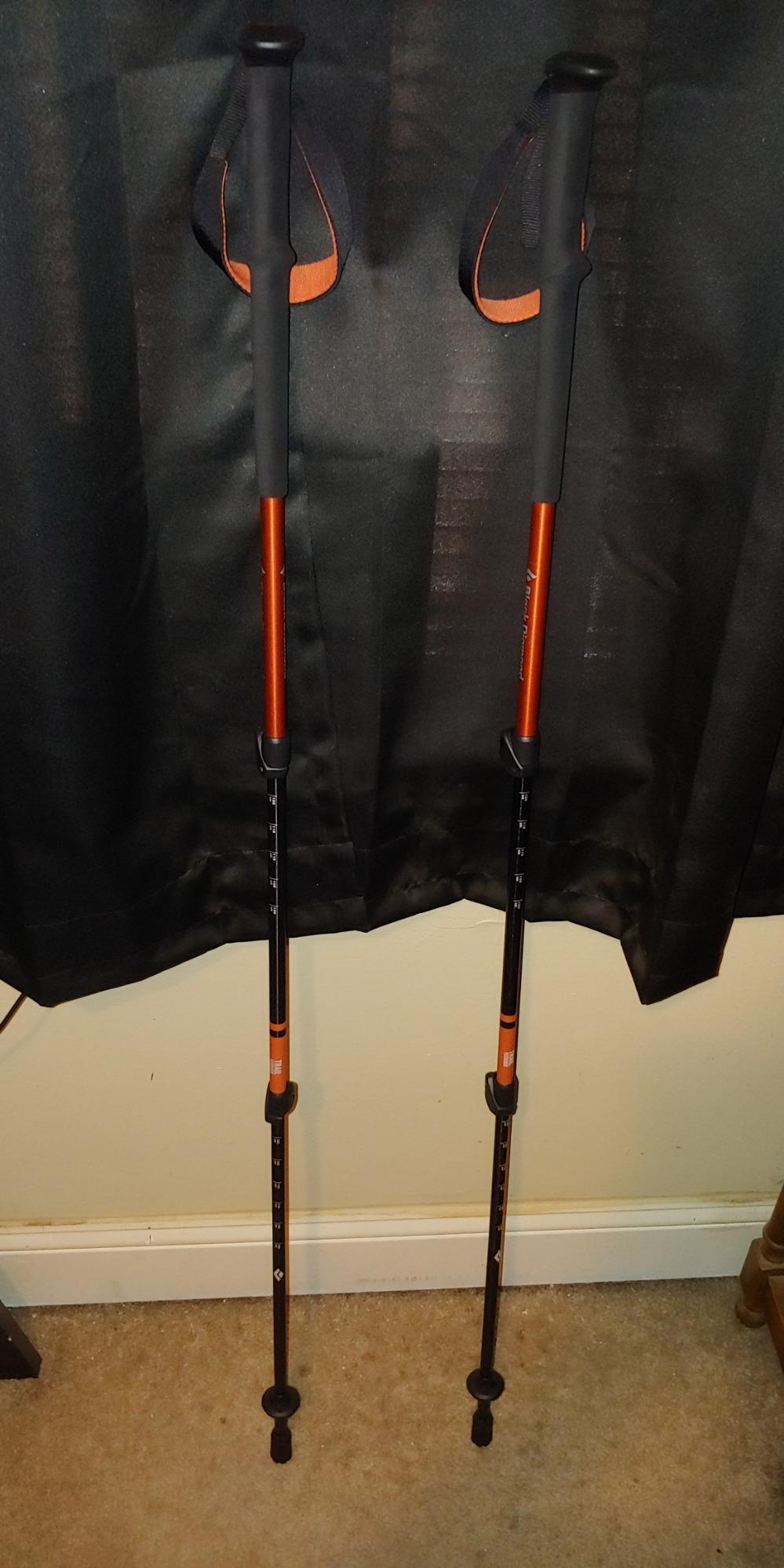
Adjustment runs from 100 to 140 cm, which suits most adults but leaves very tall or very short hikers outside the range. The dual-density foam grip includes an extended choke-up section, so you can move your hand position on uneven ground without touching the lock.
Interchangeable carbide Tech Tips with integrated trekking baskets are the tip system, which matters if you move between rock, dirt and ice. At 486 grams for the pair this is a light aluminum set.
What long-distance ownership tells you
Forum hikers weigh years of ownership far more heavily than first impressions. Multi-day reports on mud, swamp and water are the most useful evidence available, and this pair has them in unusual volume for its rating count.
The FlickLock mechanism is also the reason it is worth a look if you hike in cold or wet weather. External metal levers do not rely on thread friction, which is what makes twist locks slip in freezing conditions.
Where they fall short
Rubber tips are sold separately, so you need to add them if you hike on pavement or hardpack where carbide wears fast. The packed length of 64 cm is long next to folding designs.
The review base of 527 ratings is the second smallest here, so treat the rating with more caution than the 60,000-review products.
11. Black Diamond Alpine Carbon Cork Poles: Best Grip Extension
BLACK DIAMOND Alpine Carbon Cork Hiking Trekking Poles, Pair, Tundra
100% carbon fiber shaft
Natural cork grip with Bloom extension
FlickLock adjustment
Metal clamps
+ The Good
- Solid metal clamps rather than plastic ones on most rivals
- Cork grips mould to the hand and resist sweat
- Locks stay locked during heavy rock scrambling
- Very low mass for premium carbon
- Bloom foam extensions help on steep climbs
- The Bad
- Bottom section clamp does not hold the pole collapsed
- Allen wrench is not supplied in a pouch
- No extra baskets or tip covers included
- Too bulky for travel despite the weight
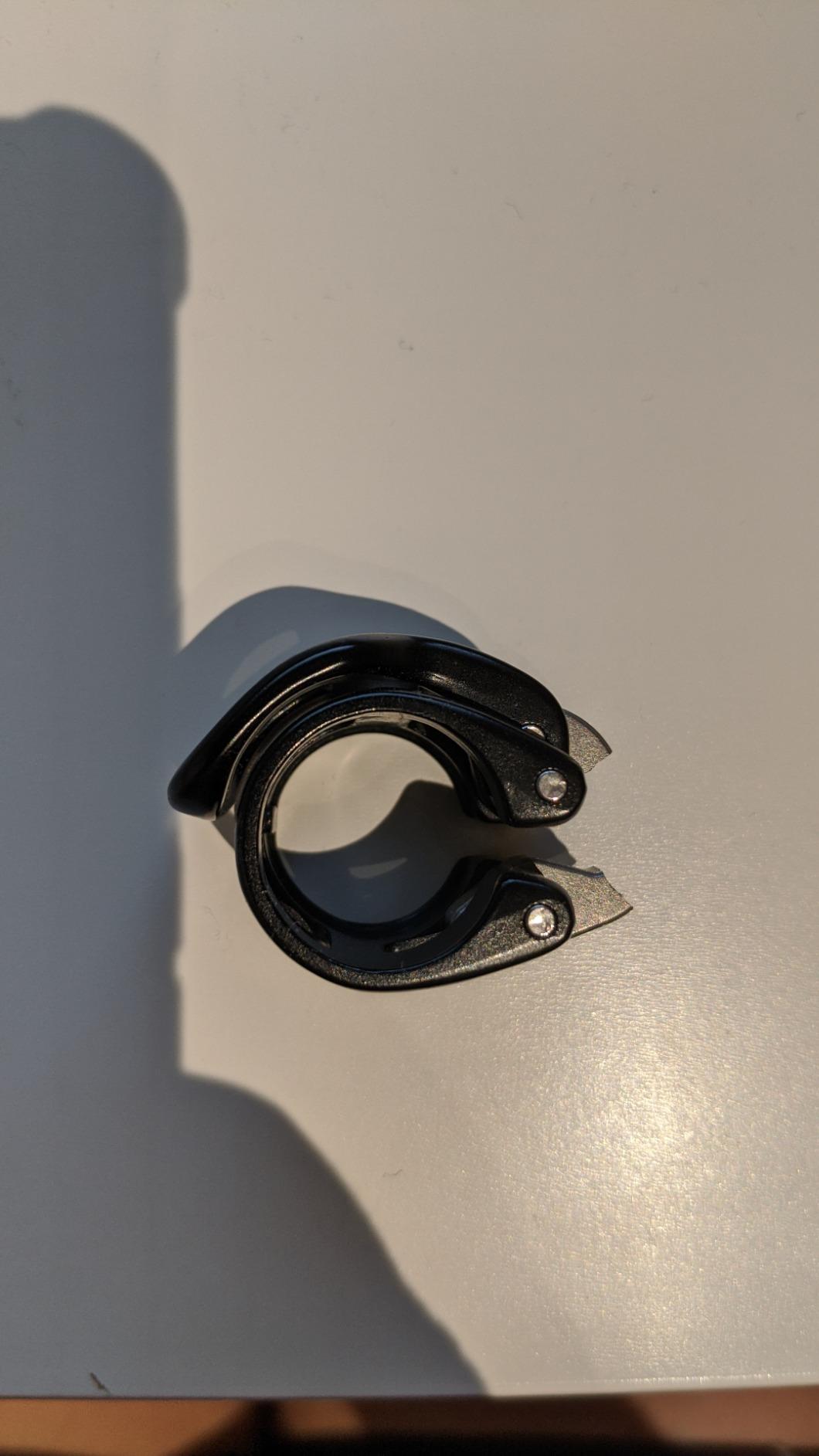
This pair has the best grip extension in the roundup for steep scrambling. The natural cork grip runs into a Bloom foam extension, which gives you a genuinely lower grip point for pushing up a steep pitch rather than the short decorative bands common on budget poles.
Owners frequently call these best in class for build quality. The metal clamps are the specific detail: most rivals at this level use plastic, and the metal versions stay locked during heavy rock scrambling.
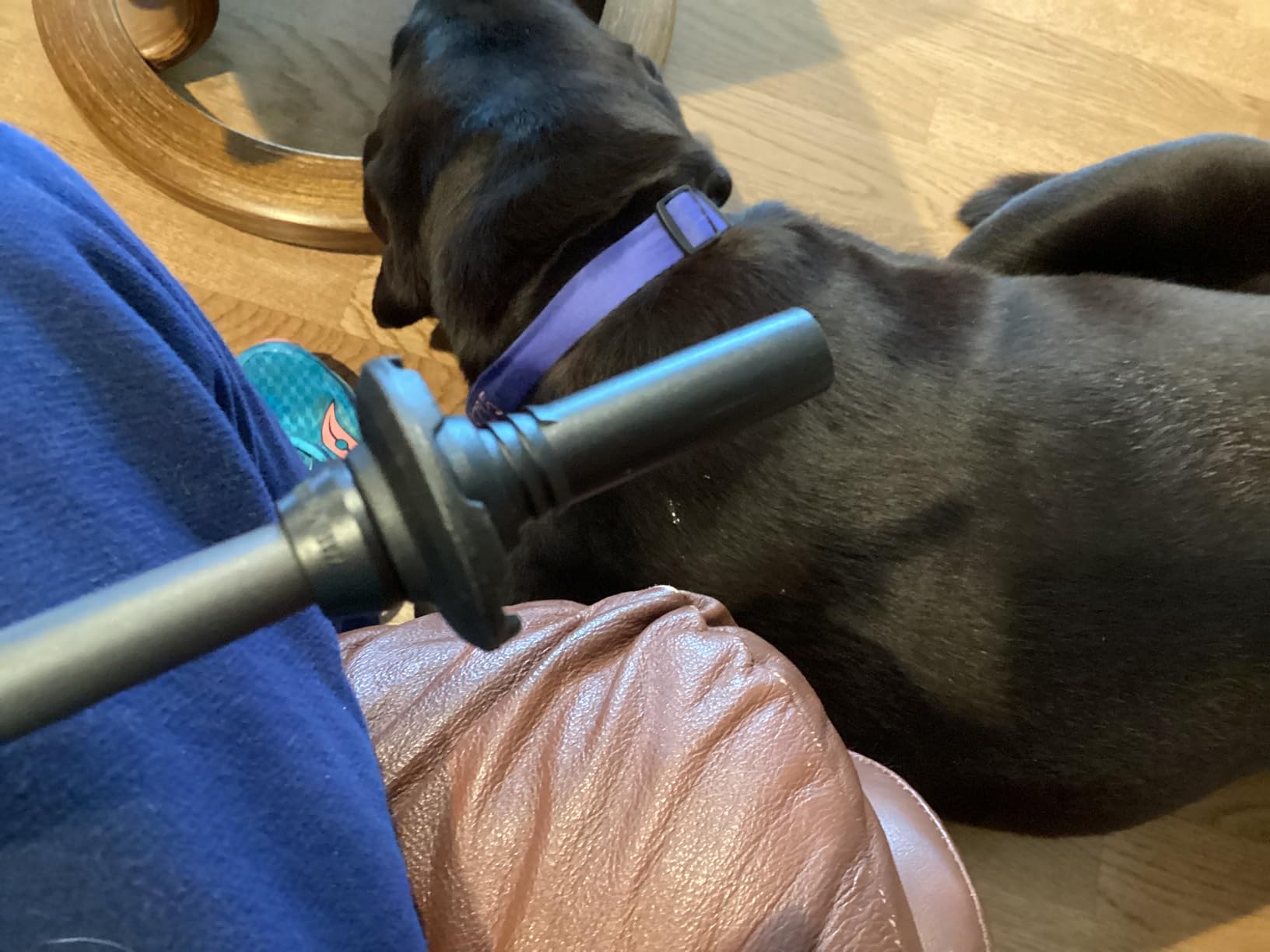
The cork moulds to your hand over time and resists sweat on long days, which matters on a hot climb followed by a cold descent. Soft adjustable wrist straps round out the top end, and interchangeable carbide Tech Tips with trekking baskets handle mixed terrain.
At 0.36 kg for the pair this is light for a premium carbon pole, and FlickLock adjustment gives the same fast one-handed length changes as the aluminum Trail model.
Why grip extension is the feature that matters on steep ground
On a steep climb, leverage comes from where your hand sits on the grip. Move it down the pole and you push with a longer effective lever, which reduces the effort needed per step. On a scramble where you are pulling up on rock, the extension gives you a lower, more secure hold.
Reviewers also mention the rounded cork top as comfortable on steep downhill descents without rubbing the palms, a comfort detail that shows up often in long-distance walking forums.
Where they fall short
The most cited mechanical complaint is that the bottom section clamp does not hold the pole collapsed without modification, so it may not stay folded inside a pack. The Allen wrench is also not supplied in a pouch and is easy to lose.
There are no extra baskets or tip covers in the box, and the maximum length may be short for pitching a two-person tent. Some owners also find them bulkier than expected for travel.
12. LEKI Makalu FX Carbon AS: Best Folding Anti-Shock Pole
LEKI Makalu FX Carbon AS Trekking Poles-Anthracite-Red-Black-110-130cm
Dynamic Suspension System anti-shock shaft
Carbon and aluminum sections
Speed Lock 2 Plus lever
Folds to 15.7 inch
+ The Good
- Only folding and anti-shock pole here
- packing to 15.7 inches
- Dynamic Suspension System measurably softens impact on hard landings
- Aergon Air grip avoids pressure points
- Single lever for fast length changes
- Carbon upper and aluminum lower sections
- The Bad
- Shortest adjustment range at 110-130 cm
- Heavier than comparable premium carbon poles
- Tip bending and latch stripping reported after 14 months
- Rubber tip must be bought separately
This is the only pole in the roundup that does both things at once: it folds to 15.7 inches and it has a real suspension system. The Dynamic Suspension System is built into the shaft, and reviewers who compared it against the same pole without suspension say it measurably softens impact on hard landings.
The Aergon Air foam grip is worth singling out for a specific group. Owners with hand arthritis or MS report it does not create the pressure points that narrow or hard grips can, which is a genuine accessibility point rather than marketing.
The construction is layered: PRC 1000 carbon upper sections over HTS 6.5 aluminum lower sections, tapering through 18, 16 and then 14 mm diameters. That combination is why the pole feels solid at the top and still absorbs at the bottom.
Speed Lock 2 Plus gives fast one-handed length changes across a 110 to 130 cm range, and the trekking basket plus DSS tip are specified as standard fittings.
When real suspension is worth the weight
Suspension systems exist for one reason: to take peak impact out of the descent. If you already have knee or hip problems, or you routinely descend long steep slopes with a heavy pack, the damping is worth the extra grams. If your knees are fine, a rigid aluminum pole gives you a more predictable push on the climb.
Watch for spring bottoming out on heavily loaded landings, where the shaft compresses to its limit and transfers the whole force anyway.
Where they fall short
The 110 to 130 cm range is the shortest here and is not suitable for hikers under about 5 foot 9 inches, which is a real constraint for many users. Reviewers also describe it as heavier than comparable premium carbon poles.
One owner reported the tip bending and the latch stripping after 14 months of use, and the rubber tip must be purchased separately for most everyday surfaces. At 4.4 across 135 ratings, it has the smallest review base in the roundup, so weigh the specification more than the score.
How to Choose Trekking Poles for Steep Terrain
Choose for the descent, not the ascent. On a climb, almost any pole works because you are pushing against gravity and the load is manageable. On a steep descent, your weight drives along the shaft in a direction the pole was not designed for, and that is where cheap hardware fails. Here is what actually earns its place in the spec sheet.
Grip extension is the feature that matters most
Grip extension means a lower grip point below the top handle, usually cork over EVA foam or a continuous extension. It gives you a second hand position for steep pushes without touching a lock. Several poles in this roundup have one, and the difference between a 2 inch decorative band and a 6 inch usable extension is obvious on a 1,000 foot climb.
Forum hikers point out a related detail almost nobody mentions: grip shape matters more than grip material on a descent. A rounded top that does not dig into the palm during a long downhill is worth more than any foam density.
Lock reliability under body-weight load
External lever locks and metal flip locks are the safest choice on steep ground because you can see whether the mechanism is seated. Force through a descending pole runs fore and aft, not along the compression axis, so friction-only plastic clips and twist locks are the designs most likely to collapse. Twist locks suffer further in freezing conditions, where thread friction drops.
Whichever lock you choose, tighten and test it at home before the trailhead, then check it after the first steep pitch.
Aluminum vs carbon fiber vs steel on steep ground
Aluminum is the right default for steep hikes. It bends or dents before it breaks, it can be straightened or splinted in the field, and it transmits a predictable push. Carbon fiber is lighter and damps vibration, which is why ultralight hikers choose it, but it cracks on a sharp point load and cannot be repaired.
Steel is the heavy-duty third option. It is the strongest and the heaviest, and it is the right call for work, search and rescue, or for anyone who beats equipment rather than the other way around.
Shock absorption and when the spring bottoms out
Spring-based anti-shock systems add weight and can bottom out under a heavy landing, which transfers the entire force to your hands anyway. Unpredictable rebound is the other common complaint, and some hikers find it more aggravating than no suspension at all. Damped carbon or aluminum avoids the failure mode by having nothing to move.
Real suspension is worth it when your knees are already the limiting factor. Otherwise a rigid aluminum shaft is the better tool.
Length, sizing and the uphill-downhill rule
Start with a 90 degree elbow on flat ground. From there, shorten by 5 to 10 cm for climbing uphill, where a shorter pole gives you more push and keeps the tip from catching behind you, and lengthen by 5 to 10 cm for descents, where more length puts the load further from your body and reduces knee torque.
As a rough guide, a hiker of 5 foot 3 inches usually sits around 43 to 45 inches of pole length, while a hiker of 6 feet sits closer to 50 to 52 inches. Comfort usually matters more than exact length, particularly for older hikers, so adjust until your shoulders are relaxed and your wrists do not angle upward.
Grip material and wrist strap safety
Cork moulds to the hand and absorbs sweat, foam is the lightest and softest but wears out with heavy sweat, and rubber gets grippy when wet but can turn sticky in heat. Cork and EVA foam is the most common pairing for a reason.
On the strap question, hikers raise wrist injury risk repeatedly: a strap that catches a root or branch on a rocky descent can break a wrist. Learn to use the strap correctly by threading it from the underside, and consider taking the straps off for short scramble sections where you need a free grip.
How to Use Poles on Steep Ground
Zigzag your way down rather than walking straight, and let the poles take the repeat impact. Most hikers underuse them, carrying them for the whole day and then stowing them on the section that actually hurts.
Setting your length on the move
Set the poles on flat ground before you start, then shorten slightly for the ascent and lengthen for the descent. Because the load runs through the pole in the fore-aft direction when you are descending, check that the lock is seated before you step off. Re-check after every sustained descent, because creep is gradual.
One pole or two
Two is the default for loaded descents, long days and anything involving mud, because a second point of contact makes loose ground much easier to cross and gives you a second push on steep climbs. Two poles also work as supports for a lean-to, which thru-hikers rely on constantly.
One pole is correct on scrambles, ridges and glacier travel, where your uphill hand needs to stay free for a rock grip or a self-arrest. A single pole is not a substitute for an ice axe on technical snow.
Planting the pole on loose ground
Plant the pole beside you rather than in front of you, angle it slightly downhill, and push rather than tap. On scree, plant and commit before you shift your weight, because a tentative tap finds the loose rock and a committed plant finds the ground under it.
Keep the downhill-side pole lower than the uphill-side one on steep traverses so you do not have to reach across your body.
When poles become a hazard
Very steep loose terrain is the exception. If the slope is steep enough that you are using your hands on rock, a pole in your downhill hand can plant itself and lever you off balance. Switch to a single pole, stow it, or use your hands.
Poles also add pack weight you may never use, which is a fair criticism if your local terrain is flat. Our roundup on trekking poles for backpacking covers the weight-versus-value side of that argument.
Frequently Asked Questions
Is there a difference between hiking poles and trekking poles?
Functionally it is the same tool. Hiking poles usually describe a shorter, lighter stick for a day hike, while trekking poles imply multi-day load-carrying use with a wider adjustment range, comfort grips and baskets. On steep ground the distinction disappears, because all of them are judged on lock reliability, grip extension and shaft strength.
What’s better for trekking poles, aluminum or carbon fiber?
Aluminum for steep hikes, because it bends or dents rather than shattering, can be straightened in the field, and is cheaper. Carbon fiber for weight and vibration damping on long moderate ground. A damper carbon shaft is a good middle option. The rule of thumb: ultralight fast hikers choose carbon, steep-descent users need aluminum.
Should you hike with 1 or 2 poles?
Two poles for loaded or long descents, multi-day hiking, mud, and steep climbs, because a second point of contact adds balance and leverage and can double as a shelter support. One pole for scrambles, ridges and glacier travel, so your uphill hand stays free for a rock grip or a self-arrest.
Are shock absorbing trekking poles worth it?
Worth it if you already have knee or hip problems or descend long steep slopes with a heavy pack. Spring systems add weight and can bottom out under a heavy landing, passing the whole force to your hands anyway. If your knees are fine, a rigid aluminum pole gives a more predictable push on the climb.
How do you use trekking poles on a steep descent?
Zigzag rather than walking straight down, plant the pole beside you and angle it slightly downhill, then push rather than tap. Lengthen the poles by 5 to 10 cm for the descent to move load away from your knees, keep the downhill-side pole lower on traverses, and check the lock is fully seated before you step off.
What length trekking pole is best for steep hills?
Set the length so your elbow is at 90 degrees with the tip on flat ground, then shorten by 5 to 10 cm for climbing uphill and lengthen by 5 to 10 cm for descents. A hiker around 5 foot 3 inches typically uses 43 to 45 inches of pole, while someone around 6 feet uses closer to 50 to 52 inches.
Conclusion
For most hikers on steep ground, the TrailBuddy 7075 aluminum pair is the one to buy: 9.7 ounces per pole, one-handed lever locks you can verify at a glance, and a range wide enough to share across a family. If your terrain is switchback-heavy, the Cascade Mountain Tech pair wins on its extended lower grip and thumb screws that do not creep on the way down. If pack volume is the constraint, the Trekology Trek-Z folds to 15 inches and nothing else here does.
At the premium end, the Black Diamond Alpine Carbon Cork has the best grip extension and solid metal clamps for scrambling, while the LEKI Makalu FX Carbon AS is the only pole here that folds small and adds genuine suspension. Every one of these twelve is covered in detail above, so you can match the shaft material and lock type to your terrain rather than buying on weight alone. Whichever you choose, test the lock at home before the trailhead.
We keep this list current as new models land through 2026, and we update the picks whenever a pole here changes hands or a lock failure pattern shows up in the review data.