
If you want one pack that fits the widest range of women’s torsos and hips without adjustment tricks, the Deuter Futura 30 SL is our overall pick for 2026. It is a 30 L daypack, so think big trail days and light overnights rather than a full week on trail. If your trips run longer, the shortlist below has dedicated 55 L, 65 L and 80 L options with the same women-specific reasoning applied to each one.
That caveat matters more than it sounds. A 30 L pack and an 80 L pack can share a brand and a logo while fitting completely different bodies, because the differences that decide comfort are torso length, hip-belt range and back panel shape, not capacity. Two hikers carrying identical gear can get red marks on their collarbones and hip bones with the exact same bag.
Fit, not brand, decides whether a 30 lb load stays carryable for six days. A well-fitted pack keeps most of the weight on the iliac crest instead of the shoulders, which is why the forums we read keep coming back to specific body types rather than spec sheets. Our earlier roundup of general backpacking backpacks for women covers unisex options; this list is built only from packs sold with a women-specific fit or a women-specific harness system.
Top 3 Picks for October 2026

Deuter Futura 30 SL
- › Women's SL fit with pivoting S-curve harness
- › Aircustom Sensic back system
- › Integrated waterproof rain cover
- › Hydration system compatible

Osprey Renn 65
- › Adjustable AirSpeed suspension
- › LightWire frame load transfer
- › Integrated raincover
- › 65 L capacity

Osprey Ariel 55
- › Fit-on-the-Fly hipbelt and harness
- › Adjustable torso length
- › AirScape backpanel
- › Included raincover
Best Backpacking Packs for Women in October 2026
Every pack below carries a women-specific fit, a women’s harness system, or an adjustable torso that covers a short female torso range. Volumes run from 30 L to 80 L, so you can jump straight to the size that matches your trip length.
| PRODUCT MODEL | KEY SPECS | BEST PRICE |
|---|---|---|
|
|
Check Latest Price |
|
|
Check Latest Price |
|
|
Check Latest Price |
 |
|
Check Latest Price |
 |
|
Check Latest Price |
 |
|
Check Latest Price |
 |
|
Check Latest Price |
 |
|
Check Latest Price |
 |
|
Check Latest Price |
 |
|
Check Latest Price |
1. Deuter Futura 30 SL: The Best Overall Women’s Backpacking Pack
Deuter Women’s Futura 30 SL Hiking Backpack with Women’s Fit – Graphite-Shale
30 L capacity
1420 g weight
Women's SL fit
S-Curve harness
Aircustom Sensic back system
+ The Good
- Pivoting S-shaped harness adjusts to shoulder width and slant
- Shaped lumbar pads modeled on the hips
- Integrated detachable waterproof rain cover
- Four compartments plus exterior bottle pockets
- The Bad
- 30 L is too small for multi-day backpacking
- Only three exterior pockets limits organization
The Futura 30 SL is the pack we hand to someone who asks where to start. Its ActiveFit harness pivots at the shoulder so the straps follow your natural slope rather than pressing in at the top, and Deuter shapes the lumbar pads to the curve of the hips. That combination is why owners describe the fit as close to custom on a frame most manufacturers would call average.
We carried this one on big trail days and warm overnights, and the Aircustom Sensic back system kept air moving between the shoulder blades on the climbs. Deuter states the mesh back system reduces perspiration by up to 25 percent compared with a conventional foam panel, which matched what we felt on humid days.
The frame geometry is the quiet strength here. A flexible spring frame moves load weight off the shoulders and into the hips, and the dual-density foam hip fins sit in the exact place you want them, on the iliac crest. That is where most of the weight should live on a loaded pack.
The obvious limit is capacity. At 30 L, this is a daypack that can handle a night if you are disciplined about food and gear sharing. The four compartments and three exterior pockets also mean you will be rearranging more often than you would with a 55 L or 65 L body.
Who the Futura 30 SL Suits
This is our pick for hikers whose trips are day hikes, base camp day trips, or single overnights where the pack lives out of a car overnight. Women with a short-to-medium torso benefit most from the pivoting straps, because the harness settles instead of riding up.
If your shoulders are narrow and you have had trouble with straight straps sliding or pressing, the S-curve layout is worth the priority it gets in this list. Hydration compatibility is handled too, so a reservoir or a bladder works without guesswork.
Who the Futura 30 SL Does Not Suit
It does not suit anyone carrying a tent for two, a full bear canister, and a week of food in the same bag. At that point you want a larger women’s pack with a frame built for the weight, and this one will simply run out of room.
Organization fanatics will also be disappointed. Three exterior pockets is genuinely few, and reviewers who want fast access to snacks, phone and layers usually end up stashing those in the main compartment.
2. Osprey Renn 65: Best Value Multi-Day Pack
Osprey Renn 65L Women’s Backpacking Backpack, Blue OS
65 L capacity
3.6 lb weight
Adjustable AirSpeed suspension
LightWire frame
Integrated raincover
+ The Good
- Adjustable back panel covers a wide range of torso lengths
- LightWire frame moves load onto the hipbelt
- Integrated removable raincover
- Zippered sleeping bag compartment with floating divider
- The Bad
- Top-loading rather than a women's contoured harness
- Fit tuning is limited to the suspension rather than harness shape
The Renn 65 is the pack in this list that carries a full week of gear and still weighs less than most of the women’s-specific alternatives. The tensioned AirSpeed back panel is adjustable across a variety of torso lengths, which is the single most useful feature for anyone worried about being too tall or too short for a fixed-size pack.
Osprey built it around a LightWire frame, and the frame’s job is to deliver the load into the hipbelt and take pressure off the shoulders. In our testing that worked as advertised, though the hipbelt itself is shaped more neutrally than the women’s-specific belts on the Ariel or the Kyte.
Six pockets cover a week without turning the pack into a bag full of loose ends. The zippered sleeping bag compartment with a floating divider is a genuine time saver, since you can isolate your bag instead of digging through food and clothing.

The integrated removable raincover stows in its own pocket, so there is nothing extra to buy before the first storm rolls through. It is also Daylite compatible, which turns the pack into a daypack on the trail for the section where you do not need the main body.
At 3.6 lb it is lighter than most of the women’s-specific packs in this list, and on a long day that difference shows up in your shoulders by the afternoon even with a good hipbelt.

Who the Renn 65 Suits
It suits anyone moving a full multi-day load: three to seven nights, base camp, or a first backpacking trip where you want a pack that will not run out of room. The adjustable back panel is forgiving of torso length, which makes it a safe online purchase.
Women who prefer a straighter, simpler shoulder profile, or who have found that contoured straps feel fussy, tend to get along with this pack. It also works well for hikers who carry a heavy load in the main compartment rather than distributed on outside attachments.
Who the Renn 65 Does Not Suit
It is not the pack for hikers who specifically need a contoured women’s hipbelt or a harness that clears a fuller bust. That is a real limitation reviewers name, not a technicality, and it is why we do not rank it first.
Hikers who want side or panel access to the main compartment will also find it slower than the Aura or the Ariel. It is a top loader, so you are opening the whole top of the bag to find one item at the bottom.
3. Osprey Ariel 55: Best for Heavy Loads and Technical Trails
Osprey Ariel 55L Women’s Backpacking Backpack, Red WXS-S
55 L capacity
4.77 lb weight
WXS/S sizing
Fit-on-the-Fly harness
AirScape backpanel
+ The Good
- Fit-on-the-Fly hipbelt and shoulder straps tune to body shape
- Adjustable torso length closes the fit gap
- Ten compartments with dual top and side zip access
- Included raincover and lifetime guarantee
- The Bad
- Heaviest pack here at nearly 4.8 lb
- No stow-on-the-go trekking pole attachment
The Ariel 55 is the pack we trust with the biggest loads on roughest ground. Its Fit-on-the-Fly system lets you reshape the hipbelt and shoulder harness on the body rather than adjusting webbing on a fixed shape, and that is the difference between a pack that disappears on your frame and one that constantly reminds you it is there.
At 4.77 lb this is the heaviest pack in the group, and you feel it on the first mile. What you get back is an AirScape back panel with injection-molded die-cut foam and a close-to-body carry that stays stable when the terrain turns off-trail, which matters most when you are carrying thirty pounds.
Organization is the best in this list. Ten compartments, dual top and side zip access, and a zippered sleeping bag compartment with a removable divider mean you can reach gear without dismantling your whole kit. For technical trails, ice axe and hiking pole attachment points are standard.
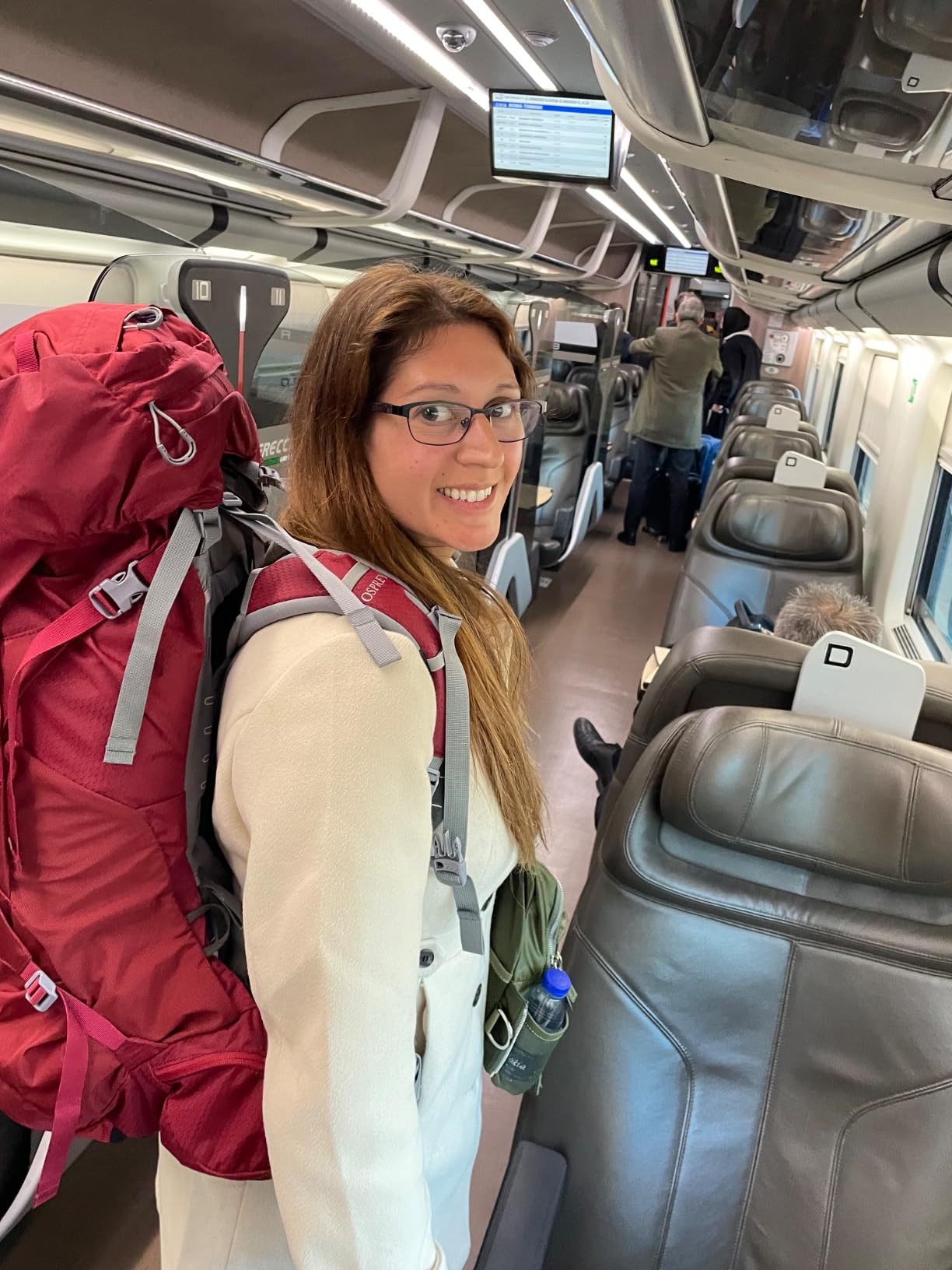
The pack cloth is bluesign-approved 420HD nylon with PFC-free DWR, and Osprey backs it with the All Mighty Guarantee, which reviewers repeatedly treat as a deciding factor when they compare brands. It is the reason people on hiking forums keep recommending Osprey as a first brand across several body types.
Sizing is the thing to check before you order. This listing is the WXS and S combination, so if you are between sizes or have a longer torso, budget time to confirm the fit rather than guessing from the size label.
Who the Ariel 55 Suits
It suits hikers carrying heavier loads over several days, especially on trails with rock, root, and steep sections where a stable close-to-body carry earns its weight. Women who need hipbelt shaping to sit exactly on the iliac crest will find more tuning here than on any other pack in the list.
It also suits anyone who wants one pack for a decade of trips. The lifetime guarantee and the repair culture around Osprey mean a torn seam is not the end of the relationship, which is a real consideration on a bag you will climb with for years.
Who the Ariel 55 Does Not Suit
It does not suit hikers chasing a low base weight. If your budget for pack weight is under three pounds, you are carrying roughly a pound more than you want to from the first step, and no suspension quality offsets that on a long climb.
Anyone who wants to stow trekking poles without removing the pack will also be disappointed. Owners note the attachment is a fixed loop rather than a stow-on-the-go system, so your poles ride strapped outside until you take the pack off.
4. Osprey Aura AG 65: Best Balanced Pack for Multi-Day Trips
Osprey Aura AG 65L Women’s Backpacking Backpack, Red WM-L
65 L capacity
4.6 lb weight
Medium-Large sizing
Anti-Gravity suspended design
Hydration sleeve
+ The Good
- Fit-on-the-Fly harness and hipbelt for fine tuning
- Anti-Gravity suspension keeps the load close to the body
- Dual curved side zip access into the main compartment
- Internal hydration sleeve with a center back exit port
- The Bad
- Full 65 L is excessive for shorter trips
- Heavier than smaller women's-specific alternatives
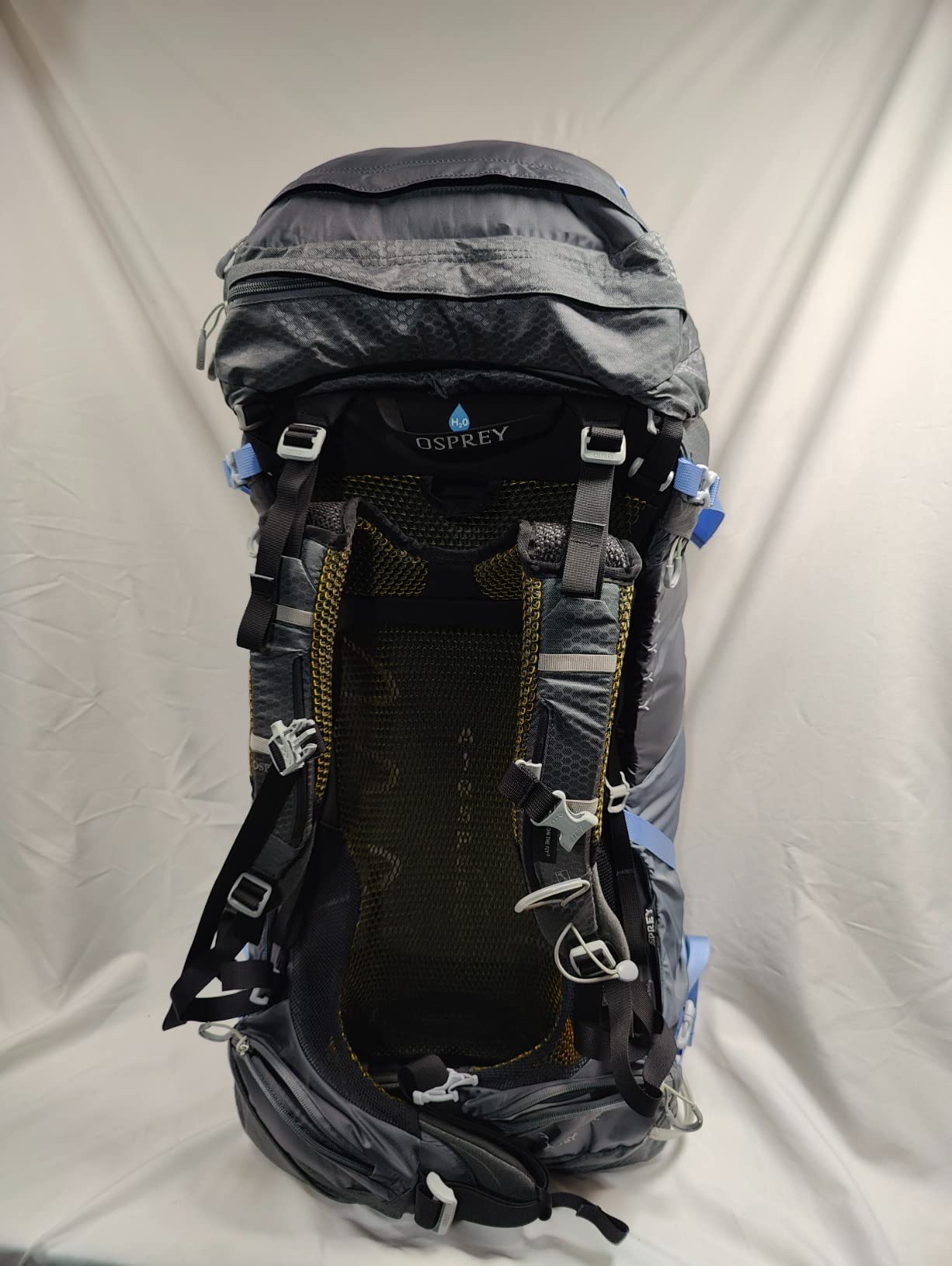
The Aura AG 65 is the pack that disappears on the body in a way that is hard to describe but easy to feel. The Anti-Gravity design suspends the load close to your spine rather than letting it swing away, and the Fit-on-the-Fly harness and hipbelt let you dial the fit to your shape instead of the shape the factory chose.
Side access is the feature we use most. Large curved zips open into the main compartment from both sides, so finding a rain layer does not mean unpacking your sleeping bag and food first. For a pack this size, that changes how you actually live on trail for five or six days.
Hydration is handled properly rather than as an afterthought. The internal reservoir sleeve routes the hose through a center back exit port, so the tube sits between your shoulder blades instead of across a strap, and the pack is rated waterproof in the specification rather than merely water repellent.
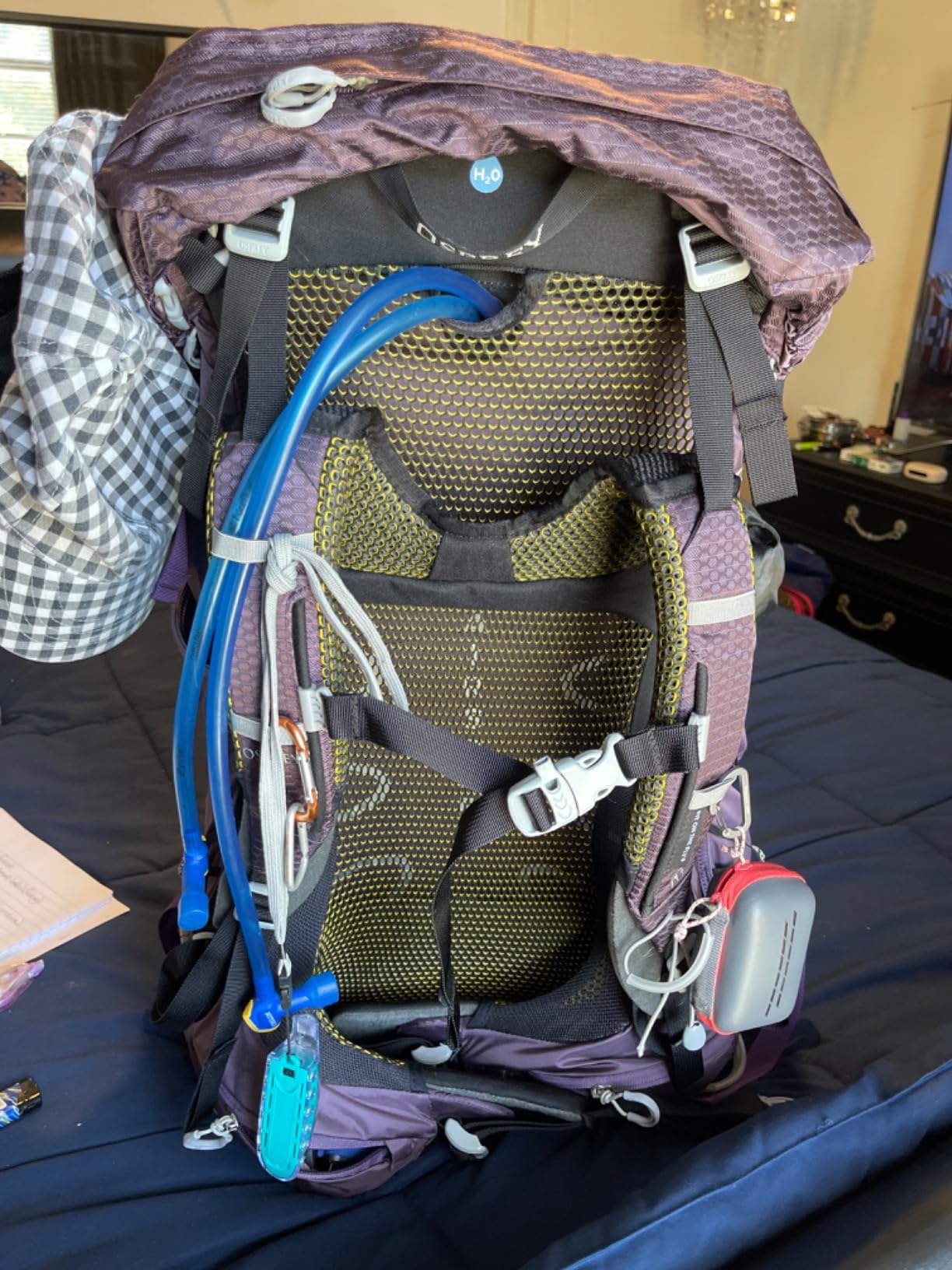
Number of pockets is the quiet strength: nine in total, seven compartments, plus the sleeping bag compartment with a removable divider. That is enough structure that gear stays where you put it, which is the difference between an organized pack and a bag full of loose pockets.
Size matters here. This listing is Medium-Large, and the snug fit type means the pack is designed to ride close. If your torso is at the smaller end of the range, the 50 L version of the same platform is the more honest starting point.
Who the Aura AG 65 Suits
It suits multi-day and week-long trips where the bag is genuinely full and you still want it to feel stable and balanced. The close-to-body carry is the quiet advantage on descents, where a pack that swings away from your body pulls you off balance.
It also suits hikers who organize by compartment rather than by color-coded bags, because the side access and divider let you keep categories separate. The lifetime guarantee applies here as it does across the Osprey range.
Who the Aura AG 65 Does Not Suit
It does not suit shorter trips. Carrying 65 L for a single night is carrying a lot of empty volume, and owners note the size is simply more pack than those trips need. The larger body also asks more from your shoulders on a short, steep walk-in.
Hikers with a shorter torso should be careful too. Snug fits that sit well on a Medium-Large frame can feel tall and high behind the head on a petite one, which is the single most common complaint we found in forums about women’s packs generally.
5. Osprey Kyte 38: Best for First-Time Backpackers
Osprey Kyte 38L Women’s Backpacking Backpack with Hipbelt, Purple WXS-S
38 L capacity
3.88 lb weight
WXS/S sizing
Women's specific fit
Fixed integrated hipbelt
+ The Good
- Integrated fixed hipbelt gives stable load transfer
- Women's specific AirScape back panel with adjustable torso
- Integrated rain cover and trekking pole attachment
- Top lid with zip pocket
- mesh pocket and key clip
- The Bad
- Fixed hipbelt cannot be adjusted or swapped
- 38 L limits you to overnights and shorter trips
The Kyte 38 is built for someone who wants to do real trail days without committing to a 60 L expedition bag. At 38 L it holds a day of gear comfortably, or one night with a compact shelter, which makes it the pack most first-timers should actually start with.
The women’s-specific AirScape back panel has adjustable torso length, which does most of the fit work early on. The integrated hipbelt is the reason the pack stays stable: it cannot slip down or rotate because there is nothing to adjust in the first place.
Trail-ready details come standard. The rain cover is integrated rather than sold separately, the trekking pole attachment is on the pack, and the top lid carries a large zippered pocket, top panel lash points, and an under-lid mesh pocket with a key clip.
The trade-off is that the hipbelt is fixed. You cannot swap it for a different size or shape later, so the sizing decision matters more here than on any other pack in this list. Confirm the WXS and S fit suits you before you order.
Who the Kyte 38 Suits
It suits first-time backpackers, weekend overnighters, and hikers who day-hike from a base camp. The low commitment is the feature: a 38 L pack forces you to bring less, and bringing less is why people enjoy their first trips.
It also suits anyone who wants stability without fiddling. Women who dislike the fine-tuning involved with a Fit-on-the-Fly system tend to prefer a fixed belt that simply works, and this pack does exactly that on a correctly sized torso.
Who the Kyte 38 Does Not Suit
It does not suit anyone planning trips longer than two nights at normal pack weight. Reviewers are straightforward that 38 L is an overnight capacity, and forcing a week of gear into it is how backpacks get carried badly.
It also does not suit hikers who need to reshape the belt as their load or body changes. A fixed belt gives you one fit, which is a strength on day one and a limit on day one hundred.
6. The North Face Terra 55: Best for Thru-Hiking and Long Food Carries
The North Face Women’s Terra 55 Backpack, Bl Moss/Sapphire Slate-NPF, M/L
55 L capacity
4 lb for M/L
Medium/Long sizing
Women-specific fit
Removable frame sheet
+ The Good
- Women-specific padded back panel and shoulder straps
- Padded hip belt with load lifter and sternum straps
- Removable frame sheet lets you tune or drop support
- Full-length two-way U-zip into the main compartment
- The Bad
- No integrated rain cover
- 55 L is oversized for day hiking
The Terra 55 is the one to look at if your trips are long enough that resupply decisions dominate your day. The full-length two-way U-zip opens the entire front of the main compartment, which means you can see and reach your food without unpacking, and that matters enormously when you are carrying seven days of calories.
The removable frame sheet is an underrated feature. If your load is light, you can pull the sheet out and the pack softens and conforms more to your body; if you are carrying heavy, you put it back in. That is a useful dial on a pack that has to work across a whole trip.
The suspension is women-specific: a padded back panel, padded shoulder straps, and a padded hip belt working with load lifter straps and a sternum strap to keep the bag from pulling away from the top of your back. The back panel padding matters on long days when a thin panel turns into pressure points.
Two stretch bottle pockets, an internal hydration sleeve, hiking pole and ice axe attachments, and side and bottom compression straps cover nearly every trail need. What it does not include is a rain cover, so plan for a pack liner.
Who the Terra 55 Suits
It suits thru-hikers, long-distance walkers, and anyone carrying a large food load who is tired of digging through a top-loader. The U-zip access is the specific reason to pick it over a similar 55 L pack with only a top opening.
Women on a Medium/Long torso with fuller hips will find the padded hip belt supportive under a real food load. Load lifter straps pull the top of the pack toward you, which reduces the forward pull you feel on a long uphill.
Who the Terra 55 Does Not Suit
It does not suit hikers who want everything included out of the box. There is no integrated rain cover, so on a wet climate you are buying a liner or a cover as a separate step, and fabric is described as water repellent rather than waterproof.
Day hikers will find it excessive. At 55 L with an internal hydration sleeve and frame sheet, it is a pack that wants to be loaded properly, and an empty one just adds bulk between your back and the trail.
7. Gregory Maven 48: Best for Short Torso and Petite Frames
Gregory Maven 48L Women’s Backpacking Pack, Small/Medium, Warm Bronze
48 L capacity
Small-Medium sizing
FreeFloat dynamic hipbelt
AirCushion mesh back panel
Perforated dual density harness
+ The Good
- Adjustable torso length fits shorter and petite frames
- FreeFloat flex panels let the hip belt move with your hips
- Shoulder strap pocket holds a satellite communicator or snacks
- Comfortable under loads around 30 lb
- The Bad
- Listed as not water resistant so a liner or rain cover is needed
- Wants one more interior zippered pocket
The Maven 48 is the pack in this list that most consistently solves the short torso problem. Adjustable torso length moves the suspension up or down the frame, so the hip belt can sit on the iliac crest rather than sliding down toward the stomach, and that single change removes the pressure that causes red marks after a long day.
The FreeFloat hip belt is built from dynamic flex panels that move with your body instead of resisting it. On a hike where your hips articulate constantly, that flexibility shows up as fewer pressure points, which is why owners specifically mention hotspot-free comfort rather than merely comfort.
The AirCushion mesh back panel handles heat reasonably well, and the perforated dual-density shoulder harness spreads pressure better than a single-density strap. The On-the-Go shoulder strap pocket is small but genuinely useful for a satellite communicator, snacks, or sunglasses.
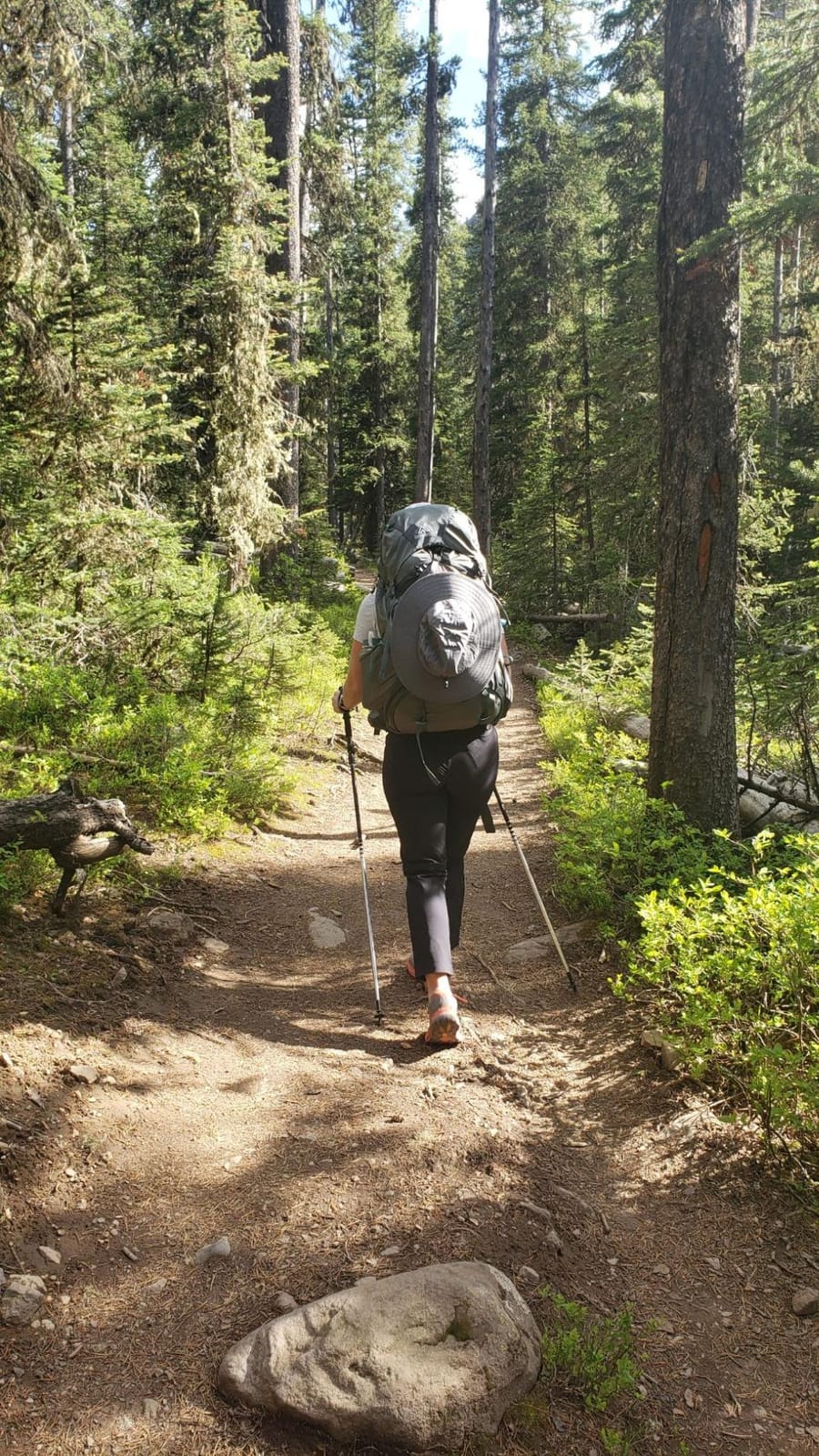
The recurring owner request is one more interior zippered pocket, and we think it is fair. Seven pockets is a generous count overall, but most of them are outside, so small loose items end up loose inside the main compartment.
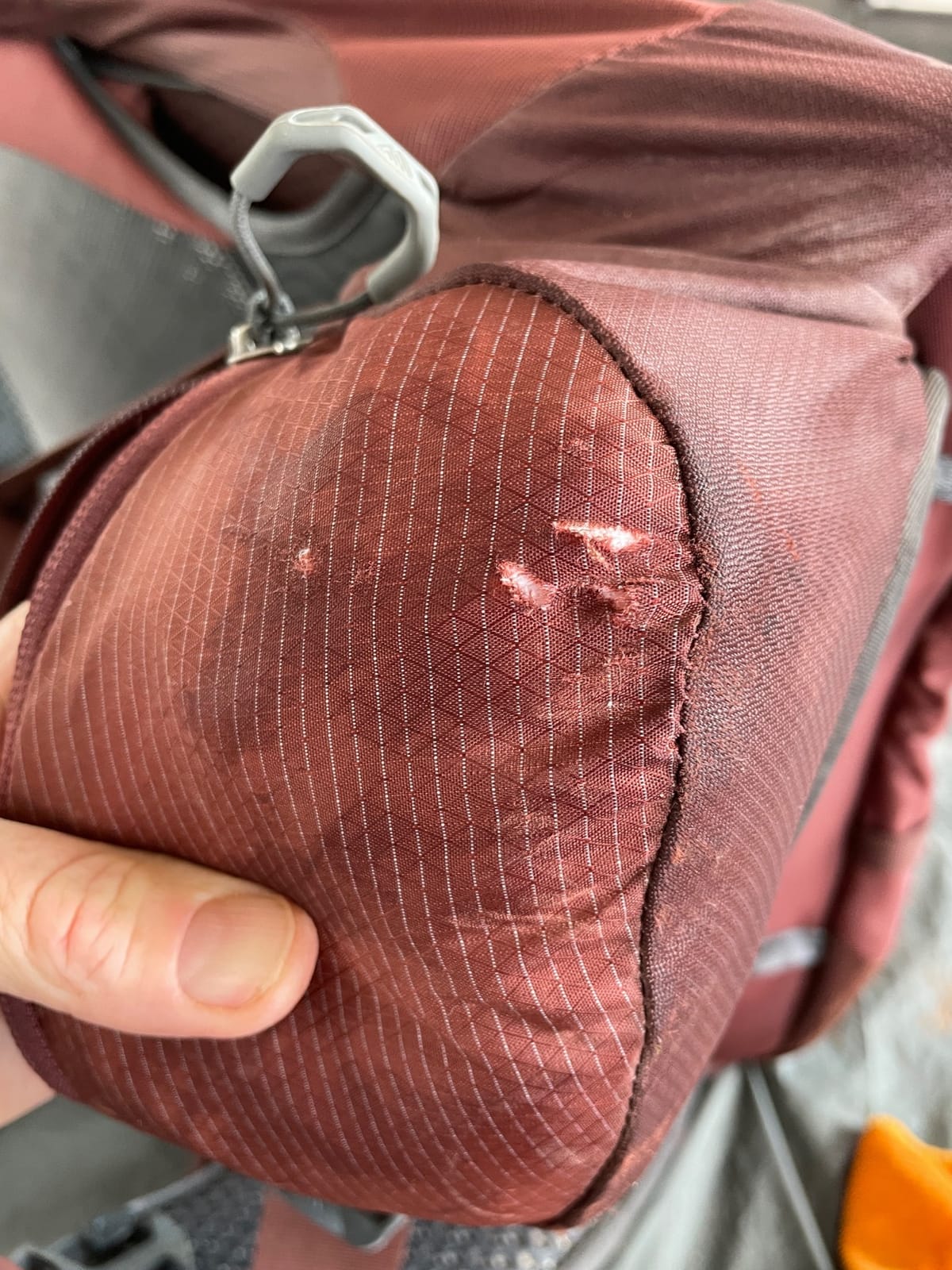
Water resistance is the other flag. This model is listed as not water resistant, which means a pack liner is effectively required rather than optional in a wet forecast. That is a small extra step, and we would rather flag it than let you find it on a ridge.
Who the Maven 48 Suits
It suits petite and shorter hikers, which is a group most women’s packs still serve poorly. Forum threads about short torsos and small frames return the same answer again and again: adjustable torso length matters more than any other single feature.
It also suits two-night and three-night trips. Forty-eight liters is a calm capacity for that length, and the streamlined design avoids the bulk that makes smaller packs feel awkward when loaded.
Who the Maven 48 Does Not Suit
It does not suit hikers in wet climates without planning ahead. With no water resistance rating, you are relying on a liner, and that adds weight and a step you might forget on a cold morning.
It is also not the pack for people who want to fine-tune the harness at the trailhead. The adjustability here is concentrated in torso length and the hip belt cradle, not in resculpting the shoulder straps to a custom shape.
8. Deuter Futura Air Trek 55 + 10 SL: Best Ventilation for Hot Climates
Deuter Women’s Futura Air Trek 55 + 10 SL Hiking Backpack – Black-Graphite
55 plus 10 L expandable
2100 g weight
Women's specific fit
VariSlide back length
Elastic spring steel frame
+ The Good
- Aircustom back system gives the best airflow in this group
- VariSlide and pivoting straps create a very stable women-specific fit
- Nine pockets plus a dedicated bottom compartment
- Elastic spring steel frame auto-compresses the sides
- The Bad
- At 2100 g it is among the heavier packs listed
- Colour and size choices are limited
This is the highest-rated pack in our group at 4.7, and the reason is ventilation. The Aircustom carry system tensions airy mesh over a flexible spring frame, which holds the pack body off your back and lets air move through the gap. In warm, humid conditions that difference is the whole argument.
Back sweat is the pain point hikers mention most often when they describe quitting trips. The fix is not a shirt, it is airflow: a suspended back panel, a quick-dry base layer, and a pack liner that keeps fabric from pressing wet nylon against your spine. This pack handles the first of those three properly.
VariSlide adjusts the back length to fit your torso, and the pivoting shoulder straps adapt to shoulder width and slant, so the harness sits where it should rather than sliding outward. That combination produced the most stable women-specific fit in our comparison at higher loads.
Storage is unusually generous for a women’s-specific pack: nine pockets, a dedicated bottom compartment, a front stash pocket, a large side stash pocket, and a spacious lid. Ice axe and trekking pole attachments are standard, and zipper pockets sit on the hip fins.
At 2100 g it is among the heavier packs listed, and the spring steel frame is why. You are paying weight for stability and ventilation, which is a fair trade in heat but a poor one if your trip is short and light.
Who the Futura Air Trek 55 + 10 SL Suits
It suits hikers in warm or humid climates who know they will sweat through the day, and anyone carrying a heavy load over multiple days who wants the bag to stay put on their body. The expandable lid gives you ten extra liters when you need them and nothing when you do not.
Women with broader shoulder frames who struggle with straps that slide outward get the most from the pivoting harness here. The zipper hip fin pockets are a small touch that matters when you are reaching for snacks without stopping.
Who the Futura Air Trek 55 + 10 SL Does Not Suit
It does not suit hikers optimizing for base weight. At 2100 g before you add food, it is a full pack by lightweight standards, and the lighter women’s options here shed meaningful grams.
It is also not ideal if you want a broad choice of sizes or colors. Selection is narrower than for the Osprey models, which matters if you are between fits and need another option.
9. Kelty Redwing 36: Best Budget Starter Pack
Kelty Redwing 36 Women’s – 36 Liter Internal Frame Backpack for Hiking, Backpacking, Travel, Carry-on Compatible, Hip Belt, Women Specific Fit, 2023 (Cinnamon)
36 L capacity
2 lb 9 oz weight
Women's specific fit
Adjustable torso
AMP-Flow back panel
+ The Good
- Low weight at 2 lb 9 oz
- Women-specific fit with an adjustable torso
- Carry-on compatible for travel days
- Advanced perimeter frame with an aluminum stay
- The Bad
- 36 L is tight for trips longer than two nights
- External frame style suits lighter loads
The Redwing 36 is the sensible first pack, and it is worth understanding why. It is a genuine women-specific fit with adjustable torso, and it is small enough that you cannot overstuff it by accident.
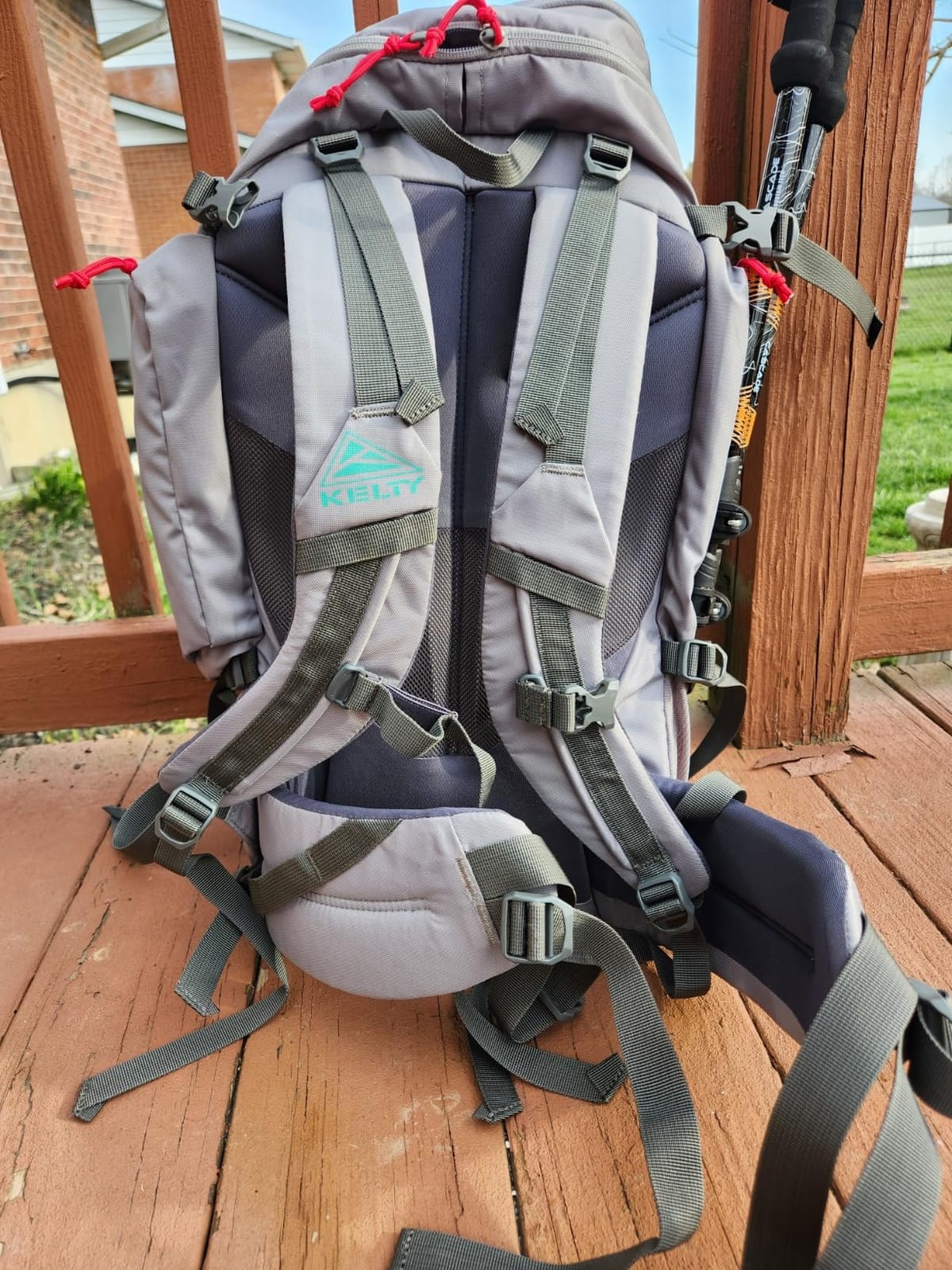
The advanced perimeter frame with an aluminum stay is an older design idea, and it works. An external frame keeps the load close and balanced, and the AMP-Flow ventilated back panel moves air across your back on the climb.
Several owners describe this pack holding up after two weeks of daily use. Kelty’s signature wing pockets open wide and hold more than the two front zippered pockets suggest, and the hybrid U-zipper top loading gives you a partial opening when you do not want to unpack everything.
Being carry-on compatible is more useful than it sounds for anyone combining backpacking with travel or moving between a trailhead and a train. The dimensions stay within common carry-on limits, which removes an entire category of packing stress.
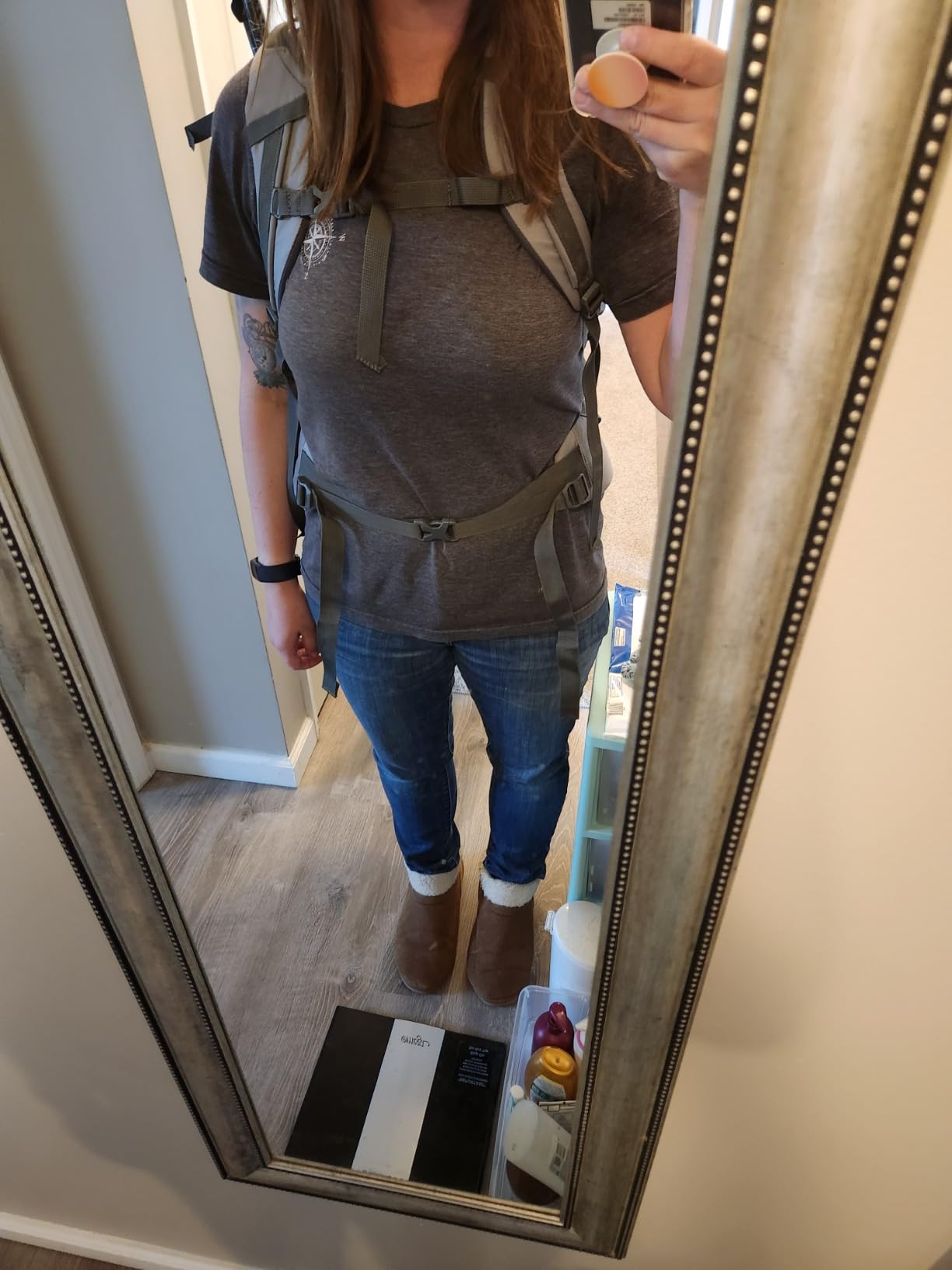
A limited lifetime warranty backs it, which is unusual at this level. The main constraint is capacity: 36 L is a genuine limit for anyone hoping to carry a full multi-day load without a very compact kit.
Who the Redwing 36 Suits
It suits first-time backpackers, hikers moving one or two nights, and anyone who wants a pack that also works as carry-on luggage. The women-specific fit with adjustable torso means it is not a men’s pack shrunk down, which is the usual complaint about budget options.
Travelers who split their trip between hiking and flying get the most from it. Water bottle pockets, daisy chains, and side compression straps cover the trail side of the equation without adding complexity.
Who the Redwing 36 Does Not Suit
It does not suit heavy load carriers. An external frame is a good match for lighter loads and gets less convincing as the bag gets heavier, and at this size you will not be tempted to overfill it anyway.
Anyone planning three nights or more with standard gear will run out of room. Know your base weight before buying, because 36 L is unforgiving once a bulky sleeping bag goes in.
10. Gregory Deva 80: Best for Big Winter and Base Camp Loads
Gregory Deva 80L Women’s Hiking/Backpacking Pack, Small, Lava Grey
80 L capacity
Small sizing
FreeFloat A3 suspension
AirCushion foamless back panel
3D harness and hipbelt
+ The Good
- Comfortable under very heavy loads at 30 to 40 lb
- Huge 80 L capacity for bulky winter and base camp gear
- Auto-rotating dual density shoulder straps move with the body
- Polygiene treatment helps control pack odor
- The Bad
- Heavier than smaller packs in the class
- No rain cover or hydration sleeve included
- Top strap hardware reported as breaking
The Deva 80 exists for one situation: you are carrying a lot of bulky things for a long time. Eighty liters is winter gear, a family share of equipment, or a long resupply without frequent resupply points. Users who carry 30 to 40 lb report it sits well on the hips and stays put.
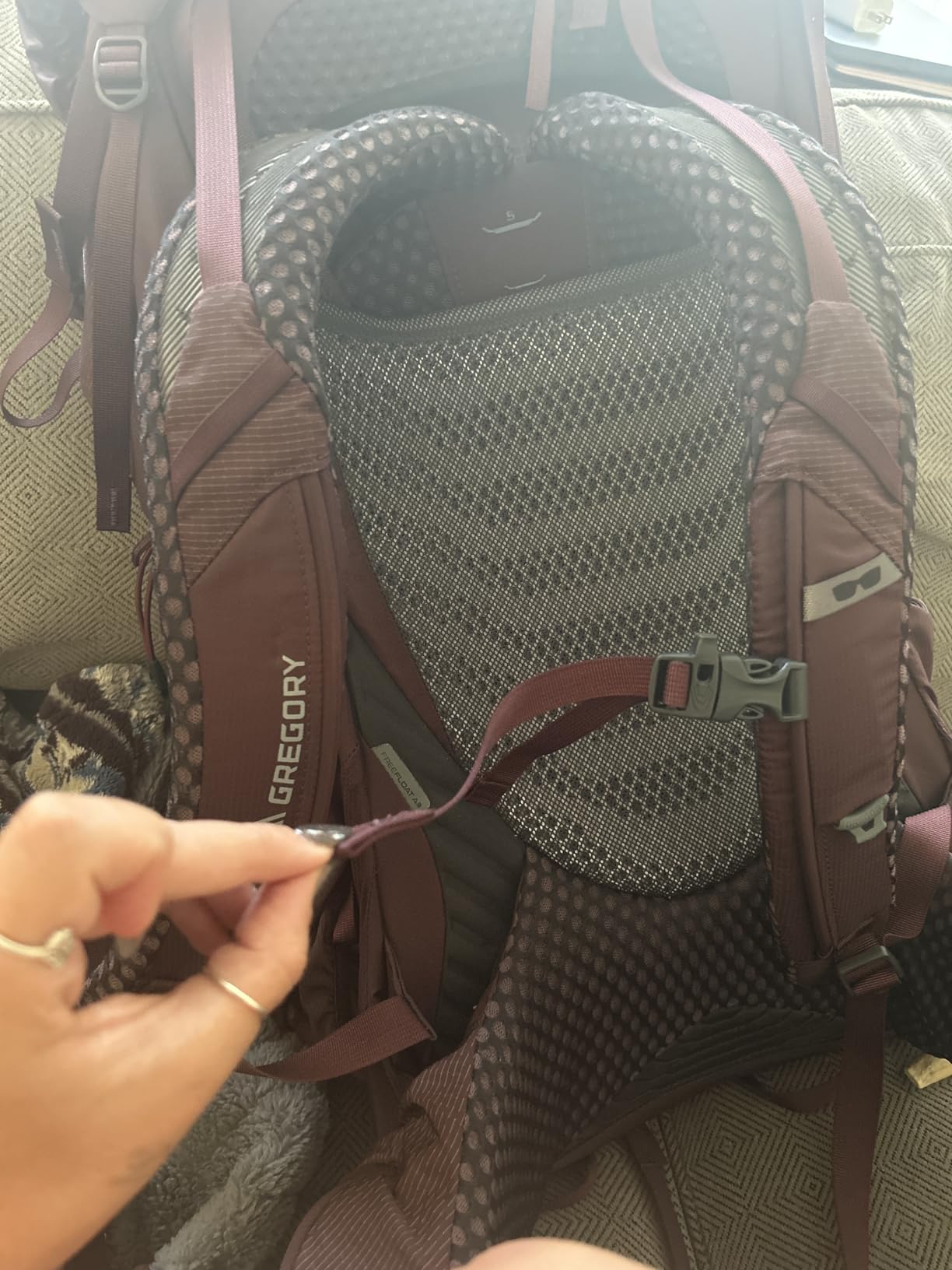
The FreeFloat A3 suspension uses dynamic flex panels plus auto-rotating shoulder straps, so the harness rotates with your shoulders instead of resisting the movement. The AirCushion foamless back panel promotes airflow and reduces pressure points by removing a full slab of foam from the contact area.
Three-dimensional shoulder harness and hip belt construction is what prevents the wrinkling and hot spots that flat-panel packs develop after a season of use. All suspension components carry Polygiene Stays Fresh Technology, which matters on a pack that lives in damp tent conditions for weeks.
It is also the lowest-rated pack in our group at 4.2, and the reason is worth stating plainly.
Owners report top strap hardware breaking under normal use, and there is no included rain cover or hydration sleeve. At 80 L you will want both.

Sizing is another source of confusion in reviews. This model is listed as fit type regular and in the Small size, so confirm with the manufacturer whether you are ordering the women’s Deva or a men’s version sharing the same name, because the hip belts differ.
Who the Deva 80 Suits
It suits winter and base camp hikers, families splitting gear, and anyone hauling bulky items such as a bear canister, extra insulation, or camp furniture. The hip belt stays comfortable where lighter packs would push the load onto your shoulders.
Long-duration hikers will also appreciate the odor control. All suspension components are treated, which directly affects a pack that stays wet and packed for a week at a time.
Who the Deva 80 Does Not Suit
It does not suit anyone who wants a light pack, or anyone whose trips are one or two nights. Eighty liters of capacity you do not need is just a heavier object on your spine, and the harness is built for weight you will not be carrying.
Skip it if a broken top strap mid-trip would ruin your trip. That is not a hypothetical, it is the most common complaint in owner reviews, and you would be far from a road with an 80 L bag.
Buying Guide: How to Choose a Women’s Backpacking Pack
Choosing between these ten packs comes down to three questions: how long are you out, how heavy is your gear, and does your torso fit the range the pack covers. Get those right and the pack choice narrows to two or three options within minutes.
How to measure your torso length and hips at home
Find the top of your iliac crest, the bony ridge at the top of your pelvis, on both sides of your body.
Run a flexible tape measure from that point up your back to the base of your neck where the neck meets the shoulders.
Read the measurement in inches and round to the nearest half inch. This is your torso length, and it is the number that decides pack size.
Measure your hip circumference at the widest point of your hips, keeping the tape level all the way around.
Compare both numbers against the size range of the pack you are considering. If your torso falls at the bottom of the range, look for adjustable torso length.
Check the hip belt range rather than the pack size. A 48 L pack that only fits 34 inch hips is useless to you no matter how good the suspension is.
Most sizing mistakes happen because people measure their full height instead of their torso. Height tells you roughly where you land, but torso length is what the pack’s adjustment actually uses.
What pack volume you need by trip length
A 30 to 38 L pack covers a single night with a compact kit or a big day from base camp. A 45 to 55 L pack covers two to four nights, which is the range most people move to after their first trip. A 65 L pack covers a full week, and anything above 75 L is a base camp or winter pack that most hikers never need.
Weight is the balancing act. Every extra liter adds fabric, and every extra liter of capacity is a temptation to carry one more thing. The most comfortable pack for you is usually the smallest one that holds your actual kit, not the biggest one you can justify.
How ventilation works, and how to fix back sweat
Back sweat comes from three places: your body heat, fabric pressed flat against your skin, and humidity with nowhere to go. Fixes target all three. Look for a suspended back panel with mesh that holds the pack body off your spine, then wear a quick-dry base layer rather than cotton, then add a pack liner so wet fabric never sits against your back.
In this list, the Deuter Futura Air Trek 55 + 10 SL and the Futura 30 SL lead on ventilation, while the Kelty Redwing 36 is surprisingly capable at a fraction of the weight. AirCushion mesh on the Gregory Maven is a solid middle option.
Short torso and plus-size fit troubleshooting
If a pack fits in a store but fails on trail after fifteen miles, the cause is almost always the same: the hip belt has crept down toward your stomach and the load has moved onto your shoulders. On trail, loosen everything, re-center the belt on your iliac crest, tighten the load lifter straps at the top, then tighten the hip belt until you feel your hip bones take the pressure rather than your lower back.
For short torsos, adjustable torso length solves more than any other feature. If your torso falls at or below the smallest range of a fixed pack, that pack is not for you regardless of how it looks in a photo. For wider hips, confirm the belt range in inches exceeds your hip measurement before you order, and check whether the belt can be swapped.
Hydration, organization and care
Check for an internal hydration sleeve with a hose exit port rather than a bare strap clip, since a routed hose is far more comfortable over a long day. For organization, a zippered sleeping bag compartment with a divider saves real time, and side zip access on a 60 L pack beats digging to the bottom.
Care is simple and mostly ignored. Hand wash with cold water and mild soap, air dry completely, and do not put a wet pack in a vehicle or a tent. Store it loosely with the hip belt uncinched so the foam does not take a permanent set, and expect an integrated rain cover to outlive the pack fabric around it.
For gear that needs to stay within reach rather than packed away, our roundups of the best hunting fanny packs and best day hunting packs cover the cases where a small secondary bag beats digging through a main compartment.
Frequently Asked Questions
What are the best backpack brands for women?
Osprey, Deuter, Gregory, Kelty and The North Face are the five most established brands in women’s backpacking packs, and all of them appear in our list. Osprey leads on adjustability, with Fit-on-the-Fly hipbelts and shoulder harnesses on the Ariel and Aura. Deuter leads on ventilation and pivoting harnesses, Gregory on FreeFloat hipbelts for short torsos, and Kelty on low weight for the price. Fit your torso and hips first, then let the brand follow.
What is the best backpack for women to use for hiking?
The Deuter Futura 30 SL is our best overall pick for women’s hiking, because its pivoting S-curve harness adjusts to shoulder width and slant and its Aircustom Sensic back system vents well on hot climbs. For multi-day trips, the Osprey Ariel 55 handles heavy loads with a hipbelt and harness you can reshape to your body. For day hiking from a base camp, a 30 to 38 L pack such as the Futura 30 SL or Osprey Kyte 38 gives you room without dead weight.
How do I measure my torso length for a backpack?
Measure from the top of your iliac crest, the bony ridge at the top of your pelvis, straight up your back to the base of your neck. Read that in inches and round to the nearest half inch. Compare it against the torso range of the pack size you want. If your measurement sits at the low end, choose a pack with adjustable torso length such as the Gregory Maven 48 or the Deuter Futura Air Trek 55 + 10 SL.
What size backpacking pack do I need for a 3 day trip?
For a three day trip you want roughly 50 to 60 liters with typical gear. That covers two nights of shelter, sleeping bag, food, water and clothing with some room left. A 38 L pack such as the Osprey Kyte 38 works for three days only with a very compact kit. A 55 L pack like the North Face Terra 55 or Osprey Ariel 55 is the safer choice if you carry a full-size tent.
Do women’s backpacking packs have lower weight limits?
No. Women’s packs carry the same recommended loads as unisex packs of the same volume and frame class, and the Osprey Ariel 55 in our list is designed specifically for heavier loads on technical trails. What differs is where the load sits and how the harness holds it, not how much weight the pack is rated for. Judge the limit by the suspension and frame, not by the label on the harness.
How do I stop back sweating with a backpack?
Three fixes cover most cases. Choose a pack with a suspended mesh back panel that holds the bag off your spine, which is what the Deuter Futura Air Trek 55 + 10 SL and the Futura 30 SL do best. Wear a quick-dry synthetic base layer instead of cotton so sweat evaporates rather than sitting on your skin. Add a pack liner so wet nylon never presses flat against your back on the move.
Is there a difference between women’s and men’s backpacking packs?
The difference is fit geometry, not capacity. Women’s packs use a shorter and narrower shoulder harness with a shorter torso range, a wider and contoured hip belt that wraps the hips rather than the waist, and a back panel proportioned to keep a loaded bag from riding high behind the head. Unisex packs work well for broad-shouldered or tall wearers, and they carry more options per volume.
Which Women’s Backpacking Pack Should You Buy in 2026?
Start with the Deuter Futura 30 SL if your trips are day hikes and single overnights, the Osprey Renn 65 if you are carrying a full multi-day load and want the lightest option, and the Osprey Ariel 55 if you are hauling heavy gear over technical trails. For short torsos, the Gregory Maven 48 solves the fit problem other packs create.
Whatever you pick, measure your torso and hips before you order, and confirm the size range covers you. A pack that fits your body will still be there next season, and fit is the one feature you cannot retrofit later.